
Research Symposium
26th annual Undergraduate Research Symposium, April 1, 2026
Marianne Ruschman Poster Session 3: 1:45 pm - 2:45 pm / Poster #261
BIO
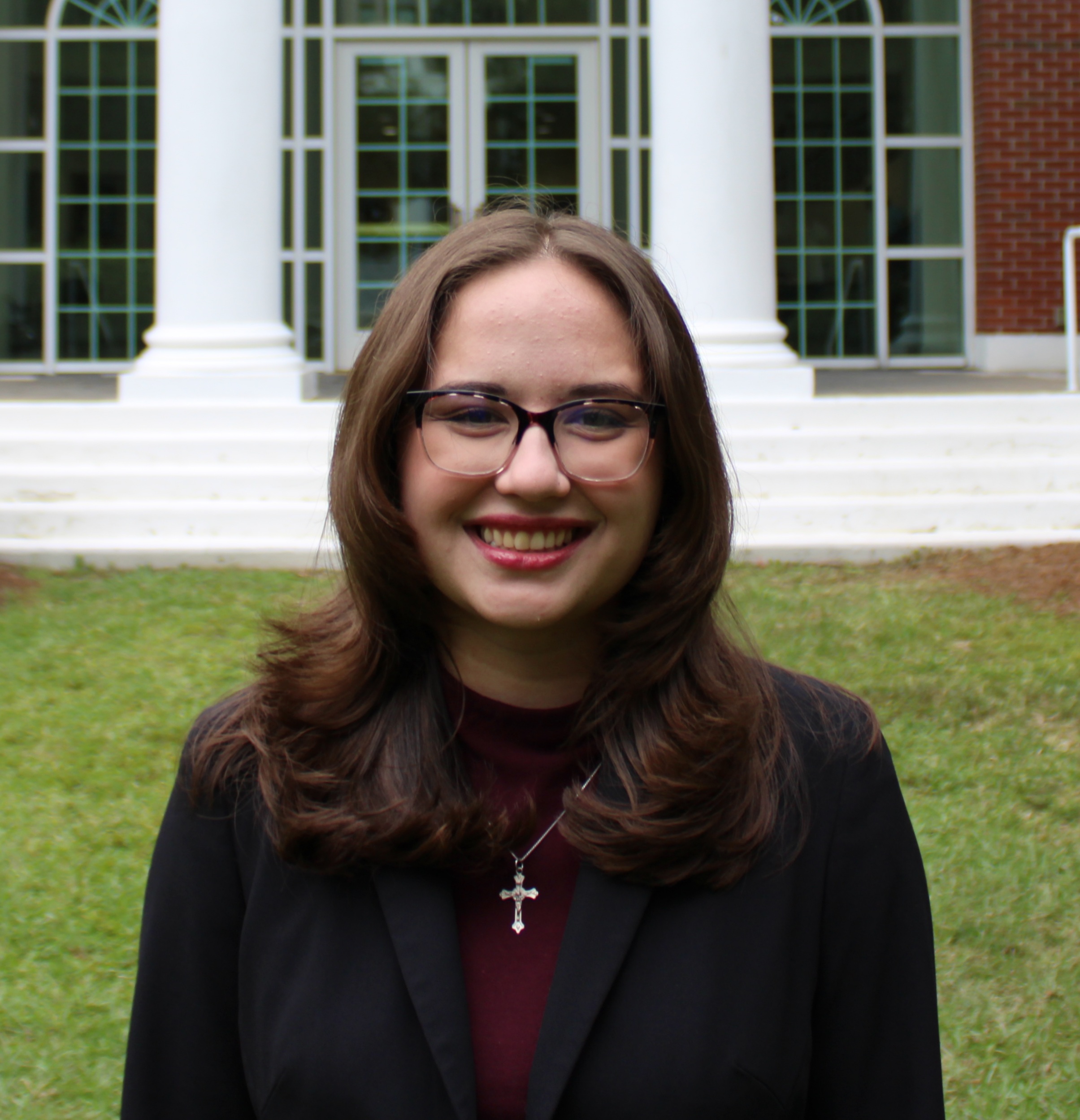
Marianne Ruschman is a second-year Presidential Scholar and Honors Legal Scholar from Niceville, Florida. She is currently pursuing a Bachelor of Science in public health and a Bachelor of Science in criminology. After graduating, Marianne hopes to obtain a Master of Public Health (MPH) and go to law school. Marianne's eventual goal is to use her education to pursue a career in health policy research or health law.
This is Marianne's second year conducting research under Dr. Mason Marks. Last year, under Dr. Marks' guidance, she conducted research on the legal challenges of providing ibogaine-based psychedelic treatments to U.S. Military veterans. This research was presented at last year's Undergraduate Research Symposium and the 15th annual Florida Undergraduate Research Conference (FURC) at the University of South Florida.
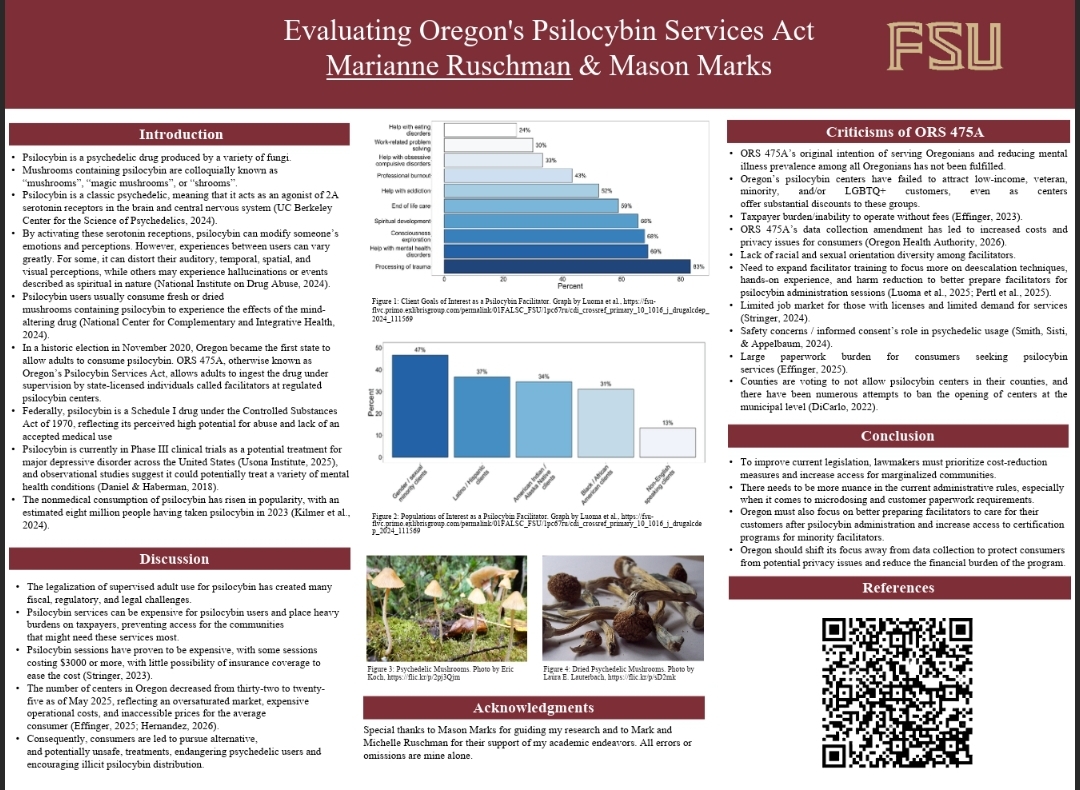
Evaluating Oregon's Psilocybin Services Act
Authors: Marianne Ruschman, Mason Marks, MD, JDStudent Major: Criminology, Public Health
Mentor: Mason Marks, MD, JD
Mentor's Department: College of Law Mentor's College: College of Law Co-Presenters:
Abstract
In a historic vote in November 2020, Oregon became the first state to allow adults to consume psilocybin, a psychedelic drug produced by a variety of fungi. Oregon’s Psilocybin Services Act allows adults to ingest the drug under supervision by state-licensed individuals. Psilocybin is a Schedule I drug under the federal Controlled Substances Act, reflecting its perceived high potential for abuse and lack of an accepted medical use. However, psilocybin is currently in Phase 3 clinical trials treating major depressive disorder across the United States. Observational studies suggest it could potentially treat a variety of mental health conditions.
This project analyzes Oregon’s legal framework and proposes potential improvements. Bettering Oregon’s Psilocybin Services Act would create safer experiences for consumers, reduce illicit psilocybin distribution, and decrease psilocybin treatment costs. In its current state, ORS 475A has created numerous fiscal, regulatory, and legal challenges for facilitators, consumers, and Oregon taxpayers. Financially, Oregon has been unable to operate these centers without using public funding, drawing $3.1 million from Oregon’s general fund from 2023 to 2025. Consumers must also pay $1000 to $3500, or more, to receive psilocybin treatment, making the services inaccessible to many. Additionally, facilitators find that regulations adopted by Oregon’s Health Authority make administering psilocybin difficult. This causes facilitators and consumers to pursue potentially unsafe alternative sources. As more states legalize the supervised consumption of psilocybin, it is important to identify the shortcomings of existing legislation so that future laws can better protect and serve the public.
Keywords: psychedelic, psilocybin, law, Oregon
26th annual Undergraduate Research Symposium, April 1, 2026
Corinne Williams-Hough Poster Session 4: 3:00 pm - 4:00 pm / Poster #150
BIO
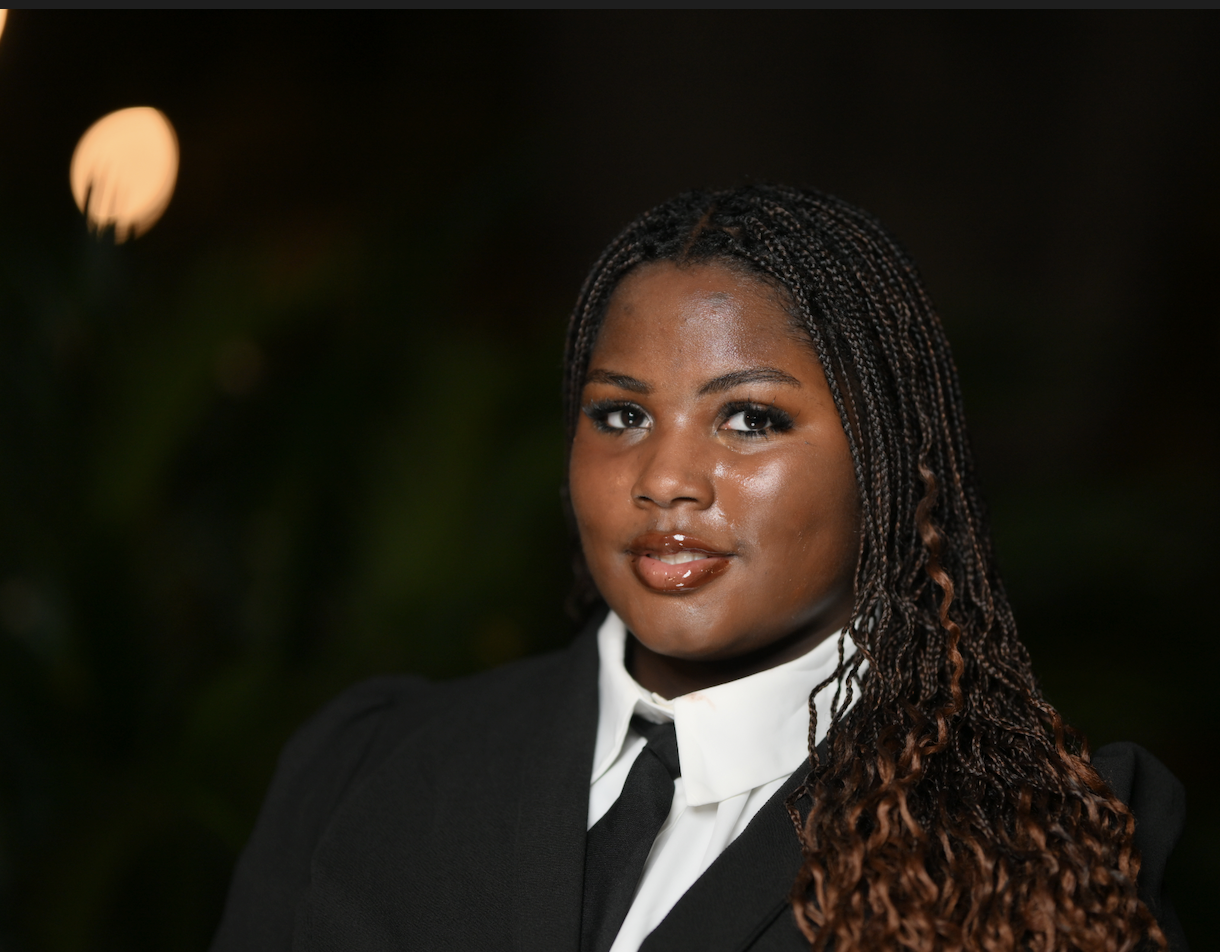
I am a freshman at Florida State University, pursuing a major in Music with a focus on viola performance and a secondary major in Political Science. Originally from Lansing, Michigan, I bring both artistic passion and academic curiosity to my studies. As a violist, I am dedicated to developing my musicianship, while my interest in political science reflects my commitment to understanding systems of power, law, and society.
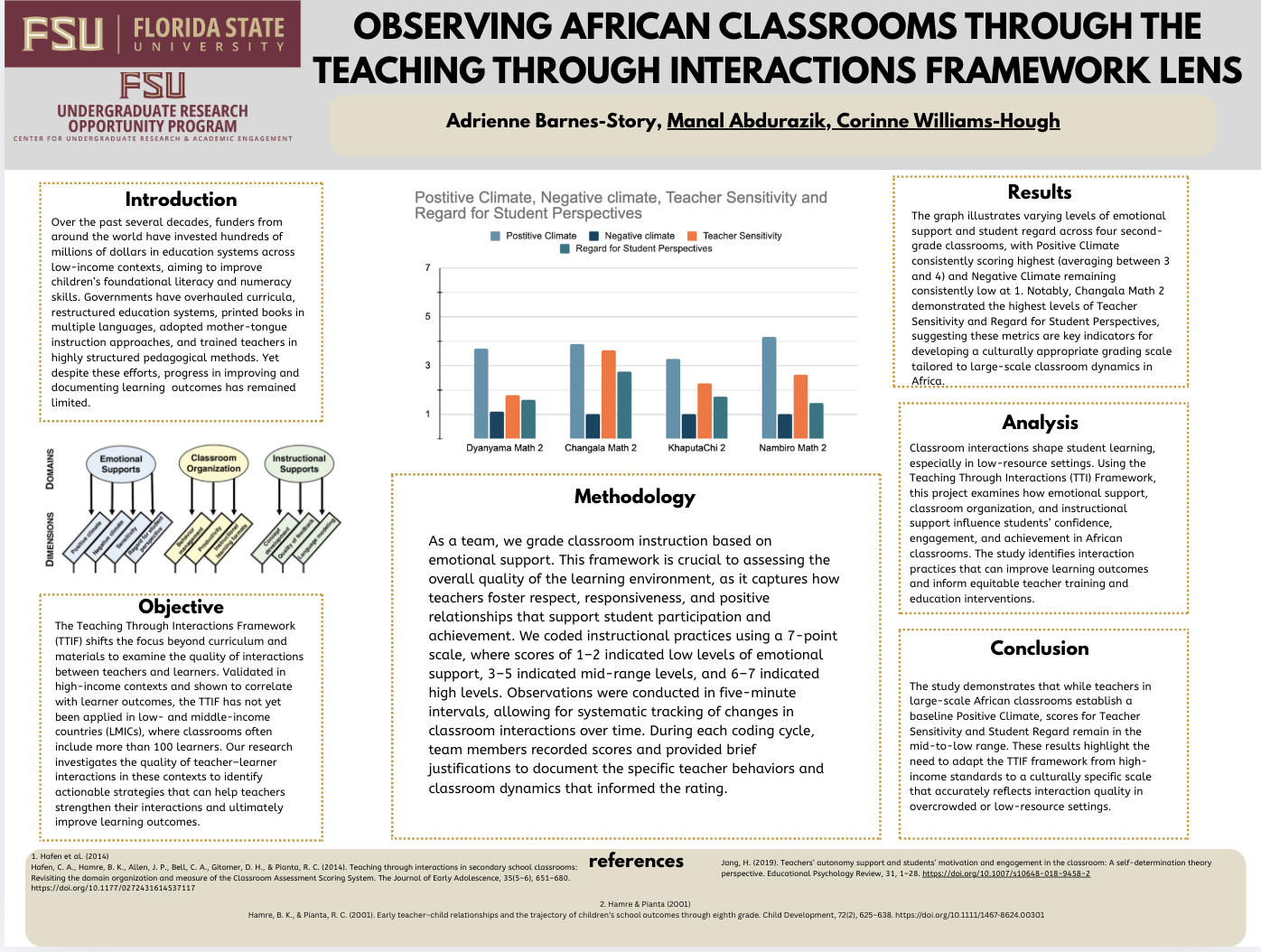
Observing African classrooms through the Teaching Through Interactions Framework lens
Authors: Corinne Williams-Hough, Adrienne Barnes-StoryStudent Major: Music
Mentor: Adrienne Barnes-Story
Mentor's Department: LSI Mentor's College: LSI Co-Presenters: Manal Abdurazik
Abstract
Classroom interactions play a critical role in shaping student learning outcomes, especially in low-resource educational environments. This project examines how teacher–student interactions influence students’ confidence, engagement, and overall academic development in African classrooms. Using the Teaching Through Interactions (TTI) Framework, the study analyzes three key dimensions: emotional support, classroom organization, and instructional support. Prior observations suggest that supportive and responsive teaching practices increase students’ participation and strengthen their belief in their academic abilities. By systematically examining these interaction patterns, this study aims to better understand how effective classroom practices contribute to improved learning outcomes. The findings may help inform teacher training programs and educational interventions designed to foster equitable and supportive learning environments.
Keywords: Education, Classrooms,
26th annual Undergraduate Research Symposium, April 1, 2026
Grady Anderson Poster Session 3: 1:45 pm - 2:45 pm / Poster #135
BIO
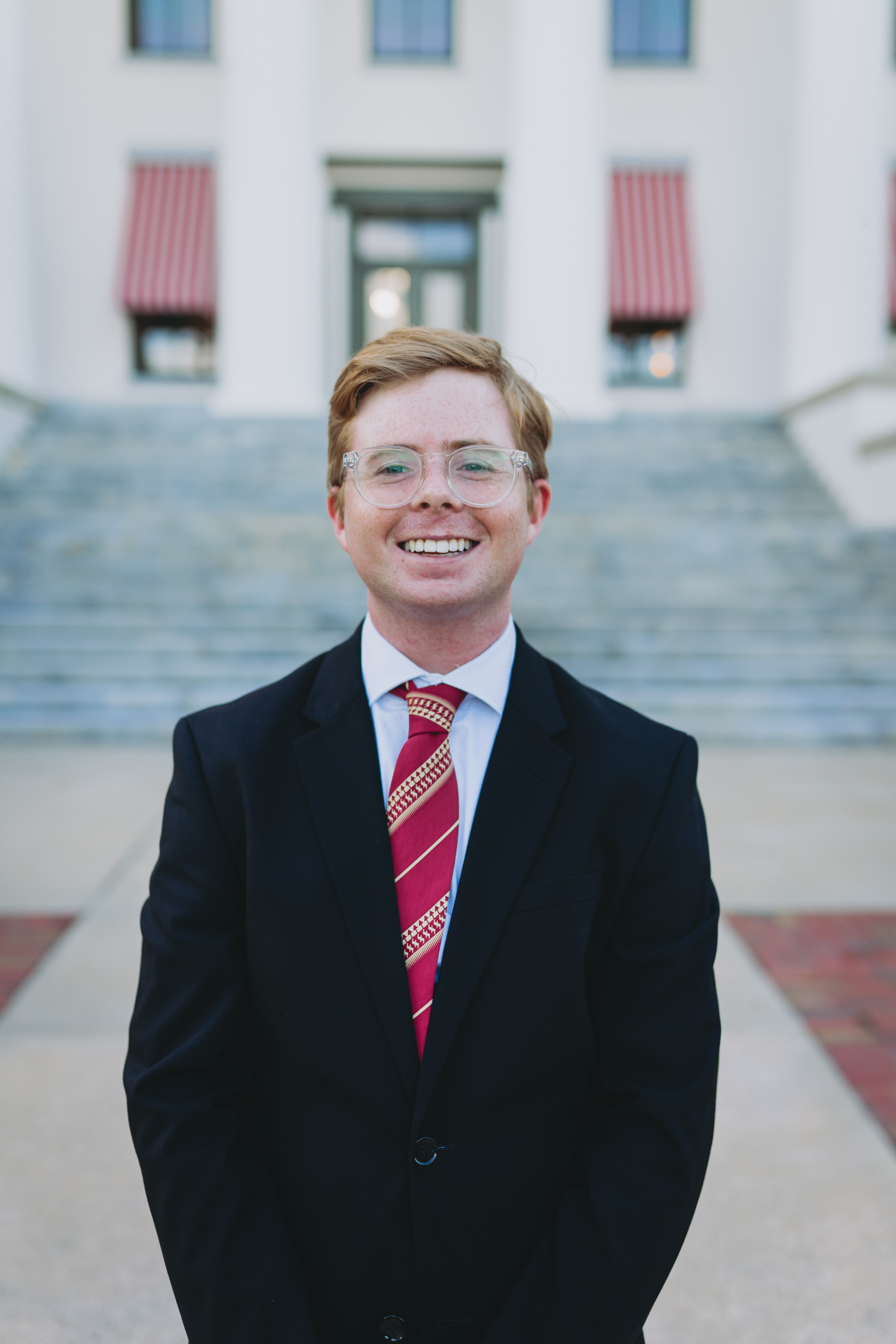
Grady Anderson is a senior double-majoring in Political Science and Interdisciplinary Social Sciences with a Political Science Research-Intensive Bachelor's Certificate. His research focuses on political behavior and survey experiments, with a particular emphasis on affective polarization and identity politics. Grady completed an Honors in the Major thesis examining how policy preferences shape affective polarization and is collaborating on a project investigating how passive exposure to cross-partisan dialogue on social media influences polarization. His work has been presented at the 2026 Southern Political Science Association and supported by the Bess H. Ward Honors Thesis Award and the Institute for Governance and Civics. Grady will begin a Ph.D. in Political Science this upcoming fall.
Policy, Not Partisanship, Drives Affective Polarization
Authors: Grady Anderson, Dr. Andrew BallardStudent Major: Political Science and Interdisciplinary Social Sciences
Mentor: Dr. Andrew Ballard
Mentor's Department: Department of Political Science Mentor's College: College of Social Sciences and Public Policy Co-Presenters:
Abstract
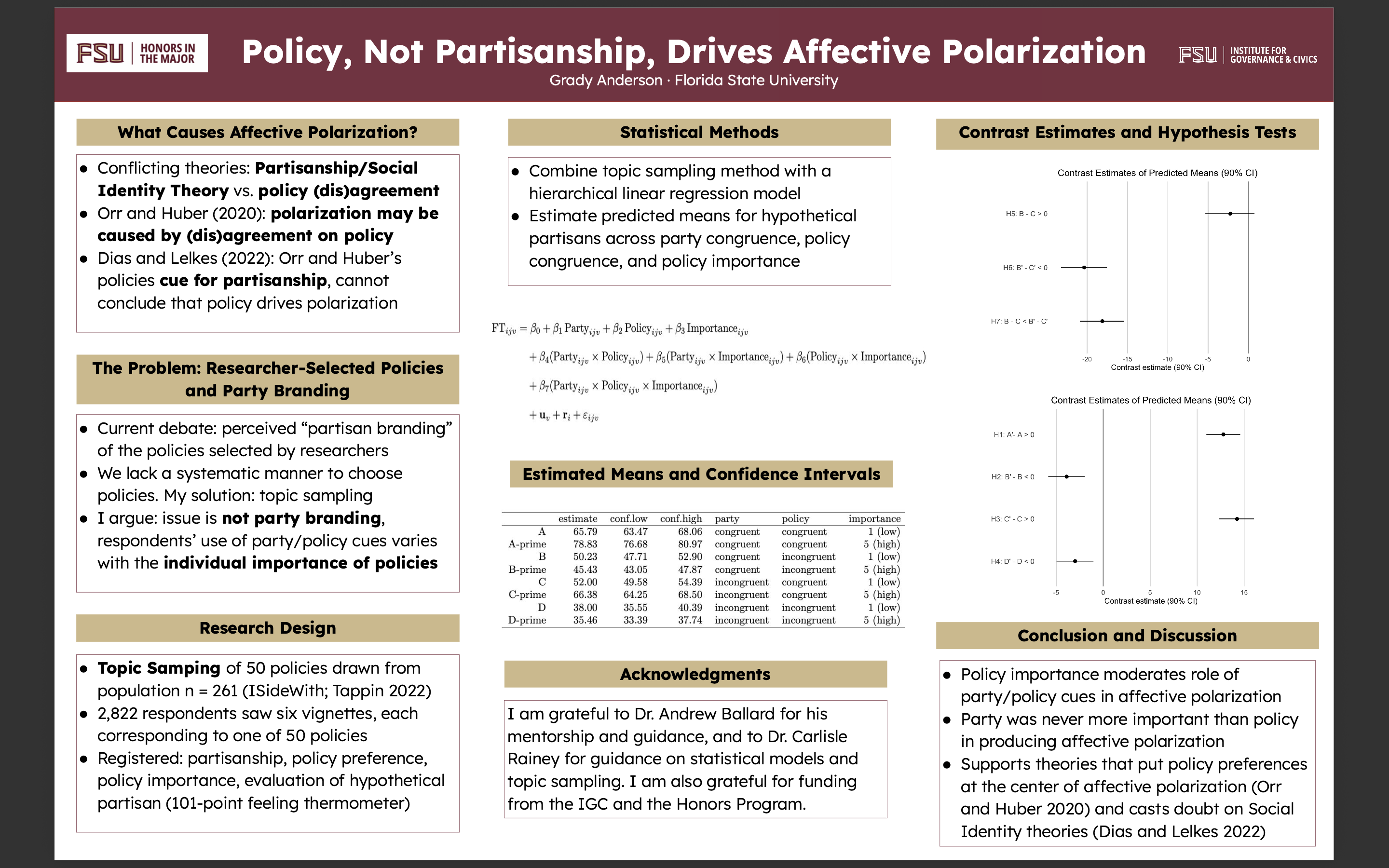
There is debate over the mechanisms underlying affective polarization. Some scholars (e.g., Iyengar et al. 2019; Dias and Lelkes 2022) argue that affective polarization stems primarily from partisanship, with out-partisans viewed as an out-group. Others suggest that (dis)agreement on policy also shapes affect (e.g., Orr and Huber 2020). I argue that this relationship is moderated by the importance of the policy itself. Ciuk and Yost (2016) show that citizens engage in heuristic processing on low-importance issues, and systematic processing on more important issues. When respondents evaluate hypothetical non-elite partisans, they rely on two distinct cues: the partisan identity of the protagonist and the policy preference the protagonist expresses. I fielded a novel survey in which 2,822 people evaluated six hypothetical partisans, yielding nearly 18,000 unique evaluations of hypothetical partisans. I combine the logic of topic sampling (Clifford, Leeper, and Rainey 2024) and a hierarchical linear regression model (Clifford and Rainey 2024) and demonstrate that respondents rely more on policy (dis)agreement as the importance of the policy increases. Additionally, there was no instance in which partisanship had a greater effect than policy preferences on affective polarization, giving credence to the growing body of literature arguing that policy preferences play a substantive role in the formation of affective polarization.
Keywords: affective polarization, survey experiments, topic sampling
26th annual Undergraduate Research Symposium, April 1, 2026
Mary Kissane Poster Session 3: 1:45 pm - 2:45 pm / Poster #209
BIO
I am a driven pre-health student with a strong foundation in clinical care, research, and leadership across hospital and laboratory settings. My passion for healthcare is rooted in seeing how scientific knowledge can directly improve patient outcomes, especially in areas like neurology, physiology, and whole-body wellness.
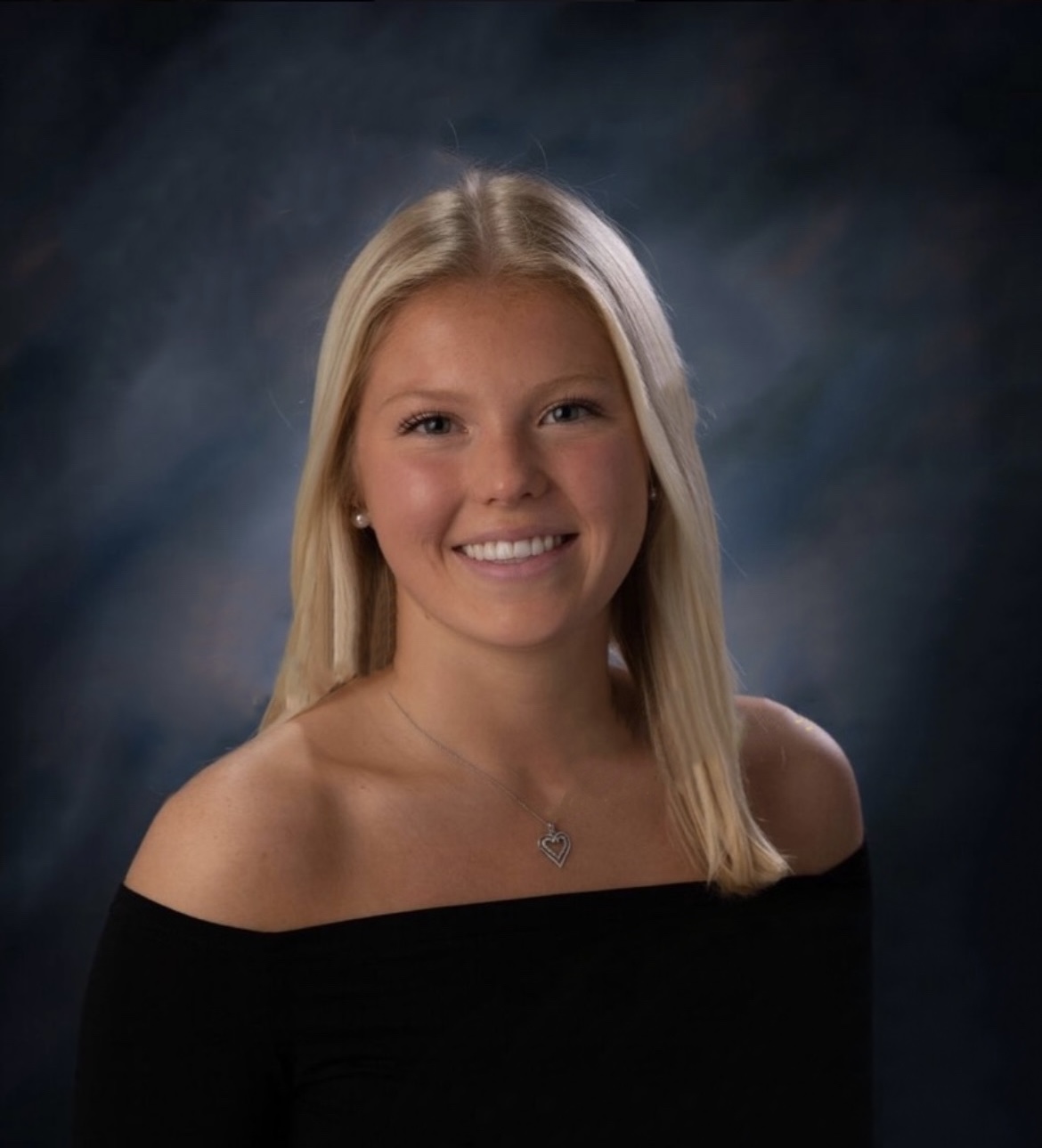
My research focuses on the impact of alcohol and lifestyle factors on skeletal muscle health and inter-organ communication. Using functional assessments and molecular techniques, I study how behavior influences physiology and disease, reinforcing my interest in the body as an integrated system. Clinically, I serve as a Lead CCAV volunteer on Neurology/Neurosurgery and Orthopedic units, where I mentor new volunteers and support patients recovering from strokes, traumatic brain injuries, and surgical procedures. In addition, my experience as a Clinical Medical Assistant has provided hands-on skills in phlebotomy, EKGs, and patient care across emergency medicine, OB/GYN, and dermatology settings. I am passionate about combining scientific rigor with compassionate care and aspire to become a physician who bridges research and patient-centered medicine.
Chronic Alcohol Use Does Not Exacerbate the Effects of Existing Obesity in Female Mice
Authors: Mary Kissane, Jennifer SteinerStudent Major: Biological Science
Mentor: Jennifer Steiner
Mentor's Department: Health, Nutrition and Food Sciences Department Mentor's College: Annes College Co-Presenters:
Abstract
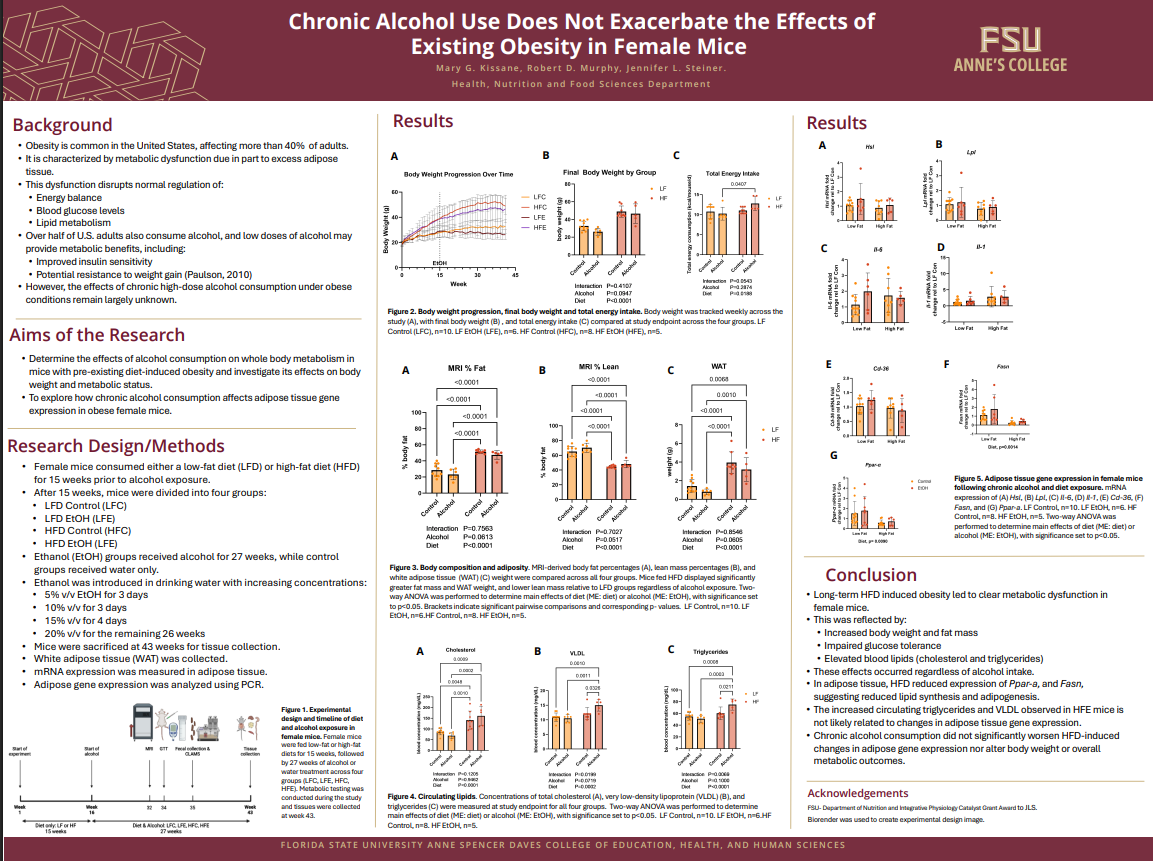
Obesity is a major contributor to metabolic dysfunction in the United States, driven in part by excess adipose tissue. While moderate alcohol consumption has been associated with potential metabolic benefits, the impact of chronic high-dose alcohol intake under obese conditions remains poorly understood. Female mice were maintained on a low-fat (LFD) or high-fat diet (HFD) for 15 weeks, followed by progressive ethanol (EtOH) exposure up to 20% (v/v) for 27 weeks. HFD significantly increased body weight, adiposity, impaired glucose tolerance, and circulating lipids, independent of alcohol intake. Chronic alcohol exposure did not further exacerbate these metabolic impairments. At the molecular level, HFD reduced adipose expression of Ppar-α, Fasn, and Cd36, suggesting altered lipid metabolism, while Lpl, Hsl, and IL-6 remained unchanged. Collectively, these findings indicate that prolonged alcohol consumption does not potentiate HFD-induced metabolic dysfunction or adipose tissue gene expression alterations in female mice.
Keywords: Obesity, Alcohol consumption, Adipose tissue
26th annual Undergraduate Research Symposium, April 1, 2026
Gavin Locke Poster Session 1: 9:30 am - 10:30 am / Poster #279

BIO
Gavin Locke is a Senior finishing their Bachelor's of Science in Economics, and pursuing both Mathematics and PPE (Politics, Philosophy, and Economics) Minors. They have been awarded the Reva Daniels Metzinger Endowed Scholarship for Economics Majors and are currently performing research alongside Dr. Jeongbin Kim. Gavin plans on pursuing a PhD in Economics and will be a part of the Master's in Applied Economics here at FSU next year.
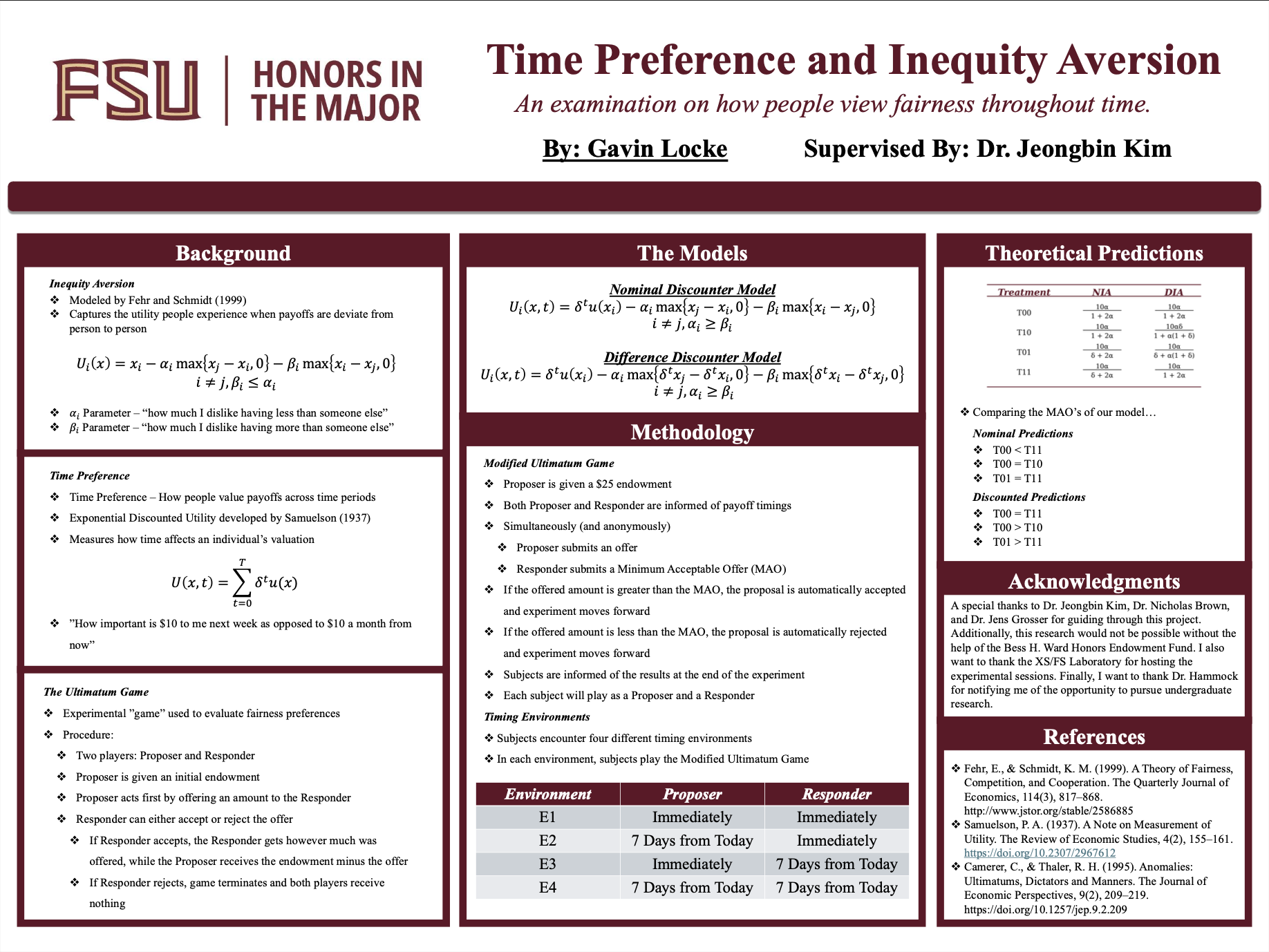
Time Preference and Inequity Aversion
Authors: Gavin Locke, Dr. Jeongbin KimStudent Major: Economics
Mentor: Dr. Jeongbin Kim
Mentor's Department: Economics Mentor's College: College of Social Sciences and Public Policy Co-Presenters:
Abstract
This study aims to find a parsimonious model that captures intertemporal fairness preferences. I use the model of inequity aversion developed by Fehr and Schmidt (1999) and incorporate discount factors to account for intertemporal decision-making. I run a modified "Ultimatum Game" in the lab to determine which of the two models performs better: whether people discount differences in payoffs among others, or simply discount their own payoff.
Keywords: Economics, Fairness, Discounting
26th annual Undergraduate Research Symposium, April 1, 2026
Brianna Auguste Poster Session 3: 1:45 pm - 2:45 pm / Poster #58
BIO
Brianna Auguste is a second-year student at Florida State University, majoring in Psychology with minors in both criminology and neuroscience. Brianna is interested in gaining her PhD in clinical psychology. Through her love of research and writing Brianna hopes to use her creative skills in her future work as a therapist.
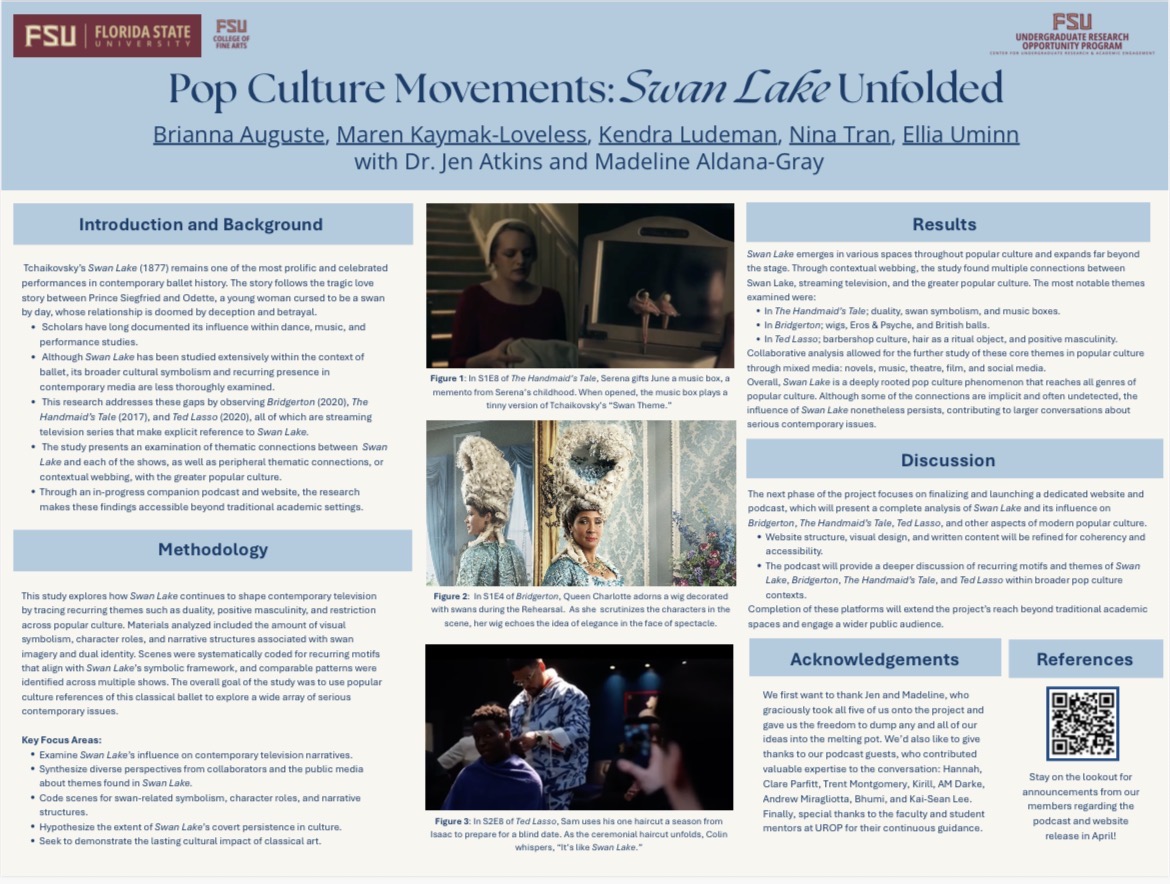
Pop Culture Movements: Swan Lake Unfolded
Authors: Brianna Auguste, Jen AtkinsStudent Major: Psychology
Mentor: Jen Atkins
Mentor's Department: Dance Mentor's College: Florida State University Co-Presenters: Brianna Auguste, Maren Kaymak-Loveless, Kendra Ludeman, Nina Tran, Ellia Uminn
Abstract
Tchaikovsky’s Swan Lake is one of the most prolific ballets in modern history. With themes of duality, love, and power, the story is applicable to all aspects of popular culture. We examined examples of Swan Lake references in streaming TV shows— “Ted Lasso”, “Bridgerton”, and the “Handmaid’s Tale”—to deepen understanding of the thematic connection between modern popular culture and ballet history. We primarily used resource curation from popular culture and discourse analysis to formulate conclusions about how Swan Lake has shaped the consumption of streaming television. Supplemental research about archival ballet histories also contributed to our findings. Preliminary results have demonstrated that Swan Lake appears in “The Handmaid’s Tale” and “Bridgerton” both intentionally and unintentionally to highlight the performance of femininity, the coexistence of opposing traits within individuals, and the restriction of choreography. Further research needs to be done to thoroughly examine the presence of Swan Lake in “Ted Lasso.” This study found that Swan Lake’s cultural influence extends beyond ballet, shaping visual and narrative approaches in contemporary media. The findings point to the suggestion that almost every consumer of popular culture has interacted with media that draws inspiration from Swan Lake.
Keywords: Swan Lake Unfolded
26th annual Undergraduate Research Symposium, April 1, 2026
Lauren Lauzon Poster Session 2: 10:45 am - 11:45 am / Poster #298

BIO
Lauren Lauzon is a second-year undergraduate student majoring in Accounting from Tallahassee, Florida. She is focused on building a strong foundation in financial reporting, data analysis, and professional communication while gaining experience through academic and research opportunities. As part of her involvement in undergraduate research, Lauren is conducting a career survey project that explores student perspectives on career development and professional goals.
In addition to her academic work, Lauren is actively involved in campus organizations, including Beta Alpha Psi, Women in Accounting, and Tri Delta. Through these organizations, she continues to develop leadership, teamwork, and professional networking skills. She was also selected to participate in the Expedition EY program, where she is gaining exposure to real-world accounting practices and learning from industry professionals.
Lauren is motivated to continue strengthening her technical and interpersonal skills as she prepares for a career in accounting. She is particularly interested in pursuing opportunities in public accounting and is committed to taking on experiences that support her long-term professional growth.
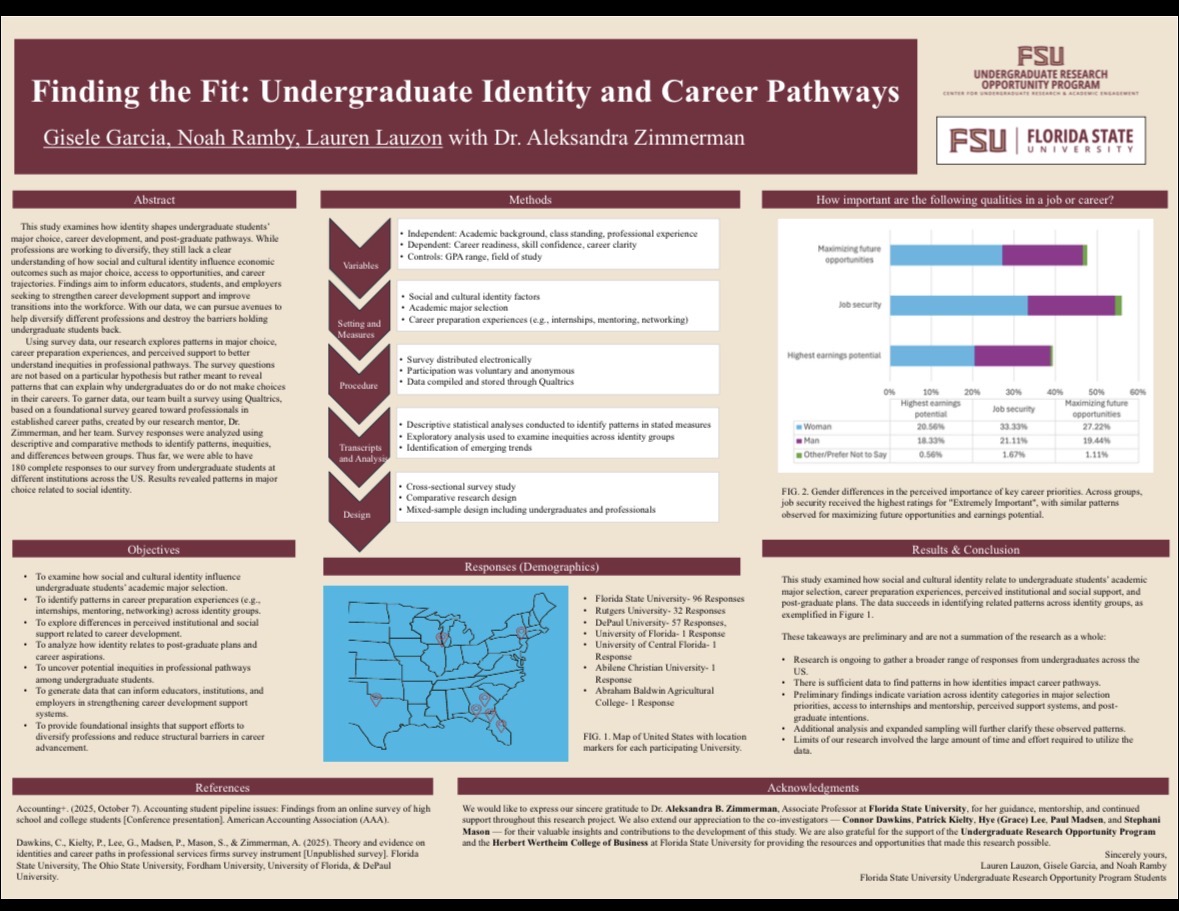
Finding the Fit: Undergraduate Identity and Career Pathways
Authors: Lauren Lauzon, Dr. Aleksandra ZimmermanStudent Major: Accounting
Mentor: Dr. Aleksandra Zimmerman
Mentor's Department: Accounting Mentor's College: Herbert Wertheim College of Business Co-Presenters: Giselle Garcia and Noah Ramby
Abstract
This study examines how identity shapes undergraduate students' major choice, career development, and post-graduate pathways. While professions are working to diversify, they still lack a clear understanding of bow social and cultural identity influence economic outcomes such as major choice, access to opportunities, and carver trajectories. Findings aim to inform educators, students, and employers secking to strengthen career development support and improve transitions into the workforce. With our data, we can pursue avenues so help diversify different professions and destroy the barriers bolding undergraduate students back.
Using survey data, our research explores patterns in major choice,
career preparation experiences, and perotived support to better understand incquities in professional pathways. The survey questions are not based on a particular hypothesis but rather meant to reveal patterns that can explain why undergraduates do or do not make choices in their carvers. To garner data, our team built a survey using Qualtrics. based on a foundational survey geared toward professionals in established career paths, created by our research mentor, De Zimmerman, and her team. Survey responses were analyzed using descriptive and comparative methods to identify patterns, inequities. and differences between groups. Thus far, we were able to have 180 complete responses to our survey from undergraduate students at different institutions across the US. Results revealed patterns in major choice related to social identity.
Keywords: Career Survey, Career Development, Undergraduate Research
26th annual Undergraduate Research Symposium, April 1, 2026
Angelina Borisen Poster Session 3: 1:45 pm - 2:45 pm / Poster #133

BIO
Angelina Borisen is a sophomore at Florida State University pursuing a Bachelor of Science in Biological Sciences and a Bachelor of Science in Psychology. She conducts genetics research under the mentorship of Dr. Amy Webster. Angelina is involved in the Medical Response Unit (MRU) and serves as a Pre-Health Living Learning Community (LLC) mentor, supporting peers interested in healthcare careers. Angelina plans to pursue an MD-PhD, with the goal of integrating biomedical research and clinical practice. She is particularly passionate about rural medicine and hopes to serve underserved communities with limited access to healthcare.
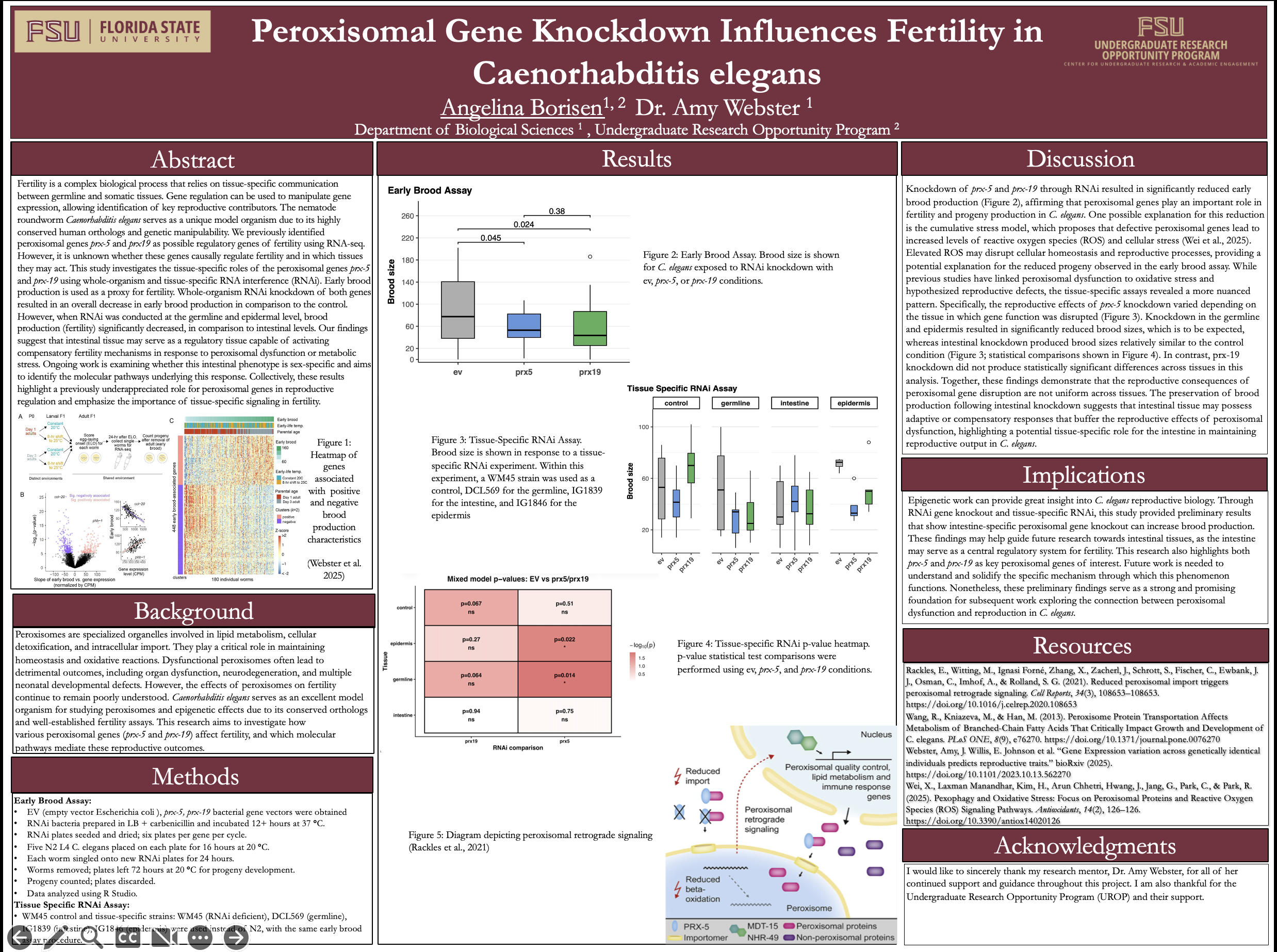
Peroxisomal Gene Knockdown Influences Fertility in Caenorhabditis elegans
Authors: Angelina Borisen, Dr. Amy WebsterStudent Major: Biological Sciences, Psychology
Mentor: Dr. Amy Webster
Mentor's Department: Biological Sciences Mentor's College: College of Arts and Sciences Co-Presenters:
Abstract
Fertility is a complex biological process that relies on tissue-specific communication between germline and somatic tissues. Gene regulation can be used to manipulate gene expression, allowing identification of key reproductive contributors. The nematode roundworm Caenorhabditis elegans serves as a unique model organism due to its highly conserved human orthologs and genetic manipulability. We previously identified peroxisomal genes prx-5 and prx19 as possible regulatory genes of fertility using RNA-seq. However, it is unknown whether these genes causally regulate fertility and in which tissues they may act. This study investigates the tissue-specific roles of the peroxisomal genes prx-5 and prx-19 using whole-organism and tissue-specific RNA interference (RNAi). Early brood production is used as a proxy for fertility. Whole-organism RNAi knockdown of both genes resulted in an overall decrease in early brood production in comparison to the control. However, when RNAi was conducted at the germline and epidermal level, brood production (fertility) significantly decreased, in comparison to intestinal levels. Our findings suggest that intestinal tissue may serve as a regulatory tissue capable of activating compensatory fertility mechanisms in response to peroxisomal dysfunction or metabolic stress. Ongoing work is examining whether this intestinal phenotype is sex-specific and aims to identify the molecular pathways underlying this response. Collectively, these results highlight a previously underappreciated role for peroxisomal genes in reproductive regulation and emphasize the importance of tissue-specific signaling in fertility.
Keywords: Genetics, Gene Knockdown, Fertility
26th annual Undergraduate Research Symposium, April 1, 2026
Constanza de la Cruz Poster Session 3: 1:45 pm - 2:45 pm / Poster #87
BIO
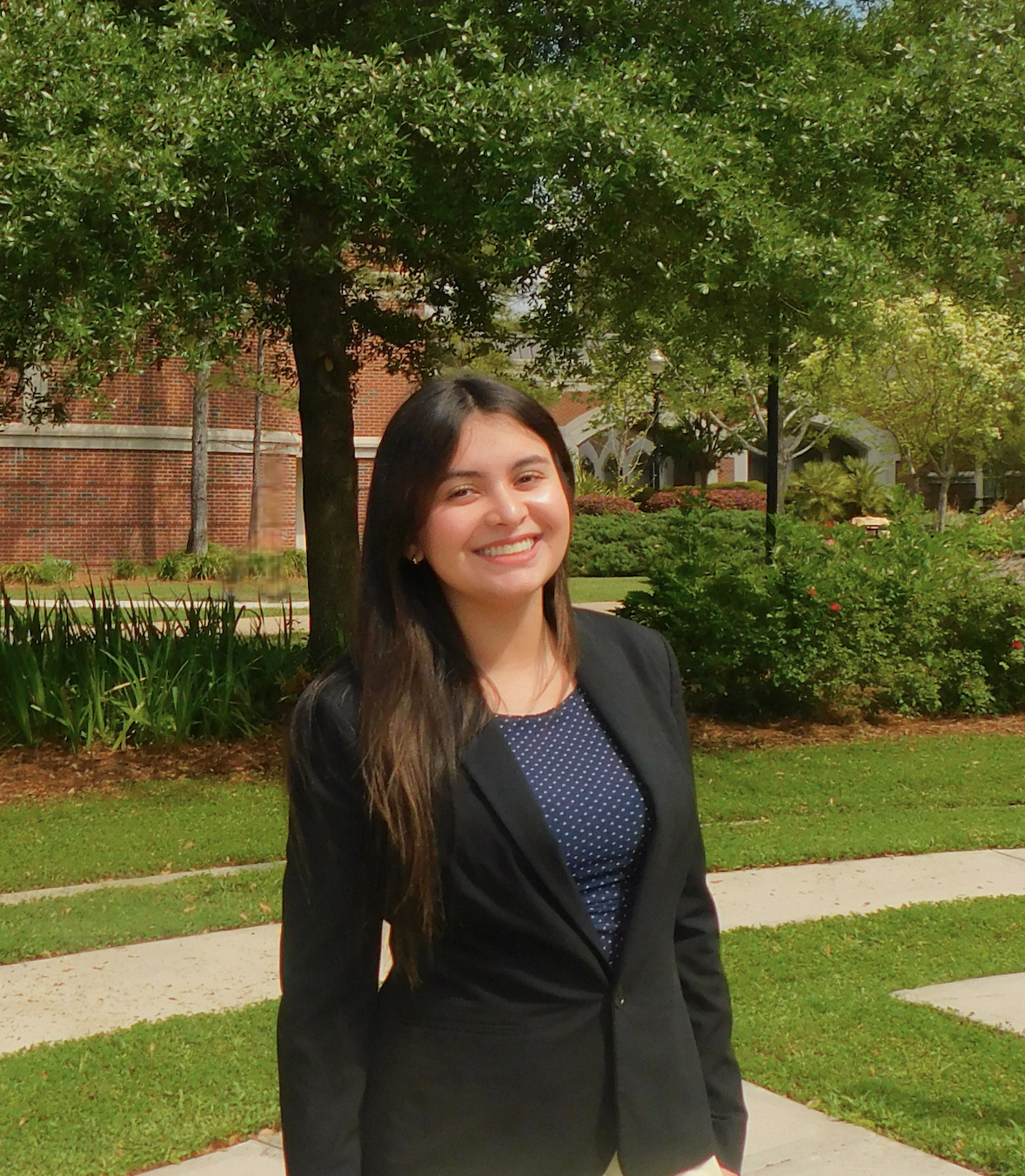
I am from Miami, Florida. I am currently pursuing a Bachelor of Science in Accounting at the Herbert Wertheim School of Business, with an expected graduation date of May 2028. I plan to pursue a CPA license and build a career as a professional accountant.
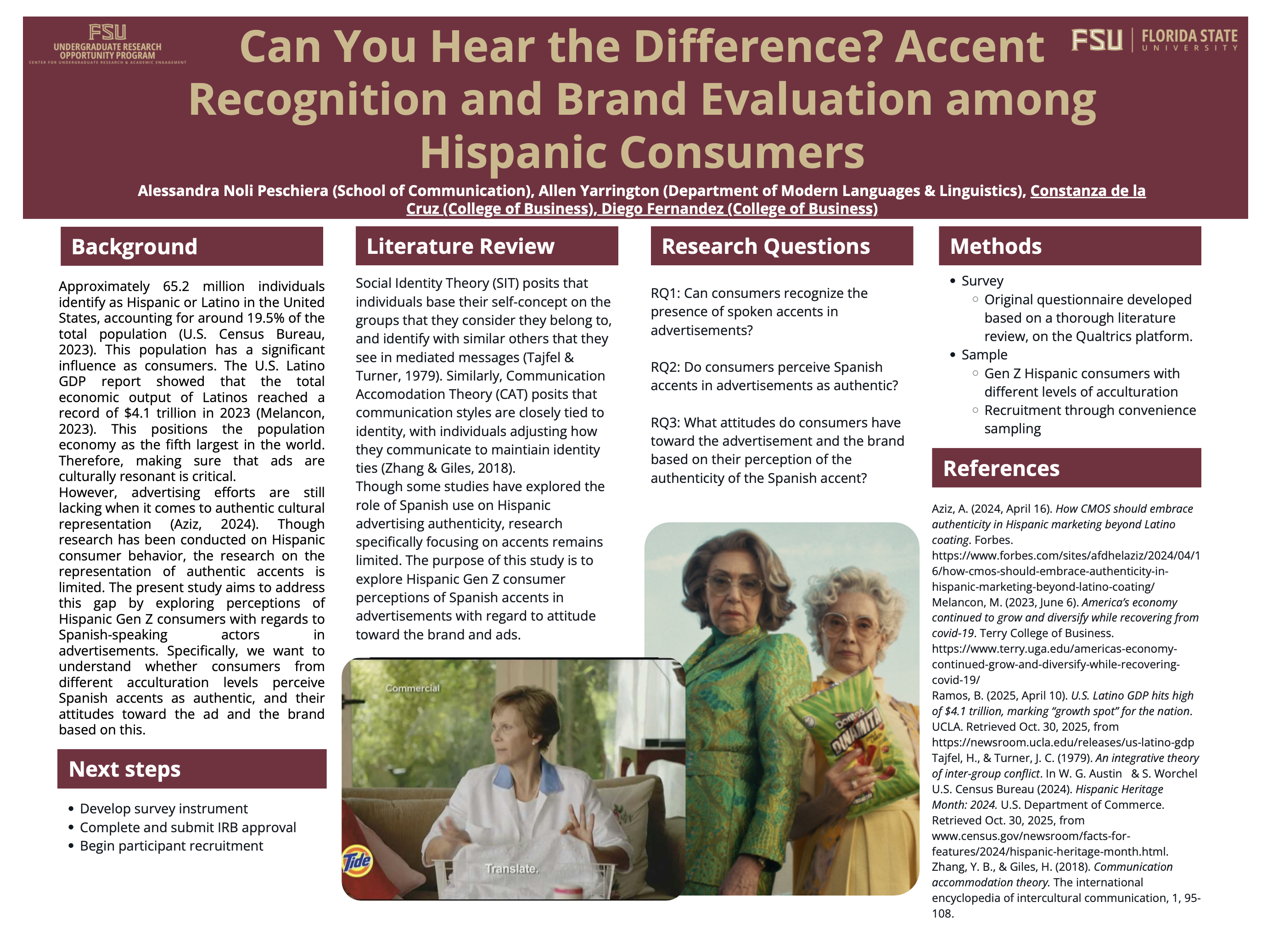
Can you hear the difference? Accent Recognition and Brand Evaluation among Hispanic Consumers
Authors: Constanza de la Cruz, Alessandra Noli PeschieraStudent Major: Accounting
Mentor: Alessandra Noli Peschiera
Mentor's Department: School of Communication Mentor's College: School of Communication Co-Presenters: Diego Fernandez (College of Business)
Abstract
The Hispanic population represents nearly 20% of the United States and contributes over $4.1 trillion to the national GDP, making it one of the most economically influential consumer groups in the country. Although brands frequently use Spanish commercials to connect with this market, limited research has examined how variation in Spanish accents influences perceptions of authenticity and brand credibility. This study investigates whether Hispanic Gen Z and Millennial consumers can distinguish between heritage, native, and non-native Spanish accents in advertisements and how these perceptions shape attitudes toward the advertisement, the brand, and purchase intention.
Participants will complete an online questionnaire through Qualtrics in which they will watch one AT&T commercial and respond to Likert-scale measures assessing perceived accent strength, language authenticity, brand attitude, advertisement attitude, purchase intention, and language background. Data will be analyzed to examine relationships between perceived accent type and consumer evaluations.
It is expected that advertisements perceived as less linguistically authentic will result in lower brand attitudes and reduced purchase intentions. By focusing on accent rather than language choice alone, this research highlights how subtle linguistic cues can influence cultural belonging and consumer response in Hispanic-targeted advertising.
Keywords: Hispanic consumers, brand attitude, advertising, hispanic consumers
26th annual Undergraduate Research Symposium, April 1, 2026
Kendall Sampson Poster Session 3: 1:45 pm - 2:45 pm / Poster #178
BIO
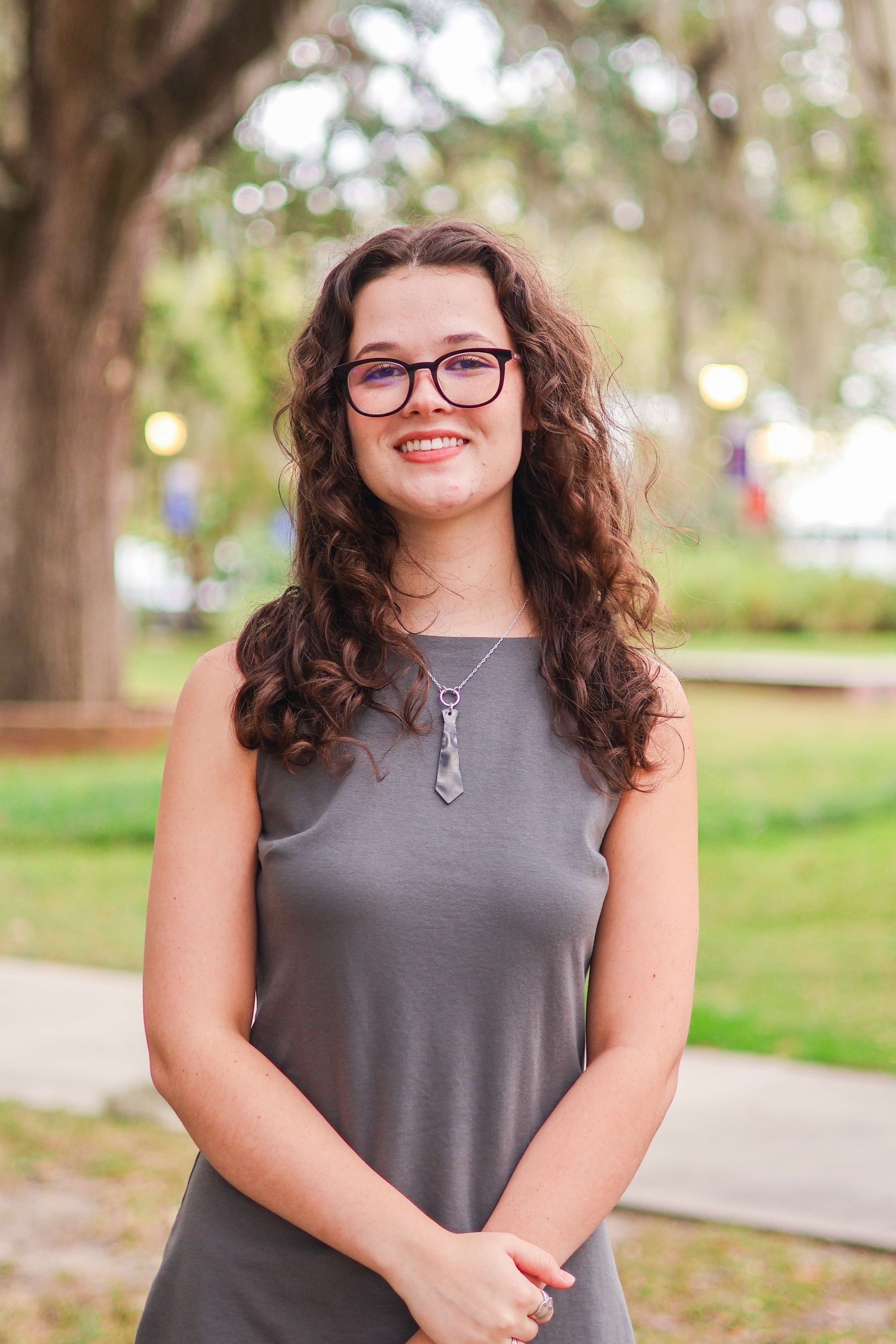
Kendall Sampson is a Bachelor of Science in Nursing (BSN) student at Florida State University, expected to graduate in December 2026. She is actively involved in undergraduate research through the Undergraduate Research Opportunity Program (UROP), where she contributes to a systematic review examining geospatial stigma at the neighborhood level under the mentorship of Casey Xavier Hall. Her research interests include pain management, anesthesia, and health disparities, particularly how structural and environmental factors influence patient outcomes.
In addition to her academic work, Kendall serves as a Learning Assistant for Health Assessment and Interventions, supporting student learning through peer education. She has clinical experience in podiatry, where she assisted with patient care and administrative operations.
Kendall plans to pursue graduate education through a Doctor of Nursing Practice (DNP) program, with an interest in acute care practice. She is passionate about combining clinical expertise with research to improve patient care and advance equitable healthcare practices.
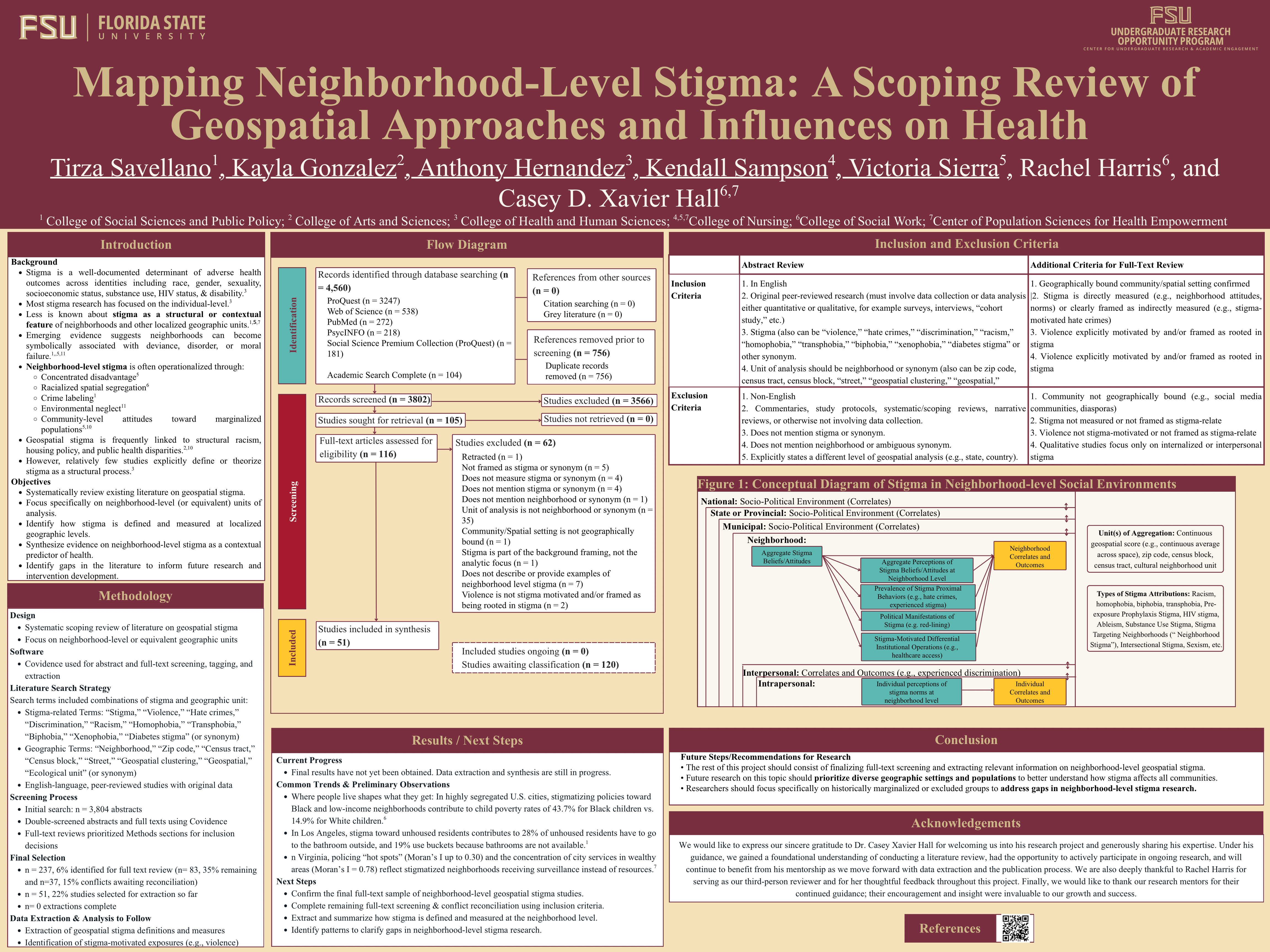
Mapping Neighborhood-Level Stigma: A Scoping Review of Geospatial Approaches and Influences on Health
Authors: Kendall Sampson, Casey Xavier HallStudent Major: Nursing
Mentor: Casey Xavier Hall
Mentor's Department: Nursing Mentor's College: College of Social Work; Center of Population Sciences for Health Empowerment Co-Presenters: Tirza Savellano, Kayla Gonzalez, Anthony Hernandez, Victoria Sierra
Abstract
Stigma is a well-documented determinant of adverse health outcomes across diverse identities and lived experiences, including race, gender, sexuality, socioeconomic status, substance use, HIV status, and disability. While most stigma research focuses on individual-level experiences, less is known about stigma as a structural or contextual feature of neighborhoods and other localized geographic units. This project systematically reviews the literature on geospatial stigma, with emphasis on neighborhood-level units of analysis. Using Covidence, a comprehensive search yielded n=3,804 abstracts for screening. Each abstract was independently reviewed by two researchers using predefined inclusion and exclusion criteria, with disagreements resolved by a third reviewer. Eligible studies were published in English, involved original peer-reviewed research with data collection or analysis, explicitly addressed geospatial stigma or a related construct, and used a neighborhood-level (or equivalent) geospatial unit. Studies were excluded if they were non-English, lacked original data, did not address stigma, or focused on broader geographic levels (e.g., state or country). Preliminary screening identified n=237 (6.2%) full texts for review, of which 137 (57.8%) are quantitative; n=44 (18.6%) have been included in the dataset and n=130 (55.9%) remain under review. Early observations indicate that neighborhood-level stigma is commonly operationalized through concentrated disadvantage, racialized spatial segregation, crime labeling, environmental neglect, and community attitudes toward marginalized populations. Neighborhoods are often symbolically associated with deviance or disorder, contributing to disinvestment and reduced healthcare access. Upon completion, this review will synthesize evidence on neighborhood-level stigma and identify gaps, advancing understanding of geospatial stigma as a structural determinant of health.
Keywords: Geospatial, Neighborhood, Systematic
26th annual Undergraduate Research Symposium, April 1, 2026
Samantha Jennings Poster Session 2: 10:45 am - 11:45 am / Poster #280

BIO
I am from Franklin, Tennessee and decided to pursue a pre-law track with aspirations of being an environmental lawyer. I have always been involved in community service growing up, so research about philanthropy really peaked my interest. I believe it is extremely important to give back and help others, so this research has been extremely insightful. I hope to use this knowledge in my future career to inspire others to positively change the world.
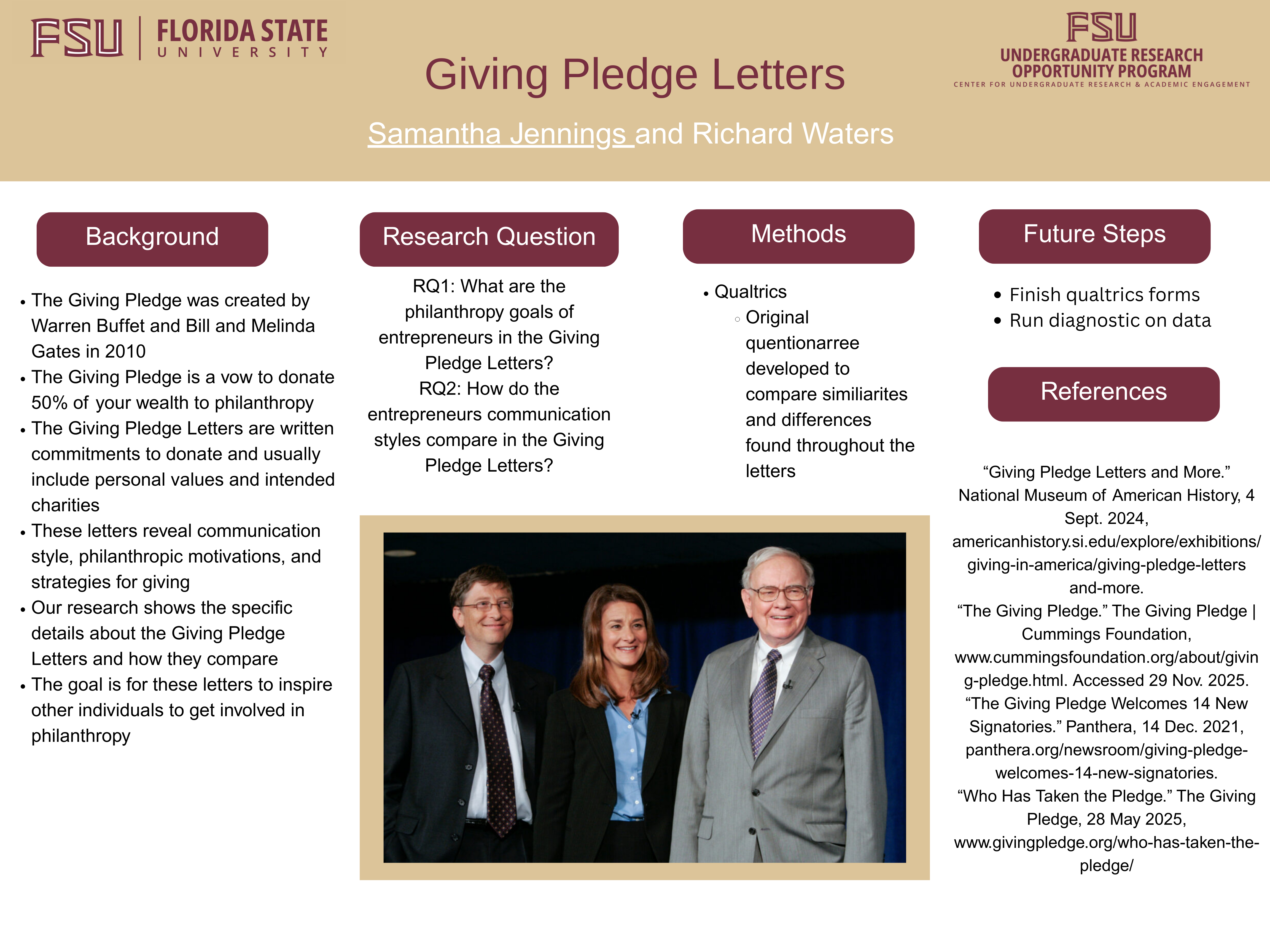
The Giving Pledge Letters
Authors: Samantha Jennings, Richard WatersStudent Major: Management Information Systems
Mentor: Richard Waters
Mentor's Department: Advertising/ Public Relations Mentor's College: Communication Co-Presenters:
Abstract
My research is about the Giving Pledge Letters and the purpose. I am investigating the Giving Pledge Letters so I can discover the motivations and reasonings behind philanthropic giving. It is relevant because many members are huge figures in society that have forever changed how we live. It is important to read so we can learn the “why” and inspire more billionaires to join the Giving Pledge.
In my research I have read through a few Giving Pledge Letters and filled out qualtrics surveys discussing different aspects of the letters. All my data is online so I analyze it by reviewing the letters. An analytical framework will be used once all the qualtrics surveys are filled out for each letter, but that is my end step.
The results are still in the works, but I suspect many philanthropists will have similar motivations and I will see trends. The research findings will show the readers why key figures in the world chose to donate and their end goals. The next step would be reviewing the most recent people that have taken the Giving Pledge and reviewing their letters.
I do not have the results yet but they will suggest many billionaires have the same drive towards philanthropy. This shows the differences between billionaires and the implications they can have on society.
Keywords: Philanthropy, Letters, Giving Pledge
26th annual Undergraduate Research Symposium, April 1, 2026
Gisele Garcia Poster Session 1: 9:30 am - 10:30 am / Poster #298

BIO
Gisele Garcia is a sophomore at Florida State University pursuing a double major in Political Science and Finance. She has the honor of working with Dr. Aleksandra Zimmerman of the Wertheim College of Business on a research project examining how social and cultural identities influence undergraduate students, as well as professionals, in their career pathways. Her work on the project involves building surveys and analyzing the survey data to identify patterns in academic major selection, career preparation experiences, and access to professional opportunities. Gisele thanks the Undergraduate Research Opportunity Program for this connection.
In addition to her academic and research work, Gisele serves as a Senator in the 78th Student Senate representing the College of Social Sciences & Public Policy, Seat 4, where she advocates for student resources and civic engagement. She is also a pre-law student intending to pursue business or contract law, with a strong interest in the intersection of law, finance, and organizational policy.
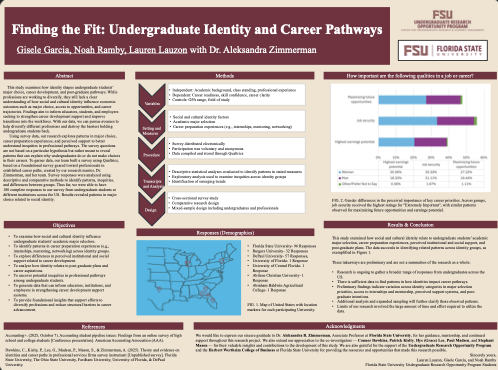
Finding the Fit: Undergraduate Identity and Career Pathways
Authors: Gisele Garcia, Aleksandra ZimmermanStudent Major: Political Science & Finance
Mentor: Aleksandra Zimmerman
Mentor's Department: Accounting Mentor's College: Herbert Wertheim College of Business Co-Presenters: Noah Ramby, Lauren Lauzon
Abstract
This study examines how identity shapes undergraduate students’ major choice, career development, and post-graduate pathways. While professions are working to diversify, they still lack a clear understanding of how social and cultural identity influence economic outcomes such as major choice, access to opportunities, and career trajectories. Findings aim to inform educators, students, and employers seeking to strengthen career development support and improve transitions into the workforce. With our data, we can pursue avenues to help diversify different professions and destroy the barriers holding undergraduate students back.
Using survey data, our research explores patterns in major choice, career preparation experiences, and perceived support to better understand inequities in professional pathways. The survey questions are not based on a particular hypothesis but rather meant to reveal patterns that can explain why undergraduates do or do not make choices in their careers. To garner data, our team built a survey using Qualtrics, based on a foundational survey geared toward professionals in established career paths, created by our research mentor, Dr. Zimmerman, and her team. Survey responses were analyzed using descriptive and comparative methods to identify patterns, inequities, and differences between groups. Thus far, we were able to have 180 complete responses to our survey from undergraduate students at different institutions across the US. Results revealed patterns in major choice related to social identity.
Keywords: Undergraduate, identity, career, pathway, choices
26th annual Undergraduate Research Symposium, April 1, 2026
Kayley Prevett Poster Session 4: 3:00 pm - 4:00 pm / Poster #148
BIO
Kayley Prevett is a first-year anthropology student who is interested in archaeology, scuba diving, and photography. Through FSU’s historic postcard archive, she is developing an online exhibit that researches WWII naval postcards. As an aspiring underwater archaeologist, she is particularly interested in maritime history and shipwrecks.
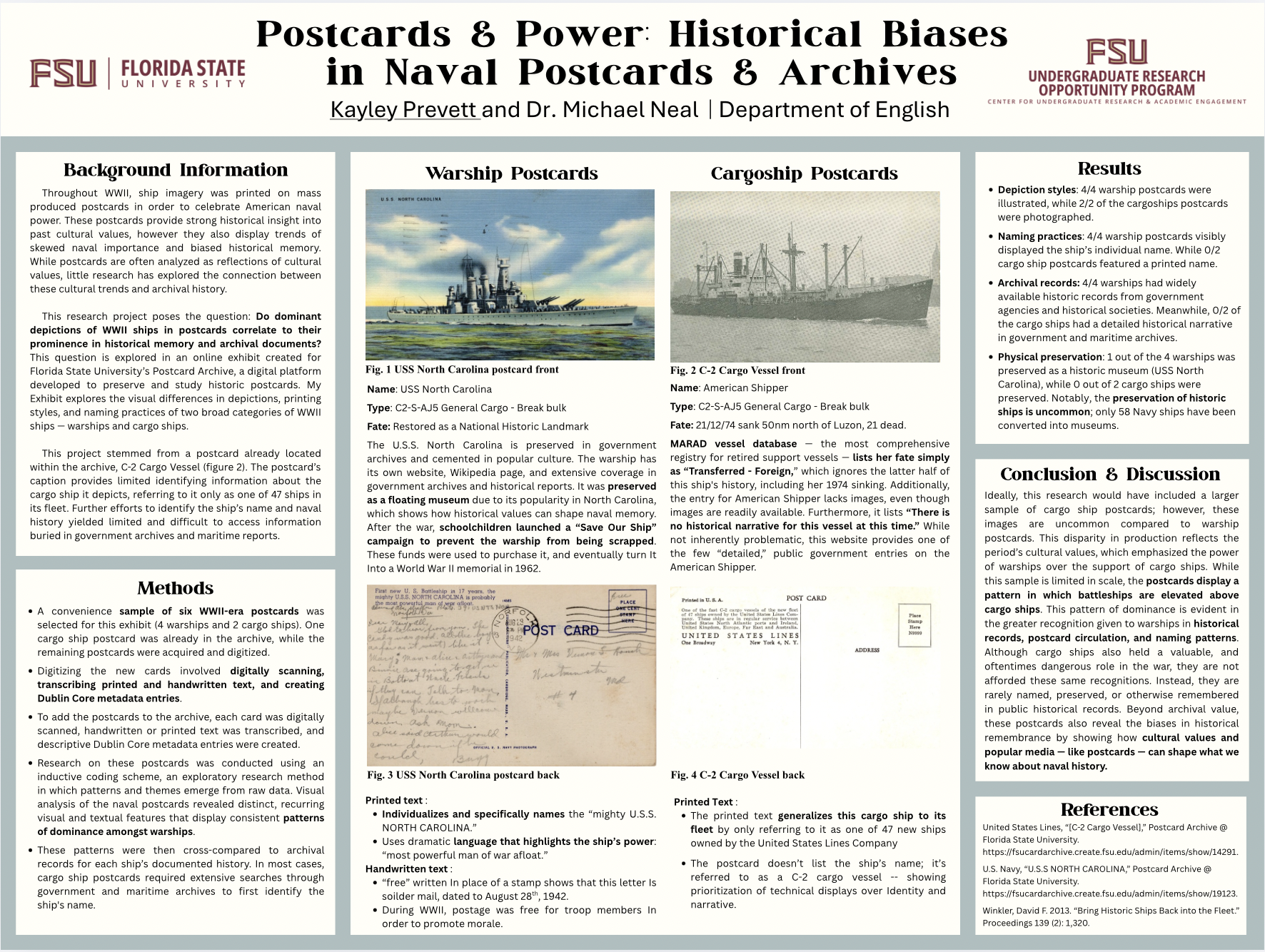
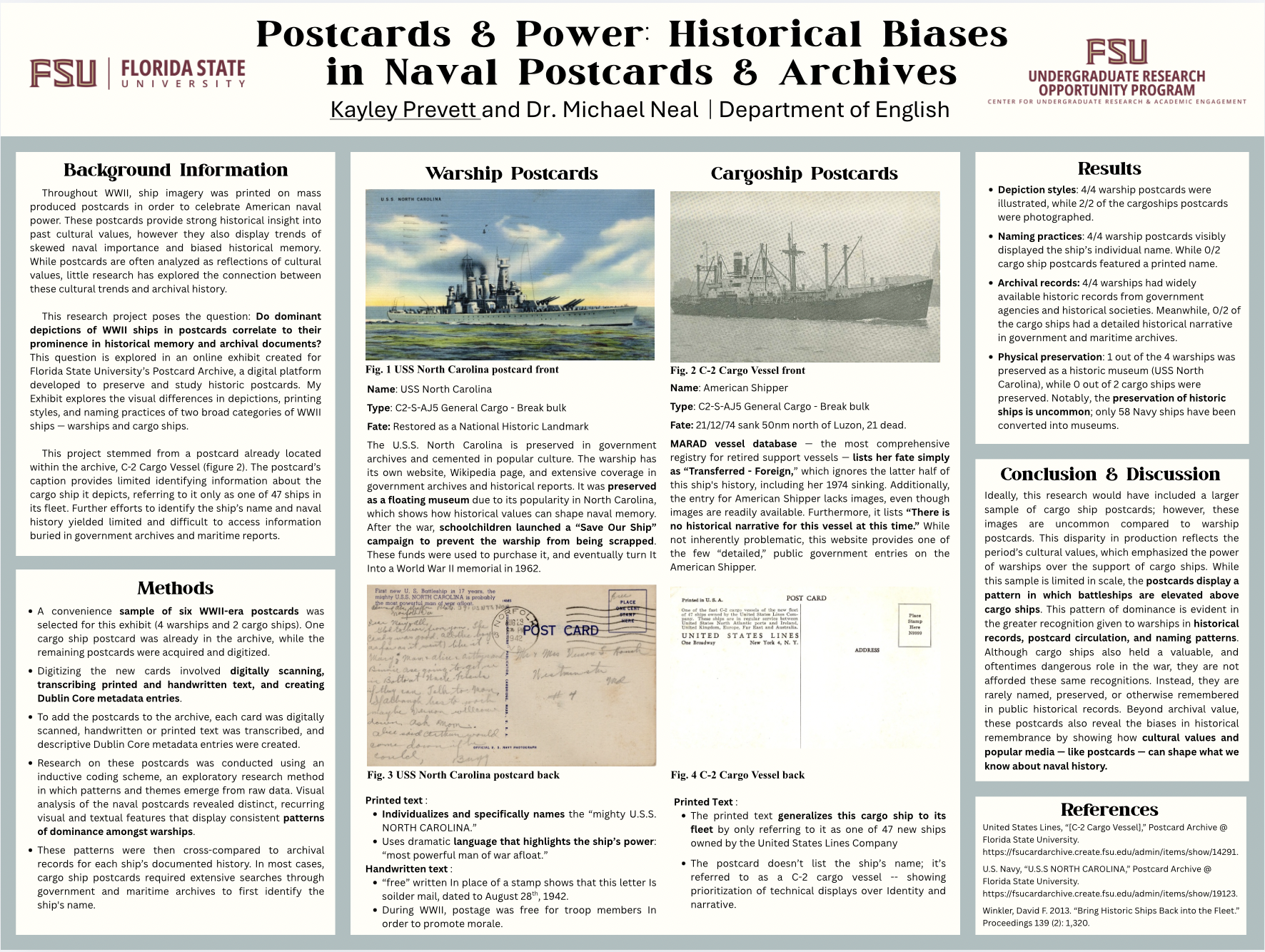
Postcards and Power: Historical Biases in Naval Postcards and Archives
Authors: Kayley Prevett, Michael NealStudent Major: Anthropology
Mentor: Michael Neal
Mentor's Department: Department of English Mentor's College: College of Arts and Sciences Co-Presenters:
Abstract
Throughout WWII, ship imagery was printed on mass produced postcards in order to celebrate American naval power. These postcards provide strong historical insight into past cultural values, however they also display trends of skewed naval importance and biased historical memory. This research seeks to examine the hierarchies of naval importance reflected in WWII ship postcards and explore what this demonstrates about historic remembrance. This research project develops an online exhibit for Florida State University’s Postcard Archive, a digital platform developed to preserve and study historic postcards. This exhibit explores the visual differences in depictions, printing styles, and naming practices of two broad categories of WWII ships: warships and cargo ships. These visual features are then compared to archival documents and historical records to demonstrate historical biases. This analysis revealed a consistent hierarchy in which battleships are deemed more significant than cargo ships. Battleships depicted in postcards were commonly illustrated, dramatized, and visibly named. Comparatively, cargo ships were often photographed, generalized to their fleets, and printed nameless. This visual hierarchy of importance is often reflected in historical narratives and archival records, in which battleships typically have extensive, easily accessible documentation and are more often preserved, while many cargo ships lack historical narratives and remain buried in archives. This highlights a broader issue in wartime remembrance, in which the spectacle of battle is prioritized over support systems that played an equally significant role in the war.
Keywords: Postcards, WWII, Ships
26th annual Undergraduate Research Symposium, April 1, 2026
Yvette Obediente Poster Session 4: 3:00 pm - 4:00 pm / Poster #130
BIO
Yvette Obediente is a junior pursuing a Bachelor of Science in Biological Sciences on the pre-medicine track at Florida State University. She has been involved in research for the past two years under the mentorship of Dr. Brown, focusing on aging and neurodegenerative diseases. Yvette began her research career as a freshman through the Undergraduate Research Opportunity Program (UROP), which sparked her strong interest in scientific research. She recently attended the Max Planck Symposium in March 2026, where she engaged with leading scientists and expanded her understanding of current advancements in the field. Following graduation, Yvette plans to attend medical school and pursue a career as a physician.
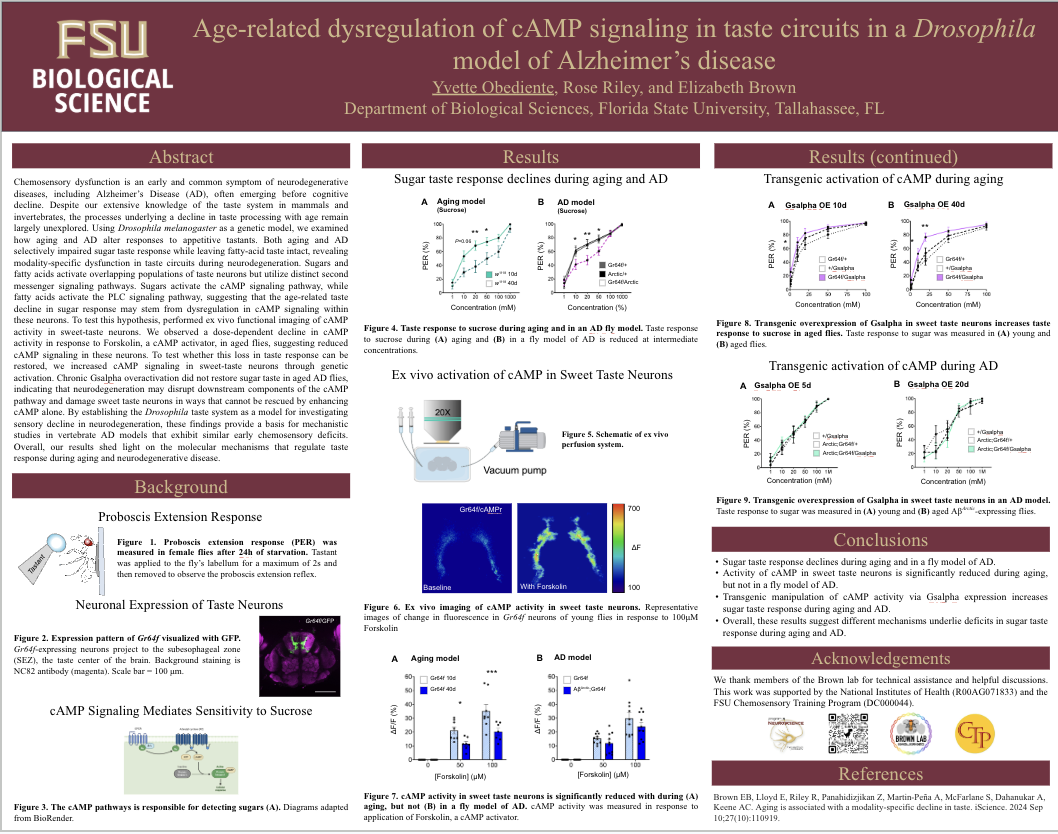
Age-related dysregulation of cAMP signaling in taste circuits in a Drosophila model of Alzheimer’s disease.
Authors: Yvette Obediente, Dr. Elizabeth BrownStudent Major: Biological Sciences
Mentor: Dr. Elizabeth Brown
Mentor's Department: Biological Science and Neuroscience Mentor's College: Arts and Sciences Co-Presenters:
Abstract
Chemosensory dysfunction is an early and common symptom of neurodegenerative diseases, including Alzheimer’s Disease (AD), often emerging before cognitive decline. Despite extensive knowledge of the taste system in mammals and invertebrates, the processes underlying a decline in taste processing with age remain largely unexplored. Using Drosophila melanogaster as a model, we examined how aging and AD alter responses to appetitive tastants. Aging and AD selectively impaired sugar taste response reveals modality-specific dysfunction in taste circuits during neurodegeneration. Sugars activate the cAMP signaling pathway suggesting the age-related taste decline in sugar response stems from dysregulation in cAMP signaling within these neurons. To test this hypothesis, we performed ex vivo functional imaging of cAMP activity in sweet-taste neurons. We observed a dose-dependent decline in cAMP activity in response to Forskolin, a cAMP activator, in aged flies, suggesting reduced cAMP signaling in these neurons. To test if loss in taste response can be restored, we increased cAMP signaling in sweet-taste neurons through genetic activation. Chronic Gsalpha overactivation did not restore sugar taste in aged AD flies, indicating that neurodegeneration may disrupt downstream components of the cAMP pathway and damage sweet taste neurons in ways that cannot be rescued by enhancing cAMP alone. By establishing the Drosophila taste system as a model for investigating sensory decline in neurodegeneration, these findings provide a basis for mechanistic studies in vertebrate AD models that exhibit similar early chemosensory deficits. Overall, our results shed light on the molecular mechanisms that regulate taste response during aging and neurodegenerative disease.
Keywords: Alzheimers, Drosophila, Imaging
26th annual Undergraduate Research Symposium, April 1, 2026
Johanna Overbeck Poster Session 2: 10:45 am - 11:45 am / Poster #176
BIO
Johanna Overbeck is a first-year student from Jupiter, Florida, pursuing a bachelors degree in Cellular and Molecular Neuroscience at Florida State University. She is a member of the FSU Honors Program. Through her participation in the Undergraduate Research Opportunity Program, she sought early involvement in academic research and has developed a strong interest in neuroscience. She is particularly interested in exploring epigenetic and molecular methods in the laboratory to better understand the mechanisms underlying neurological processes. Her research experience has further shaped her academic goals, and she plans to pursue an MD/PhD to integrate research and clinical practice, with a potential focus on pathology.
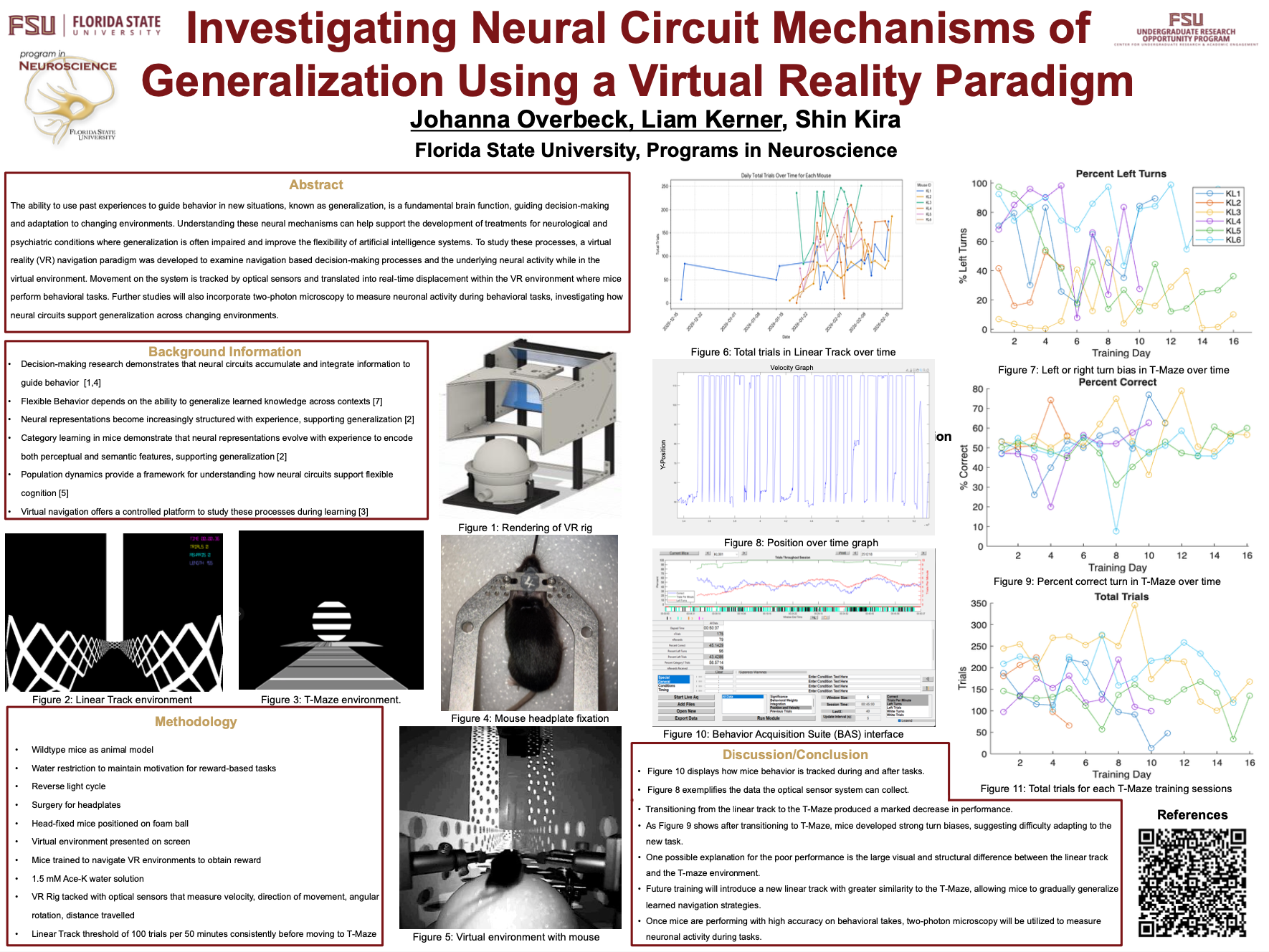
Investigating Neural Circuit Mechanisms of Generalization Using a Virtual Reality Paradigm
Authors: Johanna Overbeck, Shin KiraStudent Major: Cellular and Molecular Neuroscience
Mentor: Shin Kira
Mentor's Department: Department of Psychology Mentor's College: College of Arts and Sciences Co-Presenters: Liam Kerner
Abstract
The ability to use past experiences to guide behavior in new situations, known as generalization, is a fundamental brain function, guiding decision-making and adaptation to changing environments. Understanding these neural mechanisms can help support the development of treatments for neurological and psychiatric conditions where generalization is often impaired and improve the flexibility of artificial intelligence systems. To study these processes, a virtual reality (VR) navigation paradigm was developed to examine navigation-based decision-making processes and the underlying neural activity, where mice are trained to navigate the virtual environment. Movement on the system is tracked by optical sensors and translated into real-time displacement within the VR environment. Behavioral training shows that mice are learning to navigate within the VR system, with several mice exhibiting consistent engagement and gradual improvement in task performance across sessions. After achieving criterion-level performance on the linear track task, mice advanced to a T-maze paradigm requiring left and right turn decisions. Further studies will incorporate two-photon calcium microscopy to measure neuronal activity during these decision-based navigation tasks, investigating how neural circuits support generalization across changing environments.
Keywords: Generalization, Neuroscience, Neural Networks, Virtual Reality
26th annual Undergraduate Research Symposium, April 1, 2026
Aiden Merritt Poster Session 3: 1:45 pm - 2:45 pm / Poster #297
BIO
Aiden Merritt is a sophomore from Tallahassee, FL. He is pursuing a Bachelor of Science in Risk Management and Insurance with a plan to double major in Economics. He plans to continue his education by pursuing a Master of Business Administration upon completing his undergraduate degree.
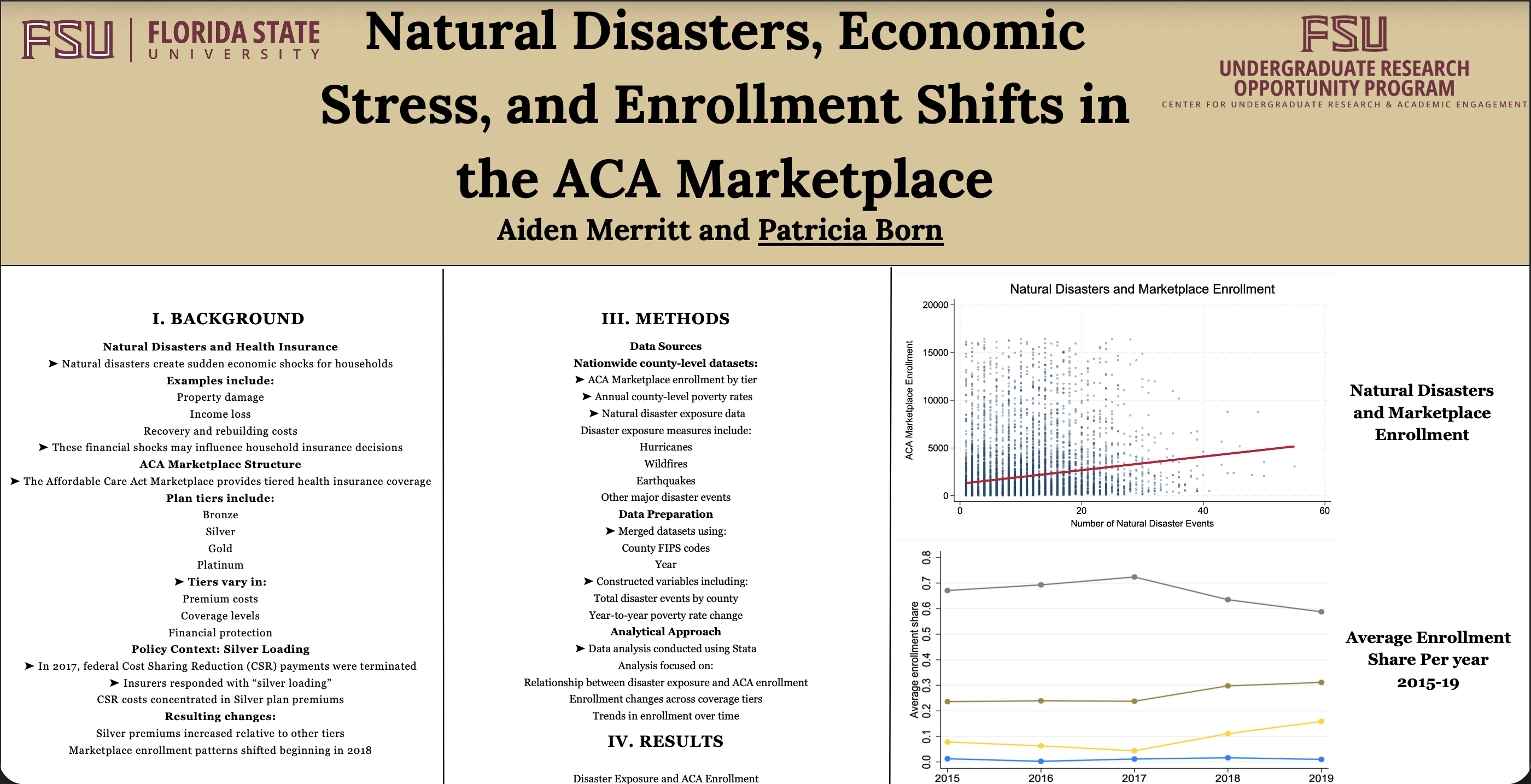
Natural Disasters, Economic Stress, and Enrollment Shifts in the ACA Marketplace
Authors: Aiden Merritt, Patricia BornStudent Major: Risk Management and Insurance and Econonomics (NFA).
Mentor: Patricia Born
Mentor's Department: Risk Management and Insurnace Mentor's College: Herbert Wertheim College of Business Co-Presenters:
Abstract
When natural disasters happen the affected are faced with tough decisions. Decisions like repairing their homes, looking for their family, or caring for their own health. This research project is focused on identifying change and trends in the Affordable Care Act health insurance marketplace tier enrollments after natural disasters at the county level. The specific question of this segment of the project is focused on if there is a traceable trend of change in the poverty line in the top 10% of counties nationwide. The research uses programs such as STATA and Excel to compare disaster and poverty data. For studying the change in poverty line, the variable of total losses was used to determine the top ten percent of counties. After that the change over time of poverty in those counties per year was tracked and recorded. While there has not been a definitive trend found between total losses and change in poverty found, primarily due to the poverty data capturing a broader nationwide trend of decreasing poverty levels, there is still more to be done with this question. In the future if at risk counties were identified in advance and tracked over a period compared to unaffected counties, then potentially more clear results could be found. The overall research question helps us realize the why behind people’s decision making on what to do with their funds after being hit natural disasters and help policy makers make decisions that can protect and support people after disaster strikes.
Keywords: Insurance, Natural Disasters, ACA Marketplace
26th annual Undergraduate Research Symposium, April 1, 2026
Zane McGill Poster Session 3: 1:45 pm - 2:45 pm / Poster #85
BIO
Zane McGill is a fourth-year transfer student from New College of Florida pursuing dual Bachelors of Arts degrees in International Affairs and Interdisciplinary Social Sciences (Urban Studies). He spent last semester at Mahidol University in Thailand and will be continuing his studies at Cornell's School of Architecture, Art, and Planning this Fall, pursuing a Master of Arts in City and Regional Planning, working closely with Dr. Sophie Oldfield and concentrating on Critical Urban Theory and International Planning. He intends to pursue a PhD in Geography or History thereafter and work in academia and international urban and regional development. Mr. McGill has a special interest in East and Southeast Asia, Post-Structuralism, and education.
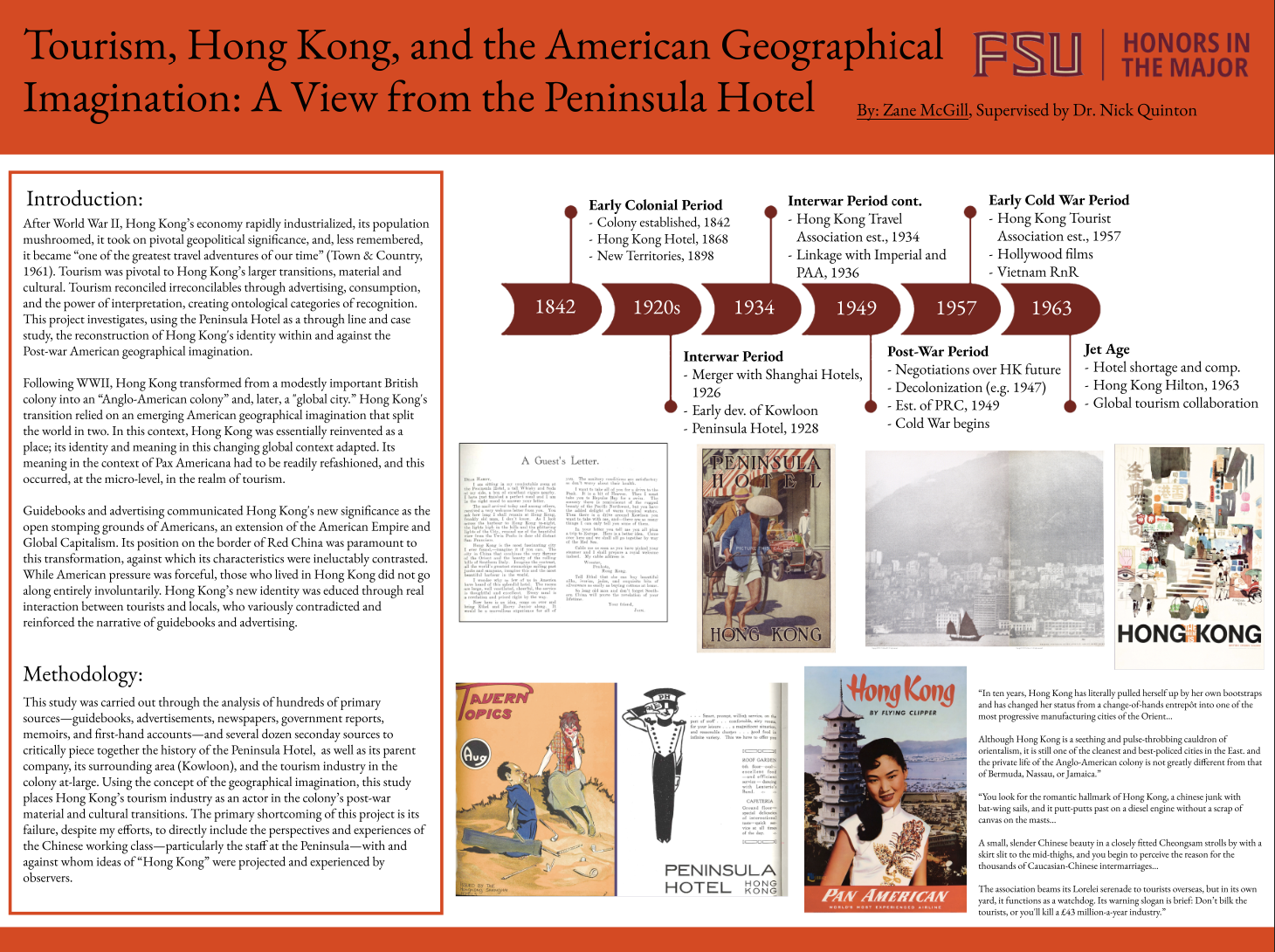
Tourism, Hong Kong, and the American Geographical Imagination: A View from the Peninsula Hotel
Authors: Zane McGill, Nick QuintonStudent Major: International Affairs, Interdisciplinary Social Sciences (Urban Studies)
Mentor: Nick Quinton
Mentor's Department: Geography Mentor's College: Florida State University Co-Presenters:
Abstract
After World War Il, Hong Kong's economy rapidly industrialized, its population mushroomed, it took on pivotal geopolitical significance, and, less remembered, it became "one of the greatest travel adventures of our time" (Town & Country, 1961). Tourism was pivotal to Hong Kong's larger transitions, material and cultural. Tourism reconciled irreconcilables through advertising, consumption, and the power of interpretation, creating ontological categories of recognition. This project investigates, using the Peninsula Hotel as a through line and case study, the reconstruction of Hong Kong's identity within and against the Post-war American geographical imagination. Following WWII, Hong Kong transformed from a modestly important British colony into an "Anglo-American colony" and, later, a "global city." Hong Kong's transition relied on an emerging American geographical imagination that split the world in two. In this context, Hong Kong was essentially reinvented as a place; its identity and meaning in this changing global context adapted. Its meaning in the context of Pax Americana had to be readily refashioned, and this occurred, at the micro-level, in the realm of tourism. Guidebooks and advertising communicated Hong Kong's new significance as the open stomping grounds of Americans, an extension of the American Empire and Global Capitalism. Its position on the border of Red China was paramount to this transformation, against which its characteristics were ineluctably contrasted. While American pressure was forceful, Hongkongers did not participate involuntarily. Hong Kong's new identity was educed through real interaction between tourists and locals, who variously contradicted and reinforced the narrative of guidebooks and advertising.
Keywords: Tourism, Cold War, Hong Kong, Modernity, Identity
26th annual Undergraduate Research Symposium, April 1, 2026
Adria Morales Santiago Poster Session 4: 3:00 pm - 4:00 pm / Poster #56
BIO
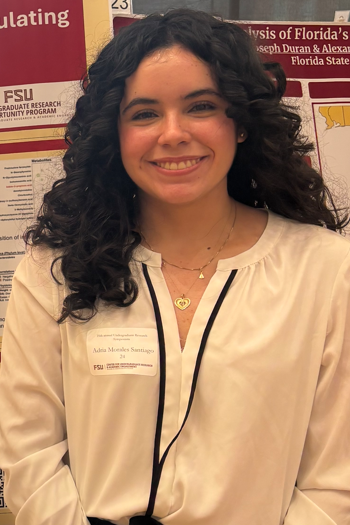
Adria Morales Santiago is a third-year student at Florida State University pursuing a Bachelor of Science in Biological Sciences. She serves as a UROP Leader within the Undergraduate Research Opportunity Program, where she mentors and supports undergraduate researchers. Adria has gained research experience in laboratory settings focused on gut microbiota, and her current research centers on Alzheimer’s disease and Mild Cognitive Impairment (MCI), where she examines spatial navigation deficits and how these neurodegenerative conditions impact cognitive functions such as memory and orientation. She plans to pursue medical school and a future career in oncology, to become a surgical oncologist and contribute to cancer research and patient care.
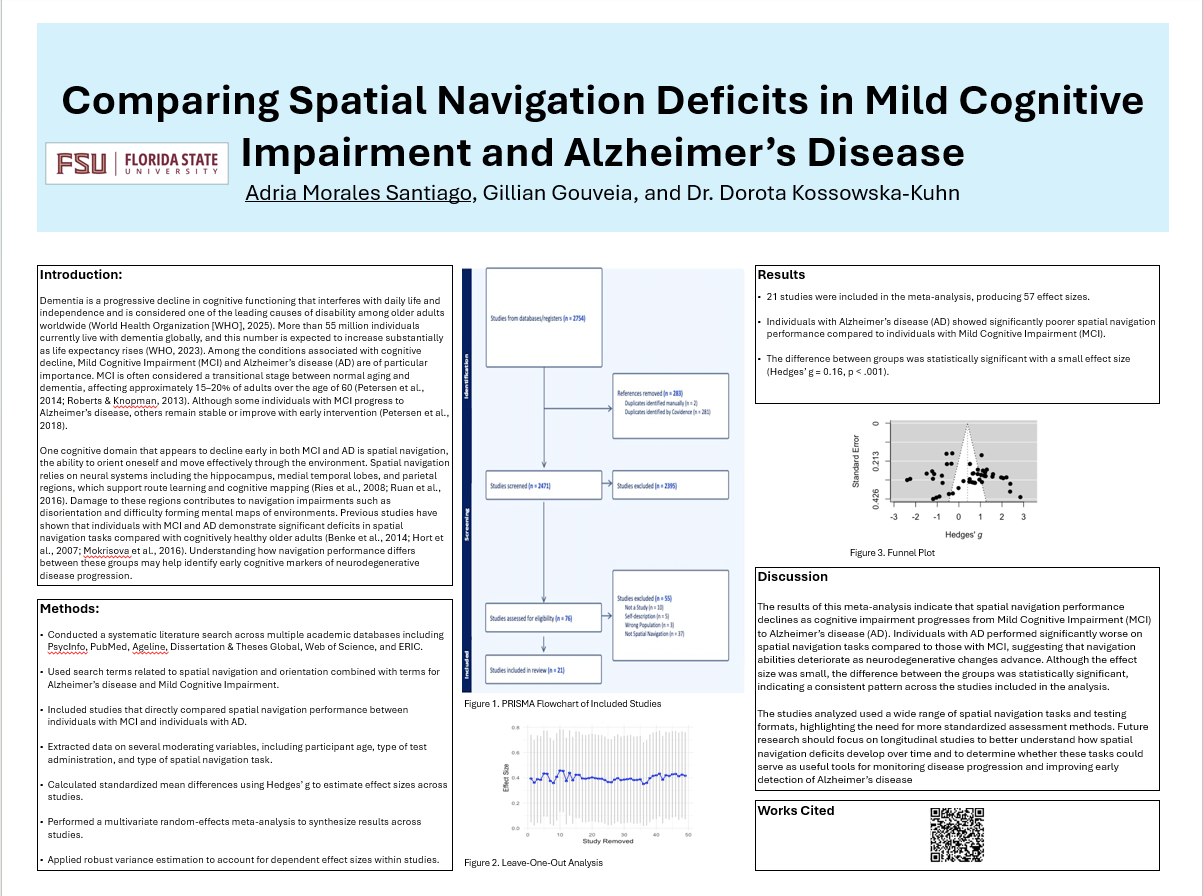
Comparing Spatial Navigation Deficits in Mild Cognitive Impairment and Alzheimer's Disease
Authors: Adria Morales Santiago, Dorota Kossowska-KuhnStudent Major: Biological Sciences
Mentor: Dorota Kossowska-Kuhn
Mentor's Department: Psychology Mentor's College: College of Arts and Sciences Co-Presenters:
Abstract
Spatial navigation difficulties are among the early cognitive changes observed in the progression of neurodegenerative conditions such as Mild Cognitive Impairment (MCI) and Alzheimer’s disease (AD). Due to navigation skills being essential for safe and independent functioning, understanding how these abilities decline across diagnostic stages is clinically important. While previous meta-analyses have established that both MCI and AD are associated with significant impairments compared to cognitively healthy older adults, less is known about the magnitude of difference between MCI and AD directly. The research project conducted a literature review synthesizing findings from 21 empirical studies examining spatial navigation performance in individuals diagnosed with MCI and AD. Across these studies, 57 effect sizes were extracted and analyzed using Hedges’ g within a multivariate random-effects framework. Additionally, variance estimation was applied to account for statistical dependence among effect sizes. Tasks included a range of formats, such as virtual reality, real-world navigation, computerized paradigms, and traditional paper-and-pencil measures, capturing diverse navigation domains. The results showed that individuals with AD demonstrated significantly poorer navigation performance compared to those with MCI, though the difference was small in magnitude (g = 0.16, p < .001). These findings suggest that spatial navigation continues to decline from MCI to AD but may do so gradually. Future research should prioritize longitudinal approaches and standardized assessment tools to characterize the trajectory of navigation deficits better and enhance their potential diagnostic utility.
Keywords: spatial navigation, Alzheimer's Disease, Mild Cognitive Impairment
26th annual Undergraduate Research Symposium, April 1, 2026
Ryley Ried Poster Session 3: 1:45 pm - 2:45 pm / Poster #201
BIO
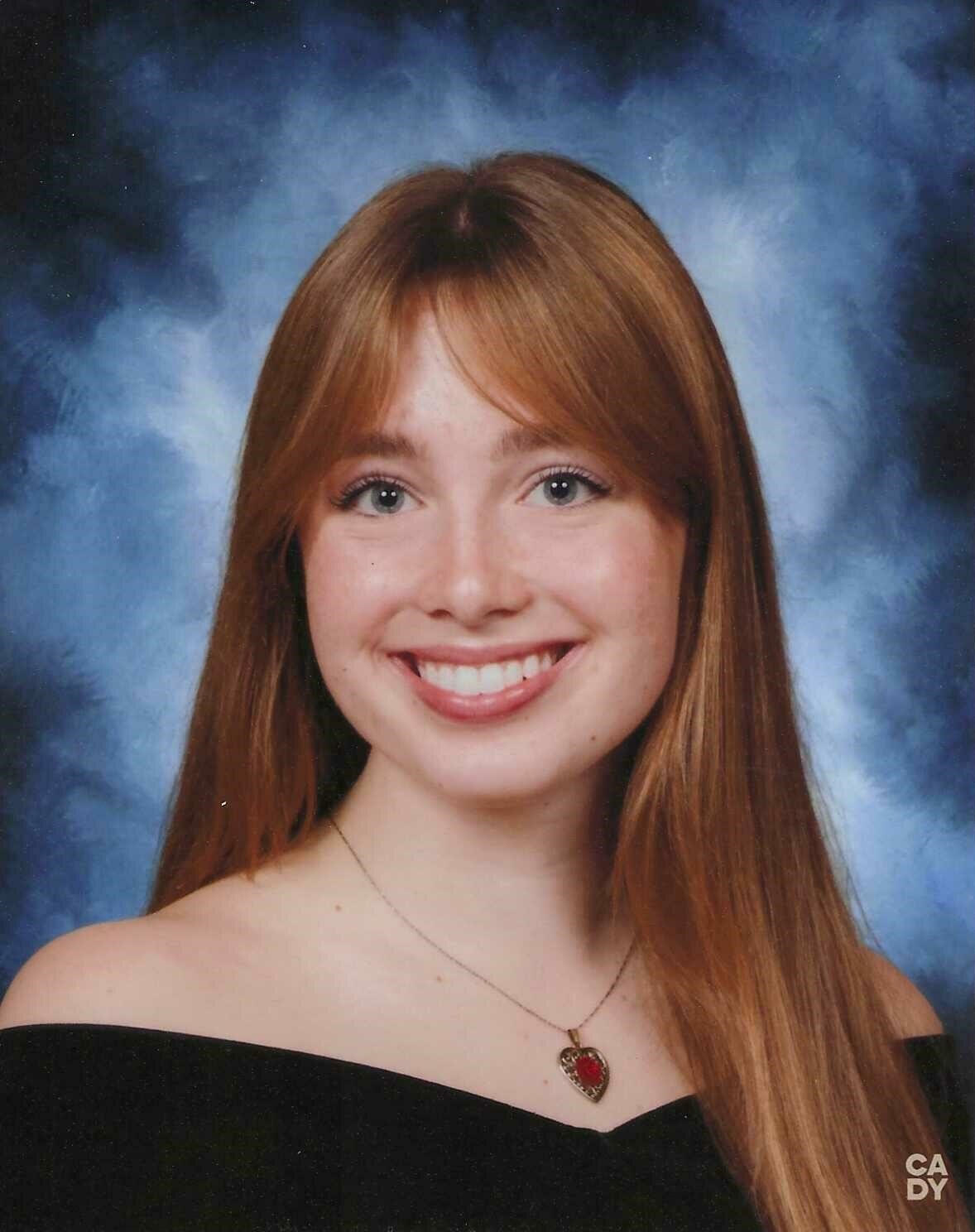
Ryley is a First-Year History major from Winter Garden, Florida. This is her first research project and she has goals of going to grad school for History or Law School.
The Antietam Project: Examining the Civil War's Bloodiest Battle from a New Lens
Authors: Ryley Ried, G. Kurt PiehlerStudent Major: History
Mentor: G. Kurt Piehler
Mentor's Department: History Mentor's College: Florida State University Co-Presenters: Justice Ulrich
Abstract
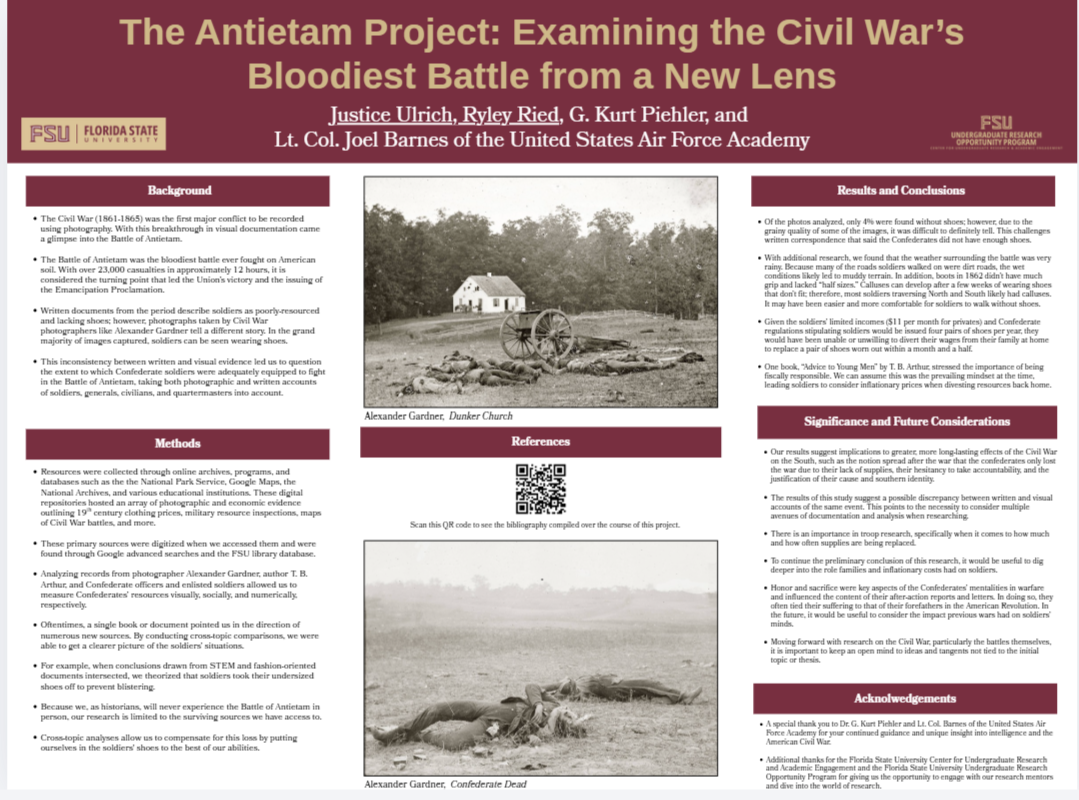
Many written documents surfaced over the course of the Civil War and post-war years outlining the Confederacy’s inability to resource its troops with necessities like shoes. This research aims to evaluate the extent to which these written claims align with photographic evidence. Findings related to military logistics, written records, and economics in 1862 parallel modern warfare as they explain the methodology behind soldiers’ use of the government’s allocation of scarce resources.
Photographic galleries, letters, diaries, newspapers, books, and Confederate reports were uncovered through open-source databases such as the National Archives and various educational institutions. Each resource was analyzed for the appearance or mention of clothing items, foodstuffs, and other resources. Findings were then contextualized through economics, fashion trends, weather patterns, and social norms of 1862.
We found that the weather surrounding the battle likely mudded the dirt roads of Eastern & Northern Virginia, as well as Western Maryland. Additionally, shoes in 1862 didn’t come in half sizes, and photographers like Alexander Gardner captured images of dead, shoeless Confederate soldiers. These findings point to a reluctance to spend money replacing shoes considering heavy inflation and the cultural teaching of avoiding unnecessary expenditures. It was determined that a possible solution to muddy, or dirt covered, routes and blistering boots was to take off one’s shoes.
A thorough understanding of the relationship between troops’ wages and the wellbeing of their families on the home front transcends into modern warfare as an indication of how often storehouses and supplies should be inspected and replaced.
Keywords: History, Civil War, Battle of Antietam, Photojournalism
26th annual Undergraduate Research Symposium, April 1, 2026
Saheli Brennan Poster Session 4: 3:00 pm - 4:00 pm / Poster #225
BIO
Saheli Katya Shah Brennan is a second-year undergraduate student in the School of Communication Science and Disorders (CSD), pursuing minors in Child Development and Anthropology, with the goal of eventually obtaining a Clinical Doctoral Degree and Ph.D. in Speech Language Pathology to become a school-based Speech Language Pathologist (SLP). Through UROP, Brennan has had the honor of assisting on the APPLES (Academic Progress in Phonological Learning of Elementary Schoolers) project in the CLaSS Lab under Dr. Kelly Farquharson in the School of CSD to help holistically examine the impacts of having a speech sound disorder on elementary school students by scoring administered tests and inputting data into RedCap. Recently, she has had the privilege of working under two graduate students as a Research Assistant: notably Ms. Angelica Bernabe in the School of CSD, where Brennan assisted with transcribing interviews that helped understand the various perspectives on stuttering disorders in individuals with stutters; and Ms. Audrey Yarish in the FSU Anthropology Department, where Brennan assisted with participant recruitment, questionnaire formulation, administering interviews, coding interviews, and data analysis to better understand how one’s social network influences nicotine usage. Outside of research, she is always excited to help lead and organize her weekly EngageTLH trip to the FSU Food4Thought Pantry to help process and stock donations from community partners, as well as plan and host socials for the Service Scholar community as the FSU Service Scholars Social Chairperson. In Brennan’s free time, she enjoys cooking for loved ones, working out, nature, and songwriting.
Aspects of Life Impacted by SSDs in Early Elementary Students
Authors: Saheli Brennan, Dr. Kelly FarquharsonStudent Major: Communication Science and Disorders
Mentor: Dr. Kelly Farquharson
Mentor's Department: School of Communication Science and Disorders Mentor's College: College of Communication and Information Co-Presenters: Anna White; Sydney Stinson
Abstract
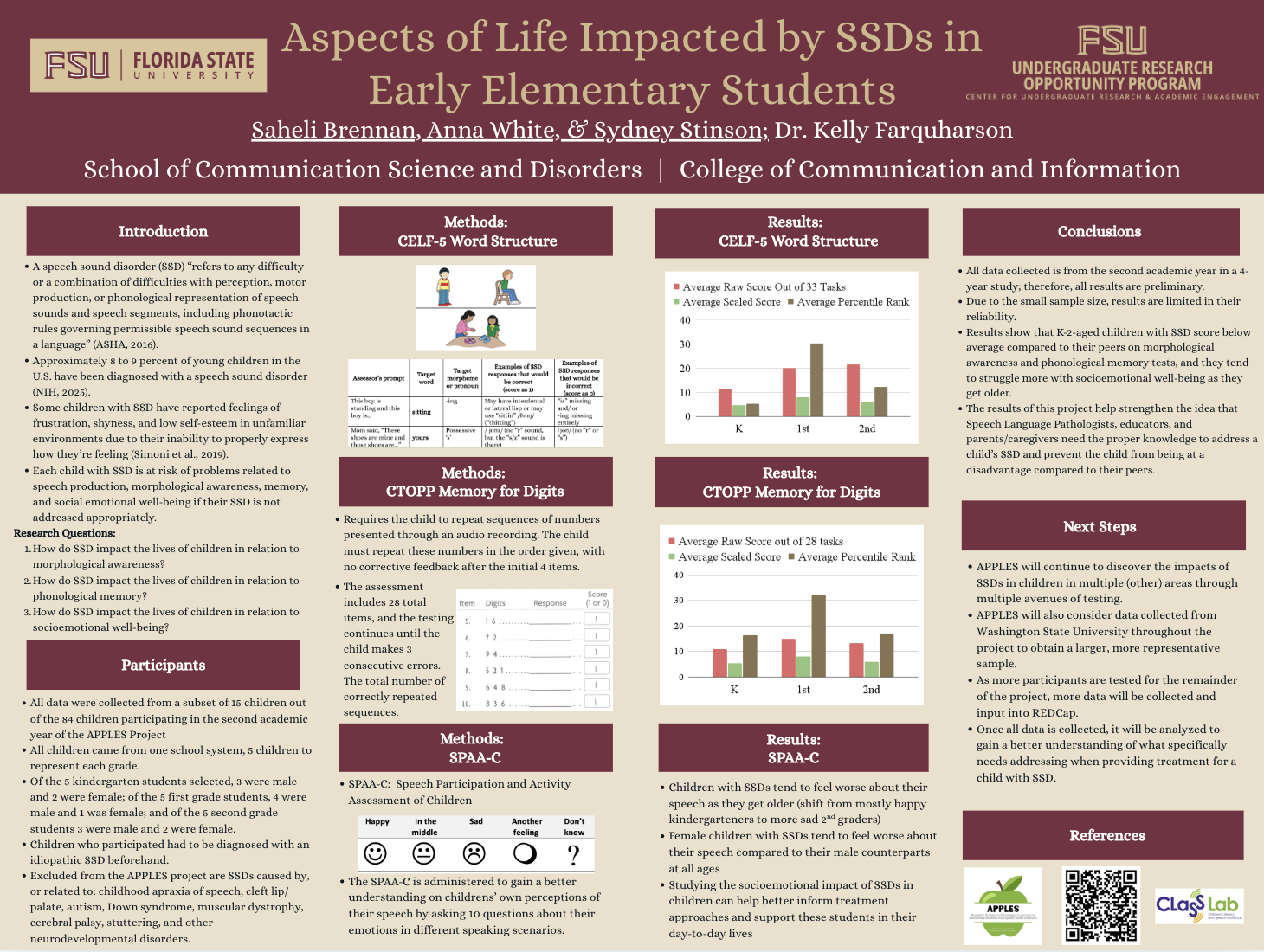
In the Academic Progress in Phonological Learning for Elementary Schools (APPLES) Project, the main question being answered is “what works for whom” when it comes to determining treatment for speech sound disorders (SSD). There are 46 distinct approaches for intervention-based methods in treating children with an SSD (Baker, 2011), but there isn’t much evidence on which approaches work best for specific subsets within SSD. Approximately 8 to 9 percent of young children in the U.S. have been diagnosed with an SSD (NIH, 2025), each of them at risk of problems related to speech production, memory, and emotional well-being, if their SSD is not addressed appropriately. Eighty four K-2 children in Leon County and Whitman County elementary schools are given a set of standardized tests over multiple sessions each academic semester. The tests are then scored, and all data is entered into a RedCap database for further analysis. The results presented are a representation of one academic term in a 4-year-long project; therefore, all results are preliminary. From the data, there is a positive correlation between age and morphological awareness and age and phonological memory, but a negative correlation between age and the amount of perceived happiness towards SSDs. Further studies could apply the aforementioned results to intervention-based methods for subsets of SSD and report back on effectiveness. Overall, the findings show that younger children struggle more with speech production and memory, while older children struggle more with their emotional well-being in relation to how they perceive their SSD.
Keywords: SSD, children, students, speech, development