
Research Symposium
26th annual Undergraduate Research Symposium, April 1, 2026
Silvia Rodriguez Poster Session 2: 10:45 am - 11:45 am / Poster #142
BIO
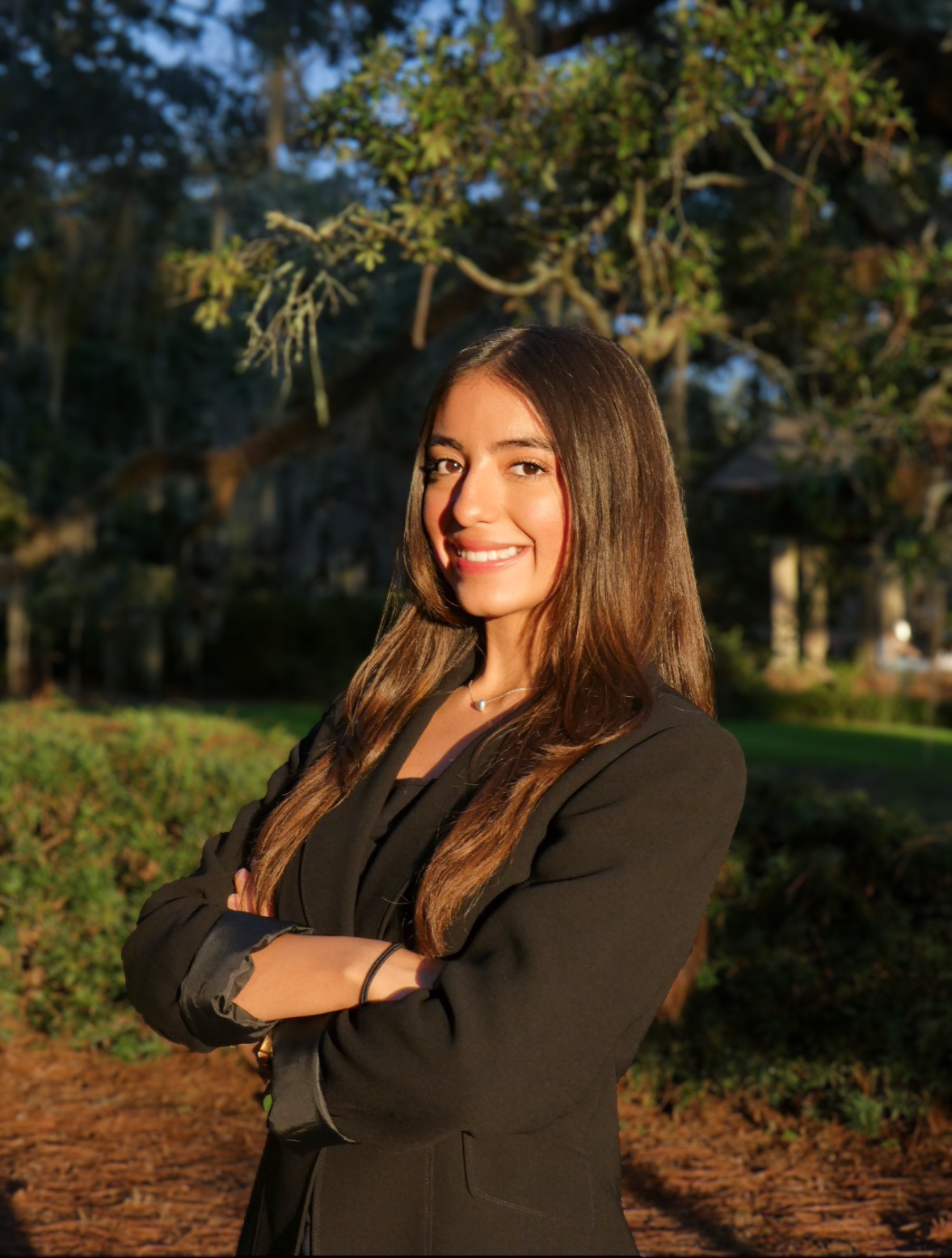
Silvia Rodriguez is an FSU Presidential Scholar, researcher, and TEDx speaker specializing in the intersection of policy and innovation. She is currently a Public Policy Intern at the DeVoe L. Moore Center and a Voter Registration Fellow with the Florida Democratic Party. Silvia’s academic work, ranging from research on law school accommodations to human rights and technology, has earned her a speaking engagement at the Oxford University Consortium on Human Rights this summer. She is currently completing her undergraduate studies in Philosophy and Economics.
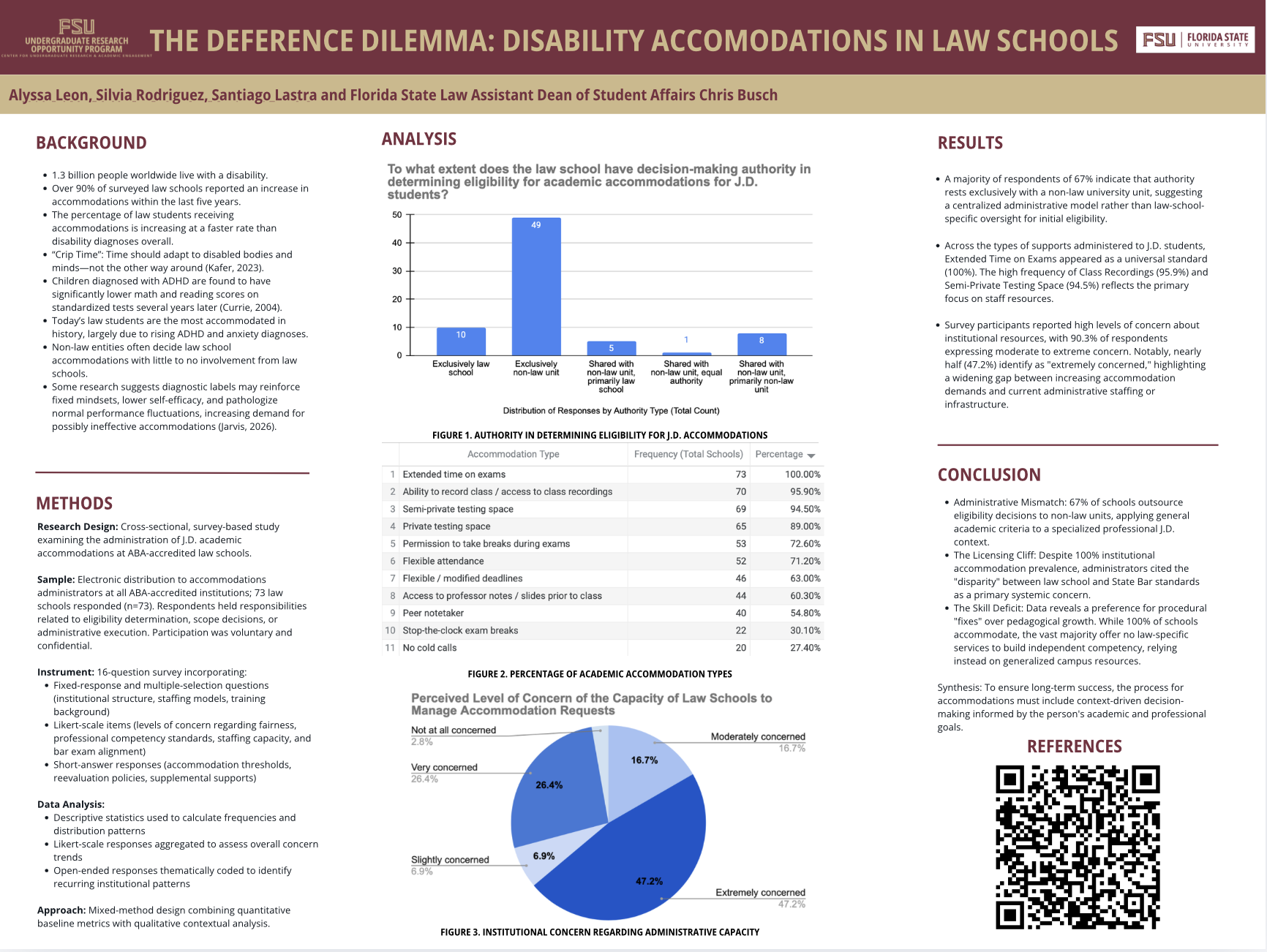
The Deference Dilemma: Disability Accomodations in Law Schools
Authors: Silvia Rodriguez, Assistant Dean of Student Affairs Chris BuschStudent Major: Economics
Mentor: Assistant Dean of Student Affairs Chris Busch
Mentor's Department: Student Affairs Mentor's College: FSU College of Law Co-Presenters: Alyssa Leon, Santiago Lastra
Abstract
This project investigates the administrative and pedagogical structures of academic accommodations within American legal education, specifically examining the alignment between centralized university models and the professional demands of the legal industry. Employing an empirical methodology, the research utilizes a 16-question survey distributed to accommodations administrators at all ABA-accredited law schools to evaluate institutional decision-making authority, the prevalence of professional skill-building interventions, and administrator concern levels regarding current accommodation frameworks. Preliminary data from 73 institutions indicates a significant trend toward administrative centralization; almost half of surveyed law schools defer both eligibility and scope determinations to non-law university units. The survey results further document institutional concern regarding a potential “licensing cliff,” identified through the perceived disparity between classroom accommodations and the rigid standards of state bar examinations. Furthermore, the data evidences a notable absence of integrated executive functioning or resilience training across the sampled schools. Ultimately, this survey identifies systemic trends in the administration of academic accommodations at law schools, providing a quantitative baseline for analyzing the relationship between institutional structure and the perceived professional readiness of accommodated law students.
Keywords: Law, Accommodations, Legal Studies, Policy
26th annual Undergraduate Research Symposium, April 1, 2026
Juan Gutierrez Poster Session 2: 10:45 am - 11:45 am / Poster #111
BIO
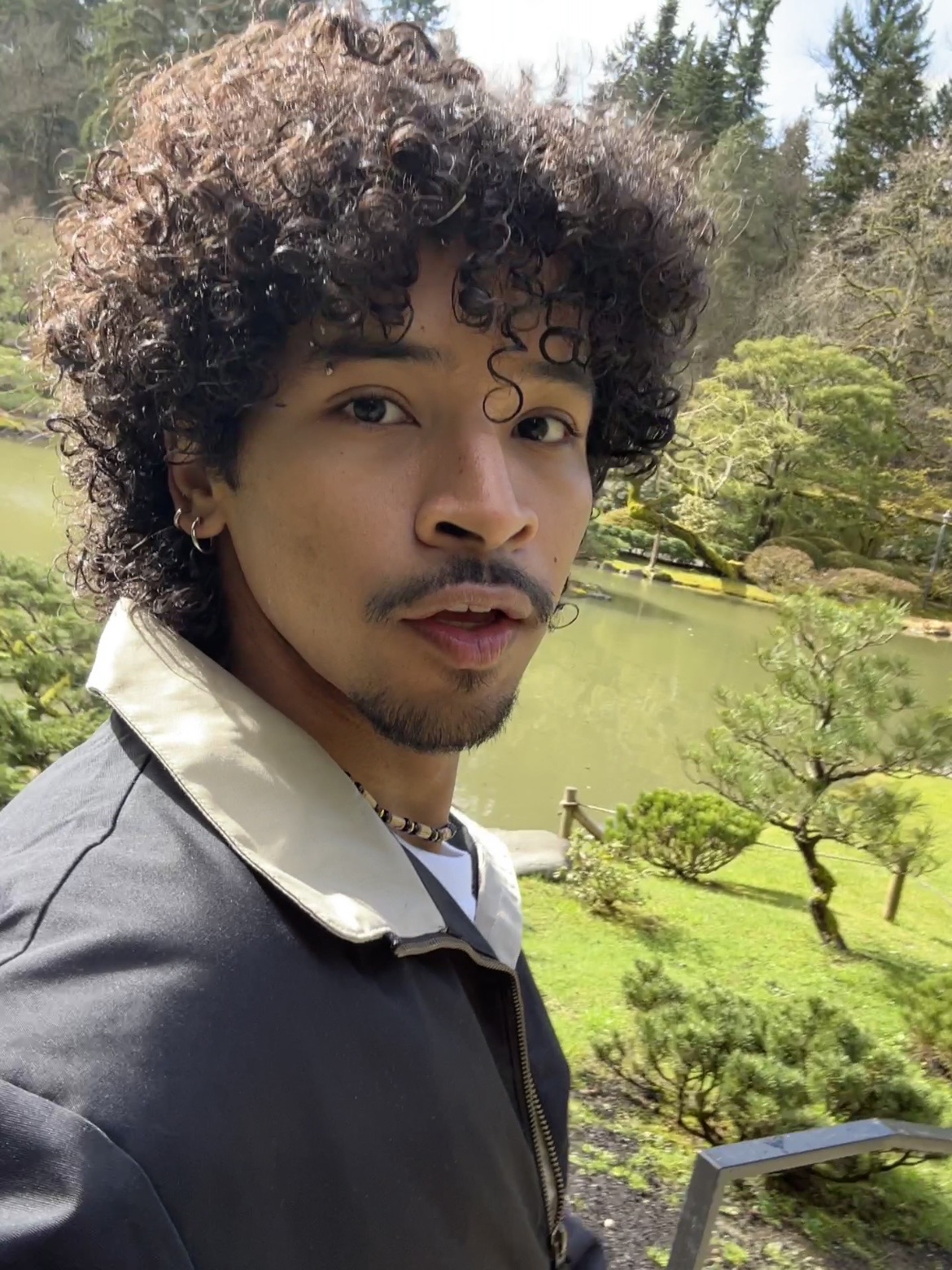
Juan Sebastian Gutierrez is a Political Science and Information Technology student minoring in Urban Planning. He is deeply interested in analytics, policy, and their respective overlap. He interns at the DeVoe L. Moore Institute as a Data Analytics Intern and Public Policy Intern as well as FSU ITS as a Data Vault & ERP Modernization Intern. In his free time, he enjoys reading and hanging out with friends. He hopes to pursue a Masters in Analytics or Informatics.
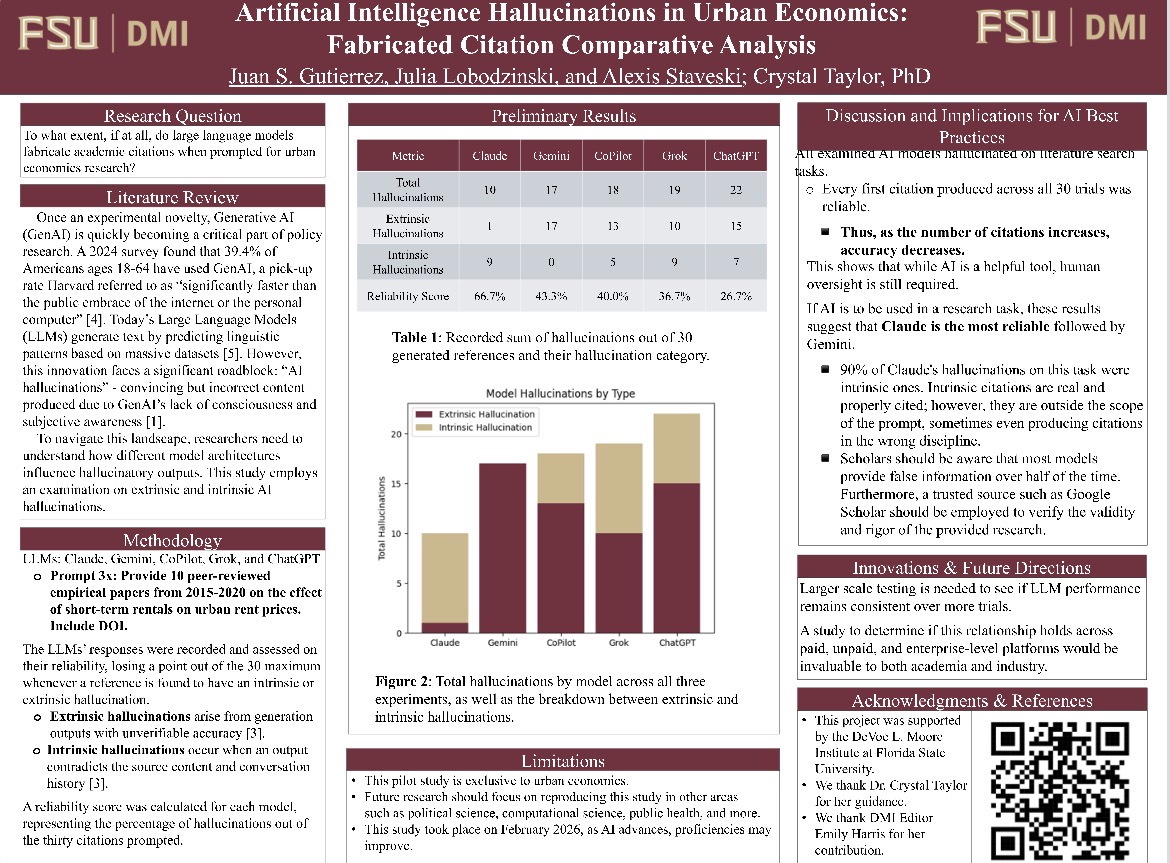
Artificial Intelligence Hallucinations in Urban Economics: Fabricated Citation Comparative Analysis
Authors: Juan Gutierrez, Crystal TaylorStudent Major: Political Science & Information Technology
Mentor: Crystal Taylor
Mentor's Department: Urban Planning Mentor's College: College of Social Science and Public Policy Co-Presenters: Julia Lobodzinski and Alexis Staveski
Abstract
Once an experimental novelty, Generative AI (GenAI) models, such as ChatGPT, are quickly becoming a critical part of research and writing. A 2024 Centre for Economic Policy Research study found that nearly 40% of Americans ages 18-64 report using GenAI. Today’s Large Language Models (LLMs), a subset of GenAI, generate text by predicting linguistic patterns based on massive datasets (Toner, 2023). However, this innovation faces a significant roadblock: “AI hallucinations,” convincing yet incorrect content produced due to GenAI’s lack of consciousness and subjective awareness (Ozer, 2024).
To understand these hallucinations, this research prompts AI models to examine extrinsic and intrinsic hallucinations. Extrinsic AI hallucinations are unverifiable, fictional information generated by LLMs unfaithful to users’ input (Ji et al, 2023). Intrinsic hallucinations are outputs that contradict the source content (Ji et al, 2023). This research asks: “To what extent, if at all, do LLMs fabricate academic citations when prompted for urban economics research?”
This research aims to provide a comparative performance diagnostic framework to predict, categorize, and minimize hallucination inaccuracies. Researchers prompted five AI models with the input: “Provide 10 peer-reviewed empirical papers from 2015-2020 on the effect of short-term rentals on urban rent prices. Include DOI.” The LLMs’ responses will then be saved and graded on their reliability, including invented references, fabricated DOIs, fake titles, and incorrect details. By analyzing these trials, preliminary results show the reliability of different models and how the design purpose influences hallucinations. Future research should continue with various prompts to guide further real-world AI applications.
Keywords: AI, Hallucinations, Prompting, Urban Economics
26th annual Undergraduate Research Symposium, April 1, 2026
Kennedie Cearlock Poster Session 1: 9:30 am - 10:30 am / Poster #249
BIO
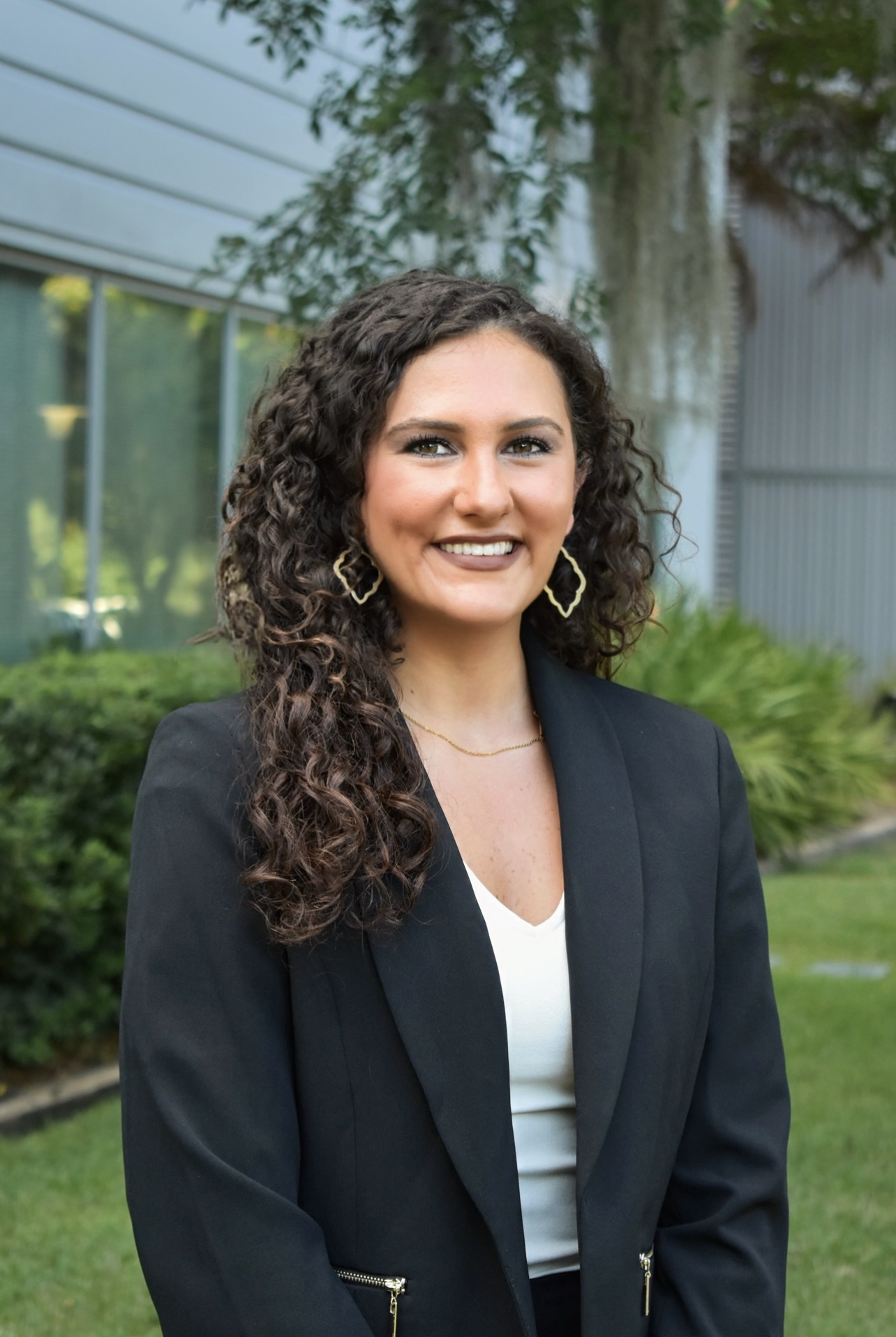
Kennedie Cearlock is a senior pursuing a Bachelor of Science in Biomedical Engineering at the FAMU–FSU College of Engineering. Originally from a small town in Illinois, she is passionate about improving healthcare through engineering and innovation, with research interests in biomaterials and tissue engineering. Under the mentorship of Dr. Ali, her work has focused on developing patient-specific, bioresorbable tracheal scaffolds and exploring advanced materials for medical applications. Kennedie has gained hands-on experience through research and internships, including developing lithium-ion battery gel electrolytes through a competitive research program and working as a manufacturing intern at Merck. She is also actively involved in leadership and service as Outreach Chair for the Society of Women Engineers and Vice President of Tau Beta Pi. Following graduation, Kennedie plans to pursue a career in the medical device industry, where she aims to design technologies that improve patient outcomes and expand access to care.
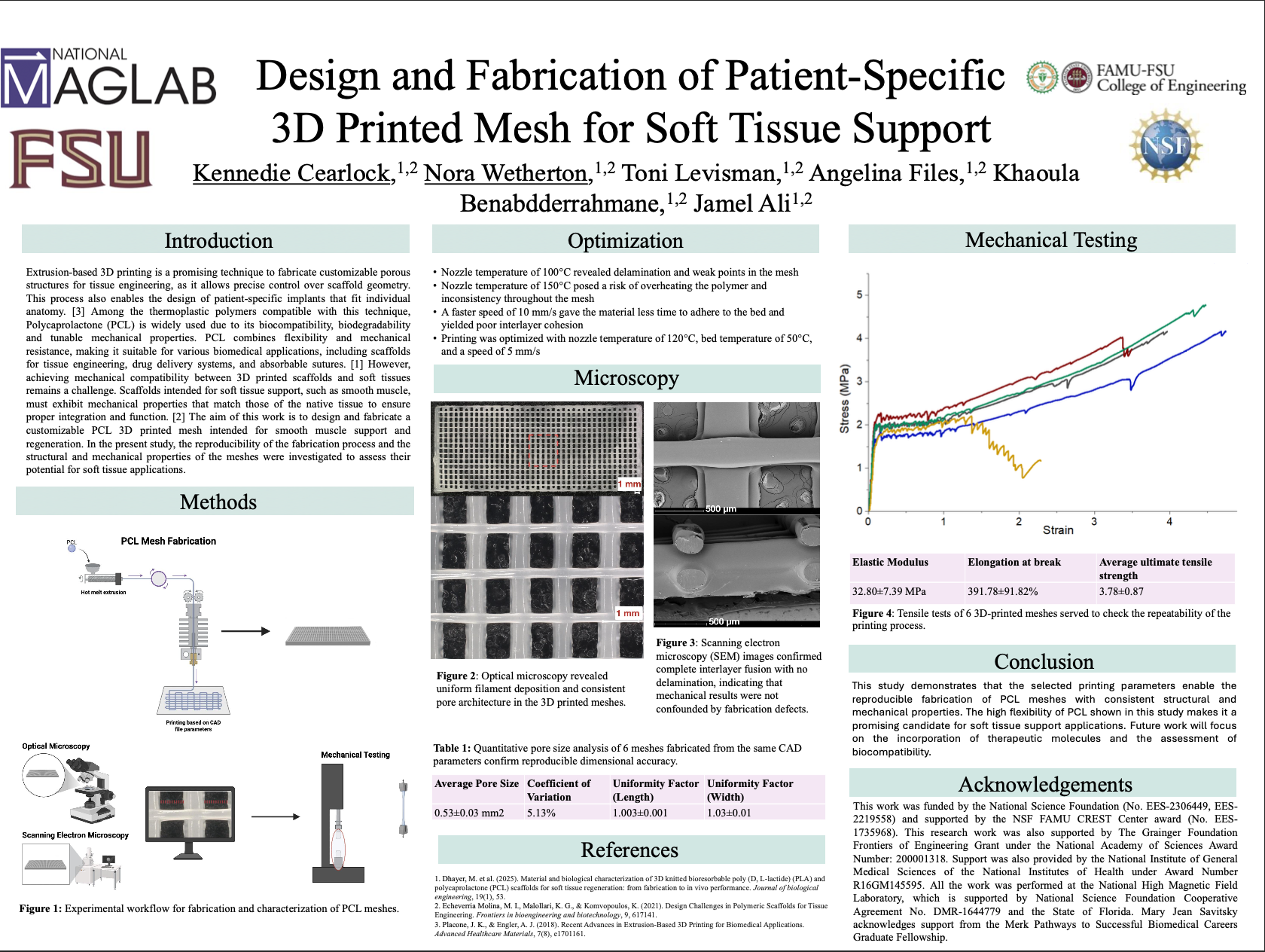
Design and Fabrication of Patient-Specific 3D Printed Mesh for Soft Tissue Support
Authors: Kennedie Cearlock, Dr. Jamel AliStudent Major: Biomedical Engineering
Mentor: Dr. Jamel Ali
Mentor's Department: Chemical and Biomedical Engineering Mentor's College: FAMU-FSU College of Engineering Co-Presenters: Nora Wetherton
Abstract
Extrusion-based 3D printing offers a versatile platform to fabricate customizable scaffolds intended for use in tissue engineering applications. Among the materials suitable for this technology, polycaprolactone (PCL) offers both biocompatibility and tunable mechanical properties, suitable for a wide range of tissues . This tunability enables the design of scaffolds appropriate not only for hard tissues, like bone, but also for soft tissue support, including smooth muscle supports (e.g., vascular stents ). Moreover, additive manufacturing also enables the creation of patient-specific implants to fit precisely the individual anatomy. Despite these advantages, there is still a gap in the development of thermoplastic 3D printed scaffolds adapted to the mechanical demands of soft tissues. Additionally, these scaffolds do not allow the incorporation of therapeutic molecules, limiting their multifunctional potential. The aim of this work is to develop a customizable PCL 3D printed mesh designed to match the mechanical requirements of smooth muscle support and regeneration. The customizable mesh was designed using CAD software with variations in patterns, followed by fabrication through extrusion-based printing of PCL. Mechanical characterization was performed to evaluate the mesh’s suitability for smooth muscle support. Additionally, the incorporation of therapeutic molecules into the structure or as a surface coating will be investigated, along with an assessment of their biocompatibility.
Keywords: 3D Printing, Polycaprolactone (PCL), Tissue Engineering, Biocompatible
26th annual Undergraduate Research Symposium, April 1, 2026
Alexander DeLise Poster Session 4: 3:00 pm - 4:00 pm / Poster #170

BIO
Alex DeLise is a third-year student at Florida State University pursuing a B.S. in Applied and Computational Mathematics and a B.S. in Computational Science. His research background spans operations research, quantum computing, and scientific machine learning, with a current focus on generative modeling for inverse problems. He plans to pursue a Ph.D. in this or a related field, with the goal to develop more reliable and interperetable AI systems when solving real-world problems.
Alex began his research at the FAMU–FSU College of Engineering, working on optimization and data-driven modeling problems in operations research with Dr. Reza Abarzari and Dr. Arda Vanli. He later participated in two National Science Foundation Research Experiences for Undergraduates, where he studied quantum algorithms under Dr. James Ostrowski at the University of Tennessee, Knoxville, and scientific machine learning under Dr. Matthias Chung at Emory University.
He currently conducts undergraduate thesis research under Dr. Nick Dexter in the Department of Scientific Computing at Florida State University, where he studies active learning and generative modeling approaches to solving compressed sensing problems in imaging.

Active Learning for Conditional Generative Compressed Sensing
Authors: Alexander DeLise, Nick DexterStudent Major: Applied and Computational Mathematics, Computational Science
Mentor: Nick Dexter
Mentor's Department: Scientific Computing Mentor's College: Arts and Sciences Co-Presenters:
Abstract
Generative compressed sensing recovers high-dimensional signals from far fewer measurements than their ambient dimension by restricting solutions to the range of a learned generative model rather than the full signal space. For natural images, diffusion-based priors have demonstrated strong empirical performance in solving inverse problems, yet most existing approaches remain model agnostic, leaving measurement design decoupled from the structure of the learned image manifold and limiting efficiency in extremely undersampled regimes. In this work, we develop an active learning strategy that leverages Christoffel sampling of measurements tailored to a conditional diffusion model of natural images. Conditioning information, such as scene or picture acquisition metadata, is incorporated both in constructing the sampling distribution and during reconstruction, narrowing the set of plausible images and concentrating measurements on the most informative frequencies. This targeted sensing approach yields more accurate and stable reconstructions than uniform and variable density sampling when only a small fraction of coefficients are observed. Our results show that combining conditional generative priors with active measurement design can substantially reduce sampling requirements for natural image recovery.
Keywords: Machine Learning, Generative AI, Inverse Problems, Compressed Sensing
26th annual Undergraduate Research Symposium, April 1, 2026
Mary Ava Raker Poster Session 4: 3:00 pm - 4:00 pm / Poster #122
BIO
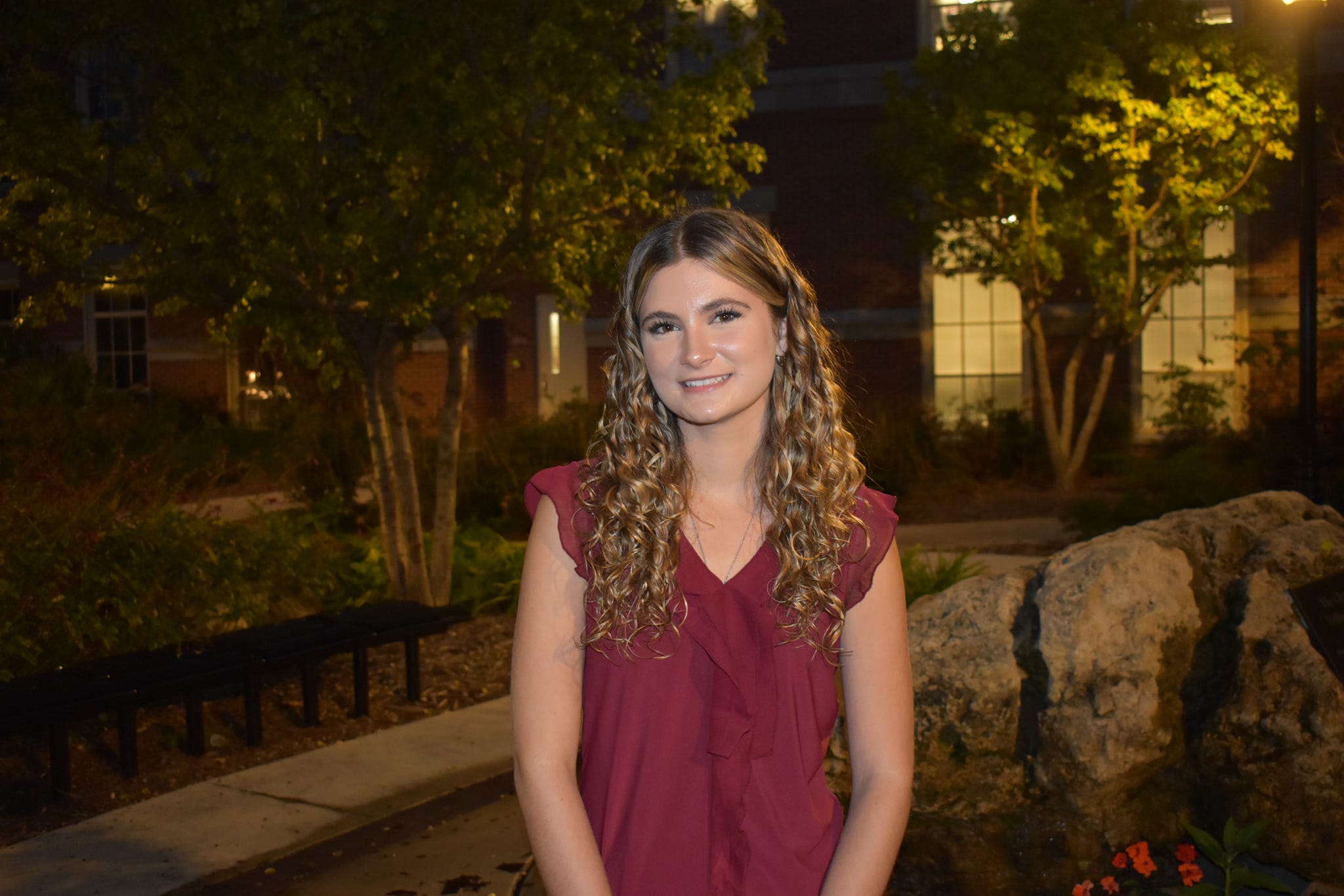
Mary Ava Raker is a sophomore at Florida State University gaining a Bachelor's of Science in Behavioral Neuroscience with a minor in Chemistry. Her passion is understanding various impacts of physical and mental differences on human health. Mary's goal is to pursue a career in medicine, where she can integrate her knowledge to provide improved holistic patient care. Currently she is working as a Clinical Medical Assistant at a dermatology clinic and is aiding in research of the impacts GLP-1R agonists have on neural activation through work under Dr. Linda Rinaman. She desires to continue learning and collaborating in ways that combine her interests in psychology and medicine, ultimately hoping to contribute to the well-being of others.
Impacts of GLP-1, GLP-2, Glucagon, Oxytomodulin, and Glicentin on Food Intake
Authors: Mary Ava Raker, Linda RinamanStudent Major: Behavioral Neuroscience
Mentor: Linda Rinaman
Mentor's Department: Psychology Mentor's College: Florida State University Co-Presenters:
Abstract
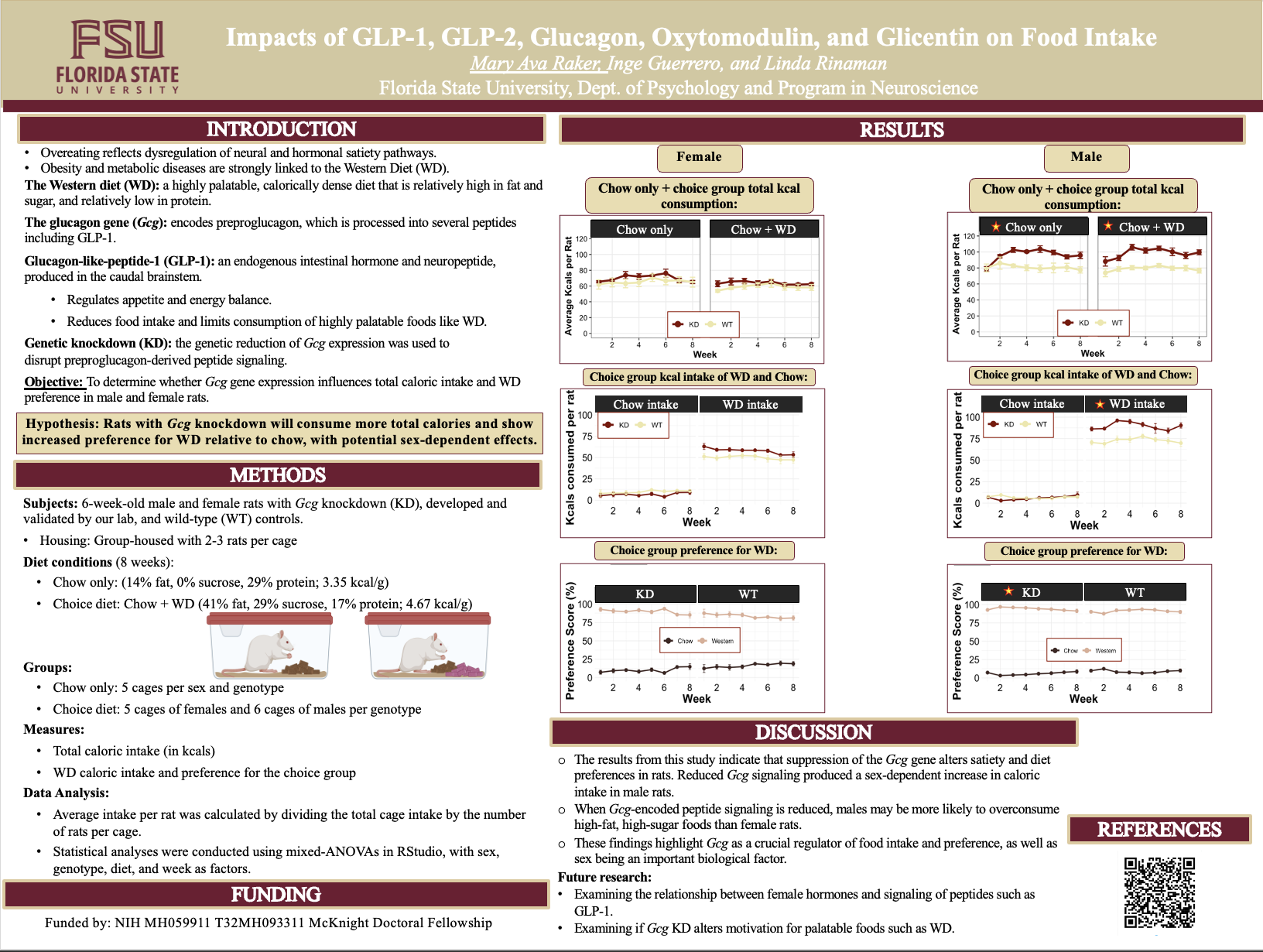
The Western diet (WD), a calorically dense, high-fat diet, contributes to obesity and metabolic disease. The glucagon gene (Gcg) encodes preproglucagon, that’s cleaved into glucagon-like peptide-1 (GLP-1) and other peptides regulating appetite and energy balance. However, their role in dietary choice and sex differences remains unclear. We used genetic knockdown (KD) of Gcg to disrupt preproglucagon-derived peptide signaling and assess its effects on caloric intake in rats. 6-week-old KD and wild-type (WT) rats were group-housed (2–3/cage) and were given either chow alone (14% fat, 0% sucrose, 29% protein; 3.35 kcal/g) or both chow and WD (41% fat, 29% sucrose, 17% protein; 4.67 kcal/g) for 8 weeks. Five cages of females and six cages of males per genotype received choice diet, while an additional five cages per sex and genotype received chow only. Average intake per rat was calculated by dividing total cage intake by number of rats. Intake data were analyzed within the choice group (chow+WD) and between groups (chow only vs. chow+WD). In the choice group, male KD rats consumed significantly more WD-derived kcals than WT males (p < 0.01) with greater WD preference during week 2. However, females showed no genotype-dependent effects on intake. Within data from both diet groups, male KD rats consumed significantly more calories than male WT rats (p < 0.01) regardless of diet condition (p = 0.187). Genotype had no significant effect on caloric intake in females. These findings demonstrate a sex-dependent effect of Gcg KD to increase caloric intake in male rats.
Keywords: GLP-1, Food, Behavior
26th annual Undergraduate Research Symposium, April 1, 2026
Jonah Karpf Poster Session 2: 10:45 am - 11:45 am / Poster #160

BIO
Jonah Karpf is a senior chemistry major pursuing a career in geochemistry. At FSU he has worked with Dr. Jeremy Owens to reconstruct the oxidation of Earth's ancient oceans using the chemical makeup of ocean sediments. In the Fall of 2026, he will start a M.S. in Geology at Iowa State University, focused on analyzing the rate of continental emergence in Earth's distant past. He is the president of the fencing club at FSU, and enjoys drumming and duck photography.
Redox geochemistry of an early Ordovician deep water shale: potential implications for Earth's largest radiation event
Authors: Jonah Karpf, Jeremy OwensStudent Major: Chemistry
Mentor: Jeremy Owens
Mentor's Department: Earth, Ocean, and Air Sciences Mentor's College: Arts and Sciences Co-Presenters:
Abstract
The Great Ordovician Biodiversification Event (GOBE) was one of the most dramatic radiations of life in Earth’s history, and constraining the factors responsible is key to understanding the nature and development of life on the planet. To this end, stratigraphic sections of rock formed from ocean sediments are analyzed geochemically to form interpretations about the paleoclimate and the state of Earth’s oceans directly before and during the GOBE. In this study, a rare section that preserves deep water shale from the early GOBE is examined. This shale is from the Cow Head Group in western Newfoundland and was originally deposited on the coast of Laurentia.
Here, analysis of the depositional redox conditions of the section using iron content and speciation, reduced sulfur, and bulk rock elemental abundances are presented. This geochemistry provides insights into the local bottom water oxygen availability of one of the last regions to become oxidized prior to the GOBE. Increased molecular oxygen availability has been implicated as a driving cause of the GOBE, thus these findings provide key information for the radiation of Ordovician life. Measurements of the highly reactive iron components of these shales are compared with total iron concentrations and pyrite-associated iron to track how oxidized the depositional conditions were. These measurements are combined with trace element concentrations that are influenced by the redox conditions they are deposited under. Through these varied methods, a picture of the oxygen availability of the Earth’s oceans for the initial phase of the GOBE can be formed.
Keywords: Geochemistry, Geology, Chemistry, Seawater, Evolution
26th annual Undergraduate Research Symposium, April 1, 2026
Ahsly Mota Peña Poster Session 2: 10:45 am - 11:45 am / Poster #218

BIO
I am a 3rd year biochemistry student. I have been helping Mr. Litvak with his research on NMR at NHMFL for almost 2 years. In the future, I wish to attend medical school and pursue a career in obstetrics and gynecology. I spend my free time volunteering at the TMH child care center, the VA clinic, the mental health hotline, Learn To Be, and Baptist Health. I also enjoy leading two student organizations at FSU.
Improving NMR Line Resolution of 1.5 mm 600 MHz ¹³C-optimized Ultrasensitive NMR Probe With HTS-based RF Resonators
Authors: Ahsly Mota Peña, Ilya LitvakStudent Major: Biochemistry
Mentor: Ilya Litvak
Mentor's Department: National High Magnetic Field Laboratory Mentor's College: National High Magnetic Field Laboratory Co-Presenters:
Abstract
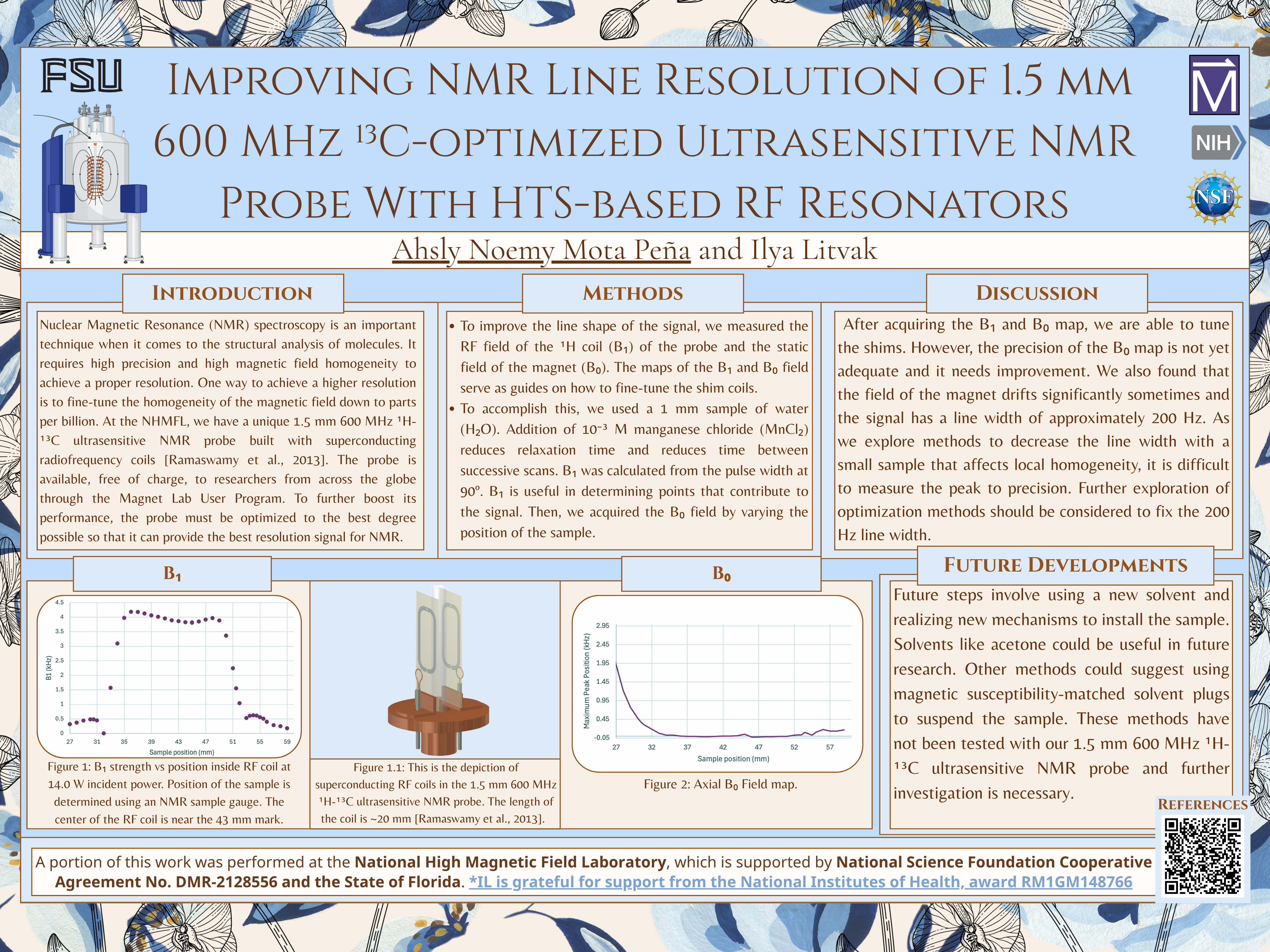
Nuclear Magnetic Resonance (NMR) spectroscopy is a powerful technique for structural analysis down to atomic level - from small molecules, to proteins, to materials. To achieve high resolution, NMR requires very high uniformity of magnetic field – down to parts per billion across the volume of the sample. NHMFL houses a unique 1.5 mm 600 MHz ¹H-¹³C ultrasensitive NMR probe built with superconducting radiofrequency coils. The probe is available, free of charge, to researchers across the globe through the Magnet Lab User Program.
In pursuit of higher homogeneity and improved signal line shape, we are measuring the profiles of the strength of both the rf field of the ¹H coil (B₁) and that of the static field of the magnet (B₀). NMR magnets have built-in electric coils (shim coils), which can be used to correct the profile of the B₀ field. We will use the known field profiles of the individual shim coils and the acquired map of the B₀ field as guides on how to fine-tune the currents on the coils to further improve the homogeneity of the field. We will share the latest updates on the project.
Keywords: NMR Magnet Shim
26th annual Undergraduate Research Symposium, April 1, 2026
Warner Ducheine Poster Session 1: 9:30 am - 10:30 am / Poster #193
BIO
Hello, my name is Warner Ducheine, I am a 2nd year Electrical Engineering student and I am from Orlando, Florida. For the past few months I have been working at the High Performance Materials Institute under Dr. Richard Liang, I hope to purse a PhD in material science.
Capabilities of Carbon Nanotube-Based Architectures as a Resistive Sensor
Authors: Warner Ducheine, Richard LiangStudent Major: Electrical Engineering
Mentor: Richard Liang
Mentor's Department: Department of Industrial Engineering Mentor's College: FAMU and FSU College of Engineering Co-Presenters: n/a
Abstract
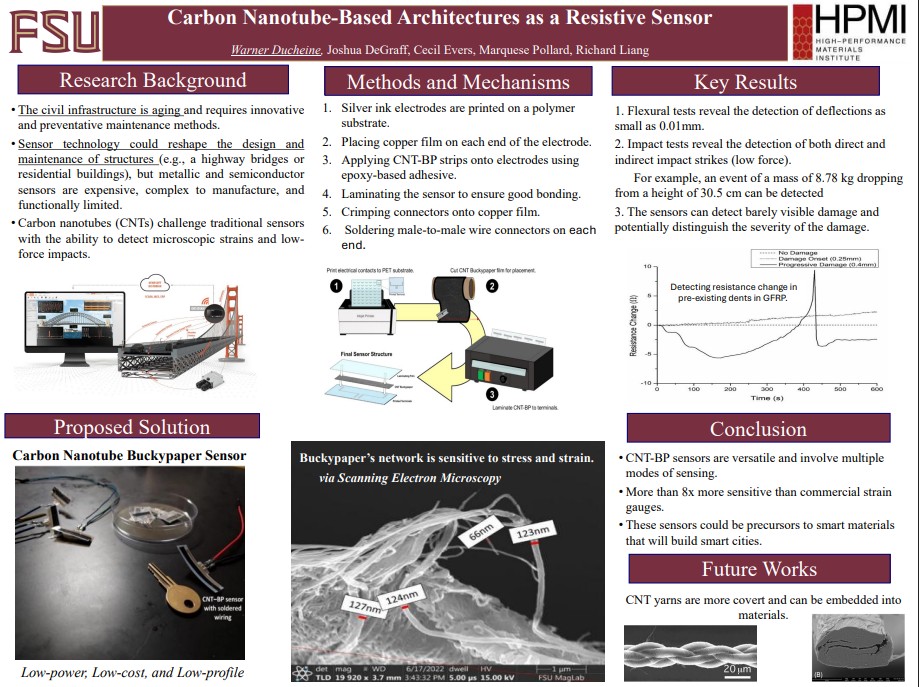
The unique properties of carbon nanotubes (CNTs) make them promising candidates for next-generation force-sensing technologies. Their mechanical strength, electrical conductivity, and low density enable reliable performance under extreme mechanical loads and high temperatures. Most modern sensors are constructed using semiconductor or metal-based materials; however, these materials are often fragile and can display imprecise readings. In this study, force sensors were fabricated using two distinct multi-walled carbon nanotube (MWCNT) form factors: carbon nanotube yarn and buckypaper thin films. Both configurations reacted to an applied force with a measurable change in resistance. CNT buckypaper is low-profile and lightweight, demonstrating a gauge factor (sensitivity) greater than 16 along with a broad strain range, making it well suited for structural health monitoring. CNT yarns, with dimensions of 20x400 microns, are minimally invasive and can be easily woven into composites without compromising their integrity. Our findings outline the methods of manufacturing and the testing procedure that evaluates the capabilities of CNTs as sensor materials, demonstrating their enhanced electromechanical response and structural robustness. These results support their potential for advanced sensing applications in high-stress environments.
Keywords: Carbon Nanotube Sensor
26th annual Undergraduate Research Symposium, April 1, 2026
Julia Martin Poster Session 1: 9:30 am - 10:30 am / Poster #135
BIO
Julia Martin is a senior biomedical engineering student from Auburn, New Hampshire, with a strong interest in biomedical device development and instrumentation. Experienced in signal processing and experimental design, including participation in the 2025 National High Magnetic Field Laboratory REU.
Evaluating EM Shielding Fabrics as an option for RF shields at 21.1T
Authors: Julia Martin, Malathy ElumalaiStudent Major: Biomedical Engineering
Mentor: Malathy Elumalai
Mentor's Department: CIMAR/NMR Mentor's College: National High Magnetic Field Laboratory Co-Presenters:
Abstract
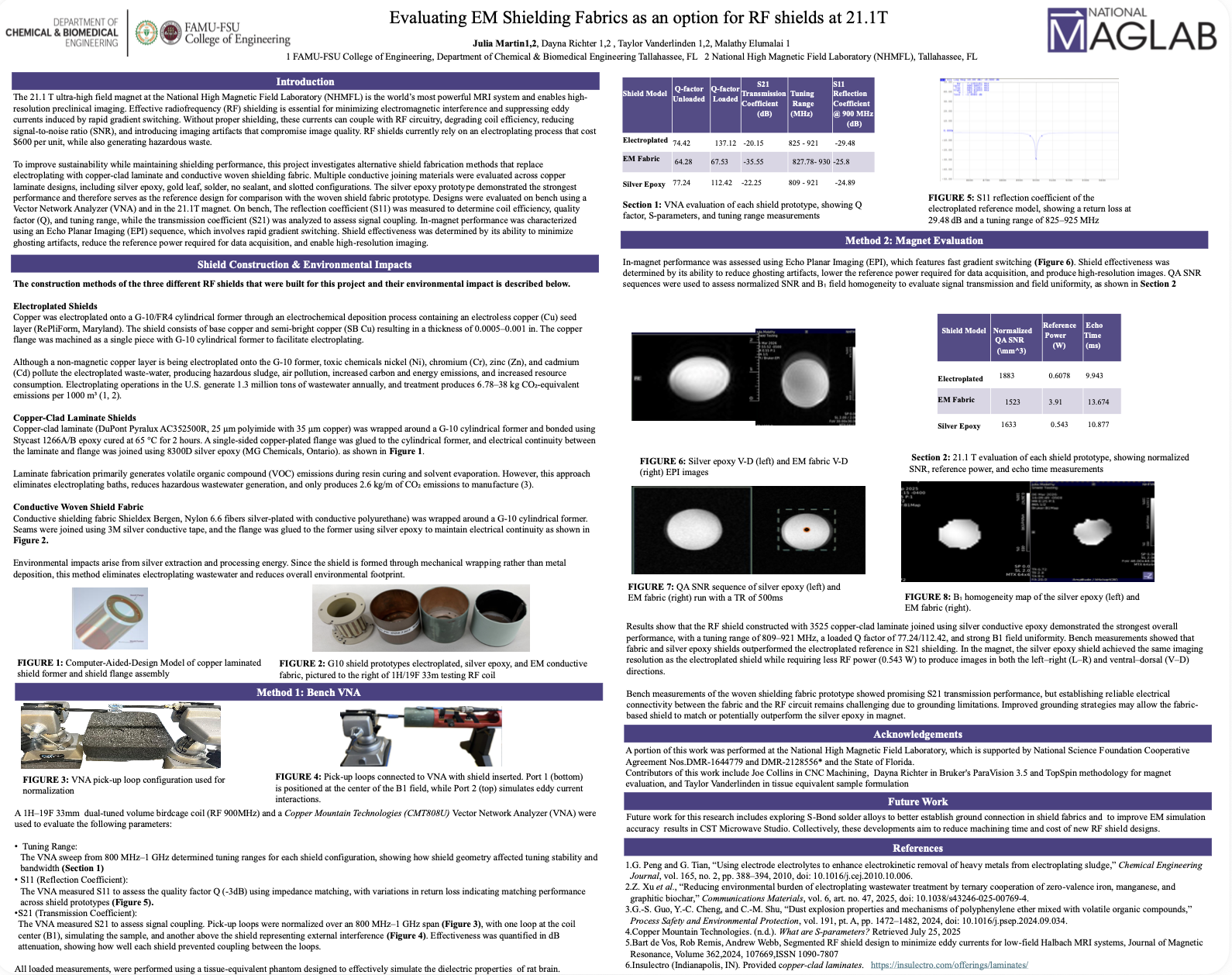
The 21.1T at NHML is the world’s strongest magnet for MRI. This project focuses on alternatives to $600 electroplated RF shields used in MRI coils. Effective RF shielding minimizes electromagnetic interference and suppresses eddy currents induced by rapid gradient switching. Without shielding, eddy currents couple with RF circuitry which leads to low SNR, reduced efficiency, and increased artifacts.
Five shield prototypes were developed with copper laminates joined by 2mm seam made of silver conductive epoxy, solder, gold leaf, a slotted shield with capacitors and no sealant. Each design was evaluated through simulation, bench testing, and magnet performance.
The most recent advancement was the development of an EM shield using Shieldex Berlin RS conductive woven fabric (Bremen, Germany) composed of 100% polyamide (Nylon 6.6). The fabric is silver-plated with a material composition of 60% polyamide, 14% silver, and 26% conductive polyurethane with an average surface resistivity of 0.3 Ω and a shielding effectiveness of 62 dB at 900 MHz (0.9 GHz). The 2 mm longitudinal seam was electrically bridged using conductive electrical tape from 3M (Maplewood, Minnesota) and the top flange with MG Chemicals 83300D Silver Conductive Epoxy (Burlington, Ontario) to ensure continuous conductivity across the shield.
EM simulations were conducted using CST using a dual-tuned ¹H–¹⁹F birdcage coil model at 900 MHz. Bench testing with a VNA evaluated S-parameters like S11, S21, tuning range, and quality factor. MRI performance was assessed in the 21.1T using EPI and QA SNR sequences, analyzing ghosting artifacts, reference power, SNR, and B1 homogeneity.
Keywords: RF shields, Bioinstrumentation, MRI
26th annual Undergraduate Research Symposium, April 1, 2026
Diego Xiao Barbero Poster Session 4: 3:00 pm - 4:00 pm / Poster #136
BIO
Living most of his life in Florida, Diego has experienced the havoc that hurricanes can bring. While personally experiencing the disruption of lost power and property damage, he recognizes the privilege in his situation compared to vulnerable communities and island nations that face more catastrophic losses. He is driven by the fact that better research leads to better forecasts, and better forecasts can save more lives!
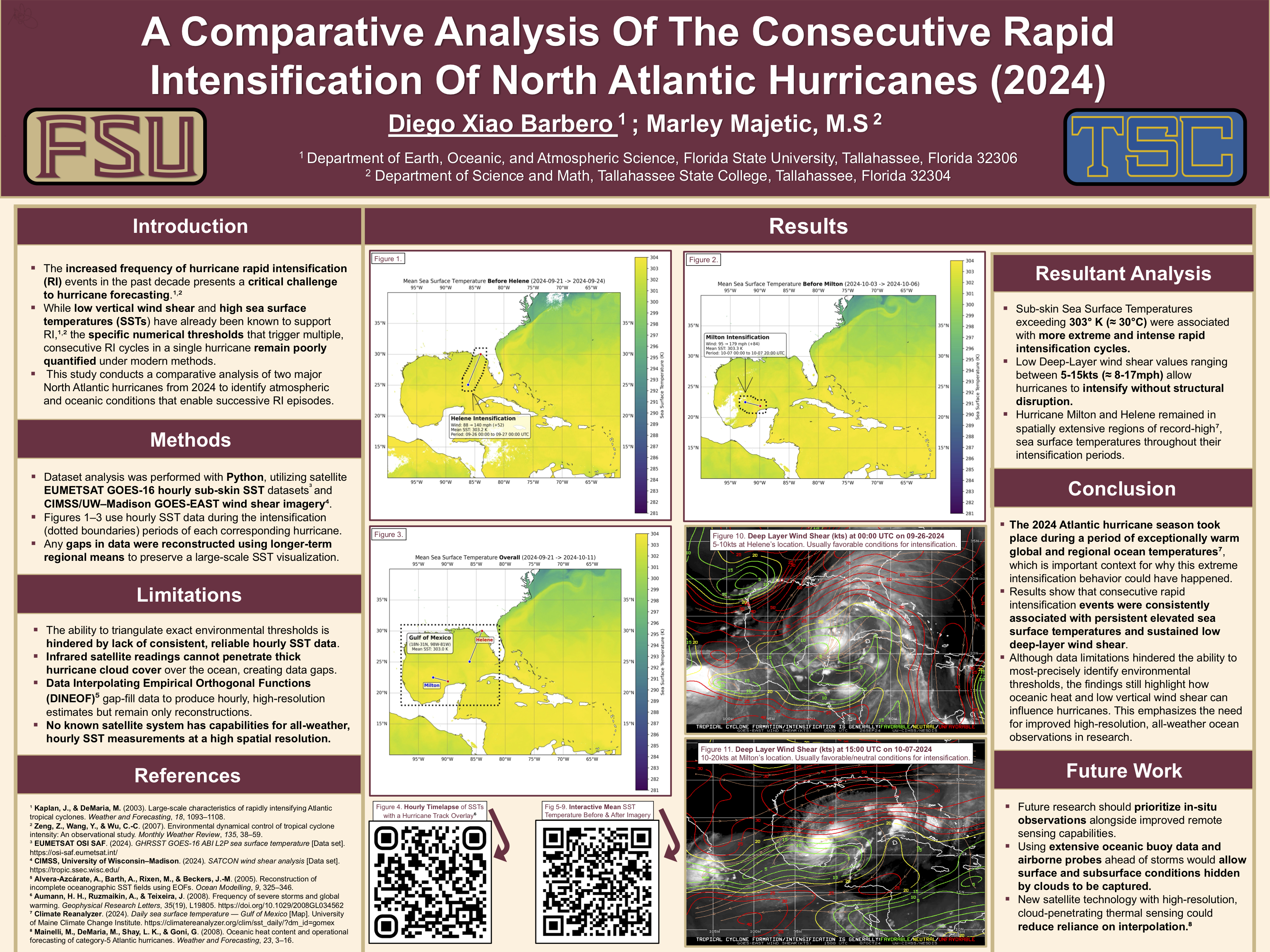
A Comparative Analysis Of The Consecutive Rapid Intensification Of North Atlantic Hurricanes (2024)
Authors: Diego Xiao Barbero, Marley MajeticStudent Major: Meteorology
Mentor: Marley Majetic
Mentor's Department: Department of Science and Math Mentor's College: Tallahassee State College Co-Presenters:
Abstract
The increased frequency of hurricane rapid intensification (RI) events in the past decade presents a critical challenge to hurricane forecasting capabilities. While the roles of low vertical wind shear and high sea surface temperatures (SSTs) in facilitating RI events are well established, the specific environmental thresholds required to trigger multiple, consecutive RI cycles within a single hurricane remains poorly quantified. This study conducts a comparative analysis of major North Atlantic hurricanes (from 2024) to target the environmental behavior of wind shear and SSTs which enable successive RI episodes. The goal of this investigation is to identify criteria that distinguish extreme intensification events from baseline conditions. This work utilizes vertical wind shear and SST data from EUMETSAT and UW-Madison’s CIMSS, highlighting the time frame during which hurricanes had undergone their RI cycles and allowing for quantification of key environmental drivers of RI.
Keywords: Meteorology Hurricane Forecast
26th annual Undergraduate Research Symposium, April 1, 2026
Sara Huszar Poster Session 1: 9:30 am - 10:30 am / Poster #65
BIO
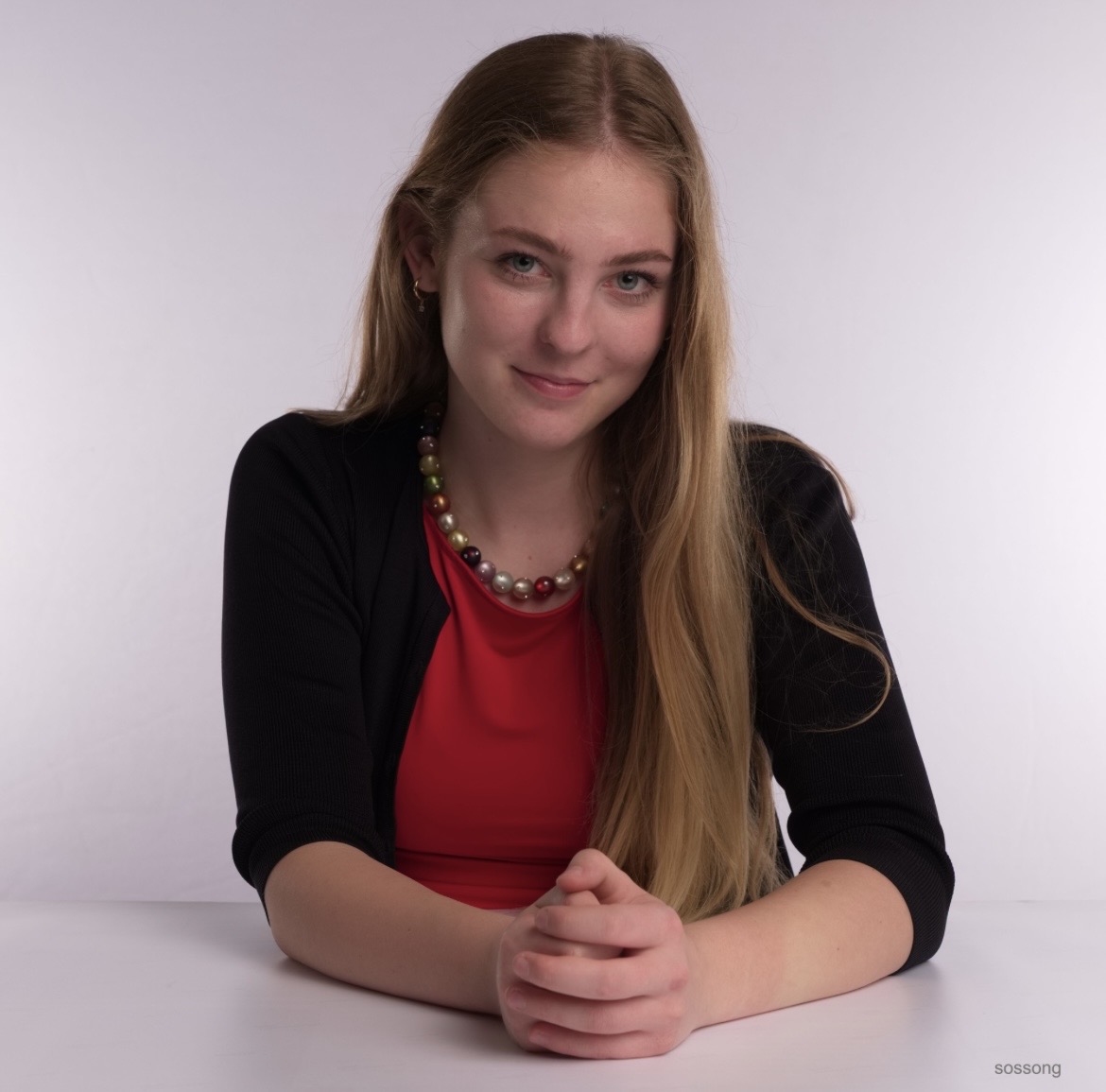
They are a 3rd year Physics major at FSU. Main research interest is in condensed matter experimental, specifically the use of inelastic scattering to analyze the properties of materials. She conducts research under Dr. Dmitry Smirnov at the National High Magnetic Field Laboratory. Future goals is to attend graduate school and pursue research in similar topic.
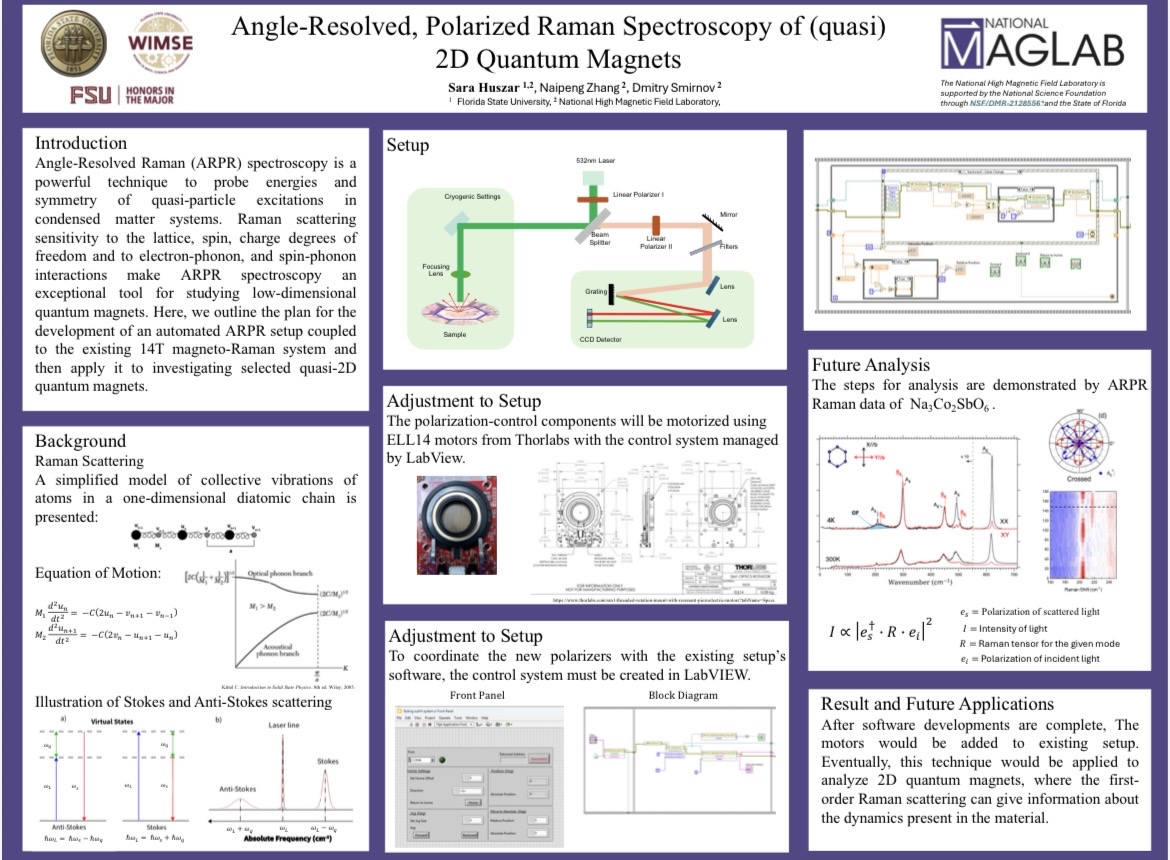
Angle-Resolved, Polarized Raman Spectroscopy of (quasi) 2D Quantum Magnets
Authors: Sara Huszar, Dmitry SmirnovStudent Major: Physics
Mentor: Dmitry Smirnov
Mentor's Department: Physics Mentor's College: Florida State University Co-Presenters:
Abstract
Angle-Resolved Raman (ARPR) spectroscopy is a powerful technique to probe energies and symmetry of quasi-particle excitations in condensed matter systems. Raman scattering sensitivity to the lattice, spin, charge degrees of freedom and electron-proton, and spin-phonon interactions make ARPR spectroscopy an exceptional tool for studying low-dimensional quantum magnets. Here, it is discussed the development of an automated ARPR setup coupled to the existing 14T magneto-Raman system and then apply it to investigate selected quasi-2D quantum magnets.
Keywords: physics, condensed matter, material science
26th annual Undergraduate Research Symposium, April 1, 2026
Maria Serna Poster Session 1: 9:30 am - 10:30 am / Poster #19
BIO
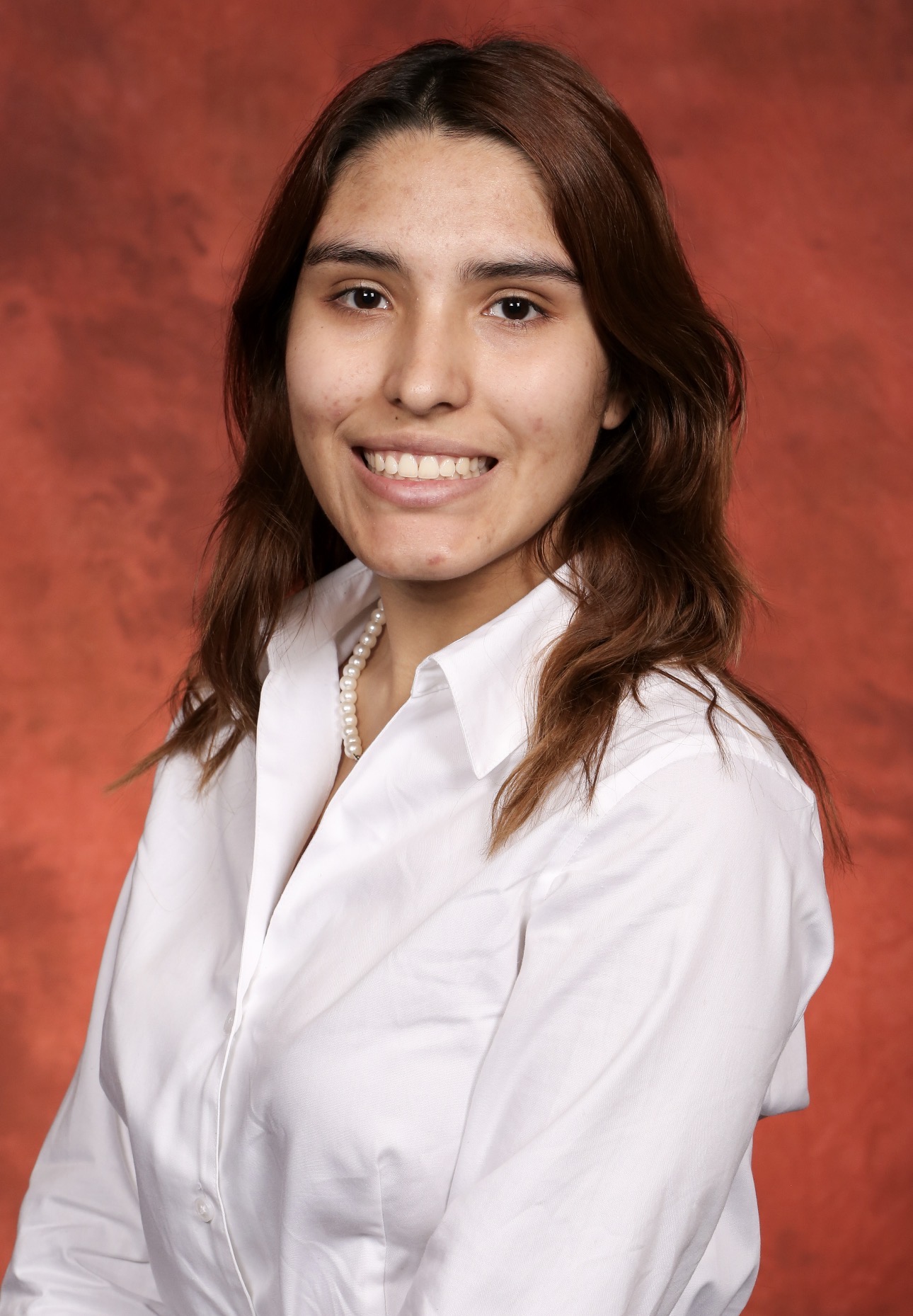
Colombian student currently attending FSU seeking a Bachelor of science in neuroscience to either attend medical school to become an endocrinologist or pursue a PhD. Currently a research assistant in Dr. Sheffler’s Integrative Science for Healthy Aging lab.
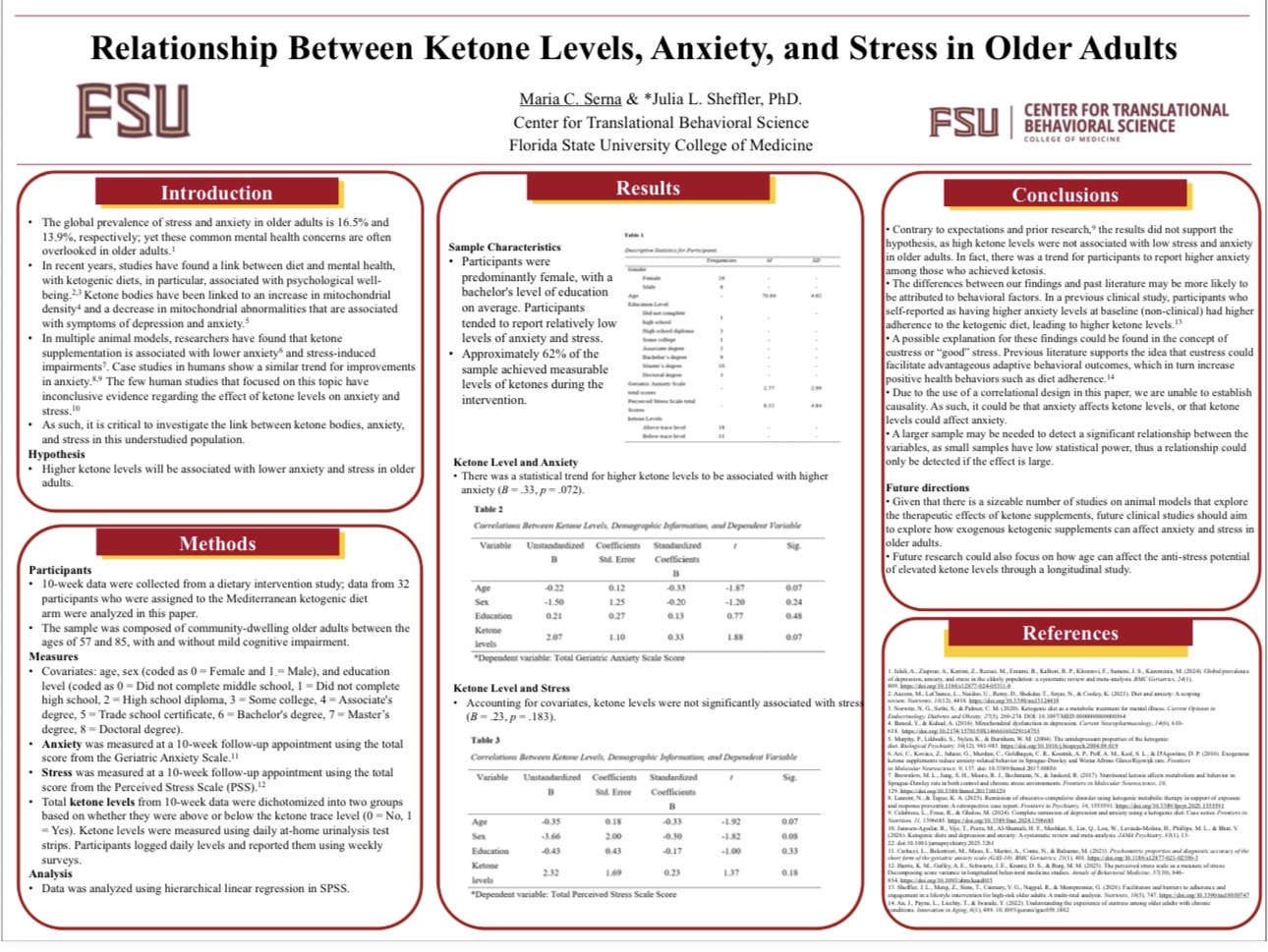
Relationship Between Ketone Levels, Anxiety, and Stress in Older Adults
Authors: Maria Serna, Julia ShefflerStudent Major: Cell and Molecular Neuroscience
Mentor: Julia Sheffler
Mentor's Department: Behavioral Sci and Social Med Mentor's College: FSU college of medicine Co-Presenters:
Abstract
Background: Due to their global prevalence, stress and anxiety amongst older adults are becoming a major concern within the field of psychology. Recent studies suggest a link between diet and mental health, with ketogenic diets holding particular promise for reducing anxiety symptoms. In animal models, nutritional ketosis has been linked to a wide array of biological processes that may protect against stress and anxiety. Despite the therapeutic potential of ketone bodies, there is a noticeable gap in the literature surrounding their association with stress and anxiety in humans. Therefore, this study investigates whether high ketone levels correlate with lower levels of stress and anxiety in older adults participating in a dietary intervention.
Methods: From a dietary intervention study composed of 65 participants between the ages of 57 and 85, 10-week data were collected from 32 participants who were assigned to a Mediterranean ketogenic diet arm. Anxiety and stress were measured using two validated self-reported measures, the Geriatric Anxiety Scale (GAS) and the Perceived Stress Scale (PSS). Ketone levels were measured using urinalysis test strips; participants were instructed to perform a daily urinalysis test at home. Hierarchical linear regression was used to explore how average ketone levels during the program were related to anxiety and stress post-intervention, accounting for covariates.
Results: Analyses revealed a non-significant association between ketone levels and anxiety and stress (ps>.05).
Conclusions: Although our hypothesis was not supported, further research is needed to examine these research questions in a sample with clinically significant levels of mental health symptoms.
Keywords: Ketones, ketosis, anxiety, stress
26th annual Undergraduate Research Symposium, April 1, 2026
Ashley Olah Poster Session 2: 10:45 am - 11:45 am / Poster #152
BIO
Ashley Olah is a first year student pursuing her bachelors degree in psychology. She was a part of AP research her senior year of high school in which she studied how TikTok affects the attention spans of college preparatory students. This inspired her to take part in the UROP program to continue working in research. After undergrad she hopes to pursue a career in law.
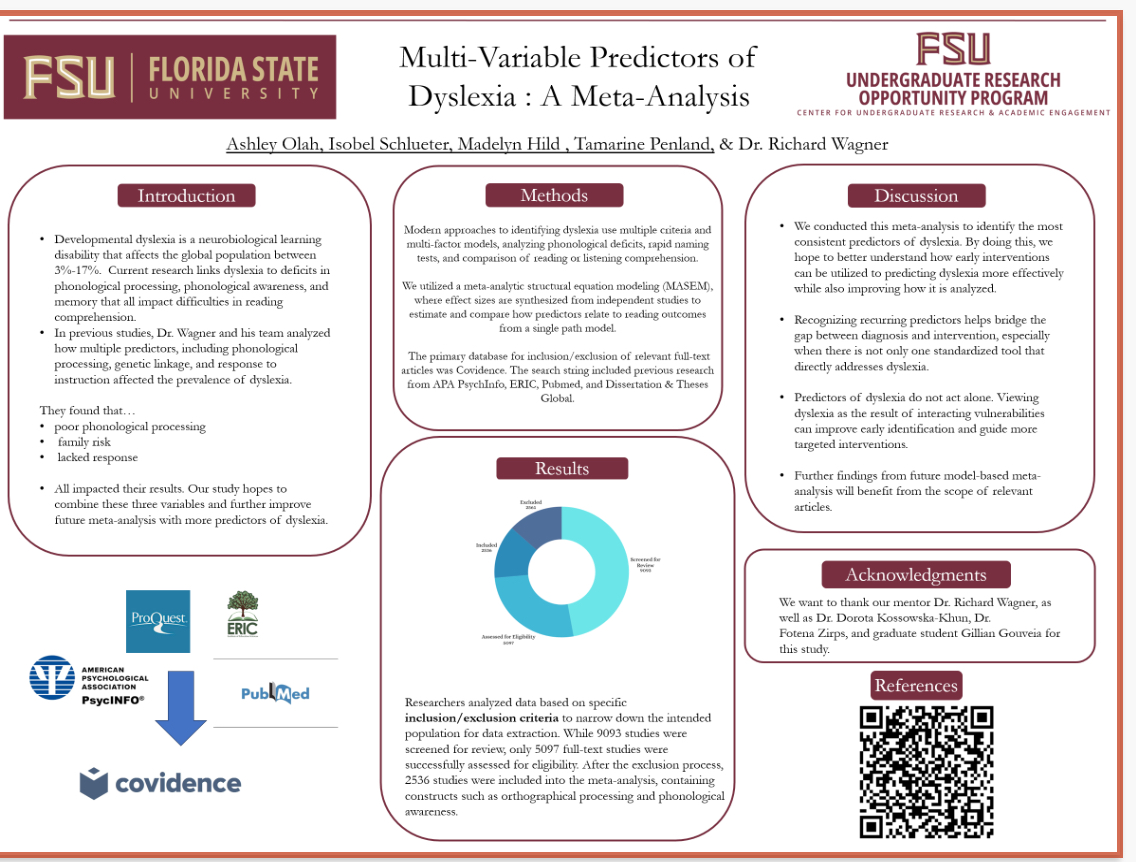
Multi- Variable Predictors of Dyslexia: A Meta- Analysis
Authors: Ashley Olah , Richard WagnerStudent Major: Psychology
Mentor: Richard Wagner
Mentor's Department: Psychology Mentor's College: Arts and Sciences Co-Presenters: Isobel Schlueter, Madelyn Hild, Tamarind Penland
Abstract
Our goal is to discover why it's important to know the predictors of dyslexia. There are many reasons why dyslexia occurs and understanding the predictors can help us prevent and treat it. This is important since dyslexia is an everyday struggle and if we can help treat and prevent it early on, those with this condition can have an easier way of life. To do this we conducted a model based meta analysis. A model based meta analysis is a technique that pulls from many different articles to see the multiple causes a disorder can have. To do this we first downloaded articles to covidence. Then we screened the articles just based on the title and abstract. We then moved to full text review where we used specific inclusion and exclusion criteria. Then, we will extract the data and code it. Currently we do not have results. However, in terms of our screening we have analyzed 15910 articles and included 1647 in our study. In a previous study it was found that if dyslexia was found in the early ages it could be treated. Also some factors that turned out to be predictor of dyslexia were phonological awareness, rapid naming, oral vocabulary, and word reading fluency. This is important because the earlier we can detect dyslexia the more likely we are to be able to prevent it. Future research could look at ways to treat it when those with dyslexia grow up and focus on reduction not predictors.
Keywords: Dyslexia, Meta- Analysis, Dyslexia Predictors
26th annual Undergraduate Research Symposium, April 1, 2026
Zachary Zimmerman Poster Session 1: 9:30 am - 10:30 am / Poster #253
BIO
Zach Zimmerman is a senior Environmental Science major at FSU, with minors in Chemistry and Biology. During his first two years, he conducted research with Dr. Jeroen Ingels at the Coastal and Marine Laboratory, working with benthic meiofauna in different environments. He also worked at the National High Magnetic Field Laboratory, doing research with rare earth elements and critical minerals. He began his Honors in the Major project with Dr. Markus Huettel, where his research with meiofauna continued, this time observing the impacts of sargassum leachates on meiofauna behavior. He is planning to attend graduate school starting in the Fall of 2026.
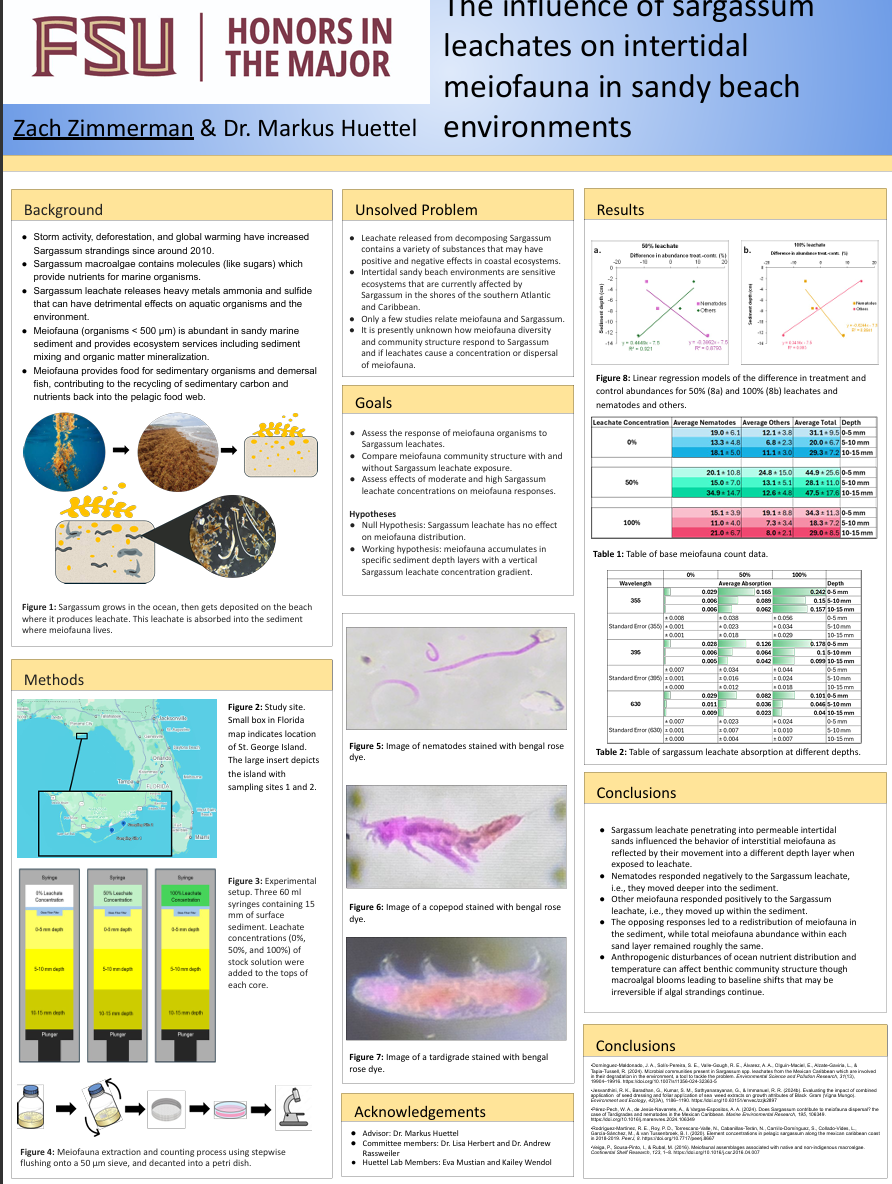
The influence of sargassum leachates on intertidal meiofauna in sandy beach environments
Authors: Zachary Zimmerman, Markus HuettelStudent Major: Environmental Science
Mentor: Markus Huettel
Mentor's Department: Earth, Ocean, and Atmospheric Sciences Mentor's College: Arts and Sciences Co-Presenters:
Abstract
Meiofauna in intertidal sands are robust animals capable of handling extreme conditions, and the macroalgae sargassum is creating a potential additional stressor along Florida and Caribbean beaches. Sargassum is washed onto the shore/intertidal zone where it begins to decompose, producing leachates that seep into the sediment. It is unknown what effects sargassum leachates have on meiofaunal behavior when they are exposed to it in the sediment. This study addresses the response of intertidal meiofauna to sargassum leachate exposure. Sediment cores were taken from the intertidal zone of St. George Island, Florida, and brought to the lab, where sargassum leachate was added to the top of the cores. This allowed the meiofauna in the sediment to respond as the leachate penetrated into the core. Leachate concentrations of 0%, 50%, and 100% (relative to stock solution, 125 g of sargassum leached in 150 ml of seawater for 48 hours) were tested. After 24 hours of exposure to leachate, cores were sliced into 0-5 mm, 5-10 mm, and 10-15 mm depth intervals, and the meiofauna was extracted from each slice and counted. The results indicate a significant trend of nematodes moving away from sargassum leachates and other meiofauna moving towards sargassum leachates. The findings reveal that sargassum leachates have a significant influence on the behavior of meiofauna groups, which affects their roles as sediment bioturbators and aerators, and thereby their function as mediators of benthic organic matter degradation.
Keywords: Meiofauna, Sargassum, Leachate, Nematodes, Intertidal
26th annual Undergraduate Research Symposium, April 1, 2026
Brett Jung Poster Session 4: 3:00 pm - 4:00 pm / Poster #198
BIO
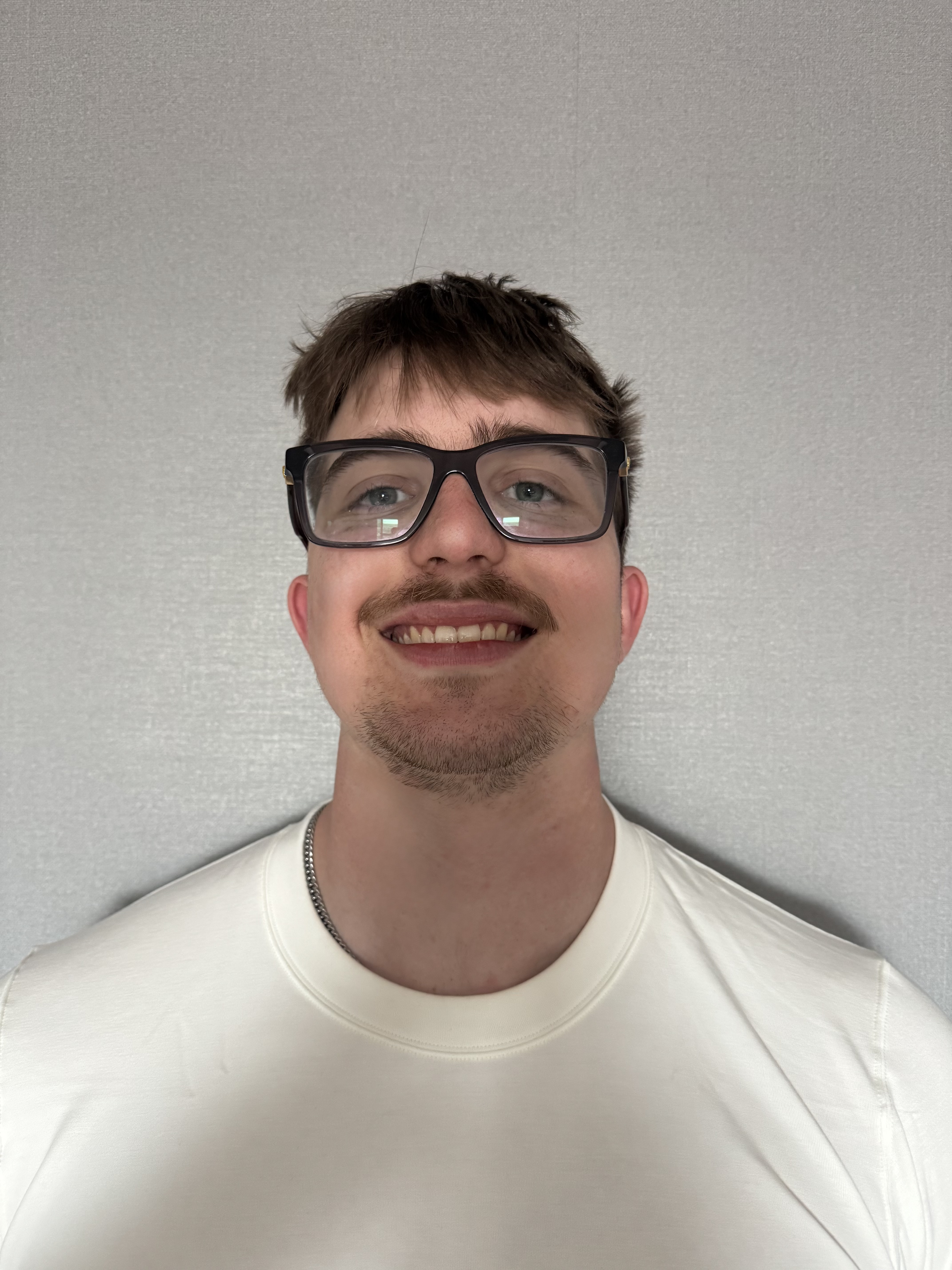
Brett Jung is an undergraduate student entering my senior year at Florida State University. Some interests of Brett's include golfing, watching sports, and working out. Brett is a Biochemistry major that does research in the Lazenby lab. Brett's research focuses on utilizing electrochemistry to fabricate E-AB sensors that are capable of targeting analyte selectively. After college, Brett plans on going to medical school, to pursue the dream of becoming a surgeon.
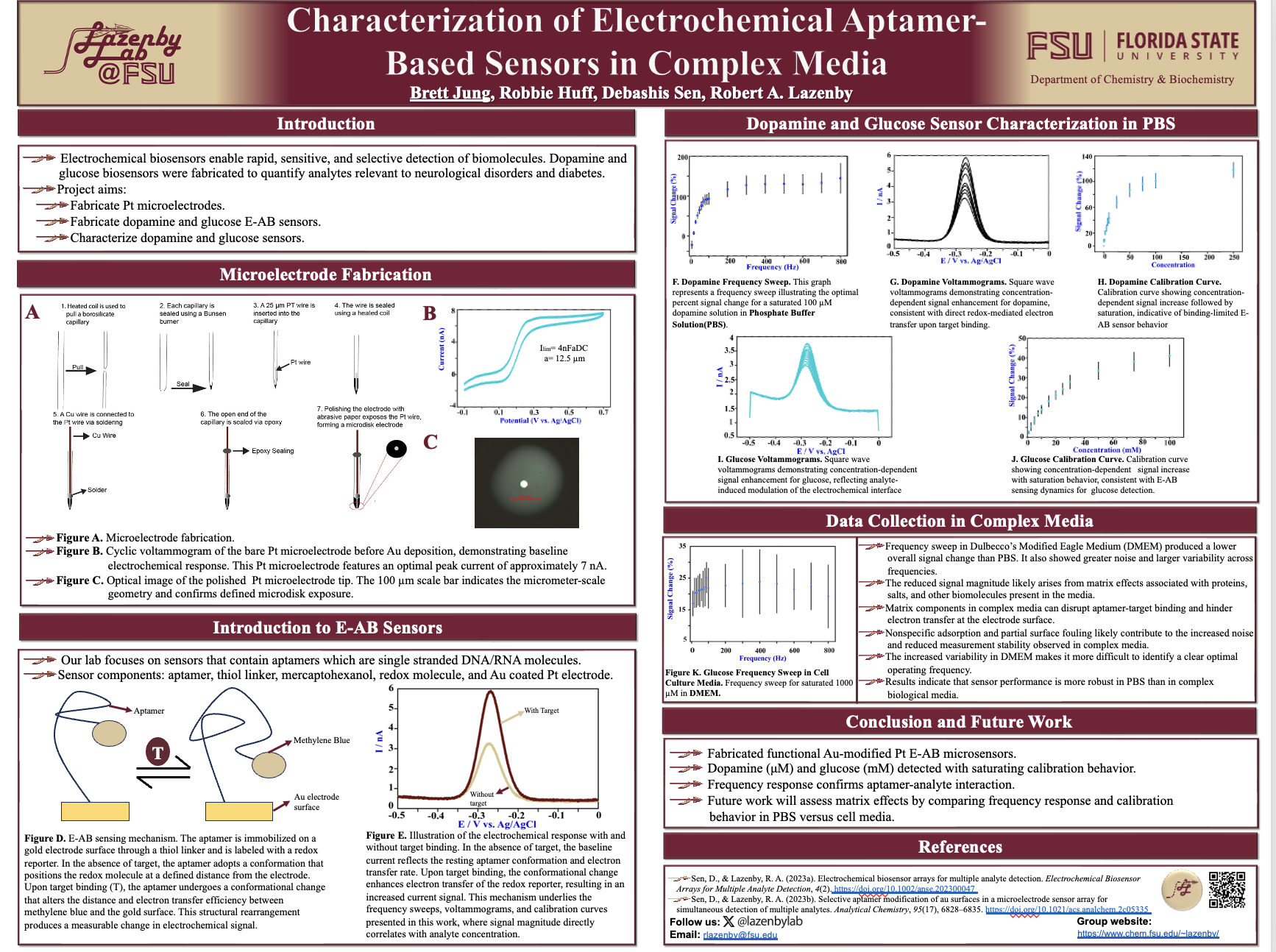
Characterization of Electrochemical Aptamer-Based Sensors in Complex Media
Authors: Brett Jung , Robert LazenbyStudent Major: Biochemistry
Mentor: Robert Lazenby
Mentor's Department: Chemistry and Biochemistry Mentor's College: College of Arts and Sciences Co-Presenters:
Abstract
Electrochemical biosensors offer high sensitivity, selectivity, and rapid response times, making them important tools for real time monitoring of biomolecules and pathogens. Given this capability, we fabricated dopamine and glucose biosensors where abnormal concentrations of these analytes in humans are associated with major diseases like neurodegenerative disorders and diabetes, respectively. To enable reliable detection of these clinically relevant biomarkers, we fabricated electrochemical aptamer-based (E-AB) sensors that incorporate three elements: thiolated single stranded DNA aptamers (the biorecognition element), a gold modified microelectrode (the signal transducer), and methylene blue as the redox reporter attached to the aptamer. Microelectrodes were electrochemically characterized prior to gold electrodeposition and aptamer surface immobilization, and sensor performance was evaluated using calibration curves and frequency-dependent voltametric measurements. Results for the two sensors in phosphate buffered saline solution and cell culture media showed differing sensing figures of merit. During calibration, both dopamine and glucose E-AB sensors displayed signal increases proportional to analyte concentration, which reached a plateau at high concentration, consistent with binding-site saturation. Multiple sensors in the same solution were also used for multi-analyte detection. Our findings demonstrate that E-AB sensors on the microscale can be reliably fabricated and modified to detect specific target analytes with high signal response and selectivity. The observed frequency and calibration trends provide insight into aptamer-analyte interactions and can be built upon via future optimization strategies, which could expand their role in biomedical science and in food monitoring.
Keywords: electrochemistry, aptamer, characterization, complex, media
26th annual Undergraduate Research Symposium, April 1, 2026
Lillian Van Sleen Poster Session 3: 1:45 pm - 2:45 pm / Poster #167
BIO
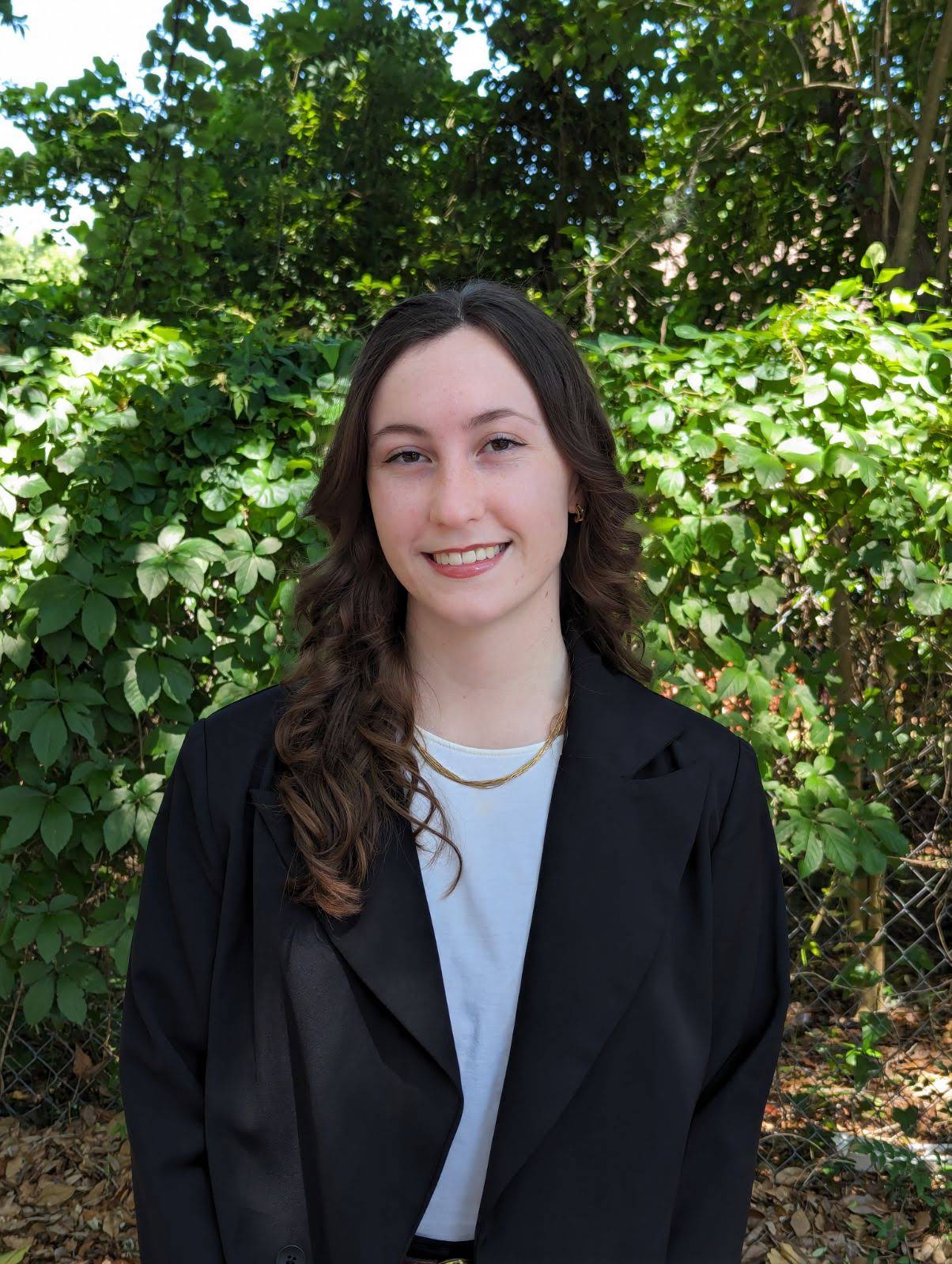
Originally from Pensacola, FL, Lily will be graduating this semester with her Bachelor of Science in psychology and criminology. Since moving away from the beach, where she was raised teaching sailing for a living alongside her family, she's been in Tallahassee for 4 years living happily with her boyfriend and their dog, Kaiser. Her goal is to pursue a Ph.D. in Clinical Psychology with a focus on translational research regarding locus of control and its role as a protective/risk factor for treatment responsivity, suicidality, and antisocial behavior. Over the past two years, she has developed a strong passion for research through working with the Math Thinking and Learning lab and getting to see their longitudinal study through to a close. She has also recently started working with Dr. Dougherty as a volunteer for his lab, assisting in the development of a novel psychological framework and corresponding therapeutic strategies.
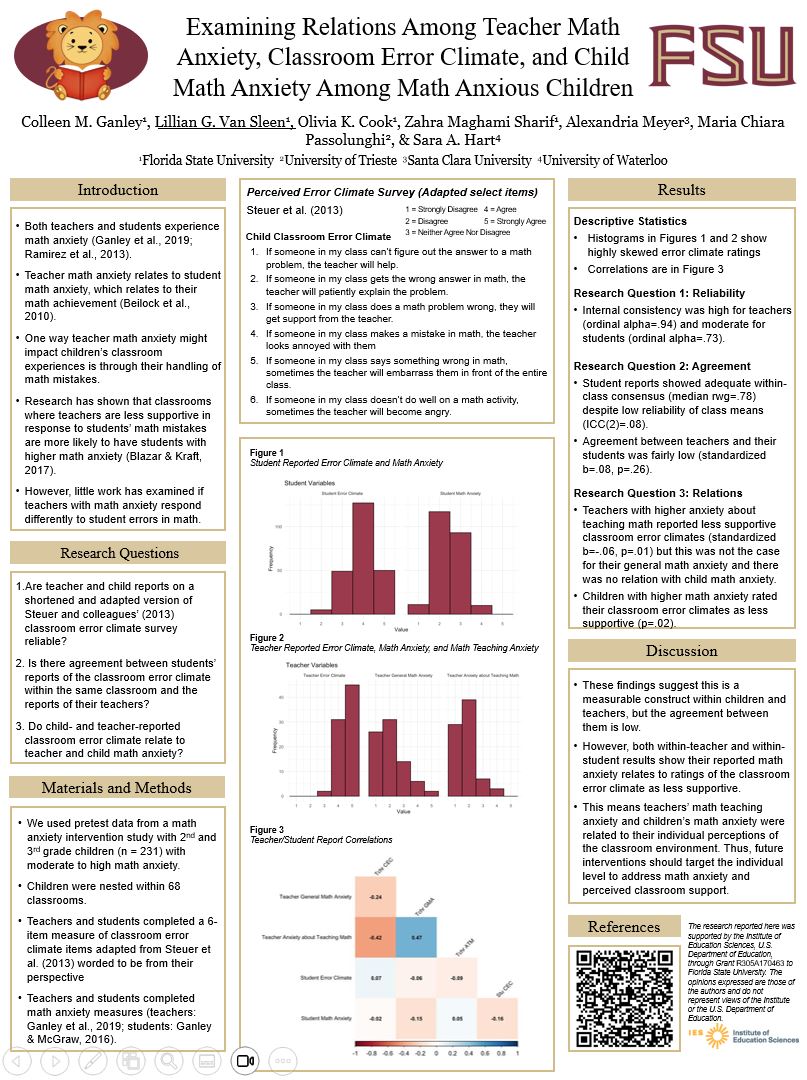
Examining Relations Among Teacher Math Anxiety, Classroom Error Climate, and Child Math Anxiety Among Math Anxious Children
Authors: Lillian Van Sleen, Dr. Colleen GanleyStudent Major: Psychology/Criminology
Mentor: Dr. Colleen Ganley
Mentor's Department: Department of Psychology Mentor's College: College of Arts and Sciences Co-Presenters:
Abstract
Both teachers and students experience math anxiety, and some research shows that teacher math anxiety relates to student math anxiety and achievement. In addition, research has shown that classrooms where teachers are less supportive in response to students’ math mistakes have students with higher math anxiety. We aim to test if there is agreement between students’ reports of the classroom error climate within the same classroom and the reports of their teachers; as well as if child- and teacher-reported classroom error climate relate to teacher and child math anxiety. We used pretest data from a math anxiety intervention study with 231 second- and third-grade children with moderate to high math anxiety and their 68 teachers. Teachers and students completed math anxiety measures and a measure of the classroom error climate with 6 items adapted from Steuer et al. (2013). Student reports showed adequate within-class consensus despite low reliability of class means. The agreement between child and teacher reports of the classroom error climate was low. Results show that among teachers, if they have higher anxiety about teaching math they report less supportive classroom error climates. Among children, if they have higher math anxiety they also report less supportive classroom error climates. However, teachers’ math anxiety did not relate to child ratings of classroom support and child’s math anxiety did not relate to teacher ratings of the classroom error climate. Thus, teachers’ math teaching anxiety and children’s math anxiety have specific relations only to their individual perceptions of the classroom environment.
Keywords: Math Anxiety, Classroom Error Climate, Student, Teacher
26th annual Undergraduate Research Symposium, April 1, 2026
David Pensante Poster Session 4: 3:00 pm - 4:00 pm / Poster #124
BIO
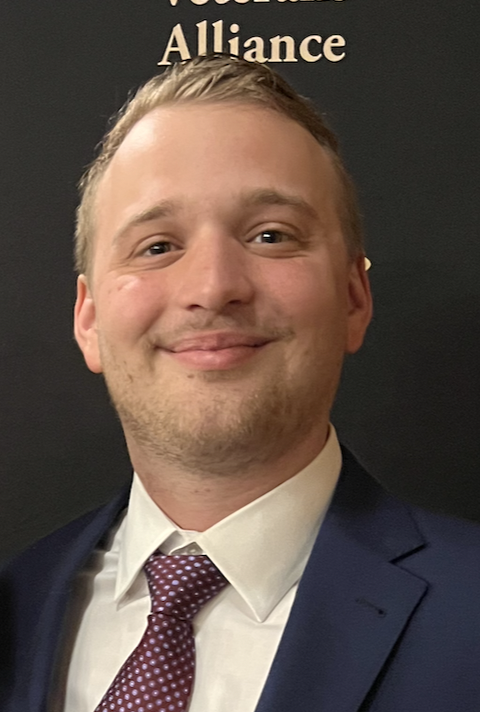
David is a Cell and Molecular Neuroscience student and student veteran at Florida State University with a strong interest in neural circuitry, behavior, and metabolic regulation. He currently works in Dr. Rinaman’s lab, where he studies GLP-1 producing neurons in the caudal nucleus of the solitary tract and their projections throughout the brain using viral tracing techniques. This research has helped him develop skills in stereotaxic surgery, immunohistochemistry, and neuroanatomical analysis.
Outside of the lab, David works as a surgical technologist, where he assists in operative procedures and gain hands-on clinical experience in a fast-paced environment. His long-term goal is to pursue an advanced career in medicine or anesthesia, where he can integrate neuroscience research with clinical practice. David is particularly interested in understanding how neural circuits influence stress, feeding behavior, and overall physiological regulation.
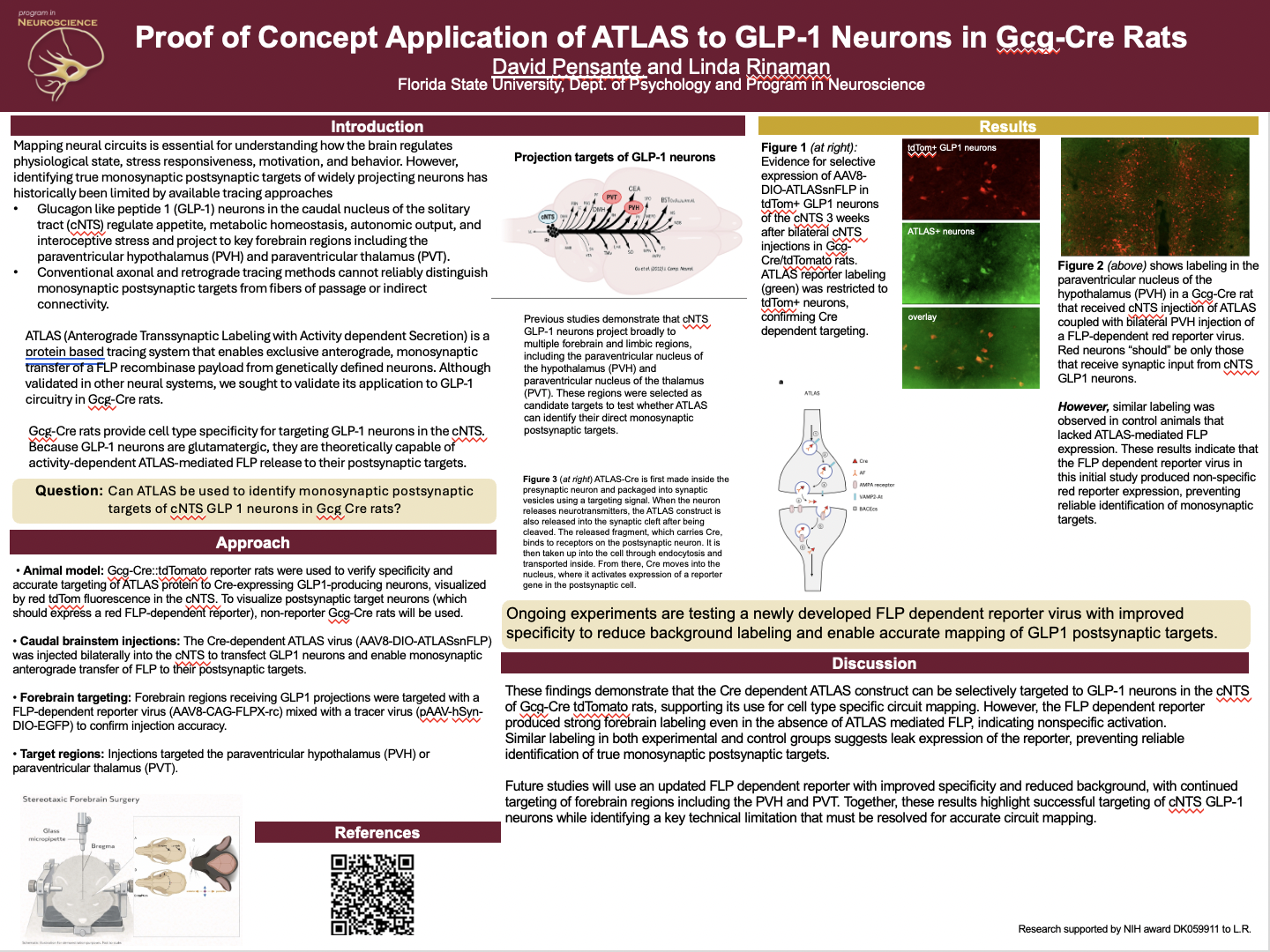
Proof of Concept Application of ATLAS to GLP-1 Neurons in Gcg-Cre Rats
Authors: David Pensante, Linda RinamanStudent Major: Cell and molecular Neuroscience
Mentor: Linda Rinaman
Mentor's Department: Dept. of Psychology and Program in Neuroscience Mentor's College: College of Arts and sciences Co-Presenters:
Abstract
Glucagon like peptide-1 (GLP1)-producing neurons in the caudal nucleus of the solitary tract (cNTS) regulate feeding, autonomic function, stress responsiveness, and metabolic homeostasis through widespread axonal projections across the brain. However, traditional anterograde tracing approaches are unable to identify the synaptic targets of these projections. The recently developed ATLAS system enables monosynaptic anterograde transfer of a recombinase FLP payload, allowing targeted transfection of postsynaptic neurons using FLP-dependent reporter viruses. The present study used a Cre-driver rat line (Gcg-Cre/tdTomato) to evaluate the feasibility and specificity of ATLAS to identify the postsynaptic targets of GLP1 axon terminals. Rats received bilateral injections of Cre-dependent ATLAS virus (AAV8-DIO-ATLASsnFLP) into the cNTS, and also received injections of a FLP-dependent reporter virus (AAV8-CAG-FLPX-rc) into the paraventricular nuclei of the hypothalamus and thalamus. Immunohistochemical analysis confirmed highly specific and restricted expression of the ATLAS protein in cNTS GLP1 neurons. In contrast, the FLP-dependent reporter virus produced robust non-specific labeling in control cases that received no ATLAS virus injection. In this ongoing study, a new FLP-dependent virus (AAV1-Ef1a-fDIO-ChrimsonR-tdTomato) will be injected into forebrain targets. Findings thus far demonstrate that AAV8-DIO-ATLASsnFLP can be selectively expressed in GLP 1 neurons, and establish the foundation necessary for accurate monosynaptic mapping of GLP 1 efferent circuitry.
Keywords: ATLAS gap-1 Pensante
26th annual Undergraduate Research Symposium, April 1, 2026
Camden Crum Poster Session 3: 1:45 pm - 2:45 pm / Poster #153
BIO
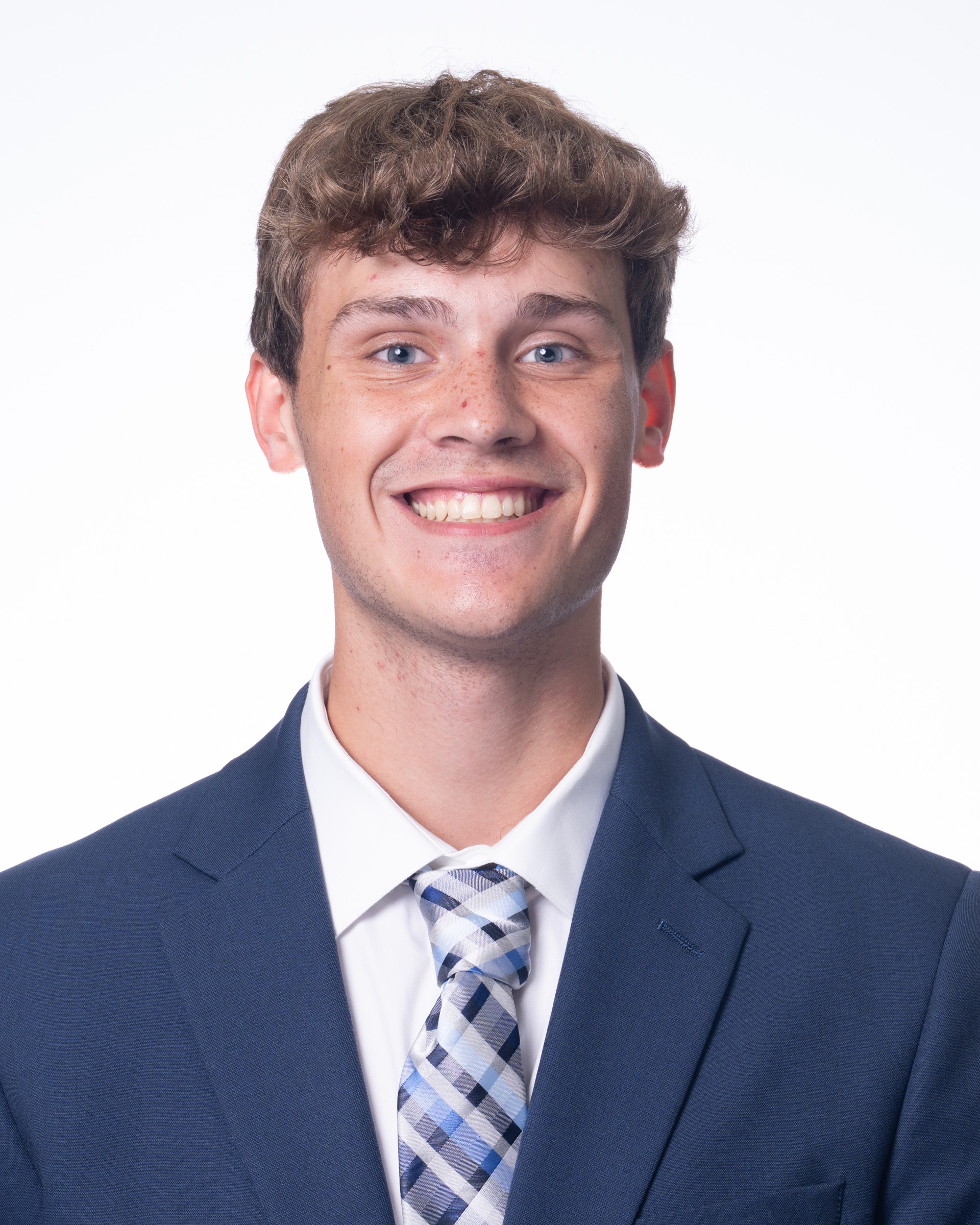
Camden Crum is a Freshman Presidential Scholar at FSU majoring in Business Management. He is in the honors program and conducted his research on an AI project which he hopes will help him with integrating AI into business settings in future careers.
Open – Ended Survey Response Analysis Using LLMs
Authors: Camden Crum, Brian WilcoxonStudent Major: Business Management
Mentor: Brian Wilcoxon
Mentor's Department: FSU Graduate Student Resource Center Mentor's College: FSU Graduate School Co-Presenters:
Abstract
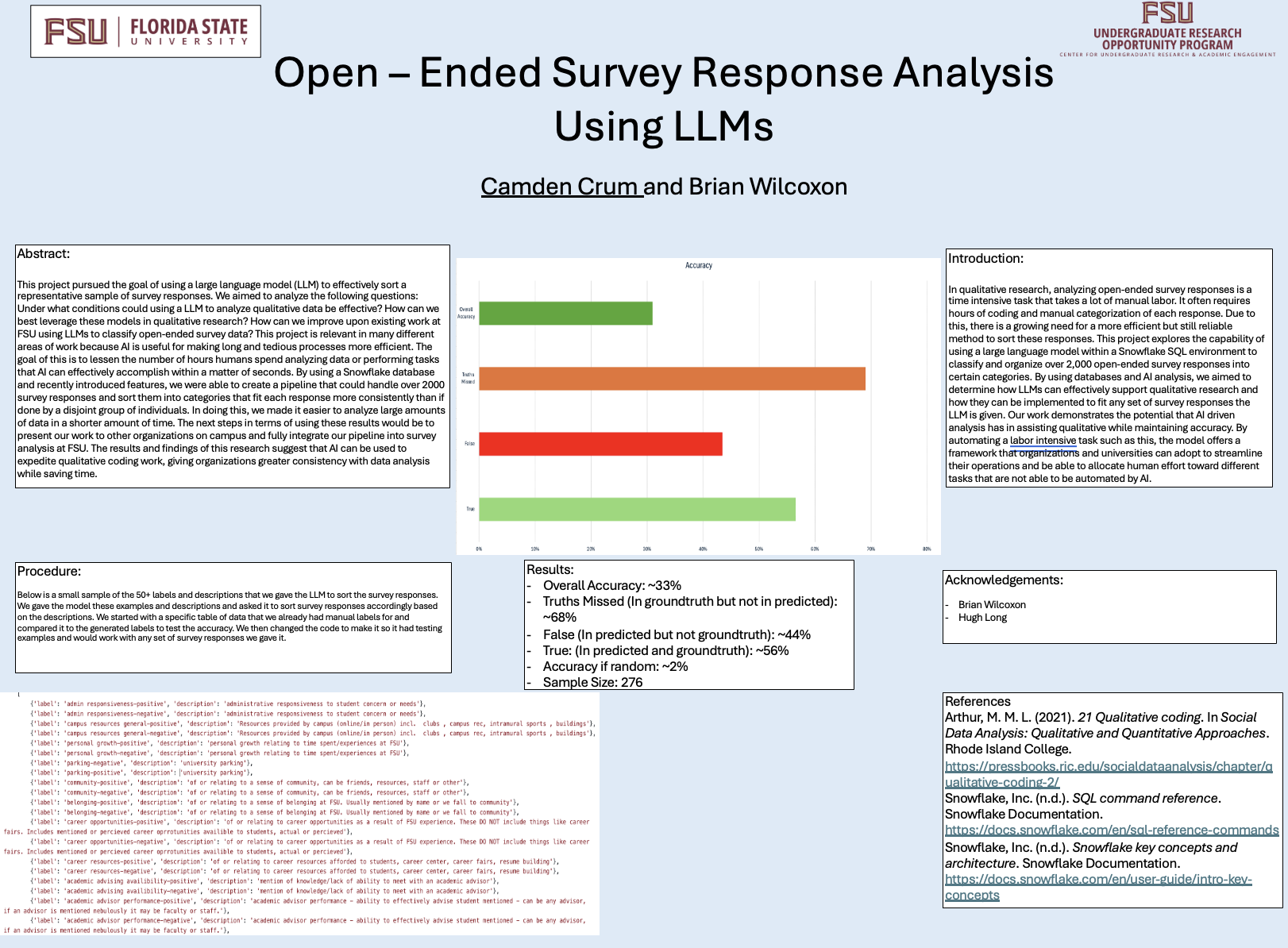
This project pursued the goal of using a large language model (LLM) to effectively sort a representative sample of survey responses. We aimed to analyze the following questions: Under what conditions could using a LLM to analyze qualitative data be effective? How can we best leverage these models in qualitative research? How can we improve upon existing work at FSU using LLMs to classify open-ended survey data? This project is relevant in many different areas of work because AI is useful for making long and tedious processes more efficient. The goal of this is to lessen the number of hours humans spend analyzing data or performing tasks that AI can effectively accomplish within a matter of seconds. By using a Snowflake database and recently introduced features, we were able to create a pipeline that could handle over 2000 survey responses and sort them into categories that fit each response more consistently than if done by a disjoint group of individuals. In doing this, we made it easier to analyze large amounts of data in a shorter amount of time. The next steps in terms of using these results would be to present our work to other organizations on campus and fully integrate our pipeline into survey analysis at FSU. The results and findings of this research suggest that AI can be used to expedite qualitative coding work, giving organizations greater consistency with data analysis while saving time.
Keywords: AI, Computer Science, Surveys
26th annual Undergraduate Research Symposium, April 1, 2026
Derek Zdanowski Poster Session 1: 9:30 am - 10:30 am / Poster #115
BIO
Derek Zdanowski is a senior from Tampa, Florida pursuing a Bachelor of Science in Exercise Physiology. He has developed a strong interest in preventive health and the impact of lifestyle on disease. After graduation, he will attend medical school in the fall, where he plans to further explore the use of lifestyle-based approaches in clinical care.
Investigating the Effect of microRNA-21 Deletion on Western Diet–Induced SMAD Signaling and Fibrotic Marker Expression in Mice
Authors: Derek Zdanowski, Dr. Justin La FavorStudent Major: B.S. Exercise Physiology
Mentor: Dr. Justin La Favor
Mentor's Department: Department of Health, Nutrition and Food Sciences Mentor's College: Anne College of Education, Health, and Human Sciences Co-Presenters:
Abstract
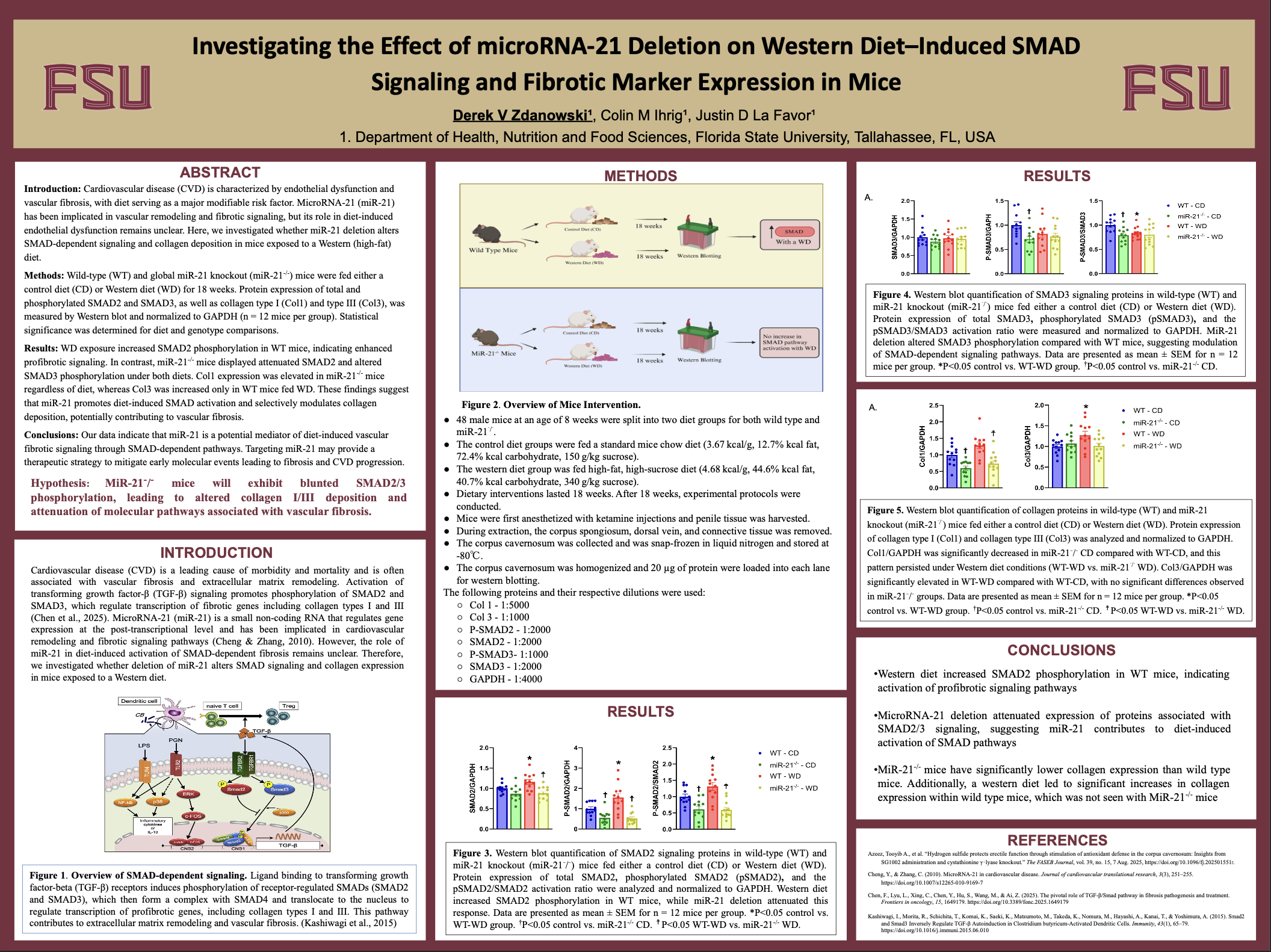
Introduction: Cardiovascular disease (CVD) is characterized by endothelial dysfunction and vascular fibrosis, with diet serving as a major modifiable risk factor. MicroRNA-21 (miR-21) has been implicated in vascular remodeling and fibrotic signaling, but its role in diet-induced endothelial dysfunction remains unclear. Here, we investigated whether miR-21 deletion alters SMAD-dependent signaling and collagen deposition in mice exposed to a Western (high-fat) diet.
Methods: Wild-type (WT) and global miR-21 knockout (miR-21-/-) mice were fed either a control diet (CD) or Western diet (WD) for 18 weeks. Protein expression of total and phosphorylated SMAD2 and SMAD3, as well as collagen type I (Col1) and type III (Col3), was measured by Western blot and normalized to GAPDH (n = 12 mice per group). Statistical significance was determined for diet and genotype comparisons.
Results: WD exposure increased SMAD2 phosphorylation in WT mice, indicating enhanced profibrotic signaling. In contrast, miR-21-/- mice displayed attenuated SMAD2 and altered SMAD3 phosphorylation under both diets. Col1 expression was elevated in miR-21-/- mice regardless of diet, whereas Col3 was increased only in WT mice fed WD. These findings suggest that miR-21 promotes diet-induced SMAD activation and selectively modulates collagen deposition, potentially contributing to vascular fibrosis.
Conclusions: Our data indicate that miR-21 is a potential mediator of diet-induced vascular fibrotic signaling through SMAD-dependent pathways. Targeting miR-21 may provide a therapeutic strategy to mitigate early molecular events leading to fibrosis and CVD progression.
Keywords: MicroRNA-21, SMAD Signaling, Vascular Fibrosis
26th annual Undergraduate Research Symposium, April 1, 2026
Claire Sullivan Poster Session 1: 9:30 am - 10:30 am / Poster #173
BIO
Claire Sullivan is a sophomore majoring in Community Patient Care. An undergraduate research assistant at FSU’s Complementary Health Innovation Lab, Claire is interested in patient-centered approaches to pain management. Claire is curious about the ways complementary therapies can be used to improve patient comfort, well-being, and satisfaction. She is particularly excited by the potentially large-scale, low-cost applications of complementary therapies in clinical practice. An IDEA Grant Awardee and former UROP mentee at the lab, Claire is currently exploring how the lab’s interventions could benefit free clinic patients back home in Orlando.
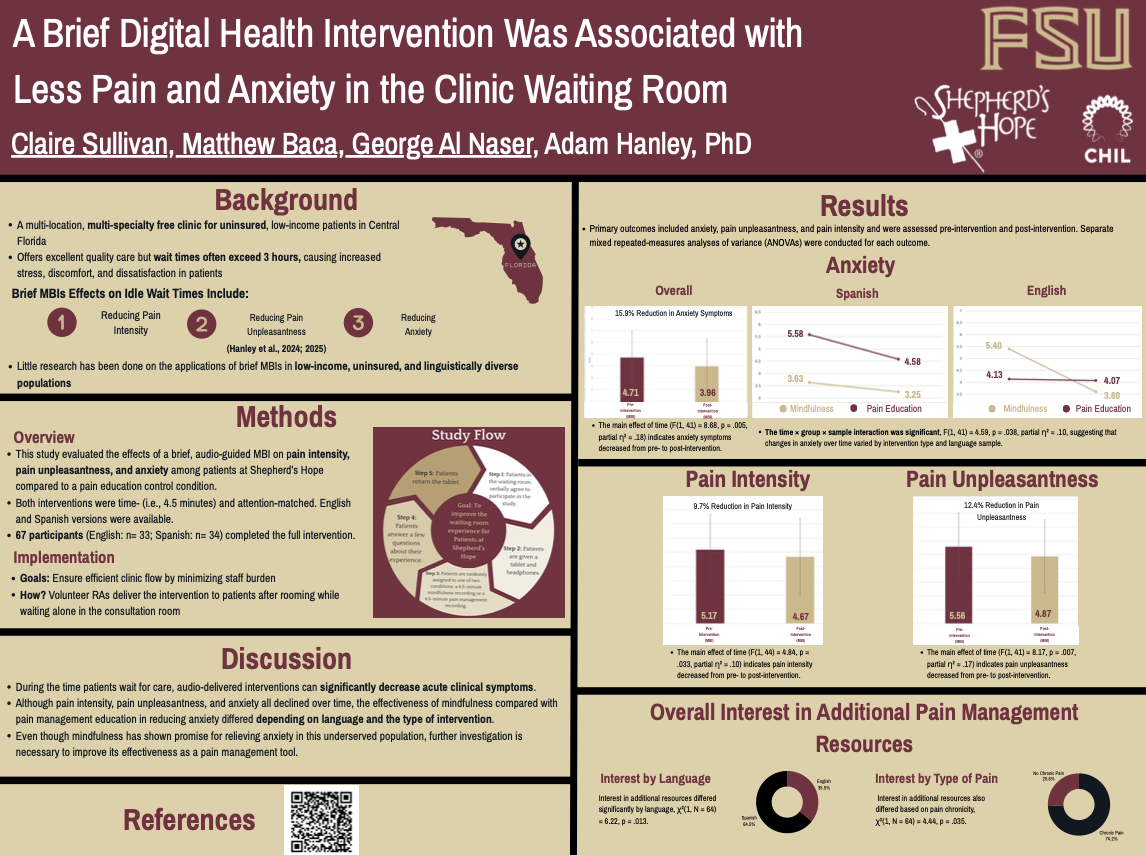
A Brief Digital Health Intervention Was Associated with Less Pain and Anxiety in the Clinic Waiting Room
Authors: Claire Sullivan, Adam HanleyStudent Major: Community Patient Care
Mentor: Adam Hanley
Mentor's Department: College of Nursing Mentor's College: College of Nursing Co-Presenters:
Abstract
Shepherd’s Hope is a multi-specialty free clinic serving uninsured, low-income patients in Central Florida. While the quality of care is excellent, wait times at the clinic often exceed 3 hours, contributing to stress, discomfort, and dissatisfaction in patients. Brief mindfulness-based interventions are effective in reducing pain intensity, pain unpleasantness, and anxiety during idle wait times, though little research has been done on the efficacy of brief MBIs in low-income, uninsured, and linguistically diverse populations. This study evaluated the effects of a 4.5-minute, audio-guided MBI on acute pain and anxiety symptoms among patients at Shepherd’s Hope (n=67) relative to a pain education control condition. The main effect of time for anxiety, (F(1, 41) = 8.68, p = .005, partial η² = .18), pain unpleasantness (F(1, 41) = 8.17, p = .007, partial η² = .17), and pain intensity (F(1, 44) = 4.84, p = .033, partial η² = .10) indicates that anxiety and pain symptoms decreased from pre- to post-intervention. For anxiety, there was a significant time × group × sample interaction (F(1, 41) = 4.59, p = .038, partial η² = .10), indicating that changes in anxiety over time varied by intervention type and language sample. Interest in additional pain management resources also differed significantly depending on language (χ²(1, N = 64) = 6.22, p = .013) and pain chronicity (χ²(1, N = 64) = 4.44, p = .035). The results suggest that brief, audio-delivered interventions can meaningfully decrease clinical symptoms during the idle time spent waiting for care.
Keywords: Waiting Room, Mindfulness, Integrative Medicine, Anxiety, Acute Pain