
Research Symposium
26th annual Undergraduate Research Symposium, April 1, 2026
Sanjana Penmetcha Poster Session 1: 9:30 am - 10:30 am / Poster #159

BIO
Sanjana Penmetcha is a sophomore at Florida State University pursuing a Bachelor of Science in Finance and Management Information Systems. She is interested in the intersection of technology and finance and how data-driven tools can be used to better understand financial markets and support more informed investment decision-making. Through the Undergraduate Research Opportunity Program, Sanjana conducts research under the mentorship of Dr. Narendra Bosukonda, examining how audio characteristics in corporate earnings calls may influence investor perception and financial decision-making.
In addition to her research, Sanjana is currently an intern at a wealth management firm, where she supports financial planning work while gaining exposure to the operations of an investment management practice. She also enjoys participating in consulting case competitions through Florida State’s business case club. After completing her undergraduate studies, she hopes to build a career in the finance industry and eventually pursue an MBA.
Creating a Machine Learning Model using an Earnings Call Analysis
Authors: Sanjana Penmetcha, Dr. Narendra BosukondaStudent Major: Finance & Management Information Systems
Mentor: Dr. Narendra Bosukonda
Mentor's Department: Persis E. Rockwood School of Marketing Mentor's College: Herbert Wertheim College of Business Co-Presenters:
Abstract
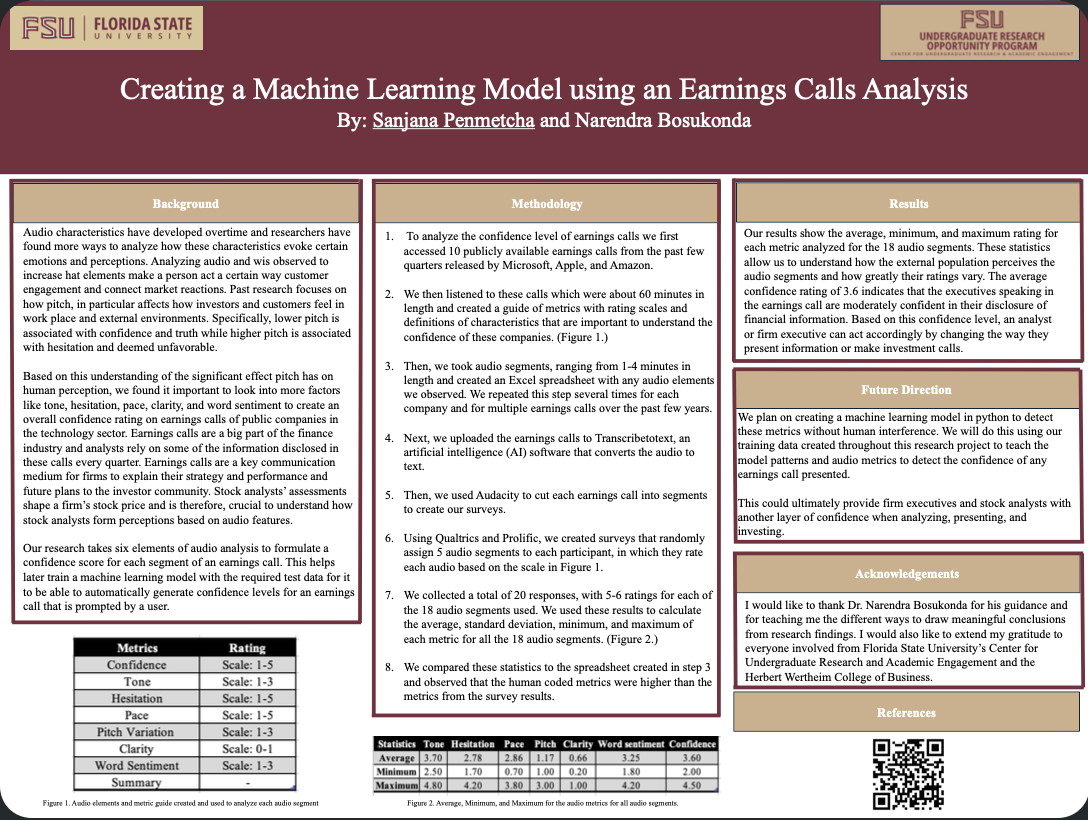
Tone and numerous other audio features can affect human perception and the decision-making process. We chose to investigate this in the context of firm financial reporting. Specifically, by examining how audio features of firm executives during earnings calls impact stock analyst judgements about firm financial performance. To analyze the voluminous audio data and identify the correct features that impact analyst judgment, we plan to develop a machine learning model that can measure the different audio features from earnings calls.
As a first step, we built a manually labeled data set, which is necessary to teach the model to learn patterns of an earnings call. Each earnings call was divided into audio segments ranging from two to four minutes and human-coded based on tone, hesitation, pace, pitch variation, clarity, and word sentiment. Next, we validated this data with ratings from multiple coders, collected using a survey. For each audio segment, we calculated the average, variance, and standard deviation based on survey results.
The data analysis shows that executives who have a stable pitch and pause less are associated with more favorable investor reactions. However, more pauses, high-pitched variation, and negative word sentiment can be associated with uncertainty and weaker reactions. The next steps include integrating the audio segments into Python to program the first version of the model.
Overall, the result of our analysis provides the basis to create a working machine learning model that assesses the confidence of executives and provides an additional signaling mechanism to investors in capital markets.
Keywords: Earnings Call Analysis, Finance, Machine Learning, Investor Sentiment, Financial Disclosure Analysis
26th annual Undergraduate Research Symposium, April 1, 2026
Gustavo Medici Poster Session 4: 3:00 pm - 4:00 pm / Poster #18

BIO
Gustavo Medici is a first-year Honors student seeking a Bachelor of the Arts in History and a Museum Studies minor. He was born in São Paulo, Brazil, and moved to Florida in 2015. Due to his heritage and experience as an immigrant, he became interested in Latin American history and the relationship between the United States and other countries in the Americas.
“The Pipe of Friendship” British, Spanish, and Native Relations in Colonial Florida (1783-1784)
Authors: Gustavo Medici, Benjamin GunterStudent Major: History
Mentor: Benjamin Gunter
Mentor's Department: Communication Mentor's College: Communication Co-Presenters:
Abstract
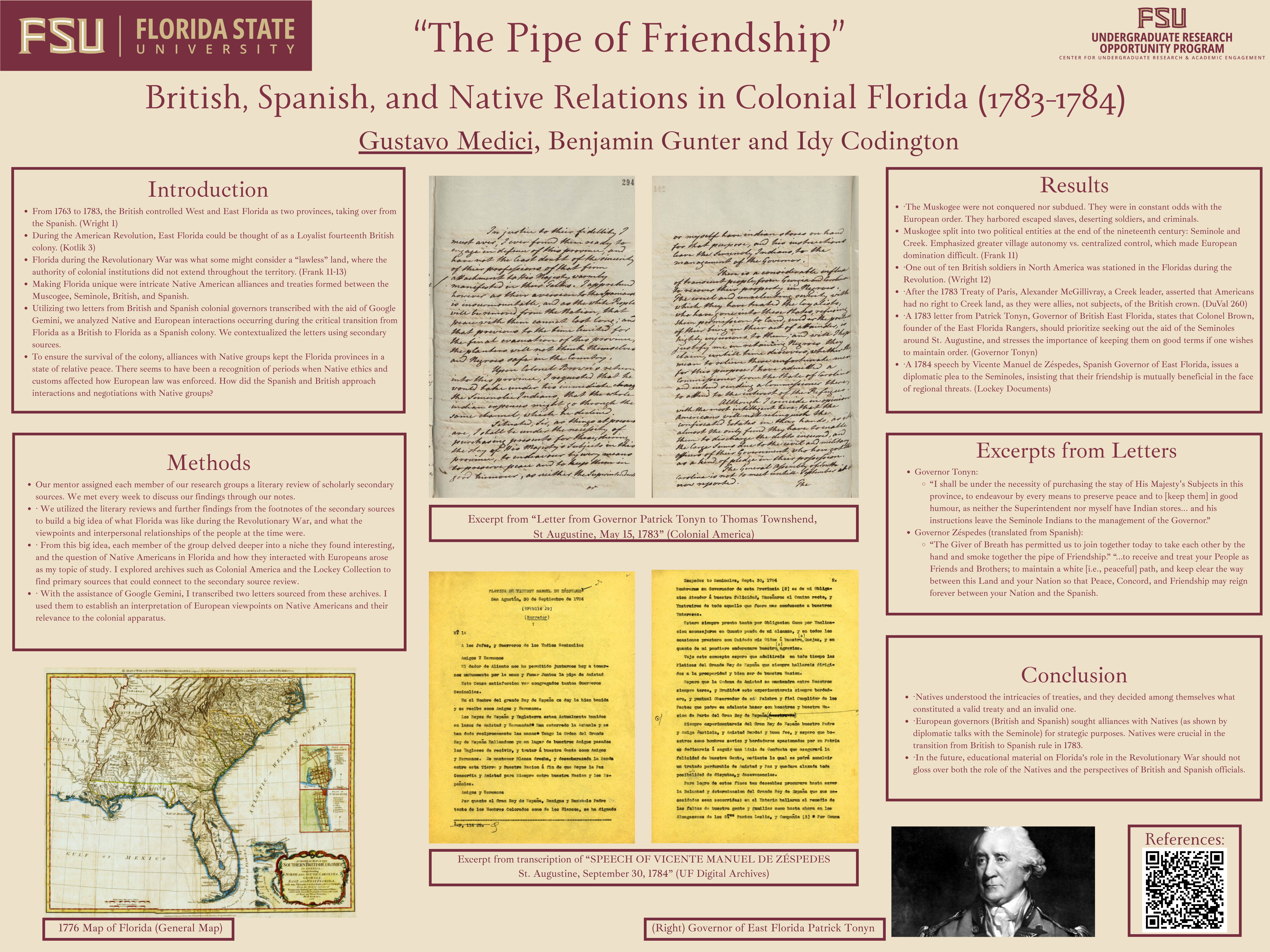
From 1763 to 1783, the British controlled West and East Florida as two provinces, taking over from the Spanish. During the American Revolution, East Florida could be thought of as a Loyalist fourteenth British colony. Florida during the Revolutionary War was what some might consider a “lawless” land, where the authority of colonial institutions did not extend throughout the territory. Making Florida unique were intricate Native American alliances and treaties formed between the Muscogee, Seminole, British, and Spanish. Utilizing two letters from British and Spanish colonial governors transcribed with the aid of Google Gemini, we analyzed Native and European interactions occurring during the critical transition from Florida as a British to Florida as a Spanish colony. We contextualized the letters using secondary sources. To ensure the survival of the colony, alliances with Native groups kept the Florida provinces in a state of relative peace. There seems to have been a recognition of periods when Native ethics and customs affected how European law was enforced. How did the Spanish and British approach interactions and negotiations with Native groups?
Keywords: History, Florida, Native American, British, Spanish
26th annual Undergraduate Research Symposium, April 1, 2026
Madisen Clark Poster Session 2: 10:45 am - 11:45 am / Poster #90

BIO
Madisen Clark is a second-year undergraduate pursuing dual B.S. degrees in Cell & Molecular Neuroscience and Linguistics & Modern Languages, with minors in Chemistry and Spanish. Through the Undergraduate Research Opportunity Program (UROP), she assists research in Dr. Brown’s lab studying muscle atrophy and metabolic disease. She is also an Honors Directed Individual Study (DIS) student in the Learning, Memory, and Language Lab with Dr. Kaschak, assisting with psycholinguistic research on conversational turn-taking dynamics. On campus, Madisen is actively involved in several organizations, including Phi Delta Epsilon Medical Fraternity, the FSU Medical Response Unit, Club Tennis, the FSU Honors Student Association, and Medical Brigades, where she has had the honor of serving on the executive board this academic year. Off campus, she volunteers with Big Bend Hospice at Tallahassee Memorial Hospital and works part-time as a medical assistant at a local allergy clinic. After completing her undergraduate studies, Madisen plans to attend medical school and pursue a career as a physician.
Disuse-Atrophy Exacerbates Denervation in Aged Rats
Authors: Madisen Clark, Jacob BrownStudent Major: Cell & Molecular Neuroscience and Linguistics & Modern Languages
Mentor: Jacob Brown
Mentor's Department: Exercise Physiology Mentor's College: College of Health and Human Sciences Co-Presenters: Alyssa L. Moodie, Kaitlyn R. Harrison, Ava J. Sajovits, Catherine Zhou
Abstract
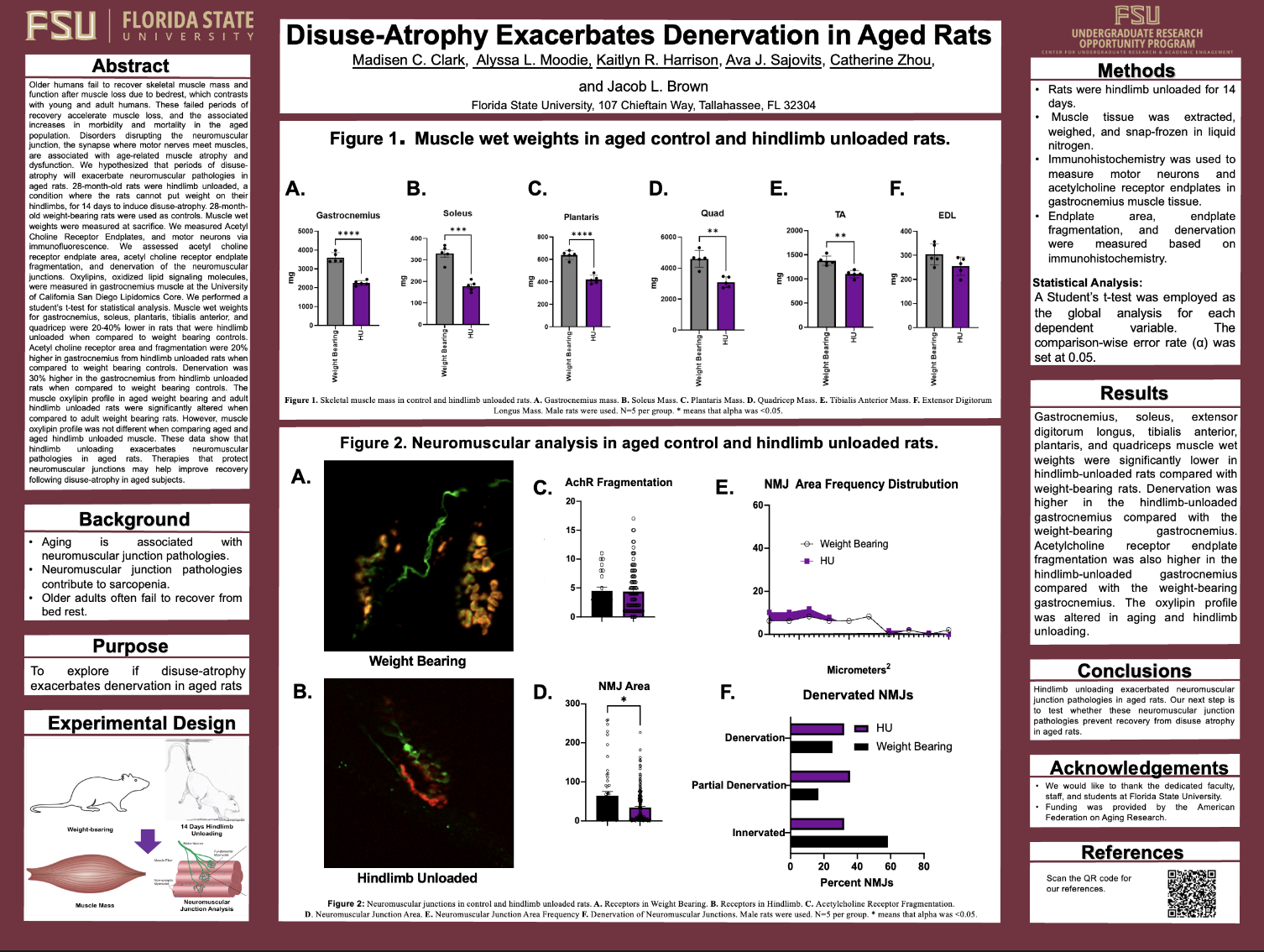
Older humans fail to recover skeletal muscle mass and function after muscle loss due to bedrest, which contrasts with young and adult humans, leading to muscle loss and an increase in morbidity and mortality in the aged population. Disorders disrupting the neuromuscular junction, the synapse where motor nerves meet muscles, are associated with age-related muscle atrophy and dysfunction. We hypothesized that periods of disuse-atrophy will exacerbate neuromuscular pathologies in aged rats. 28-month-old rats were hindlimb unloaded, a condition where the rats cannot put weight on their hindlimbs, for 14 days to induce disuse atrophy. 28-month-old weight-bearing rats were used as controls. Muscle wet weights were measured at sacrifice. Via immunofluorescence, we assessed acetyl choline receptor endplate area, acetyl choline receptor endplate fragmentation, and denervation of the neuromuscular junctions. Oxylipins, oxidized lipid signaling molecules, were measured in gastrocnemius muscle. We performed a student’s t-test for statistical analysis. Muscle wet weights were 20-40% lower in rats that were hindlimb-unloaded compared to controls. Acetyl choline receptor area and fragmentation were 20% higher in gastrocnemius from hindlimb-unloaded rats compared to controls. Denervation was 30% higher in the gastrocnemius from hindlimb-unloaded rats compared to controls. The muscle oxylipin profile in aged weight-bearing and adult hindlimb-unloaded rats were significantly altered when compared to adult weight-bearing rats. However, muscle oxylipin profile was not different when comparing aged and aged hindlimb unloaded muscle. These data show that hindlimb-unloading exacerbates neuromuscular pathologies in aged rats. Therapies that protect neuromuscular junctions may help improve recovery following disuse-atrophy in aged subjects.
Keywords: Disuse-atropy, neuromuscular junction, muscular atrophy
26th annual Undergraduate Research Symposium, April 1, 2026
Grace Dean Poster Session 1: 9:30 am - 10:30 am / Poster #239

BIO
Grace Dean is a second-year honors student pursuing a Bachelor of Arts in Political Science with a double major in Religion within the College of Social Science and Public Policy. She is also working toward her concentration in public administration alongside the undergraduate certificate in Emergency Management. Grace is deeply involved in both the Florida State and broader Tallahassee community, as she hopes to gain experience in nonprofit management, public interest law, and labor law.
She is an Employment Intern at the International Rescue Committee where she strives to create accessibility in the Tallahassee job market for newly arrived refugees. Grace is proud to have the opportunity to conduct targeted grant research and writing for an environmental nonprofit that provides conservation-based professional development to high school and university students (Conservation Pathways) as a Spring 2026 Sustainability Fellow. At FSU, she serves as the Co-Programming Coordinator for the Pride Student Union as well as a programming intern at Club Downunder. Lastly, she is excited to gain experience on political campaigns and deepen her connection to the Tallahassee community as she begins her position as a volunteer recruitment intern for a local mayoral campaign.
Restoration of Resilience: Religious Congregations' Role in Disaster-Recovery Efforts
Authors: Grace Dean, Dr. David BerlanStudent Major: Political Science and Religion
Mentor: Dr. David Berlan
Mentor's Department: Askew School of Public Administration and Policy Mentor's College: College of Social Sciences and Public Policy Co-Presenters:
Abstract
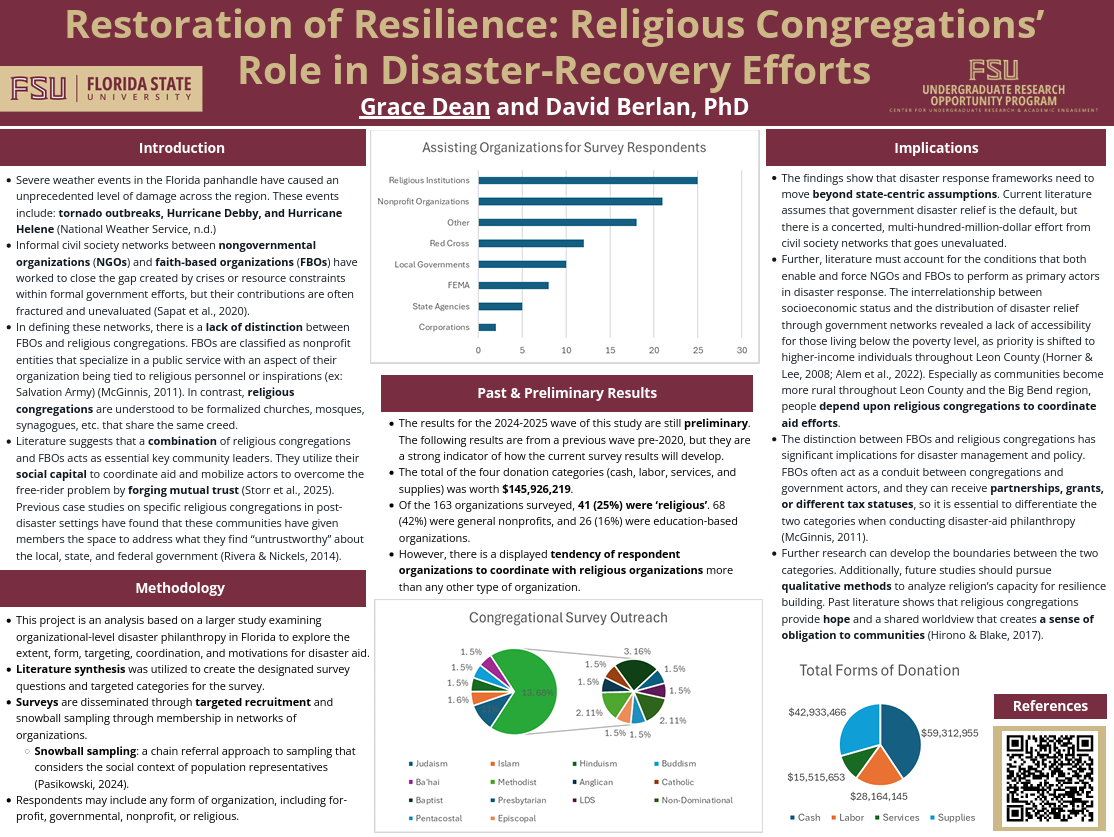
Natural disasters create a fractured response from a wide range of community actors. State and federal disaster-relief programs are often short-term solutions that produce unstable service environments for constituents to navigate (Gajewski et al., 2011). Informal civil society networks, comprising nongovernmental organizations (NGOs), local grassroots or community-based organizations, faith-based organizations (FBOs), and informal neighborhood groups, have contributed essential resilience efforts when formal government efforts are weakened by crises or resource constraints (Sapat et al., 2019). This analysis draws on a larger study examining organizational-level disaster philanthropy in Florida in 2024-2025 to specifically target religious congregations' role in disaster response in Leon County, Florida. Previous literature indicates that FBOs utilize social capital to step into community leadership roles when private or public sector capacity is weak (Roque et al., 2020). However, there has not been a defined distinction between religious congregations and FBOs' functions in disaster relief efforts, despite operational differences. Therefore, through a survey of individuals at religious congregations impacted by or responding to disasters in Leon County throughout 2024-25, this study seeks to understand the extent, form, targeting, coordination, and motivations for disaster philanthropy in this essential part of civil society networks. The findings show that disaster response frameworks need to move beyond state-centric assumptions and account for conditions that enable religious congregations to have more flexibility to act as primary actors in disaster response and recovery to better understand long-term solutions.
Keywords: Nonprofit and NGO Management, Religious Studies, Disaster Relief, Emergency Management
26th annual Undergraduate Research Symposium, April 1, 2026
Oluwatosin Gbadamosi Poster Session 2: 10:45 am - 11:45 am / Poster #128
BIO
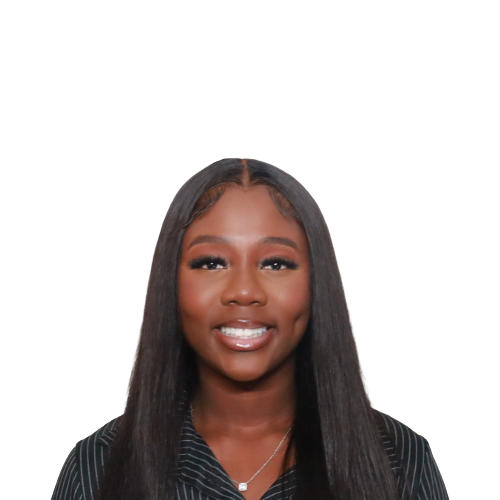
Oluwatosin Gbadamosi is a fourth-year undergraduate student at Florida State University pursuing a Bachelor of Science in Cell and Molecular Neuroscience. She is interested in neuroscience, medicine, and understanding how biological and social factors influence human behavior and decision-making.
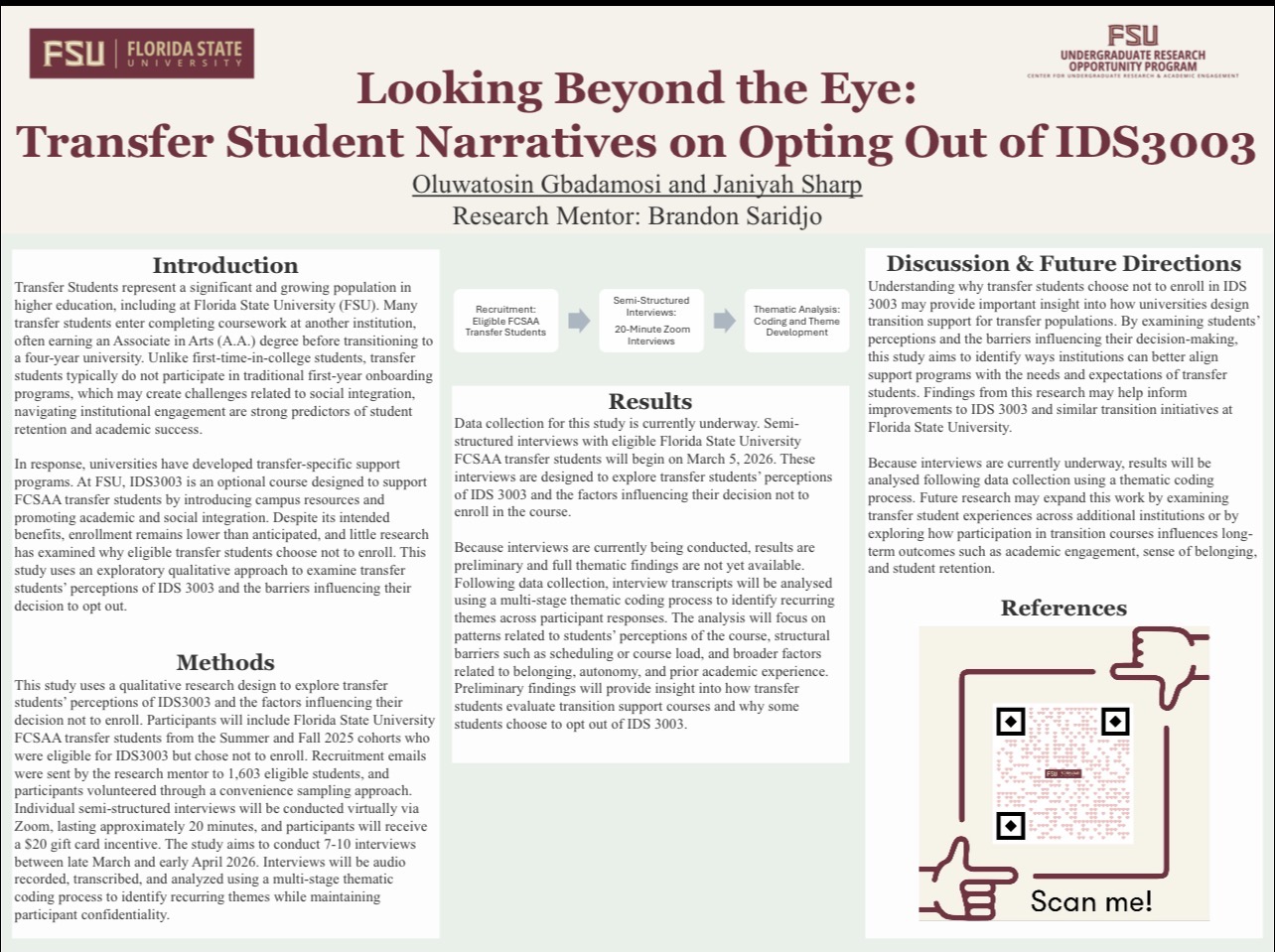
Oluwatosin is currently involved in a collaborative research project examining transfer student perceptions and barriers related to enrollment in IDS 3003, a course designed to support transfer student transition and success at Florida State University. Through this project, she has contributed to developing interview questions, participating in focus group research, and analyzing qualitative data to better understand how transfer students view institutional support programs.
Outside of research, Oluwatosin is interested in mentorship, community involvement, and continuing to grow her academic and professional skills. She hopes to gain additional research experience during her undergraduate studies while preparing for a future career in medicine. After graduation, she plans to attend medical school and pursue a career as a neurosurgeon.
Looking Beyond the Eye: Transfer Student Narratives on Opting Out of IDS3003
Authors: Oluwatosin Gbadamosi, Brandon SaridijoStudent Major: Cell and Molecular Neuroscience
Mentor: Brandon Saridijo
Mentor's Department: Student Services, Student Success, Higher Education, Student Perceptions, Academic Support Programs Mentor's College: Florida State University Co-Presenters: Janiyah Sharp
Abstract
Florida State University (FSU) offers a course designed to help new transfer students adjust to campus culture, connect with peers and mentors, and build academic skills, IDS 3003: Transfer Connections and Success. However, a number of eligible transfer students choose not to enroll, raising questions about student awareness and perceptions of the course. This qualitative study examined transfer students’ perceptions of IDS 3003 and investigate factors influencing their decision to opt out of enrolling. Using two semi-structured focus group, data was collected from 10 transfer students who enrolled at FSU during the Summer and Fall 2025 semesters but did not enroll in IDS 3003. From this, we’re managing to gather in-depth comprehension into the students’ perception of the course. Thematic analysis was used to identify recurring patterns from the interviews. The findings from this study provide a better understanding of the perceptions of the course, their decision making process, and student rationale for non-enrollment. The implications for this study provide improved marketing and recruitment strategies. Creating more informed decision making and an increase of enrollment for future transfer students and IDS 3003.
Keywords: Transfer Students, Student Success, Higher Education, Student Perceptions, Academic Support Programs
26th annual Undergraduate Research Symposium, April 1, 2026
Kaitlyn Goslinga Poster Session 3: 1:45 pm - 2:45 pm / Poster #267

BIO
Kaitlyn Goslinga is majoring in Biological Science on a Pre-Physician Assistant path. She is a first-year student at Florida State University from Gainesville, Florida who is currently working with Dr. Longfeng Li on the Parent-Child Interactions and Well-Being in Daily Life project as a research assistant. Additionally, she was on the President's List for the 2025 fall semester. Her interests lie within the fields of medicine and healthcare, and she hopes to one day work in pediatrics. Working on Dr. Longfeng Li's project has given her greater insight into the field of family sciences, which will be valuable when planning a career focused on children. She plans to apply to Physician Assistant school and pursue a career in healthcare after college.
Momentary Effects of Parental Stress on Parenting and Children’s Self-Regulation
Authors: Kaitlyn Goslinga, Dr. Longfeng LiStudent Major: Biological Science
Mentor: Dr. Longfeng Li
Mentor's Department: Department of Human Development & Family Science Mentor's College: Anne Spencer Daves College of Education, Health, and Human Sciences Co-Presenters: Meghan Knobloch, Francesca Maresma, Annemarie Wilson, and Mikaya Rosenwasser
Abstract
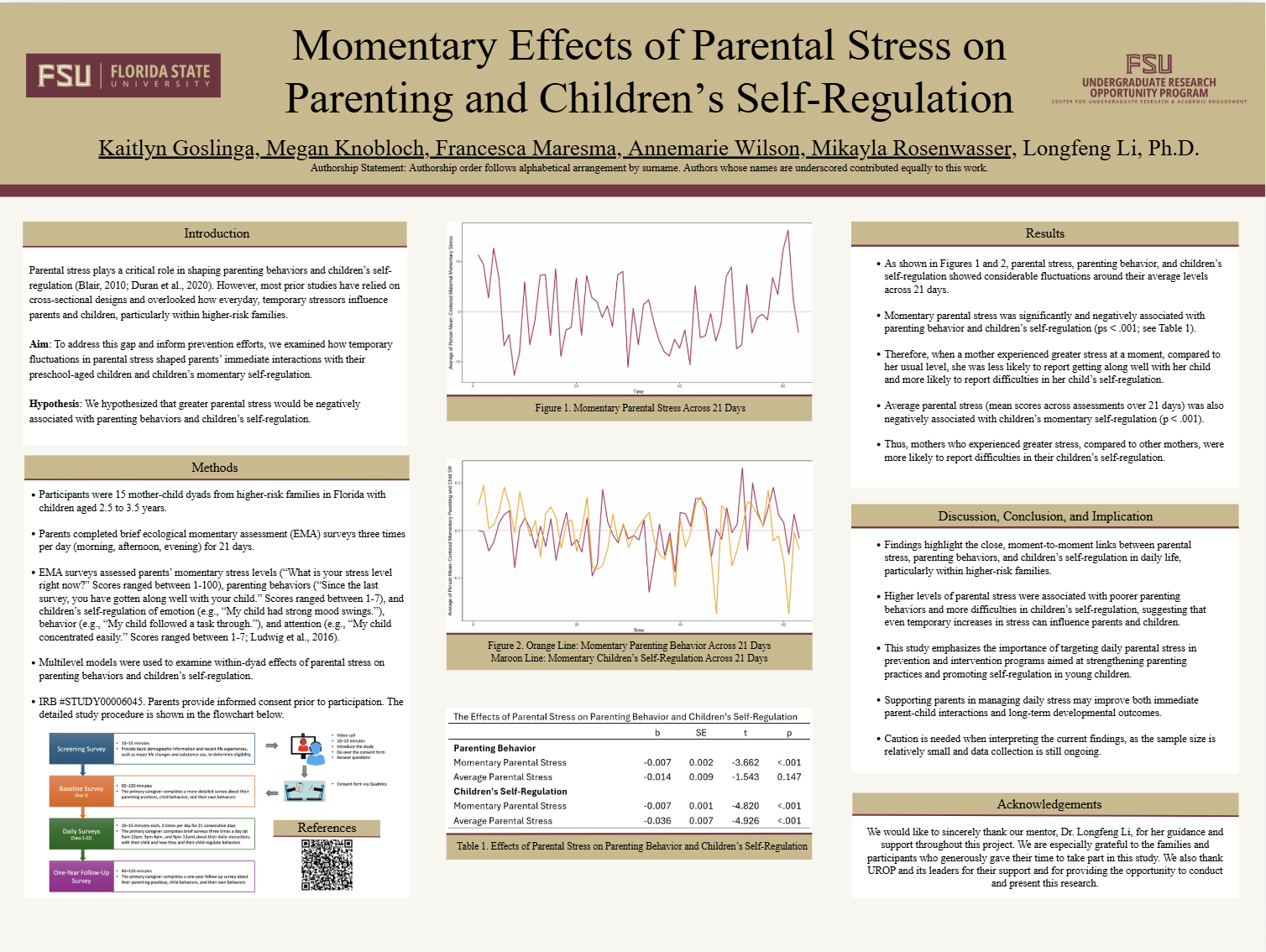
Parental stress plays a critical role in shaping parenting behaviors and children’s self-regulation. However, most prior studies have relied on cross-sectional designs and overlooked how everyday, temporary stressors influence parents and children, particularly within higher-risk families. To address this gap and inform prevention efforts, we examined how temporary fluctuations in parental stress shaped parents’ immediate interactions with their preschool-aged children and children’s momentary self-regulation. This work aims to support the development of targeted, evidence-based interventions to buffer families from the adverse consequences of daily stress. We hypothesized that greater parental stress would be negatively associated with parenting behaviors and children’s self-regulation. Participants were 15 mother-child dyads from higher-risk families in Florida with children aged 2.5 to 3.5 years. Mothers completed an initial survey, followed by brief ecological momentary assessment (EMA) surveys three times daily (morning, afternoon, evening) for 21 days. EMA surveys assessed parental stress, parenting behaviors (i.e., how well they were getting along with their child), and children’s self-regulation of emotion, behavior, and attention. Multilevel models revealed negative within-dyad associations between parental stress and both parenting behaviors and children’s self-regulation (ps < .05). At moments when parents experienced higher-than-usual stress, they were less likely to report getting along well with their child and more likely to report difficulties in their child’s self-regulation. These findings highlight the dynamic, interrelated nature of parental stress, parenting behaviors, and children’s self-regulation in daily life, suggesting that family-system approaches designed to buffer families from everyday stress may be especially beneficial for higher-risk families.
Keywords: Stress in Children and Self-regulation
26th annual Undergraduate Research Symposium, April 1, 2026
William Castillo Poster Session 3: 1:45 pm - 2:45 pm / Poster #73
BIO
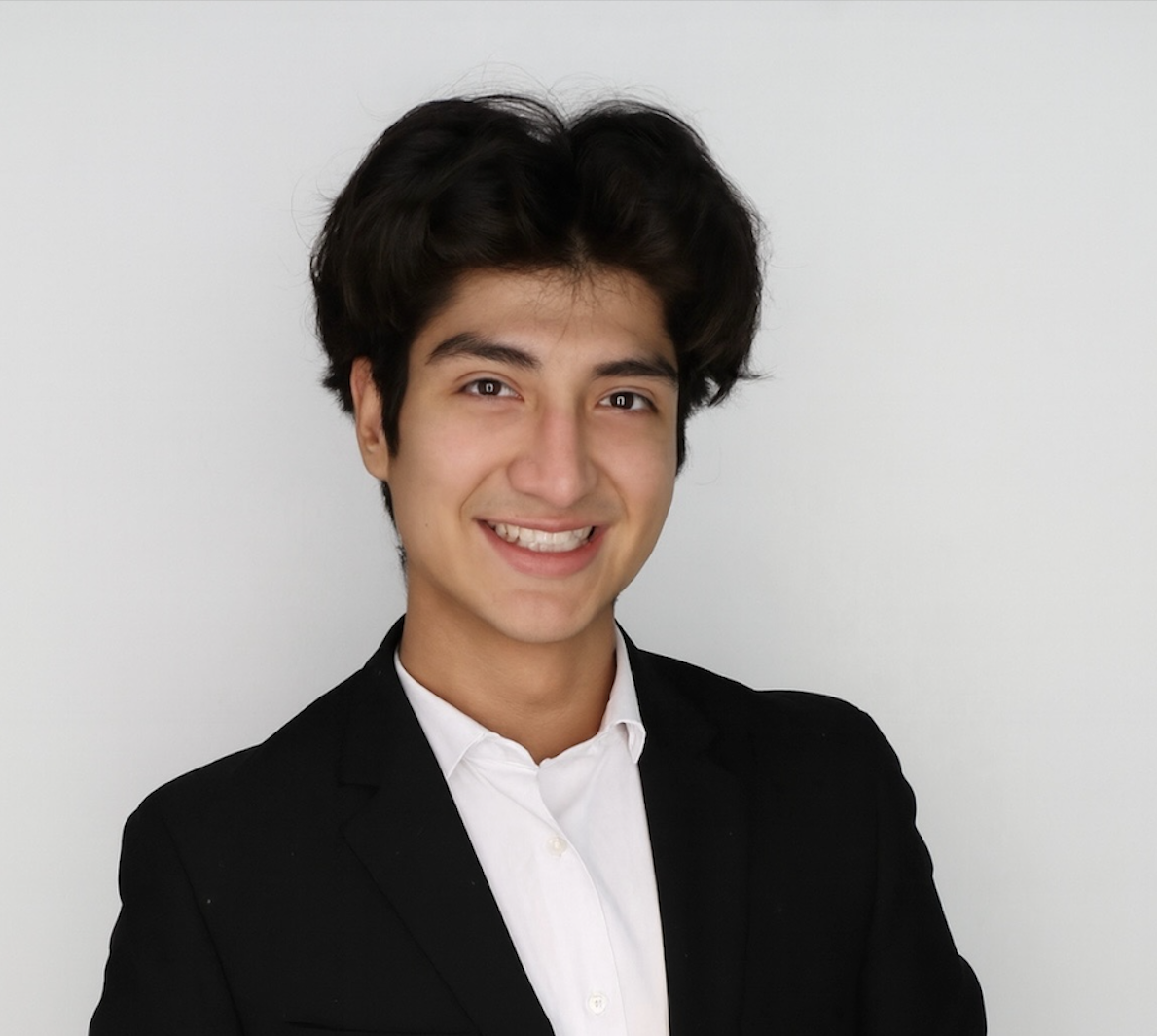
William Castillo is a student at Florida State University pursuing a dual major in Risk Management & Insurance and Hospitality Management. His academic interests focus on how organizations manage uncertainty, make strategic decisions, and build resilient systems in changing environments.
At FSU, he is involved in the Global Investment Society (GIS), the Association of Latino Professionals for America (ALPFA), and outreach efforts for PorColombia. His background in corporate hospitality shaped his understanding of real-time risk management and team coordination in various environments.
Through the Undergraduate Research Opportunity Program (UROP) and the XS/FS Experimental Economics Lab, William conducts research on decision-making under risk. His work examines how individuals evaluate small probabilities when choosing between uncertain outcomes, using behavioral economics to explain why real-world choices often differ from traditional models and how these insights can improve decision-making in business and policy.
Overweighting of Low-Probabilities in Risky Decision Making
Authors: William Castillo, Dr. Mark IsaacStudent Major: Risk Management Insurance / Hospitality & Tourism Management
Mentor: Dr. Mark Isaac
Mentor's Department: Florida State University Department of Economics Mentor's College: College of Social Science and Public Policy Co-Presenters:
Abstract
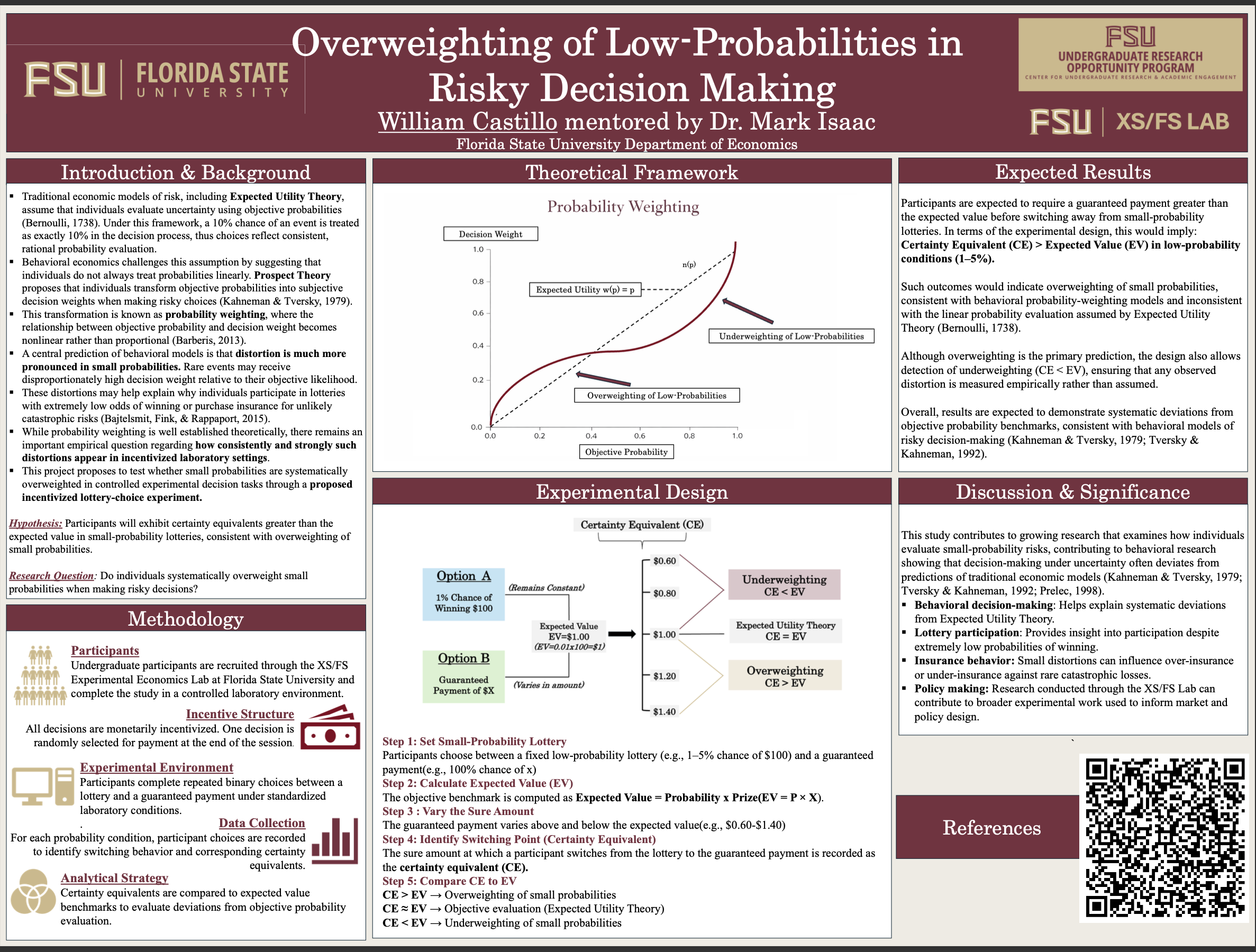
Traditional economic models assume that individuals evaluate probabilities objectively when making decisions under risk. Behavioral research, however, shows that individuals often distort probabilities, particularly when events have very small chances of occurring. This project investigates how individuals evaluate low-probability risks and whether small probabilities are systematically overweighted in decision-making.
The study uses a proposed experimental framework based on risky choice tasks in which participants choose between a lottery and a guaranteed monetary amount. By identifying the certainty equivalent at which participants switch between the two options, the experiment allows decision weights to be inferred and compared to the objective probabilities of the lottery. This approach makes it possible to observe how individuals subjectively perceive small probabilities while the objective outcomes remain constant.
Prior behavioral research suggests that individuals tend to overweight small probabilities, which can lead them to choose low-probability, high-payoff lotteries more frequently than predicted by traditional expected utility models. Observing this pattern in experimental choices would indicate that individuals assign greater decision weight to small probabilities than their objective likelihood warrants. Understanding this bias is important for explaining real-world behaviors such as lottery participation, insurance purchasing, and risk-taking in uncertain environments.
Keywords: Economics, Risk Management, Behavioral Economics, Insurance
26th annual Undergraduate Research Symposium, April 1, 2026
Emma Grimes Poster Session 2: 10:45 am - 11:45 am / Poster #40
BIO
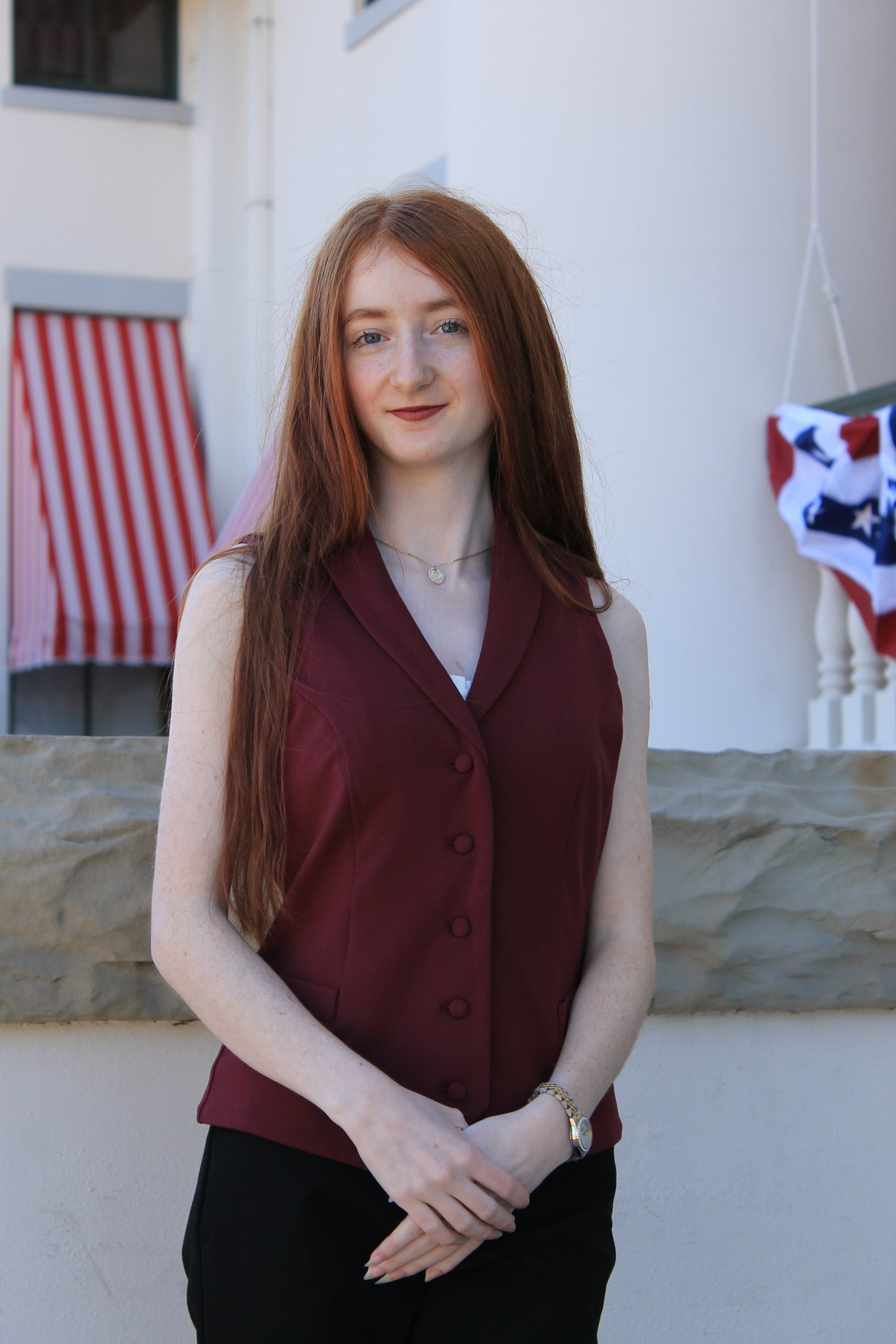
Emma is a first-generation first-year honors student pursuing a Bachelor of Arts in International Affairs. She is a recipient of Florida State University's Vires Scholarship and was named a Seminole Scholar by University Housing this past semester for maintaining a grade point average above 3.5. She plans to earn a Juris Doctor and Master of Laws to become an international lawyer working in trade, human rights, and immigration.
Colorism and Black Women's Mental Health
Authors: Emma Grimes, Dr. Eugenia Flores MillenderStudent Major: International Affairs
Mentor: Dr. Eugenia Flores Millender
Mentor's Department: Nursing Department Mentor's College: College of Nursing Co-Presenters: Emal Kashif
Abstract
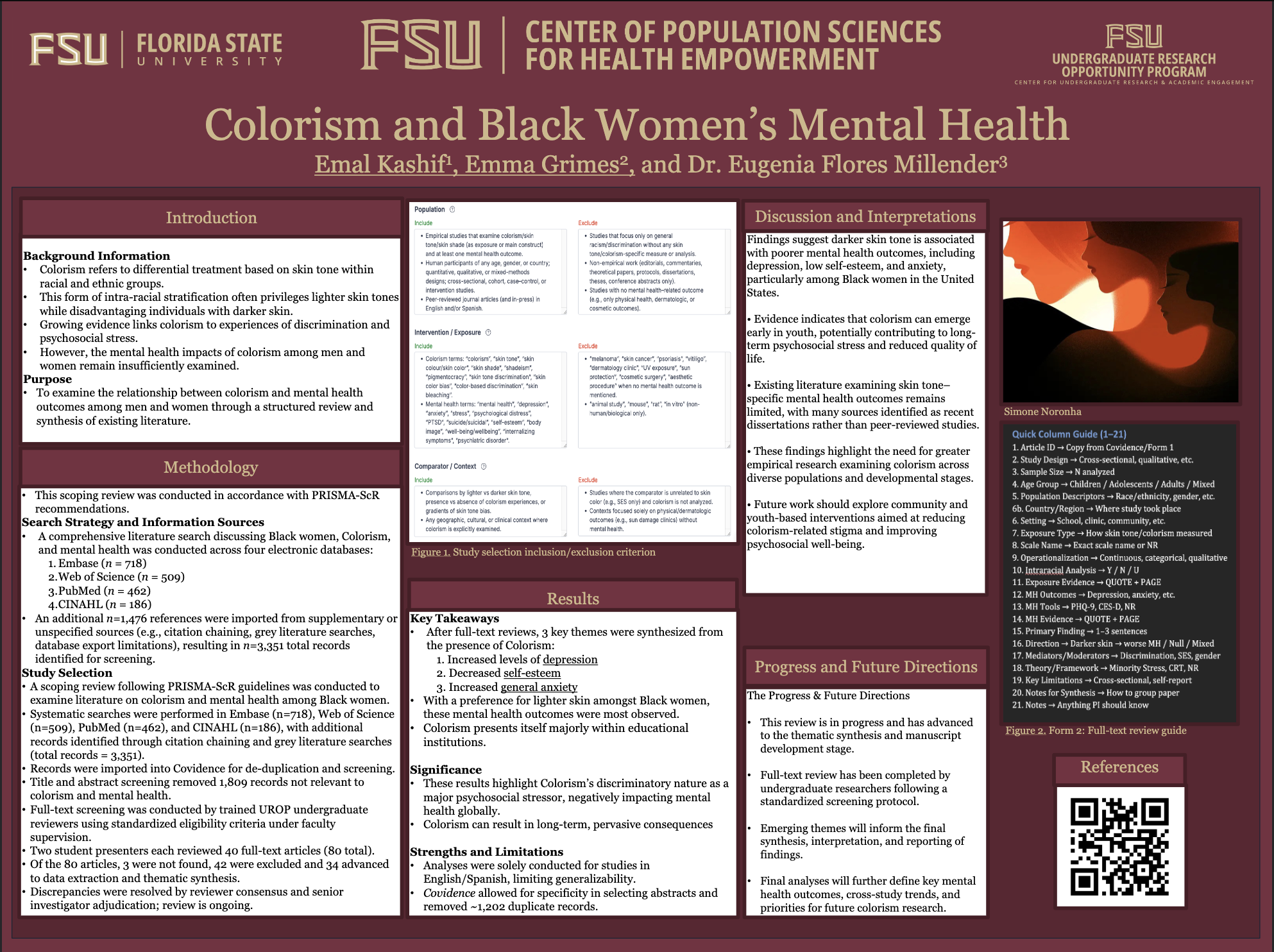
Colorism is discrimination based on skin tone. Individuals with darker complexions experience greater negative bias than those with lighter ones. This form of stratification is associated with adverse mental health outcomes among those most affected.
On a team of 6 research assistants, we each screened ~500 abstracts, 2,145 total, for significant data on impacts of Colorism to mental health of primarily African American women, then reviewed 40 full-texts to determine eligibility for the final scoping review.
On the platform Covidence, we screened the abstracts following strict criteria. This included whether a study operationalized skin tones and mental health, like with the Rosenberg Self-Esteem Scale. Studies also had to be empirical and written in English or Spanish. After screening, we reviewed the full-texts with more detailed criteria. An important part of this was checking if there was data linking Colorism with specific skin tones to a mental health outcome; if not, it was no longer eligible to move forward. Additionally, we looked for intraracial analysis.
We found three main effects of Colorism: darker skin was associated with lower self-esteem, higher stress levels, and depression. It affects youth and adults, and often occurs intraracially, between members of the same race, like at predominantly African American schools.
Colorism is prevalent throughout the United States and negatively impacts African Americans with darker skin tones psychologically and socially. Future researchers should implement pilot programs in schools to work towards preemptively combatting Colorism in youth and enable darker-skinned individuals to feel confident in their skin.
Keywords: colorism, mental health, shadism
26th annual Undergraduate Research Symposium, April 1, 2026
Shohan Ghatak Poster Session 1: 9:30 am - 10:30 am / Poster #269

BIO
Shohan Ghatak is a Sophomore at Florida State University pursuing a Bachelor of Science in Statistics and Economics. Ghatak’s professional background includes an internship with ImmunoProfile LLC, where he developed an interactive map to visualize antibody protection levels based on client data. He also served as an intern at Increase Alpha, conducting research on Artificial Intelligence systems, specifically LSTMs and Large Language Models, as well as utilizing Python and SHAP to analyze over 2,500 financial data files to enhance the interpretability and identify key drivers of stock market prediction models.
Currently, Ghatak serves as a research mentee under Professor Bryce Morsky in the FSU Department of Mathematics. His work focuses on SIR-type compartmental models and disease prediction based on derivations of basic reproduction numbers. Building on this foundation, he is currently transitioning into an independent research project with Professor Morsky to author a paper on an SAIQR compartmental model for measles. This research specifically investigates the four-day asymptomatic period of transmission and how social dynamics, concretely how premature quarantine exit or delayed entry, impact the containment of measles under varying conditions and levels of adherence.
Upon graduating in May 2028, Ghatak intends to pursue a career as a Data Analyst while furthering his studies in graduate school.
Mathematical Epidemiology: Compartmental Models and Equilibrium Stability Analysis
Authors: Shohan Ghatak, Bryce MorskyStudent Major: Statistics and Economics
Mentor: Bryce Morsky
Mentor's Department: Mathematics Mentor's College: Florida State University Co-Presenters:
Abstract
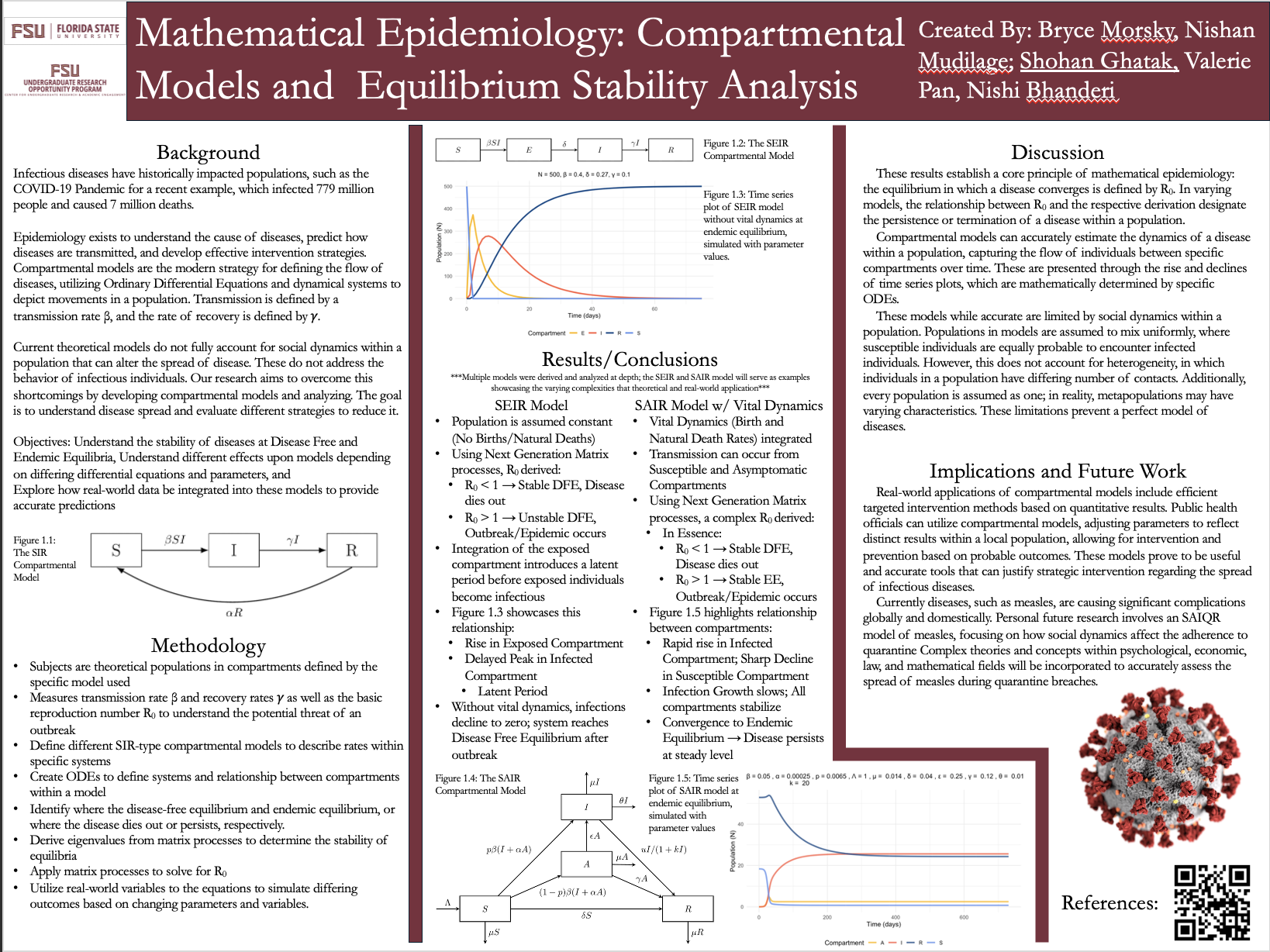
Throughout human history, infectious diseases have spread across varying populations. Most recently, COVID-19 caused a worldwide lockdown from 2020 to 2021, infecting 779 million and killing 7 million. The purpose of epidemiology is to understand the causes of a disease, predict its course, and develop effective interventions. Utilizing compartmental models, the relationship between each of these compartments is defined by differential equations, specifically ODEs and dynamical systems. These equations depict the movement between compartments. These will show the flow of susceptible individuals to the infected compartment as the disease is transmitted at transmission rate (β), as well as the flow of infected individuals either back to the susceptible or recovered compartment at the recovery rate (γ). SIR-type models, varying in complexity, utilize these equations to illustrate these relationships across a multitude of schemes. Using Jacobian and Next Generation Matrix processes, we can determine the stability of the Disease-Free and Endemic equilibria and find R0. Simulating the system can also provide insights into transient dynamics. Together, these results can guide officials in creating effective intervention methods. Further studies can extend this framework to incorporate more realistic features. In particular, models can include social behaviors of populations, such as adherence to quarantine and usage of both vaccines and non-pharmaceutical interventions.
Keywords: Epidemiology, Compartmental Model, Equilibria
26th annual Undergraduate Research Symposium, April 1, 2026
Avarie Bergen Poster Session 1: 9:30 am - 10:30 am / Poster #117
BIO
Avarie Bergen is a sophomore majoring in Meteorology and minoring in Mathematics under the Department of Earth, Ocean & Atmospheric Science at Florida State University. The university’s Undergraduate Research Opportunities Program offered Avarie her first official research opportunity within related fields of work: Environmental and Civil Engineering. Faculty mentor Dr. Roshan Panahi acted with a hands-on approach in assisting Avarie throughout her literature reviews, research, and coding. Faculty mentor Dr. Juyeong Choi is the head of the research project, while still finding time to check in on the progress of the UROP students. She expects to continue research in meteorological and climate-related fields throughout her time at FSU while earning a Bachelor's of Science in Environmental Meteorology, accompanied by a minor in Mathematics and a Certificate in Leadership Studies. Post graduation, she plans to work with the National Oceanic and Atmospheric Administration. She hopes to one day return to her schooling to fulfill her dream of earning her Ph.D..
Development of a Digital Twin Model to Improve Disaster Debris Collection Operation
Authors: Avarie Bergen, Dr. Juyeong ChoiStudent Major: Meteorology
Mentor: Dr. Juyeong Choi
Mentor's Department: CEE - Civil & Environmental Engineering Mentor's College: The College of Engineering Co-Presenters:
Abstract
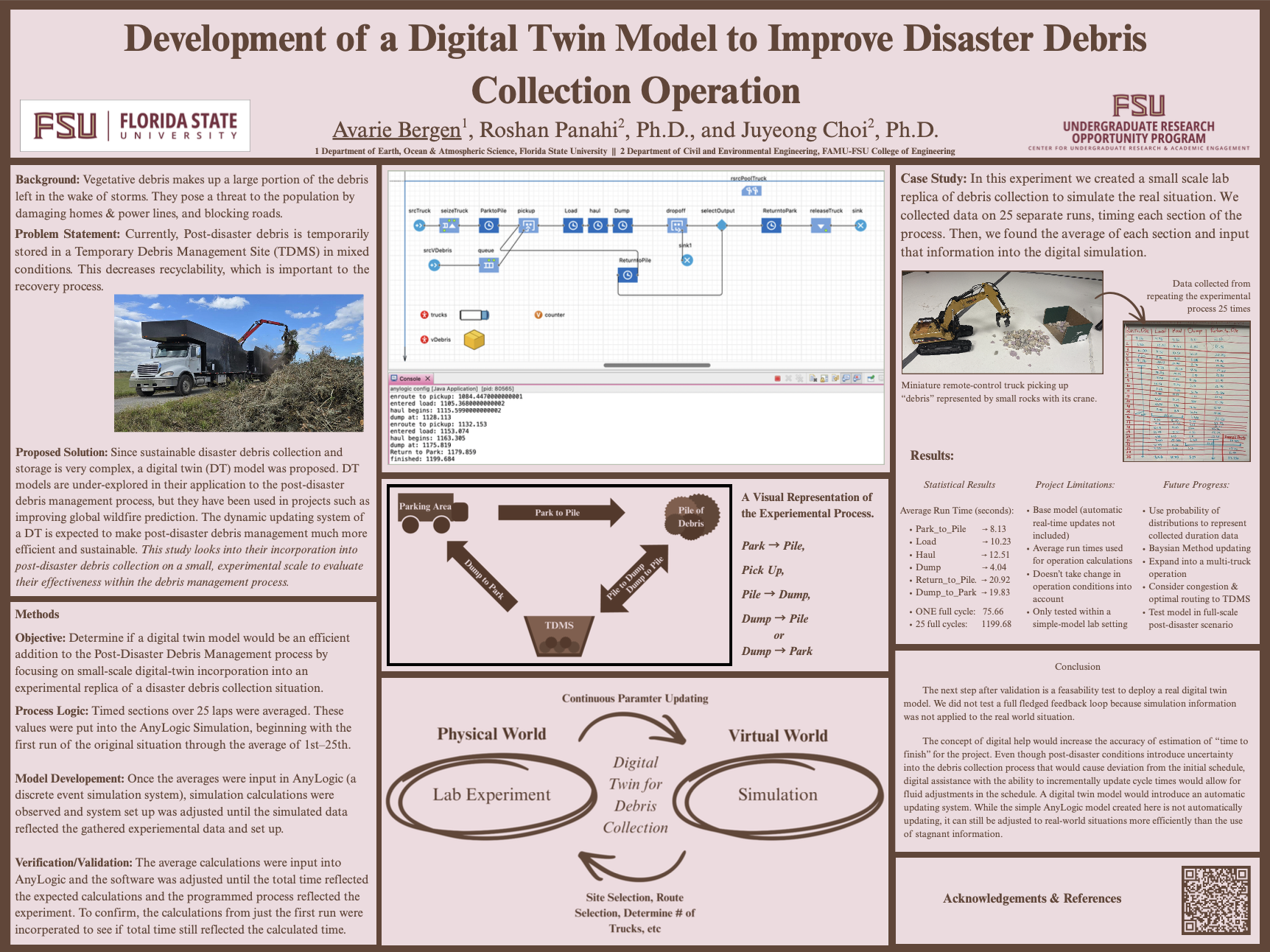
Natural disasters leave millions of tons of vegetative debris in their wake. Post-disaster debris management (PDDM) involves collecting and temporarily storing debris in mixed conditions, reducing recyclability of natural debris. Currently, sustainable collection and storage of natural debris is operationally complex. The process requires detailed and dynamic scheduling since post-disaster conditions evolve so quickly, making static operational plans obsolete.
Understanding digital twins (DTs): Digital twin models (DTMs) are expected to make the debris management process more efficient and sustainable by creating a continuous feedback loop. The initial design is updated alongside the active process throughout the project’s duration to ensure accurate estimations.
Since the concept of incorporating DTs in PDDM is underexplored, this study proposes a DT framework for post-disaster debris collection. In this study, a DTM was created using the AnyLogic software. This simulated a simple debris collection and redistribution experiment (ran 25 times), recording each part of the process and averaging them. Framework feasibility and effectiveness was evaluated by comparing lab results with the AnyLogic software results along the same input information. The simulation was updated if there were inconsistencies. Preliminary results indicate that a DTM in PDDM would prove to be an efficient addition to the process due to its dynamic system. DT models can update alongside the actual process for the most efficient results, instead of relying on static precursory information. This would help improve the sustainable PDDM process by adapting alongside the project to determine the most efficient and sustainable actions and outcomes.
Keywords: debris, management, sustainable, digital-twin, improvement
26th annual Undergraduate Research Symposium, April 1, 2026
Aiden Marin Poster Session 4: 3:00 pm - 4:00 pm / Poster #174
BIO
Aiden Marin is a first-generation freshman pursuing a Bachelor of Science in Finance. He is very active on campus, being a part of the Undergraduate Research Program, Entrepreneurship LLC, Quantitative Finance Club, and Investment Trading Club; and was honored as a Quest Scholar, HSF Scholar, and was placed on the Dean's list. Aiden Marin is currently researching machine learning applications in pricing options under Dr. Rafiq Islam.
He is actively seeking internships, research opportunities, and mentorship in order to break into the quantitative finance/ futures trading industry.
Comparing Machine Learning Methods with the Black–Scholes–Merton Model for Option Pricing
Authors: Aiden Marin, Rafiq IslamStudent Major: Bachelor of Science in Finance
Mentor: Rafiq Islam
Mentor's Department: Mathematics Mentor's College: Florida State University Co-Presenters:
Abstract
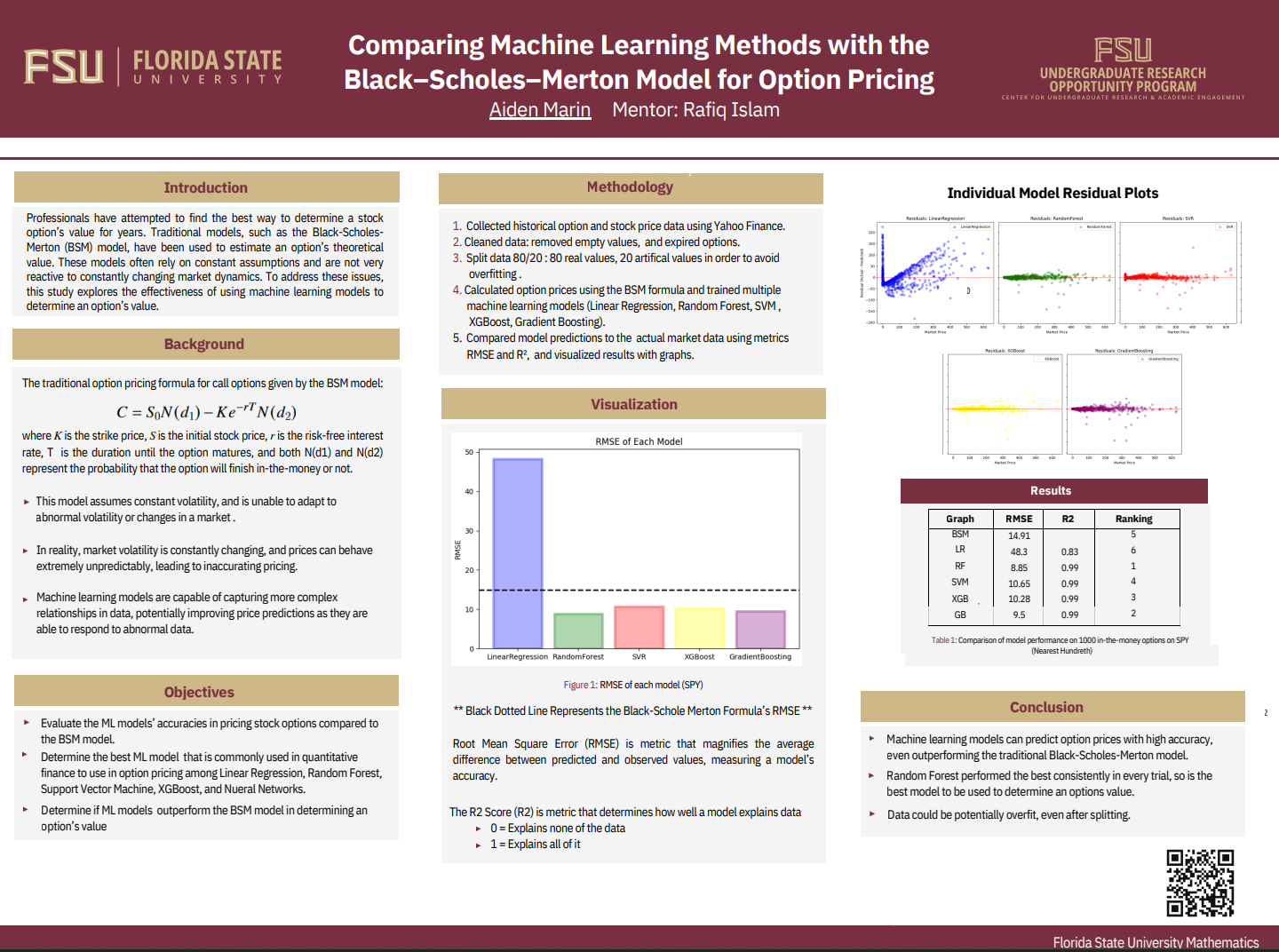
In this study, we investigate whether the machine learning models are comparable to the traditional Black-Scholes-Merton model for pricing European-type call options. The Black-Scholes-Merton model is the most prominent model to compute option prices. We develop an algorithm that prices options using the Black-Scholes formula on cleaned data from options that are in-the-money, along with $20\%$ manufactured data that replicated the stock’s volatility to avoid overfitting. We then train multiple machine learning models, \emph{e.g.,} Linear Regression, Support Vector Machine, Random Forest, XGBoost, and Gradient Boosting on a stock option’s current price, strike, expiration, and implied volatility to predict an option’s value. We use the root mean squared error (RMSE) and R2 score to evaluate how effective the model was, comparing these results to the Black-Scholes-Merton formula’s results. On over 1000 options of the S&P500, most models outperformed the Black-Scholes model in terms of the RMSE and R2 scores. The best performer was Random Forest with an 11.2 RMSE. This study has shown that machine learning can be used more effectively to price options. This can help both retail and institutional traders manage risk, make better investment decisions, and perform portfolio optimizations.
Keywords: Machine Learning, Quantitative Finance, Options
26th annual Undergraduate Research Symposium, April 1, 2026
Breanna Francis Poster Session 1: 9:30 am - 10:30 am / Poster #27
BIO
Breanna Francis is a Junior at Florida State University, majoring in Public Health with a minor in Chemistry. She is currently on the pre-Physician Assistant track and plans to pursue a Master of Science in Physician Assistant Studies after completing her Bachelor of Science in Public Health. Breanna has developed a strong interest in healthcare due to her exposure to it at such a young age. Breanna is currently gaining clinical exposure through hospital work and shadowing Physician Assistants. Through these experiences, Breanna hopes to further develop her clinical knowledge and patient care skills as she prepares for her future career as a Physician Assistant.
Cognitive Skills Model for Predicting Alzheimer's Disease
Authors: Breanna Francis, Dorota Kossowska-KuhnStudent Major: Public Health
Mentor: Dorota Kossowska-Kuhn
Mentor's Department: Department of Psychology Mentor's College: Florida State University Co-Presenters: Madison DeWitt, Ambar Fernandez, Graham Heisel, Alessandra Tiongson
Abstract
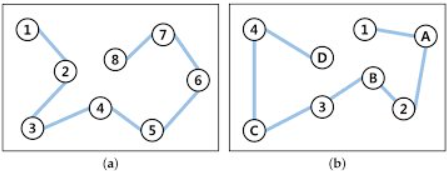
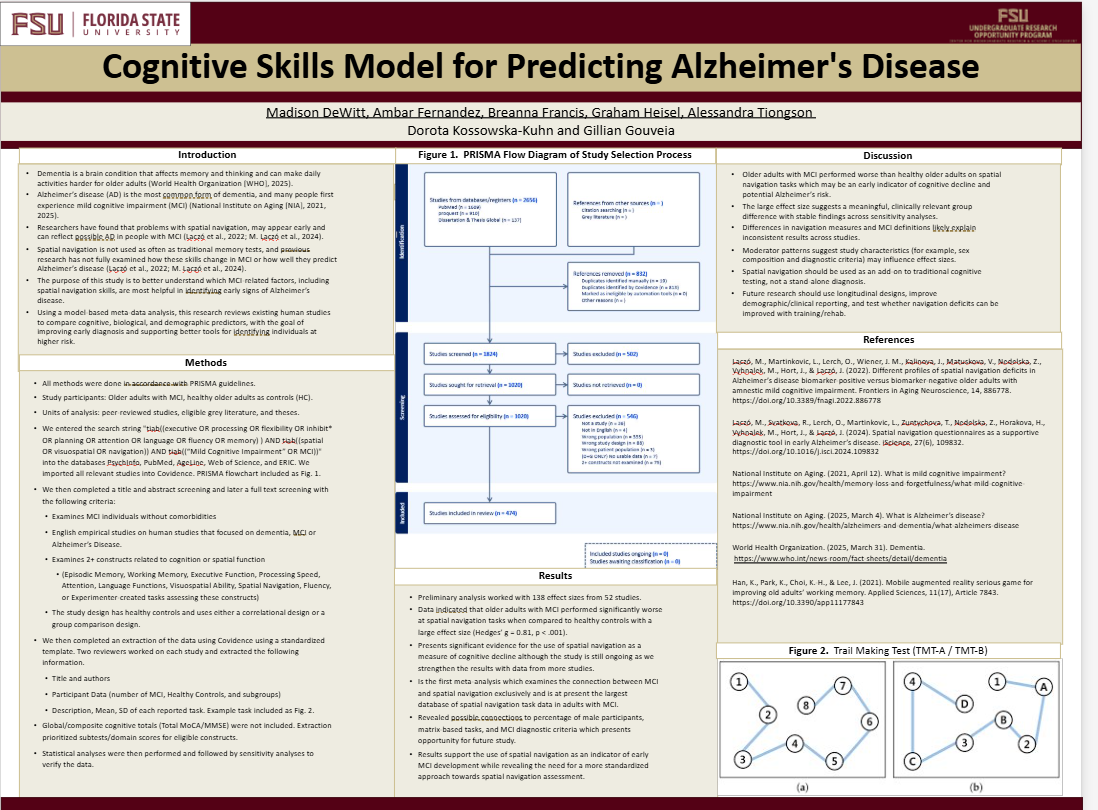
Mild Cognitive Impairment (MCI) is a condition in which individuals experience cognitive decline beyond what is expected with normal aging, while still being able to complete most daily activities independently. MCI is often viewed as an early stage that may precede Alzheimer’s disease (AD) and provides an important opportunity to identify early indicators of neurodegeneration, though not all individuals with MCI progress to AD. Because of this uncertainty, identifying reliable predictors of Alzheimer’s disease within MCI populations remains an ongoing challenge. The purpose of this study was to examine differences in domain-specific cognitive performance, including spatial navigation, between individuals with MCI and cognitively healthy older adults and to determine which cognitive areas show early decline. We started by importing 1,824 studies into the Covidence program, which were sorted through and screened for admission to the database. We then screened the articles based on title and abstract to roughly narrow the studies, and finally, we completed a full-text review to bring our final number of studies to 600 articles to be extracted. Results show that individuals with MCI perform worse than cognitively healthy older adults across several cognitive domains, including spatial navigation and memory. This shows the connection between spatial navigation tasks and older adults with MCI while highlighting the need for further measures of spatial navigation in screening. The connection proven by our study can be used to modify the current screening procedures in MCI and help better the methods for detecting cognitive decline during that critical early period.
Keywords: Alzheimer’s disease, Spatial navigation, Cognitive Skills
26th annual Undergraduate Research Symposium, April 1, 2026
Kelan Dennis Poster Session 2: 10:45 am - 11:45 am / Poster #282

BIO
Kelan Dennis is a First-Year Presidential Scholar pursuing a Bachelor of Science in Mechanical Engineering with a minor in Mathematics. He is originally from Margate, located in Broward County, Florida.
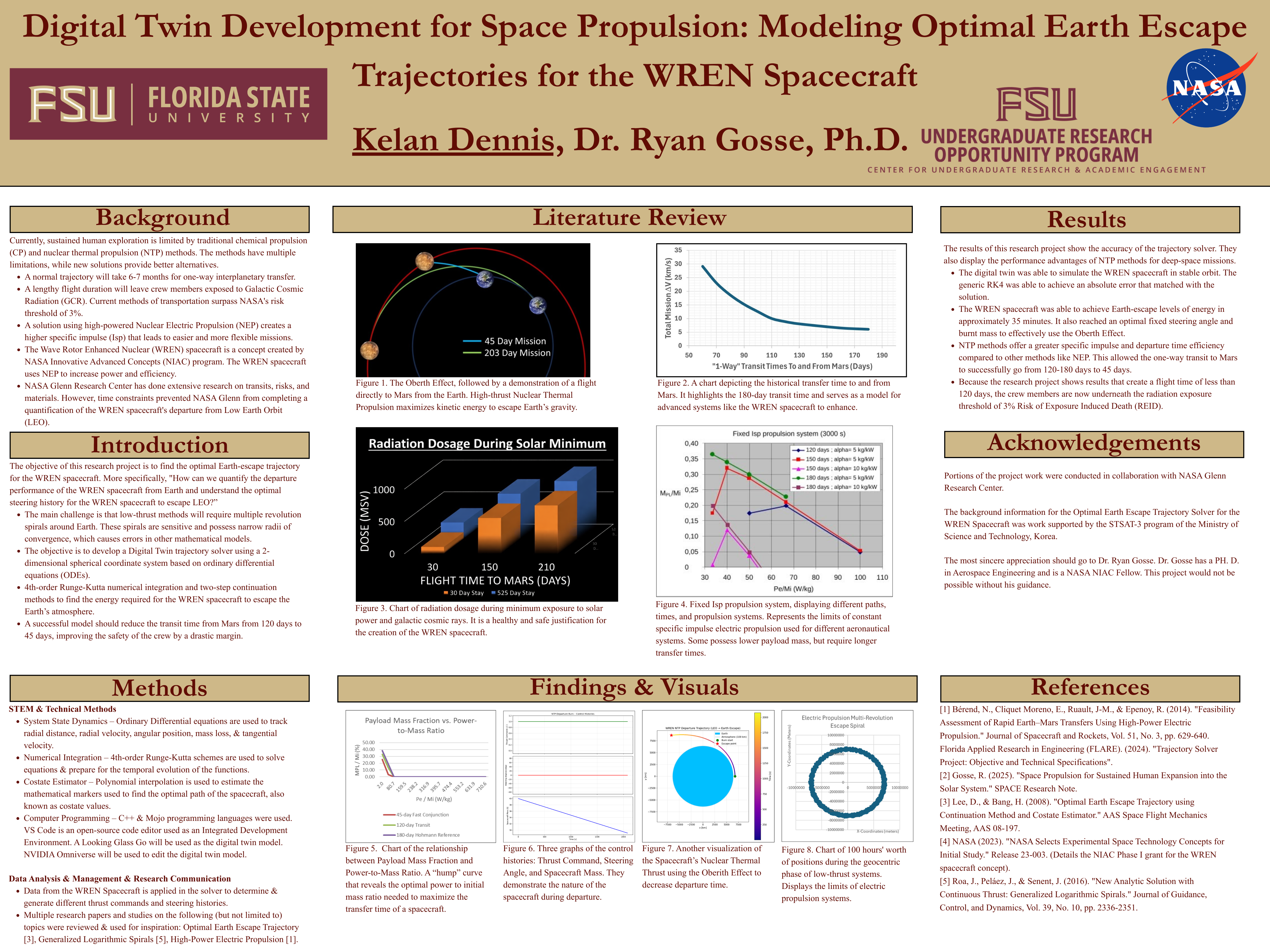
Kelan's research experiences include working with Dr. Gosse on advanced spacecraft propulsion. The research project, “Digital Twin Development for Space Propulsion: Modeling Optimal Earth Escape Trajectories for the WREN Spacecraft”, deals with solving one of NASA's biggest obstacles: sending humans to Mars in an efficient and sustainable manner. This was accomplished using the Wave Rotor Enhanced Nuclear (WREN) spacecraft concept that will support future missions to Mars and other forms of Deep-space exploration.
Kelan Dennis intends to obtain a Master's Degree in Mechanical Engineering, concentrating in Nanotechnology and/or Aerospace. His other research interests include (but aren't limited to) Artificial Intelligence, Machine Learning, Materials Science, Quantum, and Nanomaterials. Kelan intends to utilize engineering, nanotechnology, and other innovations in STEM to develop technology that aids developing countries, such as Jamaica, with their infrastructure and/or environmental needs.
Digital Twin Development for Space Propulsion: Modeling Optimal Earth Escape Trajectories for the WREN Spacecraft
Authors: Kelan Dennis, Dr. Ryan GosseStudent Major: Mechanical Engineering
Mentor: Dr. Ryan Gosse
Mentor's Department: Mechanical and Aerospace Engineering Mentor's College: Engineering Co-Presenters:
Abstract
NASA is advancing sustained human exploration of Mars by using digital twin models for its advanced propulsion systems. The study develops a digital twin trajectory solver for the Wave Rotor Enhanced Nuclear (WREN) spacecraft while targeting the Earth-departure phase for Low Earth Orbit (LEO). A 2-dimensional spherical coordinate system created with ordinary differential equations was used to model and simulate mass dynamics and radial portions. The generic 4th-order Runge Kutta (RK4) numerical integration scheme calculated the temporal evolution.
The primary challenge encountered was multi-revolution spirals, which are sensitive and possess narrow convergence radii. To improve these issues, a second-order polynomial interpolation acted as a costate estimator to adjust the model towards the starting point. The preliminary simulations showed that the WREN spacecraft can successfully achieve an Earth escape velocity. Results suggest that the spacecraft can achieve sufficient thrust to reach Mars faster than the original propulsion methods.
The developed trajectory solver enhances spacecraft performance analysis of the WREN, which refines and enhances mission efficiency. The results suggest that the WREN spacecraft possesses the propulsion efficiency for interplanetary departure. The digital twin trajectory solver serves as a vital tool for future Mars missions and other advances in deep-space exploration.
Keywords: Digital Twin, NASA, Aerospace, Engineering
26th annual Undergraduate Research Symposium, April 1, 2026
Josh Ryland de Kloet Poster Session 2: 10:45 am - 11:45 am / Poster #204
BIO
Josh Ryland de Kloet is a college freshman at FSU majoring in Interdisciplinary Sciences with the goal of becoming a physician. He graduated from Maclay High School on the biomedical track, passed the BACE exam, and got early exposure to clinical settings through volunteering at HCA Hospital.
Josh has also attended programs like the FSU Summer Medical Institute and the NSLC Medicine & Healthcare program at Duke, where he explored clinical skills, connected with healthcare professionals, and deepened his passion for patient care.
During his freshman year at FSU, Josh was invited to join the medical fraternity, Phi Delta Epsilon. He was also selected to take the FSU Medical Response Unit training course and plans to earn an EMT certificate this summer. Right now, he is focused on building a strong foundation in science and gaining as much real-world experience as he can. Josh is especially interested in how science translates into hands-on care—and he is excited to continue learning and growing on the path toward a career in clinical medicine.
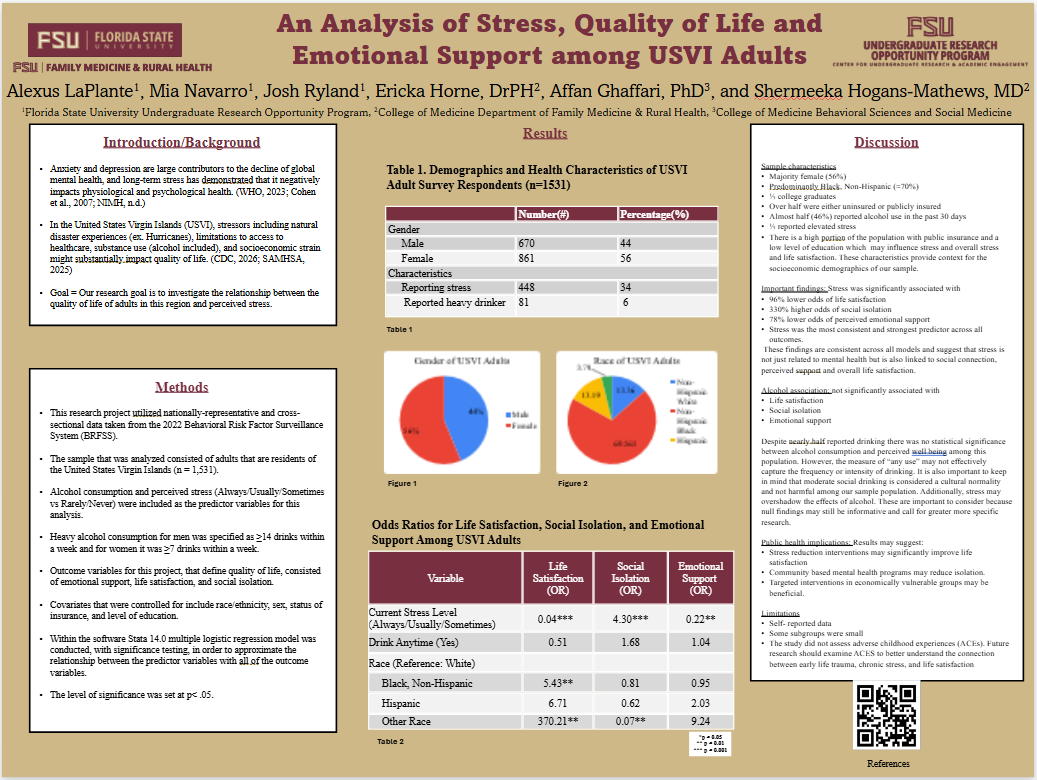
An Analysis of Stress, Quality of Life and Emotional Support among USVI Adults
Authors: Josh Ryland de Kloet, Shermeeka Hogans-MathewsStudent Major: IMS Clinical Professions
Mentor: Shermeeka Hogans-Mathews
Mentor's Department: Family Medicine and Rural Health Mentor's College: College of Medicine Co-Presenters: Mia Navarro, Alexus LaPlante
Abstract
We are investigating how factors such as isolation, stress, and alcohol consumption impact the quality of life within the United States Virgin Islands. We are exploring this to gain a better understanding of what does and does not contribute to a higher life satisfaction. It is important to have a quantitative understanding of the patterns associated with life satisfaction. Prior to beginning research, literature reviews were conducted to establish an area in need of further exploration. The United States Virgin Islands were chosen as our data supply due to it being an under-resourced area that meets criteria for being an NIH health disparity population. This is due to high levels of poverty, and inadequate access to medical and behavioral professionals. Surveys were then conducted among the United States Virgin Islands and analyzed. The next steps in this research is to explore other causes of a low quality of life such as adverse childhood experiences (ACES). ACES is lacking in research and by focusing on the US Virgin Islands we are able to make advances in mental health services.
Keywords: Stress, Anxiety, Depression
26th annual Undergraduate Research Symposium, April 1, 2026
Allison Hoge Poster Session 4: 3:00 pm - 4:00 pm / Poster #144

BIO
Allison Hoge is a sophomore at Florida State University. Originally from Santa Rosa Beach, Florida. Allison is a first-generation student, currently working towards receiving her Bachelor’s in Science in Criminology, with a minor in Psychology. She has made the President’s List every semester she has been eligible. Beyond her studies, Allison currently serves as the Director of Tournament Logistics for the Undergraduate Mock Trial Team. Allison is also on the Pre-Law track and plans to go to law school following her undergraduate studies. Outside of pre-law, Allison is also interested in writing, and this past fall semester was a Staff Writer for FSU’s HerCampus chapter! Following her work with UROP, in the fall semester of 2026, Allison will serve as an Engage 100, First Year Connections and Success leader. Throughout her research with UROP this year, Allison has been able to balance furthering her academic opportunities while still fostering her interest in unique legal questions. UROP has been an amazing learning experience for Allison, and just a part of what makes the decision of FSU so rewarding. She would like to thank her friends for their support!
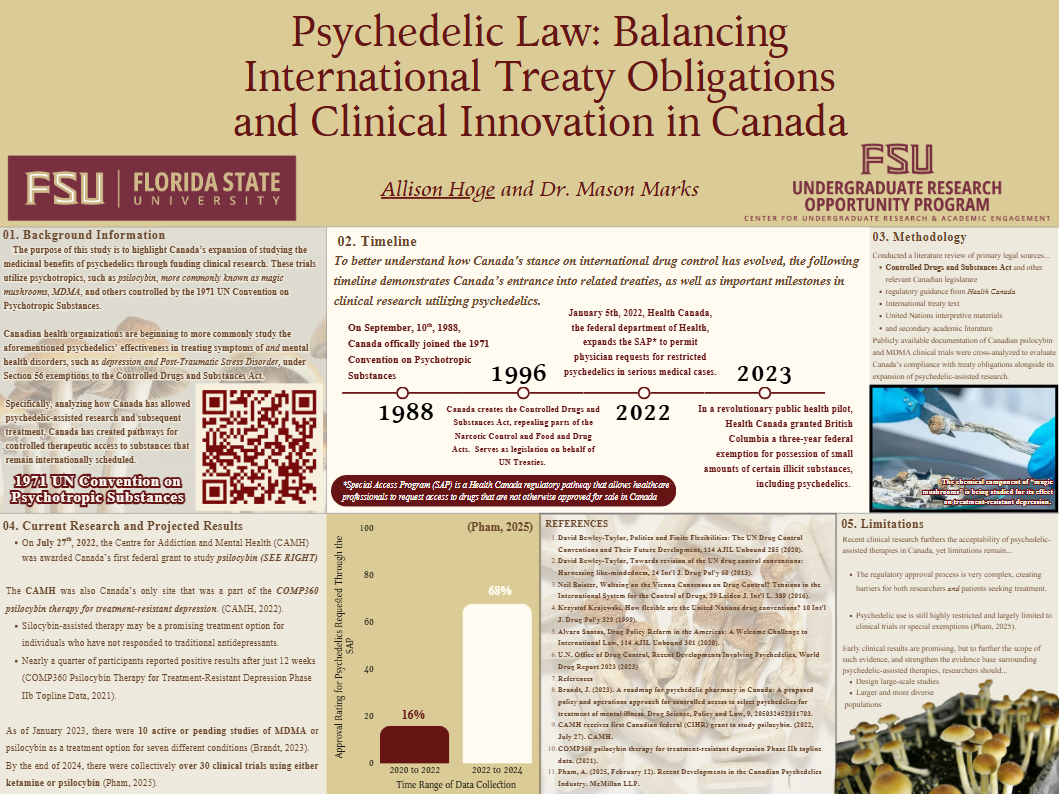
Psychedelic Law: Balancing International Treaty Obligations and Clinical Innovation in Canada
Authors: Allison Hoge , Dr. Mason MarksStudent Major: Criminology
Mentor: Dr. Mason Marks
Mentor's Department: College of Law Mentor's College: College of Law Co-Presenters:
Abstract
For over 50 years, Canada, along with 180 other state parties have been bound by the 1971 Convention on Psychotropic Substances. Treaties, such as this one, developed by the United Nations, came about in this era in an effort to better control the rapid expansion of psychedelics, which include psychotropics, such as psilocybin, more commonly known as magic mushrooms, MDMA, and others. However, recent scientific research has renewed interest in their therapeutic potential. The purpose of this study is to highlight Canada’s recent advancements in psychedelic-assisted clinical research, while remaining compliant with international treaty obligations.
Analysis of legislation such as the Controlled Drugs and Substances Act, regulatory guidance from Health Canada, and relevant publicly available documentation of Canadian psilocybin and MDMA clinical trials demonstrates that Canada follows narrow statutory outlines while applying executive discretion to find exemptions. Furthermore, dissecting United Nations Standards, other psychotropic-controlling treaties, and National Advisory Councils showcase how Canada maintains formal compliance while expanding authorized medical use.
Canada has recently expanded psychedelic-assisted research; studies use the aforementioned psychedelics to attempt to treat mental health disorders, such as depression, Post-Traumatic Stress Disorder, and related symptoms. Further research must be conducted to understand the full scope of how these substances can be implemented in more widespread or long-term treatment.
Analyzing how Canada continues to invest in mental health research that recognizes the potential medicinal or therapeutic applications of psychotropics illustrates how treaty-bound states can adapt domestic drug policy – and may inform future international approaches to psychedelic regulation.
Keywords: Medicinal, Therapy, International, Psychedelics, Treaty
26th annual Undergraduate Research Symposium, April 1, 2026
Evan Lorenz Poster Session 2: 10:45 am - 11:45 am / Poster #6
BIO
Evan Lorenz is a first-year student researching lipid enhancement of enzyme function under Dr. Steven Lenhert and Vincent Tocci. He is pursuing a Bachelor of Science in Biochemistry and is an aspiring physician.
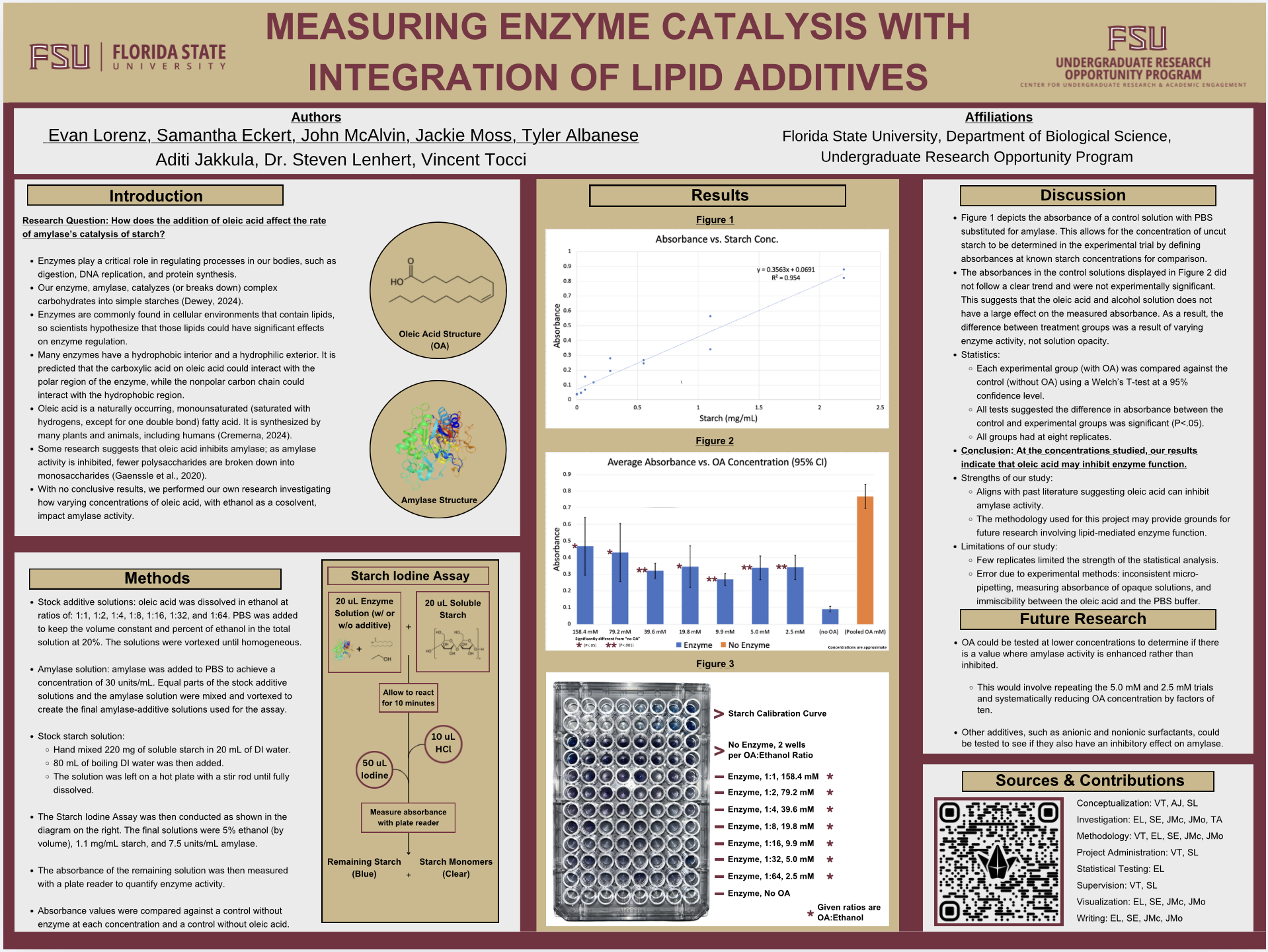
Measuring Enzyme Catalysis with Integration of Lipid Additives
Authors: Evan Lorenz, Dr. Steven LenhertStudent Major: Biochemistry
Mentor: Dr. Steven Lenhert
Mentor's Department: Department of Biological Science Mentor's College: College of Arts and Sciences Co-Presenters: Jackie Moss, Sam Eckert, Tyler Albanese, and John McAlvin
Abstract
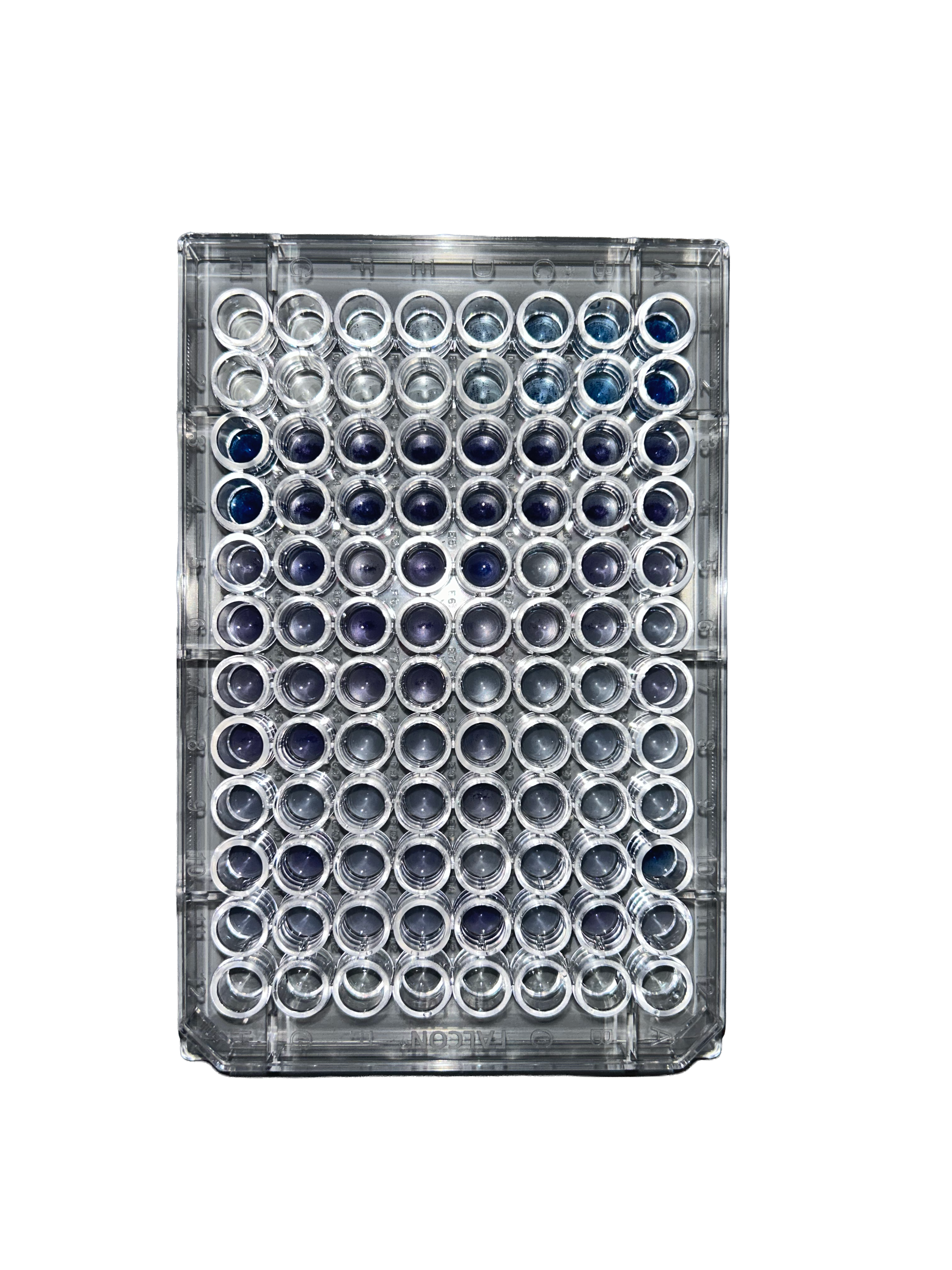
Lipids have been typically associated with the inhibition of enzyme function, but recent findings point towards their potential in increased catalysis rates. Enzymes are protein catalysts that speed up chemical reactions and play a critical role in regulating processes in our bodies, such as digestion. It is important to better understand enzyme activity, specifically how different conditions and chemicals affect them. Our research question aims to analyze the effect that oleic acid, a lipid, has on enzyme activity, specifically the activity of amylase. A preliminary literature review was conducted to determine ideal conditions and methods of amylase reactivity. Enzyme function was then tested by comparing various concentrations of oleic acid to the control group without an additive. Ethanol was used as a cosolvent with the oleic acid. Light absorbance of the sample was then measured with a plate reader to obtain quantitative data. When enzyme was added, there was an observed trend that as the ratio of oleic acid decreased, enzyme activity increased. Specifically between the 1:64 ratio of oleic acid:alcohol, there is a large difference between the absorbance values. Our research was limited by a small sample size and experimental error, such as inconsistent micro-pipetting, measuring opaque solutions in the plate reader, and immiscibility of solutions. Further research would include more trials with smaller concentrations of oleic acid which would work to minimize some of these concerns. This may introduce an unexpected increase in amylase activity, instead of the respective decrease exhibited in this research.
Keywords: Lipid, Enzyme, Biology, Starch, and Iodine
26th annual Undergraduate Research Symposium, April 1, 2026
Sophia Bruener Poster Session 1: 9:30 am - 10:30 am / Poster #107
BIO
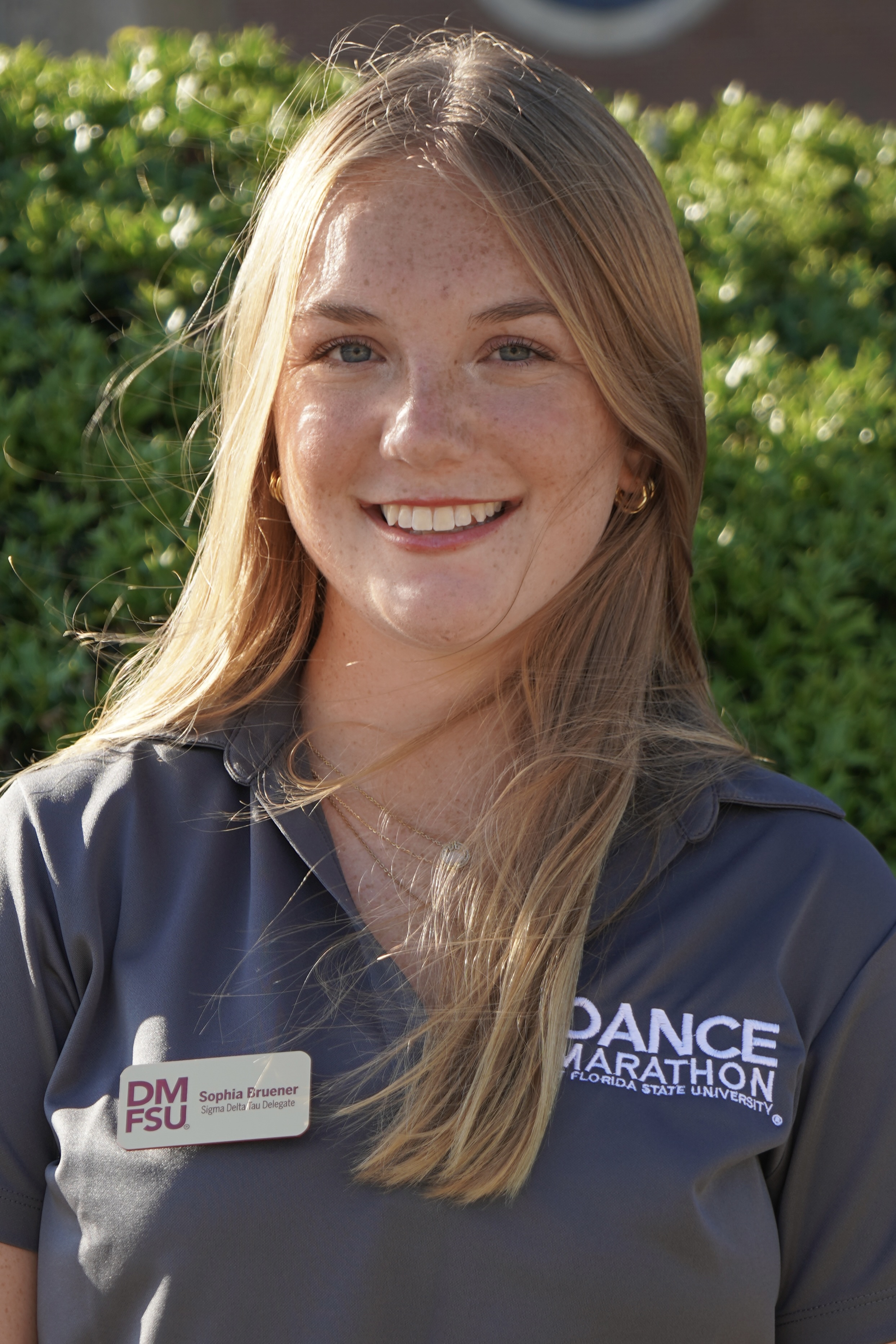
Sophia is a sophomore pursuing dual degrees in Media Communication Studies and Political Science with minors in Professional Communication and Public Administration. She is a member of Lambda Pi Eta Honor Society and holds leadership positions in the Society for Collegiate Journalists, Sigma Delta Tau Sorority, and Dance Marathon. Sophia hopes to attend law school after graduating and is interested in pursuing careers in law, policy, and government.
Autism and Acetaminophen: Understanding ASD in 2026
Authors: Sophia Bruener, Dr. Joseph GabrielStudent Major: Media Communication Studies, Political Science
Mentor: Dr. Joseph Gabriel
Mentor's Department: Behavioral Science and Social Medicine Mentor's College: College of Medicine Co-Presenters:
Abstract
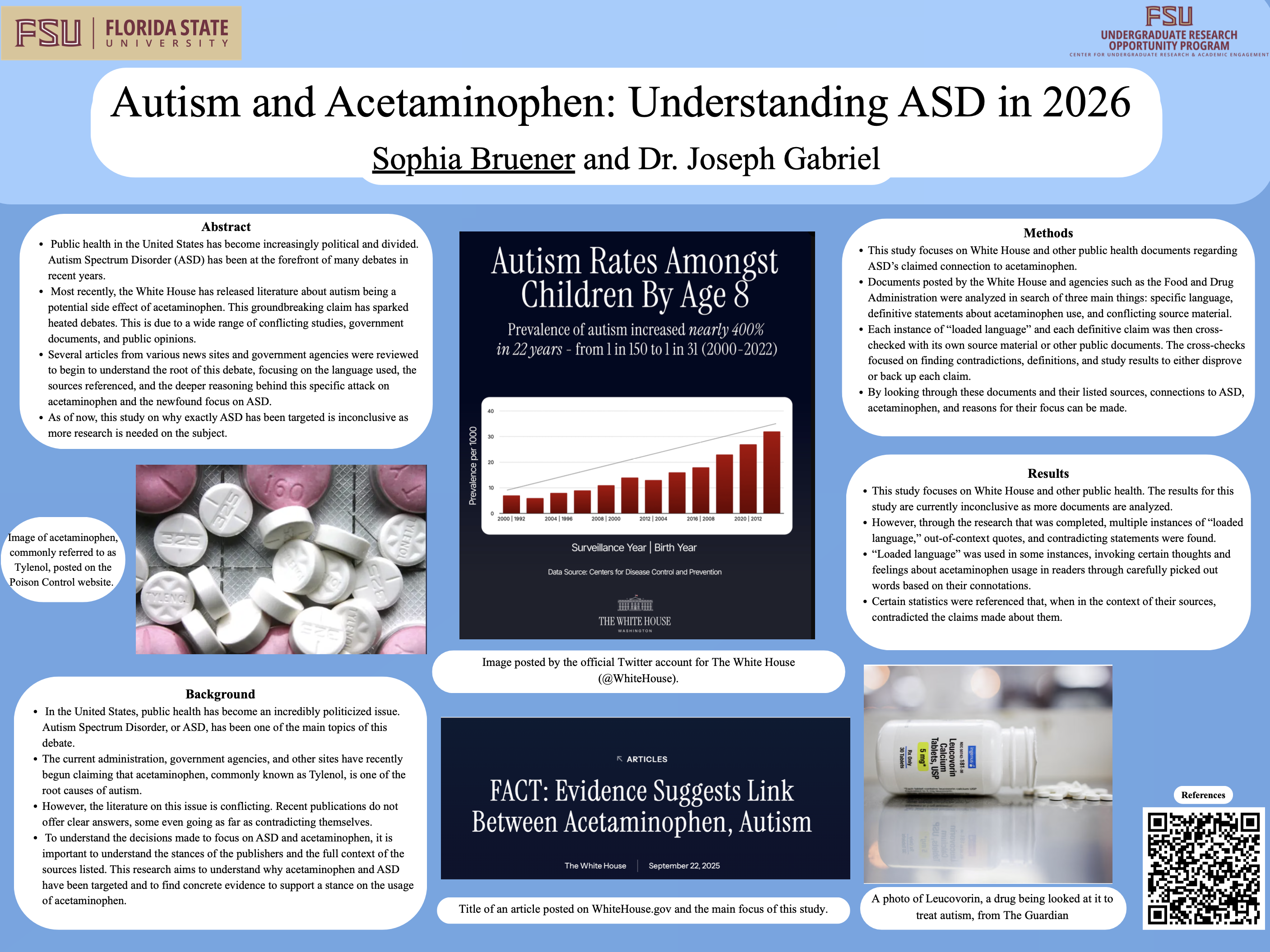
Public health in the United States has become increasingly political and divided. Autism Spectrum Disorder (ASD) has been at the forefront of many debates in recent years. Most recently, the White House has released literature about autism being a potential side effect of acetaminophen. This groundbreaking claim has sparked heated debates. This is due to a wide range of conflicting studies, government documents, and public opinions. Several articles from various news sites and government agencies were reviewed to begin to understand the root of this debate, focusing on the language used, the sources referenced, and the deeper reasoning behind this specific attack on acetaminophen and the newfound focus on ASD. As of now, this study on why exactly ASD has been targeted is inconclusive as more research is needed on the subject.
Keywords: Autism, ASD, Tylenol, Acetaminophen
26th annual Undergraduate Research Symposium, April 1, 2026
Molly Nordon Poster Session 2: 10:45 am - 11:45 am / Poster #30

BIO
I am a sophomore at Florida State University pursuing a Bachelor of Science in Biological Sciences with minors in Chemistry and Interdisciplinary Science. I'm originally from Orlando, Florida, and I have always been curious about how biological systems function at the cellular and molecular levels. I am particularly interested in genome engineering technologies such as CRISPR-Cas9 and how these tools are transforming biomedical research. In the future, I hope to pursue graduate school and build a career in healthcare or biomedical science, with interests in anesthesiology, medical laboratory science, or pathology.
Investigating the Impact of Chronic Sleep Deprivation on Hippocampal Subregion Gene Expression in Young Male Mice
Authors: Molly Nordon, Colton RemediesStudent Major: Biological Sciences
Mentor: Colton Remedies
Mentor's Department: Biology Mentor's College: College of Arts and Sciences Co-Presenters:
Abstract
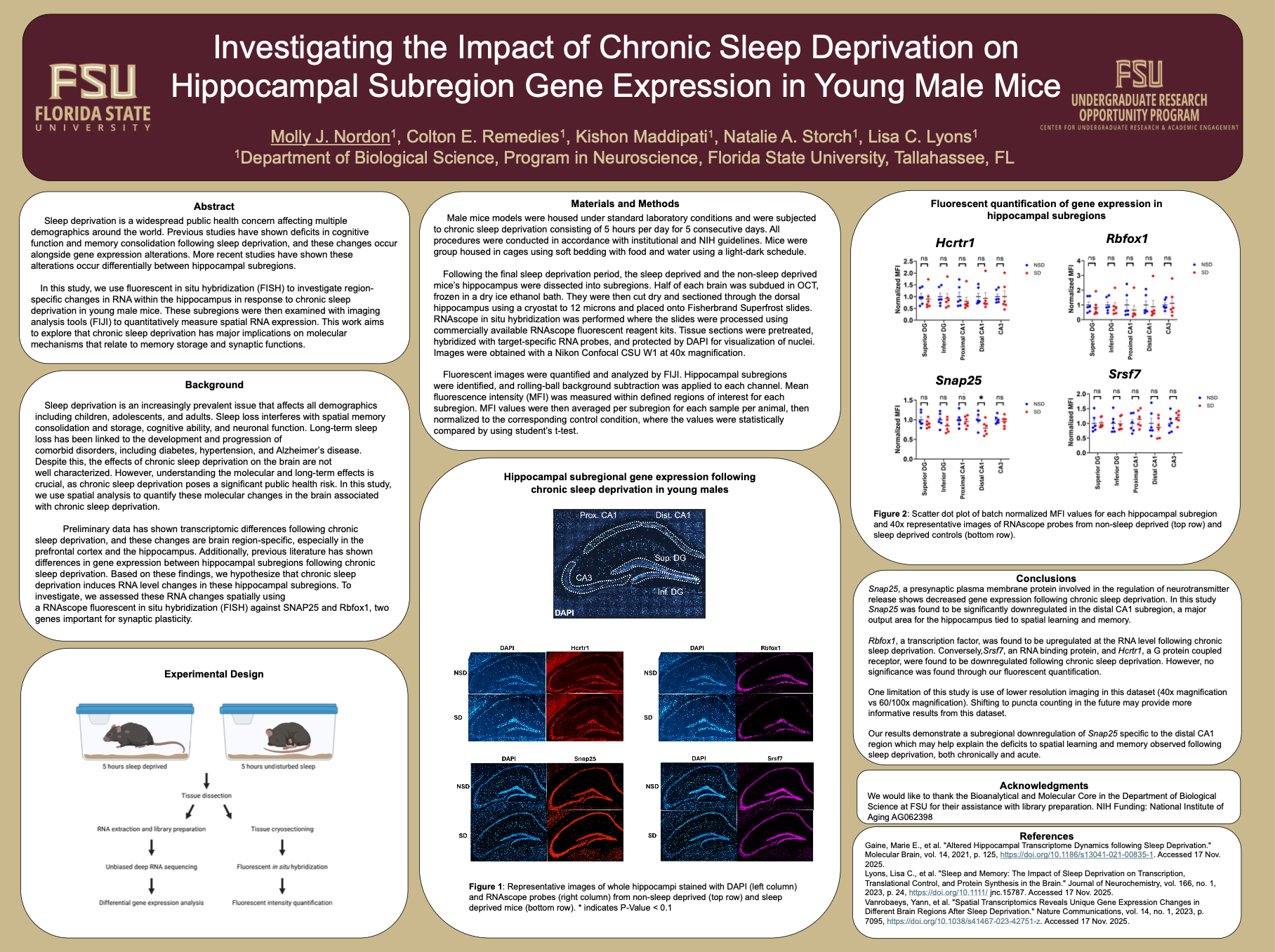
Sleep deprivation is a widespread public health concern affecting multiple demographics around the world. Previous studies have shown deficits in cognitive function and memory consolidation following sleep deprivation, and these changes occur alongside gene expression alterations. More recent studies have shown these alterations occur differentially between hippocampal subregions.
In this study, we use fluorescent in situ hybridization (FISH) to investigate region-specific changes in RNA within the hippocampus in response to chronic sleep deprivation in young male mice. These subregions were then examined with imaging analysis tools (FIJI) to quantitatively measure spatial RNA expression. This work aims to explore that chronic sleep deprivation has major implications on molecular mechanisms that relate to memory storage and synaptic functions.
Keywords: Sleep Deprivation, Gene Expression, Neuroscience, RNA
26th annual Undergraduate Research Symposium, April 1, 2026
Sophia Riley Poster Session 1: 9:30 am - 10:30 am / Poster #235
BIO
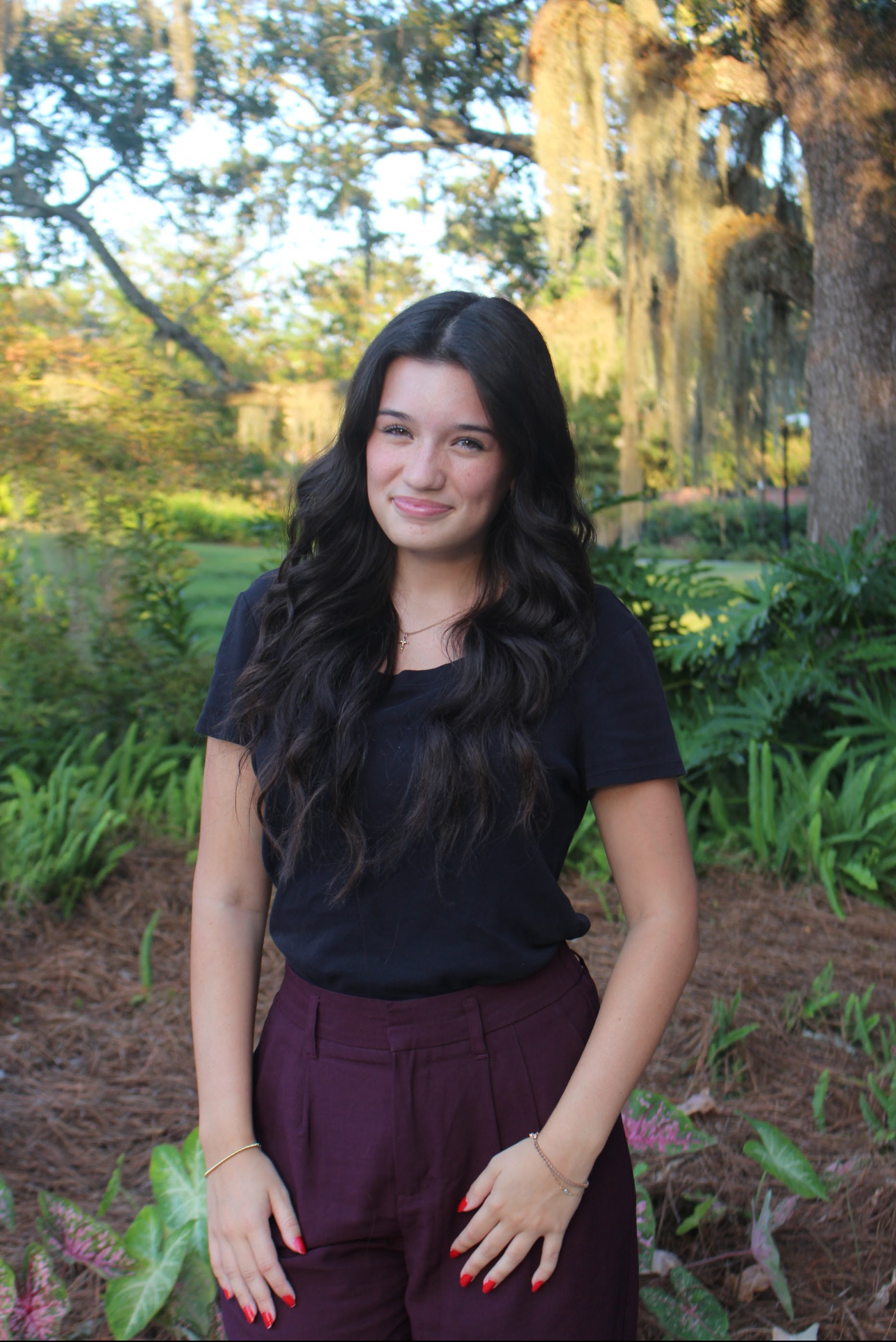
Sophia Riley is a second-year Nursing student at Florida State University pursuing a Bachelor of Science in Nursing, with minors in Child Development and Psychology, and a certificate in Leadership Studies.
This year, Sophia worked with Anderson Schlupp, MS, at the Institute on Digital Health and Innovation within the College of Nursing. Her work focused on program development and evaluation to support the growth of digital health initiatives. As part of this project, she assisted in developing a faculty and staff expertise matrix to better identify institutional strengths and contributed to content development for the HealthMpowerment mobile application by translating research findings into accessible in-app materials.
Through her academic and research experiences, Sophia has developed strong interests in healthcare leadership and collaborative, patient-centered care. After graduating, she is excited to begin her career as a registered nurse and is also interested in pursuing graduate school in the future.
Advancing Digital Health Innovation Through Program Development Within IDHI
Authors: Sophia Riley, Anderson SchluppStudent Major: Nursing
Mentor: Anderson Schlupp
Mentor's Department: Institute on Digital Health and Innovation Mentor's College: College of Nursing Co-Presenters:
Abstract
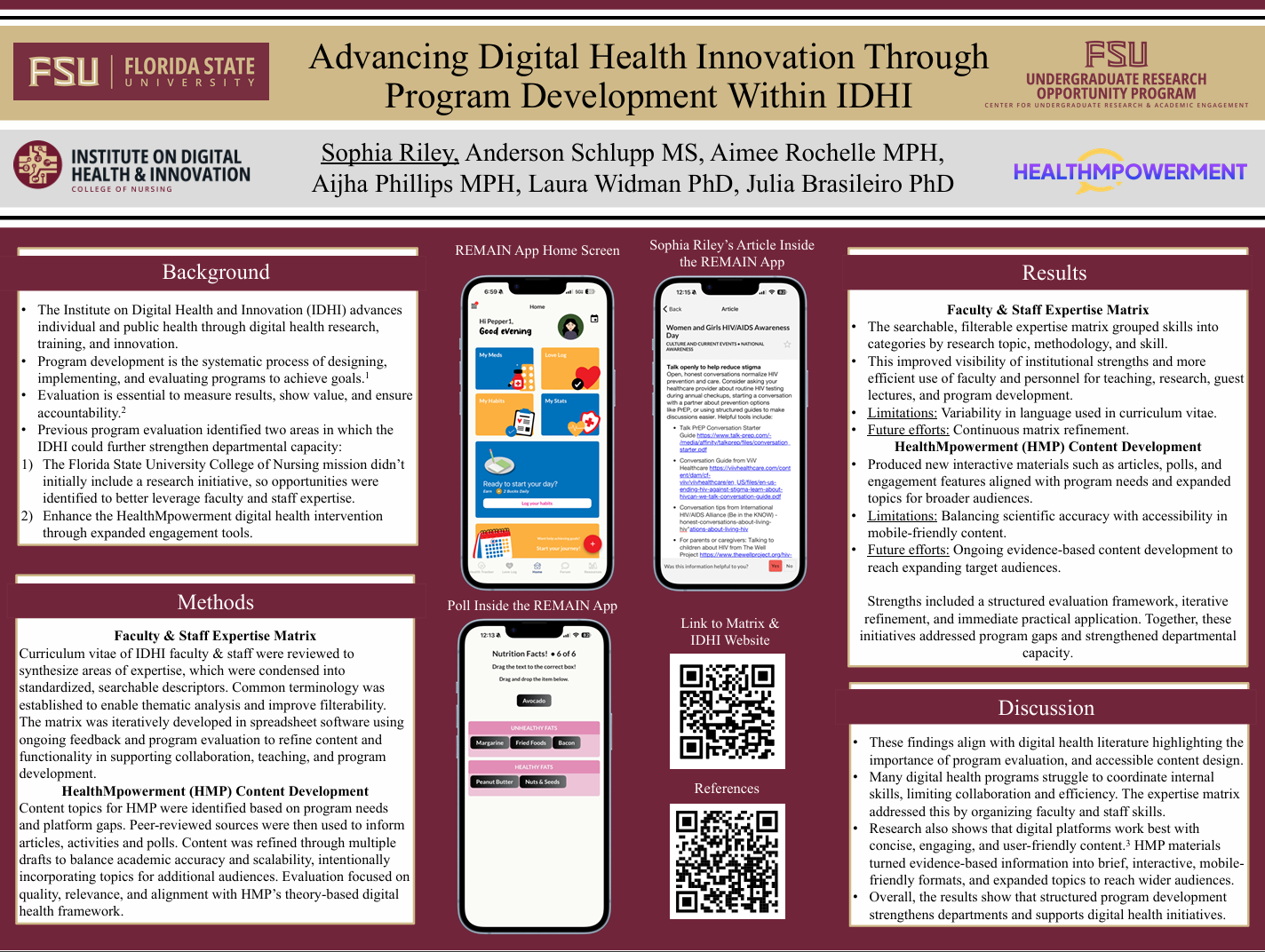
The Institute on Digital Health and Innovation (IDHI) advances individual and public health through the development, evaluation, and dissemination of digital health tools aligned with the College of Nursing’s mission. Since the Florida State College of Nursing’s mission didn’t initially contain a research initiative, IDHI sought to identify educational support opportunities leveraging faculty and staff expertise. As IDHI has grown, intentional program development has become essential to support collaboration and expansion. Program development includes identifying needs, designing and implementing programs, and evaluating results to ensure effectiveness. This project explored how structured program development strategies strengthen institutional capacity and support the growth of digital health initiatives.
A program evaluation framework guided two initiatives: development of a faculty and staff expertise matrix and content creation for the HealthMpowerment (HMP) mobile application. Curriculum vitae were reviewed and synthesized into standardized, searchable expertise domains through multiple refinement cycles. HMP content was developed by reviewing literature and translating information into interactive in-app materials.
The finalized expertise matrix improved visibility of institutional skillsets and efficiency in supporting teaching, research, and program development. HMP content development added articles and interactive features to enhance user engagement and expand audiences. Together, these outputs strengthened IDHI’s digital health infrastructure.
These findings suggest that intentional program development can improve the scalability and sustainability of digital health initiatives in academic settings. Integrating expertise mapping with evidence-based content creation supports collaboration and resource utilization. This approach offers a practical model for institutions seeking to expand digital health programs.
Keywords: Nursing, Program Development & Evaluation, IDHI
26th annual Undergraduate Research Symposium, April 1, 2026
Anna Ottesen Poster Session 2: 10:45 am - 11:45 am / Poster #69
BIO
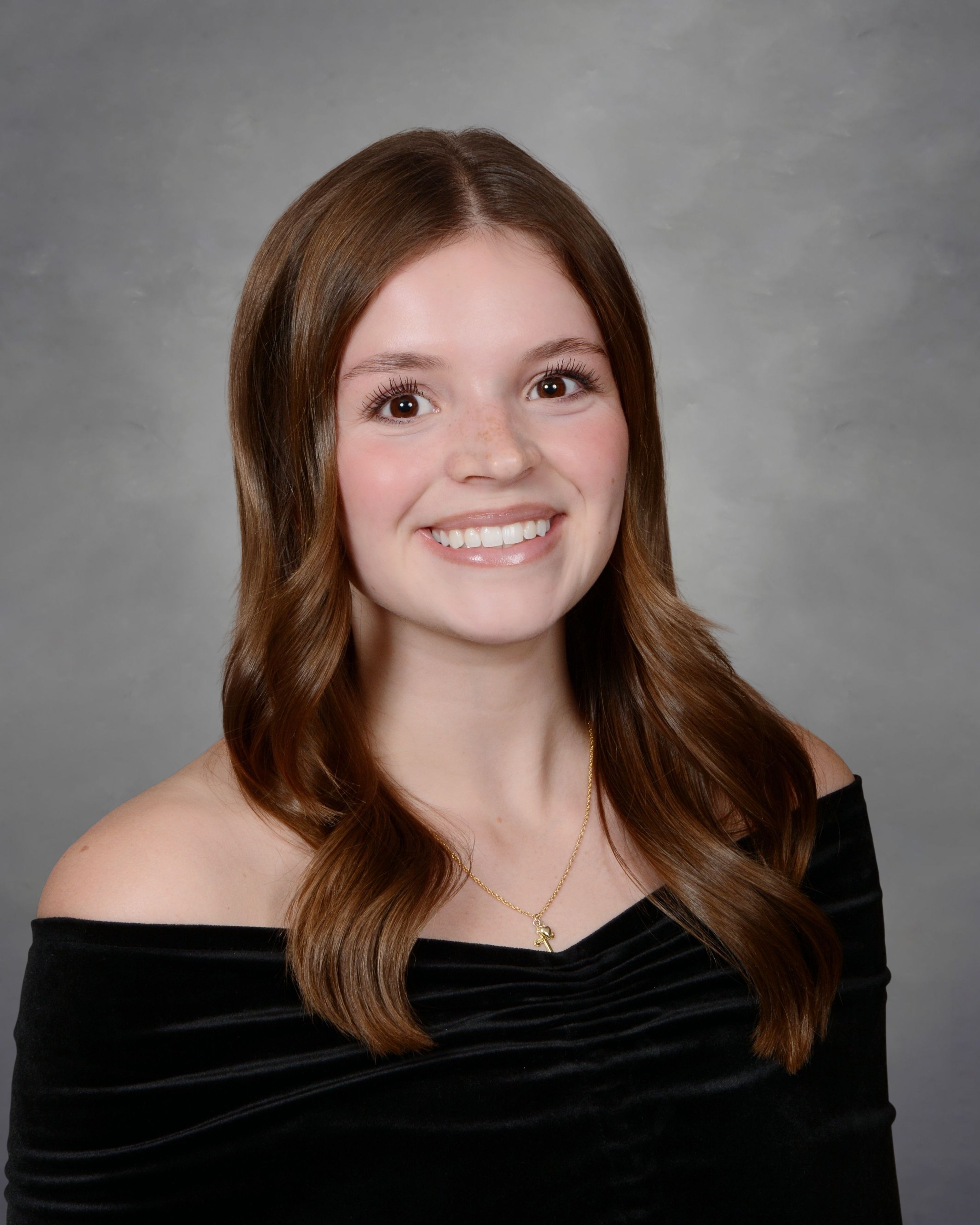
Anna Ottesen is a second year student obtaining a Bachelor of Science in Human Development and Family Science with a minor in Psychology at Florida State University. She is on the pre-health track hoping to pursue a career as a Physician Assistant.
Educational Privatization and School Choice: The Case of Innovative Financing Mechanisms
Authors: Anna Ottesen, Dr. Wajeeha HazoorStudent Major: Human Development and Family Science
Mentor: Dr. Wajeeha Hazoor
Mentor's Department: Office of Research Mentor's College: Education, Health, and Human Sciences Co-Presenters: David Margaryan and Alexander Bayramov
Abstract
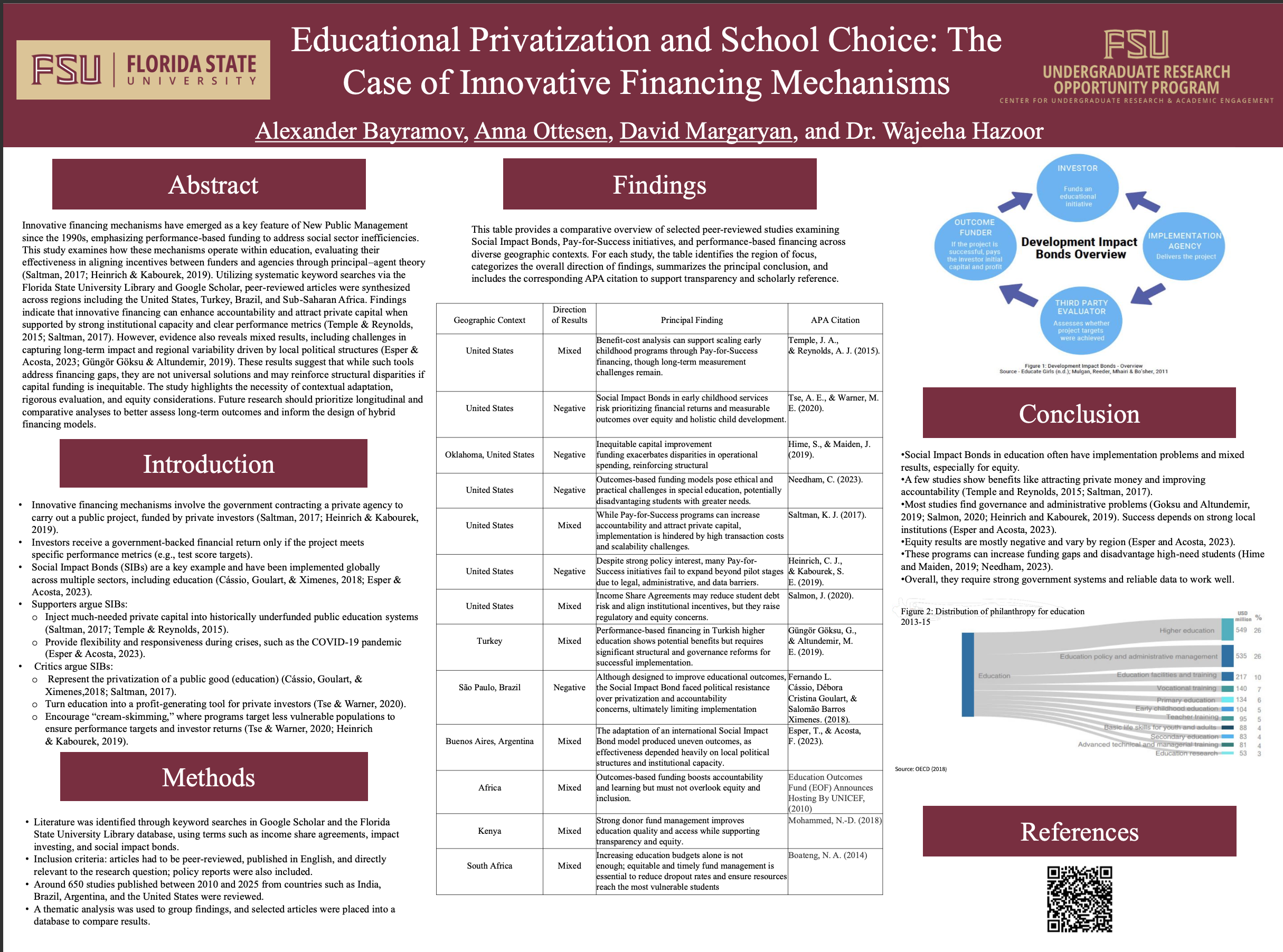
Innovative financing mechanisms have emerged as a key feature of New Public Management since the 1990s, emphasizing performance-based funding to address social sector inefficiencies. This study examines how these mechanisms operate within education, evaluating their effectiveness in aligning incentives between funders and agencies through principal–agent theory (Saltman, 2017; Heinrich & Kabourek, 2019). Utilizing systematic keyword searches via the Florida State University Library and Google Scholar, peer-reviewed articles were synthesized across regions including the United States, Turkey, Brazil, and Sub-Saharan Africa. Findings indicate that innovative financing can enhance accountability and attract private capital when supported by strong institutional capacity and clear performance metrics (Temple & Reynolds, 2015; Saltman, 2017). However, evidence also reveals mixed results, including challenges in capturing long-term impact and regional variability driven by local political structures (Esper & Acosta, 2023; Güngör Göksu & Altundemir, 2019). These results suggest that while such tools address financing gaps, they are not universal solutions and may reinforce structural disparities if capital funding is inequitable. The study highlights the necessity of contextual adaptation, rigorous evaluation, and equity considerations. Future research should prioritize longitudinal and comparative analyses to better assess long-term outcomes and inform the design of hybrid financing models.
Keywords: Innovative Finance, Blended Finance, Financing Education