
Research Symposium
26th annual Undergraduate Research Symposium, April 1, 2026
Natalie Richard Poster Session 3: 1:45 pm - 2:45 pm / Poster #237

BIO
Natalie Richard is a first-year undergraduate student at Florida State University pursuing a Bachelor of Science in Psychology with a minor in Political Science. Through these areas of academia, she is working to build a strong foundation understanding human behavior, psychological processes, and political systems that shape today's societies. After completing her undergraduate degree, she plans to attend law school. With this legal training, Natalie aims to build a career in humanitarian law, advocating for human rights to support communities impacted by conflict and injustice.
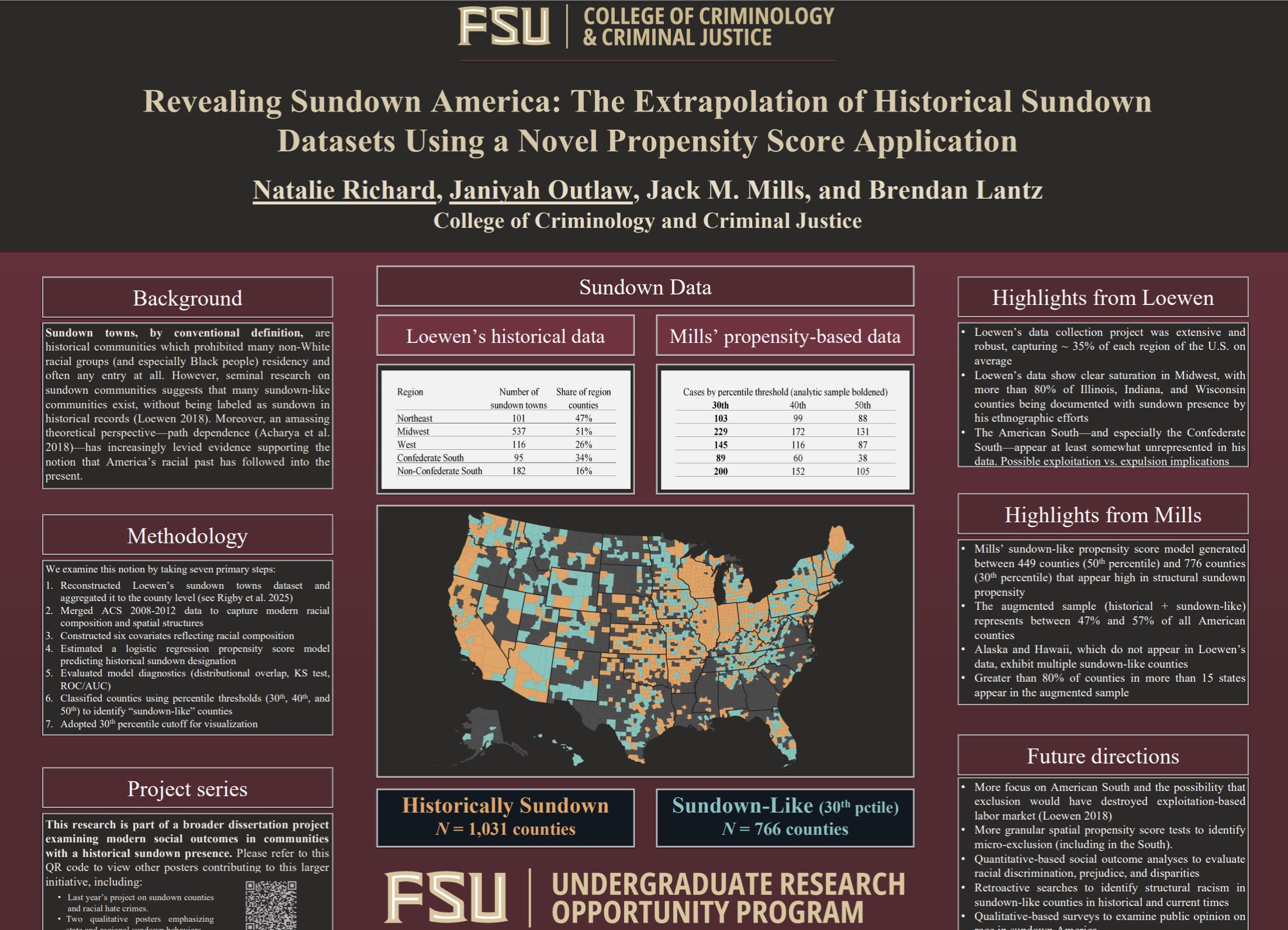
Revealing Sundown America: The Extrapolation of Historical Sundown Datasets Using a Novel Propensity Score Application
Authors: Natalie Richard, Jack MillsStudent Major: Psychology
Mentor: Jack Mills
Mentor's Department: Criminology and Criminal Justice Mentor's College: College of Criminology and Criminal Justice Co-Presenters: Janiyah Outlaw
Abstract
Sundown towns were historical American communities that intentionally prohibited non-White populations, particularly Black residents, from living within or entering community boundaries. While existing research has largely examined sundown towns as a historical phenomenon, there is merit in understanding these places as evolving community practices that persist today. In this project, we present a descriptive overview of Sundown America at the county level to examine the spatial distribution of racially exclusive communities across the United States. We present descriptive statistics and spatial illustrations of county-level sundown restrictions in a two-part analysis. First, we draw on a historical sundown dataset, which offers an incomplete illustration of sundown geographies. Second, we extend this dataset by identifying counties similar to historically documented sundown counties using novel propensity score analyses. Taken together, this project demonstrates the need for stronger empirical attention toward racialized boundaries in the United States and underscores the importance of contextualizing Sundown America as a contemporary phenomenon. Empirically, we draw on a historical dataset identifying 1,051 counties with documented sundown practices, while acknowledging that this record is incomplete. To address this, we augment the data using propensity score analyses based on racial boundary characteristics measured at the tract-within-county level. Applying median percentile thresholds, we identify an additional 449 counties resembling historically documented sundown counties, yielding an augmented sample of 1,500 counties. By combining historical documentation with probabilistic identification, this analysis offers a more comprehensive spatial account of racially exclusionary community practices and highlights the persistence of racialized boundaries across U.S. counties today.
Keywords: Sundown, Racism, History
26th annual Undergraduate Research Symposium, April 1, 2026
Aurora Ramirez Poster Session 2: 10:45 am - 11:45 am / Poster #82
BIO
Aurora Ramirez is a sophomore majoring in Cellular and Molecular Neuroscience on the pre-medical track, and is passionate about health related sciences. In her time at FSU, she has participated in the FSU Pre-Health Living-Learning Community, Neuroscience Undergraduate Student Association, completed a certification in medical assisting through Health Science Consulting, and is currently participating in UROP and the Honors Program. She is exploring opportunities in the Tallahassee area that allow her to deepen her understanding in the healthcare field and prepare her for the next steps in her academic journey.
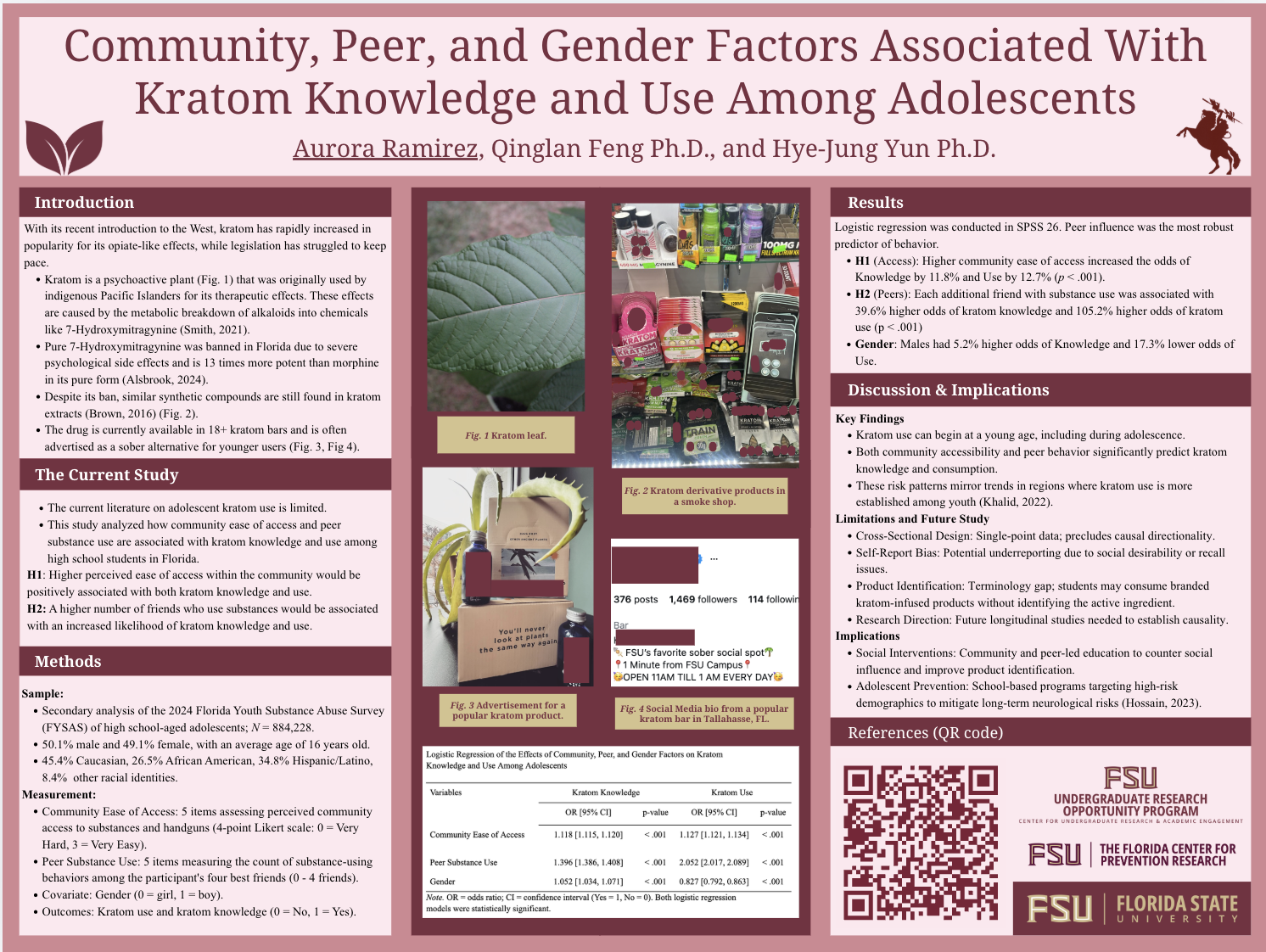
Community, Peer, and Gender Factors Associated With Kratom Knowledge and Use Among Adolescents
Authors: Aurora Ramirez, Qinglan Feng Ph.D.Student Major: Cellular and Molecular Neuroscience
Mentor: Qinglan Feng Ph.D.
Mentor's Department: Florida Center of Prevention Research Mentor's College: College of Social Work Co-Presenters:
Abstract
This study sought to identify the associations between community ease of access, peer substance use, and kratom knowledge and use among high school students in Florida. Although kratom and its derived products are a relatively recent introduction to the United States, its popularity has increased rapidly due to its opioid-like effects, and public health policies have been unable to keep up. Current marketing portrays kratom as an alcohol alternative, particularly appealing to individuals under the age of 21, and there is limited public knowledge on its risks. Understanding the patterns of attitudes around kratom among minors is critical for informing prevention and education efforts. The data used in this study was pulled from the Florida Youth Substance Abuse Survey for high schoolers in 2024. Preliminary analyses and logistic regression were conducted in statistics software.The research was significant in that males were found to have used kratom more, despite females being more likely to know of the drug. We found that peer drug use and community ease of access were positively correlated with kratom use and knowledge, with peer substance use having the most significant associations . These findings demonstrate that a subset of adolescents is actively using kratom, and identifying kratom use in adolescents as an important field is the first step in protecting those affected. This highlights the need for further research on the effects of kratom, the need for educating the public on the drug, and the impact of misleading or predatory marketing practices.
Keywords: kratom, opiates, adolescents, drug use
26th annual Undergraduate Research Symposium, April 1, 2026
Cesar Aguirre Poster Session 2: 10:45 am - 11:45 am / Poster #44

BIO
Cesar Aguirre is a Mechanical Engineering student at Florida State University. He is a sophomore and was born in Oahu, Hawaii and raised in Okinawa, Japan. He has an interest in design via CAD, dynamics, and learning how things work!
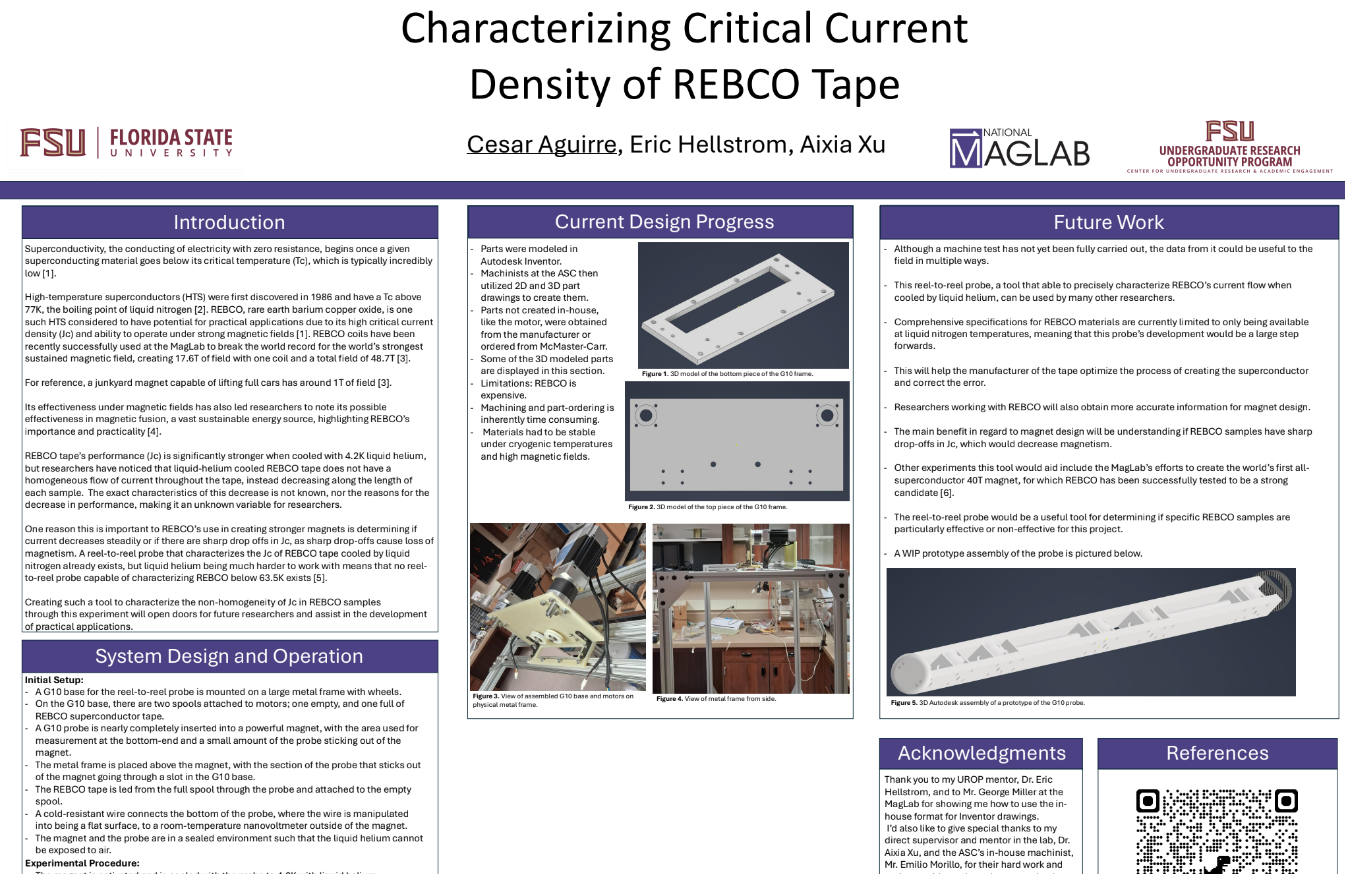
Creating a Reel-To-Reel System for REBCO Test at 4.2K
Authors: Cesar Aguirre, Eric HellstromStudent Major: Mechanical Engineering
Mentor: Eric Hellstrom
Mentor's Department: Mechanical Enginering Mentor's College: College of Engineering Co-Presenters:
Abstract
Superconductors are materials that can conduct electricity with zero electrical resistance upon being cooled below a certain, material-dependent critical temperature (Tc).
REBCO – rare earth barium copper oxide, is a high-temperature ‘Type II’ superconductor, having a relatively high Tc (~91K) and an ability to tolerate strong magnetic fields.
However, present-day REBCO tape cooled by liquid helium does not have a uniform flow of current throughout for reasons that are currently unknown, hampering performance.
The exact characteristics of the non-homogeneous current flow are also unknown.
A unique reel-to-reel magnetic probe is being designed to measure the critical current density (Jc) of each section of a given REBCO tape sample by moving the tape through a nanovoltmeter, which measures the Jc and uploads the data into a laboratory program.
Quantifying the differences in current flow through this experiment will help us further characterize REBCO samples.
Characterizing the samples would aid further research into fixing the tape’s non-homogeneous nature, allowing the tape to become more effective in each of its applications.
For instance, learning if current decreases steadily or if there are sharp drop offs in Jc will be important in REBCO’s use in creating stronger magnets, as sharp drop-offs cause loss of magnetism.
Studies also show that REBCO has enormous possible applications in high-field applications like magnetic fusion, a potential source of vast green, sustainable energy, further demonstrating the benefits of characterizing the material.
Keywords: MagLab, Superconductor, REBCO, ASC, YBCO
26th annual Undergraduate Research Symposium, April 1, 2026
Malachi Davey Poster Session 2: 10:45 am - 11:45 am / Poster #140
BIO
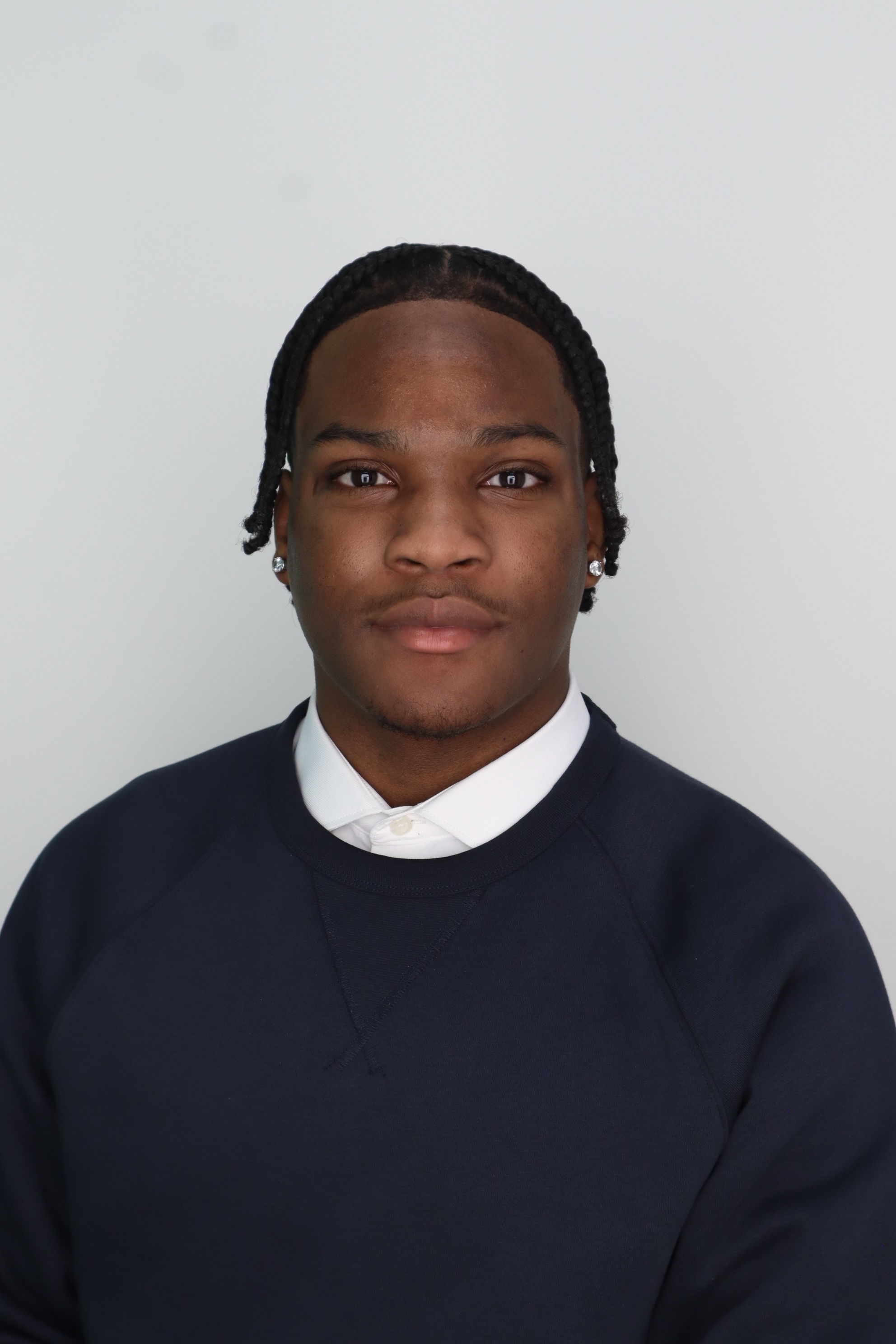
Malachi Davey is a Computer Science student at Florida State University from Orlando, Florida. His research investigates the security of Graph Neural Networks, focusing on model extraction attacks and defenses that protect sensitive information in machine learning models. His interests include artificial intelligence, security, and data analysis. He plans to pursue a career in developing secure and trustworthy artificial intelligence systems.
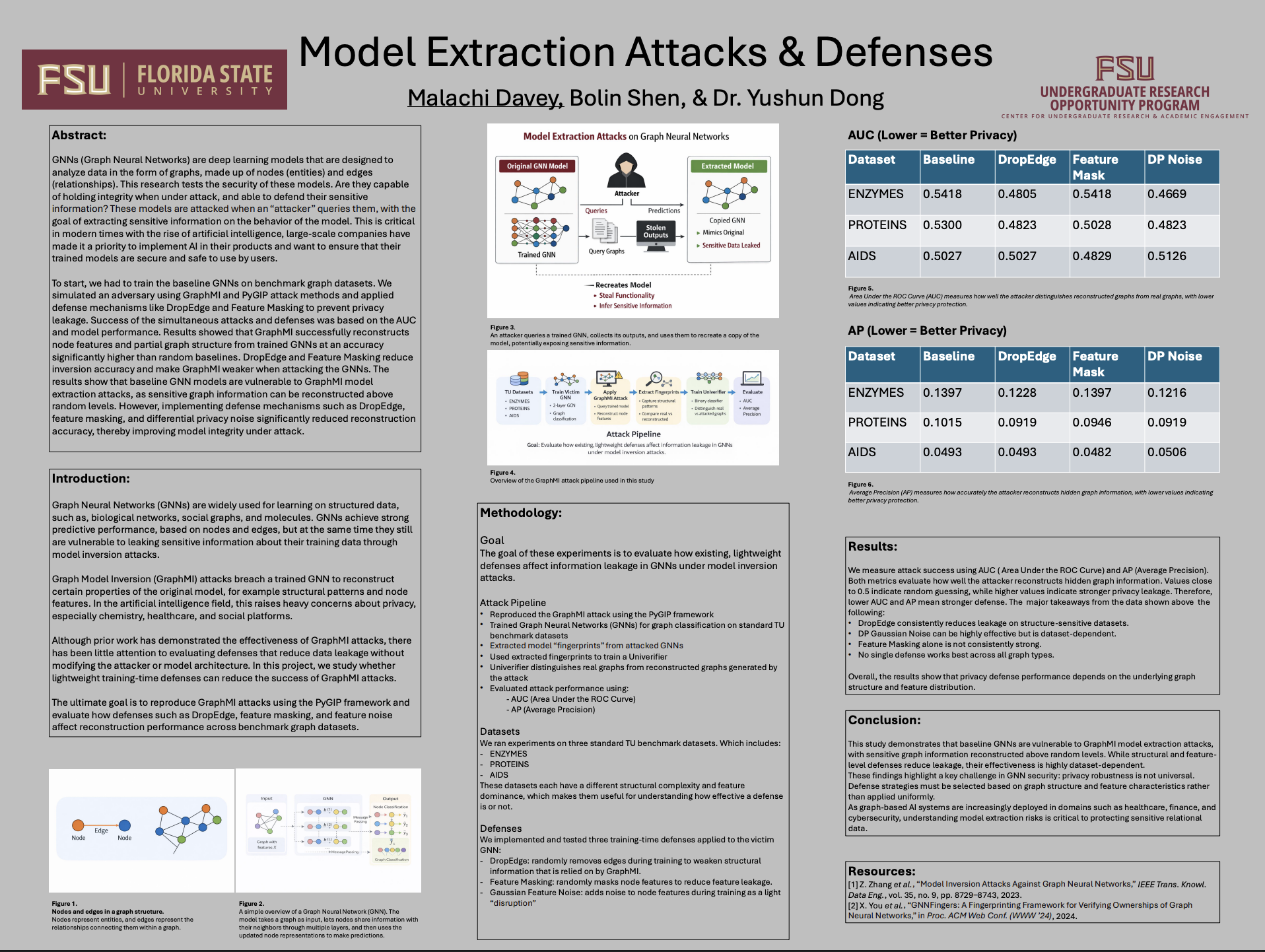
Model Extractions Attacks & Defenses
Authors: Malachi Davey, Dr. Yushun DongStudent Major: Computer Science
Mentor: Dr. Yushun Dong
Mentor's Department: Computer Science Mentor's College: College of Arts and Sciences Co-Presenters:
Abstract
GNNs (Graph Neural Networks) are deep learning models that are designed to analyze data in the form of graphs, made up of nodes (entities) and edges (relationships). This research tests the security of these models. Are they capable of holding integrity when under attack, and able to defend their sensitive information? These models are attacked when an “attacker” queries them, with the goal of extracting sensitive information on the behavior of the model. This is critical in modern times with the rise of artificial intelligence, large-scale companies have made it a priority to implement AI in their products and want to ensure that their trained models are secure and safe to use by users. To start, we had to train the baseline GNNs on benchmark graph datasets. We simulated an adversary using GraphMI and PyGIP attack methods and applied defense mechanisms like DropEdge and Feature Masking to prevent privacy leakage. Success of the simultaneous attacks and defenses was based on the AUC and model performance. Results showed that GraphMI successfully reconstructs node features and partial graph structure from trained GNNs at an accuracy significantly higher than random baselines. DropEdge and Feature Masking reduce inversion accuracy and make GraphMI weaker when attacking the GNNs. The results show that baseline GNN models are vulnerable to GraphMI model extraction attacks, as sensitive graph information can be reconstructed above random levels. However, implementing defense mechanisms such as DropEdge, feature masking, and differential privacy noise significantly reduced reconstruction accuracy, thereby improving model integrity under attack.
Keywords: Machine Learning, Computer Science, AI Privacy
26th annual Undergraduate Research Symposium, April 1, 2026
Sabrina Doty Poster Session 4: 3:00 pm - 4:00 pm / Poster #300
BIO
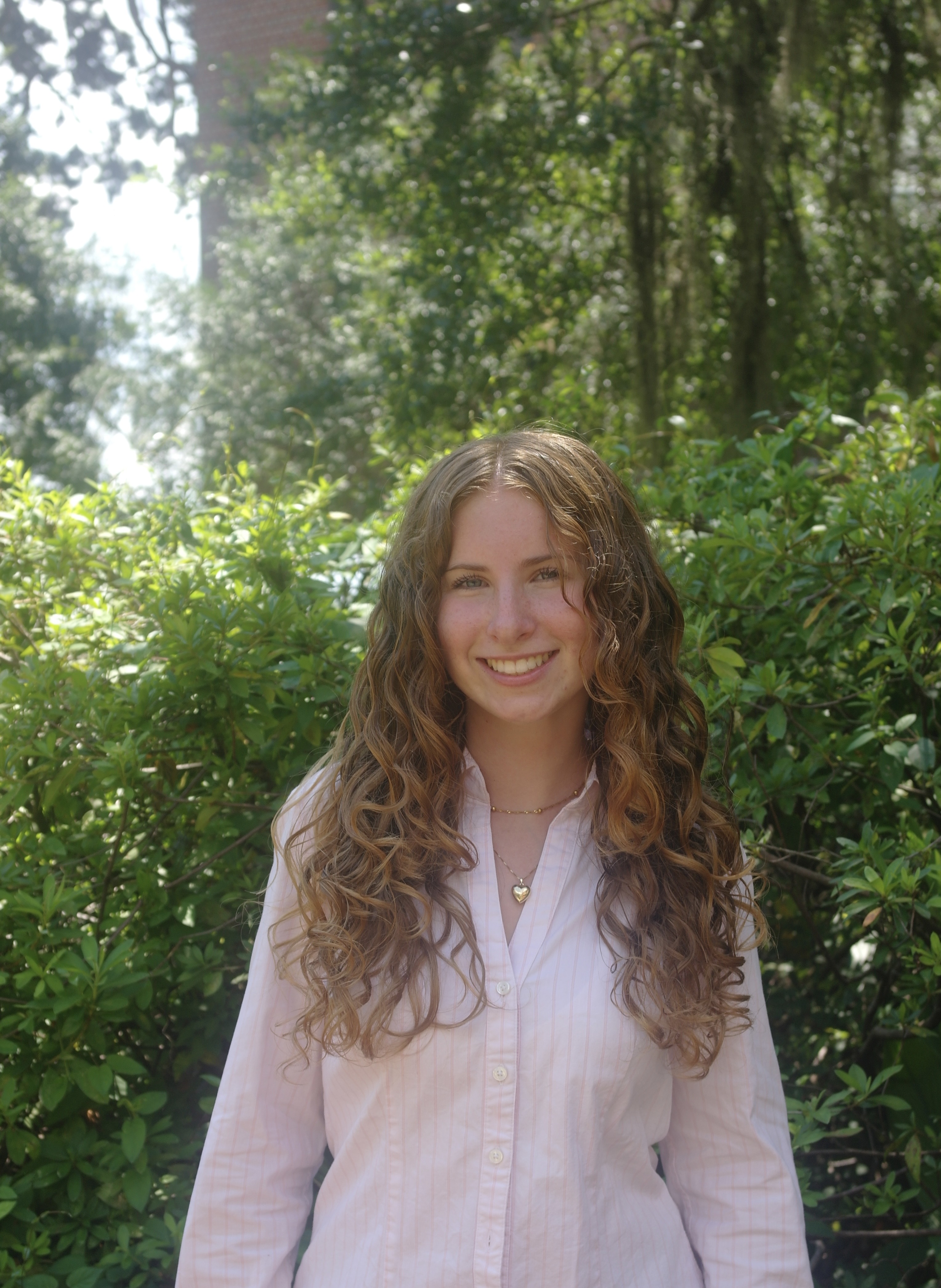
Sabrina Doty is a second-year Biology pre-vet student with a minor in Chemistry at Florida State University. Her passions include visual art, animal behavior, and environmental science. She conducted research under Professor Rob Duarte within the College of Fine Arts to create technologically focused enrichment toys for zoo animals through sculptural techniques and innovation. This allowed her to combine her interest in visual art with her animal-driven academic career. Sabrina currently works as a kennel technician where she learns essential animal handling techniques and skills for both domestic and exotic animals. After graduating from FSU with a Bachelor of Science in Biology, she aims to gain her DVM (Doctor of Veterinary Medicine) to help endangered species affected by climate change through conservation work.
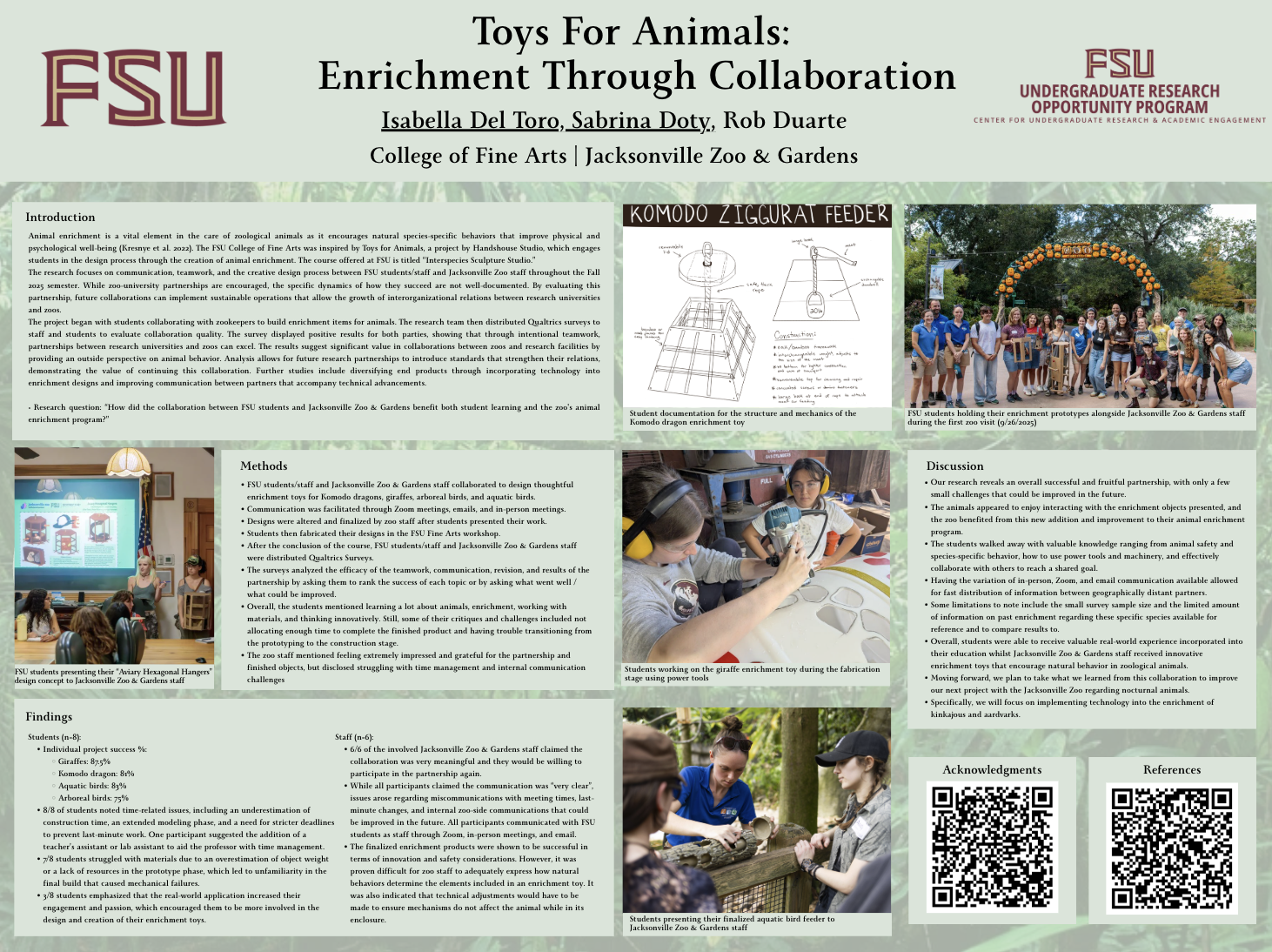
Toys For Animals: Enrichment Through Collaboration
Authors: Sabrina Doty, Rob DuarteStudent Major: Biology
Mentor: Rob Duarte
Mentor's Department: Art Department Mentor's College: College of Fine Arts Co-Presenters: Isabella Del Toro
Abstract
Animal enrichment is defined as species-specific stimuli that allow animals to express natural behaviors that improve their physical and psychological well-being. This study focuses on analyzing how the collaboration during the 2025 Fall Semester between FSU students and the Jacksonville Zoo & Gardens benefited both the students' learning and the zoo's animal enrichment program through research. While zoo-university partnerships are encouraged, the specific dynamics of how they succeed are not well-documented. By evaluating this partnership, future collaborations can implement sustainable operations that allow the growth of interorganizational relations between research universities and zoos. The project began with students collaborating with zookeepers to build enrichment items for animals. Qualtrics surveys were sent to participants once the project was complete, and the responses were analyzed to identify overall impressions and commonalities in the participants’ thoughts about the project’s process. The students mentioned learning a lot about animal behavior, enrichment, working with materials, and innovative thinking, but some of their critiques and challenges included not allocating enough time to complete the finished product and having trouble transitioning from the prototyping to the construction stage. The zoo staff mentioned feeling extremely impressed and grateful for the partnership and finished objects, but disclosed struggling with time management and internal communication challenges. The results showed the value in continuing this partnership and how to improve the project in the upcoming semesters. Moving forward, we will focus on researching how technology has been used for enrichment and finding a way to implement it into the zoo program.
Keywords: animal enrichment zoo toys
26th annual Undergraduate Research Symposium, April 1, 2026
Raneem Abdulrahim Poster Session 3: 1:45 pm - 2:45 pm / Poster #17
BIO
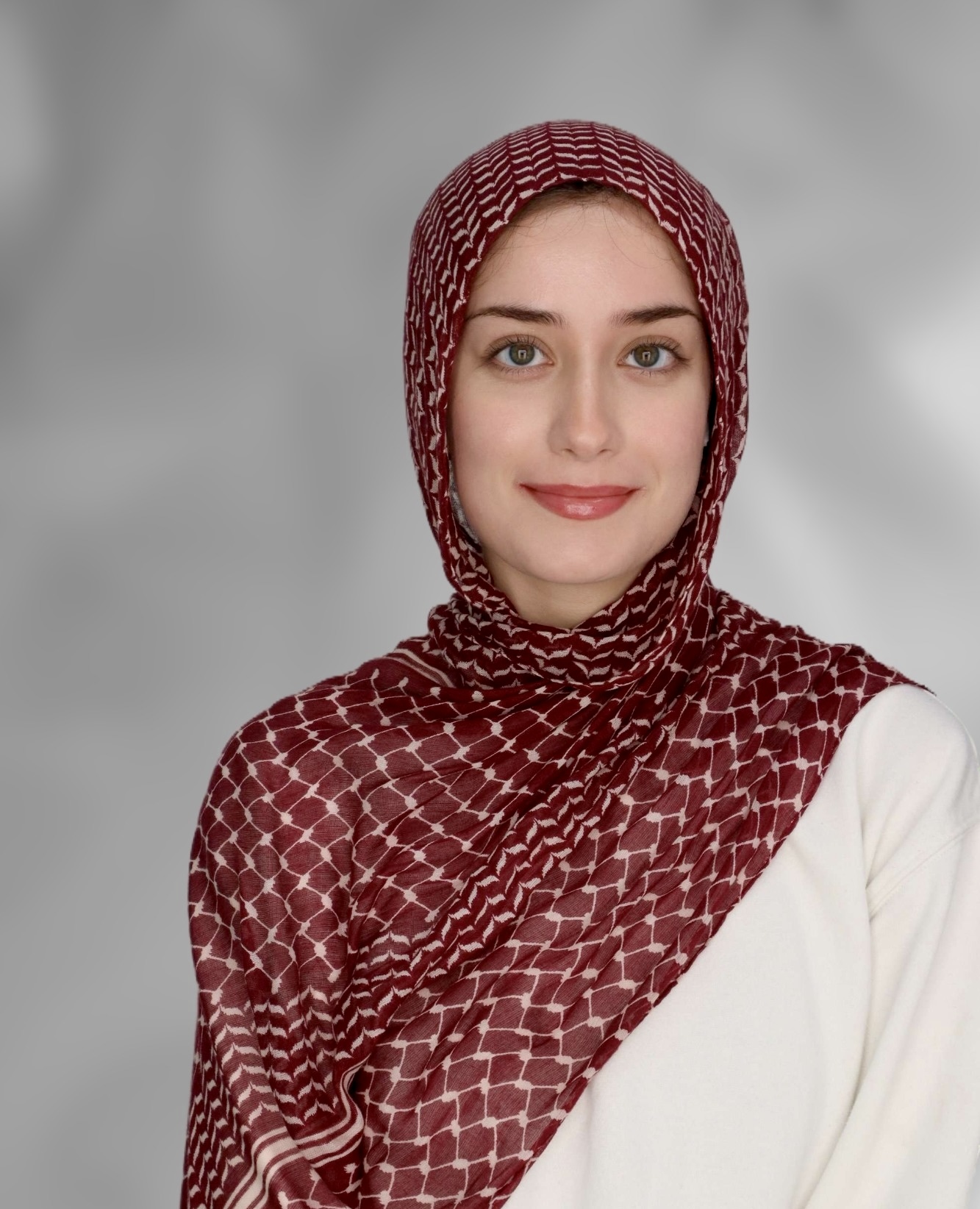
Raneem Abdulrahim is a second-year undergraduate student pursuing a Bachelor of Science in Biological Sciences with minors in Chemistry and Interdisciplinary Sciences. She is a member of the Honors Program, where she engages in opportunities that support her intellectual growth. As part of her academic development, Raneem recently began her first undergraduate research experience through the Undergraduate Research Opportunity Program (UROP), where she is gaining experience in research design, data collection, and scientific communication.
Her academic interests lie at the intersection of biology, chemistry, and interdisciplinary scientific approaches, which support her goal of pursuing a career in the medical field. Through her coursework and research involvement, she is gaining a deeper understanding of how scientific research can contribute to improving health and education outcomes.
Raneem plans to continue engaging in undergraduate research opportunities throughout her studies while preparing for future professional training in healthcare.
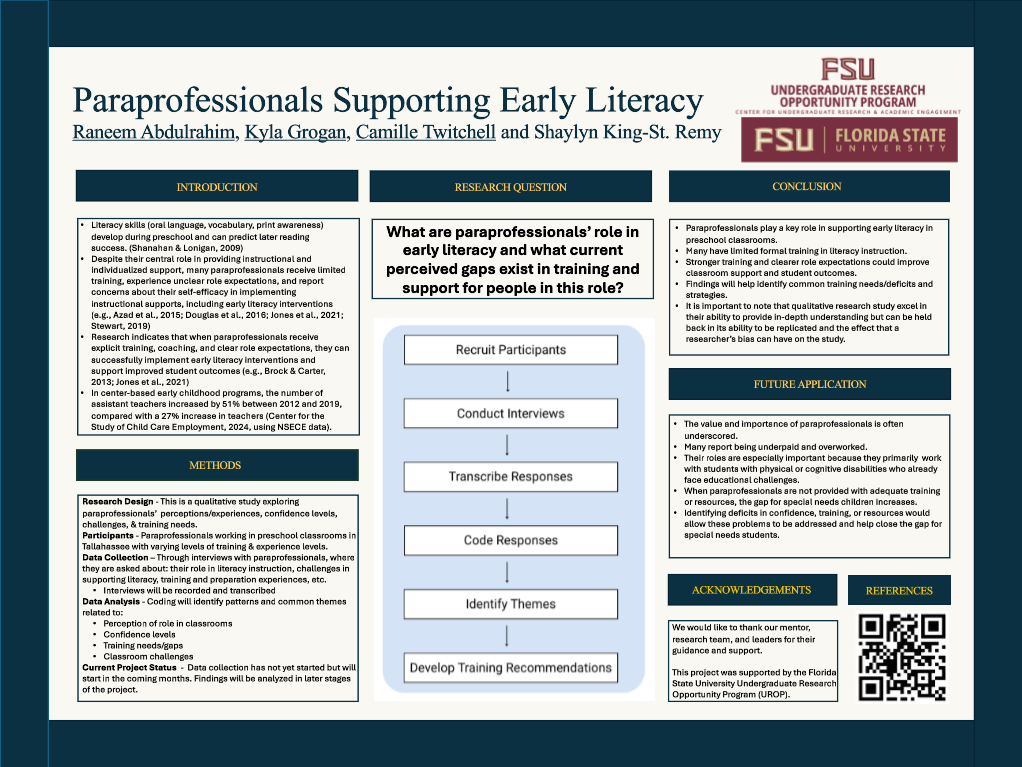
Paraprofessionals Supporting Early Literacy
Authors: Raneem Abdulrahim, Shaylyn King-St. RemyStudent Major: Biological Sciences
Mentor: Shaylyn King-St. Remy
Mentor's Department: School of Communication Science and Disorders Mentor's College: College of Communication and Information Co-Presenters:
Abstract
Paraprofessionals are trained staff members who assist and provide specialized support in classrooms, often working closely with students with special needs. However, many paraprofessionals receive limited preparation or professional training in early literacy strategies, which may affect their confidence and effectiveness in supporting children’s language and literacy development. This qualitative study explores how paraprofessionals perceive their roles and responsibilities in promoting emergent literacy among preschool children in Tallahassee. Participants will complete surveys and interviews about their classroom experiences and how they view their role in supporting early literacy. This project will also examine the challenges paraprofessionals encounter when implementing early reading and language-building practices, as well as the types of training and experiences that help them feel prepared in their work.
Keywords: Paraprofessionals, Emergent Literacy, Early Childhood Education
26th annual Undergraduate Research Symposium, April 1, 2026
Jay Santiago Poster Session 4: 3:00 pm - 4:00 pm / Poster #20
BIO
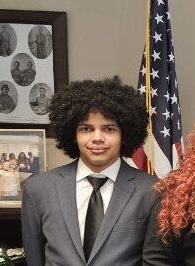
Jay C. Santiago is a first-year student at FSU studying Chemistry as a major, looking into a political science minor. He enjoys spending time outside of studying doing intern work or research.
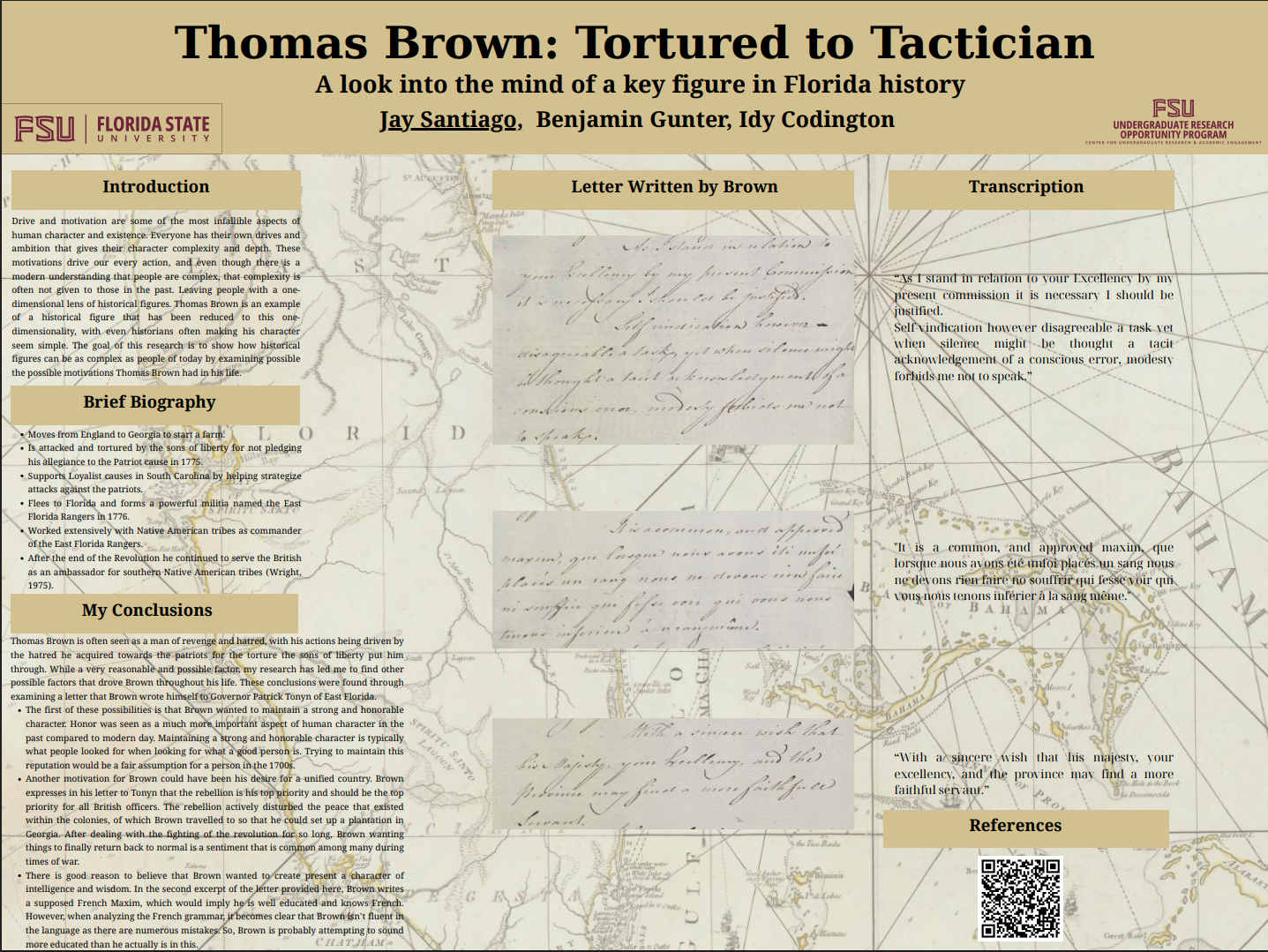
Thomas Brown: Tortured to Tactician
Authors: Jay Santiago, Benjamin GunterStudent Major: Chemistry
Mentor: Benjamin Gunter
Mentor's Department: Theater Mentor's College: College of Fine Arts Co-Presenters:
Abstract
The primary focus of this research was to examine the historical figure Thomas Brown of the East Florida Rangers and evaluate the kind of person he was. Primarily, the things that might have motivated him to become the person he was throughout his life. There is a consensus among those who have researched his life that he was mainly motivated by revenge. The direction my research took was to look at potential alternative motivations behind his decisions. To evaluate his rationale and produce these alternatives, I read letters written by Brown himself. These letters then needed to be transcribed and translated to become understandable in modern English. Using these letters to illustrate the thoughts and feelings he might have had, I then proposed some alternative aspects of Browns life that might have contributed just as much to his character as the consensus of revenge had.
Keywords: Florida, Rangers, Character Analysis
26th annual Undergraduate Research Symposium, April 1, 2026
Victoria Wells Poster Session 2: 10:45 am - 11:45 am / Poster #262
BIO
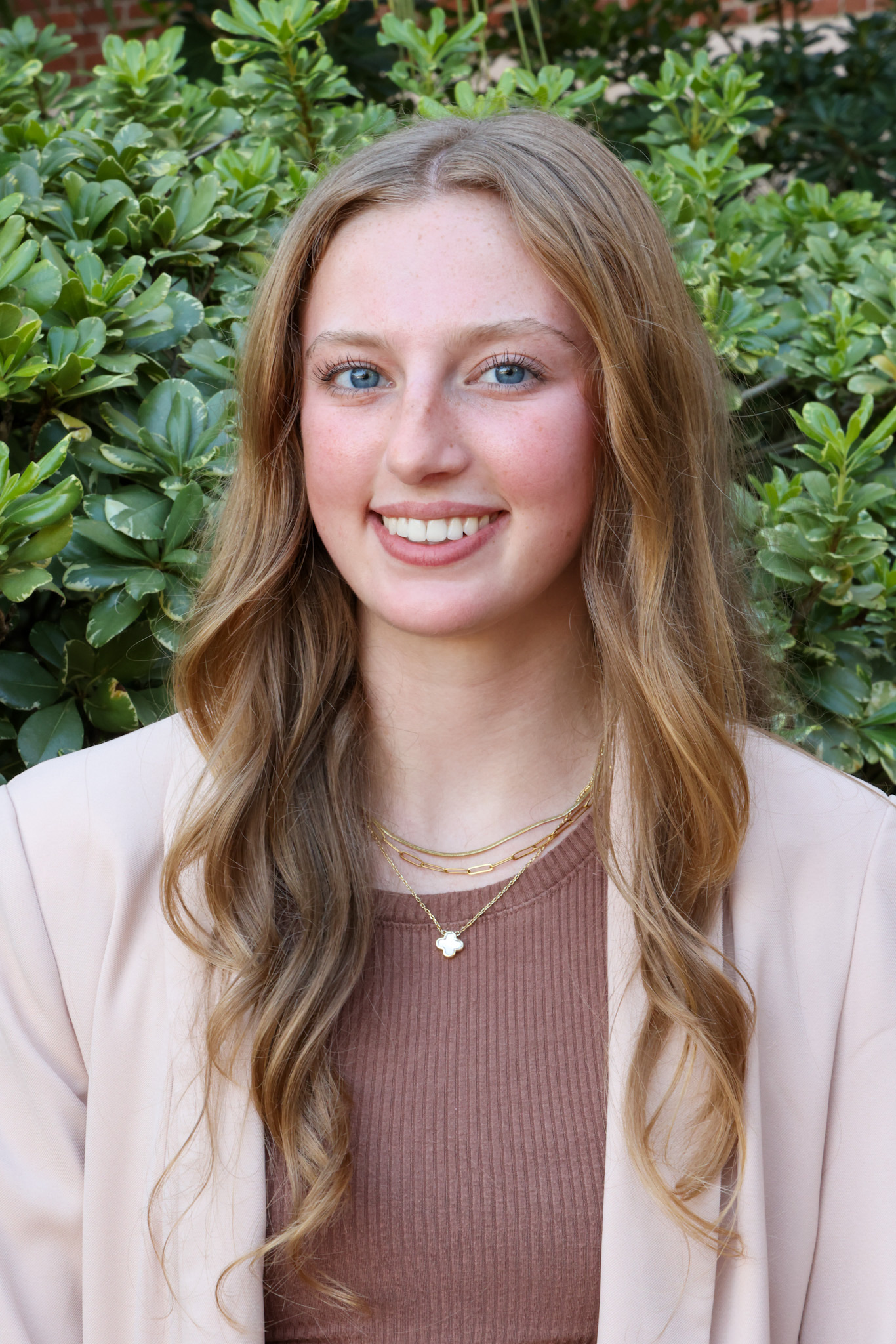
Victoria Wells is a sophomore Behavioral Neuroscience major in the Honors and Honors Medical Scholars Program. Victoria is originally from Gulf Breeze, FL and came to FSU in hopes of pursuing medicine. Her interest in research bloomed from her participation in the AP Capstone program in high school. Her passion is being further explored through the UROP program as she is in training to be a UROP leader for the following school year.
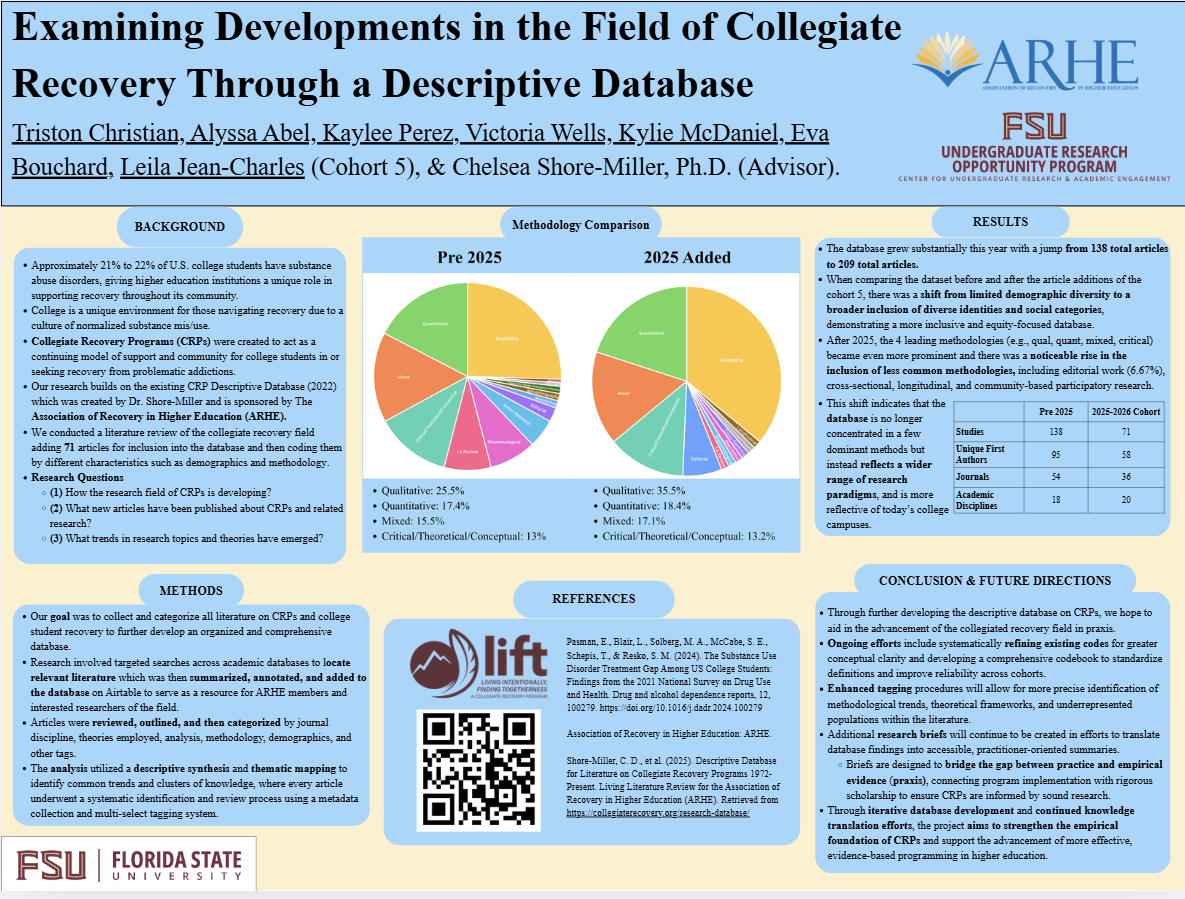
Examining Developments in the Field of Collegiate Recovery Through a Descriptive Database
Authors: Victoria Wells, Chelsea Shore-Miller, Ph.D.Student Major: Behavioral Neuroscience
Mentor: Chelsea Shore-Miller, Ph.D.
Mentor's Department: Descriptive Database Mentor's College: Association of Recovery in Higher Education Co-Presenters: Triston Christian, Alyssa Abel, Kaylee Perez, Kylie McDaniel, Eva Bouchard, and Leila Jean-Charles
Abstract
Collegiate recovery programs (CRPs) exist to establish and ensure a positive representation of those recovering in college as well as facilitate a supporting atmosphere for this process. A database was created to house, categorize, and compare the existing literature on collegiate recovery found by an extensive literature review. The database serves as a tool for clinicians in a simplified view of the existing knowledge in order to best serve their patients and keep up with new information as it is being produced. This research team was able to find and code 72 additional articles to supplement the database. Articles are coded by citation, demographics, theories, methodology, analyses, integrated behavioral health techniques, and other tags. Together, 12 research briefs were created that exemplify the gaps in existing literature as well as bridge differences in topics to facilitate the discussion of CRP progression and expansion.
Keywords: Collegiate Recovery Programs, Addiction Recovery
26th annual Undergraduate Research Symposium, April 1, 2026
John Ryan Polisknowski Poster Session 2: 10:45 am - 11:45 am / Poster #16
BIO
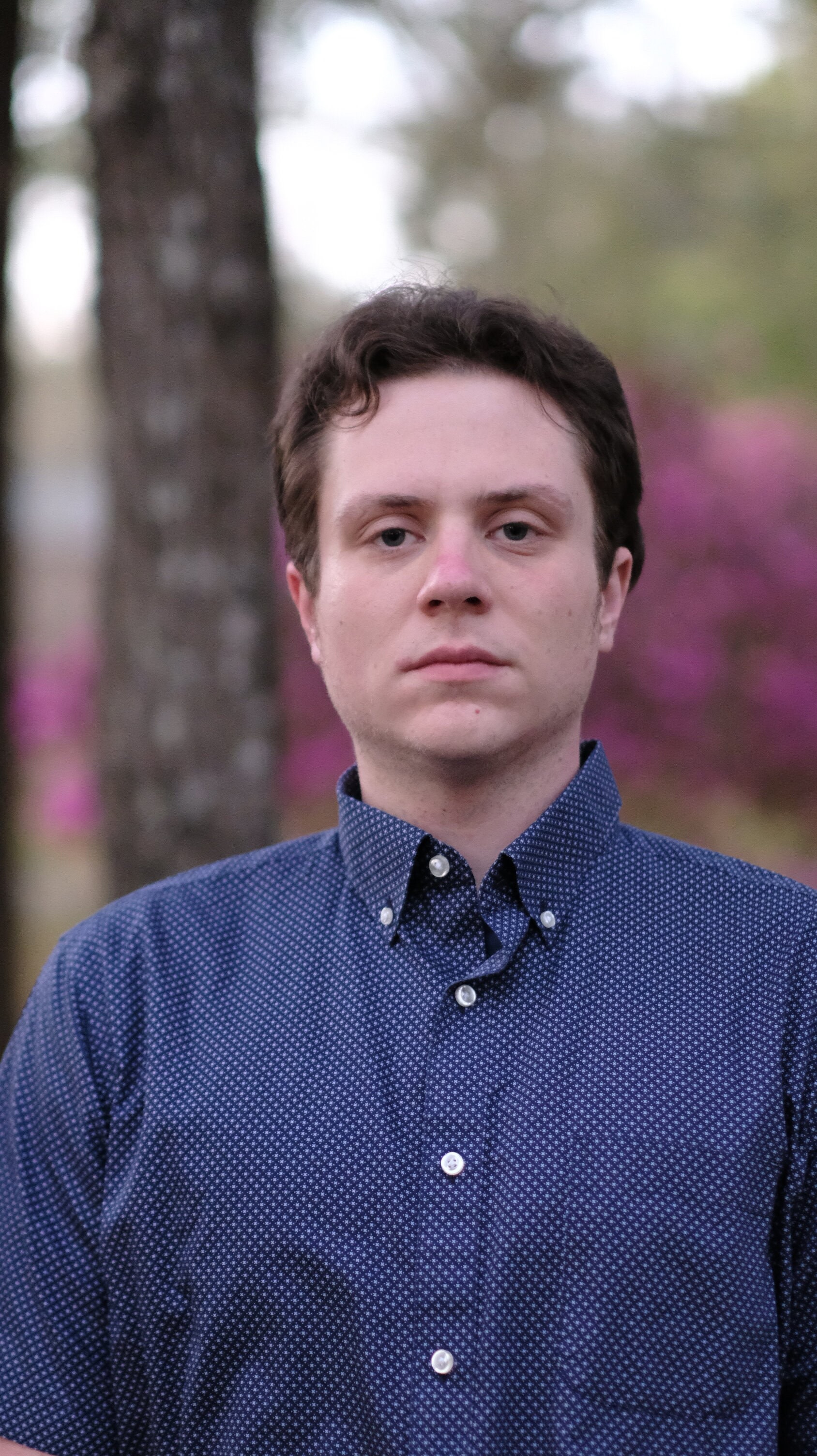
John Ryan (JR) Polisknowski is a junior at Florida State University pursuing a Bachelor of Science in Mechanical Engineering. Originally from Tampa, this is his second year at Florida State University. Along with his major, he is completing minors in Mathematics and Art, reflecting both his technical interests and creative side.
Polisknowski previously conducted research through the Undergraduate Research Opportunity Program (UROP) at Tallahassee State College with faculty mentor Joseph McNeil, where he worked on hydrogen engine research and developed an early interest in hydrogen-based energy systems.
He is currently involved in a UROP research project at Florida State University with mentors Julian Long and Cat Fidd. His research examines hydrogen as a clean energy carrier for next-generation power systems, focusing on how hydrogen exposure affects oxide stability and surface chemistry in refractory metals such as niobium and tantalum at high temperatures.
Outside of academics, Polisknowski enjoys photography and creative projects that combine visual design with technical thinking. He also enjoys working on hydrogen-related engineering ideas and learning about emerging energy technologies. He plans to pursue Florida State University’s combined Bachelor of Science to Master’s program in Mechanical Engineering.

High-Temperature Hydrogen Effects on Oxide Stability and Surface Evolution in Refractory Metal
Authors: John Ryan Polisknowski, Julian LongStudent Major: Mechanical Engineering
Mentor: Julian Long
Mentor's Department: Materials and energy Mentor's College: Engineering Co-Presenters:
Abstract
Hydrogen is increasingly recognized as a clean energy carrier for next-generation power systems due to its potential to reduce carbon emissions. Hydrogen turbines, which operate at extremely high temperatures exceeding 1200 °C, require materials capable of maintaining mechanical strength, resisting oxidation, and remaining stable under thermal stress. Refractory metals such as niobium (Nb) and tantalum (Ta) are promising candidates for these applications because of their high melting points and excellent thermal stability. However, exposure to hydrogen can compromise protective oxide layers and modify surface chemistry, which may influence friction, wear behavior, and overall material performance. Despite their importance, the critical temperature thresholds for oxide reduction and the relationships between hydrogen-induced surface changes and tribological performance are not well understood. This study investigates the effects of hydrogen exposure on oxide stability and surface chemistry in refractory metals under high-temperature conditions. Using controlled hydrogen environments, the research characterizes changes in surface composition and examines their implications for mechanical performance and material longevity. Results from this study aim to provide insight into the selection and design of refractory metals for hydrogen energy systems and contribute to the development of more reliable, high-performance materials for clean energy technologies.
Keywords: hydrogen, Oxide Stability, Refractory Metals, Engineering
26th annual Undergraduate Research Symposium, April 1, 2026
Ramisa Anjum Poster Session 1: 9:30 am - 10:30 am / Poster #75
BIO
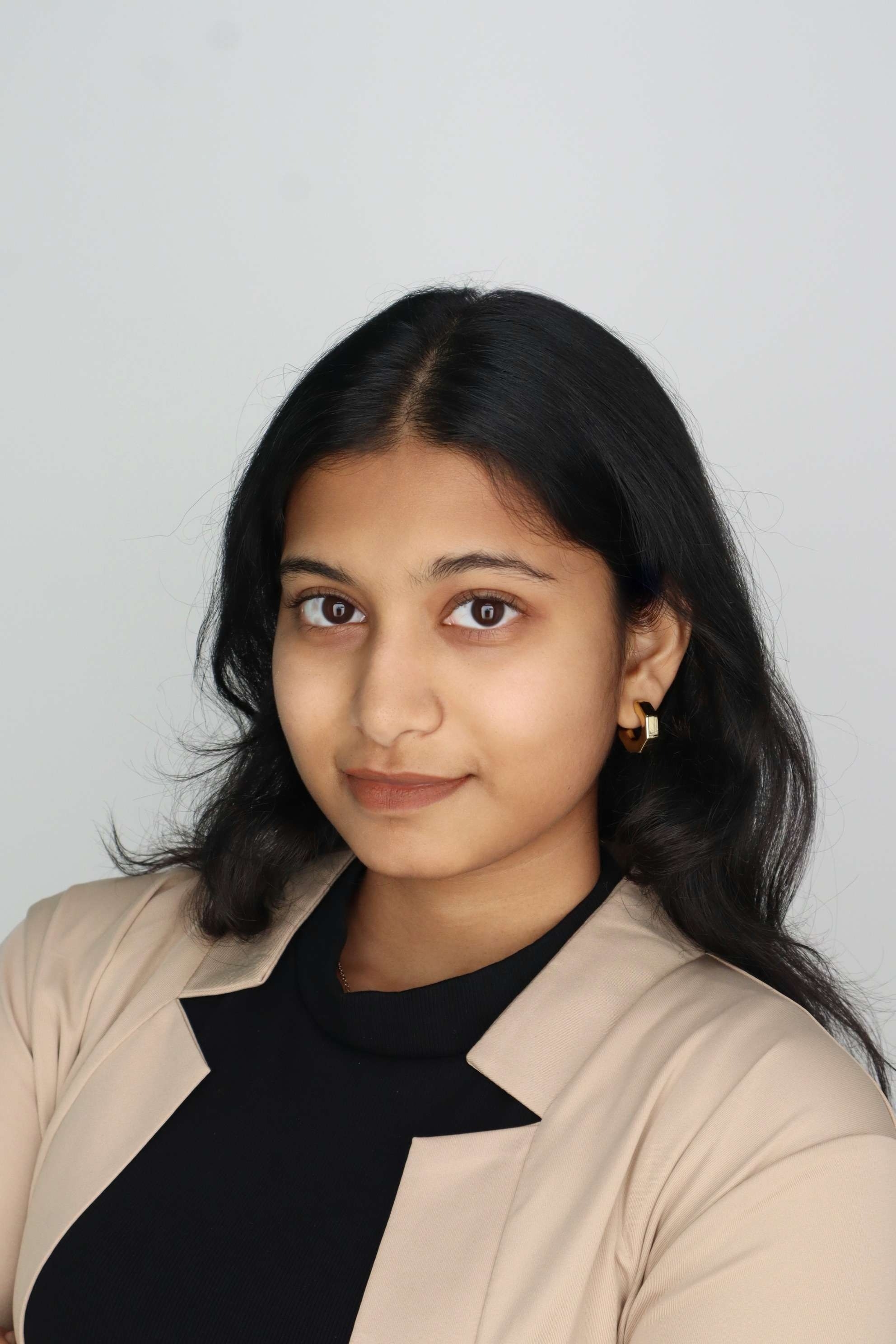
Ramisa Anjum is a sophomore-year Honors student at Florida State University. Majoring in Mechanical Engineering with a minor in physics, she is passionate about bio-inspired engineering design.
At Florida State University, she is involved in undergraduate research that combines computational fluid dynamics (CFD) with robotic design to improve the motion of underwater soft swimmer-robots.
After graduation, Ramisa plans to pursue a graduate degree in Mechanical Engineering and continue her research on soft robotics.
Mimicking Nature: High-Performance Tails for Underwater Soft Robots
Authors: Ramisa Anjum, Dr Kourosh ShoeleStudent Major: Mechanical Engineering
Mentor: Dr Kourosh Shoele
Mentor's Department: Mechanical Engineering Mentor's College: FAMU-FSU College of Engineering Co-Presenters: Diego Llaverias
Abstract
Abstract:
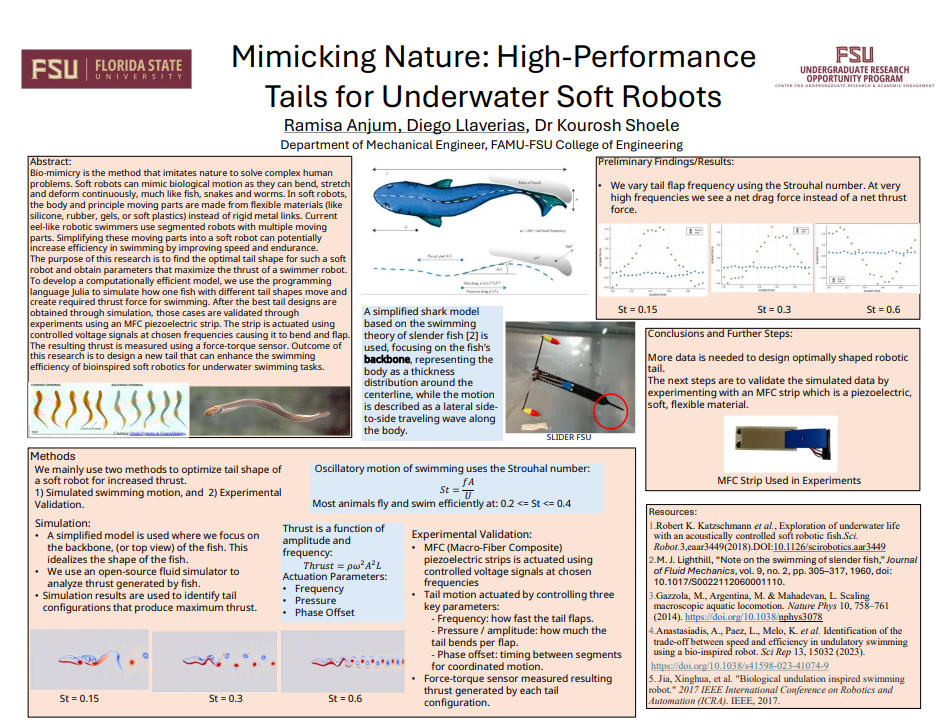
Bio-mimicry is the method that imitates nature to solve complex human problems. Soft robots can mimic biological motion as they can bend, stretch and deform continuously, much like fish, snakes and worms. In soft robots, the body and principle moving parts are made from flexible materials (like silicone, rubber, gels, or soft plastics) instead of rigid metal links. Current eel-like robotic swimmers use segmented robots with multiple moving parts. Simplifying these moving parts into a soft robot can potentially increase efficiency in swimming by improving speed and endurance.
The purpose of this research is to find the optimal tail shape for such a soft robot and obtain parameters that maximize the thrust of a swimmer robot. To develop a computationally efficient model, we use the programming language Julia to simulate how one fish with different tail shapes move and create required thrust force for swimming. After the best tail designs are obtained through simulation, those cases are validated through experiments using an MFC piezoelectric strip. The strip is actuated using controlled voltage signals at chosen frequencies causing it to bend and flap. The resulting thrust is measured using a force-torque sensor. Outcome of this research is to design a new tail that can enhance the swimming efficiency of bioinspired soft robotics for underwater swimming tasks.
Keywords: Engineering, Mechanical Engineering, Robot, Robots, soft robots, robotics, simulation, experiment, fish.
26th annual Undergraduate Research Symposium, April 1, 2026
Elizabeth Wall Poster Session 4: 3:00 pm - 4:00 pm / Poster #12
BIO
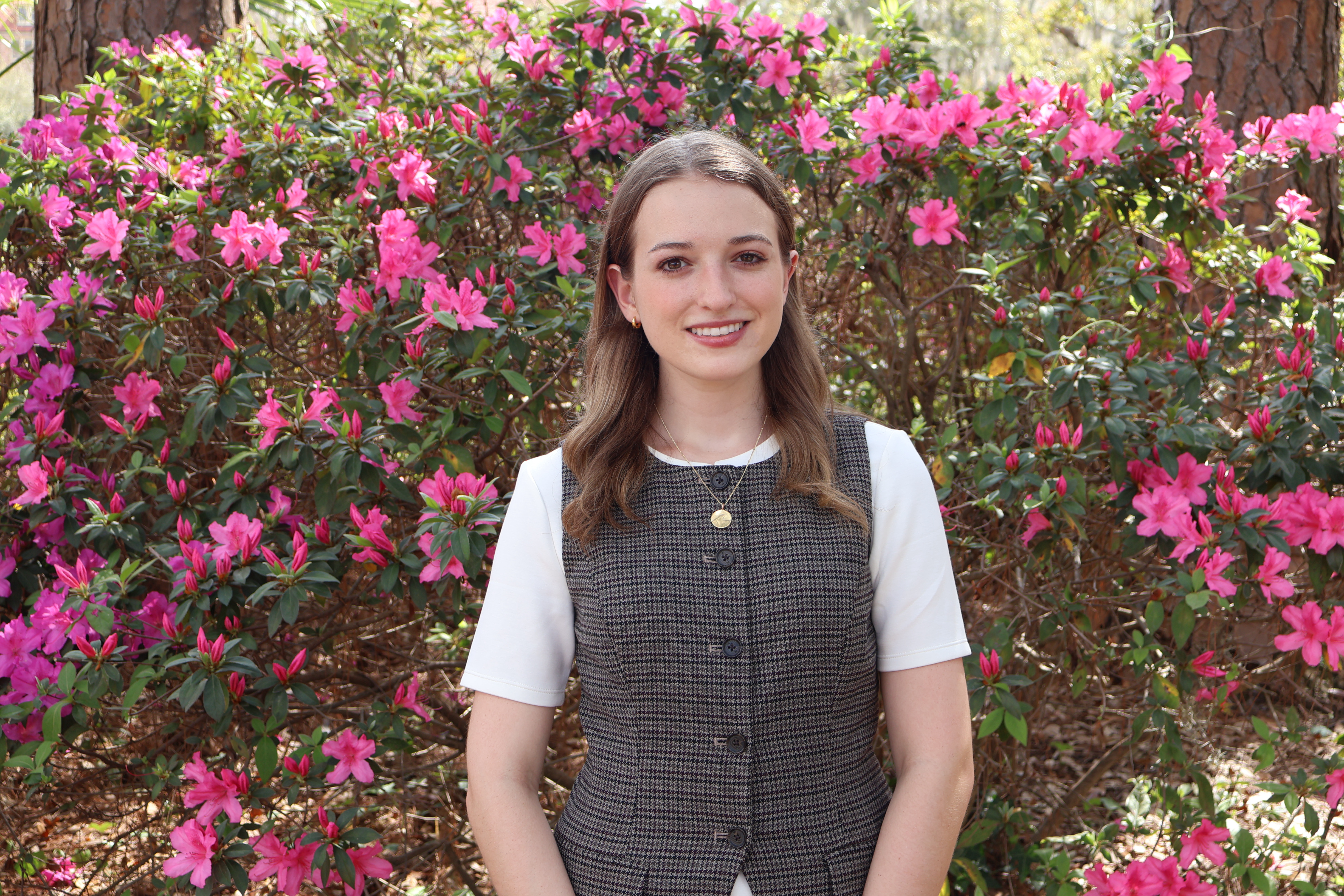
Elizabeth Wall is a freshman researcher in the College of Arts and Sciences, and is pursuing a Bachelor of Science in Environmental Science & Policy and Editing, Writing, and Media as a double major. As a part of the honors program at Florida State University, Elizabeth is a member of the Undergraduate Research Opportunity Program, where she is researching the degree of acknowledgment to the Seminole and Miccosukee natives that is present in the legislative sanctioning to create Everglades National Park. Working under Dr. Andrew Frank in the Department of History, Elizabeth has been able to expand her skills in literary analysis and data evaluation. With these skills, she applies them in various engagements such as Sustainable Campus, Florida Association of Environmental Professionals, and Environmental Service Program, where she is able to actualize her aspirations of a career in Environmental Law.
The Language of Omission: Tracing Indigenous Erasure in Federal Planning for Everglades National Park
Authors: Elizabeth Wall, Dr. Andrew FrankStudent Major: Environmental Science & Policy, Editing, Writing, and Media
Mentor: Dr. Andrew Frank
Mentor's Department: Department of History Mentor's College: College of Arts and Sciences Co-Presenters:
Abstract
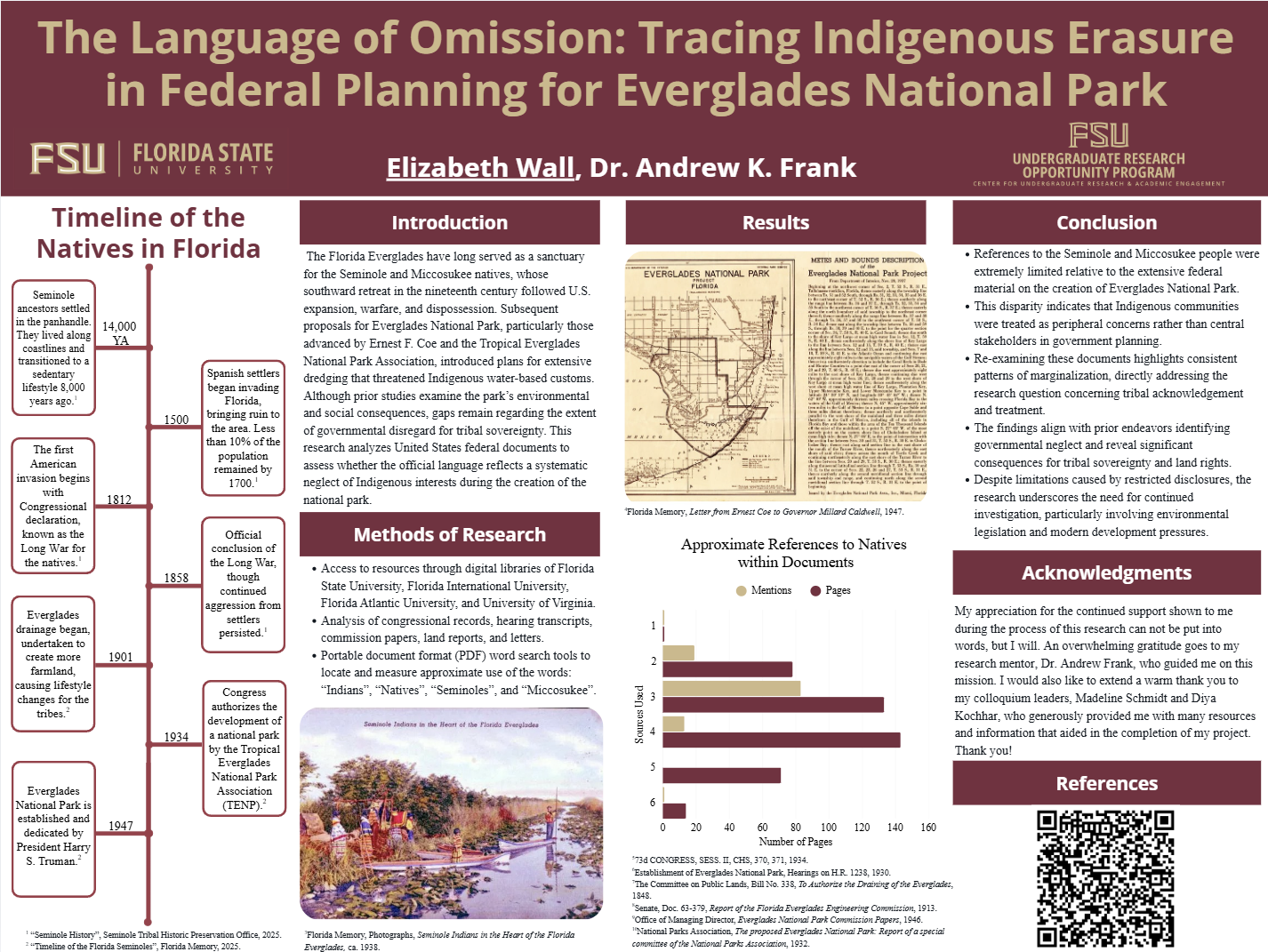
This study argues the degree to which the United States government and the U.S. Army Corps of Engineers considered the Seminole and Miccosukee peoples during the planning and establishment of Everglades National Park in 1934. Although the park emerged from decades of federal surveying and land use proposals, its creation occurred in a region where the Seminole people had long sought refuge from colonial expansion and conflict. The essential question being investigated pertains to how analyzing historical legal documents related to the creation of Everglades National Park can offer insight into how these communities were acknowledged and treated throughout the process. Using a corpus of archival materials, including congressional records, hearing transcripts, land use proposals, and interagency correspondences, this study employs vocabulary analysis to assess connotations surrounding references to Native communities, utilizing document searching tools to quantify their presence within the texts. Findings show that tribal mentions were either absent or occurred at exceptionally low frequencies relative to the overall volume of documentation. When present, references to the Seminoles and Miccosukees frequently appeared in negative or dismissive framings, often positioning them as impediments to federal development objectives. These patterns highlight a broader historical neglect by governmental and developmental bodies and emphasize the marginalization of Native land relationships during major environmental initiatives. Ultimately, this research contributes to ongoing conversations about the sovereignty of Indigenous communities and the long-term consequences of disregarding their environmental and cultural ties during state-directed land transformation.
Keywords: Seminole, Miccosukee, Everglades, Legislature, Environmental
26th annual Undergraduate Research Symposium, April 1, 2026
Dashell Tellez Poster Session 4: 3:00 pm - 4:00 pm / Poster #286
BIO
My name is Dashell Tellez, and I am a first-year Presidential Scholar from Miami, Florida. My major is Behavioral Neuroscience with a minor in Chemistry and an expected minor in Child Development. My research interests particularly relate to clinical psychology and the interdisciplinary nature of how brain structures, functions, and disorders relate to behavior and cognition at a micro- and macroscopic level. My goals are to finish my neuroscience degree and partake in a graduate studies opportunity before attending medical school in hopes of ultimately becoming a neurologist.
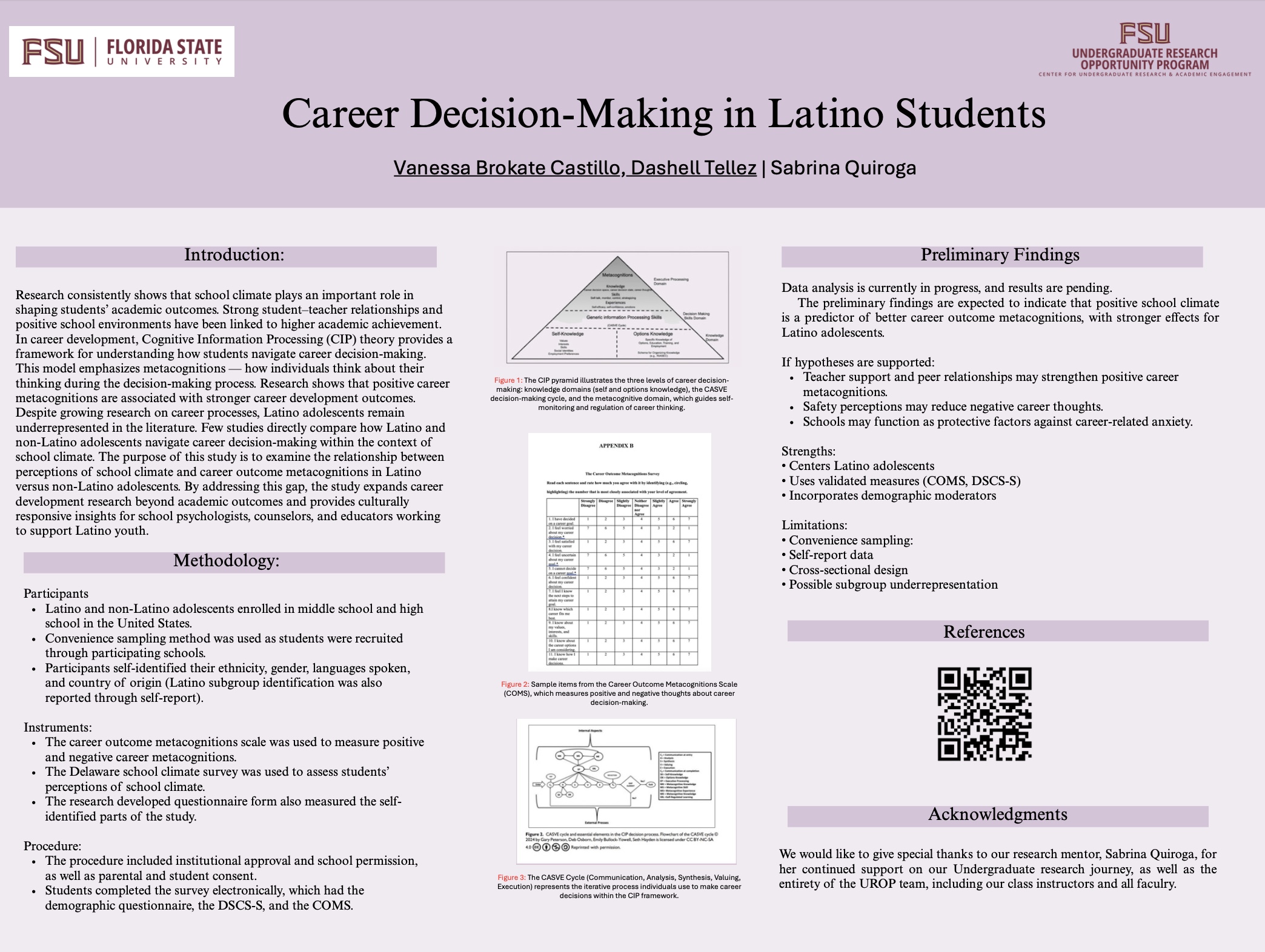
Career Decision-Making in Latino Students
Authors: Dashell Tellez, Sabrina QuirogaStudent Major: Behavioral Neuroscience
Mentor: Sabrina Quiroga
Mentor's Department: Department of Educational Psychology & Learning Systems Mentor's College: Anne Spencer Daves College of Education, Health, and Human Sciences Co-Presenters: Vanessa Brokate Castillo
Abstract
Our study examines how perceptions of school climate influence career metacognitions among Latino and non-Latino adolescents. School climate, including teacher-student relationships, peer interactions, and perceptions of safety, plays a critical role in shaping students’ academic engagement and future aspirations. Despite this, limited research has examined how these environmental factors influence adolescents’ internal beliefs about their future pathways, particularly among Latino youth. Latino adolescents often encounter cultural and systemic barriers, including discrimination, language challenges, and tensions between family expectations and individual goals, which may shape how they evaluate their ability to pursue educational and occupational opportunities. Guided by Cognitive Information Processing (CIP) theory, this study explores how school climate interacts with adolescents’ metacognitive beliefs about their future careers. Specifically, it investigates differences in positive and negative career outcome metacognitions between Latino and non-Latino adolescents and identifies which dimensions of school climate most strongly predict these beliefs. The study also examines whether demographic factors, including gender, language background, grade level, and college aspirations, moderate these relationships. Using a quantitative survey design, adolescents will report their perceptions of school climate and career outcome metacognitions. Findings aim to clarify how school environments shape students’ beliefs about their future pathways and to inform culturally responsive strategies that schools and health service psychologists can use to better support Latino adolescents’ academic and vocational development.
Keywords: Behavioral Neuroscience, School Environment, Latinos, Psychology, Metacognition
26th annual Undergraduate Research Symposium, April 1, 2026
Natalie McKenna Natalie McKenna Poster Session 3: 1:45 pm - 2:45 pm / Poster #101
BIO
Natalie McKenna is a first-year student at Florida State University from the suburbs of Chicago. She is majoring in Cell and Molecular Neuroscience and minoring in Humanities. As a pre-med student, she is particularly interested in the intersection of medicine and the socioeconomic factors that influence health and healthcare. She plans to pursue a career in medicine as a neurologist. On campus, she is involved in FSU’s Honors Program and the University Sinfonia Orchestra. Outside of academics, she enjoys making art, playing the viola, and watching movies.
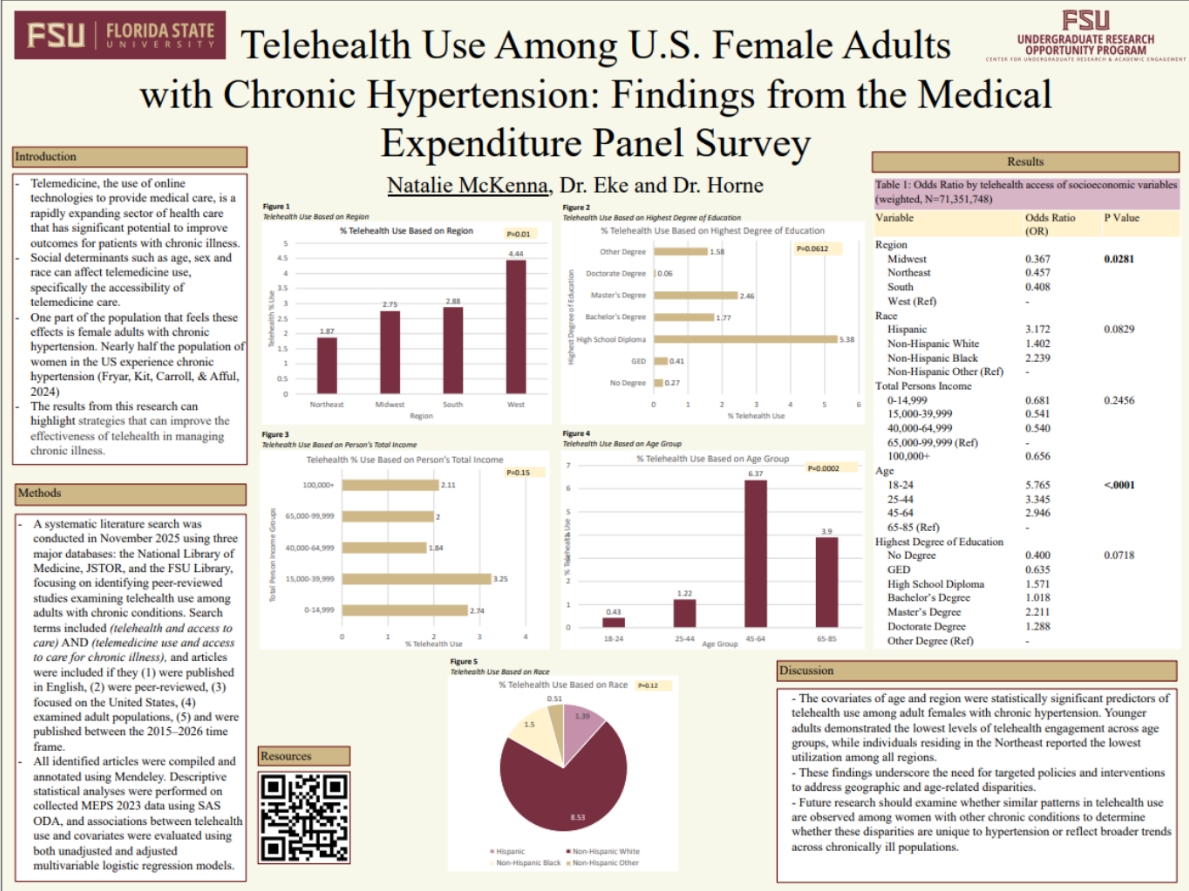
Telehealth Use Among U.S. Female Adults with Chronic Hypertension: Findings from the Medical Expenditure Panel Survey
Authors: Natalie McKenna Natalie McKenna, Ransome EkeStudent Major: Cell/Molecular Neuroscience
Mentor: Ransome Eke
Mentor's Department: Department of Family Medicine and Rural Health Mentor's College: College of Medicine Co-Presenters:
Abstract
Telemedicine is an expanding component of health care with the potential to improve outcomes for patients with chronic illness. Social determinants such as age, region, income, education, and race influence access to and use of telemedicine, making it important to understand how these factors shape engagement among clinically vulnerable groups. Adult females with chronic hypertension require additional medical care, and telemedicine use may increase accessibility. This study examines demographic and socioeconomic factors associated with telemedicine use among U.S. adult females with chronic hypertension.
A systematic literature search conducted in November 2025 identified peer‑reviewed studies on telehealth use among adults with chronic conditions in the United States. Articles were included if they were published in English, peer‑reviewed, focused on U.S. adults, and published between 2015 and 2026. Primary data for this analysis were drawn from the 2023 Medical Expenditure Panel Survey (MEPS) consolidated and outpatient files. Descriptive statistical analyses were performed on collected MEPS data using SAS OnDemand for Academics (SAS ODA), and associations between telehealth use and covariates were evaluated using both unadjusted and adjusted multivariable logistic regression models.
The analytic sample included 5,607 respondents, representing a weighted population of 71,655,118 adult females with chronic hypertension. Telehealth was used in 13.59% of cases. Utilization significantly varied by region and age, revealing clear demographic and socioeconomic differences. These findings highlight disparities in telehealth adoption and can inform strategies to improve equitable access and strengthen telehealth delivery for women managing chronic hypertension.
Keywords: telehealth, hypertension, chronic
26th annual Undergraduate Research Symposium, April 1, 2026
Clara Marvin Poster Session 3: 1:45 pm - 2:45 pm / Poster #48
BIO
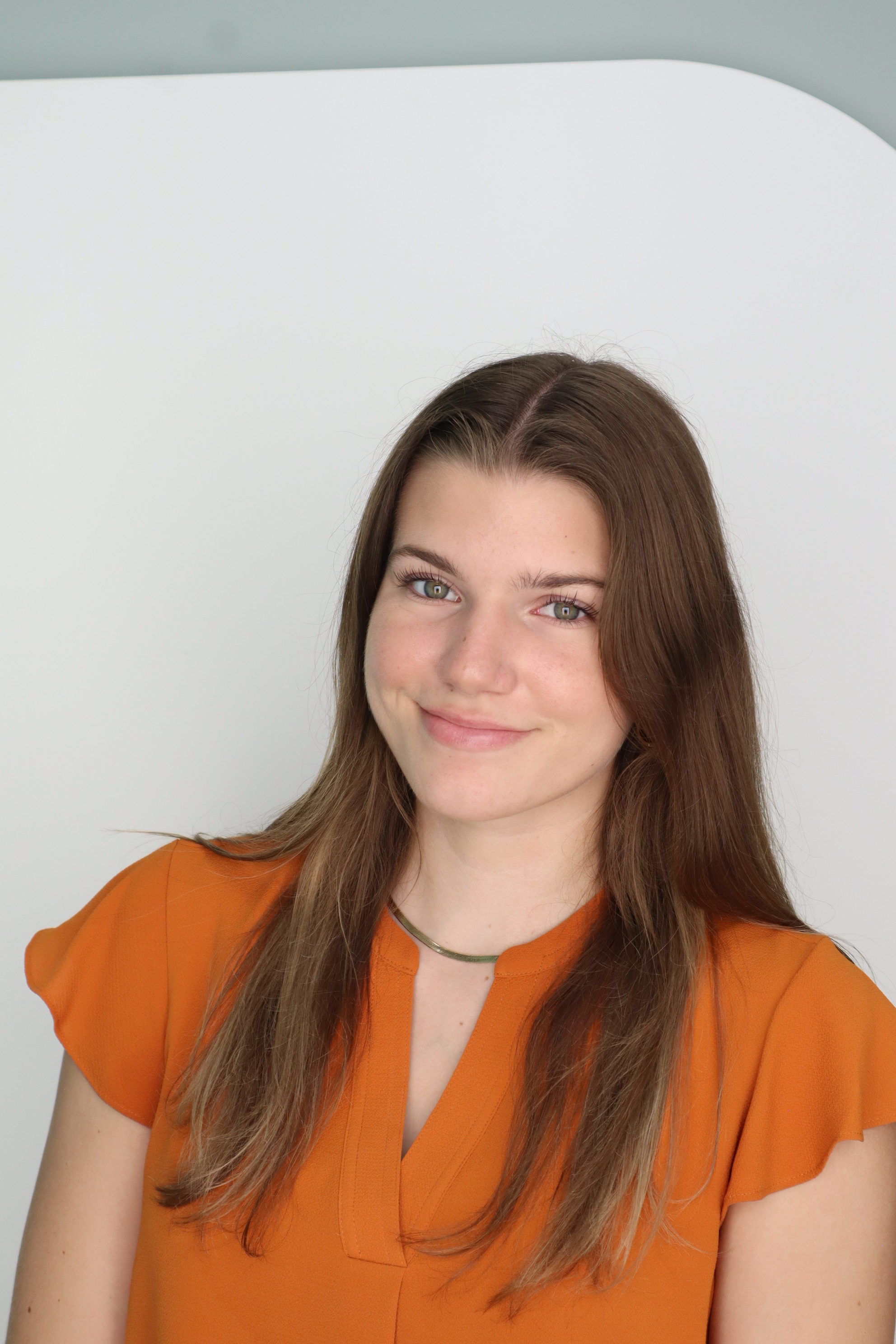
Sophomore at FSU pursuing a Bachelor of Science in Psychology & a minor in Biology, with aspirations to work in the field of clinical neuropsychology. Involved on campus through CHAARG, a women's health/fitness club, and an RA in the Dozier lab at FSU.
Bound for Reading
Authors: Clara Marvin, Jordan DozierStudent Major: Psychology
Mentor: Jordan Dozier
Mentor's Department: Florida Center for Reading Research Mentor's College: College of Education, Health, and Human Sciences Co-Presenters: Jeena Batallan, Julia Montero
Abstract
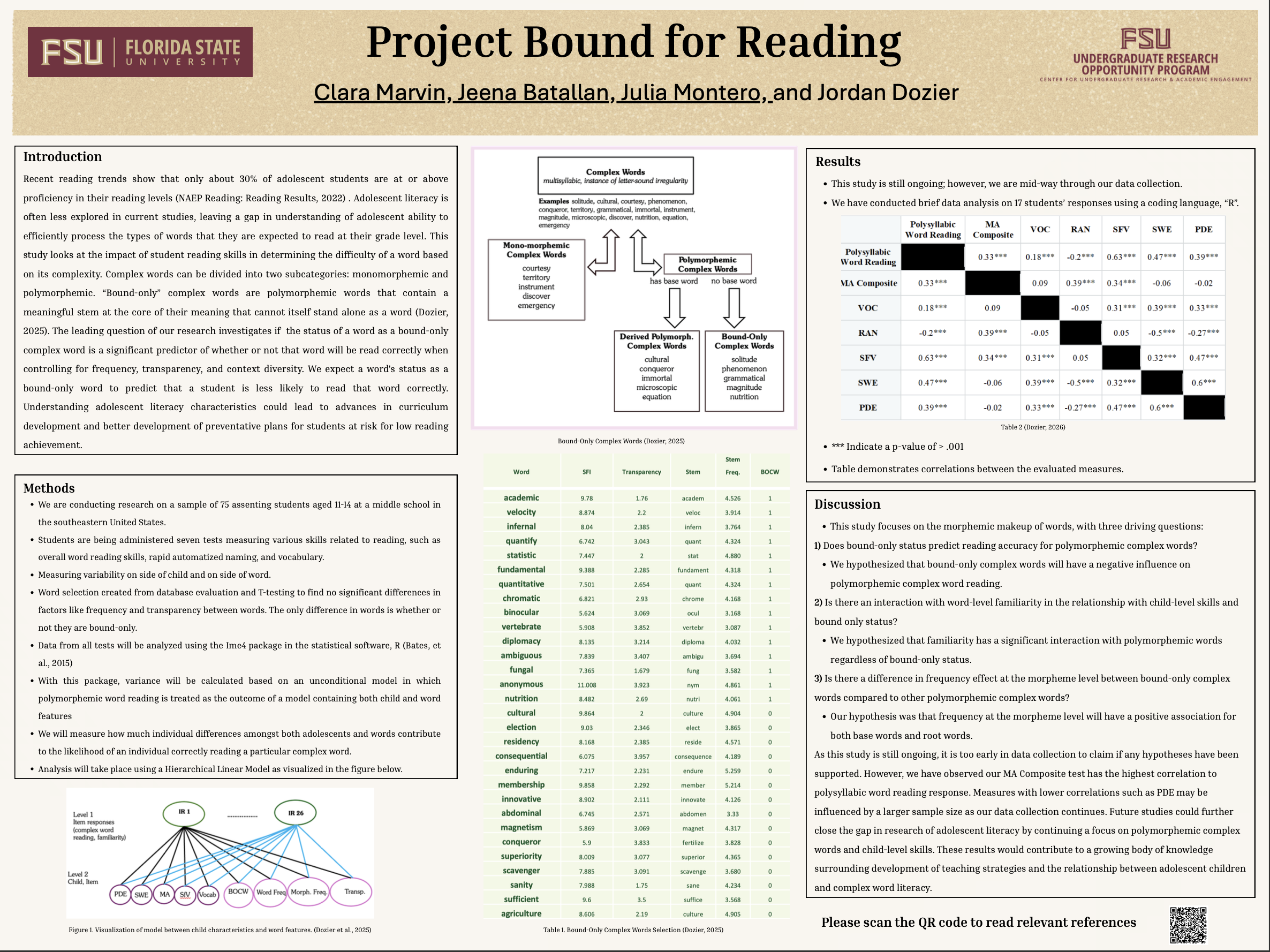
When examining the structure of words, complex words can be defined as multisyllabic words with instances of letter-sound irregularity. More specifically, words are divided into monomorphemic or polymorphemic structures. "Bound-only complex words” is a term that describes polymorphemic complex words that do not include a base word with significant meaning (Dozier, 2025). Our research investigates whether bound-only complex words have a more significant variance than polymorphemic complex words with a base word when controlling for frequency, transparency, and context diversity. Because recent reading trends display that about 30% of students are at or above proficiency in their reading levels, we hope to gain insight into the main factors that affect reading development (NAEP Reading: Reading Results, 2022). Data was collected from 75 middle-school students in the southeastern United States across a variety of assessments that examine different reading skills. The data will be run through a coding platform to determine what categories of words are more challenging for students. We expect that bound-only words will have an increased complexity rating due to the lack of a meaningful base word morpheme that provides important context to readers. The findings of this research could be significant in determining what impedes and improves reading development, particularly for older students who typically are not the subject of reading literacy research.
Keywords: Literacy, adolescent, reading
26th annual Undergraduate Research Symposium, April 1, 2026
Julia Luetje Poster Session 3: 1:45 pm - 2:45 pm / Poster #279
BIO
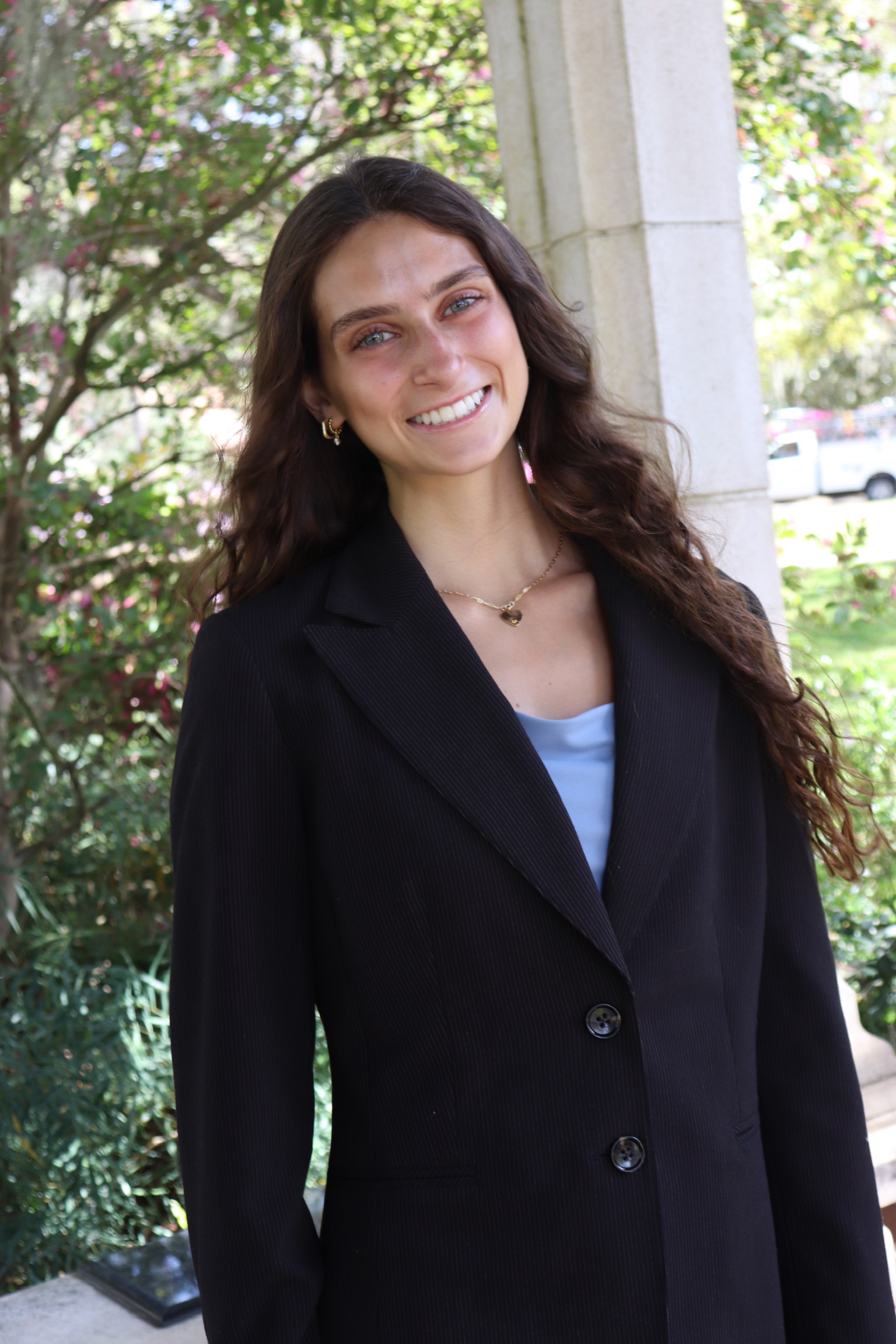
Julia Luetje is a freshman at Florida State University from Kansas City, Kansas. She is majoring in Sport Management with a minor in Communications or Hospitality. Julia is a Presidential Scholar and in the Honors Program. She is passionate about sports and social advocacy, particularly in using sports as a platform to promote equality and representation. She enjoys studying and exploring how culture and sport influence each other. After graduating early, Julia plans to get her masters in Sport Management, with the potential of going to law school afterwards. Ultimately, she hopes to build a career in the sports industry where she can contribute to positive change while expanding representation.
Analyzing Historical Commercial Postcards
Authors: Julia Luetje, Micheal NealStudent Major: Sport Management
Mentor: Micheal Neal
Mentor's Department: English Mentor's College: College of Arts and Sciences Co-Presenters:
Abstract
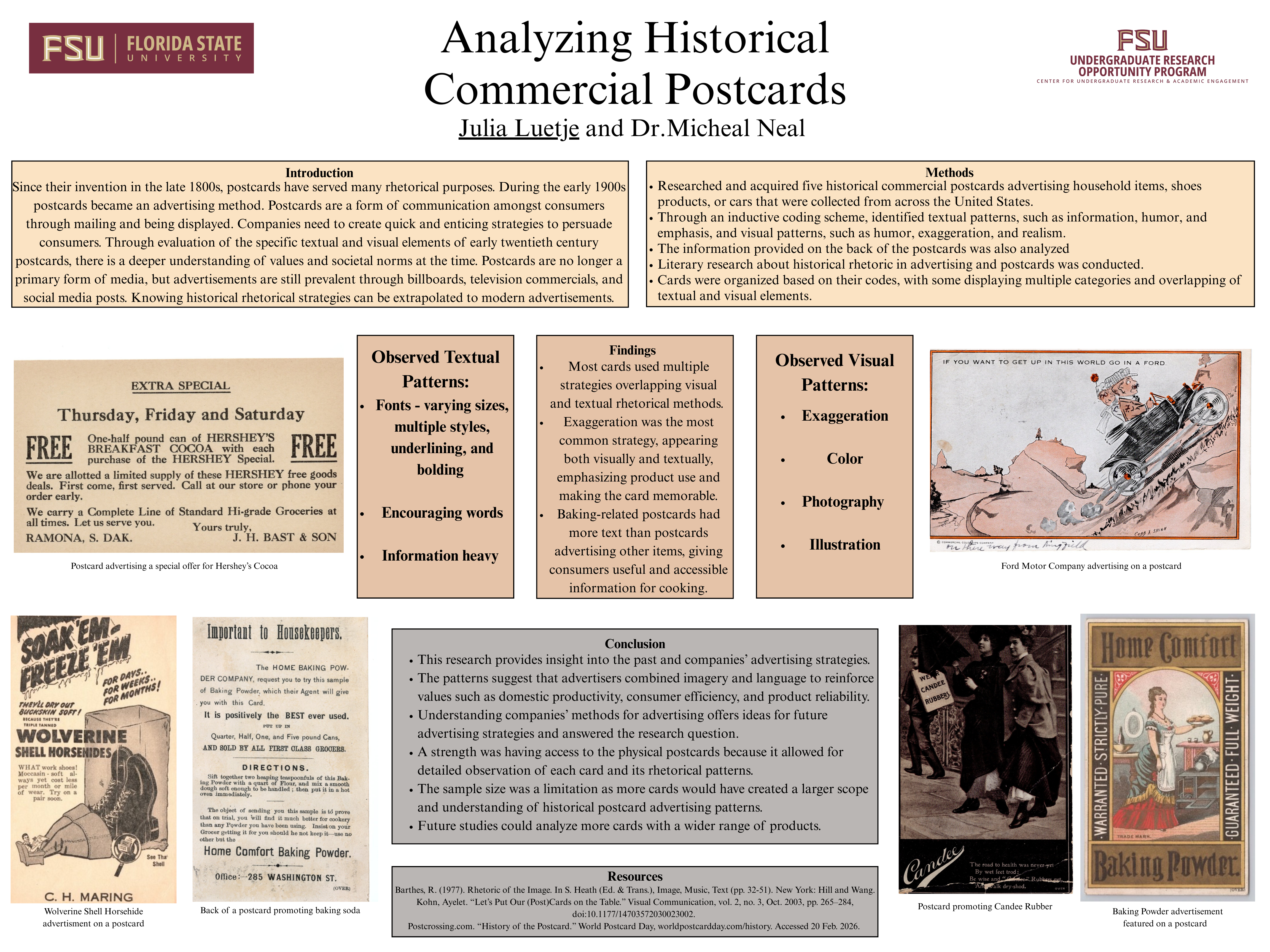
The research question for my project is “How did visual imagery shape the appeal and persuasiveness of historical commercial postcards?” Understanding the strategies companies used in these postcards provides insight into the effectiveness of postcards as advertisements and early 1900s lifestyles. Advertisements are seen all around the world in various forms of media from television to billboards to internet popups. Even though postcards are not a primary means of contemporary advertisement, they are important to study because they offer insights into the values of the time period and understanding the way that postcards are advertised can be extrapolated to modern advertisements. This research uses textual and visual analysis with an inductive coding scheme to analyze the companies’ persuasive strategies, including visual patterns, such as exaggeration, realism, and color, and textual patterns, such as humor, emphasis, and information. These observations are supported by literary research about historical visual rhetoric in advertising. As a result, this textual and visual analysis revealed how companies used attention-grabbing strategies to appeal to consumers, especially since these forms of advertising also serve as a form of communication amongst senders and recipients. Further studies could analyze more cards with a wider range of products as well as considering the cost and circulation of postcards. The implications are that while postcards can be used to share information amongst people, they can also be used as a form of advertising and their visual advertising strategies differ based on the product type.
Keywords: postcards, advertising, commercial
26th annual Undergraduate Research Symposium, April 1, 2026
Jadyn Forman Poster Session 1: 9:30 am - 10:30 am / Poster #73
BIO
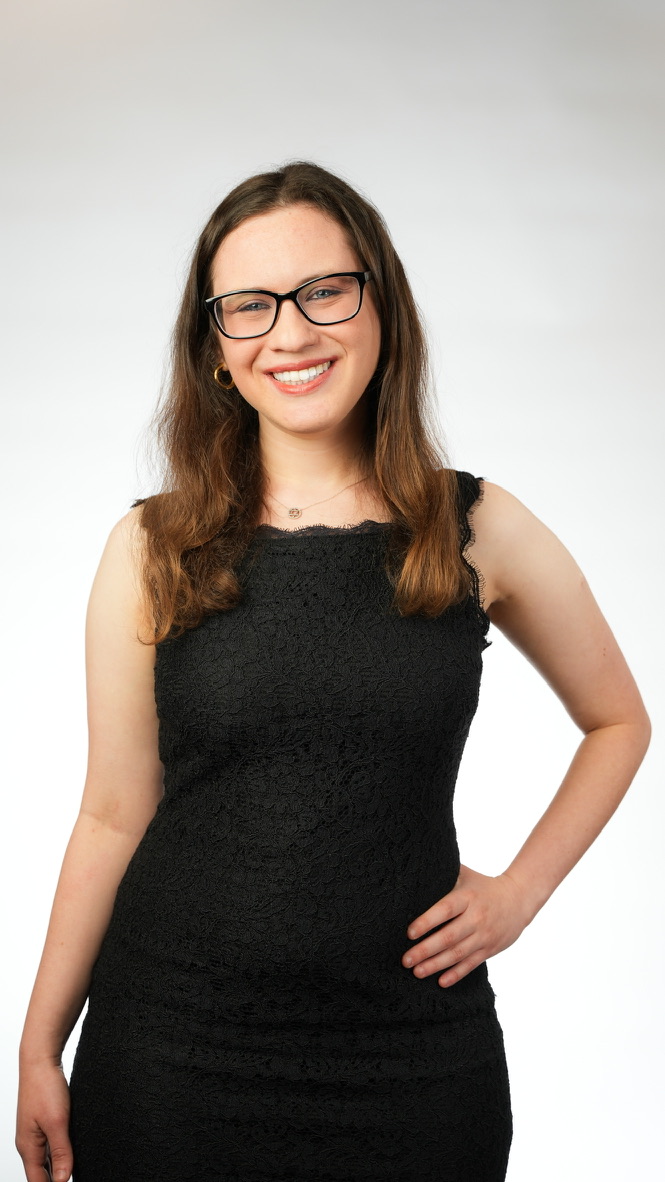
Jadyn Forman is a senior at FSU. She is majoring in anthropology, minoring in chemistry, and hoping to go to medical school. She is a member of Phi Beta Kappa, 1910 Honorary, and Order of Omega. She has served as Vice President of Academic Excellence and Director of Academic Enrichment for the Gamma Beta chapter of Alpha Gamma Delta, along with many other leadership positions across multiple student organizations. Her previous research experience includes a second-author publication in the American Journal of Human Biology, completing the FSU UROP program, an internship at the Florida Department of Health, and being a member of the Social Health and Immunology Research Lab. She is presenting on the project she completed as part of the FSU Honors in the Major program and she hopes to continue this work while earning her Master's of Science in Medical Anthropology.
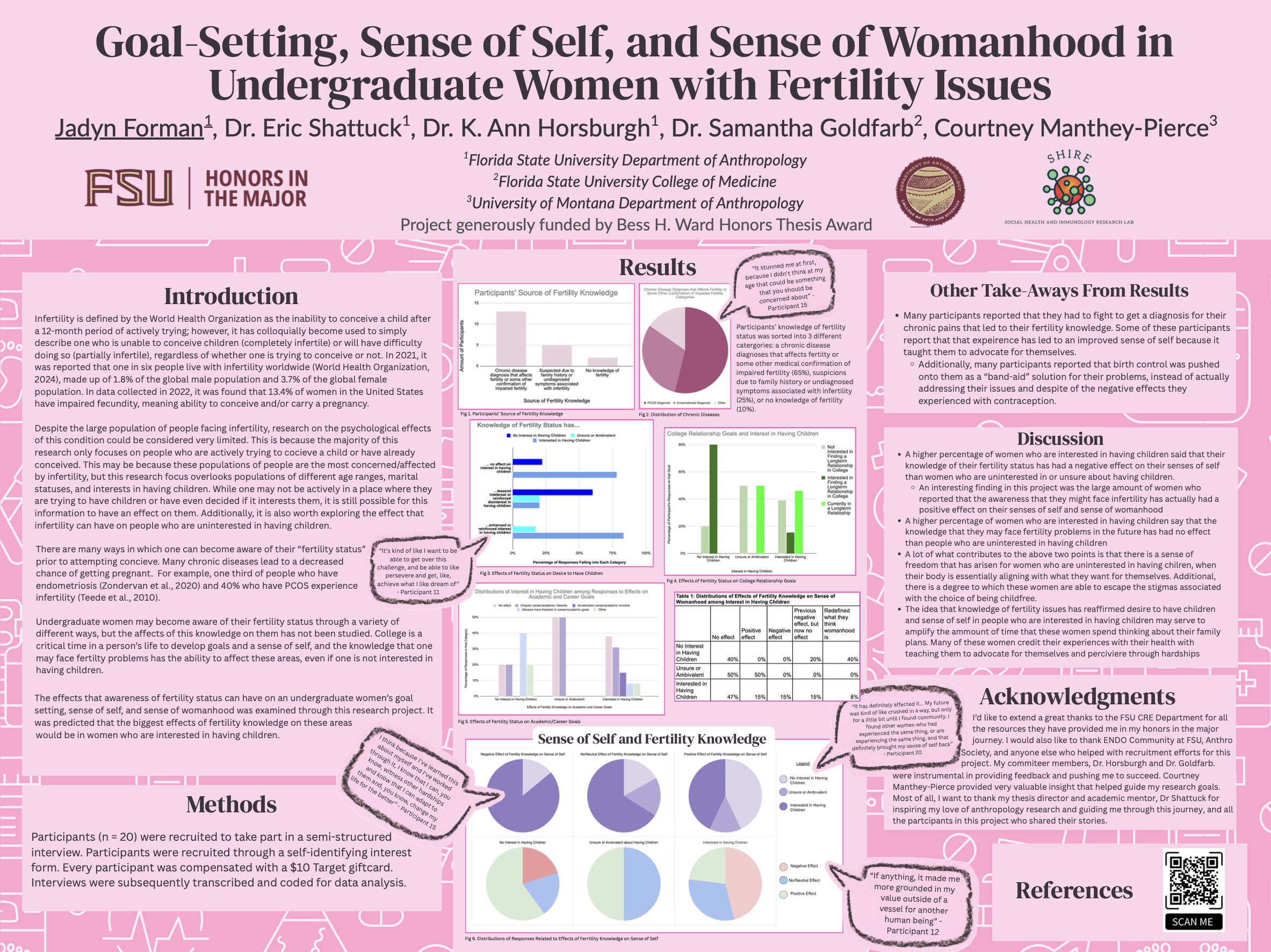
Goal-Setting, Sense of Self, and Sense of Womanhood in Undergraduate Women with Fertility Issues
Authors: Jadyn Forman, Dr. Eric ShattuckStudent Major: Anthropology
Mentor: Dr. Eric Shattuck
Mentor's Department: Department of Anthropology Mentor's College: College of Arts and Sciences Co-Presenters:
Abstract
According to the US Centers for Disease Control and Prevention, 13.4% of women in the US have impaired fertility. While one may become aware of possible fertility problems at any age, the mental impact of infertility have mainly only been studied in people who are actively trying to conceive children or already have children. This has left a knowledge gap of the impact that an infertility diagnosis or suspicions can have on undergraduate women. College is a critical time in a person’s identity formation and life goal setting, both of which can be heavily influenced by fertility knowledge. I am conducting a qualitative study at Florida State University that examines the repercussions of infertility on undergraduate women's goal setting, sense of self, and sense of womanhood . I predict that women who are interested in having children but are aware they may face infertility will choose majors based on high income potential, seek to maximize their career opportunities by formulating post-graduation trajectories that emphasize career stability and rapid growth/advancement, and be more selective in their romantic partners in order to maximize their changes of having children, whether through assisted fertility or adoption. Additionally, I predict that knowledge of infertility will have a negative impact on the sense-of-self and sense-of-womanhood in undergraduate women, but this effect will be proportional to their desire to have children. This project will lead to a greater understanding of women's health and the impact of infertility outside of the ability to have children.
Keywords: Anthropology, Infertility, Women's Health, Gynecology
26th annual Undergraduate Research Symposium, April 1, 2026
Bryce Angus Poster Session 1: 9:30 am - 10:30 am / Poster #205

BIO
Bryce Angus is a second year at Florida State University pursuing a Bachelor of Science in Computer Science with a minor in math. He is originally from Pembroke Pines, Florida. After he graduates Bryce will be pursuing a Master's in Computer Engineering, as a means to to later become a Computer Architect. The Undergraduate Research Opportunity Program (UROP) was his first experience in a research setting, here his project surrounded the extraction of center lines from coherent structures in turbulence fields relevant to Type Ia supernova conditions. Bryce was mentored under Dr. Tomasz Plewa for his UROP project. The goal of the project was to produce a physics-informed automated pipeline for the identification of coherent structure center lines in turbulent flows.
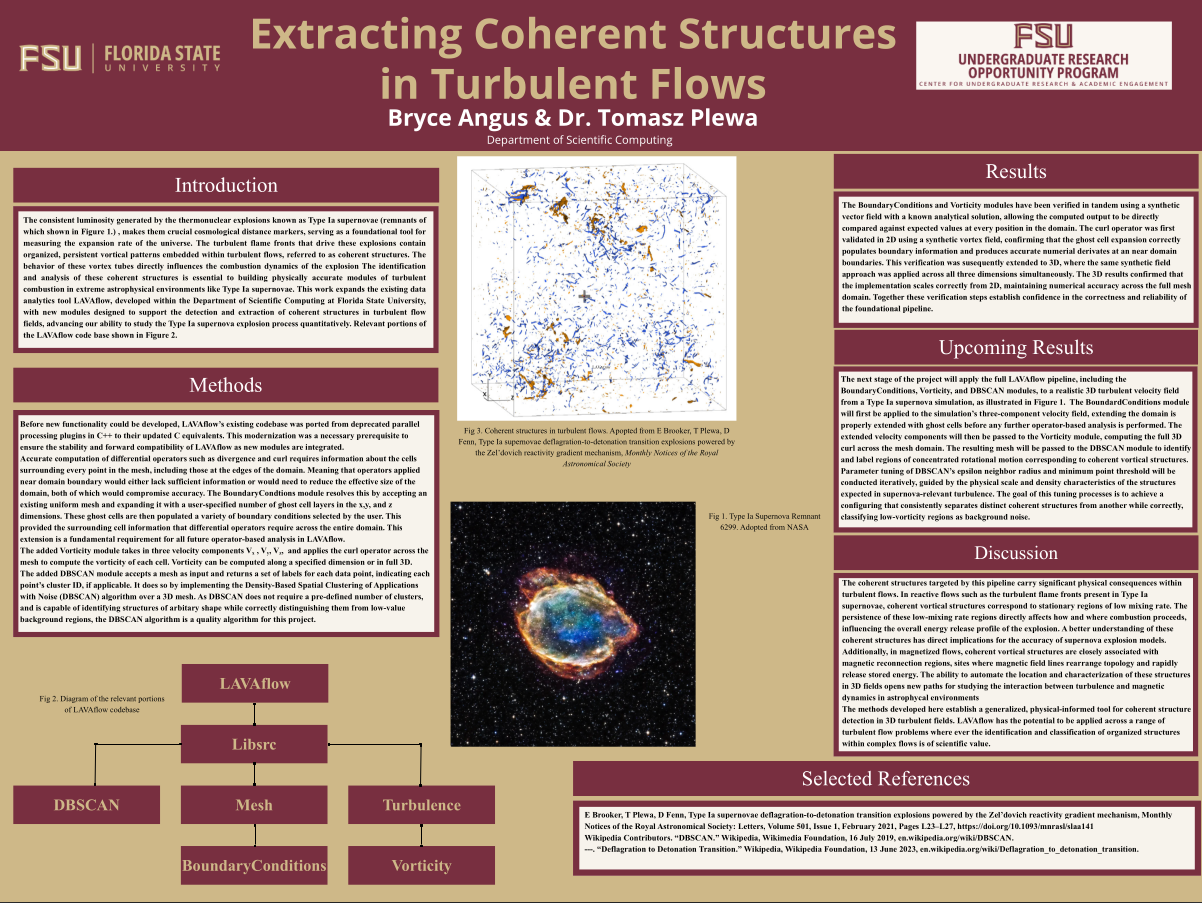
Extracting Coherent Structures in Turbulent Flows
Authors: Bryce Angus, Dr. Tomasz PleawStudent Major: Computer Science
Mentor: Dr. Tomasz Pleaw
Mentor's Department: Scientific Computing Mentor's College: Arts and Sciences Co-Presenters:
Abstract
The study of complex turbulent flow fields, fluid motion demonstrating apparent random changes in pressure and flow velocity, is currently limited by a lack of a gold standard automation of the identification and classification of coherent structures within these flow fields, especially with supernovae relevant velocity fields. Using the density-based spatial clustering of applications with noise (DBSCAN) algorithm, this project aims to develop an automated system for extracting clusters of arbitrary shapes, number of structures, and noise points. By incrementally adding optimizations to the DBSCAN algorithm, we hope to see an increase in the speed and accuracy at which structures are identified. Validation is performed by comparing the algorithm’s outputs to known structural features in the test data set. A proper method of identifying coherent structures in supernovae relevant velocity fields, would enhance the field of astrophysics by allowing for the identification of conditions that facilitate the deflagration-to-detonation transition (DDT).
Keywords: Astrophysics, Flow-Fields, Supernovae, Coherent Structures
26th annual Undergraduate Research Symposium, April 1, 2026
Veronica Zavaleta Poster Session 3: 1:45 pm - 2:45 pm / Poster #157
BIO
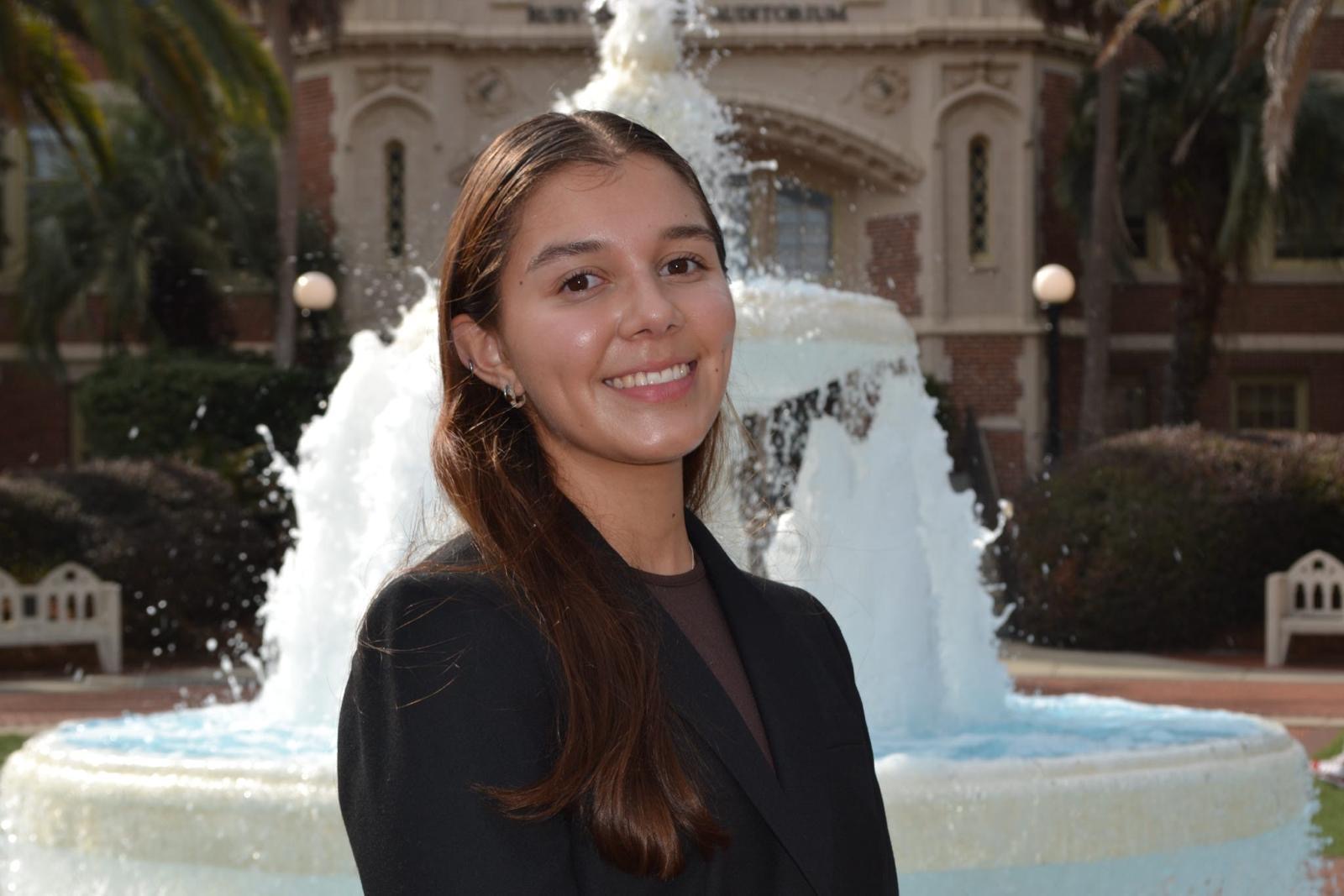
Veronica Zavaleta is a second-year at Florida State University studying Political Science and Economics. She plans to attend law school after completing her bachelor's degrees, but is always eager to learn new topics in a range of fields. Zavaleta became involved in research by wanting to develop her professional skills and challenge her educational limits.
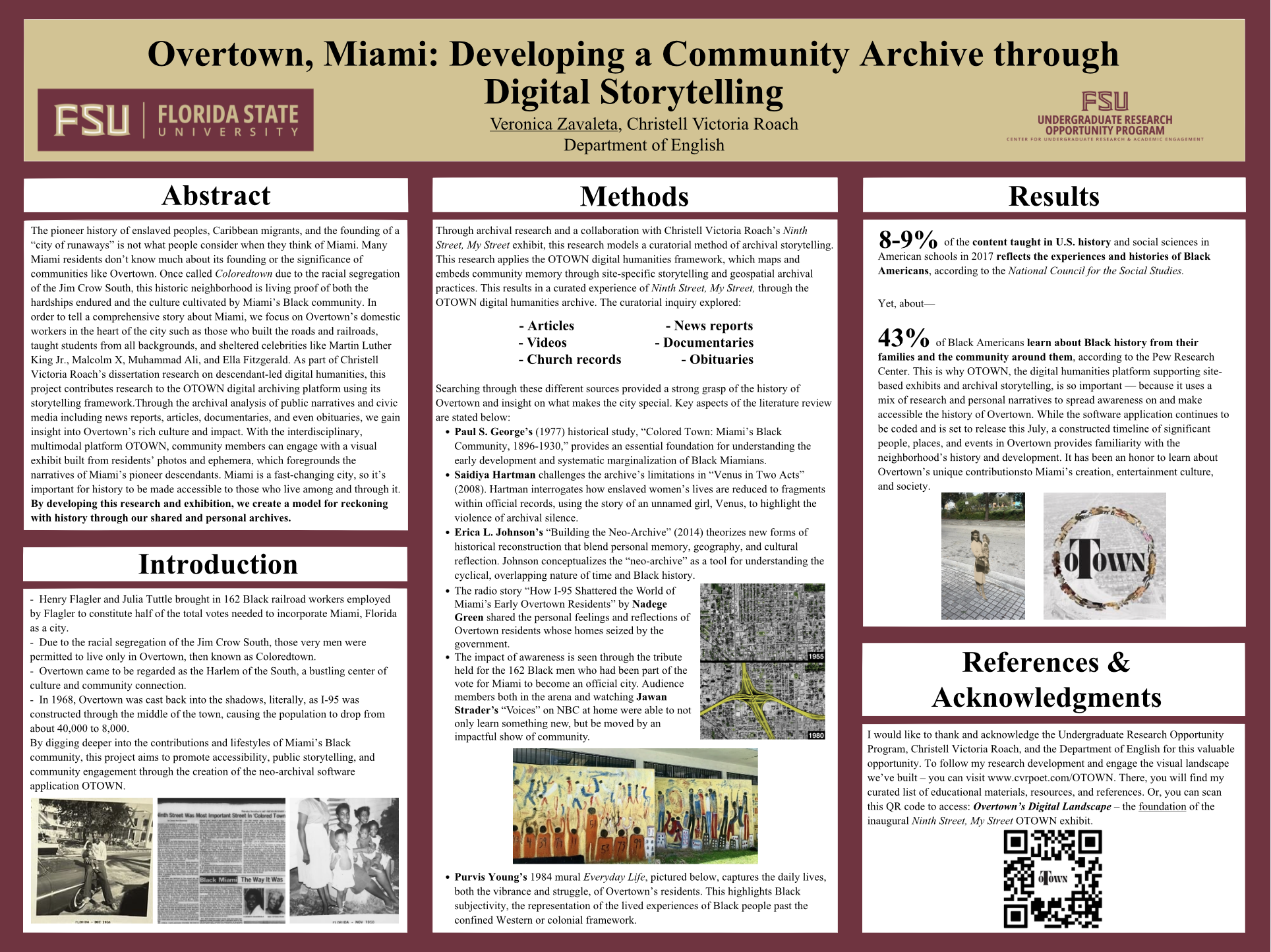
Overtown, Miami: Developing a Community Archive Through Storytelling
Authors: Veronica Zavaleta, Christell Victoria RoachStudent Major: Political Science, Economics
Mentor: Christell Victoria Roach
Mentor's Department: Department of English Mentor's College: College of Arts and Sciences Co-Presenters:
Abstract
The pioneer history of enslaved peoples, Caribbean migrants, and the founding of a “city of runaways” is not what people consider when they think of Miami. Many Miami residents don’t know much about its founding or the significance of communities like Overtown. Once called Coloredtown due to the racial segregation of the Jim Crow South, this historic neighborhood is living proof of both the hardships endured and the culture cultivated by Miami’s Black community. In order to tell a comprehensive story about Miami, we focus on Overtown’s domestic workers in the heart of the city such as those who built the roads and railroads, taught students from all backgrounds, and sheltered celebrities like Martin Luther King Jr., Malcolm X, Muhammad Ali, and Ella Fitzgerald. As part of Christell Victoria Roach’s dissertation research on descendant-led digital humanities, this project contributes research to the OTOWN digital archiving platform using its storytelling framework.Through the archival analysis of public narratives and civic media including news reports, articles, documentaries, and even obituaries, we gain insight into Overtown’s rich culture and impact. With the interdisciplinary, multimodal platform OTOWN, community members can engage with a visual exhibit built from residents’ photos and ephemera, which foregrounds the narratives of Miami’s pioneer descendants. Miami is a fast-changing city, so it’s important for history to be made accessible to those who live among and through it. By developing this research and exhibition, we create a model for reckoning with history through our shared and personal archives.
Keywords: Black History, Community/Communication, Interdisciplinary
26th annual Undergraduate Research Symposium, April 1, 2026
Joshua Stubbs Poster Session 1: 9:30 am - 10:30 am / Poster #133
BIO
A dream will stay a dream if you never take the steps to achieve them. Joshua Stubbs is a real estate student at Florida State University interested in real estate development, strategy, and how cities grow over time. Outside of academics and work, Joshua enjoys wrestling, fitness, cooking, and studying ancient Judaism and early Christian history, which has given Joshua a deeper appreciation for history, culture, and long-term thinking.
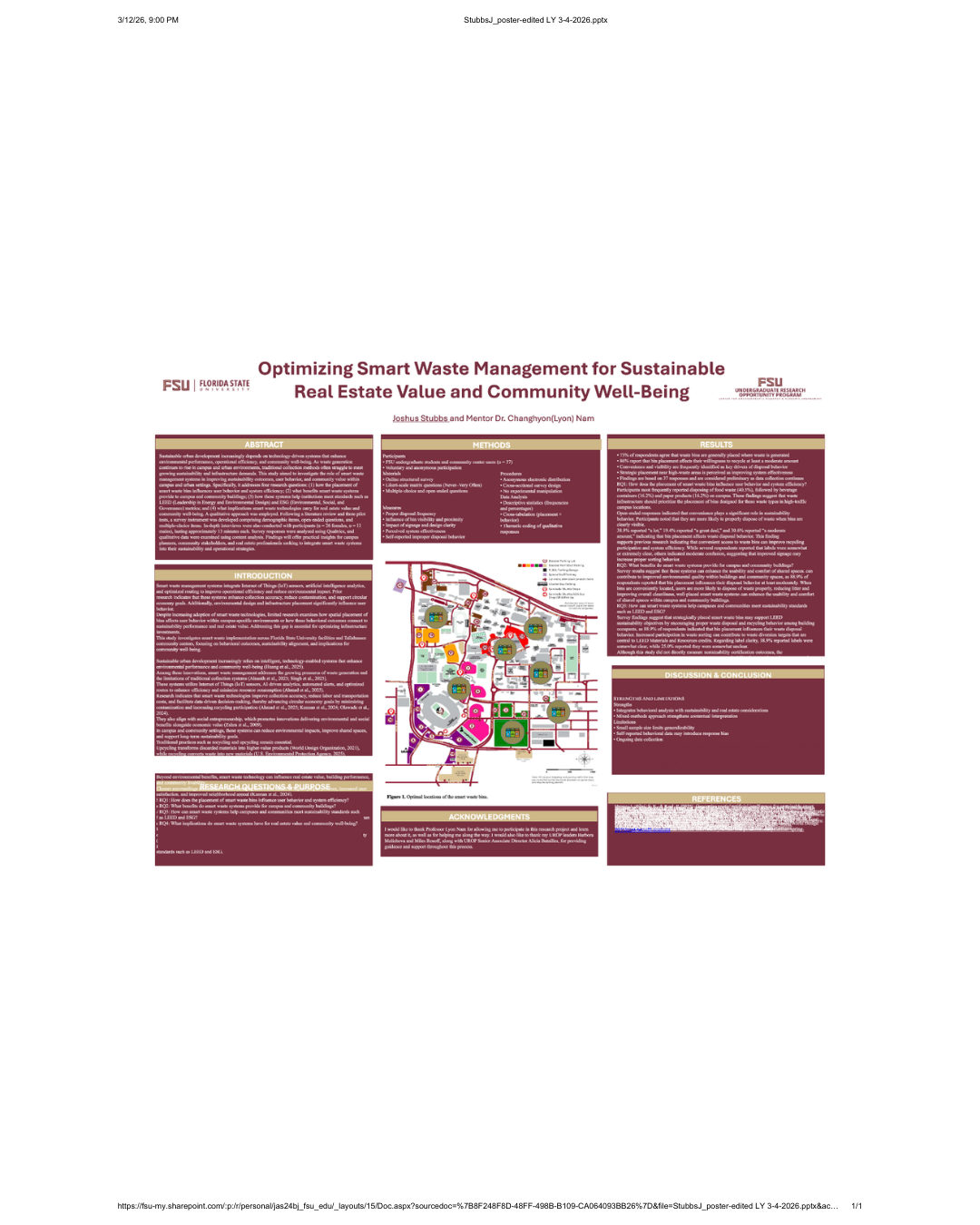
Optimizing Smart Waste Management for Sustainable Real Estate Value and Community Well-Being
Authors: Joshua Stubbs, Changhyun Nam (Lyon)Student Major: Real Estate
Mentor: Changhyun Nam (Lyon)
Mentor's Department: Jim Moran College of Entrepreneurship Mentor's College: College of Information Co-Presenters:
Abstract
Sustainable urban development increasingly depends on technology-driven systems that enhance environmental performance, operational efficiency, and community well-being. As waste generation continues to rise in campus and urban environments, traditional collection methods often struggle to meet growing sustainability and infrastructure demands. This study aimed to investigate the role of smart waste management systems in improving sustainability outcomes, user behavior, and community value within campus and urban settings. Specifically, it addresses four research questions: (1) how the placement of smart waste bins influences user behavior and system efficiency; (2) what benefits smart waste systems provide to campus and community buildings; (3) how these systems help institutions meet standards such as LEED (Leadership in Energy and Environmental Design) and ESG (Environmental, Social, and Governance) metrics; and (4) what implications smart waste technologies carry for real estate value and community well-being. A qualitative approach was employed. Following a literature review and three pilot tests, a survey instrument was developed comprising demographic items, open-ended questions, and multiple-choice items. In-depth interviews were also conducted with participants (n = 26 females, n = 11 males), lasting approximately 13 minutes each. Survey responses were analyzed using Qualtrics, and qualitative data were examined using content analysis. Findings will offer practical insights for campus planners, community stakeholders, and real estate professionals seeking to integrate smart waste systems into their sustainability and operational strategies.
Keywords: Smart Waste Management, Real Estate, Sustainability
26th annual Undergraduate Research Symposium, April 1, 2026
Ryan Jukes Poster Session 2: 10:45 am - 11:45 am / Poster #72
BIO
Ryan Jukes is a first-year electrical engineering student from Goffstown, New Hampshire. Ryan is passionate about mathematics, physics, coding (C++, Java, and Python), and environmental science. Outside of academics, Ryan enjoys fishing, baseball, and exploring the Tallahassee area. Ryan's future career goals are to attend graduate school and work in industry, developing novel materials and systems that prioritize environmental sustainability in manufacturing.
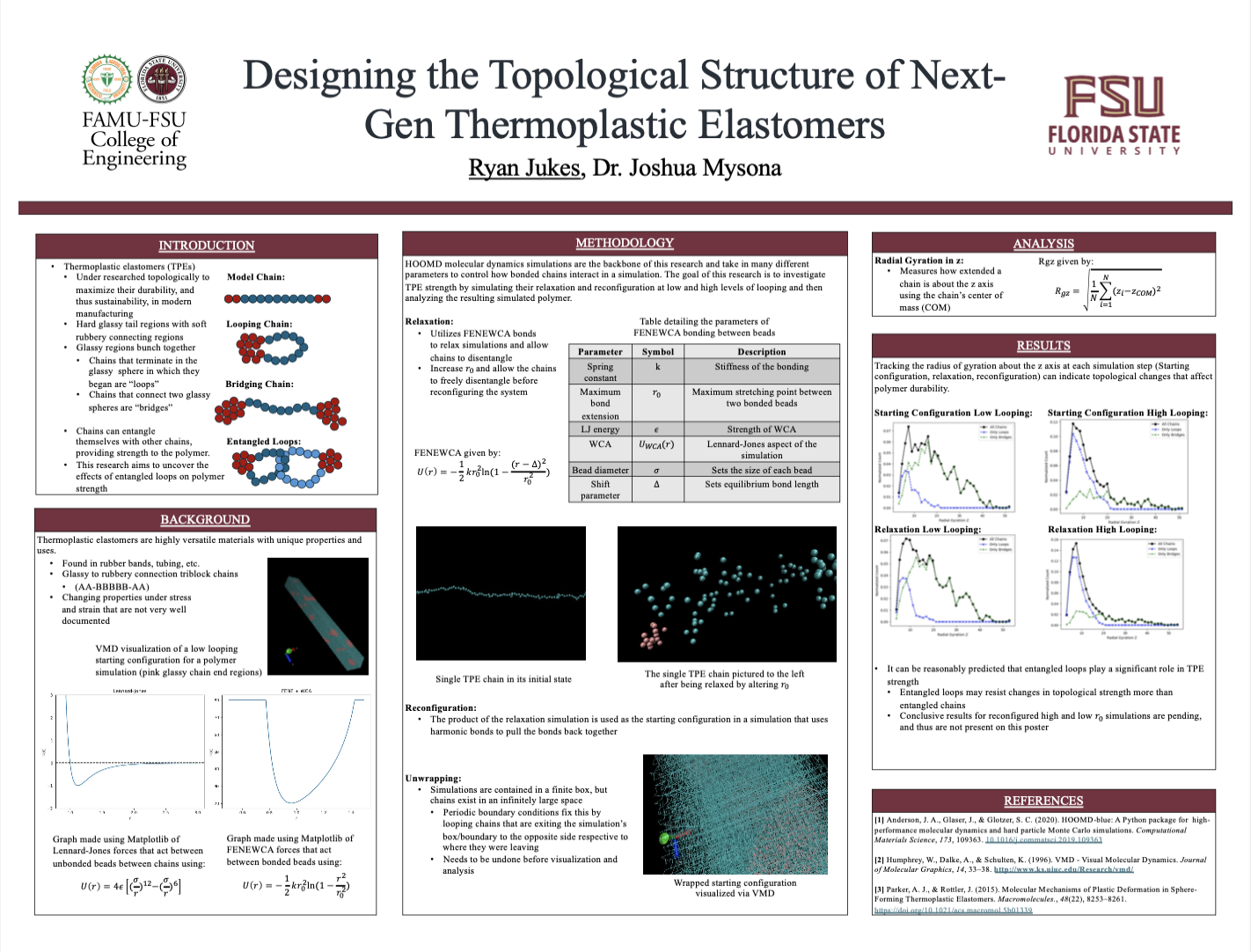
Designing the Topological Structure of Next-Gen Thermoplastic Elastomers
Authors: Ryan Jukes, Dr. Joshua MysonaStudent Major: Electrical Engineering
Mentor: Dr. Joshua Mysona
Mentor's Department: Chemical and Biomedical Engineering Mentor's College: College of Engineering Co-Presenters:
Abstract
Thermoplastic elastomers (TPEs) are used in a number of products due to their combination of both rubber and plastic-like qualities. Given the versatility and utility of TPEs, it is important that the properties of these polymers are studied and optimized for the purpose of increasing their strength and sustainability. TPEs are made up of long monomer (triblock) chains with ends that bunch together and form glassy spheres. Chains that originate at one glassy sphere and terminate at a different glassy sphere are said to "bridge", while chains that terminate in the same sphere from which they originated are said to “loop”. However, the effects of different levels of looping and bridging in TPEs during and after deformation are still somewhat unknown. This research studies the properties of TPEs with molecular dynamics simulations to determine how the extent of bridging and looping alters material durability. Some research suggests that overall polymer strength is dependent upon the fraction of bridges present in simulations. This project suggests that looping plays more of a role in TPE strength than was previously considered through analysis of the radius of gyration of polymer chains, tracking bond and chain lengths, and chain visualization using Visual Molecular Dynamics (VMD) of relaxed and reconfigured molecular simulations containing varied levels of looping. These findings may have implications for the future of TPE production, emphasizing durability and thus sustainability in manufacturing thermoplastic elastomers.
Keywords: Python, Simulation, Polymers, Materials science