
Research Symposium
26th annual Undergraduate Research Symposium, April 1, 2026
Rohan Sikka Poster Session 1: 9:30 am - 10:30 am / Poster #275
BIO
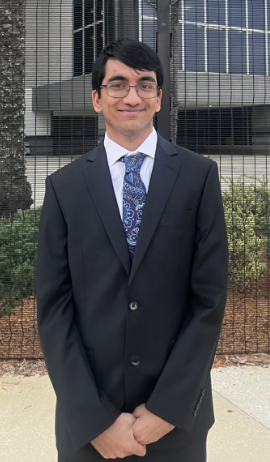
Rohan Sikka is a second-year Psychology major and Sociology minor. While born in St. Louis, Missouri, Rohan spent most of his life in Jacksonville, Florida. He is interested in pursuing a career in either child therapy or school therapy, specializing in services for neurodivergent children. Rohan is currently studying discrimination and religious coping behaviors under his UROP mentor, Jacob Perez. In addition, Rohan is also a member of Florida State University's Psi Chi Psychology Honor Society.
Outside of school, Rohan has served as an officer for Florida State University's chapter of Neurounity Alliance Society for over a year, advocating for the wellbeing of neurodivergent students on campus. He has a deep love for history and film, both of which he attributes to his passion for education. Once he finishes his Bachelor of Science in Psychology, Rohan plans to pursue a Doctorate in Psychology for clinical therapy.
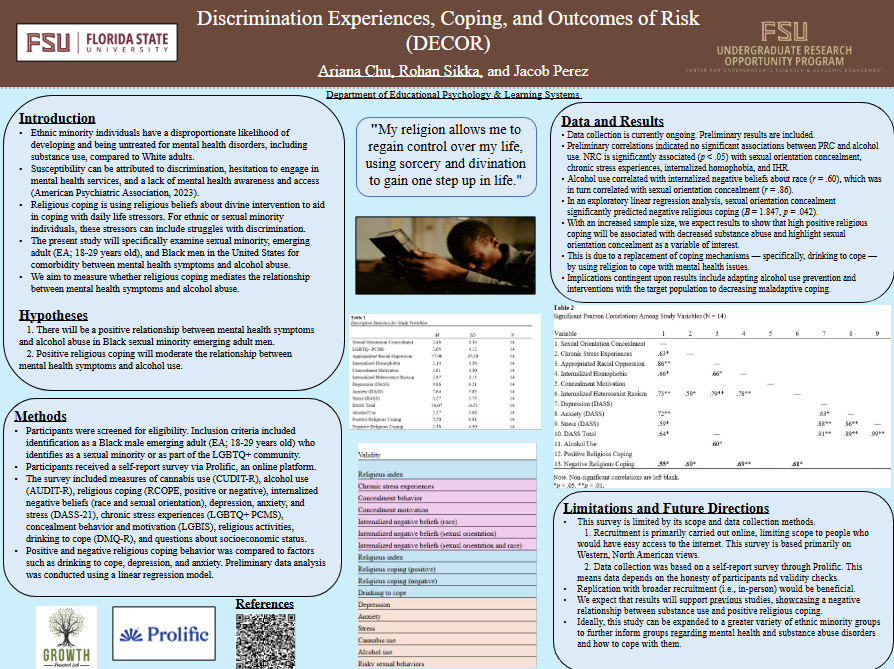
Discrimination Experiences, Coping, and Outcomes of Risk (DECOR)
Authors: Rohan Sikka, Jacob PerezStudent Major: Psychology
Mentor: Jacob Perez
Mentor's Department: Counseling and School Psychology Mentor's College: Psychology Co-Presenters: Ariana Chu
Abstract
Minority populations are prone to experiences of chronic stress that contribute to mental health symptoms and substance abuse. Positive religious coping (PRC), or the use of spiritual beliefs and practices to foster hope, has shown to protect against chronic stress and merits further investigation among minority groups. Therefore, the aim of this cross-sectional research is to determine the relationships between internalizing mental health symptoms — namely depression, anxiety, stress — and alcohol use and whether these relationships may be moderated by PRC. This is being investigated to inform future research on prevention and intervention for these minority populations. This is relevant to the population of interest, as minority populations tend to have less research targeted at their health disparities. Prolific, an online survey recruitment tool, was used to increase the generalizability of the study. Eligible participants will receive a link to the survey consisting of measures of chronic stress experience, religious activities, religious coping, substance use, and mental health symptoms. Participants include Black emerging adult (18-29) men who identified as a sexual minority. Data collection is ongoing and expected to be completed in March 2026. It is expected that PRC will significantly moderate the effects of depression, anxiety, and stress on alcohol use, such that PRC weakens the associations between internalizing mental health symptoms and alcohol use. Results will inform targets for alcohol use prevention and intervention programs among intersectional groups, like gay and bisexual Black men, who experience conflicting messages about the role of religious coping in their communities.
Keywords: psychology, substance abuse, minority, religion
26th annual Undergraduate Research Symposium, April 1, 2026
Charlie Clark Poster Session 1: 9:30 am - 10:30 am / Poster #63
BIO
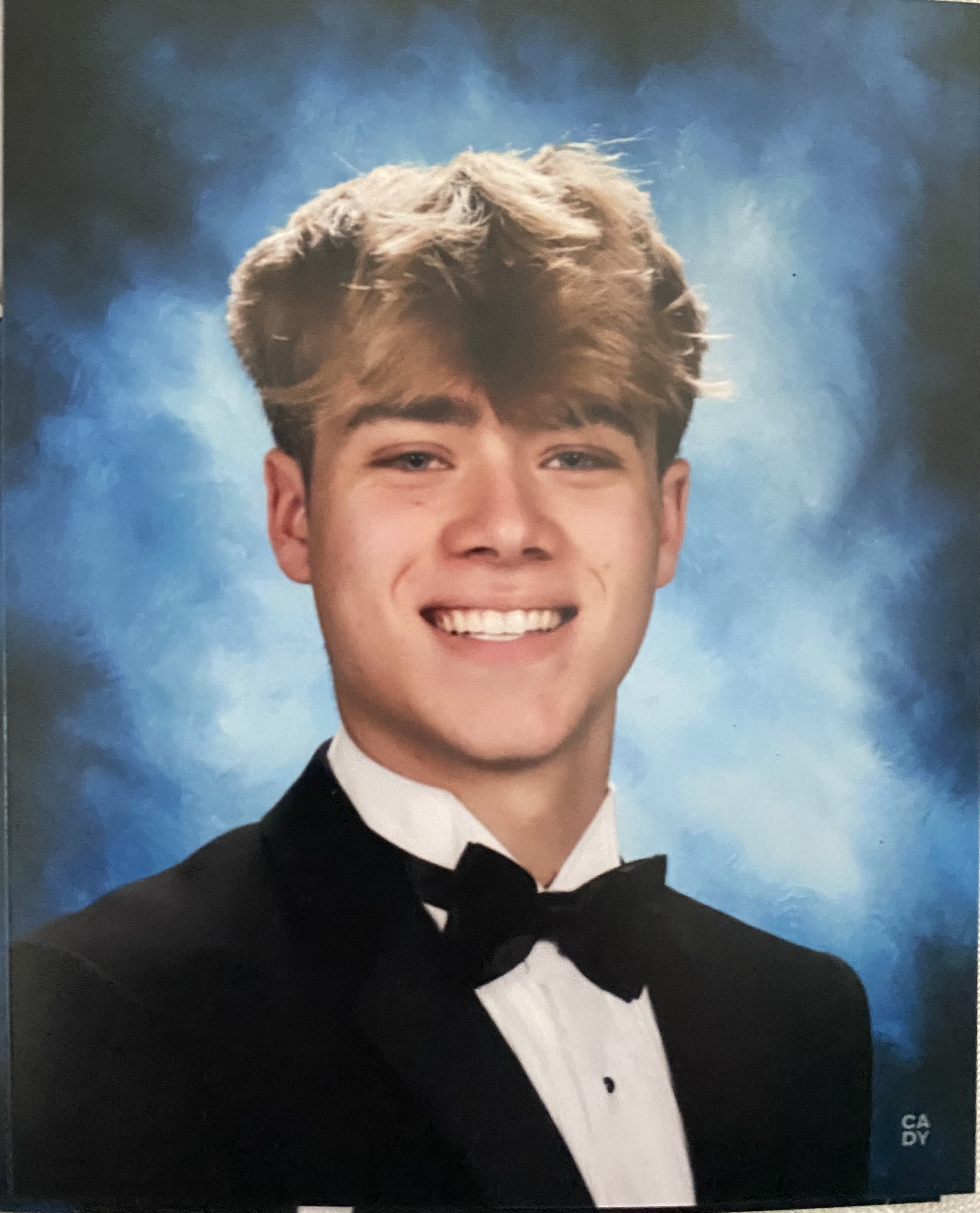
Charlie Clark is a pre-law sophomore at Florida State University pursuing a Bachelor of Science in Biochemistry. His academic interests focus on the intersection of science and public policy. Charlie is particularly interested in how scientific discoveries can inform legal frameworks and public decision-making. On campus, Charlie is involved in the Honors program, undergraduate mock trial program, and moderates at FSU organization which intersect ethics, science, and research. He aims to apply these experiences to a future career as a patent litigator.
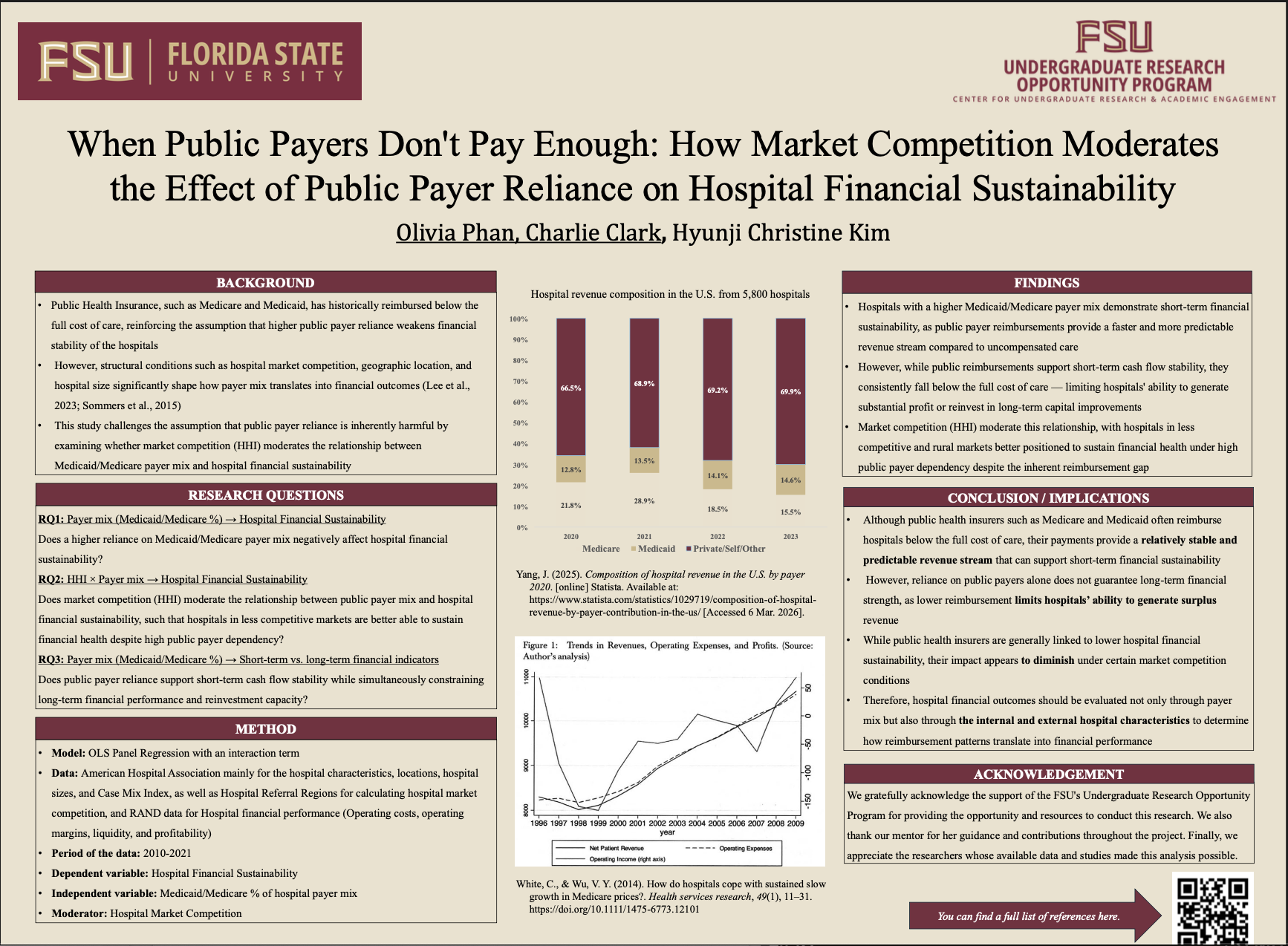
When Public Payers Don't Pay Enough: How Market Competition Moderates the Effect of Public Payer Reliance on Hospital Financial Sustainability
Authors: Charlie Clark, Hyunji Christine KimStudent Major: Biochemistry
Mentor: Hyunji Christine Kim
Mentor's Department: Public Administration Mentor's College: College of Social Sciences and Public Policy Co-Presenters: Olivia Phan
Abstract
This study examines whether hospitals can financially benefit from a greater reliance on public insurance programs, specifically Medicaid and Medicare, by analyzing how the relationship between the proportion of Medicaid/Medicare reimbursement and hospital financial sustainability varies under different structural conditions. The independent variable is the Medicaid/Medicare payer mix, measured as the percentage of total revenue or discharges from these public insurers, and the dependent variable is hospital financial sustainability, captured through metrics such as operating margin, net income, or days cash on hand. Two key contextual moderators are considered: market competition, assessed using the Herfindahl-Hirschman Index (HHI), and geographic location, categorized as urban or rural. The first hypothesis (H1) examines whether a higher Medicaid/Medicare payer mix is positively associated with hospital financial sustainability. Building on this, H2a proposes that this positive association is stronger in markets with lower competition, while H2b suggests the relationship is more favorable for hospitals located in rural areas. By testing these interactions through a moderated regression model, the study challenges the prevailing view that public payer reliance undermines financial health and instead argues that, under the right structural conditions, hospitals can strategically benefit from serving more publicly insured patients—providing important insights for health system leaders and policymakers seeking sustainable and equitable healthcare delivery models.
Keywords: Economics, Healthcare, Medicaid
26th annual Undergraduate Research Symposium, April 1, 2026
Auva Farahani Poster Session 1: 9:30 am - 10:30 am / Poster #29
BIO
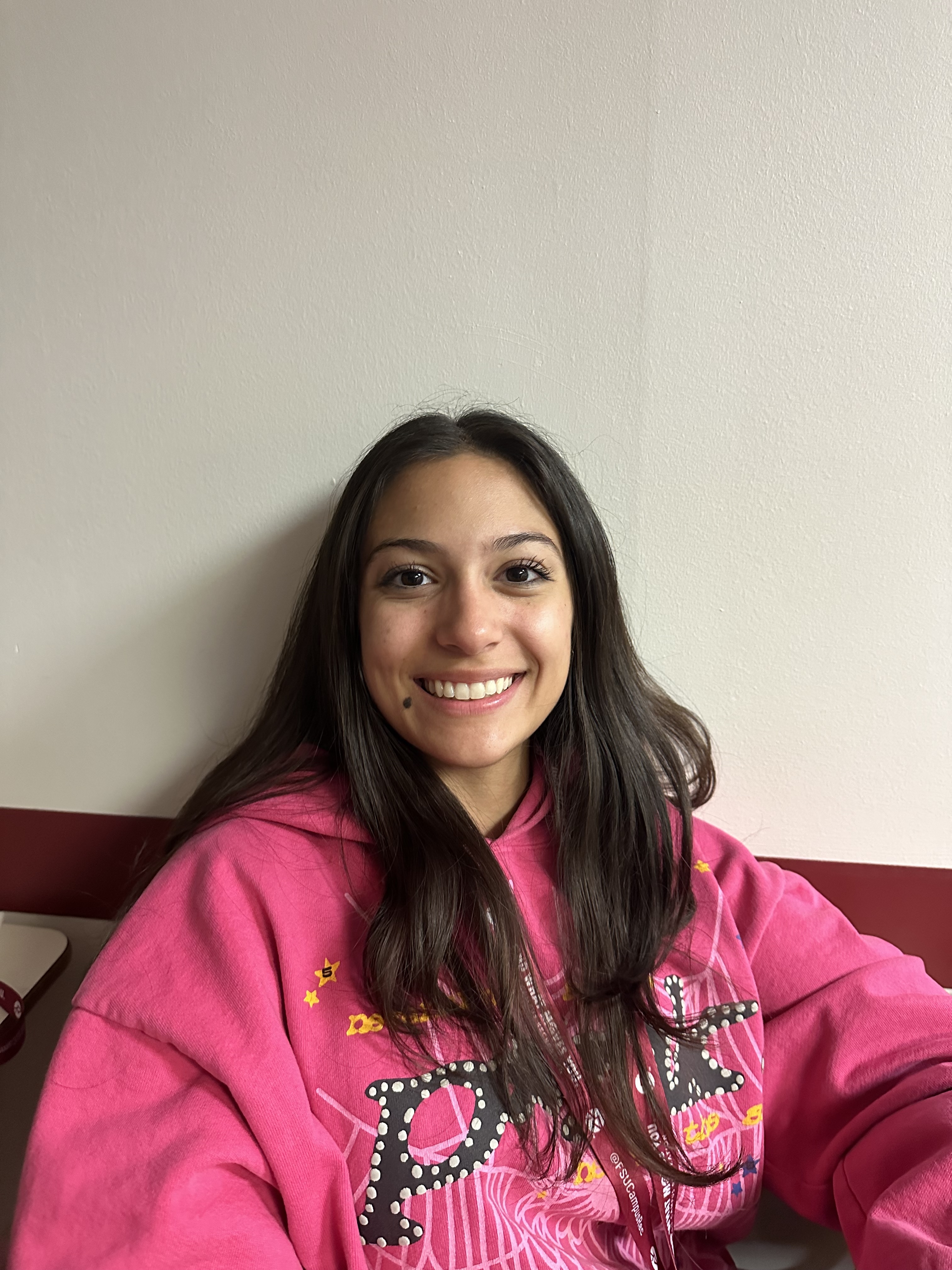
Auva is a Sophomore Behavioral Neuroscience Major at FSU hoping to graduate in Spring 2028. She hopes to pursue medicine and excel in the medical field as a dermatologist. Auva is from Orlando, Florida. She is very passionate about psychology and is working on pursuing more research in psychology.
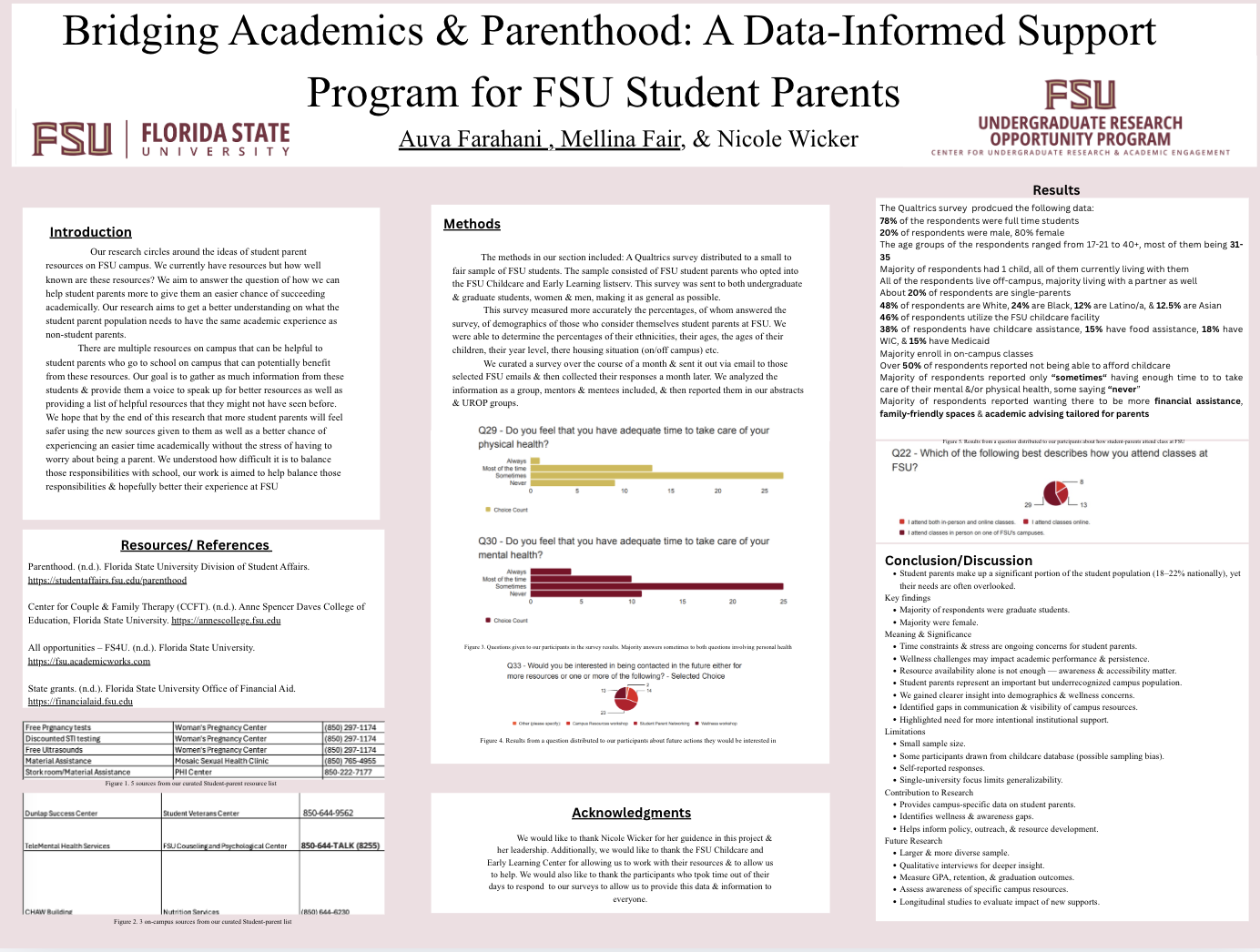
Bridging Academics & Parenthood: A Data-Informed Support Program for FSU Student Parents
Authors: Auva Farahani, Nicole WhickerStudent Major: Behavioral Neuroscience
Mentor: Nicole Whicker
Mentor's Department: Administration and Services Mentor's College: Childcare and Early Learning Program Co-Presenters:
Abstract
My research question revolves around the idea of whether student parents, on FSU
campus, have all the resources they need to succeed and have an equal opportunity as
every other student. My mentor, my partner, and I came up with a series of
questions to put into a survey to send out to over 300 individuals who have recently signed
up for any childcare resource on campus. These questions include such as what year they
are, how many children they have, and if they have used any childcare resources on
campus. Our goal for this survey is to obtain important information that can help us come
up with a plan of action to bring to FSU’s attention that these students need more
resources. Our research team also came up with a google spreadsheet of resources that
are not as well known that can be useful for student parents. We provided their number,
location, and what service they can provide for student parents. We did not get as many
expected results back so we are doing another round of surveys to more individuals to
hopefully get more responses. Our data shows that student parents are more likely to be
grad students with children under the age of 10 who are using some sort of childcare
assistance whether it is food stamps or daycare. The significance of our
project is to bring light to the large population of student parents and make FSU a more
successful and adoptable college for student parents.
Keywords: Child care, Student Parents
26th annual Undergraduate Research Symposium, April 1, 2026
Sarah Padron Poster Session 4: 3:00 pm - 4:00 pm / Poster #216
BIO
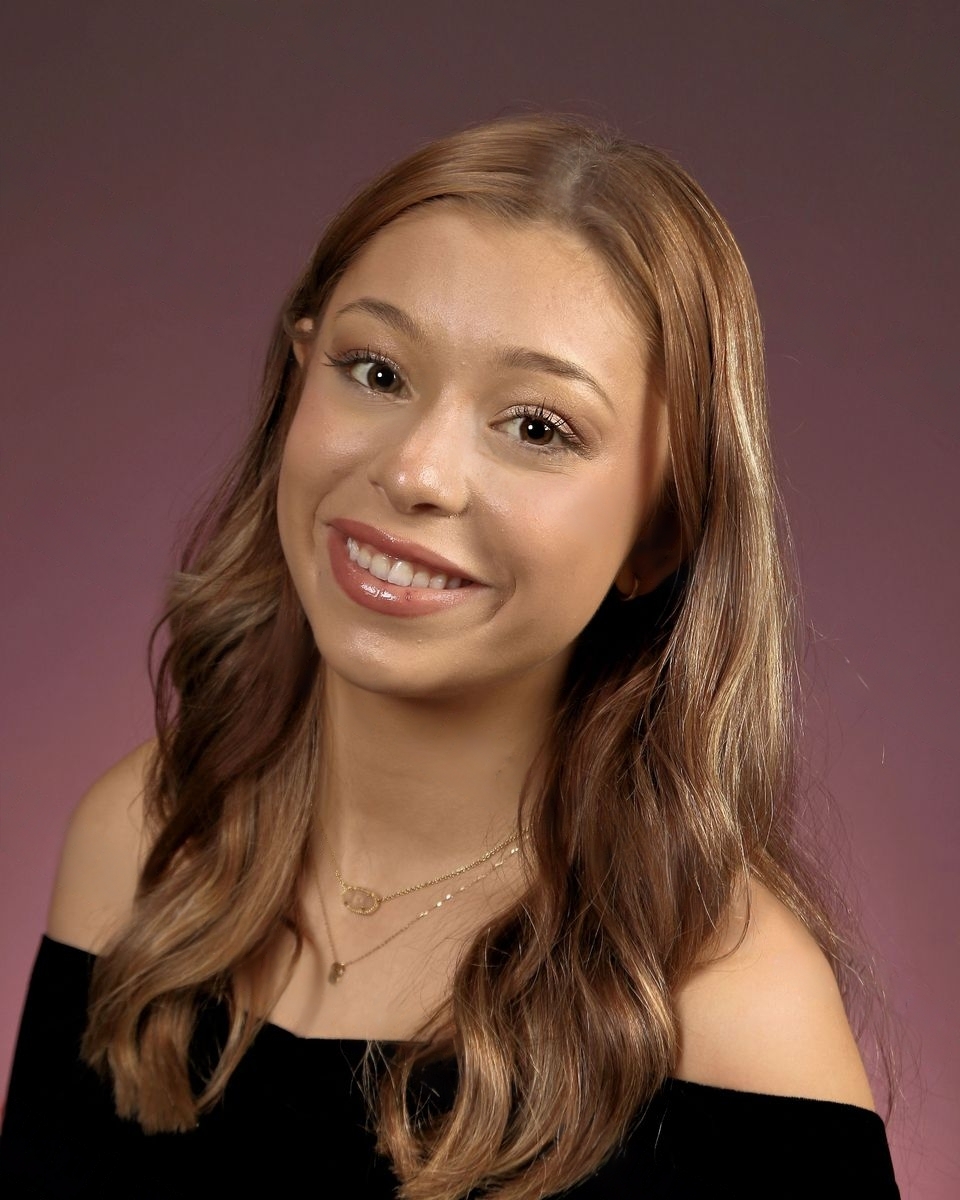
Sarah Padron is a second-year student at Florida State University pursuing a Bachelor of Science in Communication Sciences and Disorders, with a minor in Psychology. She has earned a place on the Dean’s List in 2024 and 2025. Sarah works as a Research Assistant in the March Lab through the Undergraduate Research Opportunity Program, where she assists with experimental procedures, data collection, and literature reviews. In addition to research, Sarah has experience tutoring students and volunteering with organizations that support community advocacy and students with disabilities.
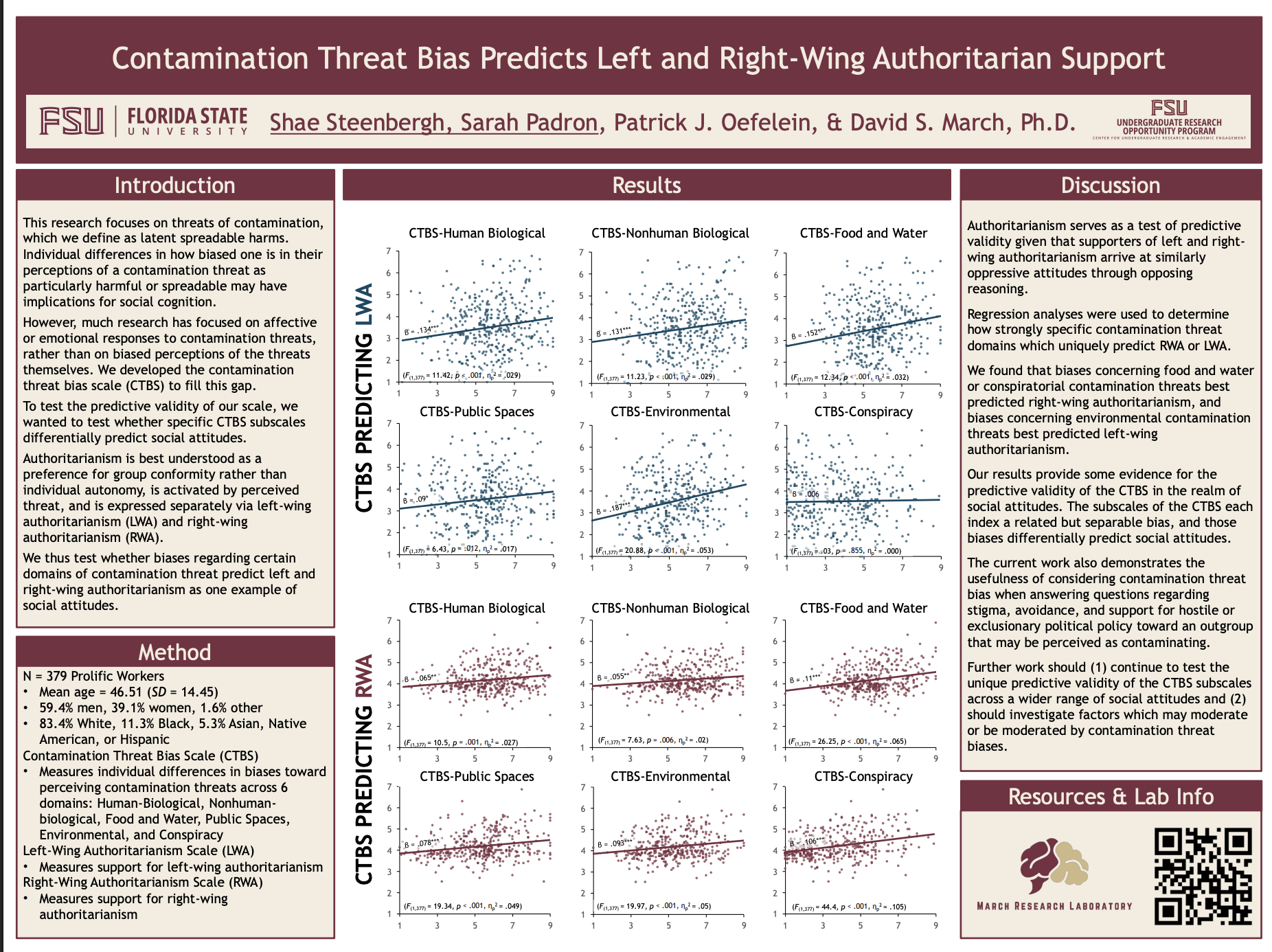
Contamination Threat Bias Predicts Left and Right-Wing Authoritarian Support
Authors: Sarah Padron, Dr. David MarchStudent Major: Communication Sciences and Disorders
Mentor: Dr. David March
Mentor's Department: Psychology Mentor's College: Arts and Sciences Co-Presenters: Shae Steenbergh
Abstract
This research focuses on threats of contamination, which we define as latent spreadable harms. Individual differences in how biased one is in their perceptions of a contamination threat as particularly harmful or spreadable may have social cognitive implications. However, much research has focused on sensitivity to disgust, one emotional response to contamination threats, rather than on biased perceptions of the threats themselves. We thus developed the contamination threat bias scale (CTBS) to fill this gap. To test the predictive validity of our scale, we tested whether specific subscales can predict authoritarian support. Authoritarianism is best understood as a motivation for group conformity rather than individual autonomy, is activated by perceived threat, and is expressed separately via left-wing authoritarianism (LWA) and right-wing authoritarianism (RWA). We test whether biases regarding certain domains of contamination threat predict authoritarianism as a measure of social cognitive attitudes. Data were collected online through Prolific from a sample representative of the U.S. population on basic demographics. Participants rated how harmful and spreadable they believed different contamination sources were, including human biological, nonhuman biological, food and water, environmental, and public-space contaminants. These responses were used to predict support for RWA and LWA. We found that when controlling for every other subscale, food and water contaminants most strongly predict RWA, whereas environmental contaminants most strongly predict LWA. The findings show individual biases in contamination threat perception have social cognitive consequences, and thus the CTBS has useful applications in social cognitive research more generally.
Keywords: threat bias, social cognition, individual differences, pathogens, contamination
26th annual Undergraduate Research Symposium, April 1, 2026
Anthony Pham Poster Session 4: 3:00 pm - 4:00 pm / Poster #254
BIO
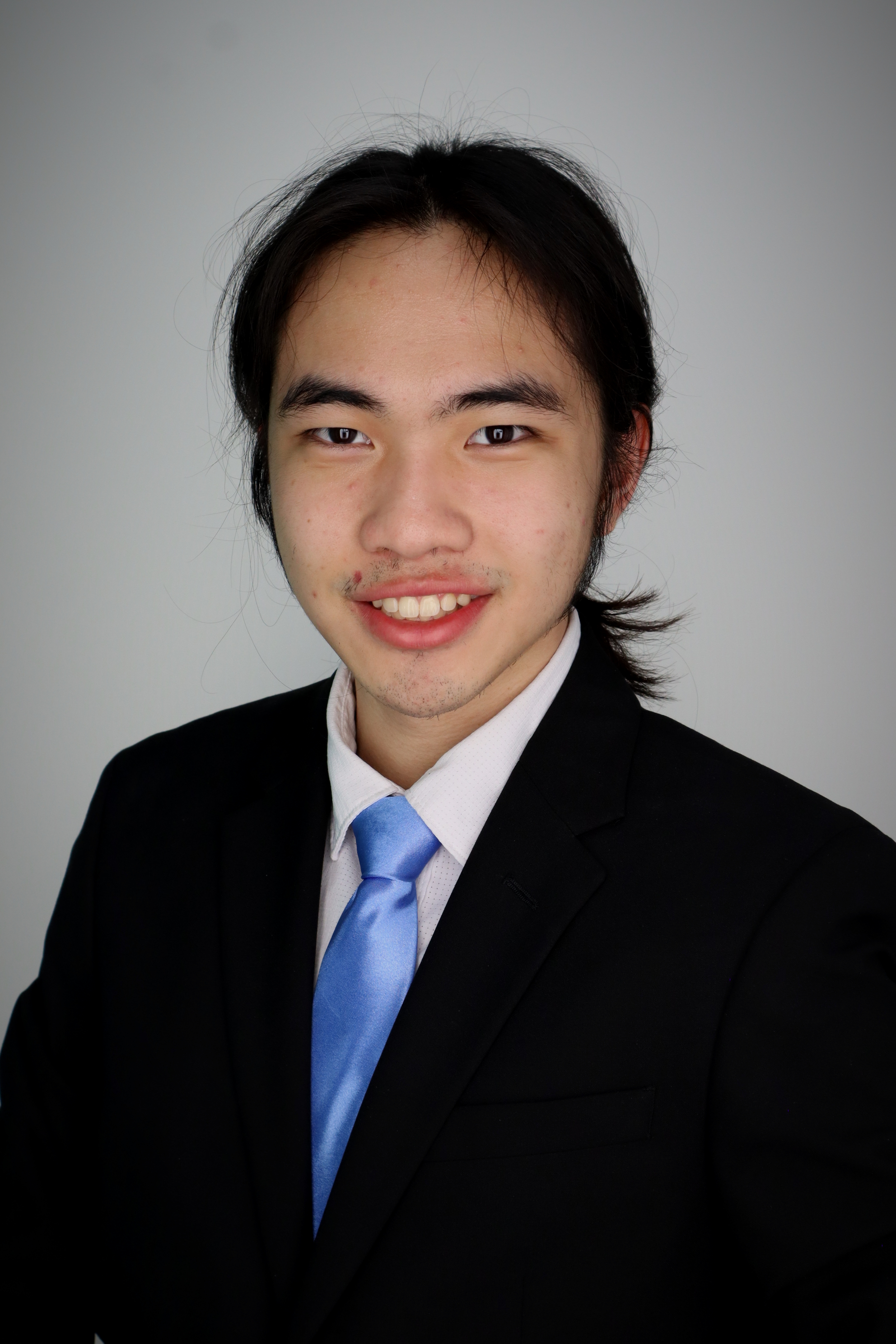
Anthony Pham is a sophomore seeking a Bachelor of Science in Chemical Engineering. He began working with graduate student and mentor Santiago Lazarte in the fall of 2025, investigating the tribological properties of diamond-like carbons (DLCs). In the future, he is seeking to gain exposure to a variety of engineering disciplines as he progresses through his academic career, and is particularly interested in applications of organic chemistry. After graduating, he intends to transition to industry and manufacturing.
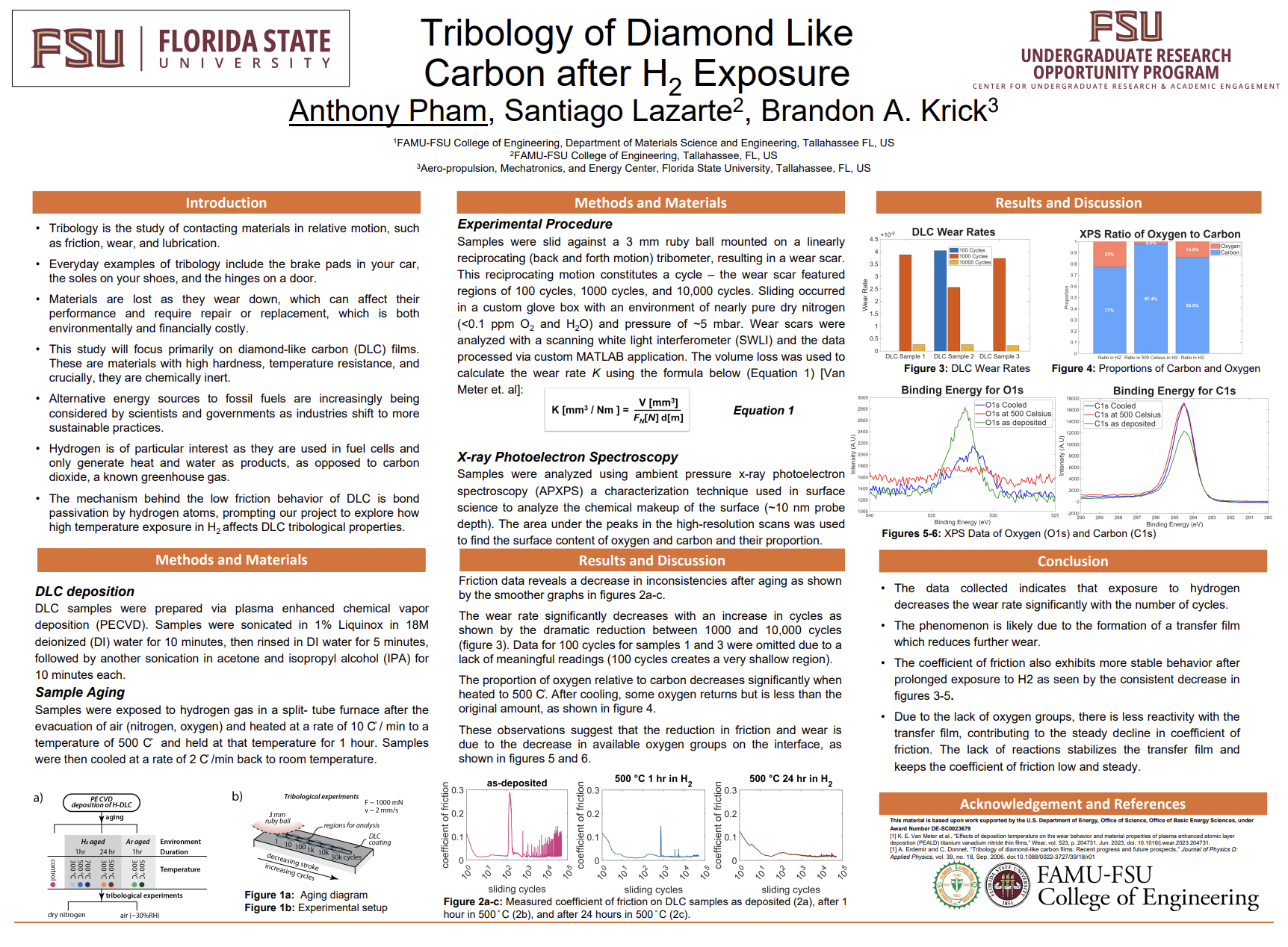
Tribology of Diamond Like Carbon after H2 Exposure
Authors: Anthony Pham, Santiago LazarteStudent Major: Chemical Engineering
Mentor: Santiago Lazarte
Mentor's Department: Materials Science and Engineering Mentor's College: College of Engineering Co-Presenters:
Abstract
The tribology of diamond-like carbons (DLCs) is a field of study of increasing interest due to their chemical properties consisting of remarkably low coefficient of friction, reduced wear rate, and chemical inertness. These materials therefore wield a significant advantage in manufacturing and aerospace applications. This is occurring at the same time as increasing interest in alternative energy sources, such as hydrogen cells. This study explores how hydrogen interactions with DLC films alter their tribological properties, namely wear rate. Films were prepared via plasma-enhanced chemical vapor deposition (PECVD) and were exposed to pure hydrogen gas in an hydrogen furnace at 1 atmosphere and 500 °C. The samples were then slid against a ruby ball in a linear reciprocating tribometer in a pure nitrogen glove box (~5 mbar) at room temperature, creating a wear scar with regions of 100, 1000, and 10000 cycles. Scanning white light interferometer (SWLI) scans indicated that the wear rate decreased significantly with the increase in cycles, and ambient pressure x-ray photoelectron spectroscopy (AP-XPS) revealed the surface composition of the samples contained decreased proportions of oxygen groups. The decrease in wear rate is likely due to higher stability of the transfer film on the surface and the removal of surface oxygen groups, which may react with the transfer film and increase the friction and wear rates. These findings suggest wear rates and friction of DLC films can be improved by hydrogen aging at high temperatures.
Keywords: Tribology, Friction, Materials, Wear
26th annual Undergraduate Research Symposium, April 1, 2026
Charalampos Archavlis Poster Session 3: 1:45 pm - 2:45 pm / Poster #79
BIO
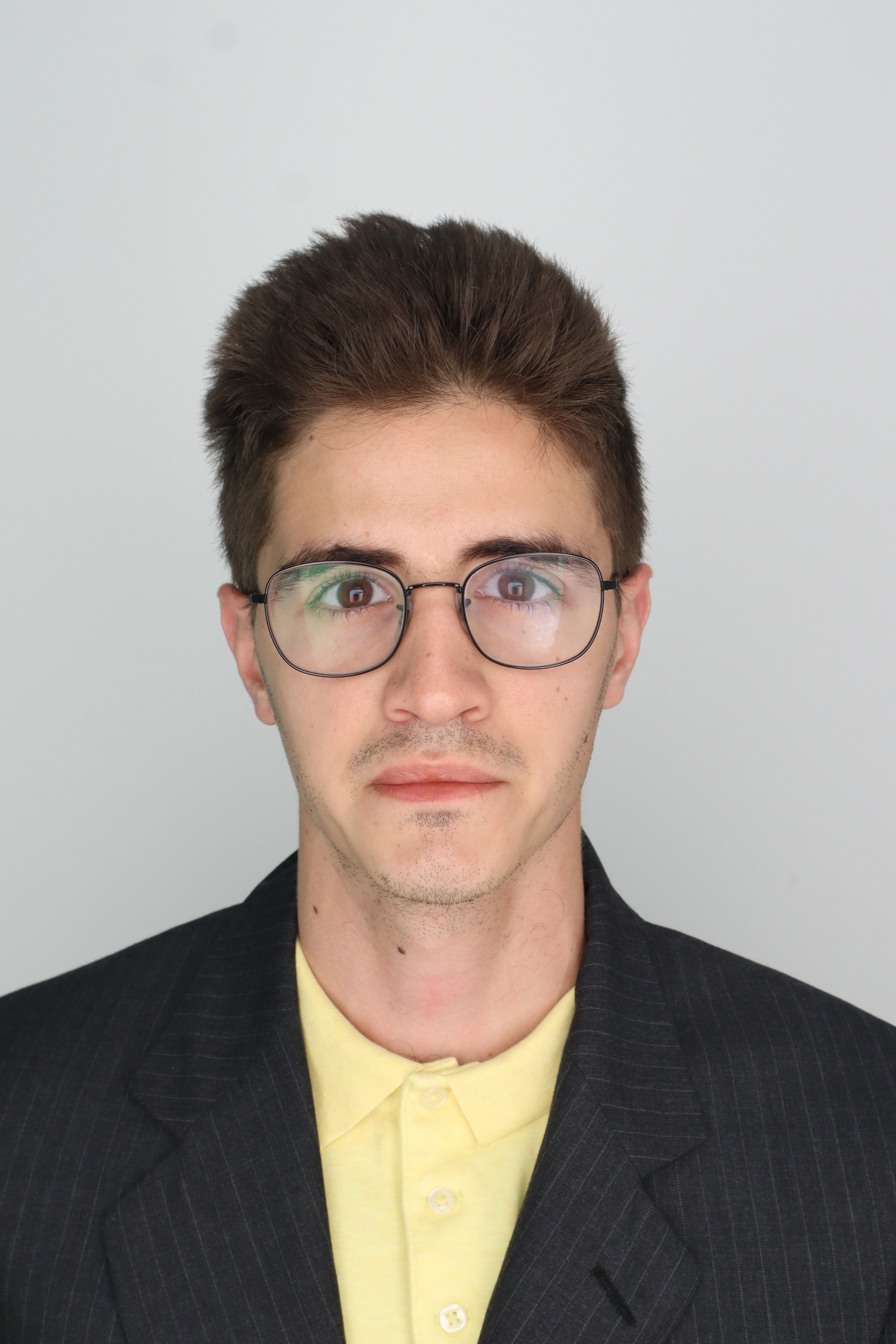
Charalampos (Harry) Archavlis is a senior undergraduate student at Florida State University, majoring in criminology while pursuing a minor in psychology. With an Associate of Arts degree in criminal justice, he has broad academic interests beyond his major and minor. He has a strong interest in history, especially European history, because he believes it is crucial to uncover the mysteries of the past. In his first-ever research project, he investigated political violence and repression in early 19th-century Germany during the post-Napoleonic era. He and his group members, along with his mentor Dr. George Williamson, worked on a project about the root causes behind the assassination of conservative playwright August von Kotzebue. This study examines, through archival work, how Kotzebue's assassination was used as a pretext for the crackdown and censorship of political dissident student organizations in universities in the German Confederation. After graduating and obtaining his Bachelor of Science, Harry plans to pursue his Master of Science in criminology, start his career in investigative and law enforcement work, and later become a detective. In the summer of 2026, he will start his internship at the Seminole County Sheriff’s Office to gain experience in his field. His accomplishments include his science fiction book, which he worked on for years before its publication.
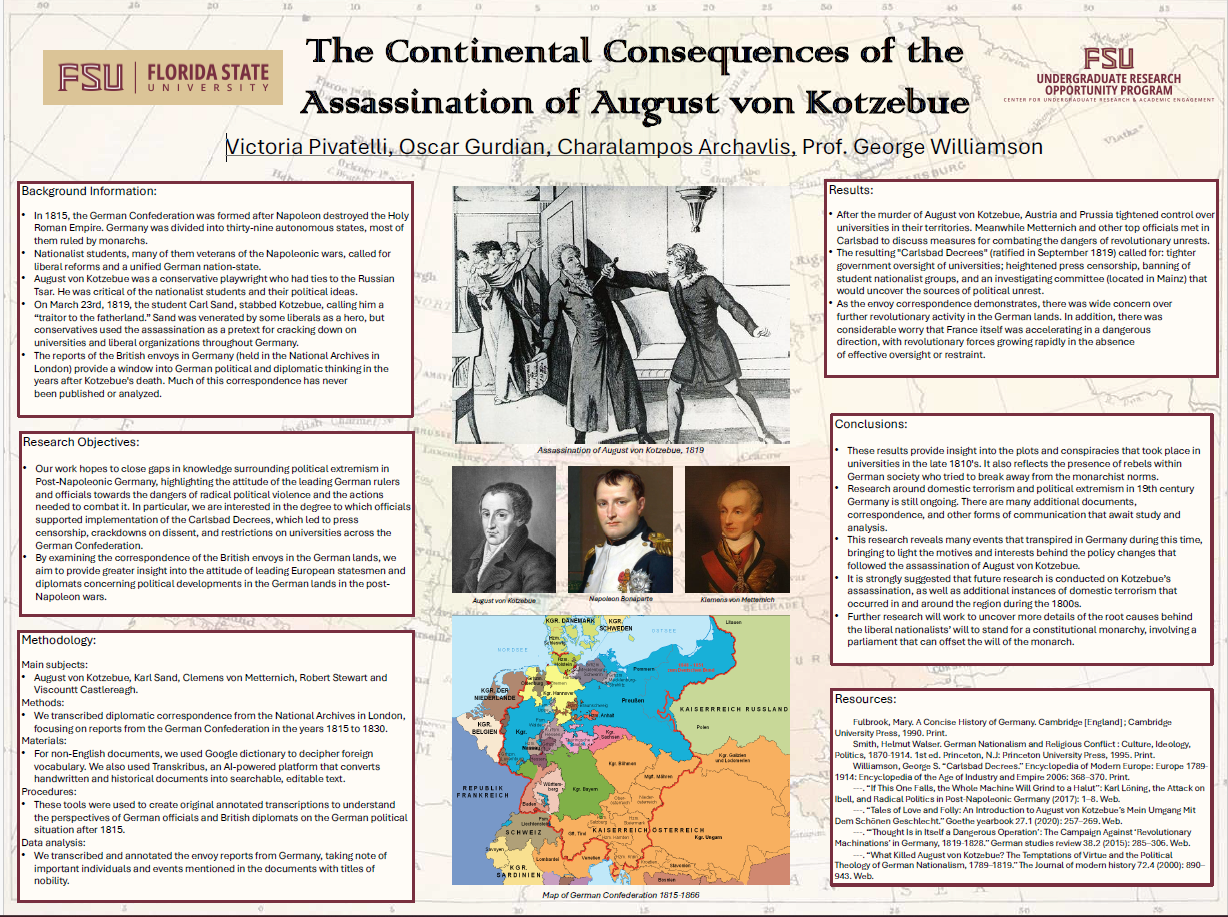
The Continental Consequences of the Assassination of August von Kotzebue
Authors: Charalampos Archavlis, George WilliamsonStudent Major: Criminology
Mentor: George Williamson
Mentor's Department: History Mentor's College: Florida State University Co-Presenters:
Abstract
On March 23, 1819, August von Kotzebue, a German playwright famous across Europe for his conservative commentaries on culture, was assassinated by University of Jena student Karl Sand. This assassination reflected the deep rivalry between conservative royalists and liberal nationalists, where the European ruling class feared a rise in revolutionary anti-monarchist thought after Napoleon’s rampage across Europe. Our research focuses on the extent to which this event was used to justify silencing dissent, censoring the press, and restricting academia across the German Confederation. Our team analyzed, transcribed, annotated, and translated archived materials from English and French diplomatic envoys. To transcribe and translate, we adjusted image exposure and brightness and used Google dictionary to decipher French and English text. The main topic discussed was the tense situations in universities where political fraternity groups hostile to monarchies were organizing. Our research suggests that many German students sought a united German state, which they operated clandestinely in universities to oppose the monarchies. Although authorities believed few students adhered to these radical revolutionary ideas, they still proposed extensive restrictions on universities through the Carlsbad Decrees. The study of government responses to political violence is important to the stability of our political systems, as the potential for the exploitation of chaos threatens the permanent regression of civil liberties.
Keywords: Kotzebue, August, Continental, Germany
26th annual Undergraduate Research Symposium, April 1, 2026
Sophia Ocfemia Poster Session 3: 1:45 pm - 2:45 pm / Poster #1
BIO
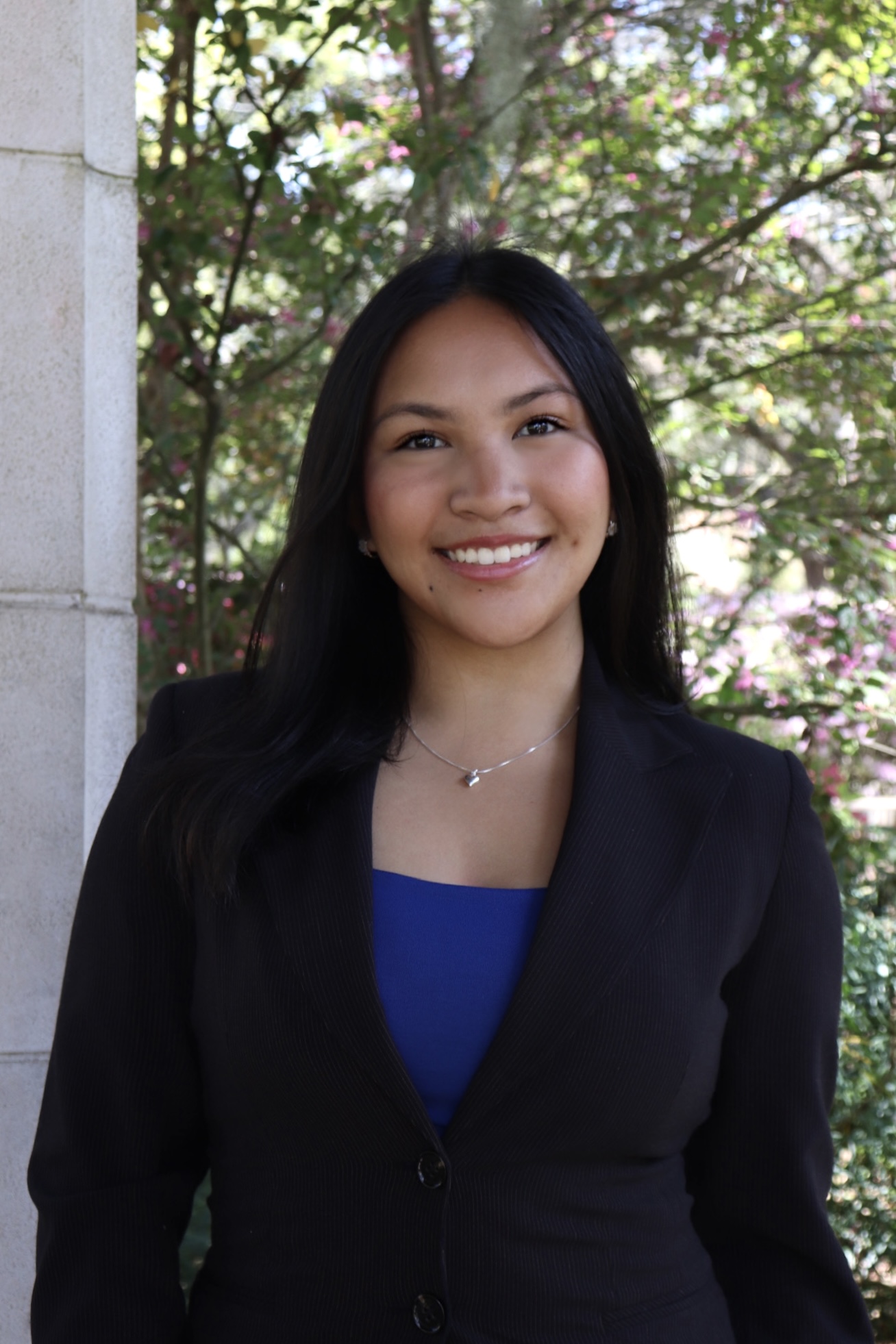
Sophia Ocfemia is a freshman from Atlanta, GA, pursuing a Bachelor of Music in Music Theatre. She is honored to be a member of FSU’s Honors Program and Presidential Scholar Program, and this is her first time participating in the Undergraduate Research Symposium. She is interested in doing more research that focuses on music cognition and brain development in children. She aspires to be a Broadway performer while also exploring interdisciplinary opportunities to apply her knowledge of music to improve mental health. She is also passionate about working with children in hospital settings and using the power of the arts to support healing, comfort, and resilience.
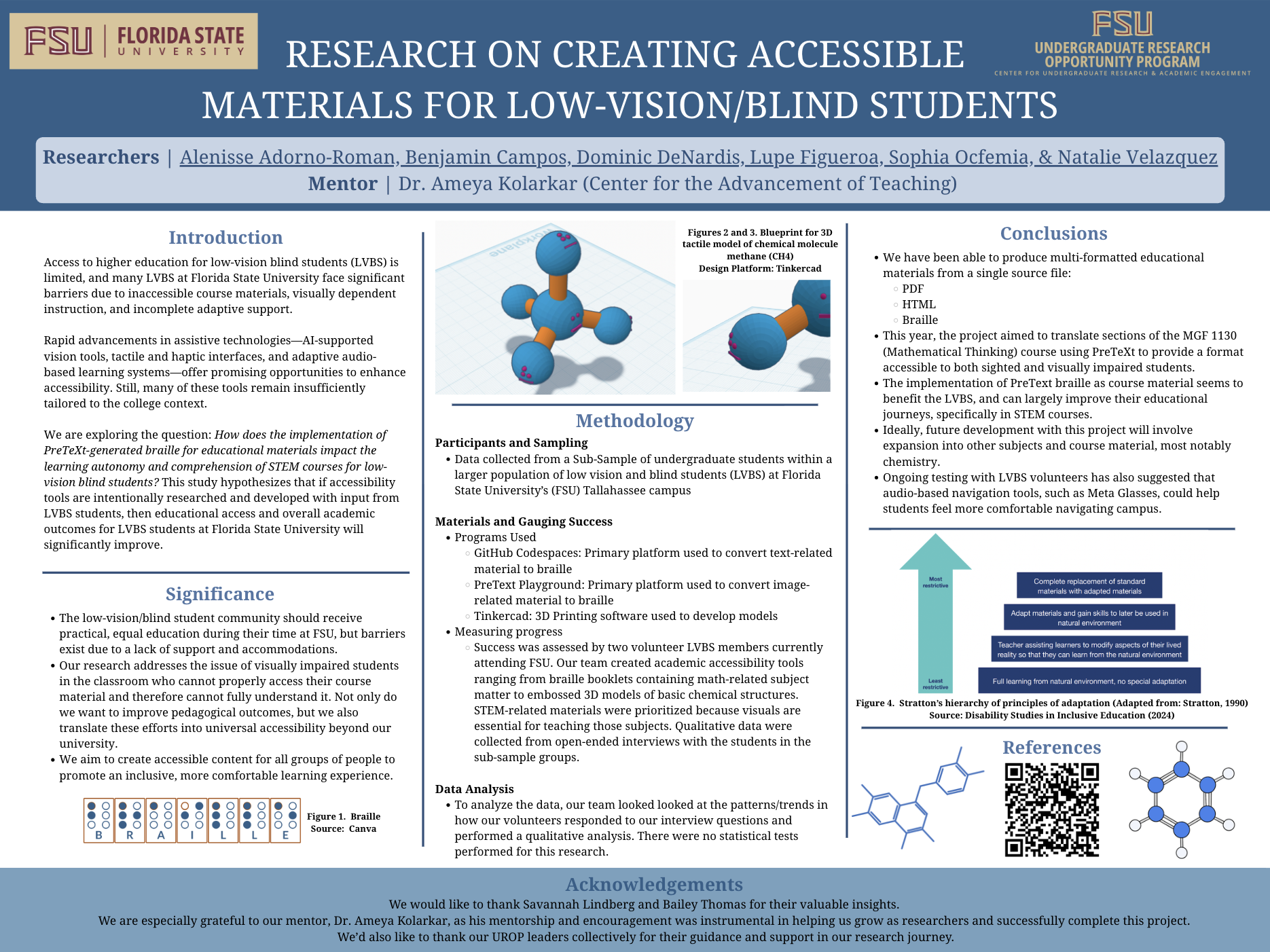
Research on Creating Accessible Materials for Low-Vision Blind Students
Authors: Sophia Ocfemia, Ameya KolarkarStudent Major: Music Theatre
Mentor: Ameya Kolarkar
Mentor's Department: Center for the Advancement of Teaching Mentor's College: College of Arts and Sciences Co-Presenters: Alenisse Adorno-Roman, Benjamin Campos, Dominic DeNardis, Lupe Figueroa, Natalie Velazquez
Abstract
As we make progress toward universal accessibility and equitable education for students with disabilities, significant barriers persist in STEM education for low-vision and blind students (LVBS). This study investigates accessibility tools that can be researched or developed to support LVBS at Florida State University (FSU), where some course material and instruction remain inaccessible. Building on prior use of 3-D printing for tactile learning, our team uses coding and the PreTeXt format to translate core math units into multiple formats, including braille. We are also exploring assistive spatial intelligence that provide audio instructions for commonly traveled campus paths, such as Meta AI glasses. LVBS volunteers at FSU test each tool and provide structured feedback. Individual coding components are created separately, refined through trial and error, compiled into a single text, and converted into braille. In collaboration with the Innovation Hub, we are also developing tactile molecular models with embossed braille labels for chemistry instruction. Findings are preliminary but encouraging. Early LVBS feedback indicates that braille translations generated through PreTeXt increase access to visual STEM content, while tactile chemistry models and navigation improves confidence in learning and movement across campus. These results suggest that accessibility tools designed with direct LVBS input can strengthen learning experiences and campus participation. Grounded in Universal Design for Learning principles, this work supports equitable access at FSU and offers scalable strategies for broader adoption across higher education.
Keywords: Education, Braille, Accessibility
26th annual Undergraduate Research Symposium, April 1, 2026
Brody Mills Poster Session 4: 3:00 pm - 4:00 pm / Poster #252
BIO
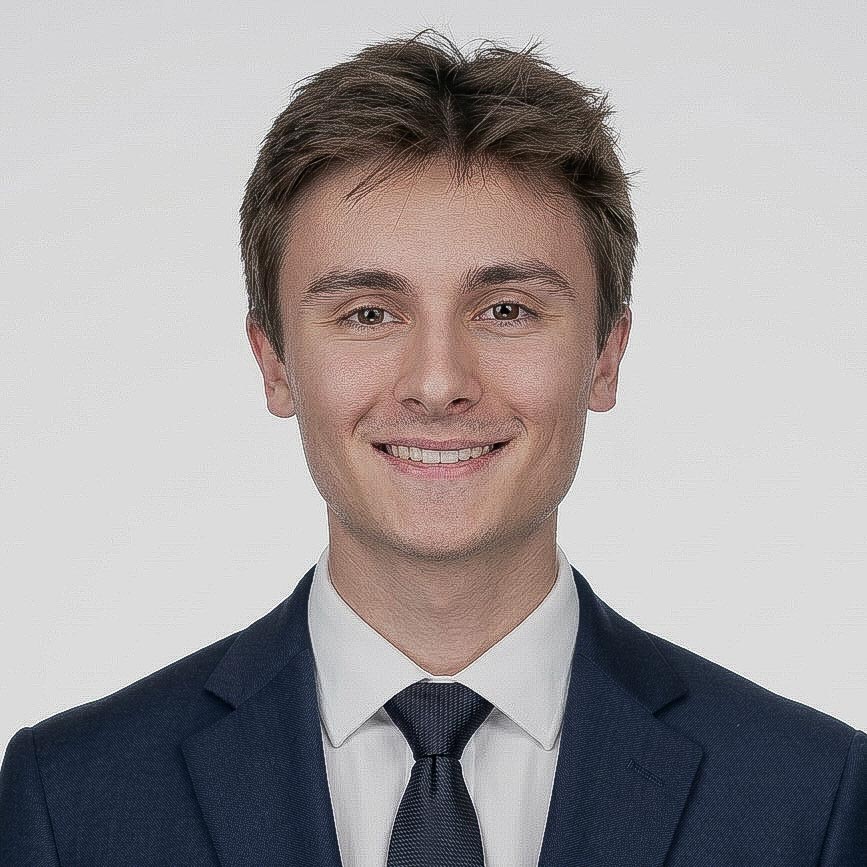
Brody Mills is a first-year Benacquisto Scholar and Honors Program student at FSU. He is currently researching under professor Marli Dunietz. He plans to graduate with a dual-degree in Political Science and Economics and either attend law school immediately after graduation, or work in strategic analysis after finishing his undergraduate. His eventual goal is to work in politics.
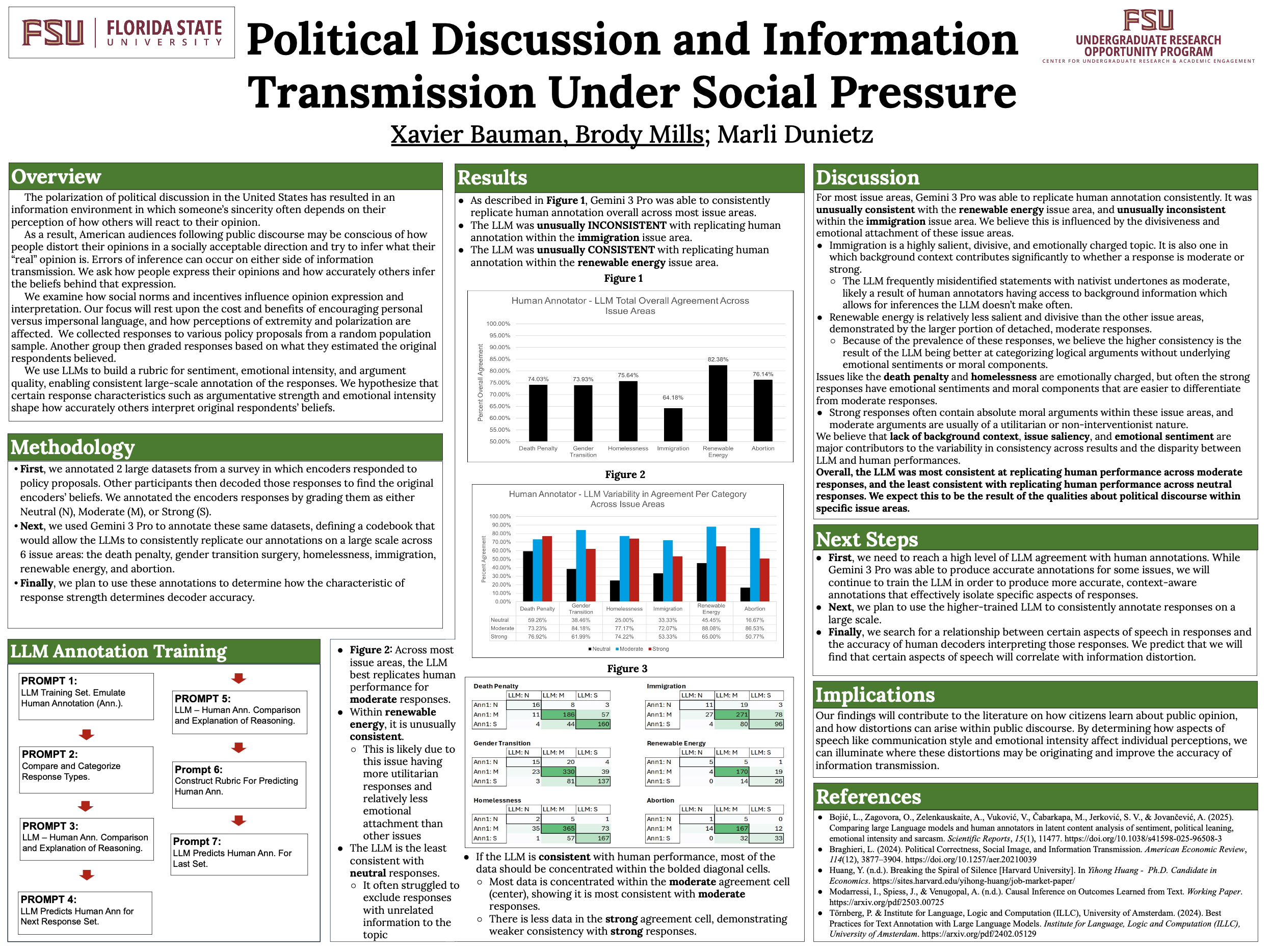
Political Discussion and Information Transmission under Social Pressure
Authors: Brody Mills, Marli DunietzStudent Major: Political Science
Mentor: Marli Dunietz
Mentor's Department: Political Science Mentor's College: College of Social Science and Public Policy Co-Presenters: Xavier Bauman
Abstract
The polarization of political discussion in the United States has resulted in an information environment in which someone’s sincerity often depends on their perception of how others will react to their opinion. At the same time, American audiences following public discourse may be conscious of how people distort their opinions in a socially acceptable direction and try to infer what their “real” opinion is. Errors of inference can occur on either side of information transmission. We ask how people express their opinions and how accurately others infer the beliefs behind that expression.
We examine how social norms and incentives influence opinion expression and interpretation. Our focus will rest upon the costs and benefits of encouraging personal versus impersonal language, and how perceptions of extremity and polarization are affected. We collected responses to various policy proposals from a random population sample. Another group then graded responses based on what they estimated the original respondents believed. We use Large Language Models (LLMs) to build a rubric for sentiment, emotional intensity, and argument quality, enabling consistent large-scale annotation of the responses. We hypothesize that certain response characteristics such as argumentative strength and emotional intensity shape how accurately others interpret original respondents’ beliefs.
Our findings will contribute to the literature on how citizens learn about public opinion, and how distortions can arise within public discourse. By determining how communication style and emotional intensity affects individual perceptions, we can illuminate where these distortions may be originating and improve the accuracy of information transmission.
Keywords: Politics, LLM, Communication, AI, Behavioral Economics
26th annual Undergraduate Research Symposium, April 1, 2026
Logan Solomon Poster Session 3: 1:45 pm - 2:45 pm / Poster #211
BIO
Logan Solomon is a Biological Sciences major with minors in Interdisciplinary Science and Physics. He is from Houston, TX and plans to pursue law school in the future to study IP or Environmental law.
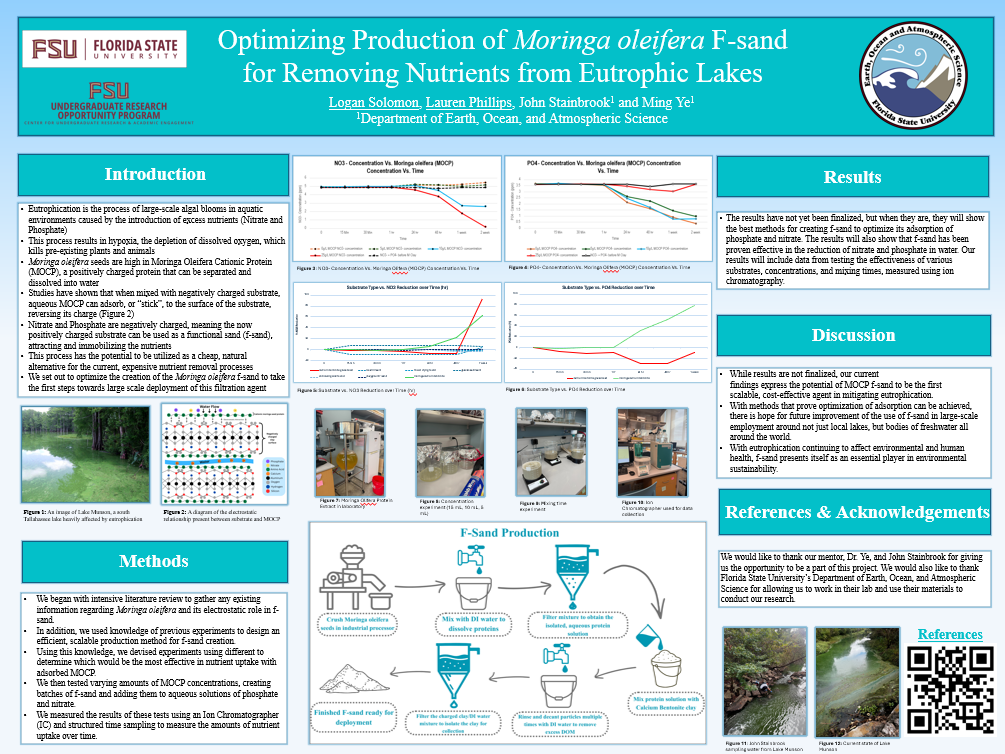
Optimizing Production of Moringa oleifera F-sand for Removing Nutrients from Eutrophic Lakes
Authors: Logan Solomon, Dr. Ming YeStudent Major: Biological Sciences
Mentor: Dr. Ming Ye
Mentor's Department: Department of Earth, Ocean, and Atmospheric Science Mentor's College: College of Arts and Sciences Co-Presenters: Lauren Phillips
Abstract
Eutrophication occurs when an excessive amount of nitrogen and phosphorus enters a body of water, causing large-scale algal blooms that severely deplete the dissolved oxygen, resulting in detrimental effects on the environment. Moringa oleifera cationic protein (MOCP) is a naturally occurring seed protein from the Moringa tree that electrostatically adsorbs to the surface of negatively charged substrates, reversing their charge and creating a functional sand (f-sand). F-sand can then be used as a filtration agent by attracting and immobilizing the negatively charged anions that drive eutrophication. This mechanism has previously only been observed at small scales, so we sought to be the first to optimize a scalable method for f-sand production. Initially, through literature review, we devised experiments using differing fine substrates to determine which would be the most effective. These experiments entailed mixing and vacuum filtering different substrates with varying aqueous concentrations of MOCP which were then added to nutrient solutions. We used an Ion Chromatographer (IC) to quantify nutrient uptake over time. Our preliminary results conclude that calcium bentonite is the optimal substrate to maximize nutrient removal by f-sand. Experiments are ongoing to determine the most efficient concentration of MOCP for large-scale deployment. While results are not finalized, our current findings express the potential of MOCP f-sand to be a scalable, cost-effective agent in mitigating eutrophication. With this, further research is necessary to evaluate real-world effectiveness of f-sand and develop efficient methods of strategic deployment.
Keywords: Eutrophication, Environment, Sustainability, Filtration, Health
26th annual Undergraduate Research Symposium, April 1, 2026
Eda Frrokaj Poster Session 3: 1:45 pm - 2:45 pm / Poster #191

BIO
Eda Frrokaj is a second-year Psychology student at Florida State University on the Pre-Nursing track. Originally from Jupiter, Florida, she is a participant in UROP, conducting undergraduate research under the mentorship of Elizabeth L. Blue. Her research focuses on emotional and physical exhaustion among Early Childhood Educators (ECE) and examines how workplace stressors, emotional labor, and colleague interactions have combined effects on educators' well-being.
Through UROP, Frrokaj has gained experience in research design, qualitative data coding, and thematic analysis while developing a greater understanding of the rigorous emotional and physical labor of Early Childhood Educators. She plans to continue expanding her interests in psychology and health sciences as she pursues a long-term career in nursing, hoping to apply research methodologies to patient care and well-being.
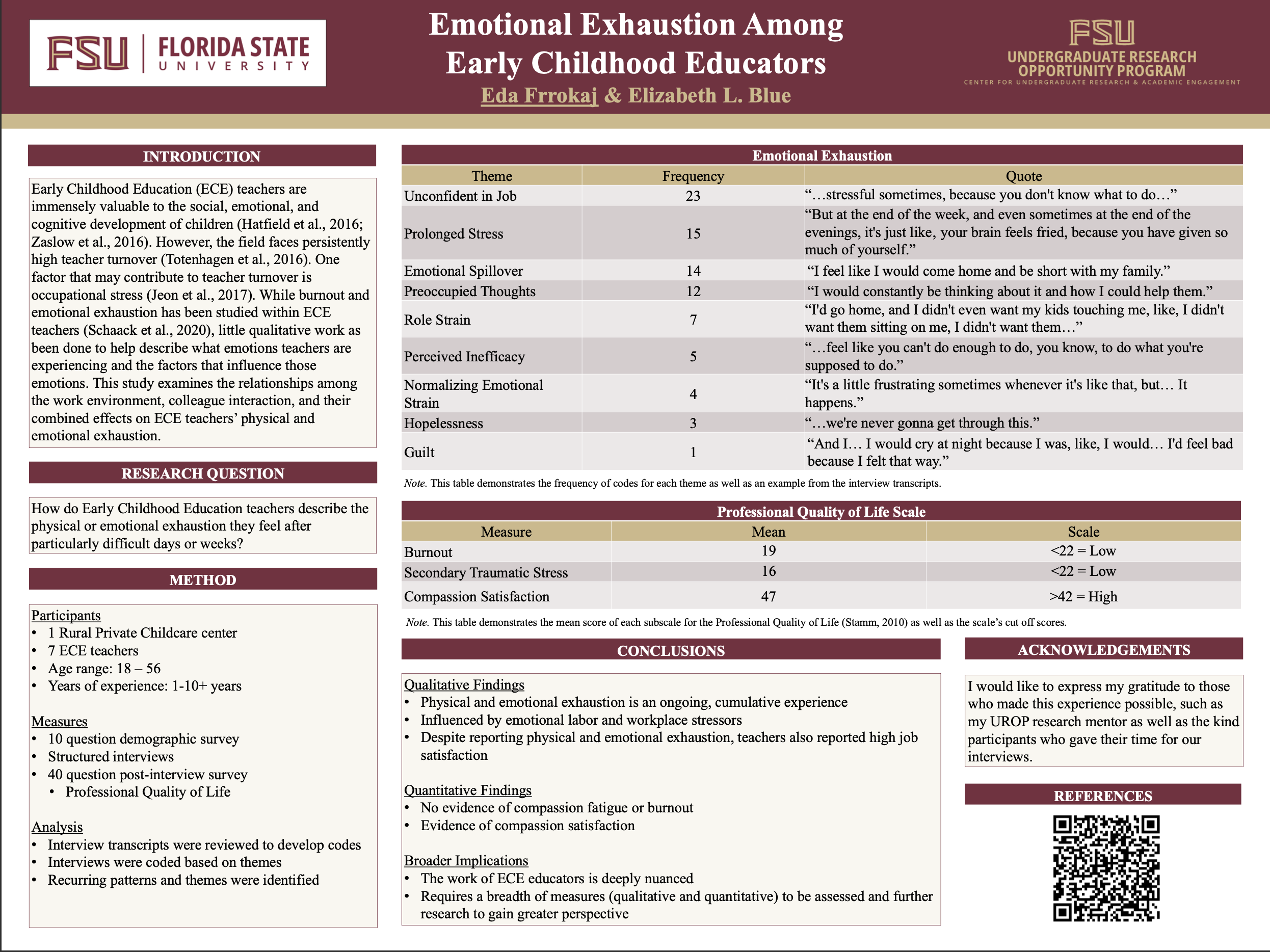
Emotional Exhaustion Among Early Childhood Educators
Authors: Eda Frrokaj, Elizabeth L. BlueStudent Major: Psychology and Pre-Nursing
Mentor: Elizabeth L. Blue
Mentor's Department: Department of Educational Psychology and Learning Systems Mentor's College: Anne's College of Education, Health, and Human Sciences Co-Presenters:
Abstract
Early Childhood Education (ECE) educators are valuable for children’s social, emotional, and cognitive development. Despite the significant role ECE educators play in development, many experience physical and emotional exhaustion. This study examines the relationships among the work environment, colleague interaction, and their combined effects on ECE educators’ physical and emotional exhaustion. Data collection was conducted in three phases: an initial 10-question demographic survey, followed by participant interviews that focused on emotional experiences in the workplace, and a 40-question post-interview survey (the Professional Quality of Life and the Emotion Regulation Questionnaire). A total of seven ECE participants, ranging in age, years of experience, and level of education, participated in the survey and interview process. Interview data were analyzed using thematic analysis, with transcripts systematically coded to identify recurring patterns and themes related to educators’ experiences of physical and emotional exhaustion. Interview findings revealed that ECE educators described physical and emotional exhaustion as an ongoing, cumulative experience influenced by emotional labor and workplace stressors. However, quantitative measures did not support these findings, indicating that teachers are satisfied with their work even in demanding work environments. Conducting this research is crucial for a better understanding of the ECE educator experience, aiding the development of workplace interventions and support.
Keywords: Early Childhood Education, Emotional Exhaustion, Compassion Satisfaction
26th annual Undergraduate Research Symposium, April 1, 2026
Richard Amthor Poster Session 2: 10:45 am - 11:45 am / Poster #304
BIO
Richard Amthor is a second‑year student at Florida State University, pursuing a Bachelor of Science in Biochemistry. He is actively involved in two research labs on campus. Under the mentorship of Dr. Vanessa Dennen, he contributes to a project examining how social media influences emotional phenotype among college students, exploring the relationship between digital environments and psychological well‑being. In his second lab, mentored by Dr. Hedi Mattoussi, Richard researches gold nanoparticles and their development for biological applications, gaining hands‑on experience with nanotechnology and its potential in medical and biochemical contexts. Originally from Oceanside, New York, Richard is driven by a strong interest in the biomedical sciences and a commitment to improving patient care. After completing his undergraduate degree, he plans to attend medical school and begin his journey toward becoming a physician
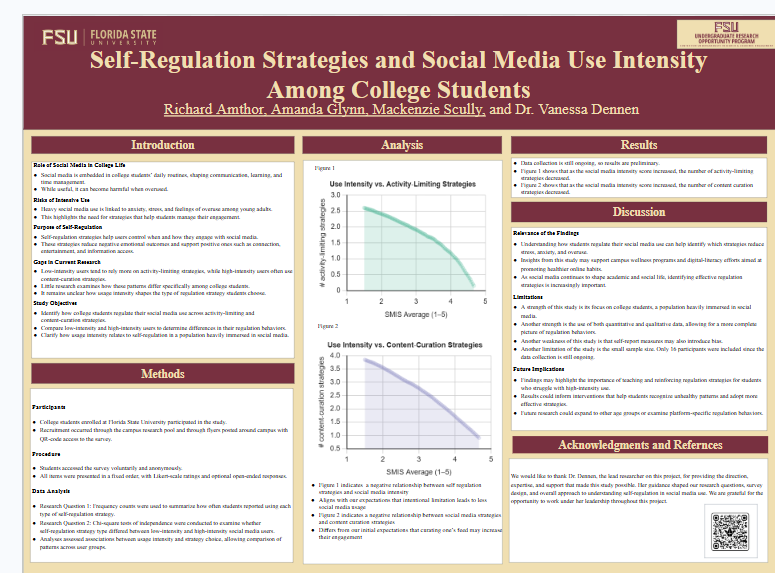
Self-Regulation Strategies and Social Media Use Intensity Among College Students
Authors: Richard Amthor, Dr. Vanessa DennenStudent Major: Biochemistry
Mentor: Dr. Vanessa Dennen
Mentor's Department: Educational Psychology & Learning Systems Mentor's College: Anne Spencer Daves College of Education, Health and Human Sciences Co-Presenters: Mackenzie Scully and Amanda Glynn
Abstract
Social media has become a central part of young people’s lives as over 90% of young adults in the United States use social media. As social media has become more popular, user intensity has also increased. However, people have found that increased social media use makes balancing their academic obligations and social life challenging. Social media seems to affect mood and wellbeing, so it's important to know what factors shape social media experiences. In this study, we focus on self-regulation, which refers to strategies people use to guide, monitor, or limit their social media use in order to maximize positive experiences. In our study we created an online survey through the Qualtrics platform. This survey was distributed in a research participation pool and advertised through flyers around campus. The survey asks students questions about their demographics and their social media usage and self-regulation strategies. Survey items include 10-point agreement scales and open-ended responses.. While data collection is still in progress, we expect to find that people with more self-regulation strategies have positive experiences using social media. Additionally, we expect that people with fewer self-regulation strategies may have more negative feelings about their social media use We plan to explore the relationship between intensity of social media use, the number and types of self-regulation strategies used, and emotional experiences related to social media. This is important as social media becomes more prevalent in our society. This will help us understand our communities better, and form more genuine connections with peers
Keywords: Social media, Self‑Regulation, College Students
26th annual Undergraduate Research Symposium, April 1, 2026
Mellina Fair Poster Session 1: 9:30 am - 10:30 am / Poster #29
BIO
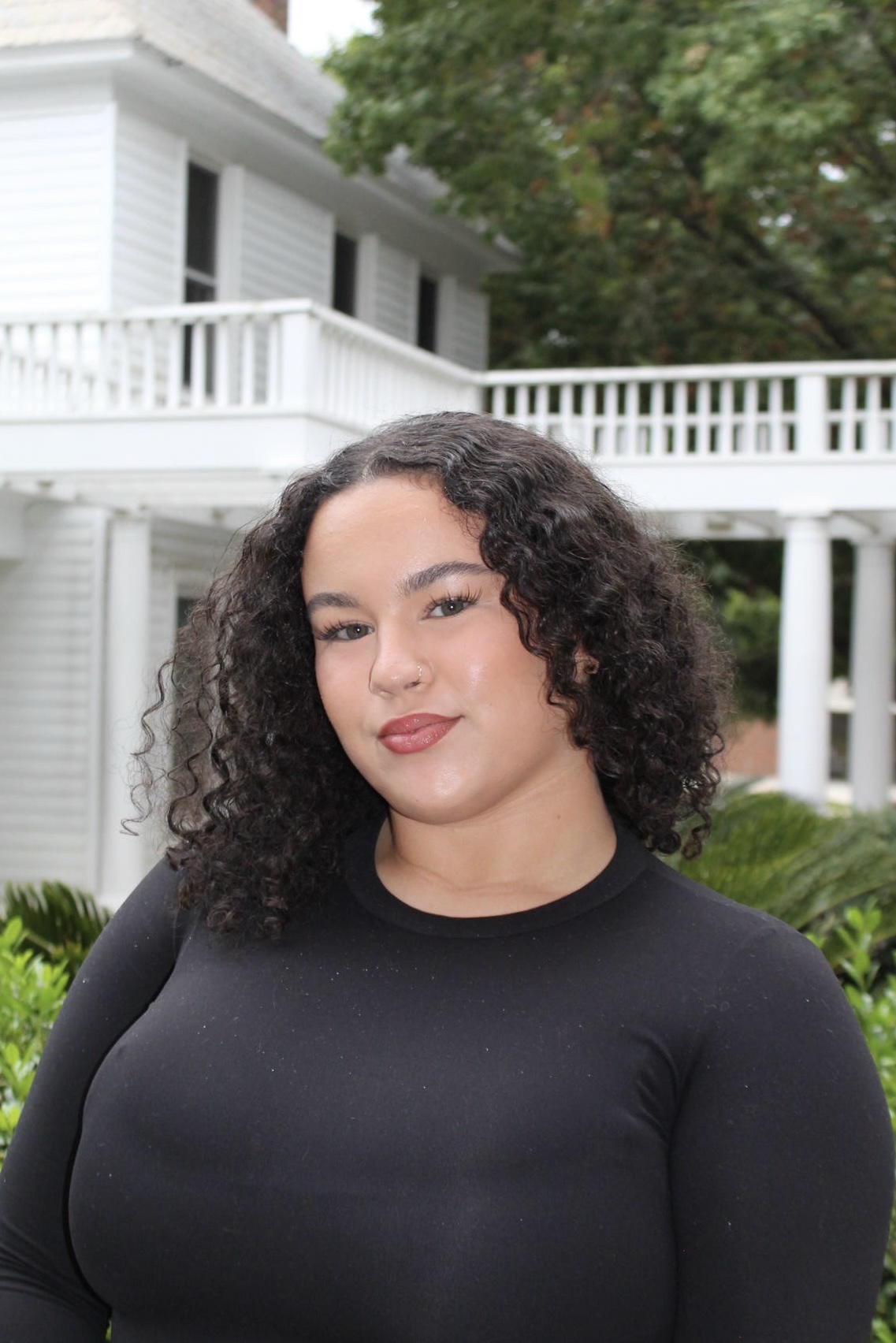
Mellina Fair is a second-year senior at FSU double-majoring in Criminology & Psychology. She is a first-generation college student from Melbourne, FL and a proud CARE 2024 Alumni! Coming from a single-parent household has fueled her passion for her 2025-2026 UROP Research project on proper funding and opportunity for student-parent's on campus. Apart from her passion for justice and equality, her long-term goal is to work in behavioral analysis within the F.B.I.
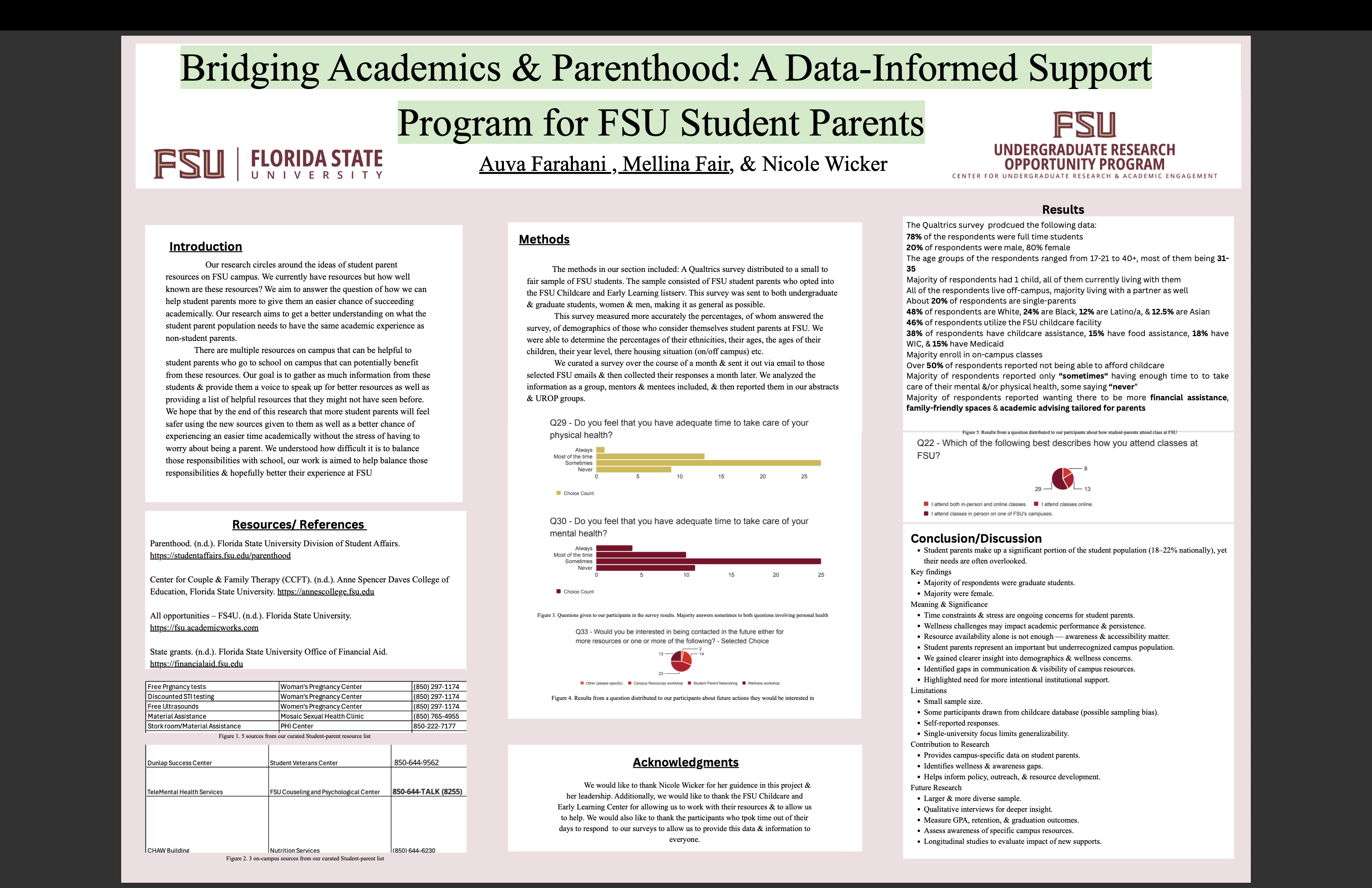
Bridging Academics & Parenthood: A Data-Informed Support Program for FSU Student Parents
Authors: Mellina Fair, Nicole WickerStudent Major: Criminology & Psychology
Mentor: Nicole Wicker
Mentor's Department: Administration & Services Mentor's College: Childcare & Early Learning Program Co-Presenters: Auva Farahani
Abstract
We can’t do anything if we don’t know, and if we know and decide to not do anything, we can’t call ourselves inclusive. Our approach to this problem was very simple. We curated a detailed survey to be sent out to student-parents the department of early childcare and learning program already knew about and some outside of that. We received more feedback than we expected, learning that most of the survey takers were graduate students, about 10% of them were attending FSU on a temporary student VISA, majority were female, the age range was 17-40+, all of them had less than 4 children whom all of which were living with them currently, and the majority were white. This is only a fraction of the information we gained, but it was all so helpful in getting to the root of where to focus our attention to better aid our student parent community at FSU.
Keywords: Student-parent, Childcare, Resources
26th annual Undergraduate Research Symposium, April 1, 2026
Caden Lindsay Poster Session 3: 1:45 pm - 2:45 pm / Poster #99
BIO
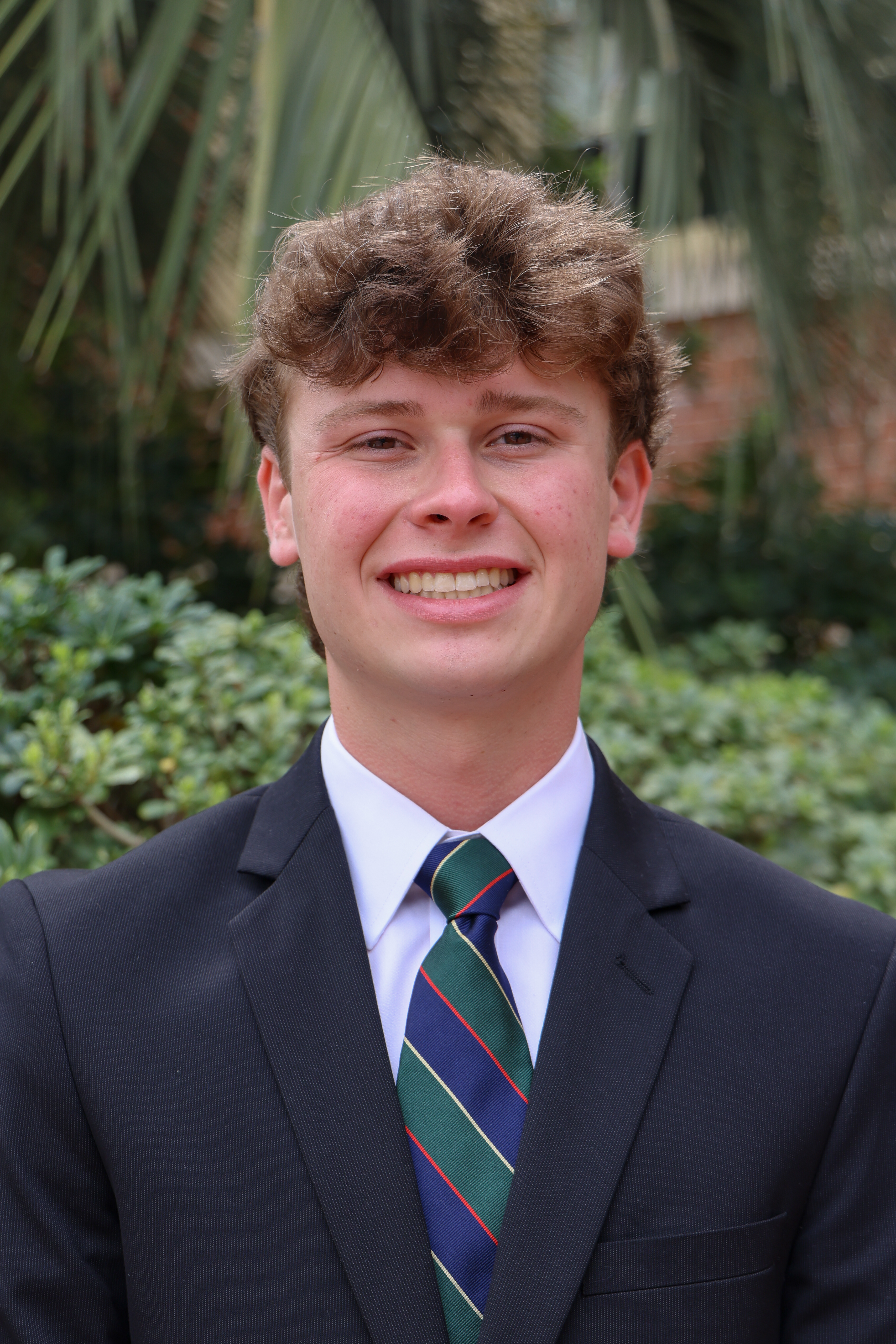
Caden is a freshman at Florida State University pursuing a Bachelor of Science in Biology with a minor in Spanish. He is in the University Honors Program and is conducting research under his mentor, Sadio Fenner, into the effects of exogenous ketones on endurance athletes. Caden is also involved with the Presidential Scholars Program at Florida State and is a member of the Florida Zeta chapter of the Phi Delta Epsilon pre-medical fraternity. After obtaining his undergraduate degree, Caden plans on attending medical school.
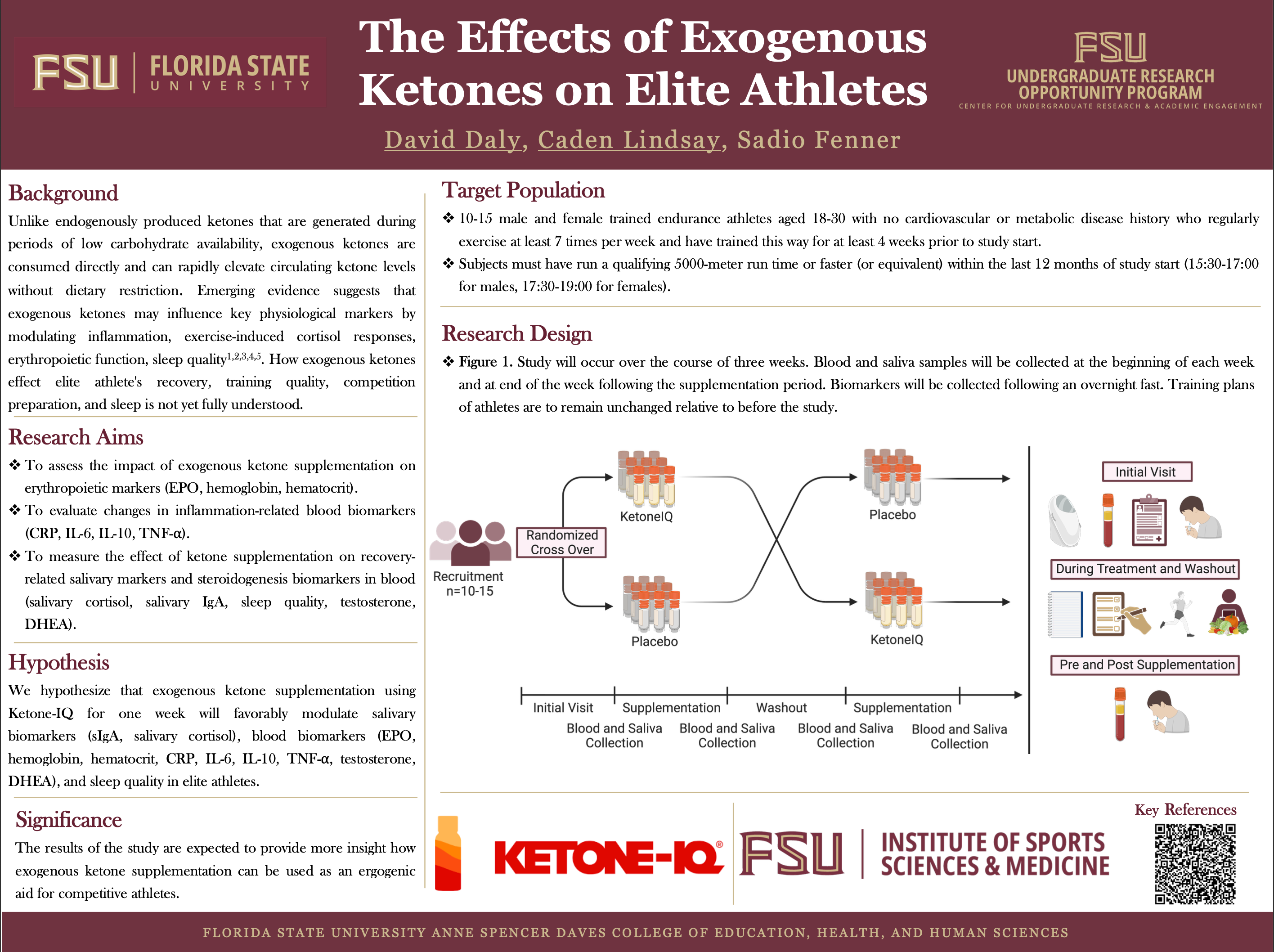
The Effects of Exogenous Ketones on Elite Athletes
Authors: Caden Lindsay, Sadio FennerStudent Major: Biological Science
Mentor: Sadio Fenner
Mentor's Department: Institute of Sports Sciences and Medicine Mentor's College: Anne Spencer Daves College of Education, Health, and Human Sciences Co-Presenters: David Daly
Abstract
In recent years, the consumption of exogenous ketones by athletes has increased, with athletes often justifying their intake on claims of enhanced performance. There is currently no consensus in scientific literature on whether or not exogenous ketone supplementation provides significant performance benefits to users. The research team aims to learn more about the definitive physiological effects of exogenous ketones in this study. The team plans to recruit 10-15 male and female endurance athletes aged 18-30 to participate in this study. The structure of the study consists of an initial week of participants receiving either an exogenous ketone supplement or a placebo, followed by a one-week washout of both groups receiving no treatment, finally followed by one week of each group receiving the same treatment administered in week one. At the start of each week and at the conclusion of the three-week study, blood samples from each of the subjects will be analyzed for various blood and steroid markers, and salivary samples will be collected and tested for salivary biomarkers. Considering the gaps in literature on the effects of ketone supplementation on performance and recovery, the team hypothesizes that our results may provide insightful data that could help guide further exploration of ketone supplementation. Our findings may provide preliminary data that could be useful in larger studies, potentially helping the scientific community better understand the effects of exogenous ketones on athletes.
Keywords: Ketone, Athlete, Sport, Endurance, Performance
26th annual Undergraduate Research Symposium, April 1, 2026
Mirza Baig Poster Session 2: 10:45 am - 11:45 am / Poster #293
BIO
Mirza Baig is a second-year transfer student at Florida State University pursuing a Bachelor of Science in economics with a minor in mathematics. He has been involved in undergraduate research through the UROP program under the mentorship of Dr. Katie Yewell. Through this experience, he gained exposure to the academic research experience as well as knowledge in the field of economics. Following graduation, Mirza aims to pursue a predoctoral fellowship to further gain exposure to economics-focused research and ultimately matriculate into an economics graduate program.
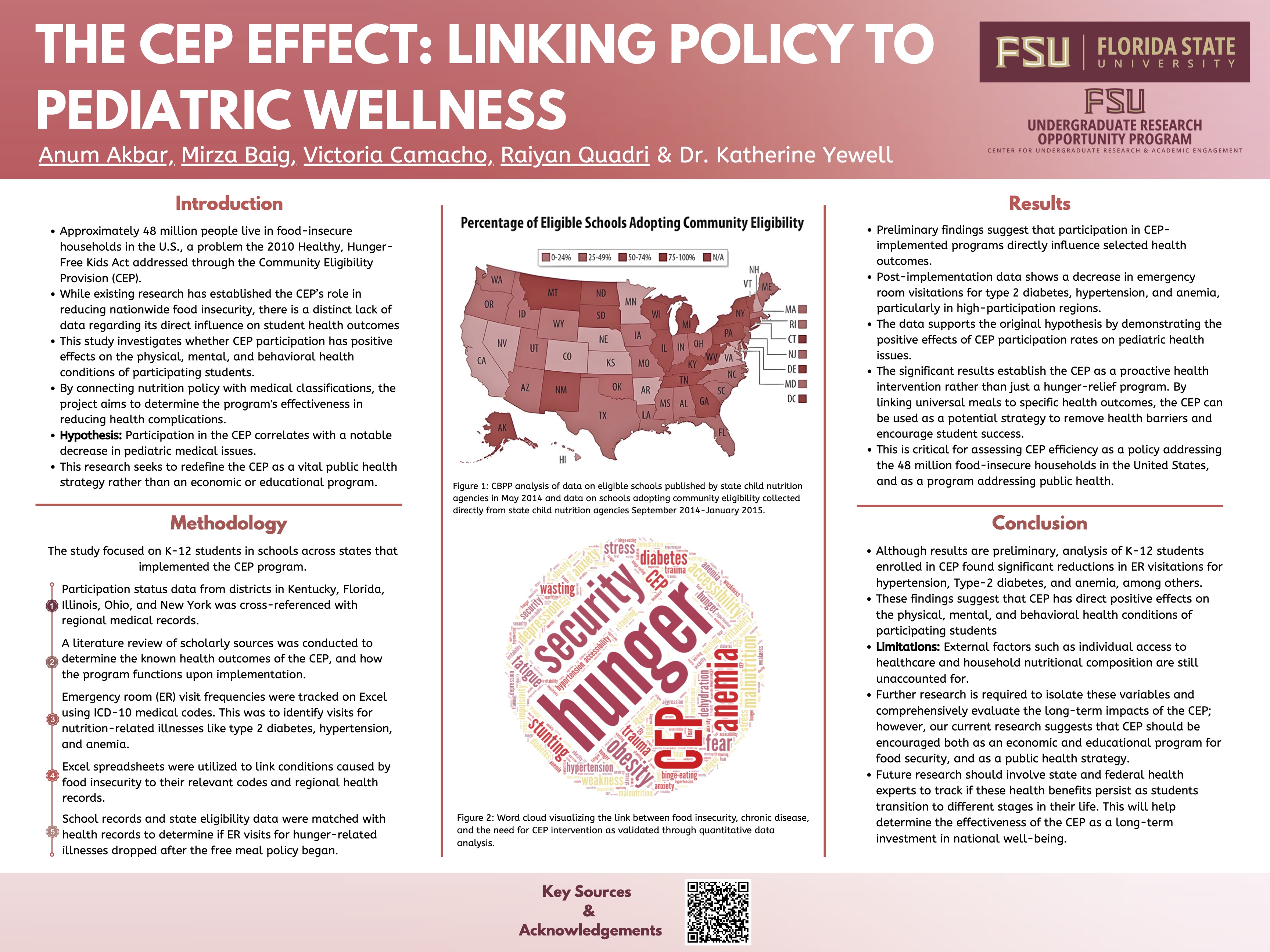
The CEP Effect: Linking Policy to Pediatric Wellness
Authors: Mirza Baig, Dr. Katie YewellStudent Major: Economics
Mentor: Dr. Katie Yewell
Mentor's Department: Department of Economics Mentor's College: College of Social Sciences and Public Policy Co-Presenters: Raiyan Quadri
Abstract
More than 40 million people in the United States experience food insecurity, and a large proportion of those people are school children. To combat this ongoing problem, the government passed the Healthy Hunger-Free Kids Act which helped form the Community Eligibility Provision (CEP), the second-largest food assistance program in the country. The CEP allowed food-insecure children to receive free school meals. While there has been prior research focusing on the impact that the CEP has on food insecurity, there has been virtually no research examining the effect the CEP has on students’ health. Thus, this research project will investigate whether the CEP positively affects students’ health and well-being.
This research project will focus on grade schools (kindergarten through 12th grade) across the country that have implemented CEP. CEP participation will be analyzed at the district level and compared to regional hospital data using ICD-10 codes to evaluate specific diseases such as diabetes, hypertension, and anemia. These codes help identify the purpose and reasoning behind emergency room visitations. The frequency of these hospital ER visits will be used to determine the impact free school meals have on students’ health and well-being. We hypothesise that students who participate in the CEP will demonstrate a lack of hospital ER visits for food-insecurity-related diseases; hence, the CEP will demonstrate an improvement in said students’ health and well-being. After the conclusion of this research project, the findings will demonstrate a working model to scale across the country to combat food insecurity regardless of background.
Keywords: economics; CEP; food insecurity; public policy; pediatric wellness
26th annual Undergraduate Research Symposium, April 1, 2026
Andrea Dominguez Poster Session 4: 3:00 pm - 4:00 pm / Poster #186
BIO
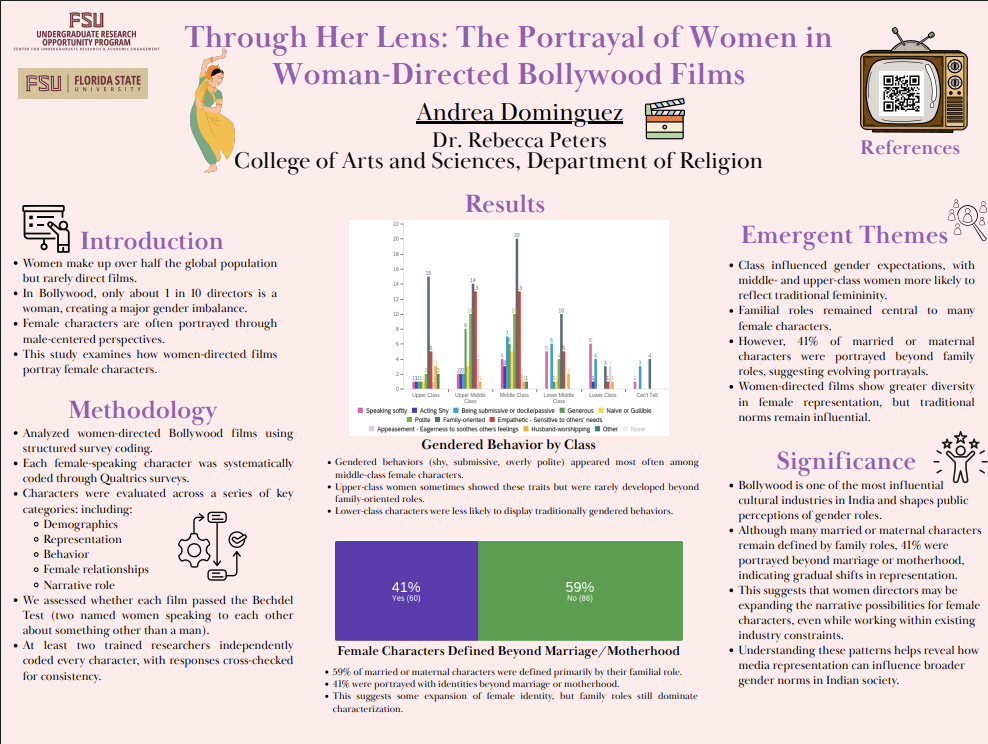
Andrea Dominguez is a junior pursuing a Bachelor of Arts in International Affairs at Florida State University. Her research examines representation in female-directed Bollywood films. She is interested in careers in public policy and international organizations.
Through Her Lens: The Portrayal of Women in Woman-Directed Bollywood Films
Authors: Andrea Dominguez, Dr. Rebecca PetersStudent Major: International Affairs
Mentor: Dr. Rebecca Peters
Mentor's Department: Department of Religion Mentor's College: College of Arts and Sciences Co-Presenters:
Abstract
Film and media both reflect and shape societal values, social norms, and cultural
expectations. This study examines the portrayal of women in Bollywood, India’s film
industry, where female characters have historically been constructed within patriarchal and
misogynistic frameworks. However, the increasing presence of female directors in recent
years has made Bollywood a compelling site for examining potential shifts in women’s
representation in cinema. The purpose of this research is to collect both qualitative and
quantitative data to better understand how cultural expectations are represented in films
directed by women. Using systematic survey coding methods, we analyze the types and
frequency of female representation across a selected sample of films. Female characters
are evaluated based on categories including clothing, religion, interpersonal relationships,
education, and engagement in taboo behaviors. To ensure reliability, each character is
independently coded by at least two trained researchers using Qualtrics surveys, and
responses are cross-checked for consistency. Although the project remains in its early
stages and does not yet yield conclusive findings, preliminary patterns across the coded
films suggest emerging trends in how women are portrayed by female Bollywood directors.
Keywords: Bollywood, Women Directors, Gender Representation
26th annual Undergraduate Research Symposium, April 1, 2026
Panya Saengfah Poster Session 3: 1:45 pm - 2:45 pm / Poster #53
BIO
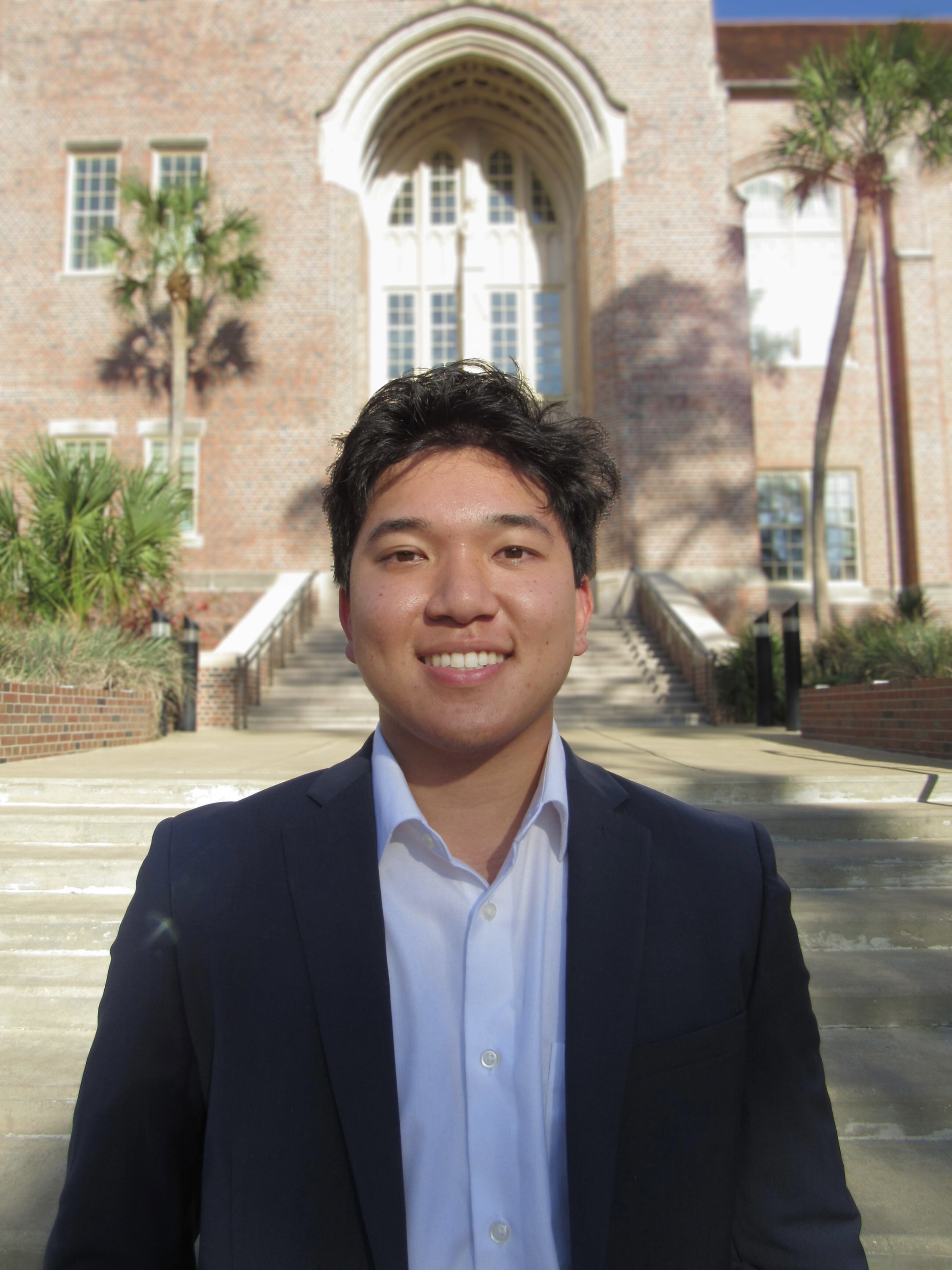
I am from Tampa, Florida, and currently on a pre-medical pathway. I currently plan on becoming a physician due to my passion for clinical, research, and medicine. I also have an aspiration for the field of business and entrepreneurship, where I can someday own my own practice.
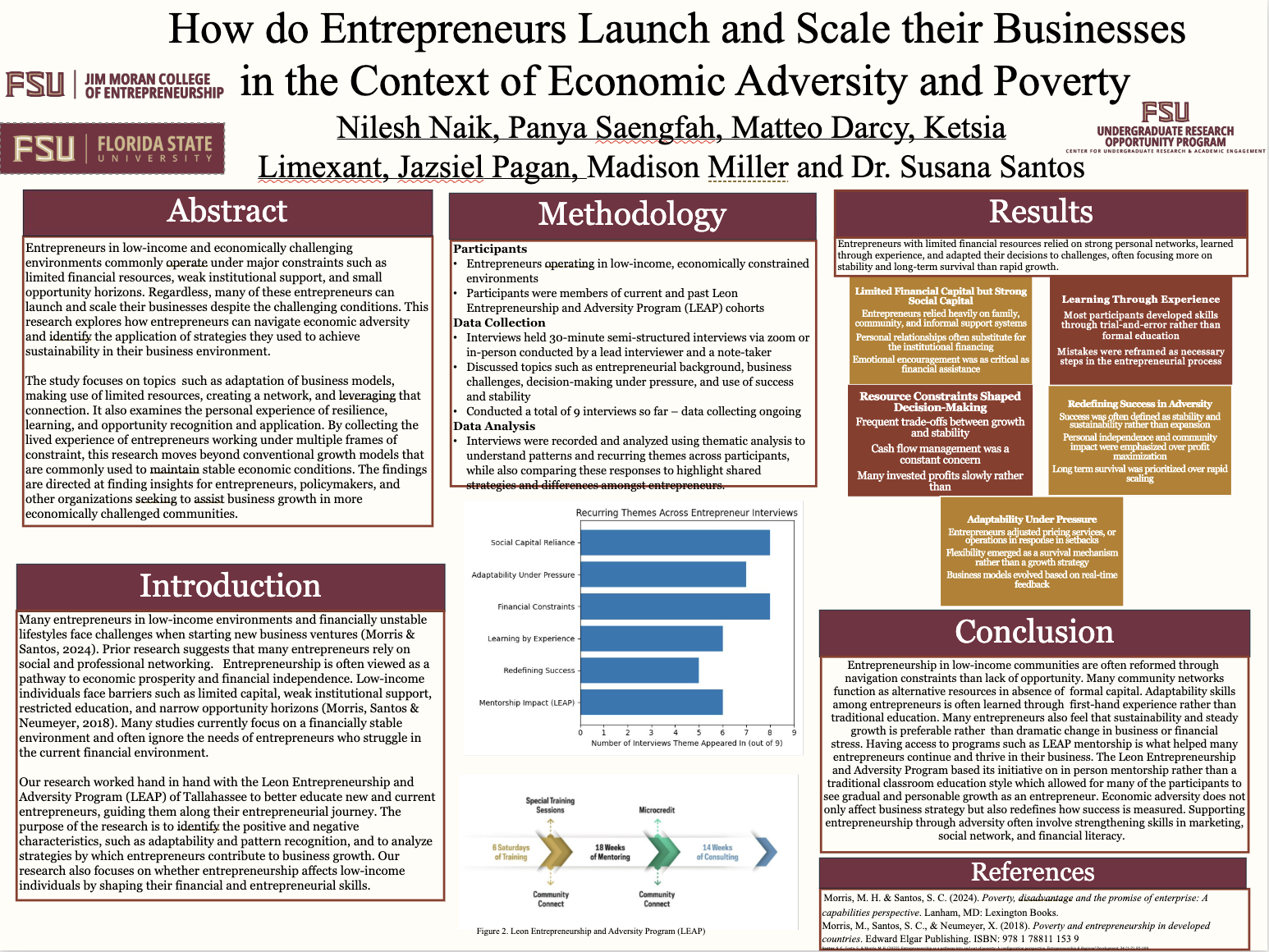
How do Entrepreneurs Launch and Scale their Business in the Context of Economic Adversity and Poverty
Authors: Panya Saengfah, Dr. Susana C. SantosStudent Major: Cell and Molecular Neuroscience
Mentor: Dr. Susana C. Santos
Mentor's Department: Entrepreneurship Mentor's College: Jim Moran College of Entrepreneurship Co-Presenters: Ketsia Limexant, Nilesh Naik, Jaziel Pagan, Matteo Darcy
Abstract
Entrepreneurs in low-income and economically challenging environments commonly operate under major constraints such as limited financial resources, weak institutional support, and small opportunity horizons. Regardless, many of these entrepreneurs can launch and scale their business despite the challenging conditions. This research explores how entrepreneurs can navigate economic adversity and identify the application of strategies they used to achieve growth in their business environment. The study focuses on the classical practical approach such as adaptation of business models, making use of limited resources, creating a network, and leveraging that connection. It also examines the personal experience of resilience, learning, and opportunity recognition and application. By collecting the lived experience of entrepreneurs working under multiple frames of constraint, this research moves beyond conventional growth models that are commonly used to maintain stable economic conditions. The findings are directed at finding insights for entrepreneurs, policymakers, and other organizations seeking to assist business growth in more economically challenged communities.
Keywords: Entrepreneurship, Economics, Adversity
26th annual Undergraduate Research Symposium, April 1, 2026
Luke Napolitano Poster Session 1: 9:30 am - 10:30 am / Poster #81
BIO
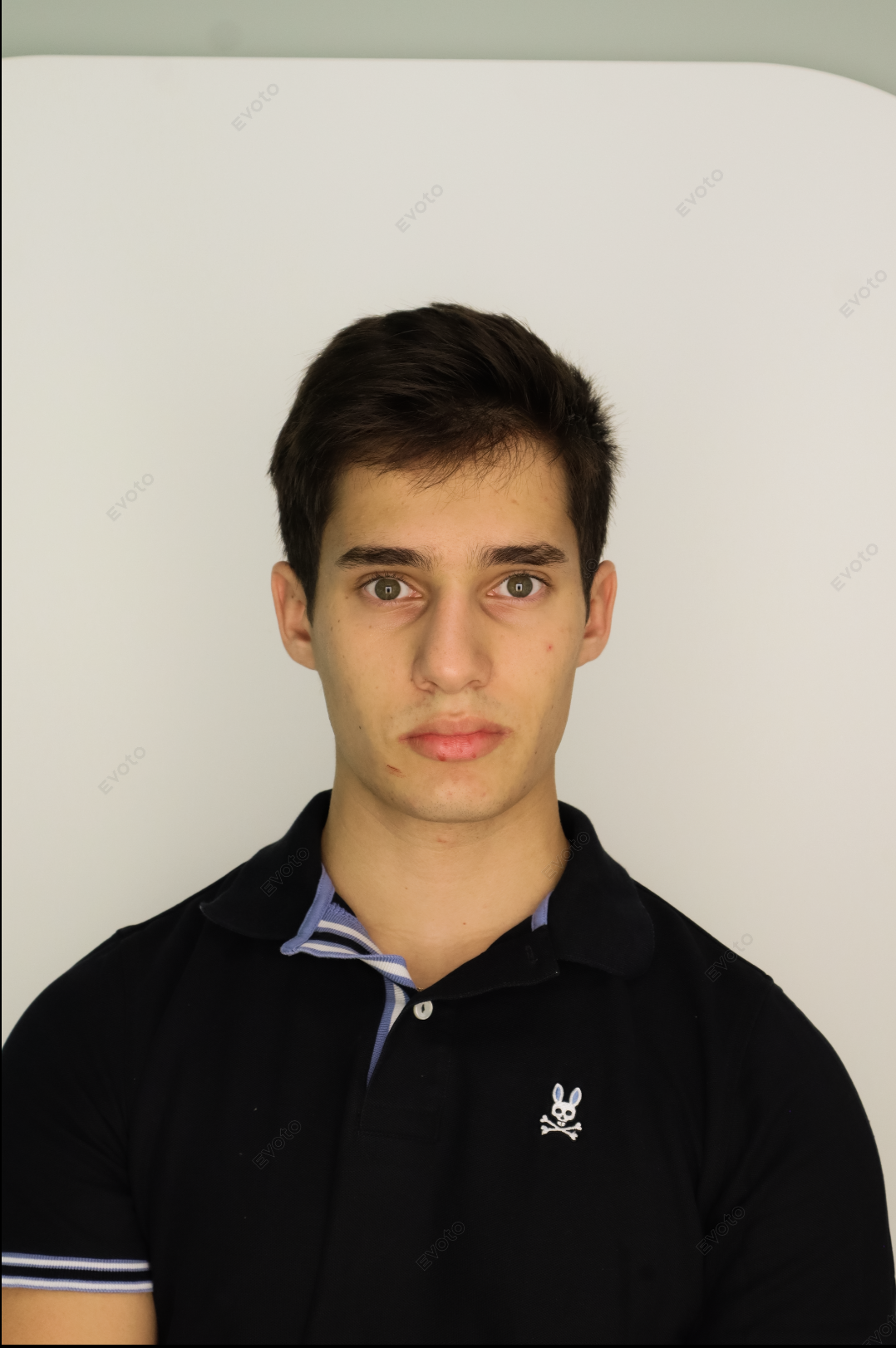
Luke Napolitano is a Pre-Finance major at Florida State University, studying in the Honors College under the Presidential Scholars Program. Luke's research mentor is Erik Rawls. Luke wants to go to medical school after graduating college.
Disseminating Research for Non-Academic Audiences
Authors: Luke Napolitano, Erik RawlsStudent Major: Pre-Finance
Mentor: Erik Rawls
Mentor's Department: Educational Psychology and Learning Systems. Mentor's College: College of Education, Health, and Human Sciences. Co-Presenters:
Abstract
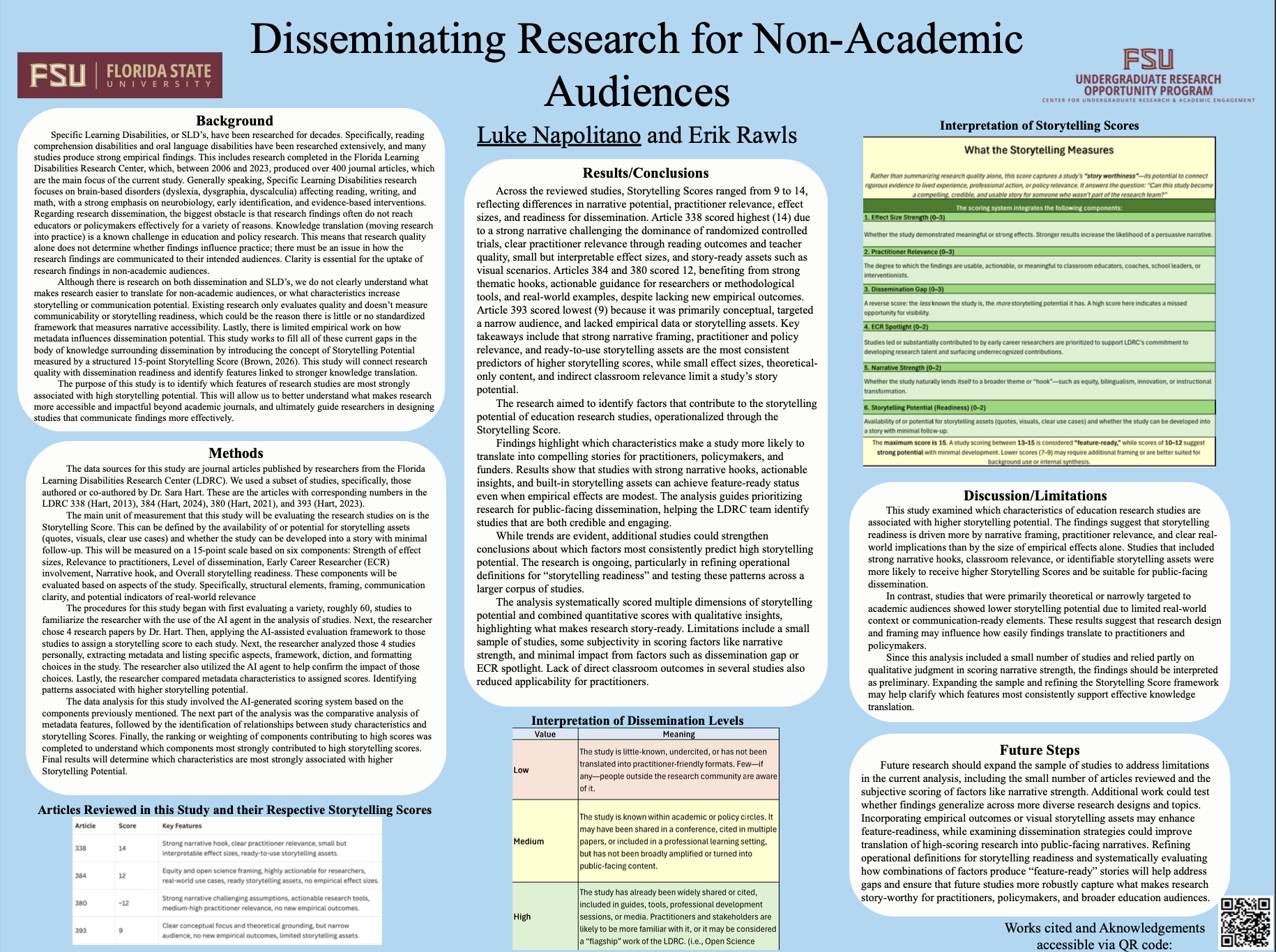
Despite decades of research on specific learning disabilities (SLDs), many important findings never reach the educators and policymakers who could use them most. We do not clearly understand what makes research findings easier to translate for non-academic audiences. This project addresses that gap by examining how certain characteristics of research papers influence a study’s “storytelling potential”. Storytelling potential refers to a study’s ability to connect rigorous evidence to lived experience, professional action, or policy relevance. In focusing on 4 research studies led by Dr. Sara Hart at the Florida Learning Disabilities Research Center, the current process uses an AI-assisted approach to effectively evaluate different characteristics of research related to dissemination and translation. Each study receives a 15-point Storytelling Score based on six components: strength of effect sizes, relevance to practitioners, level of dissemination, involvement of early career researchers (ECRs), narrative hook, and overall storytelling readiness to identify which features are most strongly linked to high storytelling potential. These findings highlight features that improve clarity and real-world impact, helping guide researchers toward stronger knowledge translation and contributing to broader conversations about research. Across the reviewed studies, Storytelling Scores ranged from 9 to 14, with higher scores associated with strong narrative framing, clear practitioner relevance, interpretable effect sizes, and ready-to-use storytelling elements. Studies that were primarily theoretical, narrowly targeted, or lacking empirical outcomes showed lower story potential and dissemination readiness.
Keywords: Dissemination, Specific Learning Disabilities, Storytelling Potential
26th annual Undergraduate Research Symposium, April 1, 2026
Kirstan Davie Poster Session 2: 10:45 am - 11:45 am / Poster #120

BIO
Kirstan Davie is a sophomore on a Pre-Law track pursuing a dual degree in B.S. Marketing and B.A. Interdisciplinary Humanities, with focuses in English, History, and Classics. Outside of her UROP research, she is heavily involved in several campus organizations, including Kappa Kappa Gamma, Her Campus at FSU, The Kudzu Review, and Women in Pre-Law Society. Kirstan hopes to go to law school after completing her undergraduate studies. Her ultimate goal is to go into family law.
Living Song Project
Authors: Kirstan Davie, Dr. Natalie ShererStudent Major: Bachelor of Science in Marketing, Bachelor of Arts in Interdisciplinary Humanities
Mentor: Dr. Natalie Sherer
Mentor's Department: Assistant Professor of Vocal Coaching & Collaborative Artist Mentor's College: College of Music Co-Presenters:
Abstract
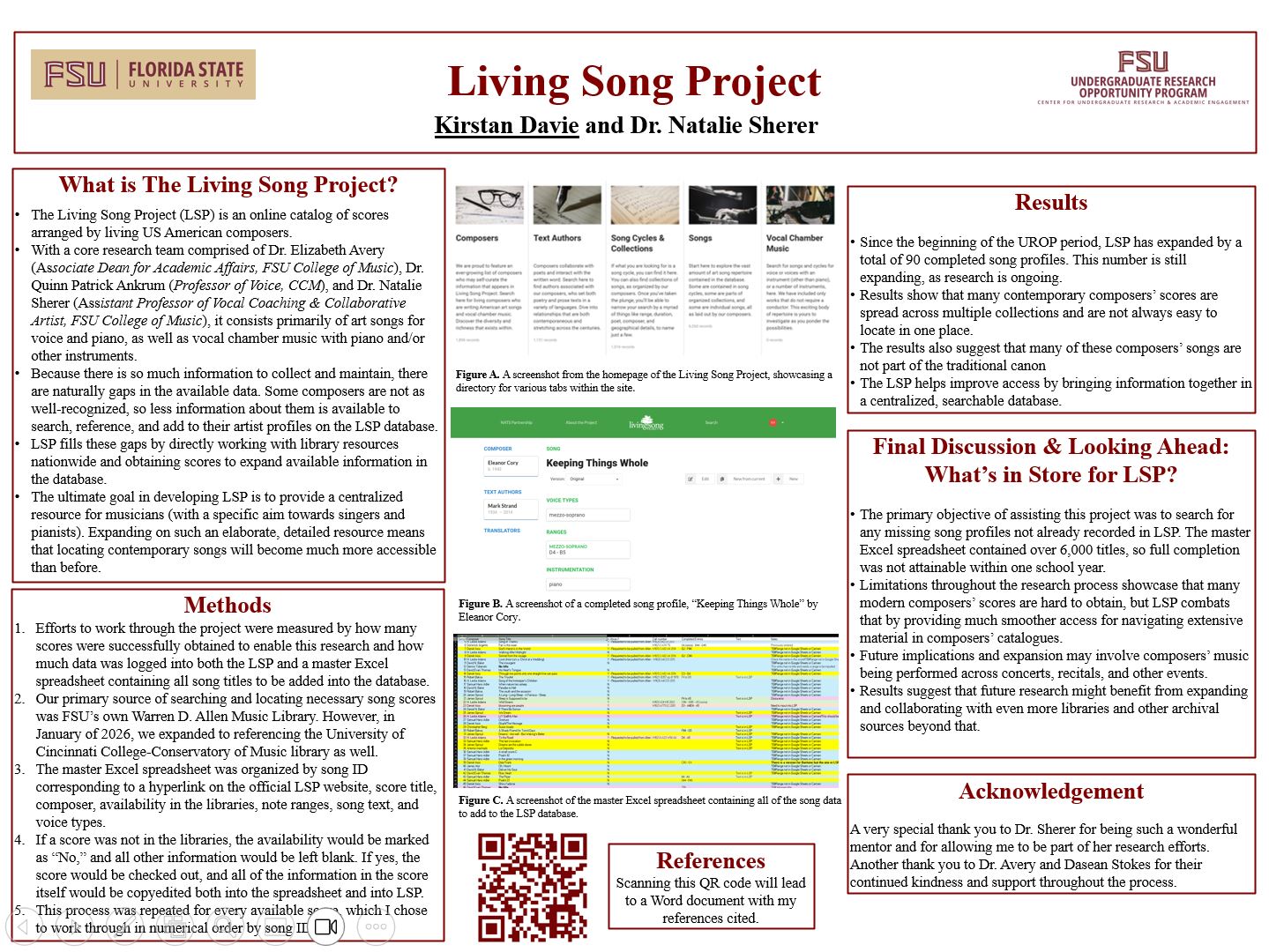
The Living Song Project is a developing online database comprising thousands of songs by currently living composers, including details about the arrangements, such as voice types and note ranges. To build upon this resource means to expand on a vast universe of material created for musicians, making song information accessible for anyone who is searching. This project involves partnering with research mentors to utilize library resources nationwide, including those at Florida State University’s Warren D. Allen Music Library and the Cincinnati College-Conservatory of Music. We work chronologically through a master spreadsheet of songs to search for composers and collections of their music, input newly located data into the LSP website, and analyze songs for range, notes, vocal types, and other relevant information. The ultimate result showcases an increased selection of centralized musical resources in the LSP database. Since the beginning of the UROP period, the database has been expanded by 90 songs, and because research is still ongoing, this number is climbing. This suggests that many of these scores were not as easily accessible before being added to the LSP and might not be considered part of the traditional canon. Future implications may result in composers’ music being performed across concerts, recitals, and other events because the LSP will provide much smoother access for navigating such material.
Keywords: music, piano, database, songs, voice
26th annual Undergraduate Research Symposium, April 1, 2026
Jennifer González Soriano Poster Session 4: 3:00 pm - 4:00 pm / Poster #154
BIO
Jennifer González Soriano is a junior majoring in Psychology and minoring in Statistics. As a transfer student, this is her first year at Florida State University and her first time working in a psychology laboratory. She is a research assistant at the Learning, Memory, and Language Lab under the guidance of Dr. Michael Kaschak and Ms. Anuja Thomas, who have supported her throughout the research process over this academic year. After graduating, she plans to pursue a PhD in Clinical Psychology and is interested in researching the etiology of anxiety disorders as well as their maintaining cognitive and behavioral factors.
Anxiety and Sensitivity to Inter-Turn Silences
Authors: Jennifer González Soriano, Dr. Michael KaschakStudent Major: Psychology
Mentor: Dr. Michael Kaschak
Mentor's Department: Department of Psychology Mentor's College: College of Arts and Sciences Co-Presenters:
Abstract
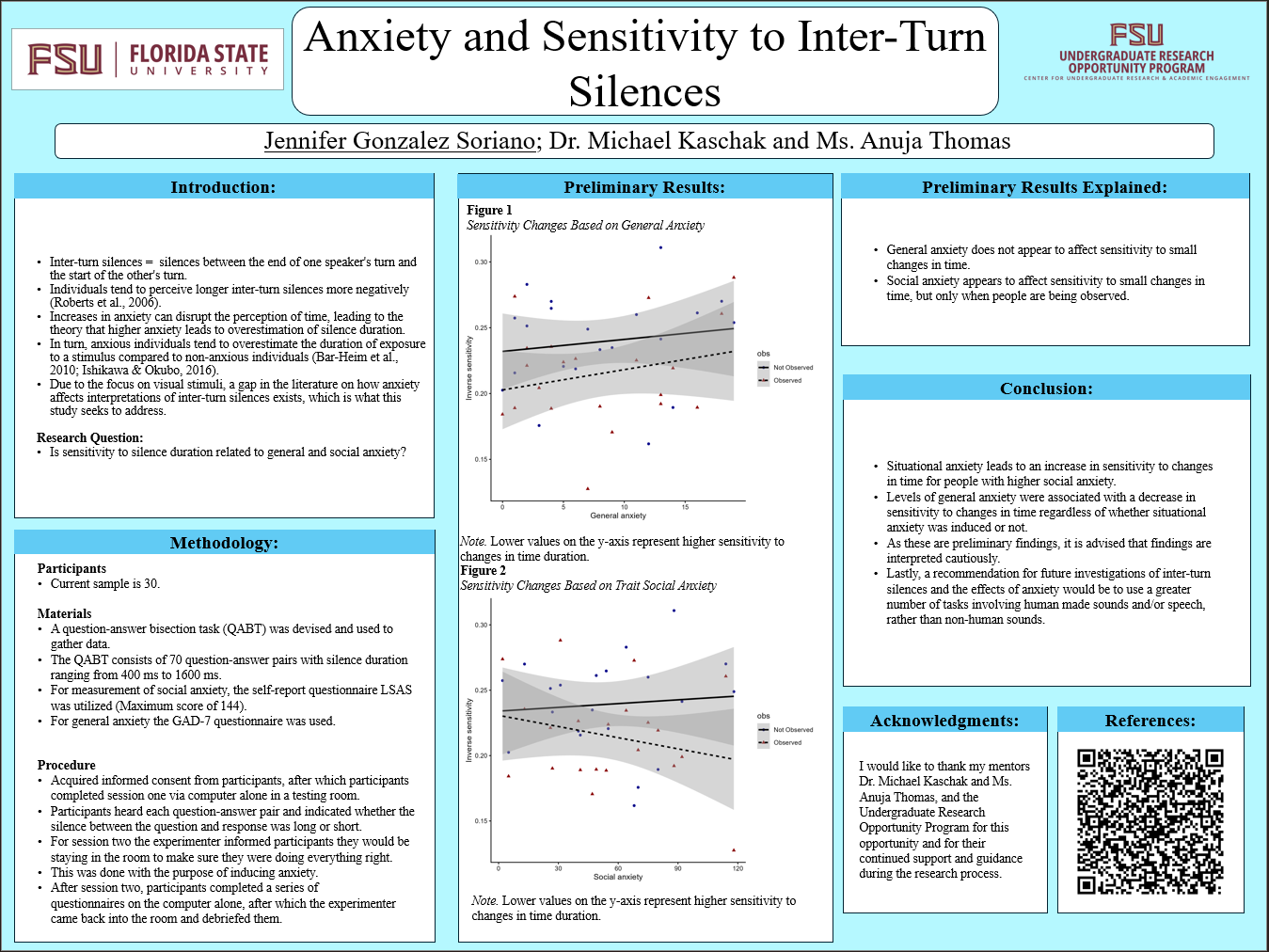
Individuals find meaning in inter-turn silences–silences that occur as a transition from one speaker to another–and derive information from these. For example, inter-turn silences provide information about how one speaker feels about the other. In some contexts, inter-turn silences can be anxiety inducing. With research suggesting that higher trait social anxiety can lead to overestimation of time elapsed when an ambiguous stimulus is presented. Furthermore, an increase in situational anxiety can be disruptive for individuals when making temporal estimates. Previous research raises the question of whether sensitivity to silence duration is related to general and social anxiety. To test what was the acceptable threshold for inter-turn silences, the question-answer bisection task (QABT) was devised. The task consists of 70 question-answer pairs with silence duration ranging from 400ms to 1600ms. Participants needed to indicate whether the silence duration was long or short. The participants were alone during session one, meanwhile the experimenter was present during session two. After this, participants completed the LSAS and GAD-7 questionnaires to measure levels of social and general anxiety, respectively. It is expected that individuals with higher social anxiety will have a higher sensitivity to changes in silence duration, especially when observed. It is also expected that general anxiety will have no effect on sensitivity to changes in silence duration. In turn, this study could aid the understanding behind the cognitive processes underlying the interpretation of inter-turn silences and illustrate how individuals differ in their perception of the same stimulus.
Keywords: Anxiety Sensitivity Silences
26th annual Undergraduate Research Symposium, April 1, 2026
Nicholas Rattigan Poster Session 2: 10:45 am - 11:45 am / Poster #132
BIO
Nicholas is a freshman at FSU currently pursuing a Bachelor's degree in Electrical Engineering. He is from Pittsburgh, PA and is interested in working in the space sector after graduation.
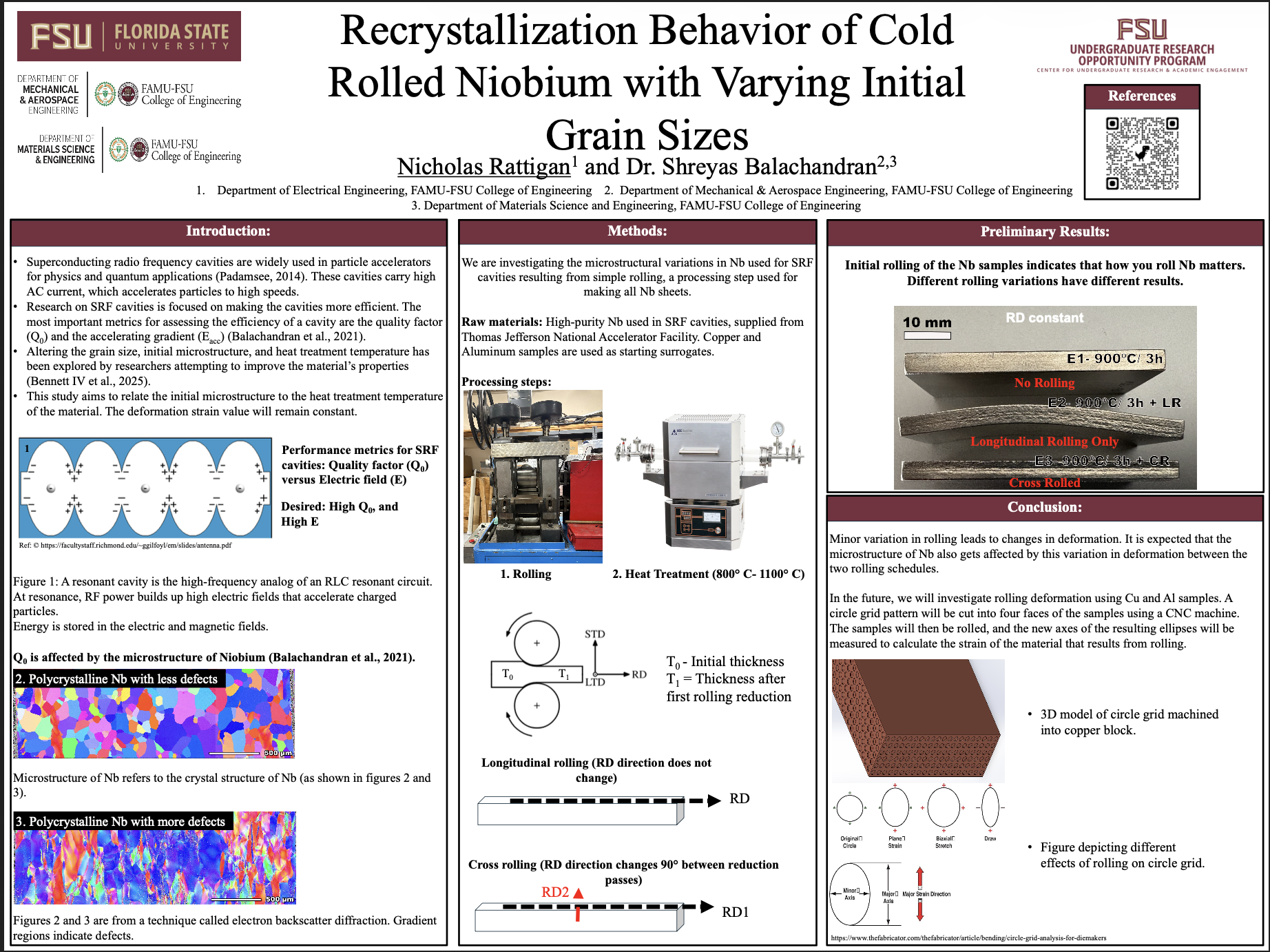
Recrystallization Behavior of Cold Rolled Niobium with Varying Initial Grain Sizes
Authors: Nicholas Rattigan, Dr. Shreyas BalachandranStudent Major: Electrical Engineering
Mentor: Dr. Shreyas Balachandran
Mentor's Department: Department of Materials Science and Engineering Mentor's College: FAMU-FSU College of Engineering Co-Presenters:
Abstract
High purity niobium (Nb) is a technologically important material for superconducting radio frequency (SRF) linear accelerators for electrons and ions (Padamsee, 2014). An important metric for efficiency of these linear accelerators is the quality factor (Q0). The higher the quality factor, the better the cryogenic efficiency. Q0 is directly proportional to the residual surface resistance (Rs) of Nb (Posen et al., 2016). Recent work by FSU researchers (Khanal et al., 2024) shows that Rs of Nb is dependent on the microstructure of Nb after final cavity heat treatments. However, the metallurgical variables in the starting material that control the recrystallization are not well known. In high-purity Nb, the metallurgical variable of the starting billet is the initial grain size (Bennett IV et al., 2025).
In this study, we will perform recrystallization/heat treatment studies on cold-rolled starting Nb microstructures, namely: bi-crystal (a few cms), medium grain (1mm), and fine grain (10s of microns). We will assess the impact of the initial microstructure on the final structure after heat treatment. Here we will quantify the heat treatment temperature as a function of initial microstructure at the same deformation strain value. The preliminary work presented here is a progress report on characterizing the rolling deformation that will be performed.
Keywords: Materials, Engineering, Niobium