
Research Symposium
26th annual Undergraduate Research Symposium, April 1, 2026
Darien Vazquez Poster Session 4: 3:00 pm - 4:00 pm / Poster #206
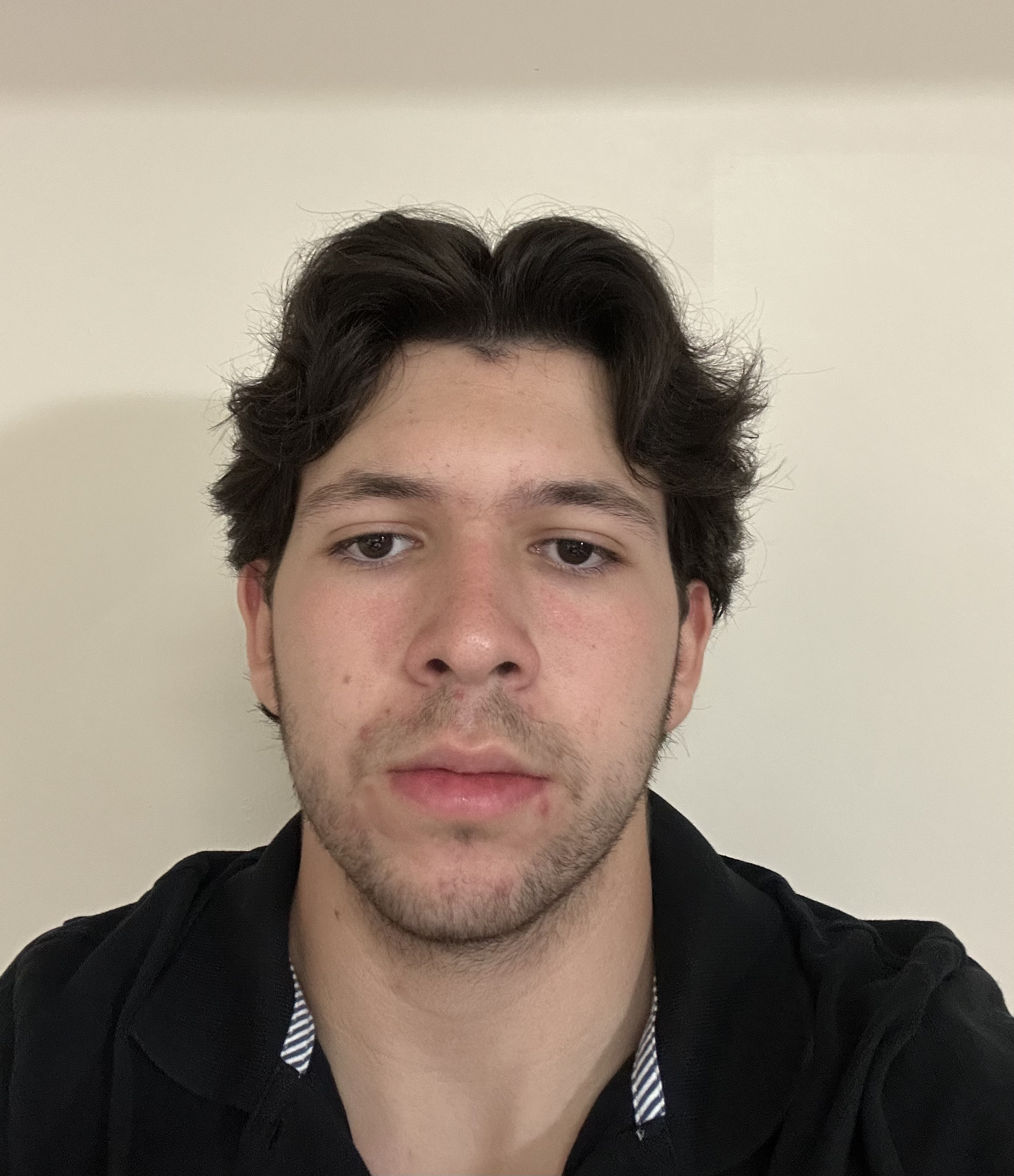
BIO
Darien Vazquez is a sophomore at Florida State University pursuing a Bachelor of Science in Finance and in Math. His academic interests include financial analysis and using quantitative methods to understand real-world problems. He has participated in collaborative research that involved collecting data, analyzing results, and presenting findings in clear and organized ways. Through these experiences, he has developed skills in teamwork and critical thinking.
His research interests focus on how communication education has changed since COVID-19. Vazquez enjoys working on projects that combine analytical thinking with practical applications. He hopes to continue gaining research experience during his undergraduate studies while expanding his knowledge in finance and in math. In the future he plans to become a quantitative analyst where he skills of teamwork and critical thinking can be utilized.
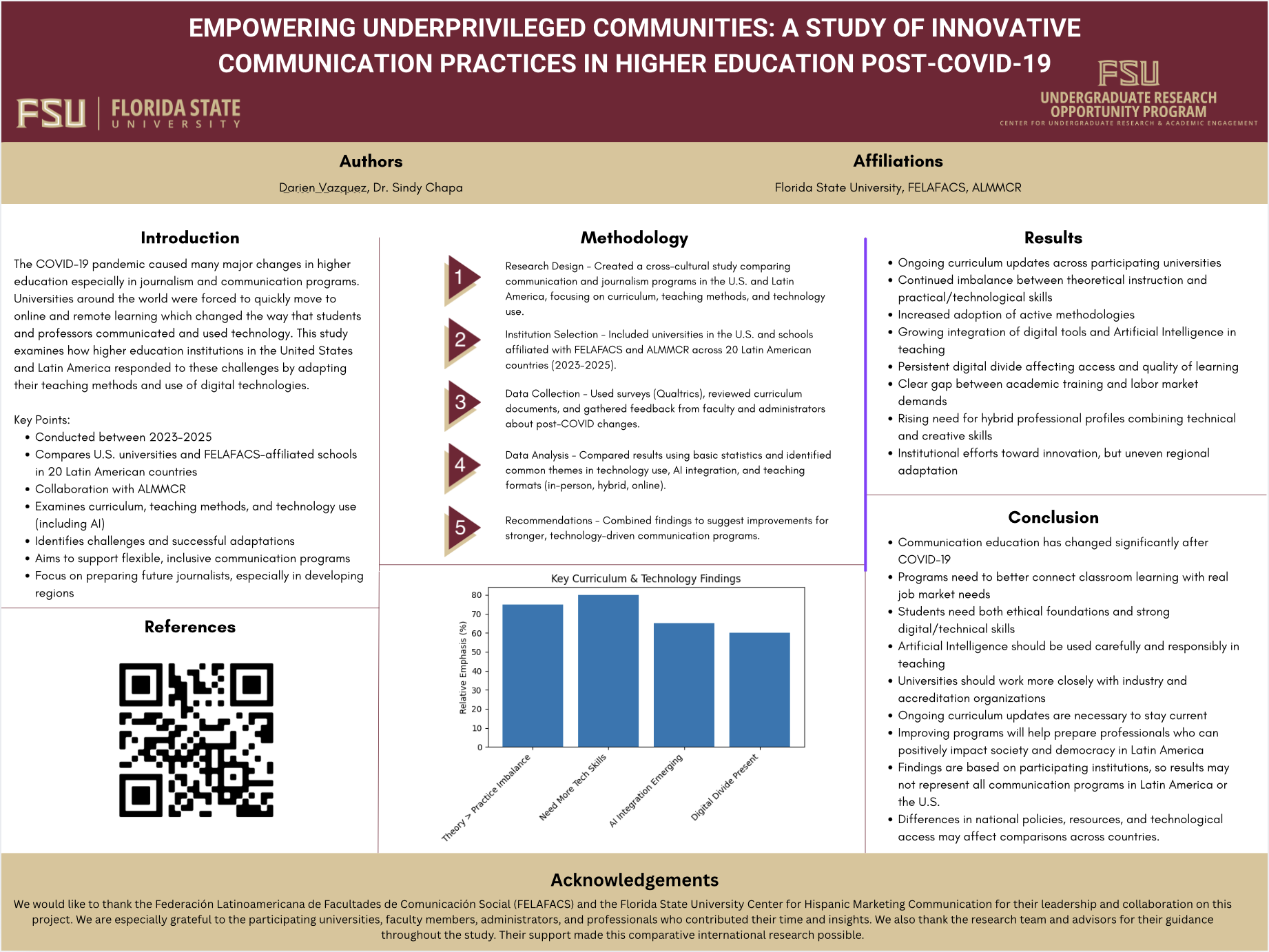
EMPOWERING UNDERPRIVILEGED COMMUNITIES: A STUDY OF INNOVATIVE COMMUNICATION PRACTICES IN HIGHER EDUCATION POST-COVID-19
Authors: Darien Vazquez, Sindy ChapaStudent Major: Finance and Math
Mentor: Sindy Chapa
Mentor's Department: Director of the Hispanic Marketing Center Mentor's College: Communication Co-Presenters:
Abstract
The COVID-19 pandemic caused many major changes in higher education especially in journalism and communication programs. Universities around the world were forced to quickly move to online and remote learning which changed the way that students and professors communicated and used technology. These changes highlighted both new challenges and new opportunities particularly for underprivileged communities that often face limited access to educational resources. This study examines how higher education institutions in the United States and Latin America responded to these challenges by adapting their teaching methods and use of digital technologies.
This research is conducted between 2023 and 2025 to compare schools of journalism and communication in the United States and 20 Latin American countries affiliated with the Latin American Federation of Schools of Social Communication (FELAFACS), in collaboration with the Association for Latin America Media and Marketing Communication Research (ALMMCR). The study focuses on course content, teaching styles, and the use of new technologies, including artificial intelligence.
By identifying key challenges and successful adaptations that emerged during and after the pandemic this research aims to support improvements in communication education. The findings are intended to help universities design more flexible and inclusive programs that better prepare the future journalists and communication professionals particularly in developing and underdeveloped regions of Latin America.
Keywords: Communication Education Post COVID-19
26th annual Undergraduate Research Symposium, April 1, 2026
Aashi Patel Poster Session 3: 1:45 pm - 2:45 pm / Poster #31
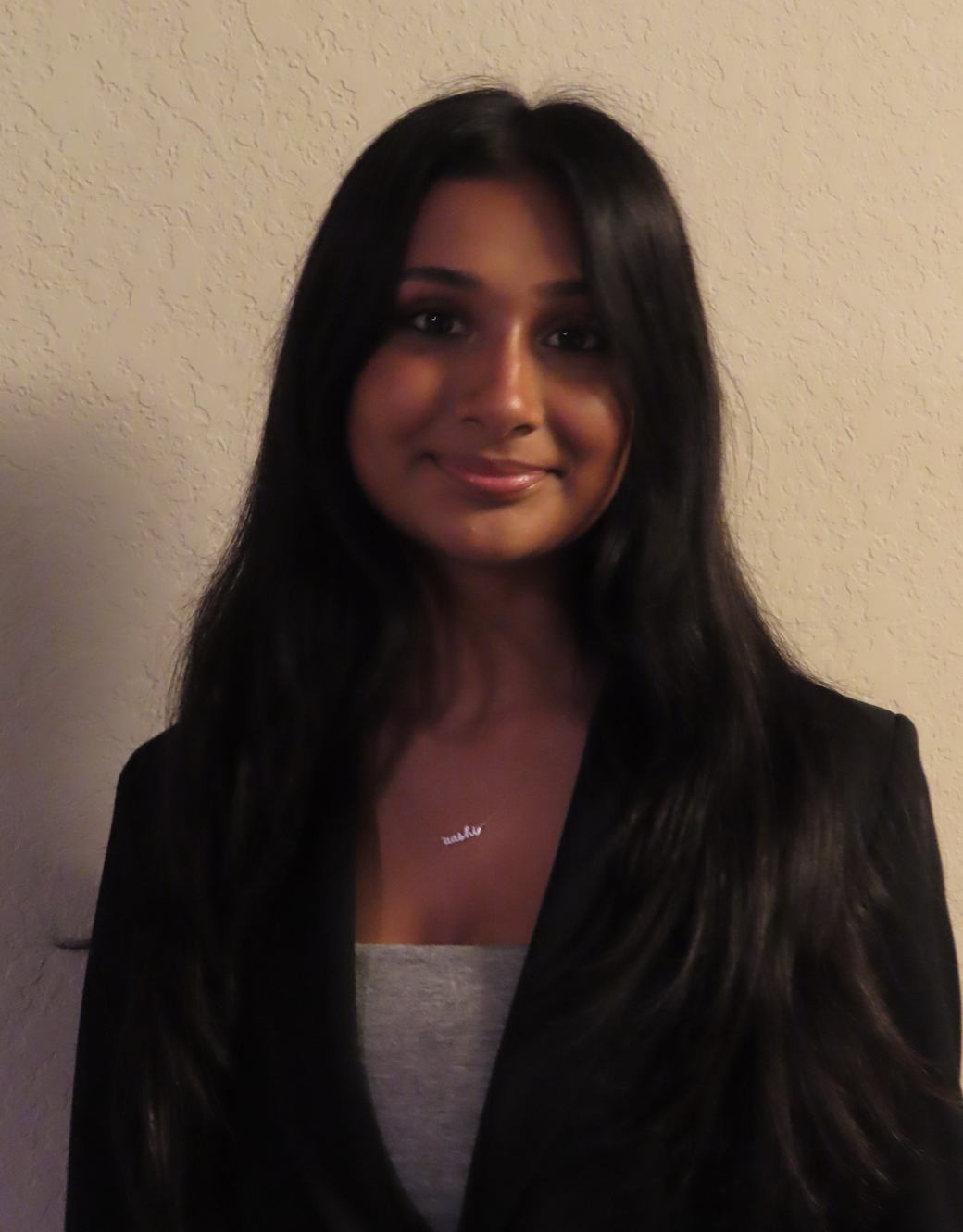
BIO
Aashi Patel is a second-year undergraduate student at Florida State University majoring in Biological Science and Psychology, with minors in Chemistry and Child Development, and is on the Pre-Medical track. She is currently a research assistant within the Martin Lab, working under the mentorship of Danielle N. Jones and Colin B. Bowyer, where she works on various projects studying the effect of cognitive tasks on performance using electroencephalography (EEG) data. She wants to use this experience to pursue a career in medicine with a prospective path in neuroscience.
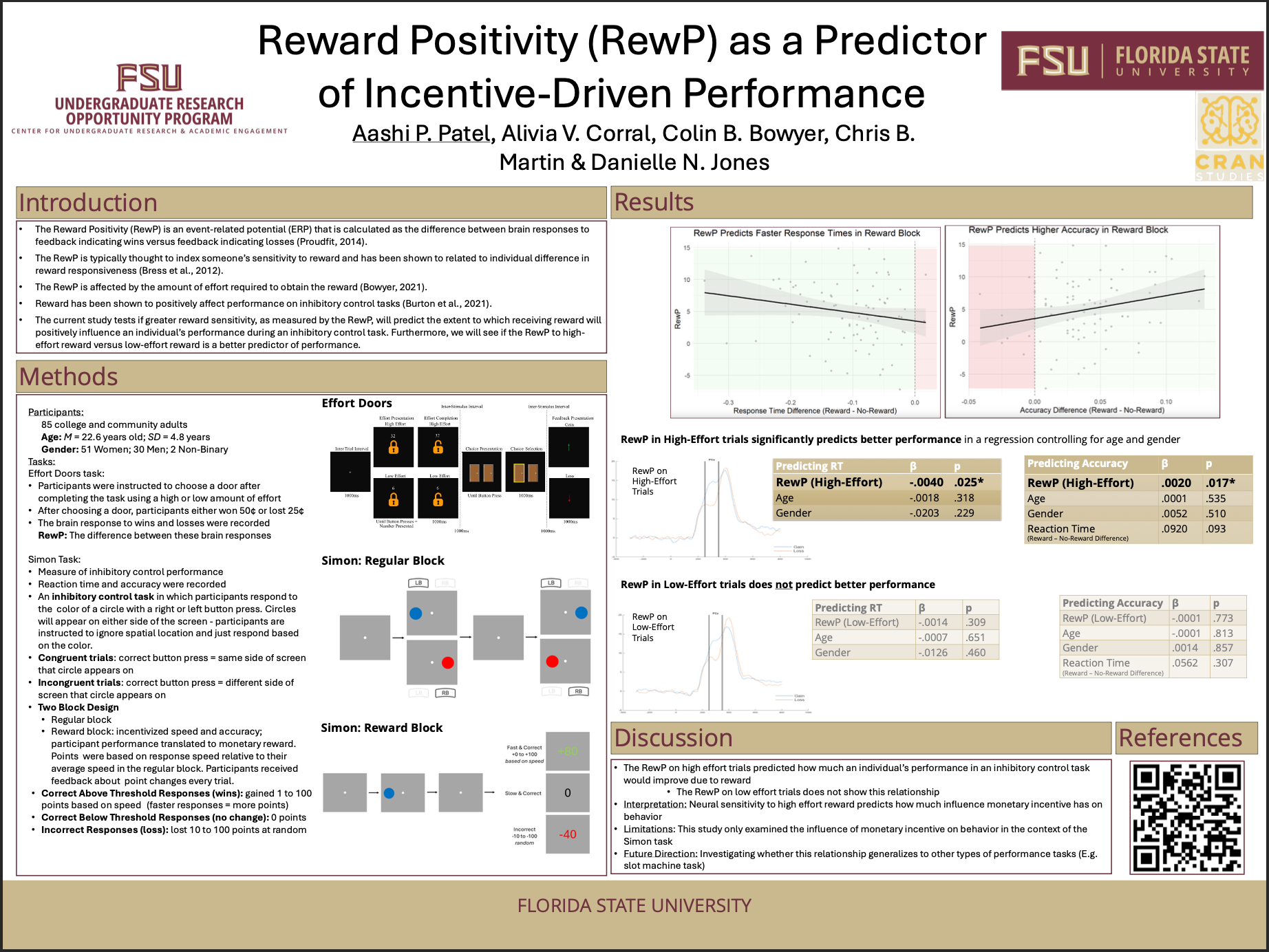
Reward Positivity (RewP) as a Predictor of Incentive-Driven Performance
Authors: Aashi Patel, Danielle JonesStudent Major: Biological Science & Psychology
Mentor: Danielle Jones
Mentor's Department: Psychology Mentor's College: College of Arts and Sciences Co-Presenters:
Abstract
Past work has reliably shown that providing individuals with monetary incentives during inhibitory control tasks leads them to have improved task performance. The Reward Positivity (RewP) is an event-related potential (ERP) that indexes an individual’s sensitivity to reward. We hypothesized that a greater RewP would predict the extent to which receiving reward would improve an individual’s performance during an inhibitory control task. First, 90 student and community participants completed an Effort Doors task while electroencephalography (EEG) data was recorded. The RewP was defined as the difference between their brain response to feedback indicating that they won or lost money. Subsequently, participants completed a two-block Simon task: the first block quantified their baseline speed and the second block provided a monetary incentive for correct responses that were faster than their baseline average speed. The difference between response times in the first and second block was calculated to quantify the effect of reward on performance. A significant positive relationship was found between the RewP response and this difference score, suggesting that individual differences in reward sensitivity, as indexed by RewP, play a role in how strongly incentives modulate task performance.
Keywords: EEG, Reward Positivity, Brain Response
26th annual Undergraduate Research Symposium, April 1, 2026
Elisabeth Mahepaul Poster Session 4: 3:00 pm - 4:00 pm / Poster #248
BIO
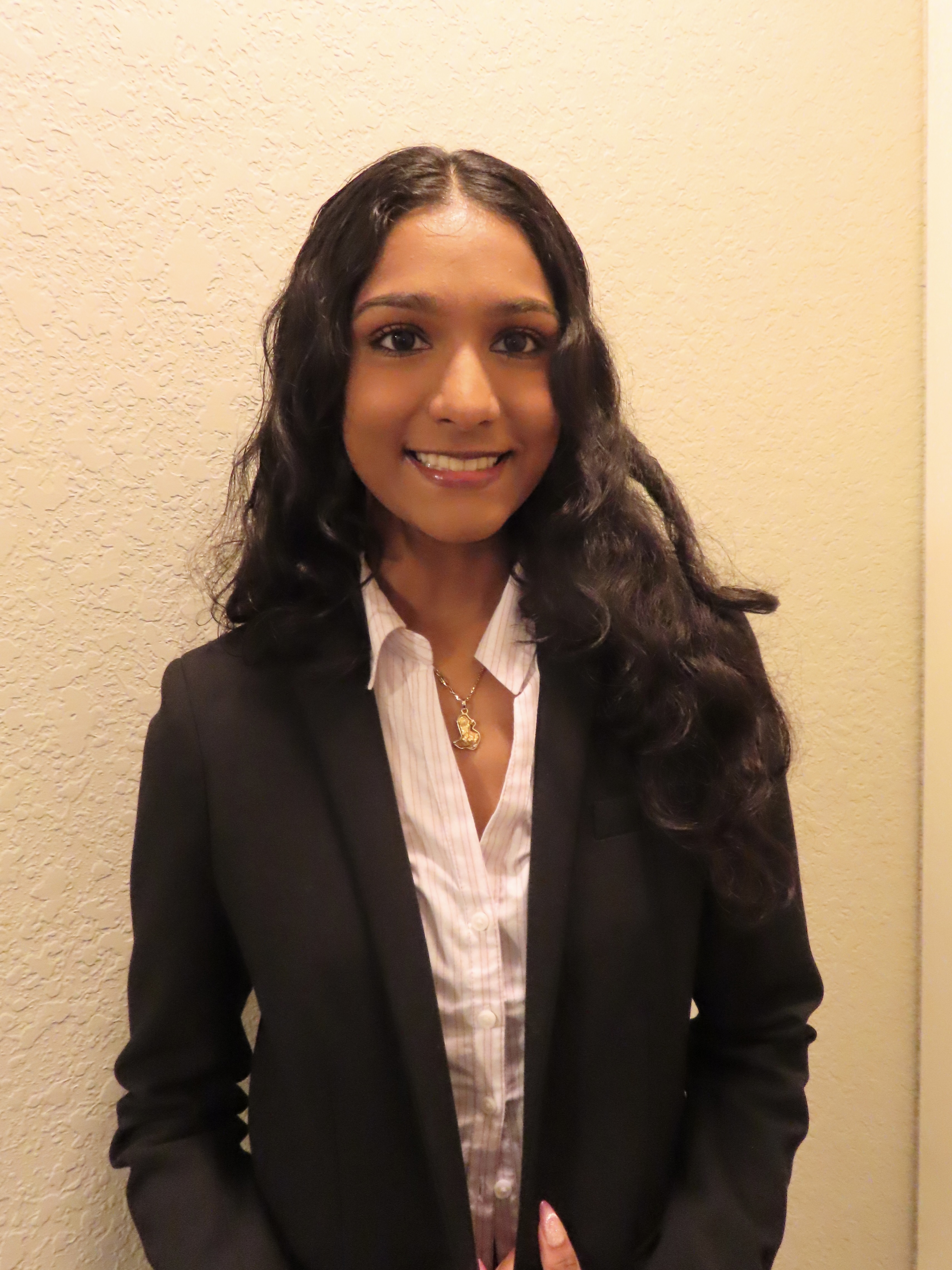
Elisabeth Mahepaul is a sophomore, majoring in Behavioral Neuroscience with minors in Chemistry and Childhood Development. She is currently a research assistant within the March Lab, working under Dr. David March and graduate students: Vincenzo J. Olivett, Patrick J. Oefelein, and Maria C. Gullesserian. Elisabeth has presented at multiple research conferences, such as the Society of Southeastern Social Psychologists in St. Petersburg, Florida and the First Undergraduate Research Symposium at the University of North Florida. She is currently a Certified Clinical Medical Assistant, pursuing a career in medicine, with prospective specialization in psychiatry.
The Civilian’s Dilemma: Civilians Exhibit Automatic Defensive Responses to the Police
Authors: Elisabeth Mahepaul, Vincenzo OlivettStudent Major: Behavioral Neuroscience
Mentor: Vincenzo Olivett
Mentor's Department: Psychology Mentor's College: College of Arts and Sciences Co-Presenters:
Abstract
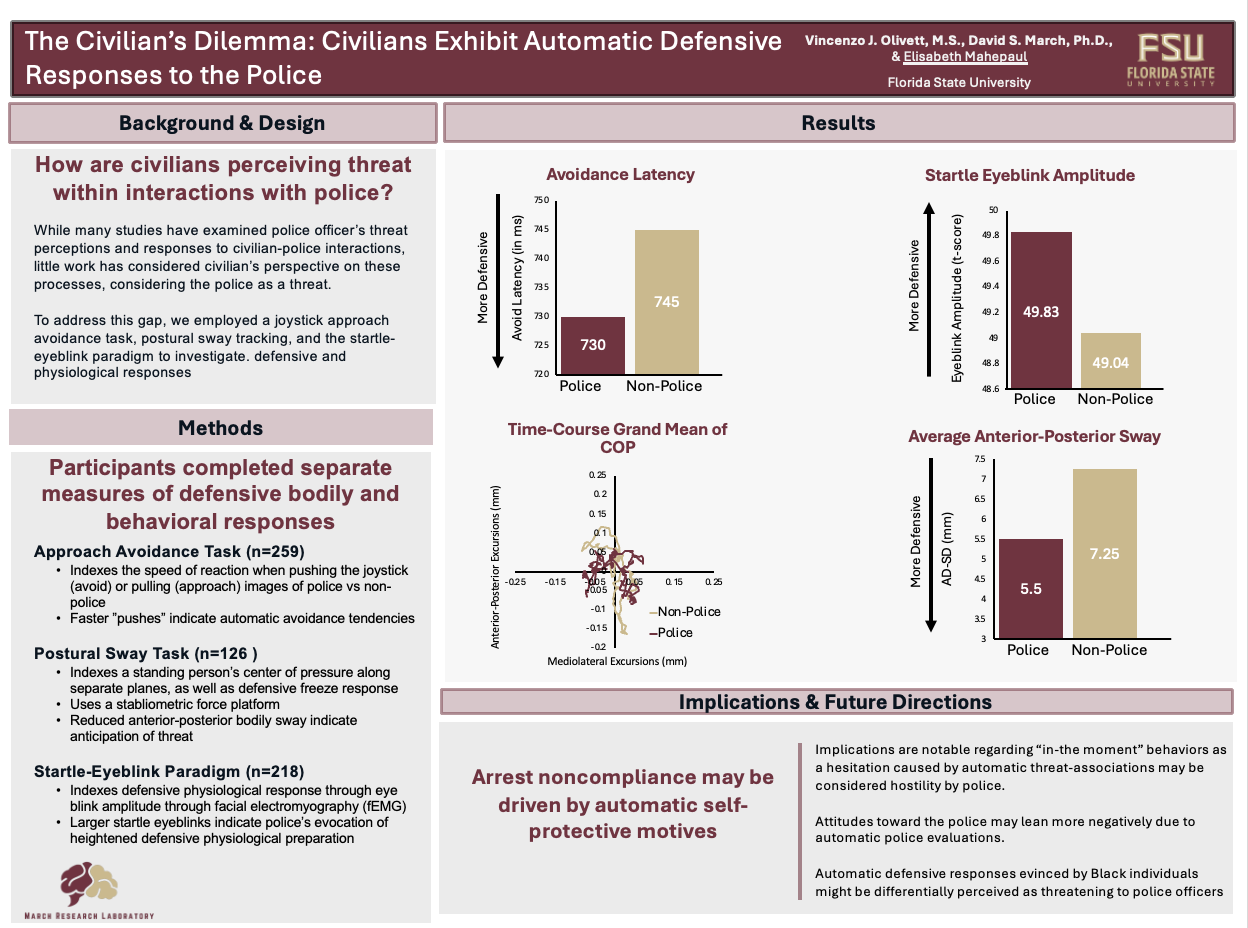
Physical violence is a consistent offspring of civilian-police interactions, with both parties existing on the receiving and presenting end. The goal of the following work is to examine the threat perception of said violence from the civilian's perspective, bridging the gap between police and civilian experience of threat. The investigation consisted of three studies (N=603), utilizing approach-avoidance tasks, assessments of postural sway, and facial electromyography. Study 1 assessed avoidance of police versus non-police, Study 2 targeted a defensive motor freeze response, and Study 3 evaluated startle reflexes. The studies concurrently cemented the notion that police (opposed to non-police) consistently evoke defensive physiological responses from civilians. The implications lie within the motivations of civilians, specifically the idea that 'resistance' may sometimes derive from innate defensive measures, opposed to noncompliance. Police retribution occurs in response to noncompliance, a perceived threat- threat that may be easily explained by physiological reaction.
Keywords: Prejudice, Threat
26th annual Undergraduate Research Symposium, April 1, 2026
Santiago Rojas Poster Session 2: 10:45 am - 11:45 am / Poster #136
BIO
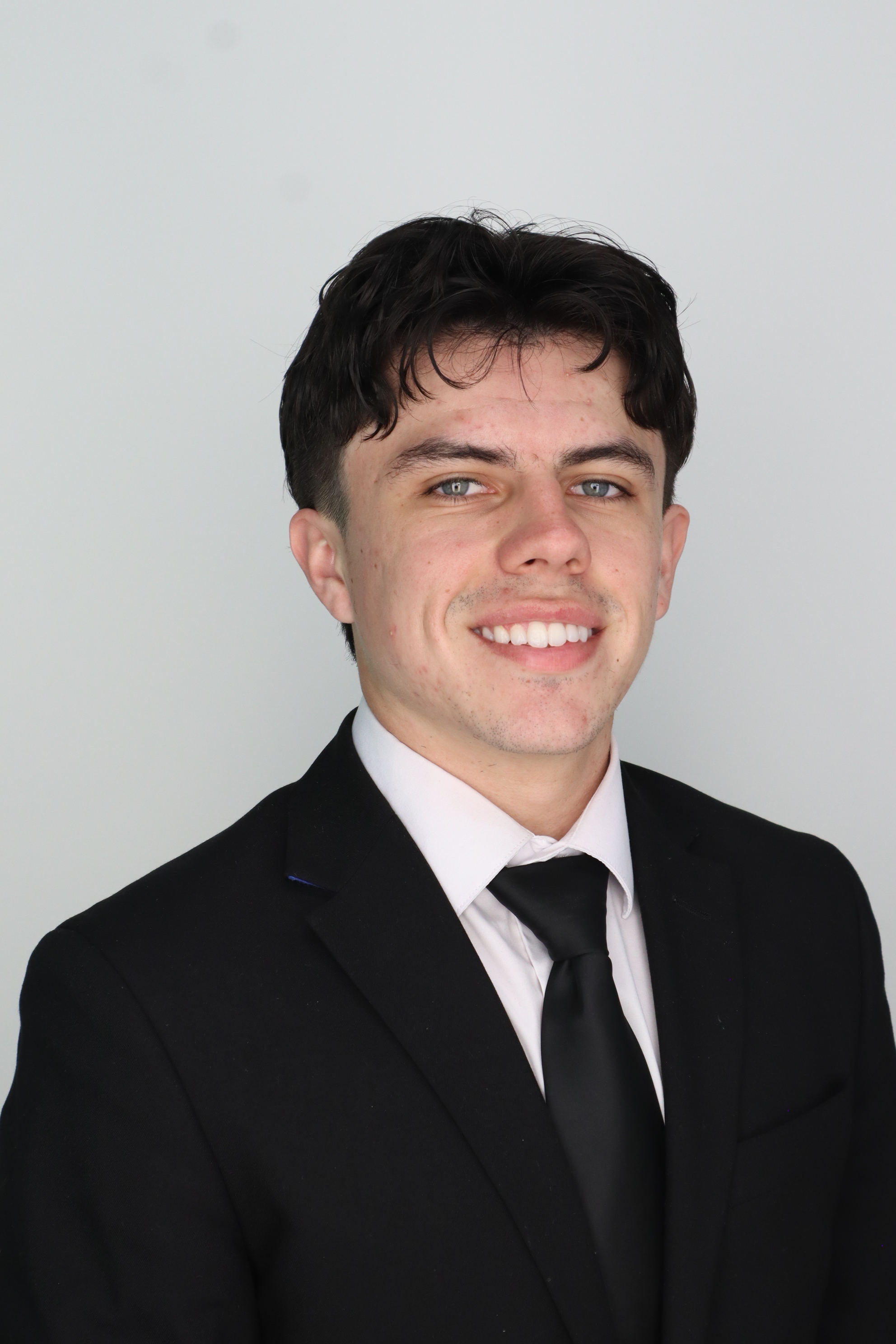
Santiago Rojas is a first-year student at Florida State University pursuing a Bachelor of Science in Mechanical Engineering with minors in Business Analytics and Mathematics. He is involved in undergraduate research focused on developing a diver-assist underwater exoskeleton, where he helps design a waterproof wrist-mounted control system using force-sensitive resistors and microcontrollers. His work emphasizes practical mechatronics solutions for underwater environments, and he collaborates with a research team.
Rojas also serves as Project Manager for a team in NASA’s L’SPACE Proposal Writing Evaluation Experience. In this role, he led an eleven-member team that designed a swarm robotics framework for autonomous planetary exploration and servicing missions. The team’s proposal was selected as one of the top concepts in the program and received a $10,000 NASA award.
Outside of research, he is an active member of Theta Tau Professional Engineering Fraternity and the Society of Hispanic Professional Engineers (SHPE). Rojas plans to pursue a career in robotics, aerospace systems, or advanced manufacturing while continuing to contribute to innovative engineering research and development.
Under Water Exoskeleton for Diver Assistance
Authors: Santiago Rojas, Taylor HigginsStudent Major: Mechanical Engineering
Mentor: Taylor Higgins
Mentor's Department: Mechanical Engineering Mentor's College: College of Engineering Co-Presenters:
Abstract
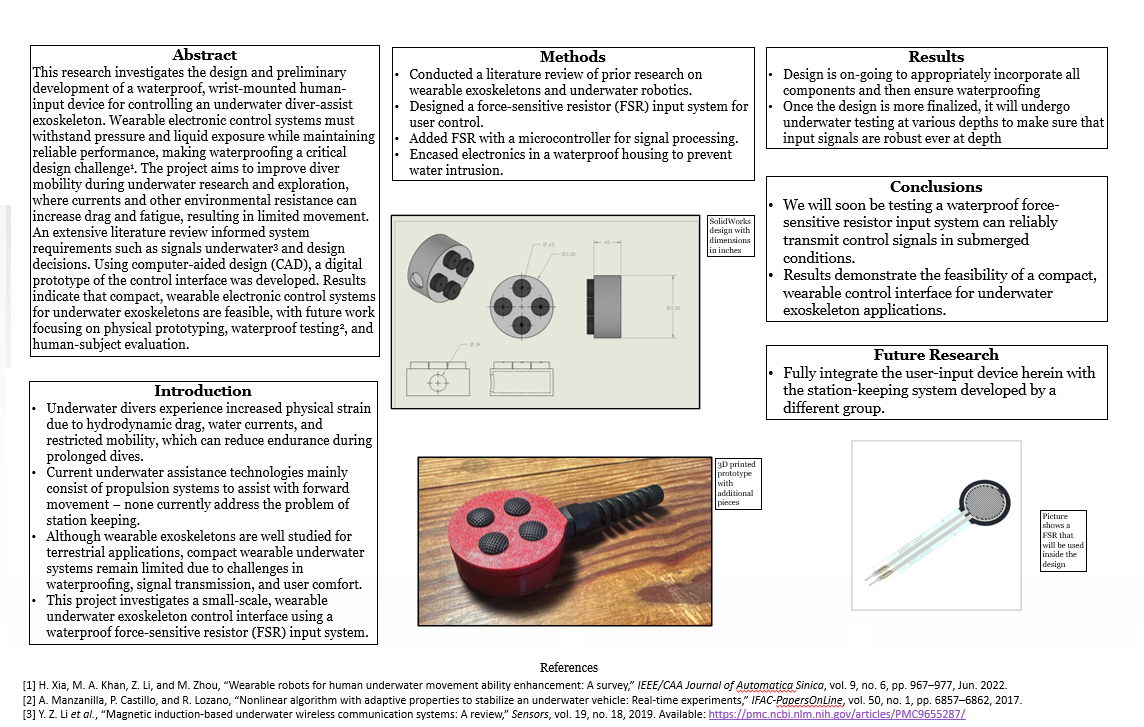
This research investigates the design and preliminary development of a waterproof, wrist-mounted human-input device for controlling an underwater diver-assist exoskeleton. Wearable electronic control systems must withstand pressure and liquid exposure while maintaining reliable performance, making waterproofing a critical design challenge. The project aims to improve diver mobility during underwater research and exploration, where currents and other environmental resistance can increase drag and fatigue, resulting in limited movement. An extensive literature review informed system requirements such as signals underwater and design decisions. Using computer-aided design (CAD), a digital prototype of the control interface was developed. Results indicate that compact, wearable electronic control systems for underwater exoskeletons are feasible, with future work focusing on physical prototyping, waterproof testing, and human-subject evaluation.
Keywords: Mechatronics, Exoskeleton, Underwater.
26th annual Undergraduate Research Symposium, April 1, 2026
Martina Madrzak Poster Session 4: 3:00 pm - 4:00 pm / Poster #2
BIO
Martina Madrzak is a sophomore at Florida State University pursuing a Bachelor of Science in Biological Sciences. Martina was first inspired by scientific research when she attended a Duke University Summer Research Program following her freshman year, where she studied Cryptococcus neoformans, a fungal pathogen, examining its virulence traits in natural environments and drawing connections to clinical cases. Her work contributed to identifying a potential genetic mutation that enables diploid Cryptococcus cells to sustain infection in the body. Following her experience at Duke, Martina conducted research through FSU's Undergraduate Research Opportunity Program (UROP) with the Solís Lab, focusing on structural biology and biochemistry with a focus on the alpha-actinin-2 protein.
Throughout all this research, Martina has found her enjoying dry lab aspects and has a growing curiosity towards computational biology. Martina will be pursuing an NSF-funded Research Experience for Undergraduates (REU) through Rosetta Commons in the Strauch Lab, where she is working on computational protein engineering and expanding her expertise in structural biology and protein research from the Solís Lab. She is also a member of the Modeling and Design Team of FSU's iGEM team and serves as an officer of the Business and STEM Association.
Martina is passionate about the intersection of computational biology, business, and entrepreneurship, and hopes to pursue opportunities that merge scientific innovation with real-world application.
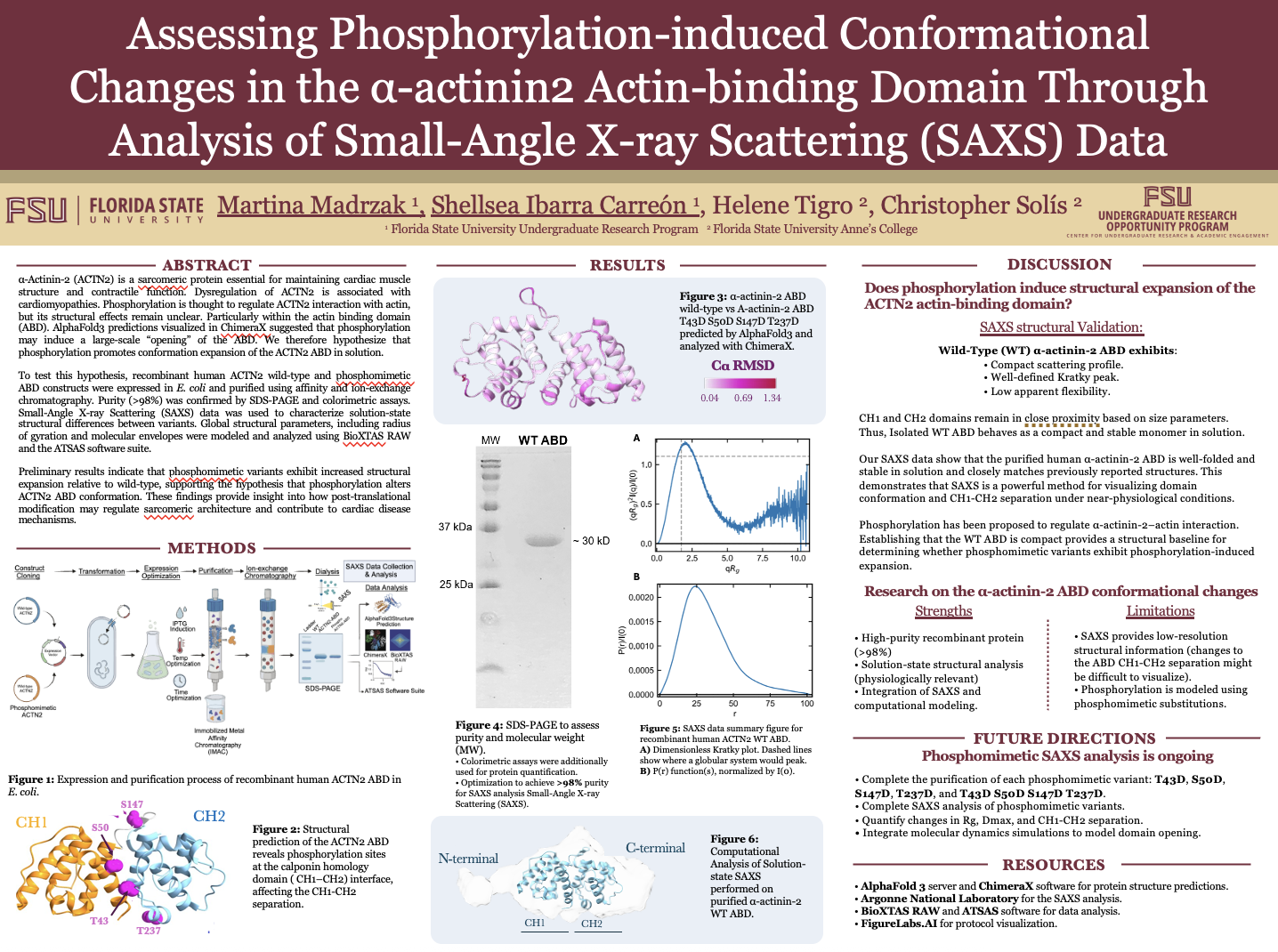
Assessing phosphorylation-induced conformational changes in the α-actinin2 actin-binding domain through analysis of Small-Angle X-ray Scattering (SAXS) data
Authors: Martina Madrzak, Helene TigroStudent Major: Biological Sciences
Mentor: Helene Tigro
Mentor's Department: Department of Health, Nutrition, and Food Sciences Mentor's College: Anne's College Co-Presenters: Shellsea Ibarra Carreón
Abstract
α-Actinin-2 (ACTN2) is a sarcomeric actin-crosslinking protein essential for maintaining cardiac
muscle structure and function, and mutations or dysregulation of ACTN2 have been linked to
cardiomyopathies. Phosphorylation is thought to regulate ACTN2 activity, but its structural
effects remain unclear. Structural predictions generated using AlphaFold3 and visualized in
ChimeraX suggested that phosphorylation may induce an opening of the actin-binding domain
(ABD). Based on these computational observations, we hypothesized that phosphorylation
promotes conformational expansion of the ACTN2 ABD in solution.
To test this, recombinant human ACTN2 wild-type and phosphomimetic ABD constructs were
expressed in Escherichia coli and purified using sonication, ultracentrifugation, affinity chromatography, ion-exchange chromatography, and dialysis. Protein purity (>98%) was verified
by SDS-PAGE and colorimetric protein quantification assays. Small-Angle X-ray Scattering
(SAXS) was then used to examine solution-state structural differences between variants. SAXS
data were processed and analyzed using BioXTAS RAW and the ATSAS software suite to
evaluate global structural parameters, including radius of gyration and molecular envelopes.
Preliminary results indicate that phosphomimetic variants exhibit increased structural expansion
relative to wild-type, supporting the hypothesis that phosphorylation alters ACTN2 conformation.
These findings provide insight into how post-translational modification may regulate sarcomeric
architecture and contribute to cardiac disease mechanisms
Keywords: biology, computational, biochemistry,
26th annual Undergraduate Research Symposium, April 1, 2026
Kathleen Ciaccio Poster Session 4: 3:00 pm - 4:00 pm / Poster #62
BIO
Kathleen Ciaccio is a freshman student at FSU pursuing a Bachelor of Science in Chemistry with a minor in Mathematics. She conducts research under Dr. Eric Hellstrom and Dr. Aixia Xu at the National High Magnetic Field Laboratory, where she works on growing Bi-2212 superconducting whisker crystals and grain-boundary analysis. Her interests include material science and superconductivity. Kathleen is a member of the Undergraduate Research Opportunity Program (UROP) at FSU and plans to continue her academic journey by obtaining a graduate degree in Materials Chemistry.
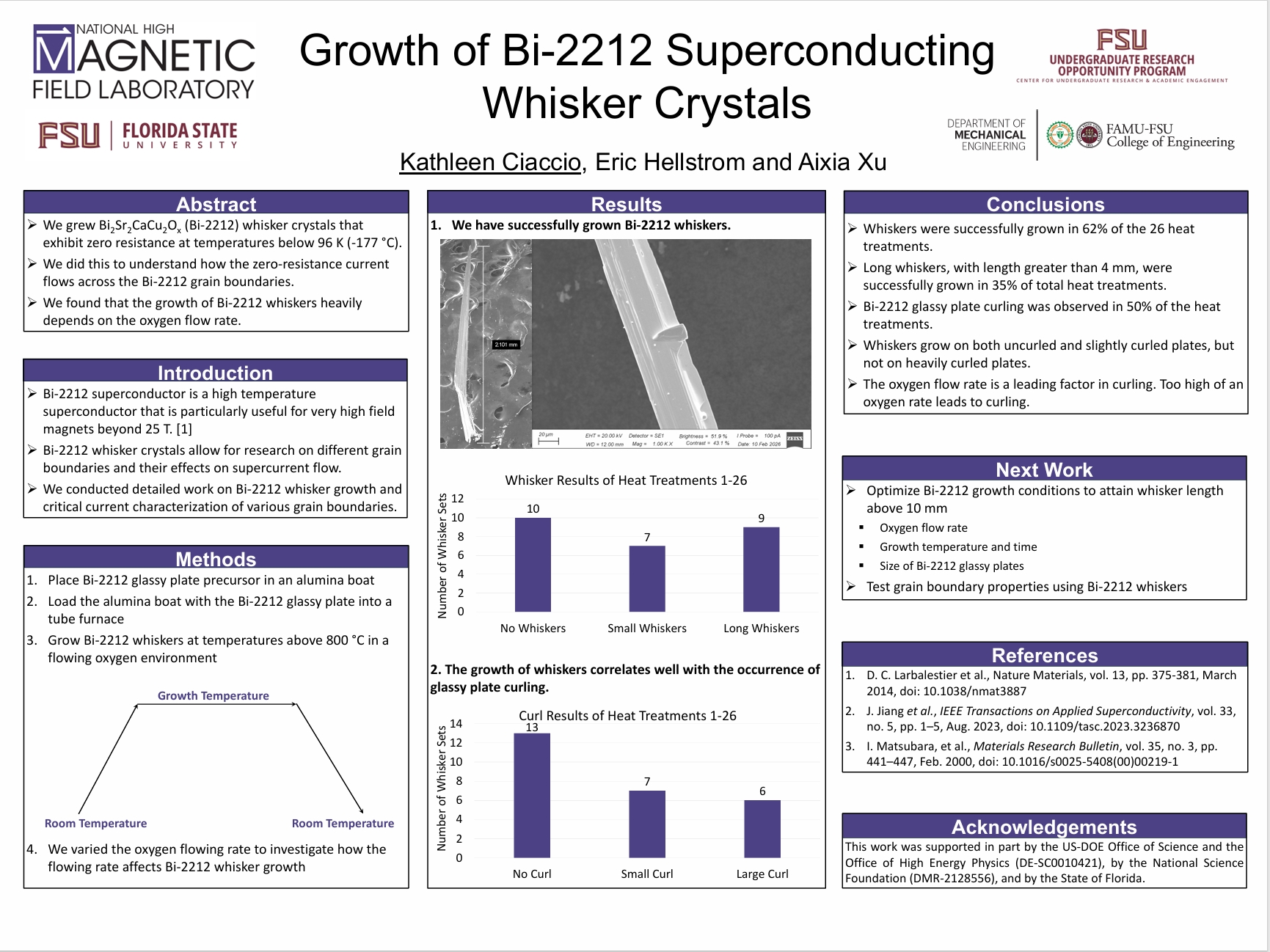
Growth of Bi-2212 Superconducting Whisker Crystals
Authors: Kathleen Ciaccio, Dr. Eric HellstromStudent Major: Chemistry
Mentor: Dr. Eric Hellstrom
Mentor's Department: Mechanical Engineering Mentor's College: FAMU-FSU College of Engineering Co-Presenters:
Abstract
Bi-2212 superconductor wires exhibit a very high critical current density and are under intense investigation for very high field magnet applications above 25 T, yet their performance is limited by a lack of knowledge about how supercurrent flows across grain boundaries. Bi-2212 whisker crystals provide a platform for studying different grain boundaries and their effects on supercurrent flow. We conducted detailed work on Bi-2212 whisker growth and critical current characterization of various grain boundaries. We observed that Bi-2212 whiskers were grown in 62% of heat treatments, with long whiskers making up 35%. Either a slight or large curl was found in 50% of heat treatments. Successful whisker sets include long whiskers with minimal or no curl. These findings highlight the sensitivity of Bi-2212 whisker growth and the necessity for further research into the causes of the curling and the results of grain-boundaries testing.
Keywords: Whiskers, Bi-2212, Superconductor
26th annual Undergraduate Research Symposium, April 1, 2026
Ambar Fernandez Poster Session 4: 3:00 pm - 4:00 pm / Poster #27
BIO
Ambar Fernandez is a first-year college student pursuing a Bachelor of Science in Cell and Molecular Neuroscience. She is passionate about understanding the brain’s complexities and is particularly interested in the biological mechanisms underlying neurodegenerative diseases. Through UROP, Ambar works in a lab investigating which mild cognitive impairment markers best predict Alzheimer’s disease, gaining hands-on experience in experimental design, data analysis, and laboratory techniques under the guidance of faculty mentors. Looking ahead, Ambar aims to continue conducting laboratory research in neuroscience, ultimately pursuing graduate studies to become a neuroscientist focused on neurodegenerative disorders. She is eager to deepen her expertise, contribute to discovery in the field, and engage with FSU’s vibrant research community.
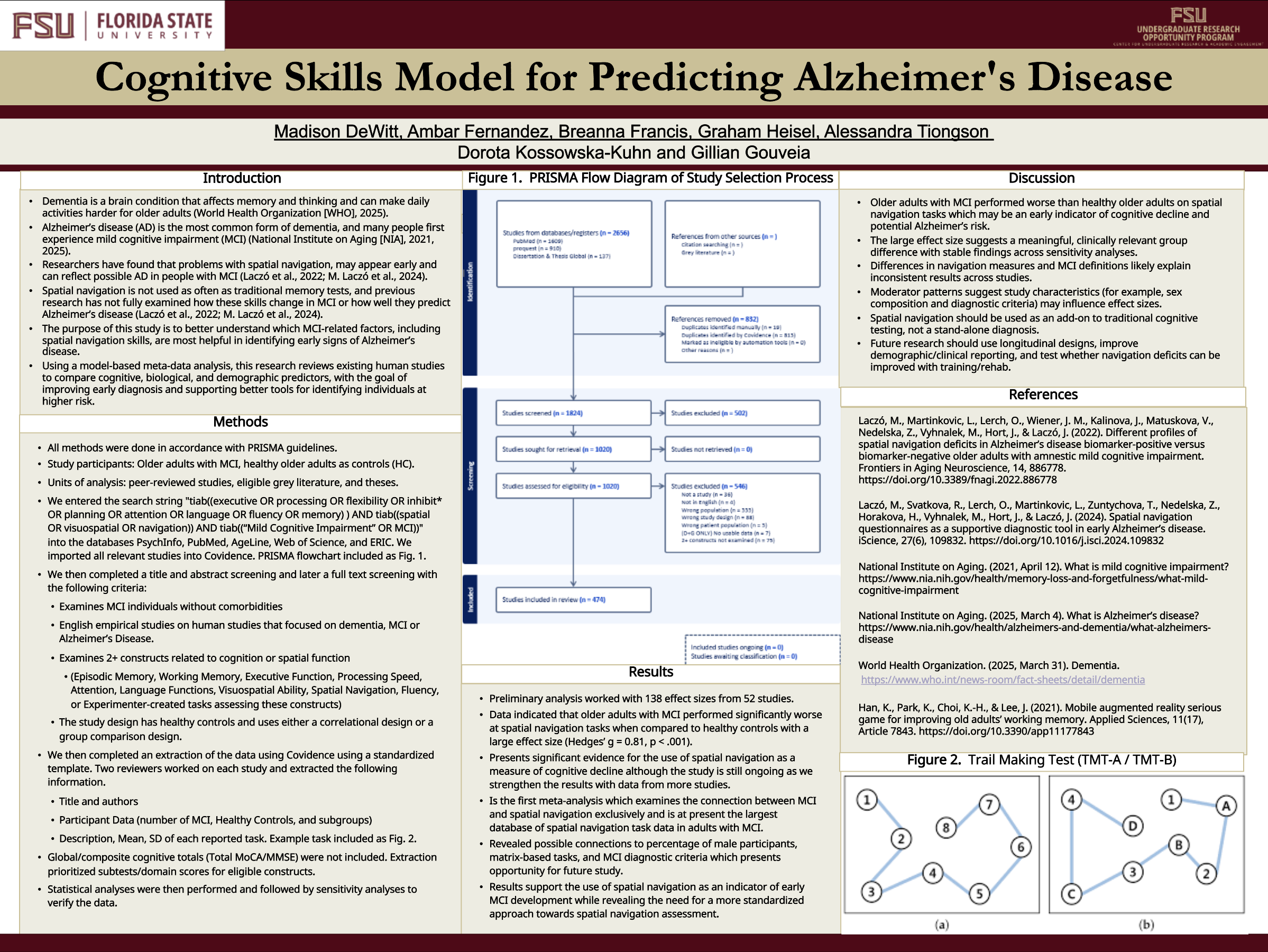
Development and validation of the test predicting spatial navigation performance
Authors: Ambar Fernandez, Dorota Kossowska-KuhnStudent Major: Cell and Molecular Neuroscience
Mentor: Dorota Kossowska-Kuhn
Mentor's Department: Psychology Mentor's College: Arts and Sciences Co-Presenters: Alessandra Tiongson, Graham Heisel, Breanna Francis, Madison DeWitt
Abstract
Mild Cognitive Impairment (MCI) is a condition in which individuals experience cognitive decline beyond what is expected with normal aging, while still being able to complete most daily activities independently. MCI is often viewed as an early stage that may precede Alzheimer’s disease (AD) and provides an important opportunity to identify early indicators of neurodegeneration, though not all individuals with MCI progress to AD. Because of this uncertainty, identifying reliable predictors of Alzheimer’s disease within MCI populations remains an ongoing challenge. The purpose of this study was to examine differences in domain-specific cognitive performance, including spatial navigation, between individuals with MCI and cognitively healthy older adults and to determine which cognitive areas show early decline. We started by importing 1,824 studies into the Covidence program, which were sorted through and screened for admission to the database. We then screened the articles based on title and abstract to roughly narrow the studies, and finally, we completed a full-text review to bring our final number of studies to 600 articles to be extracted. Results show that individuals with MCI perform worse than cognitively healthy older adults across several cognitive domains, including spatial navigation and memory. This shows the connection between spatial navigation tasks and older adults with MCI while highlighting the need for further measures of spatial navigation in screening. The connection proven by our study can be used to modify the current screening procedures in MCI and help better the methods for detecting cognitive decline during that critical early period.
Keywords: Alzheimer's, Spatial Navigation, MCI
26th annual Undergraduate Research Symposium, April 1, 2026
Drew Sexton Poster Session 2: 10:45 am - 11:45 am / Poster #206
BIO
Drew Sexton is a second-year undergraduate student from Tarpon Springs, Florida, studying Psychology and Philosophy at Florida State University. After working in the Laboratory for the Study and Prevention of Suicide-Related Conditions and Behaviors at FSU, Drew hopes to continue doing research at the graduate level. He is chiefly interested in what it means to live well and how to cultivate such a life from both a clinical and philosophical perspective.
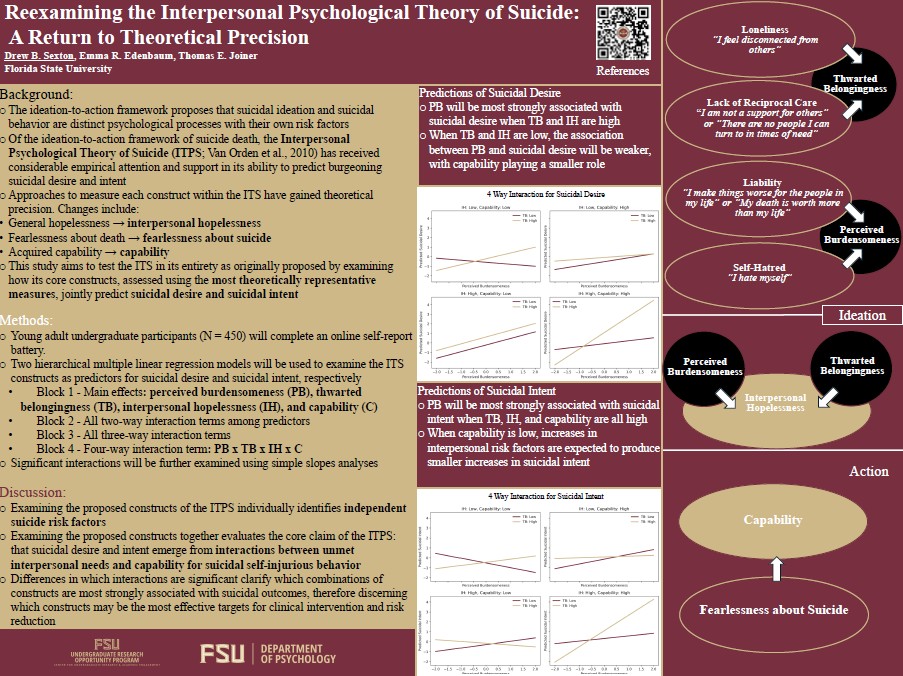
Reexamining the Interpersonal Psychological Theory of Suicide: A Return to Theoretical Precision
Authors: Drew Sexton, Emma EdenbaumStudent Major: Psychology/ Philosophy
Mentor: Emma Edenbaum
Mentor's Department: Psychology Mentor's College: College of Arts and Sciences Co-Presenters:
Abstract
Over the last two decades great progress has been made in developing empirical theory driven models of suicidal behavior, with one of the most important models being the Interpersonal Theory of Suicide (ITS) (Joiner, 2005). The ITS proposes that suicidal desire arises from interpersonal hopelessness (IHS) surrounding perceived burdensomeness (PB) and thwarted belongingness (TB), with capability enabling lethal suicidal behavior. The immense amount of research conducted regarding the ITS has resulted in improved forms of measurement of IHS, PB, and TB. Our research leverages these improved forms of measurement in order to test the ITS accurately. 450 adult participants will complete an online self-report battery of all known validated English measures of the ITS constructs. Using a hierarchical multiple regression, we will examine whether IHS, PB, TB, and capability predict suicidal desire and behavior. While specific constructs within the ITS have already been tested in their interactions with one another, all of them have yet to be examined interacting together in the complex way they were originally hypothesized to interact.
Keywords: Clinical Psychology; Suicide; Interpersonal; Psychology
26th annual Undergraduate Research Symposium, April 1, 2026
Isaac Berger Poster Session 4: 3:00 pm - 4:00 pm / Poster #114
BIO
Isaac Berger is a freshman in the Honors Program pursuing a Bachelor of Science in Biology on the pre-med track at Florida State University. He is from Fort Lauderdale, Florida, and his interests include mathematics, art, exercise, and reading.
Isaac is currently involved in undergraduate research through the Undergraduate Research Opportunity Program, where he studies motor learning in athletes at the FSU Flying High Circus. His research examines how student athletes learn and refine balance-based skills, such as the Rola Bola, contributing to a better understanding of human motor learning and performance. This project is conducted under the mentorship of Dr. Taylor Higgins, a professor at the FAMU-FSU College of Engineering.
After completing his undergraduate degree, Isaac plans to attend medical school with the goal of becoming a cardiothoracic surgeon. Through his academic coursework and research experience, he hopes to build a strong scientific foundation that will support his future career as a clinician.
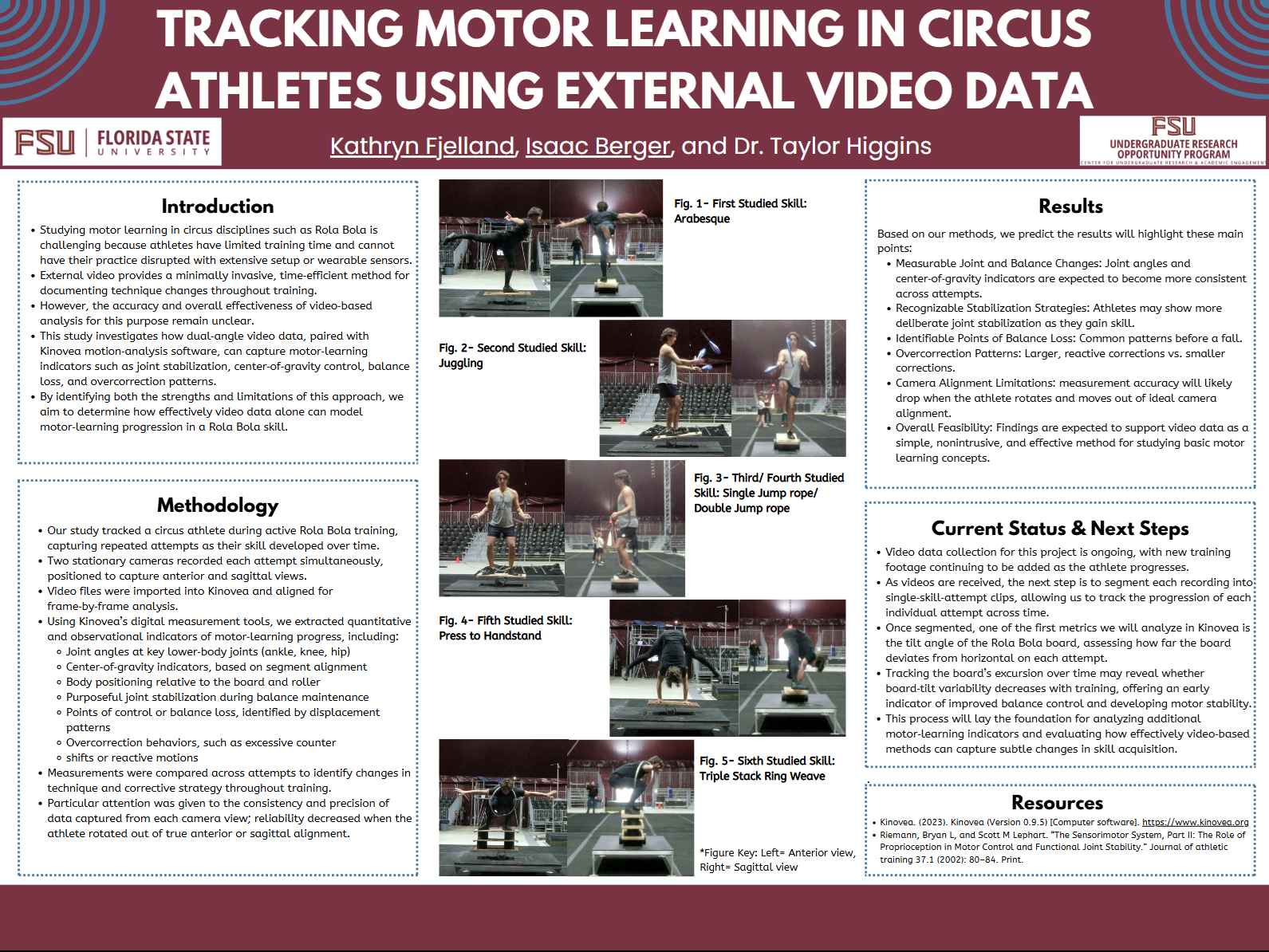
TRACKING MOTOR LEARNING IN CIRCUS ATHLETES USING EXTERNAL VIDEO DATA
Authors: Isaac Berger, Taylor HigginsStudent Major: Biology
Mentor: Taylor Higgins
Mentor's Department: Mechanical Engineering Mentor's College: FAMU-FSU College of Engineering Co-Presenters: Kathryn Fjelland
Abstract
Understanding the progression of motor learning in circus talents such as Rola Bola presents a unique challenge when working solely with external video data. Our study investigates how this type of video data can be effectively acquired and used to analyze motor learning development. We used two motion cameras to get both a front and sagittal view of the athlete and aimed to use the video analysis software Kinovea to derive measurable data points to track progress. This data would include joint angles, center of gravity, and body positioning. A few concepts we were particularly hoping to track were the impact of purposeful joint stabilization, the point of control or balance loss, and what aspects lead to overcorrection. We predict our results will indicate that video data is an effective and nonintrusive study method and that Kinovea could be effectively used if the athlete stayed in alignment with the cameras. Overall, our study hopes to determine that video data is an effective method to study basic motor concepts like balance, corrections, and failure patterns on a small scale and is a simple and affordable way to carry out our research. The use of video data has broader implications for athletes, coaches, medicine, and the study of motor learning, as it can support more informed coaching decisions, enhance injury‑prevention strategies, and make biomechanical feedback accessible in settings that lack advanced motion‑capture technology.
Keywords: Motor Learning Circus Video Data
26th annual Undergraduate Research Symposium, April 1, 2026
Kate Khvorostiana Poster Session 2: 10:45 am - 11:45 am / Poster #32
BIO
Kate Khvorostiana is a first-year student on a path to complete a Bachelor of Arts in International Affairs. She is a part of the Class of 2029 cohort of the prestigious Presidential Scholars program, where she has engaged in various advancement and academic discourse opportunities. Outside of the program, Kate is actively involved with on-campus organizations such as the Delta Zeta sorority, the Kappa Alpha Pi Pre-Law Fraternity, FSU Honors, and Seminoles Engaged in Politics. While she is interested in studying global politics and international conflict, she has found a passion for exploring the Eastern European region, as she is originally from Ukraine. Kate's cultural roots have driven her desire to study the current relations and consequently prompted her to co-found a nonprofit organization, "Bridging Borders for Ukraine," which aims to teach war-affected students English. This UROP project builds on Kate's previous involvement in her local Miami-Dade community, where she actively participated in Teen Court proceedings as a student volunteer. Upon completion of her bachelor's degree, Kate plans to attend law school on a path towards a career in international law.
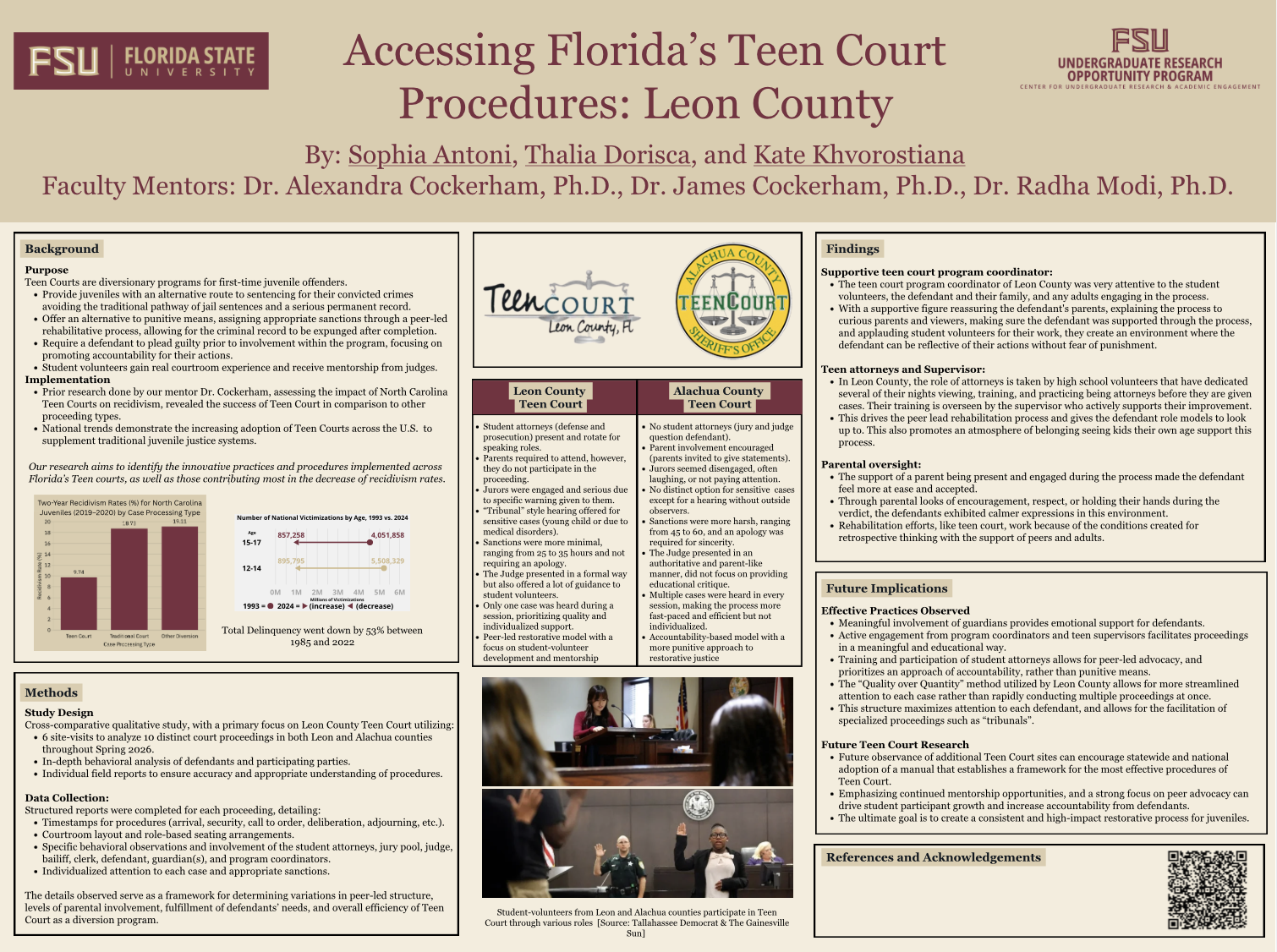
Accessing Florida’s Teen Court Procedures: Leon County
Authors: Kate Khvorostiana, Dr. Alexandra CockerhamStudent Major: International Affairs and Political Science
Mentor: Dr. Alexandra Cockerham
Mentor's Department: Department of Political Science Mentor's College: College of Social Sciences and Public Policy Co-Presenters: Thalia Dorisca and Sophia Antoni
Abstract
Teen Courts are a diversionary program meant to provide juveniles with an alternative route to that of the traditional justice system, which prioritizes punitive means. The hope is that through a restorative justice approach, including peer involvement to promote accountability and reflection, the juvenile will come to understand the harm they have caused to society, leading to a lower recidivism rate among juveniles. In our research project, we aim to identify the innovative practices and procedures that take place across Teen Courts in Florida and view the mechanisms through which they reduce recidivism. To achieve this, a comparative analysis of Leon County and Alachua County Teen Courts was conducted, focusing on qualitative data gathered through observation reports from various site visits to Teen Court sessions. The observations showed that Leon County employs a “Quality over Quantity” approach to handling Teen Court cases, by taking on one case per session, having teen attorneys who were trained by a Teen Attorney Supervisor, as well as modifying their process to a Tribunal-style teen court session to accommodate sensitive cases. Considering these findings in conjunction with Alachua’s as well as future observations of other Teen Courts in Florida, we seek to pinpoint optimal procedures for Teen Courts nationwide to adopt.
Keywords: Teen Court, Recidivism, Political Science
26th annual Undergraduate Research Symposium, April 1, 2026
Kendra Ludeman Poster Session 3: 1:45 pm - 2:45 pm / Poster #58
BIO
My name is Kendra Ludeman, and I am a first-year student at Florida State University majoring in Criminology. I was born in Costa Rica but was raised in Miami, Florida. In addition to being a freshman, I am also a student in the Honors and the Presidential Scholars Program. Some of my research interests include juvenile delinquency, criminal justice reformation, and modern popular culture. In the future at Florida State University, I hope to pursue a dual degree in marketing and possibly follow a pre-law track. After college, I plan to become an agent with the Federal Bureau of Investigation or work in a marketing role within the organization.
Pop Culture Movements: Swan Lake Unfolded
Authors: Kendra Ludeman, Jen AtkinsStudent Major: Criminology
Mentor: Jen Atkins
Mentor's Department: Dance Mentor's College: College of Fine Arts Co-Presenters:
Abstract
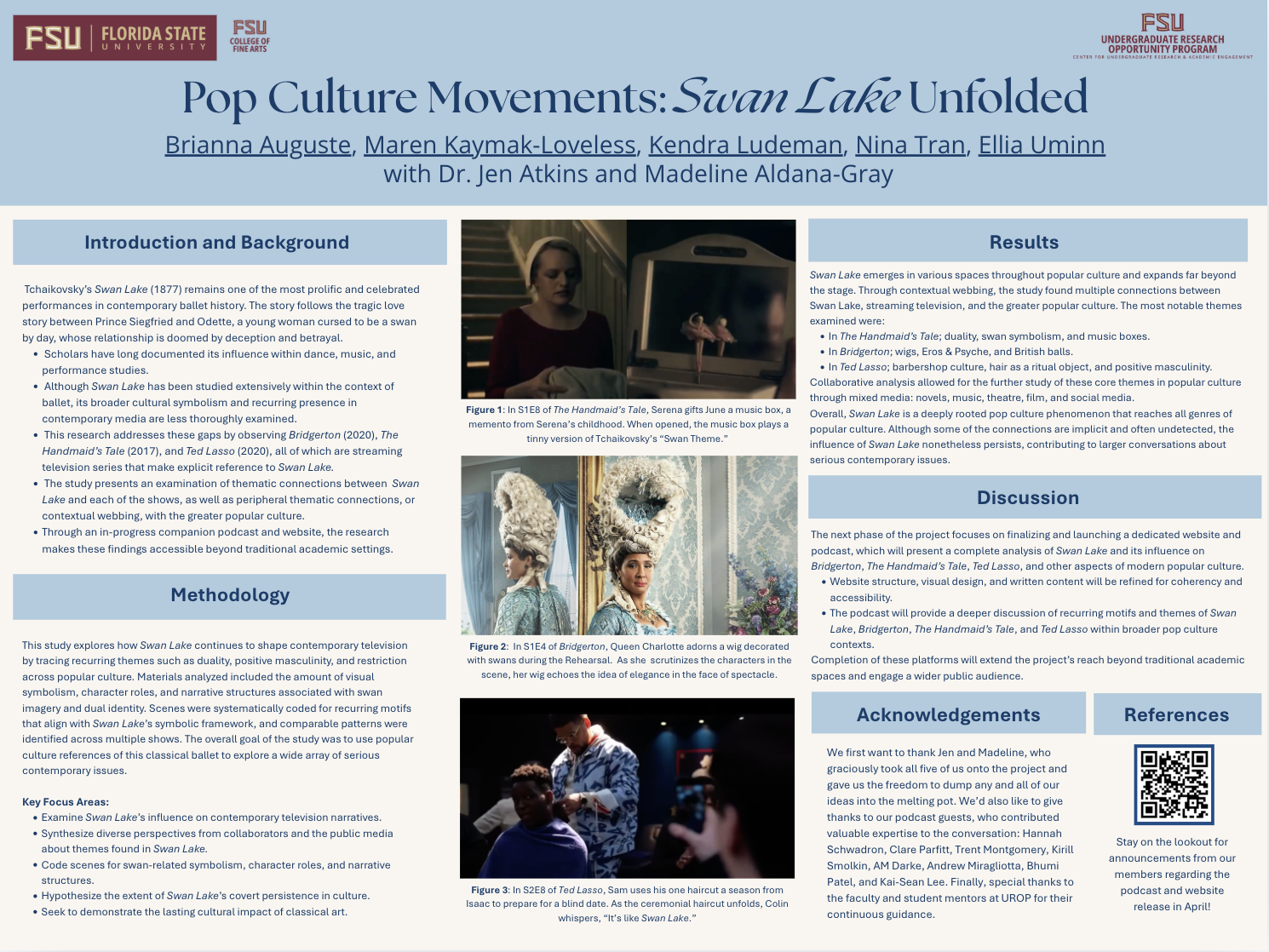
Pop Culture Movements: Swan Lake Unfolded examines how Swan Lake and its symbols relate to popular culture, particularly in the television shows Bridgerton, The Handmaid’s Tale, and Ted Lasso. Scholars have extensively documented Swan Lake’s influence on dance and performance history, but there is little research dedicated to the ballet’s social influence in modern media. Historical precedent demonstrates the lasting impact Swan Lake has had on popular culture, and the ballet’s socio-cultural significance shows itself in the hidden allusions that appear in widely consumed entertainment. The methodology includes the analysis of three television series and the coding of recurring motifs and themes through collective discourse. Scholarly articles and contemporary media publications relevant to the research scope also contribute to the sample of media coded for thematic connections to Swan Lake. This humanities-based qualitative research is ongoing and examines themes of dual identity, power, and restriction through collaboration with a diverse network of interdisciplinary scholars and practitioners. These patterns suggest that classical art remains embedded in modern storytelling, even when audiences may not consciously recognize the connection. For pop culture audiences, our findings highlight the importance of media literacy and understanding how historical works shape present-day narratives. The group is in the final stages of developing a podcast and companion website to present these findings in an accessible format. Together, these platforms demonstrate Swan Lake’s lasting cultural influence beyond traditional performance spaces.
Keywords: Swan Lake, Pop culture
26th annual Undergraduate Research Symposium, April 1, 2026
Ava Polaszek Poster Session 1: 9:30 am - 10:30 am / Poster #211

BIO
Ava Polaszek is a senior at Florida State University pursuing a Bachelor of Science in Psychology with a minor in Commercial Entrepreneurship. She is from Tampa, Florida and is currently enrolled in the Honors College. She works as a research assistant in the Joiner Lab where she assists with qualitative interviews, participant recruitment, and data cleaning. She also helps to maintain IRB documentation and performing virtual reality research methodologies while also learning how to complete suicide risk assessments. She plans to attend medical school after graduation to pursue a career as a physician while continuing to integrate research and clinical work.
A New Realm in Suicide Prevention: A Validation Study
Authors: Ava Polaszek, Sara ProstkoStudent Major: Psychology
Mentor: Sara Prostko
Mentor's Department: Department of Psychology Mentor's College: College of Arts and Sciences Co-Presenters: May Sulema
Abstract
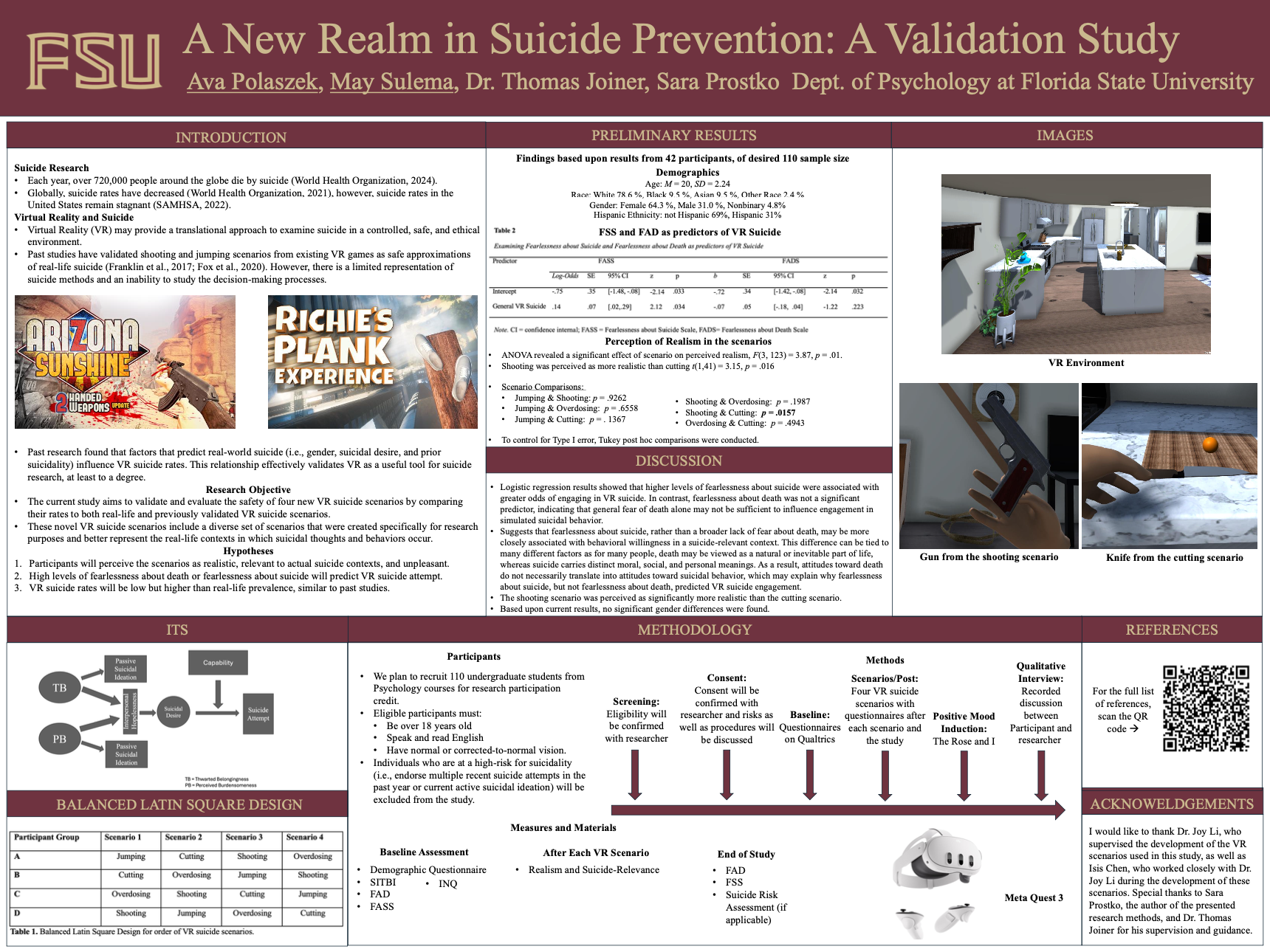
Suicide remains a leading cause of death and suicide rates in the United States continue to rise. Virtual reality (VR) offers a novel approach for studying suicide risk in a controlled and ethical environment. However, past VR suicide studies relied on VR scenarios from pre-existing commercial games and faced several challenges, including a limited representation of suicide methods and an inability to study decision-making processes. This study aims to validate four newly developed VR suicide scenarios – jumping, cutting, shooting, and overdosing – that have been designed to better reflect real-world methods of suicide in comparison to past VR suicide studies.
Preliminary data from 42 participants randomized across scenarios via a balanced Latin Square Design has been collected. A one-way repeated measures ANOVA examined the perceived realism of each scenario. Results indicated that the shooting scenario was perceived as significantly more realistic than the cutting scenario (b = 1.09, t(31) = 3.19, p = 0.016). Additionally, the difference between the shooting and overdosing scenario approached statistical significance, with the shooting scenario perceived as more realistic (b = 0.78, t(31) = 2.44, p = 0.0898) after controlling for Type 1 error. Finally, capability for suicide, a key construct from the Interpersonal Theory of Suicide showed mixed results in predicting VR suicide. Fearlessness about death (an established component of capability) did not predict VR suicide, a novel measure, fearlessness about suicide did (b = 0.16, SE = .08, p = .039).
Keywords: Suicide Prevention, Virtual Reality, Interpersonal Theory of Suicide
26th annual Undergraduate Research Symposium, April 1, 2026
Raphaela De Faria Aildasani Poster Session 3: 1:45 pm - 2:45 pm / Poster #314

BIO
Raphaela De Faria Aildasani is a junior at Florida State University majoring in Interdisciplinary Medical Sciences and pursuing a career in medicine. She has been conducting research in the Lazenby Lab for the past 10 months, where she works on developing carbon nanoelectrodes and functionalizing them as pH sensors through platinum and iridium deposition.
Fabrication of pH Sensors Modified with Platinum and Iridium Oxide
Authors: Raphaela De Faria Aildasani, Robert LazenbyStudent Major: Interdisciplinary Medical Sciences
Mentor: Robert Lazenby
Mentor's Department: Department of Chemistry and Biochemistry Mentor's College: College of Arts and Sciences Co-Presenters:
Abstract
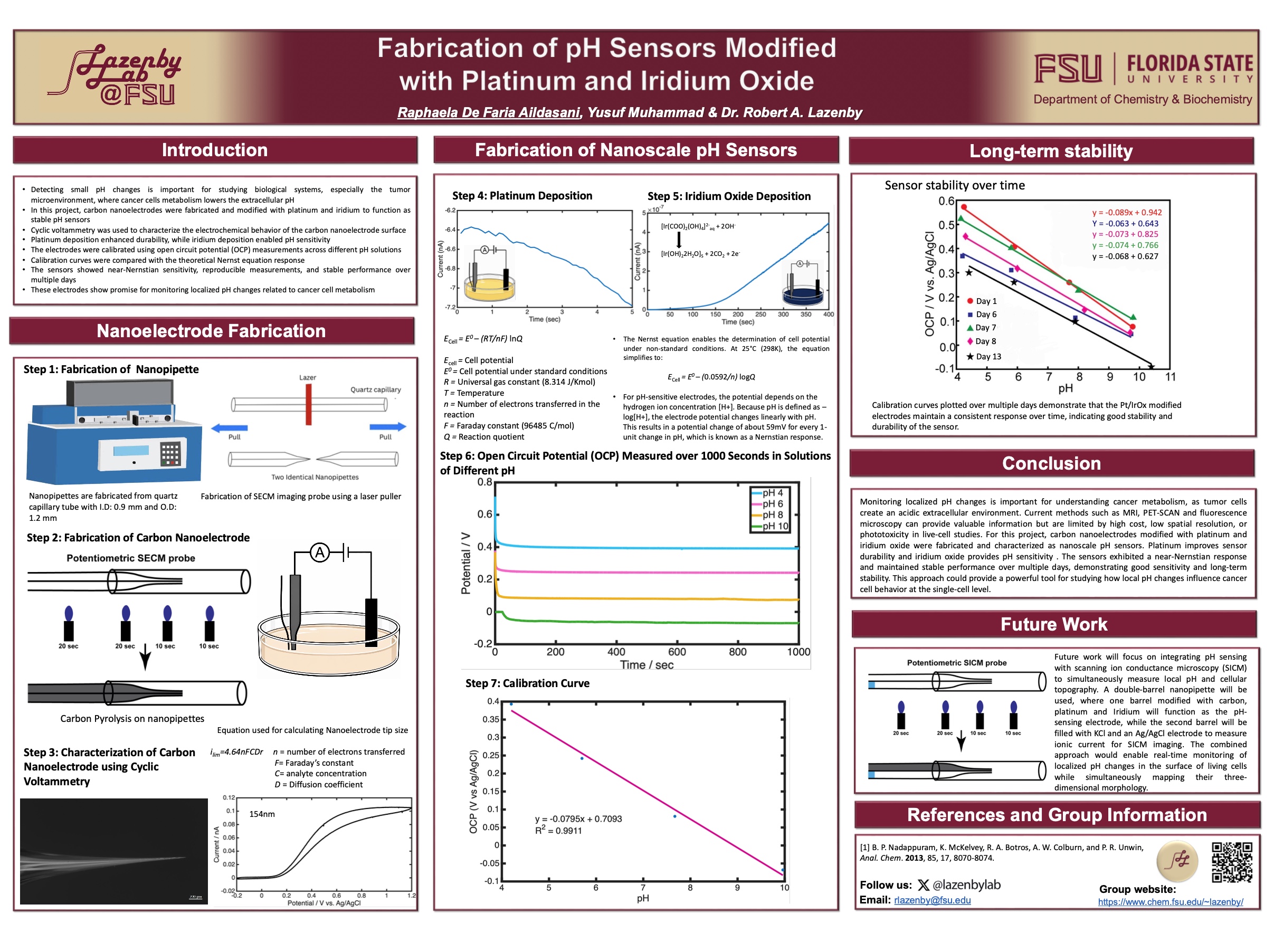
Accurate detection of small pH changes is critical for studying biological systems, particularly in the tumor microenvironment where cancer cells exhibit altered metabolic activity that leads to extracellular acidification. In this study, carbon nanoelectrodes were fabricated through sequential surface modification with platinum followed by iridium and evaluated as high-stability pH sensors. Cyclic voltammetry was performed to confirm the electrochemical activity and stability of the carbon nanoelectrodes. Platinum was then deposited onto the electrode surface, followed by iridium deposition to improve conductivity and signal stability. The modified electrodes were calibrated by measuring the open circuit potential (OCP) across a range of pH solutions, and calibration curves were constructed and compared against the theoretical response predicted by the Nernst equation. The resulting sensors demonstrated durable and reproducible behavior with near-Nernstian sensitivity, enabling detection of small pH variations. Most importantly, the sensors maintained stability over multiple days of testing. These findings suggest that platinum- and iridium-modified carbon nanoelectrodes show promise for monitoring localized pH changes associated with cancer cell metabolism.
Keywords: pH sensing, Carbon nanoelectrode, Deposition
26th annual Undergraduate Research Symposium, April 1, 2026
Da'Mya Bray Poster Session 2: 10:45 am - 11:45 am / Poster #28
BIO
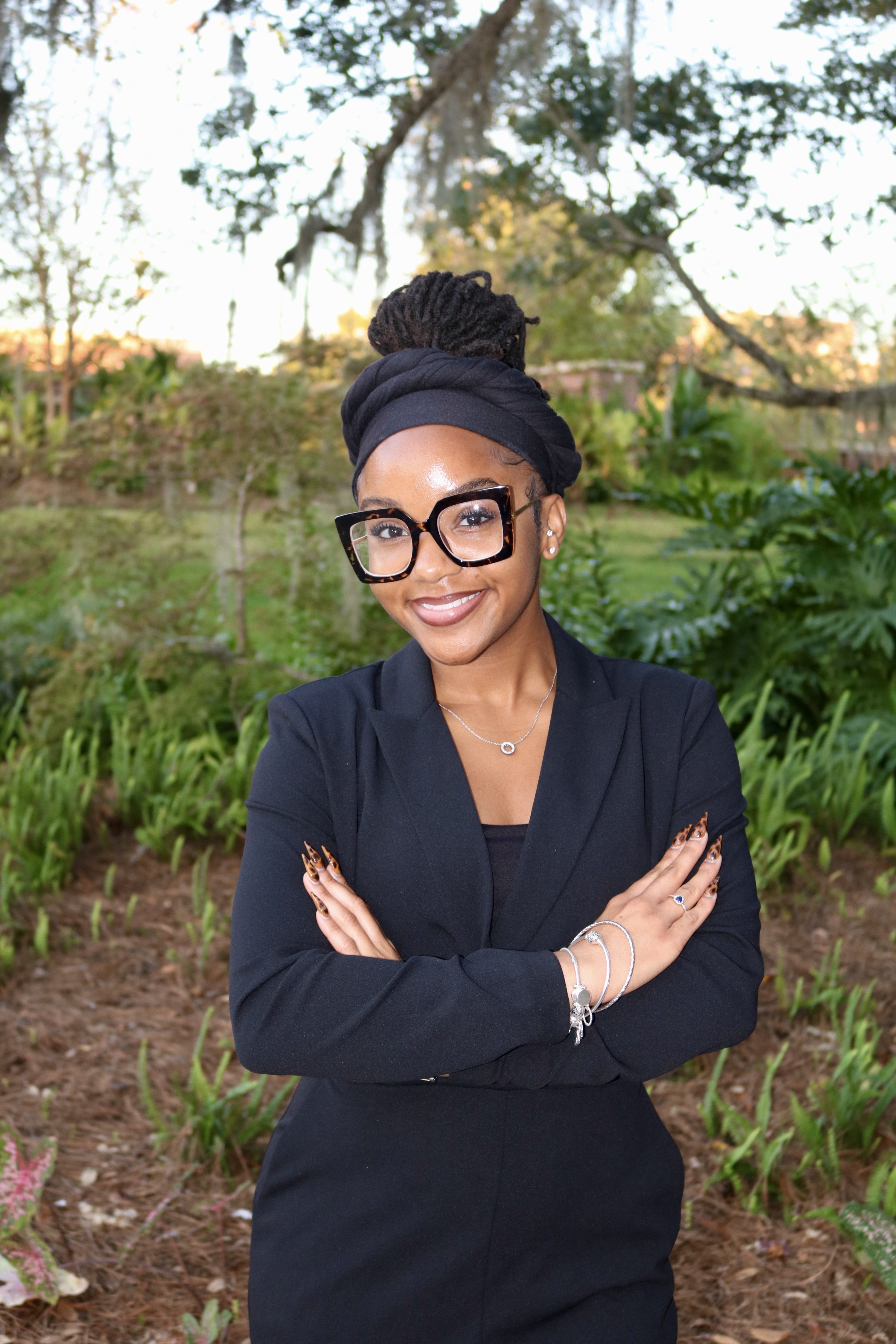
Da’Mya Bray is a first-year, first-generation student majoring in Media Communication at Florida State University. Originally from Broward County, Florida, she found participating in this research project to be a rewarding experience, as it allowed her to explore and learn more about areas surrounding her hometown.
Da’Mya is an aspiring sports media professional who is actively involved on campus. She currently serves as a Media Intern for the College of Communication and Information and a Creative Media Intern for Unconquered Media, and volunteers for Seminole Productions. She is also the Public Relations Chair for Class Council.
Through these roles, she continues to develop her skills in media production, storytelling, and communication. Passionate about sports media and creative storytelling, Da’Mya is excited to continue growing both professionally and personally during her time at Florida State University.
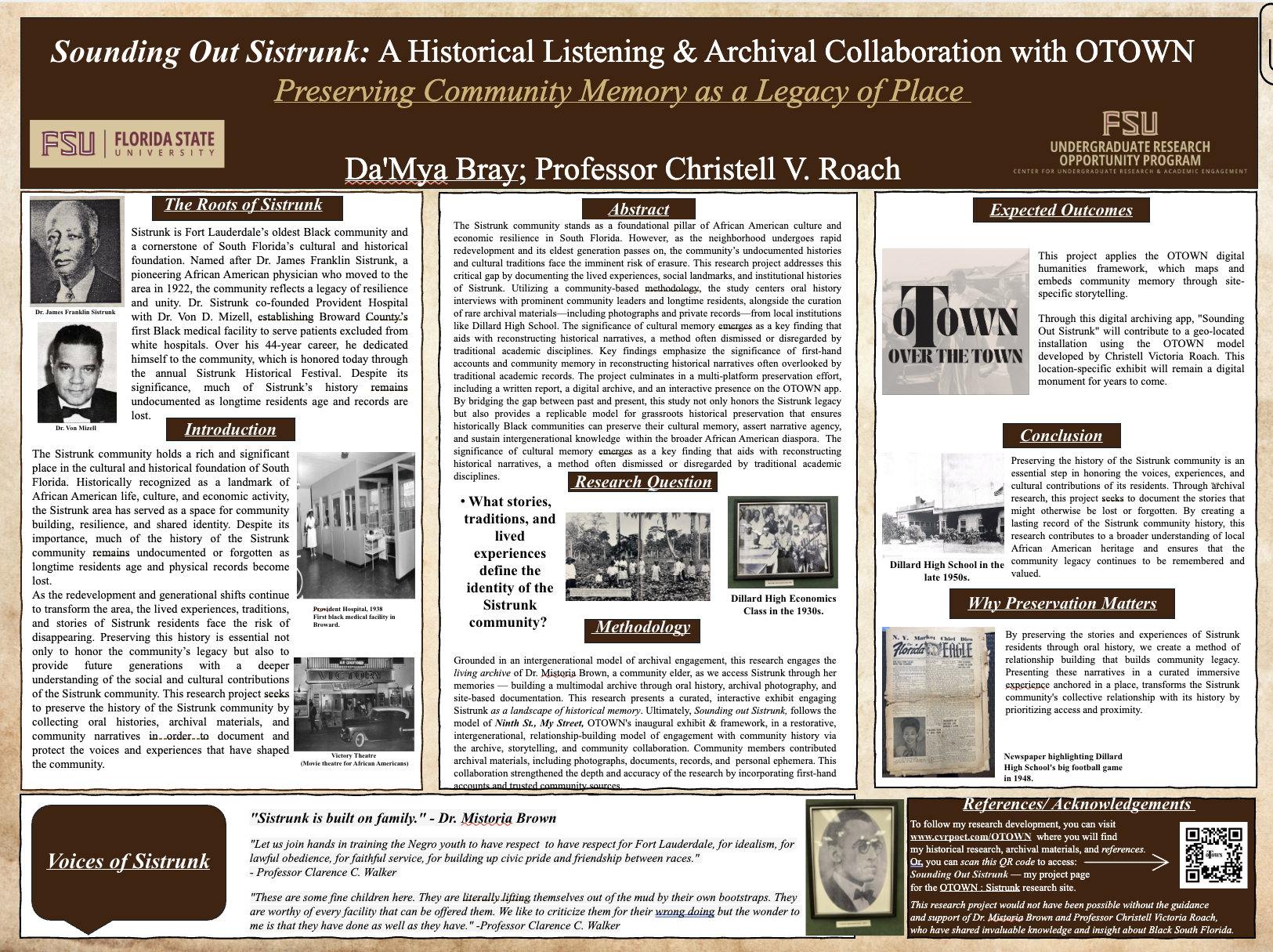
Sounding Out Sistrunk: A Historical Listening & Archival Collaboration with OTOWN Preserving Community Memory as a Legacy of Place
Authors: Da'Mya Bray, Christell RoachStudent Major: Media Communication Studies
Mentor: Christell Roach
Mentor's Department: English Department Mentor's College: College of Arts ad Sciences Co-Presenters:
Abstract
The Sistrunk community stands as a foundational pillar of African American culture and economic resilience in South Florida. However, as the neighborhood undergoes rapid redevelopment and its eldest generation passes on, the community’s undocumented histories and cultural traditions face the imminent risk of erasure. This research project addresses this critical gap by documenting the lived experiences, social landmarks, and institutional histories of Sistrunk. Utilizing a community-based methodology, the study centers oral history interviews with prominent community leaders and longtime residents, alongside the curation of rare archival materials—including photographs and private records—from local institutions like Dillard High School. The significance of cultural memory emerges as a key finding that aids with reconstructing historical narratives, a method often dismissed or disregarded by traditional academic disciplines. Key findings emphasize the significance of first-hand accounts and community memory in reconstructing historical narratives often overlooked by traditional academic records. The project culminates in a multi-platform preservation effort, including a written report, a digital archive, and an interactive presence on the OTOWN app. By bridging the gap between past and present, this study not only honors the Sistrunk legacy but also provides a replicable model for grassroots historical preservation that ensures historically Black communities can preserve their cultural memory, assert narrative agency, and sustain intergenerational knowledge within the broader African American diaspora. The significance of cultural memory emerges as a key finding that aids with reconstructing historical narratives, a method often dismissed or disregarded by traditional academic disciplines.
Keywords: Black History, Community Storytelling, Digital Humanities
26th annual Undergraduate Research Symposium, April 1, 2026
Shayna Slatkin Poster Session 1: 9:30 am - 10:30 am / Poster #104
BIO
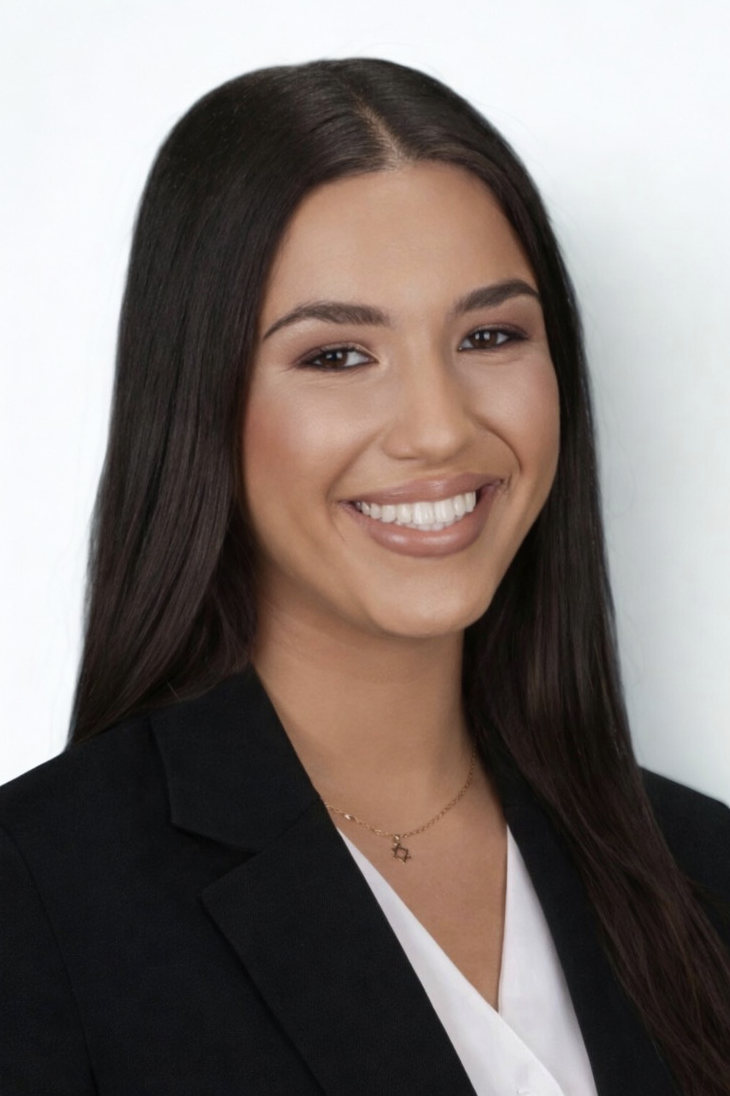
Shayna Slatkin is a sophomore at Florida State University pursuing a Bachelor of Science in Psychology and a Bachelor of Science in Human Development and Family Sciences. She is involved in undergraduate research through the Undergraduate Research Opportunity Program (UROP), where she works in a family research lab under the mentorship of Dr. Yinan Li. Her research interests focus on family relationships, attachment, and developmental processes that influence emotional and social outcomes across the lifespan.
Through her research experience, Shayna has contributed to projects examining family dynamics and psychological development, gaining experience with qualitative analysis and research methods. She is particularly interested in how early family relationships and social environments shape well-being and interpersonal functioning.
Beyond research, Shayna is passionate about working with children and families and has gained experience through volunteer work and child-focused programs. She plans to pursue graduate training and ultimately earn a doctoral degree in Occupational Therapy, intending to work in pediatric settings. Shayna hopes to combine her background in research and family science to support children’s development and help families navigate challenges that impact health and well-being
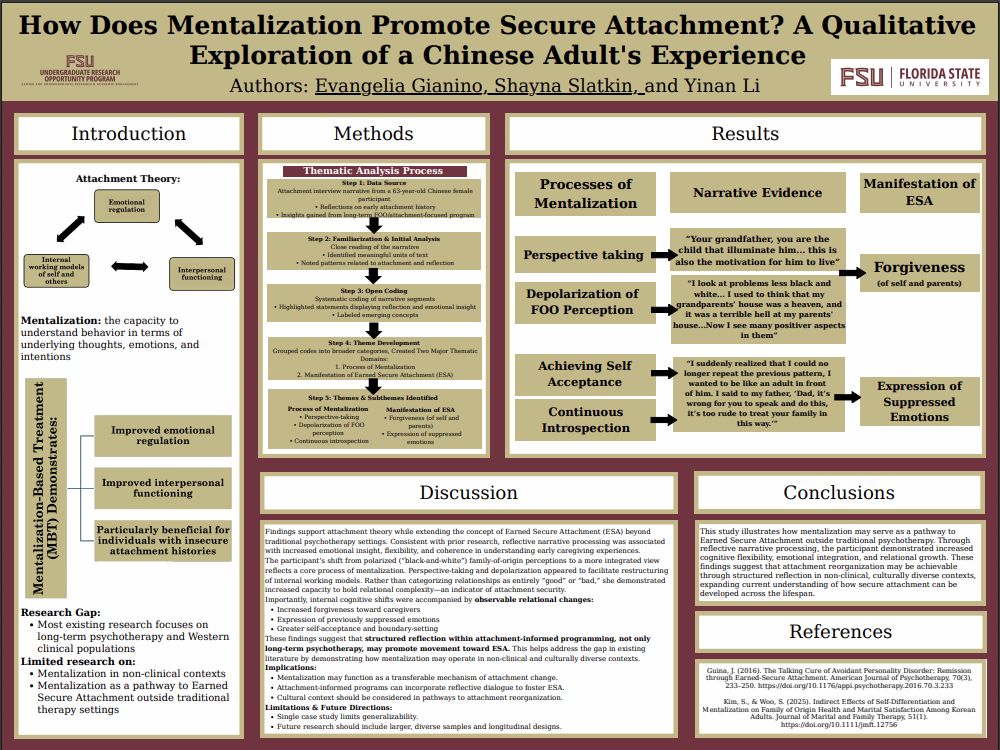
How Does Mentalization Promote Secure Attachment? A Qualitative Exploration of a Chinese Adult's Experience
Authors: Shayna Slatkin, Yinan LiStudent Major: Psychology & Human Development and Family Science
Mentor: Yinan Li
Mentor's Department: Human Development and Family Science Mentor's College: Anne Spencer Daves College of Education, Health, and Human Sciences Co-Presenters: Evangelia Gianino
Abstract
Earned Secure Attachment (ESA) is a newly developed construct that reframes attachment as malleable, challenging the assumption that early insecure attachment patterns remain fixed throughout life. While mentalization, the capacity to understand one’s own and others’ behaviors in terms of underlying thoughts and intentions, has been identified as a key pathway toward ESA, existing research has largely examined this process among adults in long-term psychotherapy within Western, Educated, Industrialized, Rich, and Democratic (WEIRD) populations. Less is known about how mentalization functions in non-clinical settings. The present study aims to broaden current understanding of ESA by exploring how mentalization may operate as an effective pathway within attachment-informed interventions outside traditional therapeutic frameworks. This qualitative study analyzes the attachment narrative of a 63-year-old Chinese woman who participated in a long-term Family of Origin (FOO), attachment-focused program. Her narrative reflects on her early attachment experiences as well as the insights and changes gained through program participation. Using thematic analysis, we examined themes related to the process of mentalization and the manifestation of earned secure attachment. Findings revealed two overarching groups of themes: (1) the development of mentalization and (2) the manifestations reflecting ESA. Subthemes within the mentalization process included increased perspective-taking, reinterpretation of parental behavior, and emotional insight. Manifestations of ESA included forgiveness of self/parents and expression of suppressed emotions. Theoretically, this study enriches the understanding of mentalization as a pathway to ESA through a qualitative, bottom-up perspective. Practically, findings offer insights for designing culturally responsive attachment interventions in non-clinical, non-WEIRD adult populations.
Keywords: Mentalization, Secure Attachment
26th annual Undergraduate Research Symposium, April 1, 2026
Alexander Tomaselli Poster Session 2: 10:45 am - 11:45 am / Poster #131
BIO
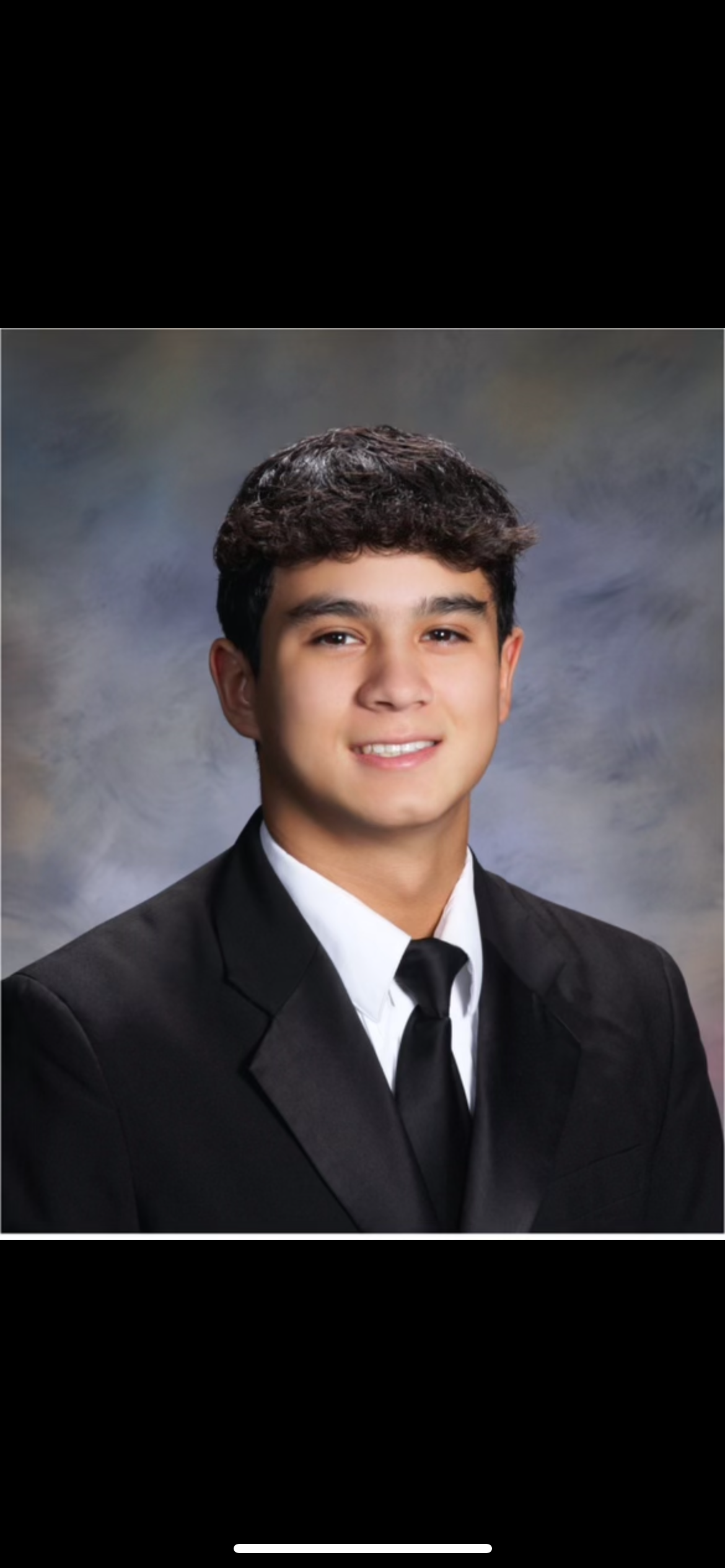
Alexander Tomaselli is a freshman from Moorestown, New Jersey, and a Presidential Scholar pursuing a Bachelor of Science in Biological Sciences. He is involved in the Pre-Dental Society and SASE (Society of Asian Scientists and Engineers). After completing his undergraduate degree, he plans to attend dental school and pursue a career in dentistry.
Portrayal of Women in Bollywood Films Directed by Women
Authors: Alexander Tomaselli, Rebecca PetersStudent Major: Biological Sciences
Mentor: Rebecca Peters
Mentor's Department: Religion Mentor's College: Arts and Sciences Co-Presenters: Sean Graham, Jack Mikutel
Abstract
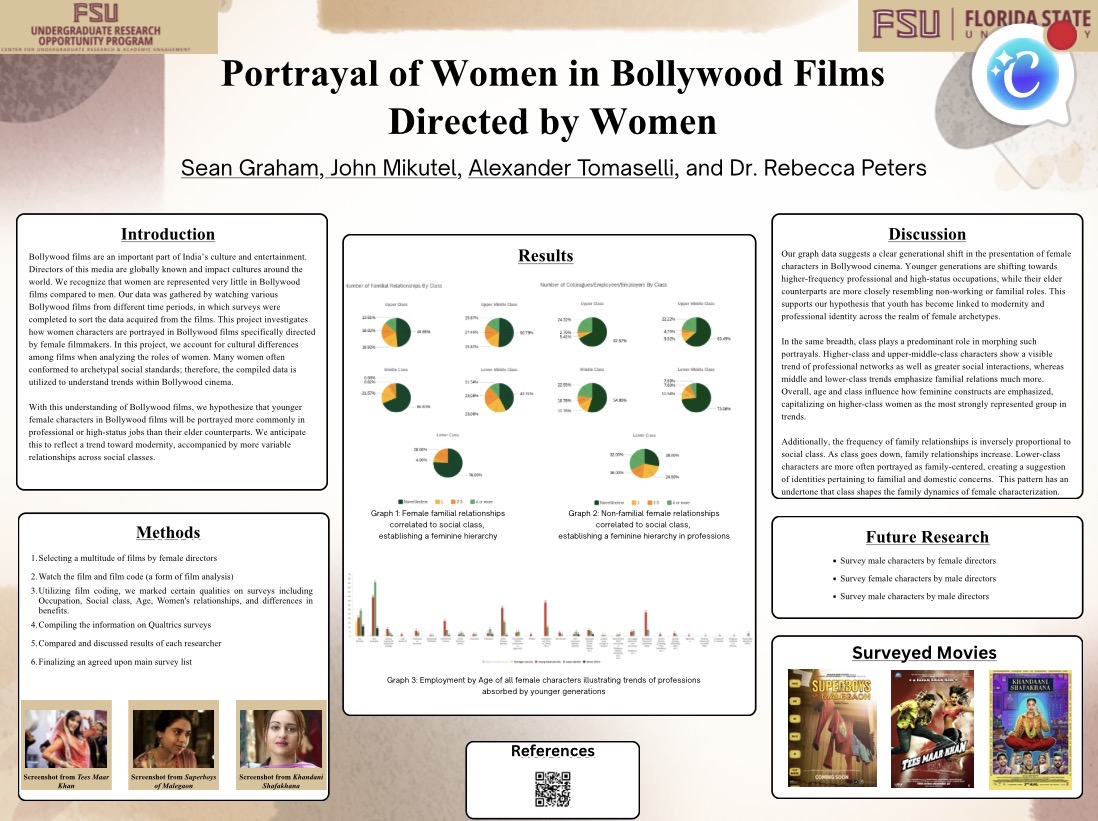
This study explores the portrayal of women in Bollywood films directed by female directors and examines whether these films challenge traditional gender stereotypes. Although Bollywood is one of the largest and most globally recognized film industries, women remain underrepresented in directing roles. Because directors play a significant role in shaping narratives and character development, this research investigates whether female-directed films present women as more empowered, multidimensional, and socially diverse compared to mainstream portrayals.
To address this question, we conducted a qualitative content analysis of a selected sample of Bollywood films directed by women. Each film was systematically coded based on key character variables, including occupation, age, social class, relationships, independence, and overall agency. This structured approach allowed us to evaluate both individual character traits and broader thematic trends across the films.
The findings suggest that female-directed Bollywood films more frequently depict women as career-oriented, ambitious, and independent individuals. Many protagonists occupy professional roles and demonstrate higher levels of personal agency compared to traditional portrayals. However, the data also reveal continued patterns related to class and age, with upper-middle-class characters appearing more prominently than lower-class or older women.
Overall, this study indicates that women directors contribute to more progressive and nuanced representations of female characters. Increasing female participation behind the camera may therefore play a meaningful role in reshaping gender narratives and promoting more inclusive storytelling within Bollywood cinema.
Keywords: Bollywood, Films, Women
26th annual Undergraduate Research Symposium, April 1, 2026
Lexi Ramsay Poster Session 3: 1:45 pm - 2:45 pm / Poster #313
BIO
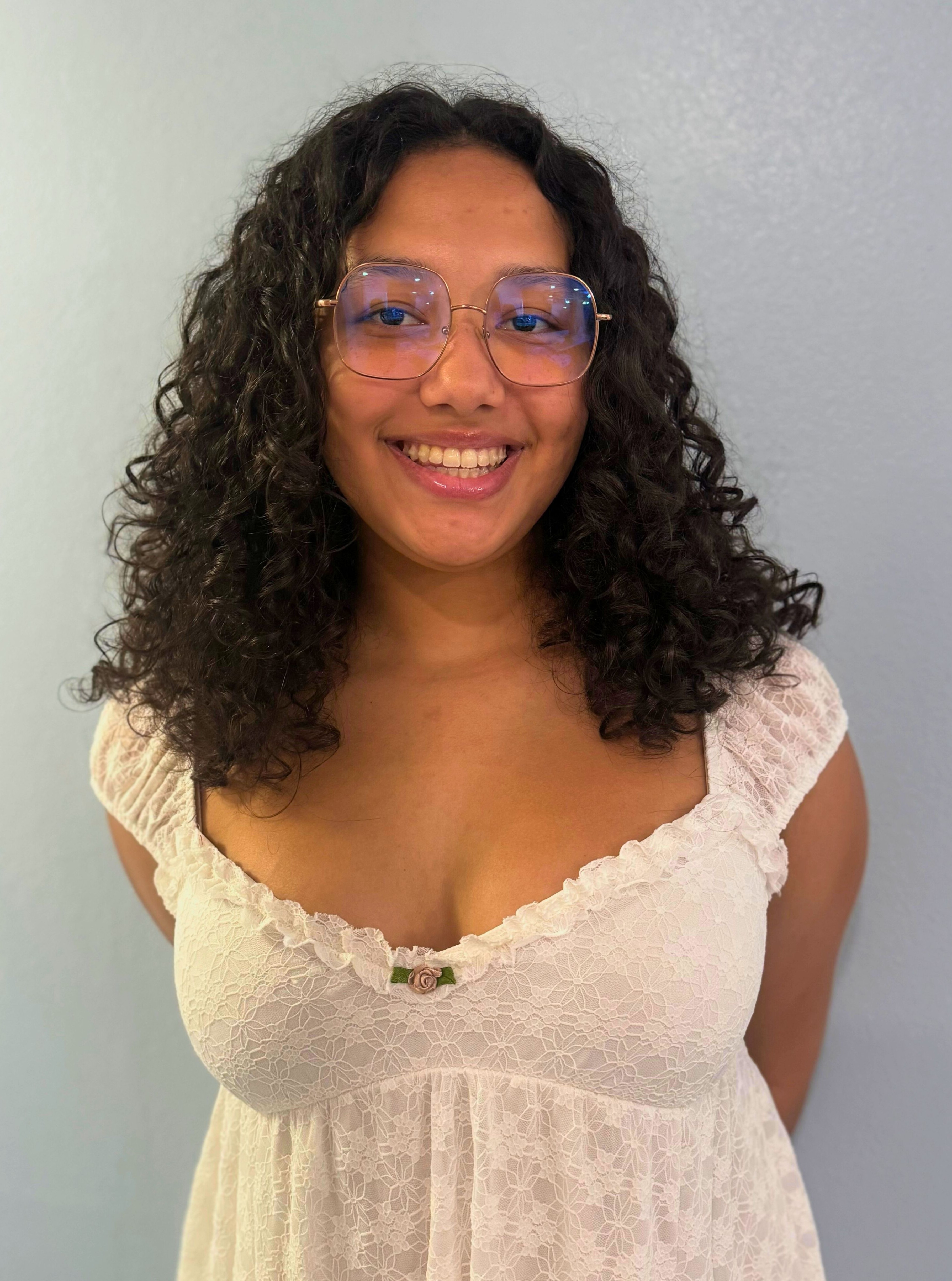
Lexi Ramsay is a sophomore at Florida State University, where she is pursuing a dual degree in Psychology and Media/Communication Studies with minors in Political Science and Sociology. Her main research interests are in the field of social psychology, with the hope that she will get to examine the relationship between political communication and social behavior. Beyond research, Lexi is also involved in the Florida Public Relations Association, Her Campus, and the Undergraduate Law Review.
Group Impressions: The Role of Members’ Characteristics in First Impressions
Authors: Lexi Ramsay, Ayanna BrewtonStudent Major: Psychology and Media/Communication Studies
Mentor: Ayanna Brewton
Mentor's Department: Psychology Mentor's College: College of Arts and Sciences Co-Presenters: Natalia Bartko
Abstract
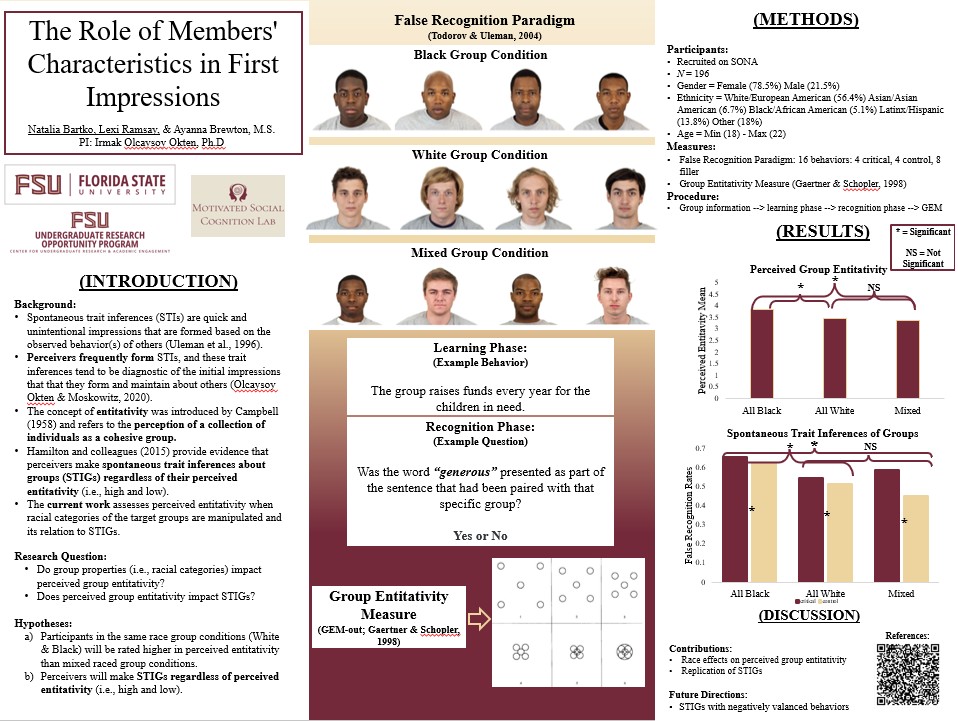
It is understood, in person perception research, that perceivers frequently form unintentional spontaneous trait inferences (STIs) based on the observed behavior of others (Uleman et al., 1996), and these trait inferences tend to be diagnostic of the initial impressions that they form and maintain about others (Olcaysoy Okten & Moskowitz, 2020). Similarly, Hamilton and colleagues (2015) provide evidence that perceivers also make spontaneous trait inferences about groups (STIGs). One of their main findings was that STIGs occur similarly for groups perceived high and low in entitativity. Perceived entitativity is the extent to which a group of individuals are perceived as a collective unit or a unified whole. The proposed project extends the research initiatives of Hamilton and colleagues’ (2015) study by building onto their target group manipulation. The purpose of the current work was to design a manipulation of perceived entitativity by adding racial categories to target groups (All Black/ All White/ Combination of Black and White). Specifically, we investigated whether (1) differences of perceived group entitativity would emerge when the physical similarities (i.e., race) of groups differ and (2) whether differences in perceived group entitativity, in turn, would affect STIGS. Our work seeks to offer a critical advancement in understanding how impressions of groups form as a result of shared (or unshared) group member characteristics.
Keywords: psychology, impressions, groups
26th annual Undergraduate Research Symposium, April 1, 2026
Aviah Fajerstein Poster Session 4: 3:00 pm - 4:00 pm / Poster #162
BIO
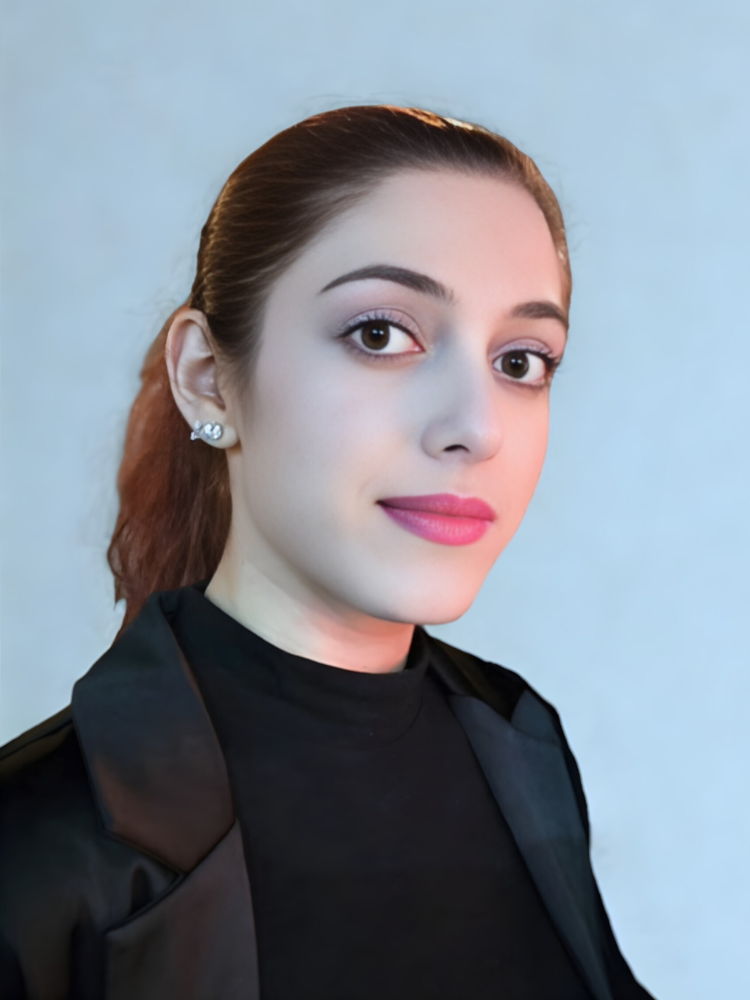
Aviah Fajerstein is pursuing a Bachelor of Science in Behavioral Neuroscience at Florida State University while completing an Interdepartmental Developmental Disabilities Certificate and the pre-medical track. They are a member of the Honors Medical Scholars Program, the Florida State Honors Program, and a recipient of the Vires Scholarship. Aviah has consistently achieved both the Dean’s and President’s List during their time at Florida State.
Aviah has been actively involved in research across multiple institutions. They co-authored a case report with Dr. Magdalena Anitescu of the University of Chicago Medical Center on spinal cord stimulators, which was presented at the North American Neuromodulation Society Meeting. Additionally, they presented research findings on neurovascular coupling at the Florida International University Student Research Internship Symposium. As part of their interest in preventive medicine and healthcare technology, Aviah is currently working with Dr. Veronica White in the FAMU-FSU College of Engineering Department of Industrial and Manufacturing Engineering to develop a vaccine prediction algorithm intended for future mobile health application integration.
Beyond research and academics, Aviah is involved in several leadership and service positions. They serve as a Hospitality Captain for Dance Marathon, represent Who We Play For as a delegate for their sorority Alpha Omicron Pi, and volunteer with the Alzheimer's Project.
Aviah is a certified medical assistant and completed an internship last semester at Tallahassee Medical Group. Their life mission is to address the injustices in our healthcare system while advancing health equity as a medical doctor and researcher.
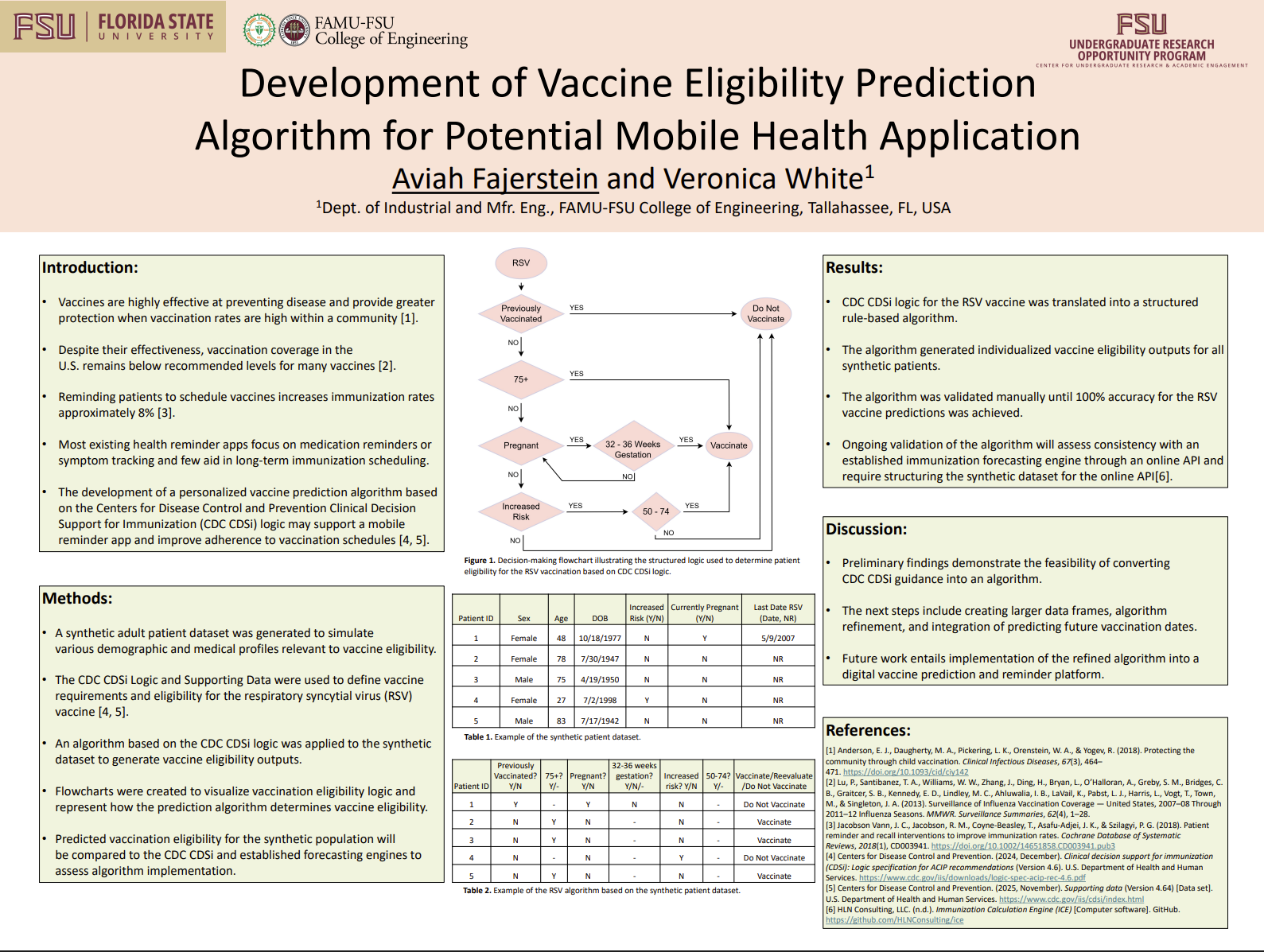
Development of Vaccine Eligibility Prediction Algorithm for Potential Mobile Health Application
Authors: Aviah Fajerstein, Dr. Veronica WhiteStudent Major: Behavioral Neuroscience
Mentor: Dr. Veronica White
Mentor's Department: Department of Industrial and Manufacturing Engineering Mentor's College: FAMU-FSU College of Engineering Co-Presenters:
Abstract
Vaccines are an extremely effective form of preventive healthcare and are known to save lives. However, many populations have vaccination rates below the recommended levels. Limited access to healthcare records and lack of personalized reminders leads to medical non-adherence. Prior research demonstrates patient reminders are associated with higher rates of healthcare compliance, suggesting that a mobile application can improve vaccine schedule adherence and reduce preventable health burdens. Current health tracking apps mainly focus on pill reminders or symptom tracking, and do not offer many options for storing long-term preventive care data. Few digital platforms focus on vaccine predictions and reminders. The development of a vaccination prediction algorithm that can be incorporated into a mobile app can address this gap by tailoring vaccination reminders to each patient.
A synthetic patient dataset accounting for demographics and medical history is developed using Excel to evaluate a vaccine eligibility prediction algorithm based on the Centers for Disease Control and Prevention Clinical Decision Support for Immunization logic. Generated outputs from the algorithm will be compared against established immunization decision-support engines to validate predictive accuracy. Ongoing validation and refinement will support potential integration of the algorithm into a mobile reminder platform to improve long-term vaccination adherence and reduce health disparities.
Keywords: Vaccine, Prediction Algorithm, Preventive Healthcare, Immunization Scheduling, Mobile Health App
26th annual Undergraduate Research Symposium, April 1, 2026
Lauren Cavanagh Poster Session 1: 9:30 am - 10:30 am / Poster #5
BIO
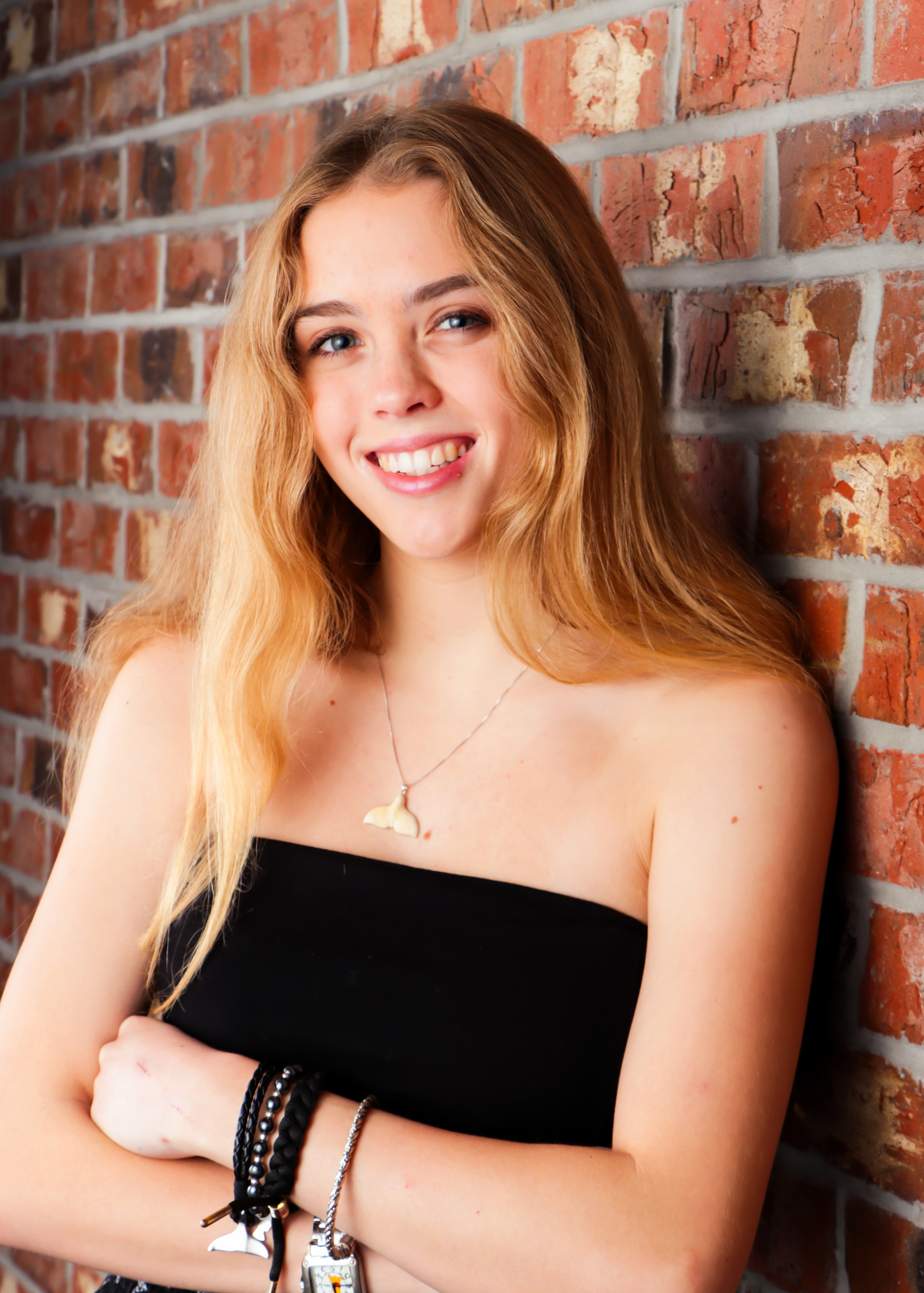
Lauren Cavanagh is an first-year, honors student pursuing a Bachelor of English with a minor in Humanities. Her on-and-off campus involvements include being an editor on the Kudzu Review, creative writing, literary research, and volunteering at the local animal shelter. Currently, she intends to become a professor of literature.
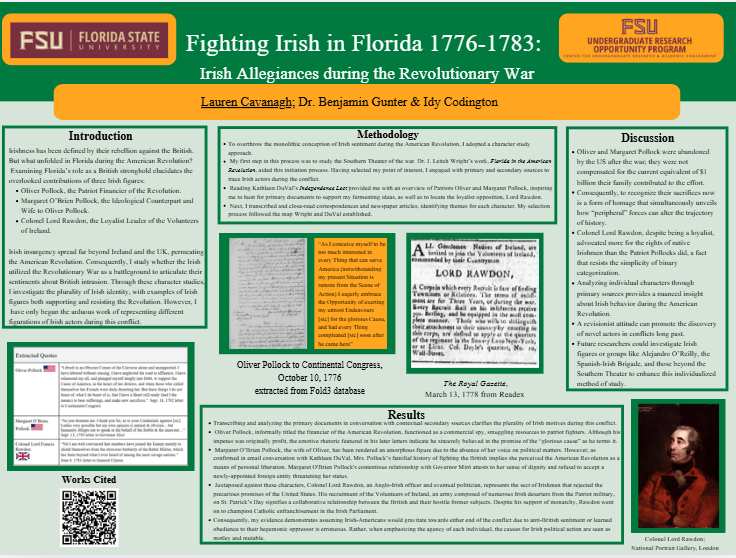
Fighting Irish in Florida: Irish Allegiances during the Revolutionary War
Authors: Lauren Cavanagh, Dr. Benjamin GunterStudent Major: English
Mentor: Dr. Benjamin Gunter
Mentor's Department: College of Arts and Sciences Mentor's College: College of Arts and Sciences Co-Presenters:
Abstract
Irishness is often mistaken to be a monolithic identity. Standing as proof against this reductive mold of nationality, the American Revolution reveals that a diverse set of motivations drove the Irish during the war. Consequently, I, along with Dr. Benjamin Gunter, study whether the Irish utilized the Revolutionary War as a battleground to articulate their sentiments about British intrusion. Figures like Oliver Pollock—an increasingly famous financier of the fight for independence—and Mary O'Brien Pollock are paradigmatic of the Irish instinct for resistance; the Volunteers of Ireland led by Colonel Lord Rawdon, conversely, represent alignment with the British cause. I practice a speculative approach, extrapolating from primary and secondary documents, but I redirect attention to disregarded settings of the war: Florida and Louisiana. By crafting case studies and using emblematic primary documents related to each figure, insight is gained about the peripheral forces that intensified American rebellion. Further, my findings substantiate that revolutions do not occur in a vacuum: foreign actors beyond the insurgent nation-group and the oppressive nation-group intervene inconspicuously, yet effectively. The Irish revolt did not begin in 1916 during the Easter Rising. Over a century prior, they had been expressing their fury through the mask of the American Revolutionary War, a clash that fed the Irish Rebellion of 1798. Although their efforts would not succeed domestically till 1922, the Irish characters left an indelible mark during the fight for independence in the United States—one best remembered when properly understood.
Keywords: Ireland, American Revolution, History
26th annual Undergraduate Research Symposium, April 1, 2026
Sydney Stinson Poster Session 3: 1:45 pm - 2:45 pm / Poster #225
BIO
Sydney Stinson is an undergraduate student from Knoxville, Tennessee, pursuing a Bachelor of Science in Biological Sciences at Florida State University. She is a member of the University Honors Program and is completing minors in Chemistry and Latin: Classical Civilization. Sydney serves as a Clinical College Volunteer at Tallahassee Memorial Hospital, where she works in the Family Care Unit, assisting with newborn care and supporting mothers during postpartum recovery. She also volunteered at her local children’s hospital in Knoxville throughout high school and during the summers. This summer, she will study abroad in London through the Honors Program. Sydney hopes to pursue a career in pediatrics and is interested in research focused on children’s health and development.
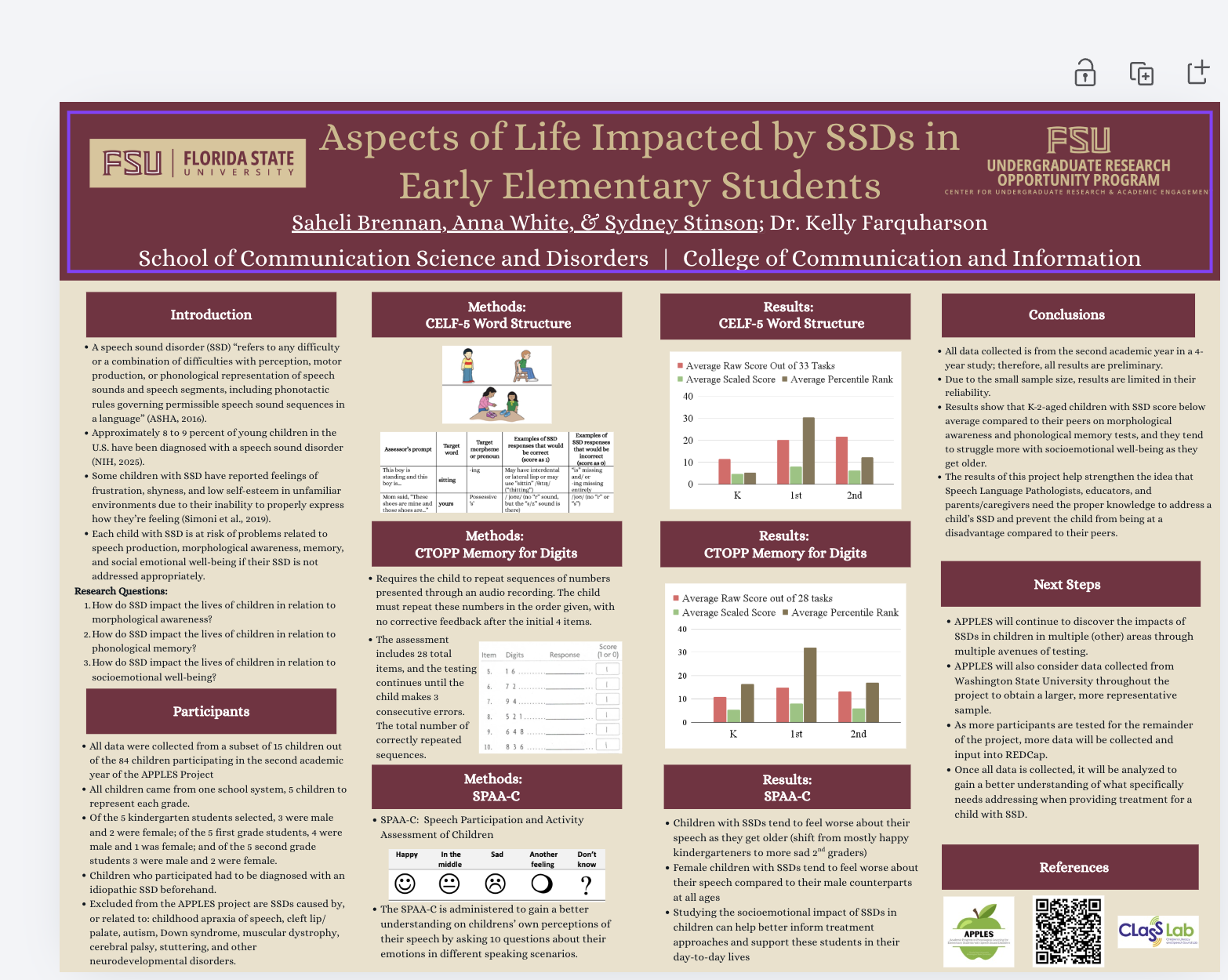
Aspects of Life Impacted by SSDs in Early Elementary Students
Authors: Sydney Stinson, Dr. Kelly FarquharsonStudent Major: Biology
Mentor: Dr. Kelly Farquharson
Mentor's Department: Communication Science and Disorders Mentor's College: Communication and Information Co-Presenters: Anna White, Saheli Brennan
Abstract
Speech sound disorders (SSD) affect a significant number of children in classroom settings, yet parents and educators often lack effective, evidence-based strategies to support these students. This research investigates the various areas that contribute to these SSD and identifies an optimal intervention approach. The study is motivated by the widespread impact of SSDs and the nuance to each kid’s diagnosis, and the need for accessible resources to better support affected children. Data collection involves scoring the Comprehensive Test of Phonological Processing (CTOPP) Memory for Digits subtest, the Clinical Evaluation of Language Fundamentals Word Structure (CELF-WS) subtest, and the Speech Participation and Activity Assessment of Children (SPAA-C) form. To minimize bias, only the child’s age/grade and identification number are provided to scorers. The APPLES (Academic Progress of Phonological Learning in Elementary Students) framework guides data organization, with the results later entered RedCap for analysis. The project is currently in its second year, with scoring ongoing for data collected during the first semester of year two. By the fourth year of the study, the research aims to identify more effective instructional and intervention strategies for children with SSDs. Additionally, this research may serve as a foundation for future studies examining other speech, language, or learning disorders. The findings are expected to inform parents and educators about improved ways to support children academically and emotionally, fostering confidence and reducing negative perceptions associated with learning disabilities.
Keywords: Children's Speech Sound Disorders