
Research Symposium
26th annual Undergraduate Research Symposium, April 1, 2026
Dominic DeNardis Poster Session 3: 1:45 pm - 2:45 pm / Poster #1
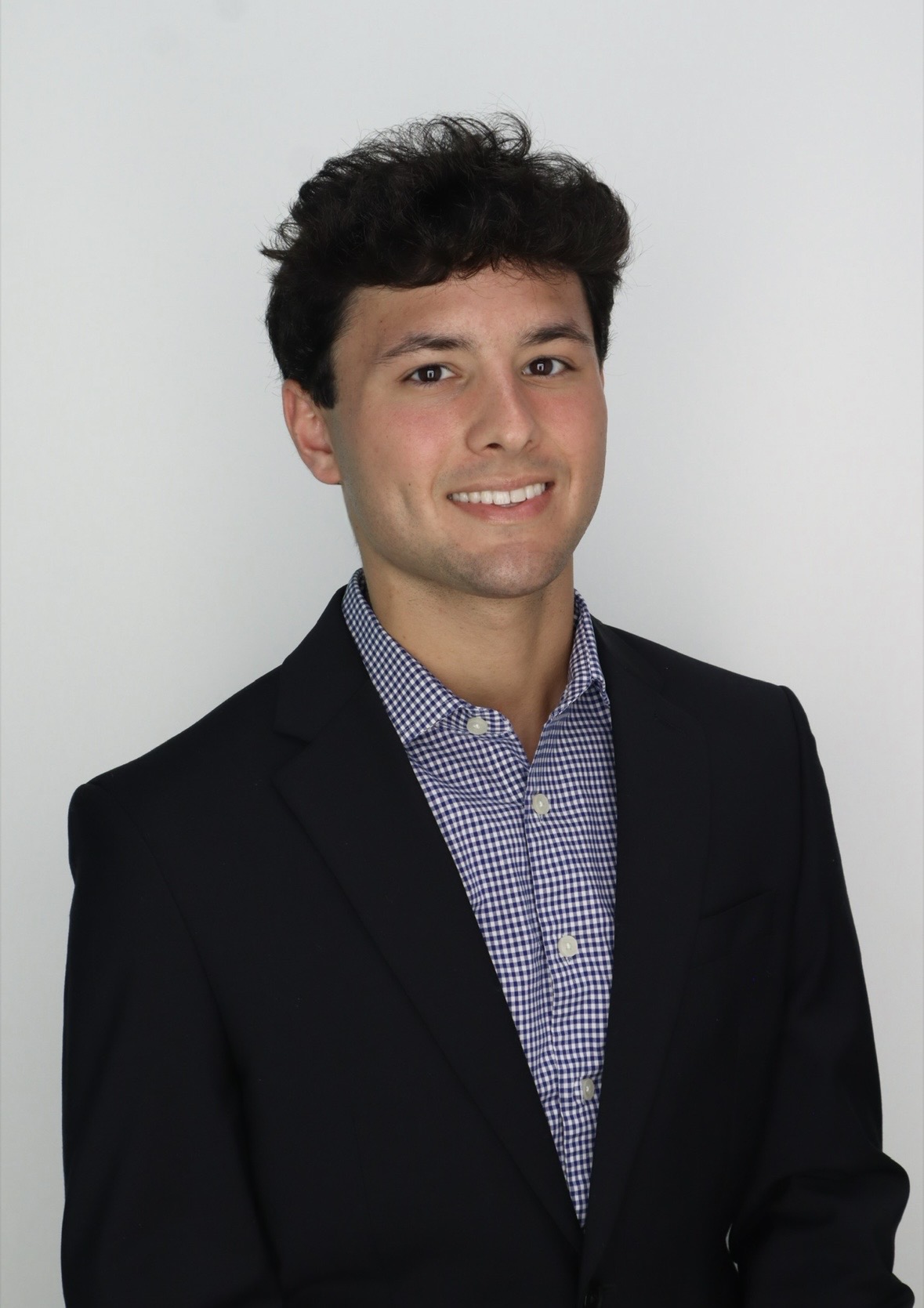
BIO
Dominic DeNardis is a second-year Biological Sciences major at Florida State University. He is a part of the National Honor Society, Dean's list for academic achievement, and the Holistic Health club. He has a background in coding the English language into Braille. He is working towards getting a Bachelor of Science.
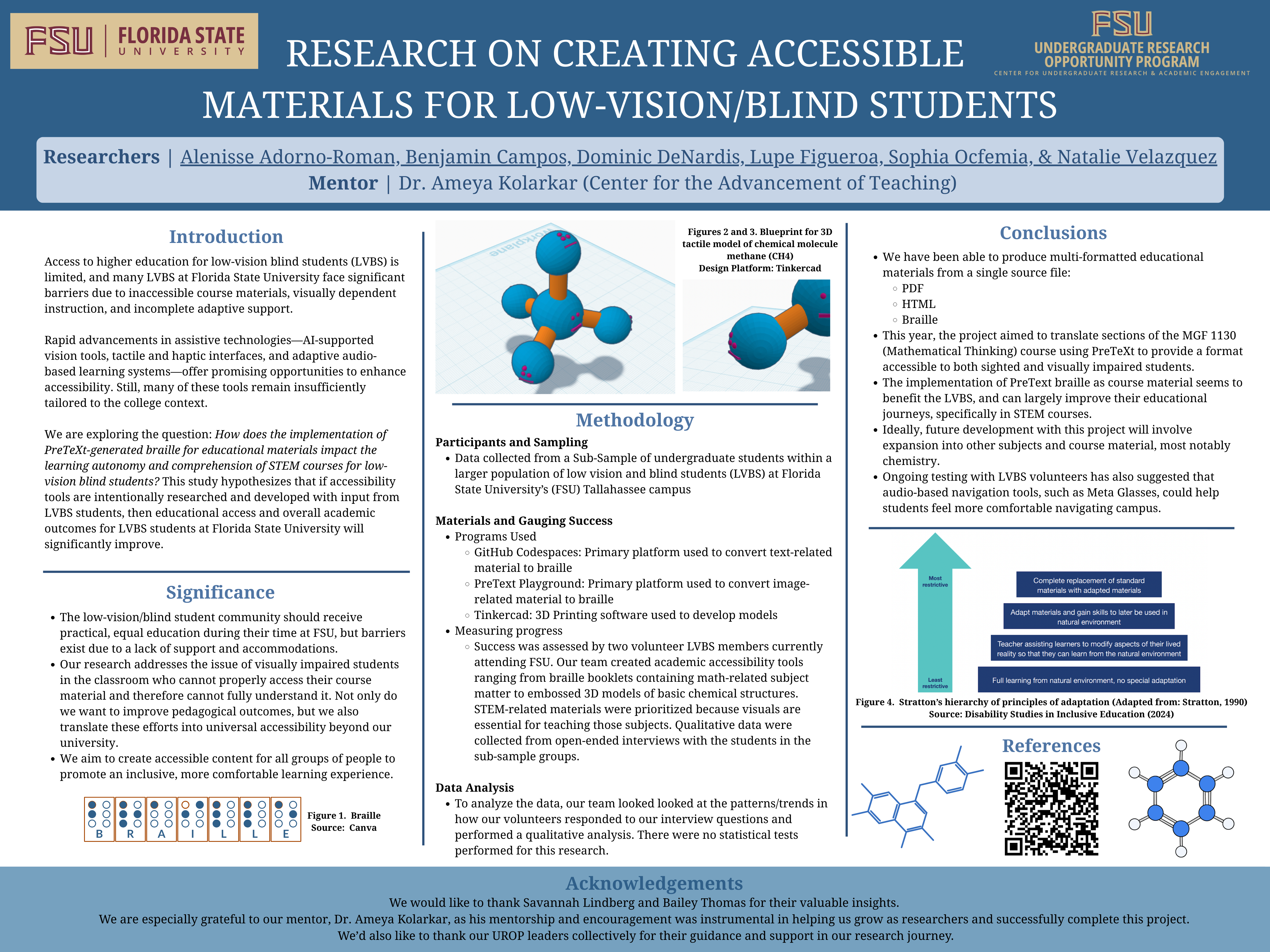
Research On Creating Accessible Materials For Low-Vision/Blind Students
Authors: Dominic DeNardis, Ameya KolarkarStudent Major: Biological Sciences
Mentor: Ameya Kolarkar
Mentor's Department: Center for the Advancement of Teaching Mentor's College: College of Arts and Sciences Co-Presenters: Alenisee Adorno-Roman, Benjamin Campos, Lupe Figueroa, Sophia Ocfemia, and Natalie Velazquez
Abstract
As we make progress toward universal accessibility and equitable education for students with disabilities, significant barriers persist in STEM education for low-vision and blind students (LVBS). This study investigates accessibility tools that can be researched or developed to support LVBS at Florida State University (FSU), where some course material and instruction remain inaccessible. Building on prior use of 3-D printing for tactile learning, our team uses coding and the PreTeXt format to translate core math units into multiple formats, including braille. We are also exploring assistive spatial intelligence that provide audio instructions for commonly traveled campus paths, such as Meta AI glasses. LVBS volunteers at FSU test each tool and provide structured feedback. Individual coding components are created separately, refined through trial and error, compiled into a single text, and converted into braille. In collaboration with the Innovation Hub, we are also developing tactile molecular models with embossed braille labels for chemistry instruction. Findings are preliminary but encouraging. Early LVBS feedback indicates that braille translations generated through PreTeXt increase access to visual STEM content, while tactile chemistry models and navigation improves confidence in learning and movement across campus. These results suggest that accessibility tools designed with direct LVBS input can strengthen learning experiences and campus participation. Grounded in Universal Design for Learning principles, this work supports equitable access at FSU and offers scalable strategies for broader adoption across higher education.
Keywords: Coding, Braille, Accessibility
26th annual Undergraduate Research Symposium, April 1, 2026
Sean Graham Poster Session 2: 10:45 am - 11:45 am / Poster #131
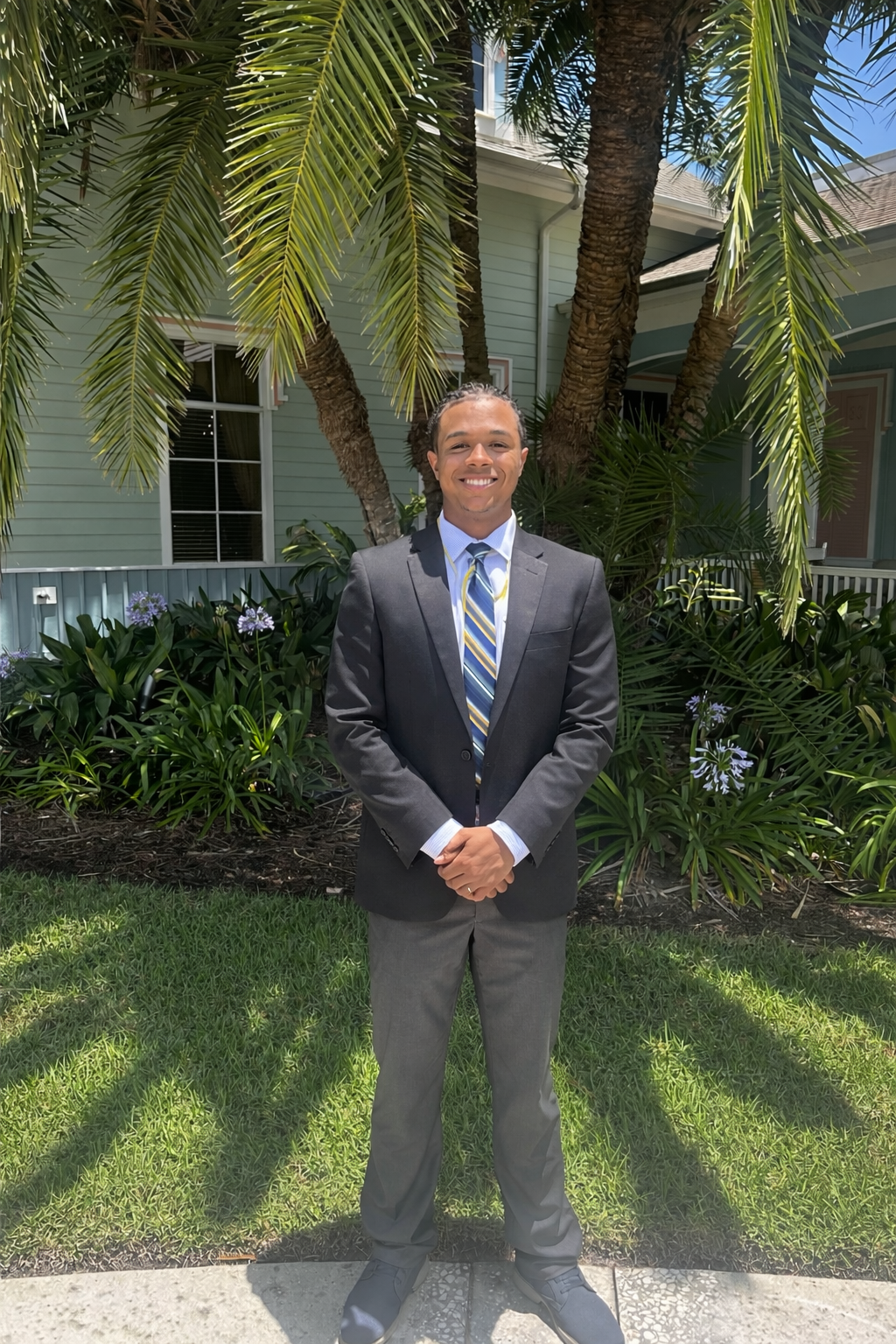
BIO
Sean Graham is a first-year Honors student from Wildwood, Florida. He is currently majoring in Exercise Physiology and aspires to become a physical therapist, specializing in sports medicine.
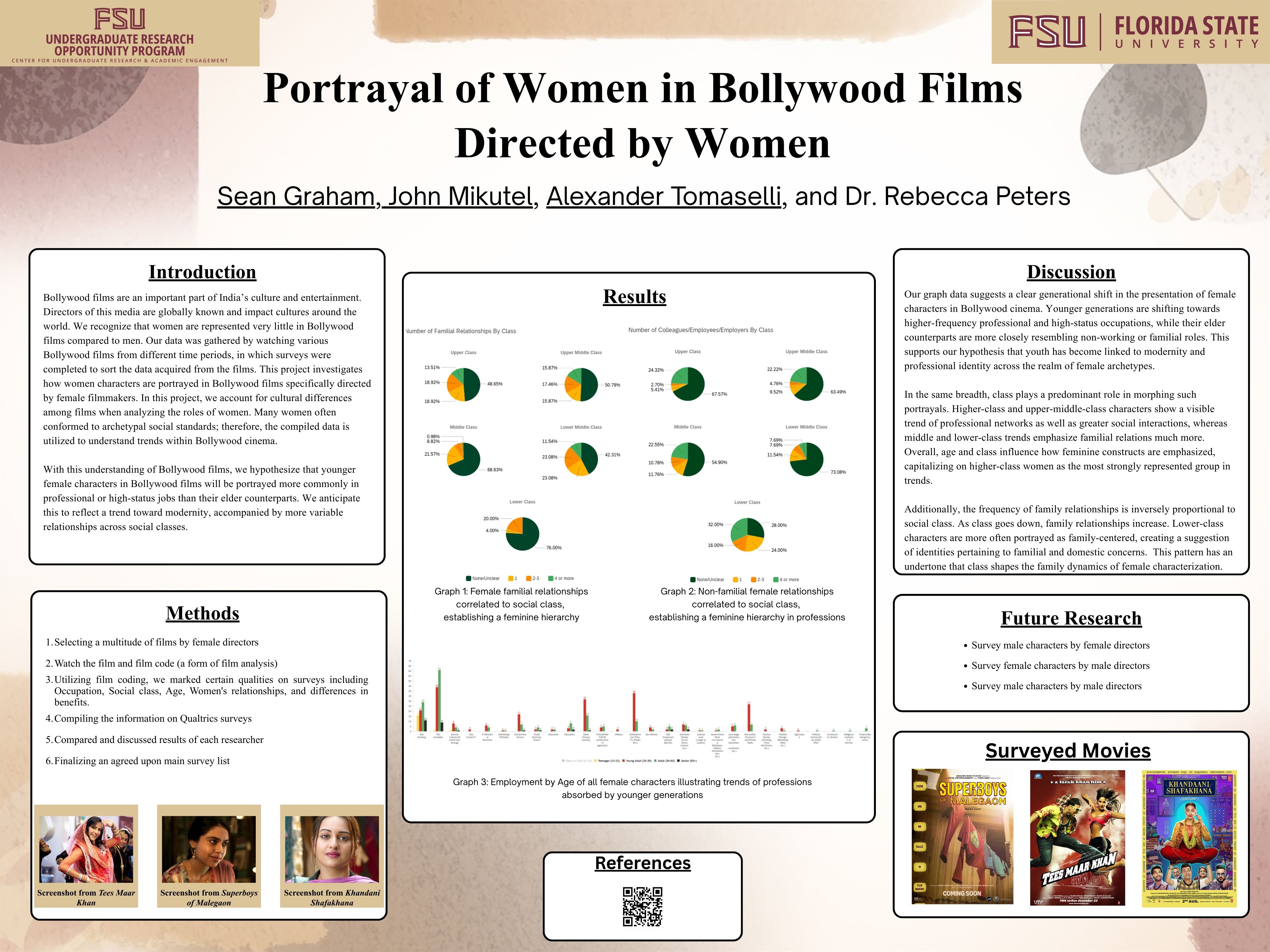
Portrayal of Women in Bollywood Films Directed by Women
Authors: Sean Graham, Rebecca PetersStudent Major: Exercise Physiology
Mentor: Rebecca Peters
Mentor's Department: Religion Mentor's College: College of Arts and Sciences Co-Presenters:
Abstract
This study explores the portrayal of women in Bollywood films directed by female directors and examines whether these films challenge traditional gender stereotypes. Although Bollywood is one of the largest and most globally recognized film industries, women remain underrepresented in directing roles. Because directors play a significant role in shaping narratives and character development, this research investigates whether female-directed films present women as more empowered, multidimensional, and socially diverse compared to mainstream portrayals.
To address this question, we conducted a qualitative content analysis of a selected sample of Bollywood films directed by women. Each film was systematically coded based on key character variables, including occupation, age, social class, relationships, independence, and overall agency. This structured approach allowed us to evaluate both individual character traits and broader thematic trends across the films.
The findings suggest that female-directed Bollywood films more frequently depict women as career-oriented, ambitious, and independent individuals. Many protagonists occupy professional roles and demonstrate higher levels of personal agency compared to traditional portrayals. However, the data also reveal continued patterns related to class and age, with upper-middle-class characters appearing more prominently than lower-class or older women.
Overall, this study indicates that women directors contribute to more progressive and nuanced representations of female characters. Increasing female participation behind the camera may therefore play a meaningful role in reshaping gender narratives and promoting more inclusive storytelling within Bollywood cinema.
Keywords: Bollywood, Movies, Women
26th annual Undergraduate Research Symposium, April 1, 2026
David Daly Poster Session 3: 1:45 pm - 2:45 pm / Poster #99
BIO
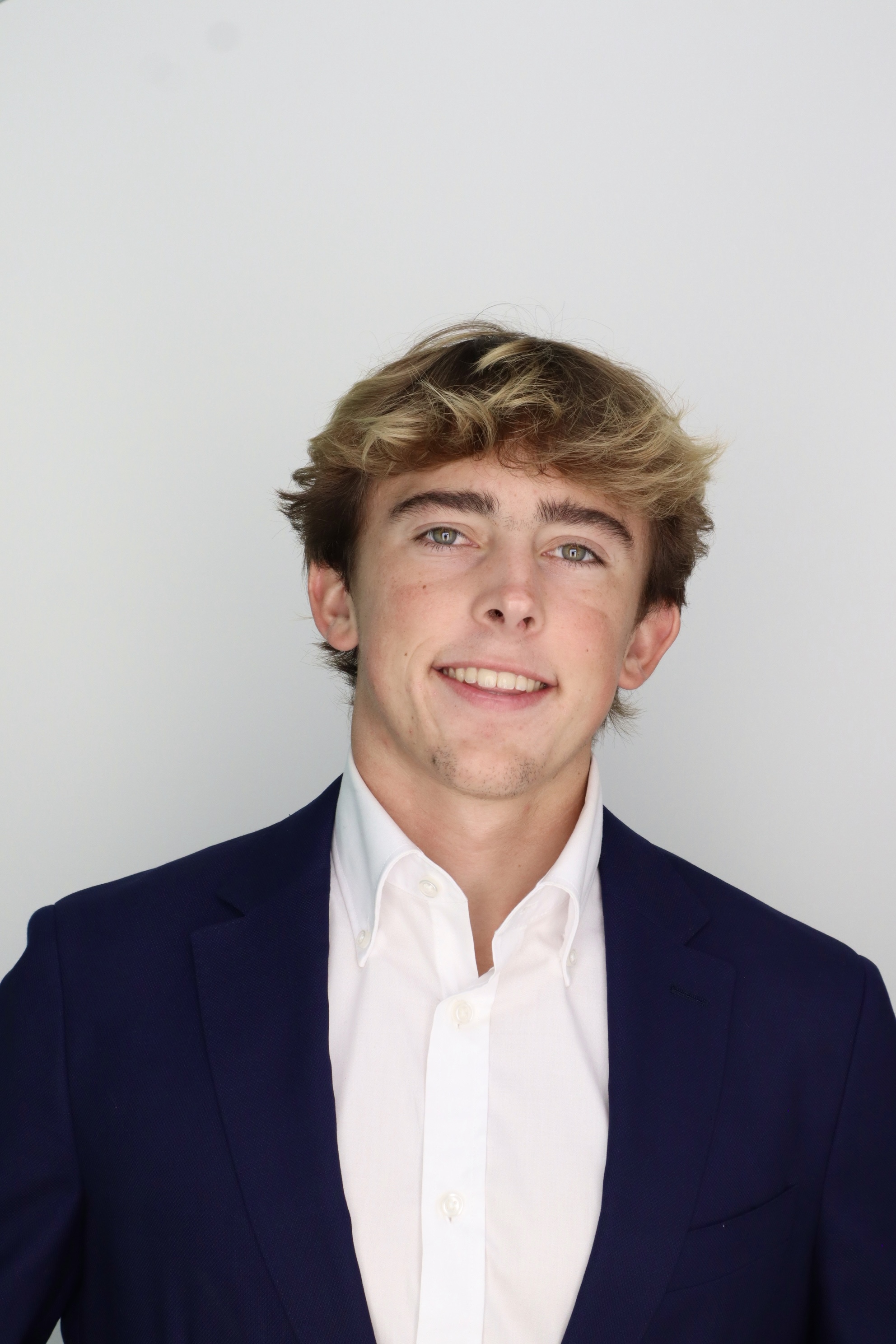
David Daly is a first-year student at Florida State University pursuing a Bachelor of Science in Interdisciplinary Medical Sciences (Clinical Professions) through the Honors College. David is involved in undergraduate research examining the effects of exogenous ketone supplementation on endurance athletes under his research mentor, Sadio Fenner. The study investigates whether ketone supplements influence performance related physiological markers. David plans to pursue medical school after completing his Bachelor of Science, with long term goals of becoming a physician and contributing to the field of sports medicine.
The Effects of Exogenous Ketones on Elite Athletes
Authors: David Daly, Sadio FennerStudent Major: Biomedical Sciences
Mentor: Sadio Fenner
Mentor's Department: Institute of Sports Sciences and Medicine Mentor's College: College of Education, Health, and Human Sciences Co-Presenters: Caden Lindsay
Abstract
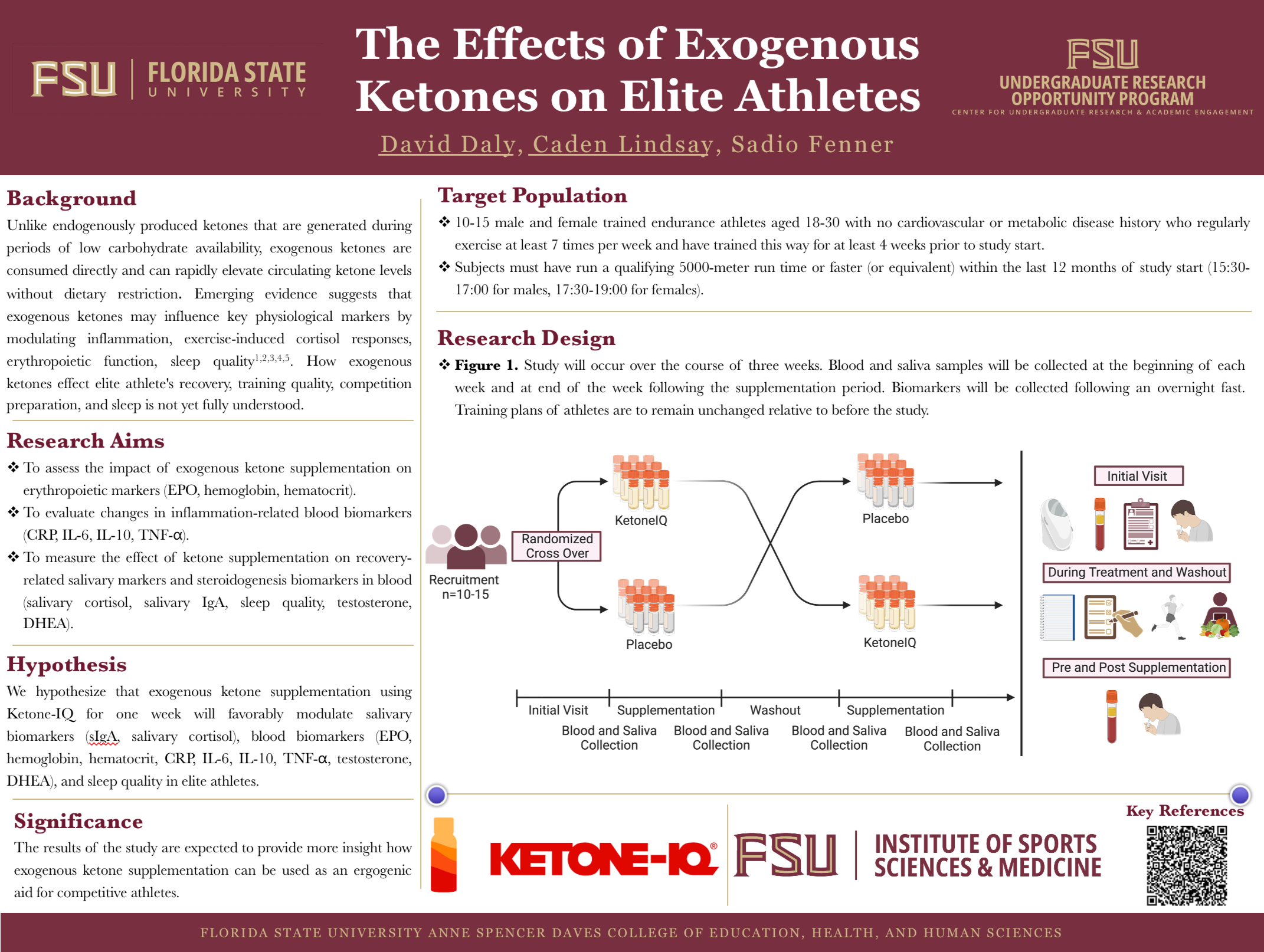
In recent years, the consumption of exogenous ketones by athletes has increased, with athletes often justifying their intake on claims of enhanced performance. There is currently no consensus in scientific literature on whether or not exogenous ketone supplementation provides significant performance benefits to users. The research team aims to learn more about the definitive physiological effects of exogenous ketones in this study. The team plans to recruit 10-15 male and female endurance athletes aged 18-30 to participate in this study. The structure of the study consists of an initial week of participants receiving either an exogenous ketone supplement or a placebo, followed by a one-week washout of both groups receiving no treatment, finally followed by one week of each group receiving the same treatment administered in week one. At the start of each week and at the conclusion of the three-week study, blood samples from each of the subjects will be analyzed for various blood and steroid markers, and salivary samples will be collected and tested for salivary biomarkers. Considering the gaps in literature on the effects of ketone supplementation on performance and recovery, the team hypothesizes that our results may provide insightful data that could help guide further exploration of ketone supplementation. Our findings may provide preliminary data that could be useful in larger studies, potentially helping the scientific community better understand the effects of exogenous ketones on athletes.
Keywords: Athlete, Supplement, Ketone, Performance, Recovery
26th annual Undergraduate Research Symposium, April 1, 2026
Anthony Hernandez Poster Session 3: 1:45 pm - 2:45 pm / Poster #178
BIO
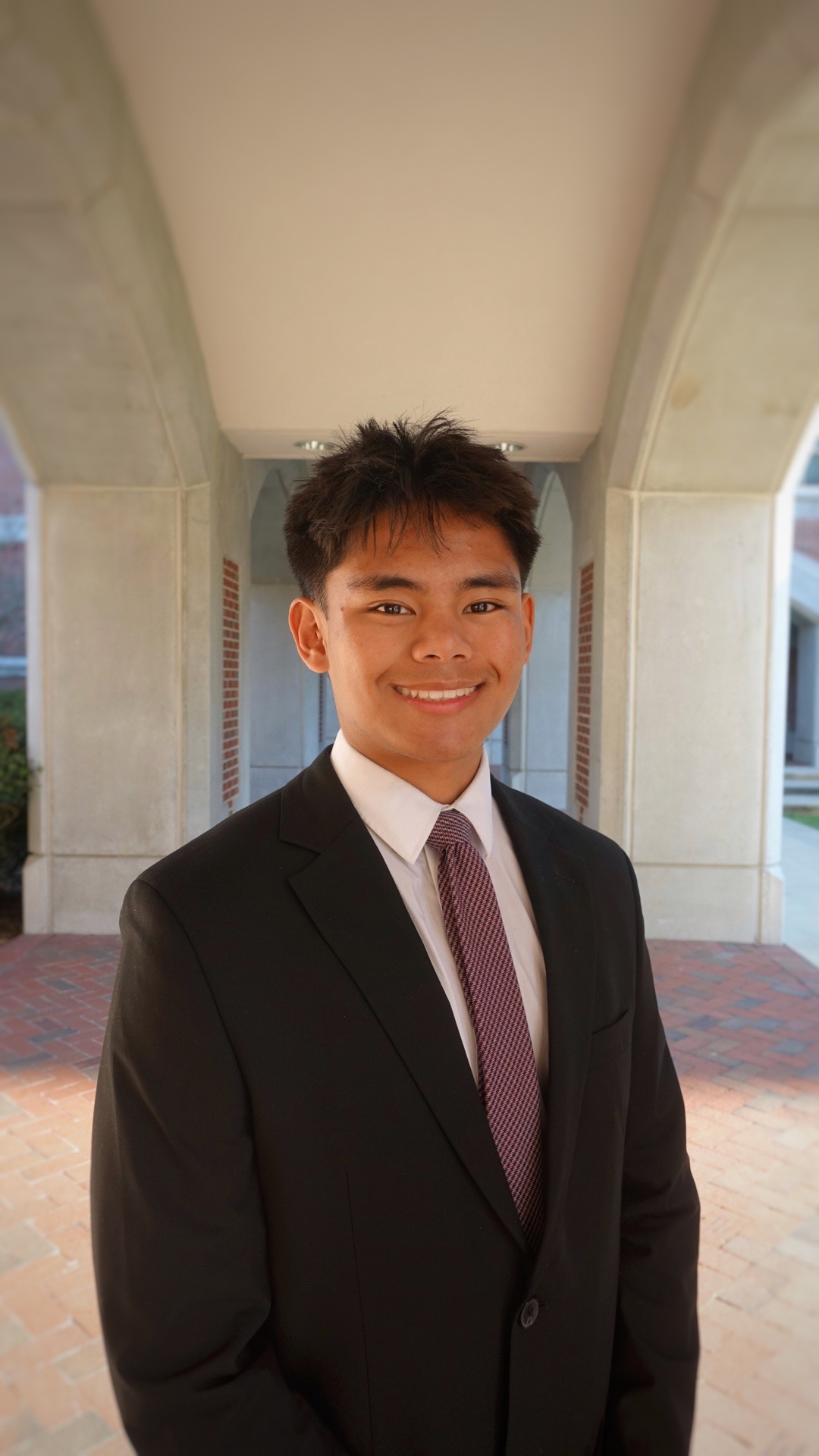
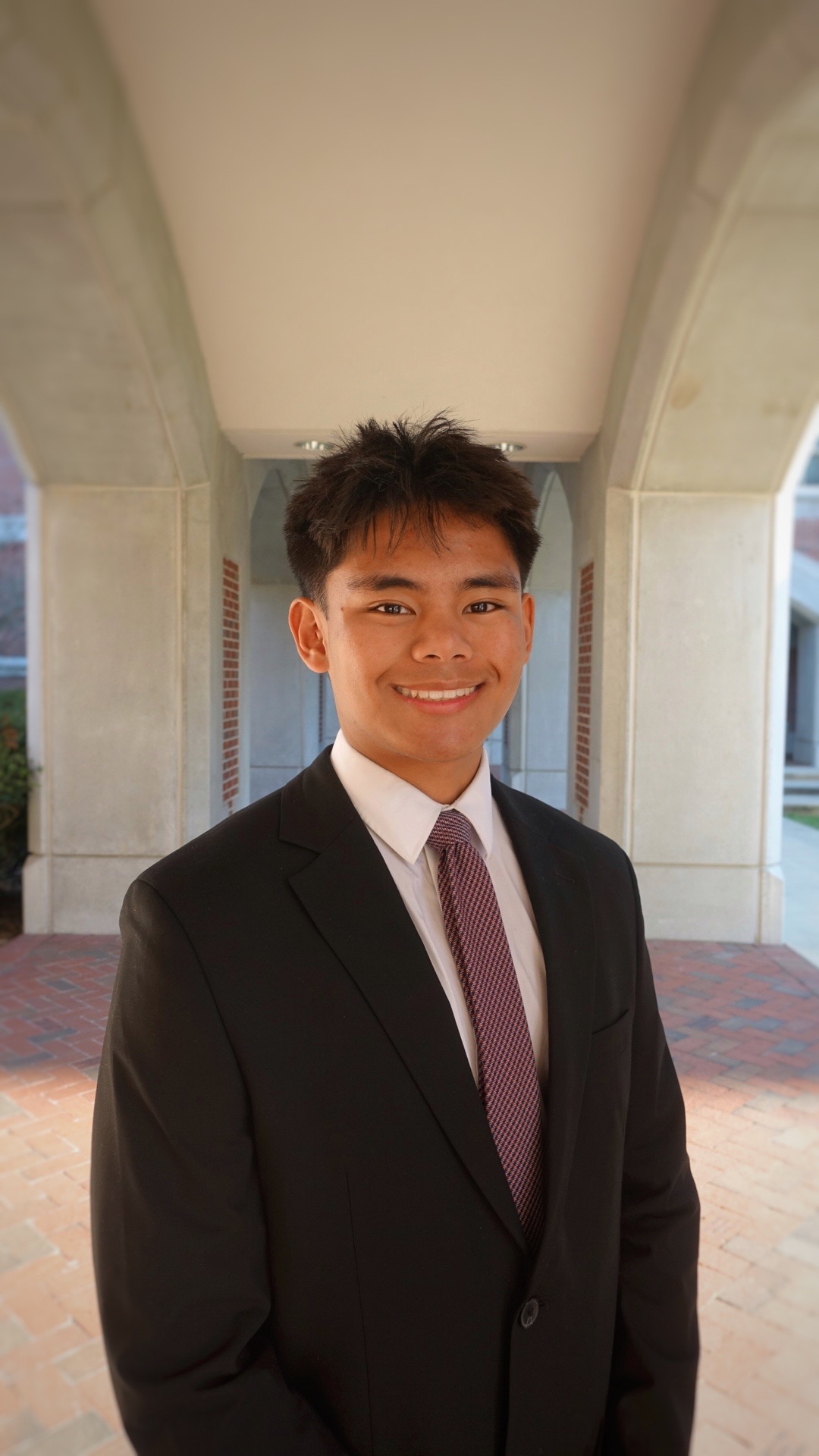
My name is Anthony Hernandez, and I am a first-year student at Florida State University pursuing a Bachelor of Science in Exercise Physiology as part of the FSU Honors Program (Class of 2029). I am deeply interested in the scientific foundations of human health, movement, and performance, particularly how physiological principles can be applied to improve wellness and functional outcomes.
As an Honors student, I am eager to engage in undergraduate research that emphasizes hands-on learning, data-driven inquiry, and collaboration with faculty mentors. I am especially interested in research related to exercise science, rehabilitation, and human performance, and I hope to develop strong analytical, laboratory, and critical thinking skills through participation in UROP.
Through this program, I aim to gain meaningful research experience that will prepare me for advanced study and professional training in a health-related or clinical science field. Ultimately, I plan to pursue graduate education or a career that integrates research, evidence-based practice, and service in the health sciences.
Mapping Neighborhood-Level Stigma: A Systematic Review of Geospatial Approaches
Authors: Anthony Hernandez, Casey Xavier HallStudent Major: Exercise Physiology
Mentor: Casey Xavier Hall
Mentor's Department: Nursing & Social Health Mentor's College: College of Nursing Co-Presenters: Kendall Sampson, Tirza Savellano, Kayla Gonzalez, Anthony Hernandez, Victoria Sierra
Abstract
Stigma is a well-documented determinant of adverse health outcomes across diverse identities and lived experiences, including race, gender, sexuality, socioeconomic status, substance use, HIV status, and disability. While most stigma research focuses on individual-level experiences, less is known about stigma as a structural or contextual feature of neighborhoods and other localized geographic units. This project systematically reviews the literature on geospatial stigma, with emphasis on neighborhood-level units of analysis. Using Covidence, a comprehensive search yielded n=3,804 abstracts for screening. Each abstract was independently reviewed by two researchers using predefined inclusion and exclusion criteria, with disagreements resolved by a third reviewer. Eligible studies were published in English, involved original peer-reviewed research with data collection or analysis, explicitly addressed geospatial stigma or a related construct, and used a neighborhood-level (or equivalent) geospatial unit. Studies were excluded if they were non-English, lacked original data, did not address stigma, or focused on broader geographic levels (e.g., state or country). Preliminary screening identified n=237 (6.2%) full texts for review, of which 137 (57.8%) are quantitative; n=44 (18.6%) have been included in the dataset and n=130 (55.9%) remain under review. Early observations indicate that neighborhood-level stigma is commonly operationalized through concentrated disadvantage, racialized spatial segregation, crime labeling, environmental neglect, and community attitudes toward marginalized populations. Neighborhoods are often symbolically associated with deviance or disorder, contributing to disinvestment and reduced healthcare access. Upon completion, this review will synthesize evidence on neighborhood-level stigma and identify gaps, advancing understanding of geospatial stigma as a structural determinant of health.
Keywords: Geospatial stigma, Neighborhood-level determinants of health, Structural stigma, Spatial inequality, Health disparities
26th annual Undergraduate Research Symposium, April 1, 2026
Jonluca Cortese Poster Session 3: 1:45 pm - 2:45 pm / Poster #210
BIO
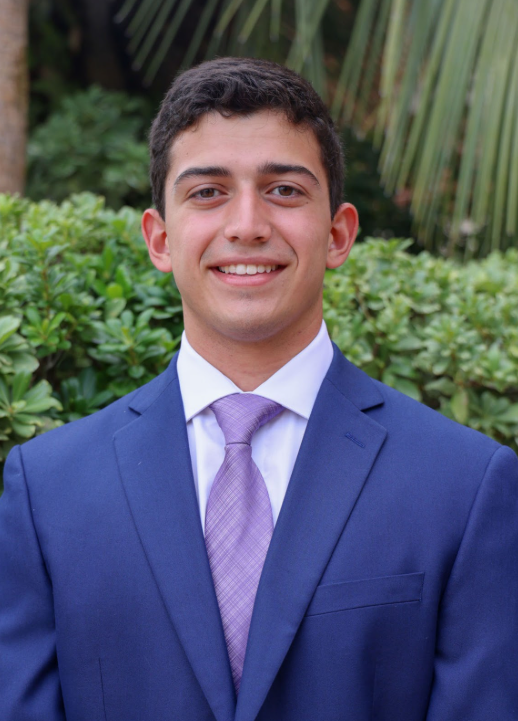
Jonluca Cortese is a second-year Cell and Molecular Neuroscience and Public Health student. In the future, Jonluca aims to focus on patient care as a physician and to make meaningful contributions to research.
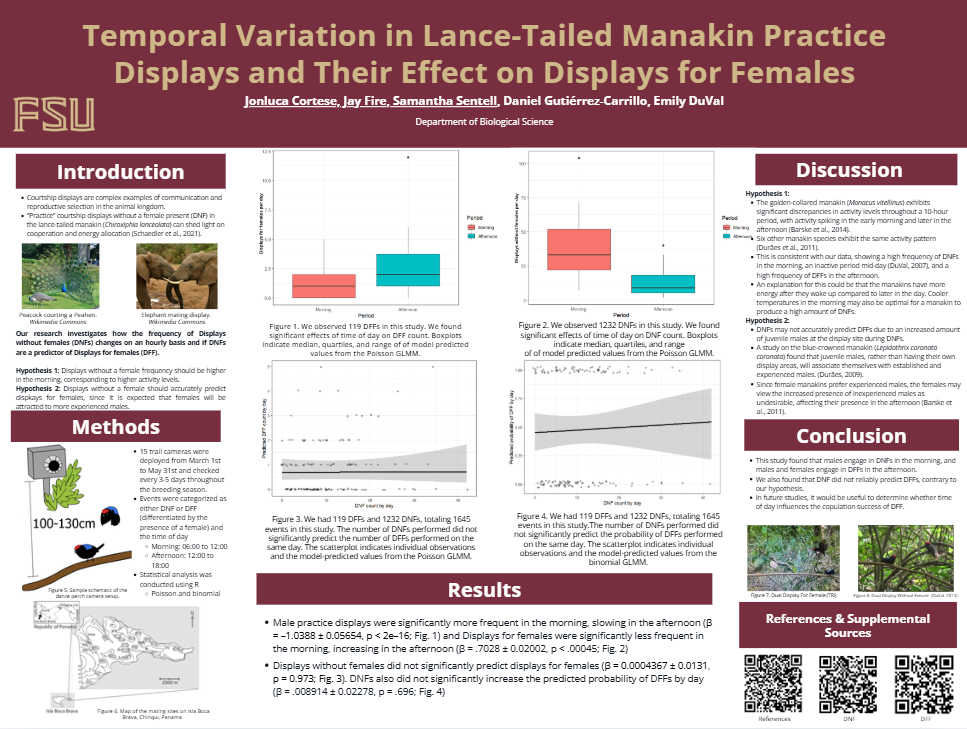
Temporal Variation in Lance-Tailed Manakin Practice Displays and Their Effect on Displays for Females
Authors: Jonluca Cortese, Daniel Gutiérrez-CarrilloStudent Major: Cell and Molecular Neuroscience & Public Health
Mentor: Daniel Gutiérrez-Carrillo
Mentor's Department: Biological Sciences Mentor's College: Florida State University Co-Presenters: Samantha Sentell, Jay Fire
Abstract
Courtship displays in birds are complex examples of communication and reproductive selection in the animal kingdom. Exploring variation in practice courtship displays in the lance-tailed manakin (Chiroxiphia lanceolata) can shed light on how species cooperate and how they allocate energy throughout the day. Males display in pairs to attract and court females. Even though the males form competitive alliances, only the alpha of the pair copulates if the display succeeds. These displays also occur without females present, both in pairs and alone. In this study, we examined whether displays without females present (DNFs) can predict displays with females present (DFF) and whether the time of day influences the frequency of DNFs. After analyzing behavioral recordings during the breeding season, it was found that displays without females were significantly more frequent in the morning (06:00 to 12:00) than in the afternoon (12:00 to 18:00). Displays without females were not a significant predictor of displays involving females. The first set of results is consistent with the idea that manakins experience higher energy levels in the morning, resulting in increased display frequency. Female manakins may have different activity periods, meaning that males use DNFs as practice displays when females are not actively surveying males in the morning. The second set of data can be explained by the fact that manakins have limited energy; the males would have to sacrifice extensive amounts of energy for an increased number of DNFs, leaving less energy for DFFs later in the day.
Keywords: Courtship, Display, Manakin
26th annual Undergraduate Research Symposium, April 1, 2026
Mackenzie Scully Poster Session 1: 9:30 am - 10:30 am / Poster #304

BIO
Mackenzie Scully is a second-year student at Florida State University pursuing a Bachelor of Science in Biology with a minor in Chemistry. Originally from New Smyrna Beach, Florida, her research interests focus on the effects of social media use on adolescent development, and she is currently conducting research on this topic under the mentorship of Dr. Vanessa Dennen. Mackenzie is involved in the Pre-Physician Assistant Club and FSU Remote Area Medical (RAM) and shadows a dermatologist at Goodless Dermatology. After completing her undergraduate degree, she plans to attend Physician Assistant school and hopes to work in dermatology.
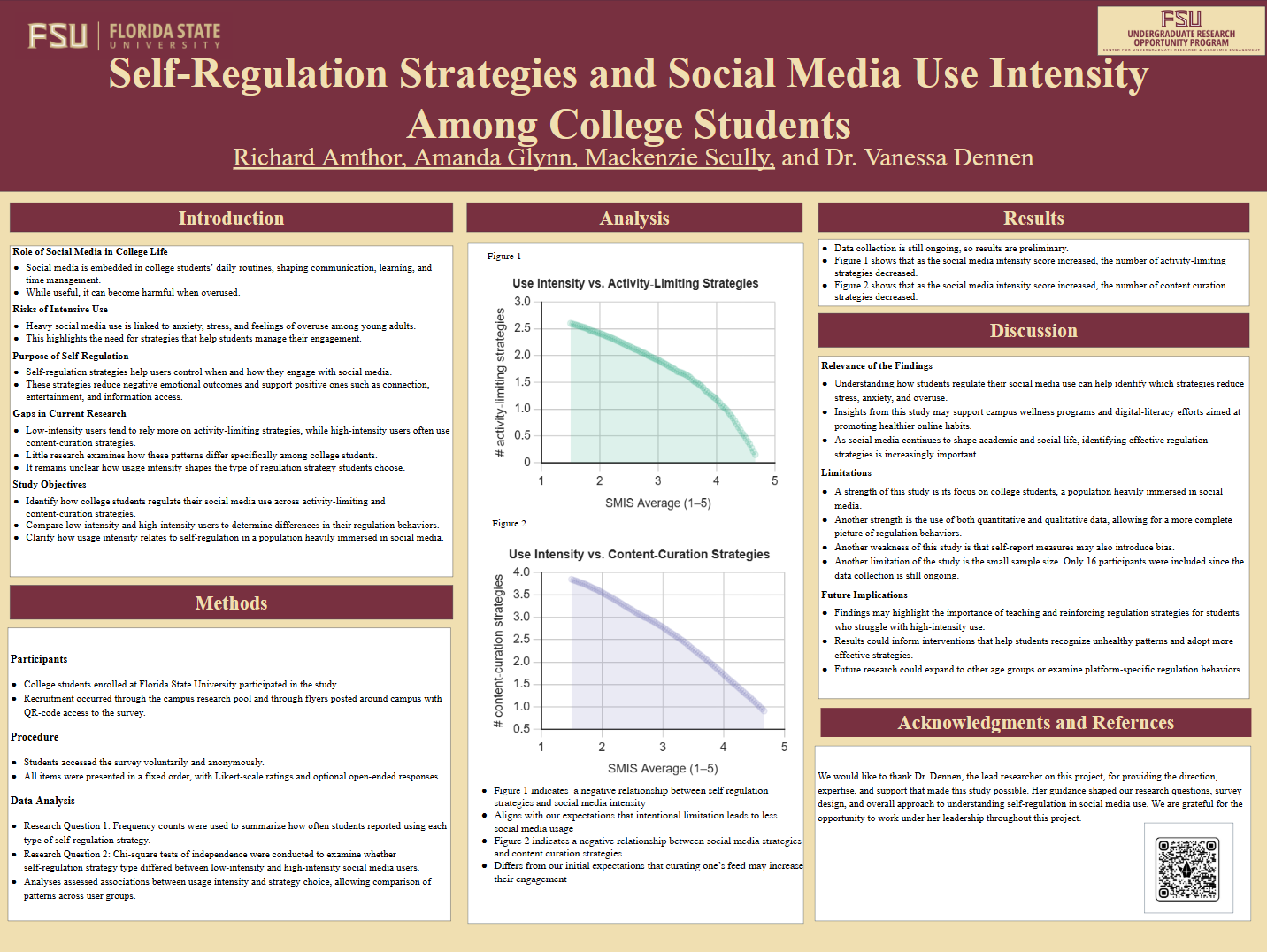
Self-Regulation Strategies and Social Media Use Intensity Among College Students
Authors: Mackenzie Scully, Vanessa DennenStudent Major: Biology
Mentor: Vanessa Dennen
Mentor's Department: Department of Educational Psychology & Learning Systems Mentor's College: Northwestern University Co-Presenters: Rich Amthor, Amanda Glynn
Abstract
SSocial media has become a central part of young people’s lives as over 90% of young adults in the United States use social media. As social media has become more popular, user intensity has also increased. However, people have found that increased social media use makes balancing their academic obligations and social life challenging. Social media seems to affect mood and wellbeing, so it's important to know what factors shape social media experiences. In this study, we focus on self-regulation, which refers to strategies people use to guide, monitor, or limit their social media use in order to maximize positive experiences. In our study we created an online survey through the Qualtrics platform. This survey was distributed in a research participation pool and advertised through flyers around campus. The survey asks students questions about their demographics and their social media usage and self-regulation strategies. Survey items include 10-point agreement scales and open-ended responses.. While data collection is still in progress, we expect to find that people with more self-regulation strategies have positive experiences using social media. Additionally, we expect that people with fewer self-regulation strategies may have more negative feelings about their social media use. We plan to explore the relationship between intensity of social media use, the number and types of self-regulation strategies used, and emotional experiences related to social media. This is important as social media becomes more prevalent in our society. This will help us understand our communities better and form more genuine connections with peers
Keywords: Social Media, Self-regulation, Intensity
26th annual Undergraduate Research Symposium, April 1, 2026
Alivia Corral Poster Session 2: 10:45 am - 11:45 am / Poster #42
BIO
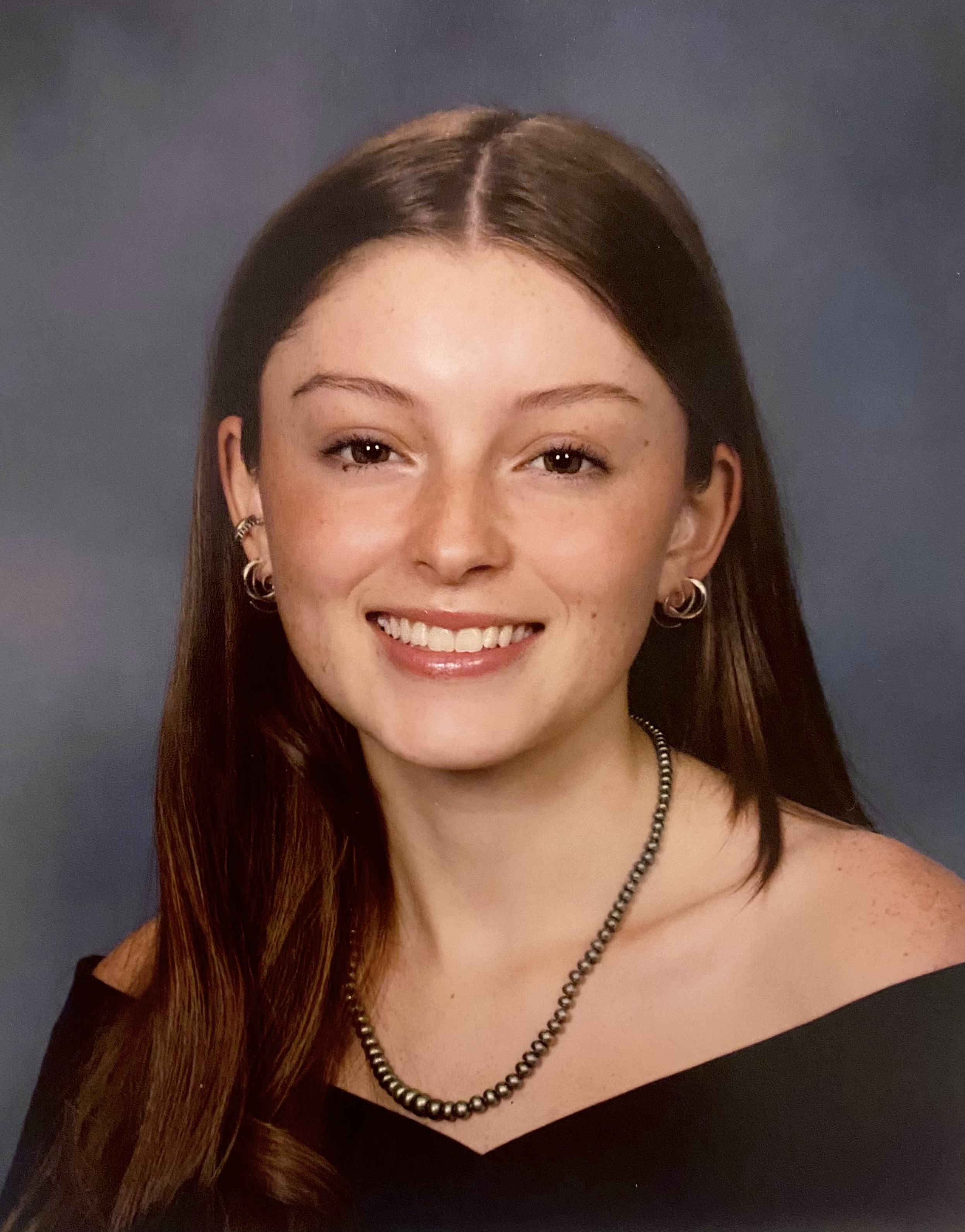
Alivia Corral is a 2nd year Psychology and Studio Art double major, minoring in Statistics. She conducts research under the Martin Lab with Danielle Jones as her mentor. She also works as a peer educator in the mental health advocacy program RENEW and plans to get a graduate degree in Counseling or Clinical Psychology.
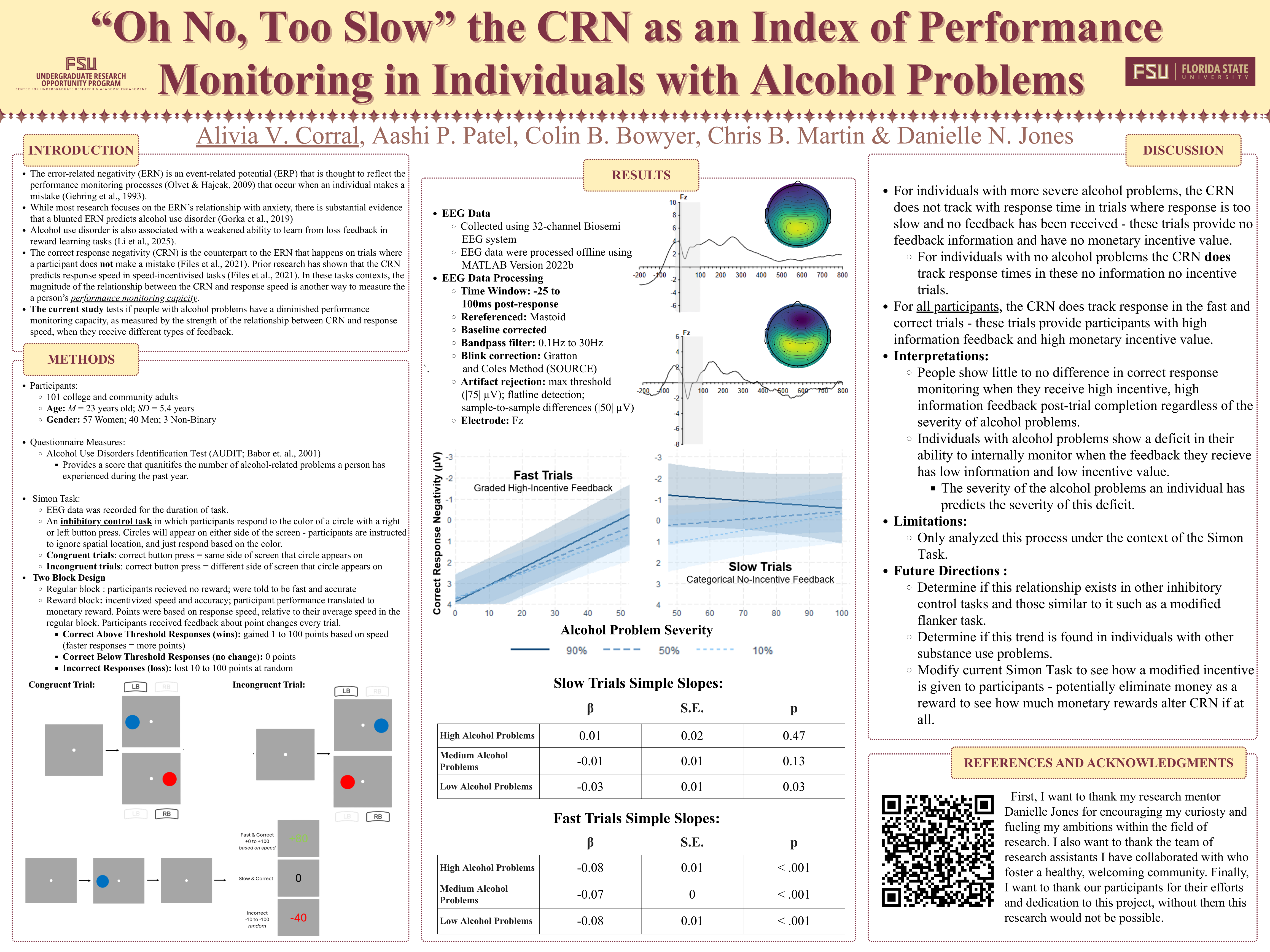
“Oh No, Too Slow” the CRN as an Index of Performance Monitoring in Individuals with Alcohol Problems
Authors: Alivia Corral, Danielle JonesStudent Major: Psychology and Studio Art
Mentor: Danielle Jones
Mentor's Department: Psychology Department Mentor's College: Florida State University Co-Presenters:
Abstract
Correct Response Negativity (CRN) is an event related potential (ERP) that reflects an individual's “performance-monitoring process”, past data shows that CRN indexes response speed when fast responses are incentivized (Files et al., 2021), indicating that individuals are learning an implicit boundary regarding speed and accuracy. Current literature suggests that alcohol use disorder (AUD) is associated with problems in learning (Gorka et al., 2019). Our study aims to determine if people with alcohol problems show impaired performance-monitoring in a task with new implicit response-time boundaries. In the experiment participants fill out questions about alcohol use as a part of a larger questionnaire. They then perform a series of tasks during the EEG, this research focuses on the data obtained during the SIMON task. This task is broken into two sections, during the latter half the task boundaries are changed and external rewards are associated with performance. After data collection a three way interaction is performed revealing a correlation between individuals with alcohol problems and slower acquisition of new boundaries. As problems increased larger deficits in correct response monitoring were evident. The data shows impaired or delayed ability in individuals to error monitor and learn task boundaries once altered. The results of this study can be used to better predict and understand the downstream effects associated with alcohol problems.
Keywords: CRN Performance EEG Alcohol Problems
26th annual Undergraduate Research Symposium, April 1, 2026
Giuliana Freeman Poster Session 2: 10:45 am - 11:45 am / Poster #14
BIO
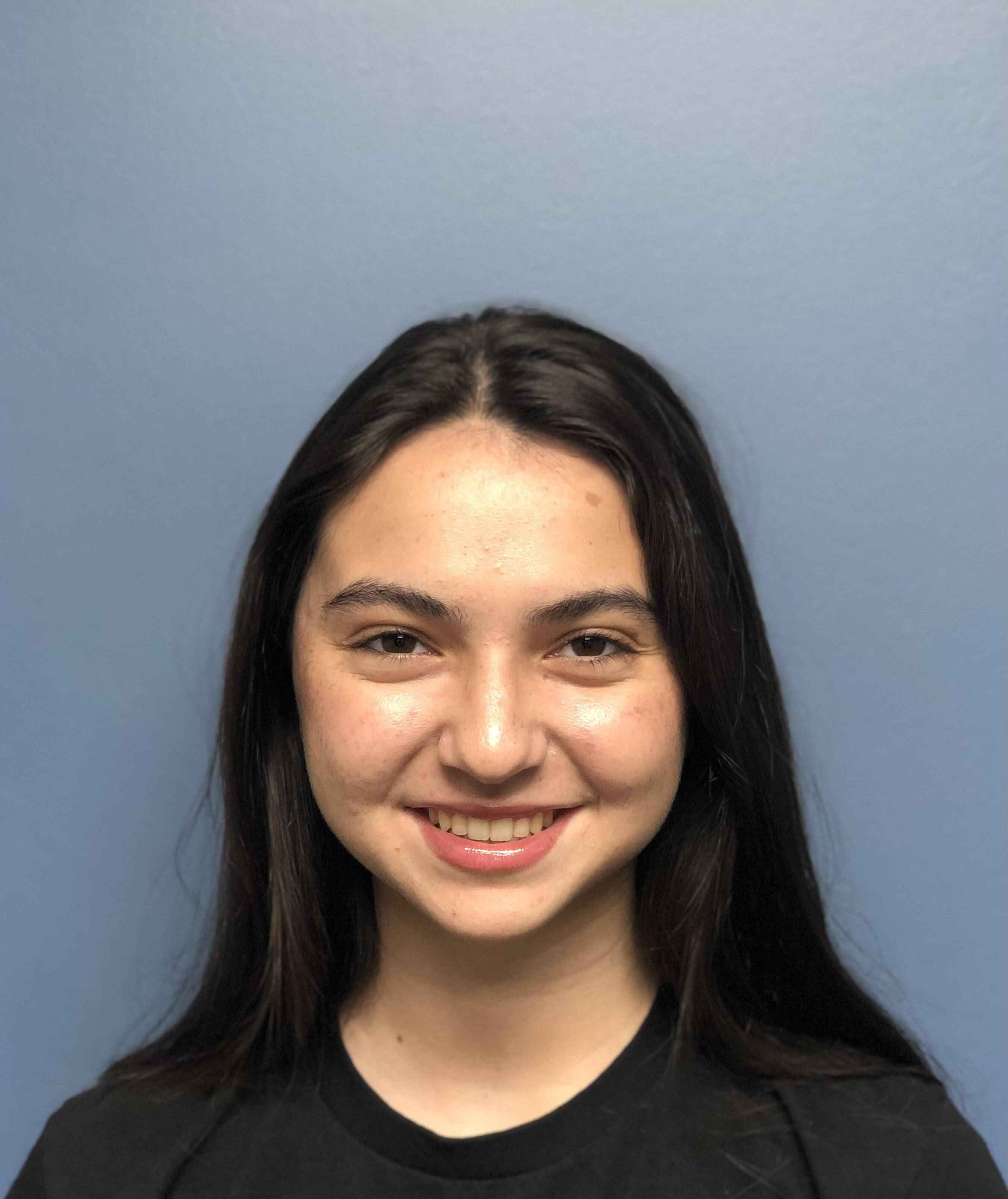
Giuliana is a second year psychology major and criminology minor from Tallahassee. She is interested in social and forensic psychology and hopes to do research in those fields.
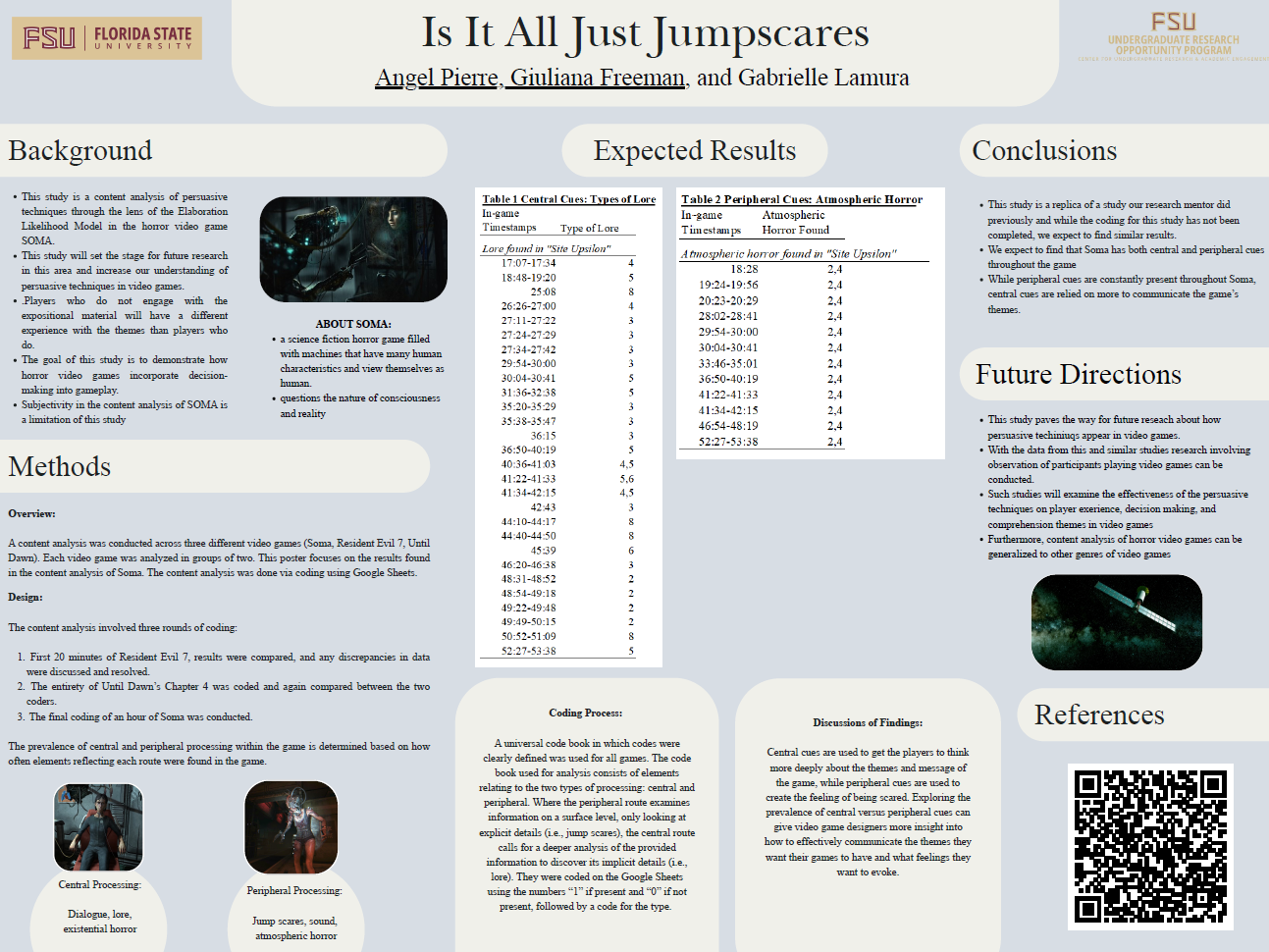
Is It all Just Jumpscares
Authors: Giuliana Freeman, Gabrielle LamuraStudent Major: Psychology
Mentor: Gabrielle Lamura
Mentor's Department: Communications Mentor's College: Communications Co-Presenters: Angel Pierre
Abstract
Horror video games are a niche media that often evoke fear amongst their players. However, horror video games are not widely studied within the persuasive realm of communication studies. This study investigates how, through the lens of the Elaboration Likelihood Model theory, decision-making can be effective within horror video games, as well as set the foreground for the researcher’s future studies. According to the model, persuasive information is collected and processed by the brain in two ways: central and peripheral routes. Where the peripheral route examines information on a surface level, only looking at explicit stimuli, the central route calls for a deeper analysis of the provided information to discover its implicit details. Through a content analysis of the video game Soma this phenomenon can be observed. Individually, two coders analyzed the same one-hour cut of the game, and a reliability score was assigned based on the subjectivity of the element and the agreement between both coders. The data collected will be examined to determine whether central or peripheral cues are more prevalent in the game. From there, conclusions can be drawn on which type of cue is utilized more by game developers in comparison to two other games: Until Dawn and Resident Evil 7.
Keywords: Jumpscare, Horror, Video Games
26th annual Undergraduate Research Symposium, April 1, 2026
Anthony Hernandez Poster Session 1: 9:30 am - 10:30 am / Poster #178
BIO
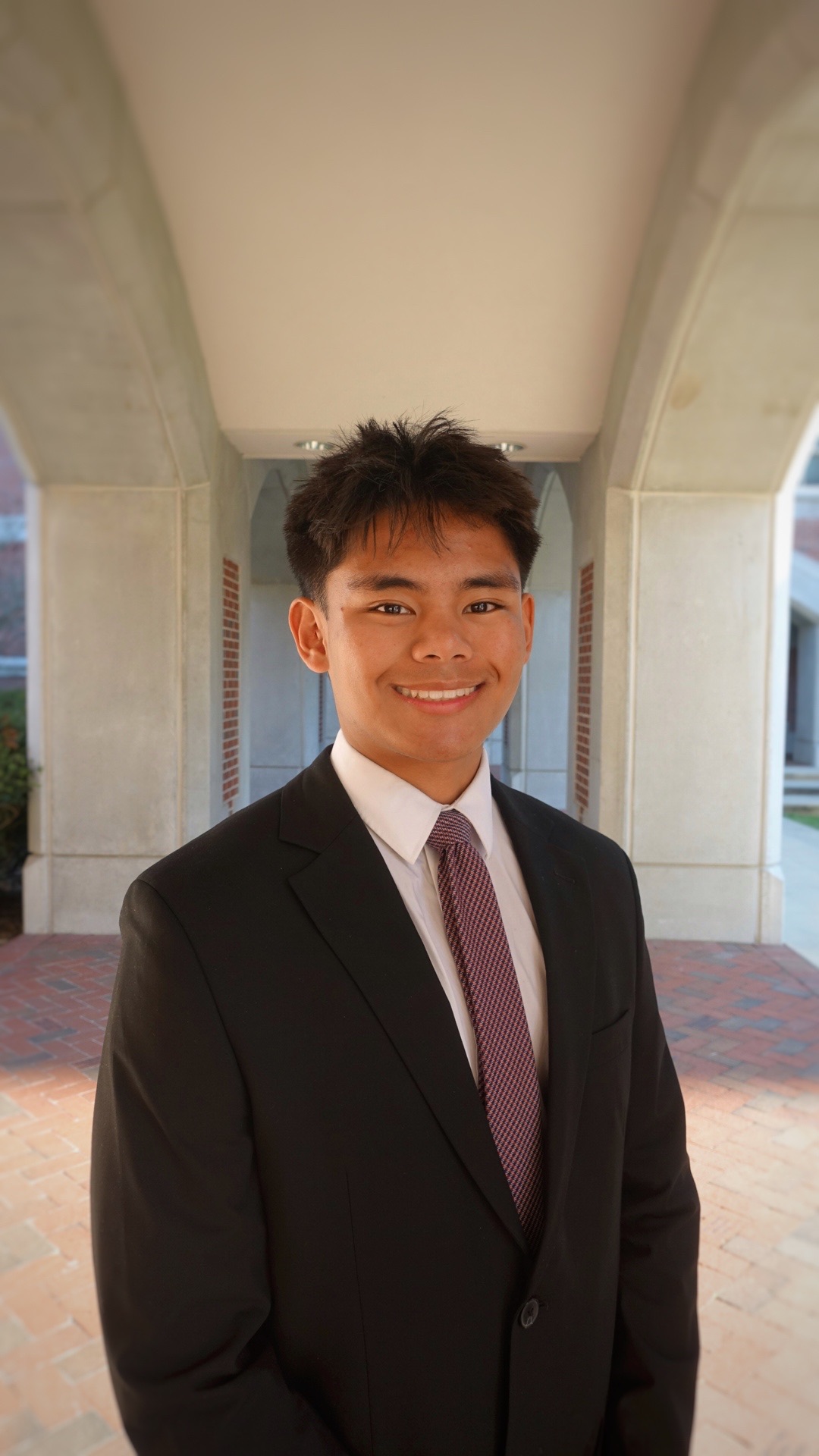
My name is Anthony Hernandez, and am a first-year student at Florida State University pursuing a Bachelor of Science in Exercise Physiology as part of the FSU Honors Program (Class of 2029). Anthony is deeply interested in the scientific foundations of human health, movement, and performance, particularly how physiological principles can be applied to improve wellness and functional outcomes.
As an Honors student, Anthony is eager to engage in undergraduate research that emphasizes hands-on learning, data-driven inquiry, and collaboration with faculty mentors. Anthony is especially interested in research related to exercise science, rehabilitation, and human performance, and hopes to develop strong analytical, laboratory, and critical thinking skills through participation in UROP.
Through this program, Anthony aims to gain meaningful research experience that will prepare Anthony for advanced study and professional training in a health-related or clinical science field. Ultimately, Anthony plans to pursue graduate education or a career that integrates research, evidence-based practice, and service in the health sciences.
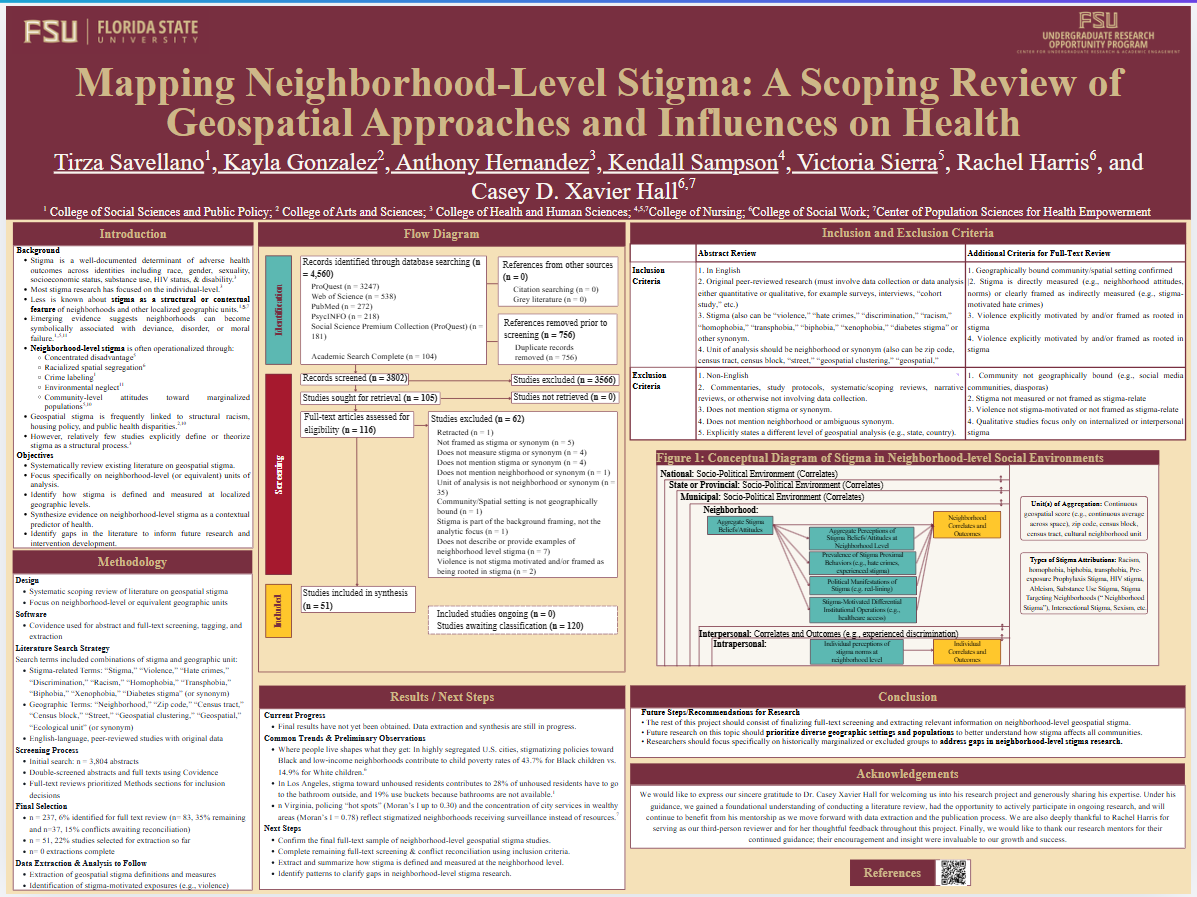
Mapping Neighborhood-Level Stigma: A Scoping Review of Geospatial Approaches and Influences on Health
Authors: Anthony Hernandez, Casey Xavier HallStudent Major: Exercise Physiology
Mentor: Casey Xavier Hall
Mentor's Department: Nursing & Social Health Mentor's College: College of Nursing Co-Presenters: Tirza Savellano, Kayla Gonzalez, Kendall Sampson, Victoria Sierra
Abstract
Stigma is a well-documented determinant of adverse health outcomes across diverse identities and lived experiences, including race, gender, sexuality, socioeconomic status, substance use, HIV status, and disability. While most stigma research focuses on individual-level experiences, less is known about stigma as a structural or contextual feature of neighborhoods and other localized geographic units. This project systematically reviews the literature on geospatial stigma, with emphasis on neighborhood-level units of analysis. Using Covidence, a comprehensive search yielded n=3,804 abstracts for screening. Each abstract was independently reviewed by two researchers using predefined inclusion and exclusion criteria, with disagreements resolved by a third reviewer. Eligible studies were published in English, involved original peer-reviewed research with data collection or analysis, explicitly addressed geospatial stigma or a related construct, and used a neighborhood-level (or equivalent) geospatial unit. Studies were excluded if they were non-English, lacked original data, did not address stigma, or focused on broader geographic levels (e.g., state or country). Preliminary screening identified n=237 (6.2%) full texts for review, of which 137 (57.8%) are quantitative; n=44 (18.6%) have been included in the dataset and n=130 (55.9%) remain under review. Early observations indicate that neighborhood-level stigma is commonly operationalized through concentrated disadvantage, racialized spatial segregation, crime labeling, environmental neglect, and community attitudes toward marginalized populations. Neighborhoods are often symbolically associated with deviance or disorder, contributing to disinvestment and reduced healthcare access. Upon completion, this review will synthesize evidence on neighborhood-level stigma and identify gaps, advancing understanding of geospatial stigma as a structural determinant of health.
Keywords: Geospatial stigma, Neighborhood-level determinants of health, Structural stigma, Spatial inequality, Health disparities
26th annual Undergraduate Research Symposium, April 1, 2026
Benjamin Bernsteen Poster Session 3: 1:45 pm - 2:45 pm / Poster #5
BIO
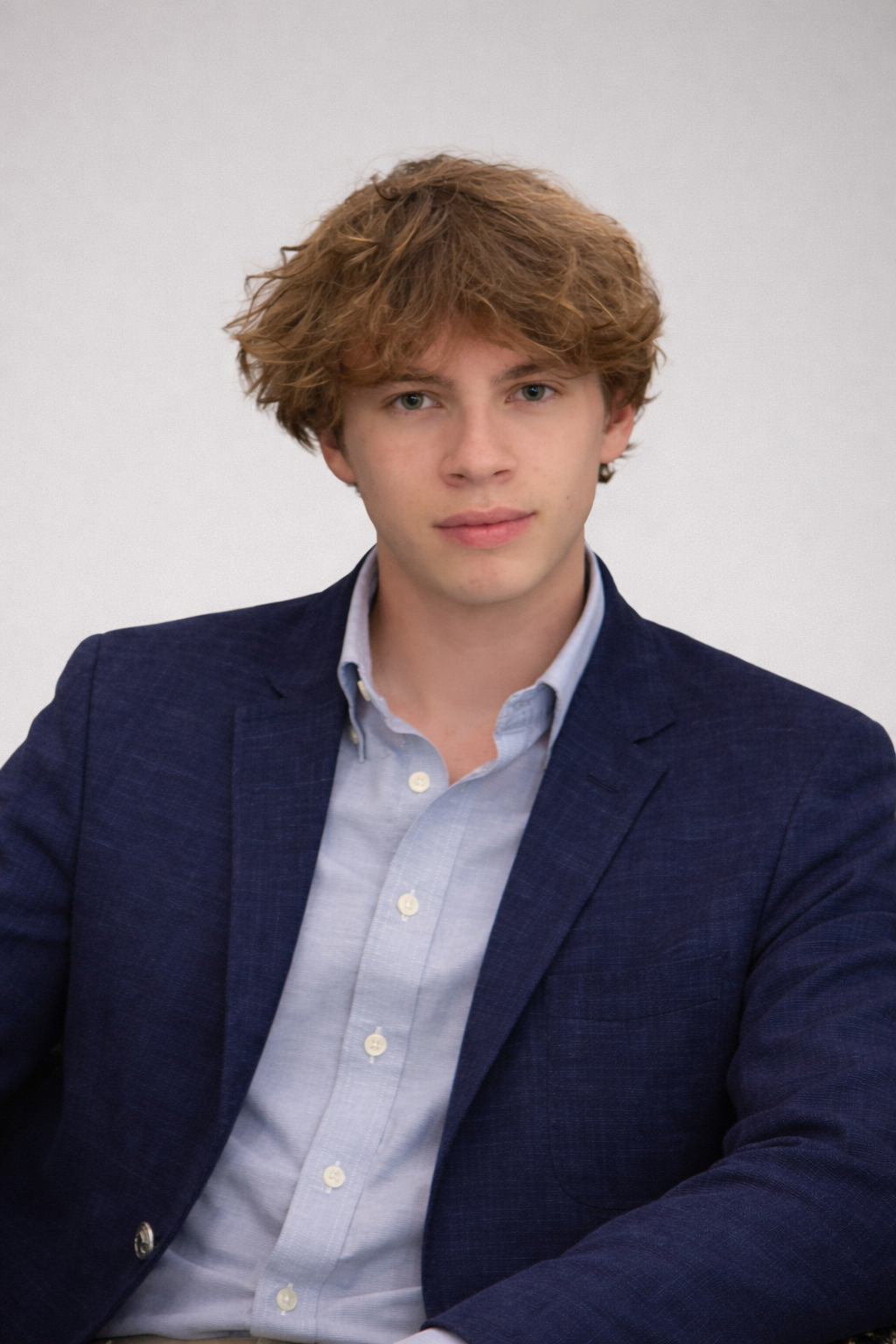
I am a student at Florida State University with a strong interest in electrical engineering, applied research, and hands-on problem solving. I am originally from Guadalajara, Mexico, and having lived in different places throughout my life has helped me become adaptable, curious, and comfortable working with people from many backgrounds. Those experiences have shaped the way I approach both academics and research, pushing me to stay open-minded and look at problems from multiple perspectives. My research interests include electronics, instrumentation, imaging systems, signal processing, and the ways electrical engineering connects with real-world experimental work. I am especially interested in projects that combine theory with practical testing, whether through sensors, circuits, data acquisition, or computational analysis. I enjoy learning how technical systems work at a deeper level and applying that understanding to improve performance, accuracy, and design. What draws me most to research is the opportunity to contribute to meaningful work while continuing to build technical skills through direct experience. In the future, I hope to build a career in engineering that allows me to work on advanced technologies with real impact. I am particularly interested in areas where electrical engineering overlaps with innovation in aerospace, robotics, imaging, and complex systems. My long-term goal is to contribute to challenging projects, grow through research and mentorship, and become an engineer who can combine technical ability with creativity and collaboration. Through UROP, I hope to strengthen my research background and gain experience that will prepare me for graduate study and future engineering opportunities.
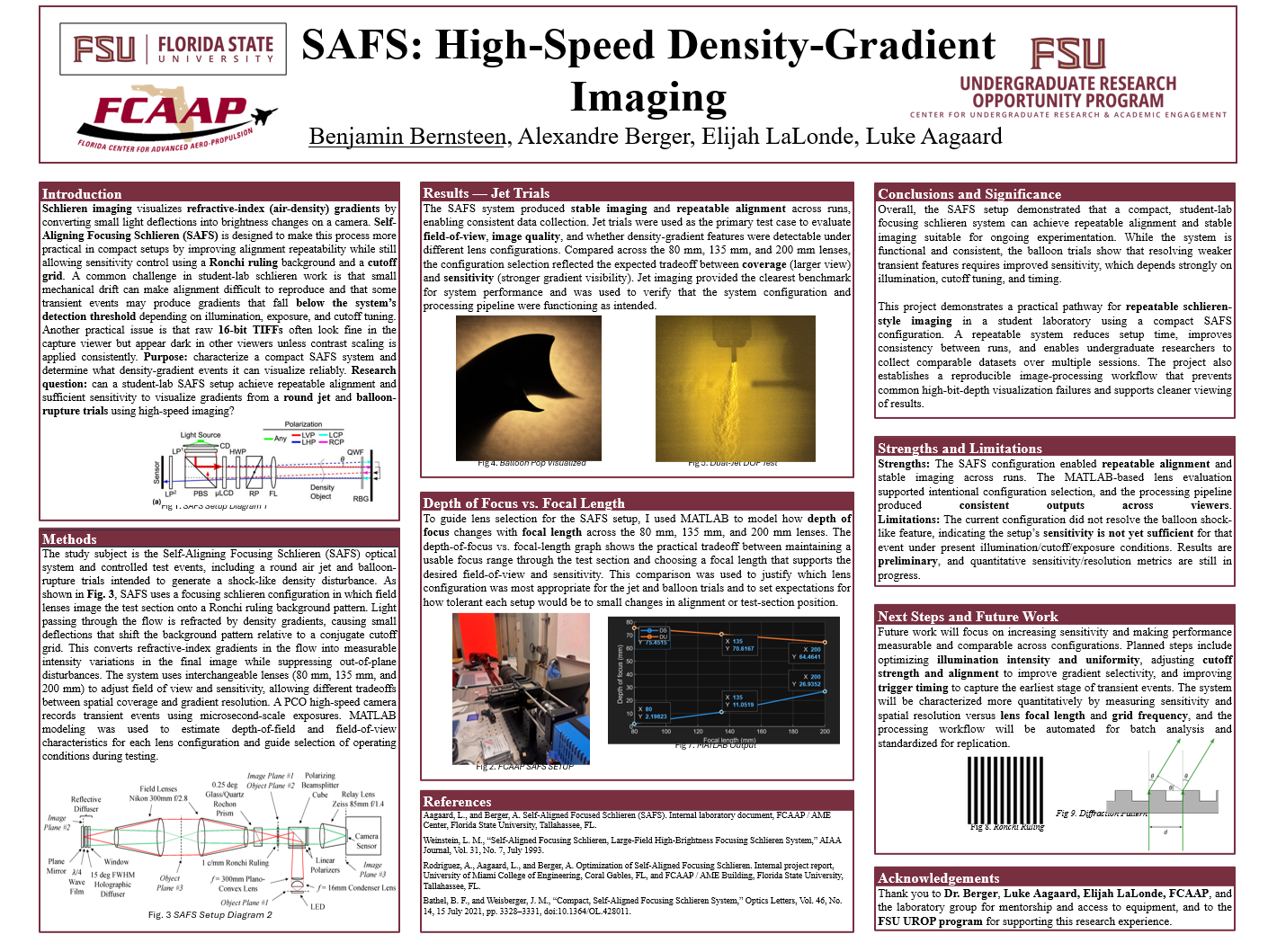
SAFS: High-Speed Density-Gradient Imaging
Authors: Benjamin Bernsteen, Dr. Alexandre BergerStudent Major: Electrical Engineering
Mentor: Dr. Alexandre Berger
Mentor's Department: 218000 Mentor's College: FAMU-FSU Colledge of Engineering Co-Presenters:
Abstract
Schlieren photography is an imaging technique used to visualize refractive gradients in airflow. In this UROP project, we worked with a Self-Aligning Focusing Schlieren (SAFS) system in the FCAAP laboratory. Unlike traditional schlieren, SAFS is a focusing schlieren method, meaning it emphasizes gradients in a selected plane and suppresses out-of-plane content. This is especially useful for free-jet experiments because it can filter out undesirable background features such as tunnel-wall boundary layers or other out-of-plane disturbances that would otherwise make the image less usable. Using MATLAB and qualitative analysis, we examined several SAFS configurations with different lenses (80, 135, and 200 mm) and modeled their behavior in terms of focal length, field of view, and depth of field to optimize the balance between image sensitivity and field of view. We also used a MATLAB script to process the image output by converting the captured schlieren images into consistently scaled and labeled files, allowing clearer comparison across the different lens configurations. To further test the system’s sensitivity, we popped 12-inch black latex balloons in an attempt to capture a controlled shock. Throughout testing, the SAFS system produced consistently strong imaging performance, supporting its value as an experimental tool. However, the system did not detect a clear shock front during the balloon tests, which suggests that the density gradient was below the sensitivity threshold of the system. Overall, this project helped establish a foundation for future calibration and sensitivity optimization of the SAFS system.
Keywords: Aerospace, Engineering, Analysis
26th annual Undergraduate Research Symposium, April 1, 2026
Catherine Zhou Poster Session 1: 9:30 am - 10:30 am / Poster #90

BIO
Catherine Zhou is a second-year Biological Sciences student on the pre-medical track from Tampa, Florida. She is a member of FSU's Honors Program. She has a strong passion for medicine and plans on pursuing a career in Emergency medicine in hopes of making a meaningful impact in all her future patients.
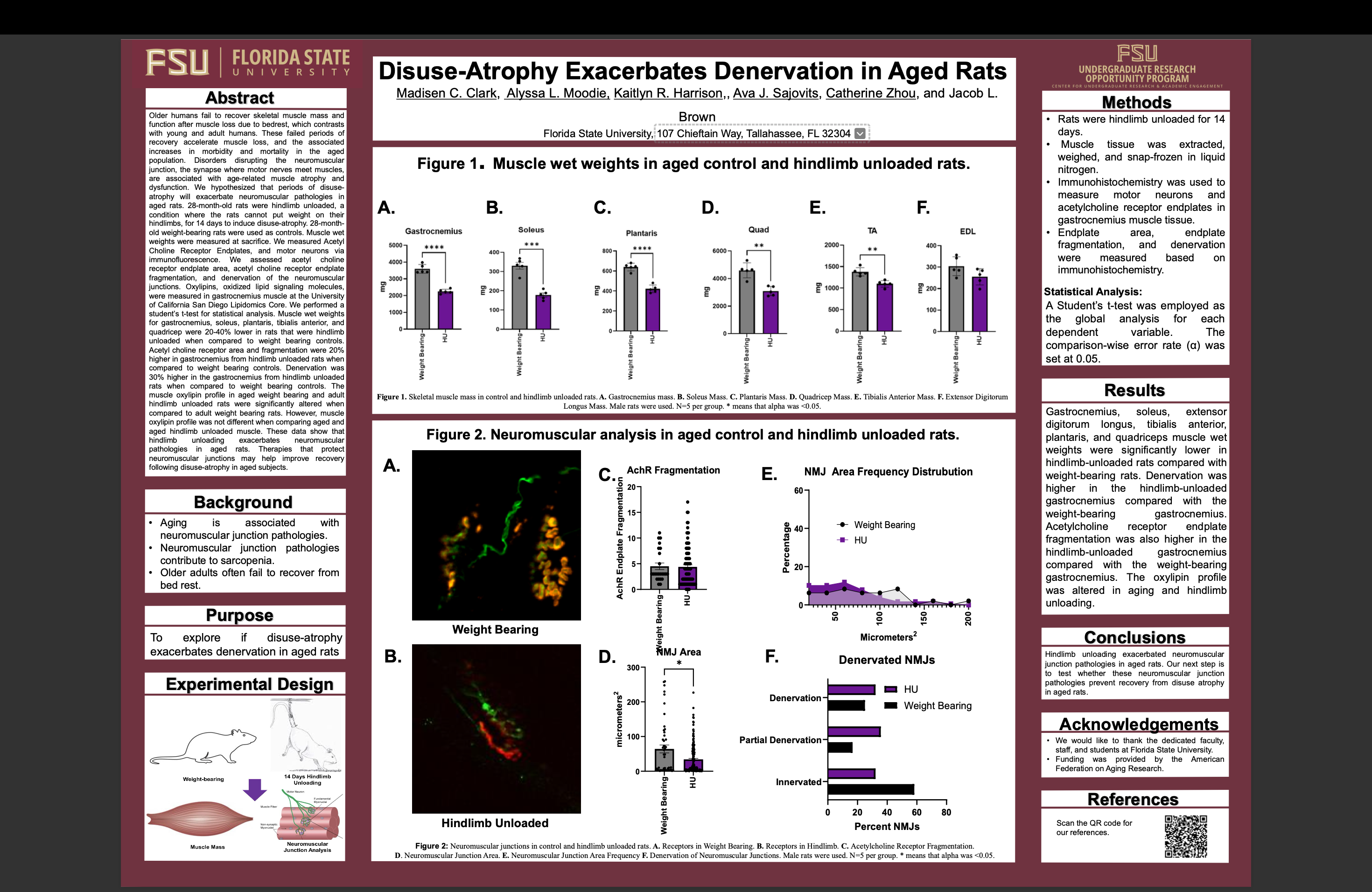
Disuse-Atrophy Exacerbates Denervation in Aged Rats
Authors: Catherine Zhou, Jacob BrownStudent Major: Biological Sciences
Mentor: Jacob Brown
Mentor's Department: Exercise Physiology Mentor's College: Anne's College Co-Presenters: Alyssa Moodie, Kaitlyn Harrison, and Ava Sajovits
Abstract
Older humans fail to recover skeletal muscle mass and function after muscle loss due to bedrest, which contrasts with young and adult humans, leading to muscle loss and an increase in morbidity and mortality in the aged population. Disorders disrupting the neuromuscular junction, the synapse where motor nerves meet muscles, are associated with age-related muscle atrophy and dysfunction. We hypothesized that periods of disuse-atrophy will exacerbate neuromuscular pathologies in aged rats. 28-month-old rats were hindlimb unloaded, a condition where the rats cannot put weight on their hindlimbs, for 14 days to induce disuse atrophy. 28-month-old weight-bearing rats were used as controls. Muscle wet weights were measured at sacrifice. Via immunofluorescence, we assessed acetyl choline receptor endplate area, acetyl choline receptor endplate fragmentation, and denervation of the neuromuscular junctions. Oxylipins, oxidized lipid signaling molecules, were measured in gastrocnemius muscle. We performed a student’s t-test for statistical analysis. Muscle wet weights were 20-40% lower in rats that were hindlimb-unloaded compared to controls. Acetyl choline receptor area and fragmentation were 20% higher in gastrocnemius from hindlimb-unloaded rats compared to controls. Denervation was 30% higher in the gastrocnemius from hindlimb-unloaded rats compared to controls. The muscle oxylipin profile in aged weight-bearing and adult hindlimb-unloaded rats were significantly altered when compared to adult weight-bearing rats. However, muscle oxylipin profile was not different when comparing aged and aged hindlimb unloaded muscle. These data show that hindlimb-unloading exacerbates neuromuscular pathologies in aged rats. Therapies that protect neuromuscular junctions may help improve recovery following disuse-atrophy in aged subjects.
Keywords: atrophy denervation
26th annual Undergraduate Research Symposium, April 1, 2026
Amelia Kuehn Poster Session 1: 9:30 am - 10:30 am / Poster #231

BIO
This is Amelia Kuehn, she is a second year at Florida State University pursuing a Bachelors in Science of Chemical engineering major. Amelia has been assisting in research under Dr. Amanda Beckman researching genetic variation in different levels of domestication in turkeys by analyzing chromosome 18. Amelia is hoping to continue in her research career by working in pharmaceuticals and drug technology. Amelia is additionally hoping to attend graduate school to pursue a Masters in Pharmaceutical Engineering.
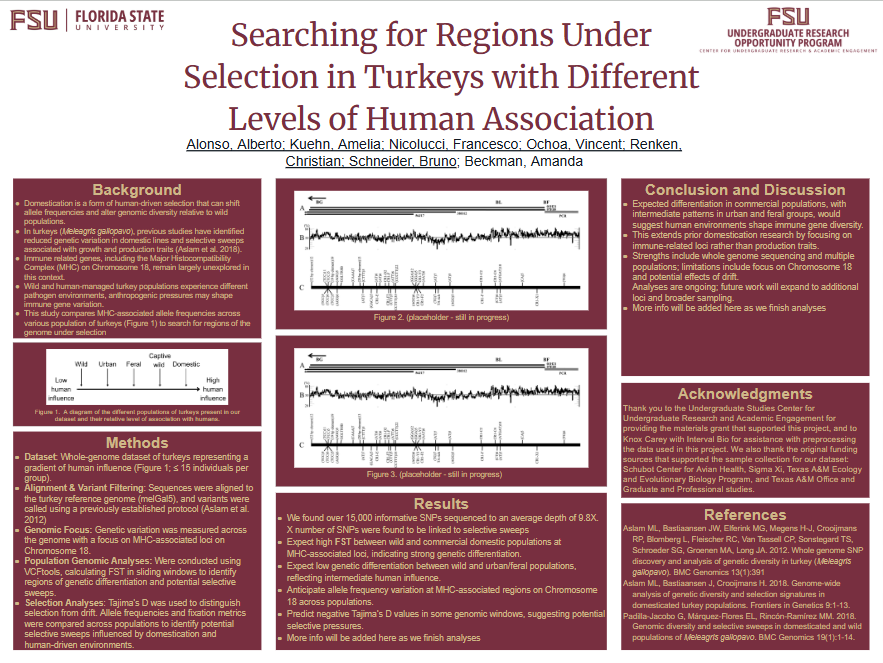
Searching for Regions Under Selection in Turkeys with Different Levels of Human Association
Authors: Amelia Kuehn, Dr. Amanda BeckmanStudent Major: Chemical Engineering
Mentor: Dr. Amanda Beckman
Mentor's Department: Biological sciences Mentor's College: Arts and Sciences Co-Presenters: Alberto Alanso, Francesco Nicolucci, Vincent Ochoa, Christian Renken, Bruno Schneider
Abstract
Domestication exposes animals to a variety of novel environments, including differences in the diseases they encounter. Studying the evolutionary processes involved in domestication is important as many modern wild animals are experiencing some degree of pressure to adapt to human-dominated landscapes. Major histocompatibility complex (MHC) genes must rapidly evolve as they play an important role in immune responses and are shaped by pathogen exposure. This project investigated selection in wild versus domesticated turkeys (Meleagris gallopavo) and whether the amount of human interaction influences allele frequencies. We used a Whole Genome Sequencing (WGS) dataset of turkeys that experienced different levels of human association (wild, urban, feral, backyard domestic, and commercial domestic populations). After identifying genetic variants, we used VCFtools to analyze allele frequencies on Chromosome 18. We used FST, a measure of population differentiation, to identify regions with the greatest divergence. We expect differences in MHC-related allele frequencies between domesticated and wild turkeys, suggesting human environments influence immune-related genetic variation. Identifying these regions may highlight genomic regions shaped by selection. Overall, this project helps explain how domestication affects immune gene diversity. Future research could analyze additional turkey populations from different environments and examine allele frequencies on other chromosomes. Further work could also explore genomic differences in other domesticated avian species to better understand the impact of domestication on immune responses.
Keywords: Genetics, Turkeys, Domestication, Variation
26th annual Undergraduate Research Symposium, April 1, 2026
Calvin Nguyen Poster Session 2: 10:45 am - 11:45 am / Poster #284
BIO
Calvin Nguyen is an undergraduate student at Florida State University pursuing a Bachelor of Science in Electrical Engineering. Previously, he was a Lead Researcher investigating glucose-driven bioenergetics in yeast , where he analyzed wet lab data concerning anaerobic respiration and CO2 production. He also led a calculus-based research project on temperature optimization for frosting application. Beyond the lab, Calvin applies his technical skills as an Electrical Subsystem Member for the Society of Automotive Engineers, assisting in the design and wiring of a Baja car. He serves as the Brotherhood Chair and Sergeant of Arms for Lambda Phi Epsilon International Fraternity, Inc. and is a member of the Society of Asian Scientists and Engineers. Looking ahead, Calvin aims to leverage his interests in power generation systems, AI/ML optimization, and systems engineering to pursue a career in the tech industry, targeting roles at major technology companies or within the space exploration sector.
Modeling of Spacecraft Power Systems: Thermal and Electrical Optimization for Space Exploration
Authors: Calvin Nguyen, Ryan GosseStudent Major: Electrical Engineering
Mentor: Ryan Gosse
Mentor's Department: Mechanical Engineering Mentor's College: FAMU-FSU College of Engineering Co-Presenters:
Abstract
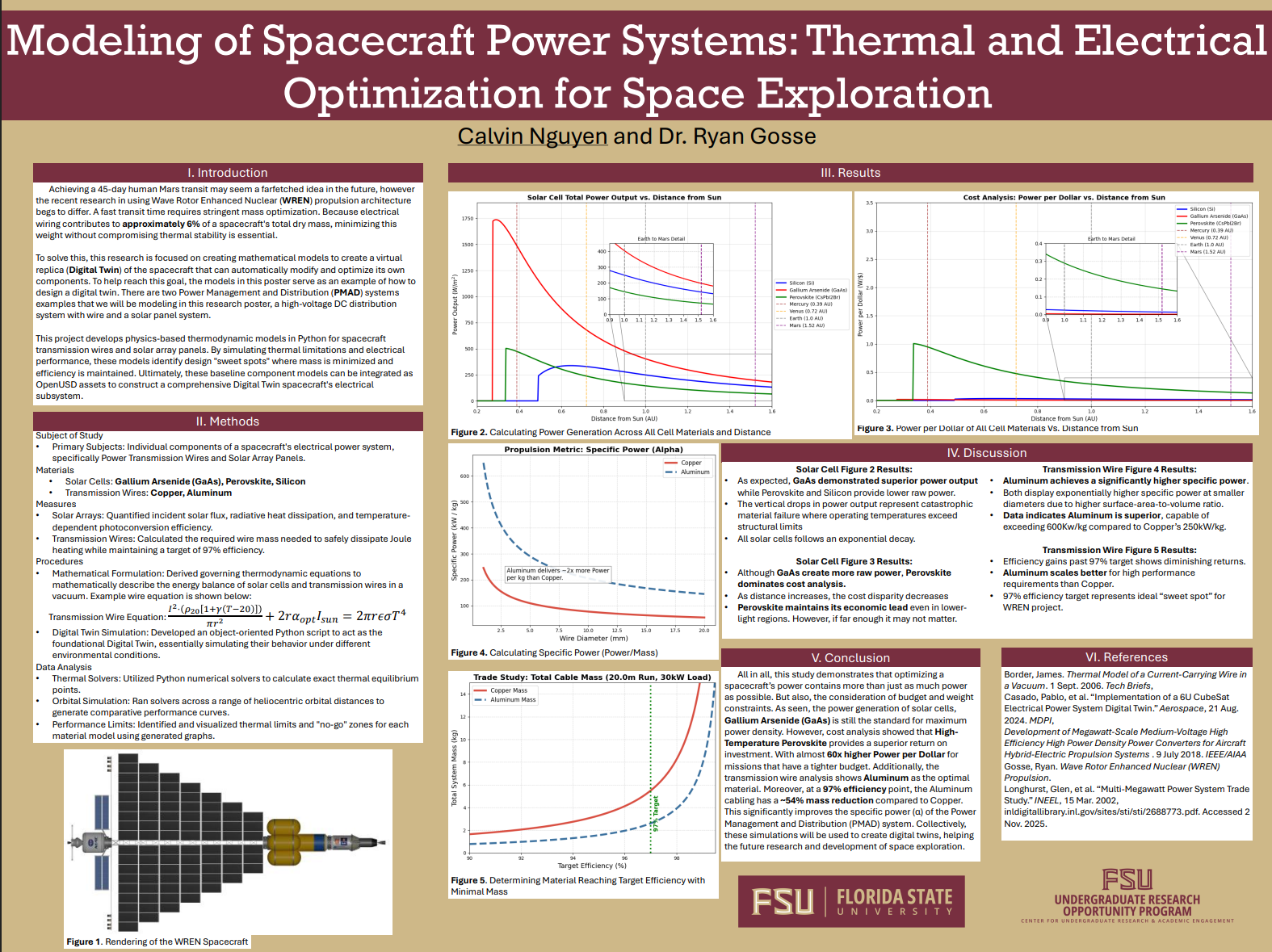
Achieving a 45-day human Mars transit may seem a farfetched idea in the future, however
the recent research in using Wave Rotor Enhanced Nuclear (WREN) propulsion architecture
begs to differ. A fast transit time requires stringent mass optimization. Because electrical
wiring contributes to approximately 6% of a spacecraft's total dry mass, minimizing this
weight without compromising thermal stability is essential.
To solve this, this research is focused on creating mathematical models to create a virtual
replica (Digital Twin) of the spacecraft that can automatically modify and optimize its own
components. To help reach this goal, the models in this poster serve as an example of how to
design a digital twin. There are two Power Management and Distribution (PMAD) systems
examples that we will be modeling in this research poster, a high-voltage DC distribution
system with wire and a solar panel system.
This project develops physics-based thermodynamic models in Python for spacecraft
transmission wires and solar array panels. By simulating thermal limitations and electrical
performance, these models identify design "sweet spots" where mass is minimized and
efficiency is maintained. Ultimately, these baseline component models can be integrated as
OpenUSD assets to construct a comprehensive Digital Twin spacecraft's electrical
subsystem.
Keywords: Space, Energy, Engineering, Electrical, Solar
26th annual Undergraduate Research Symposium, April 1, 2026
Jahkaris Johnson Poster Session 2: 10:45 am - 11:45 am / Poster #137
BIO
Jahkaris Johnson is a junior at Florida State University pursuing a Bachelor of Science in Criminology and Criminal Justice, with a minor in Psychology and a certificate in Emergency Management and Homeland Security. Originally from Sebring, Florida, he is passionate about understanding crime, justice systems, and the social and psychological factors that influence public safety and inequality.
Jahkaris participates in the Undergraduate Research Opportunity Program (UROP), where his research focuses on the historical presence of sundown towns and how those legacies shape modern patterns of exclusion and prejudice. His work involves coding historical and contemporary data while examining both violent and nonviolent forms of discrimination over time. Through this research, he works with faculty mentor Dr. Brendan Lantz and doctoral student Jack Mills, gaining experience in research design, data coding, and analysis.
After completing his undergraduate degree, he plans to attend law school and pursue a career in criminal or public interest law, where he hopes to advocate for others while continuing to deepen his understanding of the law.
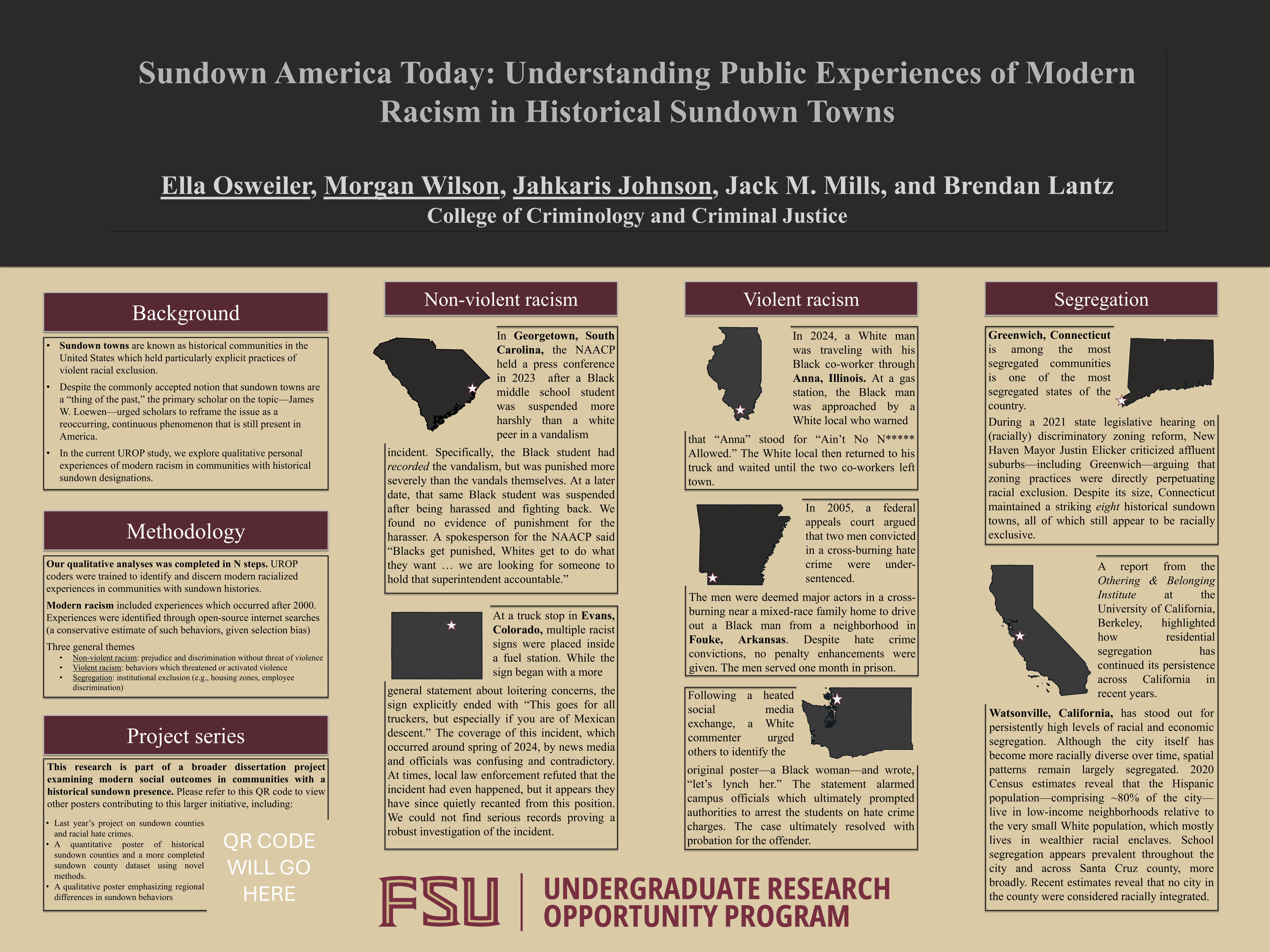
Sundown America Today: Understanding Public Experiences of Modern Racism in Historical Sundown Towns
Authors: Jahkaris Johnson, Brendan LantzStudent Major: Criminology
Mentor: Brendan Lantz
Mentor's Department: College of Criminology & Criminal Justice Mentor's College: College of Criminology & Criminal Justice Co-Presenters: Ella Osweiler, Morgan Wilson
Abstract
Sundown towns were, by definition, communities which systematically excluded non-White
inhabitants. To date, the primary shepherd of knowledge on sundown towns has been James W.
Loewen, who was a public scholar and historical sociologist. Throughout his research, he
repeated central claims that sundown towns in America had not necessarily integrated at pivotal
Civil Rights landmarks for racially marginalized communities (e.g., the Fair Housing Act of
1968). Instead, he convincingly argued the case for sundown evolution in America and called
upon the public to submit known accounts and experiences of racism—broadly conceived—to
his data collection project. Building on this foundation, the current project explores data
submitted in response to Loewen’s call alongside systematic open-source searches documenting
modern experiences of racism in historical sundown towns from 2000 to 2026. Broadly, this
analysis affirms Loewen’s notion of sundown evolution into the present day. Specifically, our
project demonstrates that these lived experiences include a host of incident types, including
violent racism that plausibly meets hate crime designation thresholds, despite being in policing
jurisdictions which reported no such hate crimes during these reports. Taken together, these
findings underscore the continued relevance of sundown towns, not only as a structural form of
racial exclusion, but as communities in which policing differentially impacts racially
marginalized victims of targeted violence. While our work is ongoing, our results point to a clear
pattern: Sundown America continues its influence today.
Keywords: Criminology, Sundown Towns, Racial Discrimination
26th annual Undergraduate Research Symposium, April 1, 2026
Aakanksha Pathak Poster Session 2: 10:45 am - 11:45 am / Poster #264
BIO
Aakanksha Pathak is a junior at Florida State University pursuing a Bachelor of Science in Computer Science with a minor in Computational Entrepreneurship. She previously earned an Associate of Arts in Computer Science, cum laude, from Tallahassee State College, where she received President’s List recognition and participated in the Honors Program.
Pathak’s academic and research interests focus on the intersection of artificial intelligence, cybersecurity, and emerging technologies. She participated in the MSIPP REU Program at the FAMU-FSU College of Engineering, where she developed a physics-informed Graph Neural Network (GNN) to detect defects in metal additive manufacturing using sparse stereovision data. Her research also explores AI-based vulnerability detection in Windows binaries, applying machine learning techniques such as convolutional neural networks and probabilistic models to analyze executable files without disassembly. She conducts this research under the mentorship of Dr. Sharanya Jayaraman in the Department of Computer Science.
In addition to research, Pathak is active in leadership and innovation initiatives on campus. She is a founding member and Events Coordinator of the Innovation Club at Florida State University, where she helps organize programs that encourage entrepreneurship and technology-driven collaboration among students. She also founded the Code Busters coding club and previously served as Treasurer and Parliamentarian in Student Government. Pathak plans to pursue advanced work in artificial intelligence and cybersecurity, potentially through graduate study and research-focused industry roles.
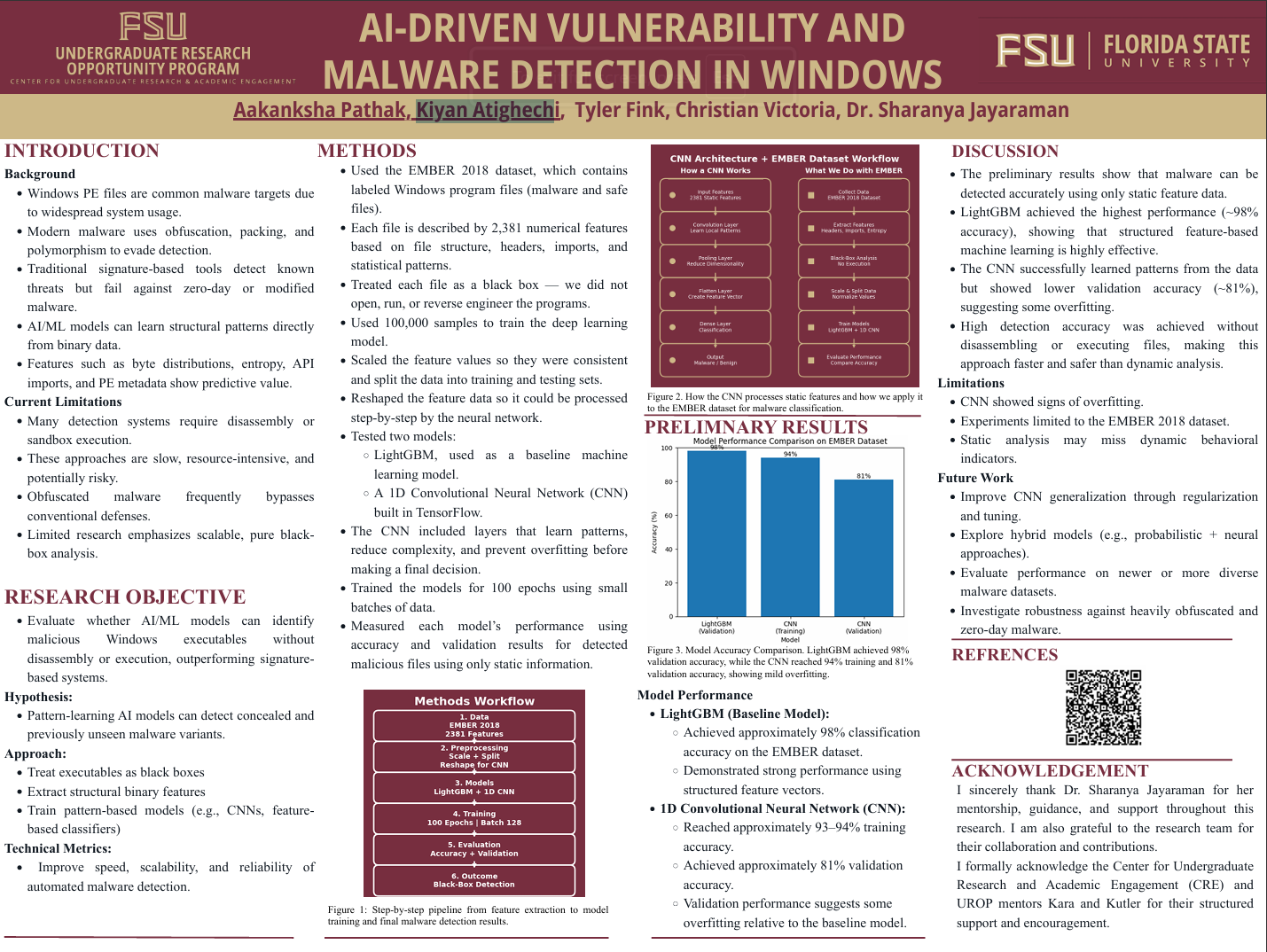
AI-DRIVEN VULNERABILITY AND MALWARE DETECTION IN WINDOWS
Authors: Aakanksha Pathak, Dr. Sharanya JayaramanStudent Major: Computer Science
Mentor: Dr. Sharanya Jayaraman
Mentor's Department: Department of Computer Science Mentor's College: Florida State University Co-Presenters: Kiyan Atighechi
Abstract
Malware and software defects in Windows applications continue to pose serious
security risks, especially since hackers are using techniques to hide or disguise
malicious activity.
This study uses machine learning (ML) and artificial intelligence (AI) techniques to
analyze Windows executable files without disassembly in an effort to improve
malware and vulnerability detection. The project examines whether structural and
behavioral patterns alone can identify serious security risks by viewing each program
as a "black box."
The study utilizes datasets of both known benign and malicious Windows binaries.
Characteristics such as byte-level patterns, entropy values, API calls, and PE-header
details are extracted and then refined through normalization and feature selection.
These characteristics are subsequently employed to train and assess machine
learning and deep-learning models, including Convolutional Neural Networks
(CNNs), Markov Chain-based models, and other types of classifiers, to differentiate
malicious files from those deemed safe.
Initial findings suggest that artificial intelligence models can effectively identify
harmful activities, including hidden or disguised malware, with greater accuracy than
traditional methods that rely on signatures.
The results suggest that analyzing patterns is a useful way to find threats that
traditional methods might miss, so it can be applied to larger or more complex
datasets.
In summary, this research contributes to the development of faster, more scalable,
and more reliable methods for detecting malware.
The results advocate for the implementation of AI-based strategies to enhance
cybersecurity measures and improve the automated evaluation of Windows software.
Keywords: Machine learning, Window binary, Artificial Intelligence
26th annual Undergraduate Research Symposium, April 1, 2026
Moira Shoffstall Poster Session 2: 10:45 am - 11:45 am / Poster #162
BIO
Moira Shoffstall is in her Junior year and is seeking a Bachelor's Degree in Art History. Her primary focus is on Islamic Art in the Iberian Peninsula, a subject she has been studying since 2022. While in the Undergraduate Research Opportunity Program, she was mentored by Dr. Ben Dodds from the Department of History. Her poster is part of his ongoing project, "In the Footsteps of Bandits: An Alternative History of Spain." While not strictly in her major or area of academic interest, this has been a passion project of hers since last Fall.
Moira currently holds an Associate of Arts degree from Tallahassee State University, where she graduated in Fall 2024. She is planning on graduating in Spring 2027 with an Honors in the Major under Dr. Erika Loic from the Department of Art History before continuing on and going into a Master's Program studying Islamic Art. She hopes to become a professor and do further research on her interests.
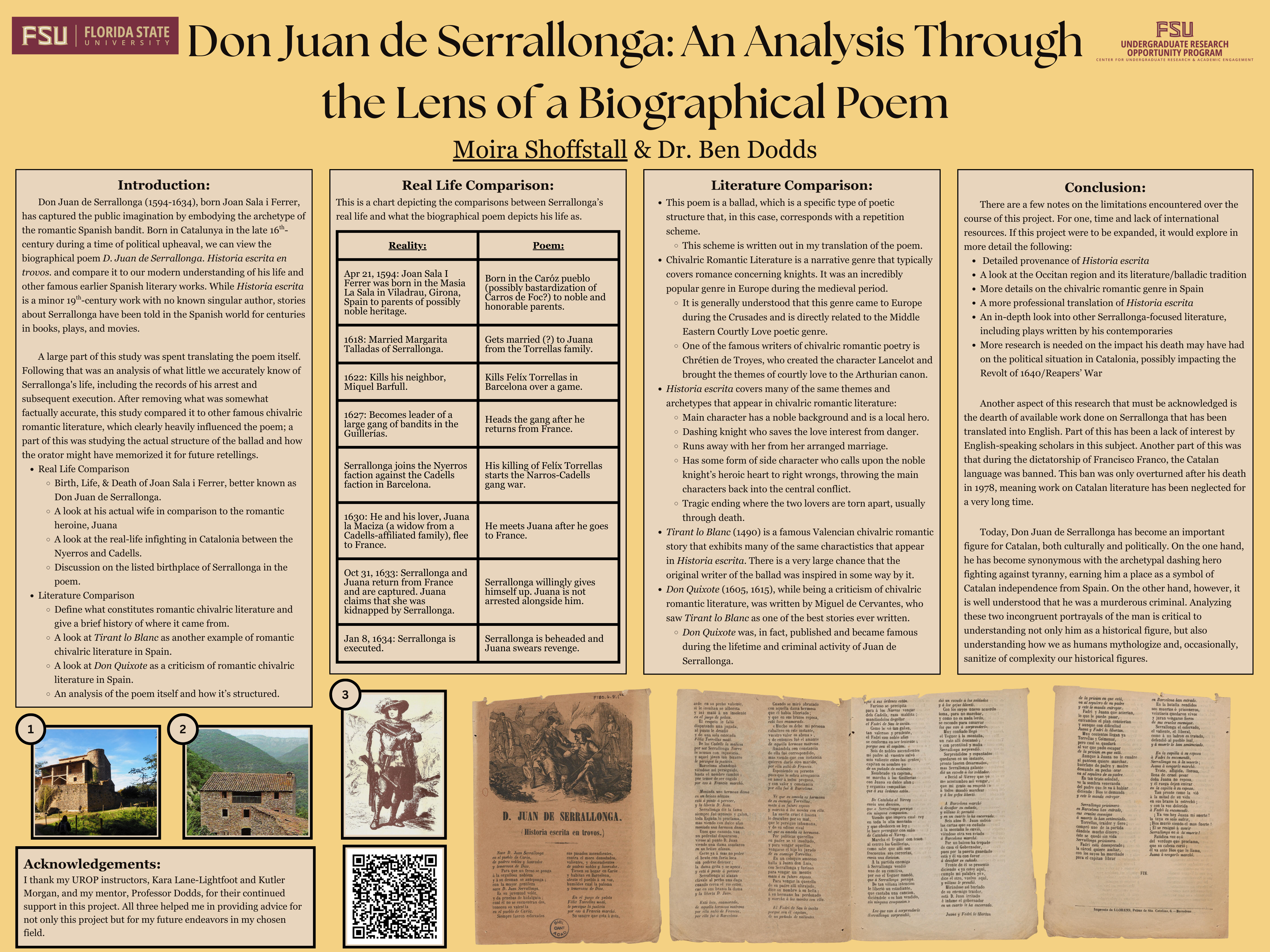
Don Juan de Serrallonga: An Analysis Through the Lens of a Biographical Poem
Authors: Moira Shoffstall, Ben DoddsStudent Major: Art History
Mentor: Ben Dodds
Mentor's Department: Department of History Mentor's College: Florida State University Co-Presenters:
Abstract
Don Juan de Serrallonga (1594–1634), born Joan Sala i Ferrer, has captured the public imagination by embodying the archetype of the romantic Spanish bandit. Born in Catalunya in the late 16th century during a time of political upheaval, we can view the biographical poem D. Juan de Serrallonga. Historia escrita en trovos. and compare it to our modern understanding of his life and other famous earlier Spanish literary works, such as Tirant lo Blanc and Don Quixote. While Historia escrita is a minor 19th century work with no concretely known singular author, stories about Serrallonga have been carried on in the Spanish world for centuries in books, plays, and – more recently – movies. A large part of this study was spent translating the poem itself. Following that, I studied what little we accurately know of Serrallonga’s life, including the records of his arrest and subsequent execution. After I removed what I saw that was somewhat factually accurate, I compared it to other famous romantic chivalric literature, which clearly heavily influenced the poem; a part of this was studying the actual structure of the ballad and how the orator might have memorized it for future retellings. By viewing this biographical poem, we can study not only how bandolers operated in the period just prior to The Catalan Revolt of 1640, but also how these figures have become such an integral part of the Catalonian zeitgeist, leading to, in the case of Serrallonga, becoming a symbol of Catalonian pride and independence.
Keywords: History, Catalan, Spain, Translation, Literature, Poetry
26th annual Undergraduate Research Symposium, April 1, 2026
Valentina Di Domenico Poster Session 1: 9:30 am - 10:30 am / Poster #288
BIO
Valentina Di Domenico is a third‑year undergraduate at Florida State University pursuing a Bachelor of Science in Psychology with a minor in Criminology. She is a UROP Scholar and conducts linguistics research through the Voices of the Andes Lab, where she has examined prosodic variation in Spanish dialects and presented her findings at the FSU Undergraduate Research Symposium. Valentina also a research assistant in the Joiner Lab, where she contributes to projects on suicide risk, eating pathology, and social behavior under the mentorship of Thomas Joiner, Ph.D. Her work includes literature synthesis, and data management across multiple sub‑labs. Originally from Argentina, she plans to pursue a Ph.D. in Clinical Psychology.
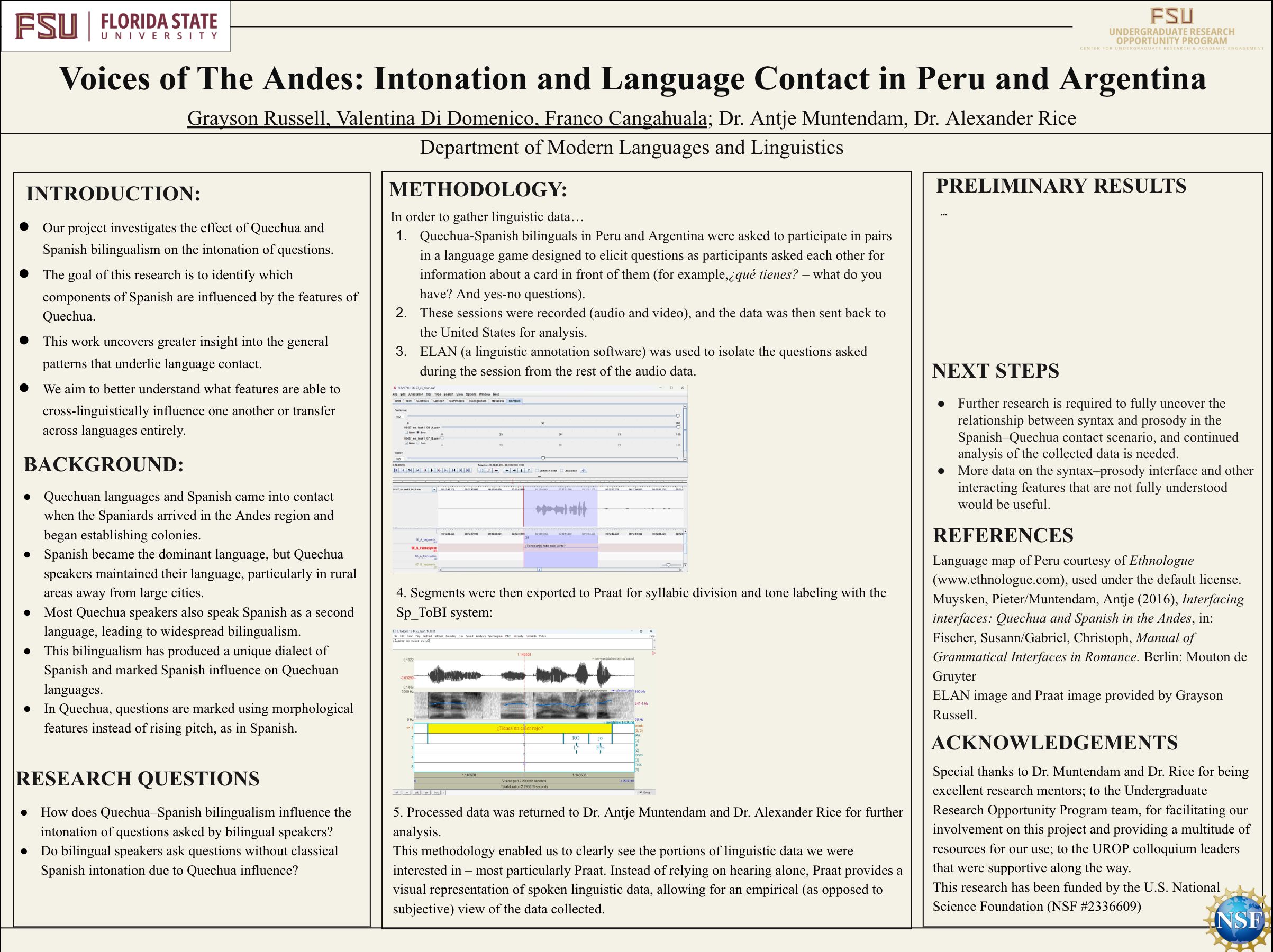
Voices of The Andes: Intonation and Language Contact in Peru and Argentina
Authors: Valentina Di Domenico, Dr. Antje MuntendamStudent Major: Psychology
Mentor: Dr. Antje Muntendam
Mentor's Department: Department of Modern Languages and Linguistics Mentor's College: College of Arts and Sciences Co-Presenters: Franco Cangahuala and Grayson Russell
Abstract
In our project Voices of the Andes: Intonation and Language Contact in Peru and Argentina , we
investigated the effect of Quechua-Spanish bilingualism on the intonation of questions elicited
from participants fluent in both Quechua and Spanish in Peru and Argentina. The goal of this
research is to identify which components of one language, in this case Spanish, are influenced by
the features of another language, in this case Quechua, a language which greatly differs in
aspects of morphology and phonology. In conducting this research, we uncover greater insight
into the general patterns which underlie language contact and better understand what features are
able to cross-linguistically influence one another, or even transfer across languages entirely. To
investigate this topic we collected audio recordings of Peruvian and Argentinian people who
were Spanish monolinguals, Quechua monolinguals, and bilinguals. Participants were paired and
played a card game designed to elicit yes-no and information-seeking questions. These
recordings were segmented and analyzed using the programs Praat and ELAN to study the
intonation at the end of the questions asked by participants. It is known that in Quechua,
questions are marked using morphological features instead of with a rising pitch, as in Spanish.
Therefore, we predict that those who are most influenced by Quechua (bilingual speakers) will
ask questions without classical Spanish intonation. Results of this study may have implications
for what we know about culture and language dominance in a post-colonial context, and what
effects these deviances in language have on personal or community differentiation.
Keywords: Linguistics, Spanish, Quechua, intonation
26th annual Undergraduate Research Symposium, April 1, 2026
Aysia Hudson Poster Session 3: 1:45 pm - 2:45 pm / Poster #199

BIO
Aysia Hudson is a junior at Florida State University pursuing a Bachelor of Science in Cell and Molecular Neuroscience. Originally from San Diego, California, she is interested in gaining research experience that will support her long-term goal of working in the medical field.
Aysia is currently involved in undergraduate research through the Undergraduate Research Opportunity Program (UROP) at Florida State University. She works under the mentorship of Richard Wagner, Dorota Kossowska-Kuhn, and Fotena Zirps on a project focused on developmental dyslexia. The research involves conducting systematic literature reviews and meta-analysis to identify trends and predictors related to dyslexia. This project represents her first formal research experience beyond previous shadowing opportunities and has helped her develop skills in academic research, critical analysis, and scientific communication.
After graduating, Aysia plans to attend medical school and pursue a career as a neurosurgeon. She hopes to combine her background in neuroscience and research experience to better understand neurological conditions and contribute to advancements in patient care.
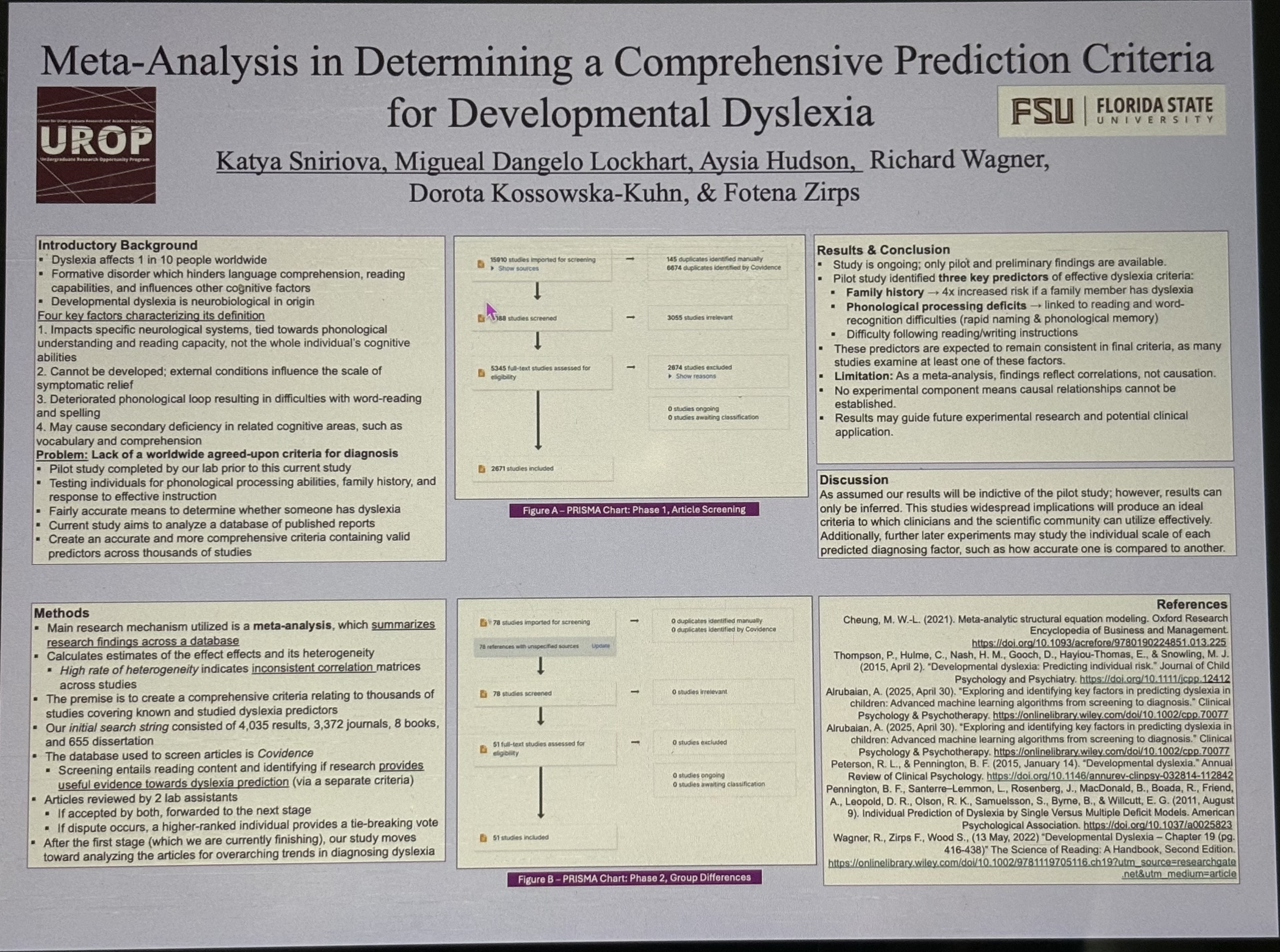
Meta-Analysis in Determining a Comprehensive Prediction Criteria for Developmental Dyslexia
Authors: Aysia Hudson, Dr. Richard WagnerStudent Major: Cell and Molecular Neuroscience
Mentor: Dr. Richard Wagner
Mentor's Department: Psychology Mentor's College: Department of Psychology Co-Presenters: Katya Sniriova, Migueal Dangelo Lockhart
Abstract
Dyslexia affects individuals worldwide, impacting their capabilities to read fluently and hindering literary understanding. Developmental dyslexia is the primary form of this disorder, stemming from a combination of genetic and environmental features that display the severity of symptomatic portrayal. There are various criteria that reflect the possible causes of developmental dyslexia. However, no single analysis is effective in prediction. Our study seeks to analyze trends in overarching causes of dyslexia to create a comprehensive prediction model through a meta-analysis study.
To resolve conflicting definitions of dyslexia and contradicting criteria for the causes a examination of relevant publications is comprised through literary review.
The study functions through the technological applications Covidence, eliminating irrelevant articles to create a finite multifactor dyslexia prediction model. These articles are eliminated based on an established external criterion, created within the lab, and outlines the preferred metrics and topics to be included.
The study remains ongoing, screening hundreds of articles weekly in pursuit of a comprehensive source list. The expectation amongst papers alludes to the expansion of predictors of development dyslexia. While not fully developed some of the overarching factors include educational upbringing, phonetic exposure, reading programs, and others. Additionally, genetic predisposition holds its own imposition for development dyslexia.
These preliminary results suggest that many individuals should seek out early screening for dyslexia with caregivers following the guise of the typical causes and predictors. Whilst an agreement has not been made regarding the criteria for dyslexia, this study produces relevant results that aims to bridge that gap.
Keywords: Meta-Analysis for Developmental Dyslexia
26th annual Undergraduate Research Symposium, April 1, 2026
Jack Slonimski Poster Session 3: 1:45 pm - 2:45 pm / Poster #165
BIO
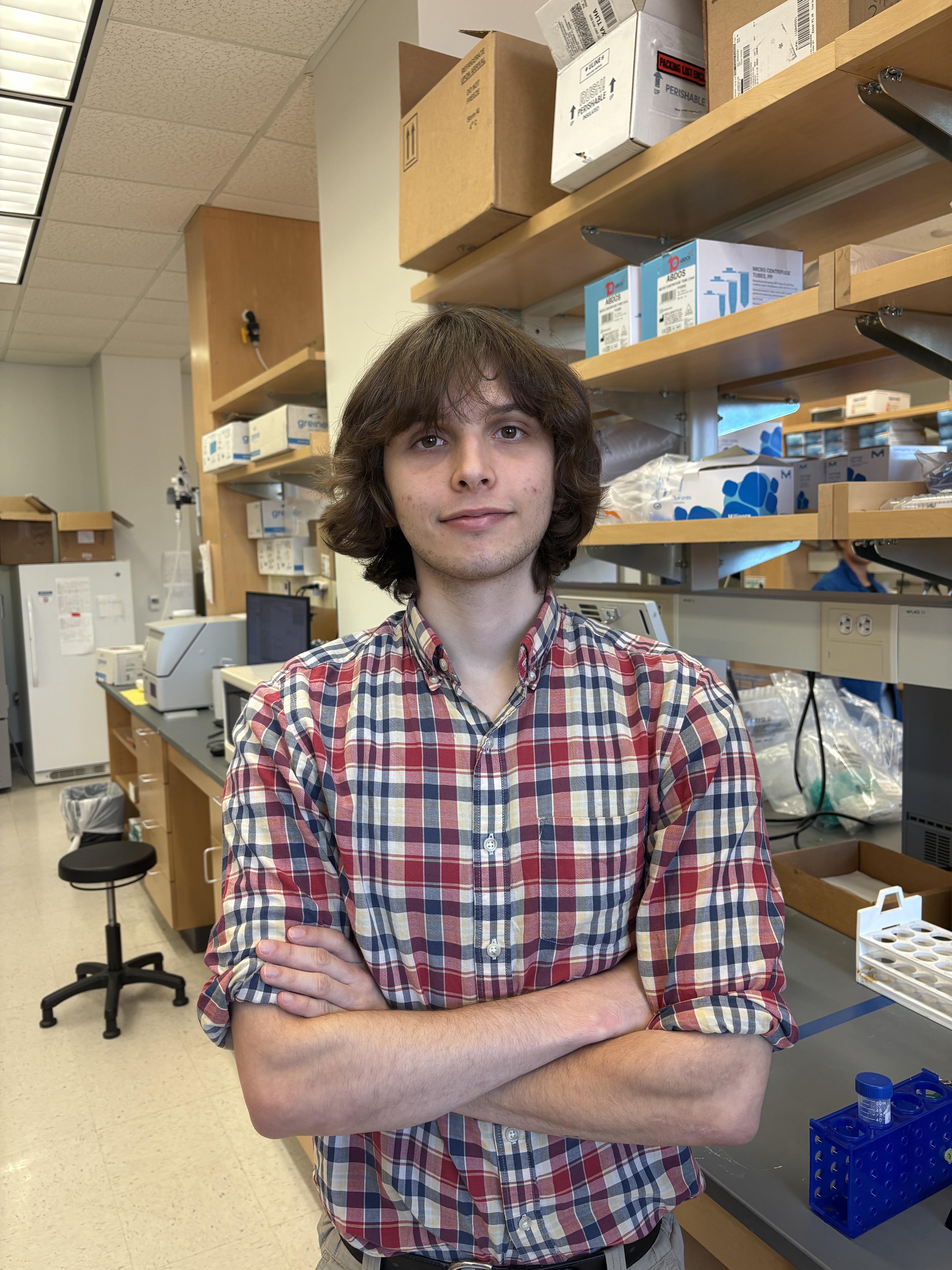
Jack is from West Palm Beach, Florida and is interested in enzymology. In the future, he would like to pursue a career in medicine.
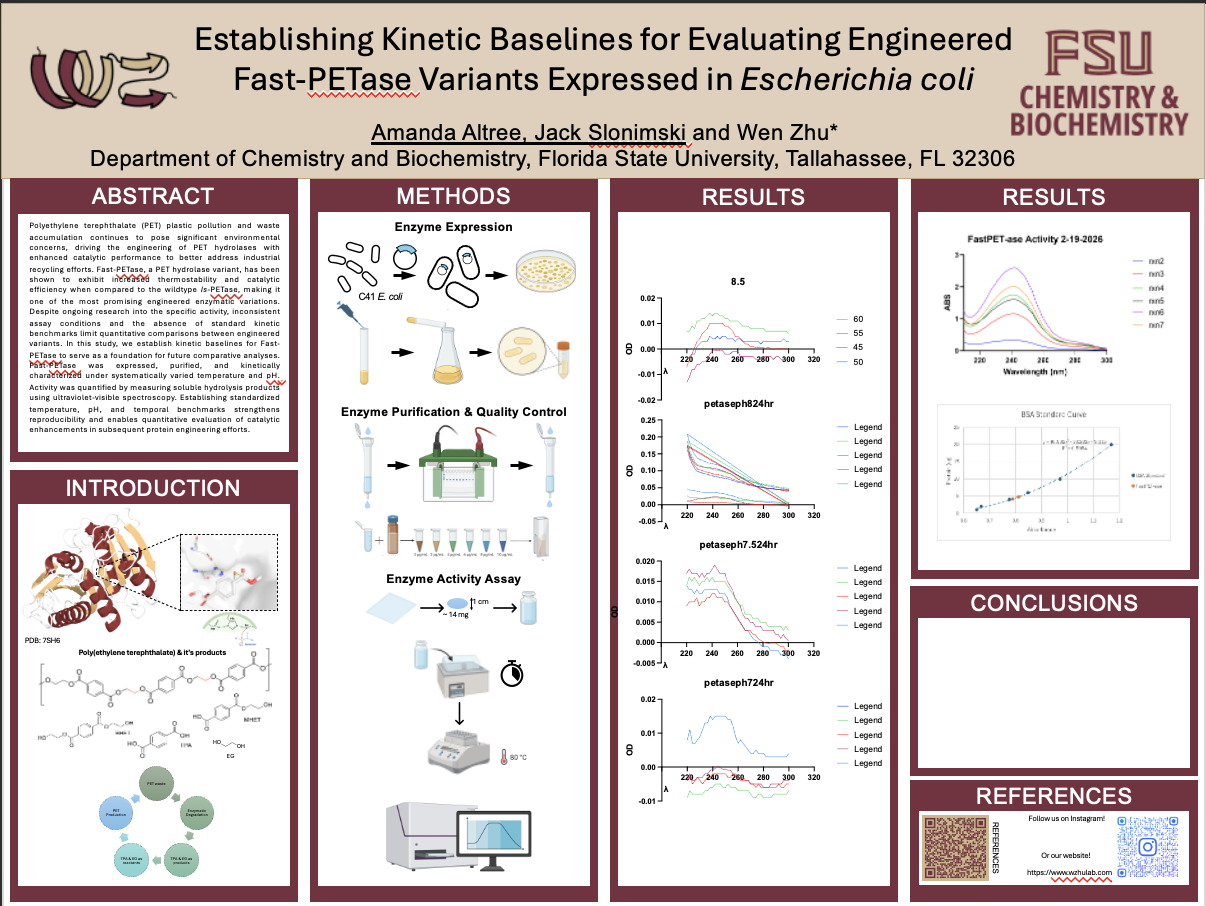
Establishing Kinetic Baselines for Evaluating Engineered Fast-PETase Variants Expressed in Escherichia coli
Authors: Jack Slonimski, Wen ZhuStudent Major: Biochemistry
Mentor: Wen Zhu
Mentor's Department: Chemistry and Biochemistry Mentor's College: Arts and Sciences Co-Presenters: Amanda Altree
Abstract
Polyethylene terephthalate (PET) plastic pollution and waste accumulation continues to pose significant environmental concerns, driving the engineering of PET hydrolases with enhanced catalytic performance to better address industrial recycling efforts. Fast-PETase, a PET hydrolase variant, has been shown to exhibit increased thermostability and catalytic efficiency when compared to the wildtype Is-PETase, making it one of the most promising engineered enzymatic variations. Despite ongoing research into the specific activity, inconsistent assay conditions and the absence of standard kinetic benchmarks limit quantitative comparisons between engineered variants. In this study, we establish kinetic baselines for Fast-PETase to serve as a foundation for future comparative analyses. Fast-PETase was expressed, purified, and kinetically characterized under systematically varied temperature and pH. Activity was quantified by measuring soluble hydrolysis products using ultraviolet-visible spectroscopy. Establishing standardized temperature, pH, and temporal benchmarks strengthens reproducibility and enables quantitative evaluation of catalytic enhancements in subsequent protein engineering efforts.
Keywords: Enzymes Enzymollogy Chemistry Environmental Recycling
26th annual Undergraduate Research Symposium, April 1, 2026
Sophia Chursina Poster Session 1: 9:30 am - 10:30 am / Poster #309

BIO
Sophia is in her second year studying International Affairs (History concentration) and Economics with a French minor. Among her many interests, she particularly enjoys learning about European history. During her freshman year, Sophia studied abroad a in London, where she was chosen for the honor of representing FSU at the Last Post Ceremony in Ypres, Belgium. Sophia is from Sarasota, Florida.
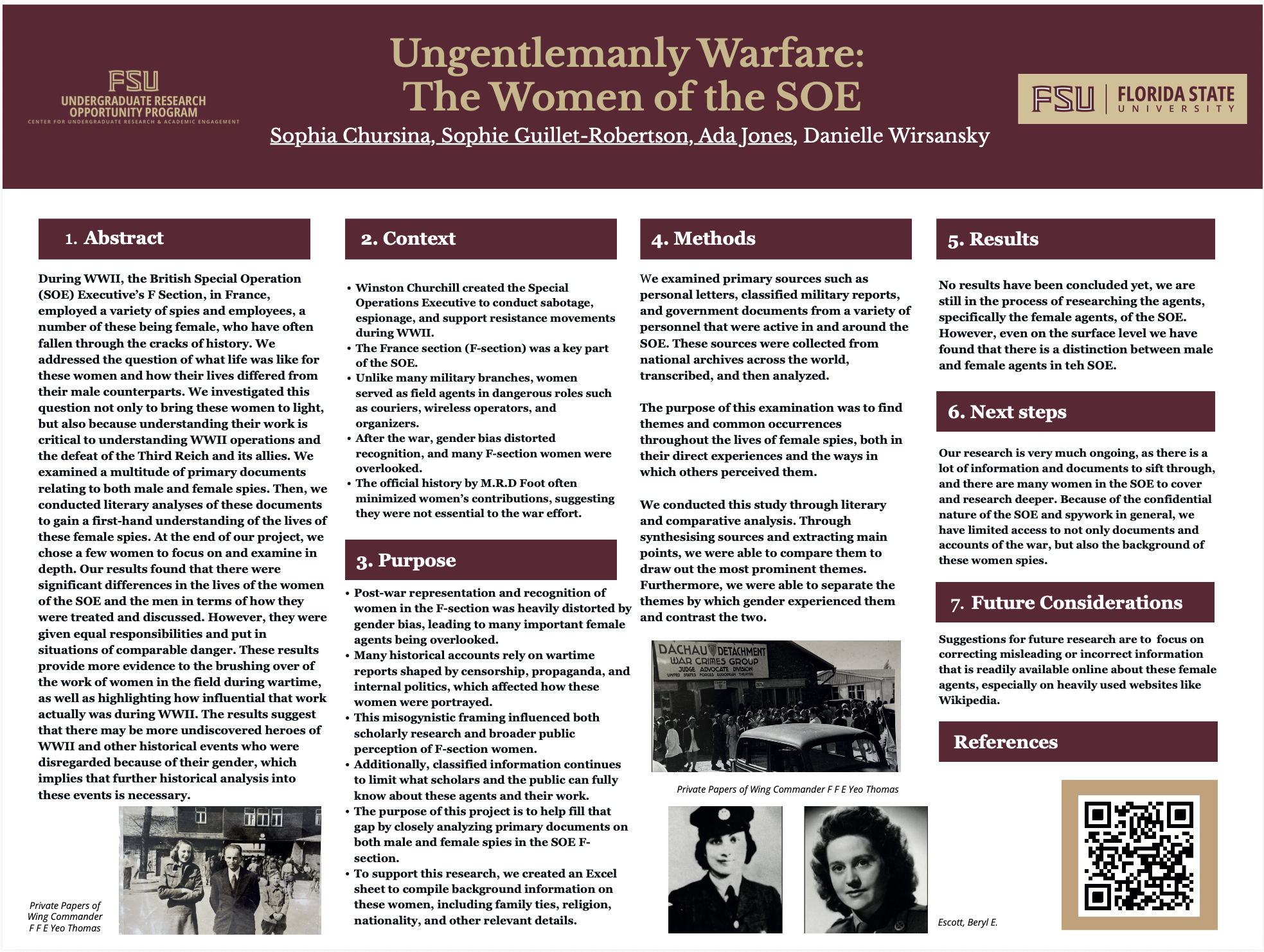
Ungentlemanly Warfare: The Women of the SOE
Authors: Sophia Chursina, Danielle WirsanskyStudent Major: International Affairs and Economics
Mentor: Danielle Wirsansky
Mentor's Department: Department of History Mentor's College: College of Arts and Sciences Co-Presenters: Sophie Guillet-Robertson, Ada Jones
Abstract
During WWII, the British Special Operation (SOE) Executive’s F Section, in France, employed a variety of spies and employees, a number of these being female, who have often fallen through the cracks of history. We addressed the question of what life was like for these women and how their lives differed from their male counterparts. We investigated this question not only to bring these women to light, but also because understanding their work is critical to understanding WWII operations and the defeat of the Third Reich and its allies. We examined a multitude of primary documents relating to both male and female spies. Then, we conducted literary analyses of these documents to gain a first-hand understanding of the lives of these female spies. At the end of our project, we chose a few women to focus on and examine in depth. Our results found that there were significant differences in the lives of the women of the SOE and the men in terms of how they were treated and discussed. However, they were given equal responsibilities and put in situations of comparable danger. These results provide more evidence to the brushing over of the work of women in the field during wartime, as well as highlighting how influential that work actually was during WWII. The results suggest that there may be more undiscovered heroes of WWII and other historical events who were disregarded because of their gender, which implies that further historical analysis into these events is necessary.
Keywords: World War II, history, spies, women