
Research Symposium
26th annual Undergraduate Research Symposium, April 1, 2026
Michael Dadlani Poster Session 1: 9:30 am - 10:30 am / Poster #153
BIO
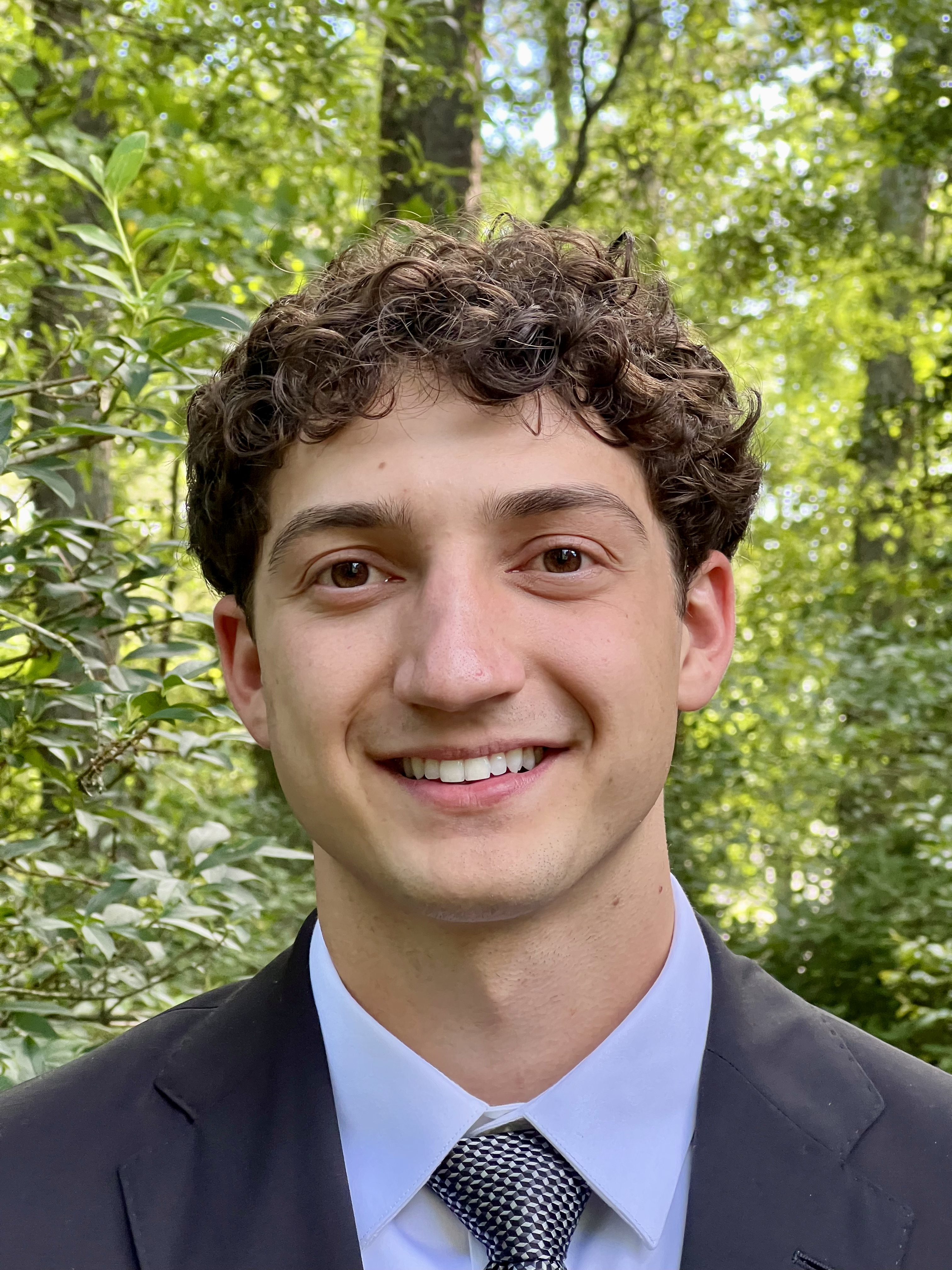
Michael Dadlani is a senior Exercise Physiology major from Orlando, Florida, graduating in Spring 2026. He will be attending medical school in the fall, where he plans to further pursue his research interests in preventative medicine and the role that lifestyle interventions can play in the progression of chonic disease.
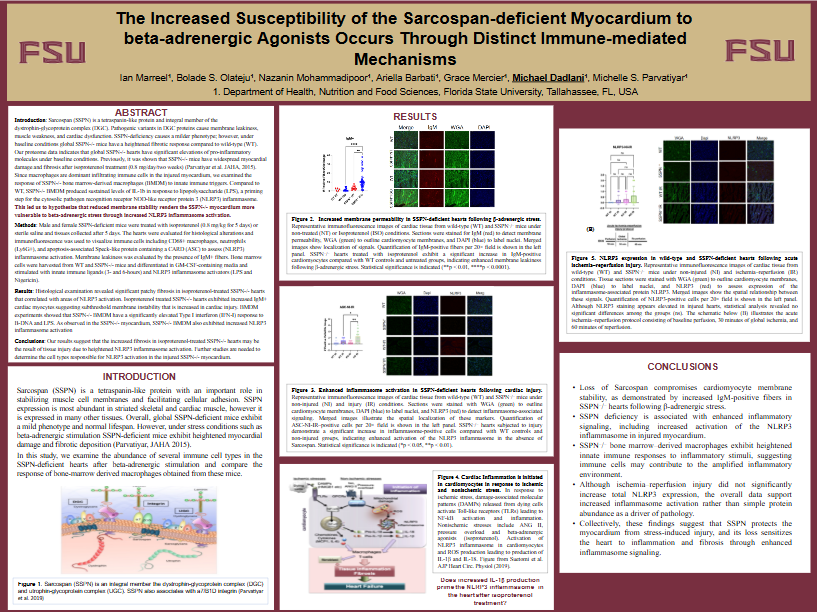
The Increased Susceptibility of the Sarcospan-deficient Myocardium to beta-adrenergic Agonists Occurs Through Distinct Immune-mediated Mechanisms
Authors: Michael Dadlani, Michelle ParvatiyarStudent Major: Exercise Physiology
Mentor: Michelle Parvatiyar
Mentor's Department: Department of Health, Nutrition and Food Sciences Mentor's College: College of Education, Health, and Human Sciences Co-Presenters:
Abstract
Introduction: Sarcospan (SSPN) is a tetraspanin-like component of the dystrophin–glycoprotein complex that stabilizes the muscle membrane. Pathogenic variants in this complex cause membrane leakiness, weakness, and cardiac dysfunction. Although SSPN deficiency produces a milder phenotype, SSPN⁻/⁻ mice exhibit heightened fibrosis and increased cardiac inflammation. Proteomic analysis revealed elevated pro-inflammatory signaling, and prior work showed extensive myocardial damage and fibrosis after isoproterenol. Because macrophages dominate immune infiltration after injury, we examined whether SSPN loss enhances innate immune and inflammasome responses.
Methods: Male and female SSPN⁻/⁻ and wild-type (WT) mice received isoproterenol (0.8 mg/kg/day, 5 days) or saline. Hearts were analyzed by histology and immunofluorescence for macrophages (CD68), neutrophils (Ly6G), and ASC specks to assess NLRP3 inflammasome activation. Membrane integrity was evaluated by IgM uptake. Bone marrow–derived macrophages (BMDMs) were differentiated with GM-CSF and stimulated with innate immune ligands and NLRP3 activators (LPS, nigericin).
Results: Isoproterenol-treated SSPN⁻/⁻ hearts showed patchy fibrosis colocalizing with NLRP3 activation and exhibited increased IgM+ cardiac myocytes suggesting subthreshold membrane instability that is increased in cardiac injury. BMDM experiments showed that SSPN-/- BMDM has a significantly elevated Type I interferon (IFN-I) response to B-DNA and LPS. As observed in SSPN-/- myocardium, SSPN-/- BMDM also exhibited increased NLRP3 inflammasome activation
Conclusions: Our results suggest that the increased fibrosis in isoproterenol-treated SSPN-/- hearts may be the result of tissue injury due to heightened NLRP3 inflammasome activation. Further studies are needed to determine the cell types responsible for NLRP3 activation in the injured SSPN-/- myocardium.
Keywords: sarcospan cardiac stress
26th annual Undergraduate Research Symposium, April 1, 2026
Grace Wisdom Poster Session 1: 9:30 am - 10:30 am / Poster #123
BIO
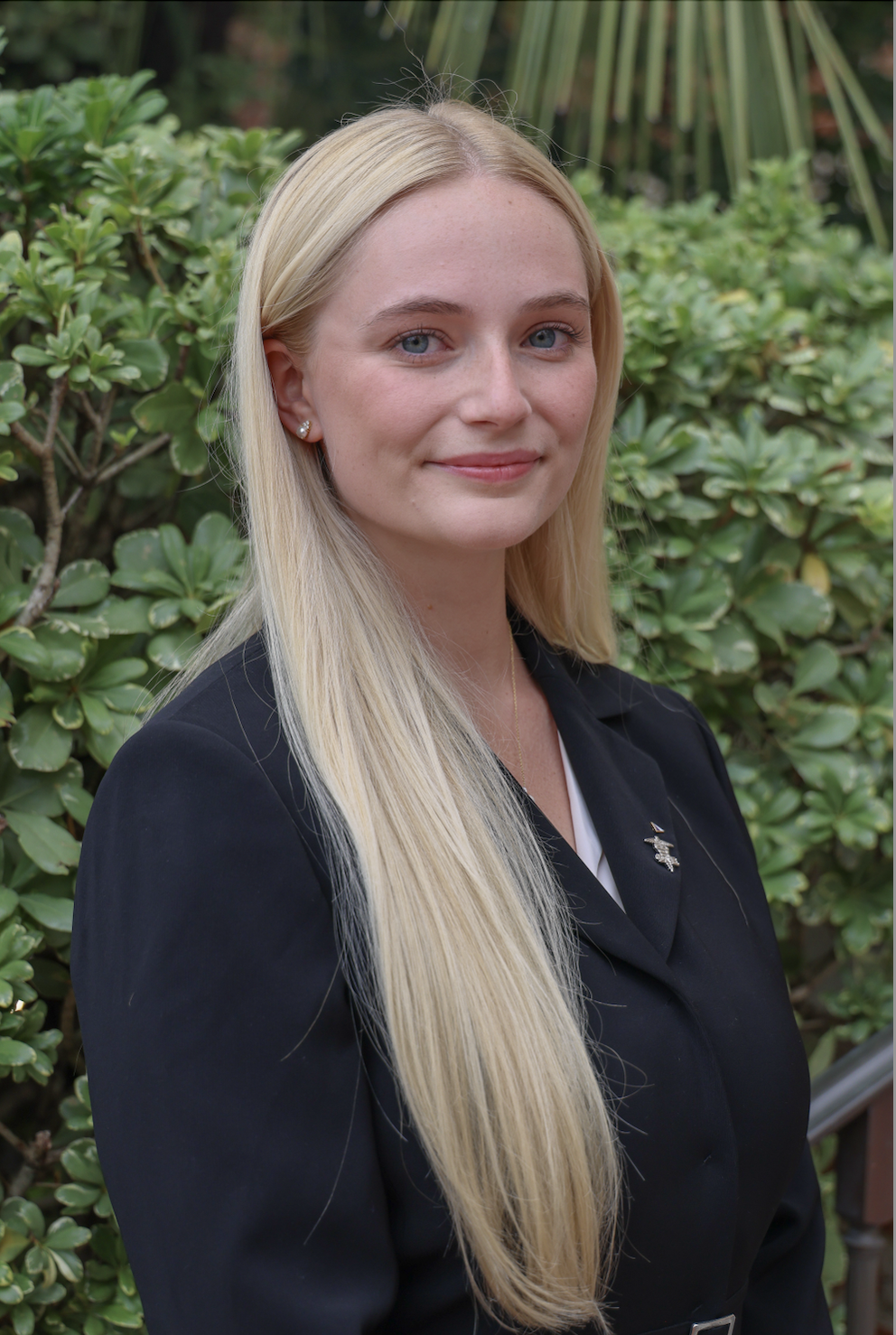
Grace Wisdom is a senior Biological Sciences student at Florida State University. She has been a lab member in Dr. Kathryn Jones's lab since the fall semester of 2023. While initially working on bacterial plating, nodule crushes, and colony quantification, she has transitioned to molecular biology techniques under the leadership of Dr. Jones through directed independent study. Grace will graduate this semester with a BS in Biological Sciences with a minor in chemistry. She hopes to conduct full-time research through a post-baccalaureate program before applying to MD/PhD programs.
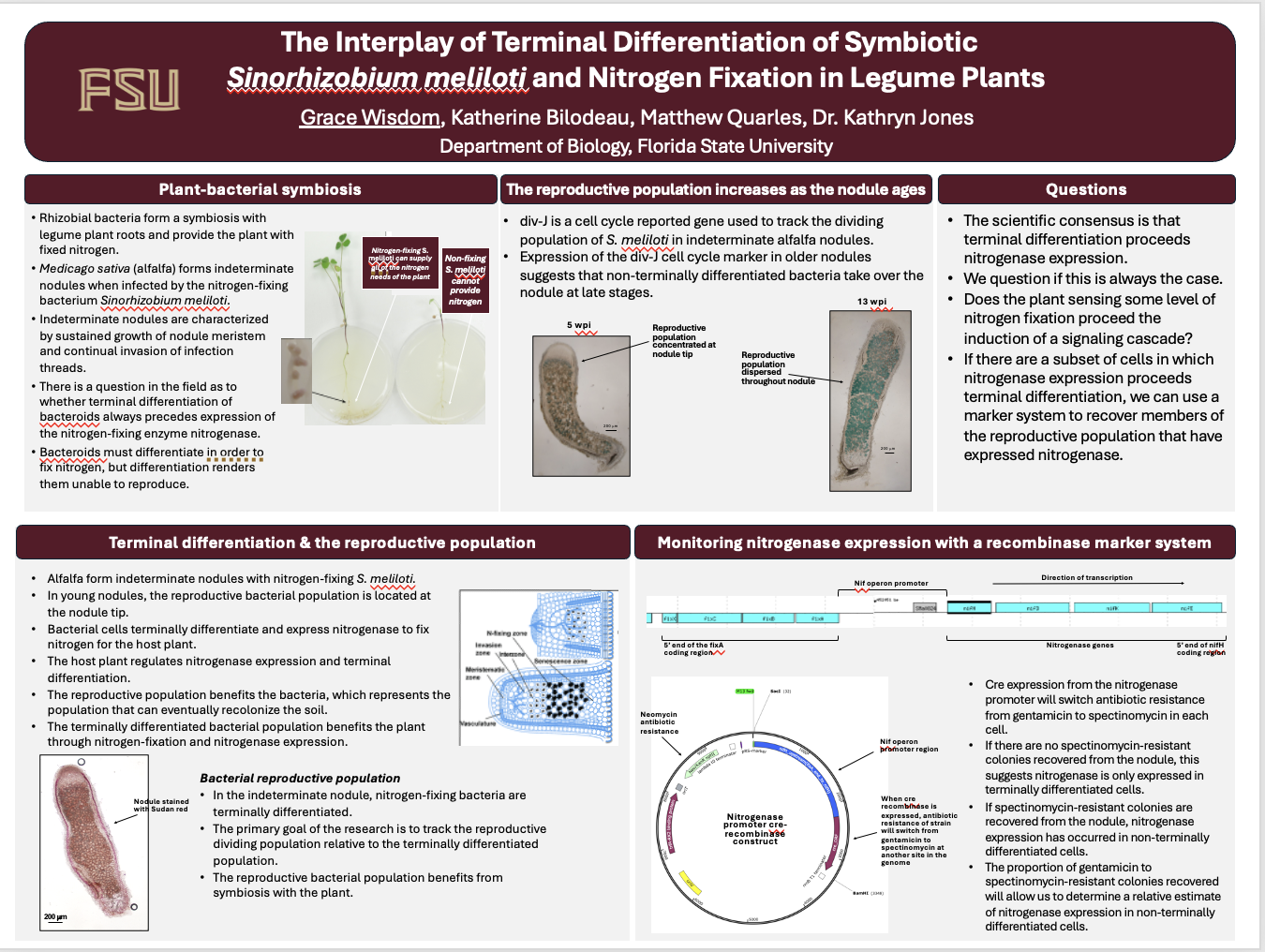
The Interplay of Terminal Differentiation of Symbiotic Sinorhizobium meliloti and Nitrogen Fixation in Legume Plants
Authors: Grace Wisdom, Dr. Kathryn JonesStudent Major: Biological Sciences
Mentor: Dr. Kathryn Jones
Mentor's Department: Biological Sciences Mentor's College: University of Chicago Co-Presenters:
Abstract
The soil bacterium Sinorhizobium meliloti establishes a nitrogen-fixing symbiosis with indeterminate-nodule-forming legumes such as Medicago sativa (alfalfa). In indeterminate nodules, bacterial cells differentiate into nitrogen-fixing bacteroids that express the N2-fixing enzyme nitrogenase but lose the ability to divide and form new cells. This differentiation splits the bacterial population within the nodule into two distinct groups: terminally differentiated, nitrogen-fixing cells that are sacrificed and undifferentiated, reproductive cells capable of benefiting from their interaction with the plant and re-entering the soil. It is also whether all nitrogenase expression is limited to bacterial cells that have committed to this ‘terminal differentiation’ or if some nitrogenase-expressing bacteria retain reproductive capacity. Bacterial nitrogenase expression within plant cells that are not ready to regulate the oxygen level to which the bacteria are exposed can be extremely detrimental to both the bacteria and the host cell and result in failure of the symbiosis. Therefore, the host plant tightly regulates both bacterial nitrogenase expression and terminal differentiation. To determine if bacterial cell lineages in which nitrogenase expression has occurred can be found in the reproductive population, we constructed a self-replicating DNA plasmid that will mark these lineages permanently once nitrogenase has been expressed. This is known as recombinase-based, in vivo expression technology (RIVET). This plasmid construct will provide a genetic tool for monitoring nitrogenase expression during symbiosis. This work contributes to the development of experimental agents for investigating the regulatory mechanisms underlying the timing of both bacterial differentiation and nitrogenase expression during symbiotic development.
Keywords: plant-bacterial symbiosis, recombinase marker system, nitrogen fixation
26th annual Undergraduate Research Symposium, April 1, 2026
Vijay Baksh Poster Session 3: 1:45 pm - 2:45 pm / Poster #305

BIO
Vijay Baksh is a Junior majoring in Biological Sciences. He will be graduating with Honors in the Major in Summer 2026. Since his freshman semester, he has investigated various conditions intertwined with the Gut Microbiome such as Celiac Disease, Type 1 Diabetes, and Obesity under the direction of Dr. Ravinder Nagpal. Outside of research and academic pursuits, he is involved with Lambda Alpha Epsilon alongside strengthening expertise of the electric guitar and photography. His future plans are to become a Forensic Biologist or investigate the immunological mechanisms underlying cancerous development, followed by obtaining a PhD.
Antagonizing Klebsiella pneumoniae using prebiotics and postbiotics in simulated gut conditions
Authors: Vijay Baksh, Ravinder NagpalStudent Major: Biological Sciences
Mentor: Ravinder Nagpal
Mentor's Department: Department of Health, Nutrition, and Food Sciences Mentor's College: Anne Spencer Daves College of Education, Health, and Human Scienes Co-Presenters:
Abstract
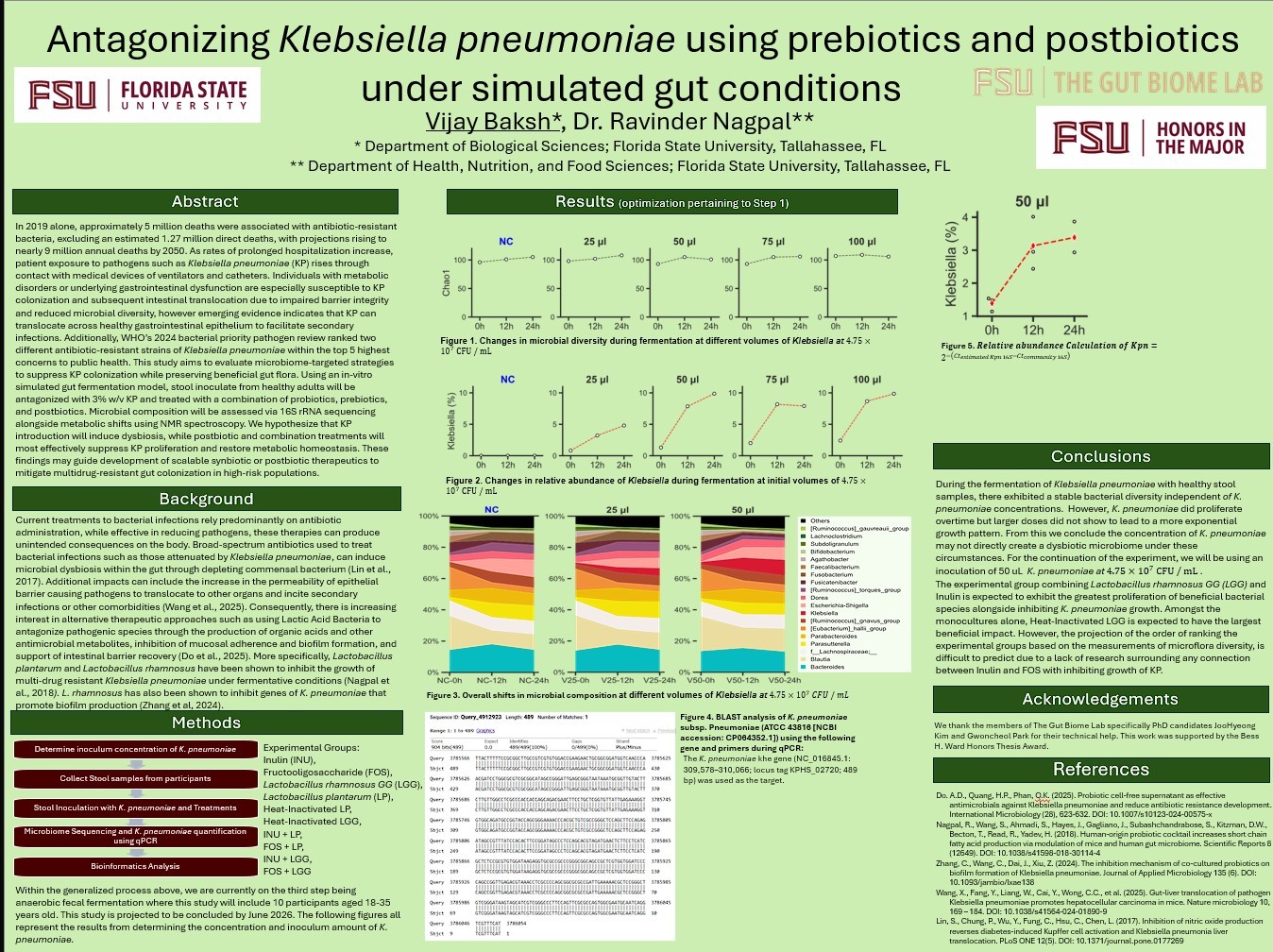
Throughout the 21st century, antimicrobial resistance has emerged as a public health crisis due to its escalating impact on infection severity and mortality among hospitalized patients. In 2019 alone, approximately 5 million deaths were associated with antibiotic-resistant bacteria, excluding an estimated 1.27 million direct deaths, with projections rising to nearly 9 million annual deaths by 2050. As rates of prolonged hospitalization increase, patient exposure to pathogens such as Klebsiella pneumoniae (KP) rises through contact with medical devices of ventilators and catheters. Individuals with metabolic disorders or underlying gastrointestinal dysfunction are especially susceptible to KP colonization and subsequent intestinal translocation due to impaired barrier integrity and reduced microbial diversity, however emerging evidence indicates that KP can translocate across healthy gastrointestinal epithelium to facilitate secondary infections. Additionally, WHO’s 2024 bacterial priority pathogen review ranked two different antibiotic-resistant strains of Klebsiella pneumoniae within the top 5 highest concerns to public health. This study aims to evaluate microbiome-targeted strategies to suppress KP colonization while preserving beneficial gut flora. Using an in-vitro simulated gut fermentation model, stool inoculate from healthy adults will be antagonized with 3% w/v KP and treated with a combination of probiotics, prebiotics, and postbiotics. Microbial composition will be assessed via 16S rRNA sequencing alongside metabolic shifts using NMR spectroscopy. We hypothesize that KP introduction will induce dysbiosis, while postbiotic and combination treatments will most effectively suppress KP proliferation and restore metabolic homeostasis. These findings may guide development of scalable synbiotic or postbiotic therapeutics to mitigate multidrug-resistant gut colonization in high-risk populations.
Keywords: Klebsiella pneumoniae, Gut Microbiome, Prebiotics, Postbiotics, Probiotics, qPCR
26th annual Undergraduate Research Symposium, April 1, 2026
Bridnie Ezai Poster Session 3: 1:45 pm - 2:45 pm / Poster #158

BIO
Bridnie Ezai is a freshman at Florida State University, majoring in Clinical Professions and planning to add a minor in Business. She is a student in the University Honors Program and a Presidential Scholar, where she is actively engaged in academic enrichment and research opportunities. Bridnie currently participates in the Undergraduate Research Opportunity Program, where she works on the Accounting Alumni Success Factors Project under the mentorship of Aleksandra Zimmerman in the College of Business. The project explores the question, “What factors influence the success of business professionals?” Through this research, the team designed and distributed a survey to examine potential predictors of professional success among business alumni. Bridnie contributed to developing survey questions, mapping hypotheses, and gathering background data on Big Four professionals and professional organizations. Using platforms such as Excel and Qualtrics, the team analyzed survey responses to evaluate how factors such as hometown, major choice, internship experience, and demographics may influence career outcomes. The findings aim to provide practical insights that help undergraduate students better understand the pathways that lead to successful careers in accounting, finance, and other business-related fields. Bridnie plans to go to medical school post-grad and pursue interdisciplinary experiences that combine healthcare, business, and research.
Accounting Alumni Success Factors Project
Authors: Bridnie Ezai, Aleksandra ZimmermanStudent Major: Clinical Professions
Mentor: Aleksandra Zimmerman
Mentor's Department: Accounting Mentor's College: College of Business Co-Presenters: Francesca Muscarella and Stephanie Romero
Abstract
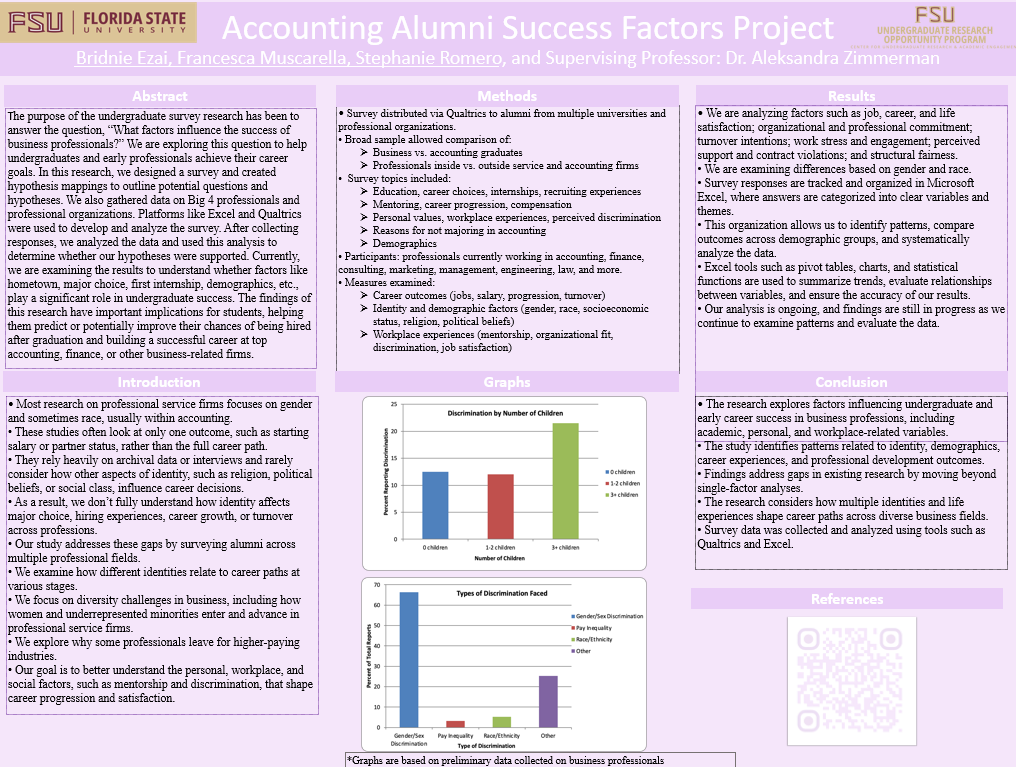
The purpose of the undergraduate survey research has been to answer the question, “What factors influence the success of business professionals?” We are exploring this question to help undergraduates and early professionals achieve their career goals. In this research, we designed a survey and created hypothesis mappings to outline potential questions and hypotheses. We also gathered data on Big 4 professionals and professional organizations. Platforms like Excel and Qualtrics were used to develop and analyze the survey. After collecting responses, we analyzed the data and used this analysis to determine whether our hypotheses were supported. Currently, we are examining the results to understand whether factors like hometown, major choice, first internship, demographics, etc., play a significant role in undergraduate success. The findings of this research have important implications for students, helping them predict or potentially improve their chances of being hired after graduation and building a successful career at top accounting, finance, or other business-related firms.
Keywords: Accounting, Business, Job success
26th annual Undergraduate Research Symposium, April 1, 2026
Carson DaSilva Poster Session 2: 10:45 am - 11:45 am / Poster #26
BIO
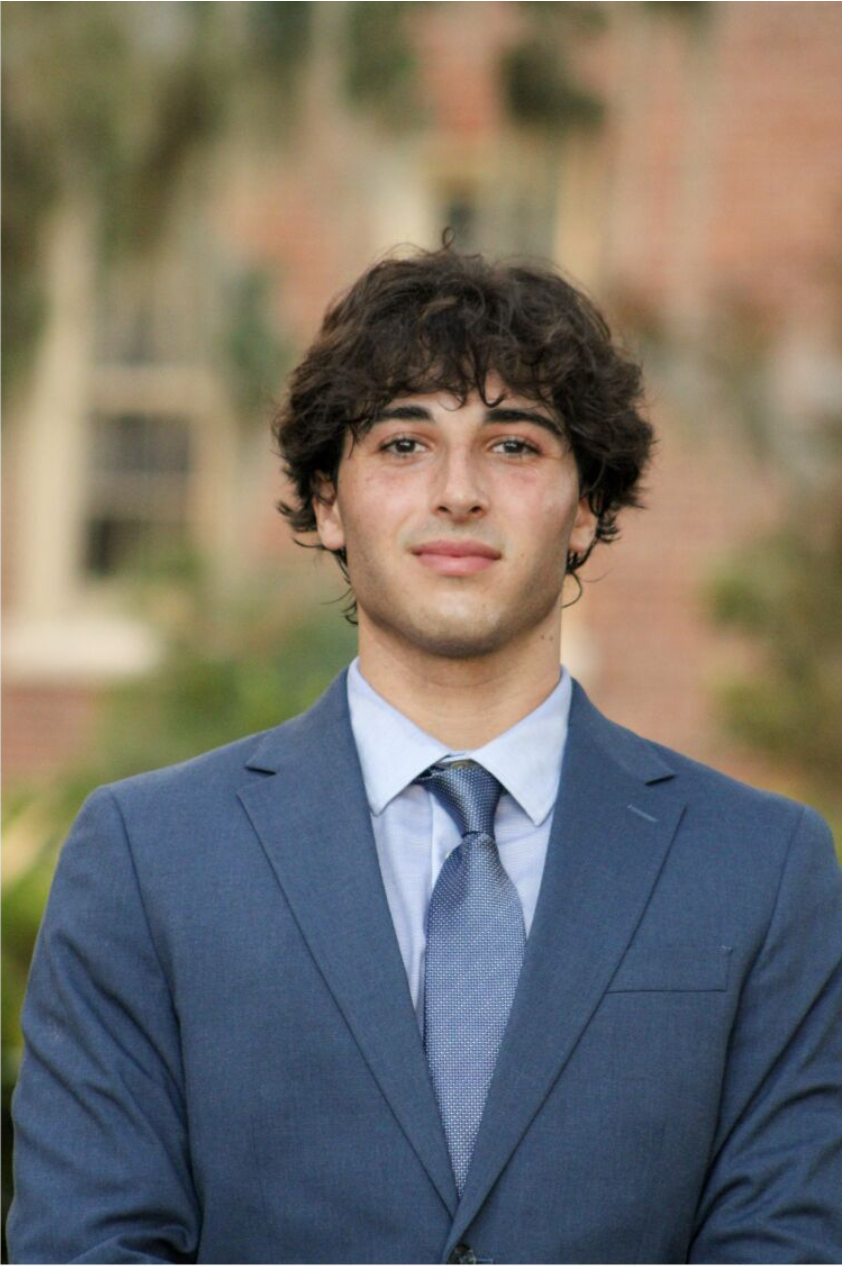
My name is Carson DaSilva, I am an sophomore studying economics and I am from Tallahassee Florida. I am heavily interested in research involving human decision making and thought processing. This project involved peoples natural gravitation for certain sounds to words regardless of region or language. I hope to use this research project as a solid basis for future research endeavors in my career.
BOUBA OR PUA? HOW SPANISH-ENGLISH FLUENCY SHAPES SOUND SYMBOLISM
Authors: Carson DaSilva, Nelu RadpourStudent Major: Economics
Mentor: Nelu Radpour
Mentor's Department: Psychology Mentor's College: Arts and Sciences Co-Presenters: Camila Caballero
Abstract
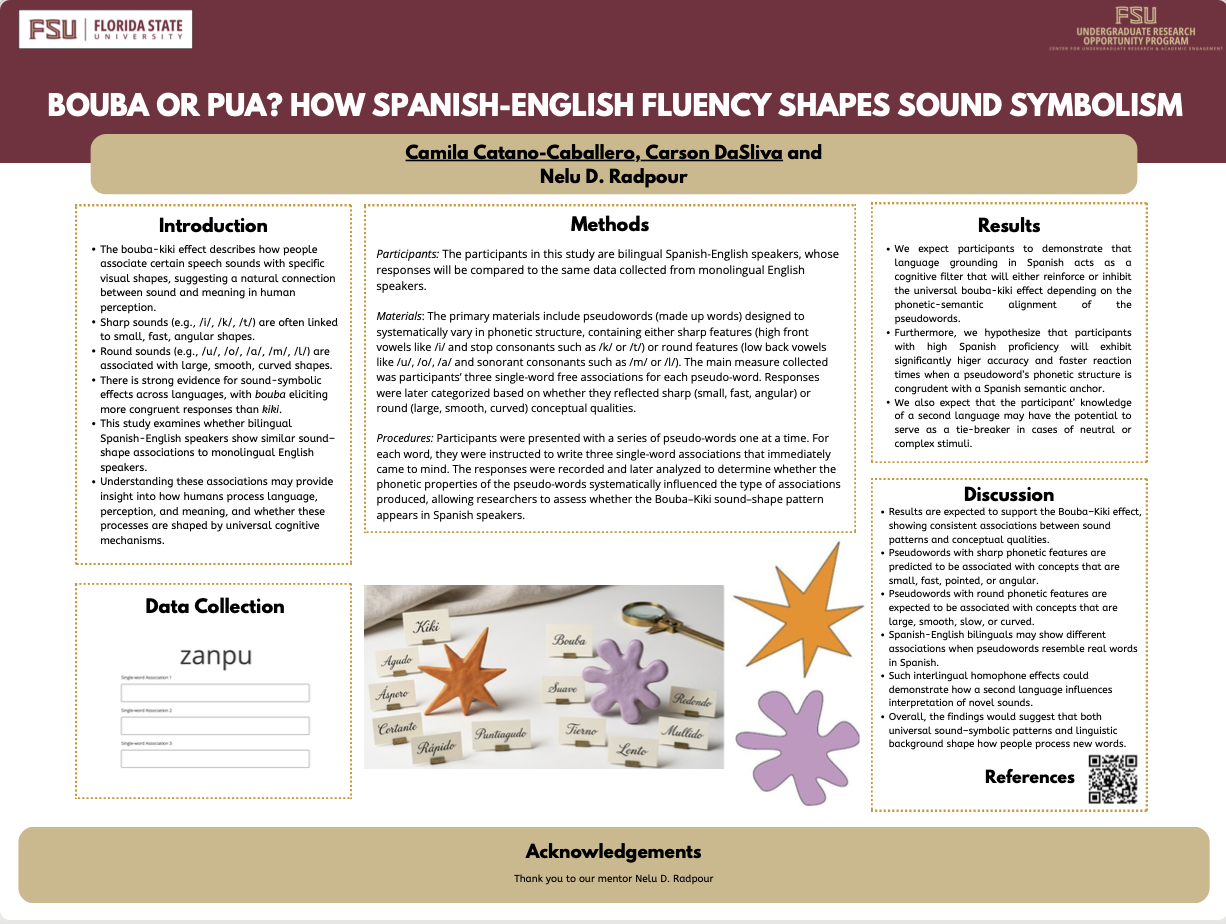
This study investigates how linguistic background influences the semantic attribution of novel speech sounds by comparing how Spanish-English bilinguals and English monolinguals perceive pseudowords. We use a corpus of pseudowords that are categorized into neutral, sharp, and round phonetic groups and established a baseline of English-centric word associations using ChatGPT. The current phase of the project utilizes Qualtrics surveys to collect responses from human participants to determine if Spanish-English bilinguals attribute different meanings or emotional valences to these pseudowords compared to monolinguals. We specifically examine whether bilinguals associate these sounds with real words in their secondary language due to phonetic or morphological similarities, acting as interlingual homophones. By analyzing these cross-linguistic associations, the research aims to uncover how a secondary lexicon provides a unique filter for processing novel language and whether these associations override universal sound-symbolic patterns.
Keywords: Speech, Language, Brain
26th annual Undergraduate Research Symposium, April 1, 2026
Sasha Veltri Poster Session 2: 10:45 am - 11:45 am / Poster #208

BIO
Sasha is a Junior in the FSU honors program majoring in Biology and French with minors in Chemistry and Anthropology. Her research interests are francophone Africa, medical pluralism in Africa, and HIV molecular virology. She enjoys playing various musical instruments, cooking, language learning, and traveling the world.
Medical Pluralism and Trust in Healthcare Among the Hadzabe Hunter-Gatherers
Authors: Sasha Veltri, Dr. Eric ShattuckStudent Major: Biology and French
Mentor: Dr. Eric Shattuck
Mentor's Department: Anthropology Mentor's College: College of Arts and Sciences Co-Presenters:
Abstract
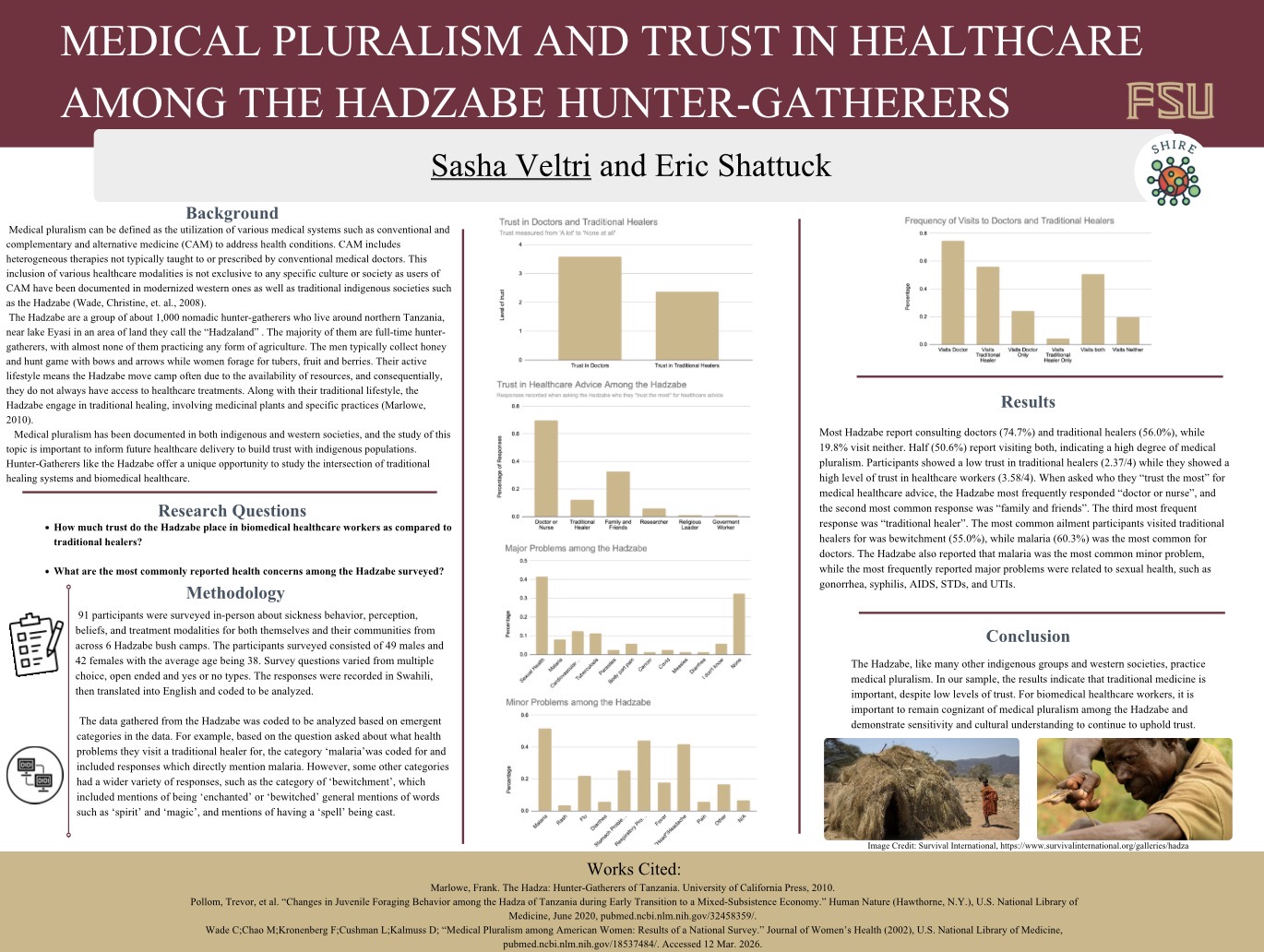
Objectives: Investigating medical choice shows that cultural, societal and personal experiences influence health-seeking behaviors. Understanding medical mistrust within hunter-gatherers, such as the Hadzabe of Tanzania, is crucial for improving the health outcomes of such groups as their mobile lifestyle provides difficulty in accessing healthcare.
Methods: In our exploratory study, 91 Hadzabe adults across six camps (mean age = 39, 46% female) were surveyed about their trust in traditional healers and biomedical healthcare workers in Tanzania, in addition to preferred treatment modalities.
Results: Most Hadzabe report consulting doctors (74.7%) and traditional healers (56.0%), while 19.8% visit neither. Half (50.6%) report visiting both, indicating a high degree of medical pluralism. Participants showed a low trust in traditional healers (2.37/4) while they showed a high level of trust in healthcare workers (3.58/4). The most common ailment participants visited traditional healers for was bewitchment, (55.0%) while malaria (60.3%) was the most common for doctors.
Conclusion: In our sample, the results indicate that traditional medicine is important, despite low levels of trust. For biomedical healthcare workers, it is important to remain cognisant of medical pluralism among the Hadzabe and demonstrate sensitivity and cultural understanding to continue to uphold trust.
Keywords: Hunter-Gatherer, Medical Pluralism, Hadzabe
26th annual Undergraduate Research Symposium, April 1, 2026
Victoria Sierra Poster Session 1: 9:30 am - 10:30 am / Poster #178

BIO
Victoria Sierra is a senior at Florida State University pursuing a Bachelor of Science in Nursing. She is actively involved in the College of Nursing as a Pathophysiology Learning Assistant and College of Nursing Ambassador, where she supports undergraduate students through peer-led tutoring, exam review sessions, and student outreach initiatives.
Victoria has also participated in undergraduate research through the Undergraduate Research Opportunity Program (UROP), working under the mentorship of Dr. Casey Xavier Hall. Her research focuses on a scoping review examining geospatial stigma at the neighborhood level and its influence on health outcomes.
In addition to her academic and research involvement, Victoria completed a nurse internship at Tallahassee Memorial Healthcare on a hematology/oncology unit, where she gained hands-on experience in patient care, clinical skills, and interdisciplinary collaboration.
Following graduation, she plans to sit for the NCLEX-RN and pursue a nurse residency program in South Florida, with long-term goals of continuing her professional development and potentially advancing her education in nursing.
Mapping Neighborhood-Level Stigma: A Scoping Review of Geospatial Approaches and Influences on Health
Authors: Victoria Sierra, Casey D. XAVIER HALL, Ph.D. M.P.H.Student Major: Nursing
Mentor: Casey D. XAVIER HALL, Ph.D. M.P.H.
Mentor's Department: Nursing Mentor's College: College of Nursing Co-Presenters:
Abstract
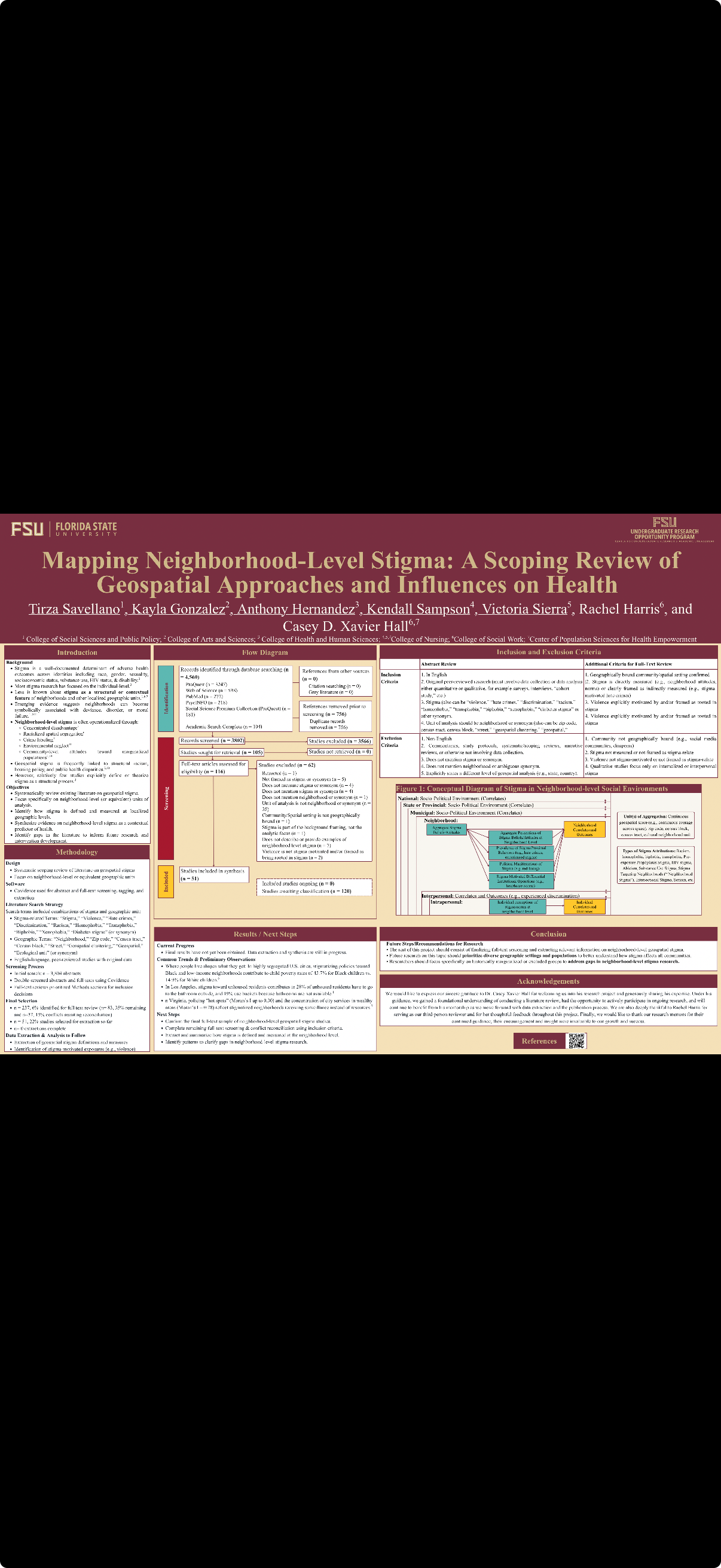
Neighborhood-level stigma is an emerging but understudied determinant of health that reflects how social, structural, and environmental factors shape health outcomes across communities. This scoping review aimed to map existing literature on geospatial stigma and examine how neighborhood-level social environments influence health. A systematic search of multiple databases and grey literature sources was conducted, followed by screening and full-text review using defined inclusion and exclusion criteria. Studies were included if they examined stigma within a geographic or neighborhood context and its relationship to health outcomes.
Preliminary findings indicate that neighborhood-level stigma is most often operationalized through structural and environmental indicators, such as socioeconomic disadvantage, crime, housing instability, and access to resources. These stigmatized environments are associated with adverse physical and mental health outcomes, including chronic disease burden, reduced healthcare access, and increased psychosocial stress. Additionally, stigma operates across multiple levels, including interpersonal, community, and structural domains, reinforcing health disparities in marginalized populations.
This review highlights significant gaps in how geospatial stigma is defined, measured, and applied in research. Greater conceptual clarity and standardized methodologies are needed to advance this field. Future research should focus on developing consistent measures of neighborhood-level stigma and exploring interventions that address structural inequities. Understanding geospatial stigma is critical for informing public health strategies aimed at reducing health disparities and promoting health equity.
Keywords: neighborhood, stigma, geospatial
26th annual Undergraduate Research Symposium, April 1, 2026
Reza Noori Poster Session 1: 9:30 am - 10:30 am / Poster #289

BIO
Reza Noori is a third-year clinical professions major, pursuing a Bachelor of Biomedical Sciences degree on the pre-medical track at Florida State University. His current research explores the correlation between plasma and fecal metabolites in relation to cognition in older adults at risk for dementia. He is applying to medical school this year.
Circulating and gut-derived metabolites linked to cognitive function
Authors: Reza Noori, Julia ShefflerStudent Major: Clinical Professions
Mentor: Julia Sheffler
Mentor's Department: Center for Translational and Behavioral Sciences Mentor's College: College of Medicine Co-Presenters:
Abstract
Background: Alzheimer’s disease and related dementias are increasing in prevalence as the population ages, creating a substantial public health crisis worldwide. There remains a need to clarify modifiable mechanisms underlying neurocognitive aging. Emerging evidence highlights the gut–brain axis as a critical pathway linking microbial metabolism to cognitive processes. Metabolomic profiling of plasma and fecal samples offers a method to capture these systemic and gut-derived signals.
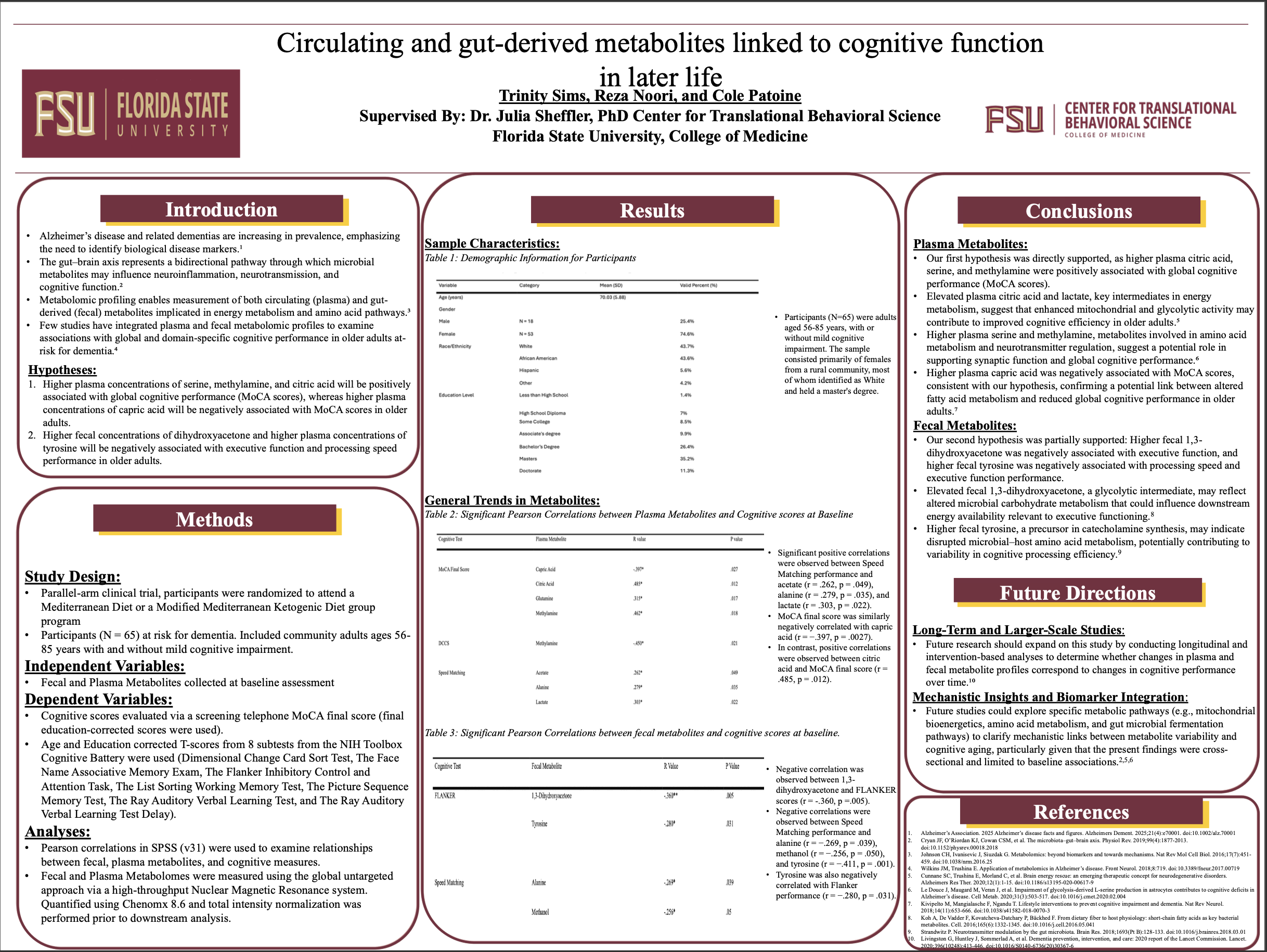
Methods: Participants (N = 71; M: age = 70.03 years) were community-dwelling adults with and without mild cognitive impairment, enrolled in a parallel-arm clinical trial comparing two dietary interventions. Fasting plasma and fecal samples were analyzed using global untargeted nuclear magnetic resonance metabolomics. Cognitive performance was assessed using the Montreal Cognitive Assessment (MoCA) and NIH Toolbox measures of executive function, memory, and processing speed. Pearson and Spearman correlations examined associations between baseline metabolites and cognition.
Results: Higher plasma citric acid (r=.485, p=.012), serine (r= .432, p<.001), glutamine (r=.315, p=.017), and methylamine (r=.462, p=.018) were associated with higher MoCA scores, whereas capric acid was negatively associated (r=−.409, p=.022). Processing speed was positively associated with plasma lactate (r=.303, p=.022) and acetate (r=.262, p=.049). Fecal metabolites demonstrated negative associations between tyrosine and processing speed (r=−.411, p=.001) and between 1,3-dihydroxyacetone and executive function (r=−.360, p=.005).
Conclusions: Both plasma and fecal metabolite signatures were significantly associated with global and domain-specific cognitive performance in older adults. Assessing metabolites in both blood and stool may offer a more complete view of how gut and systemic metabolic signals relate to cognitive outcomes.
Keywords: Dementia, Diet, Metabolites, Plasma Metabolites, Fecal Metabolites, Cognition
26th annual Undergraduate Research Symposium, April 1, 2026
Elizabeth Nelson Poster Session 4: 3:00 pm - 4:00 pm / Poster #92

BIO
Elizabeth Nelson is a junior at Florida State University pursuing a Bachelor of Science in Cell and Molecular Neuroscience on the pre-med track. She is deeply interested in the intersection of neuroscience, physiology, and human health. Elizabeth is currently conducting her honors thesis research examining how GLP-1 receptor agonists modulate dopamine signaling through GABAergic neurons. Through this work, she has gained extensive experience in experimental design, data analysis, and scientific communication under the mentorship of faculty in her department. Her research has strengthened her interest in understanding the neural mechanisms underlying behavior and disease, as well as the translational potential of biomedical research. Following graduation, she plans to attend medical school and continue integrating research with patient care throughout her career.
Differences in Brain Activation Between Wild-Type and Gcg Knockdown Rats Following Exendin-4 Administration
Authors: Elizabeth Nelson, Linda RinamanStudent Major: Cell and Molecular Neuroscience
Mentor: Linda Rinaman
Mentor's Department: Program in Neuroscience Mentor's College: College of Arts and Sciences Co-Presenters: Ava Simon
Abstract
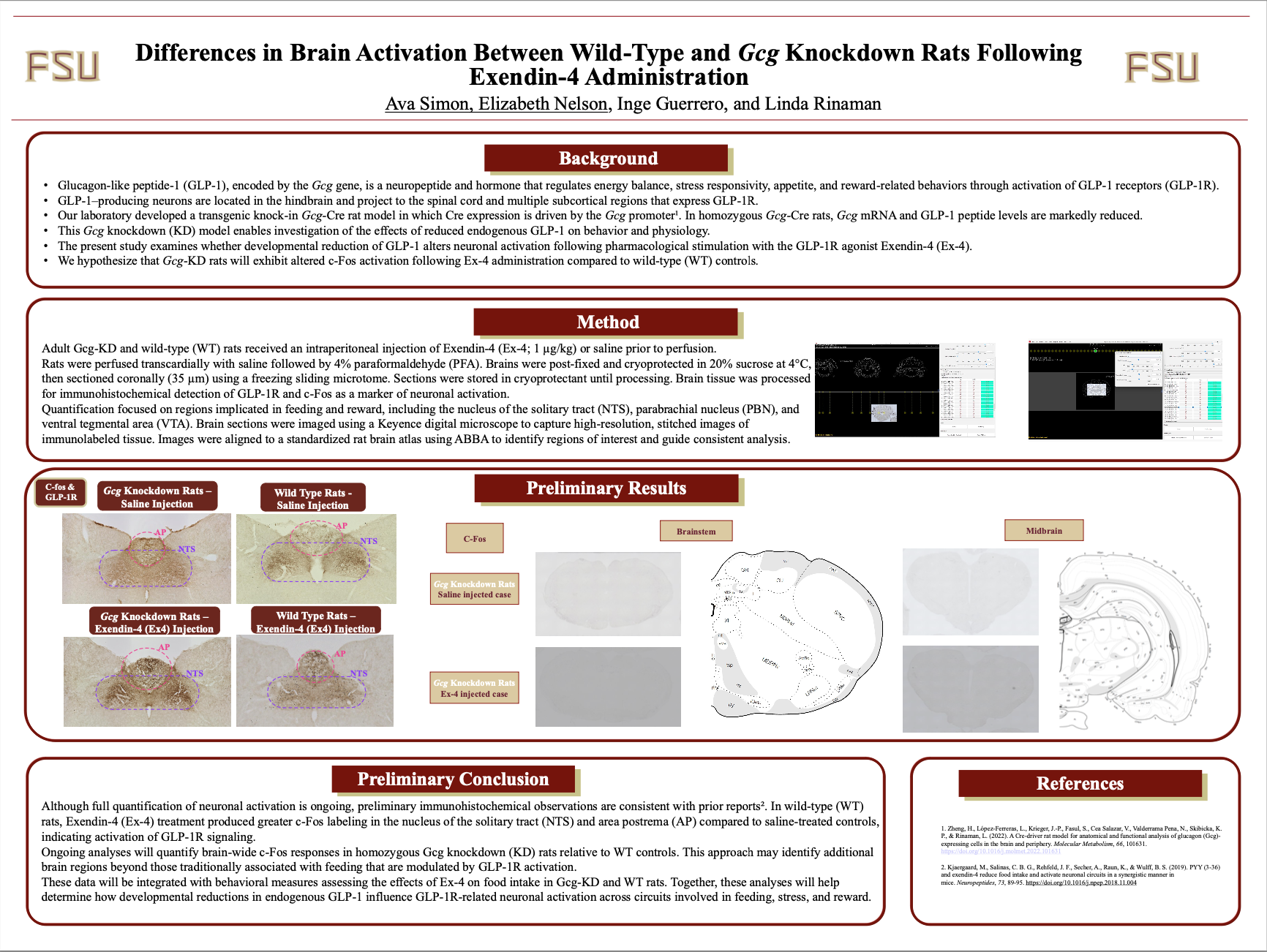
Glucagon-like peptide-1 (GLP-1) is a peptide hormone and neurotransmitter that regulates energy balance, stress responsivity, appetite, and reward-related behaviors through activation of GLP-1 receptors (GLP-1R). To investigate the neural consequences of chronic endogenous GLP-1 deficiency, the present study examined whether developmental reduction of GLP-1 alters GLP-1R immunolabeling and neuronal activation following pharmacological stimulation of GLP-1R. We used a CRISPR-Cas9–generated glucagon gene (Gcg) knockdown (KD) rat model characterized by reduced endogenous GLP-1 production across development. Adult KD and wild-type (WT) rats received an intraperitoneal injection of the GLP-1R agonist exendin-4 (Ex-4; 1 µg/kg) or saline prior to perfusion. Brain tissue was processed for immunohistochemical detection of GLP-1R expression and c-Fos as a marker of neuronal activation. Quantification focused on key regions implicated in feeding and reward, including the nucleus of the solitary tract, parabrachial nucleus, ventral tegmental area, and nucleus accumbens. We hypothesize that chronic GLP-1 deficiency will alter receptor regulation and neural responsivity, such that KD rats will exhibit altered GLP-1R expression and differential c-Fos activation following Ex-4 administration compared to WT controls. These findings will provide insight into how reductions in endogenous GLP-1 during development can lead to changes in GLP-1R expression and evoke neuronal activation across key brain regions involved in feeding, stress, and reward.
Keywords: Neuroscience, GLP-1, Knockdown
26th annual Undergraduate Research Symposium, April 1, 2026
Nora Wetherton Poster Session 1: 9:30 am - 10:30 am / Poster #249
BIO
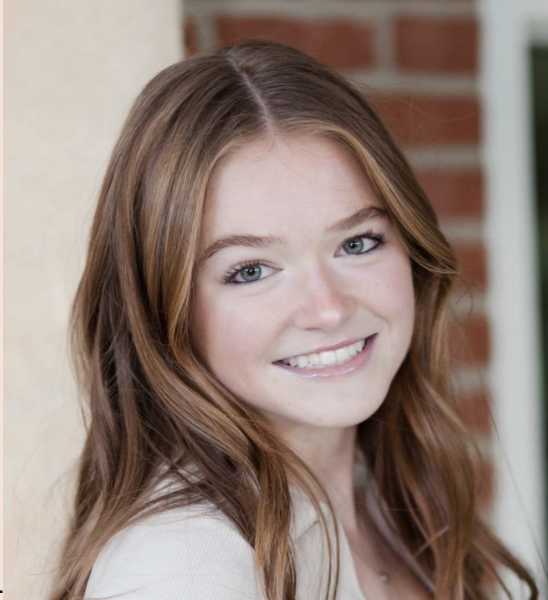
Nora Wetherton is a Junior at Florida State University pursuing a Bachelor of Science in Interdisciplinary Medical Sciences. She plans to attend pharmacy school following graduation. Originally from Louisville, Kentucky, Nora has gained research experience in developing Microscopic BioArt and contributing to the development of a medical device in collaboration with Mayo Clinic.
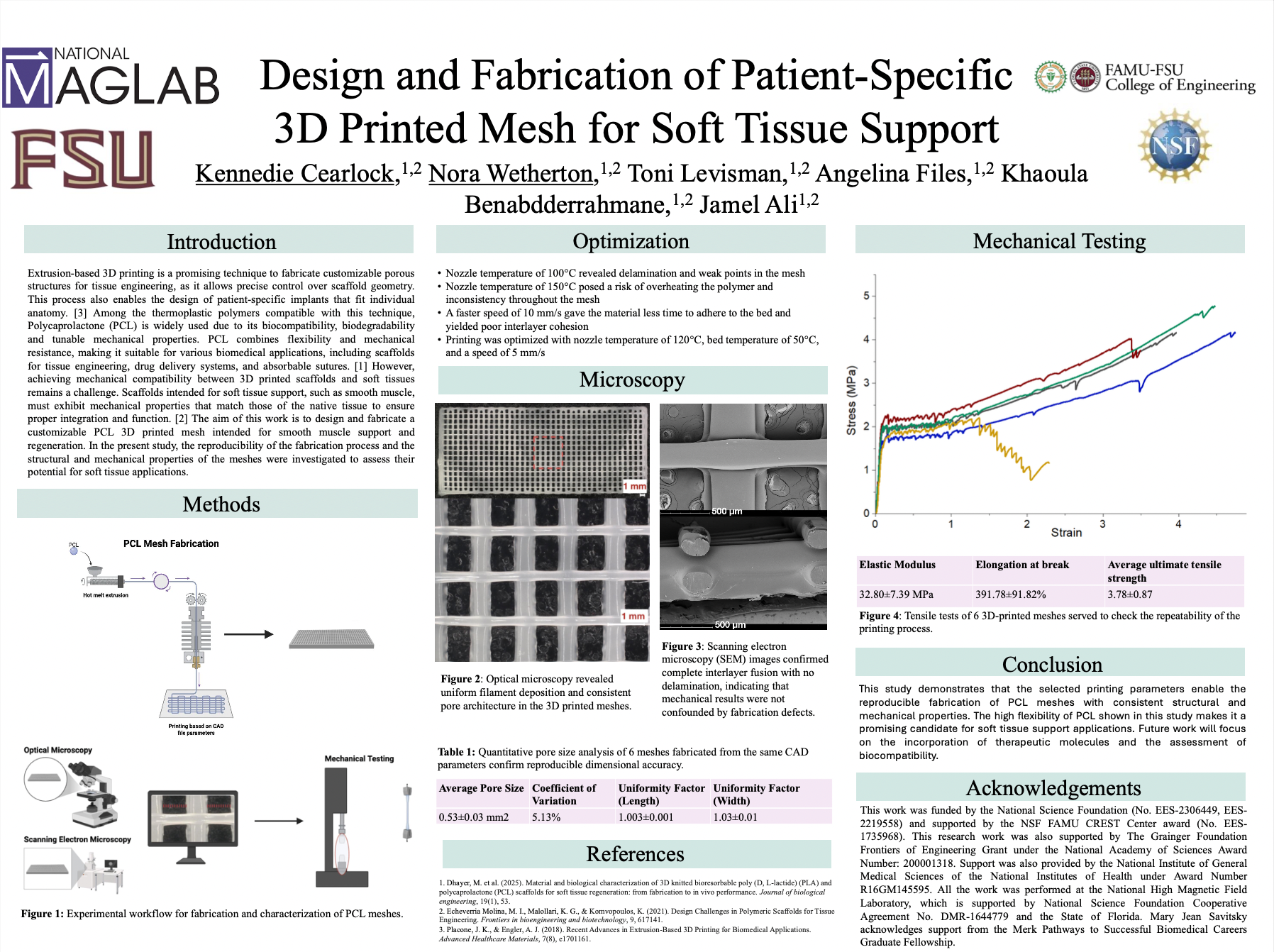
Design and Fabrication of Patient-Specific 3D Printed Mesh for Soft Tissue Support
Authors: Nora Wetherton , Dr. Jamel AliStudent Major: clinical professions
Mentor: Dr. Jamel Ali
Mentor's Department: Chemical and Biomedical Engineering Mentor's College: FAMU-FSU College of Engineering Co-Presenters: Kennedie Cearlock
Abstract
Extrusion-based 3D printing offers a versatile platform to fabricate customizable scaffolds intended for use in tissue engineering applications. Among the materials suitable for this technology, polycaprolactone (PCL) offers both biocompatibility and tunable mechanical properties, suitable for a wide range of tissues . This tunability enables the design of scaffolds appropriate not only for hard tissues, like bone, but also for soft tissue support, including smooth muscle supports (e.g., vascular stents ). Moreover, additive manufacturing also enables the creation of patient-specific implants to fit precisely the individual anatomy. Despite these advantages, there is still a gap in the development of thermoplastic 3D printed scaffolds adapted to the mechanical demands of soft tissues. Additionally, these scaffolds do not allow the incorporation of therapeutic molecules, limiting their multifunctional potential. The aim of this work is to develop a customizable PCL 3D printed mesh designed to match the mechanical requirements of smooth muscle support and regeneration. The customizable mesh was designed using CAD software with variations in patterns, followed by fabrication through extrusion-based printing of PCL. Mechanical characterization was performed to evaluate the mesh’s suitability for smooth muscle support. Additionally, the incorporation of therapeutic molecules into the structure or as a surface coating will be investigated, along with an assessment of their biocompatibility.
Keywords: 3D Printing, Polycaprolactone (PCL), Tissue Engineering
26th annual Undergraduate Research Symposium, April 1, 2026
Kyran Etienne Poster Session 1: 9:30 am - 10:30 am / Poster #151

BIO
I am a first-generation college student and pre-med student majoring in Public Health with a minor in Psychology, driven by a strong interest in the science of healing and understanding the behavioral factors that influence health outcomes. My academic journey is rooted in a passion for improving healthcare access and addressing health disparities in underserved communities.
Originally from Orlando, Florida, I aspire to become an orthopedic surgeon and ultimately establish a nonprofit organization focused on expanding access to surgical care in underdeveloped regions around the world. Through my studies, leadership, and service, I am committed to combining medicine, public health, and community engagement to make a meaningful impact both locally and globally.
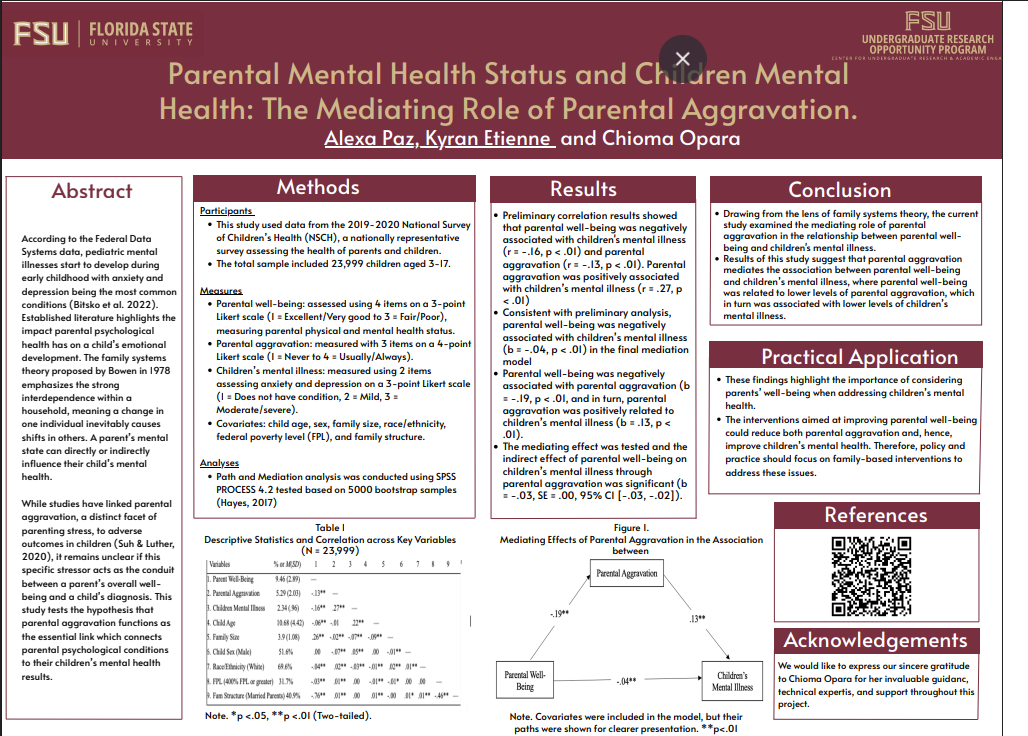
Parental Mental Health Status and Children Mental Health: The Mediating Role of Parental Aggravation.
Authors: Kyran Etienne, Chioma OperaStudent Major: Public Health
Mentor: Chioma Opera
Mentor's Department: Human Development & Family Science Mentor's College: College of Education, Health, and Human Sciences Co-Presenters: Alexa Paz
Abstract
According to the Federal Data Systems data, pediatric mental illnesses start to develop during early childhood with anxiety and depression being the most common conditions (Bitsko et al. 2022). Established literature highlights the impact parental psychological health has on a child’s emotional development. The family systems theory proposed by Bowen in 1978 emphasizes the strong interdependence within a household, meaning a change in one individual inevitably causes shifts in others. A parent’s mental state can directly or indirectly influence their child’s mental health. While studies have linked parental aggravation, a distinct facet of parenting stress, to adverse outcomes in children (Suh & Luther, 2020), it remains unclear if this specific stressor acts as the conduit between a parent’s overall wellbeing and a child’s diagnosis. This study tests the hypothesis that parental aggravation functions as the essential link which connects parental psychological conditions to their children’s mental health results.
Keywords: Mental Health, Public Health, First Generation
26th annual Undergraduate Research Symposium, April 1, 2026
Ava Simon Poster Session 4: 3:00 pm - 4:00 pm / Poster #92

BIO
Ava Simon is a third-year undergraduate student at Florida State University pursuing a Bachelor of Science in Behavioral Neuroscience with a minor in Chemistry, with an expected graduation date of Spring 2027. She is a member of the Florida State University Honors Program and has been recognized on the President’s List and Dean’s List for her academic performance. Ava conducts undergraduate research in the laboratory of Dr. Linda Rinaman, where she studies GLP-1 receptor signaling and neural activation in Gcg knockdown rats and has contributed to data collection and the preparation of the research poster presented here. Outside of the laboratory, Ava is actively involved in service and leadership roles on campus. She serves as External Service Director for Alpha Epsilon Delta, where she organizes volunteer opportunities such as Habitat for Humanity, Ability 1st and the Monarch/WHO festival with St. Marks Wildlife refuge center. She is also a member of the Medical Response Unit, where she responds to on-campus medical calls, staffs campus events, and teaches safety trainings such as Stop the Bleed. Following graduation, Ava plans to attend medical school and pursue a career as a physician dedicated to integrating scientific research with compassionate patient care. In her spare time, she enjoys hiking, scuba diving, and reading.
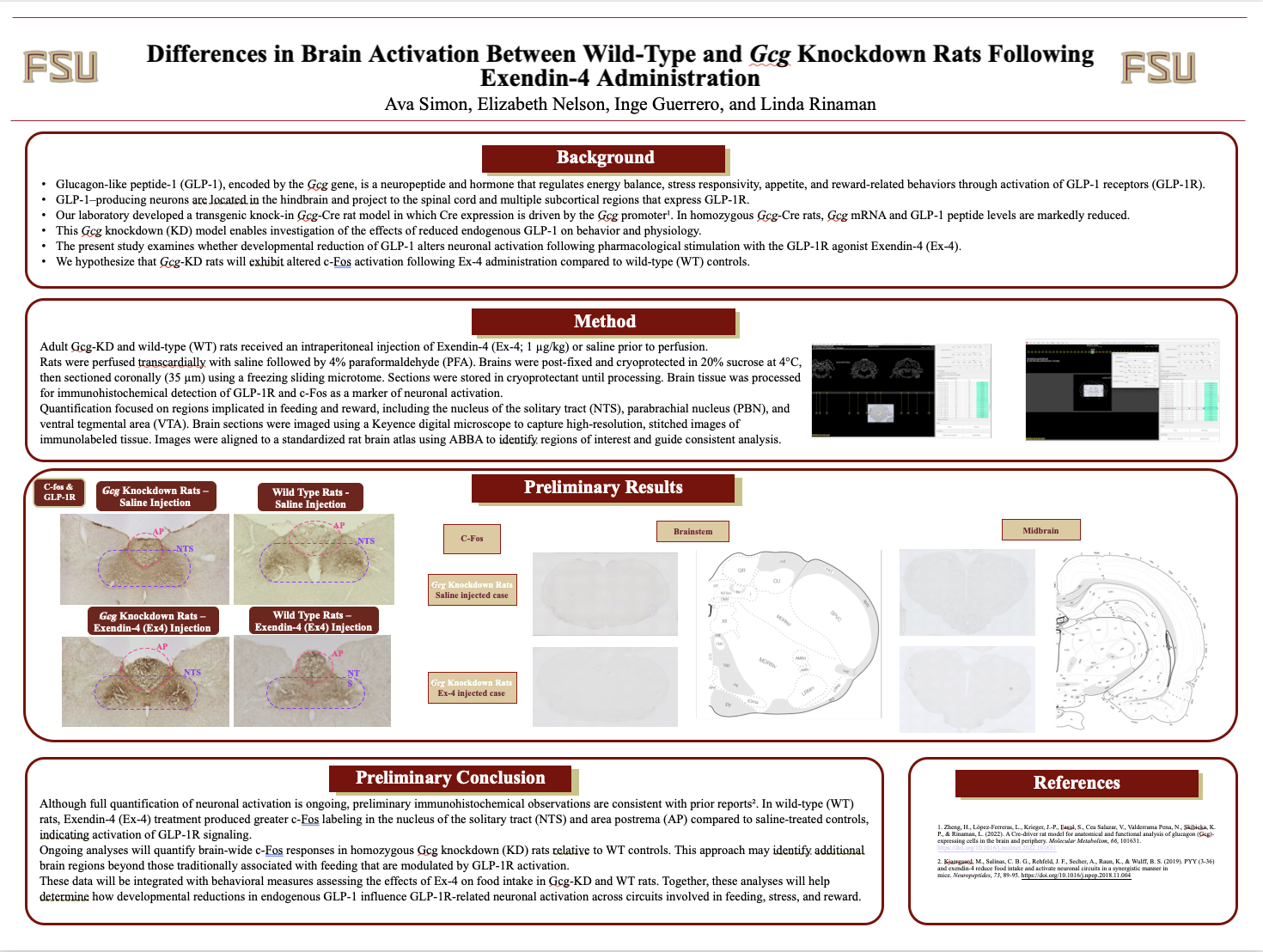
Differences in Brain Activation Between Wild-Type and Gcg Knockdown Rats Following Exendin-4 Administration
Authors: Ava Simon, Dr. Linda RinamanStudent Major: Behavioral Neuroscience
Mentor: Dr. Linda Rinaman
Mentor's Department: Department of Psychology Mentor's College: College of Arts and Sciences Co-Presenters: Elizabeth Nelson
Abstract
GLP-1 (Glucagon-like peptide-1) is a peptide hormone and neurotransmitter that regulates energy, appetite, stress, and reward-related behaviors through the activation of GLP-1R (GLP-1 receptor). GLP-1 is taken from the GCG gene (preproglucagon). However, the neural consequences of lifelong reductions in GLP-1 availability need further research and understanding. This study investigates how chronic GLP-1 deficiency influences GLP-1R expression and neural activation in the rat brain. Using a GCG knockdown rat model, resulting in reduced endogenous GLP-1 throughout development, we compare knockdown and wildtype rats under normal conditions and also stimulated GLP-1R conditions. Rats receive either the GLP-1R agonist, Exendin-4 (1 µg/kg) or saline prior to perfusion. Brain tissue is then processed using immunohistochemistry to quantify GLP-1R expression and neural activation via c-fos labeling. The c-fos labeling will be in key regions involving feeding, energy balance and reward. These areas could include the nucleus of the solitary tract, ventral tegmental area, nucleus accumbens, and the parabrachial nucleus. We hypothesize that GCG knockdown rats will exhibit GLP-1R upregulation and heightened c-fos activation following Exendin-4 administration. We predict that this will reflect increased neural sensitivity to GLP-1R stimulation. These findings will advance understanding of GLP-1 receptor plasticity and neural adaptation to chronic hormonal deficiency with implications for individual variability in response to GLP-1 based therapeutics.
Keywords: GLP-1 signaling, Neural activation, c-Fos, Gcg knockdown
26th annual Undergraduate Research Symposium, April 1, 2026
Jewel Montalvo Poster Session 4: 3:00 pm - 4:00 pm / Poster #218

BIO
Jewel Montalvo is a sophomore pursuing a Bachelor of Science in Biology, with plans to add a second major in music. With a lifelong background in dance, music, and visual art, her research through UROP explores how studio-based material experimentation can function as a method of cultural inquiry, focusing on Filipino American identity, memory, and lived experience. She works closely with her faculty research mentor, Ysabel Flores, in developing this interdisciplinary project. Jewel plans to attend medical school. In her free time, she enjoys fitness and playing musical instruments.
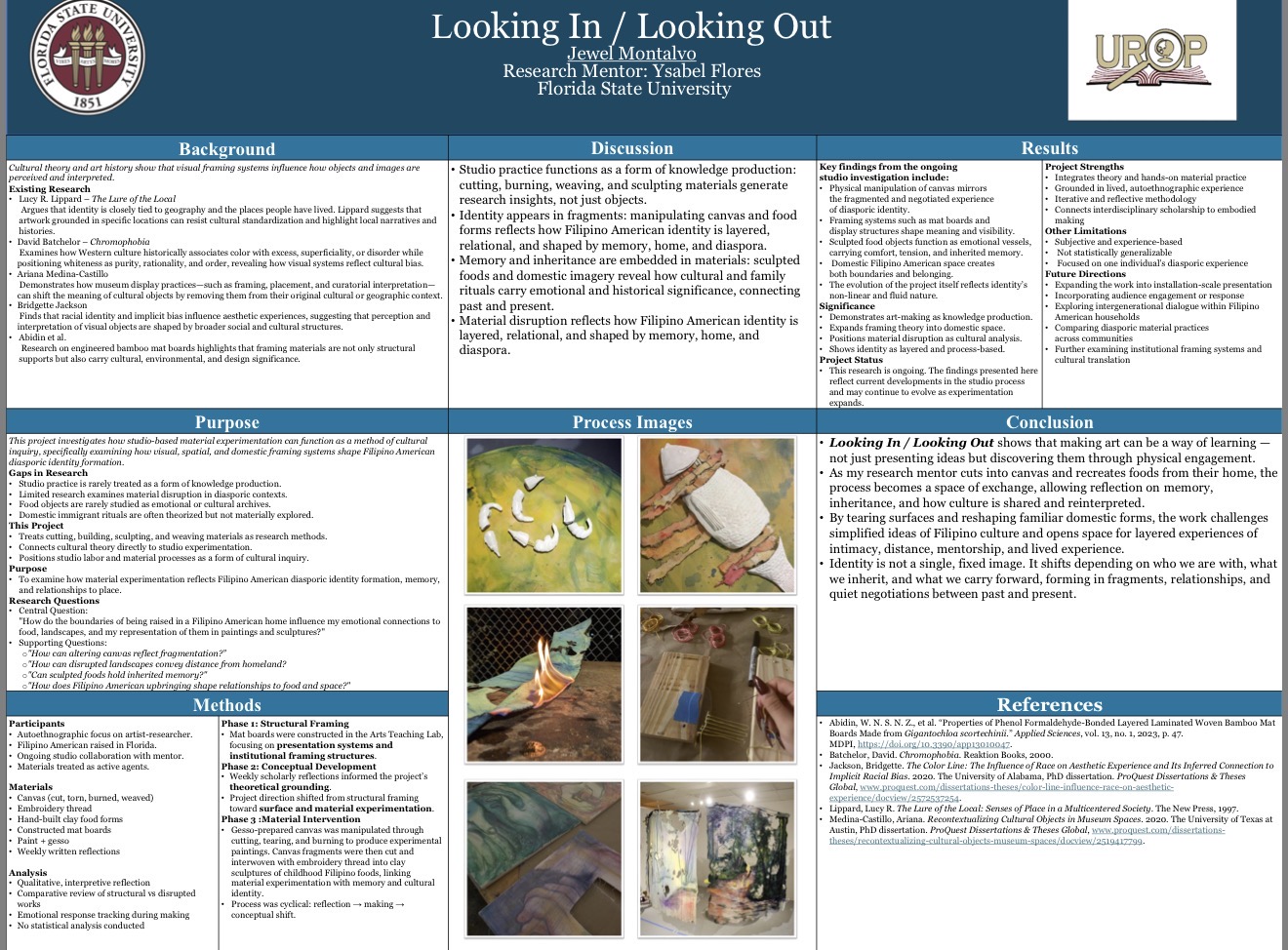
Looking In Looking Out
Authors: Jewel Montalvo , Ysabel FloresStudent Major: Biological Sciences
Mentor: Ysabel Flores
Mentor's Department: Studio Art Mentor's College: Fine Arts Co-Presenters:
Abstract
“Looking In / Looking Out” is an arts-based, autoethnographic project that explores how hands-on material experimentation can serve as a way to investigate culture. Inspired by thinkers like Lucy R. Lippard and David Batchelor, the project looks at how visual, spatial, and household framing systems influence the formation of Filipino American identity. Filling gaps in current research, this study presents studio practice as a way to produce knowledge. By collaborating with my research mentor, Ysabel Flores, we used material processes as both method and evidence. My mentor tore and burned canvas and created ceramic food objects, while I was taught to sew, apply gesso, and create mat boards. Weekly reflections and careful observation revealed how these processes shed light on memory, inheritance, and our connections to place. By examining how growing up in a Filipino American household shapes emotional ties to food, landscape, and representation, the project reveals how disruptions in materials reflect fragmentation and distance. Altered canvases represent the instability of diasporic identity, while sculpted food items serve as emotional records. This research indicates that identity is not fixed; it forms through fragments, relationships, and everyday practices. Studio work becomes a path to discovery, presenting a physical way to understand home and heritage.
Keywords: Looking In Looking Out
26th annual Undergraduate Research Symposium, April 1, 2026
Nicholas Ludwig Poster Session 1: 9:30 am - 10:30 am / Poster #187
BIO
I am Nicholas Ludwig a senior at Florida State University. I am currently doing research on the DVL peptide in land plants under professor Hongchang Cui. After graduation I am hoping to attend medical school to eventually become a doctor.
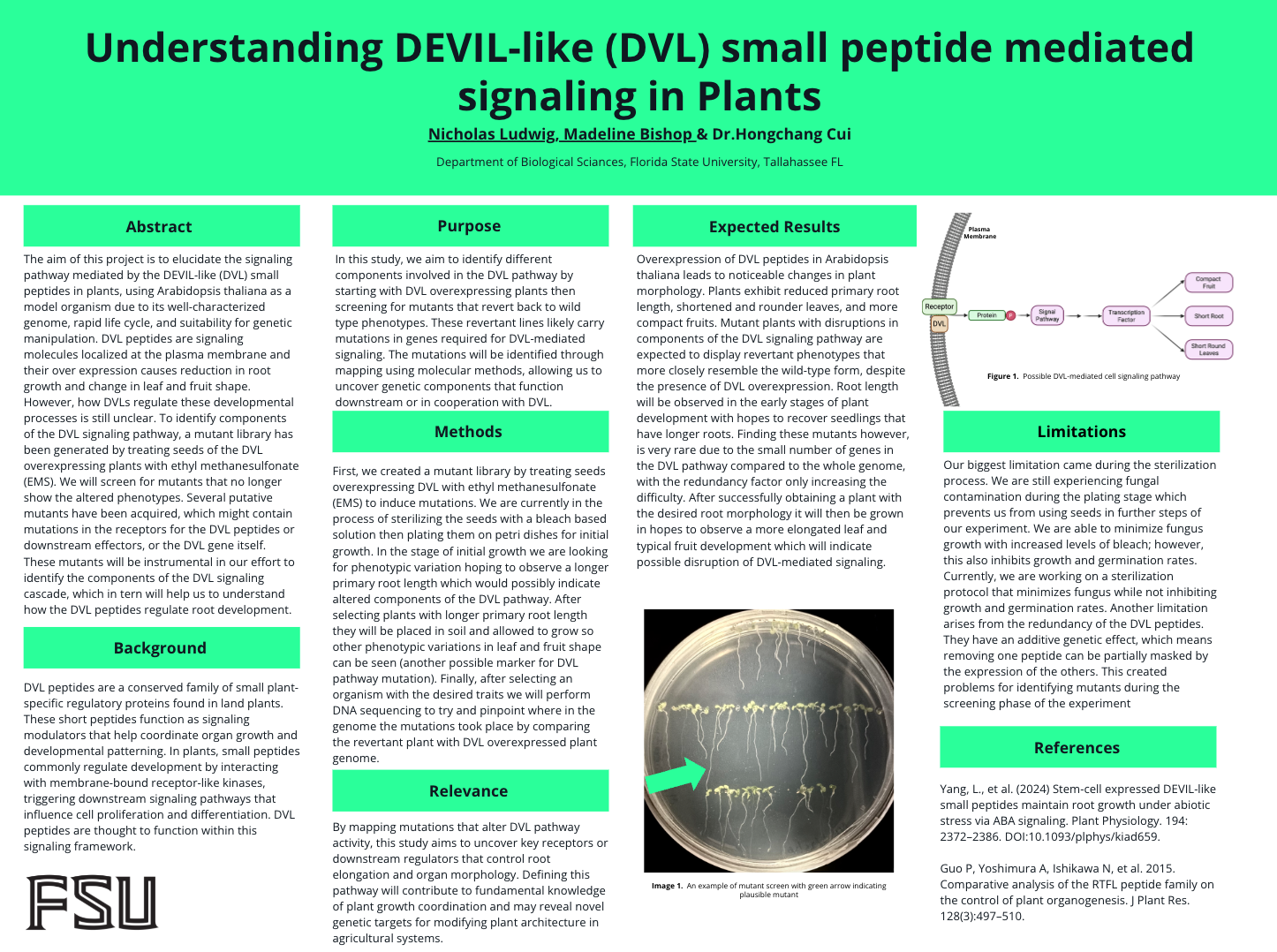
Understanding DEVIL-like (DVL) small peptide mediated signaling in Plants
Authors: Nicholas Ludwig, Hongchang CuiStudent Major: Biology
Mentor: Hongchang Cui
Mentor's Department: Biological Sciences Mentor's College: College of srts and sciences Co-Presenters: Madeline Bishop
Abstract
The aim of this project is to elucidate the signaling pathway mediated by the DEVIL-like (DVL) small peptides in plants, using Arabidopsis thaliana as a model organism due to its well-characterized genome, rapid life cycle, and suitability for genetic manipulation. DVL peptides are signaling molecules localized at the plasma membrane and their over expression causes reduction in root growth and change in leaf and fruit shape. However, how DVLs regulate these developmental processes is still unclear. To identify components of the DVL signaling pathway, a mutant library has been generated by treating seeds of the DVL overexpressing plants with ethyl methanesulfonate (EMS). We will screen for mutants that no longer show the altered phenotypes. Several putative mutants have been acquired, which might contain mutations in the receptors for the DVL peptides or downstream effectors, or the DVL gene itself. These mutants will be instrumental in our effort to identify the components of the DVL signaling cascade, which in tern will help us to understand how the DVL peptides regulate root development.
Keywords: DVL peptide signaling in plants
26th annual Undergraduate Research Symposium, April 1, 2026
Sophia Marchalleck Poster Session 4: 3:00 pm - 4:00 pm / Poster #82

BIO
I am a first-year student from Boca Raton, Florida interested in using scientific research to address public health disparities. Through this project studying the role of YBX1 in inflammatory signaling related to Nonalcoholic fatty liver disease, she gained experience in molecular biology techniques and developed a stronger interest in applying biomedical research to real-world health challenges. This work helped connect fundamental research to broader goals in biotechnology, particularly in vaccine and drug development. Sophia is grateful to Dr. James Jordan for his mentorship and for the opportunity to work in the Jordan Lab, as well as the graduate and undergraduate students who supported her throughout this project. She plans to pursue graduate school and continue research focused on improving health outcomes.
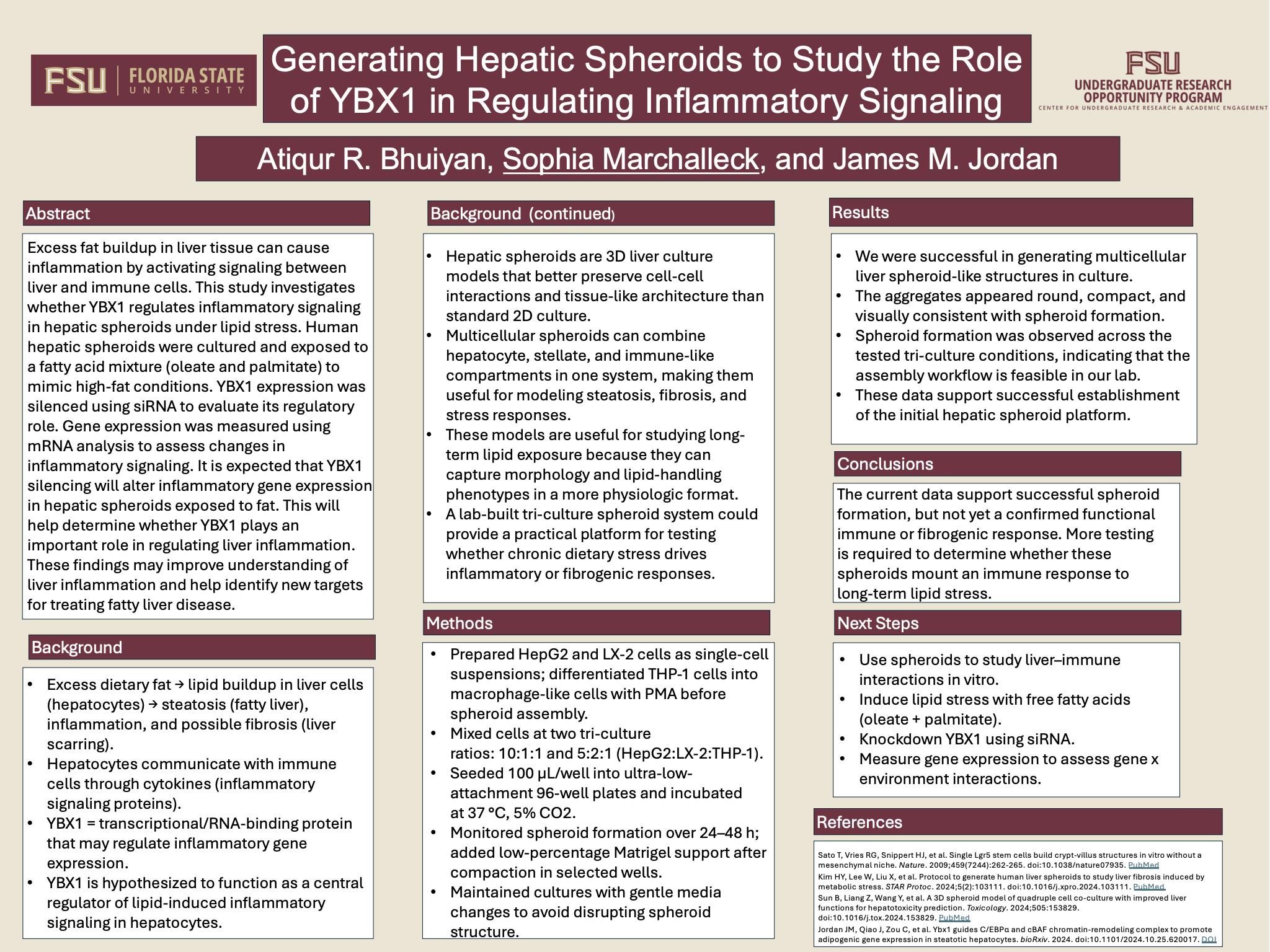
Generating Hepatic Spheroids to Study the Role of YBX1 in Regulating Inflammatory Signaling
Authors: Sophia Marchalleck, Dr. James JordanStudent Major: Biological Sciences
Mentor: Dr. James Jordan
Mentor's Department: Cell and Molecular Biology Mentor's College: College of Arts and Sciences Co-Presenters:
Abstract
Excess fat buildup in liver tissue can cause inflammation by activating signaling between liver and immune cells. This study investigates whether YBX1 regulates inflammatory signaling in hepatic spheroids under lipid stress. Human hepatic spheroids were cultured and exposed to a fatty acid mixture (oleate and palmitate) to mimic high-fat conditions. YBX1 expression was silenced using siRNA to evaluate its regulatory role. Gene expression was measured using mRNA analysis to assess changes in inflammatory signaling. It is expected that YBX1 silencing will alter inflammatory gene expression in hepatic spheroids exposed to fat. This will help determine whether YBX1 plays an important role in regulating liver inflammation. These findings may improve understanding of liver inflammation and help identify new targets for treating fatty liver disease.
Keywords: YBX1; hepatic organoids; lipid stress; liver inflammation; siRNA gene silencing
26th annual Undergraduate Research Symposium, April 1, 2026
Sophia Miller Poster Session 2: 10:45 am - 11:45 am / Poster #166

BIO
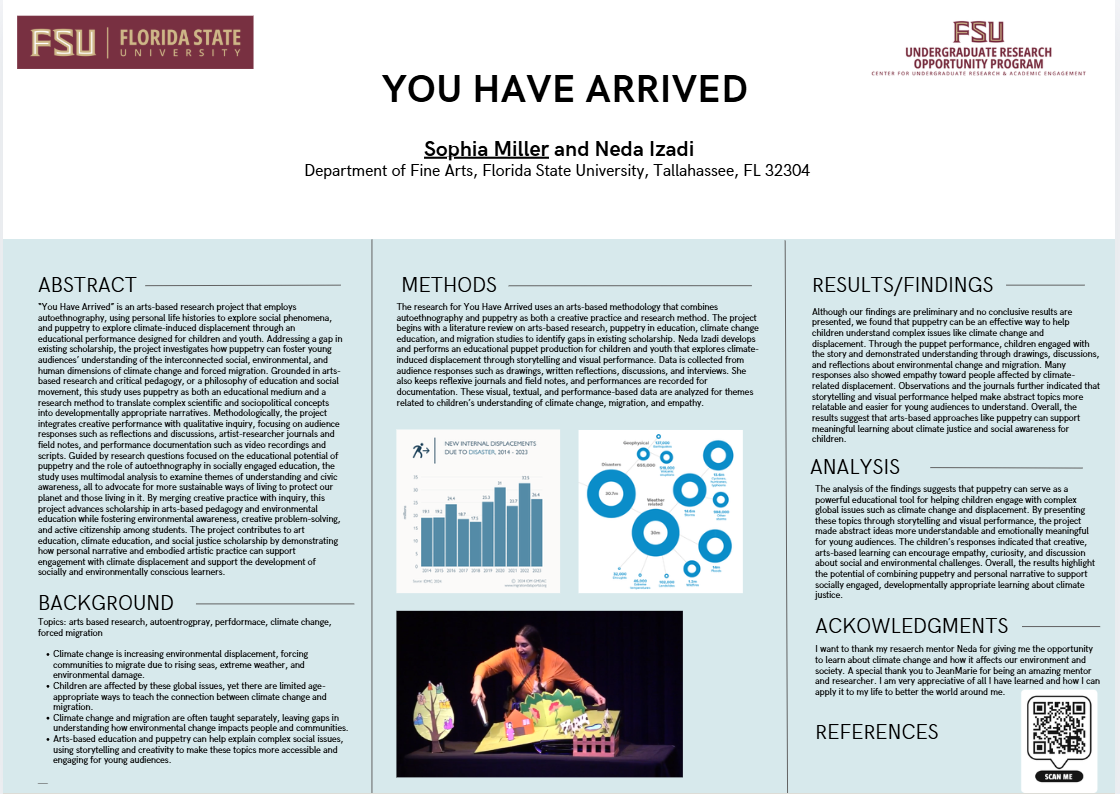
Hi! My name is Sophia Miller and I am the researcher for the UROP research project "You Have Arrived". I am from St. Augustine Florida and my family is from Italy where I have a strong familial heritage and cultural connection. I love the beach, surfing, skating, and traveling! My dream is to become a eco-wellness travel journalist where I can travel the world, tell stories, and teach others about holistic healthcare and wellness. I have already begun growing my brand where I will host group trips and wellness retreats around the world! I also have a strong passion for environmental conservation, specifically focused on marine life and habitats. With a naturalist view on life I strive to make the most out of every day and make the world around me a better place, one day at a time. Here at FSU I am very involved in the FSU Surf Club, Catholic Noles, and UROP. I look forward to my next years here and all that's to come!
You Have Arrived
Authors: Sophia Miller, Neda IzadiStudent Major: Hospitality and Tourism Management & Recreation and Tourism Management majors & Environmental Science minor
Mentor: Neda Izadi
Mentor's Department: Department of Art (fine arts) Mentor's College: College of Fine Arts Co-Presenters:
Abstract
You Have Arrived is an arts-based research project that employs autoethnography, using personal life histories to explore social phenomena, and puppetry to explore climate-induced displacement through an educational performance designed for children and youth. Addressing a gap in existing scholarship, the project investigates how puppetry can foster young audiences’ understanding of the interconnected social, environmental, and human dimensions of climate change and forced migration. Grounded in arts-based research and critical pedagogy, or a philosophy of education and social movement, this study uses puppetry as both an educational medium and a research method to translate complex scientific and sociopolitical concepts into developmentally appropriate narratives. Methodologically, the project integrates creative performance with qualitative inquiry, focusing on audience responses such as reflections and discussions, artist-researcher journals and field notes, and performance documentation such as video recordings and scripts. Guided by research questions focused on the educational potential of puppetry and the role of autoethnography in socially engaged education, the study uses multimodal analysis to examine themes of understanding and civic awareness, all to advocate for more sustainable ways of living to protect our planet and those living in it. By merging creative practice with inquiry, this project advances scholarship in arts-based pedagogy and environmental education while fostering environmental awareness, creative problem-solving, and active citizenship among students. The project contributes to art education, climate education, and social justice scholarship by demonstrating how personal narrative and embodied artistic practice can support engagement with climate displacement and support the development of socially and environmentally conscious learners.
Keywords: arts, climate change, migration
26th annual Undergraduate Research Symposium, April 1, 2026
Nikki Zahedi Poster Session 1: 9:30 am - 10:30 am / Poster #259
BIO
Hi guys, my name is Nikki and I am a junior studying Computer Science with interests in machine learning and cloud computing. My work focuses on applying modern computing techniques to solve complex, real-world engineering problems.
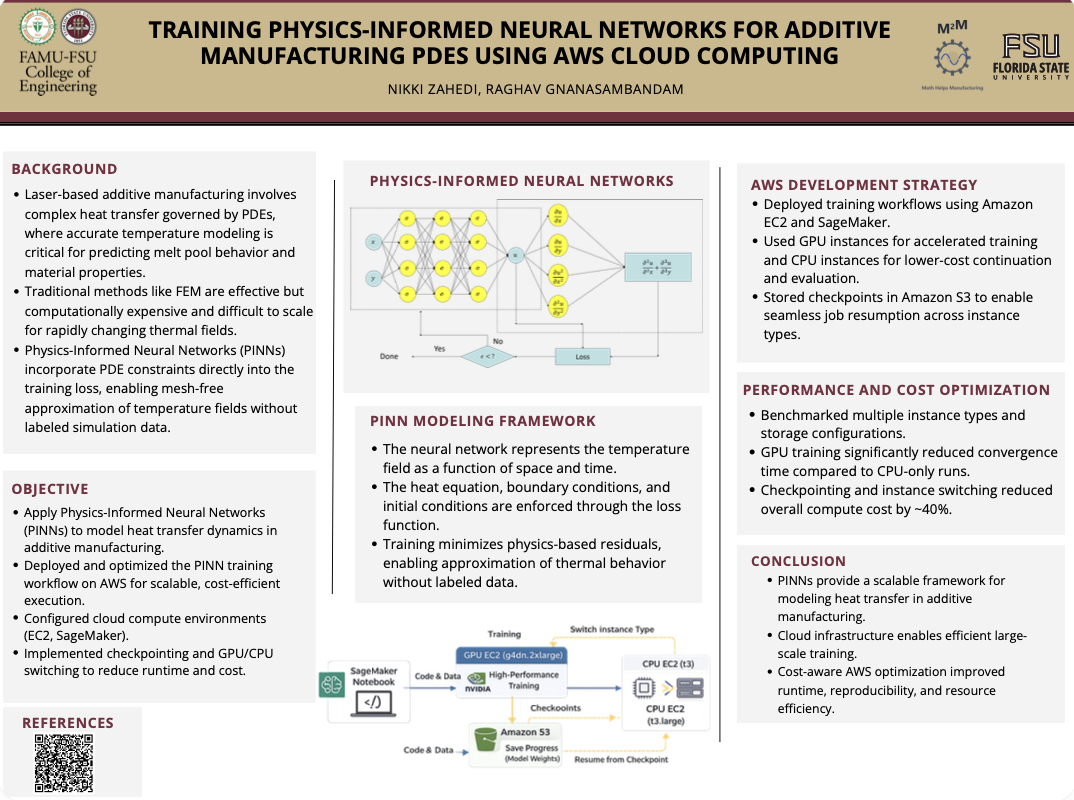
My research explores the use of Physics-Informed Neural Networks (PINNs) deployed on Amazon Web Services (AWS) to model heat transfer in advanced manufacturing processes. Traditional simulation methods can be slow and computationally expensive, especially for systems with rapidly changing conditions. By embedding physical laws directly into neural networks, PINNs offer a way to generate accurate predictions without requiring large labeled datasets.
I am particularly interested in this work because it sits at the intersection of machine learning, physics, and scalable cloud infrastructure. Leveraging AWS services such as SageMaker and EC2, I investigate how cloud-based workflows can make high-performance scientific computing more efficient and accessible. This research reflects my broader goal of building systems that are both technically robust and practically impactful in real-world applications.
Training Physics-Informed Neural Networks for Additive Manufacturing PDEs Using AWS Cloud Computing
Authors: Nikki Zahedi, Raghav GnanasambandamStudent Major: Computer Science
Mentor: Raghav Gnanasambandam
Mentor's Department: Mechanical Engineering Mentor's College: College of Engineering Co-Presenters:
Abstract
This project explores the use of Physics-Informed Neural Networks (PINNs) to model the heat transfer processes that occur during laser-based additive manufacturing. Traditional numerical methods for solving the heat equation can be computationally expensive and difficult to scale, especially when dealing with rapidly changing temperature fields. PINNs offer an alternative by embedding the governing partial differential equation directly into the loss function of a neural network. The network begins as a random function, and training consists of minimizing how much the function violates the physics of the system. This allows the model to approximate temperature distributions without the need for labeled simulation data.
To evaluate computational performance, training experiments were conducted using cloud resources from Amazon Web Services on both CPU and GPU instances. Early results indicate that GPU-based training significantly reduces computation time and that the PINN is able to reproduce key thermal patterns expected in additive manufacturing.
These findings suggest that PINNs may provide a flexible and scalable framework for modeling complex physical processes. The project demonstrates how machine learning and cloud computing can be combined to support advanced manufacturing research, and future work will extend the model to more complex geometries and multi-physics behavior.
Keywords: PINNS, Neural Networks, AWS, Cloud
26th annual Undergraduate Research Symposium, April 1, 2026
Guadalupe Figueroa Poster Session 1: 9:30 am - 10:30 am / Poster #1

BIO
My name is Guadalupe, but I go by Lupe for short. I am a sophomore at Florida State University, double-majoring in Public Health and Psychology. As a first-generation college student, I am determined to use my education to support others, particularly those who face language barriers in accessing care and resources. I am originally from Clewiston, Florida, a small town in South Florida located south of Lake Okeechobee. I stand for cultural awareness, and I aspire to become a psychiatric nurse, where I aim to expand my passion for mental health and advocacy to provide accessible care to diverse populations.
Research on Creating Accessible materials for low-vision/blind students
Authors: Guadalupe Figueroa, Ameya KolarkarStudent Major: Public Health and Psychology
Mentor: Ameya Kolarkar
Mentor's Department: FSU Department of Mathematics Mentor's College: FSU Department of Mathematics Co-Presenters: Natalie Velazquez, Dominic Denardis, Benjamin Campos, Alenisse Adorno-Roman
Abstract
As we make progress in improving accessibility and equitable education for students with disabilities, we can do much more to develop an education system that accommodates all. We were investigating what accessibility tools can be researched or developed to assist low-vision and blind students (LVBS) at FSU.
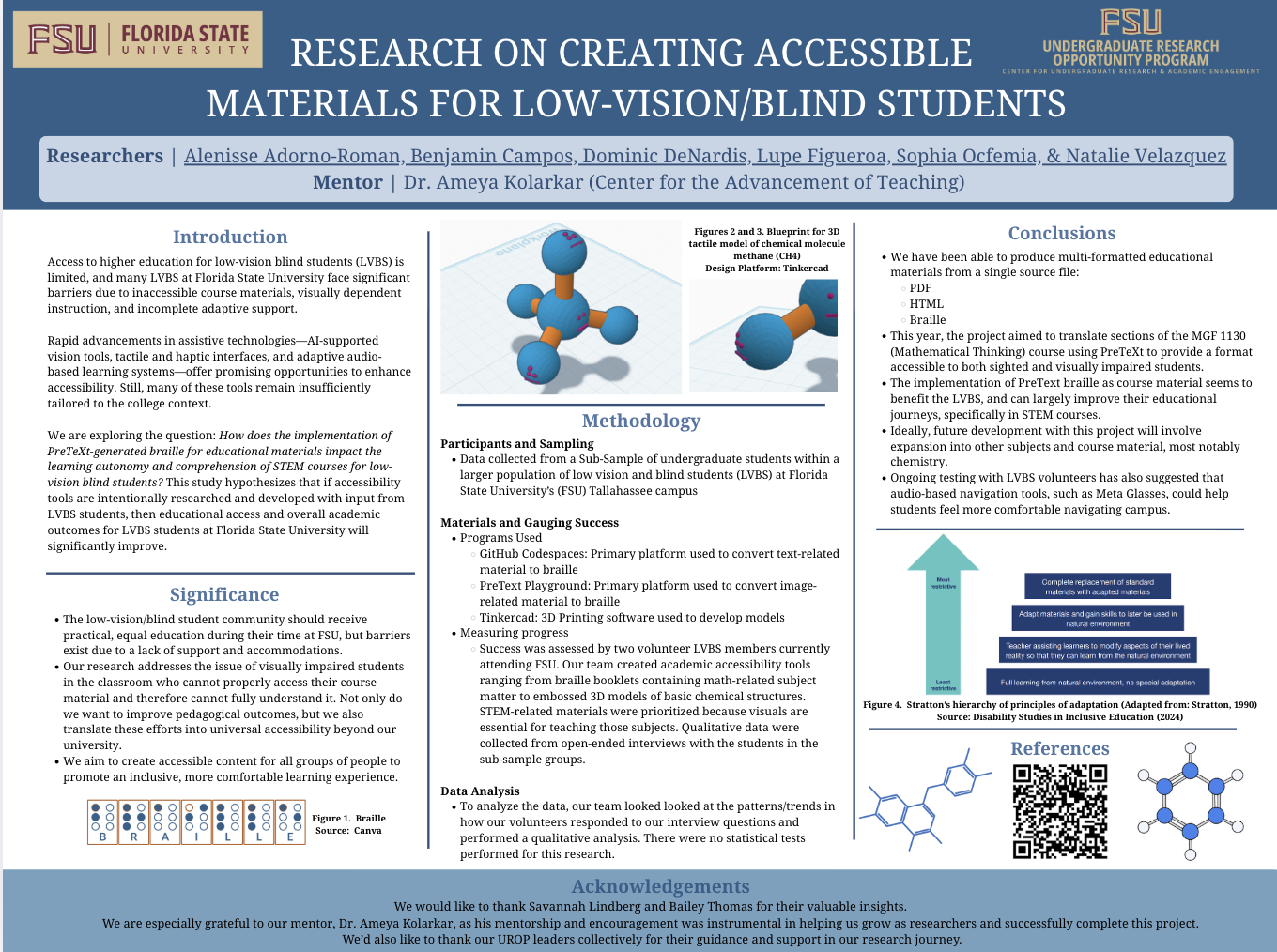
About a decade ago, researchers and teachers began implementing the use of 3-D printing to create tactile models for visually impaired students. Our team has added to these efforts by using coding and the PreTeXt format to translate core math units into multiple formats including braille. We are also exploring the use of Meta AI glasses, giving the LVBS audio instructions to map commonly walked routes. Our data results from the feedback of FSU LVBS, who volunteer their time to test out the accessibility tools we work on.
While splitting up coding efforts, there was trial and error when configuring the programming. Once we code each of our sections individually, they are compiled into a single book that is then converted into braille. Another part of our team was working with the Innovation Hub to develop tactile molecular models with tangible braille embossing on its surfaces.
This research is ongoing, so the results so far are preliminary. Early feedback from LVBS volunteers shows that translating course materials into braille using PreTeXt helps make visual STEM content more accessible. The results of this study suggest that accessibility tools created with direct input from LVBS can improve their learning experience and campus navigation.
Keywords: Low Vision Blind Students
26th annual Undergraduate Research Symposium, April 1, 2026
Justice Ulrich Poster Session 3: 1:45 pm - 2:45 pm / Poster #201

BIO
Justice Ulrich is a second-year Finance major with an interest in business and international politics. She is on the Dean's List and gained additional research experience as the Managing Editor of the FSView & Florida Flambeau, an independent, student-run publication, for the 2025-26 academic year. Her research mentors, Lt. Col. Joel Barnes and G. Kurt Piehler, taught her to analyze documents through the eyes of an intelligence officer and a historian, respectively. This research project was significant to her as a photographer with a passion for people impacted by humanitarian crises.
The Antietam Project: Examining the Civil War’s Bloodiest Battle from a New Lens
Authors: Justice Ulrich, Lt. Col. Joel Barnes and G. Kurt PiehlerStudent Major: Finance
Mentor: Lt. Col. Joel Barnes and G. Kurt Piehler
Mentor's Department: History Mentor's College: Arts and Sciences Co-Presenters: Ryley Reid
Abstract
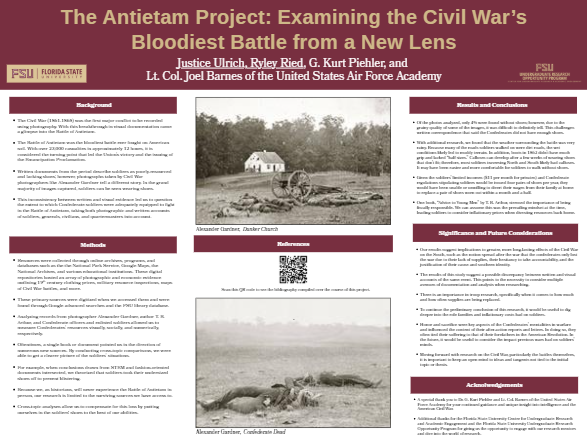
Many written documents surfaced over the course of the Civil War that outline the Confederacy’s inability to adequately resource its troops with necessities like shoes. This research aims to evaluate the extent to which these written claims align with what can be seen on the battlefield through photographic evidence. Findings related to military logistics and economics in 1862 parallel modern warfare as they explain the methodology behind soldiers’ utilization of the government’s allocation of scarce resources.
Photographic galleries, letters, diaries, books, and Confederate reports were uncovered through open-source databases such as the National Archives and various educational institutions. Each resource was analyzed for the appearance or mention of clothing items, foodstuffs, and other resources. Findings were then contextualized through the economics, fashion trends, weather patterns, and social norms of 1862.
It was found that the weather surrounding the battle likely muddied the roads. Additionally, shoes in 1862 didn’t come in half sizes. It was determined that a possible solution to muddy routes and blistering boots was to take off one’s shoes; this was seen when photographers like Alexander Gardner captured images of dead, shoeless Confederate soldiers. This points to a reluctance to spend money replacing shoes in light of heavy inflation and the cultural teachings of avoiding unnecessary expenditures.
A thorough understanding of the relationship between troops’ wages and the wellbeing of their families on the home front transcends into modern warfare as an indication of how and how often storehouses and supplies should be inspected and replaced.
Keywords: Antietam; War; Resources; Economics; Civil War
26th annual Undergraduate Research Symposium, April 1, 2026
Claire Mowry Poster Session 2: 10:45 am - 11:45 am / Poster #234

BIO
Claire Mowry is a first-year student from Ocala, Florida, majoring in Biological Sciences on a pre-med track. She is honored to be a member of FSU’s Honors Program. Her interests include learning about public health, vaccine hesitancy, and women’s health research. Through UROP, Claire has learned research skills, how to use various databases, and analytical skills. Additionally, she is actively involved on campus through the American Medical Student Association, Best Buddies, and Noles In Med. After graduation, she plans on attending medical school.
Knowledge and Attitudes about Vaccines & HPV in the United States
Authors: Claire Mowry, Joseph GabrielStudent Major: Biological Sciences
Mentor: Joseph Gabriel
Mentor's Department: Department of Behavioral and Social Sciences Mentor's College: College of Medicine Co-Presenters:
Abstract
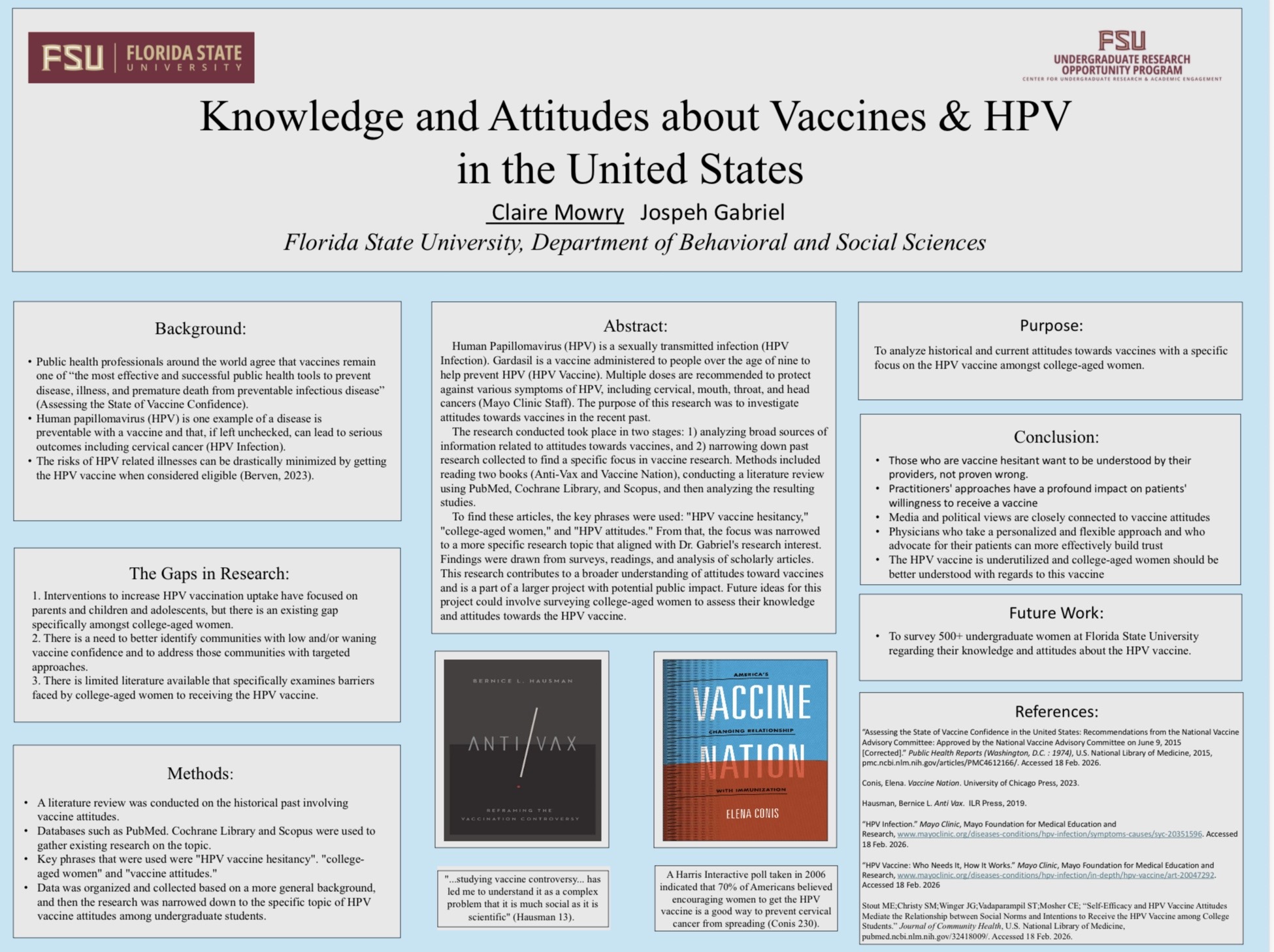
Human Papillomavirus (HPV) is a sexually transmitted infection (Mayo Clinic Staff). Gardasil is a vaccine administered to people over the age of nine to help prevent HPV (Mayo Clinic Staff). Multiple doses are recommended to protect against various symptoms of HPV, including cervical, mouth, throat, and head cancers (Mayo Clinic Staff). The purpose of this research was to investigate attitudes towards vaccines in the recent past. The research conducted took place in two stages: 1) analyzing broad sources of information related to attitudes towards vaccines, and 2) narrowing down past research collected to find a specific focus in vaccine research. Methods included reading two books (Anti-Vax and Vaccine Nation), conducting a literature review using PubMed, Cochrane Library, and Scopus, and then analyzing the resulting studies. To find these articles, the key phrases were used: "HPV vaccine hesitancy," "college-aged women," and "HPV attitudes." From that, the focus was narrowed to a more specific research topic that aligned with Dr. Gabriel's research interest. Findings were drawn from surveys, readings, and analysis of scholarly articles. This research contributes to a broader understanding of attitudes toward vaccines and is a part of a larger project with potential public impact. Future ideas for this project could involve surveying college-aged women to assess their knowledge and attitudes towards the HPV vaccine.
Keywords: Vaccines, HPV, Public Health