
Research Symposium
26th annual Undergraduate Research Symposium, April 1, 2026
Janevia Davis Poster Session 2: 10:45 am - 11:45 am / Poster #310

BIO
Janevia is a sophomore in college from Fort Lauderdale, Florida, with a strong passion for supporting children and adolescents through education, advocacy, and mental health care. Her
academic interests center on child development, literacy, behavior, and the long-term impact of early intervention on children’s success. Janevia is especially interested in how literacy influences children’s cognitive development, behavior, and overall outcomes, including the ways early support can shape future academic and personal achievement. Her research interests focus on the relationships among literacy, IQ, behavior, and early intervention for children and adolescents, and she is passionate about exploring how access to educational resources and developmental support can improve outcomes for young people and help them thrive both in and out of the classroom. Janevia is also interested in understanding how these factors affect emotional well-being and future opportunities. Her career goals are to become a child therapist, open my own practice serving adolescents, and eventually become a professor to educate and inspire others in this field. Through both clinical work and teaching, she hopes to make a lasting impact on the lives of children and families while contributing meaningful research that supports healthier developmental outcomes.
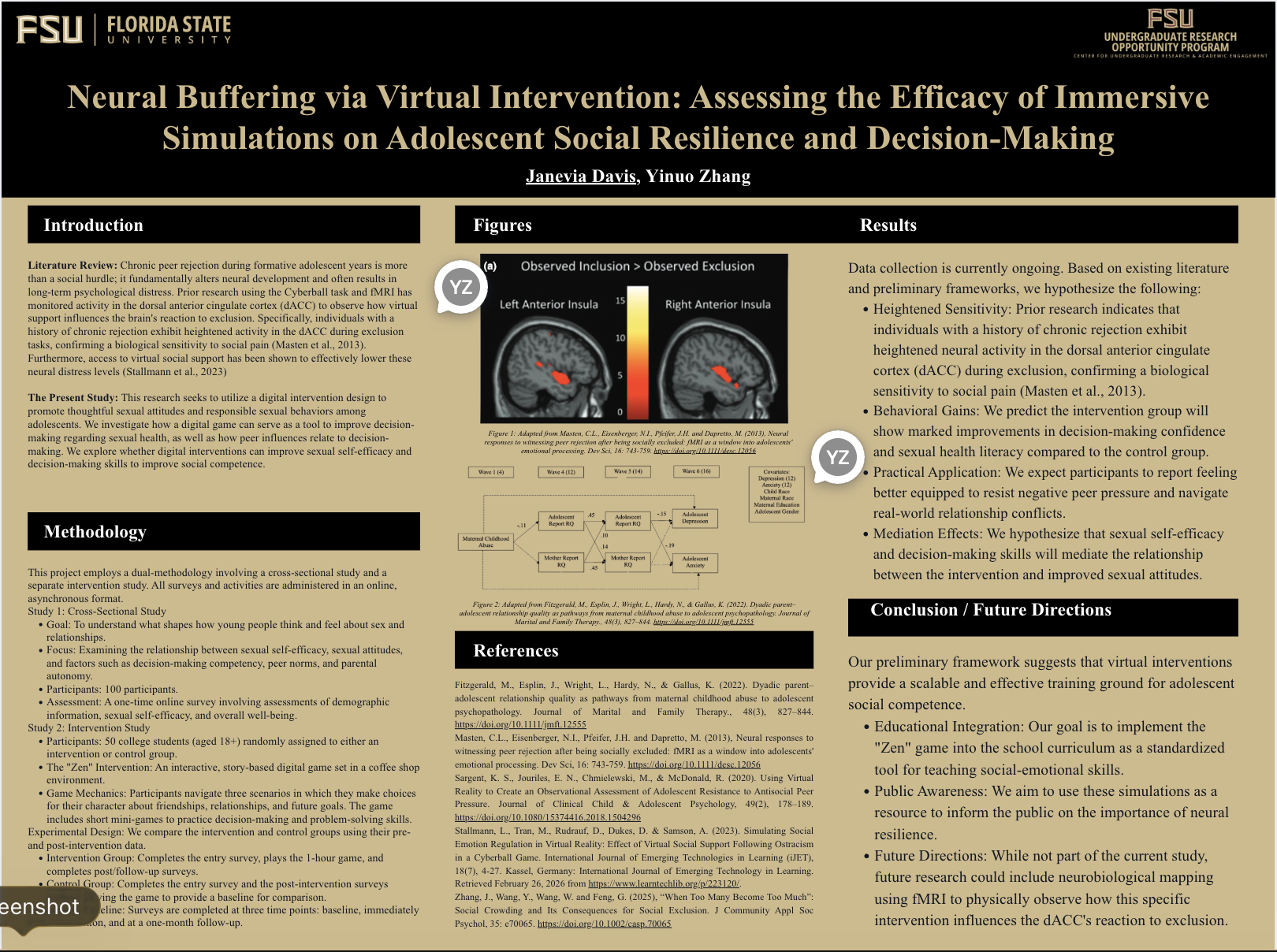
Neural Buffering via Virtual Intervention: Assessing the Efficacy of Immersive Simulations on Adolescent Social Resilience and Decision-Making
Authors: Janevia Davis, Yinuo ZhangStudent Major: Psychology
Mentor: Yinuo Zhang
Mentor's Department: Human Development and Family Sciences Mentor's College: Annes Spencer Daves College of Education, Health, and Human Sciences Co-Presenters:
Abstract
This research investigates how chronic peer rejection shapes adolescent neural development
and whether virtual reality or specific communication frameworks can mitigate these
negative social effects. We explore these questions because social isolation during
developmental years often leads to long-term psychological distress, making it vital to
identify interventions that foster resilience. This is relevant to readers because it highlights
how digital tools and relationship theories like the Five Love Languages can improve
emotional health in youth. To conduct this study, we analyzed longitudinal data and utilized
virtual reality simulations, such as the Cyberball task with adolescent participants, to observe
social emotion regulation in real time. Our methodology employed a neurobiological
framework to measure brain activity alongside observational assessments of peer pressure
resistance. Results showed that individuals with a history of chronic rejection exhibited
significantly higher activity in the anterior cingulate cortex during social exclusion,
indicating a heightened sensitivity to pain. However, findings also demonstrated that virtual
social support effectively lowered distress levels, suggesting that digital environments can
buffer the impact of ostracism. These results suggest that while early rejection creates
biological vulnerabilities, virtual interventions offer a practical way to build social
competence. Future research should investigate how these virtual support models can be
implemented in schools to help students navigate antisocial peer pressure and improve
overall relationship quality.
Keywords: chronic peer rejection, virtual reality interventions
26th annual Undergraduate Research Symposium, April 1, 2026
Daniel Adams Poster Session 1: 9:30 am - 10:30 am / Poster #9
BIO
Daniel Adams is a fourth-year student, majoring in Psychology with minors in Statistical Methodology and General Business. His research involvements include completing an undergraduate Honors Thesis and working as a lab coordinator in the Motivated Social Cognition (MSC) Lab under Dr. Irmak Olcaysoy Okten. His primary research interests include furthering the understanding of positive psychology, its use in applied settings, and the effects of lifestyle interventions on mental health outcomes. His desire to continue contributing valuable work to the field has led him to apply to Counseling Psychology doctoral programs and various Master's level programs.
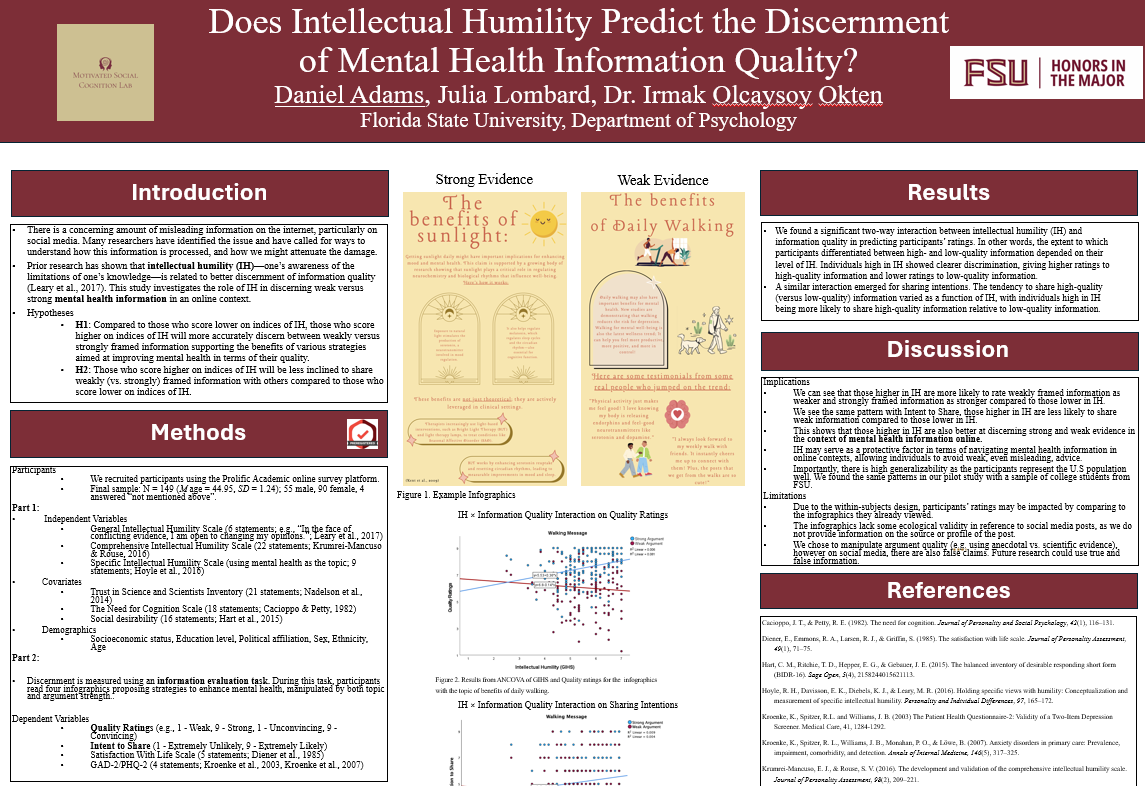
Does Intellectual Humility Predict the Discernment of Mental Health Information Quality?
Authors: Daniel Adams, Dr. Irmak Olcaysoy OktenStudent Major: Psychology
Mentor: Dr. Irmak Olcaysoy Okten
Mentor's Department: Psychology Mentor's College: FSU College of Arts and Sciences Co-Presenters:
Abstract
There is a concerning amount of misleading information on the internet, particularly on social media. Many researchers have identified the issue and have called for ways to understand how this information is processed, and how we might mitigate the damage. Prior research has shown that intellectual humility (IH)—one’s metacognitive awareness of limitations of one’s knowledge—is related to better discernment of information quality. This study uniquely investigated the role of IH in discerning weak from strong mental health information in online contexts. In this study, 149 participants from the Prolific Academic platform engaged in a two-part study. In the first, participants completed IH scales along with covariates of interest. In the second part, participants read four social media-style infographics containing information, manipulated by strength and strategy to enhance mental health, then rated the information on metrics of quality and likelihood to share. We found a significant two-way interaction between IH and information quality in predicting participants’ ratings. In other words, the extent to which participants differentiated between high‑ and low‑quality information depended on their level of IH. Individuals high in IH showed clearer discrimination, giving higher ratings to high‑quality information and lower ratings to low‑quality information. A similar interaction emerged for sharing intentions. This study may indicate the importance of cultivating this intellectual virtue as a means of safeguarding social media users against weak or misleading claims about mental health.
Keywords: Intellectual Humility (IH), Mental Health
26th annual Undergraduate Research Symposium, April 1, 2026
Camille Crump Poster Session 1: 9:30 am - 10:30 am / Poster #303

BIO
Camille Crump is a junior pursuing a Bachelor of Science in Mechanical Engineering. She is an undergraduate researcher at the High Performance Materials Institute, where she conducts research under Dr. Zhiyong Liang and is mentored by Dr. Cecil Evers, Dr. Murray Gibson, and Dr. Joshua DeGraff. Her research investigates the effects of thermal processing on the thermoresistive properties of carbon nanotube yarns, with an emphasis on their potential as high-temperature sensing materials. Her broader interests include the design and processing of advanced materials for use in extreme environments for aerospace applications.
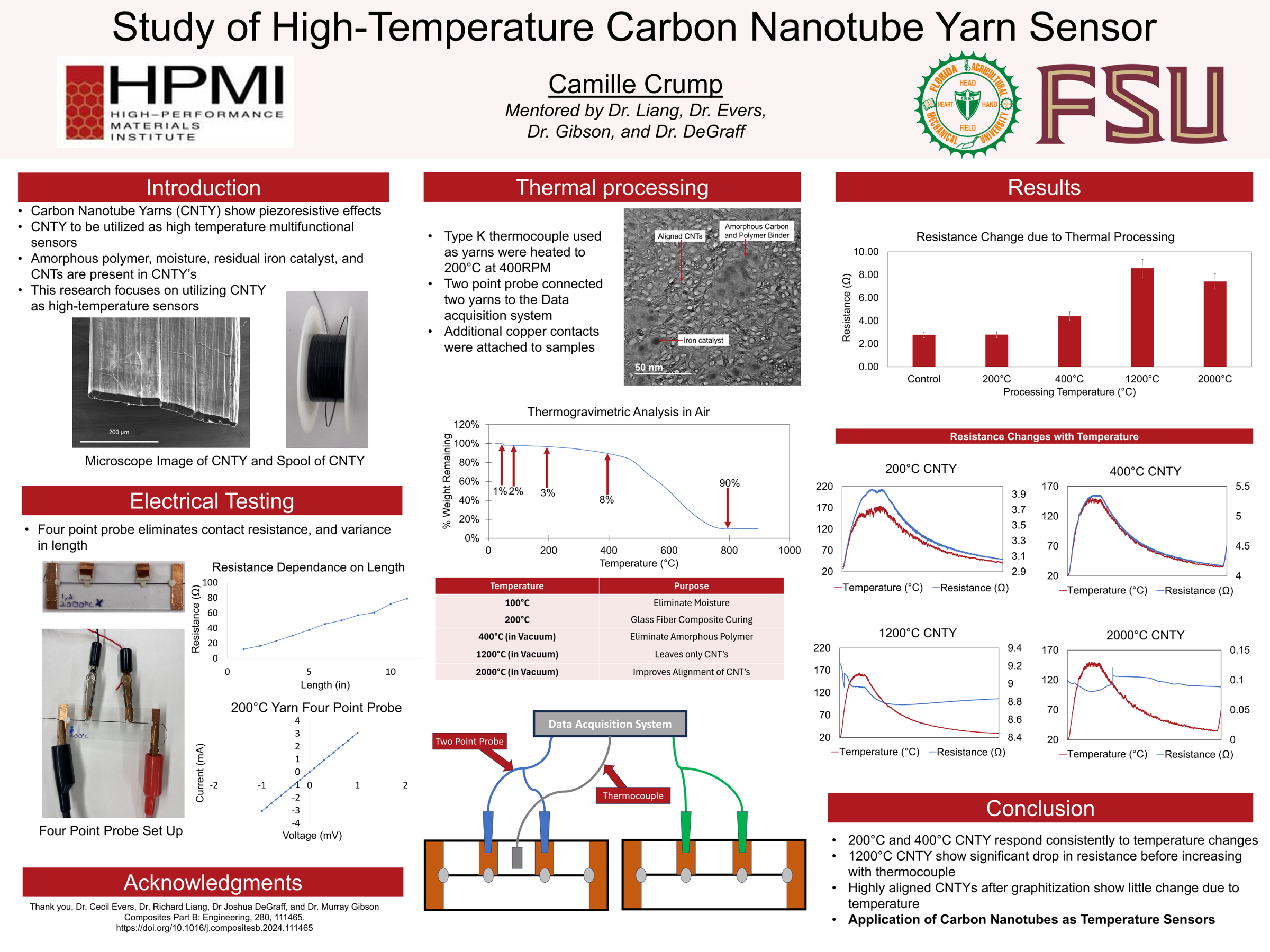
Study of High-Temperature Carbon Nanotube Yarn Sensor
Authors: Camille Crump, Dr. Zhiyong LiangStudent Major: Mechanical Engineering
Mentor: Dr. Zhiyong Liang
Mentor's Department: Industurial and Manufacturing Engineering Mentor's College: Florida State University Co-Presenters:
Abstract
Carbon nanotube yarns are over 80% aligned bundles of carbon nanotubes. The resistance in the yarns is limited not by the resistivity in the individual carbon nanotubes, but by the geometric changes between tubes and their bundles. This geometry-dependent resistance makes CNT yarns promising multifunctional sensors. Currently, CNT yarns are used as strain sensors at room temperature, enabling real-time collection of resistance changes. This research aims to study the impact of thermal processing on the thermoresistive reliability of carbon nanotube yarns for use as temperature sensors outside of a composite laminate. Thermogravimetric analysis indicates an 8% mass loss at 300°C and oxidation at 400°C. CNT yarns will undergo thermal processing at 100°C and 200°C in air, and 400°C, 1200°C, and 2000°C in a vacuum to avoid oxidation. At these temperatures, the reliability of the yarns is determined by compositional and microstructural purification, including the removal of moisture, amorphous polymer, and iron, as well as by structural changes in the yarns. Four-point probe data of thermally processed yarns show an increase in resistance from 2.77Ω to 8.58Ω after carbonization; however, after graphitization, resistance falls to 7.42Ω. Repeatable resistance response will then be tested with continuous thermal cycling while monitoring real-time changes in resistance. Introductory results show increased sensitivity in thermally processed yarns, along with improved repeatability between cycles for yarns processed at 400°C. These results support the use of carbon nanotube yarns as temperature sensors, with additional multifunctional sensing capabilities.
Keywords: Carbon nanotube Thermoresistive Materials Sensors
26th annual Undergraduate Research Symposium, April 1, 2026
Robert Cherkas Poster Session 3: 1:45 pm - 2:45 pm / Poster #251
BIO
I am a mechanical engineering undergraduate at Florida State University with broad interests spanning robotics, space systems, and biomedical engineering. My current work within FSU's iGEM program focuses on developing a gut-based remediation framework targeting phthalate exposure, applying synthetic biology principles to a pressing public health challenge. Outside of iGEM, I lead a robotic hand design project and am pursuing independent research in neural interface technology. My long-term goals center on applying engineering to problems that directly impact people, with aspirations toward graduate study and a career in robotics, human-machine systems, or space exploration.
Targeting Phthalate Exposure: A Synthetic Biology Framework
Authors: Robert Cherkas, Cesar RodriguezStudent Major: Mechanical Engineering
Mentor: Cesar Rodriguez
Mentor's Department: Biomedical Sciences Mentor's College: College of Medicine Co-Presenters: Esteban Pinilla, Gaberiel Bauman
Abstract
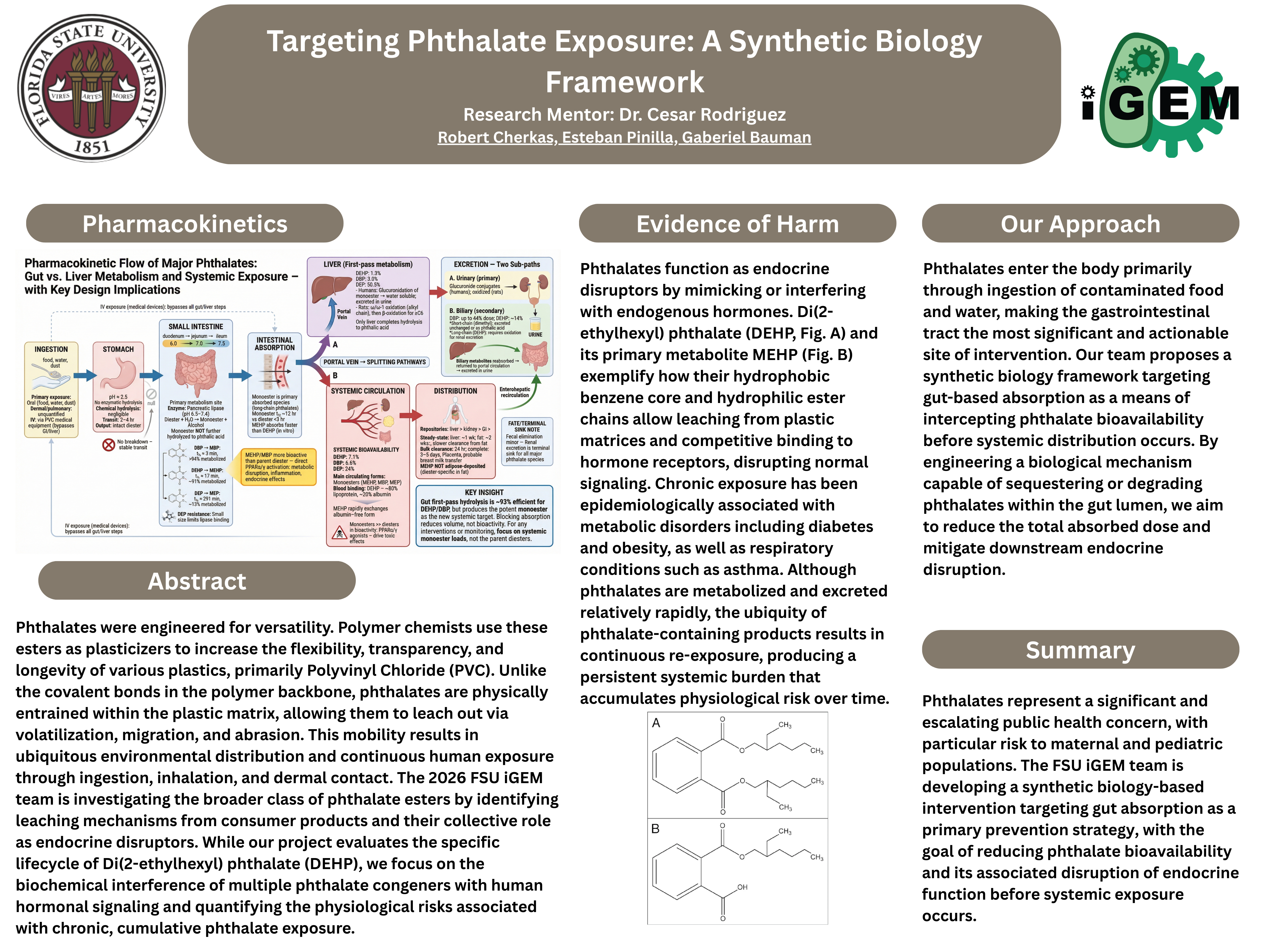
Phthalates were engineered for versatility. Polymer chemists use these esters as plasticizers to increase the flexibility, transparency, and longevity of various plastics, primarily Polyvinyl Chloride (PVC). Unlike the covalent bonds in the polymer backbone, phthalates are physically entrained within the plastic matrix, allowing them to leach out via volatilization, migration, and abrasion. This mobility results in ubiquitous environmental distribution and continuous human exposure through ingestion, inhalation, and dermal contact. The 2026 FSU iGEM team is investigating the broader class of phthalate esters by identifying leaching mechanisms from consumer products and their collective role as endocrine disruptors. While our project evaluates the specific lifecycle of Di(2-ethylhexyl) phthalate (DEHP), we focus on the biochemical interference of multiple phthalate congeners with human hormonal signaling and quantifying the physiological risks associated with chronic, cumulative phthalate exposure.
Keywords: Phthalates, Bioremediation, Endocrine, Detoxification
26th annual Undergraduate Research Symposium, April 1, 2026
Jordan Faskowitz Poster Session 4: 3:00 pm - 4:00 pm / Poster #46

BIO
Jordan Faskowitz is from Tampa, Florida. She is set to graduate Bachelor of Science in Economics with a Minor in Criminology May 2026. She will then start her Masters in Applied Economics at FSU in Fall 2026.
How does a municipality’s National Flood Insurance Program class rating influence, if at all, median property values across Florida?
Authors: Jordan Faskowitz, Crystal TaylorStudent Major: Bachelor of Science in Economics with a Minor in Criminology
Mentor: Crystal Taylor
Mentor's Department: Economics Mentor's College: Florida State University COSSPP Co-Presenters:
Abstract
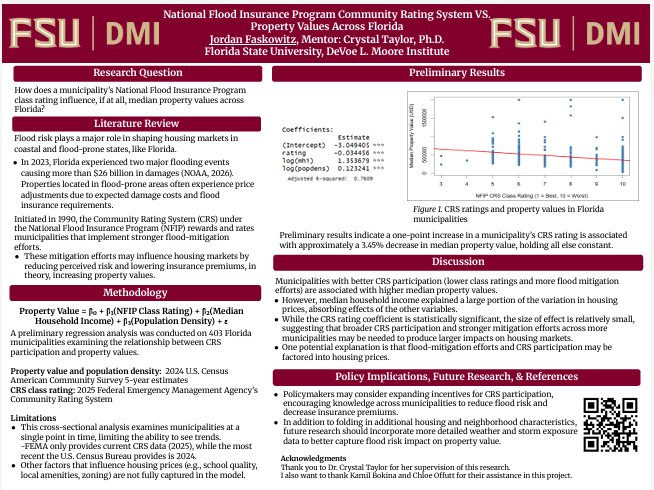
Background: In 2023, Florida experienced two major flooding events causing more than $26 billion in damages (NOAA, 2026). To balance disaster costs, FEMA offers flood insurance premiums that typically range from $700 to $900 annually per household (FEMA, 2025). Prior research shows that, outside highly desirable coastal areas, buyers tend to avoid flood-prone properties due to perceived risk. Given Florida’s already high housing costs, mandatory flood insurance may further discourage homeownership in areas vulnerable to flooding. The National Flood Insurance Program, offered by FEMA, addresses flood risk, also offering a voluntary Community Rating System (CRS), which rewards local governments that adopt flood-mitigation efforts with insurance premium discounts. This study brings attention to how mitigation efforts themselves influence housing markets.
Research Question: With asking the following: How does a municipality’s National Flood Insurance Program’s class rating influence, if at all, property values across Florida?
Methodology: Using municipality-level data from 403 Florida municipalities pulled from FEMA, the U.S. Census Bureau, and NOAA, this study conducts ordinary least squares regressions. Median property value serves as the dependent variable, while preliminary explanatory variables include CRS class rating, coastal location, population, and median household income.
Results: Preliminary results show a negative relationship between CRS ratings and property values, suggesting that stronger mitigation efforts are associated with lower property values. Coastal municipalities, however, exhibit higher property values, reflecting strong demand for coastal amenities despite flood risk. These findings suggest CRS participation may decrease flood risk but does not necessarily generate housing market benefits as suspected.
Keywords: FEMA, Flooding, Property Value
26th annual Undergraduate Research Symposium, April 1, 2026
Pia Dinamarca Poster Session 3: 1:45 pm - 2:45 pm / Poster #175

BIO
Pia Dinamarca is a senior Chemical Engineering honors student with a strong passion for energy systems and advanced materials. Originally from Santiago, Chile, she moved to the United States to pursue her bachelor’s degree and expand her academic and professional opportunities. She is currently completing her Honors in the Major thesis, where she focuses on research involving thermal transport and material behavior.
Her research interests include heat recovery systems and solid polymer electrolytes for battery applications, driven by a broader goal of improving energy efficiency and advancing sustainable technologies. Through her work, she aims to contribute to the development of safer, higher-performance batteries and innovative energy solutions.
Looking ahead, Pia plans to pursue graduate studies and build a career at the intersection of research, manufacturing, and energy, where she can make a meaningful impact on the future of sustainable engineering.
Thermal Gradient Infrared Spectroscopy of Polymer Electrolytes for Sodium Batteries
Authors: Pia Dinamarca, Daniel HallinanStudent Major: Chemical Engineering
Mentor: Daniel Hallinan
Mentor's Department: Chemical and Biomedical Engineering Mentor's College: College of Engineering Co-Presenters:
Abstract
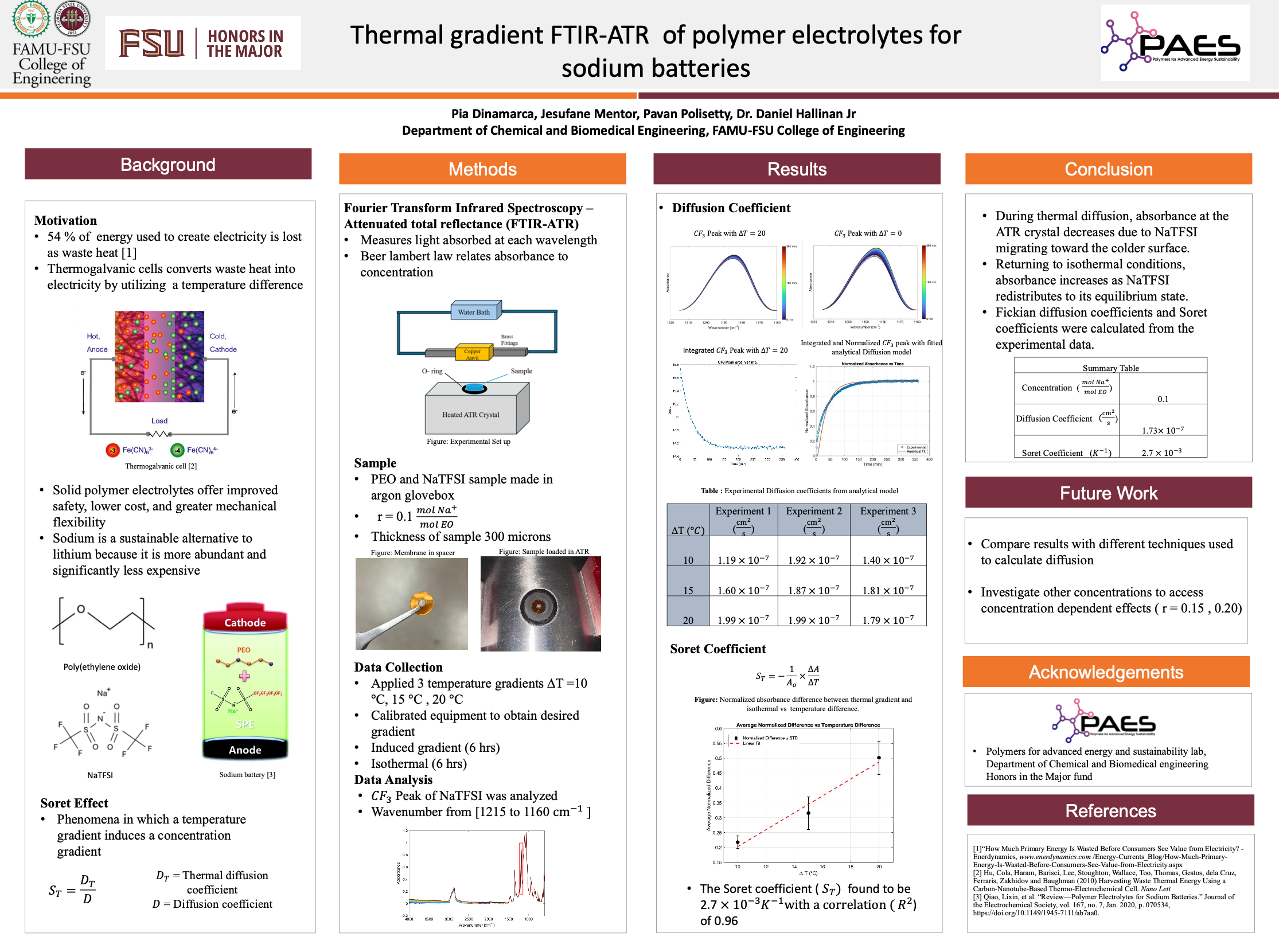
Fourier Transform infrared – attenuated total reflectance (FTIR-ATR) spectroscopy was used to measure salt diffusion in solid polymer electrolytes for sodium batteries. The polymer electrolyte was poly(ethylene oxide) (PEO) mixed with sodium bis-trifluoromethanesulfonylimide (NaTFSI) salt. This approach presents an induced temperature gradient to observe thermally driven mass diffusion (via the Soret Effect). The system is then returned to isothermal state to measure Fickian Diffusion. Concentration changes due to mass diffusion driven by temperature and salt concentration gradients are tracked using FTIR-ATR absorbance that is related to concentration through the Beer-Lambert Law. This study covered one molar ratio and three different temperature gradients 10 C, 15 C , 20 C. Even though lithium provides higher energy density, costs are higher and availability is limited, making sodium a proposed alternative. This technique provides a systematic framework to investigate the potential of sodium in both batteries and thermogalvanic cells for waste heat recovery.
Keywords: Batteries, polymers , solid polymer electrolytes, FTIR-ATR
26th annual Undergraduate Research Symposium, April 1, 2026
Iyanah Chandler Poster Session 3: 1:45 pm - 2:45 pm / Poster #19
BIO
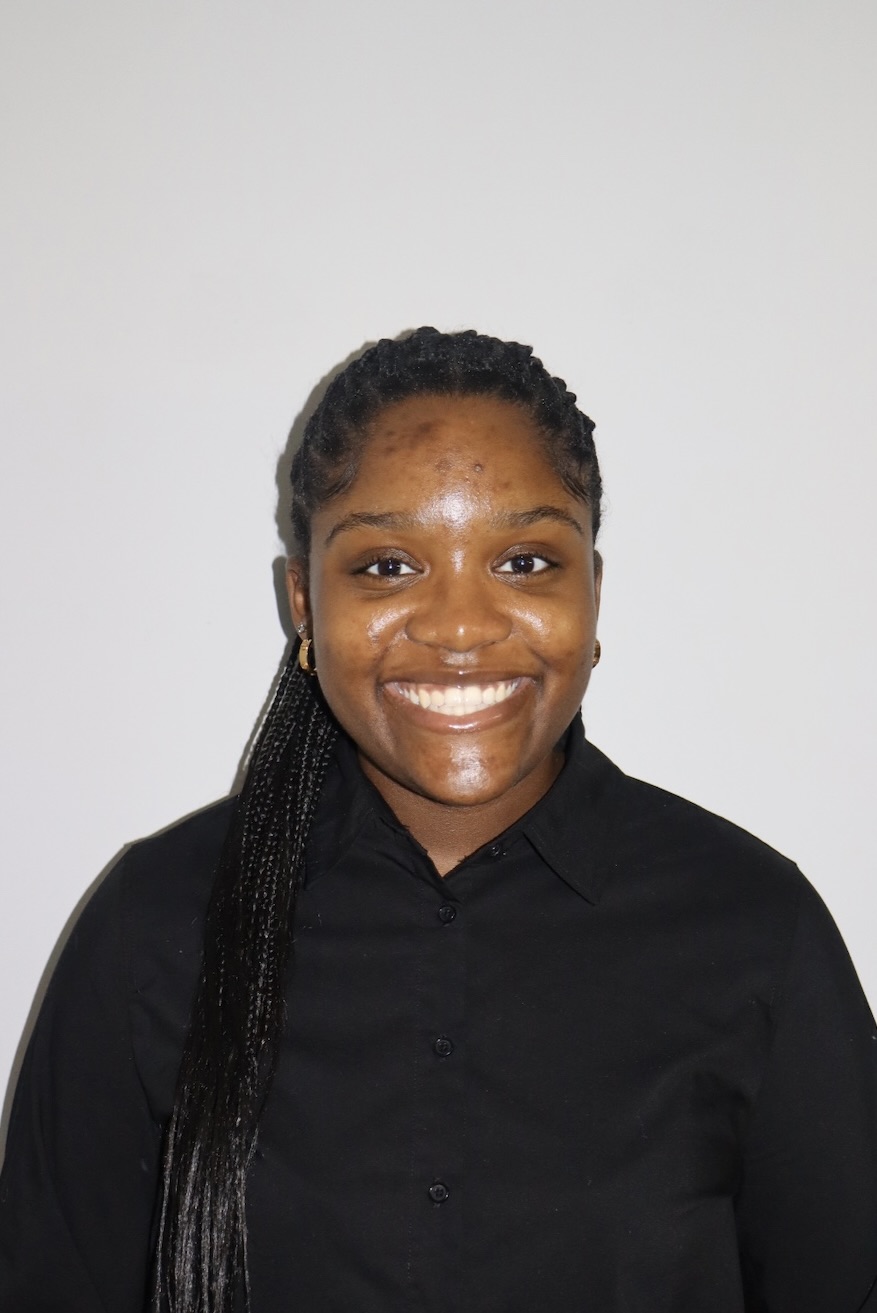
Iyanah Chandler is a second-year Public Health major from Tampa, Florida who plans to go to dental school post undergrad. She has aspirations to own her own private practice as a dentist and her research interests vary. She is someone who is open to anything when it comes to doing research.
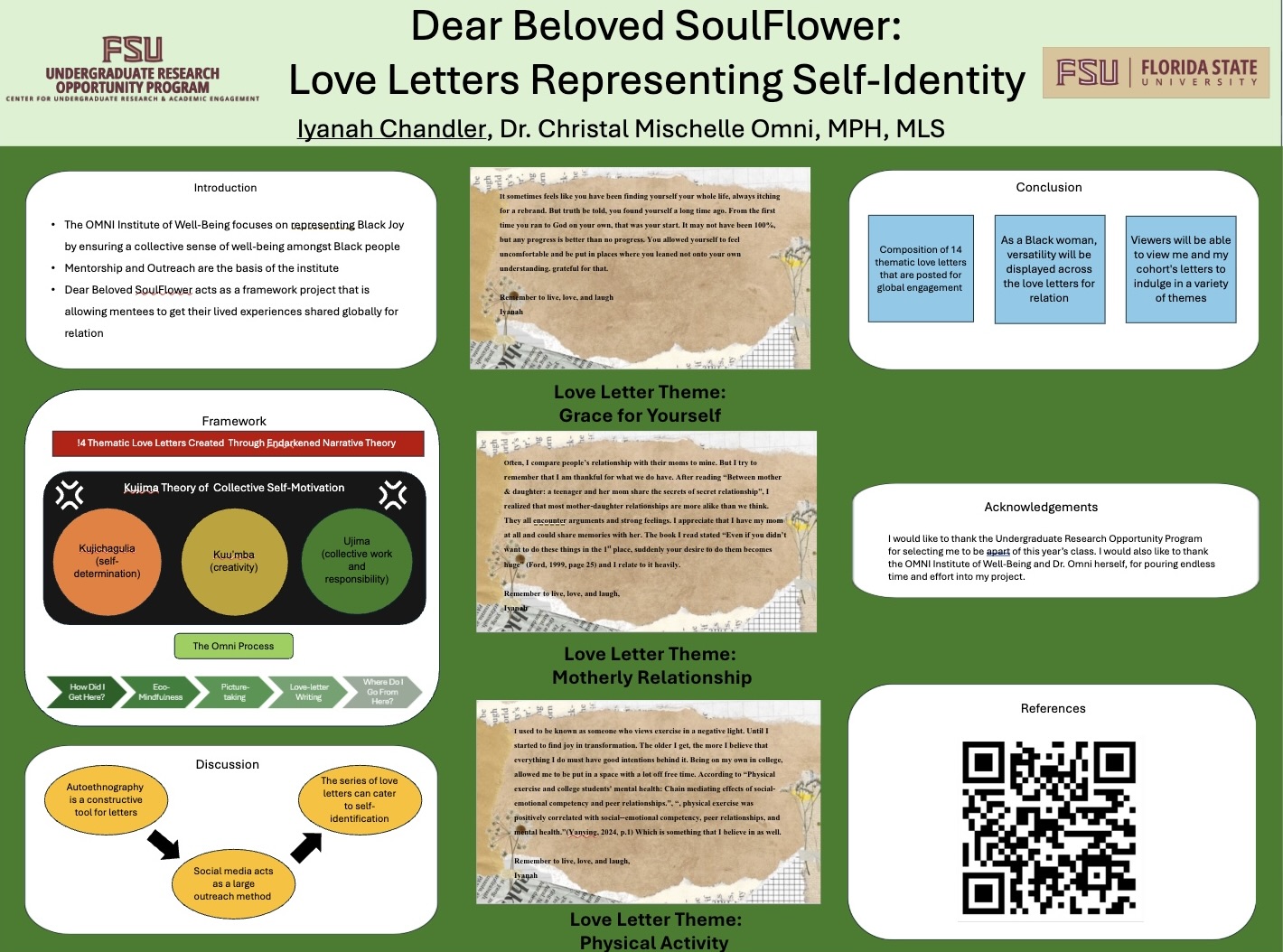
Dear Beloved SoulFlower: Love Letters Representing Self-Identity
Authors: Iyanah Chandler, Dr. Christal Mischelle OmniStudent Major: Public Health
Mentor: Dr. Christal Mischelle Omni
Mentor's Department: N/A Mentor's College: N/A Co-Presenters:
Abstract
Dear Beloved Soulflower examines how academic research can be altered when it’s showered with love, eco-spirituality, and lived experiences, while
remaining steadfast in literature reviews. Using autoethnography as the main approach, this allowed for engagement with a plethora of knowledge
that showed itself as a sacred and restorative practice. Paired with autoethnography, the KUJIMA theory of collective self-motivation and
endarkened narrative theory, guided the 14 love letters that the research was based upon. Each letter displaying a different aspect of one’s life,
supported by a literature review. Using the 3CQ+Q method allowed for a more efficient understanding of the idea and its relation to each love letter.
Thus, strengthening how scholastic research can ground love through writing. The research was reframed to take a different approach that
centered love, patience, and relational aspects. Literature reviews were conducted and weaved into the writing of the love letters that contain
scholarly sources to be identified through the reframe. By doing this, academic resources were modeled through a collection of healing and
self-love. Findings suggest that when autoethnographic research was conducted and watered by eco-spirituality, researchers can view
themselves as being grounded in spirit and self-love as opposed to the standard academic identities. The research proved that autoethnographies
can help widen knowledge of identity, scholastic rigor, and belonging.
Keywords: Love, Identity, Media
26th annual Undergraduate Research Symposium, April 1, 2026
Hailey Mui Poster Session 2: 10:45 am - 11:45 am / Poster #92

BIO
Hailey Mui is a senior at Florida State University pursuing a Bachelor of Science in Psychology with a minor in Chemistry. She is passionate about the intersection of mental and physical health, with a strong interest in how lifestyle factors such as diet and sleep impact overall well-being. Hailey currently works as a research assistant in the Integrative Science for Healthy Aging Program under Dr. Julia Sheffler, where she contributes to data collection and analysis focused on cognitive and physical health in older adults.
In addition to her research experience, Hailey is actively involved in service and leadership through MEDLIFE at FSU, where she helps coordinate global health initiatives and service-learning trips. These experiences have strengthened her commitment to improving healthcare access and promoting community wellness.
After graduating, Hailey plans to attend medical school and pursue a career in medicine, where she hopes to combine her interests in psychology, patient care, and preventative health.
Effect of Diet and Sleep Quality on Internalizing Symptoms
Authors: Hailey Mui, Julia ShefflerStudent Major: Psychology
Mentor: Julia Sheffler
Mentor's Department: Integrative Science for Healthy Aging Mentor's College: College of Medicine Co-Presenters: Mia Parker
Abstract
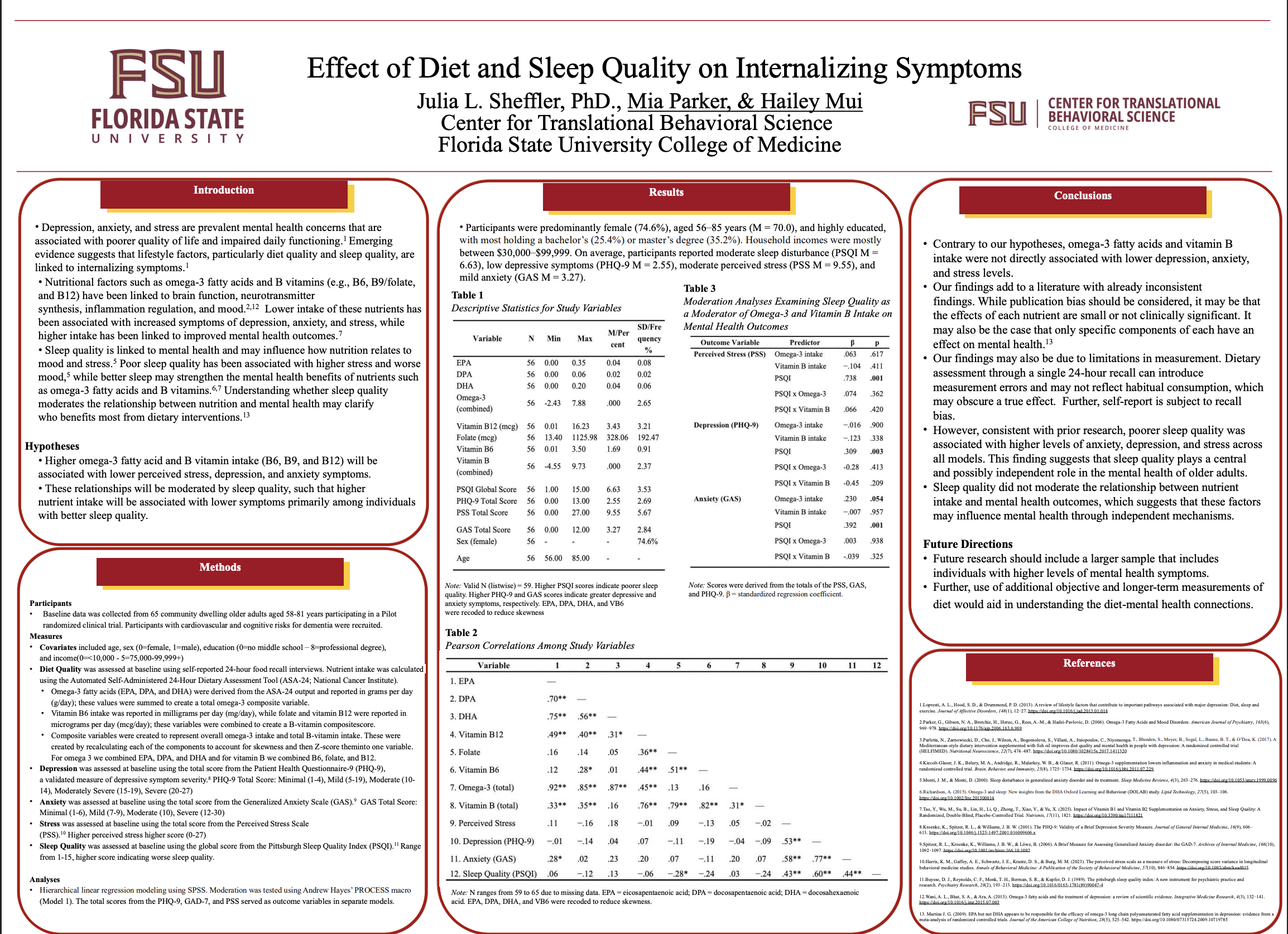
Background: Depression, anxiety, and stress are common mental health challenges in older adults and are influenced by lifestyle factors such as diet and sleep quality. Specifically, higher dietary omega-3 fatty acids and B vitamins have been linked to fewer mental health symptoms, while poor sleep quality is associated with poorer mental health. This study expands on prior work by examining the direct and interactive effects of dietary components and sleep on mental health symptoms .
Methods: Baseline data was collected from 65 adults aged 58-81 years; B vitamin and omega-3 intake were collected through a 24-hour food recall interviews. Depression, anxiety, stress, and sleep quality were measured using the validated self-report measures (i.e., PHQ-9, Generalized Anxiety Scale, Perceived Stress Scale, Pittsburg Sleep Quality Index). Using SPSS, linear regression models examined direct and interactive effects.
Results: Omega-3 and B vitamin intake were not associated with the proposed mental health symptoms; however, poorer sleep quality was independently and significantly associated with depression (β=.309, p=.003), anxiety (β=.392, p=.001), and stress (β= .738, p=.001). Sleep quality did not significantly moderate the relationship between either dietary factor and the proposed mental health symptoms (p’s>.05).
Conclusions: Our findings highlight that sleep quality is closely linked to mental health symptoms. The relationship between diet and mental health symptoms was not evident in our sample, which may suggest a weaker overall relationship or point to limitations in our study design. Further research is needed to explore these relationships longitudinally using larger samples and more comprehensive assessments of diet.
Keywords: Sleep quality, Diet
26th annual Undergraduate Research Symposium, April 1, 2026
M.J. Pierre Poster Session 3: 1:45 pm - 2:45 pm / Poster #41
BIO
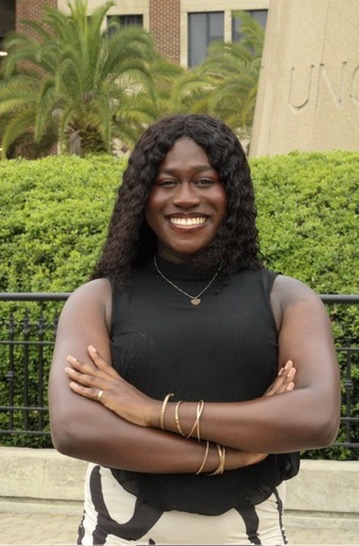
MJ Pierre is a third year student at Florida State University and is beyond grateful for the opportunity to present her research at the Undergraduate Research Symposium. She is currently pursuing her Bachelor of Science in Psychology with a minor in Sociology. Her ultimate goal is to earn her PhD in Social Psychology after her undergraduate studies, with a specific concentration on mentorship and nontraditional family systems. Through this experience, she has refined her research skills, engaged in meaningful discussions, and contributed to studies that deepen our understanding of bias, group dynamics, and social belonging. She is excited to present her Honors in the Major thesis and share the project she's been working on all year!
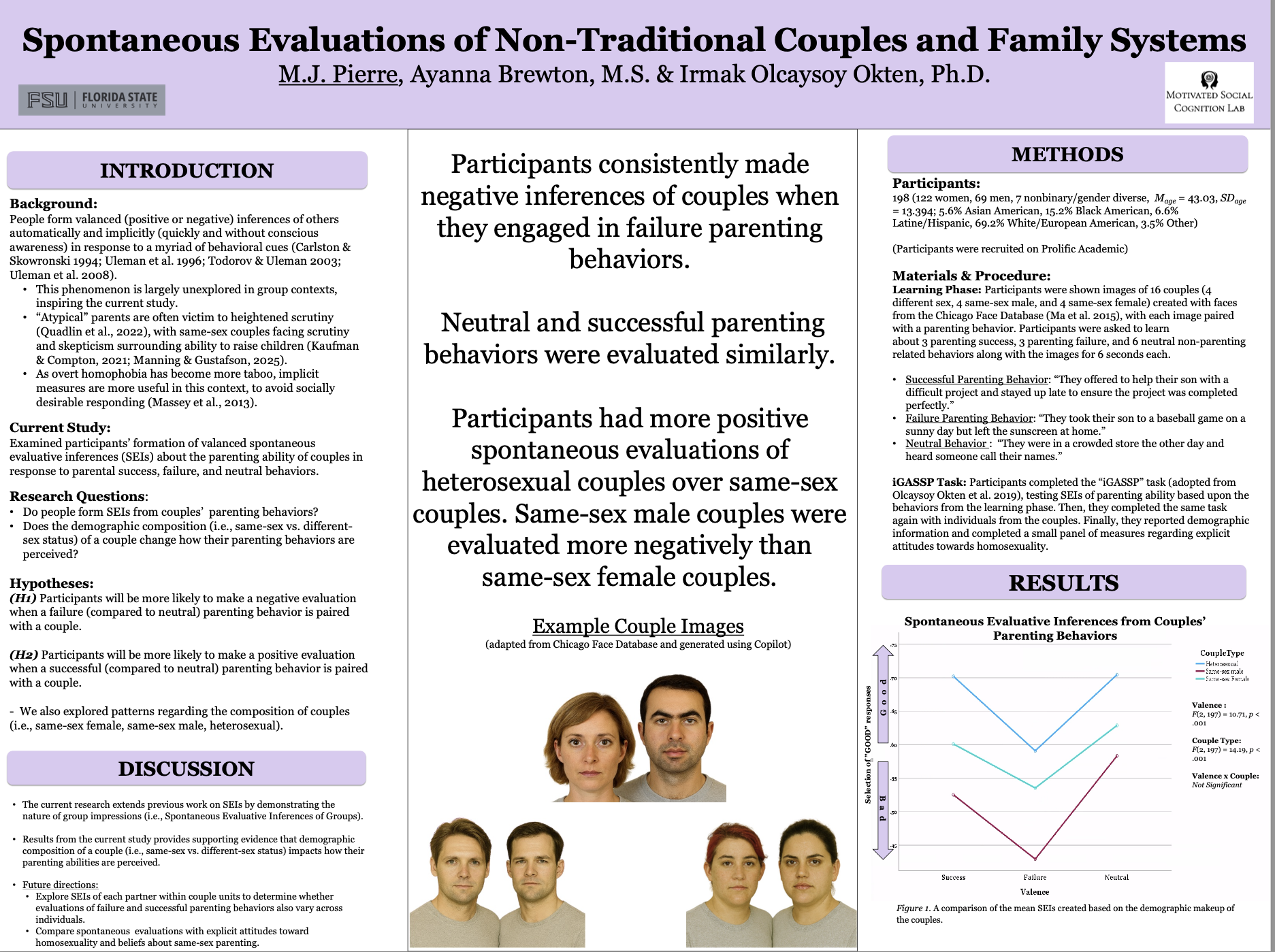
Spontaneous Evaluations of Non-Traditional Couples and Family Systems
Authors: M.J. Pierre, Irmak Olcaysoy Okten, PhDStudent Major: Psychology
Mentor: Irmak Olcaysoy Okten, PhD
Mentor's Department: Psychology Mentor's College: Arts and Sciences Co-Presenters:
Abstract
Throughout modern history, public perceptions of what constitutes a family have changed rapidly. While previous research has looked at explicit attitudes about families (Manning & Gustafson, 2025), there is limited research regarding implicit (i.e., spontaneous) impressions of family dynamics. Particularly, while spontaneous trait inferences for groups (STIGs) are previously documented (Hamilton et al. 2015), spontaneous evaluative inferences (i.e., global evaluations of positivity and negativity) made about groups (SEIGs) of any sort have gone largely unexplored. The current work investigated spontaneous evaluative inferences (SEIs) specifically surrounding traditional and nontraditional couples’ parental abilities. Prolific Academic users (N= 200) completed the iGASSP task to assess SEIs of everyday parenting behaviors (including small failures and successes) across couples from different demographic compositions. We also explored those same participants explicit opinions surrounding traditional and nontraditional families. Our findings provide evidence that (1) participants form SEIGs from couples’ parenting behaviors with more positive evaluations of successful and neutral behaviors than failure behaviors, and (2) SEIGs from couples’ parenting behaviors differ based on their demographic compositions. Our work provides insight into the ways various family units are perceived as they navigate parenthood.
Keywords: First Impressions, Family, Parenting
26th annual Undergraduate Research Symposium, April 1, 2026
Aleksandra Grechanik Poster Session 2: 10:45 am - 11:45 am / Poster #20
BIO
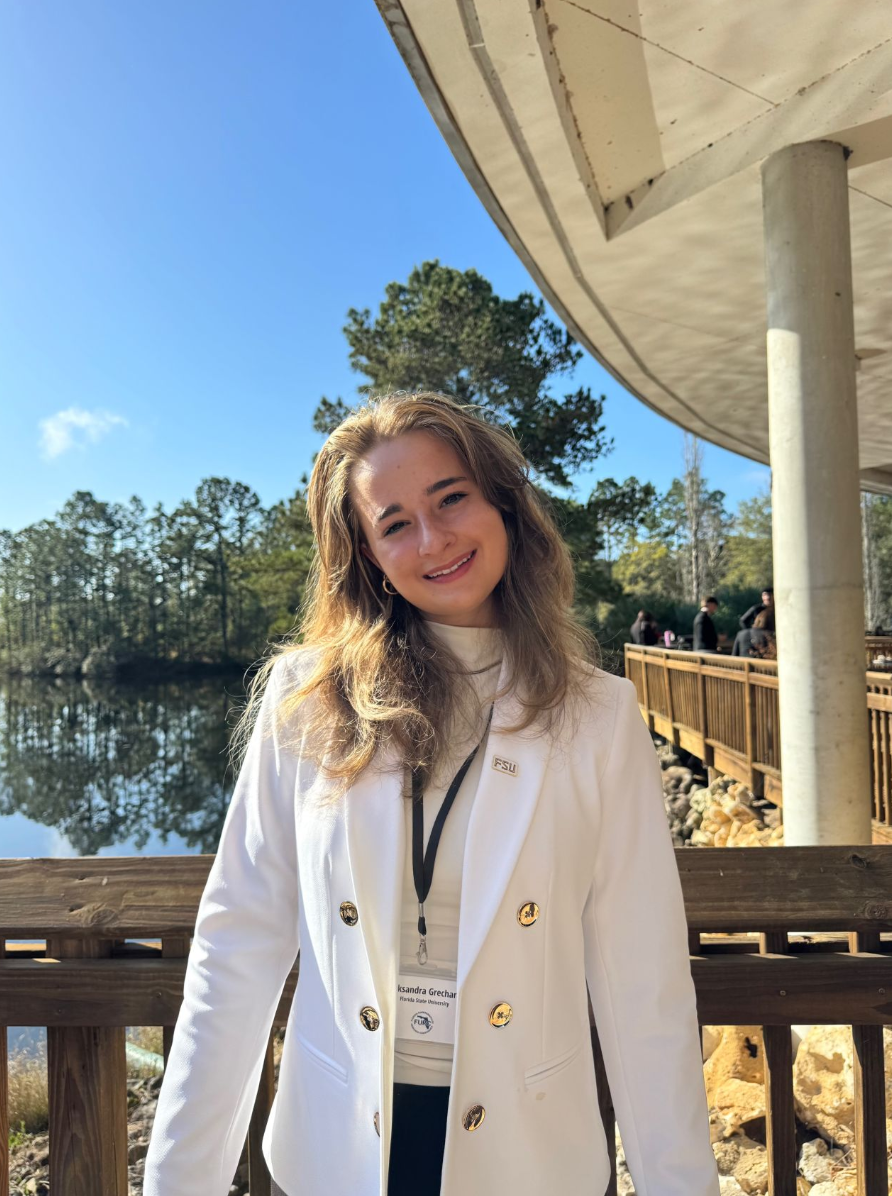
Aleksandra Grechanik is a third year undergraduate student at Florida State University majoring in behavioral neuroscience with minors in chemistry and criminology. She’s involved in Dr. Dewan's laboratory as a lab assistant and Dr. Martins Memory Lab. In the Martin Memory Lab, Aleksandra is pursuing an honors thesis through the Honors in the Major Program, studying the interplay between music and cognition. In addition to Dr. Chris Martin as her thesis director, Aleksandra receives mentorship from Dr. Ashley Pieper and Dr. Lori Gooding, both of whom are on her supervisory committee.
Aleksandra is preparing for a future in medicine and plans to apply to medical school within the upcoming years. She is passionate about integrating scientific research with clinical practice and hopes to contribute to advancements in patient care through a deeper understanding of the mind.
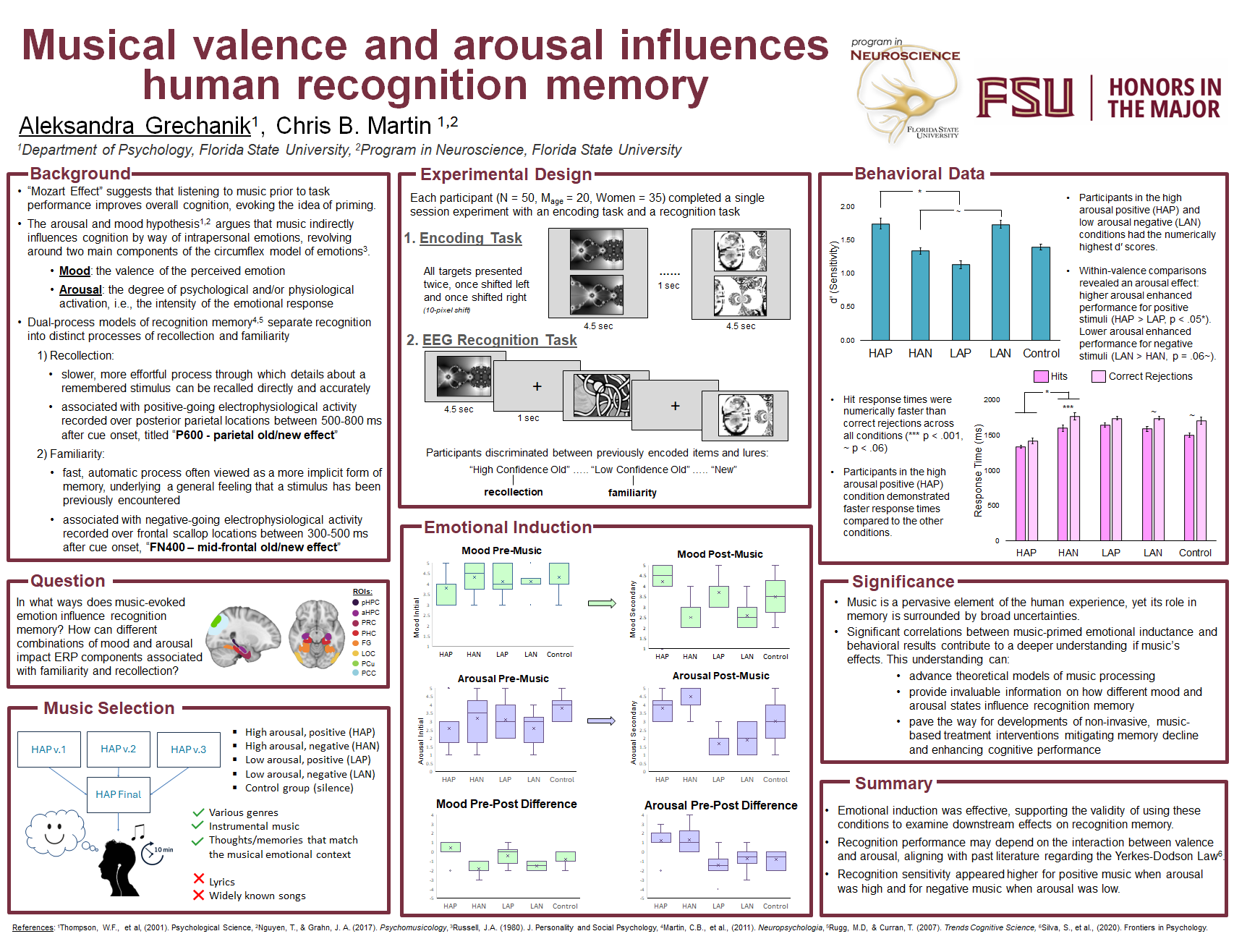
Effects of Music-Evoked Emotion on Recognition Memory: An EEG Study
Authors: Aleksandra Grechanik, Dr. Chris MartinStudent Major: Behavioral Neuroscience
Mentor: Dr. Chris Martin
Mentor's Department: Department of Psychology Mentor's College: College of Arts and Sciences Co-Presenters:
Abstract
Music is widely recognized for its overall neurocognitive benefits, yet the specific mechanisms of music processing in the brain remain poorly understood. This study investigates how music-evoked emotion influences recognition memory using behavioral and EEG data. Grounded in the arousal and mood hypothesis and dual-process model of memory, it explores how different combinations of mood and arousal modulate human recognition memory performance. Four music-induced emotional conditions (high arousal/positive, high arousal/negative, low arousal/positive, low arousal/negative) are used to examine their effects on recognition accuracy, reaction time, and event-related potentials (ERPs) associated with familiarity (FN400) and recollection (P600).
Participants are randomly assigned to one of four conditions or a silent control group. Following a 10 minute music induction period designed to induce a target emotional state, participants enter the encoding phrase, being exposed to 40 monochrome abstract shapes. They then complete a subsequent recognition memory test while EEG data is recorded. Self-reported mood and arousal ratings verify emotional induction, and behavioral performance is assessed using statistical tools and ERP analysis. It’s hypothesized that participants in higher arousal and positive mood conditions will elicit optimal recognition accuracy and stronger P600 amplitudes, while low arousal negative conditions may hinder performance. These anticipated findings have the potential to advance neuroscience research, design targeted music-therapy interventions, and study the overall neurocognitive processing of music in the brain.
Keywords: music, eeg, memory, recognition
26th annual Undergraduate Research Symposium, April 1, 2026
Angelina Sordo Poster Session 2: 10:45 am - 11:45 am / Poster #88
BIO
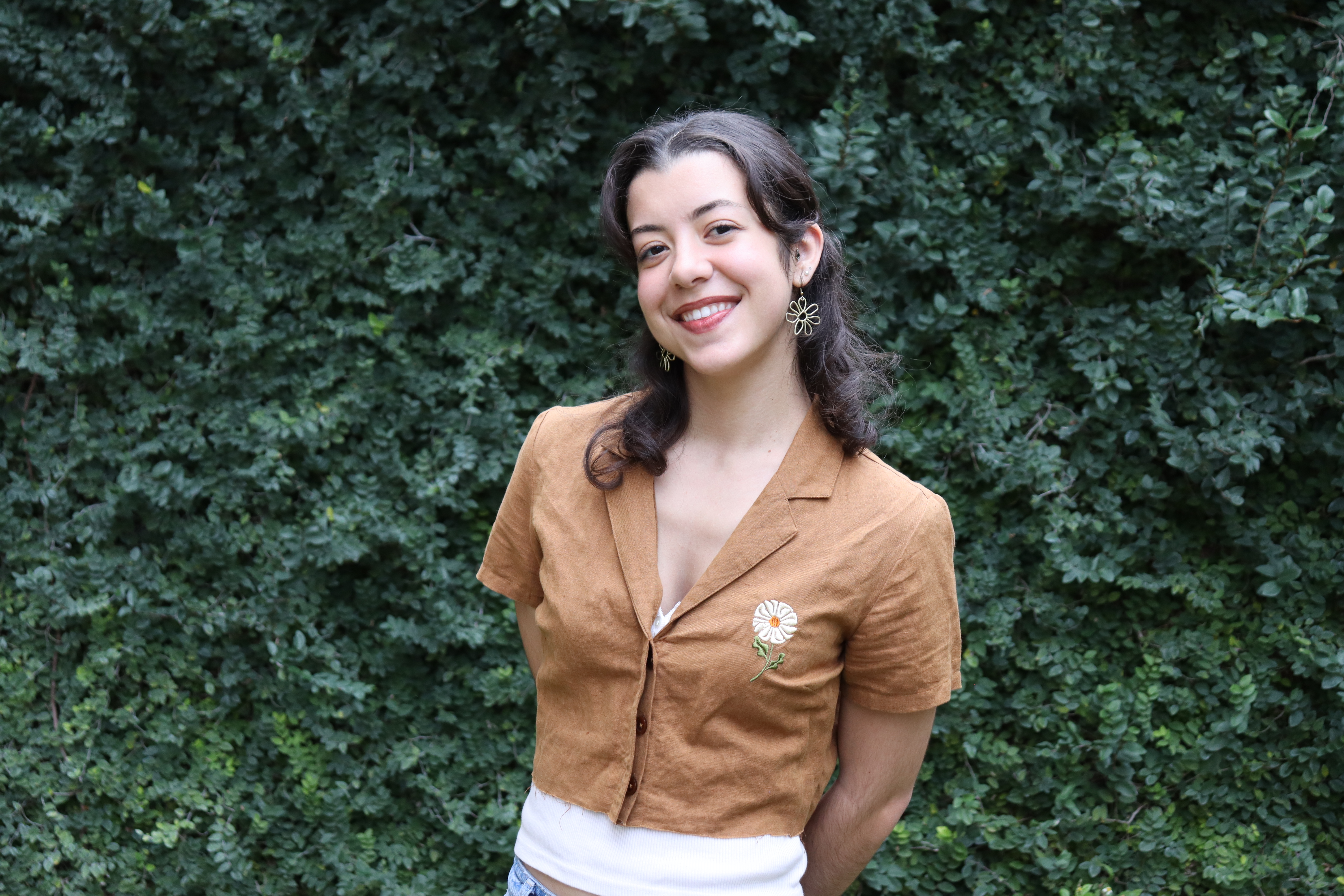
Angelina Sordo is a fourth-year undergraduate student and employee at Florida State University, graduating with her Bachelor's degree in Biological Science this May 2026. Her degree focuses on Botany and Ecology, and she has supplemented these topics with classes in Anthropology, Urban Planning, and Interior Design to prepare for the field of Landscape Architecture. She is planning to pursue a Master's in Landscape Architecture to eventually contribute to regenerative environmental design for the benefit of human and environmental health.
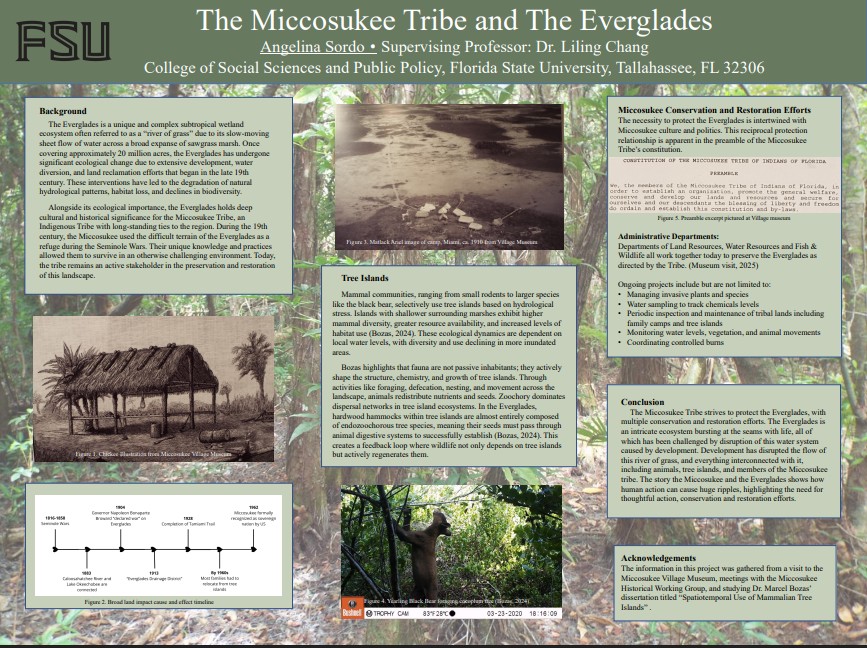
The Miccosukee Tribe and The Everglades
Authors: Angelina Sordo, Liling ChangStudent Major: Biological Science
Mentor: Liling Chang
Mentor's Department: Department of Geography Mentor's College: College of Social Sciences and Public Policy Co-Presenters:
Abstract
This project explores the historical and cultural relationship between the Miccosukee Tribe and the Florida Everglades, a landscape often described as a “river of grass” that once flowed uninterrupted across South Florida. Tree islands, which were once more abundant, supported diverse ecosystems and served as vital spaces for Miccosukee life and survival. By examining the history of the Everglades and the Miccosukee Tribe, the ecological role of tree islands, and the impacts of large-scale water management and development, this research highlights how these changes have affected both the land and the Miccosukee people.
Keywords: Miccosukee Everglades Restoration Environment Florida
26th annual Undergraduate Research Symposium, April 1, 2026
Isabella Morris Poster Session 2: 10:45 am - 11:45 am / Poster #36
BIO
Bella is a senior graduating in May from Lakeland, FL. She is majoring in Economics with minors in Urban and Regional Planning and Communications. Throughout her major, especially in research methods and econometrics courses, she has gained experience in economics-related research. The majority of this has been concentrated in education and housing. Also, the DeVoe L. Moore Institute and her mentor, Dr. Crystal Taylor, have helped make this research possible. She plans to become a high school teacher, which has inspired her to focus her research on education.
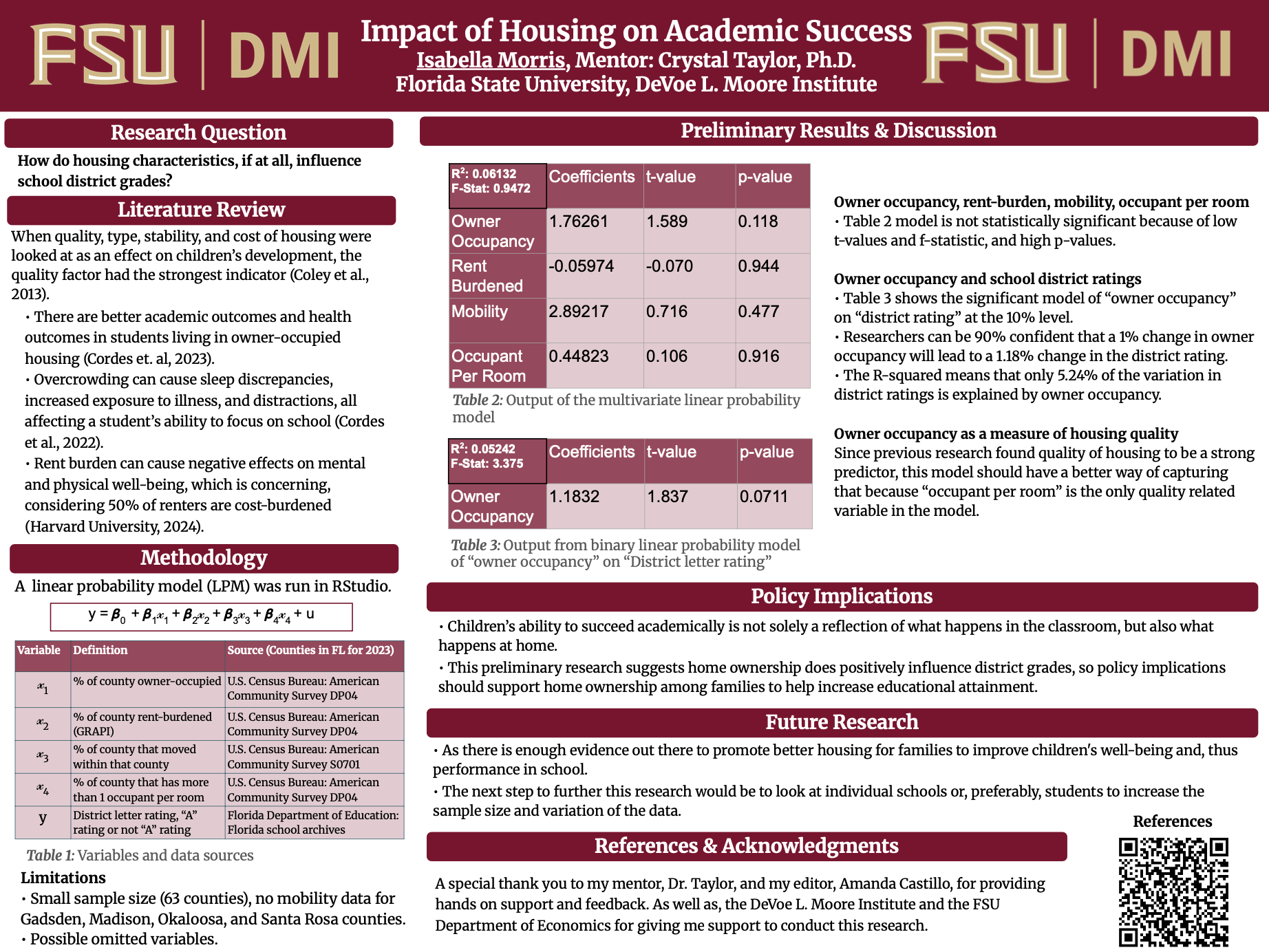
Impact of Housing on Academic Success
Authors: Isabella Morris, Dr. Crystal TaylorStudent Major: Bachelor's Degree in Economics
Mentor: Dr. Crystal Taylor
Mentor's Department: Economics Mentor's College: Social Science and Public Policy Co-Presenters:
Abstract
Children’s ability to succeed academically is not solely a reflection of what happens in the classroom, but also what happens at home. Housing quality emerged as the strongest predictor of children’s development while also taking into account home type, stability, and price (Coley et al., 2013). How do household characteristics influence, if at all, school district grades? To analyze the effects of various household characteristics on school district grades, this research uses 2023 school grade data from the Florida Department of Education. To capture household characteristics, this research incorporates the 2023 American Community Survey Census data on the proportion of owner-occupied units, rent-burdened households, mortgage-burdened households, mobility rates, and occupants per room. The researcher performed regression analysis using RStudio. A preliminary bivariate logarithmic regression results show, at the 90% confidence level, that a 1% increase in occupants per room is associated with a 0.8% change in district rating. Since occupant per room is one metric of home quality, future research should fold in more household and housing characteristics, such as home age or upgrades, and examine if the relationship holds for individual schools.
Keywords: housing characteristics, education, academic success
26th annual Undergraduate Research Symposium, April 1, 2026
Hanah Niazi Poster Session 1: 9:30 am - 10:30 am / Poster #61

BIO
Hanah Niazi is a third-year double major in Behavioral Neuroscience and Biology at Florida State University and is expected to graduate in Spring 2027 with a Bachelor of Science. She is a Directed Independent Study student in Dr. Colleen Ganley’s Math Thinking and Learning Lab, where she uses longitudinal statistical modeling to examine gender differences in math anxiety and academic self-concept. Her research experience also includes neuromarketing work in FSU’s Cognition and Emotion Lab, where she explored the cognitive and emotional mechanisms underlying decision-making. In addition to her work at Florida State University, Hanah has gained valuable international experience through a research collaboration in Taiwan and clinical shadowing at Hospital Universitario Infanta Elena in Madrid, Spain. These experiences broadened her understanding of global approaches to science, medicine, and patient care.
Hanah’s research interests lie at the intersection of neuroplasticity, pain science, sensory processing, and the gut-brain axis. She is particularly interested in how discoveries in basic science can be translated into meaningful clinical applications. Outside of research, she volunteers at Big Bend Hospice providing direct patient care and works in the palliative care unit at Tallahassee Memorial Hospital, experiences that continue to strengthen her commitment to compassionate, patient-centered medicine. After graduation, Hanah plans to pursue an MD/PhD and a career as a physician-scientist, integrating research and clinical care to advance the understanding and treatment of complex neurological conditions.
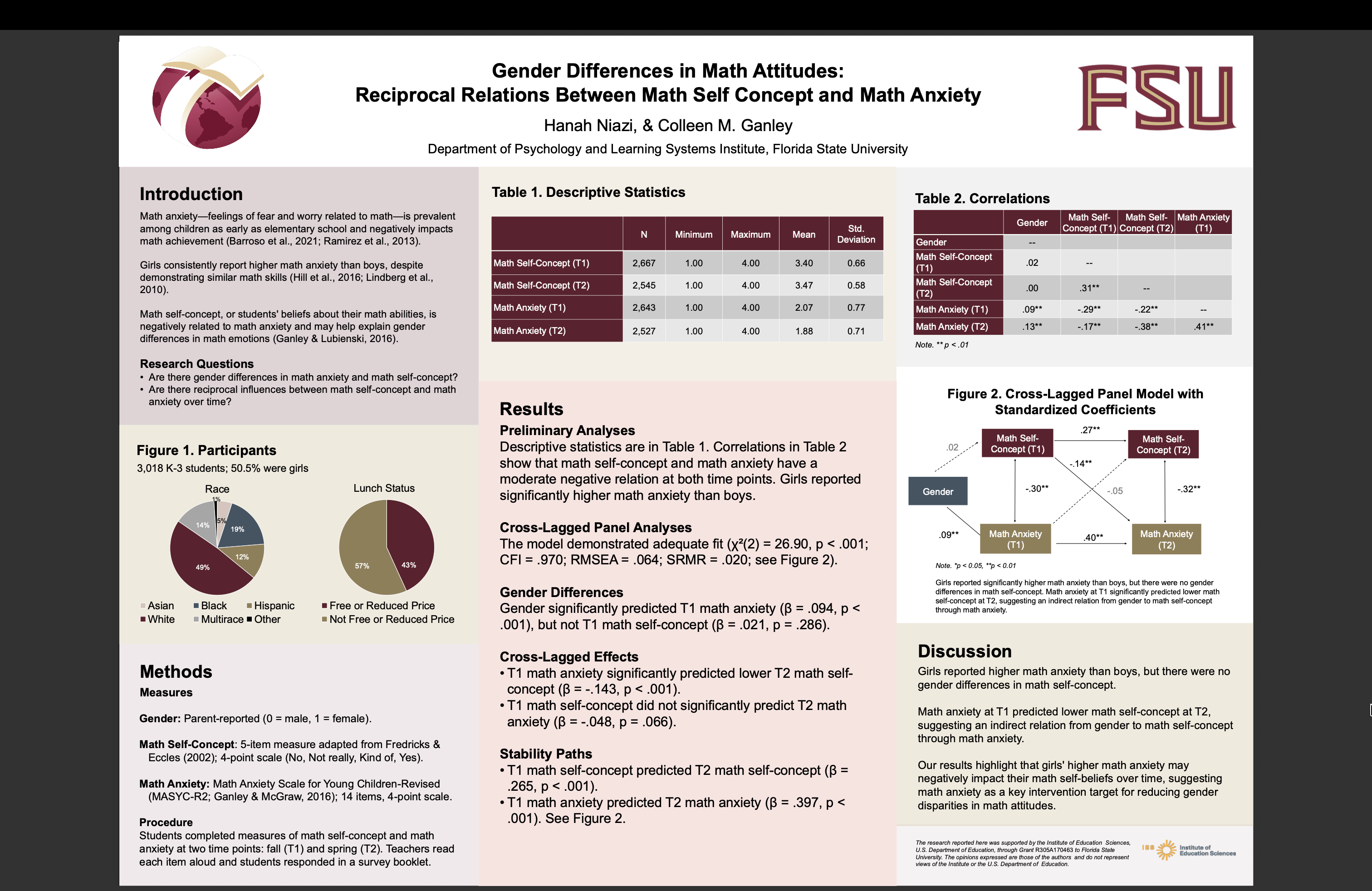
Gender Differences in Math Attitudes: Reciprocal Relations Between Math Self Concept and Math Anxiety
Authors: Hanah Niazi, Dr. Colleen GanleyStudent Major: Neuroscience, Biology
Mentor: Dr. Colleen Ganley
Mentor's Department: Psychology Mentor's College: College of Arts and Sciences Co-Presenters:
Abstract
Research consistently shows that girls report lower math self-concept and higher math anxiety than boys despite similar math achievement levels. Research also shows that math self-concept and anxiety are strongly linked to one another. Understanding the mechanisms underlying these gender differences is critical for developing effective interventions. The present study used a cross-lagged panel model (CLPM) to test gender differences in math self-concept and math anxiety and if math self-concept and math anxiety would show reciprocal cross-lagged effects over time in elementary school students. Data were drawn from the REALM (Research on Experiences, Attitudes, and Learning in Math) longitudinal study. Participants were 3,018 students in kindergarten through third grade from 29 public elementary schools. Students completed measures of math self-concept and math anxiety at two time points (fall and spring). The model demonstrated adequate fit (RMSEA = .06, CFI = .97, SRMR = .02). Results indicated that girls reported significantly higher math anxiety at Time 1 (β = .09, p < .001), but there was no significant gender difference in math self-concept (β = .02, p = .29). Time 1 math anxiety significantly predicted lower Time 2 math self-concept (β = -.14, p < .001), but Time 1 math self-concept did not significantly predict lower Time 2 math anxiety (β = -.05, p =.07). These findings highlight the importance of addressing math anxiety early, especially for girls, as it negatively predicts math self-concept over time.
Keywords: gender differences, math anxiety
26th annual Undergraduate Research Symposium, April 1, 2026
Natalie Zamora Poster Session 4: 3:00 pm - 4:00 pm / Poster #274
BIO
Natalie is a junior in the Biomedical Engineering major at Florida State University, set to graduate in 2027. She is currently conducting research in the Cardiovascular and Applied Physiology Laboratory under the mentorship of Thomas Bissen. Her work focuses on inspiratory muscle strength training (IMST) in younger adults with obesity, specifically investigating its effects on dyspnea and the oxygen cost of breathing. Natalie is passionate about pursuing a career in the medical field, using her engineering background to address challenges in healthcare.
Oxygen Cost of Breathing During Voluntary Eucapnic Hyperpnea Among Adults with Obesity After Inspiratory Muscle Strength Training
Authors: Natalie Zamora, Thomas BissenStudent Major: Biomedical Engineering
Mentor: Thomas Bissen
Mentor's Department: Exercise Physiology Mentor's College: College of Education, Health, and Human Sciences Co-Presenters:
Abstract
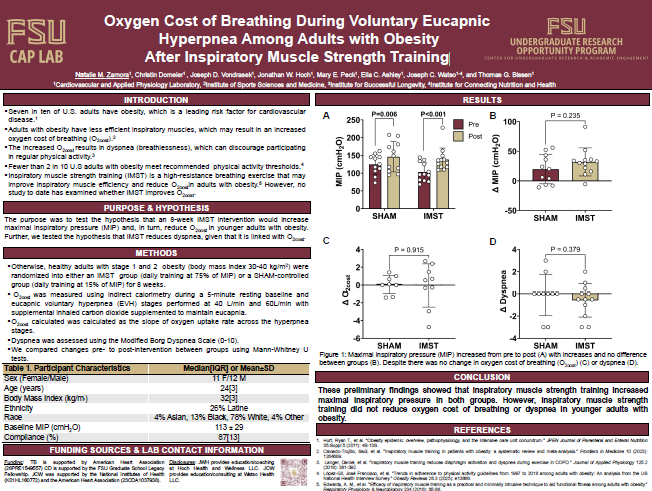
Nearly seven-in-ten of U.S. adults have overweight or obesity, a leading risk factor for cardiovascular disease, and experience breathlessness during physical activity (i.e., dyspnea). This may be partly due to weak inspiratory muscles, leading to ventilatory inefficiency in younger adults with obesity and higher oxygen cost of breathing (V̇O2breathing). However, the impact of inspiratory muscle strength training (IMST) on V̇O2breathing is uncertain. We tested the hypothesis that IMST would reduce dyspnea and V̇O2breathing in younger adults with obesity.
Using a triple-masked, parallel-arm, sham-controlled design, we randomized otherwise healthy adults with obesity (n=23) to daily training at 75% (IMST) or 15% (SHAM) of their maximal inspiratory pressure (MIP) for 8-weeks. Pre- and post-intervention, we assessed dyspnea with the Modified Borg Dyspnea Scale (0-10) and determined the V̇O2breathing by calculating the slope of oxygen uptake, measured via indirect calorimetry, during a 5-minute baseline and the final minute of 5-minute eucapnic voluntary hyperpnea (EVH) stages performed at 40 and 60 L/min. We compared mean changes (Δ; post-pre) using Mann-Whitney U. Normally distributed data reported as mean±SD and non-normally distributed data as median[IQR].
Participants baseline characteristics 24[3]yrs; BMI 32[3]kg/m2, MIP 113±29cmH2O were not different between groups (Ps≥0.07). Training compliance was not different between groups (P=0.45). Both groups increased MIP (Ps≤0.006). ∆MIP (IMST:34[13] vs. SHAM:20[35]cmH2O, P=0.23); dyspnea, and ΔV̇O2breathing slope during EVH did not differ between groups (Ps>0.92).
These preliminary findings demonstrate that IMST increased MIP in both groups; however, IMST did not change dyspnea or V̇O2breathing in younger adults with obesity.
Keywords: IMST(Inspiratory Muscle Strength Training), Obesity, Cardiovascular Physiology
26th annual Undergraduate Research Symposium, April 1, 2026
Madelyn Alcantara Poster Session 3: 1:45 pm - 2:45 pm / Poster #281
BIO
Madelyn Alcantara is a second-year student at Florida State University majoring in Psychology and minoring in Philosophy. She has a profound interest in human relationships, mental health, as well as pediatric counseling. After completing her undergraduate degree, Madelyn aspires to pursue a Master's in Counseling Psychology, with the goal of becoming a pediatric counselor and helping children navigate emotional and developmental challenges.
Why Men Initiate Situationships: Motivations, Meanings and Modern Relationship Patterns
Authors: Madelyn Alcantara, Dr. Mickey LanglaisStudent Major: Psychology and Philosophy
Mentor: Dr. Mickey Langlais
Mentor's Department: Human Services and Design Mentor's College: Baylor University Co-Presenters:
Abstract
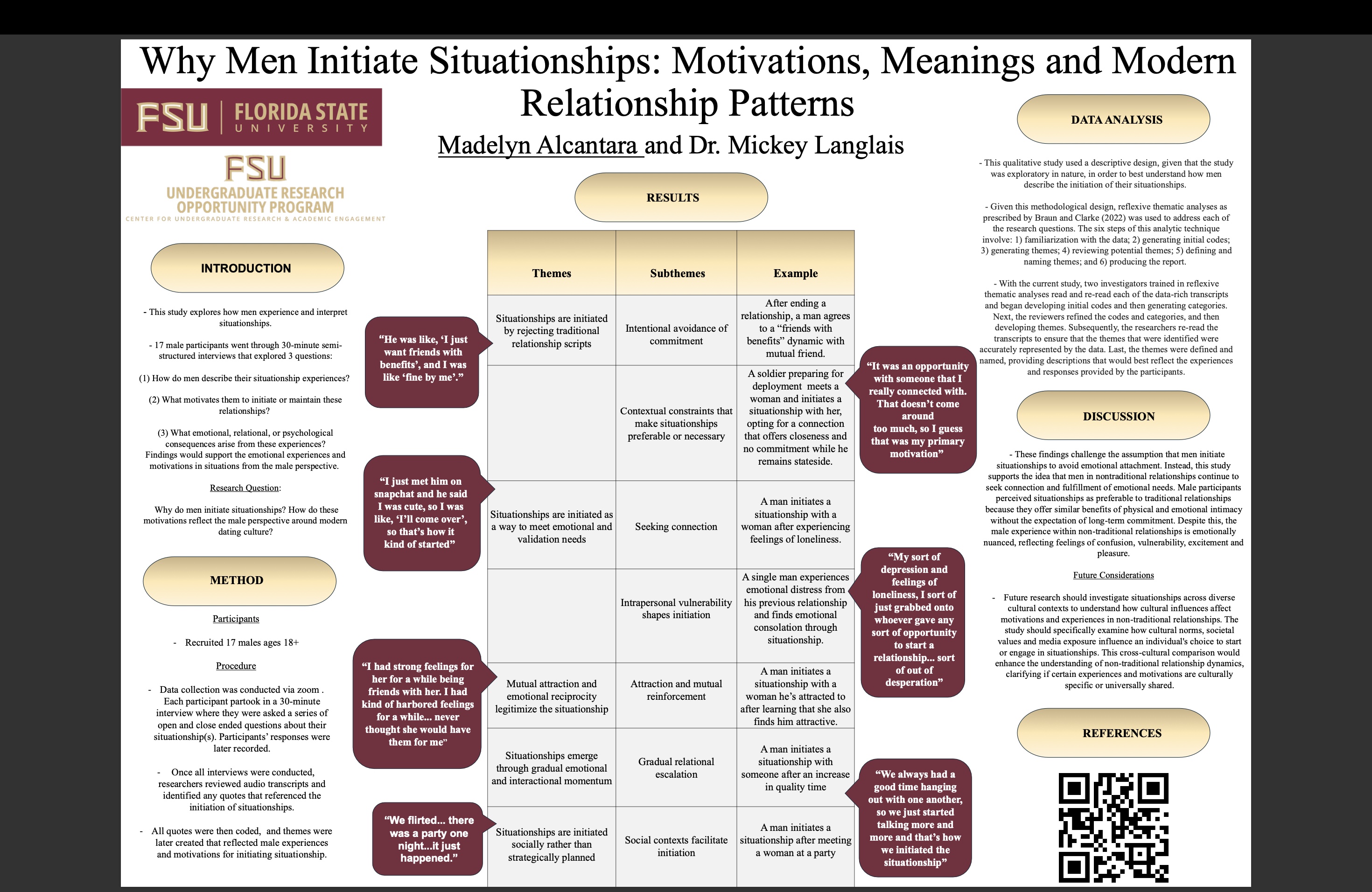
This study explored how men experience and interpret situationships-ambiguous romantic relationships marked by low commitment and fluctuating emotional investment. Seventeen men participated in 30-minute semi-structured interviews analyzed using reflexive thematic analysis. Each interview explored three primary questions: (1) How do men describe their situationship experiences? (2) What motivates them to initiate or maintain these relationships? and (3) What emotional, relational, or psychological consequences arise from these experiences? Men reported situationships to be enjoyable, or confusing due to unclear expectations and inconsistent communication. Emotional experiences ranged from excitement and attraction to anxiety, ambivalence, and longing. Motivations included companionship, convenience, and emotional safety, though drawbacks such as reputational concerns and mismatched expectations were common. Findings reveal that men value the flexibility of situationships yet struggle with their instability, highlighting the emotional complexity underlying these nontraditional relationships.
Keywords: Situationships, Human Relationships, Men
26th annual Undergraduate Research Symposium, April 1, 2026
Lauren Afong Poster Session 2: 10:45 am - 11:45 am / Poster #292
BIO
Lauren Afong is a sophomore from Miami, Florida. Majoring in Biological Sciences and Public Health, she is passionate about research that furthers medicine and healthcare, with interests in oncology and epidemiology. Her current research projects have provided her with knowledge in molecular biology, population health, public policy, and engineering. With past research experiences at the University of Miami Miller School of Medicine and Children's National Hospital and Research Institute, she looks to continue building upon her foundation across clinical and public health research.
SUMO-Mediated Recruitment of DNA Damage Response Proteins to Repair Sites
Authors: Lauren Afong, Yanchang WangStudent Major: Biological Science and Public Health
Mentor: Yanchang Wang
Mentor's Department: Biomedical Sciences Mentor's College: College of Medicine Co-Presenters:
Abstract
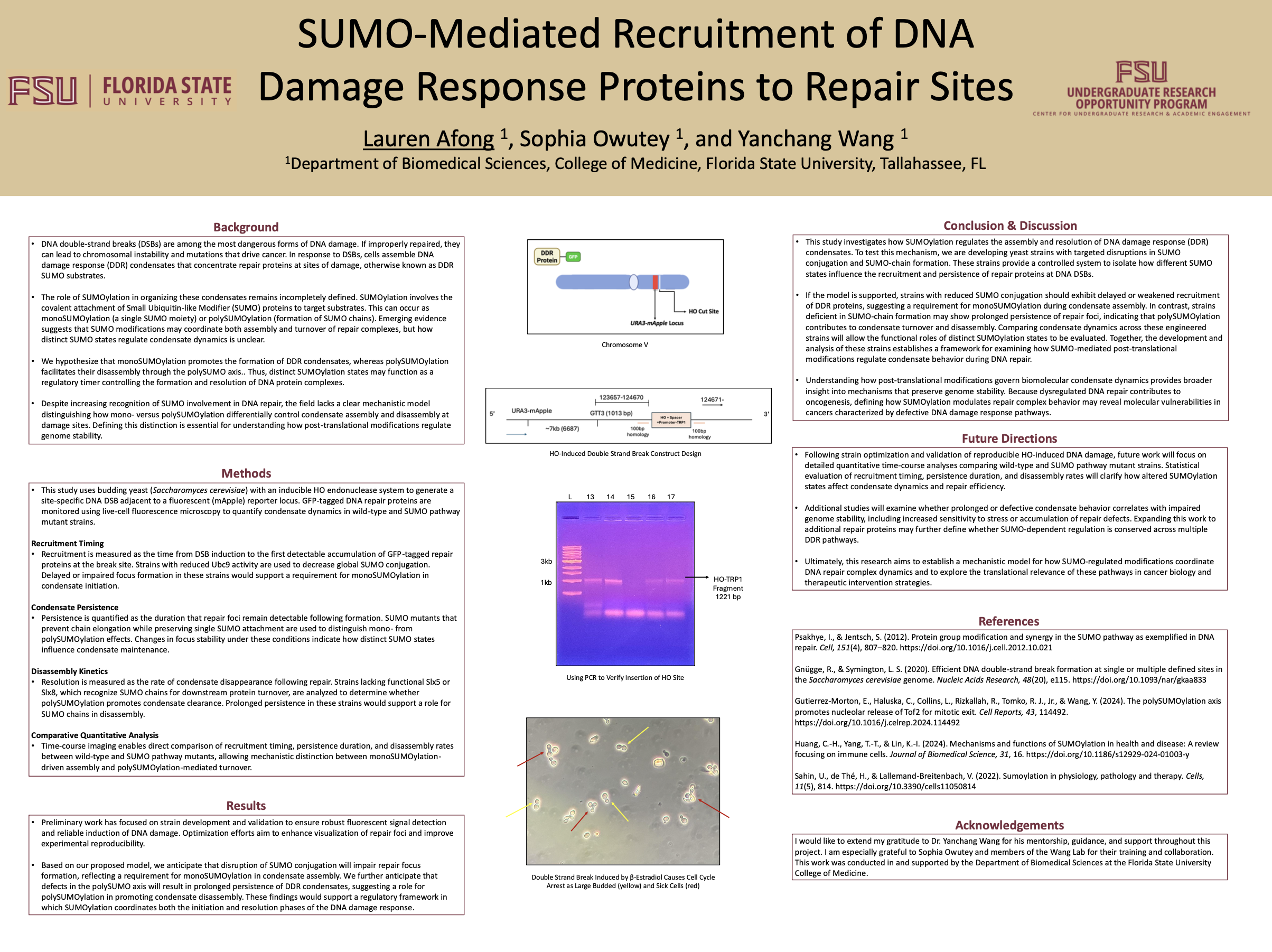
DNA double-strand breaks (DSBs) are among the most harmful forms of DNA damage and, if improperly repaired, can lead to mutations that drive cancer. Cells respond to DSBs by assembling DNA damage response (DDR) condensates—dynamic, membrane-less structures that concentrate repair proteins at the site of damage. While phosphorylation is known to regulate condensate formation, the role of SUMOylation in coordinating these structures remains unverified. SUMOylation involves the covalent attachment of Small Ubiquitin-like Modifier (SUMO) proteins to target proteins either as single moieties (monoSUMOylation) or as polymeric chains (polySUMOylation).
We hypothesize that monoSUMOylation promotes the initiation and stabilization of DDR condensates, while polySUMOylation facilitates their timely disassembly through recruitment of SUMO-targeted ubiquitin ligases (STUbLs). To test this model, we employ a budding yeast (Saccharomyces cerevisiae) system with a site-specific DSB induced adjacent to a fluorescent reporter. GFP-tagged DNA repair proteins are monitored using live-cell fluorescence microscopy under conditions that selectively disrupt SUMO conjugation, SUMO chain formation, or STUbL activity.
We anticipate that disruption of SUMO conjugation will impair repair focus formation, while defects in SUMO chain formation or STUbL function will lead to prolonged persistence of DDR condensates. These outcomes would support a regulatory model in which distinct SUMOylation states coordinate the assembly and resolution of repair complexes. By defining how SUMOylation governs DDR dynamics, this work aims to advance our understanding of genome stability and identify SUMO-regulated pathways that may be leveraged for cancer prevention and therapeutic intervention.
Keywords: SUMOylation, DNA damage response, Cancer genomics
26th annual Undergraduate Research Symposium, April 1, 2026
Bethsaida Cius Poster Session 3: 1:45 pm - 2:45 pm / Poster #269

BIO
Bethsaida Cius is an undergraduate student at Florida State University majoring in Public Health, with aspirations of becoming a neurosurgeon. She is passionate about understanding the connection between health, society, and the human experience, and she hopes to use both medical practice and research to make a meaningful impact in underserved communities. In addition to her interest in medicine, Bethsaida explores questions of faith, history, and culture through her academic work. Her research focuses on ancient texts such as the Book of Enoch, examining how literature reflects social and political realities and serves as a voice for marginalized communities. She is particularly interested in themes of identity, resilience, and the use of language as a tool for expression and resistance. Bethsaida is committed to academic excellence and lifelong learning. She plans to pursue medical school after completing her undergraduate degree and hopes to combine her background in public health with neurosurgery to improve patient outcomes and advance health equity.
Enoch: The Literature of Dissent
Authors: Bethsaida Cius, Matthew GoffStudent Major: Public Health
Mentor: Matthew Goff
Mentor's Department: Religion Mentor's College: College of Arts and Sciences Co-Presenters:
Abstract
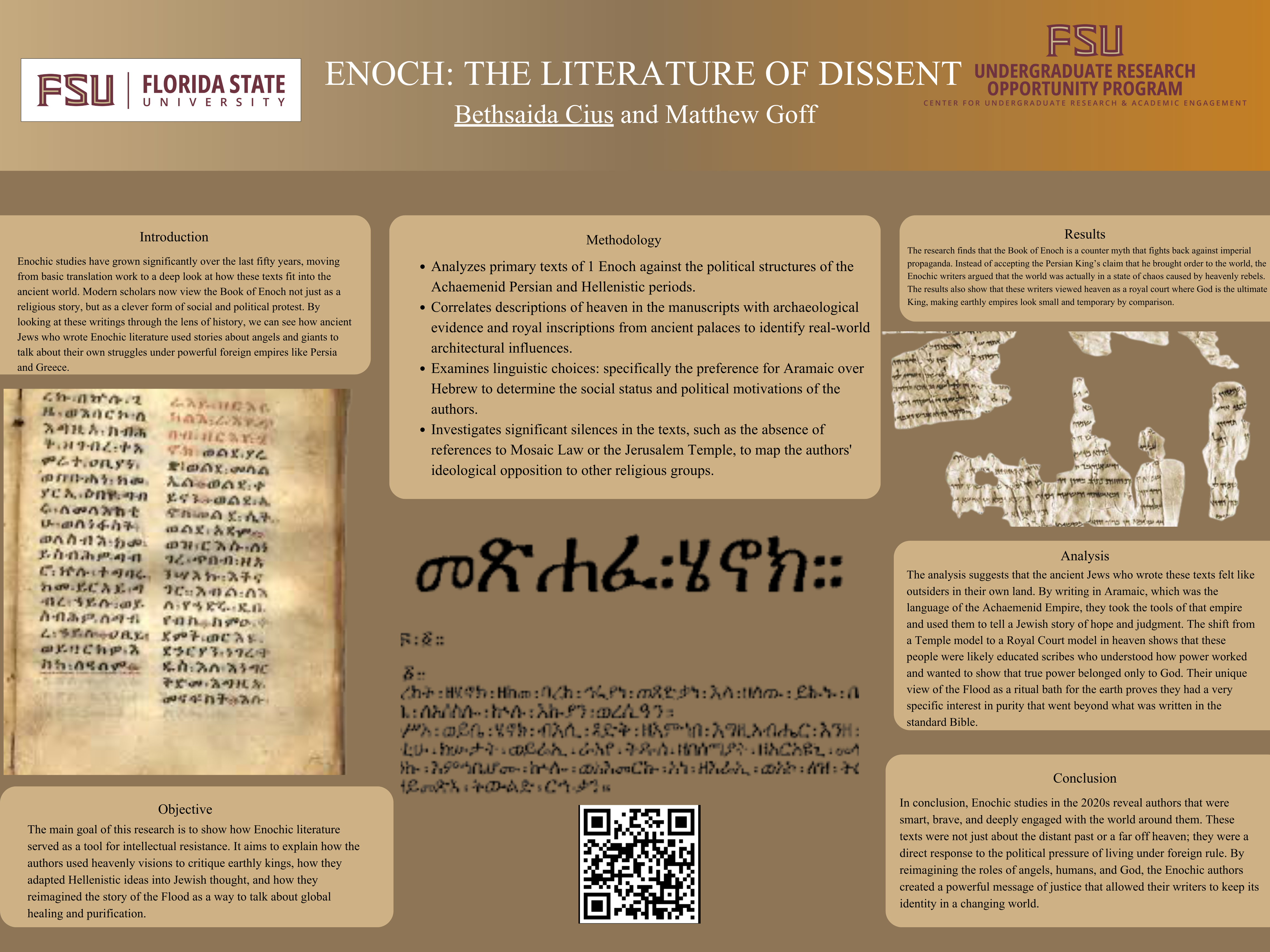
This study examines the Book of Enoch as a form of intellectual and literary resistance within the political context of the Achaemenid Persian and Hellenistic periods. While traditionally viewed as a religious or apocalyptic text, this research argues that Enochic literature also reflects the social and political realities of ancient Jewish communities living under foreign rule. By analyzing primary sections of 1 Enoch, this project explores how themes of divine judgment, heavenly authority, and cosmic order challenge earthly systems of power. The methodology combines textual analysis with historical and linguistic approaches. Descriptions of heaven are compared with royal imagery and architectural influences from ancient Near Eastern empires, while language choices, such as the use of Aramaic, are examined to better understand the authors’ social positioning. Attention is also given to notable silences in the text, including the absence of emphasis on the Jerusalem Temple or Mosaic Law, which may indicate ideological distinctions from other Jewish traditions. The findings suggest that Enochic authors used symbolic narratives and visions to critique imperial authority and reframe power as belonging solely to God. These texts provided a framework for expressing identity, hope, and resistance among marginalized communities. Ultimately, this research highlights the Book of Enoch as both a theological and political work that contributed to shaping alternative worldviews in a time of cultural and imperial dominance.
Keywords: Book of Enoch, Apocalyptic Literature, Intellectual Resistance
26th annual Undergraduate Research Symposium, April 1, 2026
Katrina Placencia Poster Session 1: 9:30 am - 10:30 am / Poster #126
BIO
Katrina Placencia is a Freshman at Florida State University pursuing a Bachelor of Science degree in Exercise Physiology with a minor in Chemistry on the pre-medical track. Originally from Cape Coral, Florida, she is interested in human anatomy, sports medicine, and understanding how people learn and interact. She plans to attend medical school and pursue a career in anesthesiology, with the goal of improving patient care through a strong understanding of physiology and clinical practice.
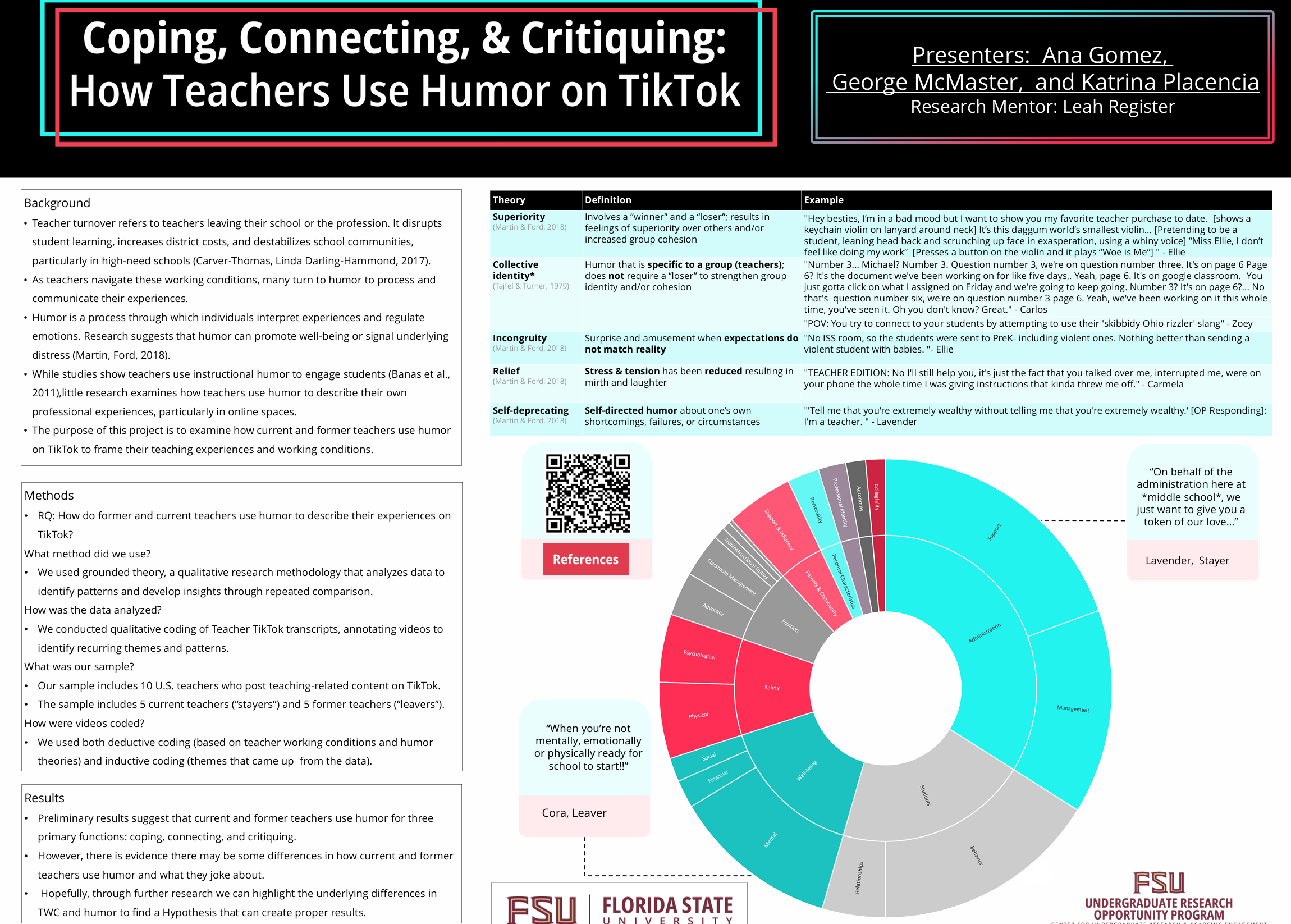
Coping, Connecting, & Critiquing: How Teachers Use Humor On TikTok
Authors: Katrina Placencia, Leah RegisterStudent Major: Exercise Physiology
Mentor: Leah Register
Mentor's Department: College of Education Mentor's College: Florida State University Co-Presenters: Ana Gomez and George McMaster
Abstract
Teacher turnover has increased above pre-pandemic levels, undermining instructional quality, student achievement, and district budgets. Often driven by challenging working conditions, including managing student misbehavior, turnover reflects the daily realities teachers navigate. Current and former teachers use TikTok to share and process their professional experiences, often through humor, offering insight into how they make sense of challenges that can contribute to attrition. While prior research has examined humor in instructional contexts, less is known about how teachers use non-instructional humor. We ask, how do current and former teachers use humor to describe their experiences on TikTok?
This study uses a qualitative, grounded theory approach to analyze publicly available TikTok videos from self-identifying current and former U.S. teachers. From each account, we analyzed roughly 30 videos, examining verbal & non-verbal communication. Data were coded iteratively, beginning with deductive codes drawn from humor theory and Merrill’s (2021) teacher working conditions framework, followed by inductive coding to more fully capture teachers’ experiences.
Preliminary analysis reveals that for many teachers, humor functions as a coping mechanism and as a way to connect with other teachers who understand the realities of the job. For others, humor was used to express dissatisfaction and disappointment with the profession, such as the lack of administrative support in addressing student misbehavior. By examining humor as a way to cope, connect, and critique, this study illuminates how teachers process working conditions that may shape decisions to remain in or leave the profession.
Keywords: Social science, qualitative, education, teachers, humor
26th annual Undergraduate Research Symposium, April 1, 2026
Leasah Jean-Francois Poster Session 4: 3:00 pm - 4:00 pm / Poster #238

BIO
Leasah Jean-Francois is a Senior Art History student minoring in Museum Studies. She is currently pursuing an Honors in the Major thesis on the Christian iconography on the Gold Solidus of Justinian II under the mentorship of Dr. Lynn Jones. Leasah previously conducted international research through the Global Scholars program and was a 20205 Gilman International Scholarship recipient.
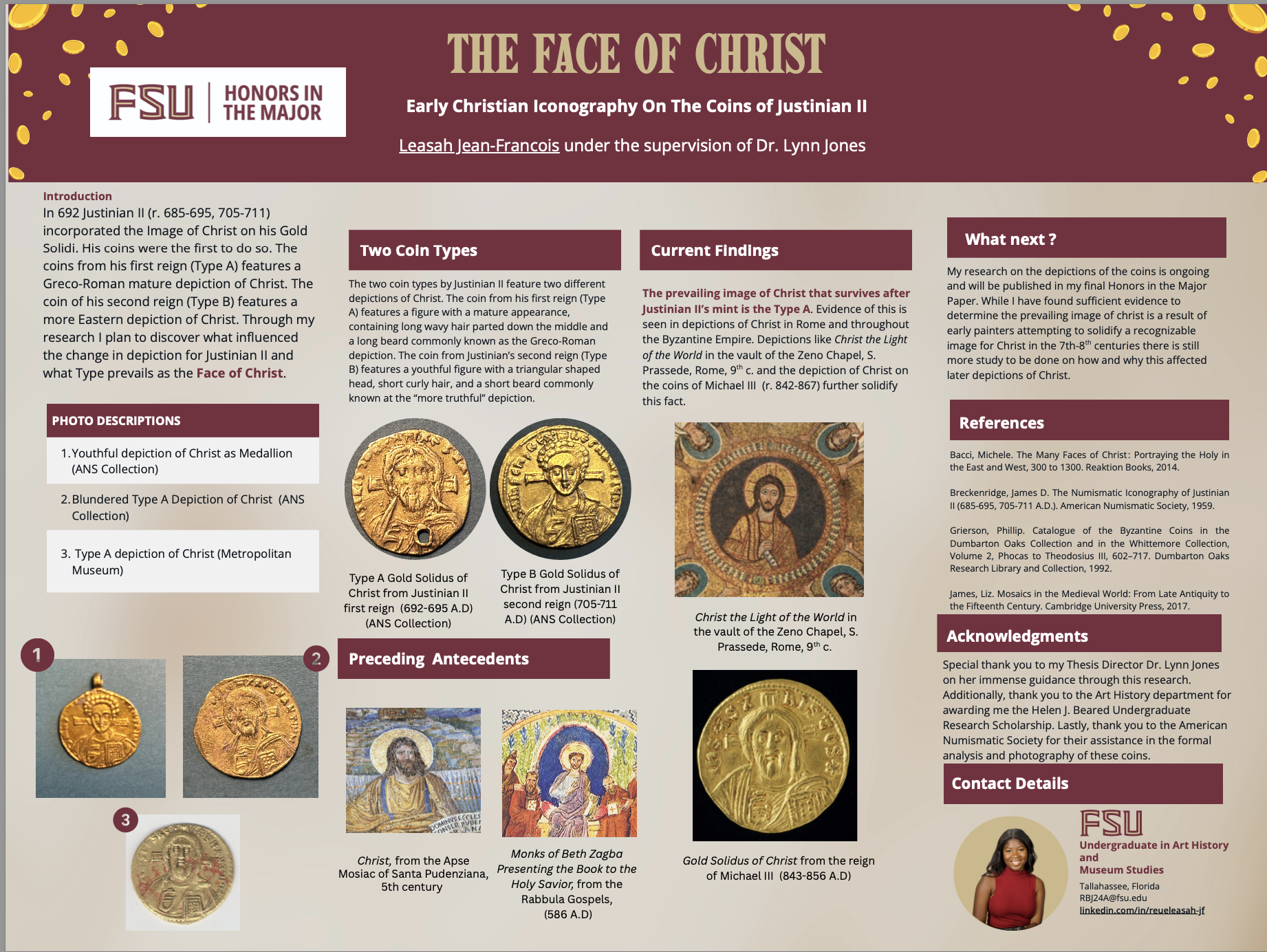
The Face of Christ: Early Christian Iconography on Byzantine Coins
Authors: Leasah Jean-Francois, Lynn JonesStudent Major: Art History
Mentor: Lynn Jones
Mentor's Department: Art History Mentor's College: Fine Arts Co-Presenters:
Abstract
My Honors in the Major project examines the depictions of Christ on two Byzantine coin types by Justinian II (685-95, 705-711). The first coin, Type A was minted during the first reign of Justinian circa 692-95 and the second coin type was minted during his second reign circa 705-711. The coins of Type A feature characteristics of an older, Greco-Roman depiction of Christ. However, the later coins of Type B depict Christ as a younger figure with more eastern characteristics, such as the curly hair and triangular shaped head. Most scholarship discusses various reasons for why Justinian II chose to change the depiction from the mature type to the more youthful type. In my paper I argue Justinian’s design was concerned with depicting an accurate representation of Christ ethnically to align with the context of the empire at the time. Furthermore, I’ll elaborate how the design later influenced other representations of Christ throughout the empire. Through the canons from the Council of Trullo, formal analysis and comparison of the coin types, and consideration of previous scholarship on Justinian's coins, I will provide evidence that recognizes the cultural climate of the empire and support my arguments.
Keywords: Byzantine Coins, Iconography, Christ
26th annual Undergraduate Research Symposium, April 1, 2026
Anthony Braun Poster Session 3: 1:45 pm - 2:45 pm / Poster #15
BIO
Anthony Braun is a first-generation, first-year Presidential Scholar from Pompano Beach, Florida. He is currently on the Pre-Nursing track with an intended minor in child development. His UROP research mentor is Latika Young. Other research experiences include being on the 2026 iGEM team, with David Montez and Cesar Rodriguez as faculty mentors. Anthony is excited to pursue graduate school and attain a Nurse Practitioner's license after he graduates, potentially from Florida State.
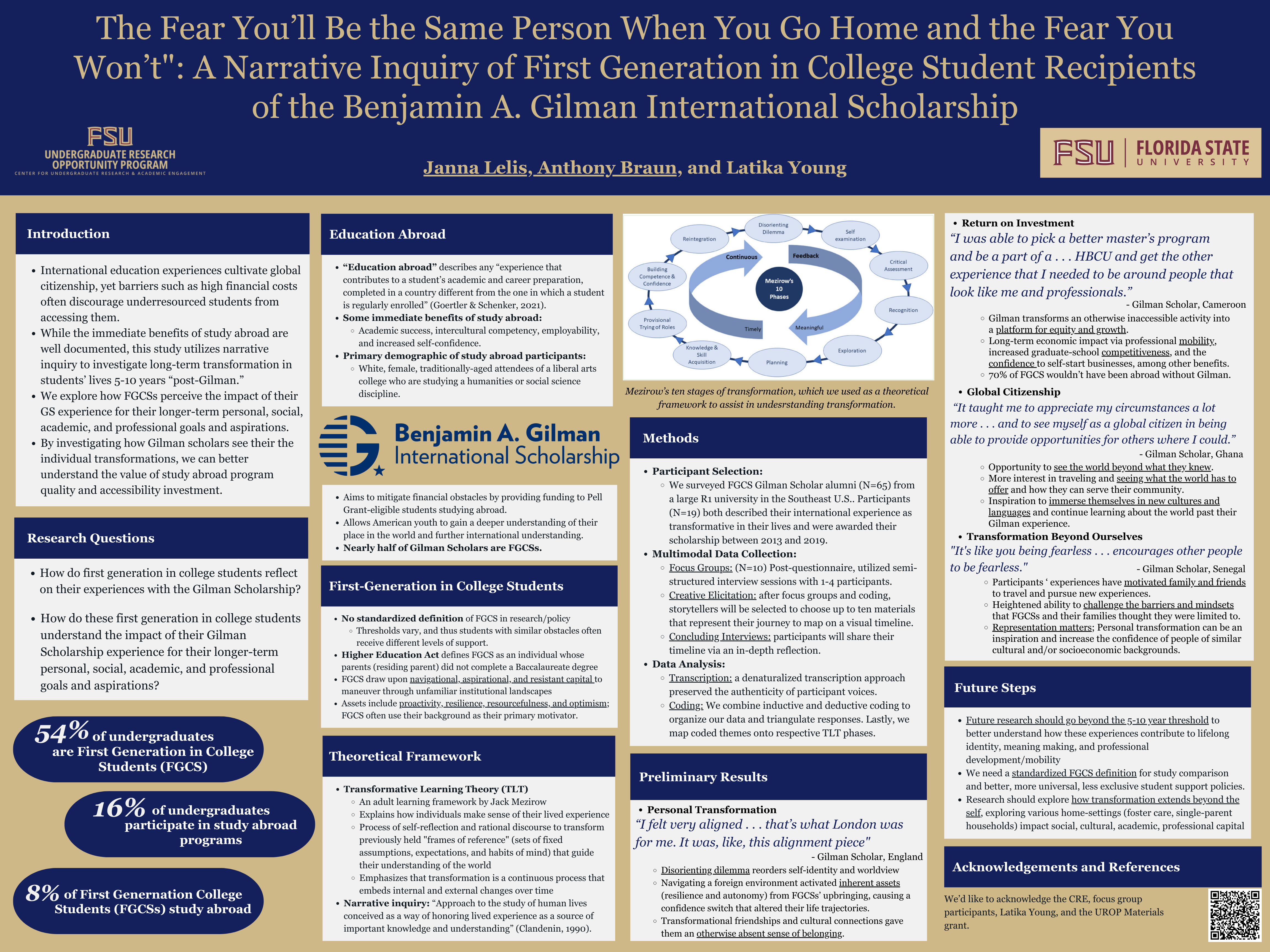
The Fear You’ll Be the Same Person When You Go Home and the Fear You Won’t": A Narrative Inquiry of First Generation in College Student Recipients of the Benjamin A. Gilman International Scholarship
Authors: Anthony Braun, Latika YoungStudent Major: Nursing
Mentor: Latika Young
Mentor's Department: Undergraduate Research & Academic Engagement Mentor's College: Undergraduate Research & Academic Engagement Co-Presenters: Janna Lelis
Abstract
International education experiences cultivate global citizenship, yet barriers such as high financial costs often discourage underresourced students from accessing them. The Benjamin A. Gilman International Scholarship (GS) aims to mitigate these obstacles by providing funding to Pell Grant-eligible first generation in college students (FGCSs), among other demographic groups. While the immediate benefits of study abroad are generally well documented, this study utilizes narrative inquiry to investigate long-term transformation in students’ lives 5-10 years “post-Gilman.” Specifically, we explore how FGCSs perceive the impact of their GS experience for their longer-term personal, social, academic, and professional goals and aspirations. This study employs Jack Mezirow’s (1978) Transformative Learning Theory, using its 10 stages of transformation, notably critical self-reflection and rational discourse. We adopt a qualitative approach by conducting survey, focus groups, and individual interviews with alumni who graduated between 2014-2019 from a southeastern U.S. university. Using a denaturalized transcription and thematic coding process, five participants will be selected for further narrative inquiry via a creative data-elicitation technique. Preliminary findings suggest that the GS has led to a profound transformation in personal and professional pathways. Participants’ international experiences were the primary catalyst for further international traveling, higher levels of confidence, resilience, and self-determination. Our results also indicate that the impact of global educational experiences extend beyond the individual, potentially impacting the participants’ broader social circles. This study spotlights the need for higher education institutions and policymakers to better understand and support FGCSs in international education engagement, for personal, professional, and social transformation.
Keywords: First Generation, Study Abroad, Narrative