
Research Symposium
26th annual Undergraduate Research Symposium, April 1, 2026
Benjamin Campos Poster Session 1: 9:30 am - 10:30 am / Poster #1

BIO
Benjamin Campos is a first-year biochemistry (prospective computer engineering with a minor in chemistry) major at FSU. He is a member of the University Honors Program and is participating in the Undergraduate Research Opportunity Program under the mentorship of Dr. Ameya Kolarkar. With a keen interest in mathematics, technology, and 3D printing, he joined Dr. Kolarkar's project with the goal of developing accessible course content and devices for FSU's low-vision/blind student community. After completing his Bachelor of Science in computer engineering at Florida State, he plans to earn his Master of Science degree and enter a career with a defense contractor or computer manufacturing company.
RESEARCH ON CREATING ACCESSIBLE MATERIALS FOR LOW-VISION/BLIND STUDENTS
Authors: Benjamin Campos, Dr. Ameya KolarkarStudent Major: Biochemistry
Mentor: Dr. Ameya Kolarkar
Mentor's Department: Center for the Advancement of Teaching Mentor's College: Arts and Sciences Co-Presenters: Alenisse Adorno-Roman, Dominic DeNardis, Lupe Figueroa, Sophia Ocfemia, Natalie Velazquez
Abstract
As we make progress toward universal accessibility and equitable education for students with disabilities, significant barriers persist in STEM education for low-vision and blind students (LVBS). This study investigates accessibility tools that can be researched or developed to support LVBS at Florida State University (FSU), where some course material and instruction remain inaccessible. Building on prior use of 3-D printing for tactile learning, our team uses coding and the PreTeXt format to translate core math units into multiple formats, including braille. We are also exploring assistive spatial intelligence that provide audio instructions for commonly traveled campus paths, such as Meta AI glasses. LVBS volunteers at FSU test each tool and provide structured feedback. Individual coding components are created separately, refined through trial and error, compiled into a single text, and converted into braille. In collaboration with the Innovation Hub, we are also developing tactile molecular models with embossed braille labels for chemistry instruction. Findings are preliminary but encouraging. Early LVBS feedback indicates that braille translations generated through PreTeXt increase access to visual STEM content, while tactile chemistry models and navigation improves confidence in learning and movement across campus. These results suggest that accessibility tools designed with direct LVBS input can strengthen learning experiences and campus participation. Grounded in Universal Design for Learning principles, this work supports equitable access at FSU and offers scalable strategies for broader adoption across higher education.

Keywords: blind, 3D printing, mathematics, accessibility, XML
26th annual Undergraduate Research Symposium, April 1, 2026
Raiyan Quadri Poster Session 2: 10:45 am - 11:45 am / Poster #293

BIO
Raiyan Quadri is currently an undergraduate student in the Department of Economics at FSU. Since an early point in his academic journey, he has had a persistent curiosity in quantitative economics, both micro and macro, which has led him halfway around the world. Post high-school, his interest in Economics led him to becoming a TA for the subject, and now, in his first year, that curiosity has lead him to becoming involved in UROP . In the future, he aims to graduate with Honors in the Major, while also advancing his career through further research in more areas of economics. Eventually, he hopes to be able to complete a Masters in the subject, and continue his career by helping advance the field.
The CEP Effect: Linking Policy to Pediatric Wellness
Authors: Raiyan Quadri, Katherine G. YewellStudent Major: Economics
Mentor: Katherine G. Yewell
Mentor's Department: Department of Economics Mentor's College: College of Social Sciences and Public Policy Co-Presenters: Anum Akbar, Mirza Baig & Victoria Camacho
Abstract
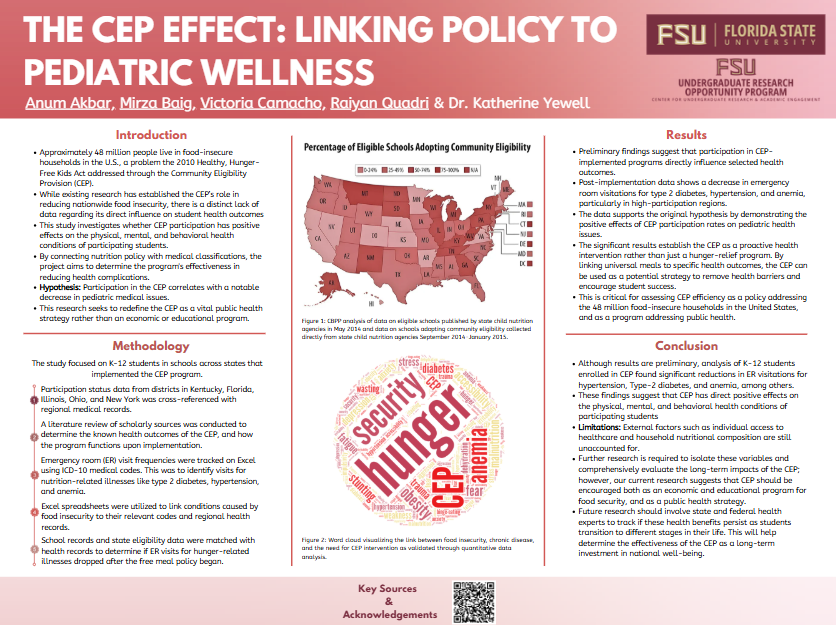
More than 40 million people in the United States experience food insecurity, and a large proportion of those people are school children. To combat this ongoing problem, the government passed the Healthy Hunger-Free Kids Act which helped form the Community Eligibility Provision (CEP), the second-largest food assistance program in the country. The CEP allowed food-insecure children to receive free school meals. While there has been prior research focusing on the impact that the CEP has on food insecurity, there has been virtually no research examining the effect the CEP has on students’ health. Thus, this research project will investigate whether the CEP positively affects students’ health and well-being.
This research project will focus on grade schools (kindergarten through 12th grade) across the country that have implemented CEP. CEP participation will be analyzed at the district level and compared to regional hospital data using ICD-10 codes to evaluate specific diseases such as diabetes, hypertension, and anemia. These codes help identify the purpose and reasoning behind emergency room visitations. The frequency of these hospital ER visits will be used to determine the impact free school meals have on students’ health and well-being.
We hypothesise that students who participate in the CEP will demonstrate a lack of hospital ER visits for food-insecurity-related diseases; hence, the CEP will demonstrate an improvement in said students’ health and well-being. After the conclusion of this research project, the findings will demonstrate a working model to scale across the country to combat food insecurity regardless of background.
Keywords: Economics, Microeconomics, Public Policy, Nutrition, Food Insecurity, Health
26th annual Undergraduate Research Symposium, April 1, 2026
Triston Christian Poster Session 1: 9:30 am - 10:30 am / Poster #262

BIO
Triston is a pre-med sophomore at Florida State University working toward a career in medicine. As a certified EMT with additional training in Phlebotomy and IV therapy, Triston is focused on bridging the gap between clinical practice and academic research. Triston is currently an active member of Phi Delta Epsilon and a UROP researcher conducting a literature review on collegiate recovery programs.
Examining Developments in the Field of Collegiate Recovery Through a Descriptive Database
Authors: Triston Christian, Chelsea Shore-MillerStudent Major: Behavioral Neuroscience
Mentor: Chelsea Shore-Miller
Mentor's Department: Educational Leadership and Policy Studies Mentor's College: Florida State University Co-Presenters: Alyssa Abel, Kayle Perez, Leila J, and Tori Wells
Abstract
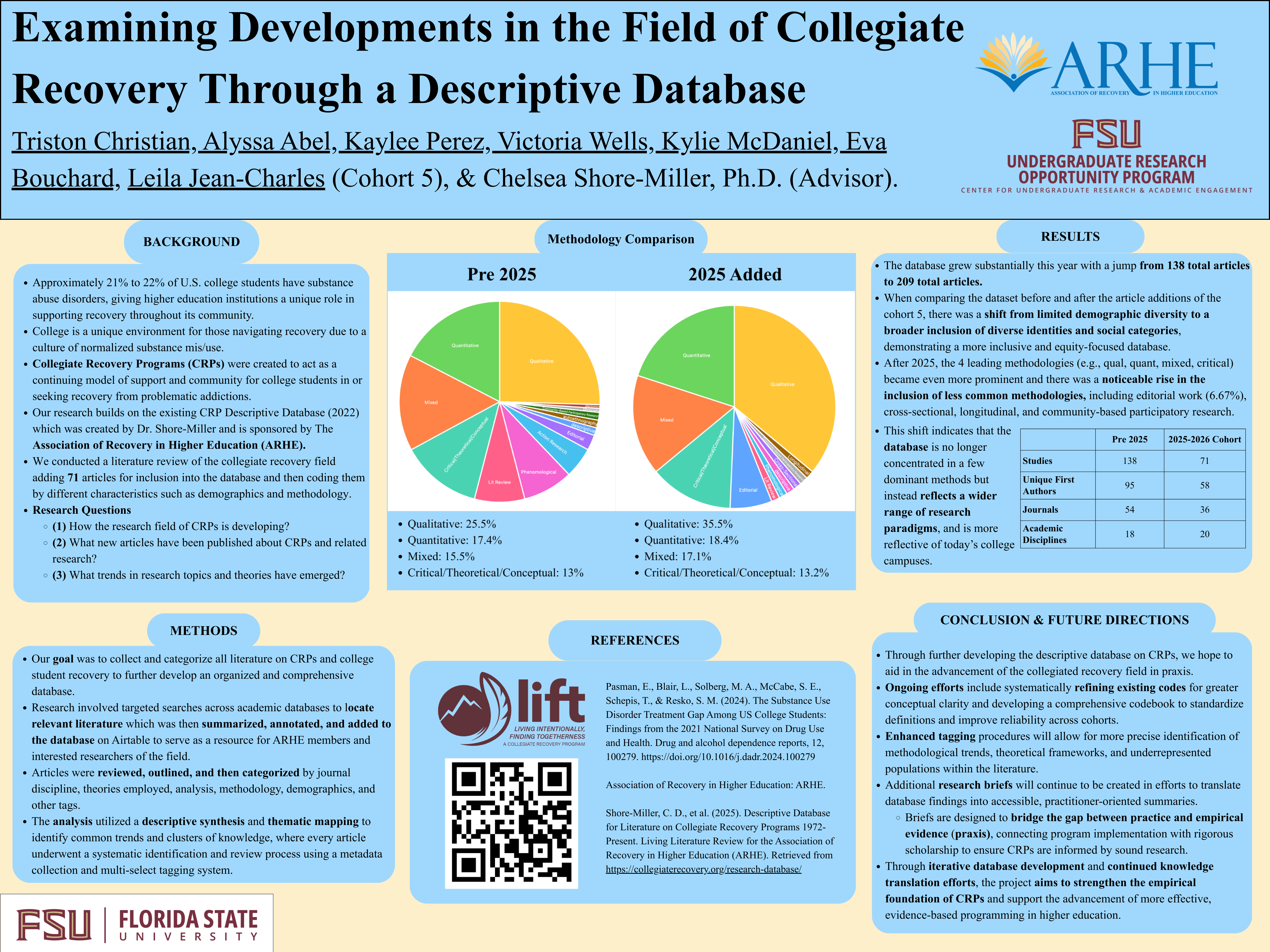
Collegiate Recovery Programs (CRP) are university sponsored support for students who are going through substance misuse or addiction. CRP research is still in its infancy, which results in scattered and dispersed peer-reviewed articles. A centralized way to access and understand the existing literature is beneficial to both scholars and practitioners for improving the praxis of these programs with evidence-based research. Our goal is to improve and grow the descriptive database of CRP research. The research team identified and annotated 72 new articles in the growing body of literature to make it accessible for the CRP Research Lab and the wider academic community. We use the methods of systematic identification of literature review that are related to collegiate recovery. We use the metadata such as the Author, Year, and Journal Discipline to start our data points. Then we use a multi-select tagging system that are based on Primary Outcomes, Populations, Theories, Methodology, and Mechanisms of Care. This database serves as a foundational resource for the Association of Recovery in Higher Education (ARHE), providing scholars and practitioners with the data necessary to implement evidence-based support systems and improve educational outcomes for students in recovery. Future research would focus on simplifying the data into a more streamlined and accessible format, as currently it is under a paywall. This would bridge the gap between the vast array of datasets and a practical application that can be used in schools across the country.
Keywords: Collegiate Recovery Programs, Descriptive Database
26th annual Undergraduate Research Symposium, April 1, 2026
Jacq Caughell Poster Session 4: 3:00 pm - 4:00 pm / Poster #138

BIO
Jacq Caughell is a second-year student pursuing a Bachelor of Science in Psychology with a minor in Women, Gender, and Sexuality Studies and has been awarded Dean's List and President's List academic awards for three consecutive semesters. They work as a research assistant in Dr. Andrea Meltzer's Attraction and Close Relationships lab studying the formation, maintenance, and deterioration of romantic relationships. After graduation, Jacq plans to pursue a doctorate in clinical psychology with a specialization in sexology.
Studying Attraction Through Virtual Speed Dating
Authors: Jacq Caughell, Dr. Andrea MeltzerStudent Major: Psychology
Mentor: Dr. Andrea Meltzer
Mentor's Department: Department of Psychology Mentor's College: College of Arts and Sciences Co-Presenters: David Kent
Abstract
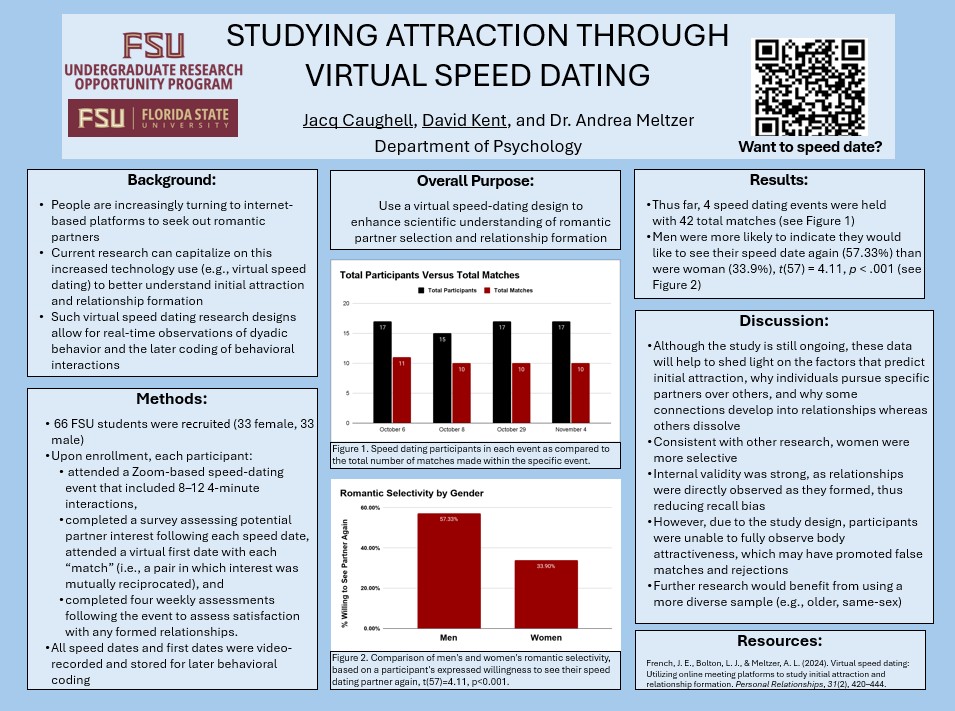
Presently, romantic selectivity and factors of initial attraction are poorly understood given the methodological challenges. To enhance understanding, studies have employed speed dating events to examine associations between an individual’s basic romantic preferences and their relationship outcome. To test these associations, participants aged 18-24 at Florida State University (N = 66; 33 = female, 33 = male) were enrolled in a virtual speed dating paradigm. These Zoom events consisted of 8 to 12 brief speed dates for each participant and surveys measuring partner interest were administered after each date. In pairs with reciprocated interest, virtual first dates were held, and follow-up surveys of partner satisfaction were administered over the next four weeks. Over the period of study, 4 speed dating events were hosted from October 6, 2025 to November 4, 2025. Results indicated that 42 total matches were formed, averaging 10.5 matches per event with 41 participants having at least one match. Both genders were about equally selective, as 21 females had at least one match (63.6%), while 20 males had at least one match (60.6%). These findings diverge from prior research suggesting women are more selective in identifying romantic partners, as both genders demonstrated about equal selectivity. This increases the possibility for new insights into attraction and relationship formation. Further research is needed to examine the relationship formation of individuals outside the profile of educated young adults, as well as to examine same-sex relationship formation.
Keywords: Psychology, Romantic relationships, Virtual speed dating
26th annual Undergraduate Research Symposium, April 1, 2026
Sawyer Cohen Poster Session 2: 10:45 am - 11:45 am / Poster #250
BIO
Sawyer Cohen is a senior majoring in behavioral neuroscience. He has worked in Dr. Linda Rinaman's lab for 4 semesters and is currently working on an undergraduate research thesis. His presentation at the symposium highlights work done prior to this thesis and the projects objectives and methods. He presented his work at last year's symposium and is building on these findings in his current thesis project. He plans to graduate from Florida State this summer and continue his education in graduate school with a goal of obtaining a PhD in neuroscience. He is passionate about the connection between cognitive health and movement and diet, and wants to research how exercise can impact the brain.
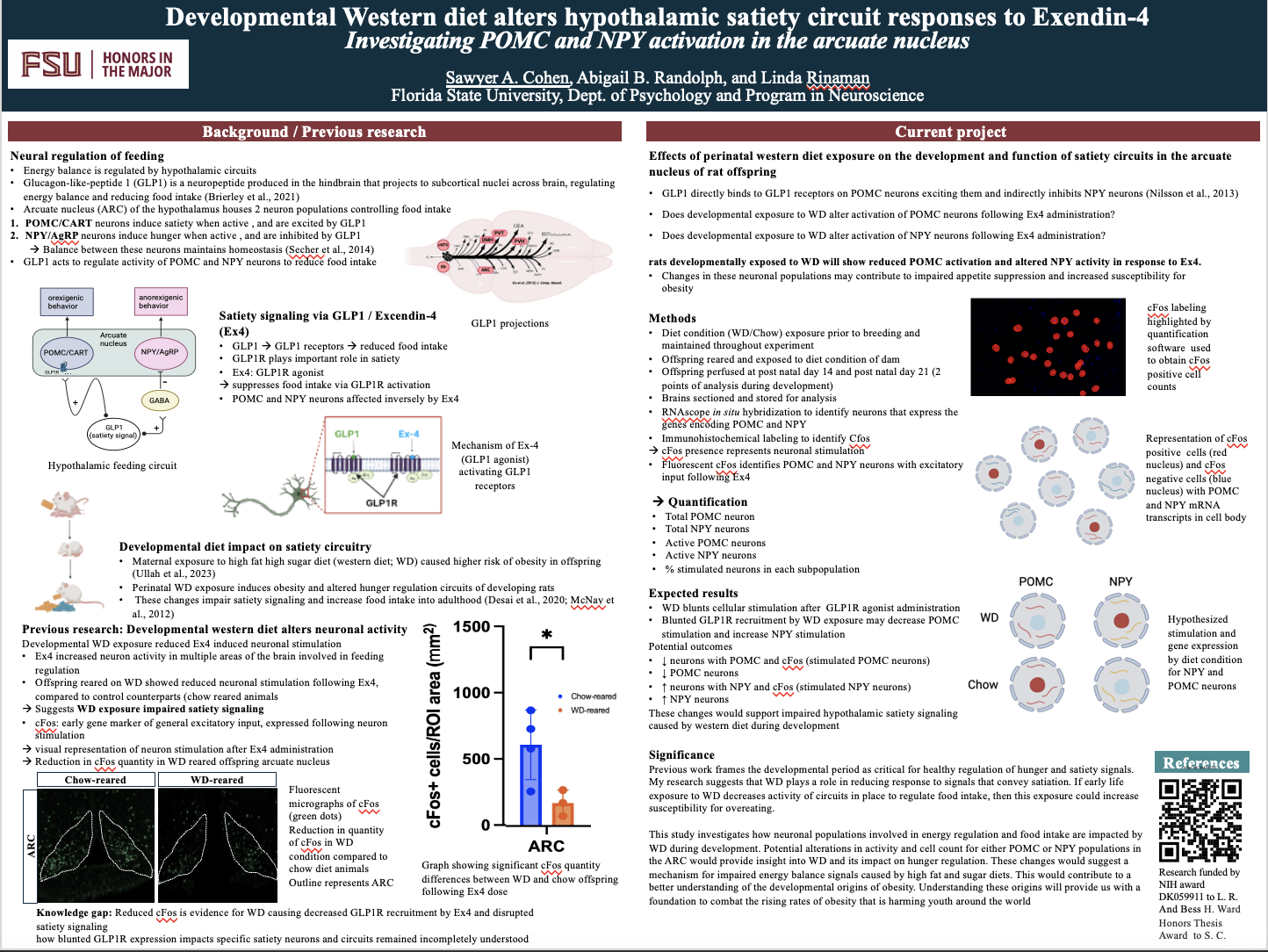
Developmental Western diet alters hypothalamic satiety circuit responses to Exendin-4
Authors: Sawyer Cohen, Linda RinamanStudent Major: Behavioral Neuroscience
Mentor: Linda Rinaman
Mentor's Department: psychology Mentor's College: Arts and sciences Co-Presenters:
Abstract
Obesity is a growing epidemic, especially in the western world. Understanding the mechanisms through which over eating causes obesity is a step towards combating the numerous health risks following obesity. Using a rodent model, I am investigating how developmental exposure to a high fat, high sugar and low protein diet (western diet) changes hunger regulation neurons in hypothalamic regions of rat offspring. It is known that western diet induces changes in central GLP1 neurons, which play a critical role in carrying out feelings of fullness and reducing food intake. These GLP1 neurons act on sub-populations of neurons in the hypothalamus to decrease hunger. Two important populations of neurons affected by GLP1 activity are POMC and NPY neurons. These populations work to regulate food intake through opposing effects, POMC neurons decrease eating while NPY neurons stimulate eating. Active GLP1 neurons increase POMC activity and decrease NPY activity. In previous work I discovered decreased GLP1 activity following a GLP1 agonist injection in developing rats exposed to western diet. To build on this, I plan to investigate how a GLP1 agonist alters activity of both POMC and NPY neurons in the hypothalamus of rat offspring. I hypothesize that changes in GLP1 neuron activity due to western diet will impact recruitment of POMC and NPY neurons following an exogenous satiety signal. I propose that POMC neuron activity, which is stimulated by GLP1, will be reduced, and NPY neurons, which are inhibited by GLP1, will be more active in western diet conditions.
Keywords: Diet GLP1 satiety obesity
26th annual Undergraduate Research Symposium, April 1, 2026
Manal Abdurazik Poster Session 4: 3:00 pm - 4:00 pm / Poster #150
BIO
Manal Abdurazik is a first-year sophomore majoring in Chemistry and pursuing a Bachelor of Science degree. She is interested in the medical field and is working toward building a strong background in science through her coursework and research experiences.
Currently, Manal is involved in a research project titled Observing African Classrooms Through the Teaching Through Interactions Framework Lens. This project focuses on examining classroom environments and teaching practices in African schools. Through this research, Manal observes how teachers interact with students and studies how these interactions can influence student learning and classroom engagement.
Manal conducts this research under the mentorship of Adrienne Barnes-Story, who guides her through the research process and supports her academic growth. This experience has allowed her to learn more about educational research and how observation frameworks can be used to study teaching practices. After graduating, Manal hopes to pursue an MD degree and become a physician.
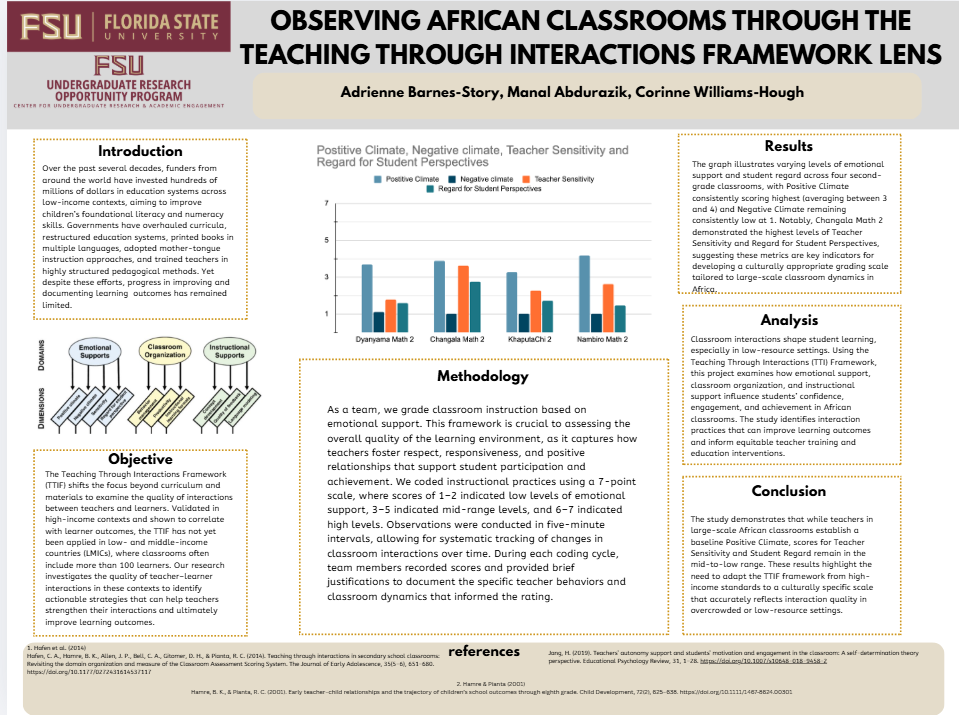
Observing African classrooms through the Teaching Through Interactions Framework lens
Authors: Manal Abdurazik, Adrienne Barnes-StoryStudent Major: Chemistry
Mentor: Adrienne Barnes-Story
Mentor's Department: Learning Systems Institute (LSI) Mentor's College: Anne's College Co-Presenters: Corinne Williams-Hough
Abstract
Classroom interactions play a critical role in shaping student learning outcomes, especially in low-resource educational environments. This project examines how teacher–student interactions influence students’ confidence, engagement, and overall academic development in African classrooms. Using the Teaching Through Interactions (TTI) Framework, the study analyzes three key dimensions: emotional support, classroom organization, and instructional support. Prior observations suggest that supportive and responsive teaching practices increase students’ participation and strengthen their belief in their academic abilities. By systematically examining these interaction patterns, this study aims to better understand how effective classroom practices contribute to improved learning outcomes. The findings may help inform teacher training programs and educational interventions designed to foster equitable and supportive learning environments.
Keywords: classrooms, Africa, observing
26th annual Undergraduate Research Symposium, April 1, 2026
Cameron Goodwin Poster Session 4: 3:00 pm - 4:00 pm / Poster #14

BIO
Cameron Goodwin is a sophomore in the Honors Program studying Nutritional Science and obtaining a minor in Spanish Language. She is on a Pre Medical track in hopes to become a doctor and currently works as a Optometrists Technician at a local private practice. Cameron's desire to be involved in research stemmed from her interest in Immunology, specifically because her chronic autoimmune disease and past experience as an Allergy Technician.
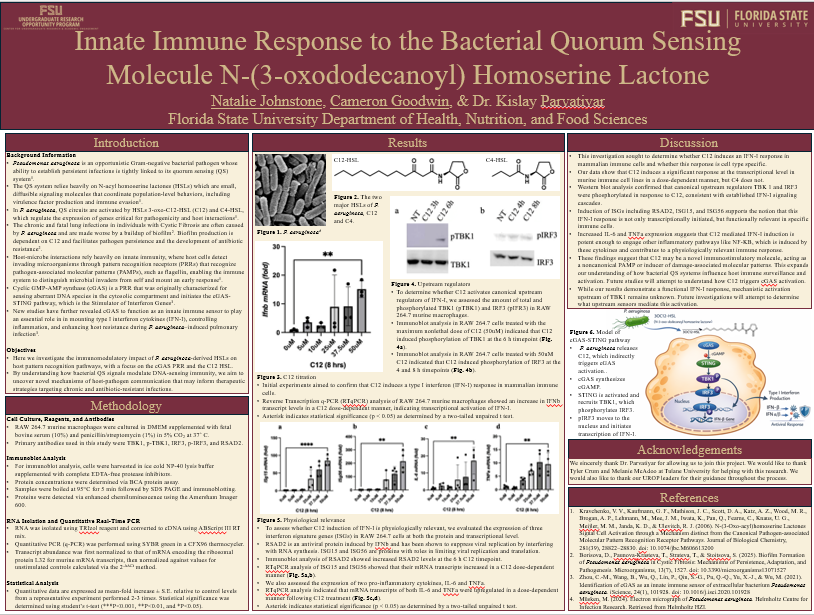
Innate Immune Response to the Bacterial Quorum Sensing Molecule N-(3-oxododecanoyl) Homoserine Lactone
Authors: Cameron Goodwin, Dr. Kislay ParvatiyarStudent Major: Food and Nutritional Science
Mentor: Dr. Kislay Parvatiyar
Mentor's Department: Health, Nutrition, and Food Sciences Mentor's College: Anne Spencer Daves College of Education, Health, and Human Sciences Co-Presenters: Natalie Johnstone
Abstract
The chronic lung disease, Cystic Fibrosis, is caused by a buildup of biofilm produced by Pseudomonas aeruginosa. The production of this biofilm is dependent on the specific bacterial quorum sensing (QS) molecule, N-(3-oxo-dodecanoyl) homoserine lactone, known as C12. QS molecules are increasingly recognized as critical mediators of host-pathogen interactions, yet their direct impact on innate immune signaling remains incompletely defined. Utilizing the murine macrophage cell line RAW 264.7, we tested how C12 and N-butyryl homoserine lactone (C4) produce type 1 Interferon (IFN-I) cytokine expression. Our data demonstrated that C12, not C4, robustly induces IFN-I cytokine expression, revealing a previously underappreciated facet of QS-mediated host signaling. Immunoblot analyses further revealed that C12 promotes the phosphorylation and activation of interferon regulatory factor 3 (IRF3), a transcription factor necessary to IFN-I gene induction. To define the upstream signaling pathways responsible for IRF3 activation, we employed selective small-molecule inhibitors targeting pattern recognition receptor (PRR) pathways in order to detect their effects on the entire interferon production process. Through more data analysis it was found that C12 can lead to the production of IFN-I, which mediates the JAK-STAT pathway allowing for interferon signature gene production. This may indicate that C12 is a pathogen associated molecular pattern detected by PRRs, which allows us to study how interferons can support or hinder P. aeruginosa. These results provide new insight into the molecular mechanisms by which P. aeruginosa manipulates macrophage responses and highlight QS molecules as potential modulators of STING-driven inflammatory pathways.
Keywords: Immunology, Human Health, Microbiology, Disease, Immune system
26th annual Undergraduate Research Symposium, April 1, 2026
Alexander Bayramov Poster Session 3: 1:45 pm - 2:45 pm / Poster #69
BIO
Alexander Bayramov is a first-year honors student in the Undergraduate Research Opportunity Program (UROP) pursuing a Bachelor of Science in Exercise Physiology. Through UROP, he has gained research experience working on a finance-based project, which provided him with a strong foundation in data analysis, critical thinking, and the research process. As an honors student, Alexander is eager to apply the research skills he developed to future work in the medical field. His academic interests center on human physiology, health, and the role of exercise in improving overall well-being. After completing his undergraduate degree, he plans to attend medical school, where he hopes to combine clinical practice with research to contribute to advancements in patient care and health outcomes.
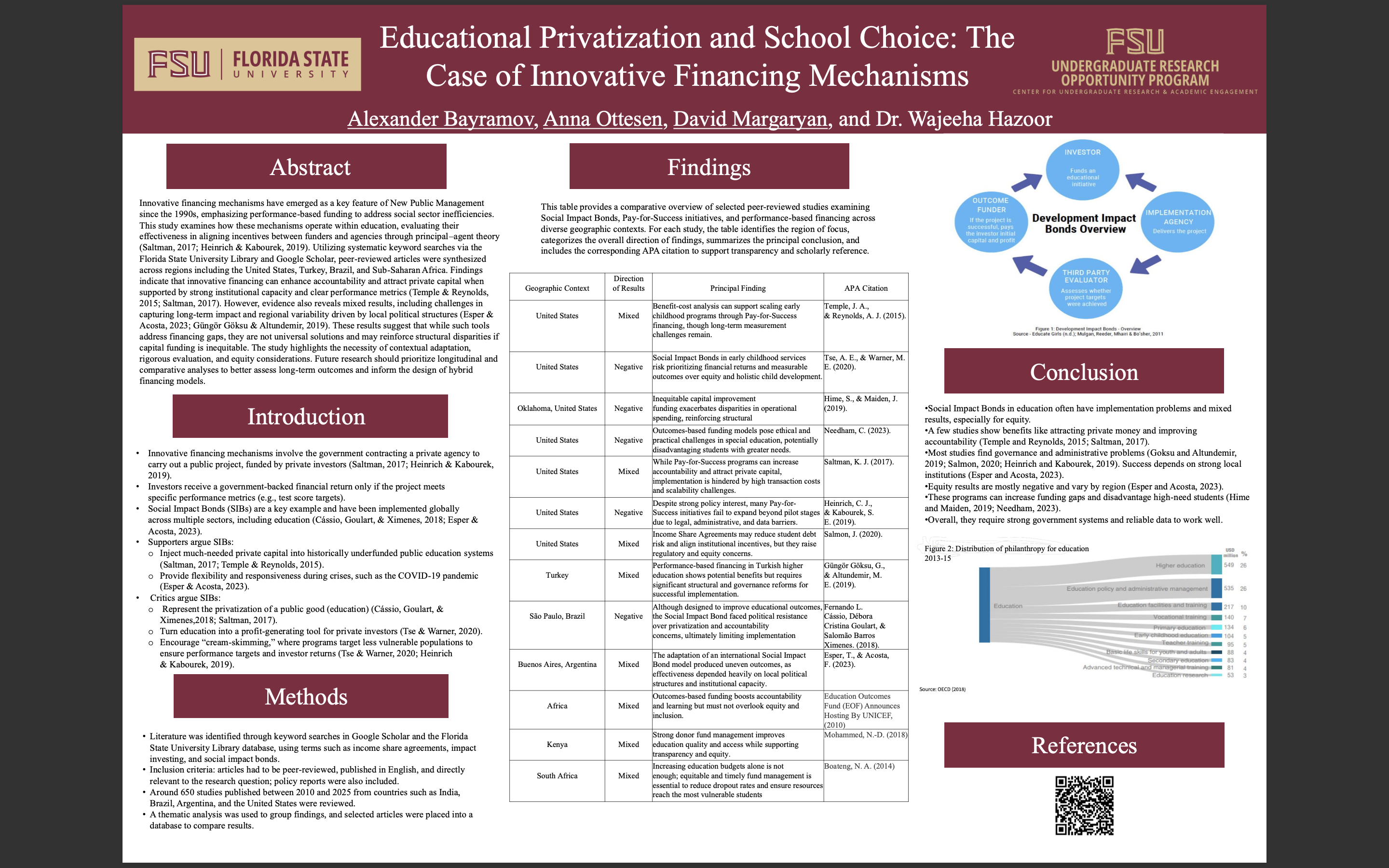
Educational Privatization and School Choice: The Case of Innovative Financing Mechanisms
Authors: Alexander Bayramov, Dr. Wajeeha Hazoor BajwaStudent Major: Exercise physiology
Mentor: Dr. Wajeeha Hazoor Bajwa
Mentor's Department: Office of Research Mentor's College: Anne's College Co-Presenters: Anna Ottesen, David Margaryan
Abstract
Innovative financing mechanisms have emerged as a key feature of New Public Management since the 1990s, emphasizing performance-based funding to address social sector inefficiencies. This study examines how these mechanisms operate within education, evaluating their
effectiveness in aligning incentives between funders and agencies through principal–agent theory (Saltman, 2017; Heinrich & Kabourek, 2019). Utilizing systematic keyword searches via the Florida State University Library and Google Scholar, peer-reviewed articles were synthesized
across regions including the United States, Turkey, Brazil, and Sub-Saharan Africa. Findings indicate that innovative financing can enhance accountability and attract private capital when supported by strong institutional capacity and clear performance metrics (Temple & Reynolds,
2015; Saltman, 2017). However, evidence also reveals mixed results, including challenges in capturing long-term impact and regional variability driven by local political structures (Esper & Acosta, 2023; Güngör Göksu & Altundemir, 2019). These results suggest that while such tools
address financing gaps, they are not universal solutions and may reinforce structural disparities if capital funding is inequitable. The study highlights the necessity of contextual adaptation, rigorous evaluation, and equity considerations. Future research should prioritize longitudinal and comparative analyses to better assess long-term outcomes and inform the design of hybrid financing models.
Keywords: Financial Mechanisms, Social Impact Bonds
26th annual Undergraduate Research Symposium, April 1, 2026
Ryan Coudurier Poster Session 4: 3:00 pm - 4:00 pm / Poster #234

BIO
Ryan Coudurier is a second year chemistry undergraduate at Florida State University. He has strong interest in nanoplastic separation and polymer chemistry. He spent the summer of 2025 at Louisiana State University researching the polymerization of a polypeptoid capable of surpassing the leading polymer in drug delivery applications with Anuja Thapa and Dr. Donghui Zhang. As of 2026, he works with Dr. Jizhe Cai and Taylor Joseph to optimize carbon nanofiber filters capable of removing nanoplastic particles from drinking water. He finds deep satisfaction in work combatting environmental destruction and preserving human health.
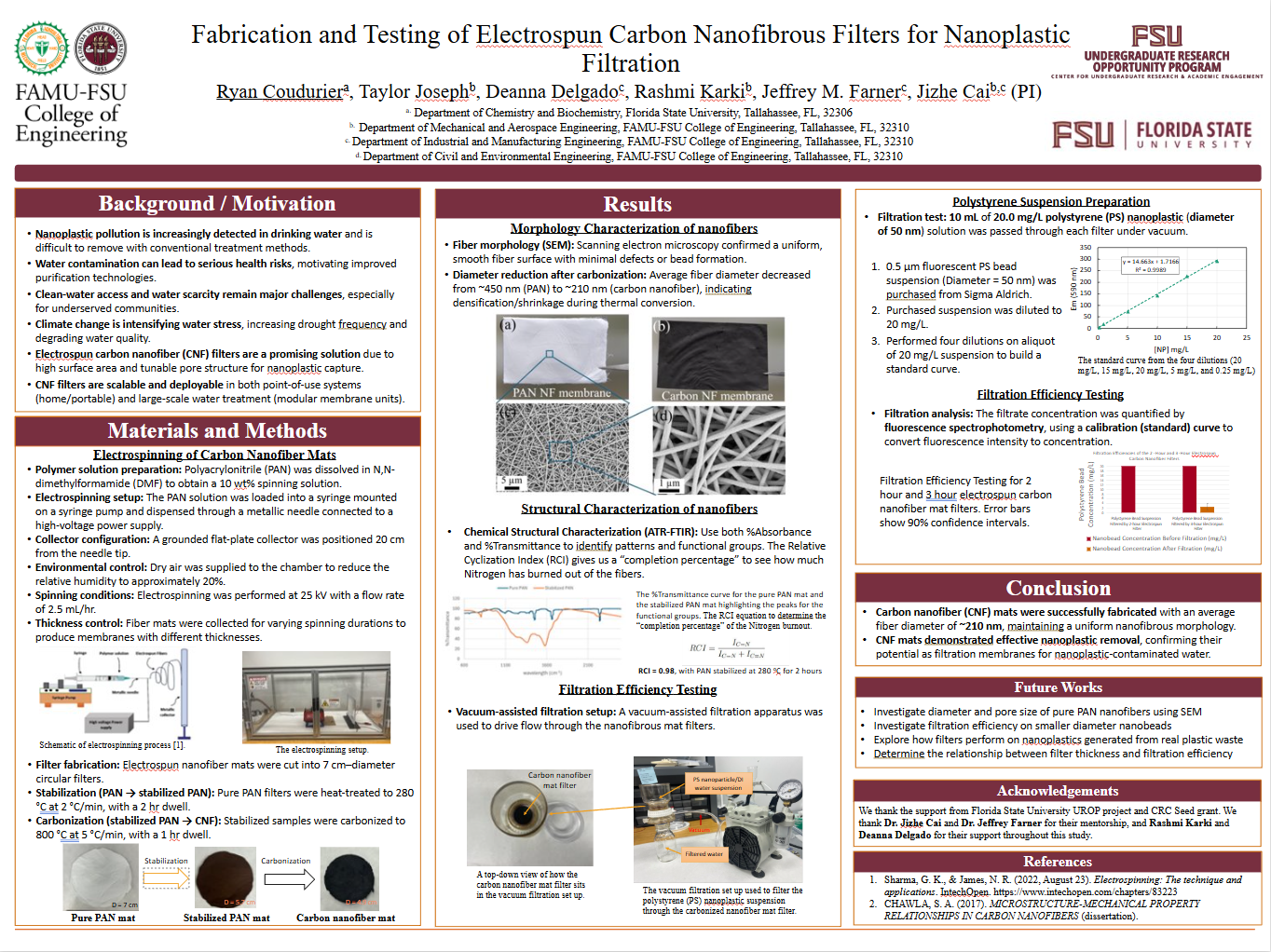
Electrospinning, Characterization, and Testing of Carbon Nanofibrous Filters for Nanoplastic Filtration
Authors: Ryan Coudurier, Jizhe CaiStudent Major: Chemistry
Mentor: Jizhe Cai
Mentor's Department: Mechanical Engineering Mentor's College: FSU-FAMU College of Engineering Co-Presenters:
Abstract
Nanoplastic pollution has become ubiquitous in drinking water globally. A consequence of this is the buildup of nanoplastic particles in almost every human organ, causing potential health complications. Nanoplastic filtration systems could significantly reduce human exposure. Cellulose fiber filters have shown success in filtering nanoplastic particles, but they fail to completely filter water with higher nanoplastic concentrations in one passage. Carbon nanofibers produced by electrospinning poly(acrylonitrile) (PAN) onto a flat plate collector are promising candidates for nanoplastic filters because their random distribution may aid in trapping small particles. We electrospun different diameters of PAN nanofibers and carbonized them to obtain carbon nanofibers, whose filtration efficiencies were measured using 0.5 μm fluorescent polystyrene suspensions of various concentrations. We then introduced poly(methyl methacrylate) into PAN nanofibers of the same diameters to obtain porous carbon nanofibers, whose filtration efficiencies were tested in the same manner. We also used different collectors to alter the alignment of both types of fibers and tested their filtration efficiencies. Carbon nanofiber filters produced in this study achieved filtration efficiencies greater than or equal to 98.75% when filtering a 20 mg/L suspension of 0.5 μm-diameter polystyrene particles. Experimentation is ongoing, but filters made from porous carbon nanofibers are expected to have greater flux than those made from non-porous carbon nanofibers. High-efficiency carbon nanofiber filters could be distributed as individual filtration devices, or they could be employed at water treatment facilities.
Keywords: Filtration, Nanofiber, Nanoplastic, Spectrophotometry, Flux
26th annual Undergraduate Research Symposium, April 1, 2026
Alex Rapp Poster Session 3: 1:45 pm - 2:45 pm / Poster #151
BIO
Alex Rapp is a second-year student at Florida State University pursuing a Bachelor of Science in Biological Science on the pre-med track. Their research interests center on the psychological and behavioral mechanisms underlying suicide risk and prevention. As part of the Undergraduate Research Opportunity Program (UROP), Alex works under the mentorship of Sara Prostko and Dr. Thomas Joiner, examining how perceived burdensomeness, thwarted belongingness, and acquired capability relate to decision-making latency in suicide-related virtual reality scenarios. Through this work, Alex is gaining experience in psychological research methods and data analysis. In the future, they hope to attend medical school and pursue a career in neurology.
Predicting Decision Latency in Suicide-Related Virtual Reality: The Role of Perceived Burdensomeness, Thwarted Belongingness, and Capability
Authors: Alex Rapp, Sara ProstkoStudent Major: Biological Sciences
Mentor: Sara Prostko
Mentor's Department: Department of Psychology Mentor's College: College of Arts and Sciences Co-Presenters: Hansini Reddy
Abstract
Suicide remains a leading cause of death worldwide, with complex and multifactorial psychological contributors. The Interpersonal Theory of Suicide (ITS) posits that a combination of perceived burdensomeness (PB), thwarted belongingness (TB), and capability for suicide are necessary for a lethal or near-lethal suicide attempt to occur. The present study utilized virtual reality (VR) to examine whether the ITS predicts decision latency during suicide-related VR scenarios. After providing informed consent, participants (n = 39) completed surveys assessing ITS constructs. Then, participants completed four VR suicide scenarios randomized by a Latin balance design. In each scenario, participants chose between a suicide-related option and a neutral alternative, and reaction time was recorded. We hypothesized that higher capability would predict shorter decision times, that higher PB and TB would predict longer decision times for non-suicide choices, and that capability would remain predictive when accounting for PB and TB. Linear regression analyses, including stepwise models, indicated that none of these relationships reached statistical significance. These findings were preliminary and may have been underpowered due to sample size and incomplete data. Further research should increase sample size and control for possible confounding variables such as prior VR experience and demographic differences. Despite these largely non-significant findings, this study demonstrates that VR can be used to measure objective behavioral decision-making processes in suicide-related contexts. The findings also represent a continued need to investigate decision latency as a potential marker for mechanisms involved in the transition from suicidal ideation to behavior.
Keywords: Psychology, suicide, virtual reality
26th annual Undergraduate Research Symposium, April 1, 2026
Brooklyn Zappin Poster Session 4: 3:00 pm - 4:00 pm / Poster #220
BIO
Brooklyn Zappin is a freshman at Florida State University pursuing a Bachelor of Science in Statistics. She is passionate about mathematics and data analysis and enjoys applying statistical thinking to real-world problems. At Florida State, Brooklyn conducts research with Dr. Aleksandra Zimmerman, where she is developing early experience in academic research and strengthening her analytical skills. She is also an active member of the sorority Alpha Gamma Delta, where she serves as Director of Senior Experiences and helps organize events that foster community within the chapter. Outside the classroom, Brooklyn plays club tennis and has a strong interest in the sport. She has also worked for nearly two years as a social media manager for Cracked Racquets, where she creates digital content focused on college tennis and developments in the professional tennis world. Looking ahead, Brooklyn hopes to combine her passion for statistics with her interest in tennis by pursuing a career that connects data, sports, and analytics.
Do Nonprofits Benefit from Being Audited by Issuer Audit Partners?
Authors: Brooklyn Zappin, Dr. Aleksandra ZimmermanStudent Major: Statistics
Mentor: Dr. Aleksandra Zimmerman
Mentor's Department: Accounting Mentor's College: College of Business Co-Presenters: Megi Gvinjilia, Peyton Zawodzinski
Abstract
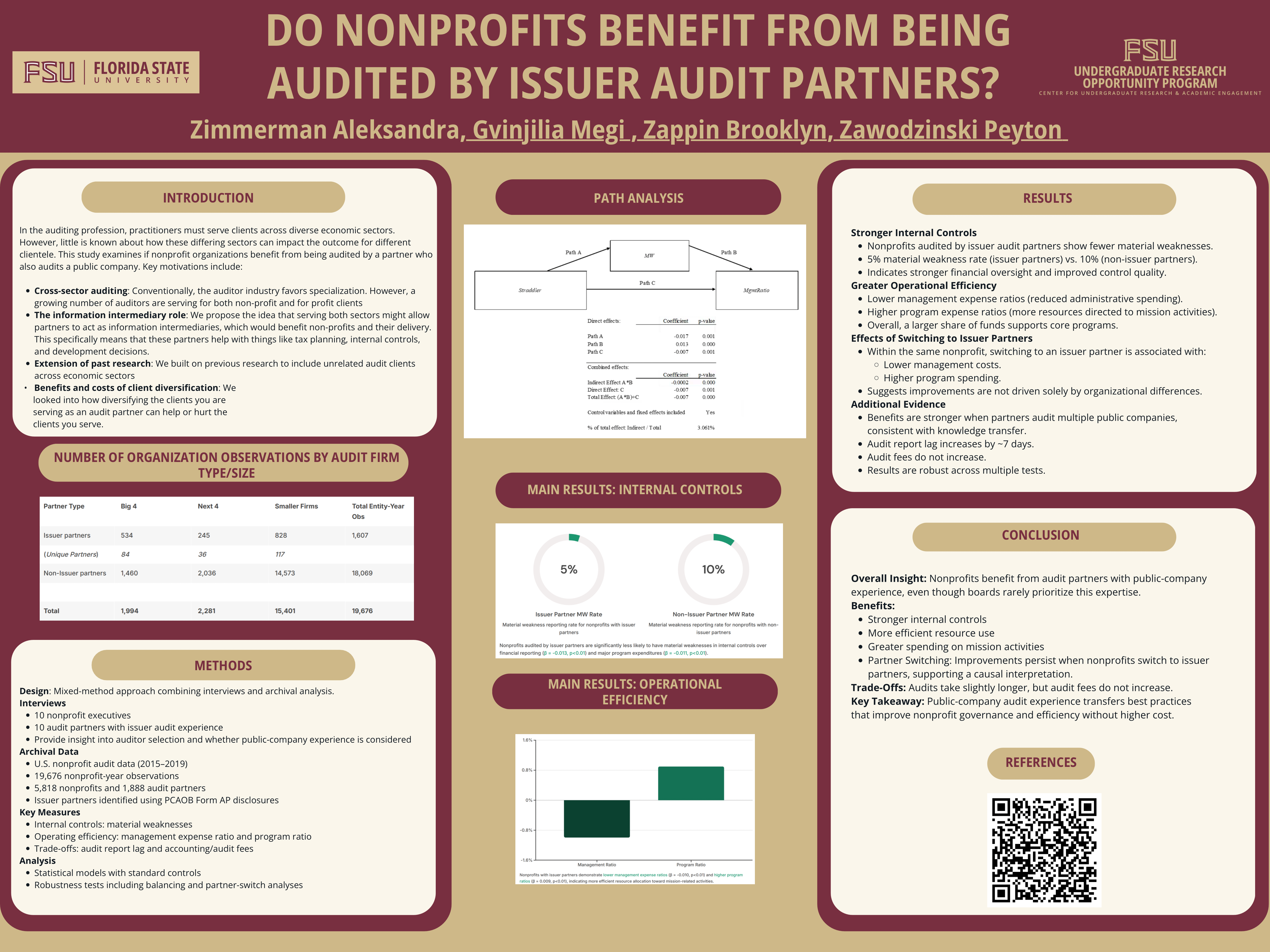
This study examines whether nonprofits benefit from being audited by partners who also audit public companies (“issuer partners”). Based on interviews with 20 nonprofit directors and issuer audit partners, we explore how cross-sector audit experience may shape nonprofit outcomes. Although nonprofit directors consistently prioritize nonprofit-specific expertise and rarely consider public company experience in their selection process, issuer partners describe sharing best practices in internal controls and operations learned from their public company clients.
We then test these ideas using 19,676 nonprofit-year observations from 2015–2019. Compared to nonprofits audited by non-issuer partners, those audited by issuer partners are significantly less likely to report material weaknesses in financial reporting and major programs. They also exhibit greater operational efficiency, reflected in lower management expense ratios and higher program ratios. These effects are more pronounced when partners have deeper public company experience, consistent with cross-sector knowledge transfer.
While nonprofits with issuer partners experience slightly longer audit report lags, we find no evidence of higher audit fees. Our results remain robust to entropy balancing, partner-switch analyses with organization fixed effects, and additional sensitivity tests. Overall, the findings suggest that issuer partners act as information intermediaries across sectors, generating measurable benefits for nonprofits while introducing modest reporting delays.
Keywords: Accounting, auditing, nonprofit
26th annual Undergraduate Research Symposium, April 1, 2026
Oluwadara Soremi Poster Session 1: 9:30 am - 10:30 am / Poster #263

BIO
Oluwadara Soremi is in her second year studying at Florida State University within the honors program. She is a student athlete majoring in computational biology with an interest in understanding how she can use the intersection between computation and biology to help others. After she finishes undergrad, she plans to continue her education in medical school. Oluwadara's current research lab employs human blood, assays, coagulants, and anticoagulants to build a standard of care for those suffering from Cannabinoid-Associated Coagulopathy. She enjoys volunteering at local schools when she can and spending summers working at a vein clinic in her hometown.
Clotting Under the Influence: a Coagulation Assay for Cannabinoid Research
Authors: Oluwadara Soremi, Dr. Rojan SaghianStudent Major: Computational Biology
Mentor: Dr. Rojan Saghian
Mentor's Department: Chemical and Biomedical Engineering Mentor's College: FAMU-FSU College of Engineering Co-Presenters: Domenica Jaramillo
Abstract
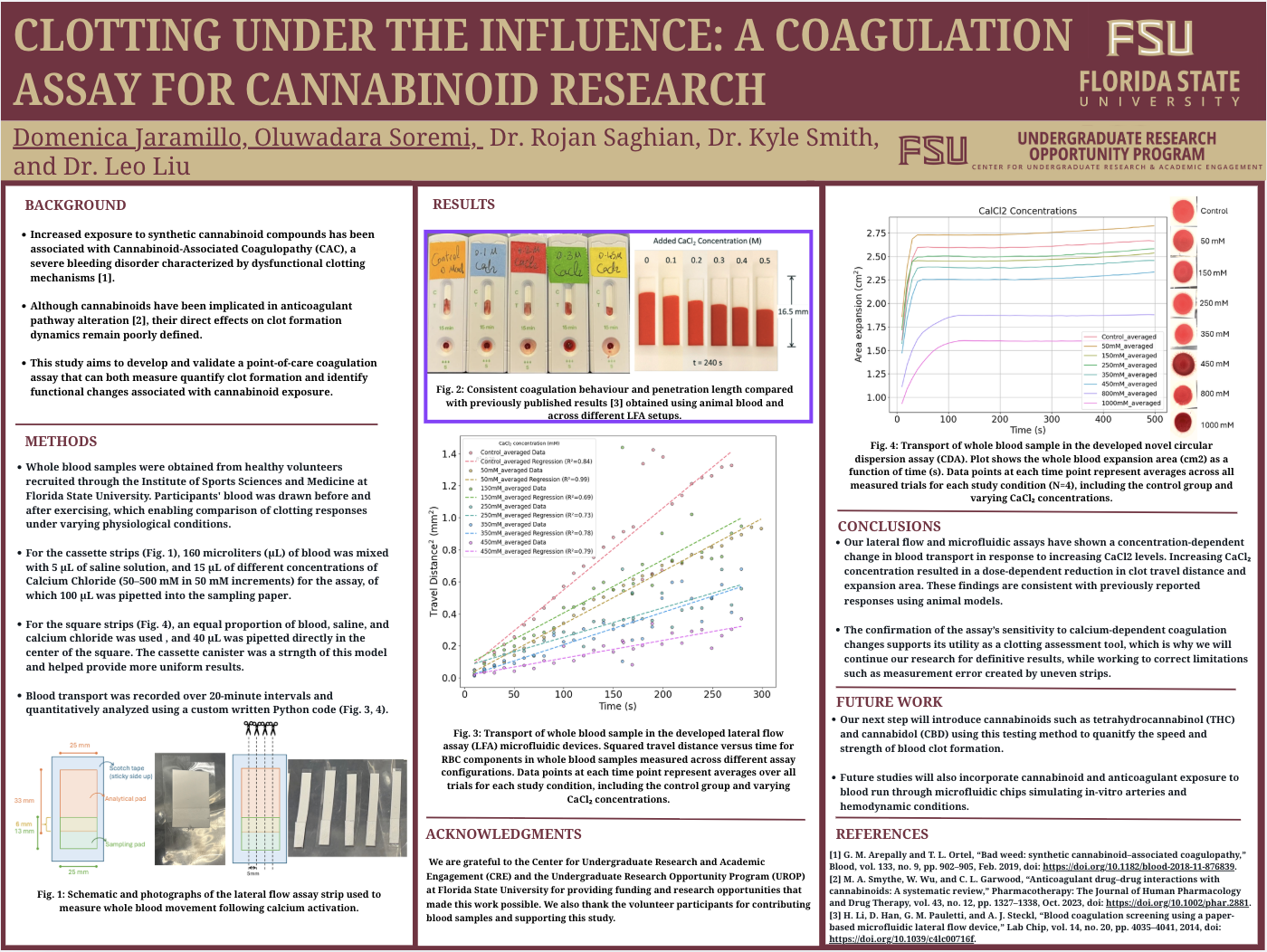
Cannabinoid-Associated Coagulopathy (CAC), a bleeding disorder linked to the use of synthetic cannabis, has seen a recent surge in cases that indicates an urgent need for rapid and personalized tools to assess coagulation risks. This research investigates the clinical implications of CAC and help develop a point-of-care coagulation assay that can measure a patient’s clotting capacity and detect changes in anticoagulant therapy efficacy brought about by cannabinoid exposure.
Investigating the interaction between cannabinoids (THC [tetrahydrocannabinol] and CBD [cannabidiol]) and anticoagulants (heparin and citrate) will provide insight into concerns surrounding the safety and use of Medical Marijuana in patients undergoing anticoagulant therapies. A lateral-flow-based microfluidic technique, designed to simulate blood flow conditions that favor clotting, was used. Different concentrations of calcium chloride and protamine are the established methods utilized in controlling coagulation. Samples of the blood were transferred onto the lateral flow assays to be analyzed by the length taken up on each strip and the time it took to do so.
Consistent coagulation behavior throughout the trial’s results showed the length that the blood traveled decreased as the coagulant concentration increased over a set time span. Considering the viscosity of blood changes with its coagulation ability, the distance blood travels is directly related to clotting rate. Also seen was clear CBD-dependent anticoagulation after heparinized and citrated blood were neutralized with their respective counterparts.
This study’s findings aim to make treatment of CAC patients and monitoring of anticoagulant therapies safer and more efficient in a growing population of cannabis users.
Keywords: Coagulation, Cannabinoid, and disorder
26th annual Undergraduate Research Symposium, April 1, 2026
Jennifer Scheckowitz Poster Session 4: 3:00 pm - 4:00 pm / Poster #80
BIO
Jennifer Scheckowitz is a Physical Science major and Mathematics minor at Florida State University. She is currently a researcher at the National High Magnetic Research Laboratory. Her research focuses on using digital microscopy techniques to photograph rock and mineral surfaces at high magnifications.
Photomicrography of Rocks and Minerals
Authors: Jennifer Scheckowitz, Jamel AliStudent Major: Physical Science
Mentor: Jamel Ali
Mentor's Department: Department of Chemical and Biomedical Engineering Mentor's College: FAMU-FSU College of Engineering Co-Presenters:
Abstract
In this project, I took photomicrographs of the surfaces of various geological subjects with the end goal of submitting a photograph to the 2026 Nikon Small World contest. This occurred under the usage of multiple different types of microscopes, such as the Keyence VHX-7000, Nikon Ni-U, and the Leica EZ4 microscopes. Because my portfolio is focused on geology, I took photographs of a multitude of different rocks and minerals to capture the ideal pictures for my project. Since these subjects were not flat, I mainly used the digital Keyence microscope. The process of capturing an image typically includes finding the right angle, experimenting with the light settings, and using a depth composition feature. Outside of the aesthetic appeal, geological microscopy is an extremely effective learning tool for students and amateur geologists. While many geological subjects may look identical to the naked eye, employing a microscope reveals fascinating new structures and hidden differences between them. This work highlights structural features that often go unnoticed, revealing a whole new world just on the surface of a rock.

Keywords: Geology, microscopy, Bioart, Mineralogy
26th annual Undergraduate Research Symposium, April 1, 2026
Jacquelle Jean Jacques Poster Session 1: 9:30 am - 10:30 am / Poster #171

BIO
Jacquelle Jean Jacques is a second-year junior at Florida State University pursuing a Bachelor of Science in Finance and a Bachelor of Science in Political Science. Jacquelle is a research mentee in Florida State University’s Undergraduate Research Opportunity Program (UROP), where she conducts research examining the impacts of natural disasters on health insurance coverage. Through this experience, she has developed skills in policy analysis, data interpretation, and analytical writing while working closely with faculty mentors and presenting her research findings.
In addition to her research, Jacquelle serves as an Ambassador for EarthEcho International’s Marine Plastics Program, a nonprofit initiative focused on environmental conservation. In this role, she researches the impacts of marine plastic pollution on public health and hopes to connect with legislators this summer to discuss policy solutions addressing plastic pollution and its effects on community health.
After completing her undergraduate studies, Jacquelle plans to attend law school and pursue a career as an attorney working in health policy and medical malpractice, where she hopes to advocate for policies that improve healthcare access and protections for patients.
THE IMPACT OF NATURAL DISASTERS ON HEALTH IN THE UNITED STATES
Authors: Jacquelle Jean Jacques, Patricia BornStudent Major: Political Science and Finance
Mentor: Patricia Born
Mentor's Department: RMI, REE & Legal Studies Mentor's College: Herbert Wertheim College of Business Co-Presenters:
Abstract
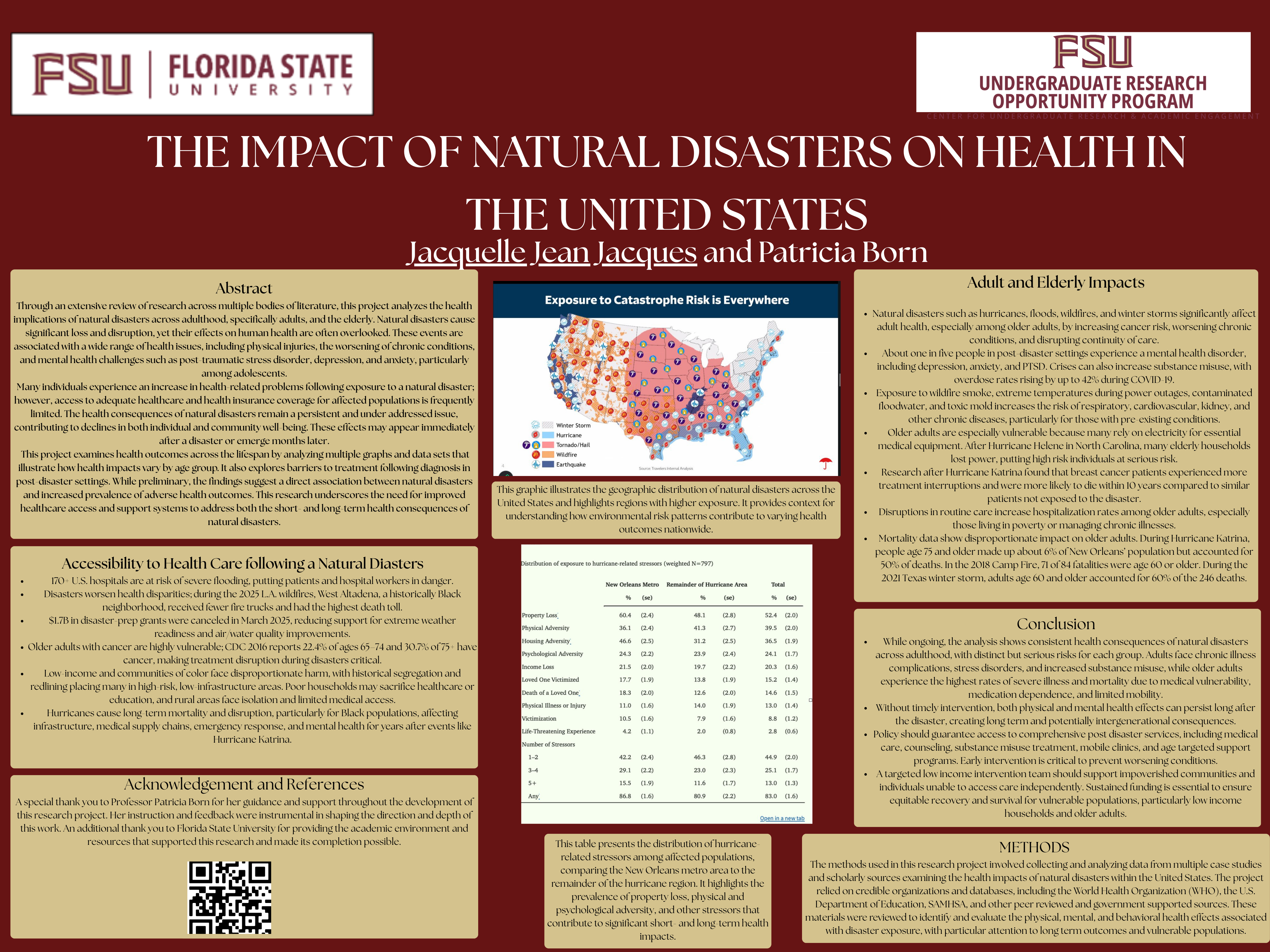
Through an extensive review of research across multiple bodies of literature, this project analyzes the health implications of natural disasters across adulthood, specifically adults, and the elderly. Natural disasters cause significant loss and disruption, yet their effects on human health are often overlooked. These events are associated with a wide range of health issues, including physical injuries, the worsening of chronic conditions, and mental health challenges such as post-traumatic stress disorder, depression, and anxiety, particularly among adolescents.
Many individuals experience an increase in health-related problems following exposure to a natural disaster; however, access to adequate healthcare and health insurance coverage for affected populations is frequently limited. The health consequences of natural disasters remain a persistent and under addressed issue, contributing to declines in both individual and community well-being. These effects may appear immediately after a disaster or emerge months later.
This project examines health outcomes across the lifespan by analyzing multiple graphs and data sets that illustrate how health impacts vary by age group. It also explores barriers to treatment following diagnosis in post-disaster settings. While preliminary, the findings suggest a direct association between natural disasters and increased prevalence of adverse health outcomes. This research underscores the need for improved healthcare access and support systems to address both the short- and long-term health consequences of natural disasters.
Keywords: Health, natural disasters, mental health
26th annual Undergraduate Research Symposium, April 1, 2026
Antonio Kraus Poster Session 4: 3:00 pm - 4:00 pm / Poster #116

BIO
Anthony Kraus is a sophomore at Florida State University pursuing a Bachelor of Science in Public Health on the pre-Physician Assistant track. Originally from South Florida, his academic interests include dermatology, preventative health, and the intersection between digital media and public health.
Anthony is a researcher in Florida State University’s Undergraduate Research Opportunity Program (UROP) under the mentorship of Dr. Vanessa Dennen. His research examines how social media algorithms influence the content young users are exposed to and how this exposure may shape behaviors, perceptions, and overall well-being. Through this work, he is interested in understanding how digital environments impact health communication and public health outcomes.
Outside of research, Anthony is actively involved in campus life. He plays club hockey at Florida State University, participates in intramural sports, and is a member of the Pre-Physician Assistant Club. He is also involved in Phi Delta Theta fraternity, where he participates in philanthropic and community initiatives. Additionally, he works as a lifeguard, reflecting his commitment to safety and community service.
Anthony has been recognized on the Dean’s List for academic achievement. After completing his undergraduate degree, he plans to attend Physician Assistant school and pursue a career in dermatology.
Online Information Ecosystems: Teens, Social Media, Algorithms
Authors: Antonio Kraus, Dr. Vanessa DennenStudent Major: Public Health
Mentor: Dr. Vanessa Dennen
Mentor's Department: Department of Educational Psychology & Learning Systems Mentor's College: Anne Spencer Daves College of Education Co-Presenters: Valeria Bohorquez, Maria Sanchez
Abstract
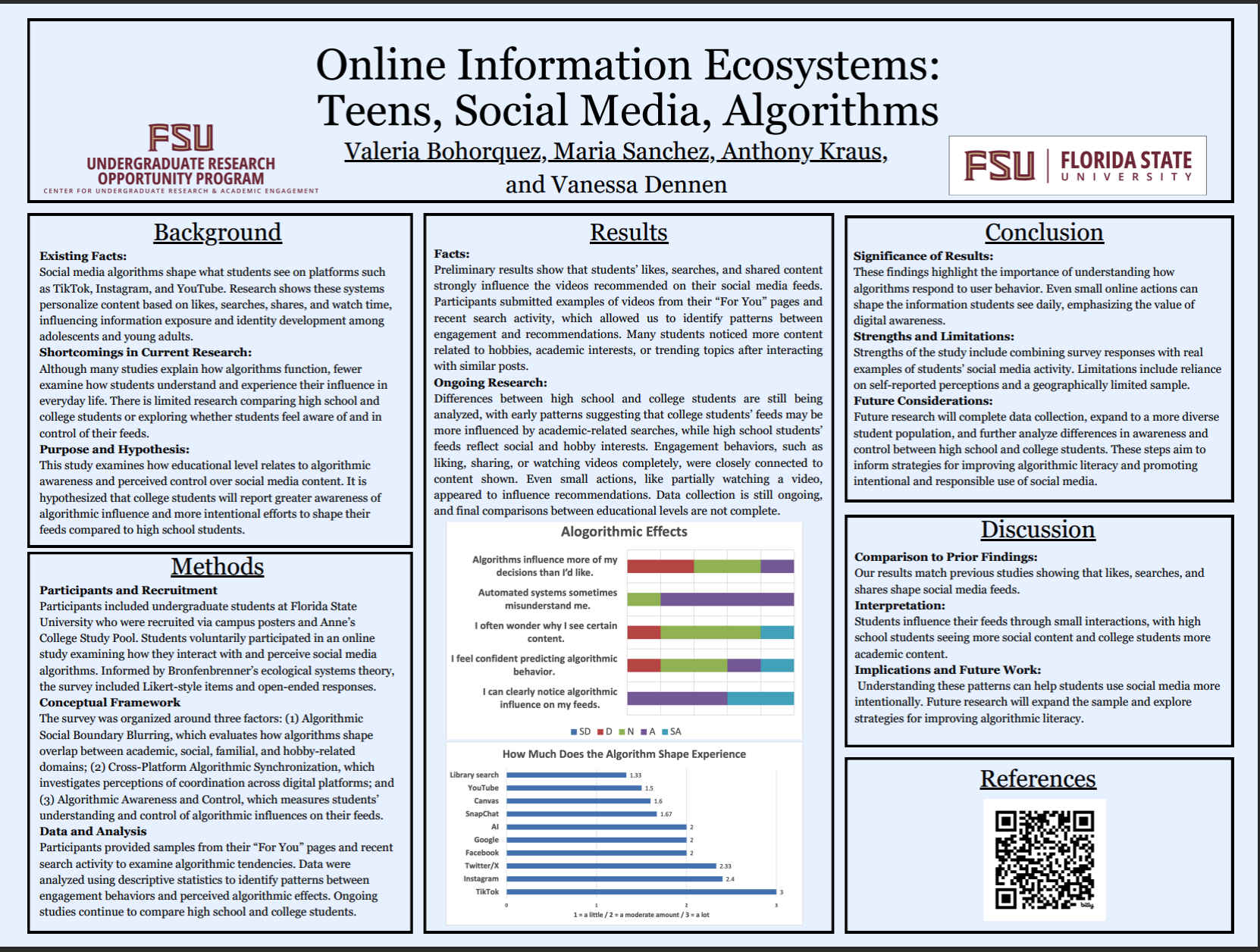
Social media algorithms shape the content users encounter on platforms such as TikTok, Instagram, and YouTube, influencing how information is distributed and consumed. Adolescents and young adults spend significant time on these platforms, making it important to understand how algorithmic systems affect the information they see and how aware users are of this influence. This study examines how educational level relates to students’ awareness of algorithmic influence and their perceived control over social media feeds.
Participants included undergraduate students at Florida State University who were recruited through campus postings and the College Study Pool. The study used a survey informed by Bronfenbrenner’s ecological systems theory that included Likert-scale questions and open-ended responses. Participants also provided examples from their social media “For You” pages and recent search activity. Data were analyzed using descriptive statistics to identify patterns between user engagement behaviors—such as liking, sharing, searching, and watch time—and the content recommended by algorithms.
Preliminary findings suggest that user interactions strongly influence the types of content recommended on social media platforms. Early patterns indicate that college students’ feeds may reflect more academic-related content, while high school students’ feeds often emphasize social or hobby-related topics. These findings highlight how even small online actions shape algorithmic recommendations and emphasize the importance of improving algorithmic literacy and intentional social media use.
Keywords: Social Media Health, Social Sciences
26th annual Undergraduate Research Symposium, April 1, 2026
Abhyuthan Srivastava Poster Session 2: 10:45 am - 11:45 am / Poster #300

BIO
Abhyuthan Srivastava is a second-year Vires Scholar with a deep interest in science, especially in understanding the concepts and fundamental principles that shape how we understand the world. He enjoys not only learning science, but also teaching it and helping others appreciate it more clearly. For him, research is meaningful because it allows scientific knowledge to move beyond theory and become something that can genuinely benefit people.
He is pursuing medicine because he wants science to have real human impact. Abhyuthan believes scientific knowledge is most valuable when it is applied in ways that improve lives, relieve suffering, and serve those who are often overlooked. His interest in research is not simply academic or professional, but rather it comes from a sincere desire to use science in practical, compassionate, and lasting ways.
In the future, he hopes to attend medical school and become a physician, serving others through both scientific skill and compassionate care, especially in underserved communities. Whether through research, teaching, or patient care, he wants his work to reflect a commitment to intellectual curiosity, meaningful service, and a life of simple living and high thinking.
In Vitro Motility Assay, Analyzing the Full-Length α-Actinin-2 Wild-Type and Phosphomimic Variants
Authors: Abhyuthan Srivastava, Dr. Helene TigroStudent Major: Clinical Professions (IMS)
Mentor: Dr. Helene Tigro
Mentor's Department: Department of Health, Nutrition, and Food Sciences Mentor's College: Anne's College Co-Presenters: Isabelle Rodriguez
Abstract
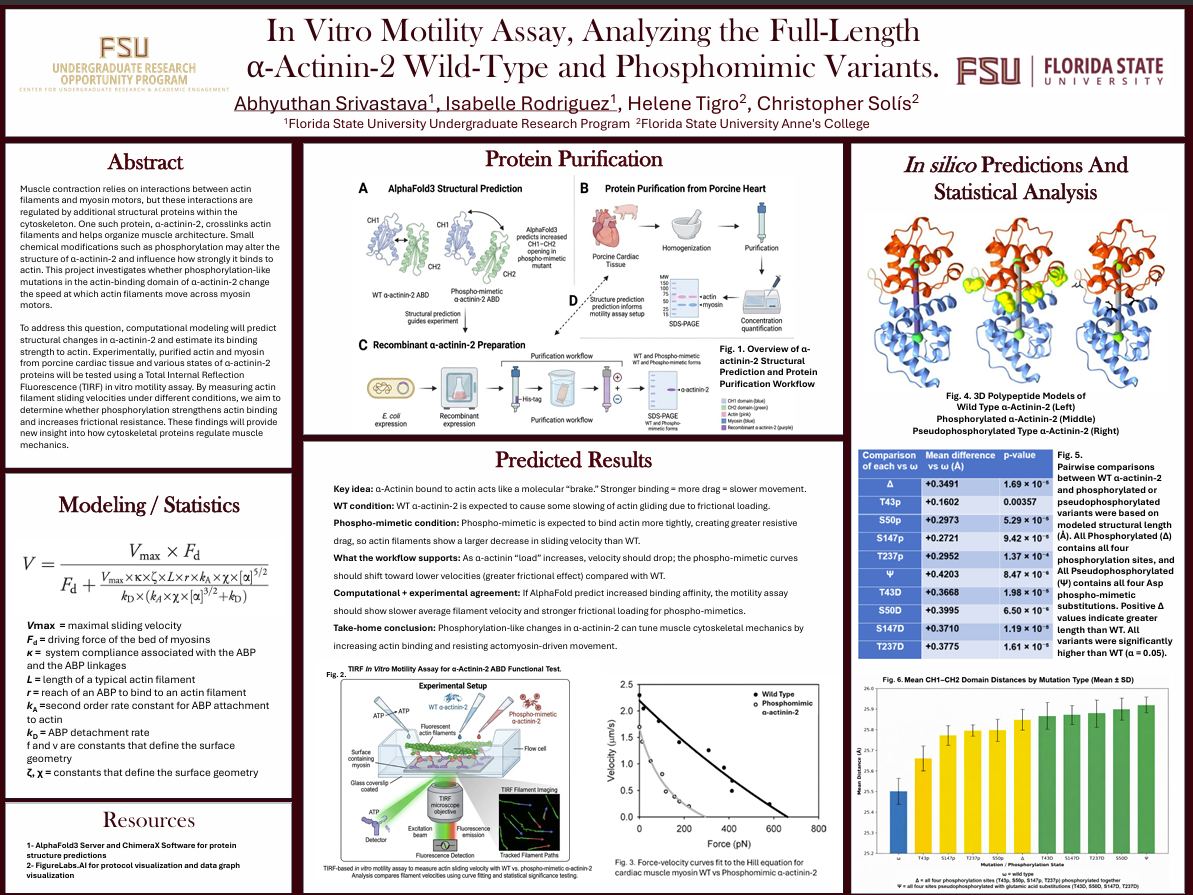
Muscle contraction relies on interactions between actin filaments and myosin motors, but these interactions are regulated by additional structural proteins within the cytoskeleton. One such protein, α-actinin-2, cross-links actin filaments and helps organize muscle architecture. Small chemical modifications such as phosphorylation may alter the structure of α-actinin-2 and influence how strongly it binds to actin. This project investigates whether phosphorylation-like mutations in the actin-binding domain of α-actinin-2 change the speed at which actin filaments move across myosin motors.
To address this question, computational modeling will predict structural changes in α-actinin-2 and estimate its binding strength to actin. Experimentally, purified actin and myosin from porcine cardiac tissue and recombinant α-actinin-2 proteins will be tested using a Total Internal Reflection Fluorescence (TIRF) in vitro motility assay. By measuring actin filament sliding velocities under different conditions, we aim to determine whether phosphorylation strengthens actin binding and increases frictional resistance. These findings shall provide new insight into how cytoskeletal proteins regulate muscle mechanics.
Keywords: alpha-actinin, sliding filament theory, In Vitro Motility Assay
26th annual Undergraduate Research Symposium, April 1, 2026
Erin Shtrax Poster Session 1: 9:30 am - 10:30 am / Poster #91
BIO
Erin is from Coral Springs, Florida, and is currently a sophomore at Florida State University, majoring in English with a double major in Anthropology. Her academic interests are concentrated in literature, comparative studies, and critical theory. Under the guidance of Jade Jemison, Erin has researched representations of Black motherhood in U.S. film and how these portrayals engage with class-based ideologies. As she continues her undergraduate career, she hopes to pursue further research involving textual analysis and theoretical approaches.
Endurance and Economy: Representations of Black Motherhood and Class in U.S. Film
Authors: Erin Shtrax, Jade JemisonStudent Major: English and Anthropology
Mentor: Jade Jemison
Mentor's Department: Department of English Mentor's College: Florida State University College of Arts and Sciences Co-Presenters:
Abstract
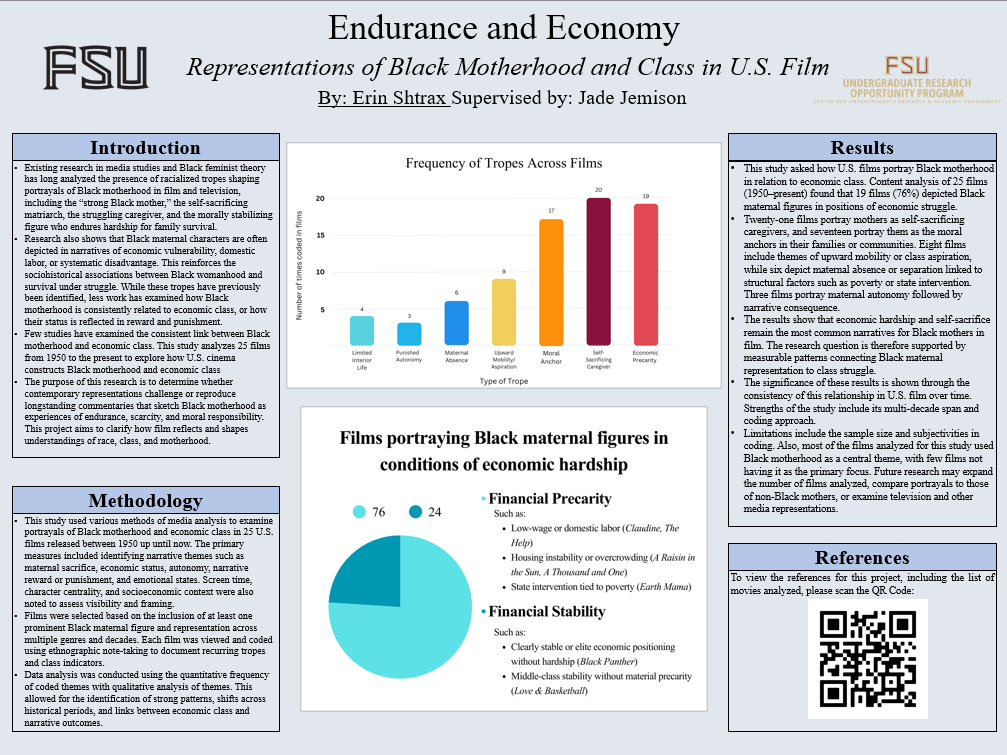
This research analyzes how the relationship between Black motherhood and economic class is portrayed in U.S. film and how these narratives construct viewers' perceptions of Black motherhood through racially based tropes. Although Black mothers are often characterized as symbols of resilience and moral stability, they are frequently written as wrestling with economic hardship and exploitation, which limits the visibility of their agency and complexity. This project examines how Black maternal figures are represented in various film narratives and what cultural impacts these depictions create. Using qualitative and quantitative content analysis, this study analyzes 25 films across various genres from 1950 onward. The common pattern among these films is the inclusion of at least one Black maternal figure. The films are coded for themes such as maternal sacrifice, autonomy, economic positioning, narrative reward or punishment, and emotional interiority. The social contexts vary depending on the era in which each film was produced. Preliminary findings point to the prominence of the “strong, self-sacrificing mother” archetype. In these portrayals, Black mothers are often defined by their endurance through circumstances of economic uncertainty. When they exercise autonomy outside of caregiving and labor, they are frequently punished or marginalized. This research demonstrates how film portrayals sustain or challenge ideologies of Black motherhood and class struggle. The purpose is to examine these depictions critically and reflect on how media representations shape cultural understandings of race, class, and motherhood.
Keywords: Film Representation Black Motherhood Class
26th annual Undergraduate Research Symposium, April 1, 2026
Leo Raden Poster Session 1: 9:30 am - 10:30 am / Poster #177
BIO
Leo Raden is a sophomore at Florida State University Honors College pursuing a Bachelor of Science in Biomathematics. As a student at Florida State University, he integrates quantitative analysis with biological science, developing skills that allow him to approach complex medical and scientific problems from an interdisciplinary perspective.
Leo is a recipient of the prestigious Vires Scholarship, awarded to high-achieving students who demonstrate strong academic potential and leadership within the university community. Through the Honors College, he engages in rigorous coursework and scholarly enrichment opportunities that emphasize research, intellectual curiosity, and academic excellence.
His academic interests lie at the intersection of mathematics, biology, and medicine. By studying biomathematics, Leo seeks to better understand how mathematical modeling and data analysis can be applied to biological systems and healthcare challenges. These experiences support his broader goal of pursuing a career in medicine.
Following the completion of his undergraduate studies, Leo plans to attend medical school, where he hopes to combine his quantitative background with clinical training to improve patient care and contribute to advances in medical science. Through continued academic achievement and engagement in research and service, he aims to build a strong foundation for a future career as a physician.
Text and Word Level Differences in Children's Books by Genre
Authors: Leo Raden, Rebeca VasileStudent Major: Biomathematics
Mentor: Rebeca Vasile
Mentor's Department: Health, and Human Sciences Mentor's College: Anne Spencer Daves College of Education Co-Presenters: Ana De Freitas
Abstract
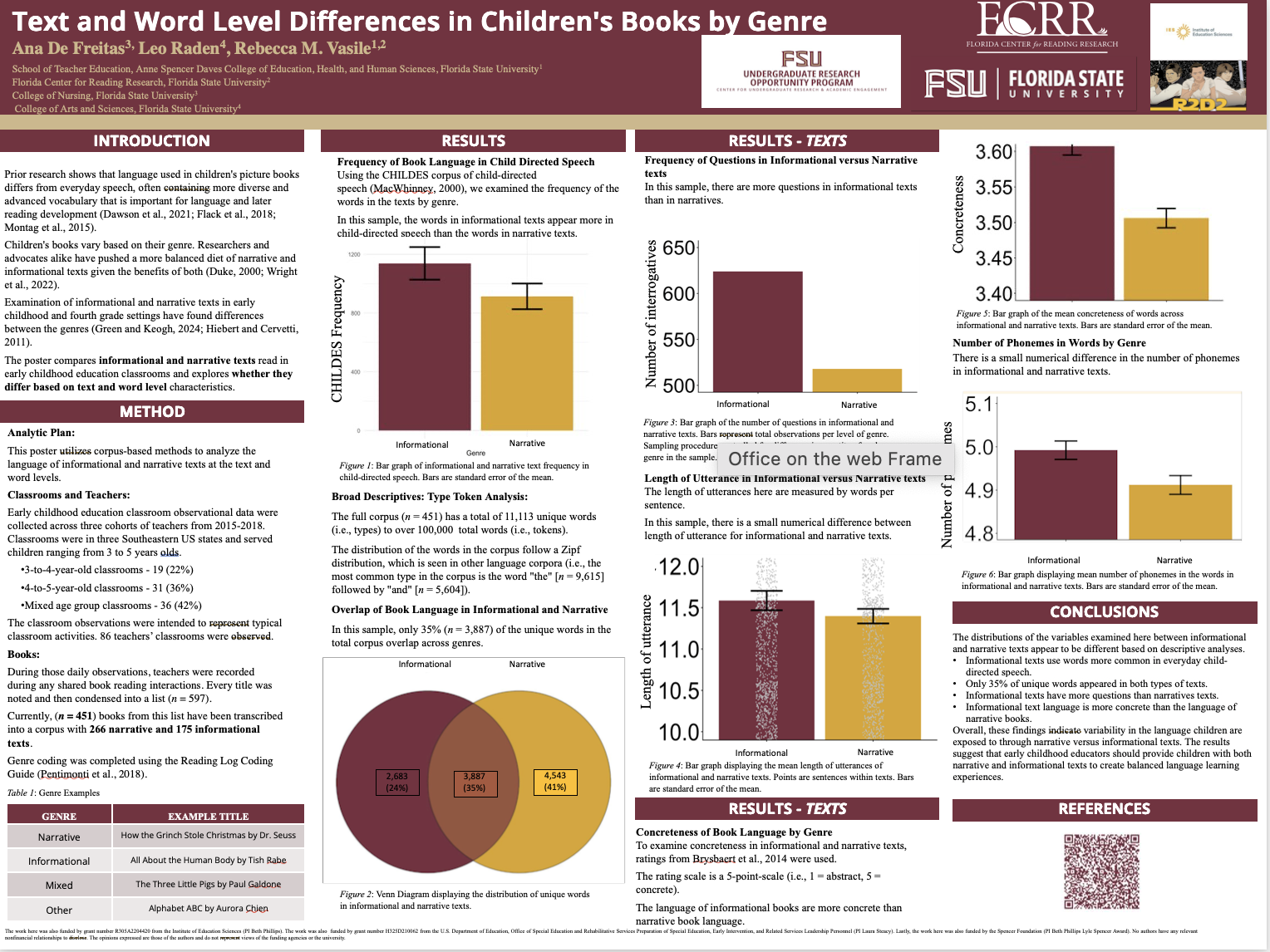
This study compares narrative and informational texts used in early childhood classrooms. Research by Green and Keogh (2024) shows that these genres expose children to different vocabulary and language patterns. However, limited research has examined how the genres differ in specific text- and word-level features, such as frequency in child-directed speech, age of acquisition, and concreteness. Our research question asks: How do narrative and informational texts differ in their text- and word-level features? Understanding these differences is important because children need balanced exposure to both genres to develop strong literacy skills.
We used corpus-based methods to analyze 447 books from 86 preschool classrooms in the southeastern United States, including 264 narrative texts and 171 informational texts. Genre coding was completed using an adapted scheme (Pentimonti et al., 2018) by two graduate students. Each book was transcribed to examine word frequency patterns and features such as frequency in child-directed speech, question use, utterance length, concreteness, and number of phonemes.
Preliminary results show clear genre differences. Narrative texts use words more common in everyday child speech, whereas informational texts include words typical of adult writing. Only 26% of unique words appeared in both genres. Narrative texts also contained more questions than informational texts. These findings highlight differences in language exposure and suggest that educators should provide both genres to support balanced literacy development.
Keywords: Reading, Genre, Book, Literacy
26th annual Undergraduate Research Symposium, April 1, 2026
Emmanuela Avlonitis Poster Session 4: 3:00 pm - 4:00 pm / Poster #184

BIO
Emmanuela is a third-year undergraduate student pursuing a Bachelor of Science in Applied and Computational Mathematics with an anticipated graduation in May 2027. Previously, Emmanuela earned an Associate of Arts degree from St. Petersburg College through the Early College Program, graduating with highest honors. After completing her undergraduate degree, Emmanuela plans to pursue a PhD in Economics.
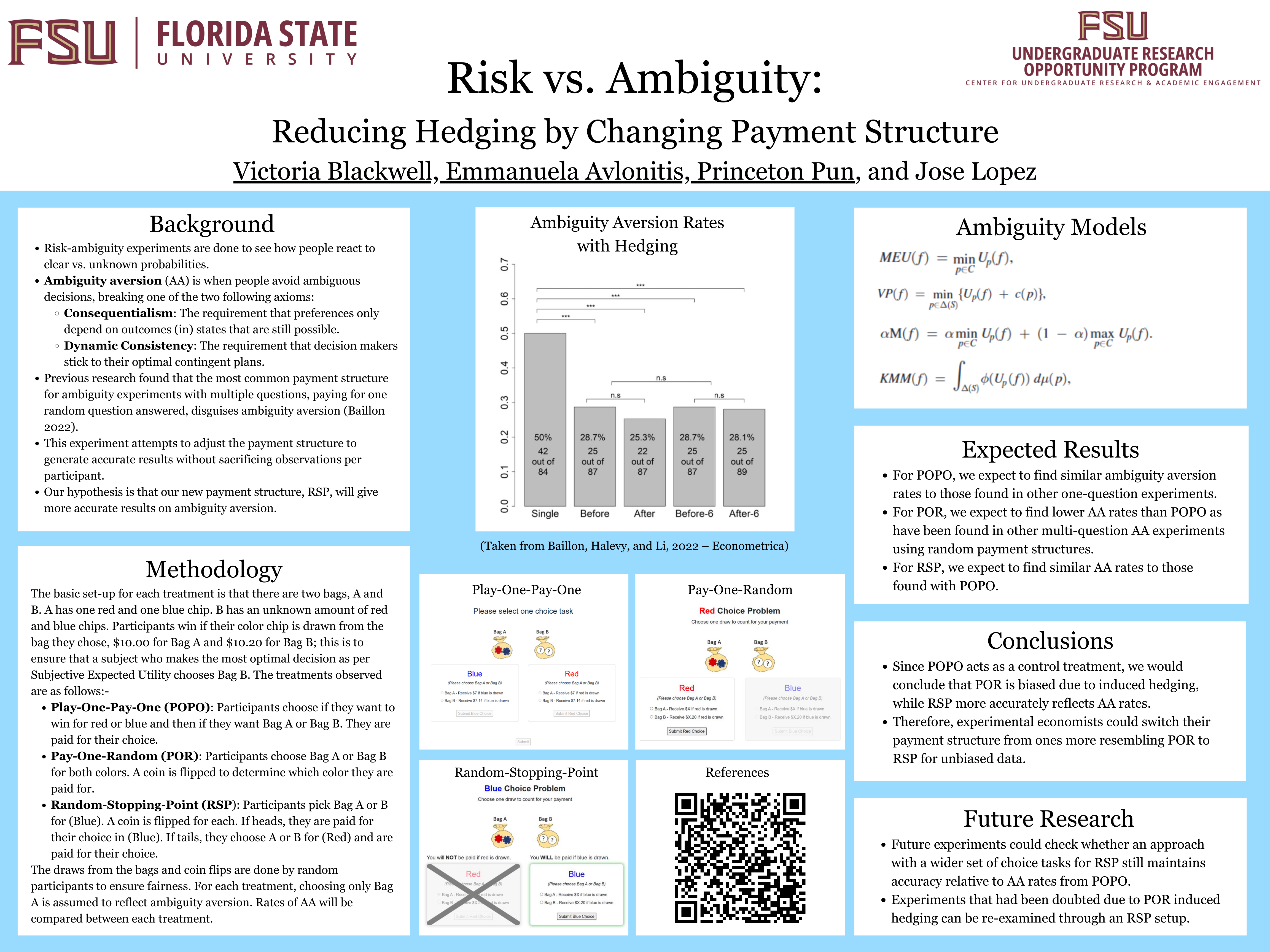
Risk vs. Ambiguity: Reducing Hedging by Changing Payment Structure
Authors: Emmanuela Avlonitis, Jose LopezStudent Major: Applied and Computational Mathematics
Mentor: Jose Lopez
Mentor's Department: Department of Economics Mentor's College: College of Social Sciences and Public Policy Co-Presenters: Victoria Blackwell and Princeton Pun
Abstract
Within economics, people are expected to be rational and work to their greatest expected utility. Using this, we would expect that people would always pick the option with the greatest expected value, but people often accept lower payoffs to avoid ambiguity, defined as situations where probabilities are unknown. This irrationality makes it interesting and important to economists. The validity of previous ambiguity research is being questioned because of hedging, whereby participants can change ambiguous situations into risky situations, which have set probabilities. However, if that can be rectified with changes in how people are paid for and asked questions future research may still be possible. Within this experiment, we asked if hedging behavior can be minimized within risk-ambiguity experiments in multiple question surveys by adjusting the method by which payment is decided. One treatment only has one choice to act as a control. The second has multiple choices where it is randomly determined which one will be paid out, which is the method that had previously had problems with hedging. The final treatment has participants make one decision, be randomly assigned to either be paid based on that decision or answer a second question. We expect that the third treatment’s results to appear similar to the control’s results and the second to underestimate ambiguity aversion as it has in other experiments. This would provide future researchers with a method to ask multiple questions while still receiving accurate results on ambiguity aversion.
Keywords: Hedging, Ambiguity, Consequentialism, and Dynamic Consistency
26th annual Undergraduate Research Symposium, April 1, 2026
Nina Tran Poster Session 2: 10:45 am - 11:45 am / Poster #58
BIO
Nina Tran is a first-year from Youngstown, OH majoring in Interdisciplinary Social Science, and minoring in Communication and Philosophy. Her engagements at FSU include the Honors Student Association, Phi Alpha Delta, and Strike Magazine. She plans to attend law school after graduation with an interest in Media and Entertainment Law.
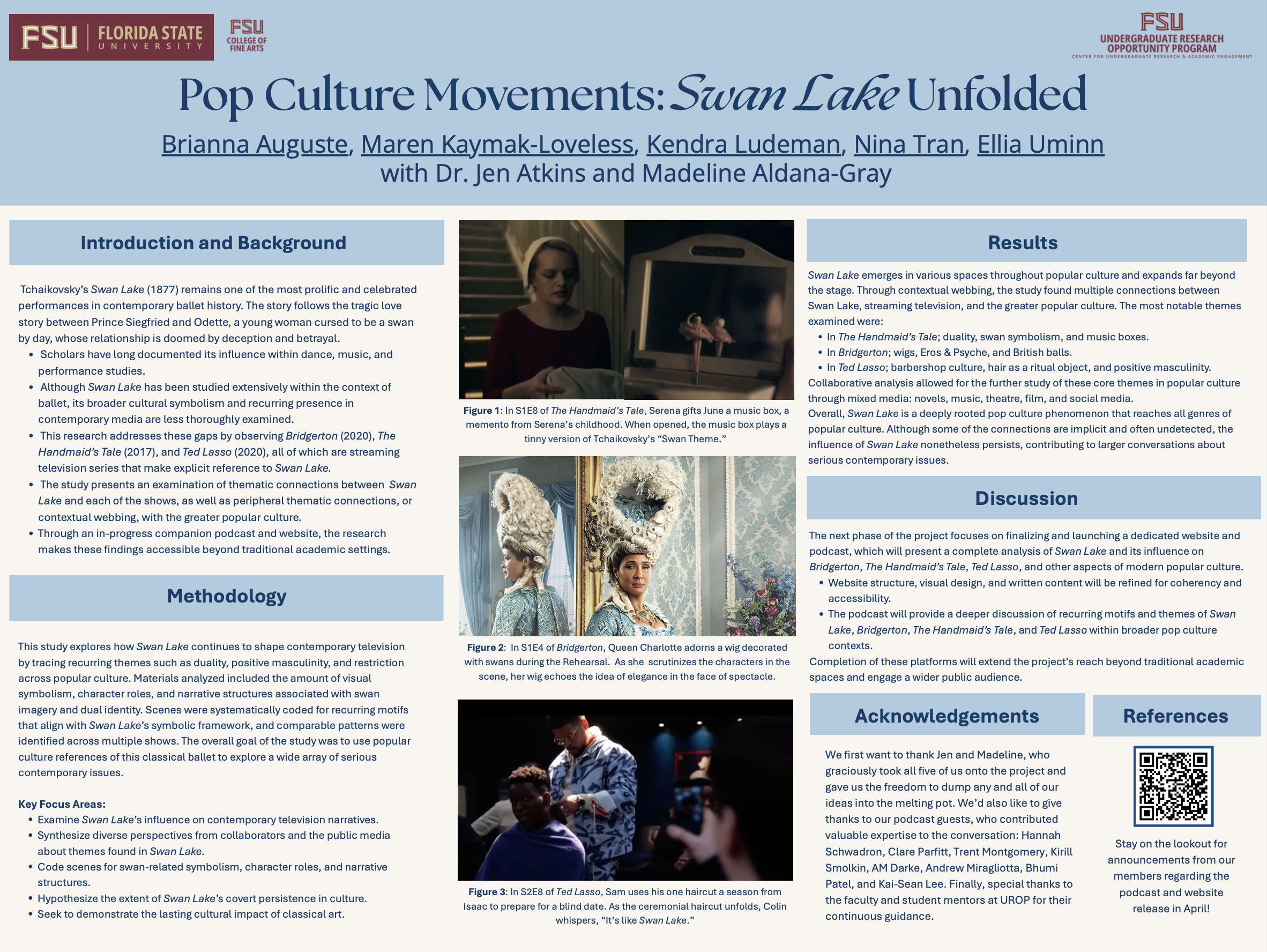
Pop Culture Movements: Swan Lake Unfolded
Authors: Nina Tran, Jen AtkinsStudent Major: Interdisciplinary Social Science (Law and Society)
Mentor: Jen Atkins
Mentor's Department: School of Dance Mentor's College: College of Fine Arts Co-Presenters: Brianna Auguste, Maren Kaymak-Loveless, Kendra Ludeman, Ellia Uminn
Abstract
Pop Culture Movements: Swan Lake Unfolded examines how Swan Lake and its symbols relate to popular culture, particularly in the television shows Bridgerton, The Handmaid’s Tale, and Ted Lasso. Scholars have extensively documented Swan Lake’s influence on dance and performance history, but there is little research dedicated to the ballet’s social influence in modern media. Historical precedent demonstrates the lasting impact Swan Lake has had on popular culture, and the ballet’s socio-cultural significance shows itself in the hidden allusions that appear in widely consumed entertainment. The methodology includes the analysis of three television series and the coding of recurring motifs and themes through collective discourse. Scholarly articles and contemporary media publications relevant to the research scope also contribute to the sample of media coded for thematic connections to Swan Lake. This humanities-based qualitative research is ongoing and examines themes of dual identity, power, and restriction through collaboration with a diverse network of interdisciplinary scholars and practitioners. These patterns suggest that classical art remains embedded in modern storytelling, even when audiences may not consciously recognize the connection. For pop culture audiences, our findings highlight the importance of media literacy and understanding how historical works shape present-day narratives. The group is in the final stages of developing a podcast and companion website to present these findings in an accessible format. Together, these platforms demonstrate Swan Lake’s lasting cultural influence beyond traditional performance spaces.
Keywords: dance, pop culture, ballet