
Research Symposium
26th annual Undergraduate Research Symposium, April 1, 2026
Henry Zoetewey Poster Session 4: 3:00 pm - 4:00 pm / Poster #192
BIO
Henry Zoetewey is a freshman at Florida State University majoring in Accounting. While pursuing a Bachelor of Science in Accounting, he's been recognized with Presidential Scholarship, Vires Scholarship, and the Bright Futures Scholarship. He's currently being mentored under Richard Waters while in the Undergrad Research Opportunities Program, creating a pop culture analysis on what can be considered a modern day anachronism. He's aiming to go to graduate school and earn a CPA before venturing into the work place full time.
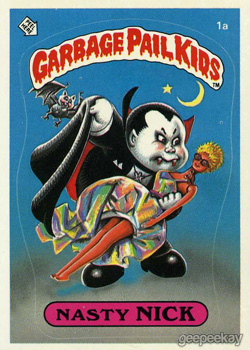
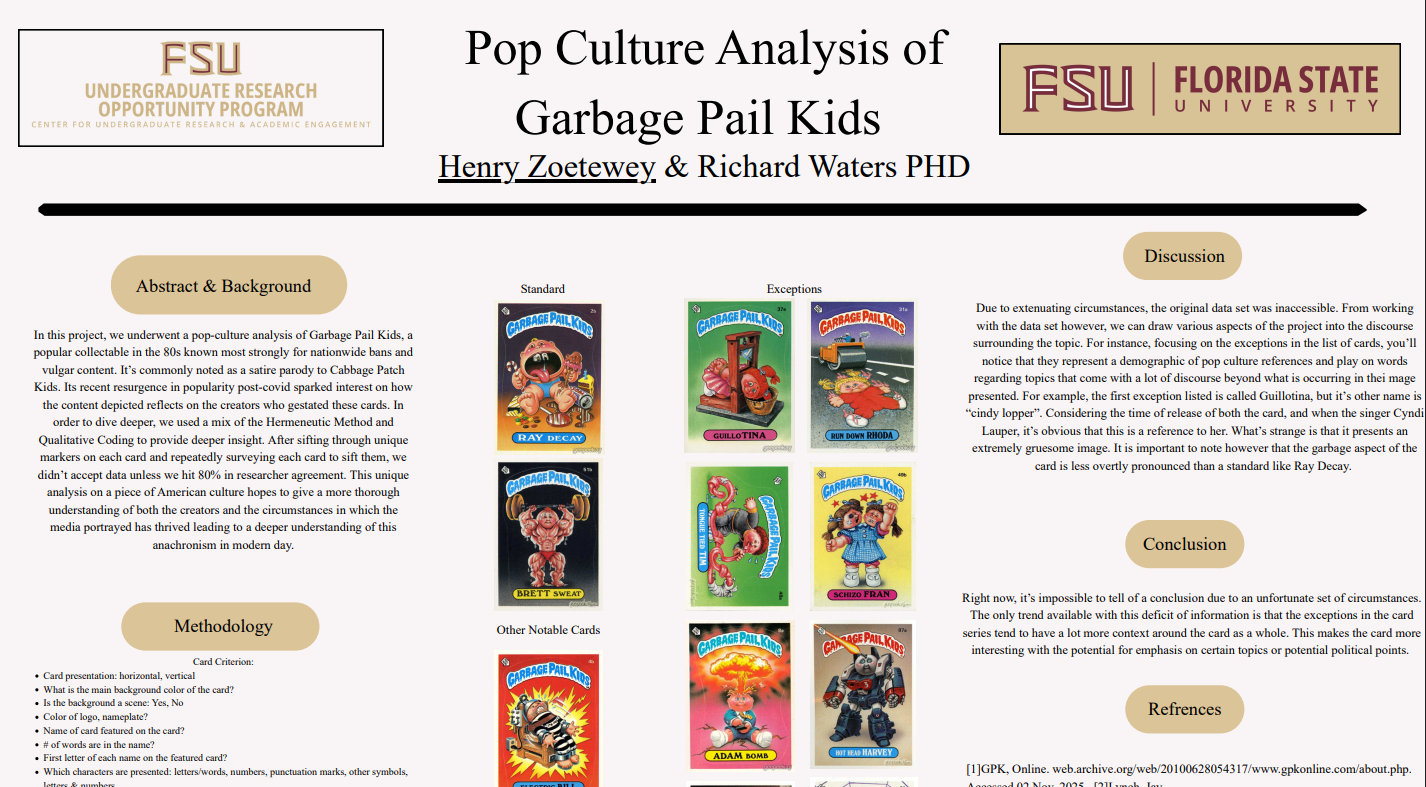
Pop-Culture Analysis on Garbage Pail Kids
Authors: Henry Zoetewey, Richard WatersStudent Major: Accounting
Mentor: Richard Waters
Mentor's Department: Communications Mentor's College: College of Communications & Information Co-Presenters:
Abstract
In this project, we underwent a pop-culture analysis of Garbage Pail Kids, a popular collectable in the 80s known most strongly for nationwide bans and vulgar content. It’s commonly noted as a satire parody to Cabbage Patch Kids. Its recent resurgence in popularity post-covid sparked interest on how the content depicted reflects on the creators who gestated these cards. In order to dive deeper, we used a mix of the Hermeneutic Method (deep reading) and Qualitative Coding to provide deeper insight. After sifting through unique markers on each card and repeatedly surveying each card to sift them, we didn’t accept data unless we hit 80% in researcher agreement. This unique analysis on a piece of American culture hopes to give a more thorough understanding of both the creators and the circumstances in which the media portrayed has thrived leading to a deeper understanding of this anachronism in modern day.
Keywords: Pop Culture Analysis
26th annual Undergraduate Research Symposium, April 1, 2026
Aubrey Lindeman Poster Session 3: 1:45 pm - 2:45 pm / Poster #21
BIO
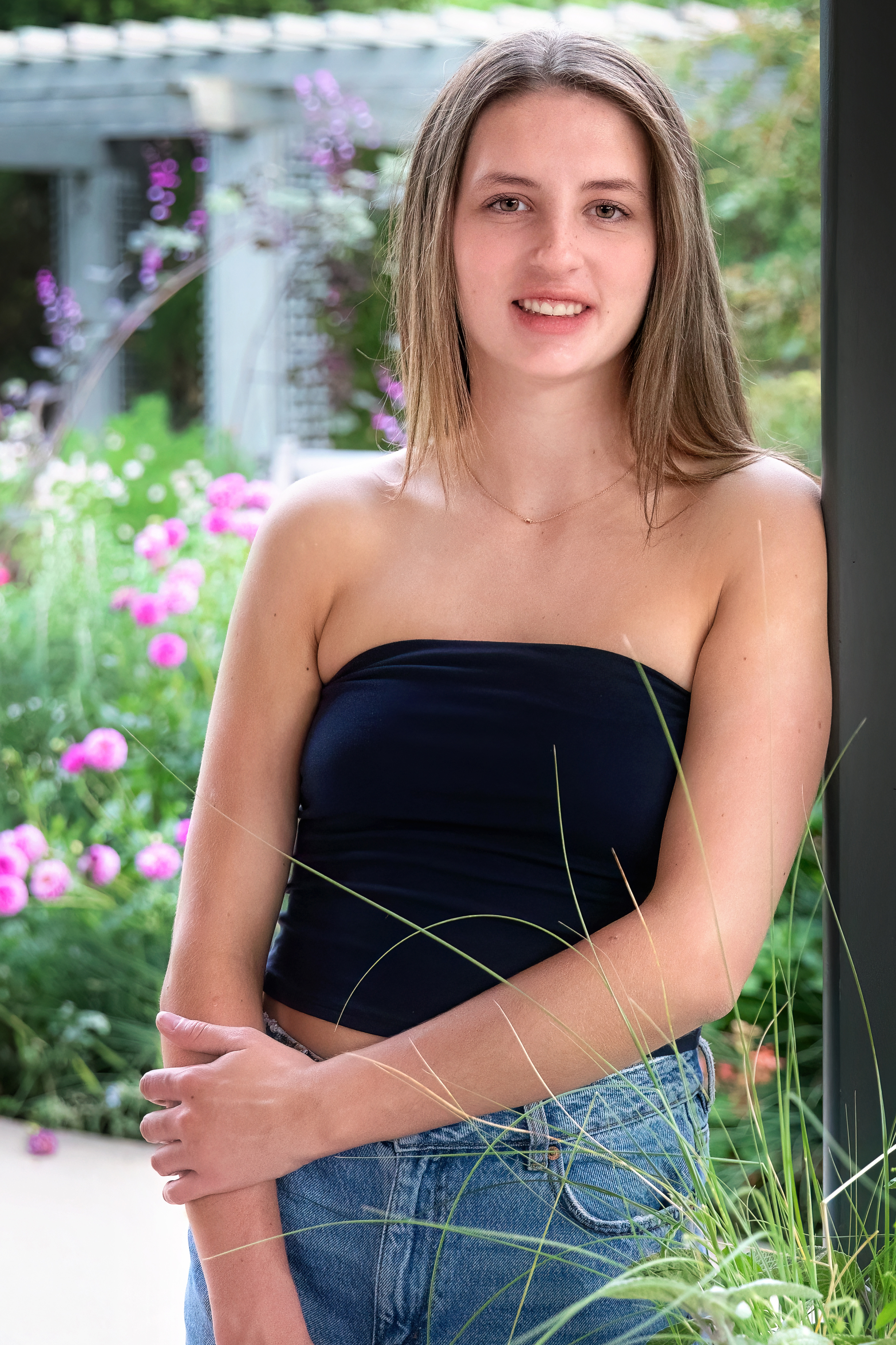
Aubrey Lindeman is a freshman majoring in Cell and Molecular Neuroscience in the Honors Program. She has previous research experience at the University of Colorado Boulder, where she used bioinformatics to study transcription factors involved in autoimmune disorders. She is currently researching reaction rates of organic molecules in the atmosphere under Christopher Holmes. After completing her Bachelor of Science degree, Aubrey plans to attend medical or PA school to pursue a career in healthcare.
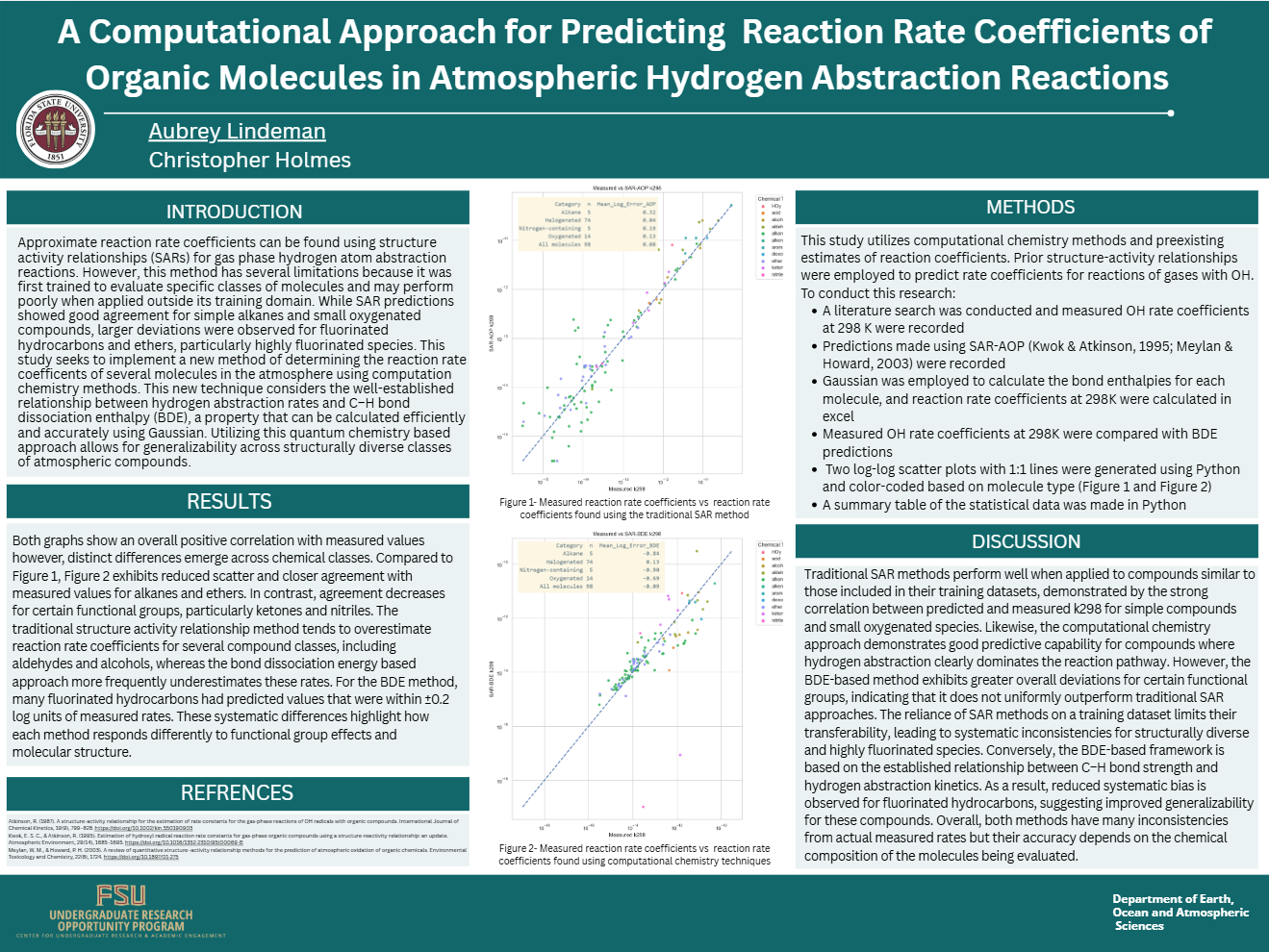
A Computational Approach for Predicting Reaction Rate Coefficients of Organic Molecules in Atmospheric Hydrogen Abstraction Reactions
Authors: Aubrey Lindeman, Christopher HolmesStudent Major: Cell and Molecular Neuroscience
Mentor: Christopher Holmes
Mentor's Department: Earth Ocean and Atmospheric Sciences Mentor's College: College of Arts and Sciences Co-Presenters:
Abstract
Approximate reaction rate coefficients can be found using structure activity relationships (SARs) for gas phase hydrogen atom abstraction reactions. However, this method has several limitations because it was first trained to evaluate specific classes of molecules and may perform poorly when applied outside its training domain. While SAR predictions showed good agreement for simple alkanes and small oxygenated compounds, larger deviations were observed for fluorinated hydrocarbons and ethers, particularly highly fluorinated species. This study seeks to implement a new method of determining the reaction rate coefficients of several molecules in the atmosphere using computation chemistry methods. This new technique considers the well-established relationship between hydrogen abstraction rates and C–H bond dissociation enthalpy (BDE), a property that can be calculated efficiently and accurately using Gaussian. Utilizing this quantum chemistry based approach allows for generalizability across structurally diverse classes of atmospheric compounds.
Keywords: Chemistry, environmental science, reaction
26th annual Undergraduate Research Symposium, April 1, 2026
Grayson Russell Poster Session 4: 3:00 pm - 4:00 pm / Poster #288
BIO
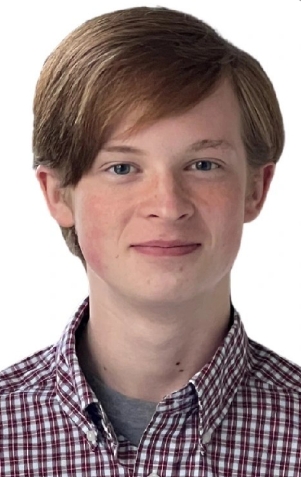
Grayson Russell is a first-year FSU student in the Honors program, pursuing a double major in linguistics and philosophy. He is involved with the undergraduate linguistics students club, LINGO, at FSU. He plans to go to graduate school for a PhD in linguistics in the future.
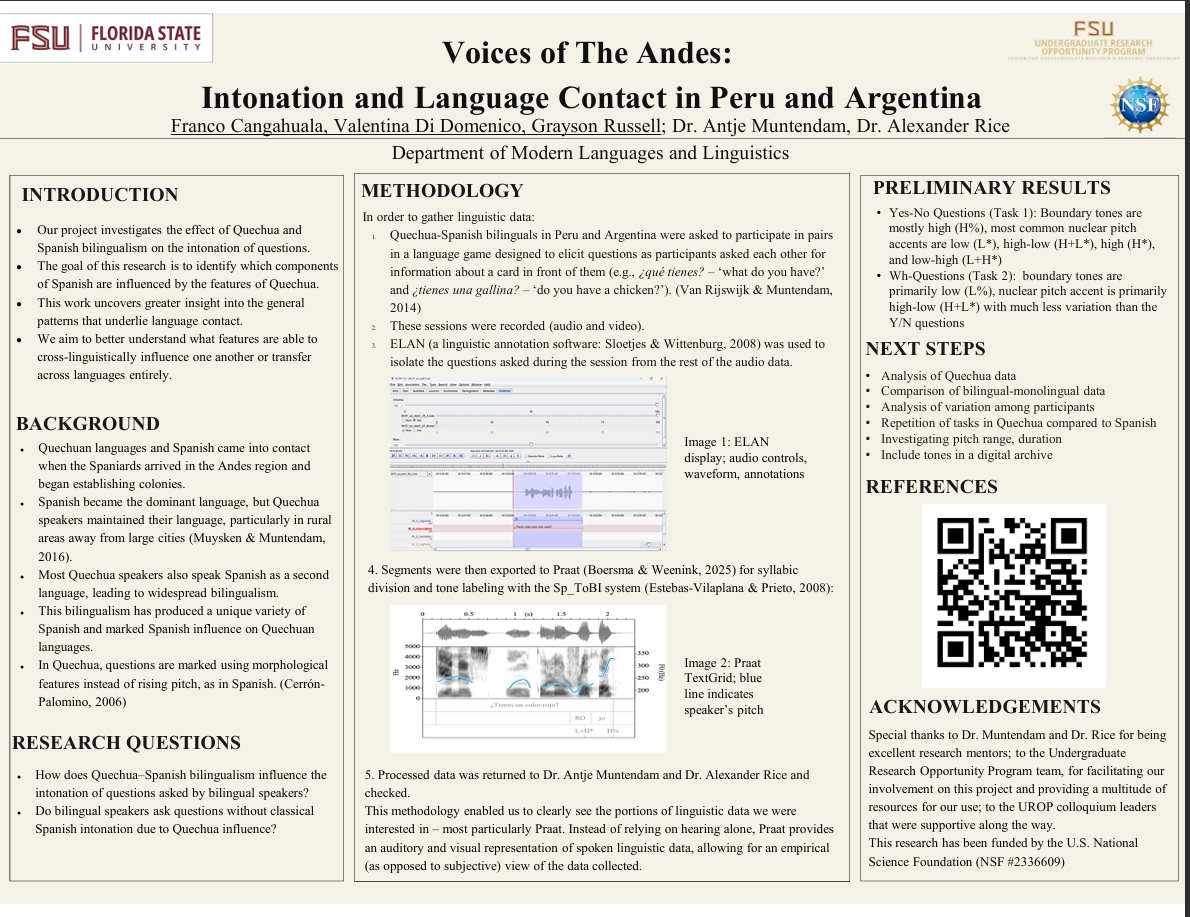
Voices of The Andes: Intonation and Language Contact in Peru and Argentina
Authors: Grayson Russell, Dr. Antje MuntendamStudent Major: Linguistics, Philosophy
Mentor: Dr. Antje Muntendam
Mentor's Department: Department of Modern Languages and Linguistics Mentor's College: College of Arts and Sciences Co-Presenters: Valentina Di Domenico, Franco Cangahuala
Abstract
In our project, we investigated the effect of Quechua-Spanish bilingualism on the intonation of questions elicited from participants fluent in both Quechua and Spanish in Peru and Argentina. The goal of this research is to identify which components of one language, in this case Spanish, are influenced by the features of another language, in this case Quechua, a language which greatly differs in aspects of morphology and phonology. In conducting this research, we uncover greater insight into the general patterns which underlie language contact and better understand what features are able to cross-linguistically influence one another, or even transfer across languages entirely. To investigate this topic we collected audio recordings of Peruvian and Argentinian people who were Spanish monolinguals, Quechua monolinguals, and bilinguals. Participants were paired and played a card game designed to elicit yes-no and information-seeking questions. These recordings were segmented, annotated, and analyzed using the programs Praat (acoustic analysis) and ELAN (annotation software) to study the intonation at the end of the questions asked by participants. It is known that in Quechua, questions are marked using morphological features instead of with a rising pitch, as in Spanish. Therefore, we predict that those who are most influenced by Quechua (bilingual speakers) will ask questions with falling intonation in Spanish. Results of this study may have implications for what we know about culture and language dominance in a post-colonial context, and what effects these deviances in language have on personal or community differentiation.
Keywords: Linguistics, Bilingualism, Intonation, Spanish, Quechua
26th annual Undergraduate Research Symposium, April 1, 2026
Kayra Serpenguzel Poster Session 1: 9:30 am - 10:30 am / Poster #119
BIO
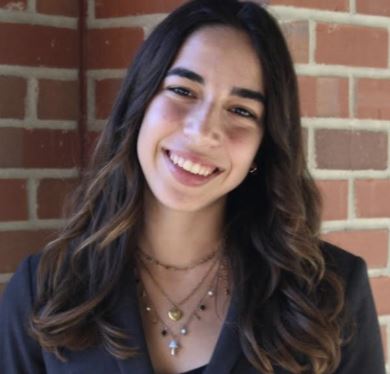
Kayra Serpenguzel is a Presidential and Benacquisto Scholar on the pre-law track pursuing a Bachelors of Science in Political Science and Creative Writing. Her on- and off-campus involvements include being a legislative intern at the Florida House of Representatives for Representative Rosenwald, an incoming class representative on the Presidential Scholars Executive Board, a journalist for the FSView & Florida Flambeau Views Section, a sailor on the FSU Sailing Team, an ambassador for the Student Alumni Association, a Women’s History Month Committee Member for the Women’s Student Union, a selected cohort member for the Freshman Leadership Institute, Seminoles Engaged in Politics, and Legislative Certification Program, an intern for genCLEO FSU, an Eco-Rep for FSU Sustainable Campus and a Senator-elect for the FSU Student Government Association.
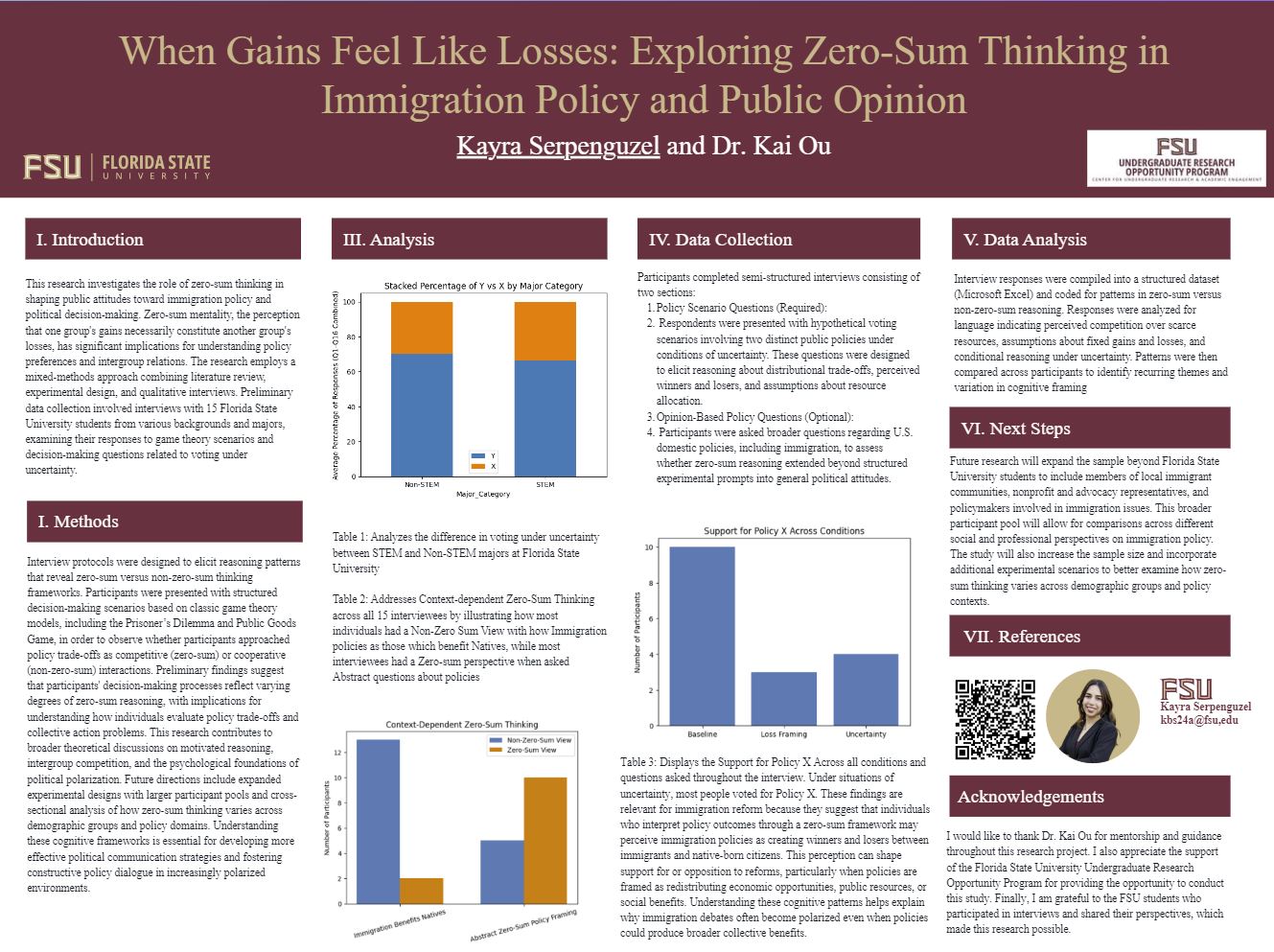
When Gains Feel Like Losses: Exploring Zero-Sum Thinking in Immigration Policy and Public Opinion
Authors: Kayra Serpenguzel, Dr. Kai OuStudent Major: Political Science and Creative Writing
Mentor: Dr. Kai Ou
Mentor's Department: Political Science Mentor's College: College of Social Sciences and Public Policy Co-Presenters:
Abstract
This research investigates the role of zero-sum thinking in shaping public attitudes toward immigration policy and political decision-making. Zero-sum mentality, the perception that one group's gains necessarily constitute another group's losses, has significant implications for understanding policy preferences and intergroup relations. Drawing on first-hand observations of divergent perspectives on immigration in Miami, where some view immigration as enriching diversity while others perceive primarily negative impacts, this study examines how zero-sum framing influences political attitudes across multiple domains. The research employs a mixed-methods approach combining literature review, experimental design, and qualitative interviews. Preliminary data collection involved interviews with 15 Florida State University students from various backgrounds and majors, examining their responses to game theory scenarios and decision-making questions related to voting under uncertainty. Interview protocols were designed to elicit reasoning patterns that reveal zero-sum versus non-zero-sum thinking frameworks. Preliminary findings suggest that participants' decision-making processes reflect varying degrees of zero-sum reasoning, with implications for understanding how individuals evaluate policy trade-offs and collective action problems. This research contributes to broader theoretical discussions on motivated reasoning, intergroup competition, and the psychological foundations of political polarization. Future directions include expanded experimental designs with larger participant pools and cross-sectional analysis of how zero-sum thinking varies across demographic groups and policy domains. Understanding these cognitive frameworks is essential for developing more effective political communication strategies and fostering constructive policy dialogue in increasingly polarized environments.
Keywords: zero-sum thinking, public policy, game theory, politics
26th annual Undergraduate Research Symposium, April 1, 2026
Mia Guerrero Poster Session 2: 10:45 am - 11:45 am / Poster #202
BIO
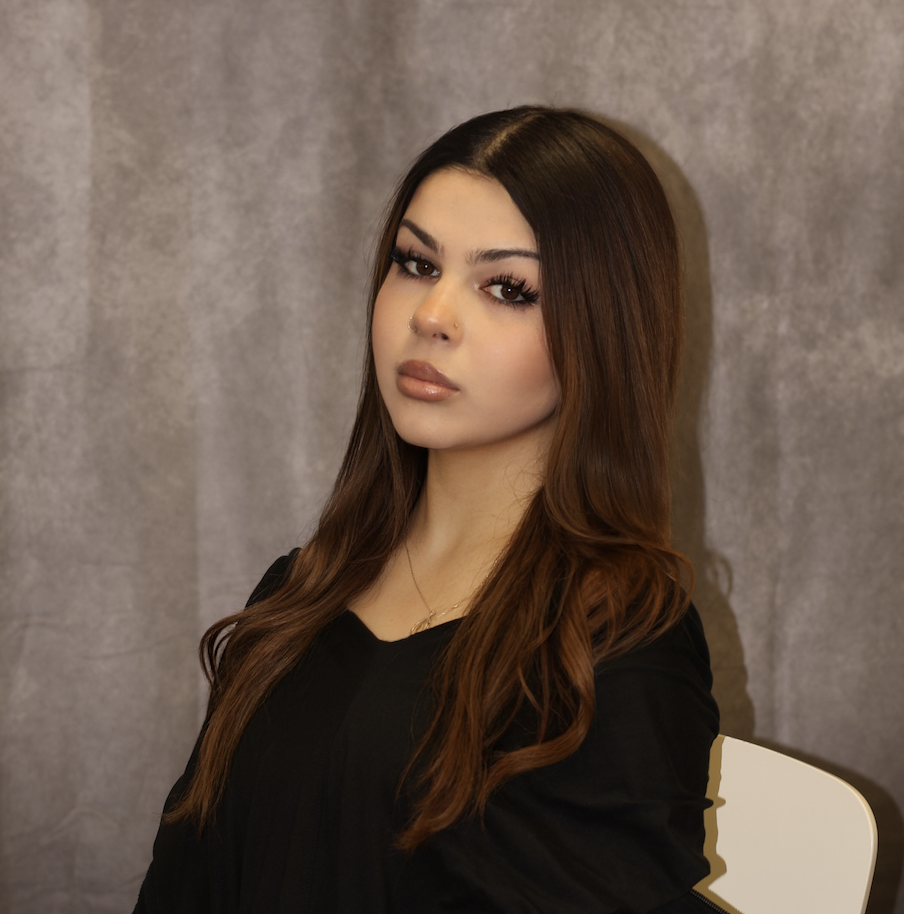
Mia Guerrero is a freshman at Florida State University pursuing a double major in Bachelor of Science in Economics and Bachelor of Science in Neuroscience. Driven by an interest in the intersection of biological processes and behavioral outcomes, they are currently conducting undergraduate research through the Undergraduate Research Opportunity Program (UROP). Their current research focuses on the mechanics of decision-making within high-stress environments, specifically using horror video games like Resident Evil 7 and Soma as controlled environments to analyze cognitive processing and player choices. Under the guidance of their faculty mentor, Gabrielle Lamura, Mia is investigating how environmental stressors and narrative changes in these video games activate central versus peripheral processes. This work will be featured at the 26th Annual Undergraduate Research Symposium in April 2026. Outside of the lab and classroom, Mia is a competitive swimmer on the FSU club team and the creator of The Balance Edit, a health and wellness blog dedicated to holistic student living. They are also active in the FSU community through many clubs, like Champs Chance and the pre-medical society. Following their undergraduate studies, Mia intends to apply to medical school, aiming to bridge their background in economic systems and neuroscience to improve patient care and the healthcare system.
Is it all just Jumpscares?
Authors: Mia Guerrero, Gabrielle LamuraStudent Major: Economics and Neuroscience
Mentor: Gabrielle Lamura
Mentor's Department: Communications Mentor's College: College of Communication Co-Presenters: Emali Osteen
Abstract
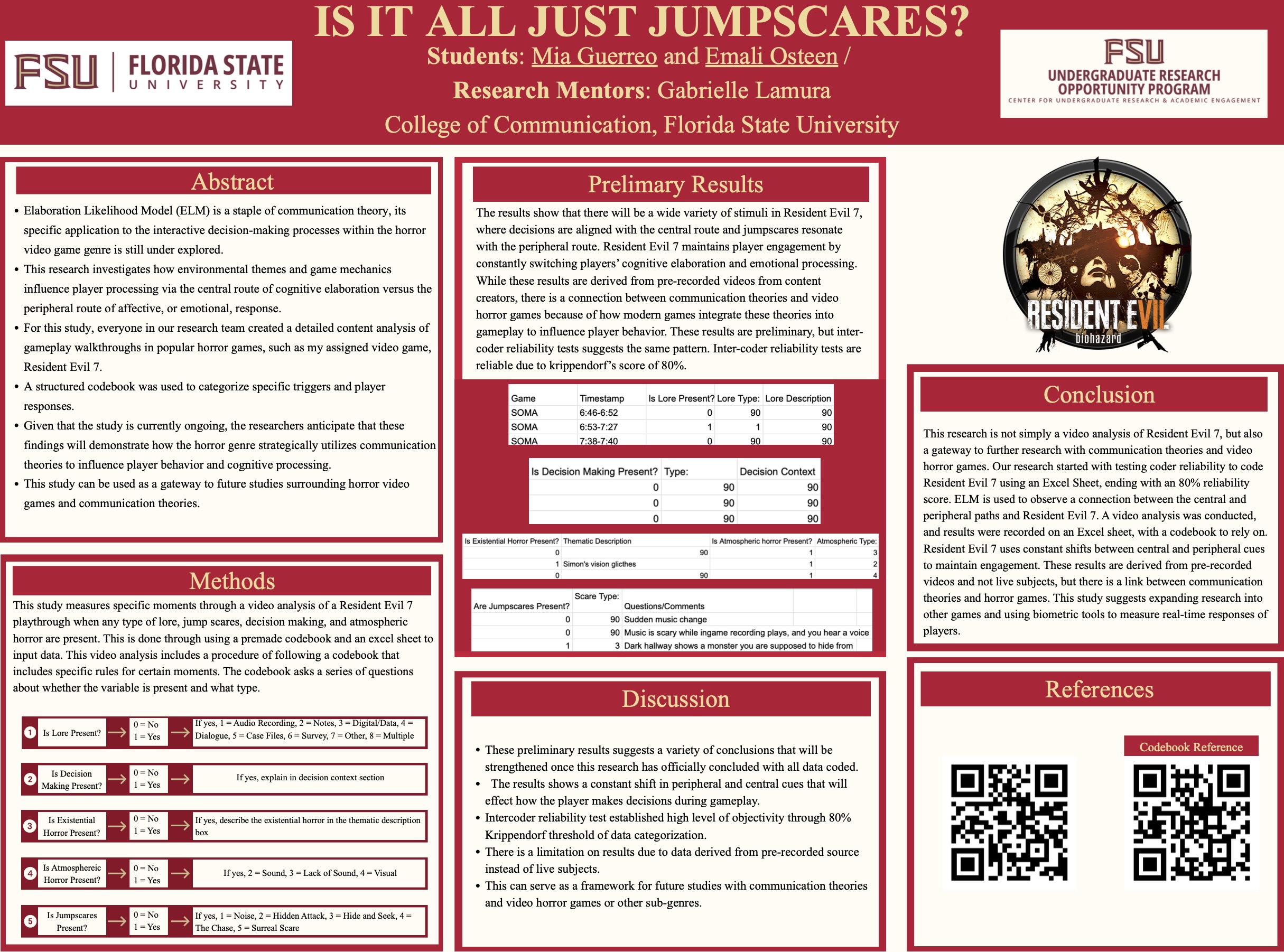
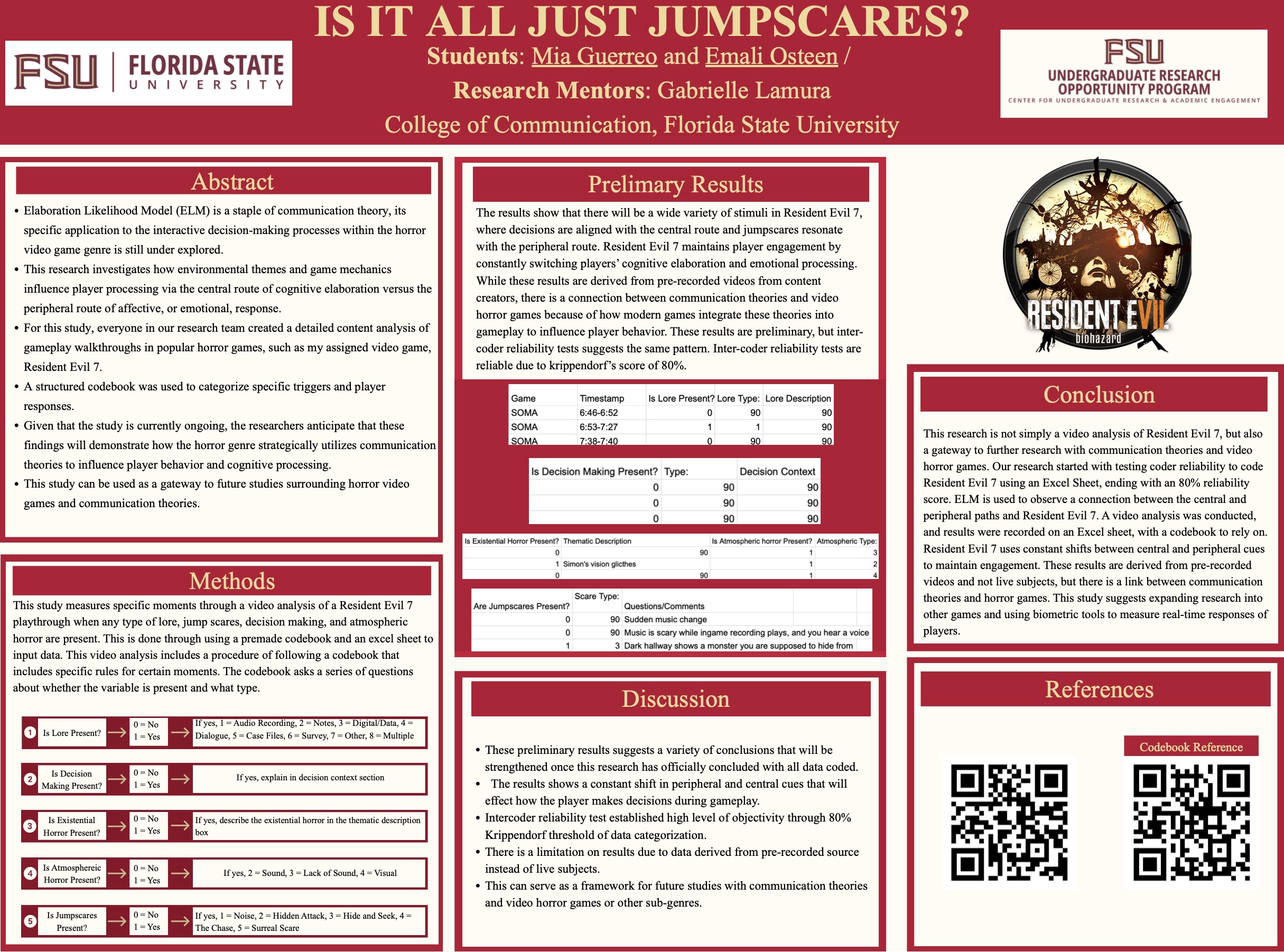
While the Elaboration Likelihood Model (ELM) is a staple of communication theory, its specific application to the interactive decision-making processes within the horror video game genre is still underexplored. This research investigates how environmental themes and game mechanics influence player processing via the central route of cognitive elaboration versus the peripheral route of affective, or emotional, response. For this study, everyone in our research team created a detailed content analysis of gameplay walkthroughs in popular horror games, such as my assigned video game, Resident Evil 7. A structured codebook was used to categorize specific triggers and player responses. Objectivity in coding was maintained with an inter-coder reliability threshold of 80% to minimize bias. Building on previous research suggesting that horror environments use dual-processing cues, our study expects to find consistent integration of central and peripheral stimuli throughout gameplay and narrative arcs. Given that the study is currently ongoing, the researchers anticipate that these findings will demonstrate how the horror genre strategically utilizes communication theories to influence player behavior and cognitive processing. This study is expected to prove a connection between communication theories and horror video games because of their reliance on communication tactics. This study can be used as a gateway to future studies surrounding horror video games and communication theories.
Keywords: Horror, ELM Theory, Cognitive Processing, Player Decision-Making
26th annual Undergraduate Research Symposium, April 1, 2026
Isabelle Rodriguez Poster Session 2: 10:45 am - 11:45 am / Poster #300
BIO
Isabelle Rodriguez is a 2nd year student majoring in Pre Clinical Professions on the Pre Med path working in Solis lab with her mentor Dr.Tigro.
In Vitro Motility Assay, Analyzing the Full-Length α-Actinin-2 Wild-Type and Phosphomimic Variants.
Authors: Isabelle Rodriguez, Helene TigroStudent Major: IMS Pre Clinical Professions
Mentor: Helene Tigro
Mentor's Department: Health, Nutrition, & Food Sci Mentor's College: Anne's Co-Presenters: Abhyuthan Srivastava
Abstract
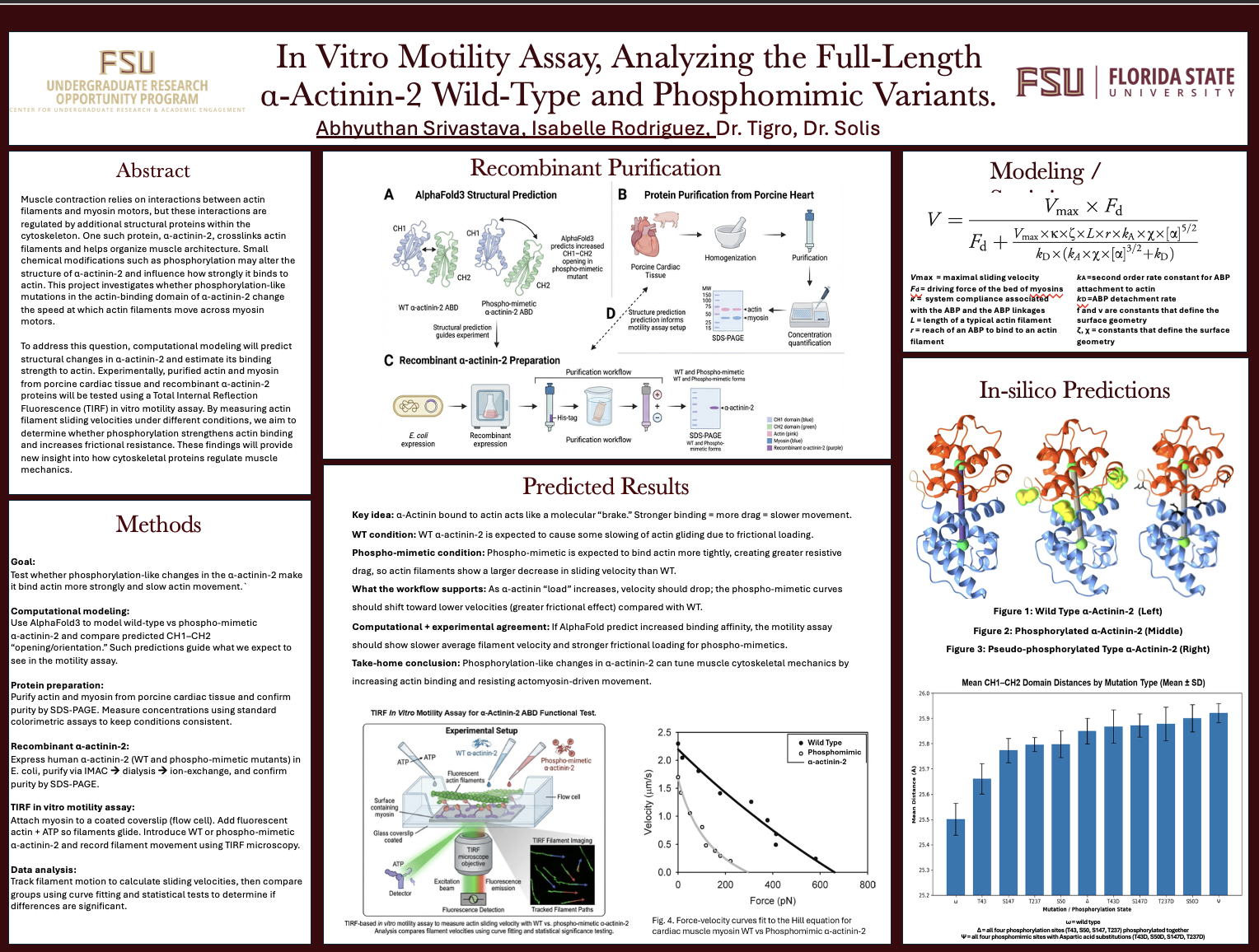
Muscle contraction relies on interactions between actin filaments and myosin motors, but these interactions are regulated by additional structural proteins within the cytoskeleton. One such protein, α-actinin-2, crosslinks actin filaments and helps organize muscle architecture. Small chemical modifications such as phosphorylation may alter the structure of α-actinin-2 and influence how strongly it binds to actin. This project investigates whether phosphorylation-like mutations in the actin-binding domain of α-actinin-2 change the speed at which actin filaments move across myosin motors.
To address this question, computational modeling will predict structural changes in α-actinin-2 and estimate its binding strength to actin. Experimentally, purified actin and myosin from porcine cardiac tissue and recombinant α-actinin-2 proteins will be tested using a Total Internal Reflection Fluorescence (TIRF) in vitro motility assay. By measuring actin filament sliding velocities under different conditions, we aim to determine whether phosphorylation strengthens actin binding and increases frictional resistance. These findings will provide new insight into how cytoskeletal proteins regulate muscle mechanics.
Keywords: Heart, Cardiology, Muscle
26th annual Undergraduate Research Symposium, April 1, 2026
Michael Gonzalez Poster Session 2: 10:45 am - 11:45 am / Poster #256
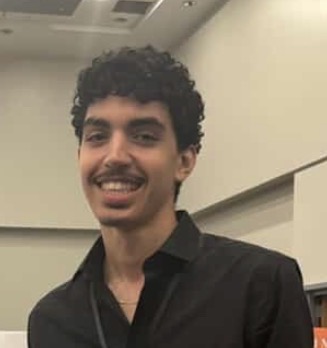
BIO
Michael Gonzalez is a pre-law student pursuing a Bachelor of Science in Economics from Miami, FL.
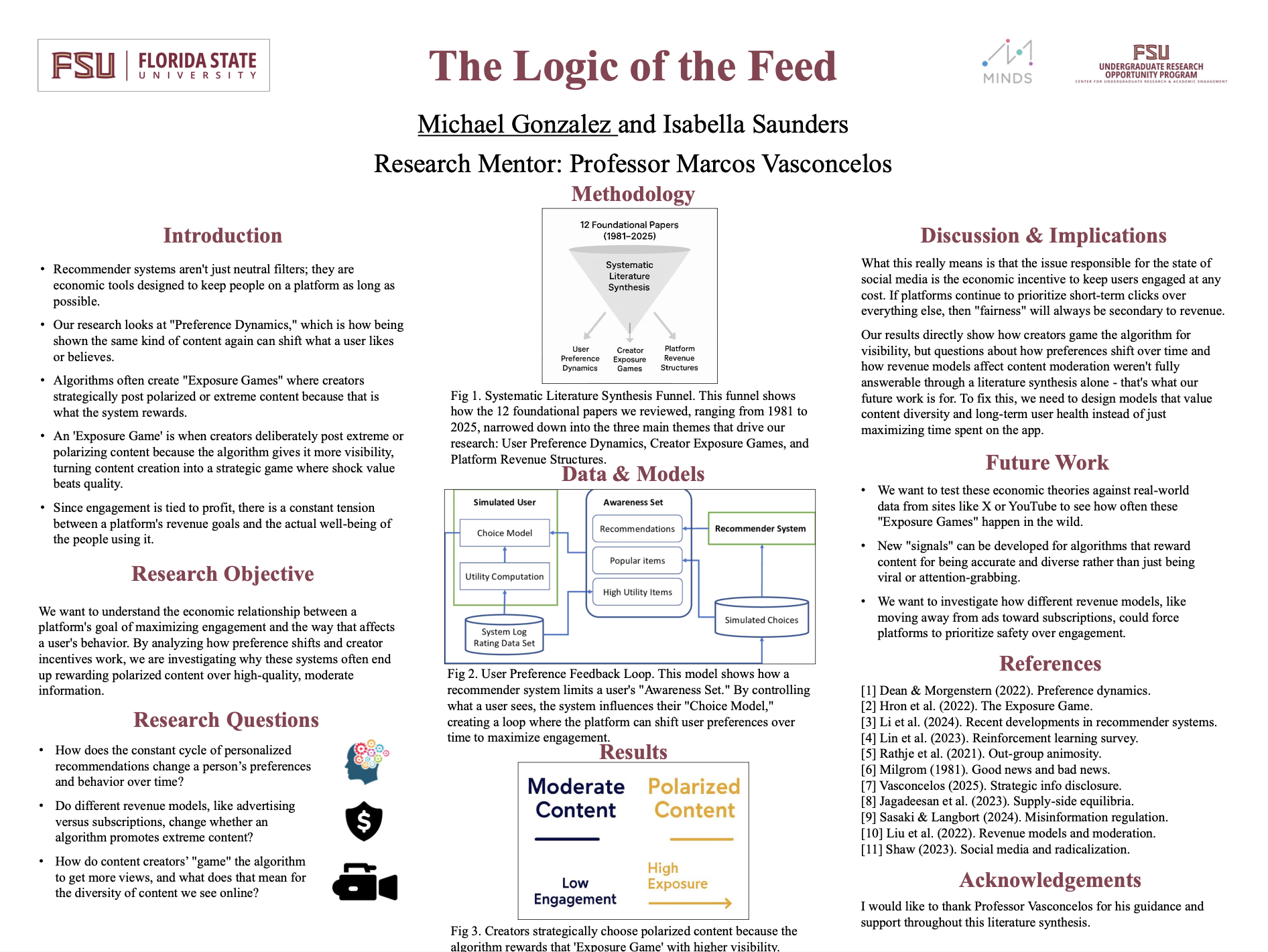
The Logic Of The Feed
Authors: Michael Gonzalez, Marcos M. VasconcelosStudent Major: Economics
Mentor: Marcos M. Vasconcelos
Mentor's Department: Dept. of Electrical and Computer Engineering Mentor's College: FAMU-FSU College of Engineering Co-Presenters:
Abstract
My research focuses on understanding how recommender systems are discussed across different spaces, and how those conversations shape how people think about “the feed.” I wrote two literature reviews: one that analyzes professional and academic research on recommender systems, and another that examines non-professional sources such as news articles, blog posts, and public commentary. The goal is to compare these two worlds and see where they line up, where they conflict, and how they each frame the logic behind algorithmic feeds. A lot of public conversations focus on concerns like manipulation, bias, or radicalization, while academic research tends to be more focused on incentives, design choices, and measurable outcomes. Putting both sets of sources side by side helps reveal where misunderstandings happen and why people interpret recommender systems so differently depending on where they get their information. This work contributes to a larger project studying how algorithmic feeds influence behavior and online environments. By organizing, comparing, and analyzing these sources, my research helps build a clearer picture of how people understand the “rules” driving what they see online and why engagement works the way it does.
Keywords: Recommender Systems, Algorithmic Engagement, Content Exposure, Platform Incentives, User Preference Dynamics
26th annual Undergraduate Research Symposium, April 1, 2026
Jackson Davis Poster Session 1: 9:30 am - 10:30 am / Poster #265
BIO
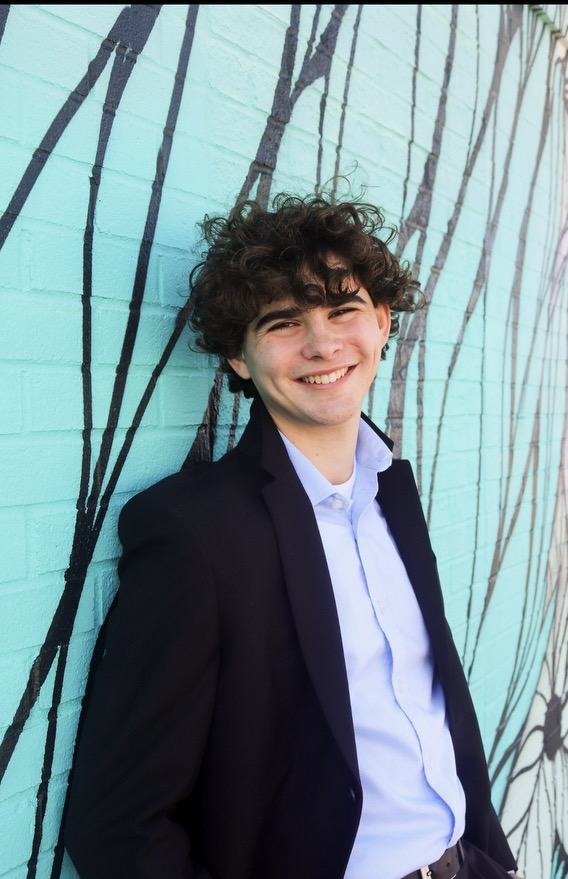
Jackson Davis is an undergraduate student pursuing dual-degrees in English: Literature, Media, and Culture, and Philosophy. His on campus involvements are UROP, FSUDems, and the International English Honors Society.
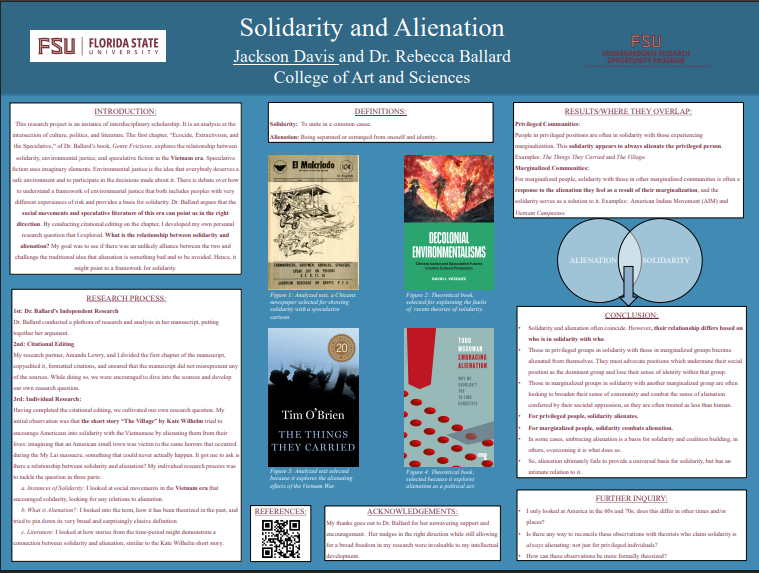
Solidarity and Alienation
Authors: Jackson Davis, Doctor Rebecca BallardStudent Major: English: Literature, Media and Culture, and Philosophy
Mentor: Doctor Rebecca Ballard
Mentor's Department: English Mentor's College: Arts and Sciences Co-Presenters:
Abstract
Speculative fiction can be analyzed to demonstrate how it creates categories of events, which direct us towards a framework of environmental justice. Through analysis of antiwar movements, speculative fictions, and domestic structural issues during the Vietnam era, Rebecca Ballard demonstrates their relationship through interdisciplinary scholarship. Working as a citational editor for her book, I became interested in how these speculative fictions engage with alienation and its relation to solidarity. This led me to my personal research question: How do solidarity movements relate to alienation and how is that relation demonstrated in Vietnam era storytelling? To answer this research question, I focused on the American Indians Movement, the alienation of returning soldiers from Vietnam, and speculative moves in literature with alienating effects. I look at David Vasquez’s book Decolonial Environmentalisms, Bruce Franklin’s article, “The Vietnam War as American Science Fiction and Fantasy,” and Todd McGowan’s book Embracing Alienation especially. Solidarity, I’ve found, has a fraught relationship to alienation, as it is sometimes a necessary component of it, even as alienation contributes to societal violence. This research can help us understand what solidarity movements look like, how they come about, and their relation to speculative literature.
Keywords: Solidarity, Alienation, Humanities, English, Literature
26th annual Undergraduate Research Symposium, April 1, 2026
Samantha Eckert Poster Session 3: 1:45 pm - 2:45 pm / Poster #6
BIO
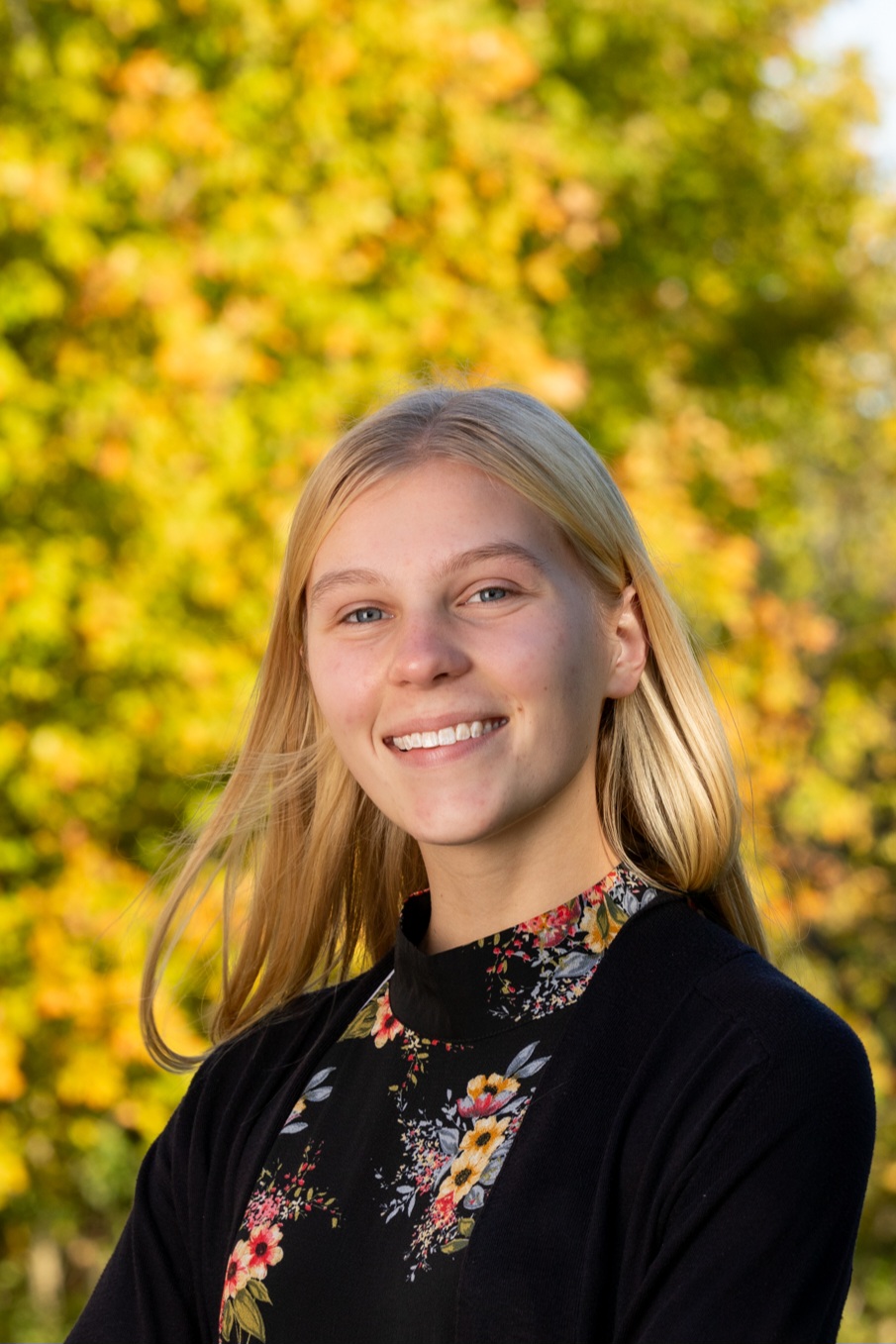
Samantha is a first-year student at Florida State University studying biochemistry, with a planned double major in public health. She intends to work in the medical field with a particular interest in studying as a pharmacologist, physician, or physician's assistant. She is excited to explore these potential careers through research opportunities and job shadowing in addition to coursework.
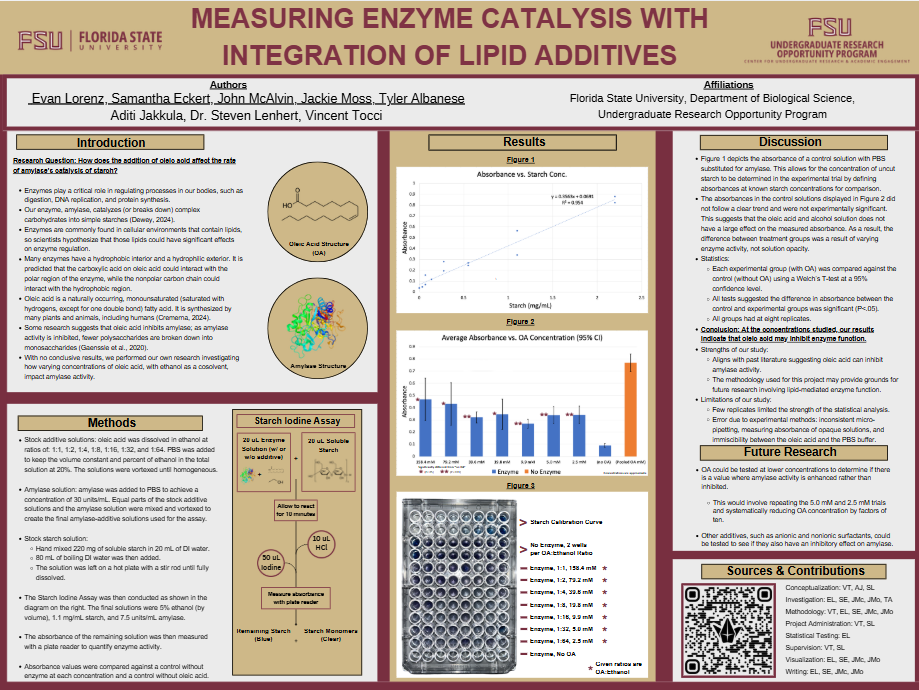
Measuring enzyme catalysis with integration of lipid additives
Authors: Samantha Eckert, Steven LenhertStudent Major: Biochemistry
Mentor: Steven Lenhert
Mentor's Department: Biological Science Mentor's College: Arts and Sciences Co-Presenters: Evan Lorenz, John McAlvin, Jackie Moss, Tyler Albanese
Abstract
Lipids have been typically associated with the inhibition of enzyme function, but recent findings point towards their potential in increased catalysis rates. Enzymes are protein catalysts that speed up chemical reactions and play a critical role in regulating processes in our bodies, such as digestion. It is important to better understand enzyme activity, specifically how different conditions and chemicals affect them. Our research question aims to analyze the effect that oleic acid, a lipid, has on enzyme activity, specifically the activity of amylase. A preliminary literature review was conducted to determine ideal conditions and methods of amylase reactivity. Enzyme function was then tested by comparing various concentrations of oleic acid to the control group without an additive. Ethanol was used as a cosolvent with the oleic acid. Light absorbance of the sample was then measured with a plate reader to obtain quantitative data. When enzyme was added, there was an observed trend that as the ratio of oleic acid decreased, enzyme activity increased. Specifically between the 1:64 ratio of oleic acid:alcohol, there is a large difference between the absorbance values. Our research was limited by a small sample size and experimental error, such as inconsistent micro-pipetting, measuring opaque solutions in the plate reader, and immiscibility of solutions. Further research would include more trials with smaller concentrations of oleic acid which would work to minimize some of these concerns. This may introduce an unexpected increase in amylase activity, instead of the respective decrease exhibited in this research.
Keywords: Enzyme, Catalysis, Lipid
26th annual Undergraduate Research Symposium, April 1, 2026
Hannah Tranle Poster Session 3: 1:45 pm - 2:45 pm / Poster #139

BIO
Hannah Tranle is an undergraduate student pursuing a Bachelor of Science in Advertising with a minor in General Business. She is currently a sophomore from Bradenton, FL. Her on- and off-campus involvements include: Strike Magazine, Her Campus @ FSU
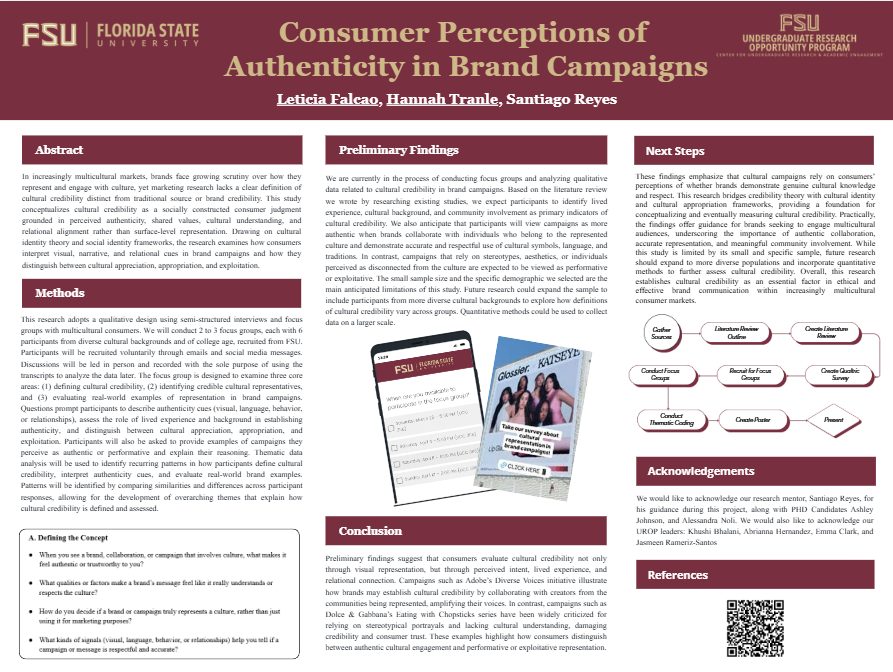
Consumer Perceptions of Authenticity in Brand Campaigns
Authors: Hannah Tranle, Santiago ReyesStudent Major: Advertising
Mentor: Santiago Reyes
Mentor's Department: Hispanic Marketing Communications Mentor's College: Communication & Information Co-Presenters: Leticia Falcao
Abstract
In increasingly multicultural markets, brands face growing scrutiny over how they represent and engage with culture, yet marketing research lacks a clear definition of cultural credibility distinct from traditional source or brand credibility. This study conceptualizes cultural credibility as a socially constructed consumer judgment grounded in perceived authenticity, shared values, cultural understanding, and relational alignment rather than surface-level representation. Drawing on cultural identity theory and social identity frameworks, the research examines how consumers interpret visual, narrative, and relational cues in brand campaigns and how they distinguish between cultural appreciation, appropriation, and exploitation.
Keywords: Communications, Advertising, Cultural, Marketing, Brands
26th annual Undergraduate Research Symposium, April 1, 2026
Emali Osteen Poster Session 2: 10:45 am - 11:45 am / Poster #202
BIO
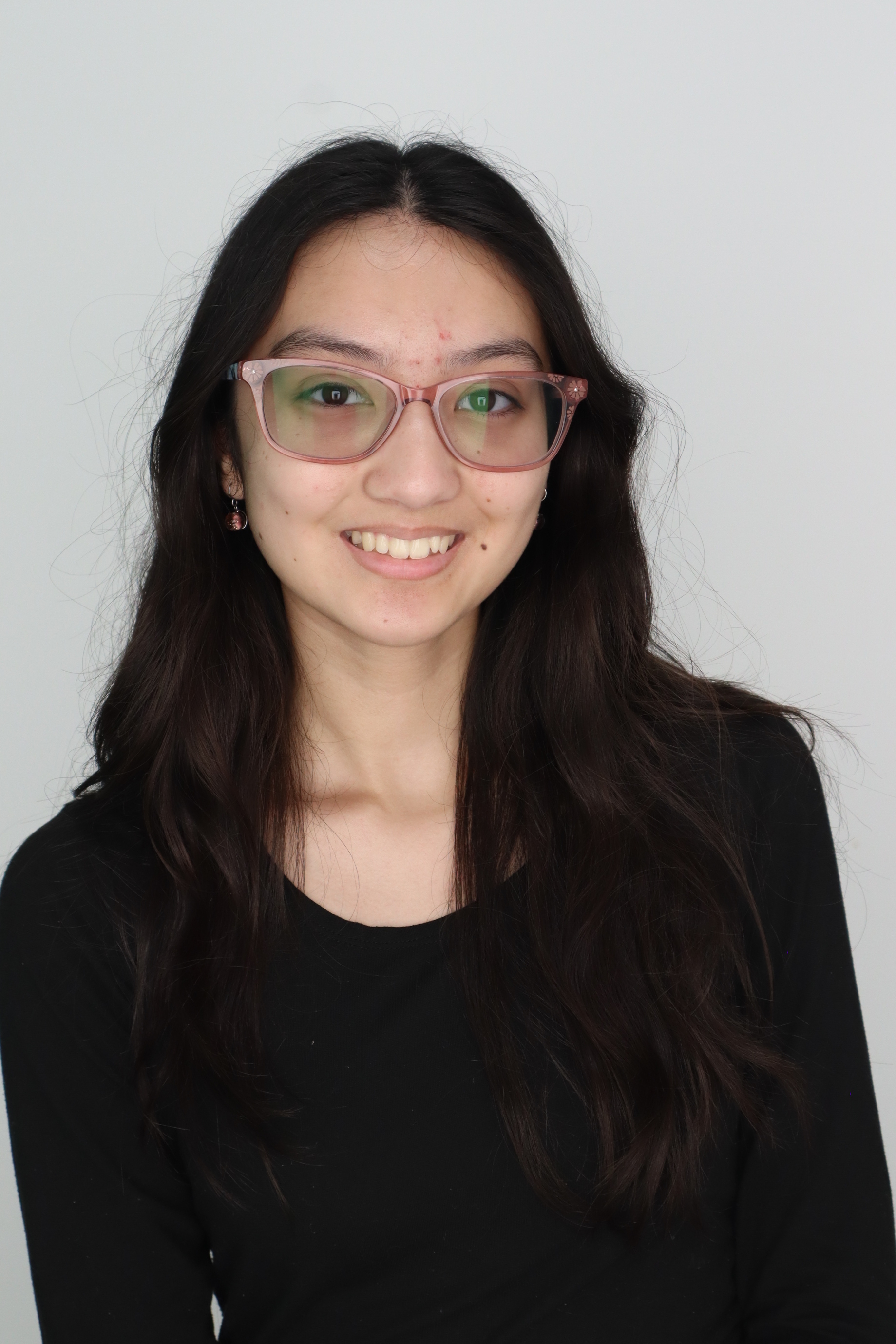
Emali Osteen is a Junior at Florida State University majoring in Biological Science with an interest in minoring in Sociology. She has obtained her Associates in Arts Degree from North Florida College before transferring to Florida State University. Is It All Just Jumpsares is her first research project and has been working on it since September of 2025. Emali's career goal is to become a medical doctor and specialize in Dermatology.
Is It All Just Jumpscares?
Authors: Emali Osteen, Gabrielle LamuraStudent Major: Biological Science
Mentor: Gabrielle Lamura
Mentor's Department: Communication Mentor's College: College of Communication Co-Presenters: Mia Guerrero
Abstract
While the Elaboration Likelihood Model (ELM) is a staple of communication theory, its specific application to the interactive decision-making processes within the horror video game genre is still underexplored. This research investigates how environmental themes and game mechanics influence player processing via the central route of cognitive elaboration versus the peripheral route of affective, or emotional, response. For this study, everyone in our research team created a detailed content analysis of gameplay walkthroughs in popular horror games, such as my assigned video game, Resident Evil 7. A structured codebook was used to categorize specific triggers and player responses. Objectivity in coding was maintained with an inter-coder reliability threshold of 80% to minimize bias. Building on previous research suggesting that horror environments use dual-processing cues, our study expects to find consistent integration of central and peripheral stimuli throughout gameplay and narrative arcs. Given that the study is currently ongoing, the researchers anticipate that these findings will demonstrate how the horror genre strategically utilizes communication theories to influence player behavior and cognitive processing. This study is expected to prove a connection between communication theories and horror video games because of their reliance on communication tactics. This study can be used as a gateway to future studies surrounding horror video games and communication theories.
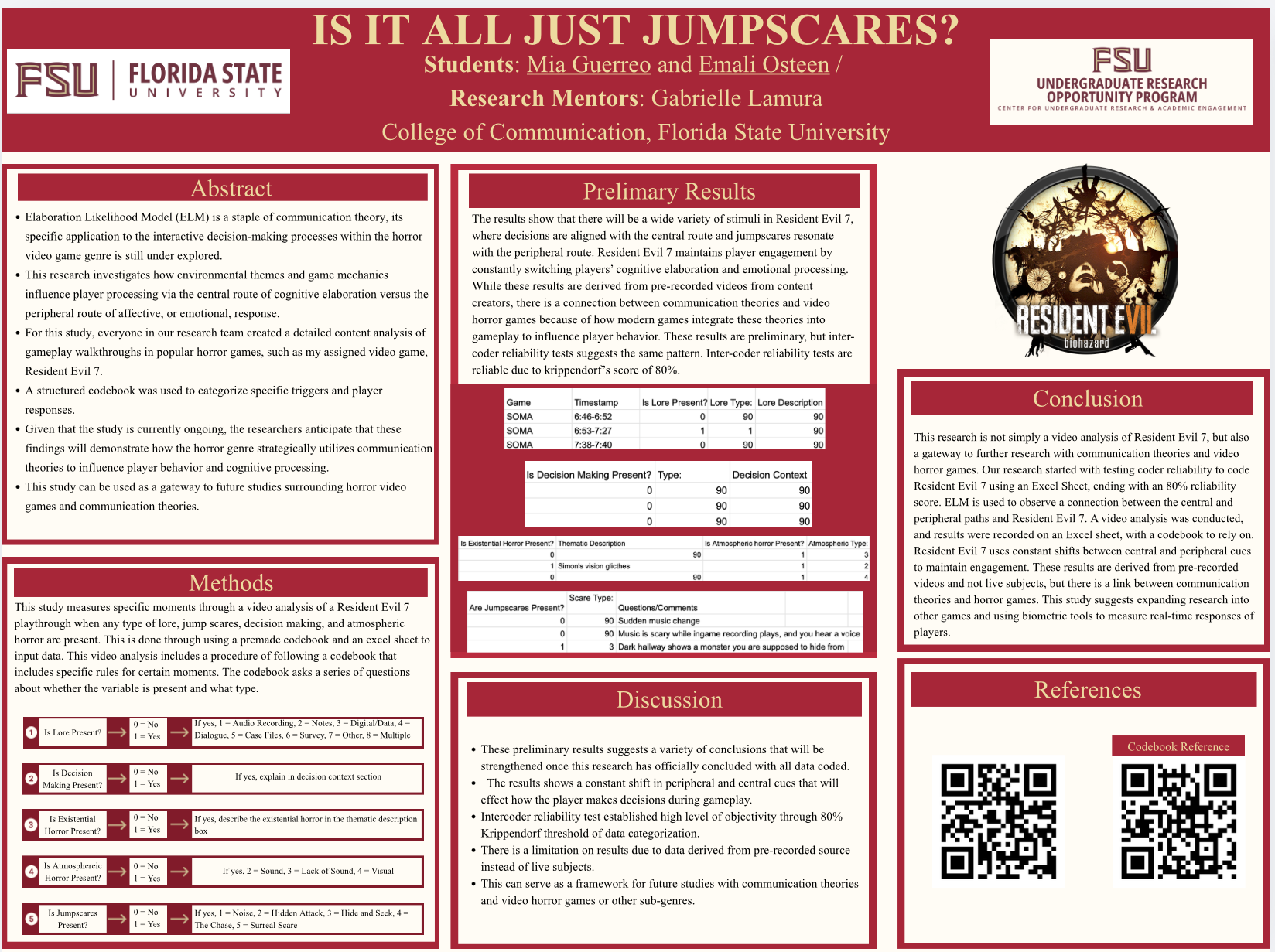
Keywords: ELM Theory Jumpscares
26th annual Undergraduate Research Symposium, April 1, 2026
Samantha Foreman Poster Session 4: 3:00 pm - 4:00 pm / Poster #202
BIO
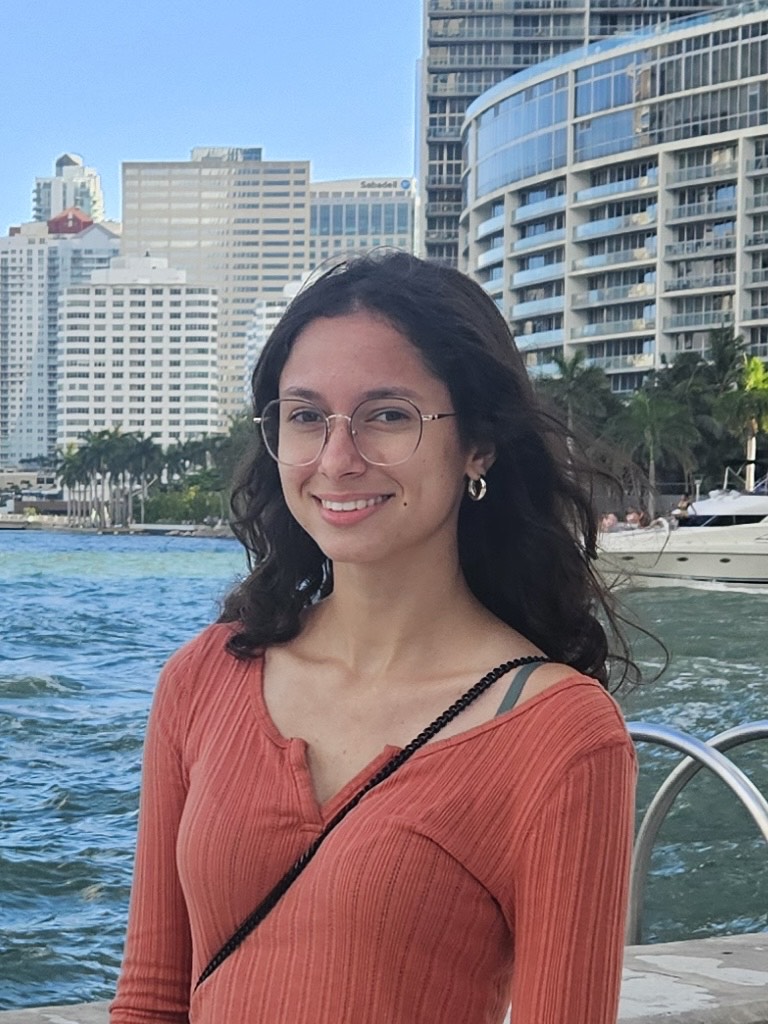
Samantha Foreman is a second-year student majoring in Geology at Florida State University. Her academic interests include understanding Earth’s systems, including rock formation, environmental change, and the processes that shape landscapes. Under Dr. Amy Baco-Taylor she contributed to the study of examining substrate characteristics of deep-sea seamount habitats within and outside the Papahānaumokuākea Marine National Sanctuary.
Substrate Analysis of Seamounts in the Hawaiian Emperor Seamount Chain
Authors: Samantha Foreman, Amy Baco-TaylorStudent Major: Geology
Mentor: Amy Baco-Taylor
Mentor's Department: Earth, Ocean, and Atmospheric Sciences Mentor's College: College of Arts and Sciences Co-Presenters: Ian Nguyen
Abstract
The deep sea remains largely understudied, yet it harbors incredibly unique lifeforms. The animals found in an area are often determined in part by available substrate. This study seeks to investigate if there is a difference between the substrate characteristics of two seamounts inside the Papahānaumokuākea Marine National Sanctuary (PMNS), East Northampton and Pioneer Bank, compared to two seamounts outside, Kammu and Yuryaku, which are heavily fished. Our goal was to test for habitat damage, in the form of substrate differences, from disruptive fishing practices within and outside the protected areas. Seafloor images were collected on twelve ten-minute horizontal transects using the Pisces IV submersible in 2016 and 2017. Three transects were analyzed from each of the four seamounts. Bio-Image Indexing and Graphical Labelling Environment (BIIGLE), an image analysis software, was used to annotate substrate characteristics, including composition and size. Preliminary results show substrate composition was primarily carbonate and size was primarily hardpan across all four seamounts. Additionally, Kammu, East Northampton, and Pioneer Bank had a larger percentage of sand compared to Yuryaku, Yuryaku also had a larger percentage of coral rubble compared to the other seamounts. Ultimately, we could not conclude that seamounts within the PMNM have more habitable substrate than seamounts outside of the national monument. Further analyses could compare substrate characteristics over a greater number of seamounts or with varying factors such as depth or amount of trawling. This research can contribute to a better understanding of human impacts on deep-sea ecosystems.
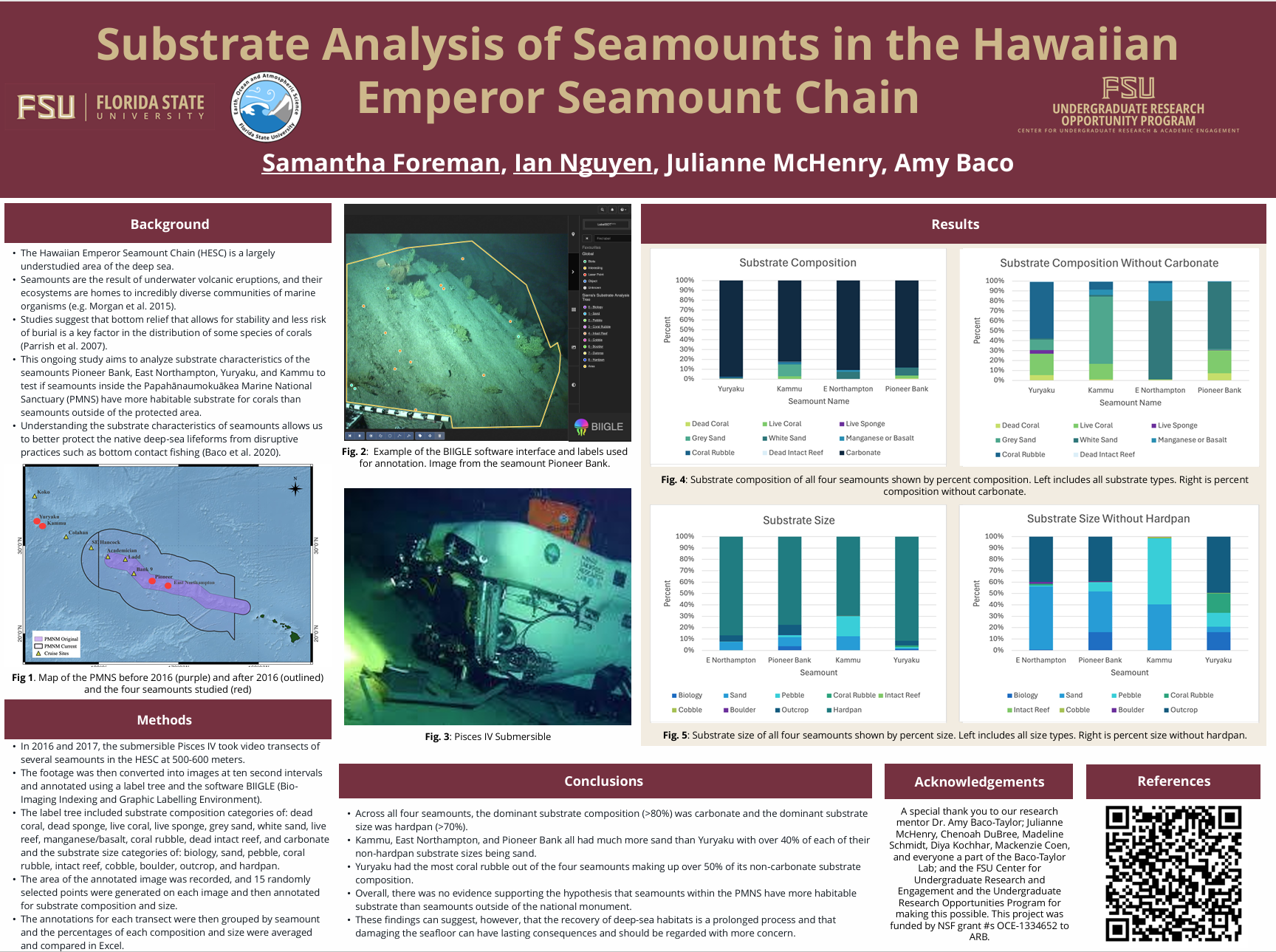
Keywords: Corals, Seamount, Hawaii, Substrate, Carbonate
26th annual Undergraduate Research Symposium, April 1, 2026
David Aguilar Poster Session 3: 1:45 pm - 2:45 pm / Poster #7
BIO
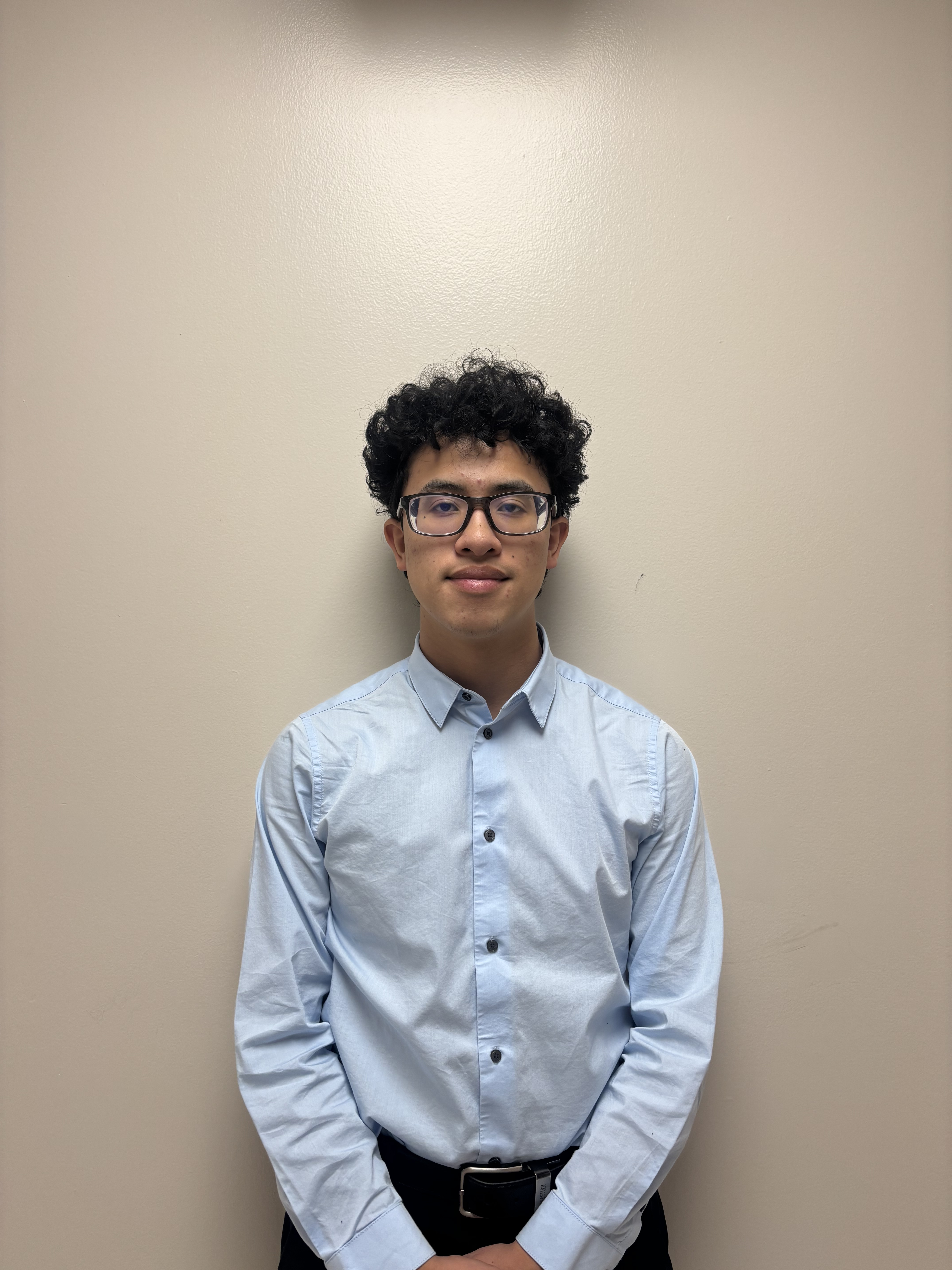
David Aguilar is a pre-law student pursuing a Bachelor of Science in Political Science. His on and off-campus involvement include being a member of the World Affair Program's Model United Nations team and working for a boutique law firm that specializes in prisoner abuse and prison reform. David resides in South Florida, and hopes to one day pursue a career in civil rights law.
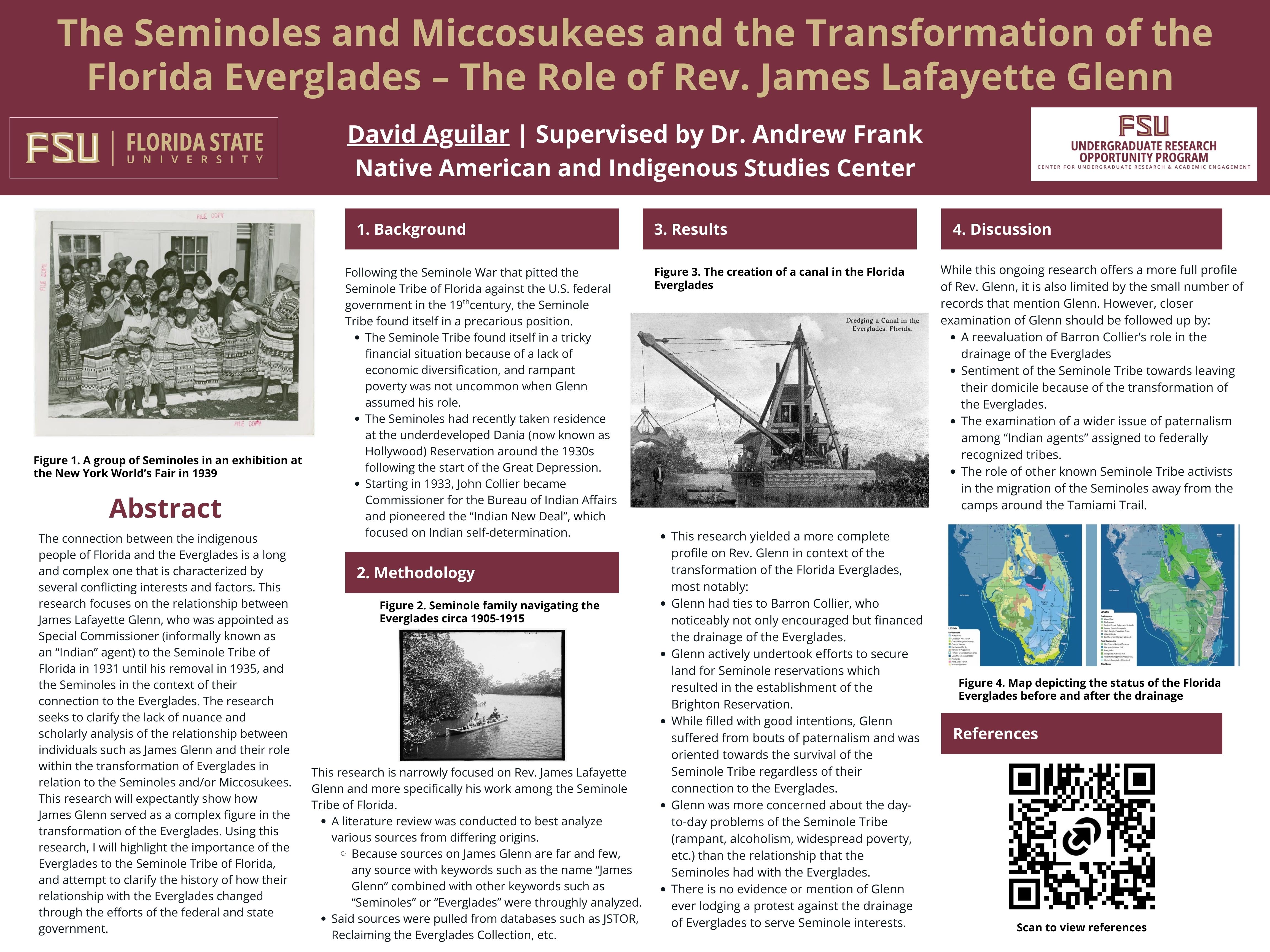
The Seminoles and Miccosukees and the Transformation of the Florida Everglades – The Role of Rev. James Lafayette Glenn
Authors: David Aguilar, Dr. Andrew FrankStudent Major: Political Science
Mentor: Dr. Andrew Frank
Mentor's Department: Department of History Mentor's College: College of Arts and Sciences Co-Presenters:
Abstract
The connection between the indigenous people of Florida and the Everglades is a long and complex one that is characterized by several conflicting interests and factors. This research focuses on the relationship between James Lafayette Glenn, who was appointed as Special Commissioner (informally known as an “Indian” agent) to the Seminole Tribe of Florida in 1931 until his removal in 1935, and the Seminoles in the context of their connection to the Everglades. The research seeks to clarify the lack of nuance and scholarly analysis of the relationship between individuals such as James Glenn and their role within the transformation of Everglades in relation to the Seminoles and/or Miccosukees. This research will expectantly show how James Glenn served as a complex figure in the transformation of the Everglades. Using this research, I will highlight the importance of the Everglades to the Seminole Tribe of Florida, and attempt to clarify the history of how their relationship with the Everglades changed through the efforts of the federal and state government.
Keywords: Seminoles, Glenn, Everglades
26th annual Undergraduate Research Symposium, April 1, 2026
Maia Merkel-Leavitt Poster Session 4: 3:00 pm - 4:00 pm / Poster #276
BIO
Maia Merkel-Leavitt is a Pre-Law student pursuing dual degrees in Political Science and Psychology. Her on-and off-campus involvements include competitive team member of FSU Mock Trial, Outreach Leadership and Moderator in Political Discourse Club, Undergraduate Research Opportunity Program.
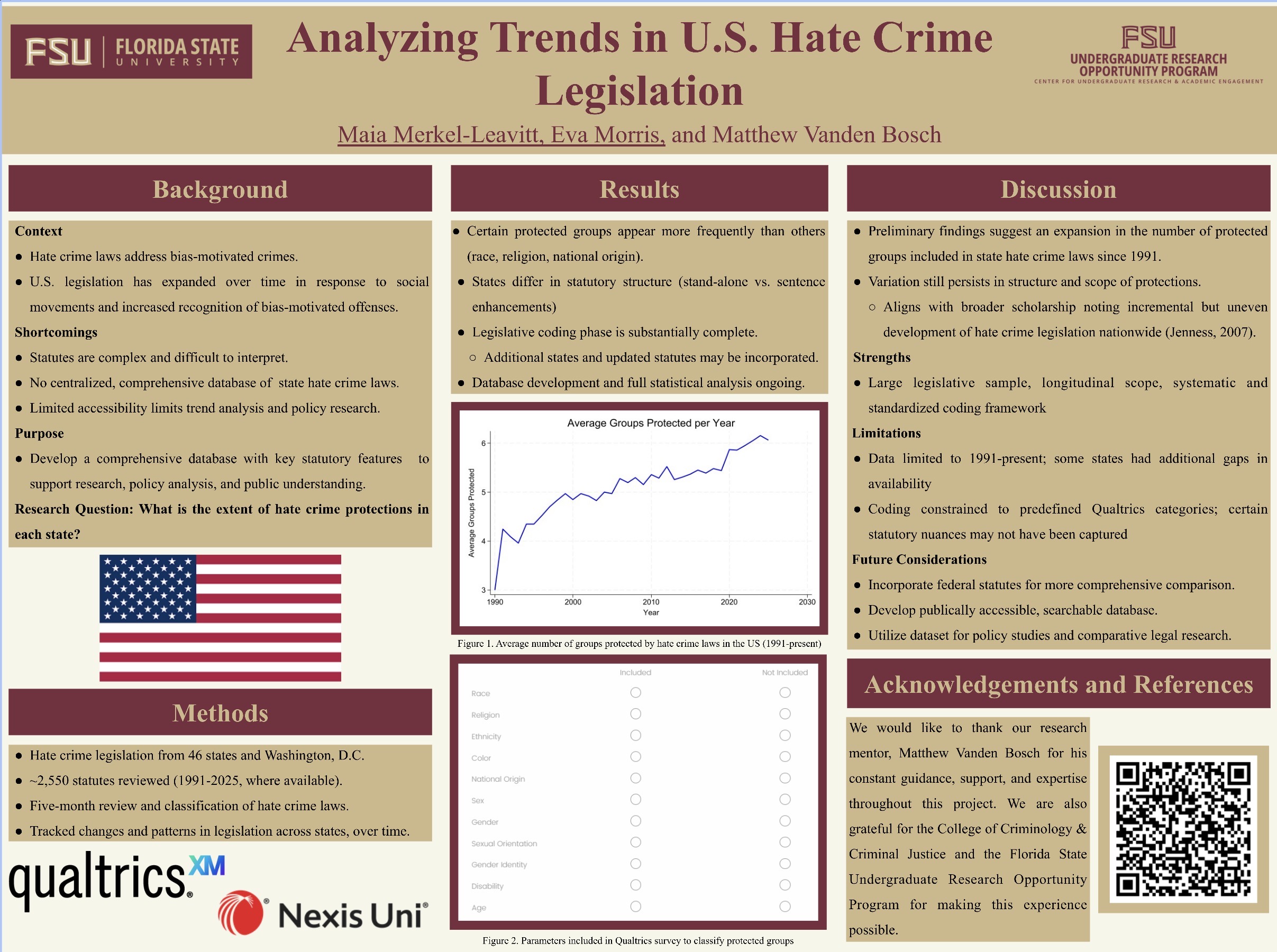
Analyzing Trends in U.S. Hate Crime Legislation
Authors: Maia Merkel-Leavitt, Matthew Vanden BoschStudent Major: Political Science, Psychology
Mentor: Matthew Vanden Bosch
Mentor's Department: College of Criminology and Criminal Justice Mentor's College: College of Criminology and Criminal Justice Co-Presenters: Eva Morris
Abstract
This research examines the extent of hate crime protections across the United States. Because hate crime legislation is primarily determined at the state level, protections vary significantly across jurisdictions. To better understand these differences, this project asks: “What is the extent of hate crime protections in each state?” The study aims to improve accessibility and understanding of hate crime legislation by developing a comprehensive database of state statutes for which legislative data were available. Over a five-month period, approximately 2,550 pieces of legislation from 46 states and the District of Columbia were identified using LexisNexis and systematically reviewed. Available statutory data generally spanned 1991–2025. Each statute was coded using a structured Qualtrics survey instrument that captured key variables, including state, legislative identifier, year of enactment, protected groups, crime severity and punishment, sentence enhancements, and relevant statutory language. This categorical coding framework allowed legislation to be compared across states and tracked over time. Findings indicate substantial variation in both the structure and scope of state hate crime laws. Some states rely primarily on sentence-enhancement provisions, while others establish stand-alone offenses. The number and types of protected groups also vary widely across jurisdictions. The resulting dataset provides a foundation for a publicly accessible database that can support legal research, policy analysis, and public understanding of hate crime legislation. Future work will expand the dataset, incorporate additional statutes, and update the database as laws evolve.
Keywords: Hate crime, law, criminology, database
26th annual Undergraduate Research Symposium, April 1, 2026
Luke Isham Poster Session 2: 10:45 am - 11:45 am / Poster #230

BIO
Motivated Biological Sciences major at Florida State University with a strong foundation in math, science, and chemistry, expected to graduate in May 2027. Experienced in laboratory settings, currently working as a research lab assistant. Hands-on background in animal rehabilitation, environmental education, and community outreach, complemented by work experience in customer service and lifeguarding and as a licensed emergency medical technician. Multiple academic honors and dedicated to pursuing opportunities in scientific research and the medical field, while bringing strong interpersonal, organizational, and problem-solving skills to every role.
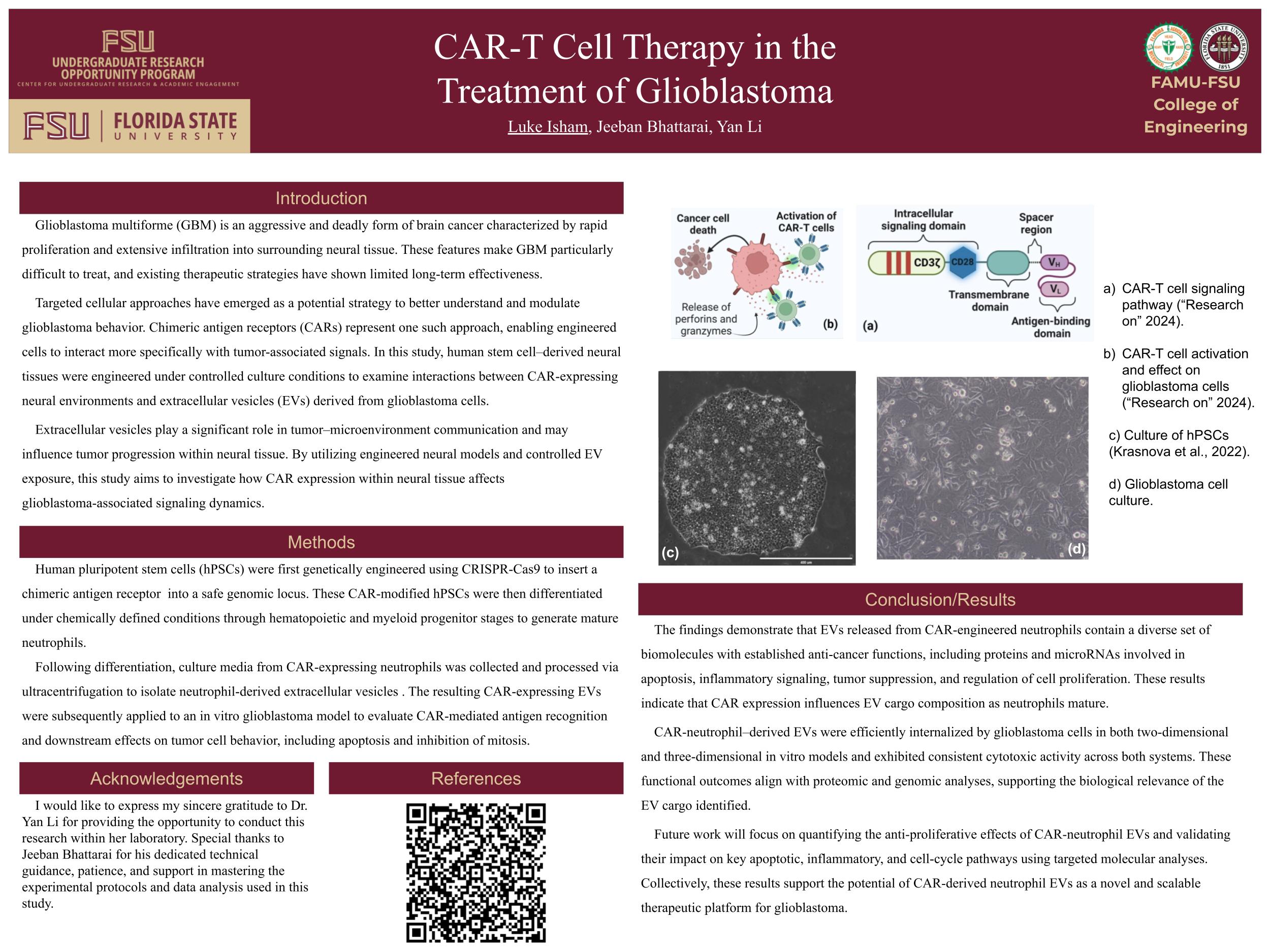
CAR-T Cell Therapy in the Treatment of Glioblastoma
Authors: Luke Isham, Jeeban BhattaraiStudent Major: Pre-Biological Science
Mentor: Jeeban Bhattarai
Mentor's Department: Biomedical Engineering Mentor's College: FAMU-FSU College of Engineering Co-Presenters:
Abstract
Glioblastoma is an aggressive and deadly form of brain cancer that remains difficult to treat due to its rapid proliferation and infiltration of surrounding neural tissue. Despite extensive research, most experimental treatments have demonstrated limited long-term success. Evidence suggests that the progression of glioblastoma may be slowed through targeted cellular interventions. One potential strategy is to use chimeric antigen receptors (CARs) in neural cells to inhibit tumor spread. Extracellular vesicles (EVs) released by glioblastoma cells were isolated and introduced into engineered neural tissue models. Two sets of neural tissue were generated from human stem cells using fibroblast growth factor-2 (FGF-2). One group received an additional growth factor to induce increased CAR expression. A controlled culture framework allowed EVs to be collected separately, ensuring complete neural maturation before exposure. Neural tissues were cultured for 45 days in nutrient-rich conditions prior to treatment. Following exposure to glioblastoma-derived EVs, neural tissues with elevated CAR expression exhibited a slower rate of tumor spread compared to controls. The findings suggest that CAR expression may help limit glioblastoma progression. Further research is necessary to optimize CAR design, improve therapeutic efficacy, and evaluate minimally invasive delivery methods for future clinical application.
Keywords: Glioblastoma, Chimeric Antigen Receptors, Cancer Research
26th annual Undergraduate Research Symposium, April 1, 2026
Alexandra Falvella Poster Session 4: 3:00 pm - 4:00 pm / Poster #102
BIO
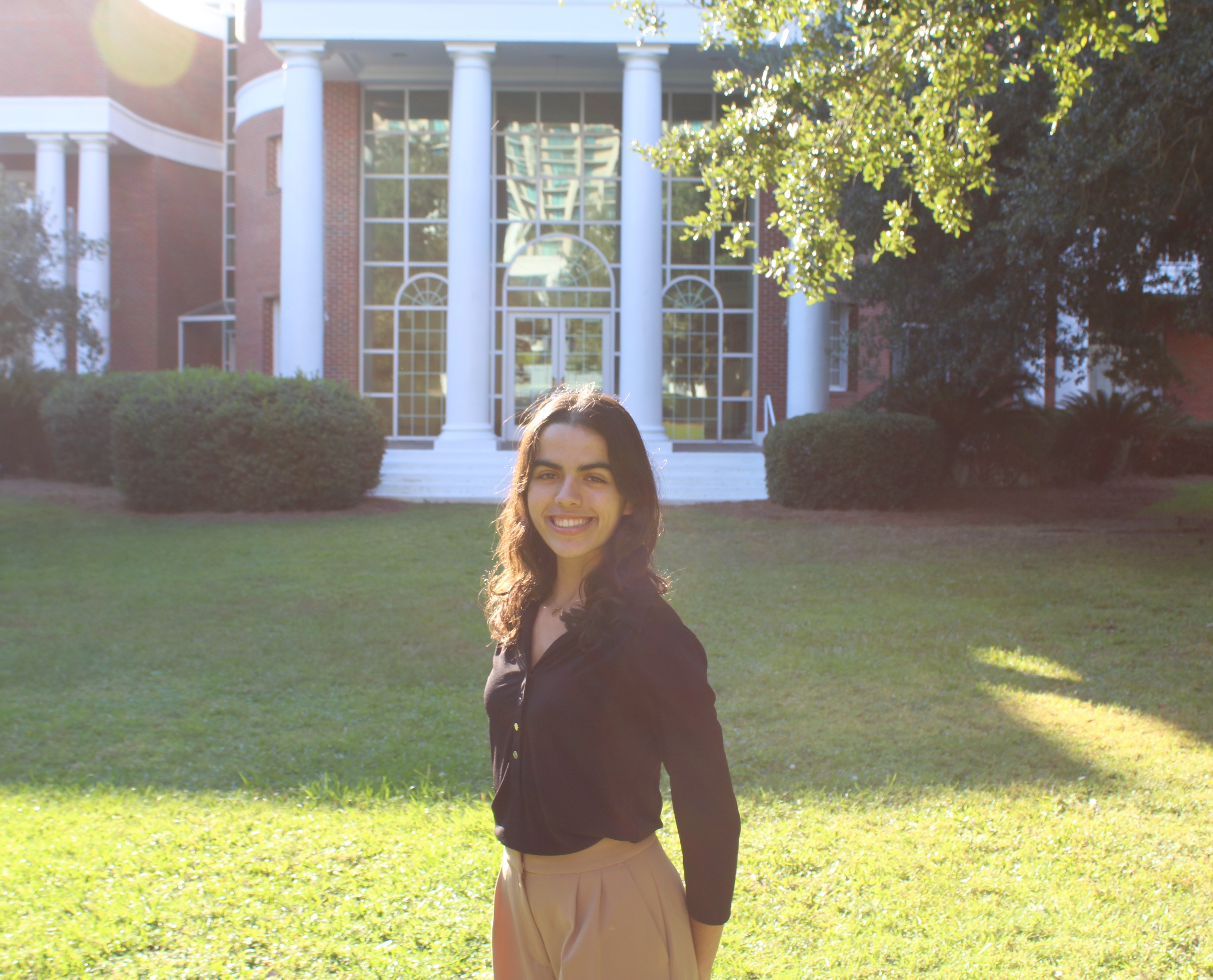
Alexandra Falvella is a first-year student participating in FSU's Honors Program and pursuing a Bachelor of the Arts in History. Her on-campus involvements include serving as an Article Editor for the Undergraduate Law Review and an intern at FSU's Postcard Archive. Currently, she aspires to become a history professor and research fellow. She enjoys reading historical literature and cooking in her free time.
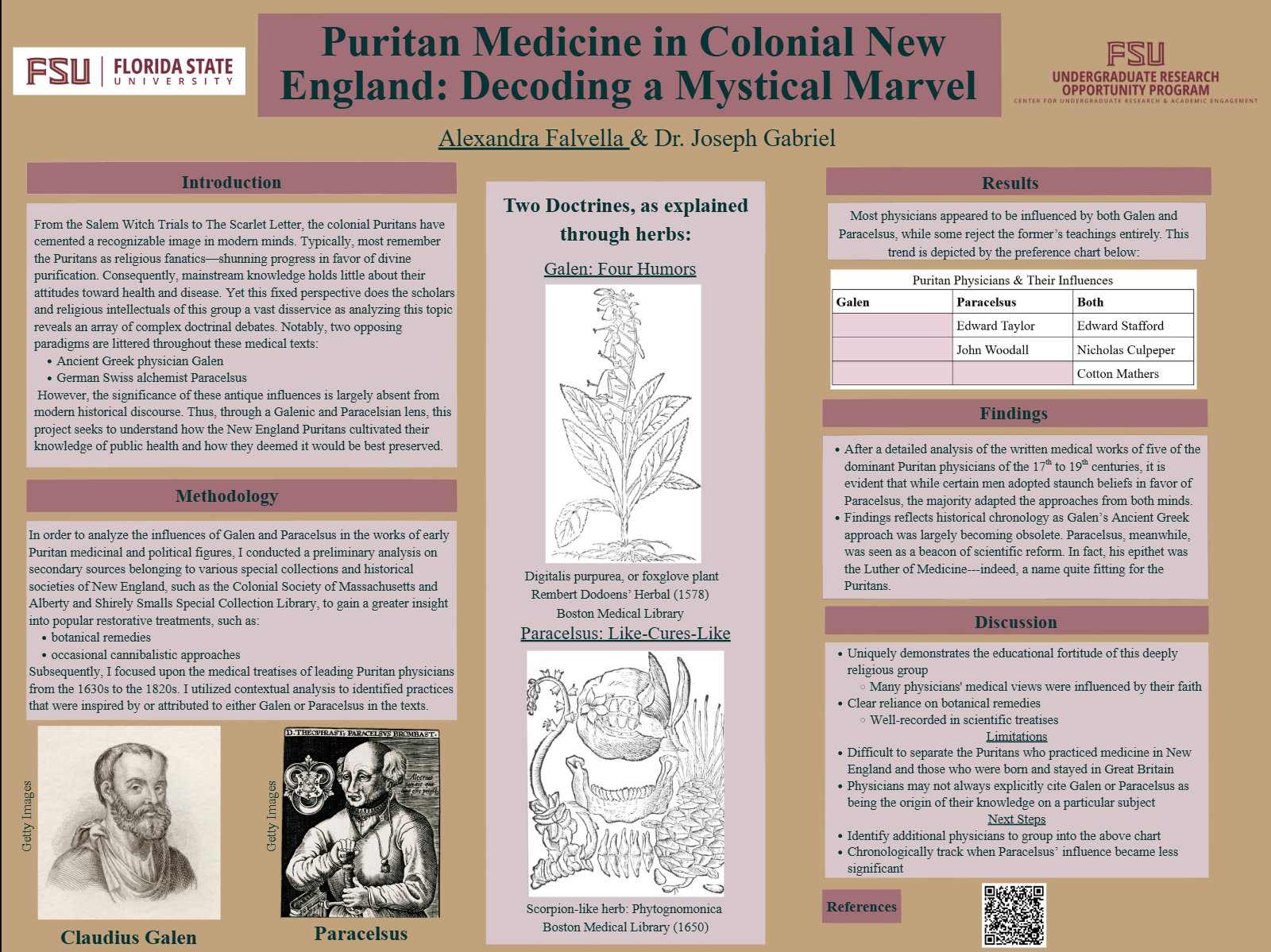
Puritan Medicine in Colonial New England: Decoding a Mystical Marvel
Authors: Alexandra Falvella, Joseph GabrielStudent Major: History
Mentor: Joseph Gabriel
Mentor's Department: Department of History Mentor's College: College of Arts & Sciences Co-Presenters:
Abstract
From the Salem Witch Trials to The Scarlet Letter, the colonial Puritans have cemented an instantly recognizable image in modern minds. Typically, most remember the Puritans as religious fanatics—shunning reason and progress in favor of divine purification. However, this fixed perspective does the scholars and religious intellectuals of this group a vast disservice. Specifically, this project seeks to understand how the Colonial New England Puritans cultivated their knowledge of public health and the manner by which they deemed it would be best preserved. Ranging from superstitious precautions to botanical remedies, the medical education of these colonists is largely credited to two notable figures in medicinal history: the ancient Greek physician Galen and the German-Swiss alchemist Paracelsus. Complex debates about the efficacy of healing afflictions through opposites (treating cold fits with heat) or likeness (utilizing a plant that resembles a scorpion to treat the real insect’s bite) were a result of their conflicting doctrines. Through a detailed analysis of primary sources and medical treatises, I aim to gauge which of the two men played the most influential role in the Puritan medical sphere. Importantly, the result of this analysis of Puritanical perceptions towards public health may also encourage the shedding of simplistic interpretations of this period of the United States’ history. Ultimately, this research serves as a point of origin for this country, reflecting on the success of one of its first permanent settlements through a lens that both expands upon and humanizes the Puritan experience.
Keywords: Puritan, Medicine, Paracelsus, Galen, Botany
26th annual Undergraduate Research Symposium, April 1, 2026
Angelina O'Leary Poster Session 2: 10:45 am - 11:45 am / Poster #138
BIO
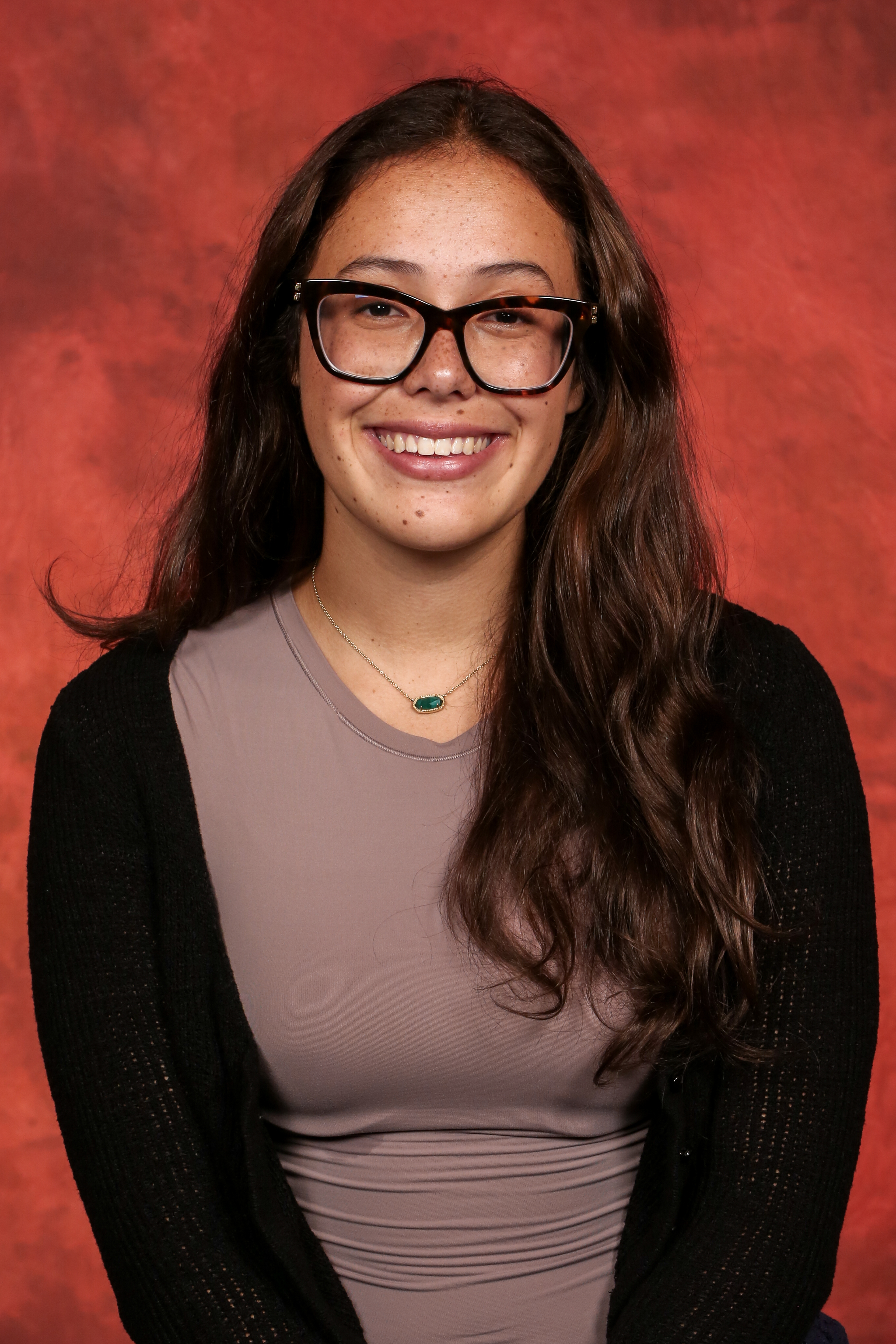
Angelina O'Leary is a first year student at Florida State University from Sarasota, Florida. She is a research assistant in Dr. Julia Sheffler's lab along with having prior research experience investigating PTSD treatment in firefighters. She is a pre-health student with the goal of becoming a Physician Assistant after completion of her undergrad. She is working towards a Bachelors of Science degree in Exercise Physiology.
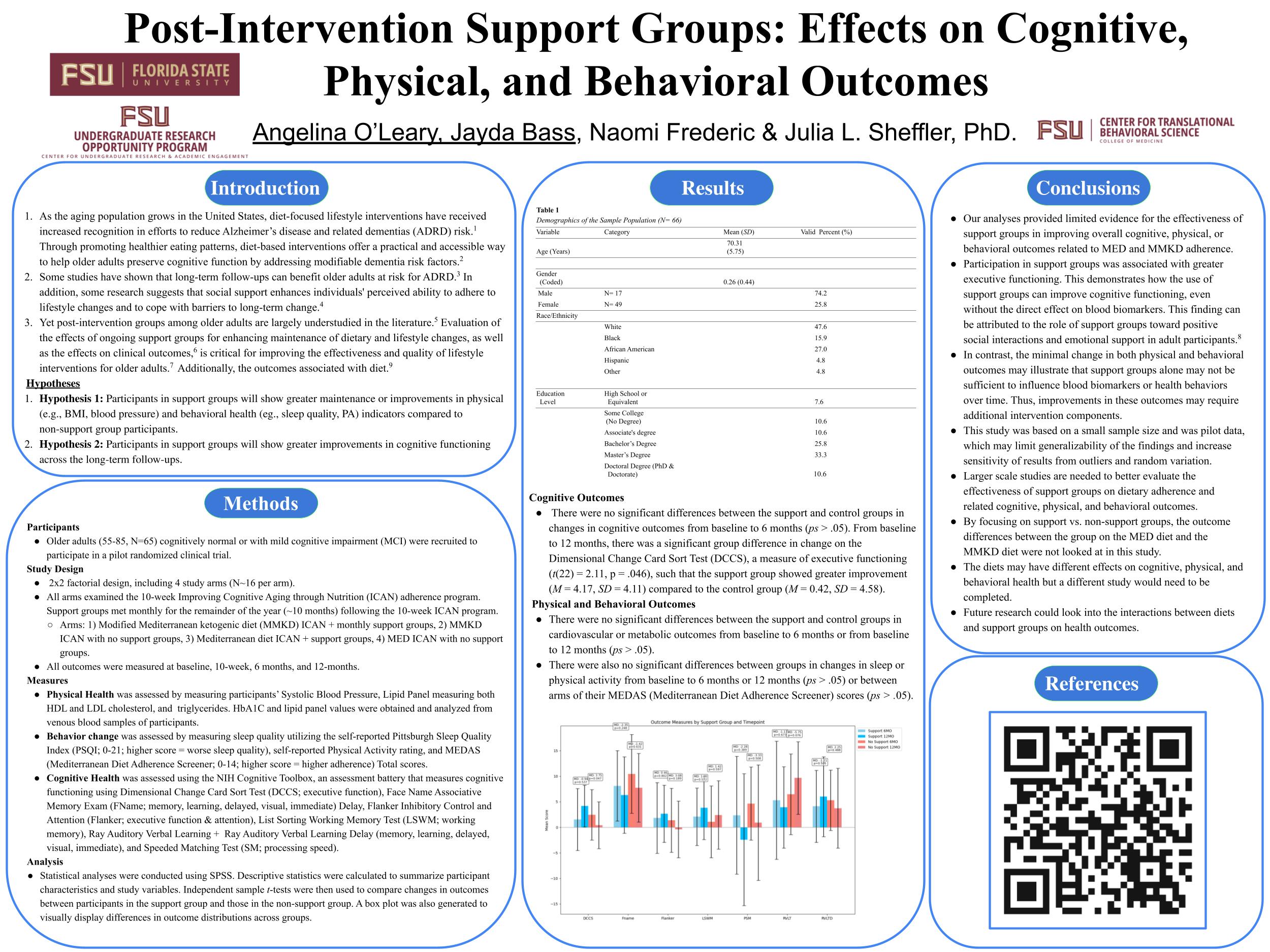
Post-Intervention Support Groups: Effects on Cognitive, Physical, and Behavioral Outcomes
Authors: Angelina O'Leary, Dr. Julia ShefflerStudent Major: Exercise Physiology
Mentor: Dr. Julia Sheffler
Mentor's Department: Behavioral Science and Social Medicine Mentor's College: College of Medicine Co-Presenters: Jayda Bass
Abstract
Background: Dietary interventions such as Mediterranean style diets may reduce dementia risk. However, many individuals have difficulty maintaining these diets after a structured program ends, and few studies examine factors for enhancing long-term adherence. The current study evaluates the effects of post-dietary intervention support groups on long-term cognitive, physical, and behavioral health outcomes.
Methods: A total of 65 participants aged 55+ with dementia risk factors were enrolled in this pilot trial examining a 10-week group nutrition adherence program – the Improving Cognitive Aging through Nutrition program. Using a 2x2 factorial design, participants were randomized to one of four study arms, with two arms receiving ongoing support groups. We hypothesized support group participants would demonstrate greater maintenance or improvements in cardiovascular and cognitive health, as well as behavior change outcomes across follow-ups (6- and 12-month). Outcomes were assessed using NIH Toolbox Cognition Battery, validated self-report measures, and fasting blood draws. Group differences were assessed using independent sample t-tests.
Results: There were no significant differences between support and control groups in cognitive outcomes from baseline to 6 months (ps > .05); however, at 12-months, there was an improvement in executive functioning in the support group compared to the control group (p=0.46). There were no significant differences in physical and behavioral outcomes at 6- or 12-months (ps > .05).
Conclusions: Although a significant improvement in executive function was observed at 12 months, our findings provide limited evidence for the effectiveness of support groups in improving cognitive, physical, or behavioral outcomes.
Keywords: Cognitive Health, Support Groups, Medicine
26th annual Undergraduate Research Symposium, April 1, 2026
Olena Galushko Poster Session 3: 1:45 pm - 2:45 pm / Poster #255

BIO
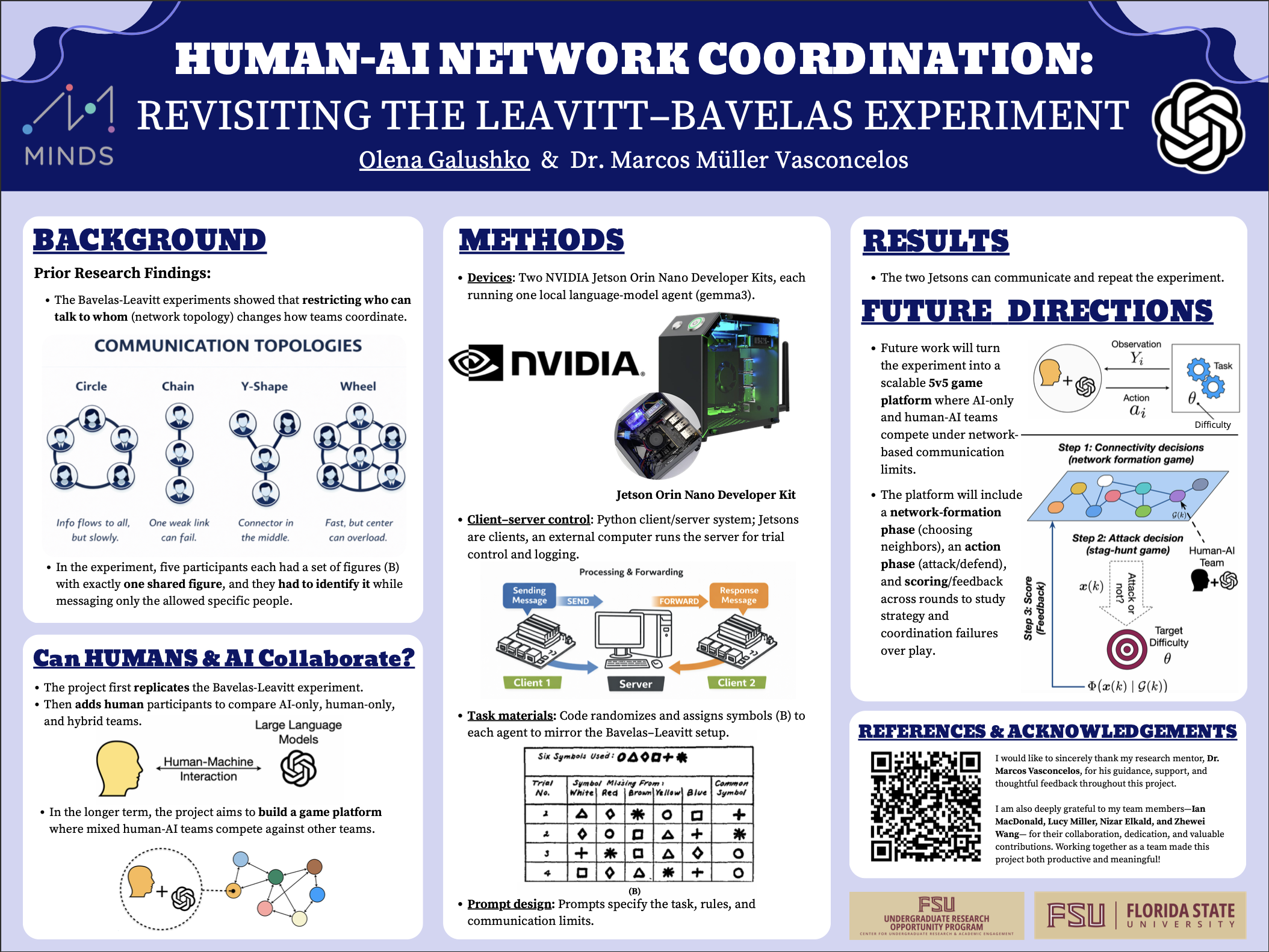
Olena Galushko is a first-year student at Florida State University pursuing a Bachelor of Science in Computer Science. She is involved in undergraduate research through the Undergraduate Research Opportunity Program, where she works on a project inspired by the Leavitt communication network experiments using AI agents and NVIDIA Jetson Nano Developer Kit units. Her research explores how communication structure affects coordination and problem-solving in multi-agent systems with the goal to develop a game platform with human-AI participants. She is mentored by Dr. Marcos Vasconcelos at the FAMU-FSU College of Engineering. Olena’s academic and research interests include artificial intelligence, large language models, multi-agent systems, and communication networks. She hopes to continue building research experience in AI and computer science to apply these skills in the technology industry.
Human-AI Network Coordination: Revisiting the Leavitt–Bavelas Experiment
Authors: Olena Galushko, Dr. Marcos Müller VasconcelosStudent Major: Computer Science
Mentor: Dr. Marcos Müller Vasconcelos
Mentor's Department: Dept. of Electrical and Computer Engineering Florida State University Mentor's College: FAMU-FSU College of Engineering Co-Presenters:
Abstract
As AI becomes more common, it is increasingly used in settings where it must collaborate with people. This project builds a controlled testbed to study that teamwork. The current prototype runs small language model agents on compact computers with direct device-to-device messaging. In each trial, agents get the same task, exchange short messages, and update their decisions. The design adapts the Bavelas-Leavitt communication-network studies by placing agents into fixed network roles and limiting who can communicate with whom. Results are not yet available because the experiment is still being finalized. Long term, the platform will scale to larger networks, add human participants under the same rules, and support more game-like human-AI team scenarios.
Keywords: AI, Communication Networks, Human-AI Collaboration, Machine Learning, Small Language Models, Game
26th annual Undergraduate Research Symposium, April 1, 2026
Xavier Garcia Poster Session 1: 9:30 am - 10:30 am / Poster #241
BIO
Xavier Garcia is a second-year student majoring in Cell and Molecular Neuroscience, with a goal of becoming a physician. Xavier has received academic recognition throughout his journey at FSU for attaining strong GPAs. Since the Fall 2025 semester, Xavier, under the mentorship of Jaesung Hur, has been researching the impacts that video conferencing environments, utilizing webcams, can have on students and instructors in educational contexts. Xavier strives to learn more about factors that can improve mental wellness, especially when it comes to self-esteem, and understanding the perceptions that instructors and students have towards webcams can provide insight into possible solutions for improving distant learning, potentially enhancing the mental well-being of those who are a part of distant learning education. Additionally, Xavier has gained hands-on experience in a laboratory setting in the Dominican Republic, where he helped a Bioanalyst process blood samples and deliver the results to patients. As a Cell and Molecular Neuroscience major, Xavier has a passion for understanding the important mechanisms of the brain and applying this knowledge to handle mental health disorders, such as depression and anxiety. Xavier’s long-term goal is to help future patients boost their self-esteem so that they can live a healthy lifestyle. Xavier hopes to continue participating in research through his undergraduate and future career to gain the skills and enrichment needed to reach his goals.
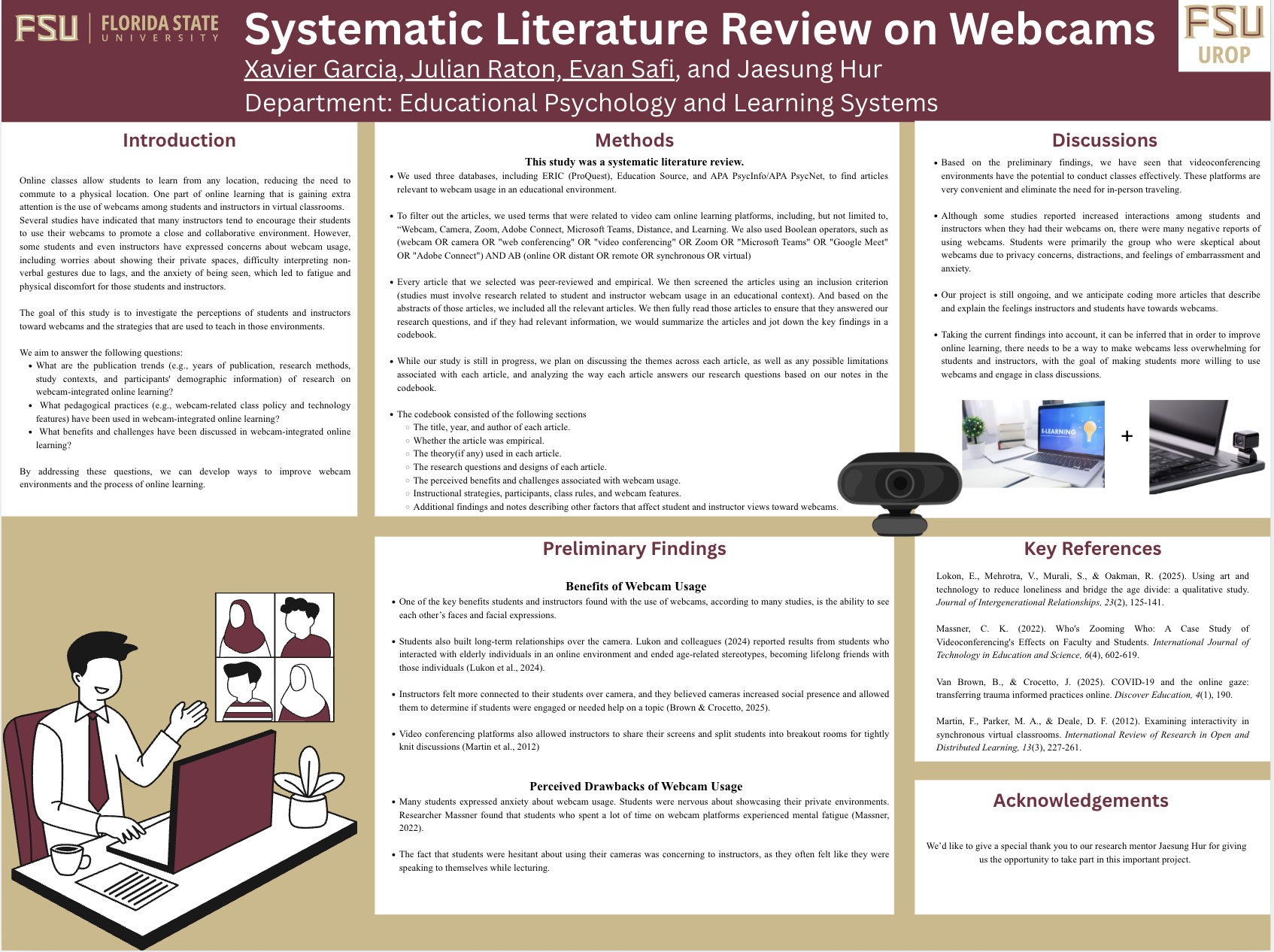
Systematic Literature Review on Webcams
Authors: Xavier Garcia, Jaesung HurStudent Major: Cell and Molecular Neuroscience
Mentor: Jaesung Hur
Mentor's Department: Educational Psychology and Learning Systems Mentor's College: Anne Spencer Daves College of Education, Health, and Human Sciences Co-Presenters: Evan Safi and Julian Raton
Abstract
This study aims to examine the perceptions and experiences of students and educators regarding webcam usage in virtual learning contexts. Over the years, online learning has become increasingly popular, and the COVID-19 pandemic has further accelerated its growth. Prior research has found mixed opinions regarding webcam usage. Some studies highlight that videoconferencing allows students and instructors to engage in real-time discussions, eliminating the need for in-person contact. Other studies indicate that many students and educators have also felt overwhelmed and hesitant about using their webcams. Based on these findings, it is important to review additional literature to gain further insight into the role webcams play from both a learner’s and instructor’s perspective to provide data for future research designed to improve webcam usage in teaching and learning environments. To conduct this study, our team located articles from three different education-focused databases that discussed the different teaching approaches taken in virtual environments. We then screened articles and only included articles that specified the use of video-conferencing tools or webcams in teaching and learning environments and summarized key themes. Based on our current articles, there was a common trend: many students and instructors believed webcams promoted engagement and social presence, while others reported exhaustion and expressed privacy concerns related to revealing personal spaces, background environments, and noise. These results suggest that webcams may be useful in online learning, but additional data is needed to help future researchers develop instructional strategies that instructors can use to improve webcam experiences in online classes.
Keywords: Webcam Environments, Virtual Learning, Social Presence, Video Conferencing, Education
26th annual Undergraduate Research Symposium, April 1, 2026
Nina Hamlin Poster Session 1: 9:30 am - 10:30 am / Poster #191
BIO
Nina Hamlin is a sophomore at Florida State University pursuing a Bachelor of Science in Cell and Molecular Neuroscience on the pre-medical track. During the 2025–2026 academic year, she is participating in the Undergraduate Research Opportunity Program (UROP) and conducting research under the mentorship of Dr. Ravikumar Gelli. Through this program, she is gaining experience in the research process while developing skills in critical thinking, data analysis, and scientific collaboration. After completing her undergraduate studies, Nina plans to attend medical school and pursue a career as an orthopedic surgeon.
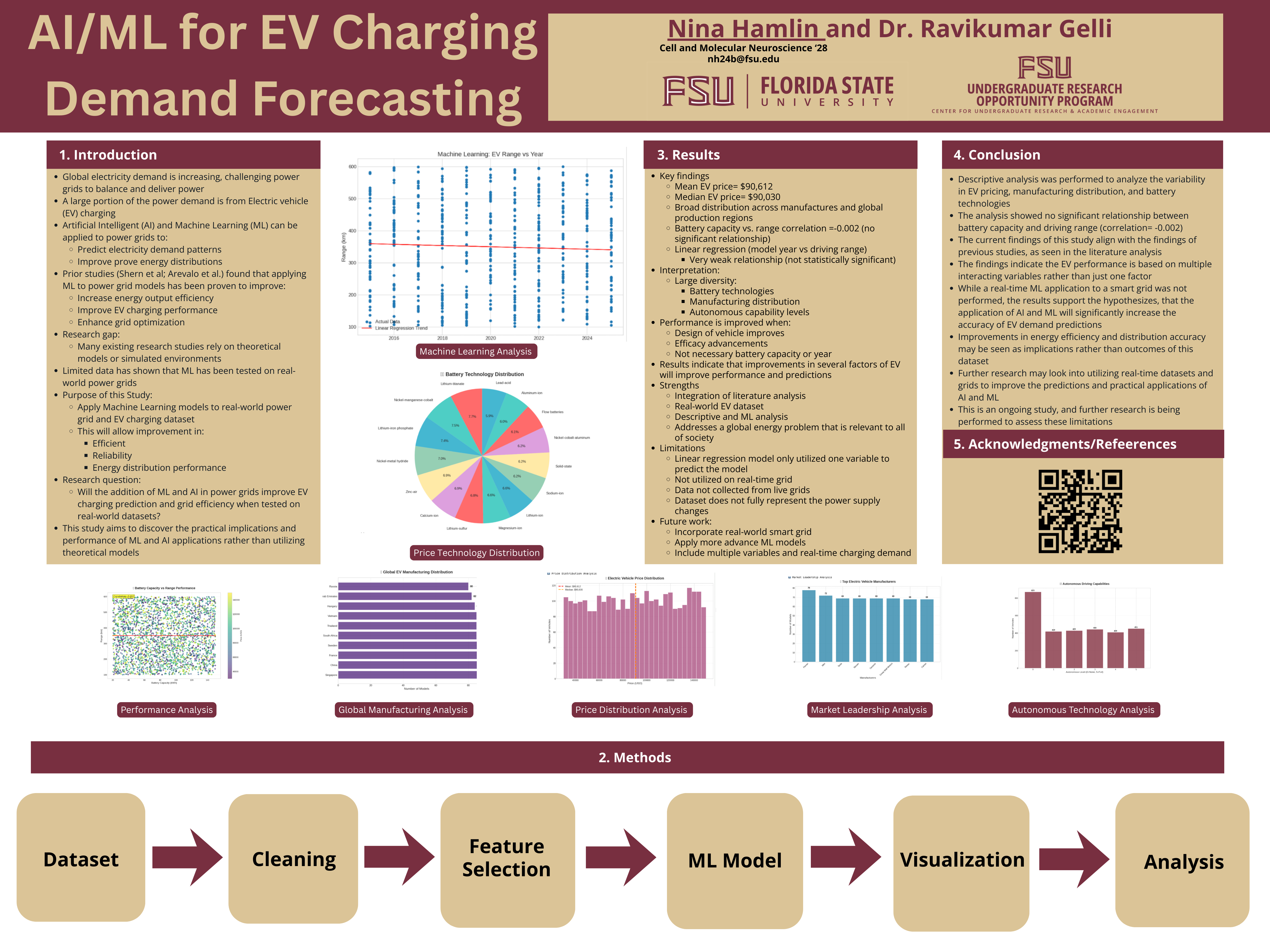
Al/ML for EV Charging Demand Forecasting
Authors: Nina Hamlin, Dr. Ravikumar GelliStudent Major: Cell and Molecular Neuroscince
Mentor: Dr. Ravikumar Gelli
Mentor's Department: Electrical and Computer Engineering Mentor's College: FAMU-FSU College of Engineering Co-Presenters:
Abstract
This project investigates how Artificial Intelligence (AI) and Machine Learning (ML) can improve efficiency and reliability in smart electric power grids. As renewable energy and electric vehicle (EV) use increases, energy distribution becomes essential. This study specifically aims to study how ML can accurately predict EV charging demand and how these predictions improve grid stability and energy distribution. To assess this, a literature review was conducted to examine AI application in smart grids. A publicly available dataset from Kaggle, an online data science platform that provides real-world datasets, was used to model EV charging patterns, Machine Learning algorithms were applied to predict demand and evaluate potential grid integration with AI. It is hypothesized that the application of ML and AI will improve charging efficiency and reduce energy waste. Future studies may include models with real-time data to improve predictability and accuracy in power grids.
Keywords: AI/ML in EV charging