
Research Symposium
26th annual Undergraduate Research Symposium, April 1, 2026
Brendan McNamara Poster Session 3: 1:45 pm - 2:45 pm / Poster #11
BIO
Brendan is a first year Presidential Scholar at Florida State University, and he is pursuing a degree in cell & molecular neuroscience. He currently serves as a Research Assistant in the Wagner Lab, where he contributes to scientific inquiry through literature review, collaboration, and clear communication of research ideas.
With a 4.0 GPA and a strong academic foundation, Brendan is deeply interested in the intersection of neuroscience research and clinical medicine. His long-term goal is to pursue a career as a physician, driven by a commitment to evidence-based practice and patient-centered care.
Meta-Analysis of Risk-Factors for Dyslexia
Authors: Brendan McNamara, Dr. Richard WagnerStudent Major: Cell & Molecular Neuroscience
Mentor: Dr. Richard Wagner
Mentor's Department: Psychology Mentor's College: Arts & Sciences Co-Presenters: Brendan Hanbury, Alyssa Montanez, Madison Taylor
Abstract
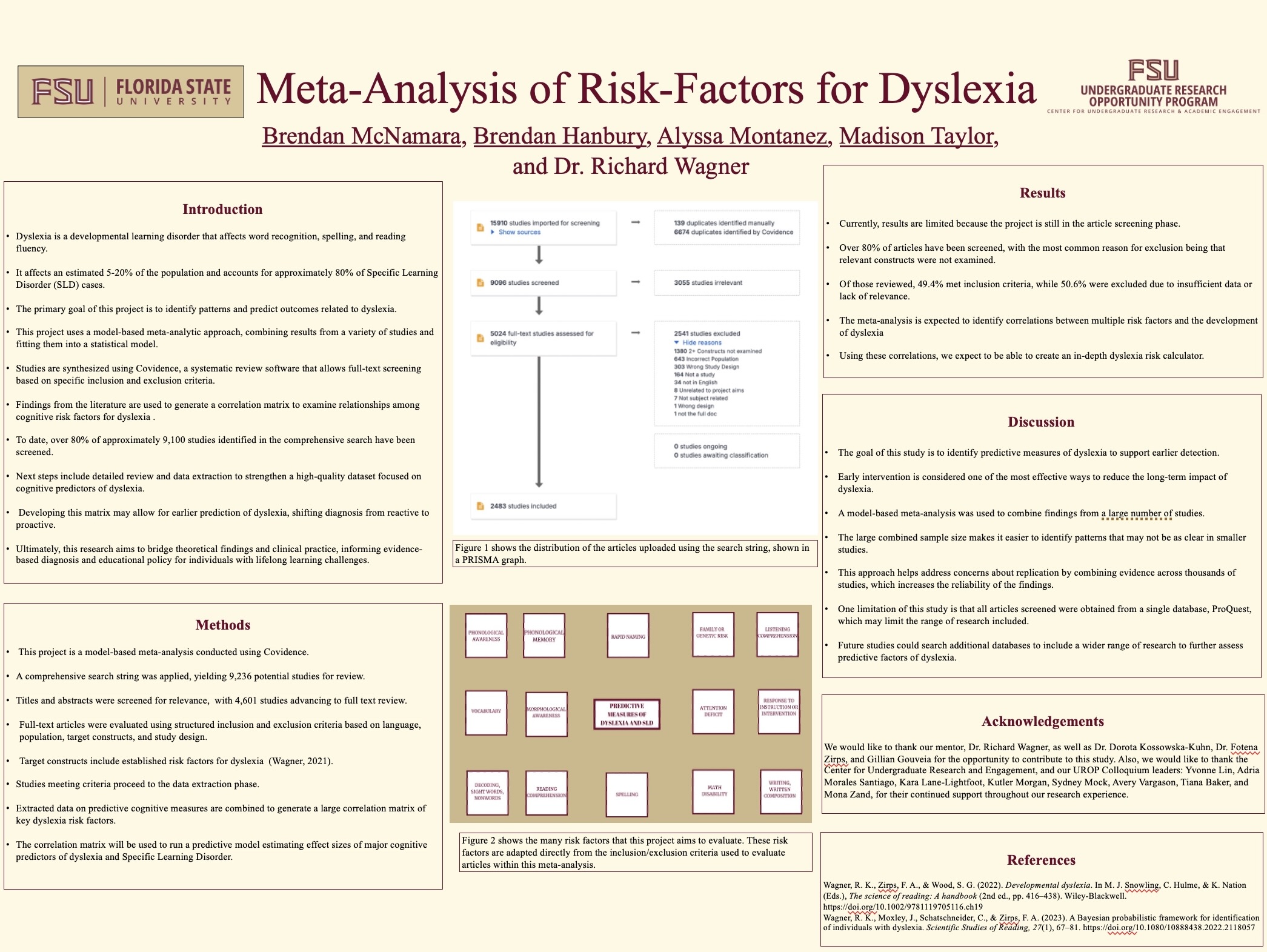
Dyslexia is a distinct, complex neurodevelopmental condition that significantly impacts lifelong educational outcomes and affects up to 20% of the population. Dyslexia is primarily characterized by impaired word recognition and decoding difficulties. While there has been much research on dyslexia, individual small-scale studies often lack the necessary statistical power to generalize these findings across a multitude of diverse groups. This research, conducted through Florida State University’s NIH Multidisciplinary Learning Disabilities Research Center, utilizes a large-scale meta-analysis to establish an evidence-based understanding of the prevalence and underlying mechanisms of dyslexia. The methodology follows a rigorous systematic framework to screen and synthesize decades of global research. Following an extensive literature review of over 3,800 identified studies, researchers applied a standardized codebook and strict inclusionary criteria to exclude methodologically unsound data and refine the sample. Preliminary results have yielded a group of high-quality studies that provide precise effect sizes regarding the cognitive and behavioral markers of this disorder. By aggregating these data, the project is developing a large-scale correlation matrix to identify and weight predictive neurobiological signs. These findings underscore the importance of treating dyslexia as a specific challenge requiring specialized, evidence-based approaches for diagnosis and intervention. Ultimately, this research aims to bridge the gap between laboratory findings and real-world application by creating a robust scientific foundation for earlier prediction, more accurate clinical diagnosis, and more effective instructional policies. This comprehensive synthesis provides the clarity necessary to improve long-term academic trajectories for all individuals who are currently struggling with these learning disabilities.
Keywords: dyslexia, meta-analysis, learning disorder
26th annual Undergraduate Research Symposium, April 1, 2026
Mikayla Rosenwasser Poster Session 1: 9:30 am - 10:30 am / Poster #267
BIO
Mikayla is second-year dual degree student, studying Political Science & Business Management at Florida State University, aspiring to attend law school and pursue a career as a family lawyer. She is currently a remote legal intern at Walker, Revels, Greninger PLLC, a defense insurance law firm in Orlando, FL. She;s also in involved as a Hope Leader for Relay for Life, Head of Marketing for Hillel at FSU, Small Group Coordinator for CHAARG at FSU, and Marketing Coordinator for Jewish Student Union. She is currently researching with the Human Development and Family Science department, focusing on how parents daily stress levels influence momentary parenting behaviors and children’s self-regulation.
Daily Effects of Parental Stress on Parenting Behaviors and Children’s Self-Regulation in Higher-Risk Families
Authors: Mikayla Rosenwasser, Longfeng LiStudent Major: Political Science and Business Management
Mentor: Longfeng Li
Mentor's Department: Human Development and Family Science Mentor's College: Florida State University Co-Presenters: Kaitlyn Goslinga, Megan Knobloch, Francesca Maresma, Annemarie Wilson
Abstract
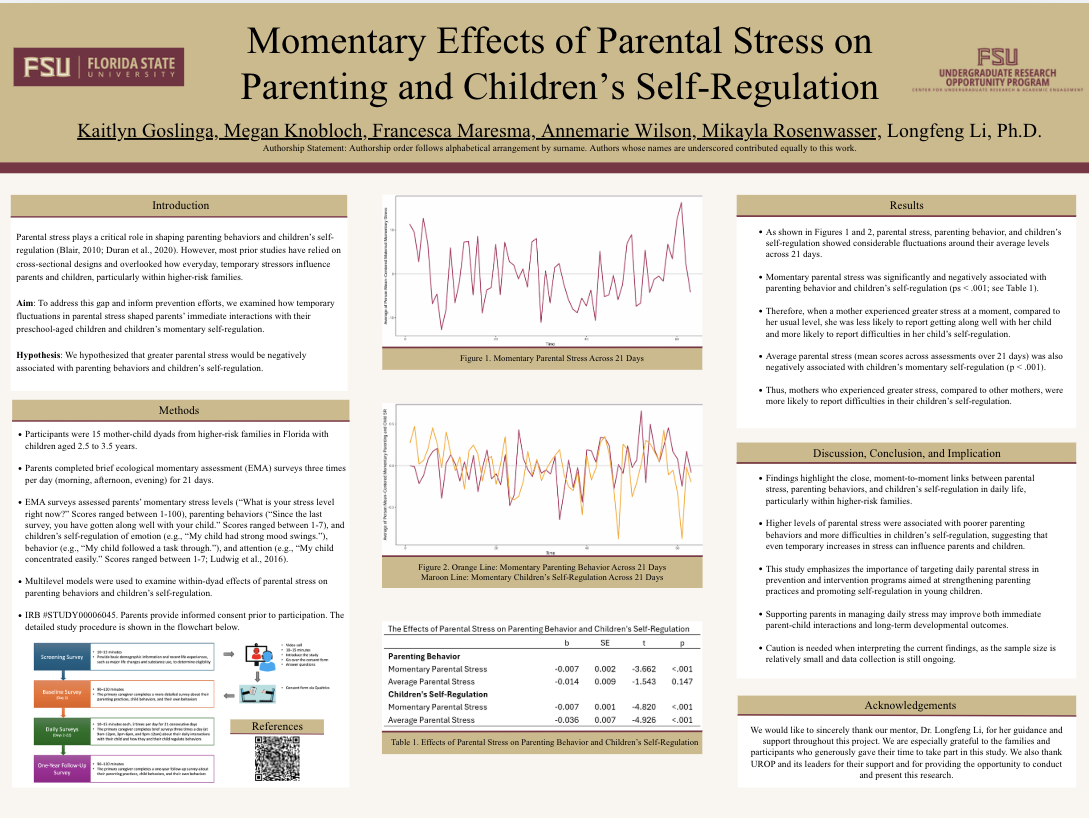
Parental stress plays a critical role in shaping parenting behaviors and children’s self-regulation. However, most prior studies have relied on cross-sectional designs and overlooked how everyday, temporary stressors influence parents and children, particularly within higher-risk families. To address this gap and inform prevention efforts, we examined how temporary fluctuations in parental stress shaped parents’ immediate interactions with their preschool-aged children and children’s momentary self-regulation. This work aims to support the development of targeted, evidence-based interventions to buffer families from the adverse consequences of daily stress. We hypothesized that greater parental stress would be negatively associated with parenting behaviors and children’s self-regulation. Participants were 15 mother-child dyads from higher-risk families in Florida with children aged 2.5 to 3.5 years. Mothers completed an initial survey, followed by brief ecological momentary assessment (EMA) surveys three times daily (morning, afternoon, evening) for 21 days. EMA surveys assessed parental stress, parenting behaviors (i.e., how well they were getting along with their child), and children’s self-regulation of emotion, behavior, and attention. Multilevel models revealed negative within-dyad associations between parental stress and both parenting behaviors and children’s self-regulation (ps < .05). At moments when parents experienced higher-than-usual stress, they were less likely to report getting along well with their child and more likely to report difficulties in their child’s self-regulation. These findings highlight the dynamic, interrelated nature of parental stress, parenting behaviors, and children’s self-regulation in daily life, suggesting that family-system approaches designed to buffer families from everyday stress may be especially beneficial for higher-risk families.
Keywords: Parenting Stress, Self Regulation, Parent-Child Relationships
26th annual Undergraduate Research Symposium, April 1, 2026
Madeline Tomasco Poster Session 4: 3:00 pm - 4:00 pm / Poster #147
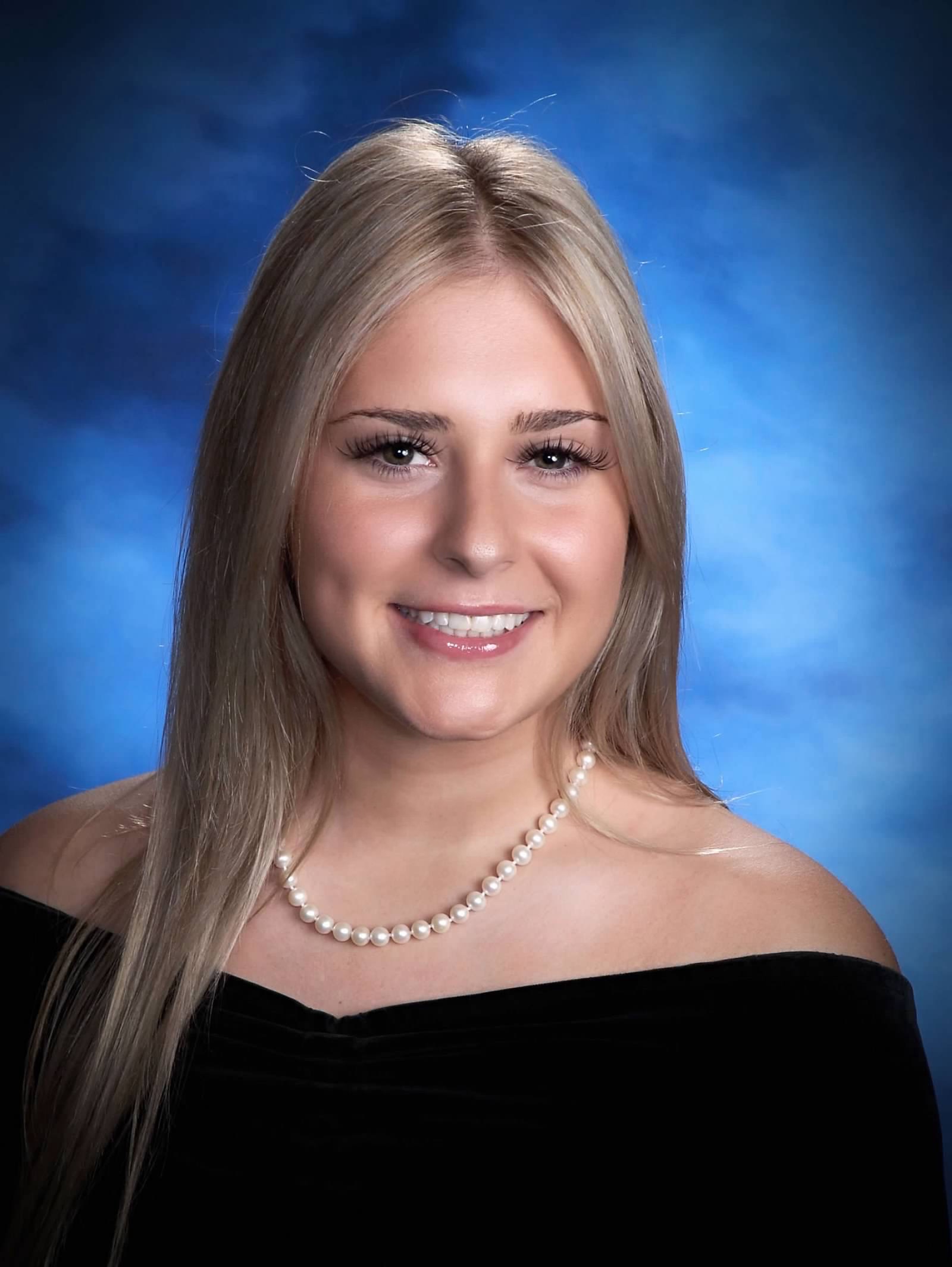
BIO
Madeline Tomasco is a sophomore double majoring in Political Science and Media Communications Studies pursuing a Bachelor of Science degree from Florida State University. The research opportunity provided by UROP has improved her skills in data extraction and analysis and has been an invaluable experience. She is a member of the University Honors Program and engages in the Honors community as an Honors Colloquium Leader. Furthermore, she is a member of the Phi Alpha Delta pre-law fraternity as well as Delta Gamma. Madeline is a dedicated pre-law student with the intent of attaining a Juris Doctor degree and practicing as an attorney.
ADHD and Spatial Orientation: A Meta-Analysis
Authors: Madeline Tomasco, Dorota Kossowska-KuhnStudent Major: Political Science and Media Communications Studies
Mentor: Dorota Kossowska-Kuhn
Mentor's Department: Psychology Mentor's College: College of Arts and Sciences Co-Presenters: Mollie Koetting, Ashley Ruddick, Cassie Amitrano
Abstract
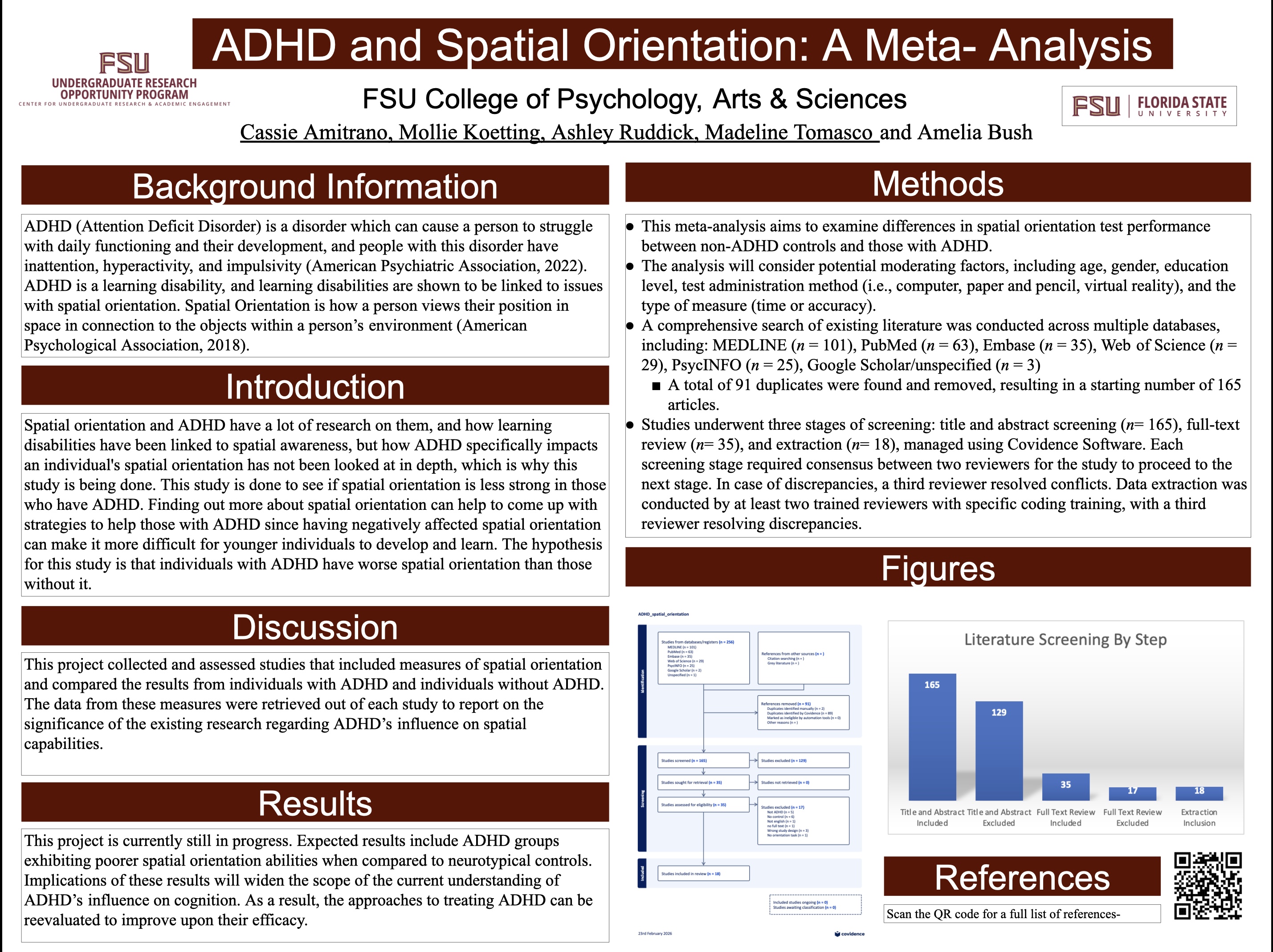
This study evaluated spatial orientation abilities in individuals diagnosed with Attention Deficit/Hyperactivity Disorder (ADHD) compared to neurotypical controls. ADHD is defined in the DSM-5-TR as a neurodevelopmental disorder characterized by persistent patterns of inattention and/or hyperactivity-impulsivity interfering with functioning or development. Spatial orientation refers to the ability to perceive, interact with, and maintain awareness in a three-dimensional environment through integration of multisensory information. Spatial orientation has been associated with learning disabilities specific to geometric and mathematical reasoning. While prior research has studied spatial orientation and ADHD independently, their relationship has not been examined. Understanding this relationship may expand the scope of understanding of ADHD-related cognition and inform treatment approaches. This study holds importance as it examines under-researched aspects of neurodevelopment, addressing a significant gap in the existing literature. To investigate this relationship, a meta-analysis was conducted to review literature across databases using Covidence. The study began with 165 articles at the title and abstract stage, with 36 advancing to full-text review. Inclusion and exclusion criteria resulted in 18 articles being selected for extraction. Multiple reviewers were involved in the screening process, with consensus between two reviewers required for inclusion. Conflicts were resolved by a third reviewer to ensure reliability. Afterwards, relevant data were extracted and analyzed, providing a comprehensive overview of existing research on spatial orientation in ADHD. Expected results include ADHD groups exhibiting poorer spatial orientation abilities than neurotypical controls. Implications of these results will widen the scope of the current understanding of ADHD’s influence on cognition.
Keywords: ADHD Spatial Orientation Meta-Analysis
26th annual Undergraduate Research Symposium, April 1, 2026
Juliana Toussaint Poster Session 3: 1:45 pm - 2:45 pm / Poster #187
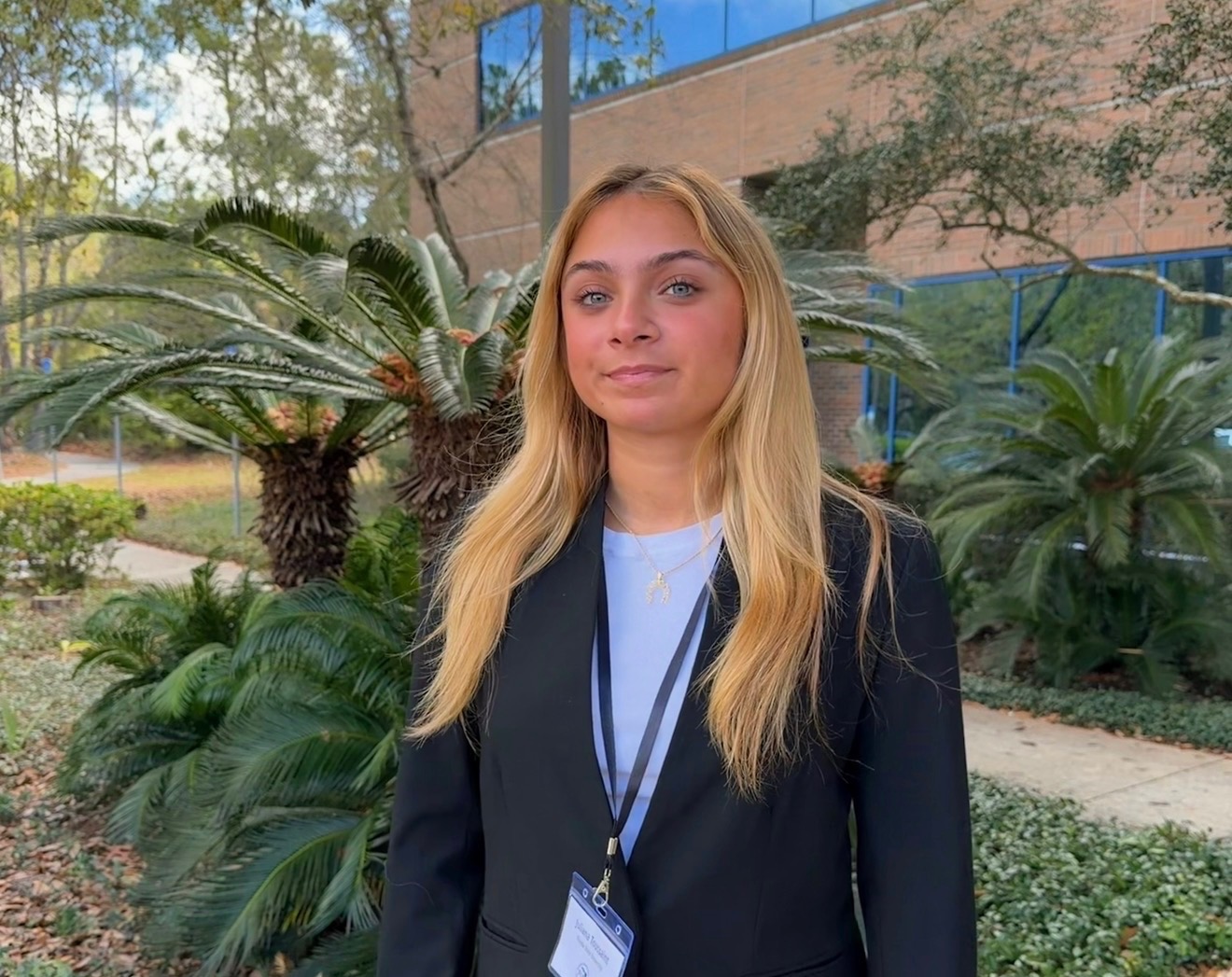
BIO
Juliana Toussaint is a second-year student at Florida State University from Chicago, Illinois. She is pursuing a Bachelor of Science in Psychology with a minor in General Business. Juliana has been recognized for her academic achievements through placement on the Dean’s List, her recent induction into Psi Chi, the International Honor Society in Psychology, and membership in Phi Eta Sigma National Honor Society. She is also actively involved in the University Honors Program. Juliana is a research assistant in the Joiner Lab through UROP, where she works with faculty and graduate researchers studying suicide and related psychological risk factors. Under the mentorship of Dr. Thomas Joiner and researcher Sara Prostko, she is developing her Honors in the Major thesis. Following graduation, Juliana plans to pursue a PhD in Clinical Psychology and continue research focused on suicide prevention and substance use.
The Cross-sectional Relationship Between Substance Use and the Interpersonal Theory of Suicide
Authors: Juliana Toussaint, Sara ProstkoStudent Major: Psychology
Mentor: Sara Prostko
Mentor's Department: Department of Psychology Mentor's College: Arts and Sciences Co-Presenters: Peyton McGonigal
Abstract
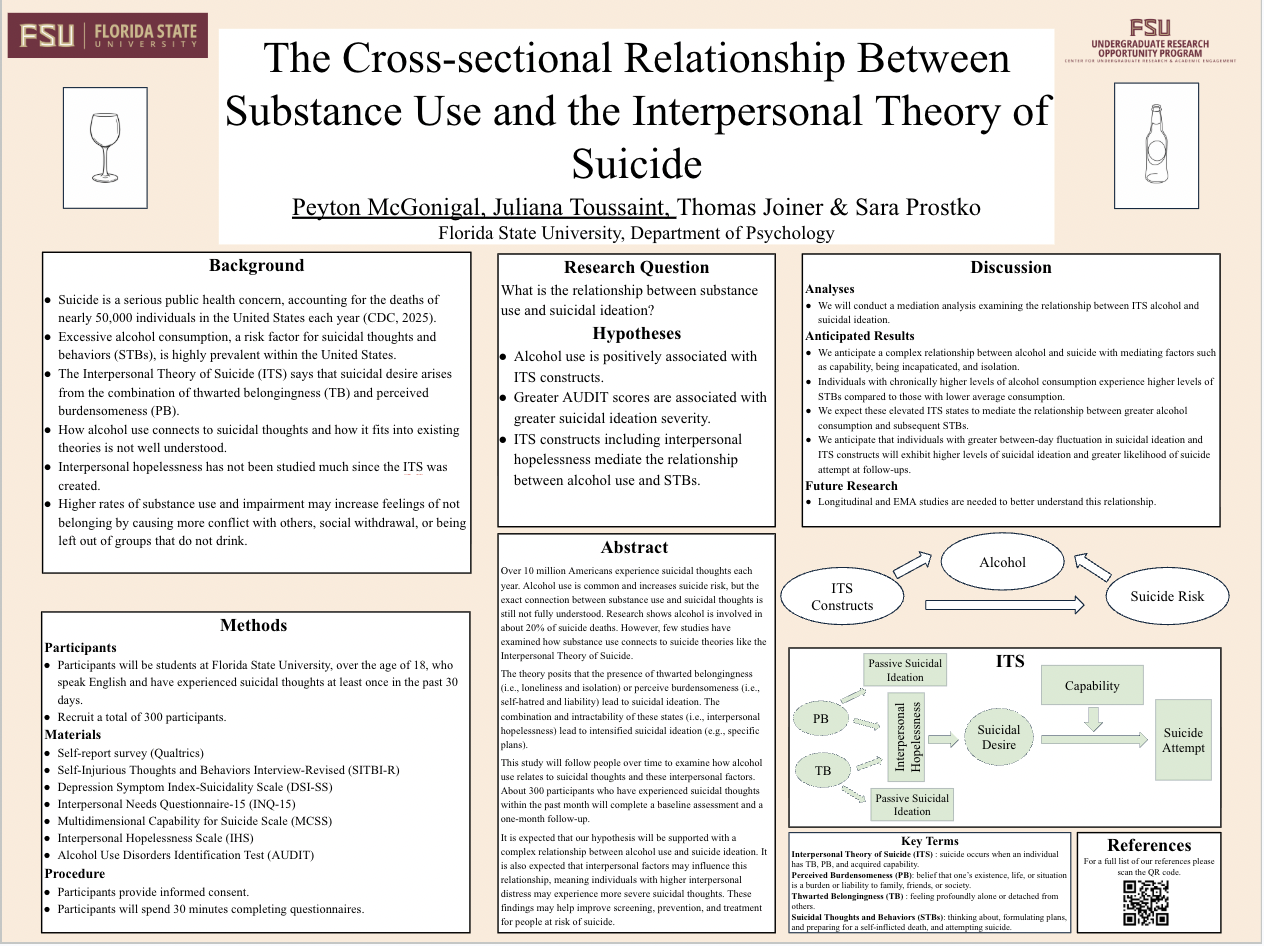
Over 10 million Americans experience suicidal thoughts each year. Alcohol use is common and increases suicide risk, but the exact connection between substance use and suicidal thoughts is still not fully understood. Research shows alcohol is involved in about 20% of suicide deaths. However, few studies have examined how substance use connects to suicide theories like the Interpersonal Theory of Suicide.
The theory posits that the presence of thwarted belongingness (i.e., loneliness and isolation) or perceive burdensomeness (i.e., self-hatred and liability) lead to suicidal ideation. The combination and intractability of these states (i.e., interpersonal hopelessness) lead to intensified suicidal ideation (e.g., specific plans).
This study will follow people over time to examine how alcohol use relates to suicidal thoughts and these interpersonal factors. About 300 participants who have experienced suicidal thoughts within the past month will complete a baseline assessment and a one-month follow-up.
It is expected that our hypothesis will be supported with a complex relationship between alcohol use and suicide ideation. It is also expected that interpersonal factors may influence this relationship, meaning individuals with higher interpersonal distress may experience more severe suicidal thoughts. These findings may help improve screening, prevention, and treatment for people at risk of suicide.
Keywords: alcohol, suicide, substance use
26th annual Undergraduate Research Symposium, April 1, 2026
Kate Payen Poster Session 2: 10:45 am - 11:45 am / Poster #96
BIO
Kate is a senior in the College of Arts and Sciences at Florida State University, majoring in Computer Science and Statistics, and is set to graduate in Spring 2026. She joined the National High Magnetic Field Laboratory (MagLab) as an MRI Energy Efficiency & Sustainability Intern, eager to gain hands-on experience in an interdisciplinary field she was passionate about exploring. Since joining in Fall 2025, Kate has worked on projects aimed at promoting a circular economy and monitoring power consumption at the MagLab. She is enthusiastic about developing a deeper understanding of how technology and data can drive sustainability efforts, while building a strong foundation in research and learning new skills along the way.
Promoting a Circular Economy Through Shared Use of Underutilized Scientific Equipment and Energy Data Collection
Authors: Kate Payen, Malathy ElumalaiStudent Major: Computer Science and Statistics
Mentor: Malathy Elumalai
Mentor's Department: CIMAR, NMR Mentor's College: National High Magnetic Field Laboratory Co-Presenters:
Abstract
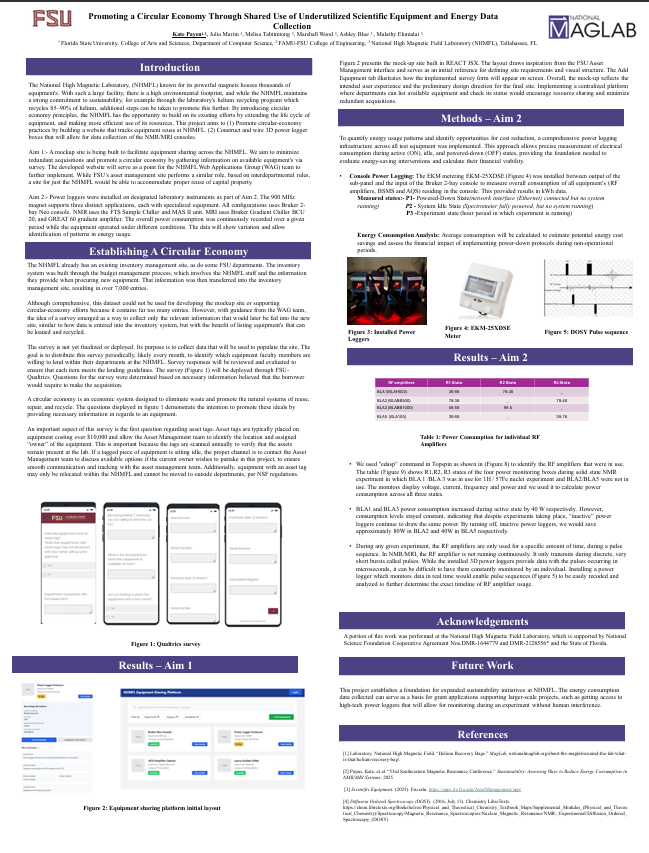
The National High Magnetic Laboratory (NHMFL), known for its powerful magnets, houses thousands of equipment. With such a large facility, there is a high environmental footprint, and while the NHMFL maintains a strong commitment to sustainability, additional steps can be taken to promote this further. By introducing circular economy principles, the NHMFL has the opportunity to build on its existing efforts by extending the life cycle of equipment and making more efficient use of its resources. This project aims to (1) promote circular‑economy practices through a website tracking scientific instrument reuse at NHMFL. (2) Construct and wire 3D power logger boxes that will allow for data collection of the Bruker Console equipment.
Through aim 1, a mockup site is being created to facilitate equipment sharing across the NHMFL. We aim to minimize redundant acquisitions and promote a circular economy by gathering information on available equipment via survey. The developed website will serve as a point for the NHMFL WAG team to further implement.
Power loggers were installed on designated laboratory instruments as part of Aim 2. Power consumption was continuously recorded over a given period while the equipment operated under different conditions. The data will show variation and allow identification of patterns in energy usage.
Development of such portals in a separate environment can be transferred to any department that wishes to adopt this. Also, data from baseline, idle, and active periods will help accurately estimate operational cost savings.
Keywords: Sustainability, Circular Economy, Power Consumption
26th annual Undergraduate Research Symposium, April 1, 2026
Jayda Bass Poster Session 2: 10:45 am - 11:45 am / Poster #138
BIO
Jayda Bass is a second-year majoring in Public Health with a minor in Biology, on the Pre-Medical track. She is in the Undergraduate Research Opportunity Program, where she is currently a first-time research assistant in Dr. Julia Sheffler's Integrative Science for Healthy Aging Program. She is also a member of the University Honors Program and the recipient of the Mores and QUEST scholarships. Following obtaining her Bachelor of Science in Public Health, Jayda plans to attend Medical School with career aspirations to become a Neurologist, Cardiologist, or Anesthesiologist.
Post-Intervention Support Groups: Effects on Cognitive, Physical, and Behavioral Outcomes
Authors: Jayda Bass, Julia ShefflerStudent Major: Public Health
Mentor: Julia Sheffler
Mentor's Department: Center for Translational Behavioral Science Mentor's College: Medicine Co-Presenters: Angelina O' Leary
Abstract
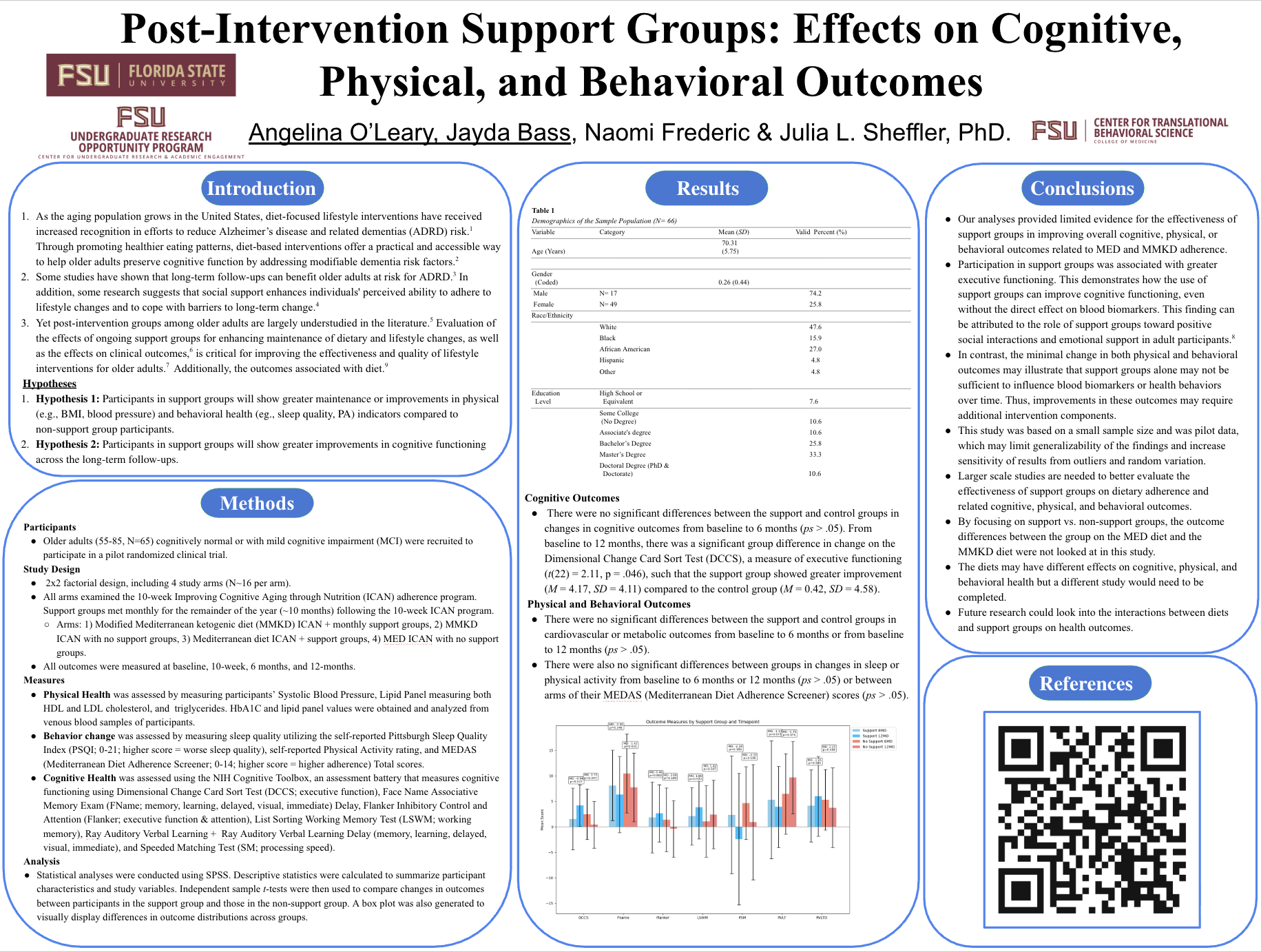
Background: Dietary interventions such as Mediterranean style diets may reduce dementia risk. However, many individuals have difficulty maintaining these diets after a structured program ends, and few studies examine factors for enhancing long-term adherence. The current study evaluates the effects of post-dietary intervention support groups on long-term cognitive, physical, and behavioral health outcomes.
Methods: A total of 65 participants aged 55+ with dementia risk factors were enrolled in this pilot trial examining a 10-week group nutrition adherence program – the Improving Cognitive Aging through Nutrition program. Using a 2x2 factorial design, participants were randomized to one of four study arms, with two arms receiving ongoing support groups. We hypothesized support group participants would demonstrate greater maintenance or improvements in cardiovascular and cognitive health, as well as behavior change outcomes across follow-ups (6- and 12-month). Outcomes were assessed using NIH Toolbox Cognition Battery, validated self-report measures, and fasting blood draws. Group differences were assessed using independent sample t-tests.
Results: There were no significant differences between support and control groups in cognitive outcomes from baseline to 6 months (ps > .05); however, at 12-months, there was an improvement in executive functioning in the support group compared to the control group (p=0.46). There were no significant differences in physical and behavioral outcomes at 6- or 12-months (ps > .05).
Conclusions: Although a significant improvement in executive function was observed at 12 months, our findings provide limited evidence for the effectiveness of support groups in improving cognitive, physical, or behavioral outcomes.
Keywords: Support group, Older adult
26th annual Undergraduate Research Symposium, April 1, 2026
Lana Fulmer Poster Session 2: 10:45 am - 11:45 am / Poster #216
BIO
Lana Fulmer is a first-year undergraduate student at Florida State University majoring in Biological Sciences on a pre-health track. She is passionate about scientific research and the study of biological systems. Her current work examines factors influencing sexual reproduction and biological fitness in the federally endangered plant species Conradina glabra (Apalachicola rosemary). Alongside her mentor, PhD applicant Josh Rowe, she has investigated potential differences in maternal investment between hermaphrodite and female morphs in this gynodioecious species, with the goal of improving future conservation strategies.
Beyond research, Lana enjoys working with animals and actively volunteers at Tallahassee Animal Services as a kennel attendant. She has a keen interest in the medical field and is exploring both human and veterinary medicine paths to see where her ambition to learn and desire to help others can best be applied. Lana hopes to build a career that blends science, empathy, and service, whether working with people, animals, or the broader ecosystems that connect them.
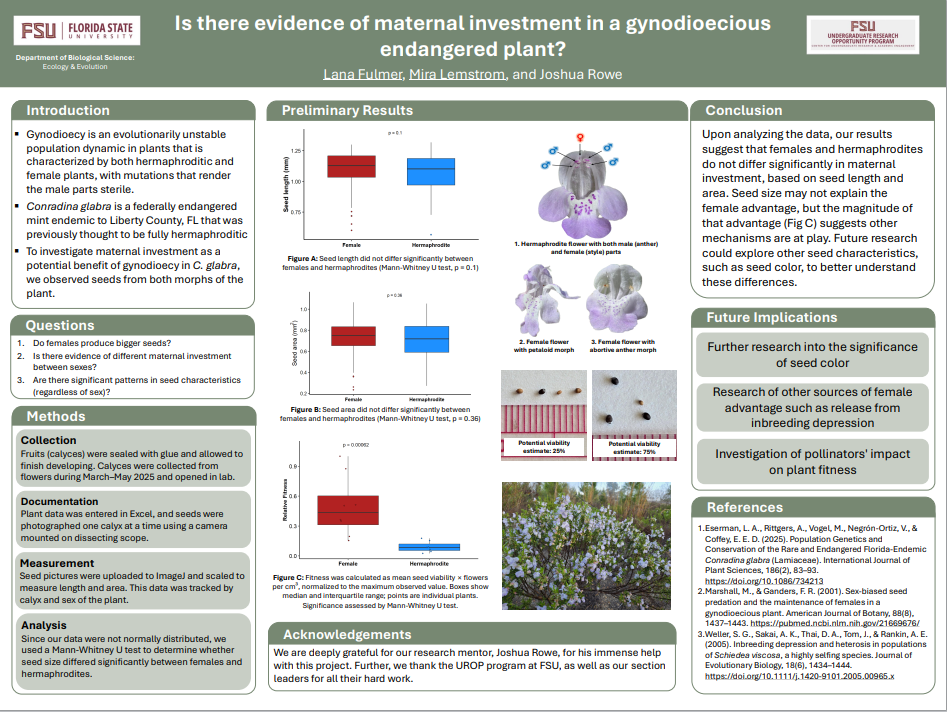
Is there evidence of maternal investment in a gynodioecious endangered plant?
Authors: Lana Fulmer, Josh RoweStudent Major: Biological Sciences
Mentor: Josh Rowe
Mentor's Department: Biological Sciences Mentor's College: FSU College of Arts and Science Co-Presenters: Mira Lemstrom
Abstract
Sizes of viable seeds were compared from both hermaphroditic and female varieties of the gynodioecious Conradina glabra (Apalachicola rosemary) to study resource allocation. Listed as federally endangered, C. glabra is a mint endemic to Liberty County, Florida and was previously thought to be completely hermaphroditic. Given the evolutionarily unstable nature of gynodioecy, broader research is being conducted on known populations of C. glabra to determine the impact of a male-sterile (effectively female) morph of the plant. To this end, seeds collected from marked C. glabra plants at Torreya State Park were photographed under a microscope and measured using ImageJ processing software. Seeds were categorized by their size (large or small) and color (dark or pale). The length and area of each seed were measured in millimeters. Sizes of seeds taken from hermaphroditic and female plants were analyzed using a statistical regression to find that there was no significant difference in seed sizes. While this did not support our hypothesis that female plants would have larger seeds because of more resource availability to concentrate as maternal investment, the experiment shifted our focus to other seed characteristics, such as color and viability. Patterns among these characteristics could potentially serve as different indicators of maternal investment between the two sexes and contribute to future research to improve conservation methods for this species.
Keywords: gynodioecy, hermaphrodite, C. glabra
26th annual Undergraduate Research Symposium, April 1, 2026
Natalie Velazquez Poster Session 4: 3:00 pm - 4:00 pm / Poster #1
BIO
Natalie Velazquez is a sophomore at Florida State University majoring in Biological Sciences on a Pre-Veterinary track. She contributes to a collaborative research project focused on improving accessibility in STEM education for low-vision and blind students. As part of the research team, she works with coding tools such as PreTeXt and GitHub Codespaces to translate educational materials into accessible formats, including braille. She has also contributed to the development of tactile learning tools, including 3-D printed molecular models with embossed braille labels designed to make visually intensive STEM concepts more accessible.
Through this research, Natalie explores how accessible course materials and assistive technologies can improve learning experiences for visually impaired students in higher education while promoting broader participation in the biological sciences.
Research on Creating Accessible materials for low-vision/blind students
Authors: Natalie Velazquez, Ameya KolarkarStudent Major: Biological Sciences
Mentor: Ameya Kolarkar
Mentor's Department: Mathematics Mentor's College: Center for the Advancement of Teaching Co-Presenters: Alenisse Adorno-Roman, Benjamin Campos, Dominic DeNardis, Lupe Figueroa, Sophia Ocfemia,
Abstract
As we make progress toward universal accessibility and equitable education for students with disabilities, significant barriers persist in STEM education for low-vision and blind students (LVBS). This study investigates accessibility tools that can be researched or developed to support LVBS at Florida State University (FSU), where some course material and instruction remain inaccessible. Building on prior use of 3-D printing for tactile learning, our team uses coding and the PreTeXt format to translate core math units into multiple formats, including braille. We are also exploring assistive spatial intelligence that provide audio instructions for commonly traveled campus paths, such as Meta AI glasses. LVBS volunteers at FSU test each tool and provide structured feedback. Individual coding components are created separately, refined through trial and error, compiled into a single text, and converted into braille. In collaboration with the Innovation Hub, we are also developing tactile molecular models with embossed braille labels for chemistry instruction. Findings are preliminary but encouraging. Early LVBS feedback indicates that braille translations generated through PreTeXt increase access to visual STEM content, while tactile chemistry models and navigation improves confidence in learning and movement across campus. These results suggest that accessibility tools designed with direct LVBS input can strengthen learning experiences and campus participation. Grounded in Universal Design for Learning principles, this work supports equitable access at FSU and offers scalable strategies for broader adoption across higher education.

Keywords: Accessibility, Low Vision and Blind Students, LVBS, STEM Accessibility, Assistive Technology, Braille Translation, PreTeXt, Tactile Learning Models, Universal Design for Learning
26th annual Undergraduate Research Symposium, April 1, 2026
Abbie Sargent Poster Session 2: 10:45 am - 11:45 am / Poster #2
BIO
Abbie Sargent is a first-year undergraduate student at FSU and majoring in Clinical Professions on the pre-medical track. She is in the Honors Program and is completing her first research project on data transparency in professional cycling worldwide. She is conducting research under her mentor, Dr. Patrick Merle. She hopes to go to medical school after she graduates with a Bachelor of Science in Interdisciplinary Medical Sciences and pursue a career in medicine.
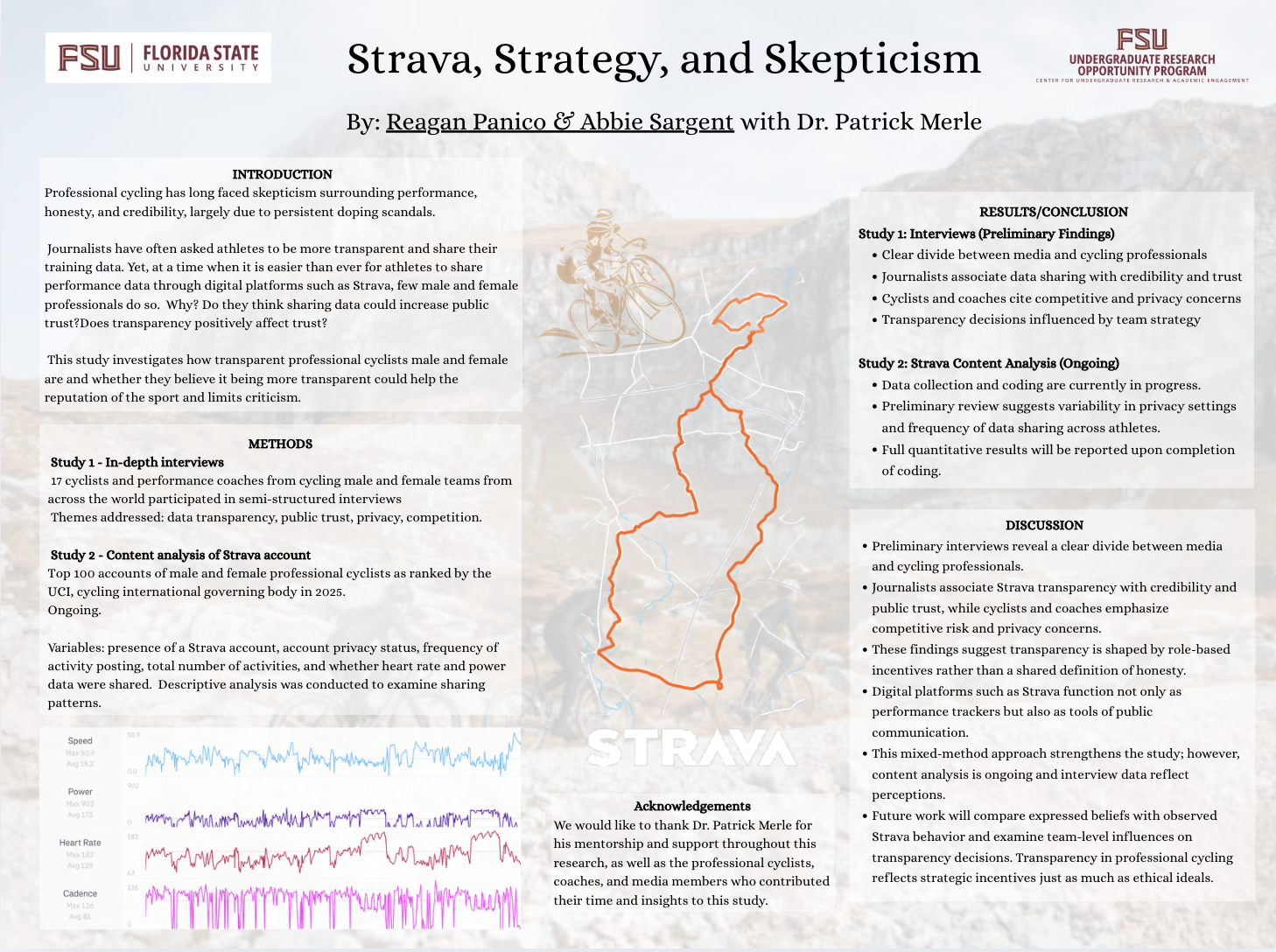
Strava, Strategy, and Skepticism
Authors: Abbie Sargent, Patrick MerleStudent Major: Clinical Professions
Mentor: Patrick Merle
Mentor's Department: Communications Mentor's College: College of Communications & Information Co-Presenters: Reagan Panico
Abstract
Professional cycling has a long history of skepticism surrounding performance, honesty, and credibility, making transparency an ongoing point of tension within the sport. As digital platforms such as Strava become more visible to fans, media, and sponsors, athletes’ choices about what performance and training data to share function as a form of communication that can influence public trust. This study examines how transparent professional cyclists are with their Strava data and what that transparency reveals about honesty and trust in professional cycling. Using a mixed qualitative approach, the research combines semi structured interviews with professional cyclists, coaches, and media members, alongside an analysis of Strava activity from the top 100 professional cyclists based on UCI rankings as of September 2025. Preliminary findings suggest a clear divide between athlete and media perspectives, with many cyclists and coaches expressing hesitation toward full transparency due to competitive concerns, while journalists generally view increased data sharing as a way to build credibility within the sport. These results indicate that transparency is shaped more by role and incentives than by a shared definition of honesty. The findings further suggest that Strava functions not only as a performance tracking tool, but also as a communication platform that can shape public perception, even when athletes are not intentionally using it for that purpose. Understanding this disconnect has important implications for how trust is built or undermined in modern professional sport and may inform future conversations around athlete privacy, competitive integrity, and data transparency.
Keywords: Strava, cycling, transparency
26th annual Undergraduate Research Symposium, April 1, 2026
Marilyn Pablo Poster Session 2: 10:45 am - 11:45 am / Poster #112
BIO
Marilyn is a first-year Honors student at Florida State University majoring in International Affairs. She is pursuing a minor in Spanish and a certificate in Emergency Management and Homeland Security (EMHS). She is originally from Virginia Beach, Virginia, and currently resides in Jacksonville, Florida. Her academic interests include counterterrorism and international security, particularly how governments and institutions respond to evolving global threats. After completing her undergraduate studies, she hopes to pursue a master’s degree in International Affairs and a career in the national security field.
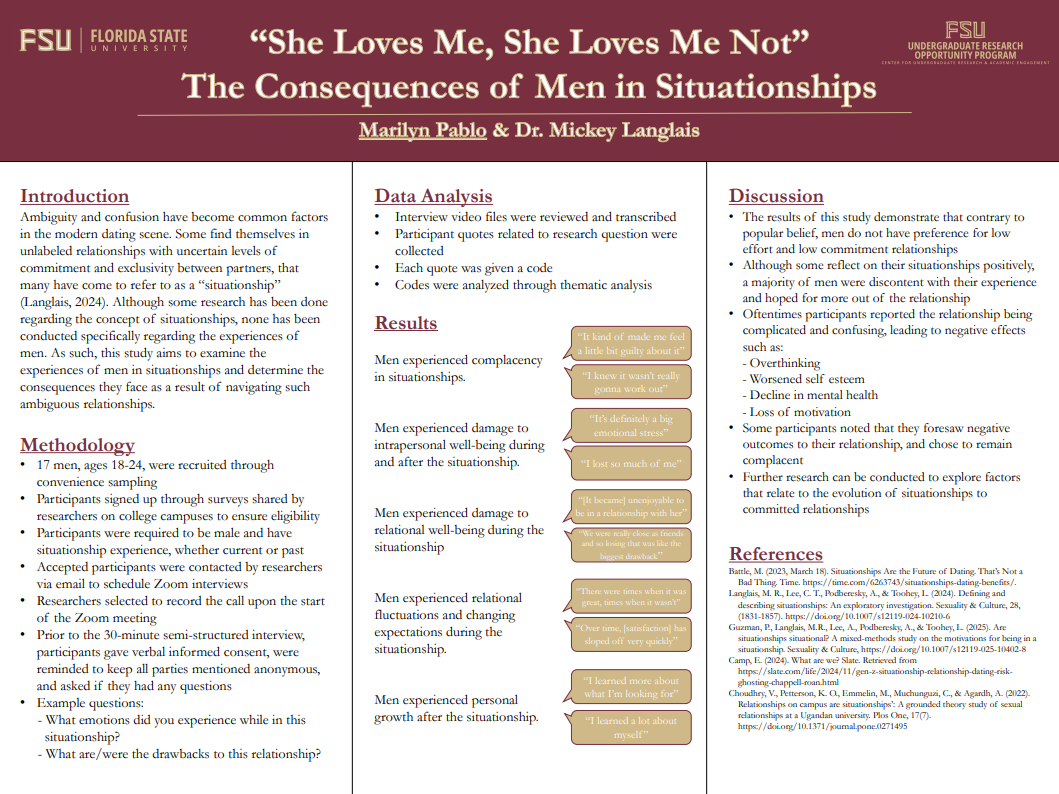
"She Loves Me, She Loves Me Not" The Consequences of Men in Situationships
Authors: Marilyn Pablo, Dr. Mickey LanglaisStudent Major: International Affairs
Mentor: Dr. Mickey Langlais
Mentor's Department: Human Development and Family Sciences Mentor's College: Baylor University Co-Presenters:
Abstract
This qualitative study investigates the experiences of men in situationships, relationships characterized by their ambiguous nature, with varying levels of commitment and emotional investment between parties. Specifically centering around the question of: “What consequences do men face in situationships?” this exploration sought to examine the emotional, psychological, and social impacts of navigating such ambiguous relationships. In this study, 17 men between the ages of 18 and 24 participated in semi-structured 30-minute interviews, exploring their perceptions of the situation, their motivations for initiating and maintaining the situation, and the relational, emotional, or psychological consequences. These interviews were analyzed using reflexive thematic analysis, which found substantial variability in men’s reported situationships. Ambiguity was a consistent factor in how men described their situationships, as some noted feelings of uncertainty, unclear expectations, and disproportionate emotional investment. Emotional experiences were also complex, with some men viewing their experience positively, sharing that it was casual, fun, or enjoyable, while others viewed their experiences negatively, saying it was confusing, frustrating, or disappointing. The motivations for maintaining the situationships were more similar from participant to participant, revolving around feelings of attraction, desires for companionship, or convenience. It was also found that situationships typically evolved organically from friendships. These findings challenge assumptions that men solely have a preference for casual or low-commitment relationships and provide insight into their experiences, emphasizing the inherent emotional complexity of such ambiguous relationships.
Keywords: Situationship, Relationship, Men
26th annual Undergraduate Research Symposium, April 1, 2026
Emily Dorman Poster Session 2: 10:45 am - 11:45 am / Poster #170
BIO
Emily Dorman is a first-year Honors student and Presidential Scholar at Florida State University majoring in Political Science and Human Rights & Social Justice, with a minor in International Affairs. Originally from Orlando, Florida, she studies youth civic participation in the United States and global human rights trends, particularly how countries engage through institutions like the United Nations. Her research interests also include the role of the arts and storytelling in fostering dialogue and civic understanding. On campus, she participates in undergraduate research through UROP, writes for student publications, and serves as an Assistant Director for the International Model UN Conference. Emily is also involved in student organizations focused on community engagement and cultural dialogue. She hopes to pursue a career in political journalism.
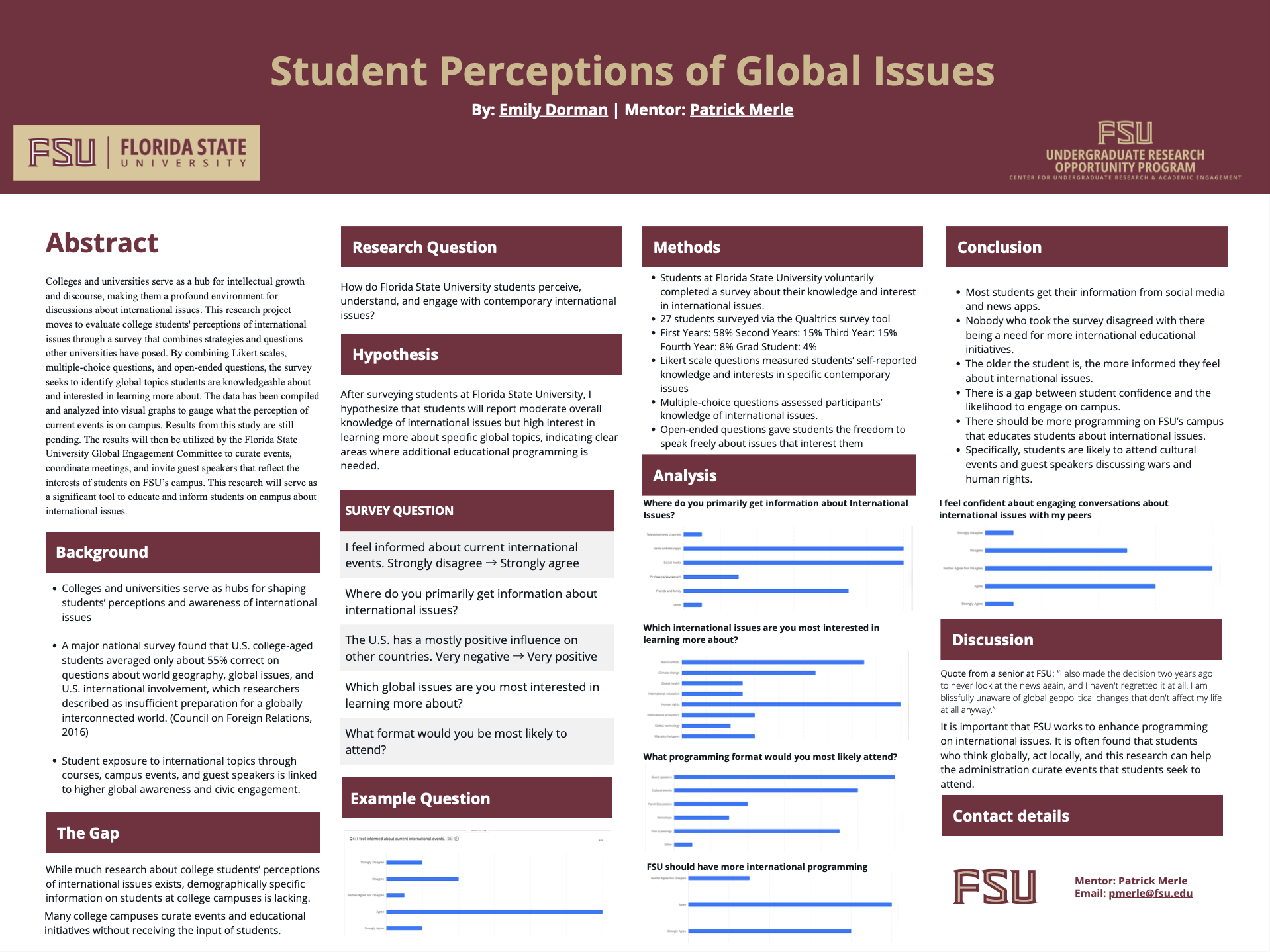
Student Perceptions of Global Issues
Authors: Emily Dorman, Patrick MerleStudent Major: Political Science
Mentor: Patrick Merle
Mentor's Department: College of Communication and Information Mentor's College: Florida State University Co-Presenters:
Abstract
Colleges and universities serve as a hub for intellectual growth and discourse, making them a profound environment for discussions about international issues. This research project moves to evaluate college students' perceptions of international issues through a survey that combines strategies and questions other universities have posed. By combining Likert scales, multiple choice questions, and open-ended questions, the survey will seek to find the global topics students are knowledgeable about and seeking to learn. The data has ultimately been compiled and analyzed into visual graphs to gauge what the perception of current events is on campus. Results from this study are still pending. The results will then be utilized by the Florida State University global engagement committee to curate events, coordinate meetings, and invite guest speakers that reflect the needs and interests of students on FSU’s campus. This research will serve as a significant tool to educate and inform students on campus about international issues.
Keywords: International, Student Engagement, Civic Engagement,
26th annual Undergraduate Research Symposium, April 1, 2026
Emilee Nevaril Poster Session 3: 1:45 pm - 2:45 pm / Poster #283
BIO
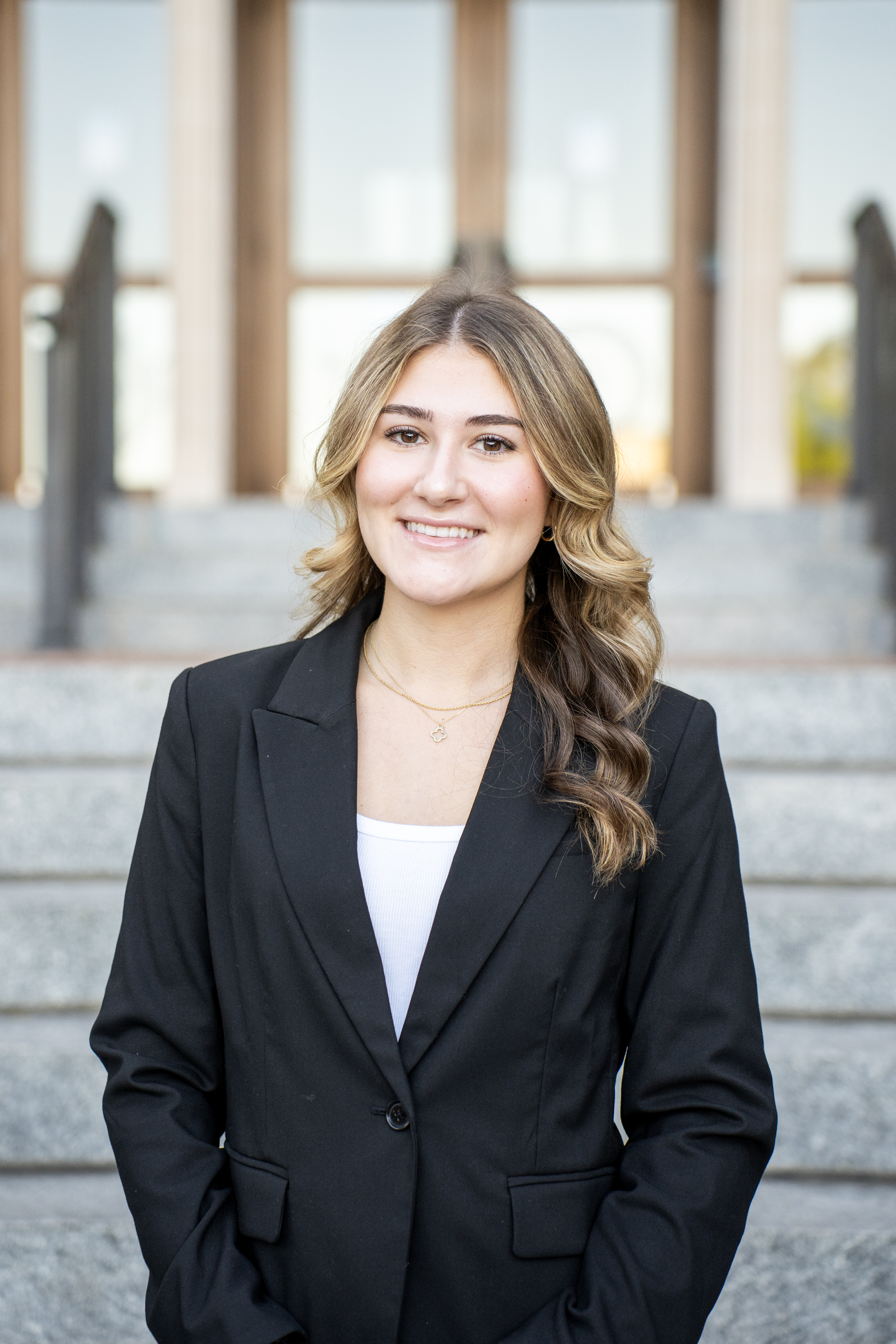
Emilee Nevaril is currently a sophomore at Florida State University pursuing a Bachelor of Science in Political Science with a minor in Criminology. She is actively involved in her sorority, Kappa Alpha Theta, and the pre-law fraternity, Kappa Alpha Pi, where she serves as the Director of Recruitment. After completing her undergraduate degree, she plans to continue her education at Florida State University by pursuing a Juris Doctor (J.D.) degree.
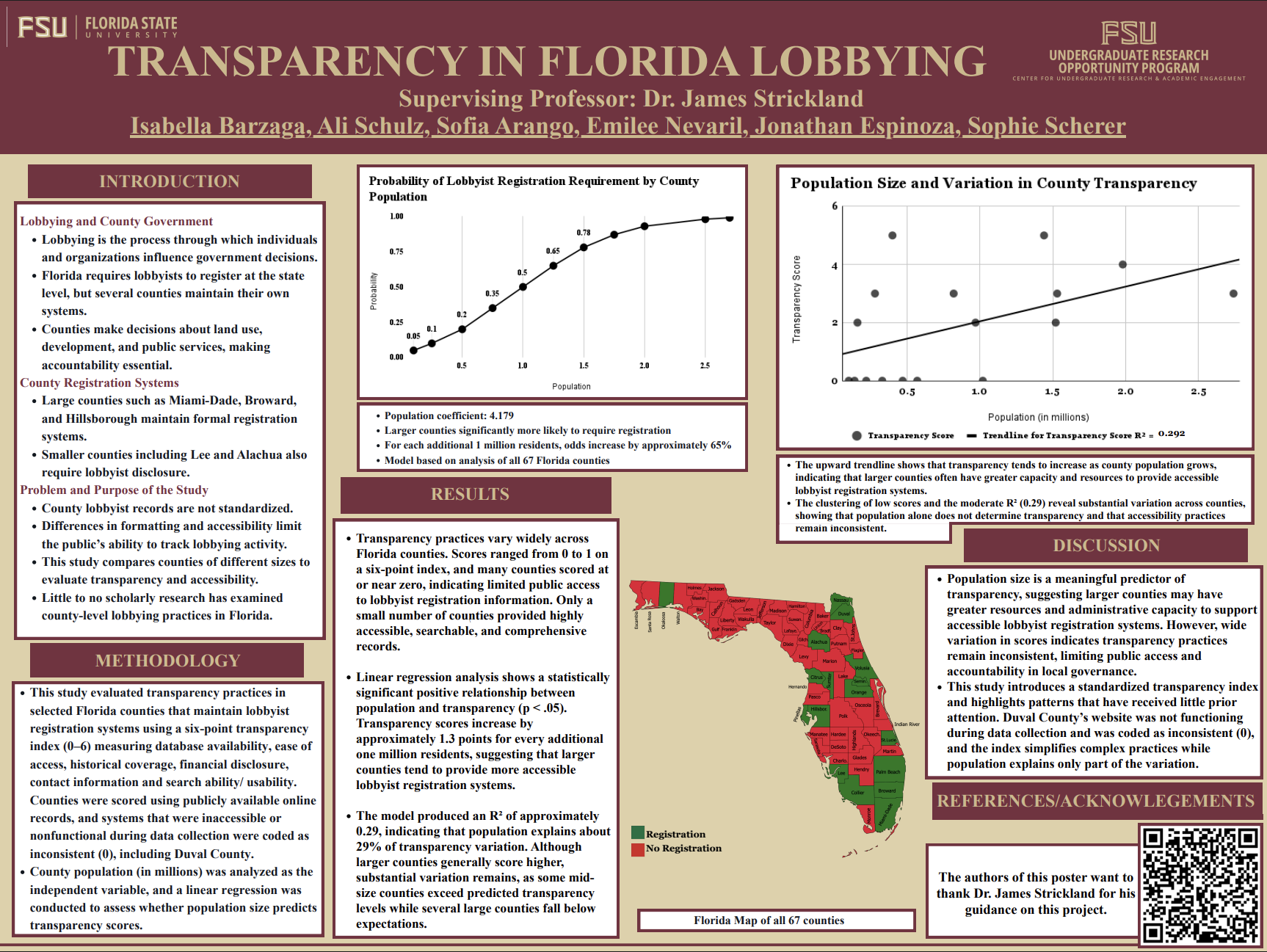
Transparency in Florida lobbying
Authors: Emilee Nevaril, James StricklandStudent Major: Political Science
Mentor: James Strickland
Mentor's Department: Political Science Mentor's College: College of Social Sciences and Public Policy Co-Presenters: Isabella Barzaga, Alexandria Schulz, Sofia Arango, Jonathan Espinoza, Sophie Scherer
Abstract
Across the counties of Florida, there is significant variation in how lobbying records are maintained and made available. Lobbying, attempting to influence legislative processes through oral or written communication, is an essential part of the legislative process, and registration of lobbyists is important for transparency and accountability in local governments. This research utilized online county websites to examine the gaps in the current lobbyist database across all 67 counties of Florida. By accessing each website on a 6-factor scale, each county was assigned a transparency score, and then transparency scores were compared across counties. Results found that the overwhelming majority of Florida counties lack a lobbyist database. Out of those that do provide a database, many scored low on the transparency scale due to difficulty of website navigation, lack of contact information, little historical lobbying data, etc. By assessing and comparing these record differences, this research demonstrates how the overall lack of lobbyist data decreases accountability of local governments, can create a sense of distrust among the government and constituents, and prevents constituents from knowing who influences local government decisions. Additionally, this lack of transparency makes it hard for citizens to be informed when voting for politicians and propositions. Based on the research collected, this project helps bring more transparency and accountability to and begins to close gaps in lobbyist data collection.
Keywords: Florida Registration Data
26th annual Undergraduate Research Symposium, April 1, 2026
Alyssa Daan Poster Session 2: 10:45 am - 11:45 am / Poster #108
BIO
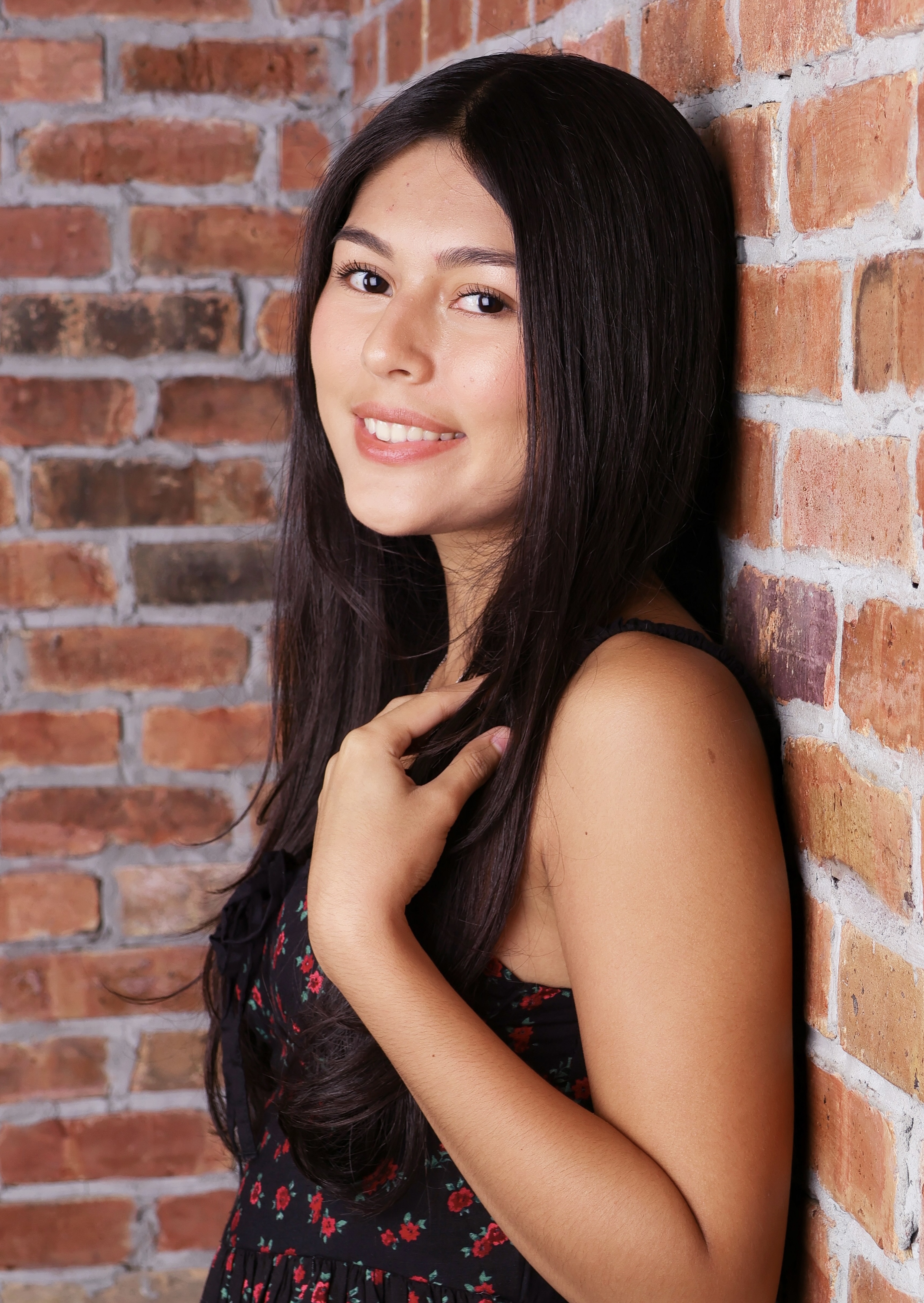
Alyssa Daan is a Florida State University student with a strong interest in arts, culture, and campus life. She is pursuing a Bachelor’s of Science in Marketing alongside a Bachelors of Arts in Art History. Alyssa is a programming intern at Club Downunder, a student-run on-campus venue. Here she works events, shadowing staff members, and plans events curated for the student body at FSU. She is a Staff Writer at Her Campus, the largest digital magazine run by college girls, at the Florida State University chapter. She is a gallery assistant intern at LeMoyne Arts in Tallahassee, gaining skills in the arts, arts administration, marketing and PR, and event programming. She is also an office assistant at the FSU Museum of Fine Arts, where she is responsible for the front desk, guiding tours, and assist in exhibit installation.
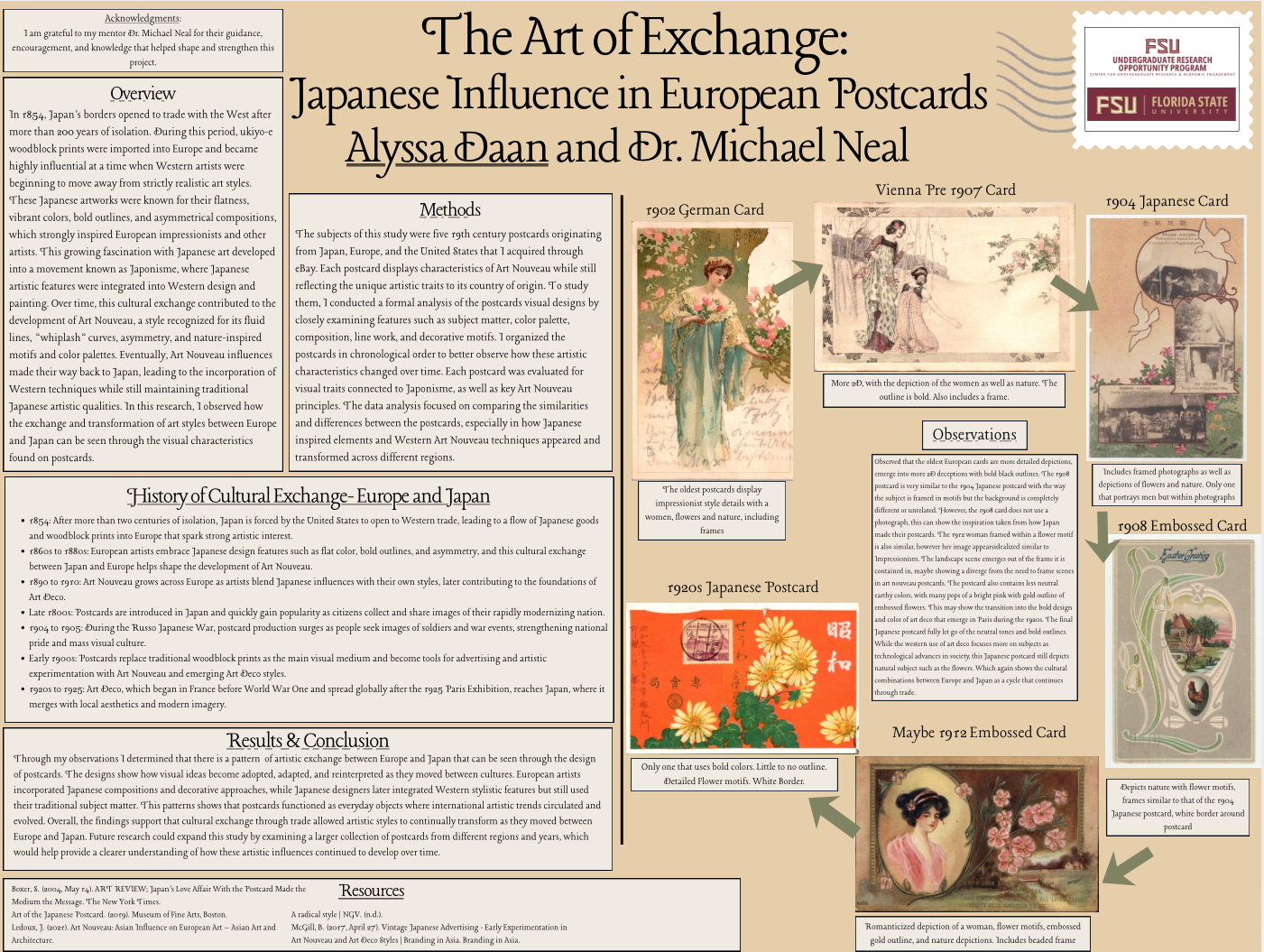
The Art of Exchange: Japanese Influence in European Postcards The Art of Exchange: Japanese Influence in European Postcards
Authors: Alyssa Daan, Micheal NealStudent Major: Marketing and Art History
Mentor: Micheal Neal
Mentor's Department: English Mentor's College: Florida State University Co-Presenters:
Abstract
In my research, I explore the exchange and transformation of art styles between Europe and Japan (1850–1910) and question if this exchange can be observed through postcards as a medium. These Japanese woodblock prints influenced the Western movement known as Japonisme, contributing to the development of Art Nouveau, recognized for its flowing lines and floral motifs. Over time, Western adaptations of Japanese aesthetics returned to Japan, where they were reinterpreted within their own artistic traditions. To examine this cycle of exchange, I acquired six late nineteenth century postcards from EBay originating from Japan, Europe, and the United States and analyzed them. Using a formal visual analysis, I evaluated each postcard’s subject matter, composition, color and decorative elements. The cards were arranged chronologically to trace the stylistic changes related to Japonisme and Art Nouveau.
The findings reveal a pattern of cross cultural influence. Earlier European postcards show details of impressionist art and romanticized female figures within decorative frames, later examples become flatter and two dimensional with bolder outlines resembling Japanese prints. Floral motifs and framing become more pronounced. Japanese postcards, especially those produced around the Russo Japanese War, adopt Art Nouveau framing and enhanced detail in the emphasis of natural imagery such as flowers. Eventually moving more toward bold color and reduced outlines, as the style transitions to Art Deco. Overall, the results show that postcards served as everyday materials where artistic ideas circulated, transformed, and returned in new forms that can be looked at more purposefully in future research.
Keywords: Art History, Postcards, Art Nouveau, Europe, Japan
26th annual Undergraduate Research Symposium, April 1, 2026
Raine Diaz Poster Session 2: 10:45 am - 11:45 am / Poster #314

BIO
Raine is a second-year undergraduate psychology student whose goal is to continually refine the cognitive infrastructures relevant to being aware of the world through a psychological lens. He plans to pursue graduate-level research and a professional career in clinical psychology, where he can apply these frameworks to help others in real time. Currently, he is conducting research on adolescent sexual decision-making and intends to pursue additional undergraduate research in evolutionary psychology or clinical psychology in the near future.
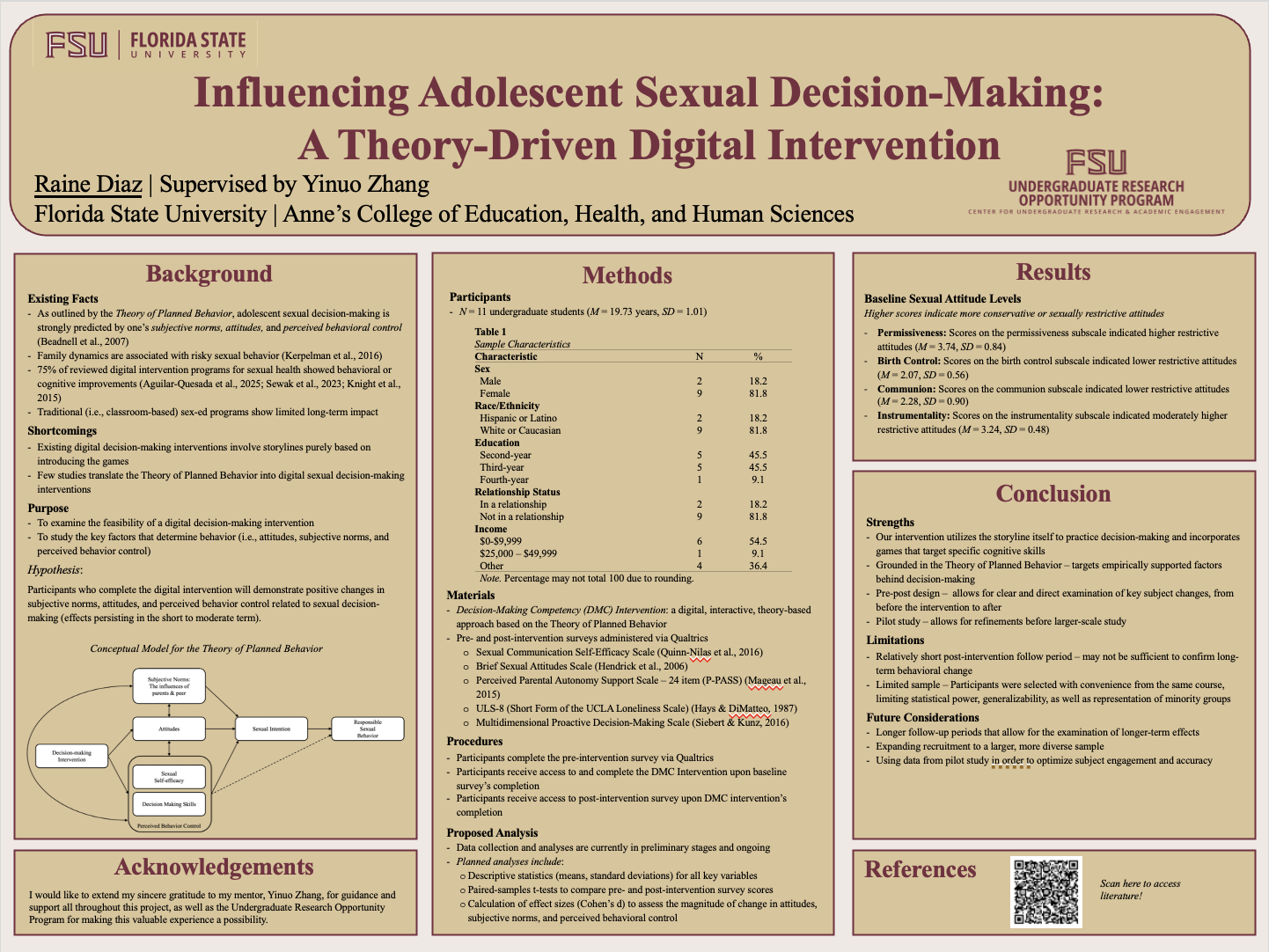
Influencing Adolescent Sexual Decision-Making: A Theory-Driven Digital Intervention
Authors: Raine Diaz, Yinuo ZhangStudent Major: Psychology
Mentor: Yinuo Zhang
Mentor's Department: Human Development and Family Science Mentor's College: Anne’s College of Education, Health, and Human Sciences Co-Presenters:
Abstract
The sexual behavior of adolescents remains a significant public health concern, as sexual decision-making (e.g., unprotected sexual activity) is linked to outcomes such as STI’s, unintended pregnancy, and lasting health consequences. Traditional (e.g., in-person) sex education programs have demonstrated limited long-term influence on adolescents’ sexual attitudes, a key component in guiding sexual decision-making; however, digital interventions show promise through their engaging, personalized, and theory-driven approaches. Building on this growing body of research, this study explores whether a digital decision-making program can meaningfully promote the healthy attitudes that guide adolescents’ sexual choices. To examine feasibility, we began a pilot study with 11 Florida State University students, recruited with participation incentives. Participants completed a pre-intervention baseline survey via Qualtrics, received access to the digital intervention one week later, and were subsequently tasked to complete a post-intervention survey assessing sexual attitude changes. The study design and measures were guided by the Theory of Planned Behavior, emphasizing subjective norms, attitudes, and perceived behavioral control as key drivers of sexual decision-making. Although data collection and analyses are ongoing, preliminary observations suggest that the intervention is feasible and acceptable for participants, alongside adequate responses to the surveys and intervention. Findings are anticipated to contribute to the literature on digital, theory-driven interventions and support their development as tools that compliment traditional sex education approaches, in a more engaging and effective manner. Early evidence from the pilot study is expected to inform refinements for our future, larger-scale study, as well as for future research in this domain.
Keywords: Digital Intervention Influencing Sexual Decision-Making
26th annual Undergraduate Research Symposium, April 1, 2026
Amelia Ferretti Poster Session 1: 9:30 am - 10:30 am / Poster #15
BIO
Amelia Ferretti is a second year at Florida State University pursuing a Bachelor of Arts in Psychology and a Bachelor of Science in Marketing. She is originally from Apex, North Carolina, and enjoys taking walks and reading outside in Florida’s warm weather. She is an active member of the Psi Chi honor society. She is particularly interested in cognitive and social psychology, with a focus on memory processes, human behavior, and social perception and affiliation. Amelia currently works as a UROP undergraduate research assistant in the Maner Lab under the mentorship of graduate student Julia Lombard, where she contributes to research in social and evolutionary psychology. She also recently joined the Individual Differences in Cognitive Development Lab as a Directed Individual Study (DIS) student, where she is learning about and supporting research on twin studies in reading and math achievement. Through these experiences, Amelia hopes to continue developing her research skills, deepen her understanding of human behavior, and pursue graduate studies in the future.
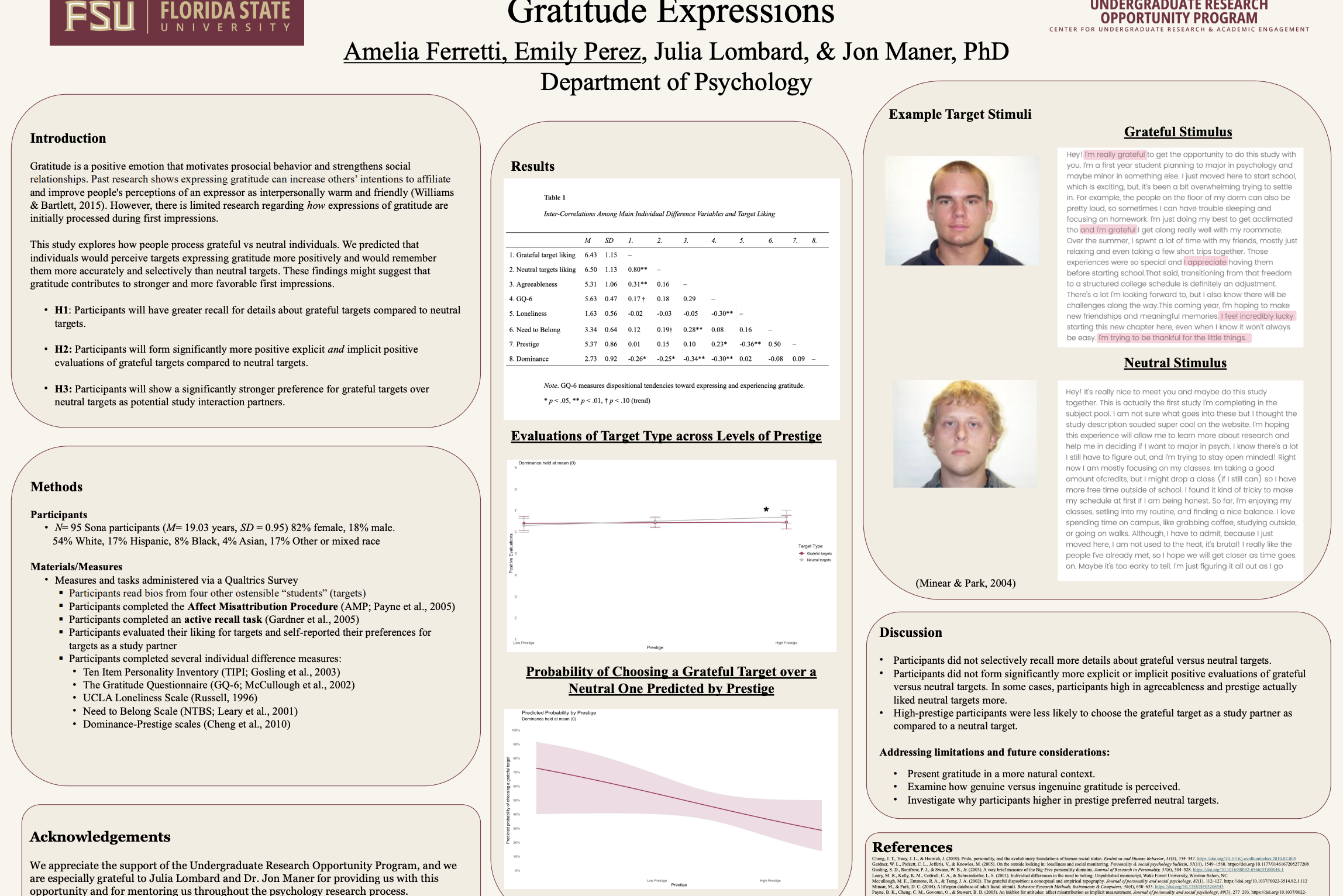
Social Cognitive Processing of Gratitude Expressions
Authors: Amelia Ferretti, Julia LombardStudent Major: Psychology, Marketing
Mentor: Julia Lombard
Mentor's Department: Department of Psychology Mentor's College: Arts and Sciences Co-Presenters: Emily Perez
Abstract
Although past research has shown many benefits of gratitude in facilitating and maintaining social bonds, less is known about how gratitude expressions influence first impressions. The purpose of the current study is to examine both implicit and explicit evaluations of gratitude expressions, focusing on attitudes, selective memories, perceptions, and preferences toward individuals who express gratitude compared to those who remain neutral. We predicted that individuals would show more positive evaluations of grateful targets than of neutral targets, both explicitly and implicitly. We also predicted that individuals would demonstrate selective memory for details expressed by grateful targets. To test these predictions, nearly 100 Sona participants read four fictional bios from other ostensible student participants (targets) they believed they might interact with later in the study. Two of these targets expressed gratitude in their bios, while the other two remained neutral. Currently, we are analyzing data and coding memory responses for overall and gratitude-specific accuracy. We are also exploring whether relevant individual difference variables, such as personality, dispositional gratitude, and power-attainment strategies, influence the social processing of gratitude.
Keywords: gratitude, selective memory, social relationships, first impression
26th annual Undergraduate Research Symposium, April 1, 2026
Ashley Ruddick Poster Session 3: 1:45 pm - 2:45 pm / Poster #147
BIO
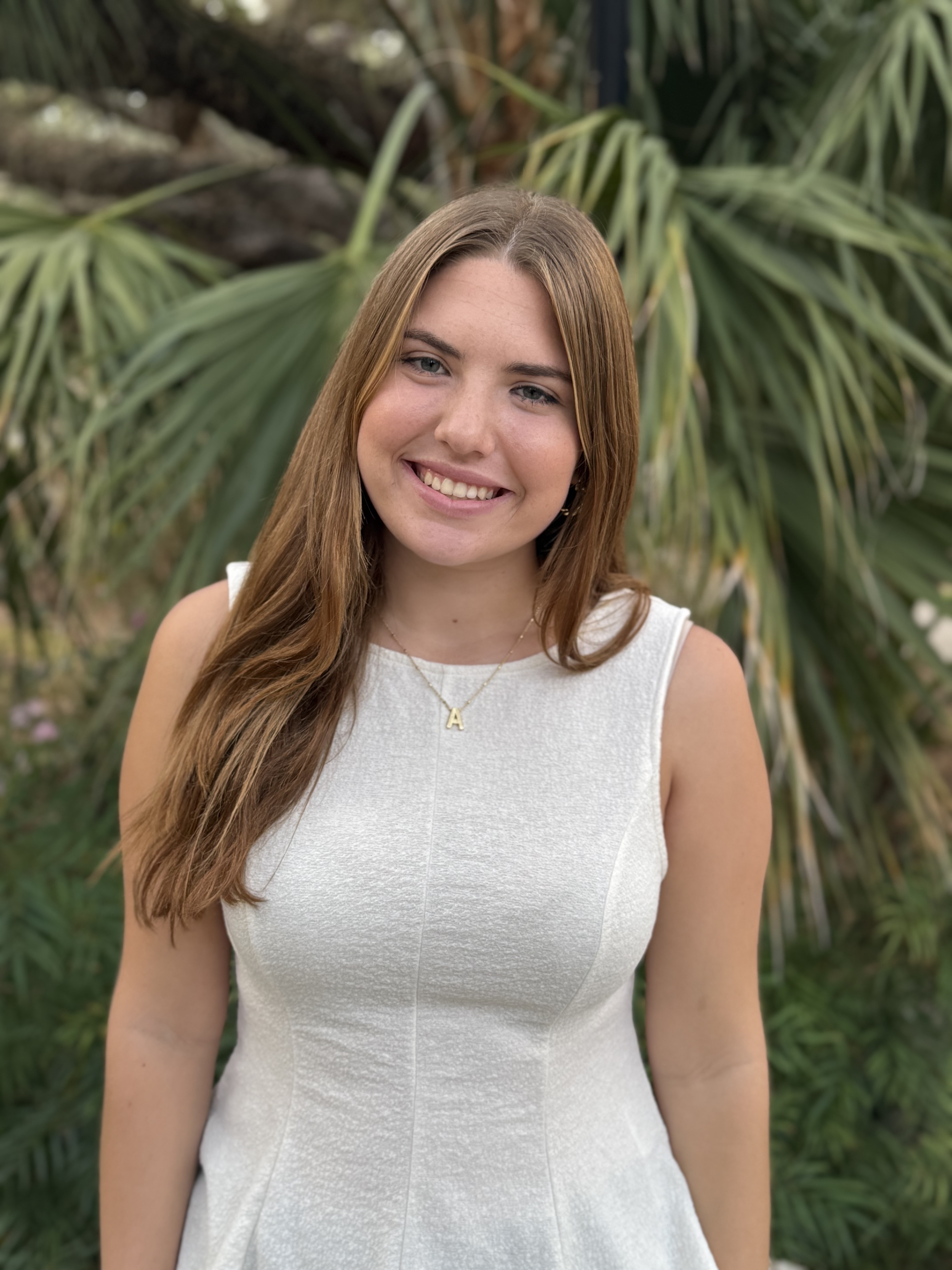
Ashley Ruddick is a sophomore from West Palm Beach, Florida. She is majoring in psychology and minoring in child development. She is pursuing her Bachelor of Science in Psychology and aims to go to graduate school for clinical mental health counseling. Her career goal is to become a clinical mental health counselor. She is interested in doing research on spatial orientation with different neurodevelopmental disorders. She is a member of the sorority Phi Mu and holds the position of recruitment assistant.
ADHD and Spatial Orientation: A Meta-Analysis
Authors: Ashley Ruddick, Dr. Dorota Kossowska-KuhnStudent Major: Psychology
Mentor: Dr. Dorota Kossowska-Kuhn
Mentor's Department: Department of Psychology Mentor's College: College of Arts and sciences Co-Presenters: Cassie Amitrano, Mollie Koetting, and Madeline Tomasco
Abstract
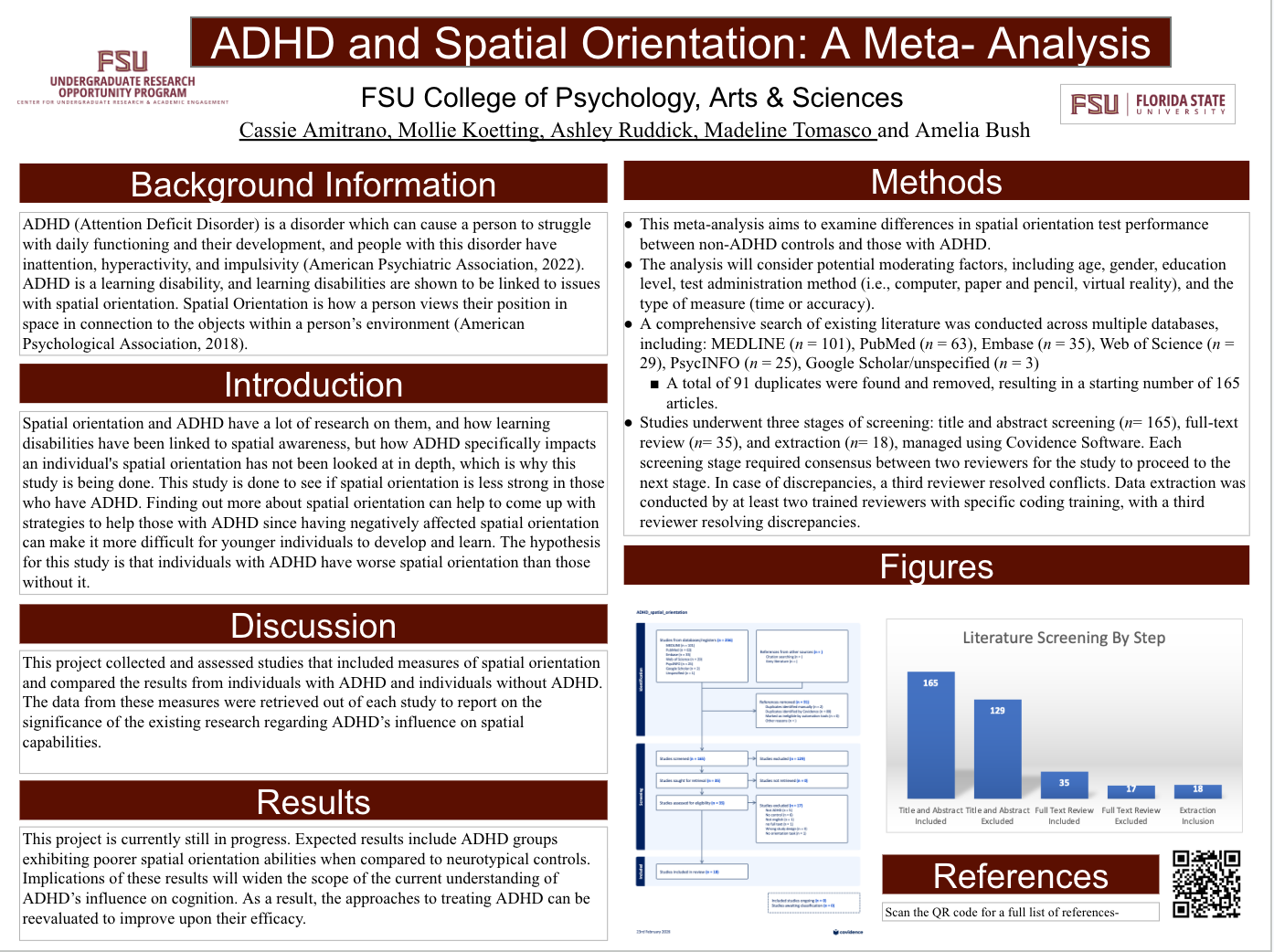
This study evaluated spatial orientation abilities in individuals diagnosed with Attention Deficit/Hyperactivity Disorder (ADHD) compared to neurotypical controls. ADHD is defined in the DSM-5-TR as a neurodevelopmental disorder characterized by persistent patterns of inattention and/or hyperactivity-impulsivity interfering with functioning or development. Spatial orientation refers to the ability to perceive, interact with, and maintain awareness in a three-dimensional environment through integration of multisensory information. Spatial orientation has been associated with learning disabilities specific to geometric and mathematical reasoning. While prior research has studied spatial orientation and ADHD independently, their relationship has not been examined. Understanding this relationship may expand the scope of understanding of ADHD-related cognition and inform treatment approaches. This study holds importance as it examines under-researched aspects of neurodevelopment, addressing a significant gap in the existing literature. To investigate this relationship, a meta-analysis was conducted to review literature across databases using Covidence. The study began with 165 articles at the title and abstract stage, with 36 advancing to full-text review. Inclusion and exclusion criteria resulted in 18 articles being selected for extraction. Multiple reviewers were involved in the screening process, with consensus between two reviewers required for inclusion. Conflicts were resolved by a third reviewer to ensure reliability. Afterwards, relevant data were extracted and analyzed, providing a comprehensive overview of existing research on spatial orientation in ADHD. Expected results include ADHD groups exhibiting poorer spatial orientation abilities than neurotypical controls. Implications of these results will widen the scope of the current understanding of ADHD’s influence on cognition.
Keywords: Psychology, ADHD, Spatial Orientation, Meta-Analysis
26th annual Undergraduate Research Symposium, April 1, 2026
Kelsey Gregson Poster Session 4: 3:00 pm - 4:00 pm / Poster #160
BIO
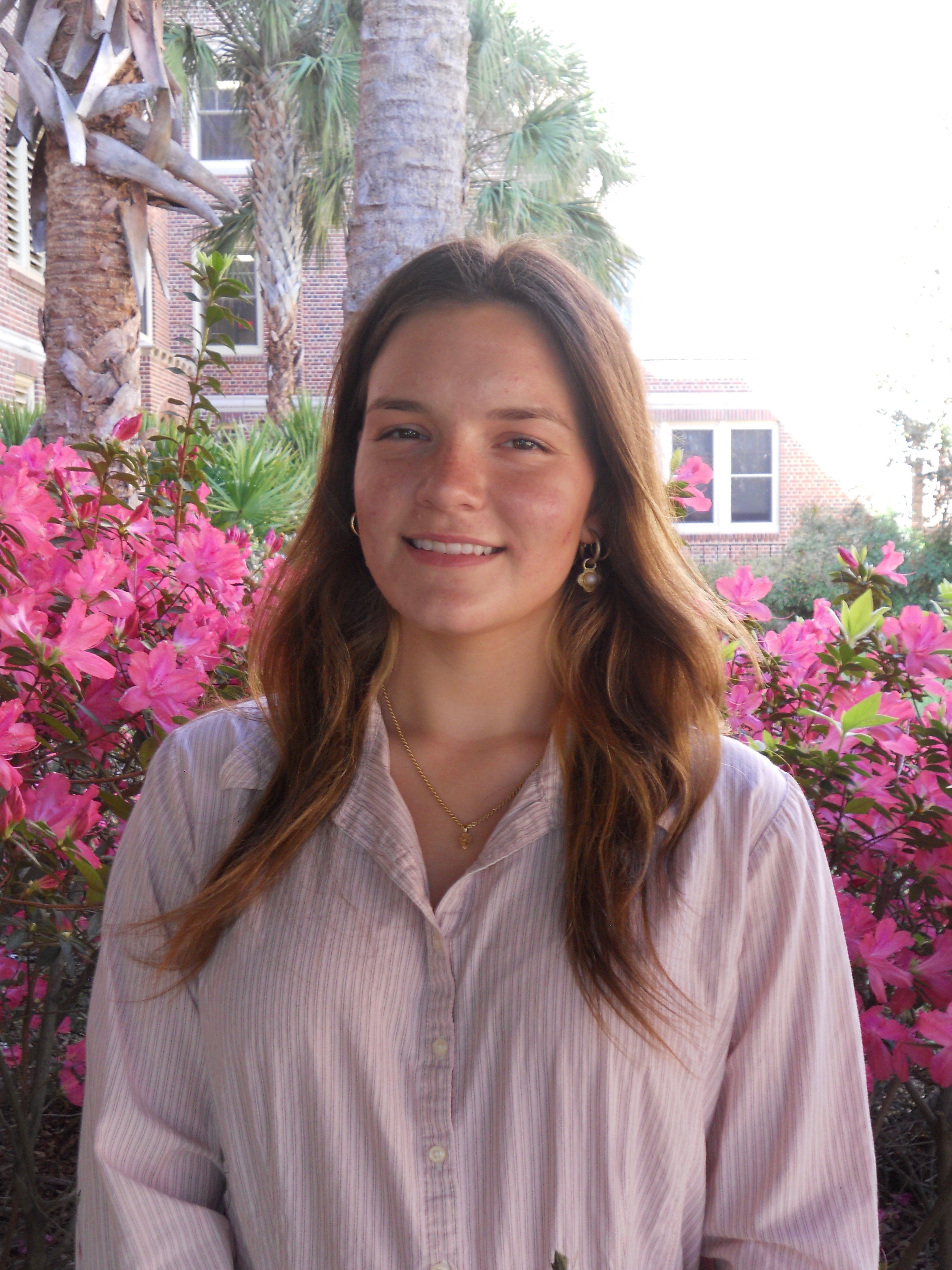
Kelsey Gregson is a first year Honors student at Florida State University double majoring in Environmental Science and Biological Science. She hopes to pursue a career in marine conservation.
Dynamics of Weakly Magnetic Particles under Magnetic Field Gradient
Authors: Kelsey Gregson, Mohd Bilal KhanStudent Major: Environmental Science, Biological Science
Mentor: Mohd Bilal Khan
Mentor's Department: National High Magnetic Field Laboratory Mentor's College: College of Engineering Co-Presenters:
Abstract
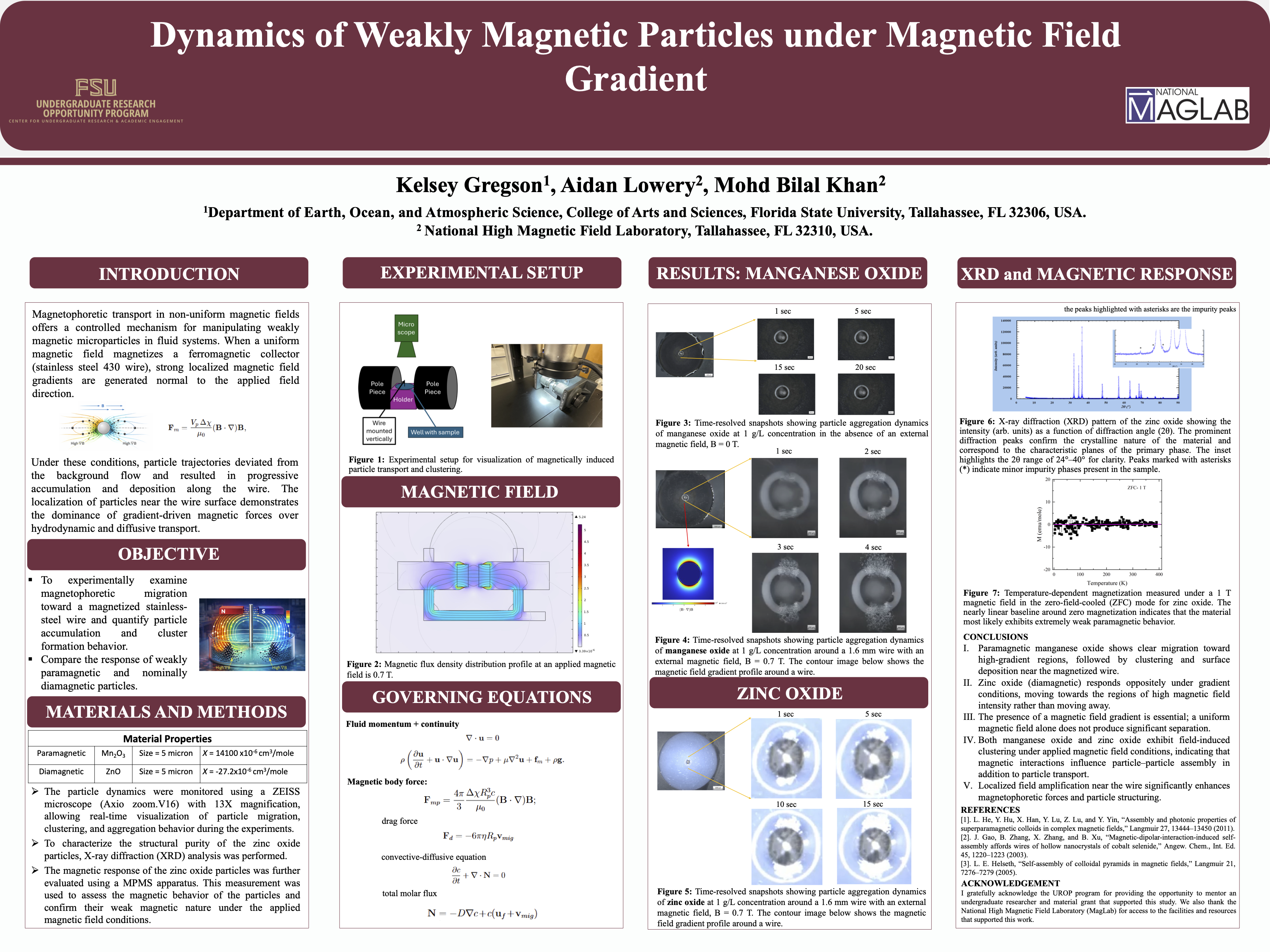
Magnetic separation is widely applied in biotechnology, environmental remediation, and
resource recovery. In magnetophoresis, particles migrate under a magnetic field gradient;
however, interparticle interactions can promote clustering during separation. High-gradient
magnetic separation (HGMS) systems commonly use magnetizable wire matrices to
generate strong localized field gradients for particle capture. Given the central role of wires
in such systems, this study examines the dynamics of weakly magnetic microparticles
around a single magnetized wire, focusing on particle migration, clustering, and deposition
behavior.
Experiments were conducted in 3D-printed cylindrical chambers containing centrally
positioned steel wires of varying diameters, placed between the poles of a permanent
magnet. Suspensions of paramagnetic manganese oxide and diamagnetic zinc oxide
microparticles (0.1–1 g/L) in water–polyethylene glycol mixtures were introduced into the
chambers, and particle behavior was monitored using optical microscopy. Paramagnetic
manganese oxide particles migrated toward regions of high magnetic field gradient, moving
toward the magnetized wire and forming deposits along its surface and near chamber
boundaries. Cluster formation accompanied this gradient-driven accumulation. In contrast,
diamagnetic zinc oxide particles were expected to be repelled from the high-gradient region.
However, they unexpectedly formed deposits along the wire surface where the magnetic
field gradient was strongest.
These results highlight the complex interplay between magnetic forces, particle–particle
interactions, and surface effects in wire-based HGMS systems and provide insight into the
separation behavior of weakly magnetic particles under high-gradient conditions.
Keywords: magnetism, particle dynamics, water filtration
26th annual Undergraduate Research Symposium, April 1, 2026
Cole Robinson Poster Session 4: 3:00 pm - 4:00 pm / Poster #306
BIO
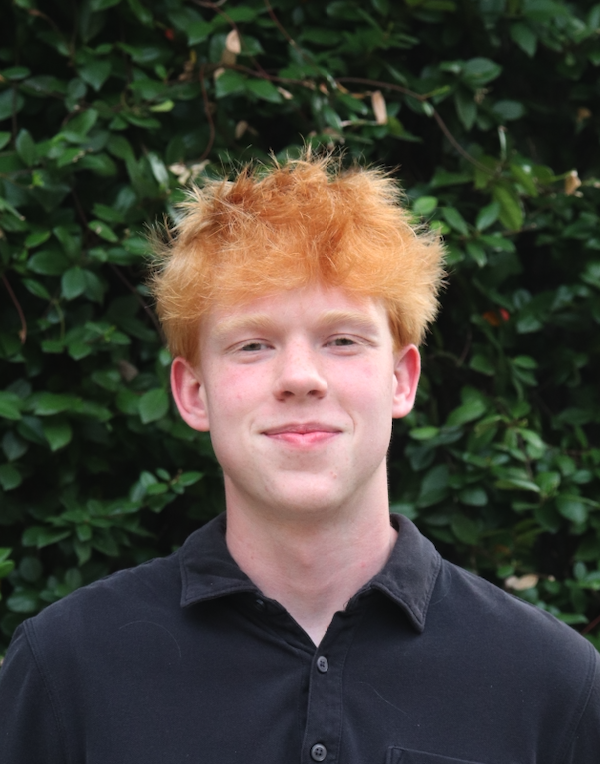
Cole Robinson is a first-year Presidential Scholar pursuing a Bachelor of Science in Environmental Science & Policy and a Bachelor of Science in Economics, along with a minor in English. Throughout his first year, he has worked with Neda Mobasher in the Atwood Lab, conducting coral geochemistry and paleoclimatology research to better understand the behavior of climate systems in the eastern equatorial Pacific. Beyond his research, he serves as a campus tour guide for the Torch Society, a member of the Presidential Scholars Education and Unity Board, and a member of Together Tallahassee's Transportation/Verification team. In the future, he hopes to further his education in a graduate program.
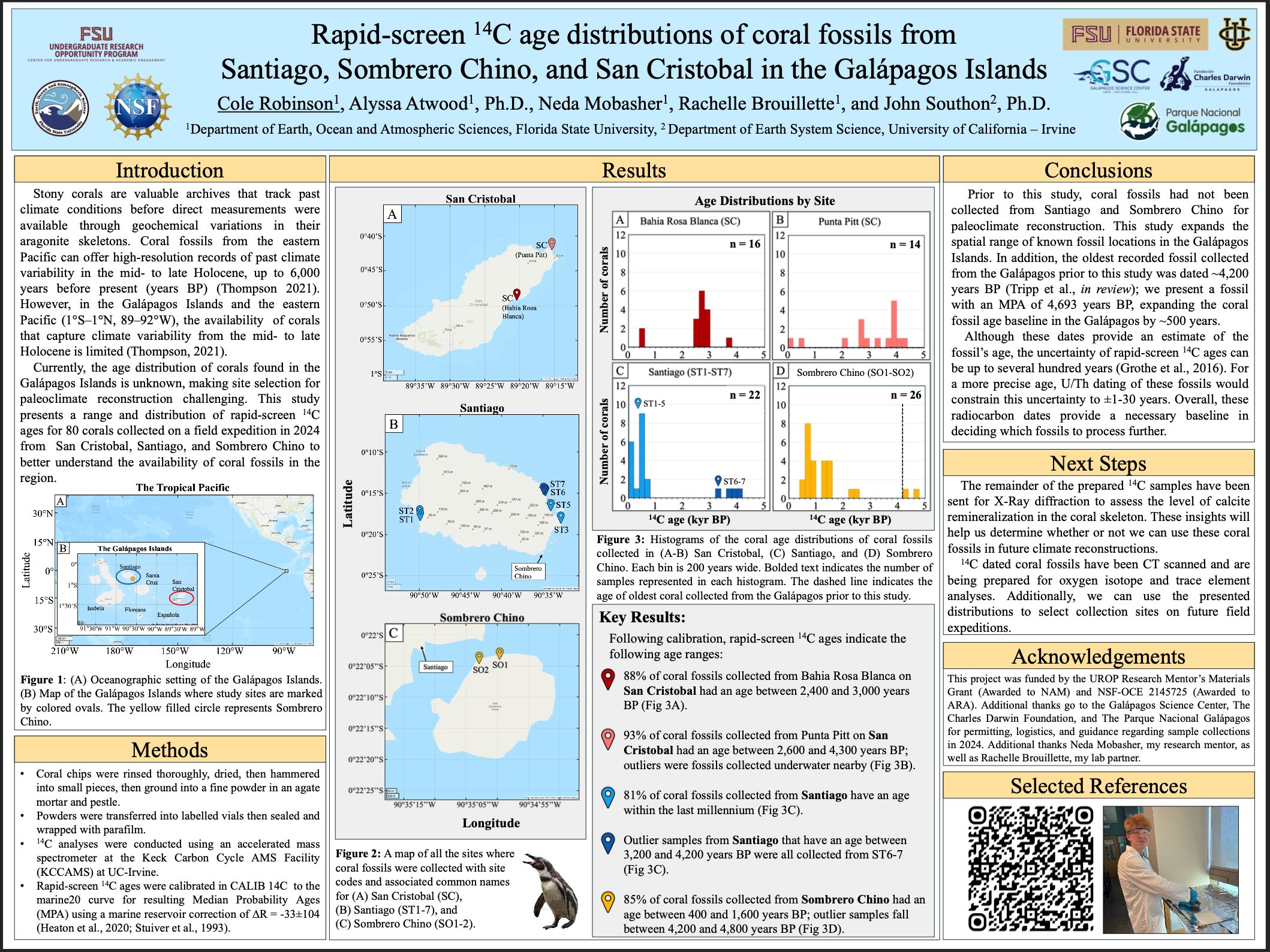
Rapid-screen 14C age distributions of coral fossils from Santiago, Sombrero Chino, and San Cristobal in the Galápagos Islands
Authors: Cole Robinson, Neda MobasherStudent Major: Environmental Science & Policy and Economics
Mentor: Neda Mobasher
Mentor's Department: Earth, Ocean and Atmospheric Sciences Mentor's College: Florida State University Co-Presenters:
Abstract
Scleractinian “stony” corals provide a detailed record of past climate and ocean conditions because of their well-preserved skeletal structure, in which geochemical variations reflect changes in their environmental conditions. Corals from the eastern equatorial Pacific are especially useful for reconstructing past climate and for understanding how climate variability has evolved over the mid-to-late Holocene, 0-5,000 years before present (yr BP). This study presents a range and distribution of rapid-screen 14C ages for corals from San Cristóbal, Sombrero Chino, and Santiago to better understand the availability of coral fossils in the Galápagos Islands.
Approximately 80 corals were analyzed to reconstruct their geologic ages and spatial distribution throughout the Galápagos Islands. Coral chips were drilled, cleaned, and ground into a fine powder using a mortar and pestle on a clean, aluminum-foil-covered surface. Prepared samples were run on an accelerated mass spectrometer at the Keck Carbon Cycle AMS Facility (KCCAMS) at UC-Irvine, then sent for X-ray diffraction to determine the percentage of calcite in the coral skeleton. Raw 14C ages were calibrated in the CALIB 14C Calibration Program to the marine20 calibration curve. San Cristóbal corals were calibrated to a median probability age between 2,500 and 4,200 yr BP, Santiago corals within 1,000 yr BP, and Sombrero Chino corals within 1,500 yr BP or between 4,000 and 4,800 yr BP. Mapping the distributions presented in this research can help accurately pinpoint areas for generating climate reconstructions and increase understanding of the age baseline for available coral fossils in the Galápagos Islands.
Keywords: ocean, corals, fossils, climate, radiocarbon, paleoclimate
26th annual Undergraduate Research Symposium, April 1, 2026
Noah Frank Poster Session 1: 9:30 am - 10:30 am / Poster #237
BIO
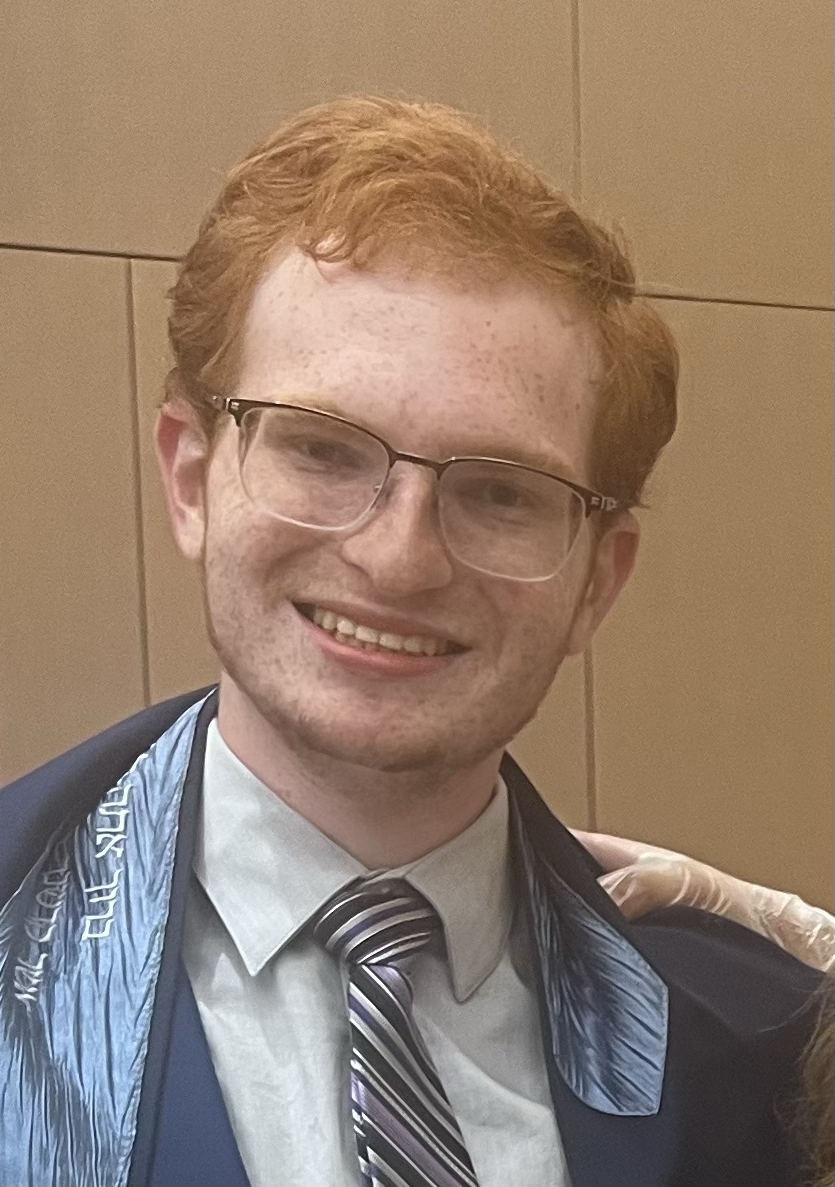
Noah Frank is an Undergraduate Honors Physics student with experience in Nuclear Magnetic Resonance (NMR) under Dr. Arneil Reyes and Dr. Rong Cong and Electron Paramagnetic Resonance (EPR) under Dr. Kavipriya Thangavel in the Hill EPR lab. Outside the lab, he enjoys reading and musicals and looks forward to continuing to delve into quantum Physics.
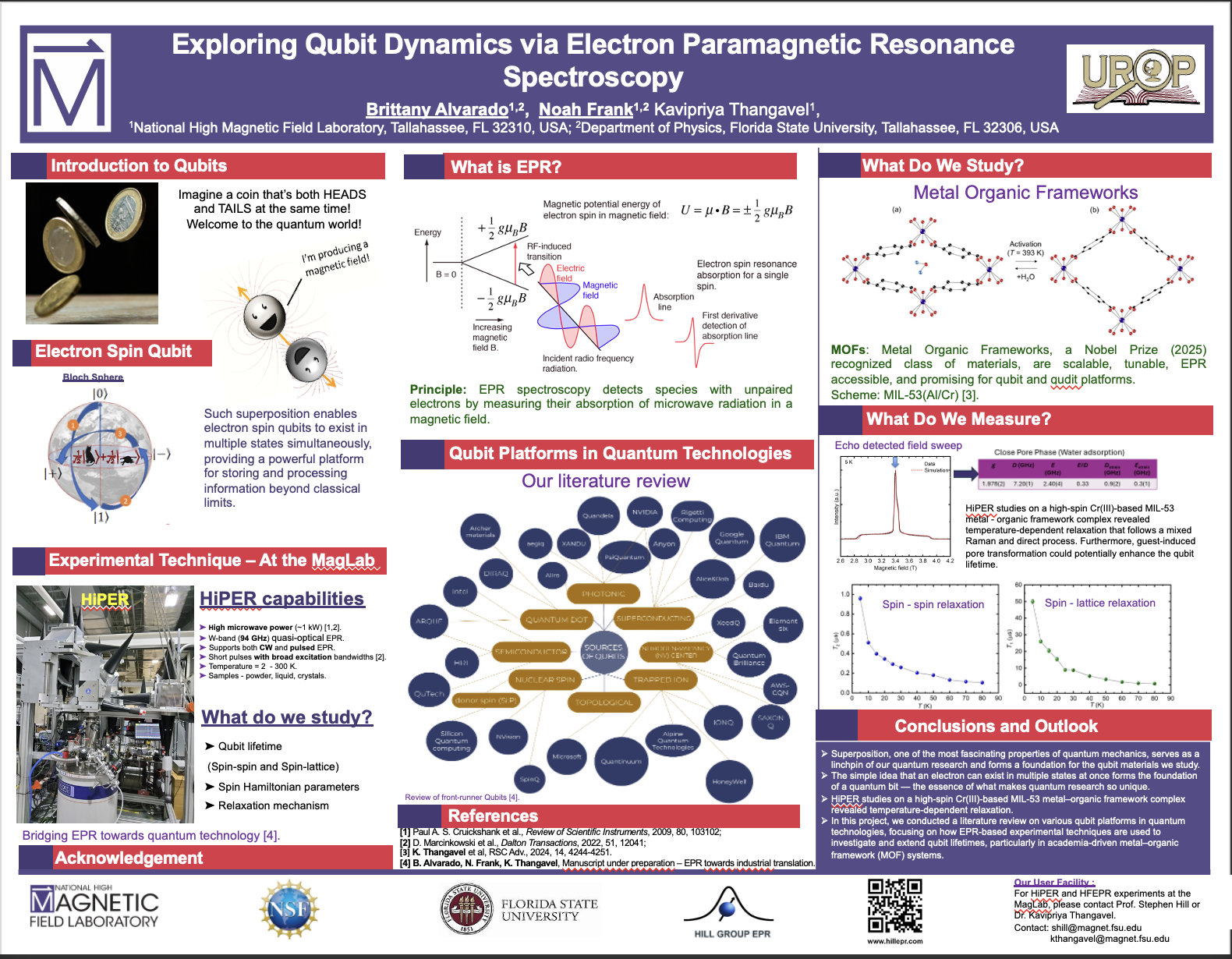
Exploring Qubit Dynamics via Electron Paramagnetic Resonance Spectroscopy
Authors: Noah Frank, Kavipriya ThangavelStudent Major: Physics
Mentor: Kavipriya Thangavel
Mentor's Department: National High Magnetic Field Laboratory Mentor's College: Florida State University Co-Presenters: Brittany Alvarado
Abstract
The intrinsic spin of an electron generates a magnetic dipole moment, in which it interacts with an external magnetic field. This is the fundamental property that allows spin-based qubits. We achieve a level of coherent control in single molecular magnets, with ligands tuning its magnetic environment for quantum memory. Electron Paramagnetic Resonance (EPR) spectroscopy provides a direct probe of unpaired electron spins, making it uniquely suited for identifying, characterizing, and understanding electron spin - based qubit platforms, as well as their relaxation mechanisms, pathways, and associated intricacies. EPR enables the direct extraction of key spin-Hamiltonian parameters and coherence metrics, such as spin–lattice relaxation times (T1) and coherence time (T2). Coherent spin control is demonstrated through Rabi pulse sequences analyzed from a "rotating frame" that moves with the spin so that we may extract results more clearly. Echo sequences and field sweep measurements evaluate coherence and local geometric and electronic environments. This research is investigating the quantum effects and a means to store information at the molecular level. Metal-organic frameworks provide a tunable and scalable environment for molecular qubits. This research is used for guiding the optimization of molecular design strategies aimed at achieving extended quantum coherence lifetimes. There is a direct translation of the industrial relevance of EPR for qubit development and highlights MOF-based qubits as a promising future platform for quantum technologies. This can be used in logic gates, long range communications, other sensing applications.
Keywords: EMR Electrons Resonance
26th annual Undergraduate Research Symposium, April 1, 2026
Christopher Riaz Poster Session 4: 3:00 pm - 4:00 pm / Poster #28
BIO
Christopher Riaz is a first-year Behavioral Neuroscience student attending Florida State University on the pre-medical track. He has experience with research in ethnography, electrical engineering, and political science. Currently, he is studying under Betsy Staudt Willet, researching the PURPOSE program and its fellows.
Exploring the Impact of Social Justice Research Projects Conducted by Emerging Scholars
Authors: Christopher Riaz, Betsy Staudt WilletStudent Major: Behavioral Neuroscience
Mentor: Betsy Staudt Willet
Mentor's Department: Equity, Diversity, and Inclusion/Leadership/PURPOSE Mentor's College: Fuller Theological Seminary, Cornell University Co-Presenters:
Abstract
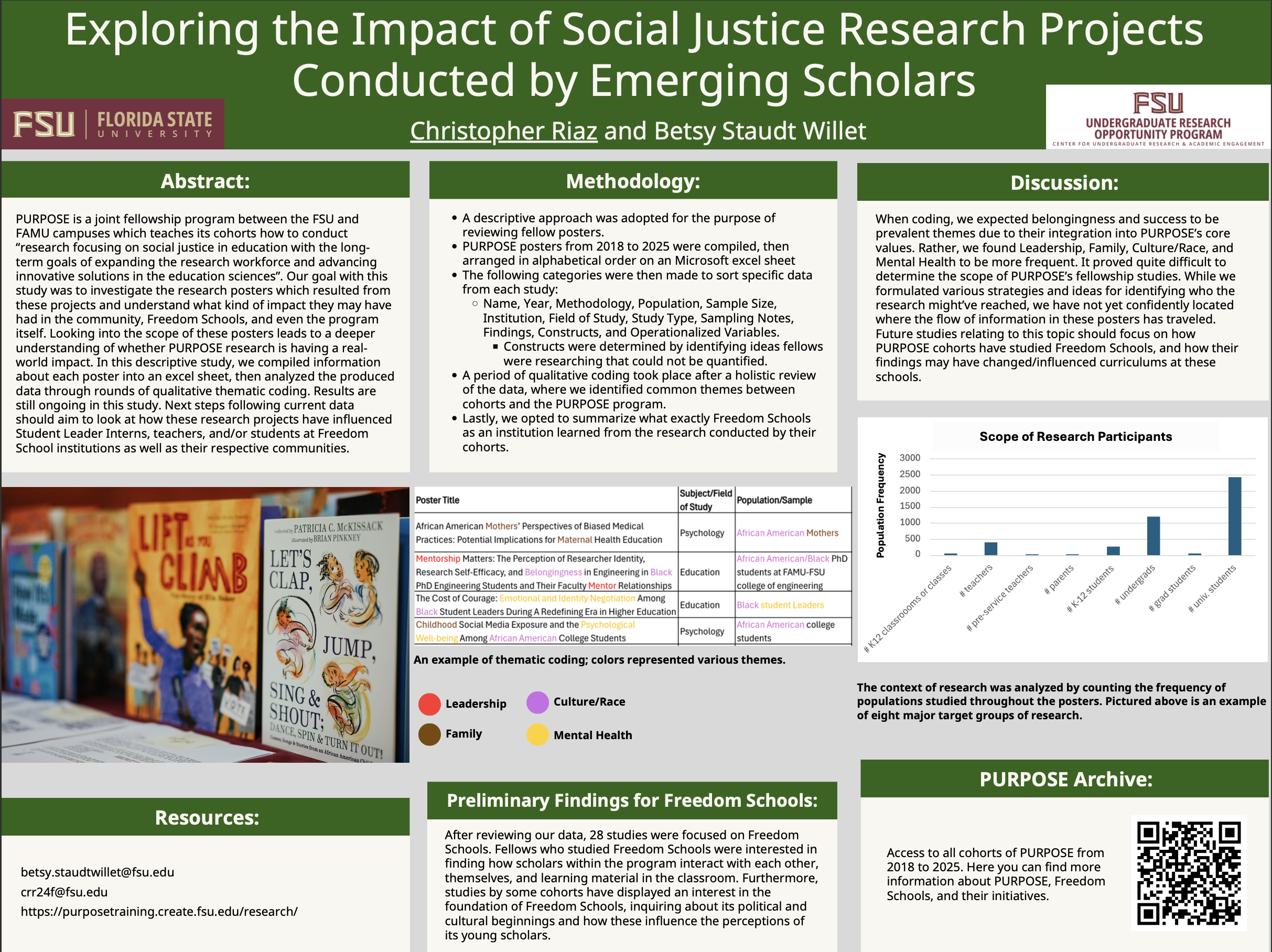
PURPOSE is a joint fellowship program between the FSU and FAMU campuses which teaches its cohorts how to conduct “research focusing on social justice in education with the long-term goals of expanding the research workforce and advancing innovative solutions in the education sciences”. Our goal with this study was to investigate the research posters which resulted from these projects and understand what kind of impact they may have had in the community, Freedom Schools, and even the program itself. Looking into the scope of these posters leads to a deeper understanding of whether PURPOSE research is having a real-world impact. In this descriptive study, we compiled information about each poster into an excel sheet, then analyzed the produced data through rounds of qualitative thematic coding. Results are still ongoing in this study. Next steps following current data should aim to look at how these research projects have influenced Student Leader Interns, teachers, and/or students at Freedom School institutions as well as their respective communities.
Keywords: PURPOSE, Freedom Schools, Children's Defense Fund