
Research Symposium
26th annual Undergraduate Research Symposium, April 1, 2026
Noah Peterson Poster Session 4: 3:00 pm - 4:00 pm / Poster #190
BIO
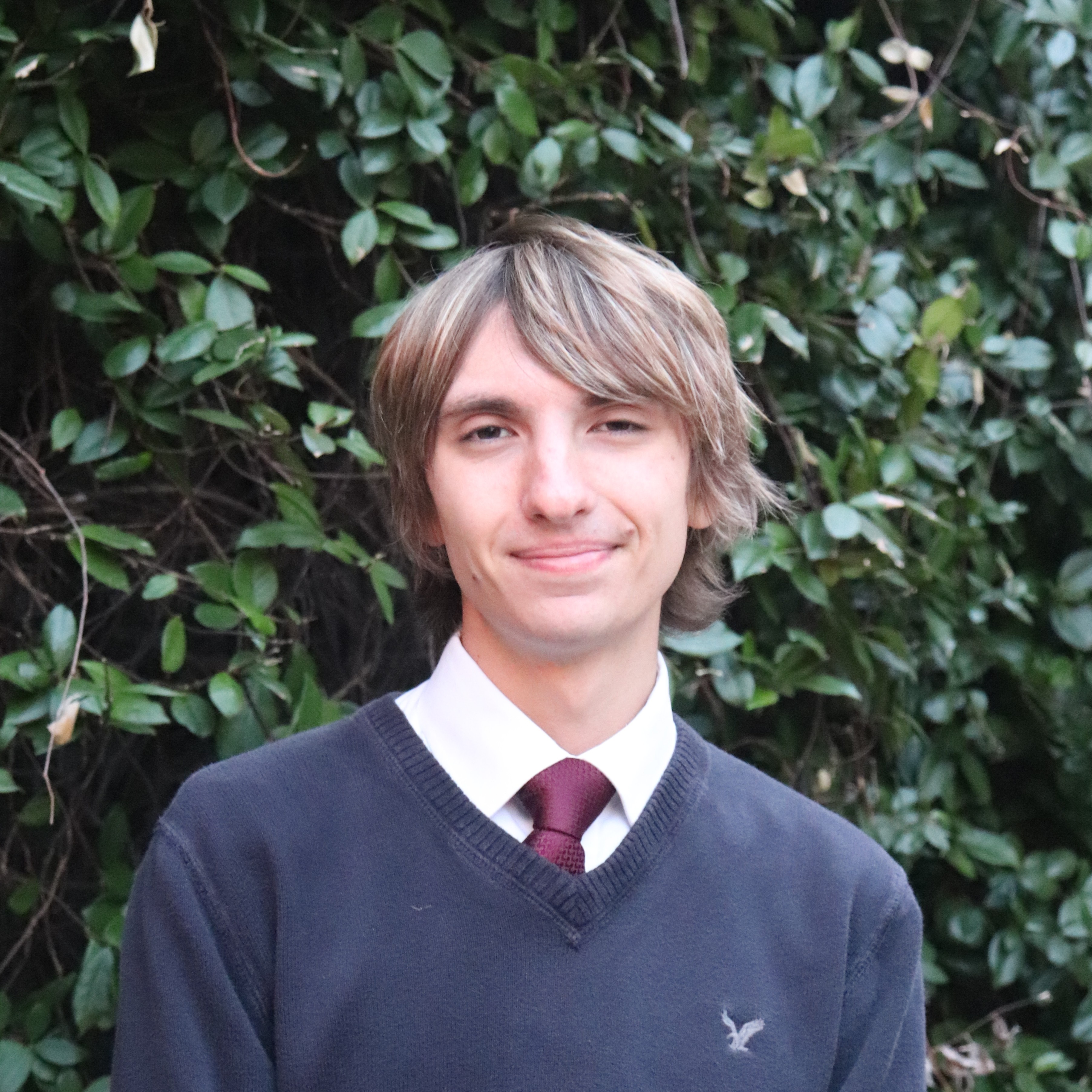
Noah Peterson is a second-year undergraduate student at Florida State University. He is majoring in Environmental Science and is a part of the FSU Honors Program. During his time in UROP, he has participated in a research project studying reproduction of Eastern Oysters in the Apalachicola Bay under the guidance of postdoctoral researcher Dr. Lauren Rice of the FSU Coastal and Marine Lab. Noah is most interested in marine biology and ecology, and he plans to pursue a graduate degree in biological oceanography.
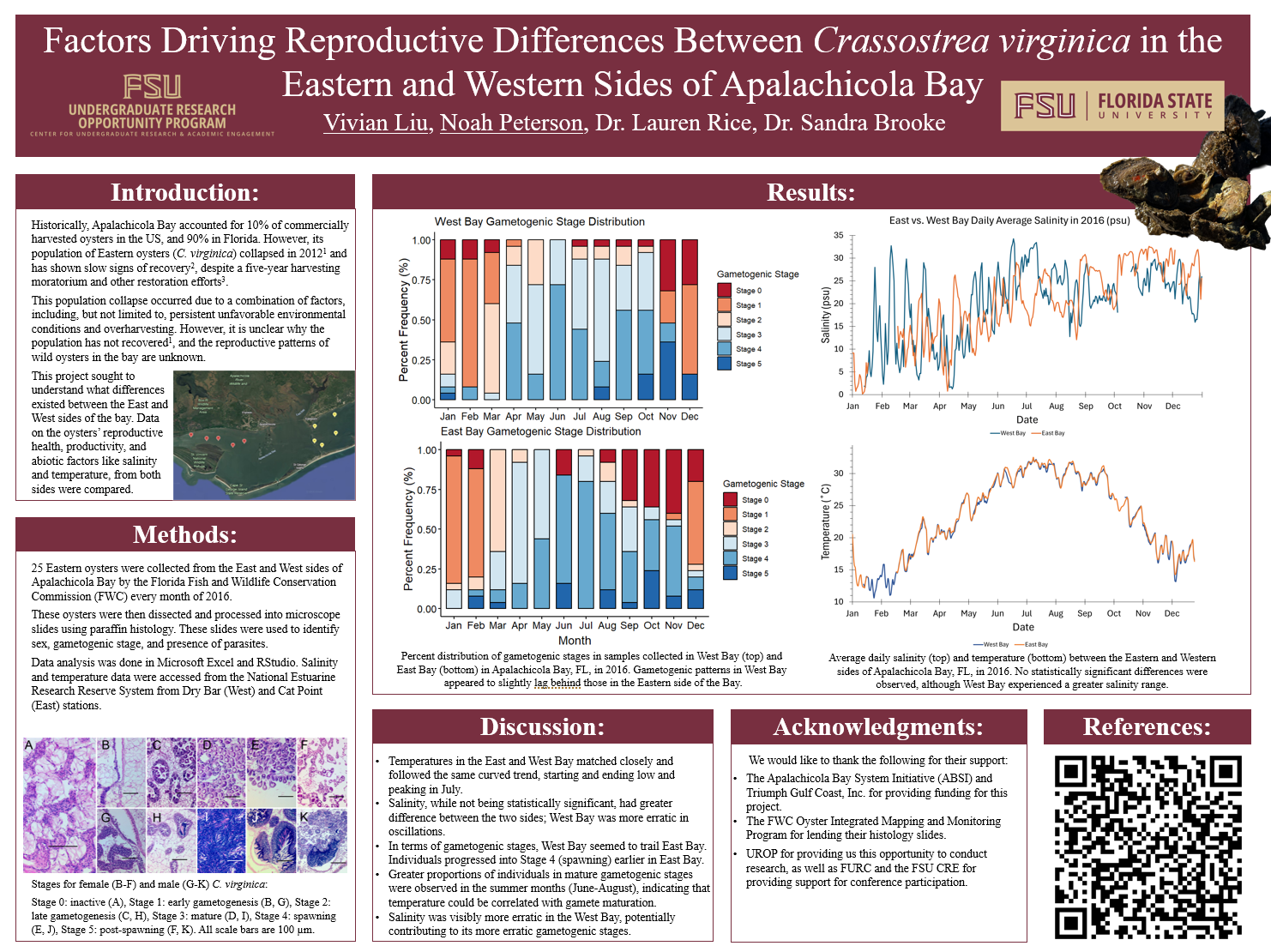
Factors Driving Reproductive Differences Between Crassostrea virginica in the Eastern and Western Sides of Apalachicola Bay
Authors: Noah Peterson, Lauren RiceStudent Major: Environmental Science
Mentor: Lauren Rice
Mentor's Department: Department of Earth, Ocean, and Atmospheric Science Mentor's College: College of Arts and Sciences Co-Presenters: Vivian Liu
Abstract
Apalachicola Bay in Florida supports wild populations of the Eastern oyster (Crassostrea virginica), whose historical prevalence supplied 90% of all oysters sold in Florida. After their collapse in 2012, the oyster population has shown slow signs of recovery despite various restoration efforts, including a 2020 harvest moratorium. As part of the Apalachicola Bay System Initiative project at the Florida State University Coastal and Marine Lab, our study seeks to determine the environmental factors that are driving oyster reproductive patterns on the eastern and western regions of Apalachicola Bay. To do this, 25 oysters were collected each month in 2016 from both sides of Apalachicola Bay and then processed by the Florida Fish and Wildlife Conservation Commission using paraffin histology. Slides of each individual were viewed using light microscopy and categorized as either: inactive, early gametogenesis, late gametogenesis, mature, spawning, or post-spawning, and parasite presence and instances of hermaphroditism were recorded. Then, 100 randomly selected oocytes were measured from each female, when possible. Water quality and nutrient data collected in 2016 were accessed from the National Estuarine Research Reserve System to examine potential environmental differences across the bay. These data will be used to identify possible correlations between oyster reproduction and environmental conditions and can be used to make inferences about oyster population reproductive potential across Apalachicola Bay. In doing so, our project will contribute towards larger initiatives to identify long-term trends of oyster reproductive health, environmental drivers, and help contribute towards data-informed management strategies.
Keywords: Apalachicola Bay, oyster, reproductive ecology
26th annual Undergraduate Research Symposium, April 1, 2026
Blake Roberts Poster Session 2: 10:45 am - 11:45 am / Poster #302
BIO
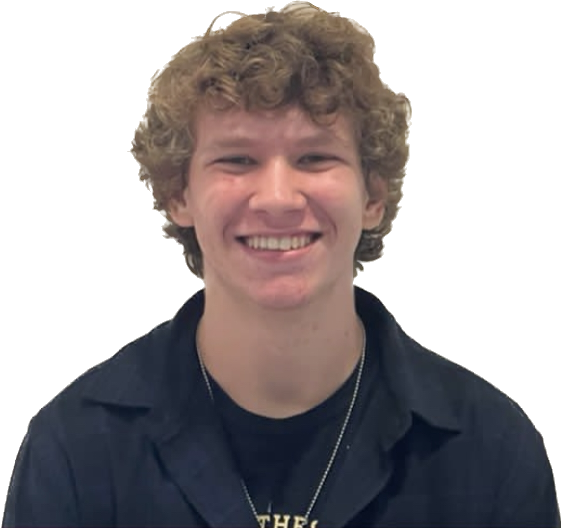
Blake Roberts is a third-year biological science major at Florida State University. Since October of 2025, he has assisted in Dr. Qian Yin's immunology lab at the Institute of Molecular Biophysics, where he spends 20-30 hours per week utilizing E. coli to express human guanylate binding proteins and purifying them for structural and functional analysis. He also has assisted Dr. Jeremy Owen's trace metal geochemical lab at Earth, Ocean, and Atmospheric Sciences where he purifies rock samples and prepares them for isotope and composition analysis through Mass Spectrometry.
Blake plans to pursue immunology in graduate school and continue a career in academia to become a research professor at the university level.
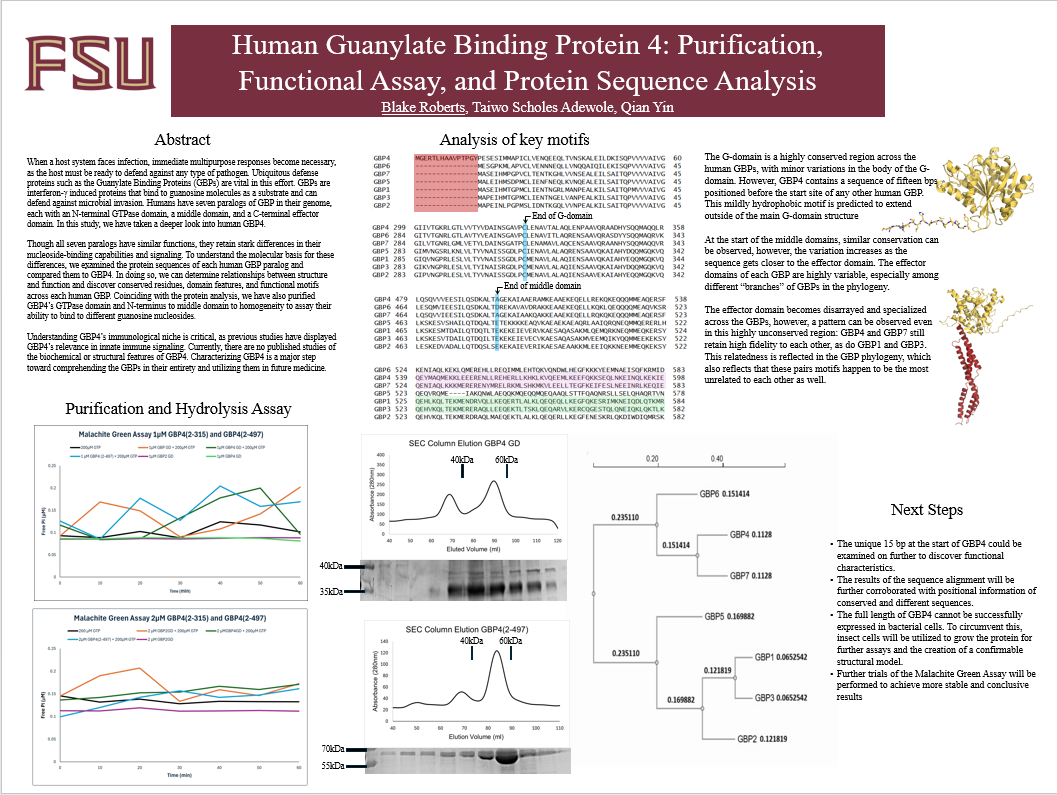
Human Guanylate-Binding Protein 4: Purification, Functional Assay, and Protein Sequence Analysis
Authors: Blake Roberts, Taiwo Scholes AdewoleStudent Major: Biological Science
Mentor: Taiwo Scholes Adewole
Mentor's Department: Biological Science Mentor's College: College of Arts and Sciences Co-Presenters:
Abstract
When a host system faces infection, immediate multipurpose responses become necessary, as the host must be ready to defend against any type of pathogen. Ubiquitous defense proteins such as the Guanylate Binding Proteins (GBPs) are vital in this effort. GBPs are interferon-γ induced proteins that bind to guanosine molecules as a substrate and can defend against microbial invasion. Humans have seven paralogs of GBP in their genome, each with an N-terminal GTPase domain, a middle domain, and a C-terminal effector domain. In this study, we have taken a deeper look into human GBP4.
Though all seven paralogs have similar functions, they retain stark differences in their nucleoside-binding capabilities and signaling. To understand the molecular basis for these differences, we examined the protein sequences of each human GBP paralog and compared them to GBP4. In doing so, we can determine relationships between structure and function and discover conserved residues, domain features, and functional motifs across each human GBP. Coinciding with the protein analysis, we have also purified GBP4’s GTPase domain and N-terminus to middle domain to homogeneity to assay their ability to bind to different guanosine nucleosides.
Understanding GBP4’s immunological niche is critical, as previous studies have displayed GBP4’s relevance in innate immune signaling. Currently, there are no published studies of the biochemical or structural features of GBP4. Characterizing GBP4 is a major step toward comprehending the GBPs in their entirety and utilizing them in future medicine.
Keywords: Immunology, Guanylate Binding Protein, Sequencing
26th annual Undergraduate Research Symposium, April 1, 2026
Franco Cangahuala Poster Session 3: 1:45 pm - 2:45 pm / Poster #288
BIO
He is a sophomore at Florida State University by the name of Franco Cangahuala. Additionally he is in the honors program of Florida State. His hometown is Miami, Fl and he is Peruvian. He is on the executive board for the Peruvian Student association. He wants to enter the research field at a university in the future specifically sleep research.
Voices of The Andes: Intonation and Language Contact in Peru and Argentina
Authors: Franco Cangahuala, Antje MuntendamStudent Major: Psychology
Mentor: Antje Muntendam
Mentor's Department: Department of Modern Languages and Linguistics Mentor's College: M.A. Leiden University, Ph.D. University of Illinois at Urbana-Champaign Co-Presenters: Valentina Di Domenico, Grayson Russell
Abstract
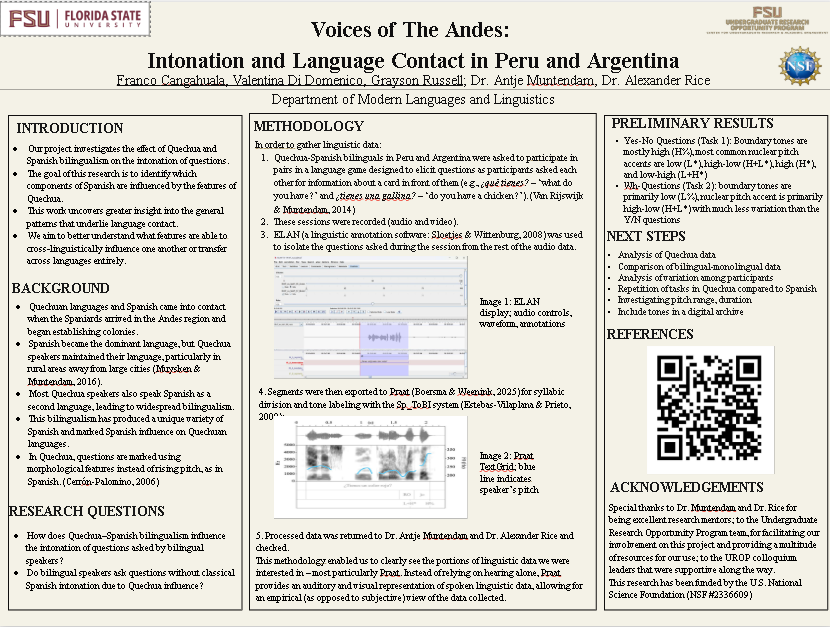
In our project Voices of the Andes: Intonation and Language Contact in Peru and Argentina, we
investigated the effect of Quechua-Spanish bilingualism on the intonation of questions elicited
from participants fluent in both Quechua and Spanish in Peru and Argentina. The goal of this
research is to identify which components of one language, in this case Spanish, are influenced by
the features of another language, in this case Quechua, a language which greatly differs in
aspects of morphology and phonology. In conducting this research, we uncover greater insight
into the general patterns which underlie language contact and better understand what features are
able to cross-linguistically influence one another, or even transfer across languages entirely. To
investigate this topic we collected audio recordings of Peruvian and Argentinian people who
were Spanish monolinguals, Quechua monolinguals, and bilinguals. Participants were paired and
played a card game designed to elicit yes-no and information-seeking questions. These
recordings were segmented and analyzed using the programs Praat and ELAN to study the
intonation at the end of the questions asked by participants. It is known that in Quechua,
questions are marked using morphological features instead of with a rising pitch, as in Spanish.
Therefore, we predict that those who are most influenced by Quechua (bilingual speakers) will
ask questions without classical Spanish intonation. Results of this study may have implications
for what we know about culture and language dominance in a post-colonial context, and what
effects these deviances in language have on personal or community differentiation
Keywords: Spanish, Linguistics, Language
26th annual Undergraduate Research Symposium, April 1, 2026
May Sulema Poster Session 1: 9:30 am - 10:30 am / Poster #211
BIO
May Sulema is a fourth-year student at Florida State University, majoring in Psychology and minoring in both Child Development and General Business. While her interests within the field of Psychology are broad, she is particularly interested in suicide and suicide prevention, emotional regulation, and health psychology. May is actively involved in several research and leadership roles within Florida State University, including her work as a Peer Educator with RENEW, and as a Research Assistant in both the Joiner Lab and the March Lab. She is also a member of Kappa Alpha Theta, where she previously served as Mental Health Chairman. May plans to pursue graduate studies and continue her research in the field of Psychology.
A New Realm in Suicide Prevention: A Validation Study
Authors: May Sulema, Sara ProstkoStudent Major: Psychology
Mentor: Sara Prostko
Mentor's Department: Psychology Mentor's College: College of Arts and Sciences Co-Presenters: Ava Polaszek
Abstract
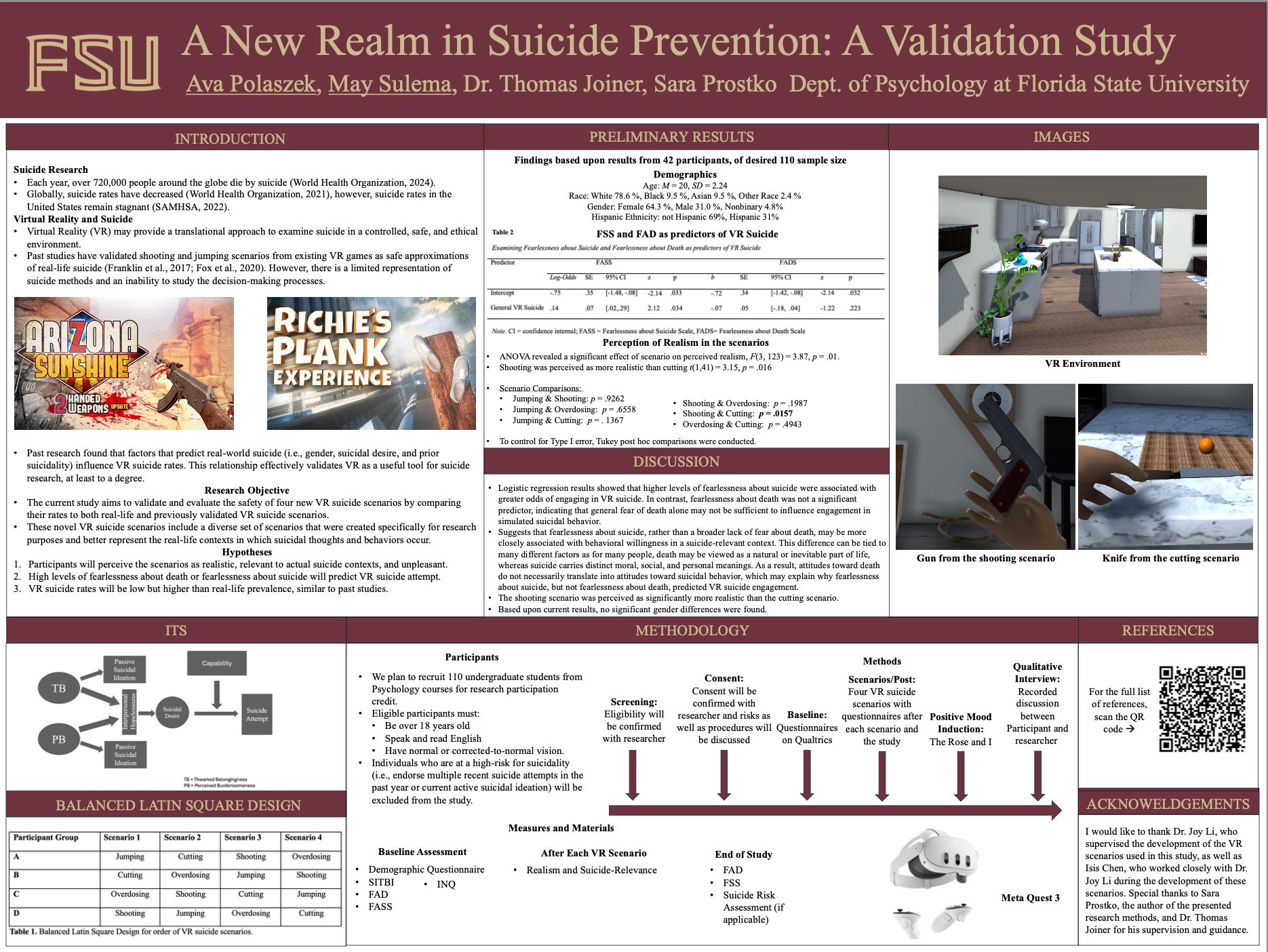
Suicide remains a leading cause of death and suicide rates in the United States continue to rise. Virtual reality (VR) offers a novel approach for studying suicide risk in a controlled and ethical environment. However, past VR suicide studies relied on VR scenarios from pre-existing commercial games and faced several challenges, including a limited representation of suicide methods and an inability to study decision-making processes. This study aims to validate four newly developed VR suicide scenarios – jumping, cutting, shooting, and overdosing – that have been designed to better reflect real-world methods of suicide in comparison to past VR suicide studies.
Preliminary data from 42 participants randomized across scenarios via a balanced Latin Square Design has been collected. A one-way repeated measures ANOVA examined the perceived realism of each scenario. Results indicated that the shooting scenario was perceived as significantly more realistic than the cutting scenario (b = 1.09, t(31) = 3.19, p = 0.016). Additionally, the difference between the shooting and overdosing scenario approached statistical significance, with the shooting scenario perceived as more realistic (b = 0.78, t(31) = 2.44, p = 0.0898) after controlling for Type 1 error. Finally, capability for suicide, a key construct from the Interpersonal Theory of Suicide showed mixed results in predicting VR suicide. Fearlessness about death (an established component of capability) did not predict VR suicide, a novel measure, fearlessness about suicide did (b = 0.16, SE = .08, p = .039).
Keywords: Virtual Reality, Suicide, Suicide Prevention
26th annual Undergraduate Research Symposium, April 1, 2026
Gabriela Gutierrez Poster Session 1: 9:30 am - 10:30 am / Poster #99
BIO
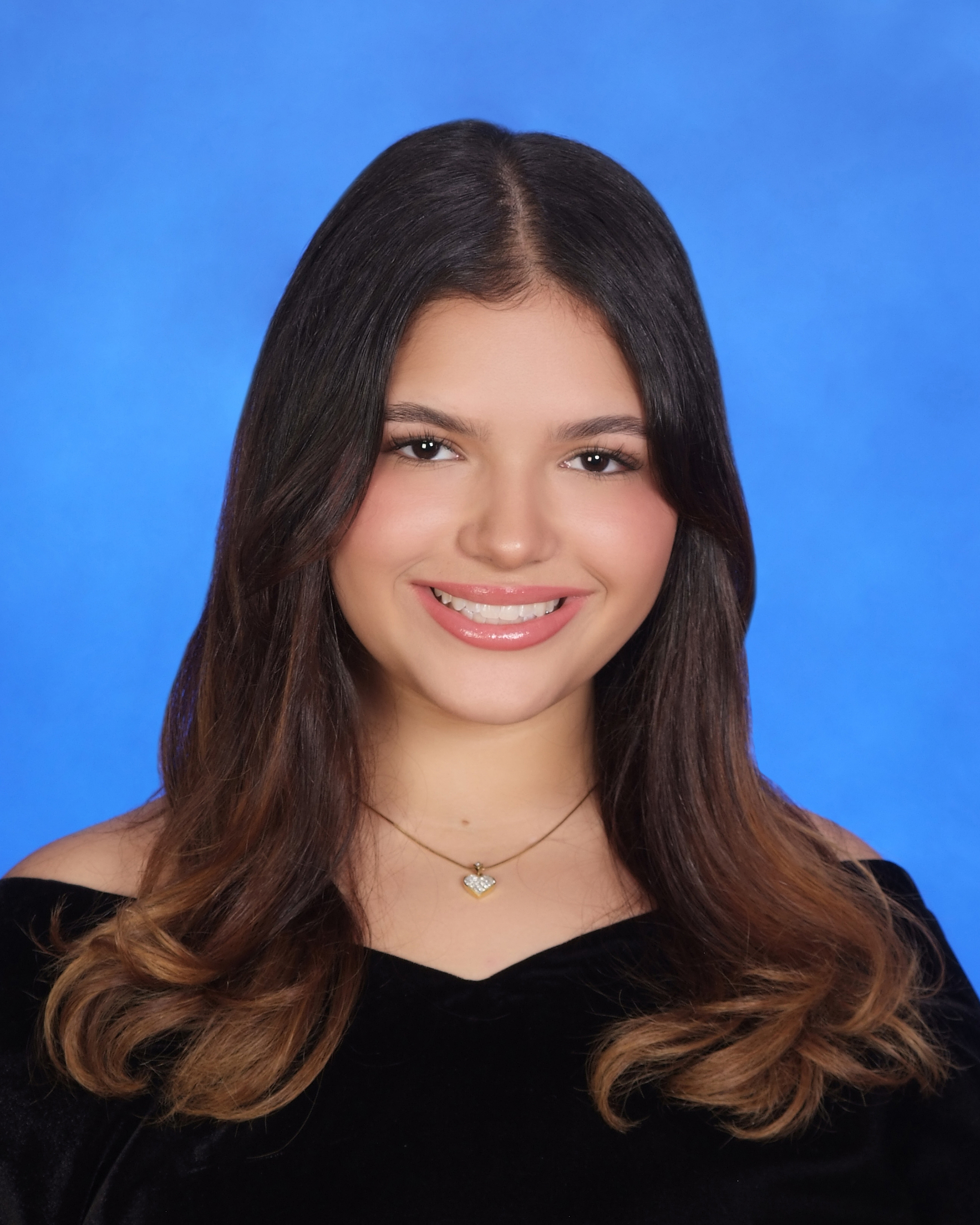
Gabriela Gutierrez is a first-year student at Florida State University pursuing a Bachelor of Science in Public Health. Originally from Miami, Florida, she developed a strong interest in healthcare and community service through her experiences growing up in a diverse and service-oriented environment. Gabriela is particularly passionate about researching people and learning about what inspires them, especially individuals whose work creates positive change in their communities.
In addition to her interest in public health and medicine, Gabriela has developed a growing appreciation for the arts. Through researching artists and their work, she has begun to view the world through a different lens, gaining a deeper understanding of creativity, culture, and the ways personal experiences shape expression. This exploration has strengthened her curiosity about the stories and motivations behind people’s work.
After completing her undergraduate studies, Gabriela plans to attend dental school and pursue a career as either an orthodontist or an oral surgeon, with the goal of improving access to quality dental care and serving underserved communities.
Biography Research and Writing Project
Authors: Gabriela Gutierrez, Kyleelise Holmes ThomasStudent Major: Public Health
Mentor: Kyleelise Holmes Thomas
Mentor's Department: Department of Art Hisotry Mentor's College: College of Fine Arts Co-Presenters: Eros Suarez Dorta
Abstract
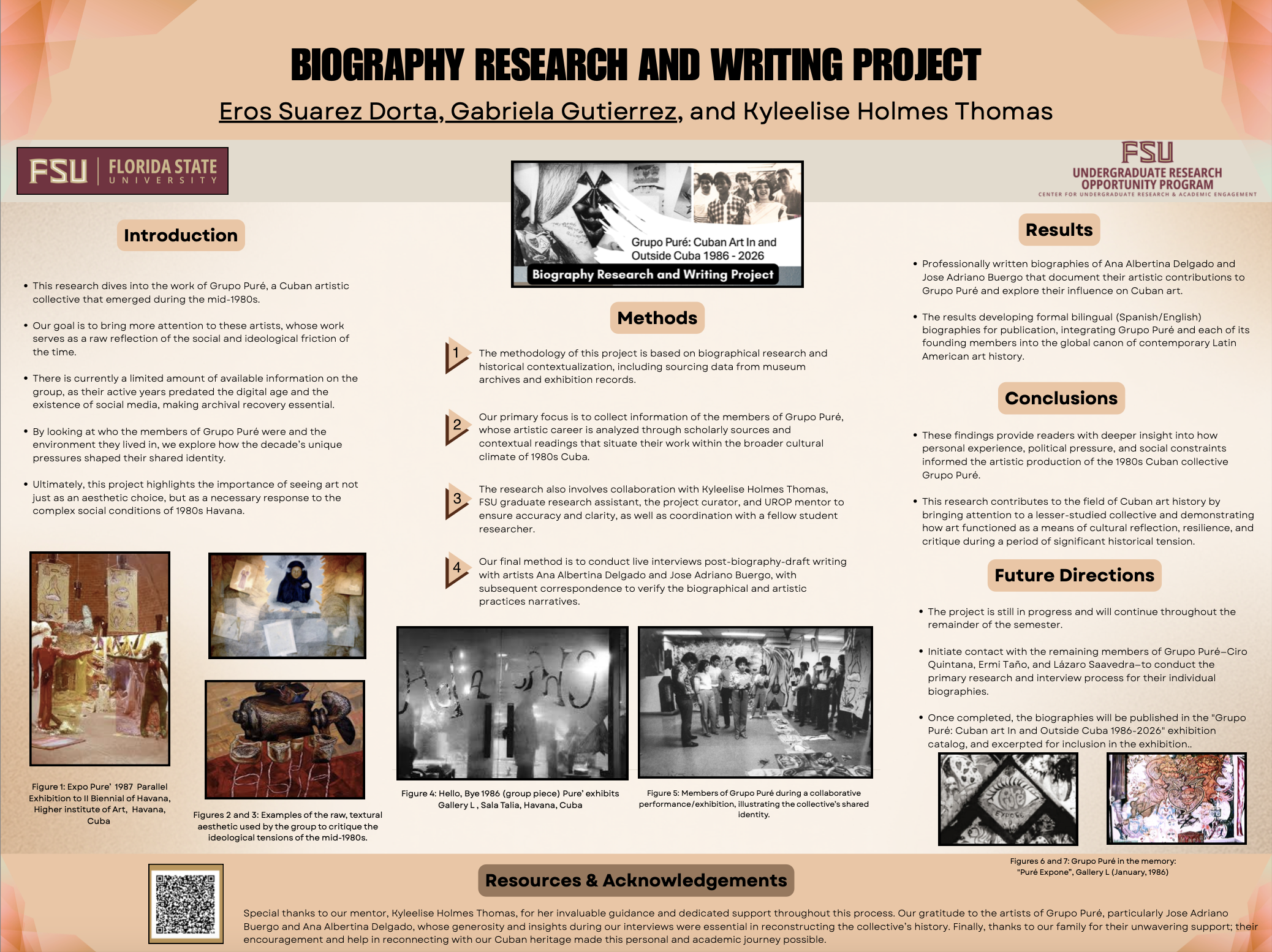
This research explores Grupo Puré, a Cuban artistic collective active during the 1980s, to expand scholarly and public awareness of artists whose work reflects the period’s social, political, and ideological tensions. The decade was characterized by limited cultural openness, economic strain, and growing encounters with postmodern ideas, creating a restrictive environment for artistic expression. This study examines how the historical context shaped both the collective identity and the individual artistic practices of its members, emphasizing art as a response to lived experience within constrained social conditions.
The methodology of this project is grounded in biographical research and historical contextualization. The primary focus is on the artists Adriano Buergo, Ermy Taño, Lázaro Saavedra, Ana Albertina Delgado, and Ciro Quintana. Their careers are analyzed through scholarly sources, contextual readings, and interviews that situate their work within the broader cultural climate of 1980s Cuba. The research involves collaboration with an FSU graduate research assistant, project curator, and UROP mentor, as well as coordination among student researchers assigned to write individual biographies. This collaborative structure allows for a more comparative understanding of the collective.
The results include professionally written biographies that document Grupo Puré’s artistic contributions and the influences shaping each of its five members. These findings provide insight into how personal experience, political pressure, and social limitations informed artistic production. Ultimately, this study contributes to Cuban art history by highlighting a lesser-studied collective and demonstrating how art functioned as cultural reflection, resilience, and critique during a period of historical tension in Cuba.
Keywords: Art history, Biography, Research, Writing, Art
26th annual Undergraduate Research Symposium, April 1, 2026
Kathryn Fjelland Poster Session 4: 3:00 pm - 4:00 pm / Poster #114
BIO
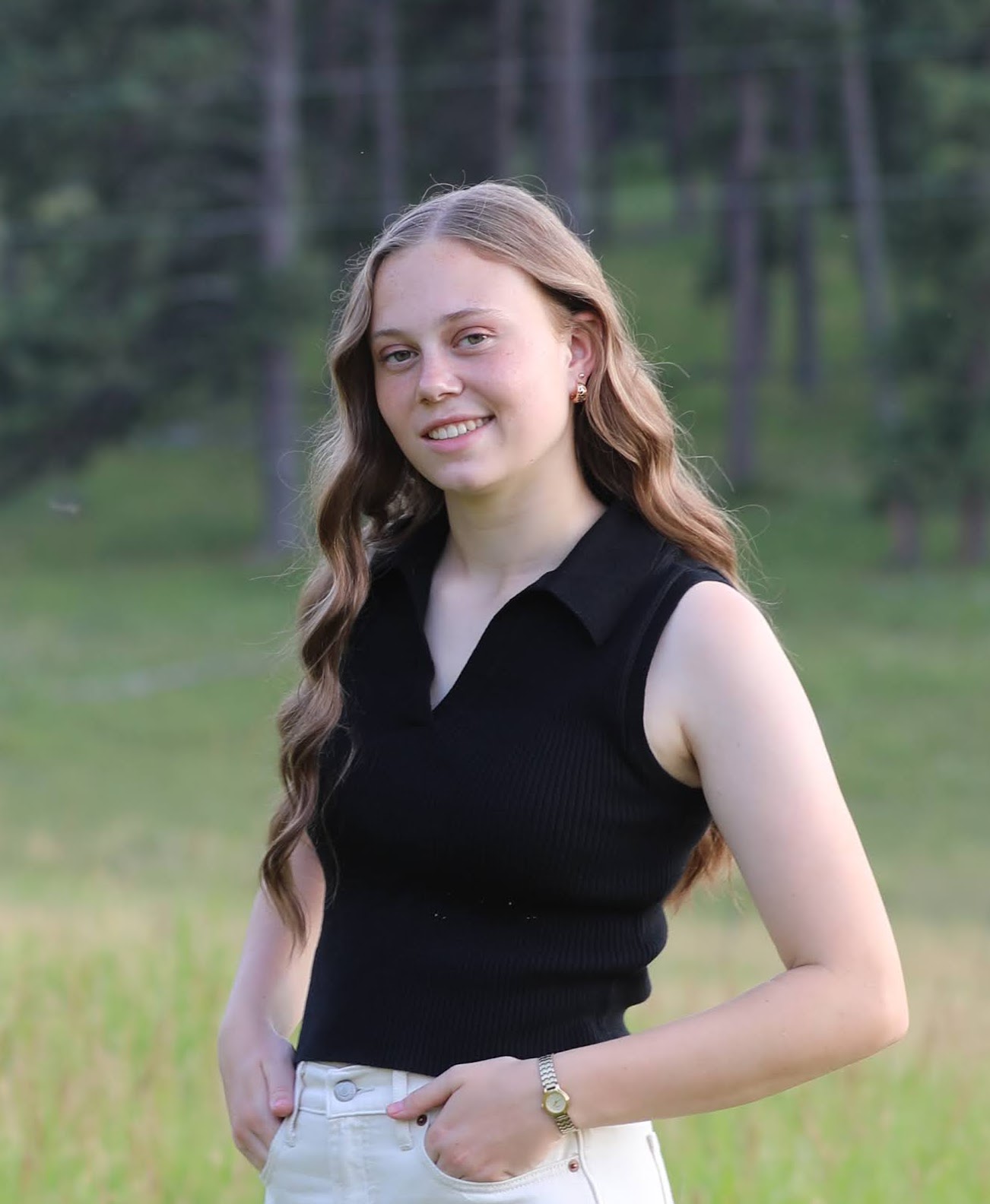
Kathryn Fjelland is a biology student in the FSU Presidential Scholars Program. Her research interests center around anatomy, physiology, and emergency medicine. After graduating from FSU, she plans to attend medical school and become a physician. Outside of research she is involved in club sports, volunteering, and various academic organizations. Originally from Spearfish, SD, she enjoys being active and outdoors.
Tracking Motor Learning in Circus Athletes Using External Video Data
Authors: Kathryn Fjelland, Dr. Taylor HigginsStudent Major: Biology, Criminology
Mentor: Dr. Taylor Higgins
Mentor's Department: Mechanical Engineering Mentor's College: College of Engineering Co-Presenters: Isaac Berger
Abstract
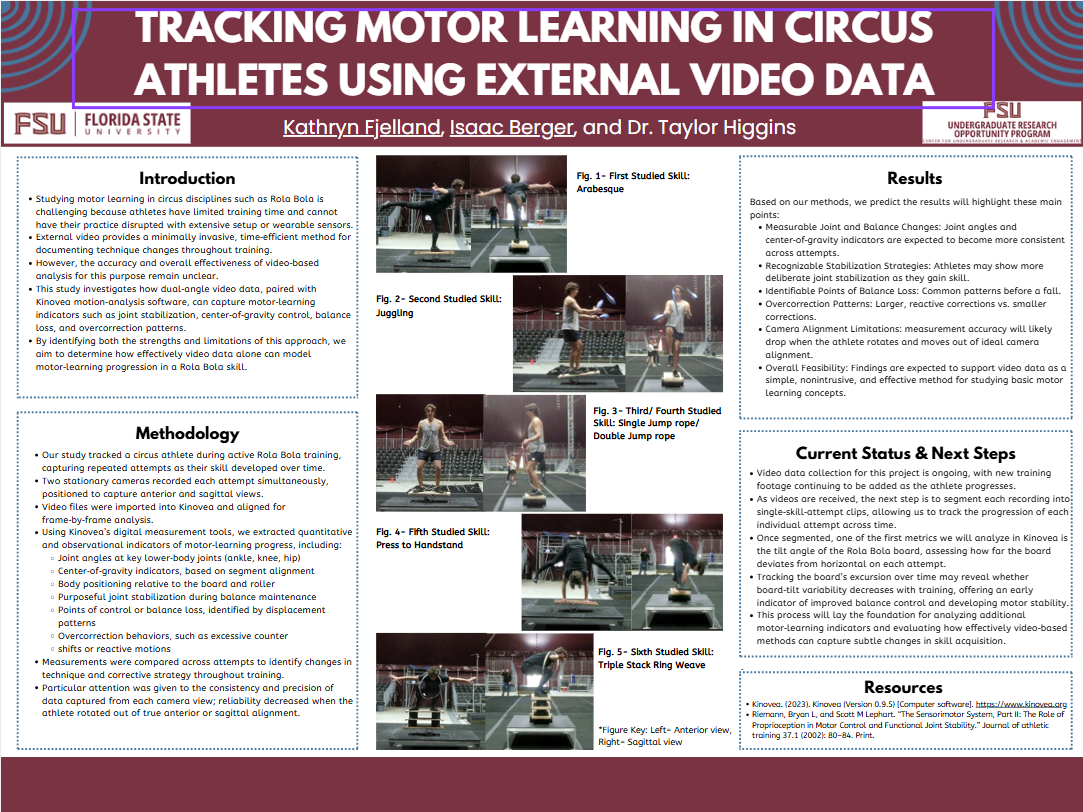
Understanding the progression of motor learning in circus talents such as Rola Bola presents a unique challenge when working solely with external video data. Our study investigates how this type of video data can be effectively acquired and used to analyze motor learning. We used two motion cameras to capture both anterior and sagittal views of the subject and aimed to use the video analysis software Kinovea to derive measurable data points to track progress. This data would include joint angles, center of gravity, and body positioning. A few concepts we were particularly hoping to track are the impact of purposeful joint stabilization, the point of control or balance loss, and what aspects lead to overcorrection. We predict that our results will indicate that video data is an effective and nonintrusive study method, and that Kinovea could be used effectively if the athlete remains in alignment with the cameras. Overall, our study aims to determine that video data is an effective method for studying basic motor concepts such as balance, corrections, and failure patterns at a small scale, and a simple and affordable way to conduct our research. The use of video data has broader implications for athletes, coaches, medicine, and the study of motor learning, as it can support more informed coaching decisions, enhance injury‑prevention strategies, and make biomechanical feedback accessible in settings that lack advanced motion‑capture technology.
Keywords: Engineering, Biology, Video
26th annual Undergraduate Research Symposium, April 1, 2026
Olivia Phan Poster Session 1: 9:30 am - 10:30 am / Poster #63

BIO
Olivia Pham, is originally from Vietnam. Olivia grew up in Ho Chi Minh City and came to the United States for college.
Olivia is currently studying Finance and Real Estate. Olivia really enjoy analytical work, especially using Excel to analyze data and build valuation models.
Outside of academics, Olivia enjoy traveling and exploring new places, as well as cooking and trying different cuisines.
In the future, Olivia hope to pursue a career in real estate finance, potentially in the capital markets, where Olivia can help people make smarter financial decisions and grow their investments.
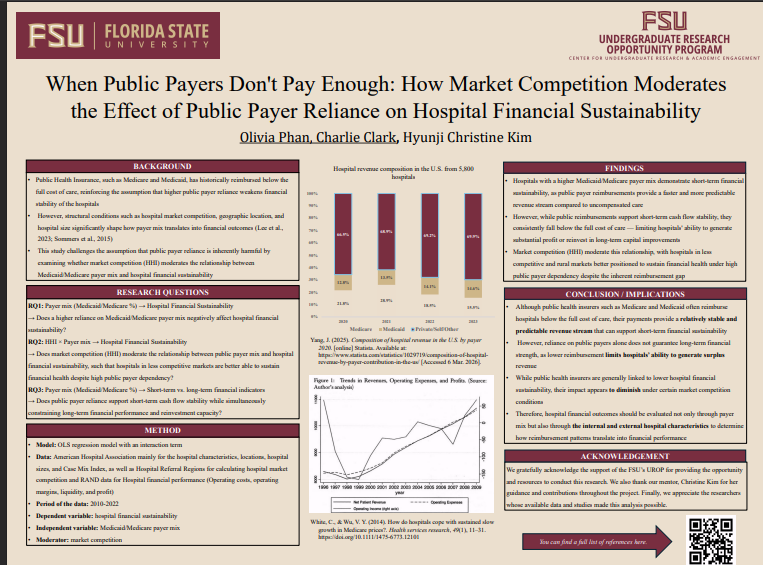
When Public Payers Don't Pay Enough: How Market Competition Moderates the Effect of Public Payer Reliance on Hospital Financial Sustainability
Authors: Olivia Phan, Hyunji Christine KimStudent Major: Finance
Mentor: Hyunji Christine Kim
Mentor's Department: Public Policy Mentor's College: Reubin O'D. Askew School of Public Administration and Policy Co-Presenters: Charlie Clark
Abstract
This study examines whether hospitals can financially benefit from a greater reliance on public insurance programs, specifically Medicaid and Medicare, by analyzing how the relationship between the proportion of Medicaid/Medicare reimbursement and hospital financial sustainability varies under different structural conditions. The independent variable is the Medicaid/Medicare payer mix, measured as the percentage of total revenue or discharges from these public insurers, and the dependent variable is hospital financial sustainability, captured through metrics such as operating margin, net income, or days cash on hand. Two key contextual moderators are considered: market competition, assessed using the Herfindahl-Hirschman Index (HHI), and geographic location, categorized as urban or rural. The first hypothesis (H1) examines whether a higher Medicaid/Medicare payer mix is positively associated with hospital financial sustainability. Building on this, H2a proposes that this positive association is stronger in markets with lower competition, while H2b suggests the relationship is more favorable for hospitals located in rural areas. By testing these interactions through a moderated regression model, the study challenges the prevailing view that public payer reliance undermines financial health and instead argues that, under the right structural conditions, hospitals can strategically benefit from serving more publicly insured patients—providing important insights for health system leaders and policymakers seeking sustainable and equitable healthcare delivery models.
Keywords: Health Management, Payermix
26th annual Undergraduate Research Symposium, April 1, 2026
Eleanor Kirsch Poster Session 2: 10:45 am - 11:45 am / Poster #189
BIO
Eleanor Kirsch is a second-year Classics major at Florida State University. She is also pursuing a Political Science minor. Eleanor is a member of the Omicron Delta Kappa National Leadership Honor Society and the Phi Alpha Delta Pre-Law Fraternity. She is also being initiated into the Phi Kappa Phi Honor Society this semester.
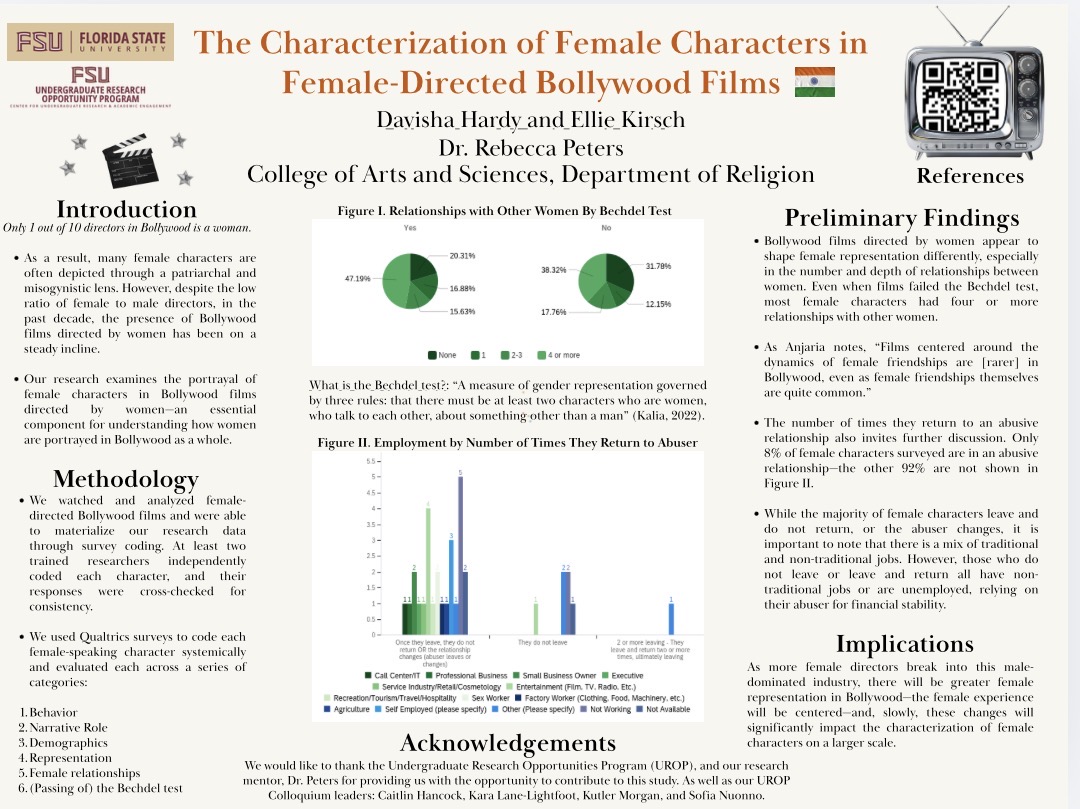
The Characterization of Female Characters in Female-Directed Bollywood Films
Authors: Eleanor Kirsch, Dr. Rebecca PetersStudent Major: Classics-Latin
Mentor: Dr. Rebecca Peters
Mentor's Department: Department of Religion Mentor's College: College of Arts and Sciences Co-Presenters: Davisha Hardy
Abstract
While women make up over half of the global population, they remain significantly outnumbered behind the camera—only 1 out of 10 directors in Bollywood is a woman. As a result, many female characters are often depicted through a patriarchal and misogynistic lens. However, despite the low ratio of female to male directors, in the past decade, the presence of Bollywood films directed by women has been on a steady incline.
Our research examines the portrayal of female characters in Bollywood films directed by women, an essential component to revealing how women are portrayed in Bollywood as a whole. We watched and analyzed female-directed Bollywood films and used survey coding to materialize our research data. We used Qualtrics surveys to code each female-speaking character systemically and evaluated each across a series of categories, including demographics, representation, behavior, female relationships, and role. In addition to this, we assessed if each film passed the Bechdel test, “a measure of gender representation governed by three rules: that there must be at least two characters who are women, who talk to each other, about something other than a man” (Kalia, 2022). At least two trained researchers independently coded each character, and their responses were cross-checked for consistency.
Our preliminary findings suggest that Bollywood films directed by women can influence how female characters are portrayed on the big screen, which can contribute to how women are viewed in Indian society.
Keywords: Women, Bollywood, Characterization
26th annual Undergraduate Research Symposium, April 1, 2026
Annemarie Wilson Poster Session 2: 10:45 am - 11:45 am / Poster #267
BIO
Annemarie Wilson is a sophomore at Florida State University majoring in Biology on the pre-medical track, pursuing a Bachelor of Science degree. Originally from Orlando, Florida, she is interested in research of psychology and health, particularly how psychological factors influence behavior, development, and well-being. After completing her undergraduate degree, Annemarie plans to attend medical school to earn her MD and pursue a career as a physician. Through both research and clinical practice, she hopes to combine scientific inquiry with compassionate care to improve the lives of patients.
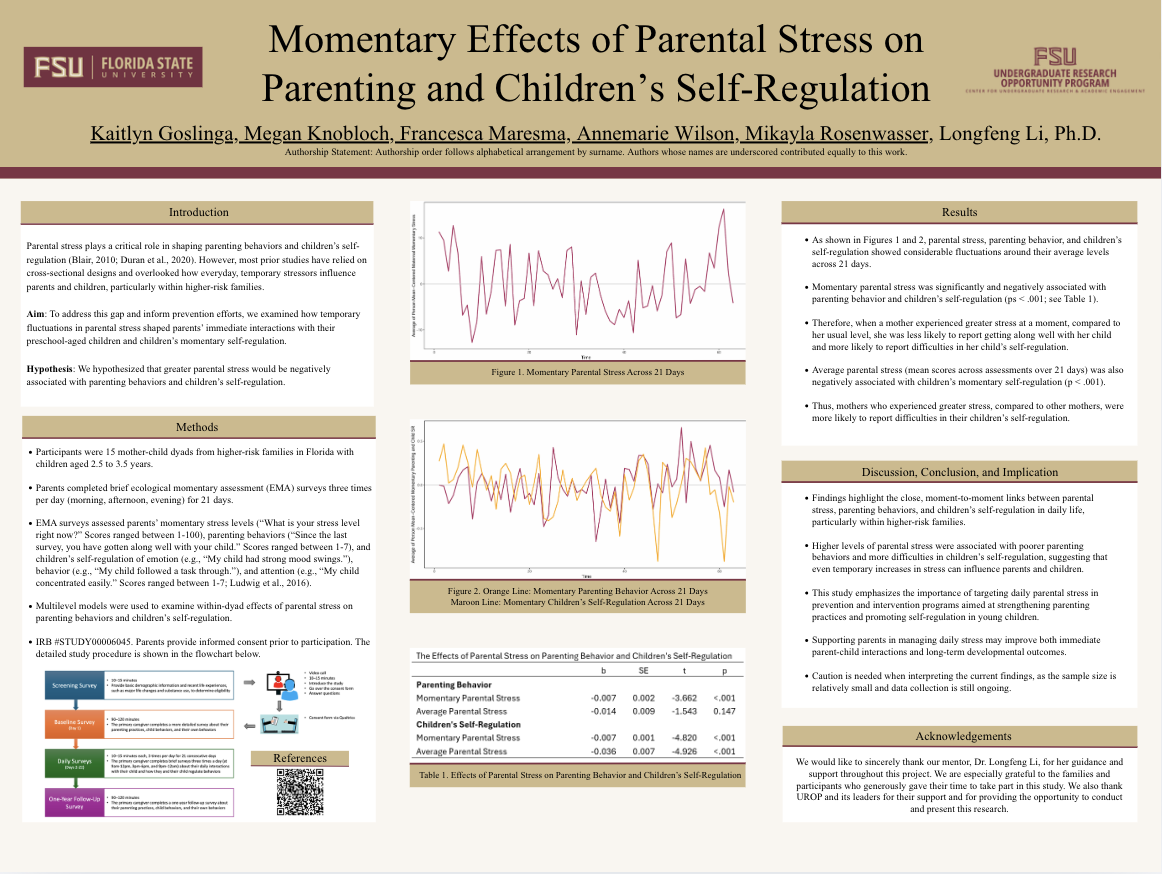
Momentary Effects of Parental Stress on Parenting and Children’s Self-Regulation
Authors: Annemarie Wilson, Dr. Longfeng LiStudent Major: Biology
Mentor: Dr. Longfeng Li
Mentor's Department: Psychology Mentor's College: FSU Anne Spencer Daves College of Education, Health, and Human Sciences Co-Presenters: Kaitlyn Goslinga, Megan Knobloch, Francesca Maresma, and Mikayla Rosenwasser
Abstract
Parental stress plays a critical role in shaping parenting behaviors and children’s self-regulation. However, most prior studies have relied on cross-sectional designs and overlooked how everyday, temporary stressors influence parents and children, particularly within higher-risk families. To address this gap and inform prevention efforts, we examined how temporary fluctuations in parental stress shaped parents’ immediate interactions with their preschool-aged children and children’s momentary self-regulation. This work aims to support the development of targeted, evidence-based interventions to buffer families from the adverse consequences of daily stress. We hypothesized that greater parental stress would be negatively associated with parenting behaviors and children’s self-regulation. Participants were 15 mother-child dyads from higher-risk families in Florida with children aged 2.5 to 3.5 years. Mothers completed an initial survey, followed by brief ecological momentary assessment (EMA) surveys three times daily (morning, afternoon, evening) for 21 days. EMA surveys assessed parental stress, parenting behaviors (i.e., how well they were getting along with their child), and children’s self-regulation of emotion, behavior, and attention. Multilevel models revealed negative within-dyad associations between parental stress and both parenting behaviors and children’s self-regulation (ps < .05). At moments when parents experienced higher-than-usual stress, they were less likely to report getting along well with their child and more likely to report difficulties in their child’s self-regulation. These findings highlight the dynamic, interrelated nature of parental stress, parenting behaviors, and children’s self-regulation in daily life, suggesting that family-system approaches designed to buffer families from everyday stress may be especially beneficial for higher-risk families.
Keywords: Stress in children and self-regulation
26th annual Undergraduate Research Symposium, April 1, 2026
Rylie Fitzgerald Poster Session 2: 10:45 am - 11:45 am / Poster #266
BIO
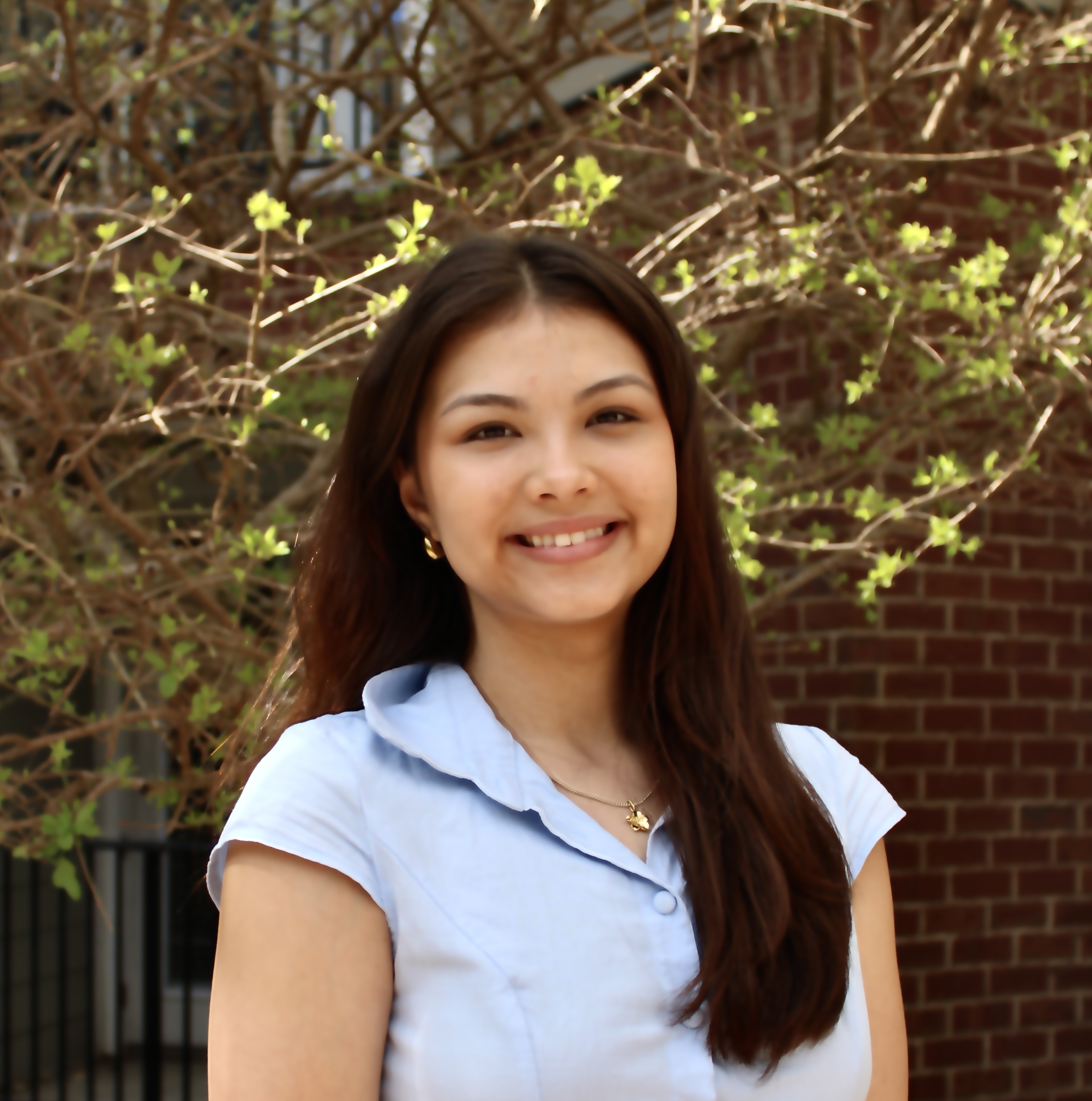
Hello, my name is Rylie Fitzgerald and I am a second year student at Florida State University. I am majoring in both psychology and criminology, and I plan to attend a Master’s program after I graduate to study clinical psychology. Although I do not have any previous research experience, I am very interested in social and developmental psychology research. After I graduate from my Master’s program, I hope to pursue a career in clinical psychology. Although my family currently lives in Orlando, Florida, I have also lived in Hawaii, Arizona, and New Jersey. In my free time, I love to travel, take care of my two dogs, and cook new foods.
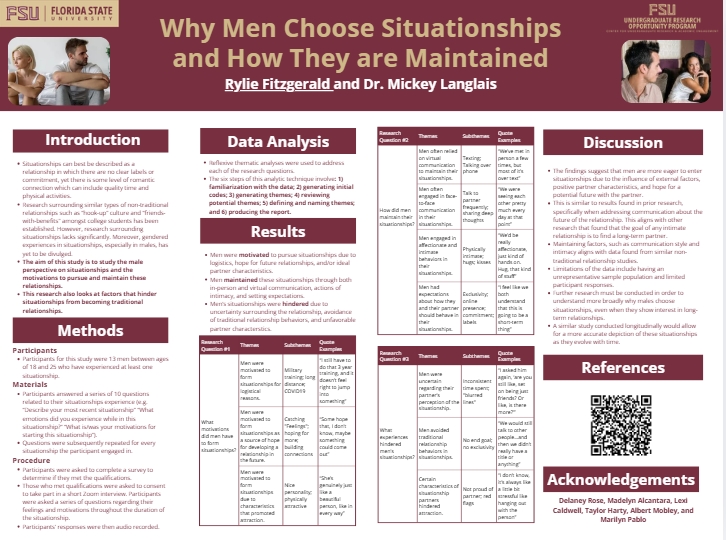
Why Men Choose Situationships and How They are Maintained
Authors: Rylie Fitzgerald, Mickey LanglaisStudent Major: Psychology and Criminology
Mentor: Mickey Langlais
Mentor's Department: Department of Human Sciences and Design Mentor's College: Baylor University Co-Presenters:
Abstract
Romantic relationships are oftentimes exploratory in early adulthood, especially for men. The ultimate goal of this exploration is subsequently to find a lifelong partner. However, some men opt for more non-traditional methods such as friends-with-benefits, hooking up, and situationships. Situationships can best be defined as romantic relationships that lack certain levels of labels or commitment. Early research has suggested that these relationships lack satisfaction, raising questions such as why and how men choose to maintain these non-traditional options. Qualitative data has been collected from 16 young adults (aged 18-25) who have been a part of a situationship. Interviews were conducted via Zoom, and a recording of each participants’ answers were conducted. This data was then organized into thematic elements in order to identify common themes throughout the participant’s answers. So far, the results have revealed common themes in motivation, maintenance, and hindering aspects. Overall, the data suggests men seek out situationships over traditional relationships due to factors such as convenience, lack of clarity, and poor partner qualities. Overall, more work needs to be done to understand the various aspects of situationships across time.
Keywords: Situationships, Men, Relationship Psychology, Psychology
26th annual Undergraduate Research Symposium, April 1, 2026
Valeria Hernandez Poster Session 4: 3:00 pm - 4:00 pm / Poster #240
BIO
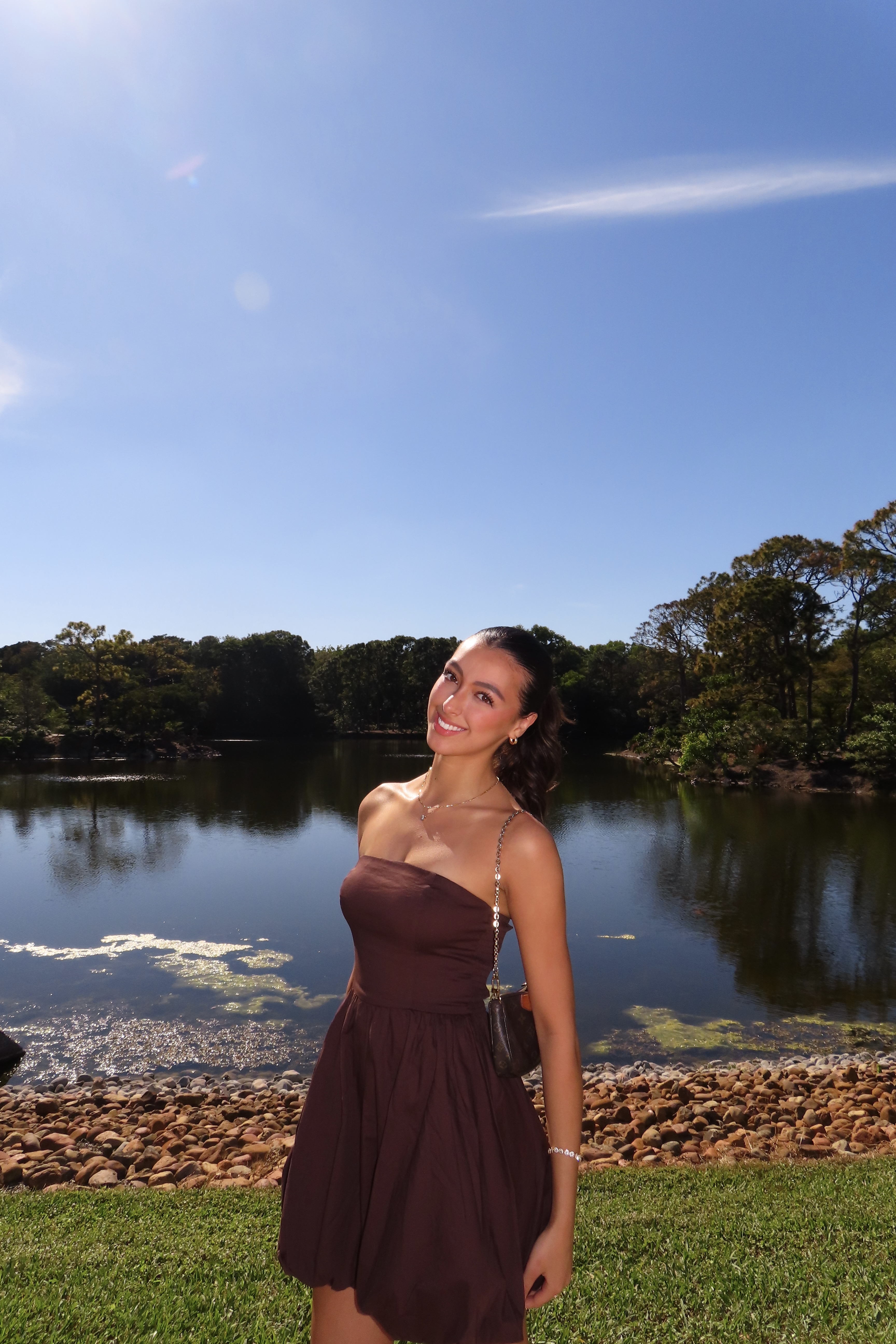
Valeria Hernandez is a sophomore at Florida State University majoring in Clinical Professions while pursuing the pre-dental track. She is involved in the Undergraduate Research Opportunity Program (UROP), where she is gaining research experience and participating in UROP Leader Training to develop mentorship and leadership skills. Valeria is also a member of the Pre-Dental Society and has gained exposure to the dental field by shadowing at a dental office and participating in Global Dental Brigades. She plans to pursue a career in dentistry and is passionate about improving oral health. In her free time, Valeria enjoys playing tennis and working out to stay active and balanced.
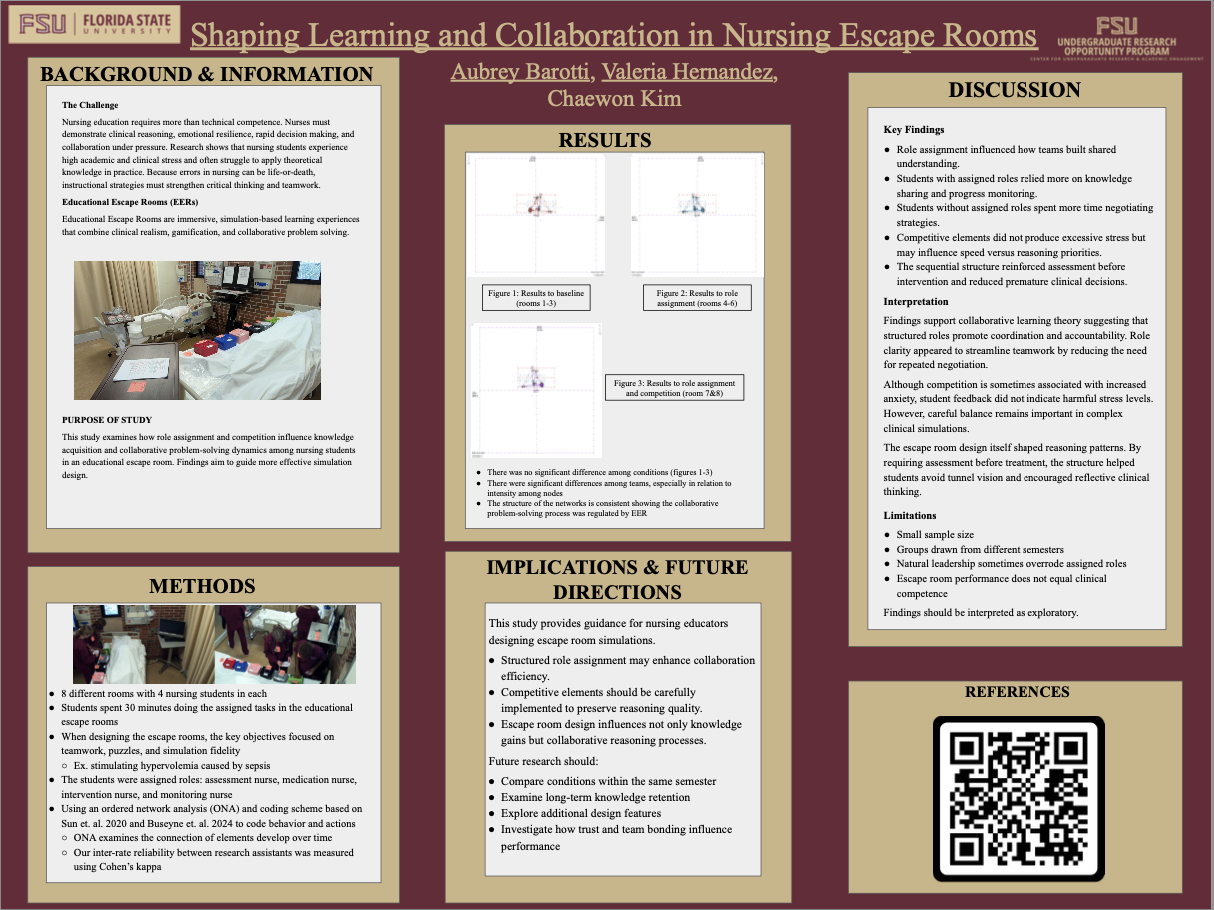
Shaping Learning and Collaboration in Nursing Escape Rooms
Authors: Valeria Hernandez, Chaewon KimStudent Major: Clinical Professions
Mentor: Chaewon Kim
Mentor's Department: Instructional Systems and Learning Technologies (ISLT) Ph.D. Mentor's College: Education Co-Presenters: Aubrey Barotti
Abstract
The goal for any nursing student is to be able to make quick decisions and perform under pressure. However, according to the study, many students fail to apply what they are learning in the classroom to actual patient care. Interactive learning has increased over the years as a tool to help support students’ learning, and specifically, education escape rooms (EER) have been studied to see what skills can be enhanced. An EER is a game-based environment where the aim is to boost collaboration and critical thinking. In the study, a baseline escape room on the recognition and management of hypovolemia was designed. Here, students participated in a group of 4, each taking a pre-test and a post-test. The 30-minute escape room was designed to have a clear sequence, as in the nursing process. The findings revealed significant knowledge gains, as well as patterns that favored a common ground approach where strategies were negotiated. In the absence of a designated role, there was a tendency to loop back to strategy talks before advancing. Overall, the results suggest that EERs with meaningful, defined roles yield beneficial outcomes for collaborative reasoning, and at the same time, it retains the potential for robust cognitive learning in nursing.
Keywords: nursing, education, escape rooms
26th annual Undergraduate Research Symposium, April 1, 2026
Brianna Tejada Texeira Poster Session 3: 1:45 pm - 2:45 pm / Poster #213
BIO
Brianna Tejada Texeira, originally from West Palm Beach, Florida, is a second-year undergraduate student at Florida State University, majoring in voice performance and biology. Her research analyzes the change in pediatric vaccine schedules over time, and how society has adapted to these changes. Through UROP, she has been able to gain skills analyzing documents from different periods of time, collecting data from literature, and learning more about the medical field’s history. In the future, she has aspirations to pursue a career in the medical field, hoping to use the skills she has gained from her time with the Undergraduate Research Opportunity Program at FSU.
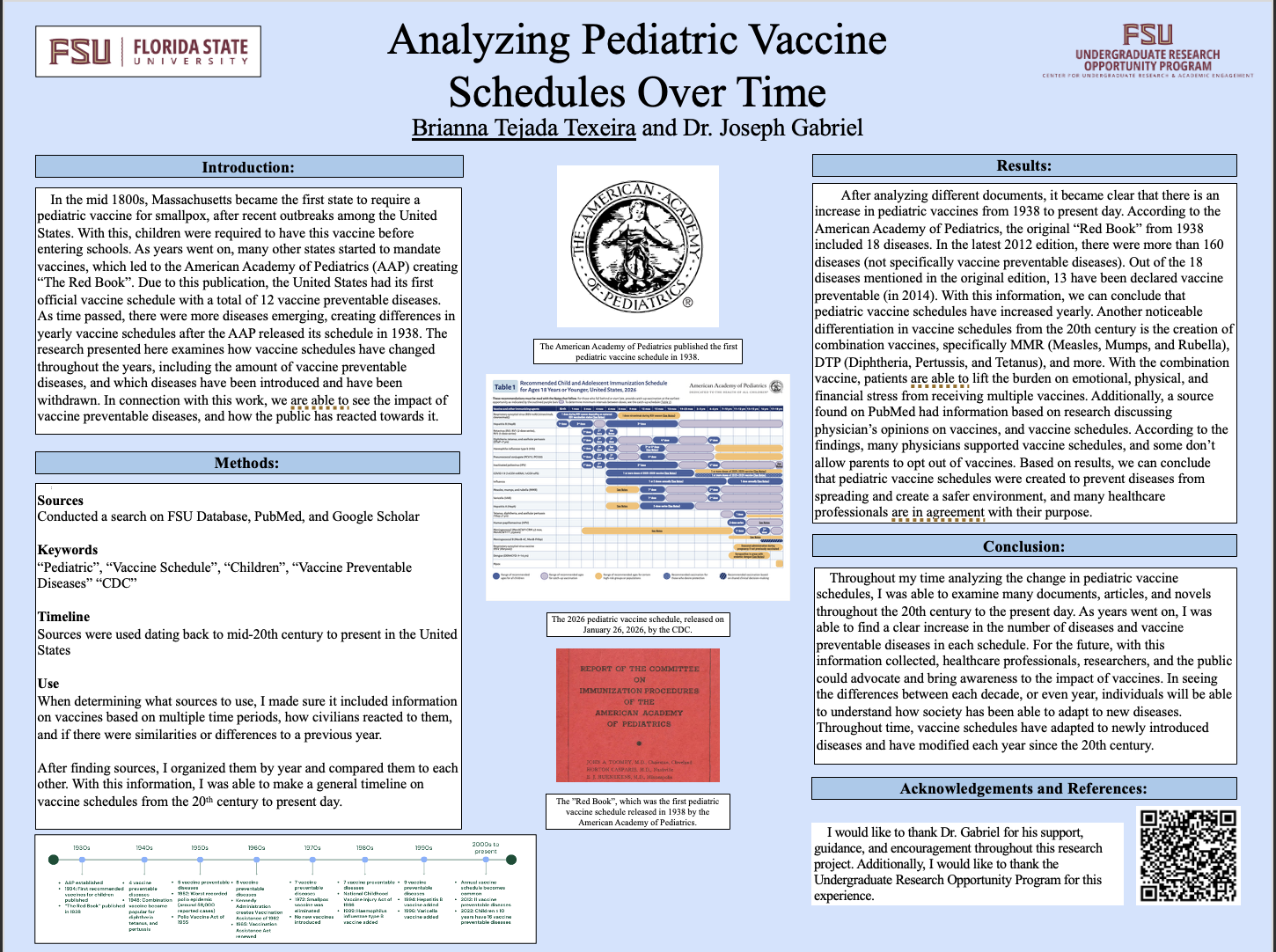
Analyzing Pediatric Vaccine Schedules Over Time
Authors: Brianna Tejada Texeira, Dr. Joseph GabrielStudent Major: Voice Performance and Biology
Mentor: Dr. Joseph Gabriel
Mentor's Department: Department of History Mentor's College: College of Arts and Sciences Co-Presenters:
Abstract
In 1938, the American Academy of Pediatrics created “The Red Book”, which is the first vaccine schedule created. Given this, civilians are given the recommendation, if not mandate to vaccinate their children from certain diseases. Throughout the years, vaccine preventable diseases started to increase, making the vaccine schedule much larger as the years went on. To see the difference from 1938 to present day, it is important to see how vaccine preventable diseases have changed, demonstrating the significance of vaccinating children. To compare and contrast past and present schedules, I was able to use different databases and novels to search for articles discussing pediatric vaccines, and how the public responded to them. After using many databases and reviewing literature, I was able to see that from 1938, there were 4 vaccine preventable diseases (Smallpox, Diphtheria, Pertussis, and Tetanus). However, in the present day, it has increased to more than 30. During this time, there have been combination vaccines, including MMR (Measles, Mumps, and Rubella) and DTP (Diphtheria, Pertussis, and Tetanus), which has minimized the amount of vaccines given. Therefore, we can see a change in reaction from the public because of time, money, and pain from vaccines. Based on results, we can conclude that vaccine preventable diseases started for a reason, saving many civilians from diseases around the world. With this research, we will be able to advocate and bring awareness to the impact of vaccines, positively and negatively.
Keywords: Pediatric, Vaccine, Schedule, Children
26th annual Undergraduate Research Symposium, April 1, 2026
Bethany Kear Poster Session 3: 1:45 pm - 2:45 pm / Poster #33
BIO
Bethany Kear is a senior majoring in Cell and Molecular Neuroscience. This semester, she will be graduating summa cum laude with Honors in the Major and University Honors. Since 2023, she has investigated the link between neurofibromatosis and gut dysfunction as a member of the Brown Lab. She is a recipient of the Bess H. Ward Honors Thesis Award, which has provided funding for her project. Outside of school, Bethany volunteers with Big Bend Hospice and Tallahassee Memorial Hospital. After graduating, she will be applying to medical school.
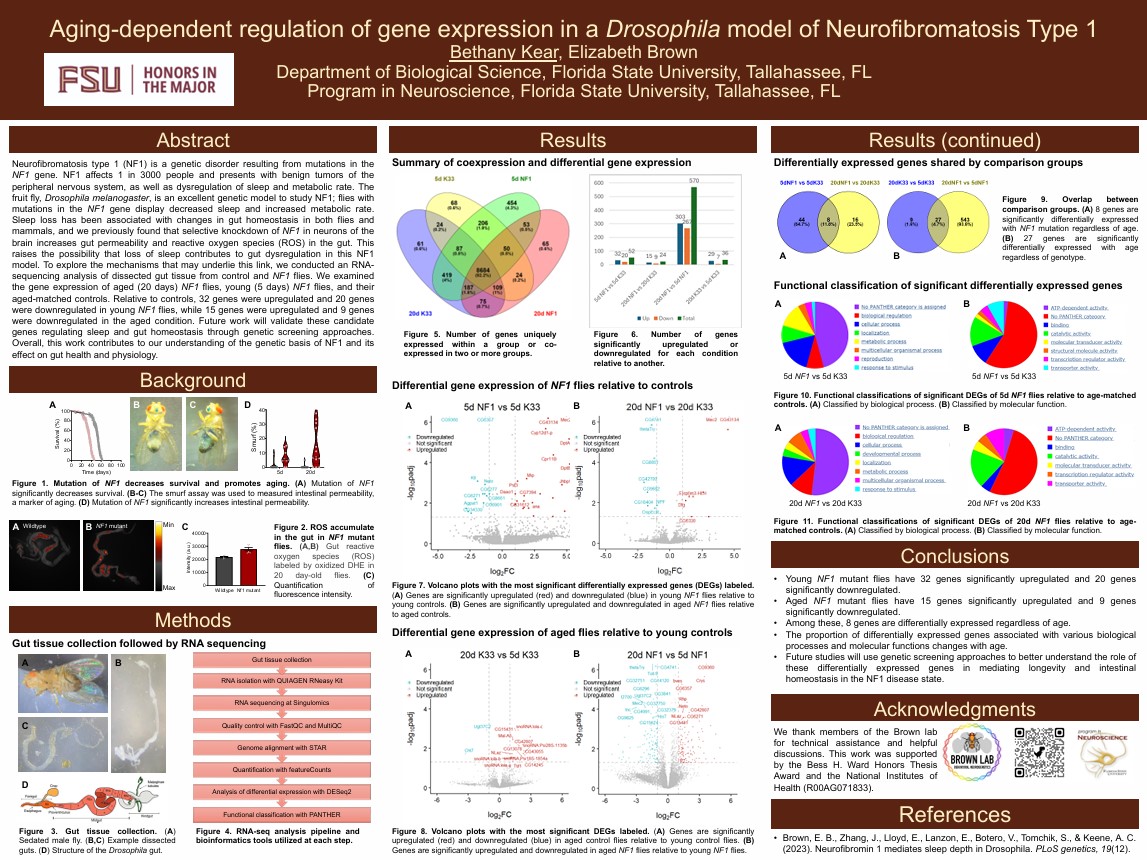
Aging-dependent regulation of gene expression in a Drosophila model of Neurofibromatosis Type 1
Authors: Bethany Kear, Elizabeth BrownStudent Major: Cell and Molecular Neuroscience
Mentor: Elizabeth Brown
Mentor's Department: Department of Biological Science Mentor's College: College of Arts and Sciences Co-Presenters:
Abstract
Neurofibromatosis type 1 (NF1) is a genetic disorder resulting from mutations in the Nf1 gene. NF1 affects 1 in 3000 people and presents with benign tumors of the peripheral nervous system, as well as dysregulation of sleep and metabolic rate. The fruit fly, Drosophila melanogaster, is an excellent genetic model to study NF1; flies with mutations in the Nf1 gene display decreased sleep and increased metabolic rate. Sleep loss has been associated with changes in gut homeostasis in both flies and mammals, and we previously found that selective knockdown of Nf1 in neurons of the brain increases gut permeability and reactive oxygen species (ROS) in the gut. This raises the possibility that loss of sleep contributes to gut dysregulation in this NF1 model. To explore the mechanisms that may underlie this link, we conducted an RNA-sequencing analysis of dissected gut tissue from control and Nf1 flies. We examined the gene expression of aged (20 days) Nf1 flies, young (5 days) Nf1 flies, and their aged-matched controls. Relative to controls, 32 genes were upregulated and 20 genes were downregulated in young Nf1 flies, while 15 genes were upregulated and 9 genes were downregulated in the aged condition. Future work will validate these candidate genes regulating sleep and gut homeostasis through genetic screening approaches. Overall, this work contributes to our understanding of the genetic basis of NF1 and its effect on gut health and physiology.
Keywords: Biology, Drosophila, Aging, Gut Health
26th annual Undergraduate Research Symposium, April 1, 2026
Lucia Lucia Salazar Poster Session 3: 1:45 pm - 2:45 pm / Poster #217
BIO
My name is Lucia Salazar and I'm a first year Philosophy major from Miami, Florida! I'm currently in the Honors college on a pre-law track (hoping to become a medical malpractice lawyer) and am researching about the history of pharmaceutical product liability law in the United States.
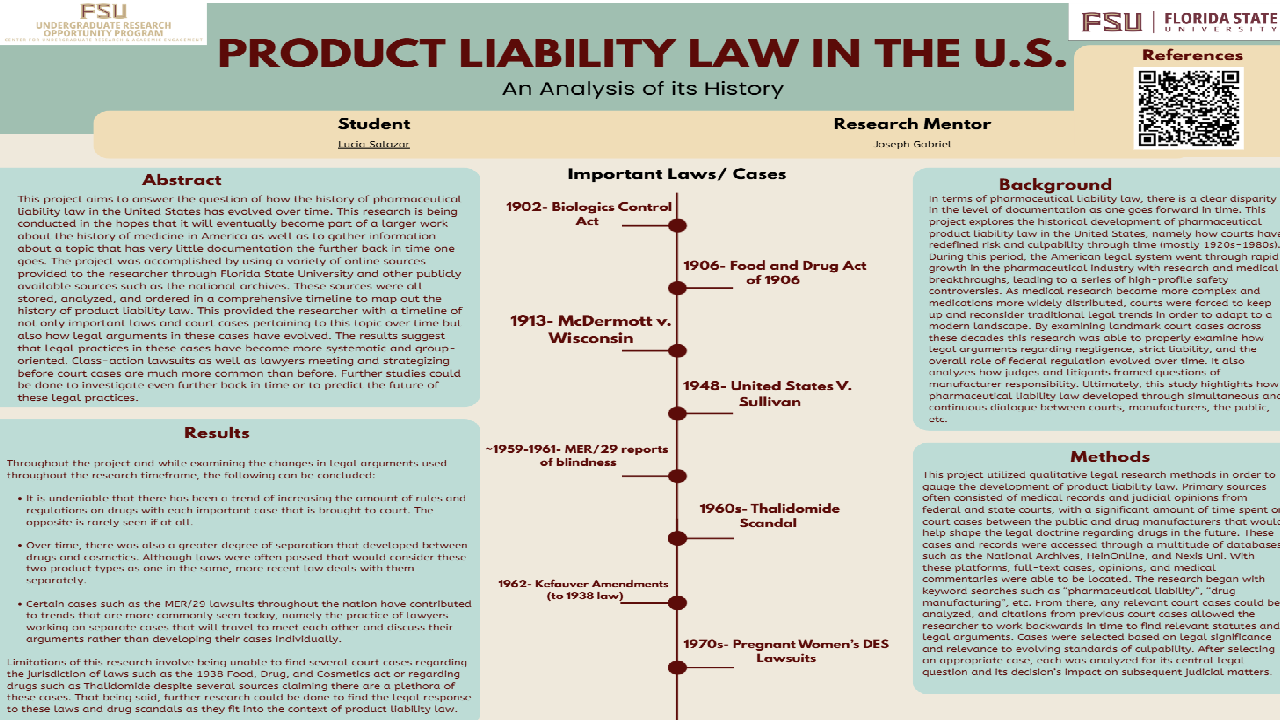
Product Liability Law in the U.S.: An Analysis of its History
Authors: Lucia Lucia Salazar, Joseph GabrielStudent Major: Philosophy
Mentor: Joseph Gabriel
Mentor's Department: History Mentor's College: College of Medicine Co-Presenters:
Abstract
This project aims to answer the question of how the history of pharmaceutical liability law in the United States has evolved over time. This research is being conducted in the hopes that it will eventually become part of a larger work about the history of medicine in America as well as to gather information about a topic that has very little documentation the further back in time one goes. The project was accomplished by using a variety of online sources provided to the researcher through Florida State University and other publicly available sources such as the national archives. These sources were all stored, analyzed, and ordered in a comprehensive timeline to map out the history of product liability law. This provided the researcher with a timeline of not only important laws and court cases pertaining to this topic over time but also how legal arguments in these cases have evolved. The results suggest that legal practices in these cases have become more systematic and group-oriented. Class-action lawsuits as well as lawyers meeting and strategizing before court cases are much more common than before. Further studies could be done to investigate even further back in time or to predict the future of these legal practices.
Keywords: Medicine, Law, Product Liability, Pharmaceutical, History
26th annual Undergraduate Research Symposium, April 1, 2026
Parini Mehta Poster Session 4: 3:00 pm - 4:00 pm / Poster #52
BIO
Parini Mehta is a first-year humanities student at FSU from Tallahassee, FL. Post-graduation, she plans on attending law school to then become a practicing attorney with the personal goal of helping others. Throughout her academic career, she is determined to increase her understanding of people and gain perspective through studying history and philosophy, as well as learning from a diverse range of people. Currently in her academic career, she anticipates her summer research, where she will go to India to study the legal system.
Parini began research in FSU’s Undergraduate Research Opportunity Program, where she joined Alicia Batailles’ research project ‘Understanding the Range of Mentorship within the Undergraduate Research Opportunity Program’ to deepen her understanding of people. She felt as though the project would teach her to be a better leader and further understand professional relationships in a manner that stresses the importance of people's affects on one another. Along with an in-depth understanding of relationships, Parini has gained experience in presentation and increased her skills in teamwork, communication, and coding through her time on the project.
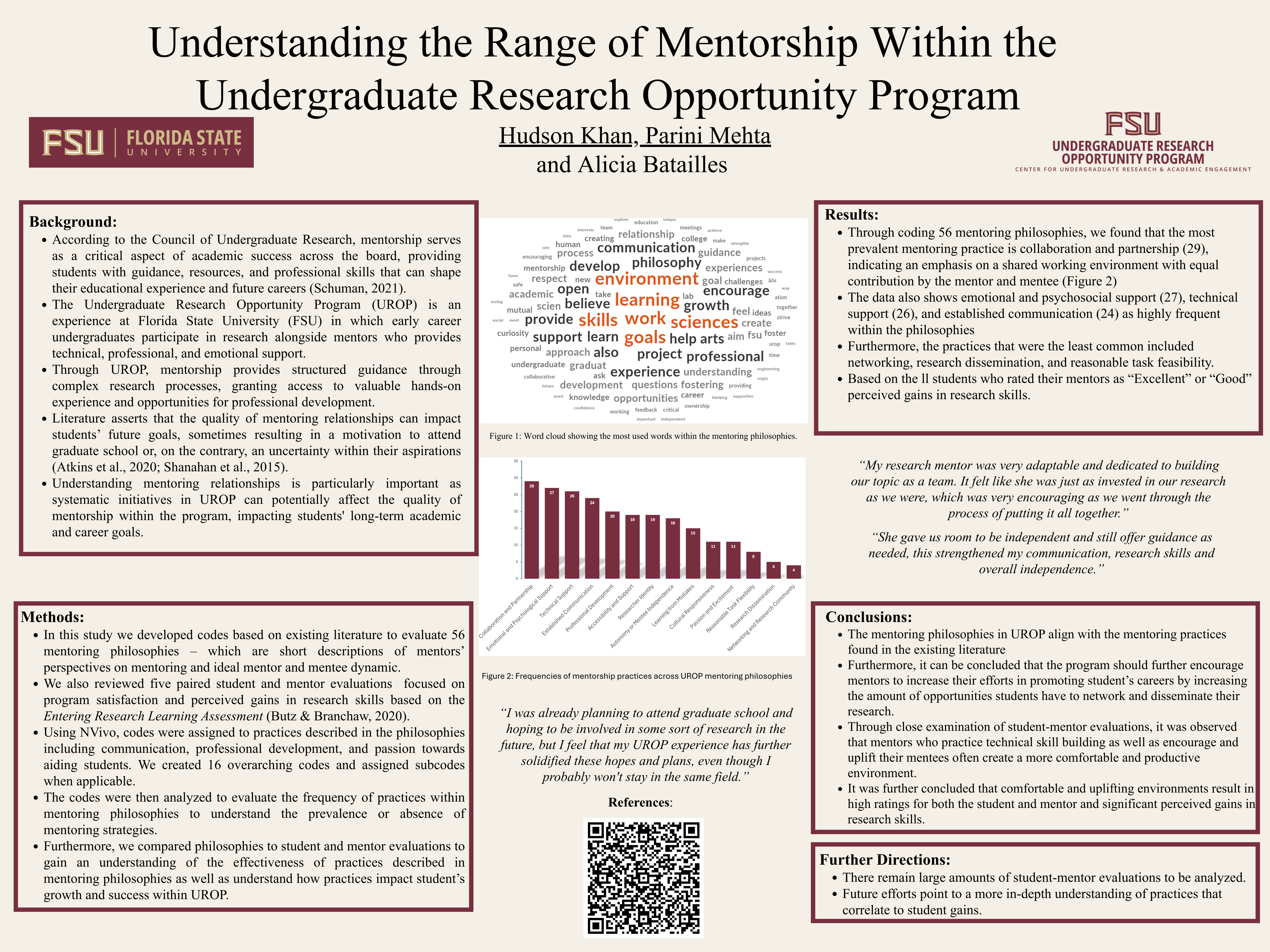
Understanding the Range of Mentorship Within the Undergraduate Research Opportunity Program
Authors: Parini Mehta, Alicia BataillesStudent Major: Humanities
Mentor: Alicia Batailles
Mentor's Department: Division of Undergraduate Studies Mentor's College: Center for Undergraduate Research and Academic Engagement Co-Presenters: Hudson Khan
Abstract
Mentorship is an integral piece of the undergraduate research experience (URE). The quality of mentorship can impact the outcomes of a URE. At Florida State University (FSU), hundreds of undergraduate students enter the Undergraduate Research Opportunity Program (UROP) every year and conduct research by partnering with a mentor. Mentoring is a complex practice that not only impacts students' academics, but drives their careers. However, poor quality mentorship has the capacity to undermine students' performance and motivation. To mitigate this, the Center for Undergraduate Research and Academic Excellence (CRE) hosts mentor training for graduate students to raise awareness about effective strategies to foster positive mentoring relationships. This research examines both sides of mentoring relationships and their impact on students' outcomes, with an aim to understand and improve mentoring relationships throughout FSU. The literature shows that high quality mentorship stresses open communication and flexibility with mentees. On the contrary, absenteeism and unreasonable expectations can be characteristics of poor-quality mentorship. In our research, we used a qualitative approach, using data from UROP mentoring philosophies, and coded them to observe the trends of positive and negative mentoring practices. We also analyzed paired student and mentor evaluations to understand how submitted philosophies are related to student satisfaction and growth in research outcomes. Our analysis includes documenting the frequency of different mentoring strategies and identifying patterns. Our findings will be used to enhance the current research mentor training curriculum and develop workshops for all research mentors.
Keywords: Research, Mentor, Mentorship, Mentee
26th annual Undergraduate Research Symposium, April 1, 2026
Charlie Lu Poster Session 3: 1:45 pm - 2:45 pm / Poster #75
BIO
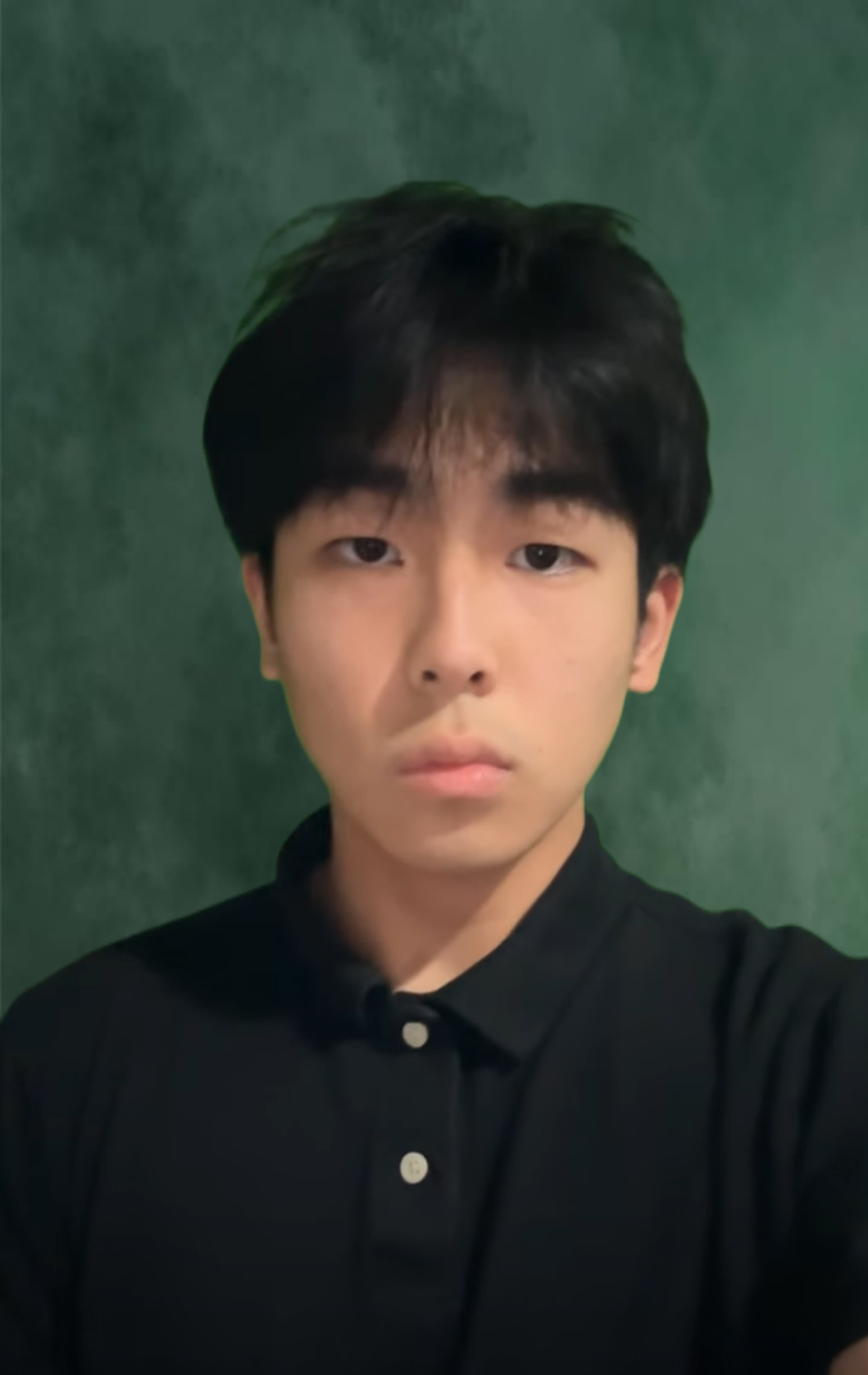
Charlie Lu is a sophomore at Florida State University pursuing a Bachelor of Science in Actuarial Science and a Bachelor of Science in Computer Science. He has been recognized on the President's List for three consecutive semesters, as well as receiving the Florida State University Vires Scholarship, IB Scholarship, and the Evelyn R. & John W. Baugh Memorial Scholarship.
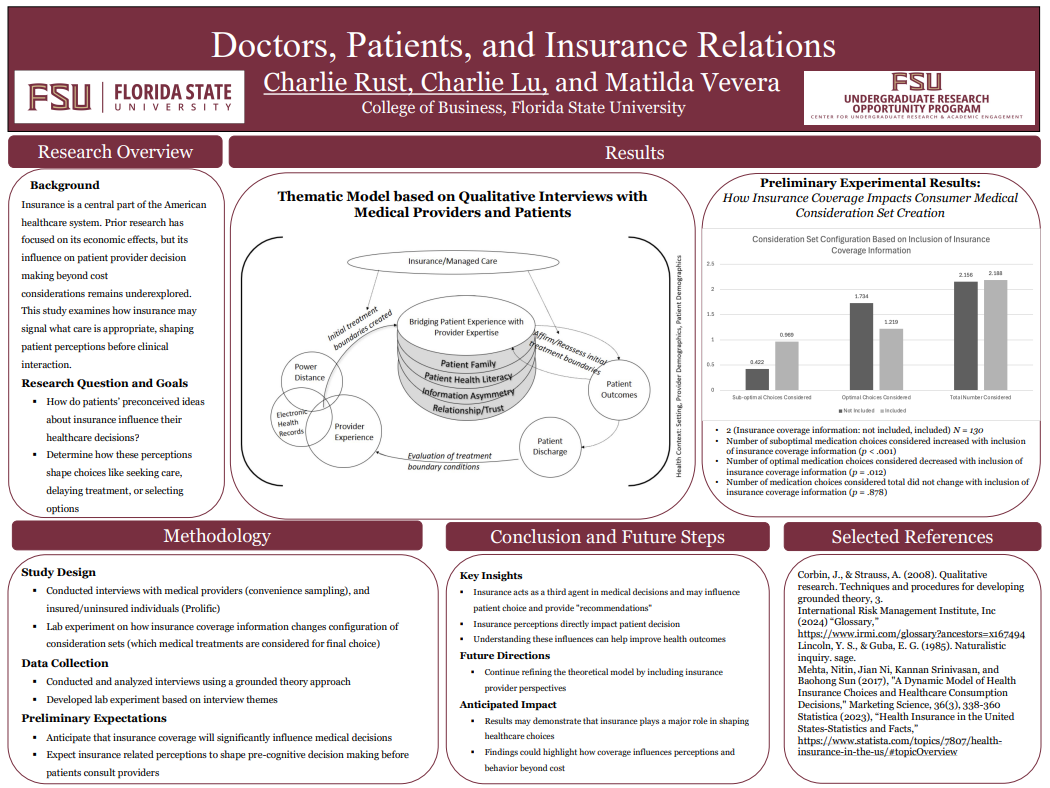
His research explores how patients' preconceived perceptions of insurance coverage influence their healthcare choices, including which treatments they consider and whether they seek or delay care. This work sits at the intersection of behavioral decision-making (marketing), insurance design, and actuarial practice, and reflects his deep commitment to improving health outcomes for patients navigating complex insurance systems.
Beyond the classroom, Charlie holds a passing score on SOA Exam P and is currently preparing to sit for Exam FM, demonstrating his dedication to the actuarial profession. He is an active member of Lambda Phi Epsilon, Gamma Iota Sigma and Future Seminole Actuaries. Looking ahead, Charlie hopes to build a career focused on the Medicare/CAS space, where he can apply his actuarial training to advocate for more equitable and patient-centered coverage policies.
Doctors, Patients, and Insurance Relations
Authors: Charlie Lu, Matilda VeveraStudent Major: Actuarial Science/Computer Science
Mentor: Matilda Vevera
Mentor's Department: Marketing Mentor's College: College of Business Co-Presenters: Charlie Rust
Abstract
This research examines how insurance coverage influences patients’ perceptions and choices during healthcare decision making. While insurance is a central part of the American healthcare system, previous studies have focused mostly on economic effects, leaving its role in shaping patient and provider decisions less understood. Using a multi-method approach, the project began with qualitative coding of interviews to capture perspectives from both patients and doctors. These insights informed the design of a formal lab experiment, which examined how insurance information affects the set of medical treatments considered for final choice. Preliminary results show that access to coverage information leads participants to consider more suboptimal medications and fewer optimal ones, while the total number of options considered stays the same. These findings suggest that insurance perceptions can strongly influence patient decisions beyond cost and highlight the importance of evaluating its role in healthcare choices.
Keywords: Insurance, Healthcare, Patient, Cost, Choice
26th annual Undergraduate Research Symposium, April 1, 2026
Egor Golubev Poster Session 4: 3:00 pm - 4:00 pm / Poster #156

BIO
Egor is currently a 1st year honors student at FSU. He is majoring in psychology and undecided on his minor. However, he is interested in education and child development. He is currently in the UROP program and has been named to the FSU President's List. In the future, Egor plans on pursuing graduate education to become a child therapist.
The Silence of the Interim: Planning the Responses to your Questions
Authors: Egor Golubev, Micheal KaschakStudent Major: Psychology
Mentor: Micheal Kaschak
Mentor's Department: Psychology Mentor's College: College of Arts and Sciences Co-Presenters:
Abstract
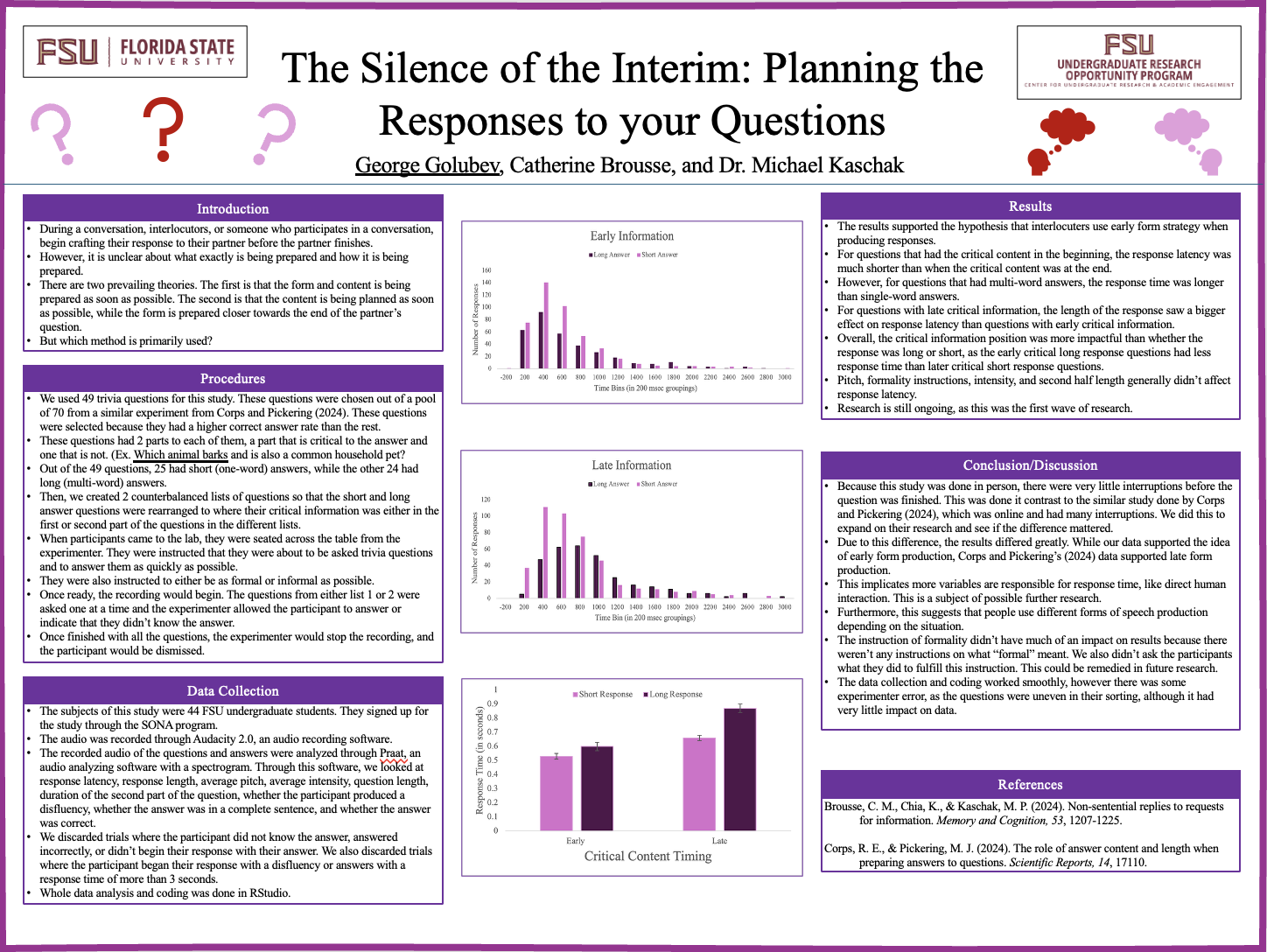
Interlocutors often prepare their next conversational turn while their partner is still speaking. However, it is unclear what is being prepared. The responder could be preparing the form of their response early, where the form and content of a response is planned as early as possible during the question. On the other hand, the speaker can use late form production, where the content is planned during their partner’s question, but the form is planned towards the end of the question, closer to when the response is needed. But which production method is primarily used?
To research this, we conducted a study by using 49 trivia questions and asking them to undergraduate students at FSU. The questions were manipulated to have two parts, one that was critical to the answer and one that was not. The questions also either had a short answer or a long answer. When a participant came in, a lab researcher would ask the questions face to face and record the whole process. With the recorded audio, we measured the response time in audio analyzing software for the different types of questions and recorded the data. The data supports the idea of early form production, as the response time for critical information first questions were much lower than critical information second questions. Furthermore, the answer length showed positive correlation to response time in critical information second questions. These results show that for in-person questions, interlocutors use an early form strategy when producing responses.
Keywords: Language production, response latency, trivia questions
26th annual Undergraduate Research Symposium, April 1, 2026
Isabella Erb Poster Session 2: 10:45 am - 11:45 am / Poster #95
BIO
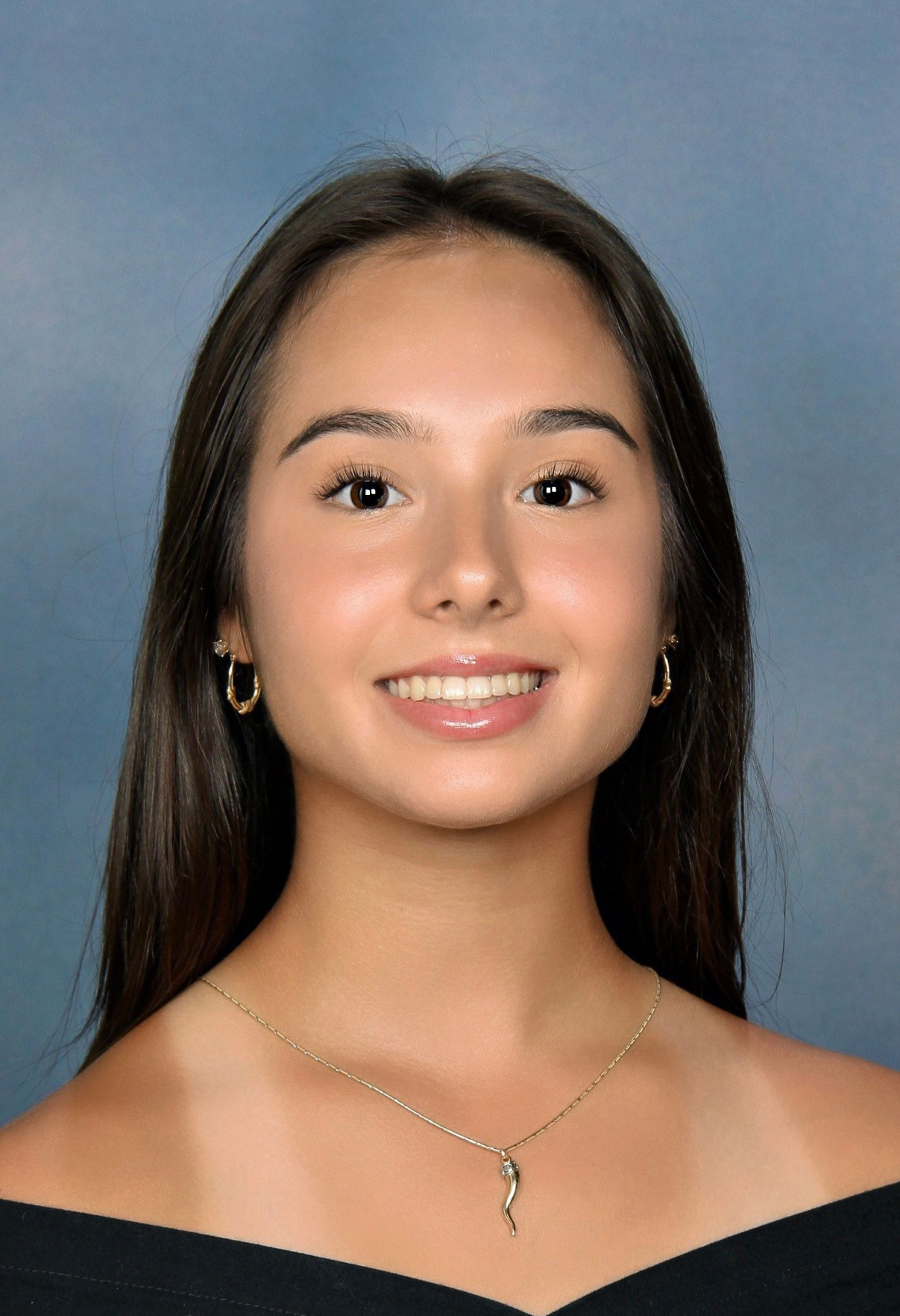
Isabella Erb is a first-year undergraduate student at Florida State University majoring in Biological Sciences on the pre-med track. Originally from Saint Johns, Florida, she is interested in neurobiology and reproductive health and is motivated to broaden her understanding across many areas of medicine. Bella is currently involved in a large-scale meta-analysis examining developmental dyslexia, a neurobiological learning disorder primarily associated with phonological deficits that affect reading and spelling. Her work focuses on analyzing existing research to better understand how different dyslexia-related traits and symptoms correlate with one another, with the goal of contributing to improved identification and earlier intervention for children with dyslexia. Through this project, she has gained experience in literature review, research screening using Covidence, and scientific data analysis as part of a study evaluating thousands of research papers for model-based meta-analysis. Bella hopes to continue expanding her research and clinical knowledge throughout her undergraduate career as she prepares to become a healthcare professional dedicated to evidence-based medicine and compassionate patient care.
Meta-Analysis of Dyslexia Indicators
Authors: Isabella Erb, Dr. Richard WagnerStudent Major: Biological Science
Mentor: Dr. Richard Wagner
Mentor's Department: Department of Pyschology Mentor's College: Florida State University Co-Presenters: Natalia Figueroa, Kendall Knapp, Sophia Bell
Abstract
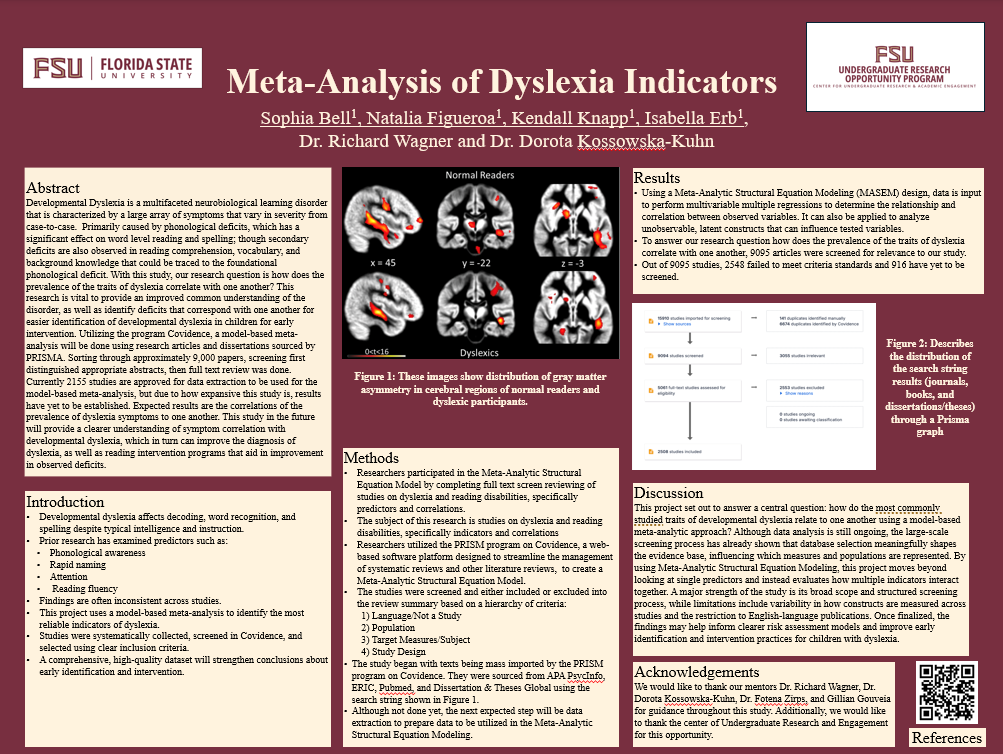
Developmental Dyslexia is a multifaceted neurobiological learning disorder that is characterized by a large array of symptoms that vary in severity from case-to-case. Primarily caused by phonological deficits, which has a significant effect on word level reading and spelling; though secondary deficits are also observed in reading comprehension, vocabulary, and background knowledge that could be traced to the foundational phonological deficit. With this study, our research question is how does the prevalence of the traits of dyslexia correlate with one another? This research is vital to provide an improved common understanding of the disorder, as well as identify deficits that correspond with one another for easier identification of developmental dyslexia in children for early intervention. Utilizing the program Covidence, a model-based meta-analysis will be done using research articles and dissertations sourced by PRISMA. Sorting through approximately 9,000 papers, screening first distinguished appropriate abstracts, then full text review was done. Currently 2155 studies are approved for data extraction to be used for the model-based meta-analysis, but due to how expansive this study is, results have yet to be established. Expected results are the correlations of the prevalence of dyslexia symptoms to one another. This study in the future will provide a clearer understanding of symptom correlation with developmental dyslexia, which in turn can improve the diagnosis of dyslexia, as well as reading intervention programs that aid in improvement in observed deficits.
Keywords: Dyslexia, Learning Disorders, Meta-Analysis, Psychology
26th annual Undergraduate Research Symposium, April 1, 2026
Sarah Awwad Poster Session 2: 10:45 am - 11:45 am / Poster #306
BIO
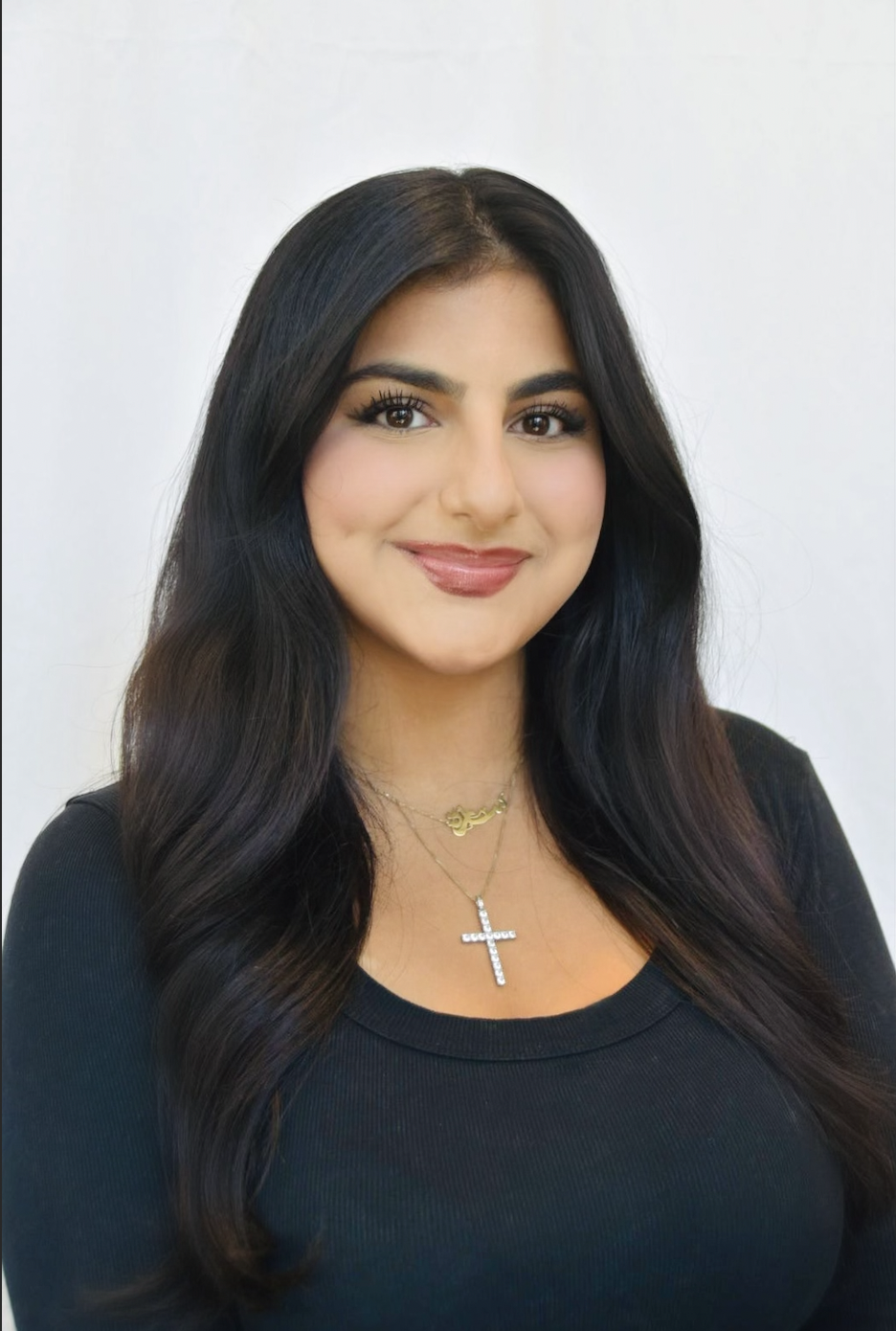
Sarah Awwad is a third-year student at Florida State University, majoring in Psychology and minoring in Biological Science and Child Development. Her academic interests center on mental health research, particularly suicide prevention and the ways language and social environments influence help-seeking behaviors. Sarah is actively involved in research as a Research Assistant in the Joiner Lab, where she contributes to projects examining suicide risk and prevention. In addition to her research involvement, she is engaged in campus mental health initiatives and serves as a Peer Educator with RENEW to promote emotional wellness and support among students. After graduation, she plans to pursue graduate studies in Clinical Psychology and continue conducting research in the field of Psychology.
Exploring Psychological Safety and Salient Experience in Suicide-Related Virtual Reality: A Qualitative Analysis
Authors: Sarah Awwad, Sara ProstkoStudent Major: Psychology
Mentor: Sara Prostko
Mentor's Department: Psychology Mentor's College: College of Arts and Sciences Co-Presenters:
Abstract
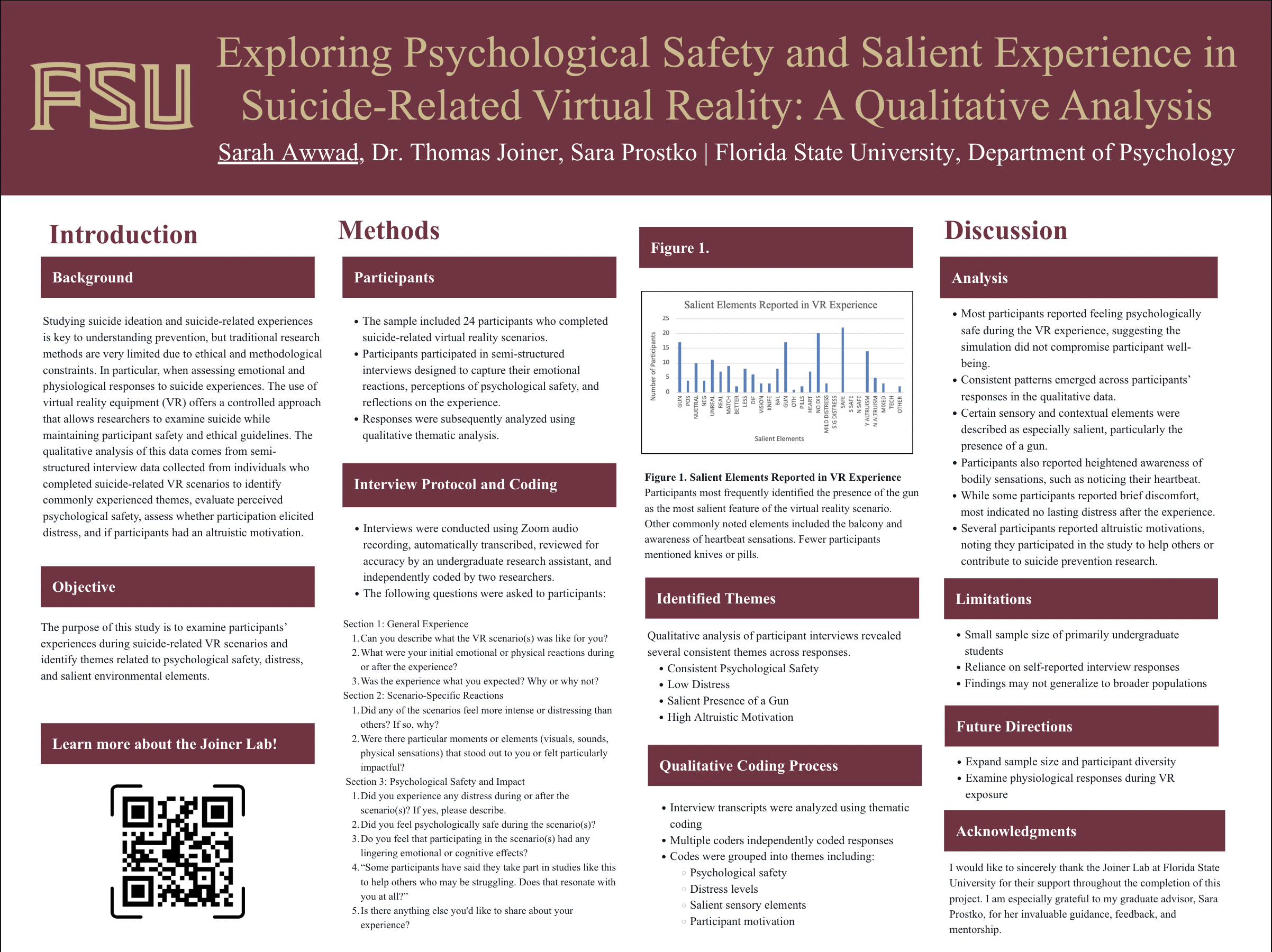
Understanding decision-making behind suicidal behaviors is key to improving prevention. However, traditional research methods are very limited due to ethical and methodological constraints. The use of virtual reality equipment (VR) offers a controlled approach that allows researchers to examine suicide while maintaining participant safety and ethical guidelines. The current study is from a semi-structured interview portion of a larger suicide-related VR study. The qualitative interview administered to all participants aims to identify commonly experienced themes, evaluate perceived psychological safety, assess whether participation elicited distress, and if participants had an altruistic motivation.
A thematic analysis of the data indicated various consistent patterns across the data. One pattern showcased is that most participants reported feeling psychologically safe throughout the VR experience, suggesting that the VR is a safe and ethical approach to examining suicidal behaviors and decision-making. Similarly, patterns highlighted that specific sensory and contextual elements were described as especially salient. Particularly, the presence of a gun and of bodily sensations such as heartbeat in the VR scenarios. These features show an increase in realism and emotional engagement. Although some participants described brief discomfort, most reported no lasting distress. Additionally, several participants noted that they had altruistic intentions when completing the study.
Overall, the findings of this data suggest that Virtual Reality may be used as a feasible and ethically acceptable method for studying suicide-related behaviors, and identifying which specific elements most strongly shape participant responses can inform future study design to improve both safety and validity of study results.
Keywords: Qualitative Interview, Suicide, Suicide Prevention
26th annual Undergraduate Research Symposium, April 1, 2026
Gargi Deshmukh Poster Session 1: 9:30 am - 10:30 am / Poster #217
BIO
Gargi is a second-year student at Florida State University pursuing a Bachelor of Science in Computer Science with a collateral minor in Mathematics. She hopes to pursue a Master's degree in Computer Science and continue exploring the intersection of artificial intelligence and engineering. Outside of academics, Gargi enjoys playing cricket and badminton and spending time with her family.
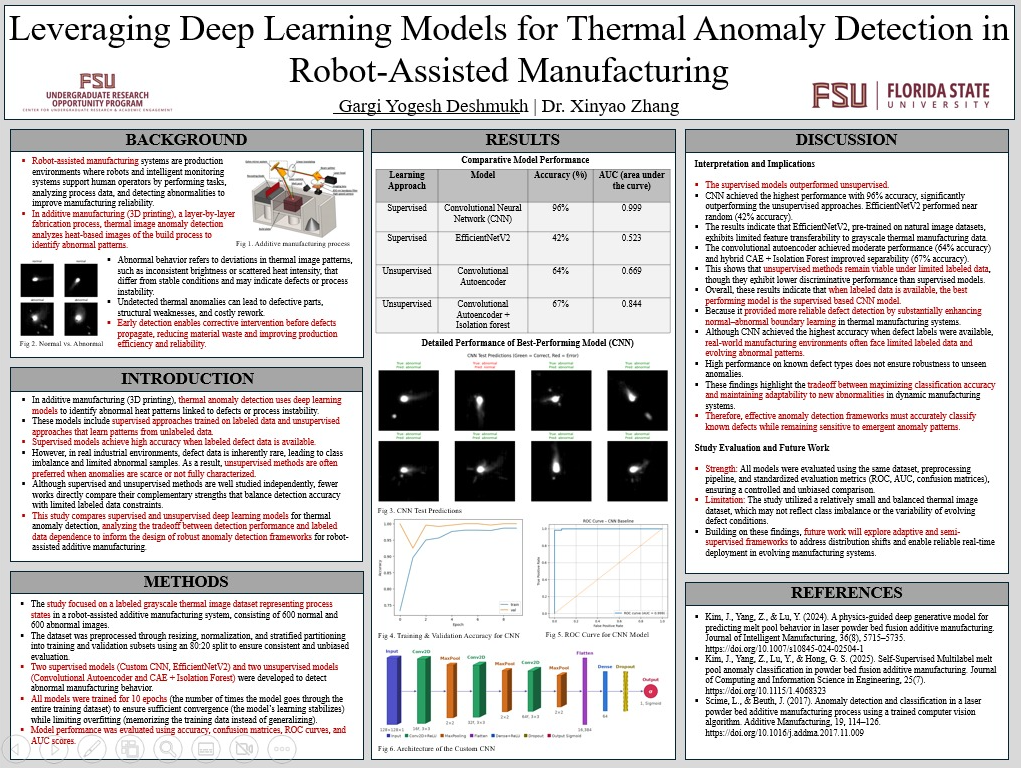
Leveraging Deep Learning Models for Thermal Anomaly Detection in Robot-Assisted Manufacturing
Authors: Gargi Deshmukh, Dr. Xinyao ZhangStudent Major: Computer Science
Mentor: Dr. Xinyao Zhang
Mentor's Department: Industrial & Manufacturing Engineering Mentor's College: FAMU-FSU College of Engineering Co-Presenters:
Abstract
Detecting abnormal behavior is critical for robot-assisted manufacturing systems, yet practical deployment is challenged by limited availability of labeled defect data and evolving failure modes. This project investigates how supervised and unsupervised deep learning approaches compare in detecting abnormal manufacturing behavior from a thermal image dataset of an additive manufacturing process. Model performance was evaluated using standard classification metrics, including accuracy and AUC. Supervised models, including a custom Convolutional Neural Network (CNN) and EfficientNetV2, outperformed unsupervised methods when labeled defect data was available. The custom CNN achieved the strongest performance (97% accuracy) compared to EfficientNetV2 (42% accuracy). Unsupervised models included a Convolutional Autoencoder (CAE) and a hybrid CAE + Isolation Forest model, where both the models achieved moderate detection performance (64% and 67% accuracy respectively). This comparative analysis highlights the tradeoff between detection accuracy and labeled data dependence and aims to inform the design of robust anomaly detection frameworks for robot-assisted additive manufacturing.
Keywords: Anomaly Detection, Additive Manufacturing, Deep Learning, Robot-Assisted Manufacturing