
Research Symposium
26th annual Undergraduate Research Symposium, April 1, 2026
Aura Marks-Shafton Poster Session 3: 1:45 pm - 2:45 pm / Poster #59
BIO
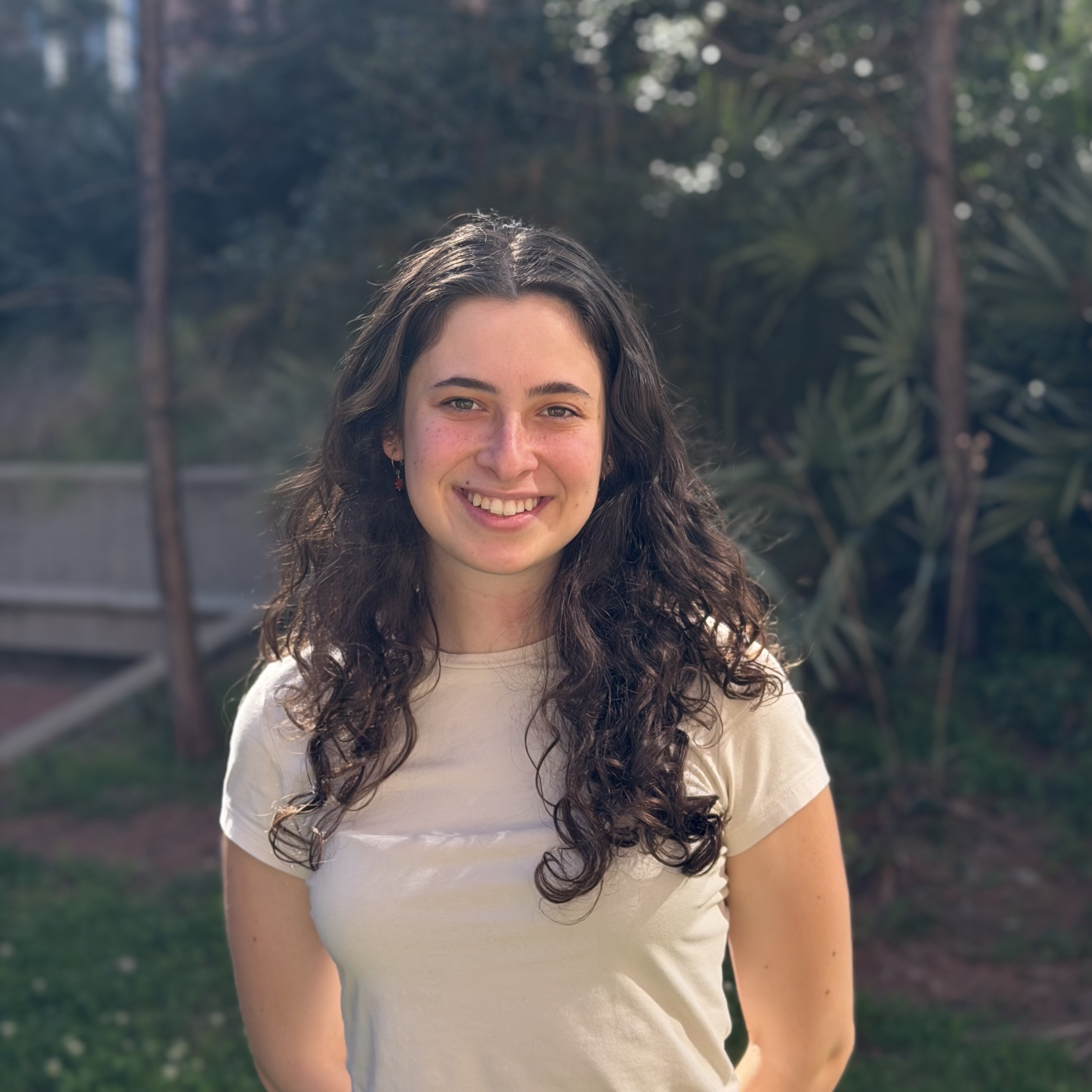
Aura Marks-Shafton is a student in the Honors College pursuing a Bachelor of Science in Behavioral Neuroscience with a minor in Chemistry. Her academic interests focus on the biological and neural mechanisms underlying behavior.
Aura conducts research in the Riddle Lab under the mentorship of Dr. Justin Riddle, where she studies neural activity and brain stimulation in clinical populations. Her work involves the use of electroencephalography (EEG), magnetic resonance imaging (MRI), and transcranial alternating current stimulation (tACS) to investigate neural processes related to mental health and behavior.
Through her coursework and research, Aura has developed a strong interest in the relationship between brain function and nutrition. She hopes to further explore the intersection of neuroscience and nutritional science, with the long-term goal of contributing to research that examines how diet and metabolic factors influence cognitive function and mental health.
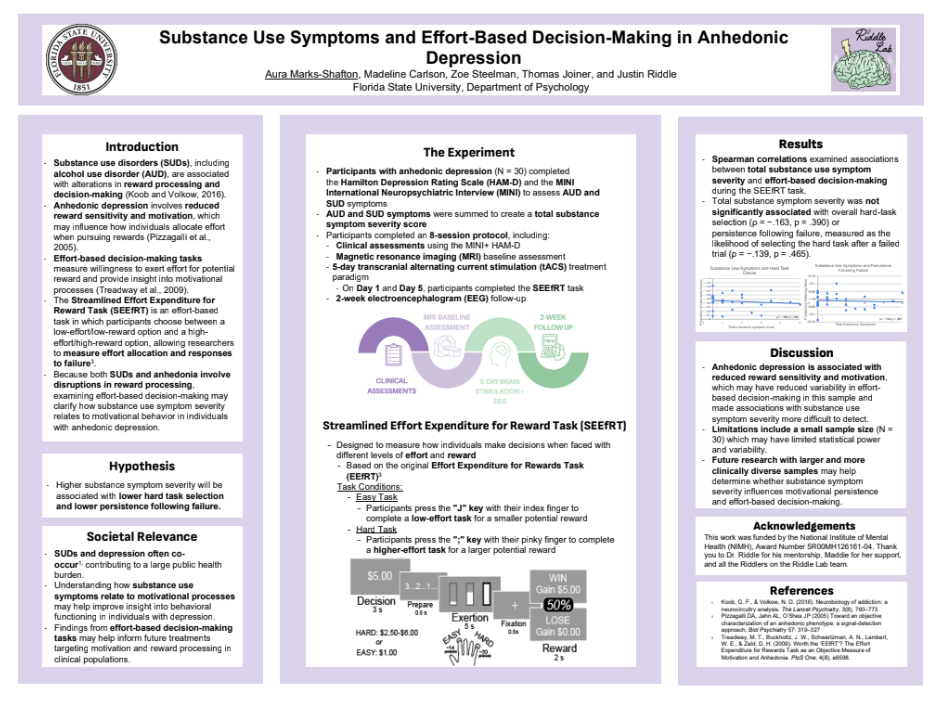
Substance Use Symptoms and Effort-Based Decision-Making in Anhedonic Depression
Authors: Aura Marks-Shafton, Justin RiddleStudent Major: Behavioral Neuroscience
Mentor: Justin Riddle
Mentor's Department: Psychology Mentor's College: Arts and Sciences Co-Presenters:
Abstract
Both alcohol use disorder (AUD) and substance use disorder (SUD) have been linked to alterations in reward processing and value-based decision-making. However, less research has examined how substance use symptoms relate to motivation in individuals experiencing anhedonia, a condition characterized by reduced sensitivity to reward. The present study examined whether substance use symptom severity was associated with effort-based decision-making and behavioral responses to negative feedback in adults with anhedonic depression (N = 30). Participants completed the MINI International Neuropsychiatric Interview to assess alcohol and other substance use symptoms, which were combined into a total substance symptom severity score. They then completed the Streamlined Effort Expenditure for Reward Task (SEEfRT), a measure of effort-based value decision-making. The SEEfRT assesses willingness to select a high-effort (“hard”) task over a low-effort (“easy”) task for potential reward, as well as the likelihood of selecting the hard task following failure, indexing persistence after negative feedback. Spearman correlations were conducted to evaluate associations between substance symptom severity and task performance. Substance symptom severity was not significantly correlated with overall hard-task selection (ρ = −.163, p = .390) or likelihood of selecting the hard task after failure (ρ = −.139, p = .465). These findings suggest that, within an anhedonic sample, substance-related symptom severity was not associated with effort expenditure or persistence following negative feedback. Future research with larger samples and greater variability in substance use severity may clarify whether substance-related symptoms influence motivational persistence in anhedonic depression.
Keywords: Anhedonia, Substance use disorder (SUD), Alcohol use disorder (AUD), Reward sensitivity, Effort expenditure, Persistence
26th annual Undergraduate Research Symposium, April 1, 2026
John McAlvin Poster Session 2: 10:45 am - 11:45 am / Poster #6
BIO
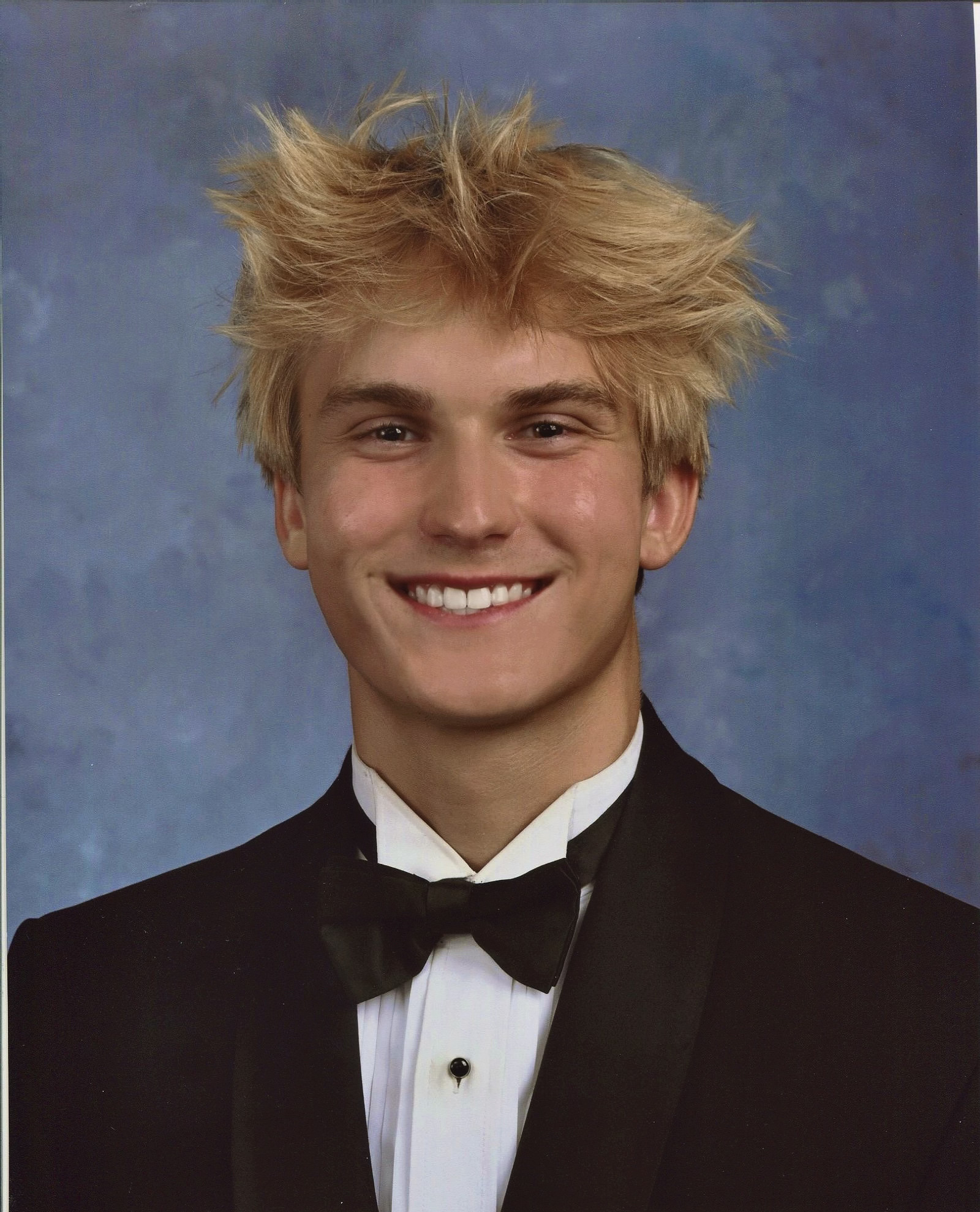
John McAlvin is a first-year student at Florida State University pursuing a Bachelor of Science in Biochemistry with a minor in Biology. His work under Dr. Lenhert in the department of Biological Sciences involved initial investigation into enzymology, executing experimental methodologies under guidance of senior mentors, visualizing and analyzing data, and drafting research summaries of laboratory findings. Through this experience, he developed foundational skills in biochemical research, data analysis, and scientific communication. Outside of the laboratory, John is passionate about interdisciplinary science and hopes to continue pursuing research opportunities in the sciences and eventually a career in healthcare.
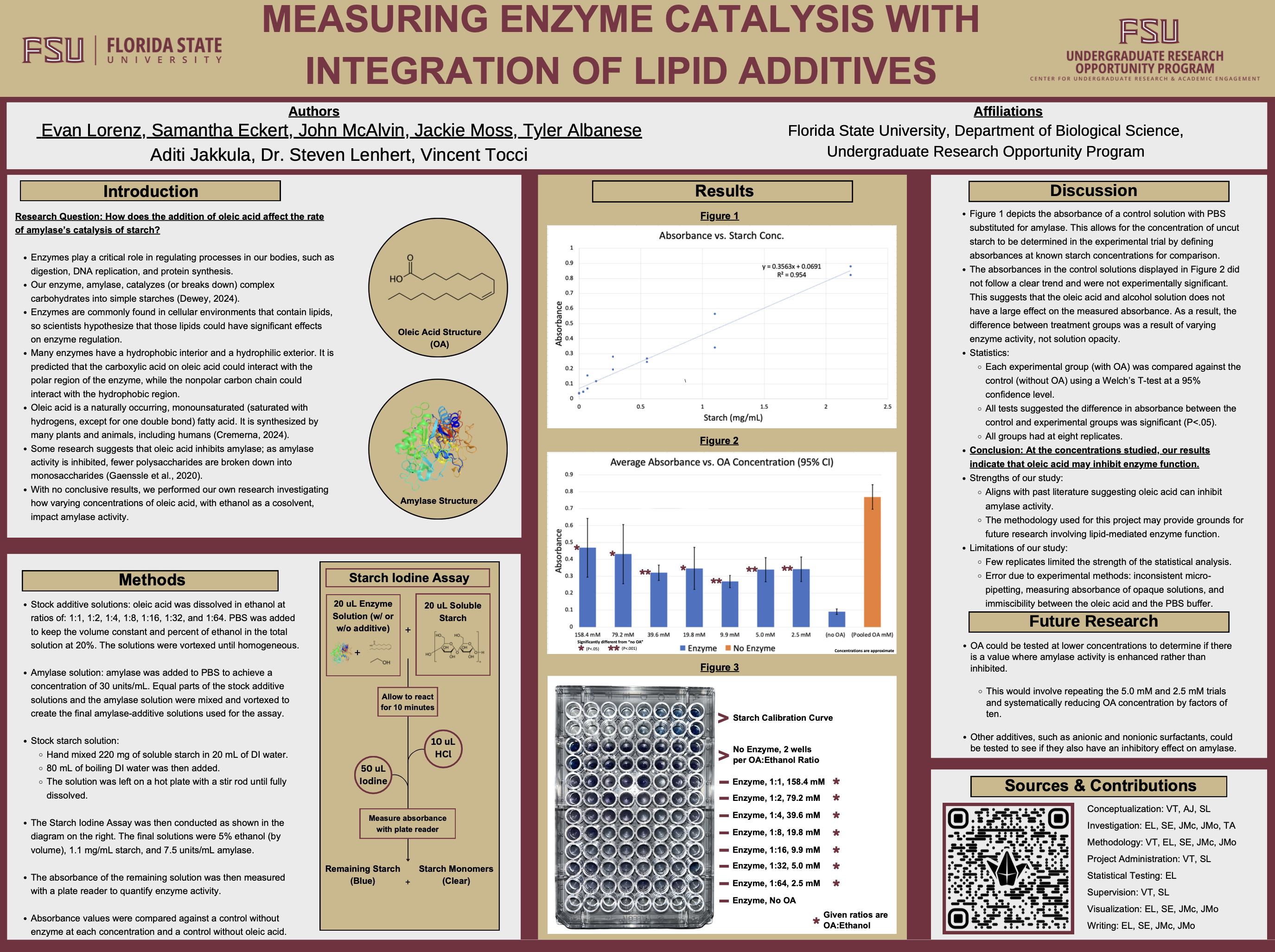
Measuring enzyme catalysis with integration of lipid additives
Authors: John McAlvin, Steven LenhertStudent Major: Biochemistry
Mentor: Steven Lenhert
Mentor's Department: Biological Sciences Mentor's College: College of Arts and Sciences Co-Presenters: Evan Lorenz, Samantha Eckert, Jackie Moss, Tyler Albanese
Abstract
Lipids have been typically associated with the inhibition of enzyme function, but recent findings point towards their potential in increased catalysis rates. Enzymes are protein catalysts that speed up chemical reactions and play a critical role in regulating processes in our bodies, such as digestion. It is important to better understand enzyme activity, specifically how different conditions and chemicals affect them. Our research question aims to analyze the effect that oleic acid, a lipid, has on enzyme activity, specifically the activity of amylase. A preliminary literature review was conducted to determine ideal conditions and methods of amylase reactivity. Enzyme function was then tested by comparing various concentrations of oleic acid to the control group without an additive. Ethanol was used as a cosolvent with the oleic acid. Light absorbance of the sample was then measured with a plate reader to obtain quantitative data. When enzyme was added, there was an observed trend that as the ratio of oleic acid decreased, enzyme activity increased. Specifically between the 1:64 ratio of oleic acid:alcohol, there is a large difference between the absorbance values. Our research was limited by a small sample size and experimental error, such as inconsistent micro-pipetting, measuring opaque solutions in the plate reader, and immiscibility of solutions. Further research would include more trials with smaller concentrations of oleic acid which would work to minimize some of these concerns. This may introduce an unexpected increase in amylase activity, instead of the respective decrease exhibited in this research.
Keywords: Enzyme, Biology, Biochemistry, Lipid
26th annual Undergraduate Research Symposium, April 1, 2026
Ethan Messier Poster Session 3: 1:45 pm - 2:45 pm / Poster #84
BIO
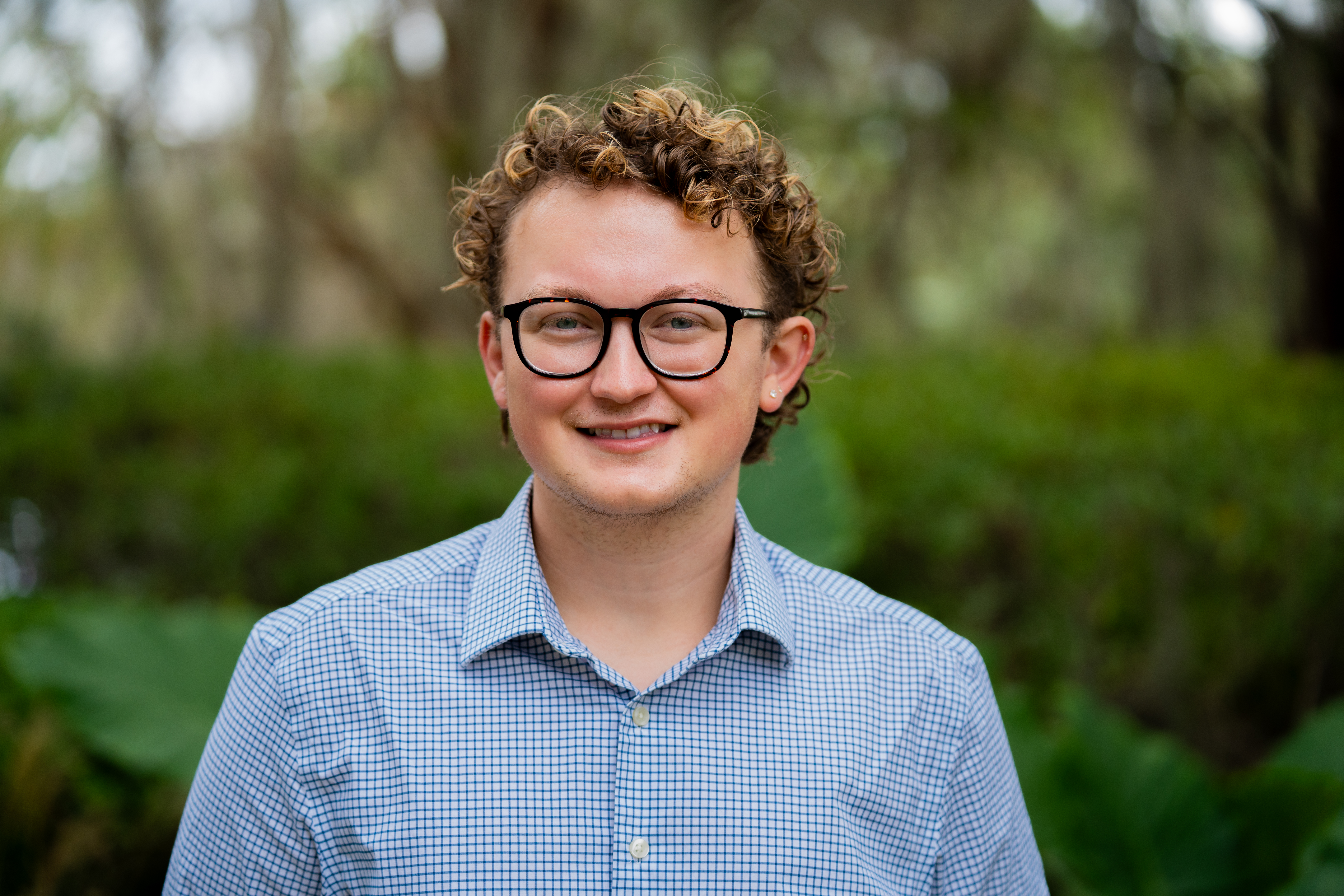
Ethan Messier is a junior from Sarasota, FL majoring in Chemistry on the pre-medical track. He is an Honors student and a Benacquisto Scholar, and hopes to attend medical school. His research interests lie in pediatrics, primary care accessibility, bilingual medical care, neurology and neuroscience, and health disparities. He is a research volunteer under Dr. Bonnie Spring and Dr. Keri Gladhill at the FSU College of Medicine, where he works on the SMARTer Study: an intervention designed to promote healthy weight loss.
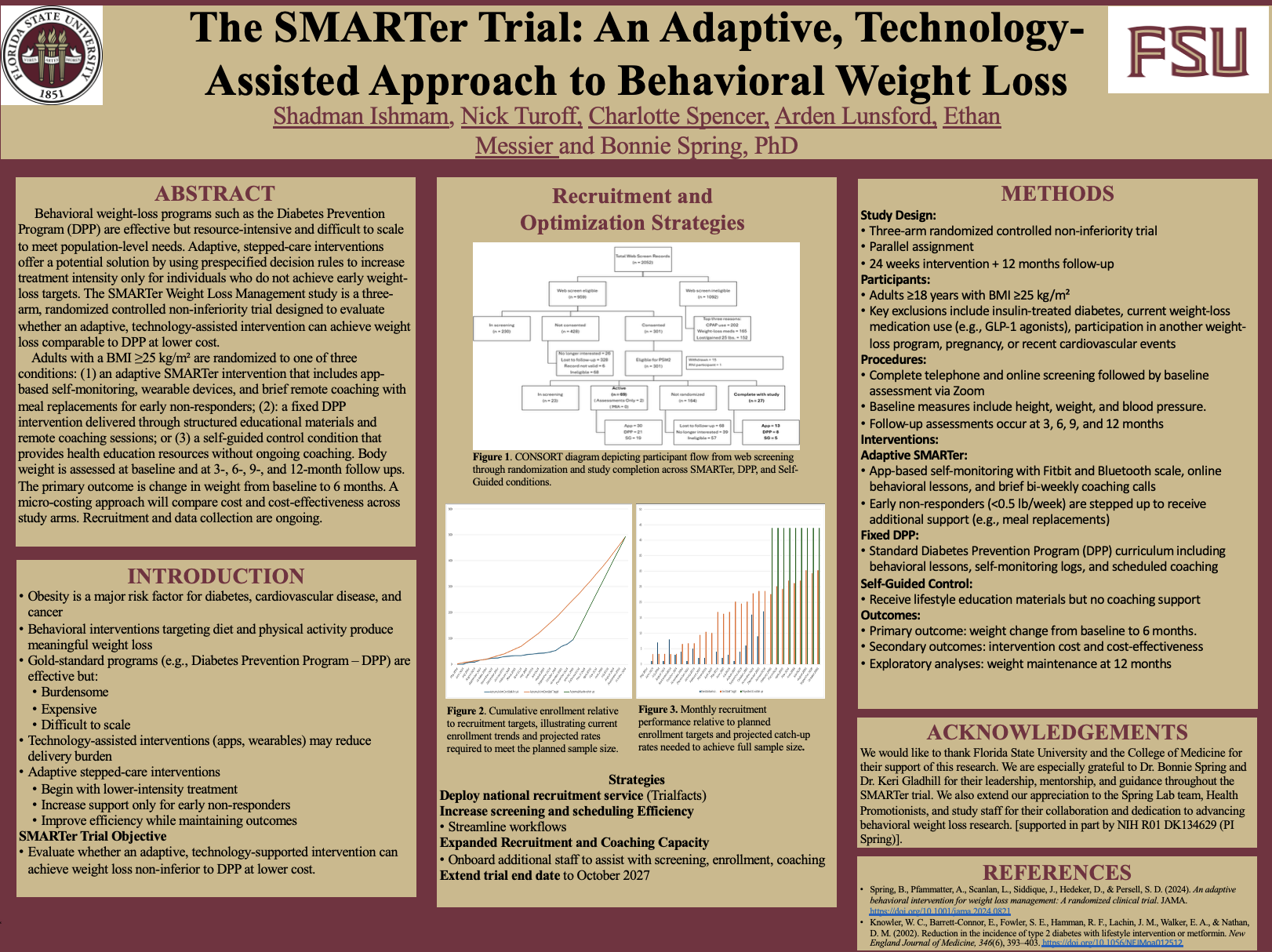
The SMARTer Trial: An Adaptive, Technology- Assisted Approach to Behavioral Weight Loss
Authors: Ethan Messier, Dr. Bonnie Spring, PhDStudent Major: Chemistry
Mentor: Dr. Bonnie Spring, PhD
Mentor's Department: Department of Behavioral Sciences and Social Medicine Mentor's College: FSU College of Medicine Co-Presenters: Shadman Ishmam, Arden Lunsford, Charlotte Sprecher, Nicholas Turoff
Abstract
Behavioral weight-loss programs such as the Diabetes Prevention Program (DPP) are effective but resource-intensive and difficult to scale to meet population-level needs. Adaptive, stepped-care interventions offer a potential solution by using pre-specified decision rules to increase treatment intensity only for individuals who do not achieve early weight-loss targets. The SMARTer Weight Loss Management study is a three-arm, randomized controlled non-inferiority trial designed to evaluate whether an adaptive, technology-assisted intervention can achieve weight loss comparable to DPP at lower cost. Adults with a BMI ≥ 25 kg/m² are randomized to one of three conditions: (1) an adaptive SMARTer intervention that includes app-based self-monitoring, wearable devices, and brief remote coaching with meal replacements for early non-responders; (2): a fixed DPP intervention delivered through structured educational materials and remote coaching sessions; or (3) a self-guided control condition that provides health education resources without ongoing coaching. Body weight is assessed at baseline and at 3-, 6-, 9-, and 12-month follow ups. The primary outcome is change in weight from baseline to 6 months. A micro-costing approach will compare cost and cost-effectiveness across
study arms. Recruitment and data collection are ongoing.
Keywords: weight-loss, medicine, obesity, clinical trial
26th annual Undergraduate Research Symposium, April 1, 2026
Andrea Alvarez Poster Session 3: 1:45 pm - 2:45 pm / Poster #109
BIO
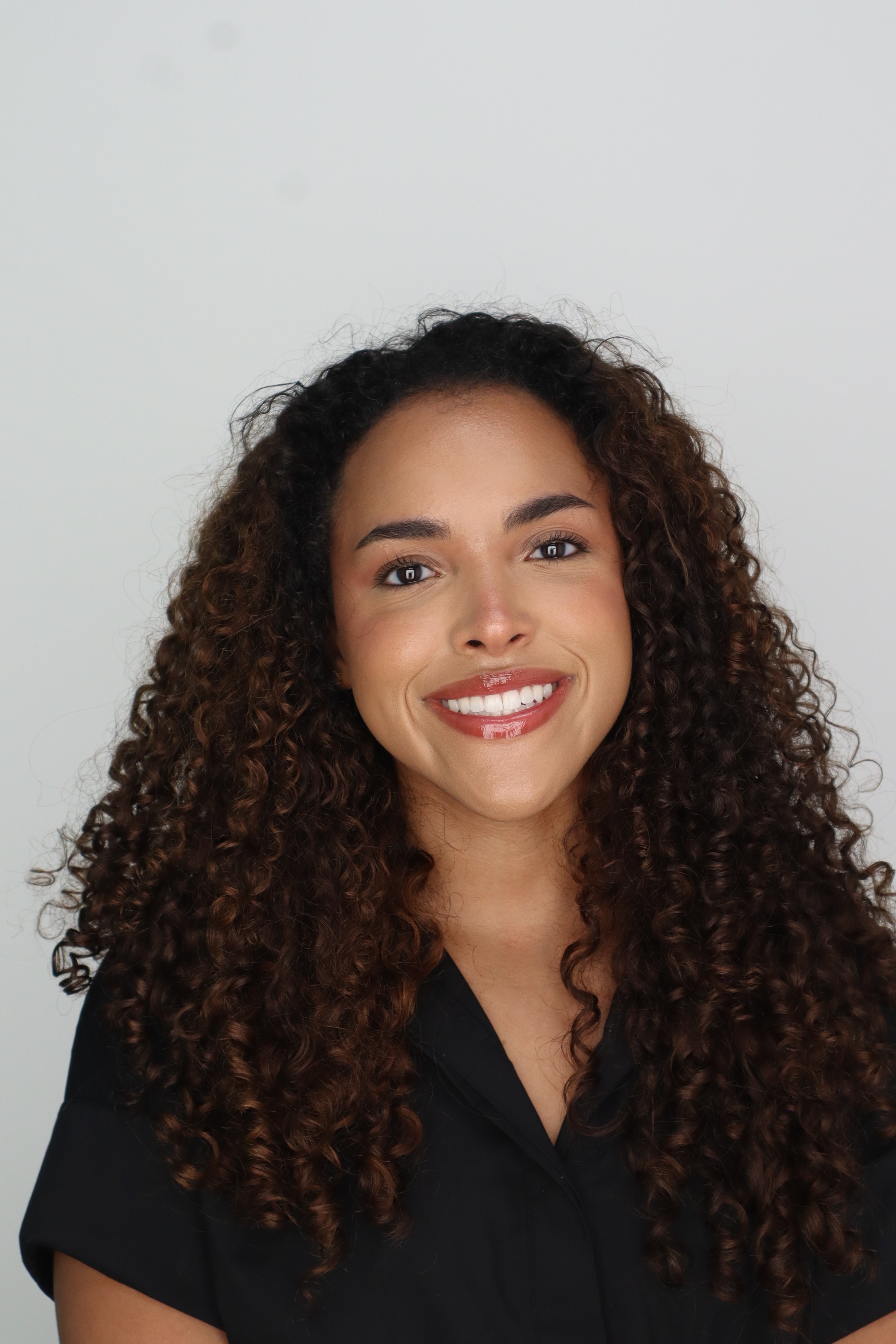
Andrea Alvarez is a sophomore at Florida State University pursuing a Bachelor of Science in Biochemistry. She previously conducted undergraduate research at Miami Dade College, where she studied the effects of nicotine exposure on Daphnia magna, examining of nicotine influences physiological responses to this substance. This early research experience sparked her interest in research.
At Florida State University, Andrea continues to build her academic foundation in chemistry and biology while exploring research opportunities. She would like to thank her research mentor Sadio Fenner and the Anne Spencer Daves College of Education, Health, and Human Sciences for their support.
After completing her undergraduate degree, Andrea plans to attend medical school and pursue a career as a physician.
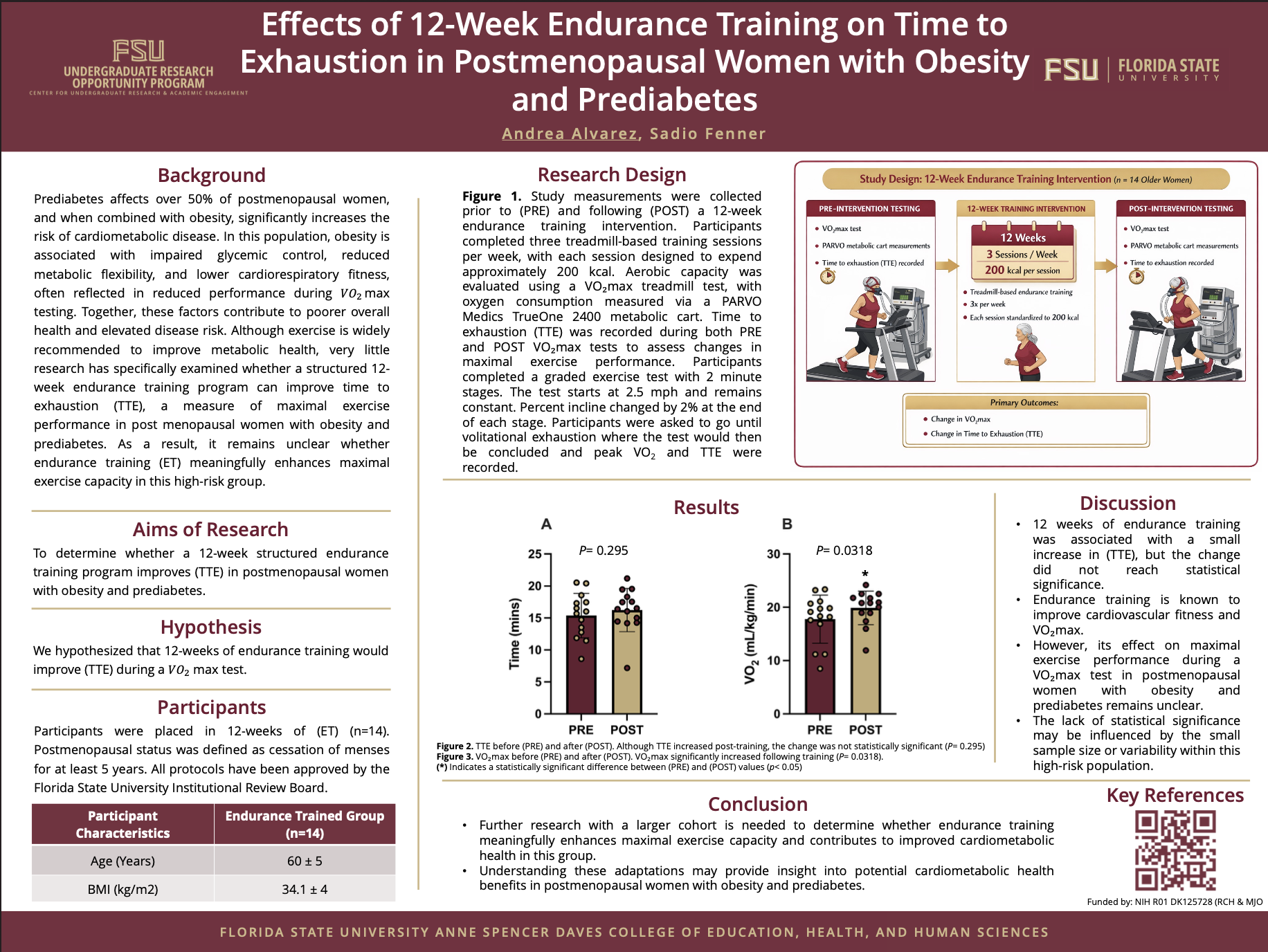
Effects of 12-Week Endurance Training on Time to Exhaustion in Postmenopausal Women with Obesity and Prediabetes
Authors: Andrea Alvarez, Sadio FennerStudent Major: Biochemistry
Mentor: Sadio Fenner
Mentor's Department: HNFS Mentor's College: Anne Spencer Daves College of Education, Health, and Human Sciences Co-Presenters:
Abstract
Little is known about how structured endurance training (ET) influences time to exhaustion (TTE) in postmenopausal women with obesity and prediabetes. This population is at an increased risk for cardiometabolic disease. Prediabetes, commonly associated with obesity, serves as a precursor to type 2 diabetes, and affects over 50% of postmenopausal women. Although the health benefits of exercise are well recognized, there is limited understanding of how energy-matched (ET) specifically affects (TTE) during a VO2max test. This analysis represents a preliminary functional ongoing investigation examining metabolic adaptations to exercise training in this population. This study examined whether a 12-week (ET) program improves (TTE). 14 participants completed a VO2max test at baseline and post-intervention. During the 12-weeks of training, participants performed supervised treadmill-based (ET) three times per week, with each session designed to reach 200 kcal. Respiratory exchange ratio and VO2 were measured using a PARVO metabolic cart to assess oxygen consumption and energy expenditure. (TTE) was recorded during the pre- and post-intervention VO2max tests. (TTE) increased from 15.38 ± 3.47 minutes at baseline to 16.24 ± 3.38 minutes post-training (+0.86 minutes; ~5.6%), this change did not reach statistical significance based on a paired sample t-test (p=0.30). These suggest that (ET) was not associated with a statistically significant improvement in (TTE) in this sample. A larger sample size and further analysis of the metabolic data obtained from this study will help determine whether (ET) improves (TTE) as well as other metabolic components, which may reduce cardiometabolic disease risk in this population.
Keywords: Postmenopausal Women with Obesity
26th annual Undergraduate Research Symposium, April 1, 2026
Alfie Grayling Poster Session 4: 3:00 pm - 4:00 pm / Poster #34
BIO
Alfie Grayling is a sophomore at Florida State University who is majoring in Management Information Systems and made the FSU spring dean's list in 2025. He has research experience from high school and middle school that helped him to understand how to conduct research when coming to college and choosing to do research. He is mentored by Changhyun (Lyon) Nam in his research and received a lot of help from his mentor. He is also working towards earning a Bachelor of Science in Management Information Systems with career goals of entering into a technology related job.
Strategies for Enhancing Interoperability between Mobile Apps and Waste Systems
Authors: Alfie Grayling, Changhyun (Lyon) NamStudent Major: Management Information Systems
Mentor: Changhyun (Lyon) Nam
Mentor's Department: Moran College Entrepreneurship (JMC) 625000 Mentor's College: Jim Moran College of Entrepreneurship Co-Presenters:
Abstract
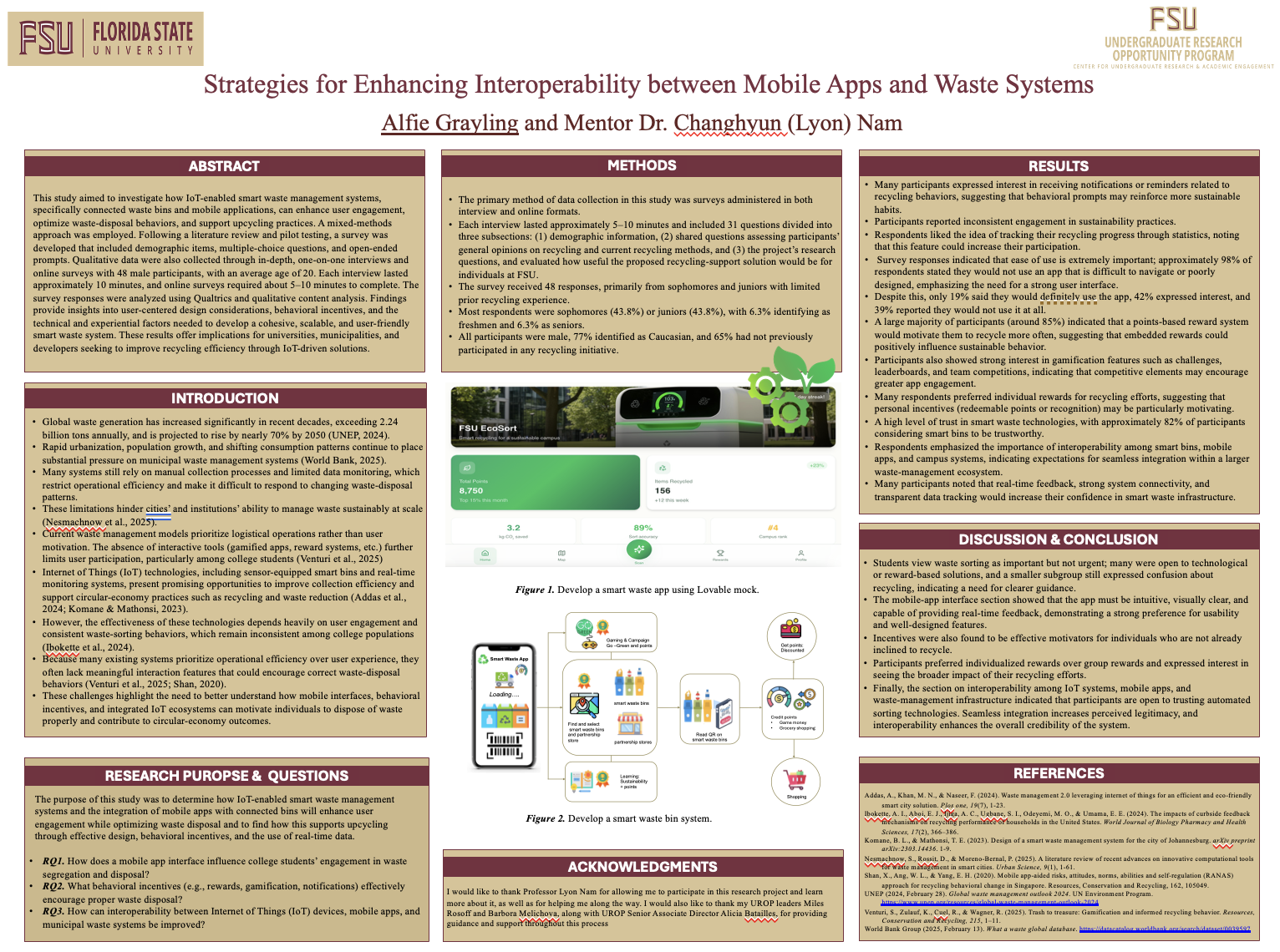
This study aimed to investigate how IoT‑enabled smart waste management systems, specifically connected waste bins and mobile applications, can enhance user engagement, optimize waste‑disposal behaviors, and support upcycling practices. A mixed‑methods approach was employed. Following a literature review and pilot testing, a survey was developed that included demographic items, multiple‑choice questions, and open‑ended prompts. Qualitative data were also collected through in‑depth, one‑on‑one interviews and online surveys with 48 male participants, with an average age of 20. Each interview lasted approximately 10 minutes, and online surveys required about 5–10 minutes to complete. The survey responses were analyzed using Qualtrics and qualitative content analysis. Findings provide insights into user‑centered design considerations, behavioral incentives, and the technical and experiential factors needed to develop a cohesive, scalable, and user‑friendly smart waste system. These results offer implications for universities, municipalities, and developers seeking to improve recycling efficiency through IoT‑driven solutions.
Keywords: Recycling, Upcycling, IoT, Smart, Waste
26th annual Undergraduate Research Symposium, April 1, 2026
Addison Thomas Poster Session 3: 1:45 pm - 2:45 pm / Poster #38
BIO
Addison Thomas is a freshman at Florida State University pursuing a Bachelor of Science in Finance as a member of the Honors College and a Vires Scholarship recipient. She participates in the Undergraduate Research Opportunity Program (UROP), where her research examines how social media content shapes perceptions of finance and accounting careers among students and professionals. Her work explores how digital media influences career perceptions and interest in financial fields, contributing to broader conversations about behavioral finance and the cultural factors that shape career pathways.
After living in the Cayman Islands for 6 years, Addison developed an early interest in global finance and entrepreneurship. In addition to her research, she is involved in the Finance Society’s Investment Banking & Alternatives vertical and serves as Service Chair for Zeta Tau Alpha, where she helps organize philanthropy initiatives and community service efforts in Tallahassee.
Social Media's Impact on Career Choice of College Students: A Study of Accounting & Finance Professions
Authors: Addison Thomas, Aleksandra ZimmermanStudent Major: Finance
Mentor: Aleksandra Zimmerman
Mentor's Department: Accounting Mentor's College: Herbert Wertheim College of Business Co-Presenters: Samuel Moschides, Sydney Nichols
Abstract
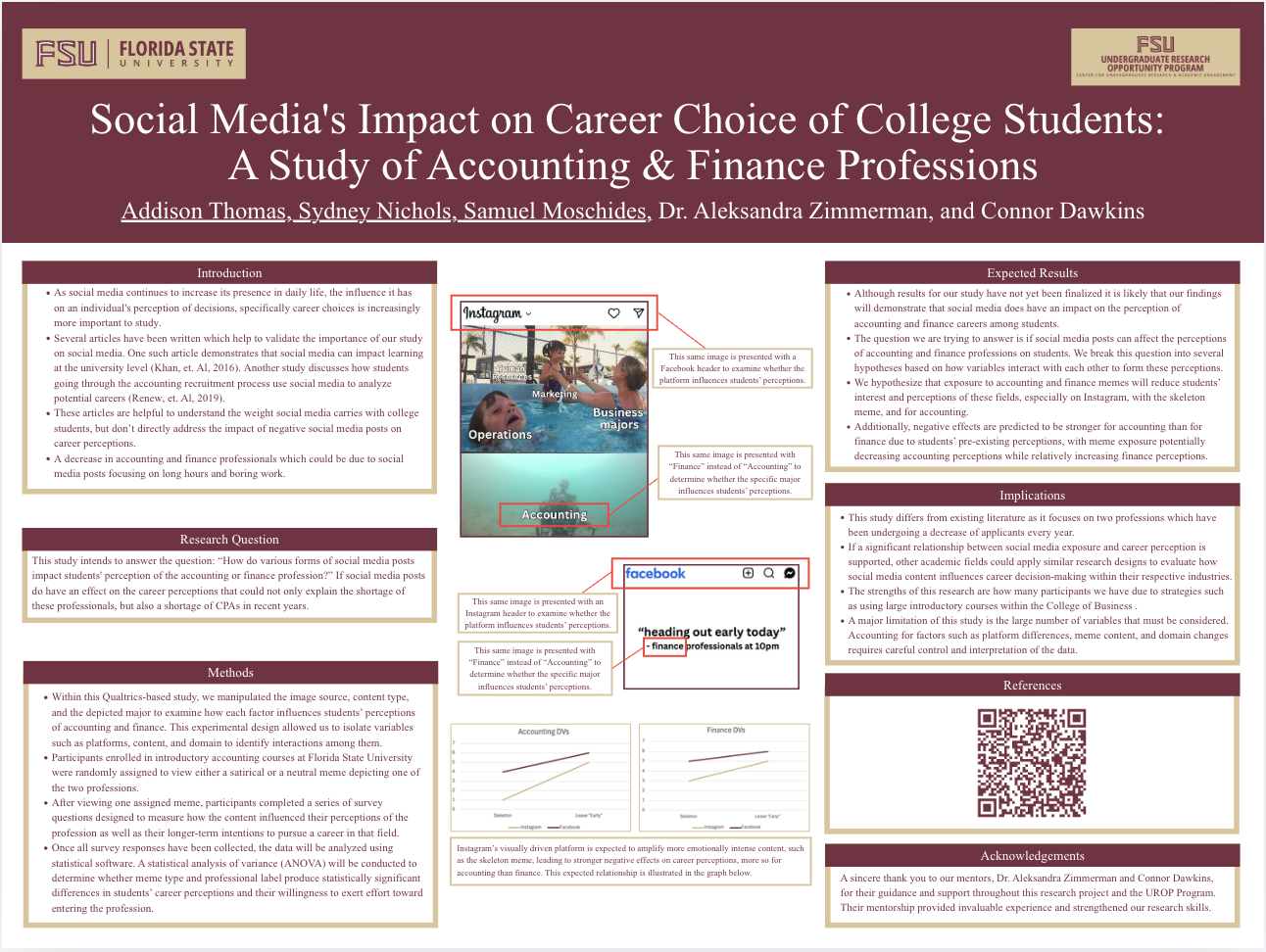
As social media continues to engulf nearly every aspect of society, it increasingly shapes individuals’ attitudes and decision-making. Simultaneously, both the accounting and finance professions are experiencing a shortage of college graduates. This study examines how social media content and platform source influence students’ perceptions of accounting and finance, and further explores students’ willingness to enter these professions. Within our survey-based study, we manipulated the image source, content type, and the depicted major to examine how each factor or combination of factors influences students’ judgment. Participants enrolled in introductory accounting courses at Florida State University were randomly assigned to view a satirical or neutral meme depicting either accounting or finance. After viewing an assigned meme, participants completed survey questions assessing how the content influenced their perceptions and their longer-term intentions toward the profession. Once all of the survey responses have been completed, data will be analyzed using a factorial analysis of variance (ANOVA) to test whether meme type and professional label produce significant differences in students’ career perceptions and effort outcomes. The results are expected to show that exposure to satirical content reduces positive opinions of accounting and finance. These diminished perceptions are expected to lead to lower students’ interest in pursuing these careers, particularly among those who are undecided or less committed to a specific career path. This research provides practical insights for educators and professional organizations seeking to improve recruitment messaging and counteract negative social media narratives.
Keywords: Social Media, Accounting, Finance
26th annual Undergraduate Research Symposium, April 1, 2026
Francesca Muscarella Poster Session 2: 10:45 am - 11:45 am / Poster #158
BIO
Francesca Muscarella is a current freshman Presidential Scholar at Florida State University pursuing a dual degree in Finance and Professional Sales. Throughout her first year, Francesca was honored as a Garnet and Gold Key Torch Night Recipient, graduated from Freshman Leadership Institute, and served as a Recruitment Ambassador for Student Alumni Association. Her ultimate career goal is to attain a C-suite level position at a major hospitality company such as Marriott or Royal Caribbean. Through UROP, Francesca has been mentored by Dr. Aleksandra Zimmerman by participating as a Research Assistant for her Undergraduate and Professional Career Survey projects. Francesca hopes to continue her research journey throughout her remaining time at FSU.
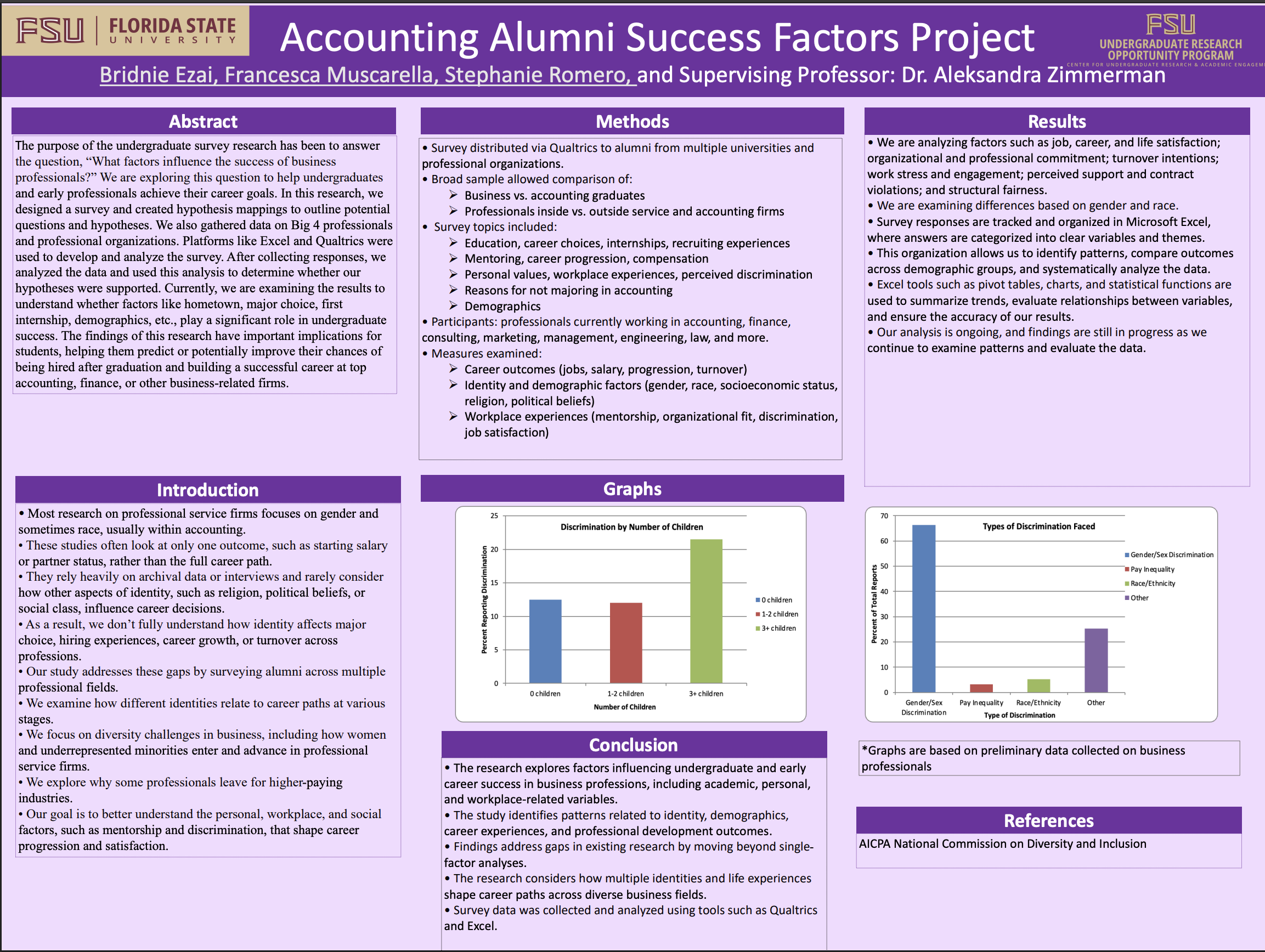
Accounting Alumni Success Factors Project
Authors: Francesca Muscarella, Dr. Aleksandra ZimmermanStudent Major: Finance and Professional Sales
Mentor: Dr. Aleksandra Zimmerman
Mentor's Department: Accounting Mentor's College: Herbert Wertheim College of Business Co-Presenters: Bridnie Ezai and Stephanie Romero
Abstract
The purpose of the undergraduate survey research has been to answer the question, “What factors influence the success of business professionals?” We are exploring this question to help undergraduates and early professionals achieve their career goals. In this research, we designed a survey and created hypothesis mappings to outline potential questions and hypotheses. We also gathered data on Big 4 professionals and professional organizations. Platforms like Excel and Qualtrics were used to develop and analyze the survey. After collecting responses, we analyzed the data and used this analysis to determine whether our hypotheses were supported. Currently, we are examining the results to understand whether factors like hometown, major choice, first internship, demographics, etc., play a significant role in undergraduate success. The findings of this research have important implications for students, helping them predict or potentially improve their chances of being hired after graduation and building a successful career at top accounting, finance, or other business-related firms.
Keywords: Accounting, Alumni, Success, Survey
26th annual Undergraduate Research Symposium, April 1, 2026
Will Haag Poster Session 4: 3:00 pm - 4:00 pm / Poster #78
BIO
Will Haag is a current freshman at Florida State University, and is majoring in finance and looking to add another major/minor. Will is on the Presidential Scholars Service Board, involved in the Honors program through Honors Student Association and Honors in Action, and completed the Freshman Leadership Institute program. In high school, Will earned his International Baccalaureate Diploma, giving him a strong foundation for the UROP Program at FSU, due to its focus on research, writing, and real-world applicability. Will is interested in attending law school after graduation.
To Acknowledge or Deny Systemic Power Differentials: A Motivational Perspective
Authors: Will Haag, Ayanna Brewton, M.S.Student Major: Finance
Mentor: Ayanna Brewton, M.S.
Mentor's Department: Psychology Mentor's College: Psychology Co-Presenters: Alejandro Salcedo
Abstract
The research focuses on whether and why people perceive existing structures, such as laws, the legal and education system, and government influence power differentials between groups. The current work investigates the psychological mechanisms that underlie whether people acknowledge or deny the presence of inequality through the lens of systemic racism. In our work, we gather open-ended responses on participants’ views of whether differences exist in equal opportunities such as employment, education, and the legal system. Of key interest is whether respondents’ motivations (Plant & Devine, 1998; Internal and External motivations to respond without prejudice) determine how participants respond to the questionnaires. We used an acknowledgement and denial coding rubric to score participants’ responses on the extent to which they acknowledge and/or deny the existence of a stated power differential. While data collection is still ongoing, we predict that if a participant is more internally motivated to respond without prejudice (due to their personal views), they will be more likely to acknowledge structural inequality. In contrast, people who are high in external motivation (focused on how others will view them) will be more likely to deny or use ambiguous (mixed) responses that both acknowledge and deny. We seek to demonstrate the ways in which motivational factors inform the perceived realities of structural inequality.
Keywords: Psychology, legal system, systemic, power differential
26th annual Undergraduate Research Symposium, April 1, 2026
Alexandra Martinez Poster Session 2: 10:45 am - 11:45 am / Poster #272
BIO
As a sophomore at FSU, I am pursuing an undergraduate degree in Cell and Molecular Neuroscience. I plan to attend graduate school and ascertain an MD or DO, specializing in maternal-fetal care. In preparation for the next steps in my career, I hope to expand my contributions to clinical, psychological, or biological-focused research through DIS or Honors in the Major programs at FSU. Outside of academics, I enjoy hiking, reading, spending time with friends, and working at the FSU Lakefront Park.
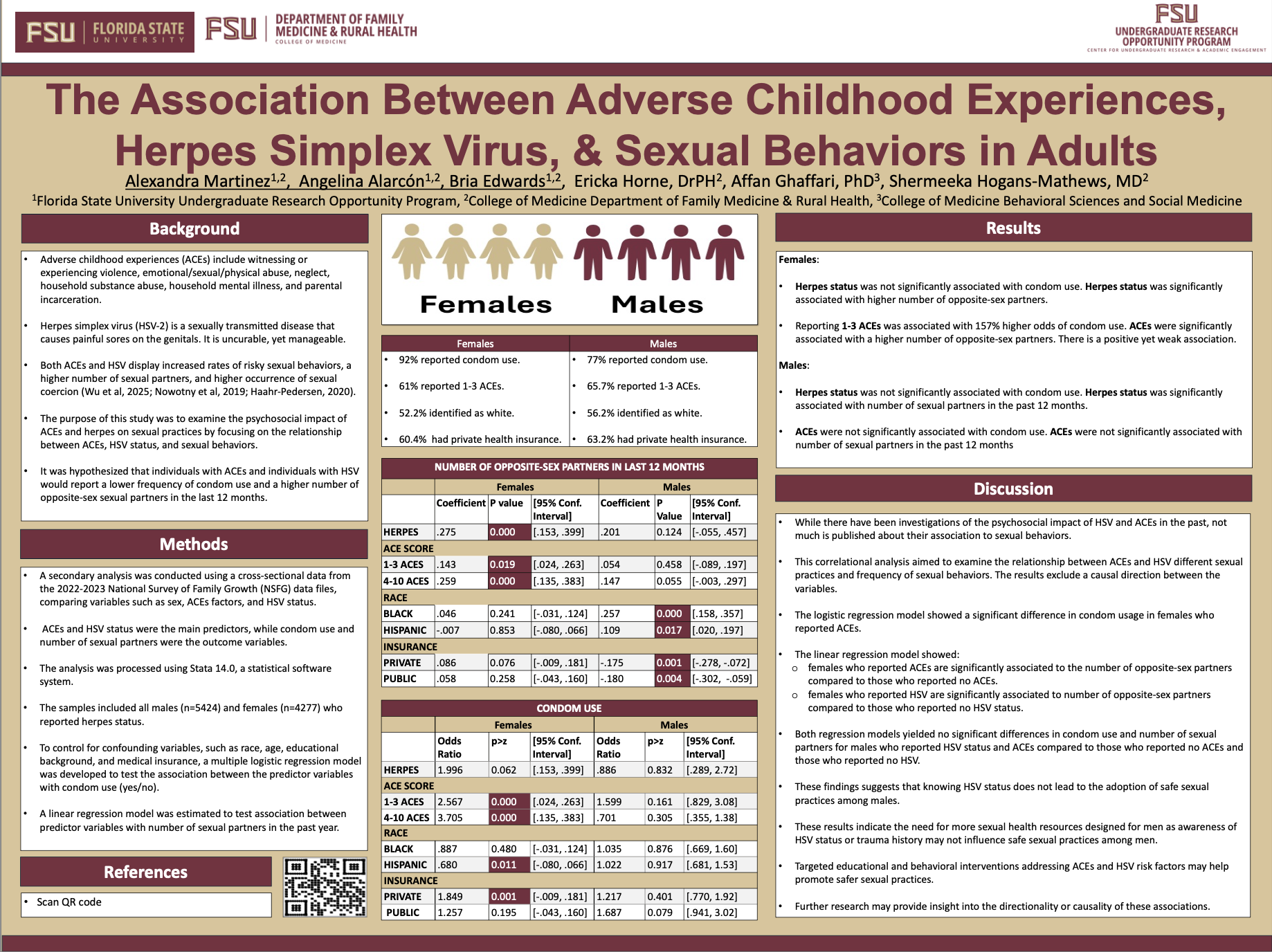
The Association Between Adverse Childhood Experiences, Herpes Simplex Virus, and Sexual Behaviors in Adults
Authors: Alexandra Martinez, Shermeeka Hogans-MathewsStudent Major: Cell and Molecular Neuroscience
Mentor: Shermeeka Hogans-Mathews
Mentor's Department: Department of Family Medicine and Rural Health Mentor's College: College of Medicine Co-Presenters: Angelina Alarcon, Bria Edwards
Abstract
Adverse childhood experiences (ACEs)—including, but not limited to, witnessing or receiving violence; exposure to emotional, sexual, and physical abuse; emotional and/or physical neglect; household substance abuse; household mental illness; parental incarceration—and Herpes Simplex Virus (HSV) status display increased rates of risky sexual behaviors, a higher number of sexual partners, and higher occurrence of sexual coercion (Wu et al, 2025; Nowotny et al, 2019; Haahr-Pedersen, 2020). This investigation focused on the relationship between ACEs and sexual behaviors compared to the relationship between HSV and sexual behaviors. The purpose of this study was to examine the psychosocial impact of ACEs and herpes on sexual practices. A secondary analysis was conducted using cross-sectional data from the 2022-2023 National Survey of Family Growth (NSFG), comparing variables such as sex, ACEs factors, and HSV status. The analysis showed a significant impact of traumatic childhood experiences and HSV—independent of each other—on sexual practices. Males who reported ACEs and males who reported HSV status demonstrated no significant association with condom usage and number of opposite-sex partners. Females who reported ACEs and females who reported HSV status also reported a higher number of opposite-sex partners. Females with ACEs were significantly associated with condom usage. Processes from this study incentivize further research that may answer questions relating to the lifestyle practices of persons with HSV and those who have experienced ACEs.
Keywords: HSV, ACEs, sexual behaviors
26th annual Undergraduate Research Symposium, April 1, 2026
Meadow Limoncello Poster Session 3: 1:45 pm - 2:45 pm / Poster #25
BIO
I am a senior Chemical Engineering student at Florida State University originally from Homer Glen, Illinois, a southwest suburb of Chicago. I was drawn to chemical engineering because I enjoy solving complex problems and understanding how chemistry and materials behave in real-world systems. During my undergraduate studies, I discovered a strong interest in research, particularly in exploring how material structure influences performance at the molecular level. My current work focuses on multivalent ion transport through perfluorosulfonic acid membranes and how membrane structure impacts permeability and conductivity. Through this research, I have developed a passion for experimental design, data analysis, and applying engineering principles to material systems. After graduation, I plan to move to New York City to begin a career in cosmetic manufacturing, where I hope to combine engineering with product development and innovation.
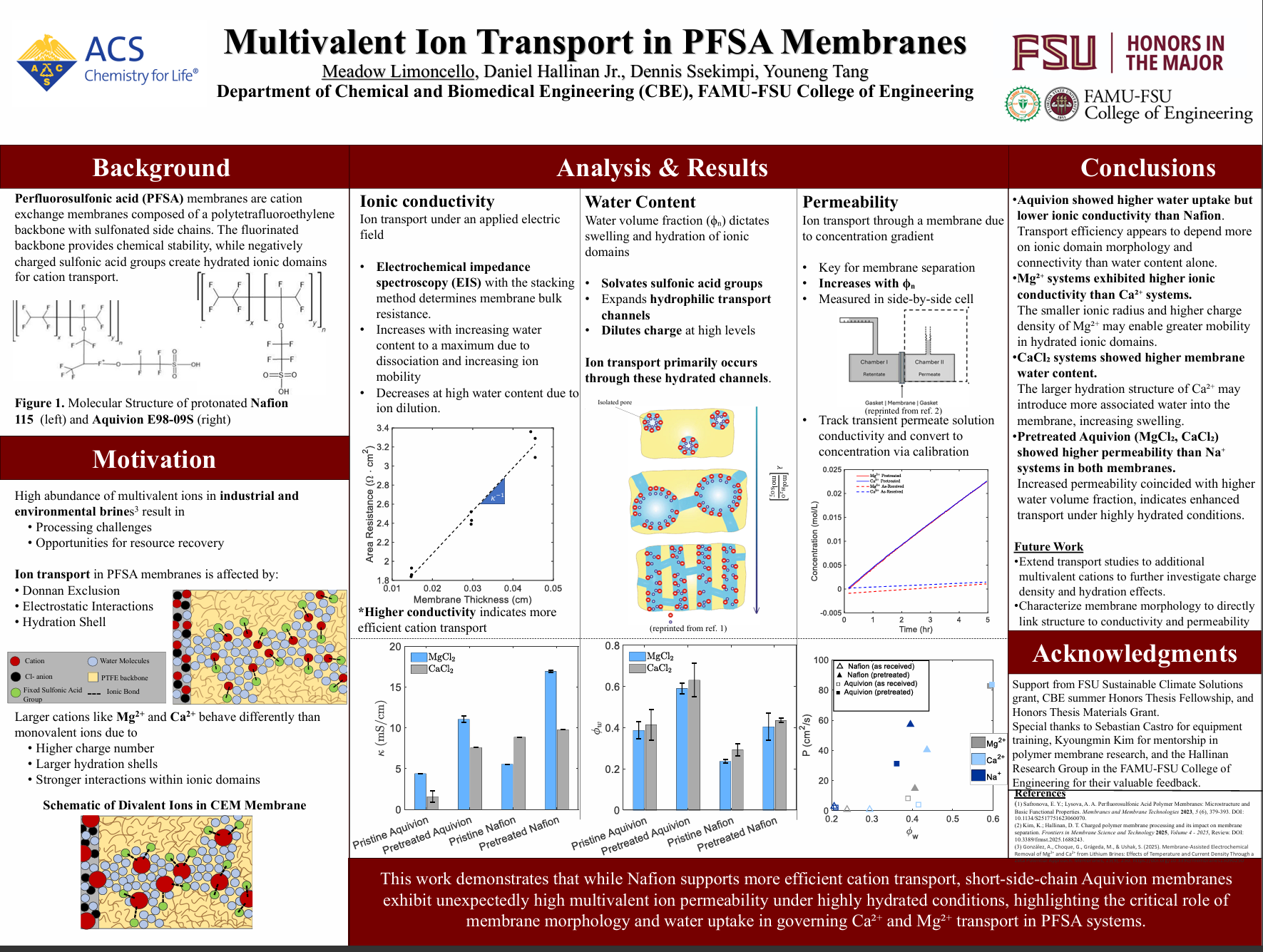
Multivalent Ion Transport through Perfluorosulfonic Acid Membranes
Authors: Meadow Limoncello, Dr. Daniel HallinanStudent Major: Chemical Engineering
Mentor: Dr. Daniel Hallinan
Mentor's Department: Chemical Engineering Mentor's College: FAMU-FSU College of Engineering Co-Presenters:
Abstract
Perfluorosulfonic acid (PFSA) membranes are widely used in electrochemical systems due to their high chemical stability and ion exchange capacity. Beyond energy applications, these membranes show potential for selective ion transport processes relevant to water treatment and resource recovery. In this study, the transport behavior of multivalent cations (Ca²⁺ and Mg²⁺) through PFSA membranes is investigated to better understand their potential for capturing hardness ions from concentrated industrial brines. Two commercially available membranes, Aquivion E98-09S and Nafion 115, are compared to examine how differences in side-chain length and membrane morphology influence multivalent ion transport. Pristine and pretreated membranes are evaluated to determine the impact of membrane conditioning on transport performance. Key properties including ionic conductivity, permeability, water uptake, and desorption are experimentally measured and interpreted using theoretical transport models. These results provide insight into structure–property relationships governing multivalent ion transport in PFSA membranes and highlight their potential for advanced separation technologies targeting Ca²⁺ and Mg²⁺ removal from high-salinity process streams.
Keywords: Polymers, Ion-Transport, Conductivity, Permeability
26th annual Undergraduate Research Symposium, April 1, 2026
Bailey Poston Poster Session 3: 1:45 pm - 2:45 pm / Poster #193
BIO
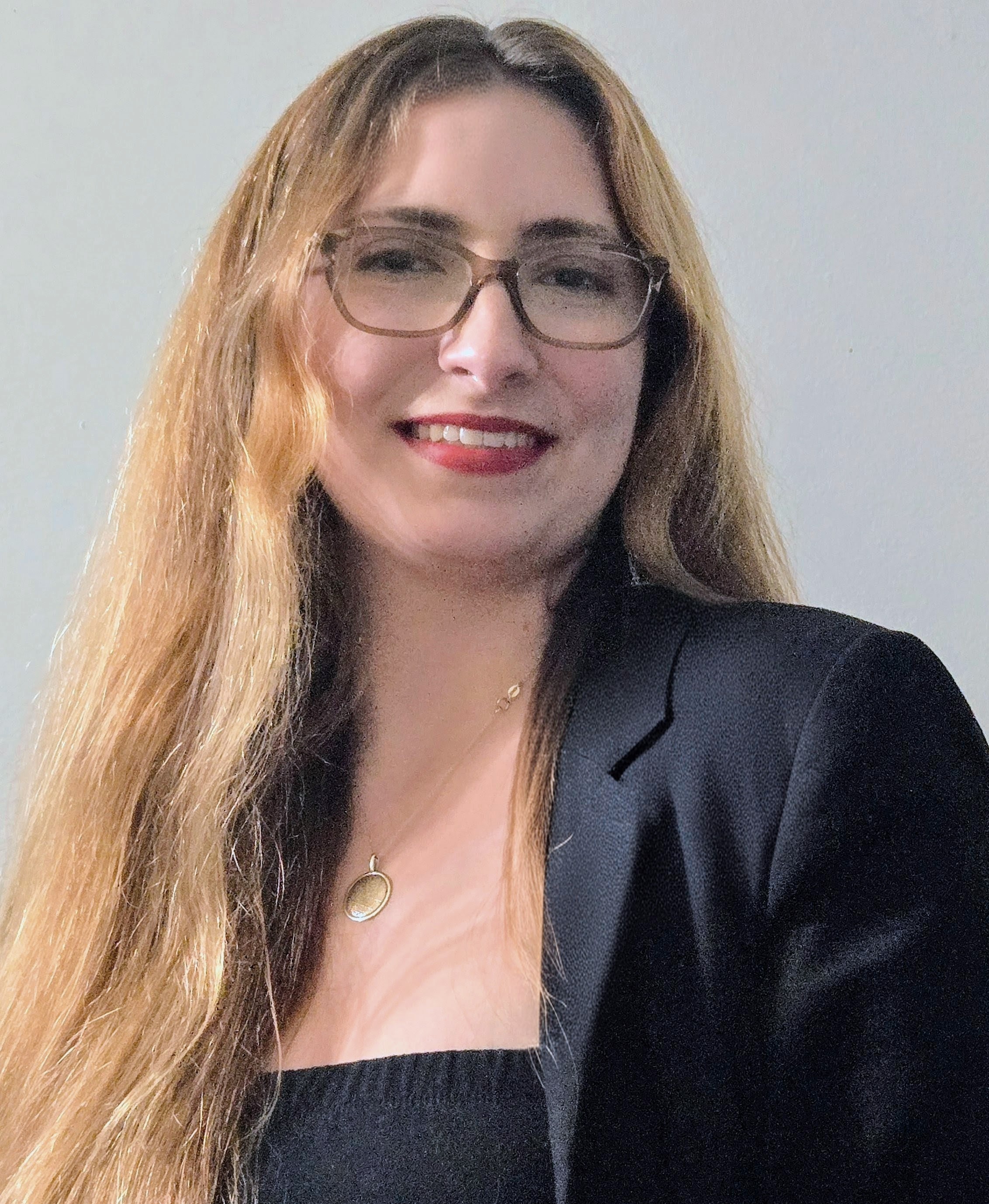
Bailey Poston is a second-year undergraduate student majoring in Biochemistry in the College of Arts and Sciences. She plans to earn her Bachelor of Science degree from Florida State University and attend medical school post-graduation. Through the Undergraduate Research Opportunity Program, Bailey conducted research under Erik Rawls, a researcher at Florida State University. With this project, they investigated dissemination science within learning disability research. Bailey hopes to utilize the knowledge gained from this research opportunity in future endeavors with science, research, and medicine.
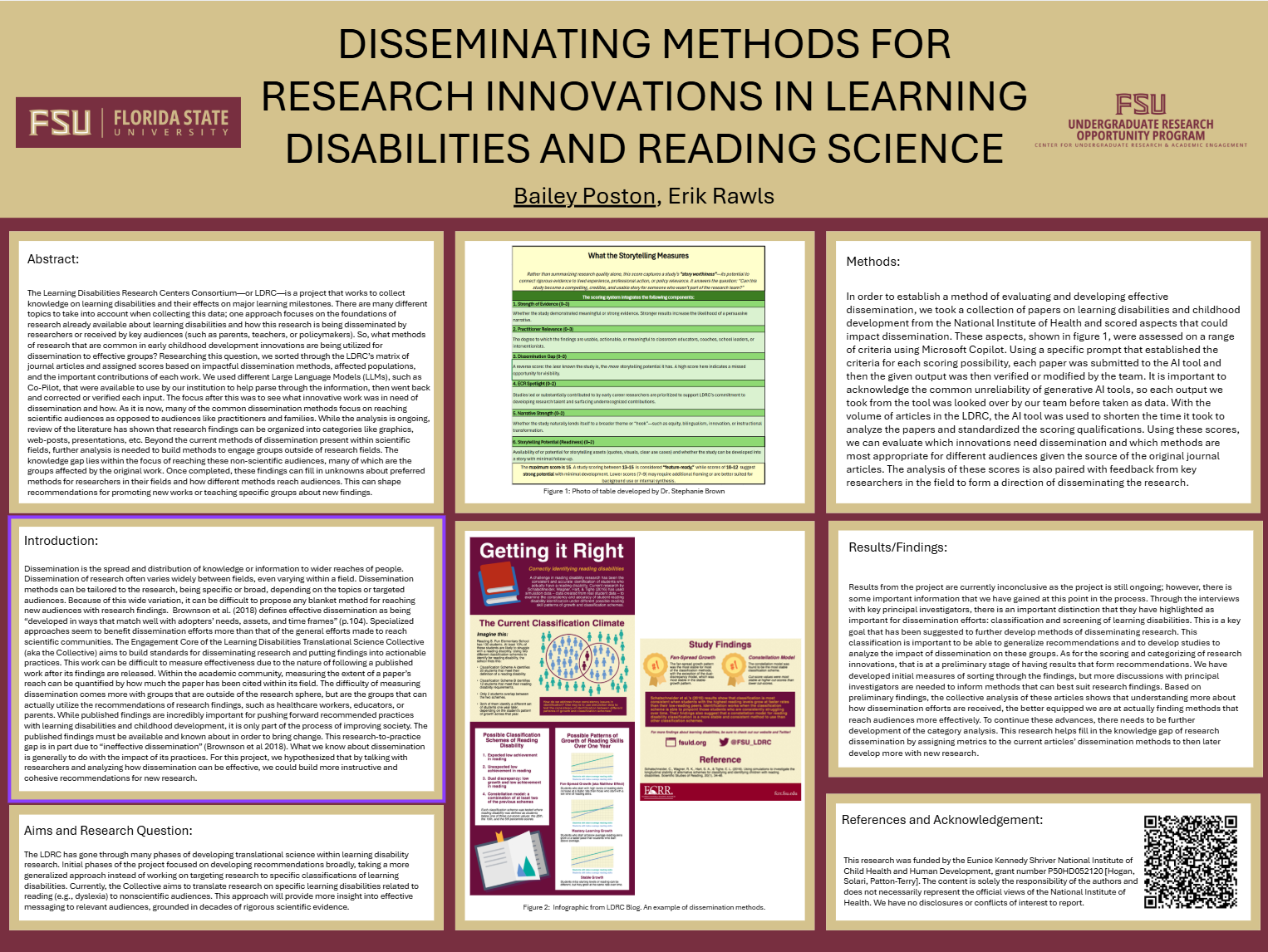
Disseminating Methods For Research Innovations In Learning Disabilities And Reading Science
Authors: Bailey Poston, Erik RawlsStudent Major: Biochemistry
Mentor: Erik Rawls
Mentor's Department: Florida Center for Reading Research Mentor's College: Florida State University Co-Presenters:
Abstract
The Learning Disabilities Research Centers Consortium—or LDRC—is a project that works to collect knowledge on learning disabilities and their effects on major learning milestones. There are many different topics to take into account when collecting this data; one approach focuses on the foundations of research already available about learning disabilities and how this research is being disseminated or received. So, what methods of research that are common in early childhood development innovations are being utilized for dissemination to effective groups? Researching this question, we sorted through the LDRC’s matrix of published papers and assigned scores based on impactful dissemination methods, affected populations, and the important contributions of each work. We used different Large Language Models (LLMs), such as Co-Pilot, that were available to use by our institution to help parse through the information, then went back and corrected or verified each input. The focus after this was to see what innovative work was in need of dissemination and how. While the study is still ongoing, the analysis of the literature has shown that research findings can be organized into things like graphics, web-posts, presentations, etc. Beyond the current methods of dissemination present within scientific fields, further analysis is needed to build methods to engage groups outside of research fields. Once completed, these findings can fill in unknowns about preferred methods for researchers in their fields and how different methods reach audiences. This can shape recommendations for promoting new works or teaching specific groups about new findings.
Keywords: Dissemination, Learning Disabilities, Reading Research
26th annual Undergraduate Research Symposium, April 1, 2026
Nikitha Rajagopalan Poster Session 2: 10:45 am - 11:45 am / Poster #290
BIO
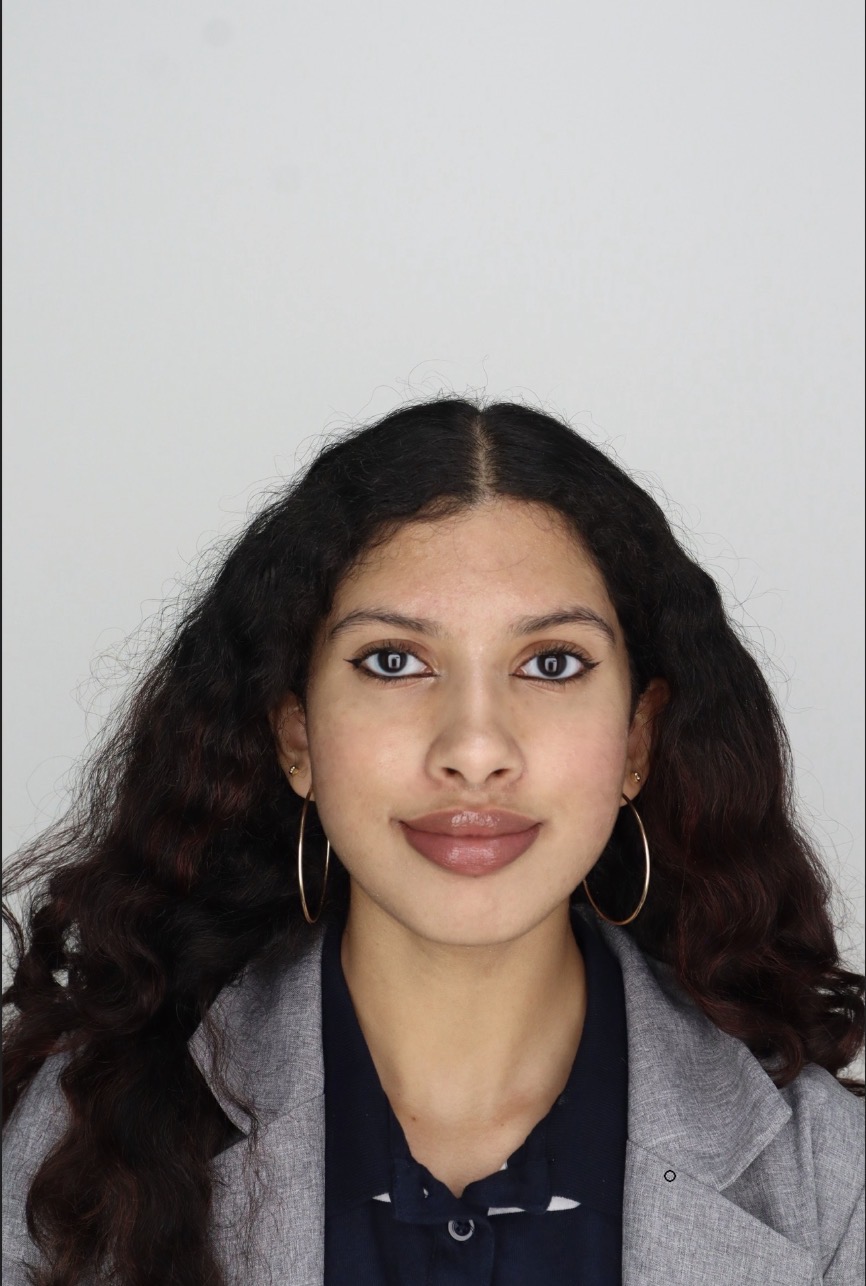
Nikitha Rajagopalan is a second-year Computer Science major who is also pursuing double minors in Applied Mathematics and Business Analytics. She is a member of the Florida State University Honors Program, where she participates in advanced academic opportunities and interdisciplinary learning.
Nikitha is particularly interested in Artificial Intelligence and Machine Learning and how these technologies can improve efficiency and solve complex problems in the modern world. Her academic interests include data analysis, intelligent systems, and the application of machine learning to real-world challenges. She enjoys exploring how innovative technologies can enhance existing systems and create smarter solutions across industries.
She plans to pursue graduate studies in both computer science and business in order to combine technical expertise with strategic decision-making skills. Ultimately, she hopes to build a career in Artificial Intelligence Engineering.
Nikitha’s long-term goal is to contribute to the advancement of cybersecurity through the use of machine learning models that can detect and respond to cyber threats. As part of her current research experience, she studies machine learning and unmanned aerial vehicle (UAV) systems through the Center for Advanced Power Systems at Florida State University. Her research focuses on using telemetry and sensor data to detect cyber-physical threats in UAV systems, helping improve the safety and reliability of autonomous technologies.
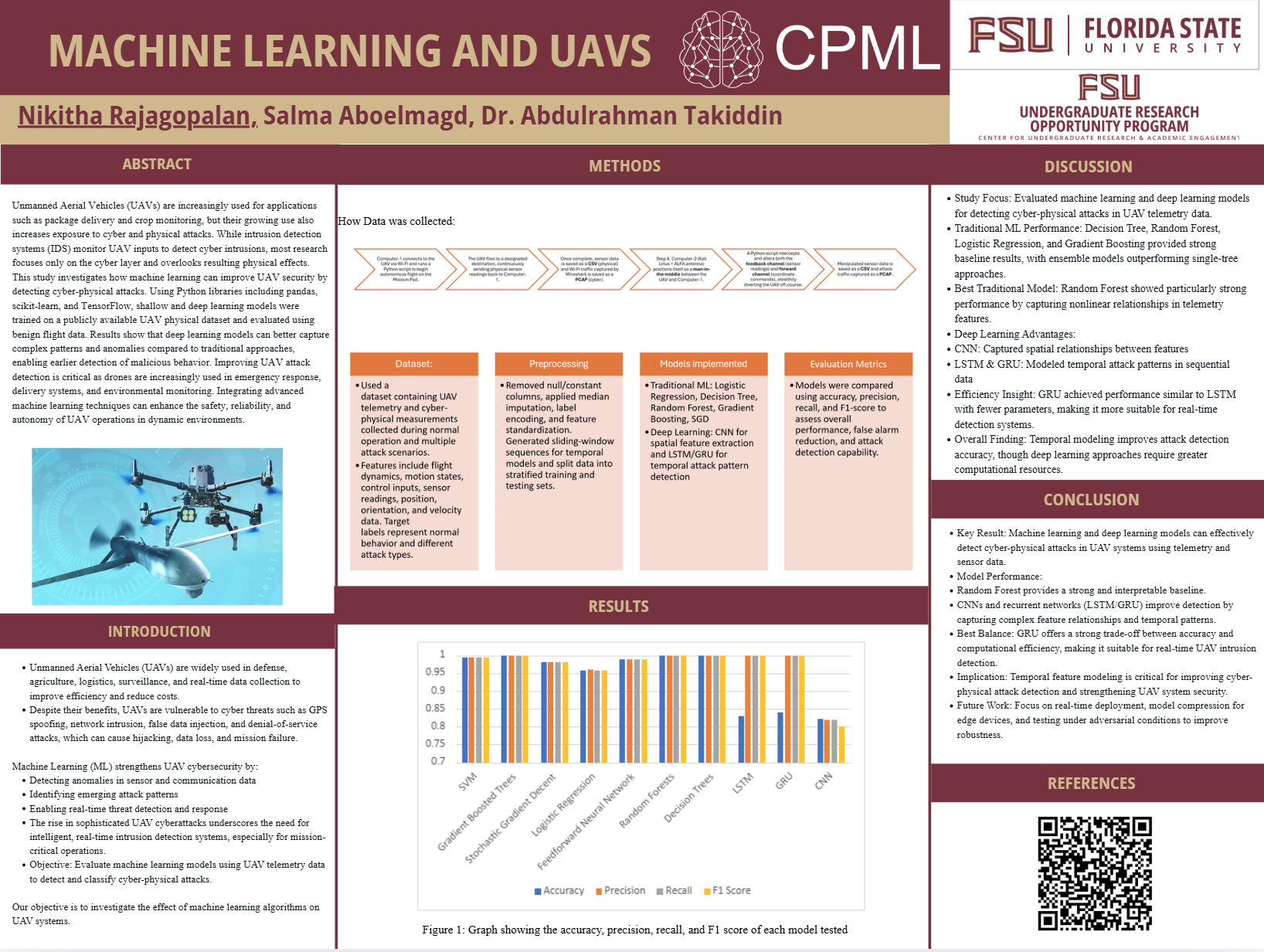
Machine Learning and UAVs
Authors: Nikitha Rajagopalan, Salma AboelmagdStudent Major: Bachelor of Science in Computer Science with minors in Applied Math and Business Analytics
Mentor: Salma Aboelmagd
Mentor's Department: Electrical & Computer Engineer (ELECT_ENG) 216000 Mentor's College: College of Engineering Co-Presenters:
Abstract
Unmanned Aerial Vehicles (UAVs) are increasingly used for applications such as package delivery and crop monitoring, but their growing use also increases exposure to cyber and physical attacks. While intrusion detection systems (IDS) monitor UAV inputs to detect cyber intrusions, most research focuses only on the cyber layer and overlooks resulting physical effects. This study investigates how machine learning can improve UAV security by detecting cyber-physical attacks. Using Python libraries including pandas, scikit-learn, and TensorFlow, shallow and deep learning models were trained on a publicly available UAV physical dataset and evaluated using benign flight data. Results show that deep learning models can better capture complex patterns and anomalies compared to traditional approaches, enabling earlier detection of malicious behavior. Improving UAV attack detection is critical as drones are increasingly used in emergency response, delivery systems, and environmental monitoring. Integrating advanced machine learning techniques can enhance the safety, reliability, and autonomy of UAV operations in dynamic environments.
Keywords: Machine Learning, Computer Science, AI
26th annual Undergraduate Research Symposium, April 1, 2026
Colton Leavell Poster Session 2: 10:45 am - 11:45 am / Poster #194
BIO
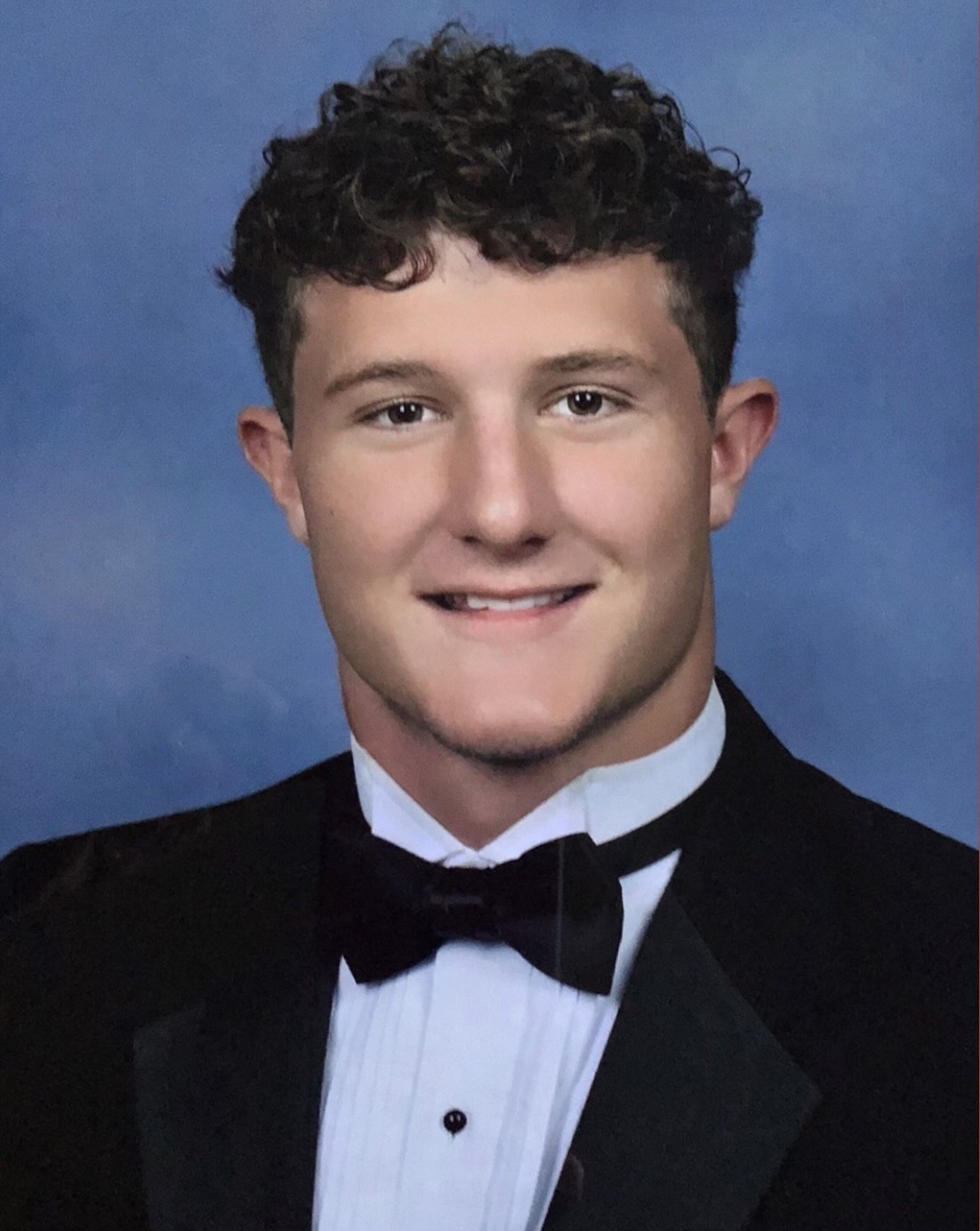
Colton Leavell is from Jacksonville, Florida, and is currently a first-year student at Florida State University majoring in biochemistry on a pre-medical track. As an undergraduate with strong interests in science and medicine, he hopes to pursue a future career in the medical field. This research project represents his first experience participating in formal academic research. Through this opportunity, he has begun developing foundational skills in scientific inquiry, data analysis, and research methodology. Colton has been fortunate to work under the guidance of his research mentor, Wenxiao Li, whose support and mentorship have helped him better understand the research process and navigate the challenges of conducting scientific work for the first time. With this experience, Colton hopes to continue expanding his knowledge of science and research while building skills that will be valuable for his future studies and research opportunities.
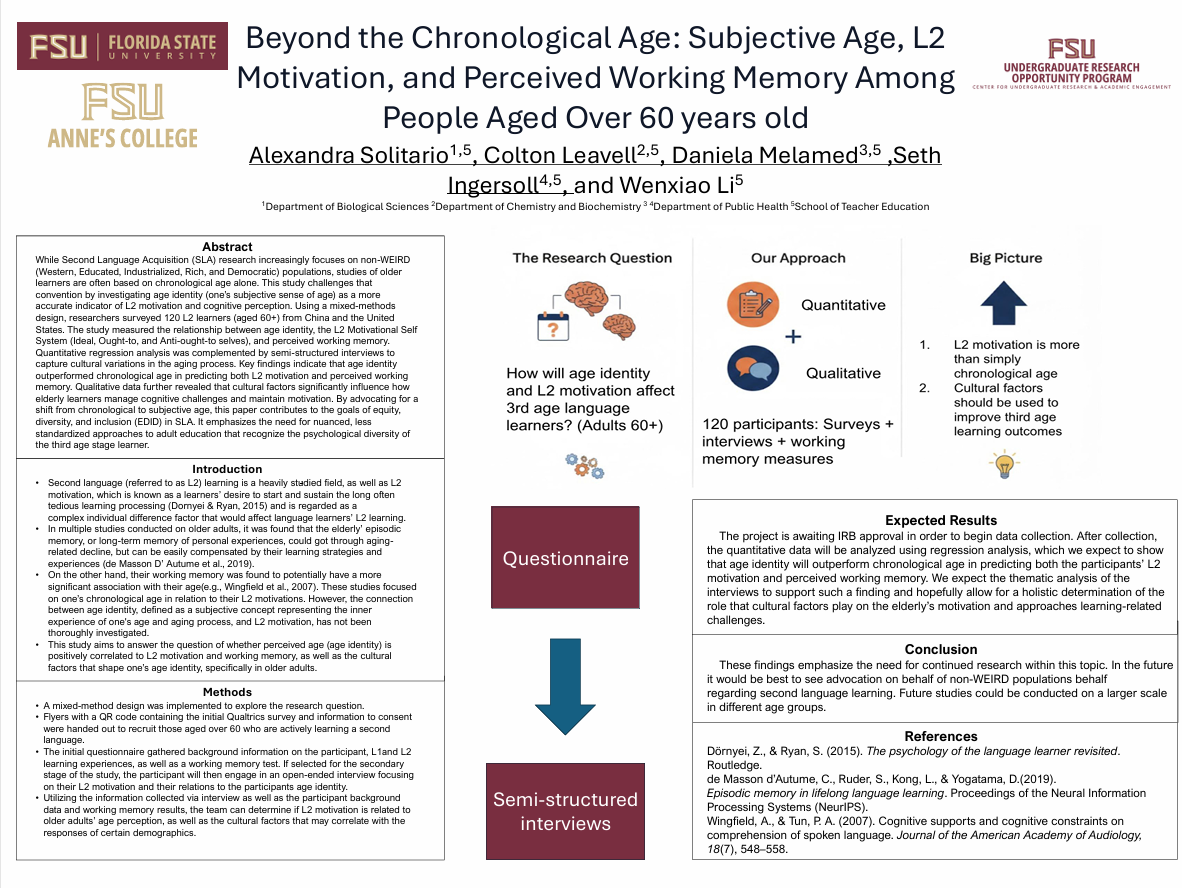
Beyond the Chronological Age: Subjective Age, L2 Motivation and Perceived Working Memory Among Elderly Learners
Authors: Colton Leavell, Wenxiao LiStudent Major: Biochemistry
Mentor: Wenxiao Li
Mentor's Department: School of Teacher Education Mentor's College: Florida State University Co-Presenters: Alexandra Solitario, Daniela Melamed, Seth Ingersoll
Abstract
While Second Language Acquisition (SLA) research increasingly focuses on non-WEIRD (Western, Educated, Industrialized, Rich, and Democratic) populations, studies of older learners are often based on chronological age alone. This study challenges that convention by investigating age identity (one’s subjective sense of age) as a more accurate indicator of L2 motivation and cognitive perception. Using a mixed-methods design, researchers surveyed 120 L2 learners (aged 60+) from China and the United States. The study measured the relationship between age identity, the L2 Motivational Self System (Ideal, Ought-to, and Anti-ought-to selves), and perceived working memory. Quantitative regression analysis was complemented by semi-structured interviews to capture cultural variations in the aging process. Key findings indicate that age identity outperformed chronological age in predicting both L2 motivation and perceived working memory. Qualitative data further revealed that cultural factors significantly influence how elderly learners manage cognitive challenges and maintain motivation. By advocating for a shift from chronological to subjective age, this paper contributes to the goals of equity, diversity, and inclusion (EDID) in SLA. It emphasizes the need for nuanced, less standardized approaches to adult education that recognize the psychological diversity of the third age stage learner.
Keywords: Subjective age L2 working memory
26th annual Undergraduate Research Symposium, April 1, 2026
Vincent Ochoa Poster Session 3: 1:45 pm - 2:45 pm / Poster #231

BIO
Vincent Ochoa is a second-year undergraduate student pursuing a Bachelor of Science in Biological Science. He is also completing minors in Chemistry and Music, reflecting both his strong interest in the natural sciences and his continued passion for the arts. Through his coursework, Ochoa is developing a solid foundation in biology, chemistry, and other core scientific disciplines.
As part of his studies, Ochoa has gained experience through rigorous coursework that emphasizes scientific reasoning, experimental techniques, and data analysis. These experiences have helped him strengthen his problem-solving skills and deepen his understanding of biological systems and chemical processes. He continues to work closely with faculty instructors who guide his academic development and encourage further exploration of scientific learning.
Alongside his scientific training, Ochoa pursues a minor in music, allowing him to maintain a creative outlet while balancing a demanding academic program. Looking ahead, he aspires to attend veterinary school after completing his Bachelor of Science degree. His long-term goal is to become a veterinarian and contribute to the health and well-being of animals through scientific knowledge, compassion, and dedicated care.
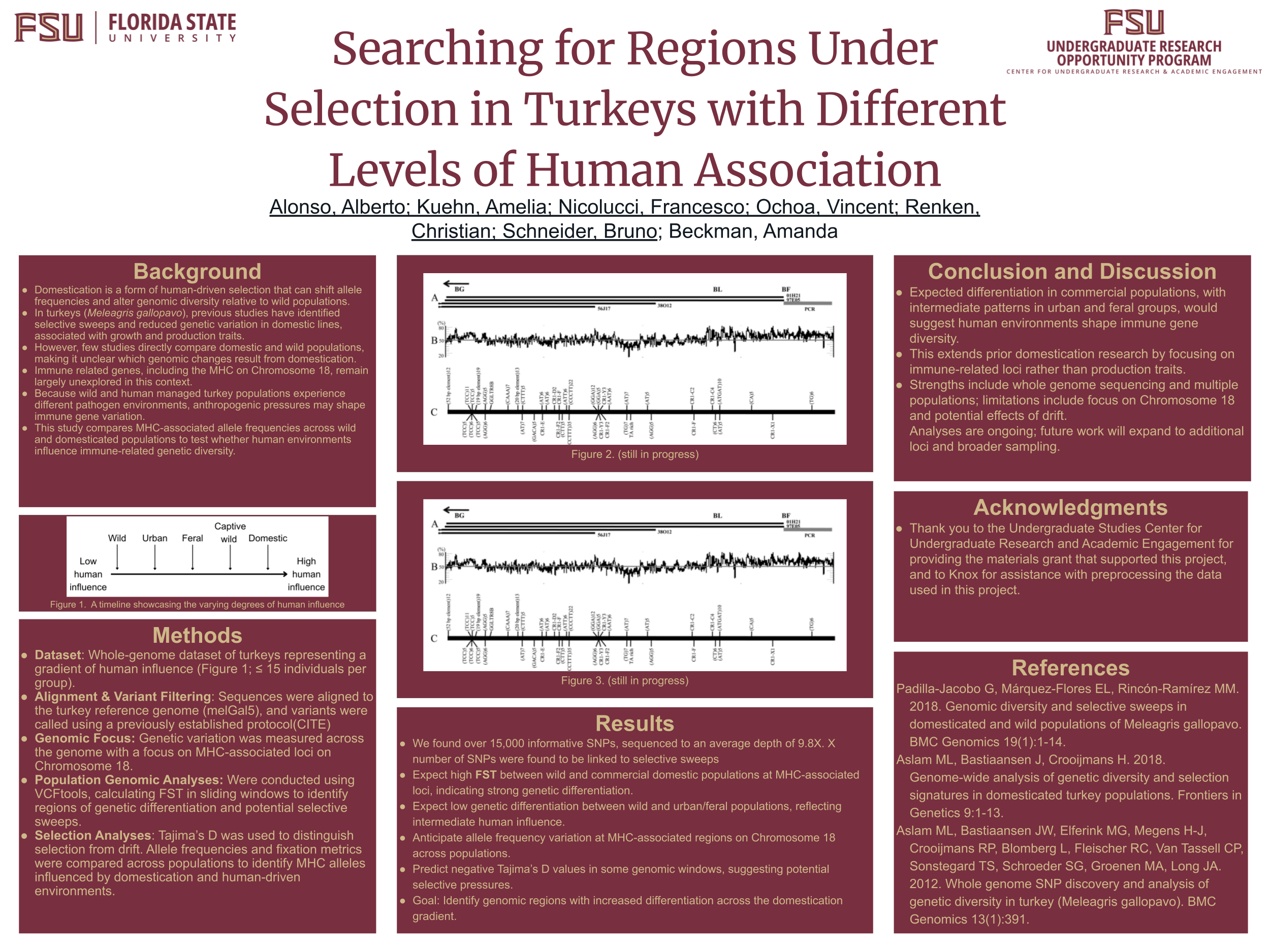
Searching for Regions Under Selection in Turkeys with Different Levels of Human Association
Authors: Vincent Ochoa, Amanda BeckmanStudent Major: Biological Science
Mentor: Amanda Beckman
Mentor's Department: Biological Science Mentor's College: College of Art & Sciences Co-Presenters: Alonso, Alberto; Kuehn, Amelia; Nicolucci, Francesco; Ochoa, Vincent; Renken, Christian; Schneider, Bruno
Abstract
Domestication exposes animals to a variety of novel environments, including differences in the diseases they encounter. Studying the evolutionary processes involved in domestication is important as many modern wild animals are experiencing some degree of pressure to adapt to human-dominated landscapes. Major histocompatibility complex (MHC) genes must rapidly evolve as they play an important role in immune responses and are shaped by pathogen exposure. This project investigated selection in wild versus domesticated turkeys (Meleagris gallopavo) and whether the amount of human interaction influences allele frequencies. We used a Whole Genome Sequencing (WGS) dataset of turkeys that experienced different levels of human association (wild, urban, feral, backyard domestic, and commercial domestic populations). After identifying genetic variants, we used VCFtools to analyze allele frequencies on Chromosome 18. We used FST, a measure of population differentiation, to identify regions with the greatest divergence. We expect differences in MHC-related allele frequencies between domesticated and wild turkeys, suggesting human environments influence immune-related genetic variation. Identifying these regions may highlight genomic regions shaped by selection. Overall, this project helps explain how domestication affects immune gene diversity. Future research could analyze additional turkey populations from different environments and examine allele frequencies on other chromosomes. Further work could also explore genomic differences in other domesticated avian species to better understand the impact of domestication on immune responses.
Keywords: Domestication, Genes, Biology, Allele,
26th annual Undergraduate Research Symposium, April 1, 2026
Leila Stemler Poster Session 3: 1:45 pm - 2:45 pm / Poster #289

BIO
Leila Stemler is a first-year student at FSU with a psychology major and a criminology minor. She is involved in the Exploration + Discovery Living Learning Community as well as UROP. She is currently working on a criminology research project with Dr. Keller Sheppard regarding the data organization of fatal police force.
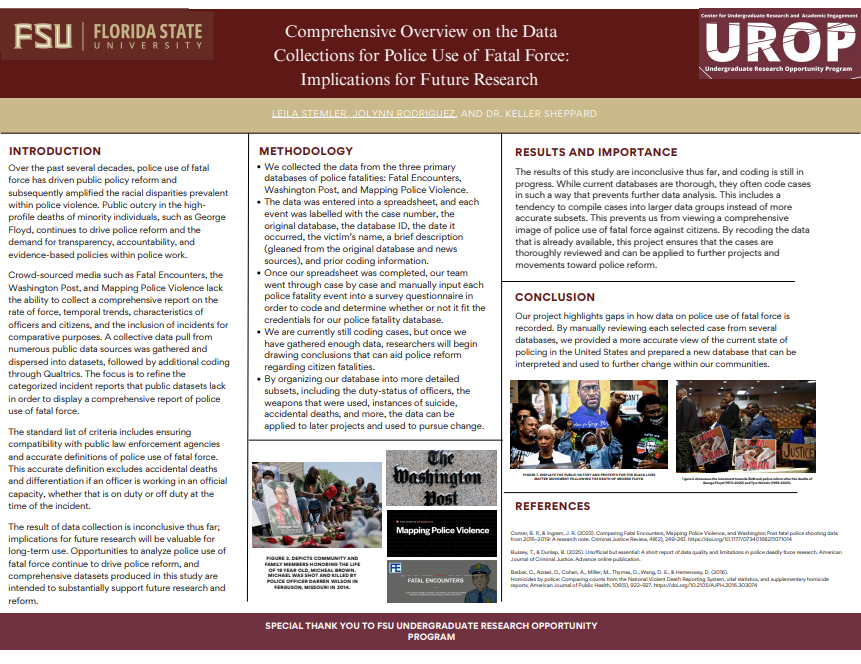
Comprehensive Overview on the Data Collections for Police Use of Fatal Force: Implications for Future Research
Authors: Leila Stemler, Keller SheppardStudent Major: Psychology
Mentor: Keller Sheppard
Mentor's Department: Criminology Mentor's College: College of Criminology and Criminal Justice Co-Presenters: Jolynn Rodriguez
Abstract
Over the past several decades, police use of fatal force has driven public policy reform and subsequently amplified the racial disparities prevalent within police violence. Public outcry in the high-profile deaths of minority individuals, such as George Floyd, continues to drive police reform and the demand for transparency, accountability, and evidence-based policies within police work.
Crowd-sourced media such as Fatal Encounters, the Washington Post, and Mapping Police Violence lack the ability to collect a comprehensive report on the rate of force, temporal trends, characteristics of officers and citizens, and the inclusion of incidents for comparative purposes. A collective data pull from numerous public data sources was gathered and dispersed into datasets, followed by additional coding through Qualtrics. The focus is to refine the categorized incident reports that public datasets lack in order to display a comprehensive report of police use of fatal force.
The standard list of criteria includes ensuring compatibility with public law enforcement agencies and accurate definitions of police use of fatal force. This accurate definition excludes accidental deaths and differentiation if an officer is working in an official capacity, whether that is on duty or off duty at the time of the incident.
The result of data collection is inconclusive thus far; implications for future research will be valuable for long-term use. Opportunities to analyze police use of fatal force continue to drive police reform, and comprehensive datasets produced in this study are intended to substantially support future research and reform.
Keywords: Criminology, Fatal Police Force
26th annual Undergraduate Research Symposium, April 1, 2026
Victoria Blackwell Poster Session 3: 1:45 pm - 2:45 pm / Poster #184
BIO
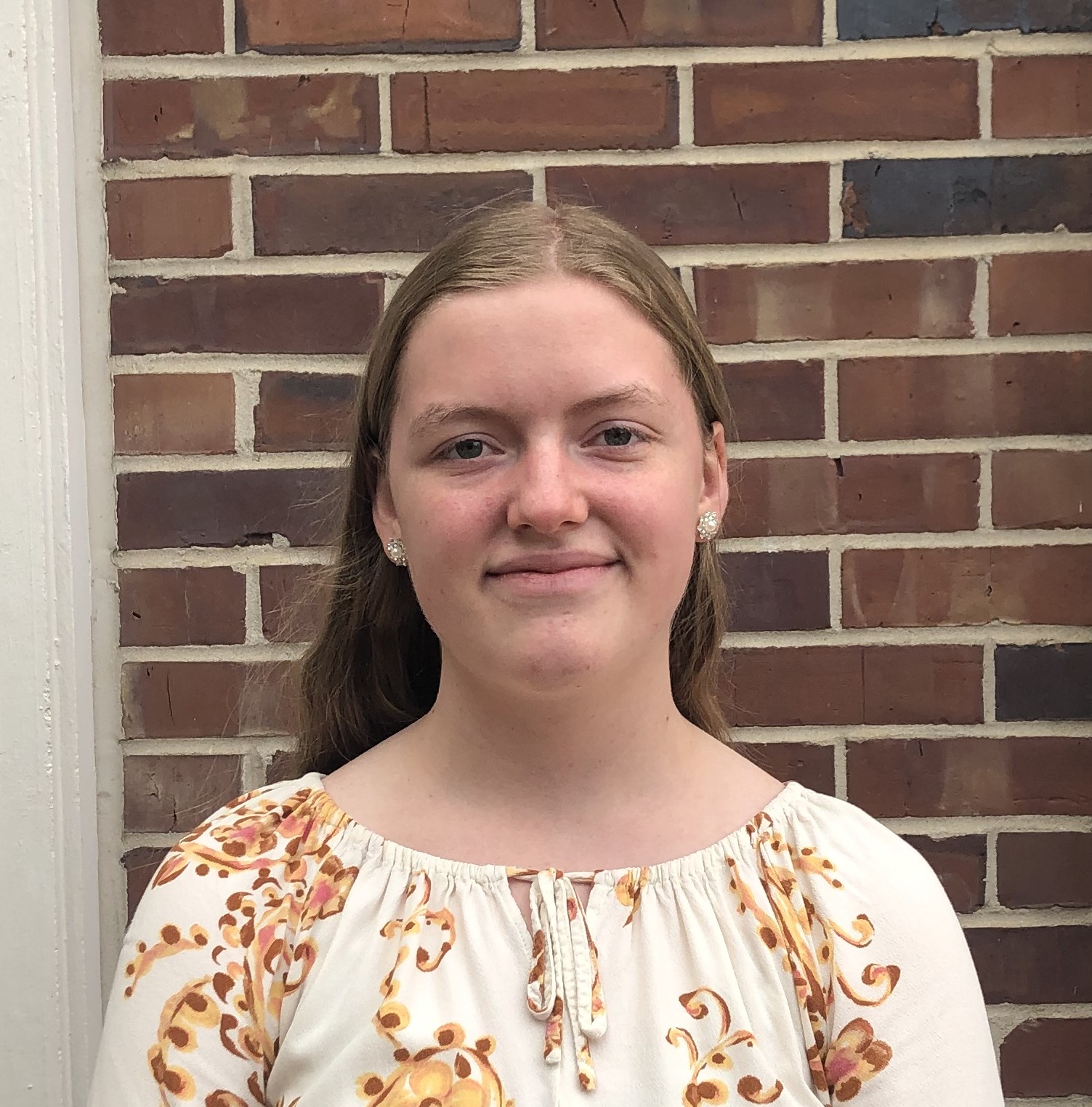
Victoria Blackwell is a first-year Actuarial Science major, looking to add Accounting as a second major in the Fall. Born in a suburb of New Orleans as one of five children, she moved to Florida in 2022. She is currently involved in the Honors Program, and she is active in Students for Life and her church choir. She is passionate about math and aims to become a full time actuary after she graduates.
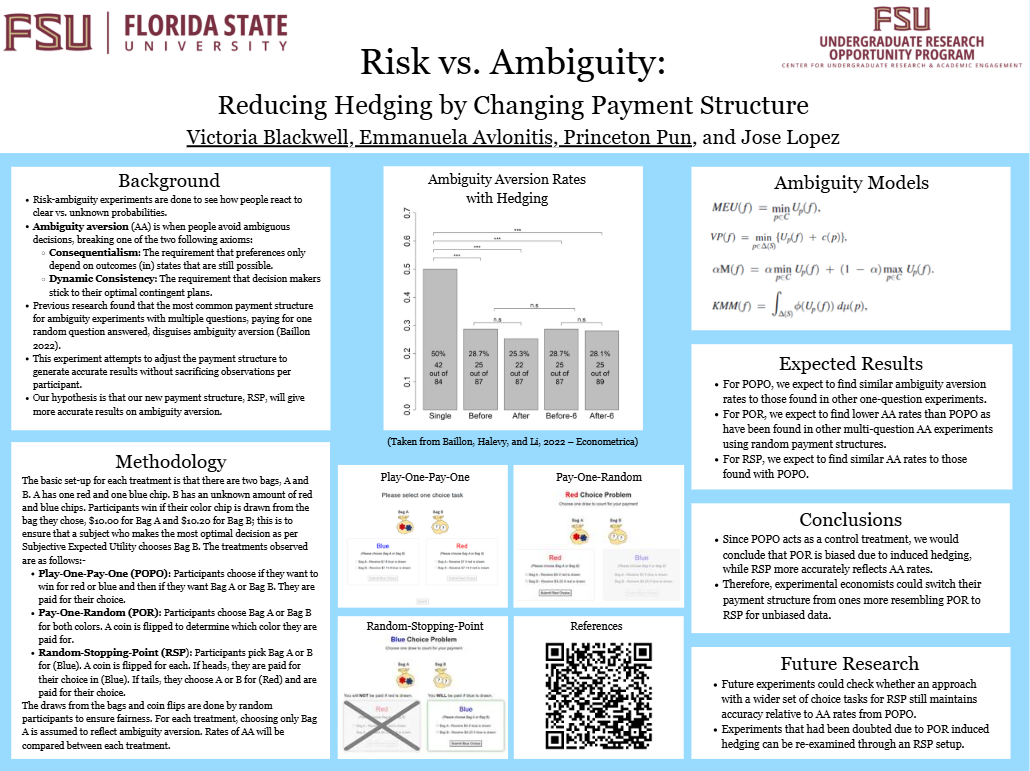
Risk vs. Ambiguity: Reducing Hedging by Changing Payment Structure
Authors: Victoria Blackwell, Jose LopezStudent Major: Actuarial Science
Mentor: Jose Lopez
Mentor's Department: Economics Mentor's College: Social Sciences and Public Policy Co-Presenters: Emmanuela Avlonitis and Princeton Pun
Abstract
Within economics, people are expected to be rational and work to their greatest expected utility. Using this, we would expect that people would always pick the option with the greatest expected value, but people often accept lower payoffs to avoid ambiguity, defined as situations where probabilities are unknown. This irrationality makes it interesting and important to economists.. The validity of previous ambiguity research is being questioned because of hedging, whereby participants can change ambiguous situations into risky situations, which have set probabilities. However, if that can be rectified with changes in how people are paid for and asked questions future research may still be possible. Within this experiment, we asked if hedging behavior can be minimized within risk-ambiguity experiments in multiple question surveys by adjusting the method by which payment is decided. One treatment only has one choice to act as a control. The second has multiple choices where it is randomly determined which one will be paid out, which is the method that had previously had problems with hedging. The final treatment has participants make one decision, be randomly assigned to either be paid based on that decision or answer a second question. We expect that the third treatment’s results to appear similar to the control’s results and the second to underestimate ambiguity aversion as it has in other experiments. This would provide future researchers with a method to ask multiple questions while still receiving accurate results on ambiguity aversion.
Keywords: Ambiguity, Payment Structure, Incentives
26th annual Undergraduate Research Symposium, April 1, 2026
Gracie Jean-Charles Poster Session 2: 10:45 am - 11:45 am / Poster #212
BIO
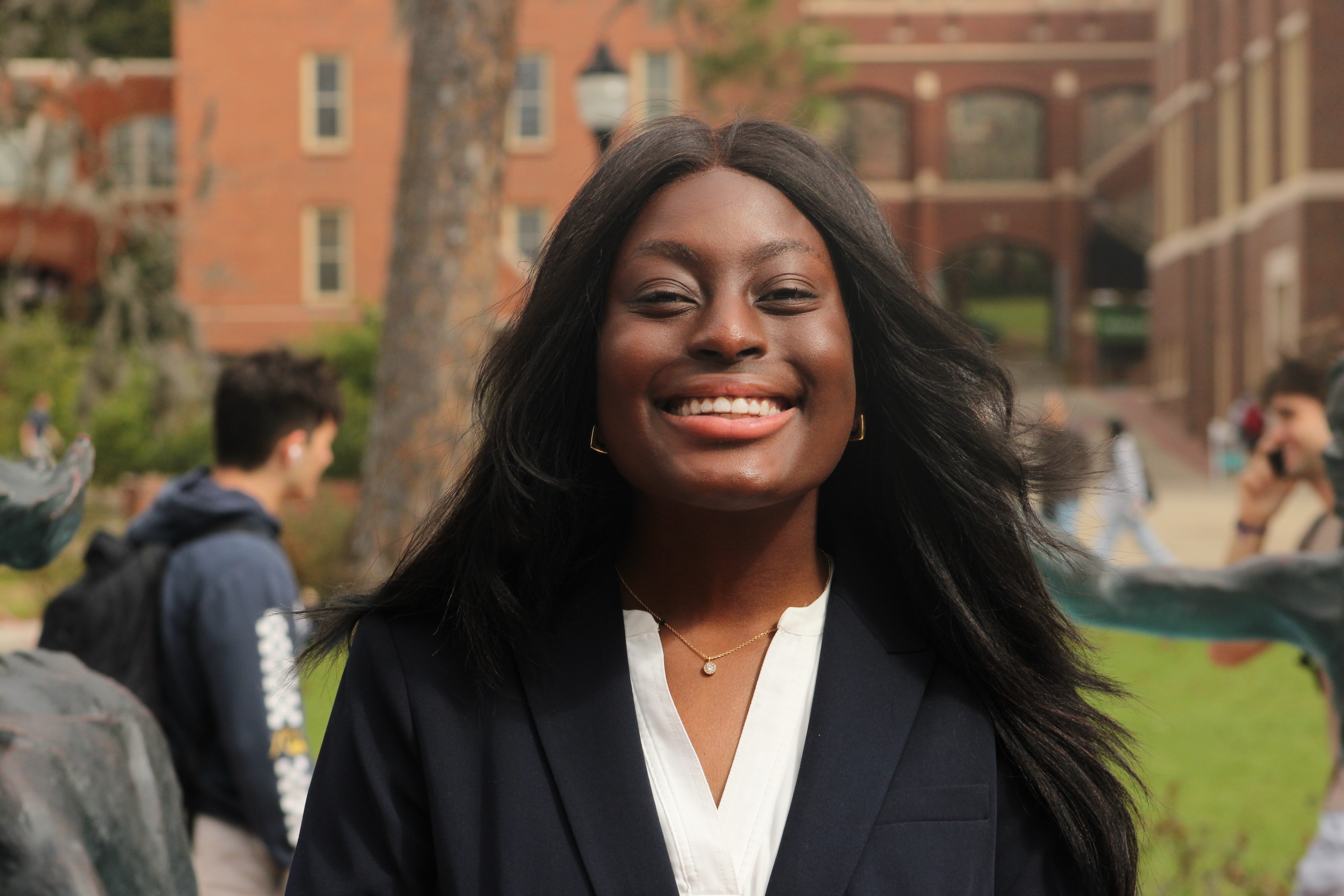
From Bradenton, Florida, Gracie Jean-Charles is a first-year Biological Sciences major with a growing interest in medicine, biomedical and psychological research, and public health. She is passionate about improving healthcare systems and exploring new opportunities both within and outside of health science. Dedicated to service and campus involvement, Gracie is actively engaged with the Multi-Cultural Association of Pre-Health Students, the Center for the Advancement of Teaching, NSBWM, the Undergraduate Research Opportunity Program and Boys and Girls Club. Through these experiences, she hopes to continue expanding her understanding of research, healthcare, and community impact. Outside of academics and service, you can find her on the tennis court or strolling through Landis Green.
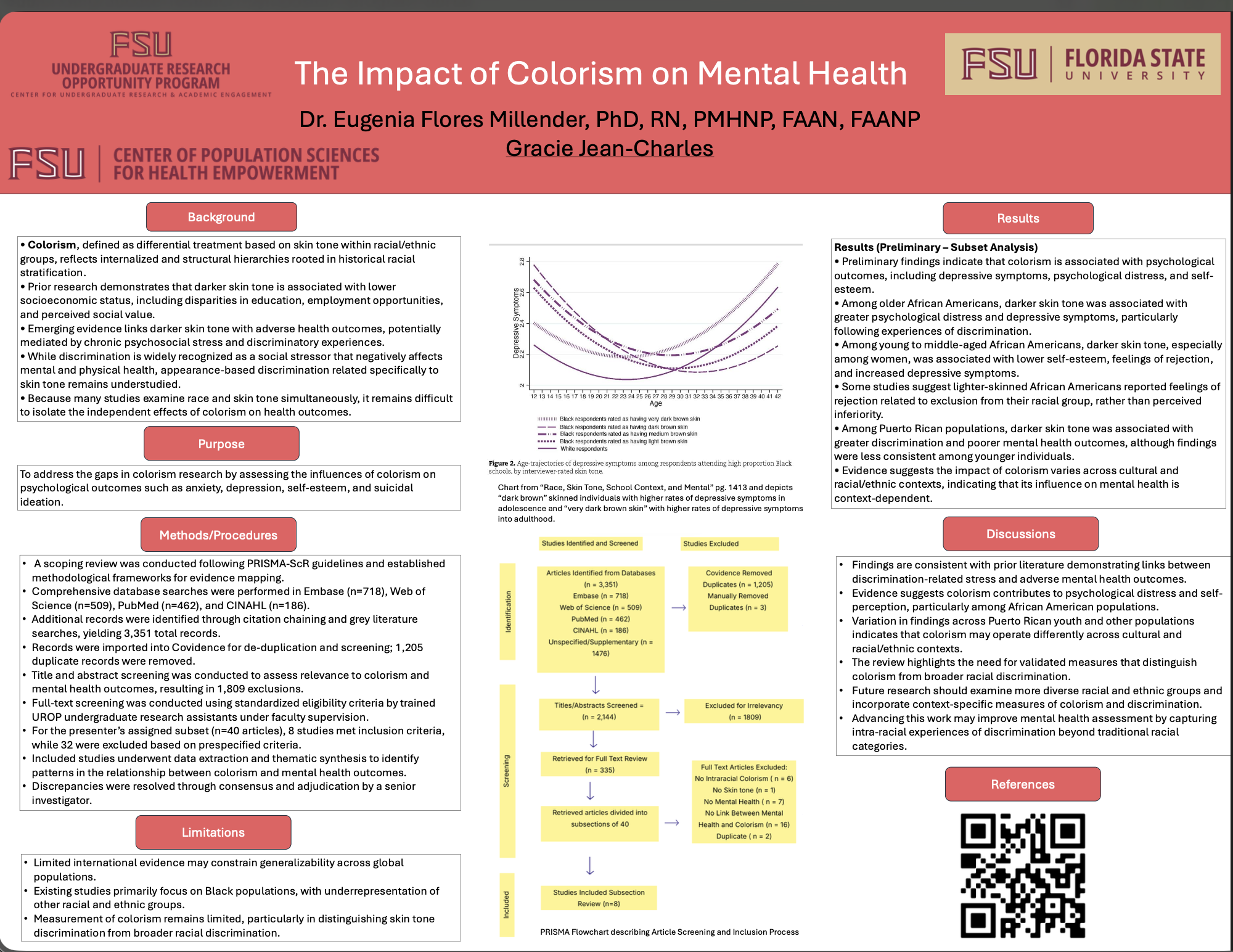
The Impact of Colorism on Mental Health
Authors: Gracie Jean-Charles, Eugenia Flores MillenderStudent Major: Biological Sciences
Mentor: Eugenia Flores Millender
Mentor's Department: Center of Population Sciences for Health Empowerment Mentor's College: College of Nursing Co-Presenters:
Abstract
Colorism in this study is defined as discrimination based on skin tone between members of the same racial and ethnic groups.Colorism, although significant, is often overlooked, especially in reference to mental health.The purpose of this research is to examine how colorism affects women’s psychological outcomes, particularly anxiety, self-esteem, depression and suicidal ideation. Understanding this relationship is important because colorism may have the potential to influence the psychological outcomes of the individuals affected through internalized colorist ideals, distress, discrimination based on skin tone and media. In addition, this research also investigates how colorism may differently affect the mental health of lighter and darker toned individuals within the same ethnic or racial group. The data used in this research was collected via systematic review of existing research with relation to colorism and mental health outcomes. Further, the analysis of peer-reviewed psychological, sociological, and public health studies related to colorism and mental health was used to determine the relationship between colorism and psychological outcomes. Studies and articles with pertinent information were further screened and underwent data extraction. Findings from the final eight selected articles suggested that those with darker skin are more susceptible to higher levels of anxiety, depressive symptoms, suicidal ideation, colorist discrimination and lower levels of self esteem. These results suggest that colorism could be a stressor that influences mental health.
Keywords: Colorism, Mental Health, Psychological Outcome
26th annual Undergraduate Research Symposium, April 1, 2026
Alejandro Salcedo Poster Session 4: 3:00 pm - 4:00 pm / Poster #78
BIO
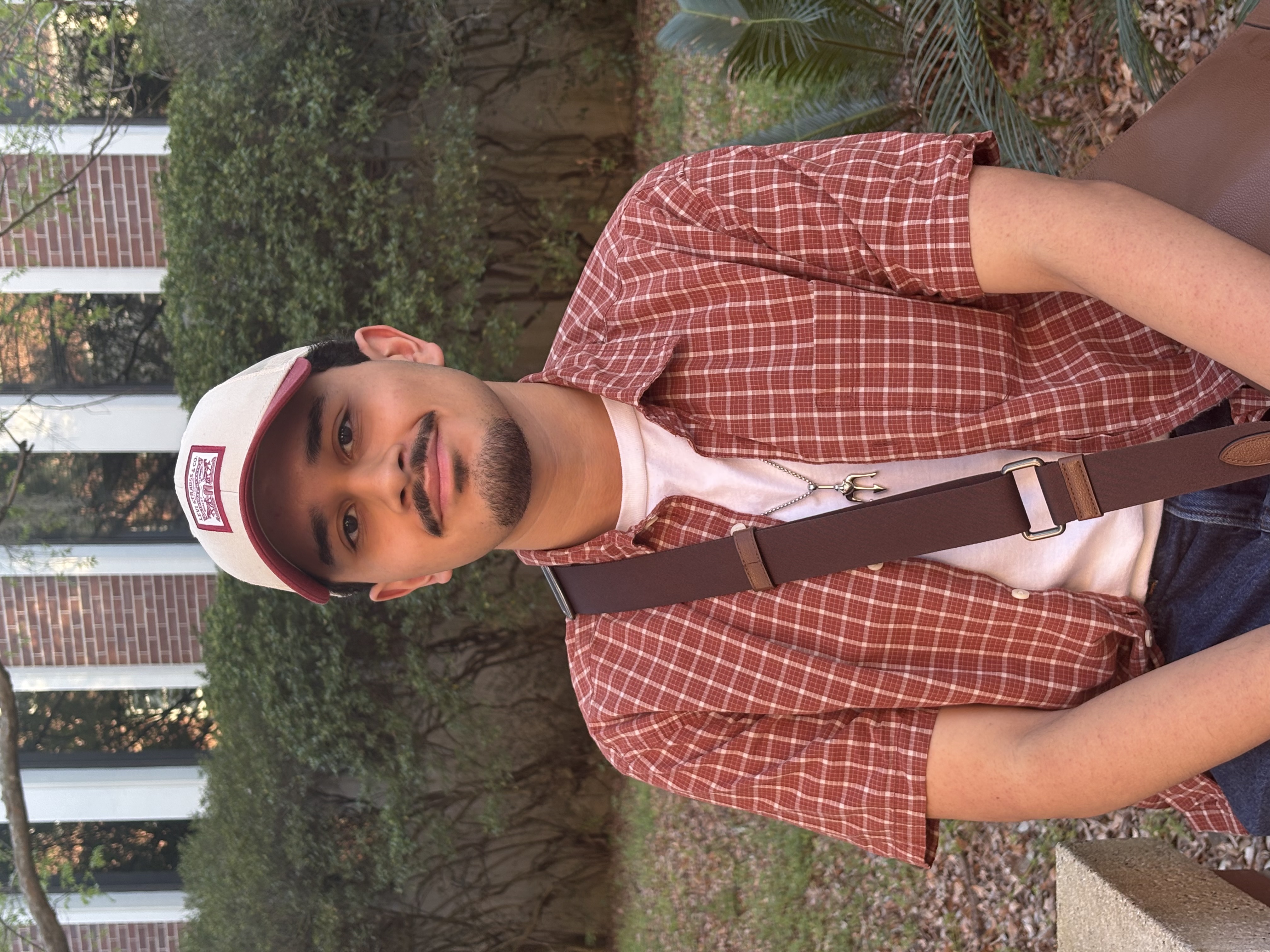
Alejandro is a 2nd-year student assisting the Plant Laboratory with research analyzing social responses to power differentials in society. He is working with Dr. Ashby Plant and Ayanna Brewton to accomplish this research. He is from Miami, Florida. He is pursuing a career in forensic psychology to build rehabilitation programs that can assist those incarcerated with reintegrating into society. He plans to obtain a PhD degree in Clinical Psychology as a prerequisite to acquiring a license for practicing as a psychologist.
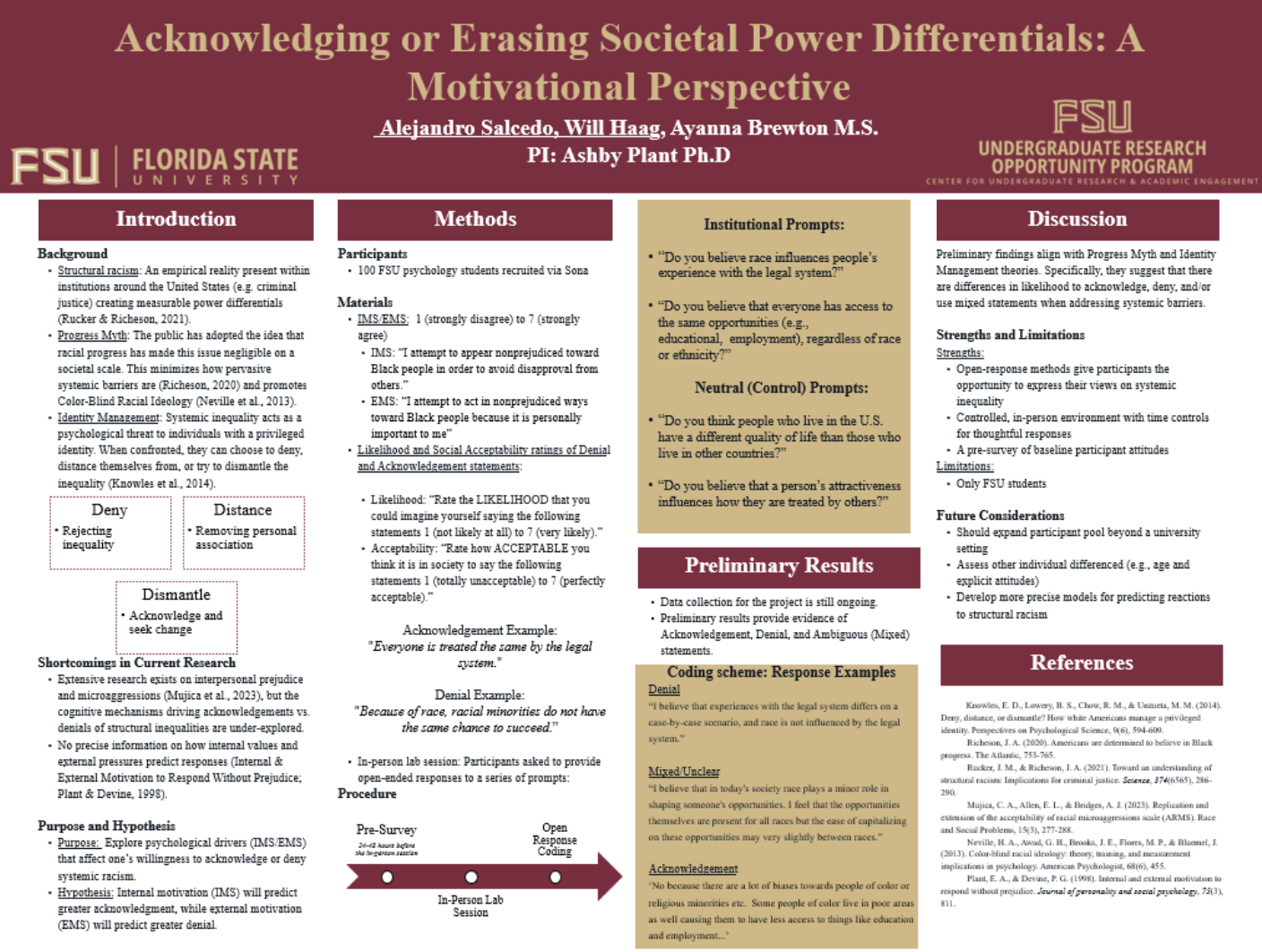
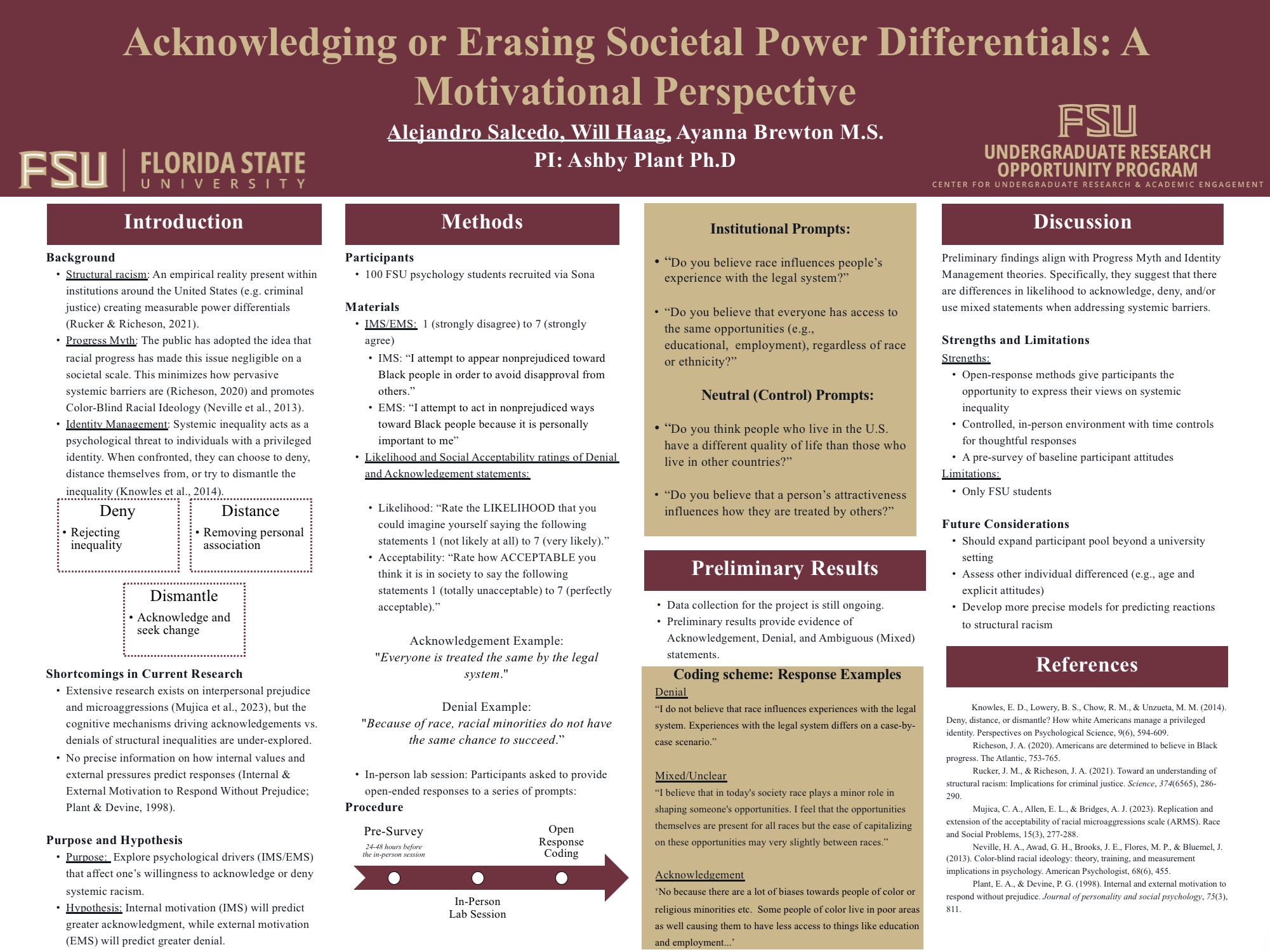
Acknowledging or Erasing Societal Power Differentials: A Motivational Perspective
Authors: Alejandro Salcedo, Ashby Plant Ph.DStudent Major: Psychology & Criminology
Mentor: Ashby Plant Ph.D
Mentor's Department: Department of Psychology Mentor's College: College of Arts and Sciences Co-Presenters: Will Haag
Abstract
The research focuses on whether and why people perceive existing structures, such as laws, the legal and education system, and government influence power differentials between groups. The current work investigates the psychological mechanisms that underlie whether people acknowledge or deny the presence of inequality through the lens of systemic racism. In our work, we gather open-ended responses on participants’ views of whether differences exist in equal opportunities such as employment, education, and the legal system. Of key interest is whether respondents’ motivations (Plant & Devine, 1998; Internal and External motivations to respond without prejudice) determine how participants respond to the questionnaires. We used an acknowledgement and denial coding rubric to score participants’ responses on the extent to which they acknowledge and/or deny the existence of a stated power differential. While data collection is still ongoing, we predict that if a participant is more internally motivated to respond without prejudice (due to their personal views), they will be more likely to acknowledge structural inequality. In contrast, people who are high in external motivation (focused on how others will view them) will be more likely to deny or use ambiguous (mixed) responses that both acknowledge and deny. We seek to demonstrate the ways in which motivational factors inform the perceived realities of structural inequality.
Keywords: Power differentials, inequality, motivation
26th annual Undergraduate Research Symposium, April 1, 2026
Autumn Thomas Poster Session 3: 1:45 pm - 2:45 pm / Poster #291
BIO
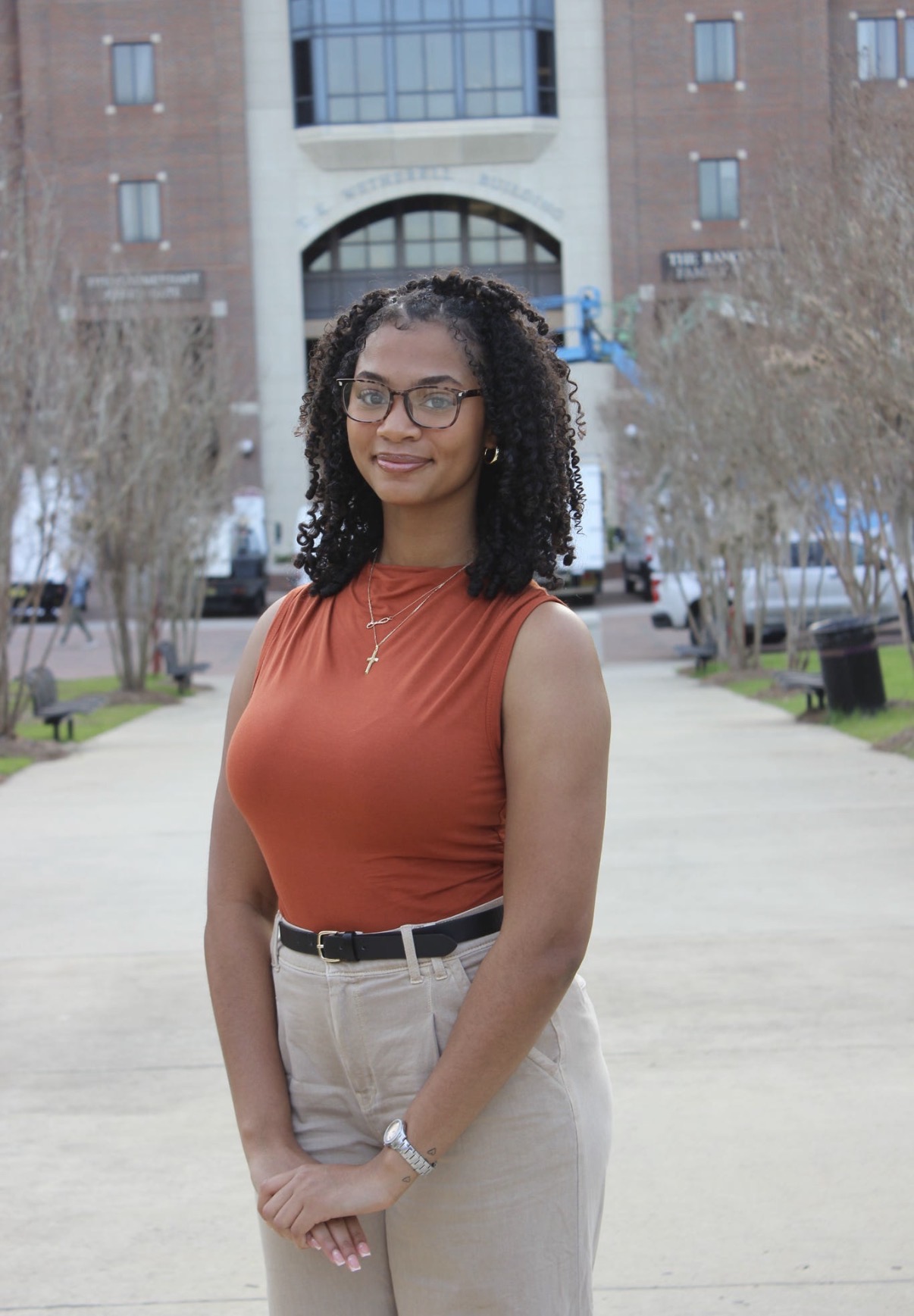
Autumn is a second year student at Florida State University. She is currently pursuing a Bachelors of Science in Psychology, with minors in Communications and Business. She works under Dr. Michael Kaschak and Nelu Radpour, M.S. in their Cognitive Psychology lab. She aims to earn a graduate degree in either Clinical Psychology or Sport Psychology, on her track to becoming a licensed Sport Psychologist.
What's That Sound: How Humans vs. AI Hear Shapes in Words
Authors: Autumn Thomas, Nelu RadpourStudent Major: Psychology
Mentor: Nelu Radpour
Mentor's Department: Department of Psychology Mentor's College: College of Arts and Sciences Co-Presenters:
Abstract
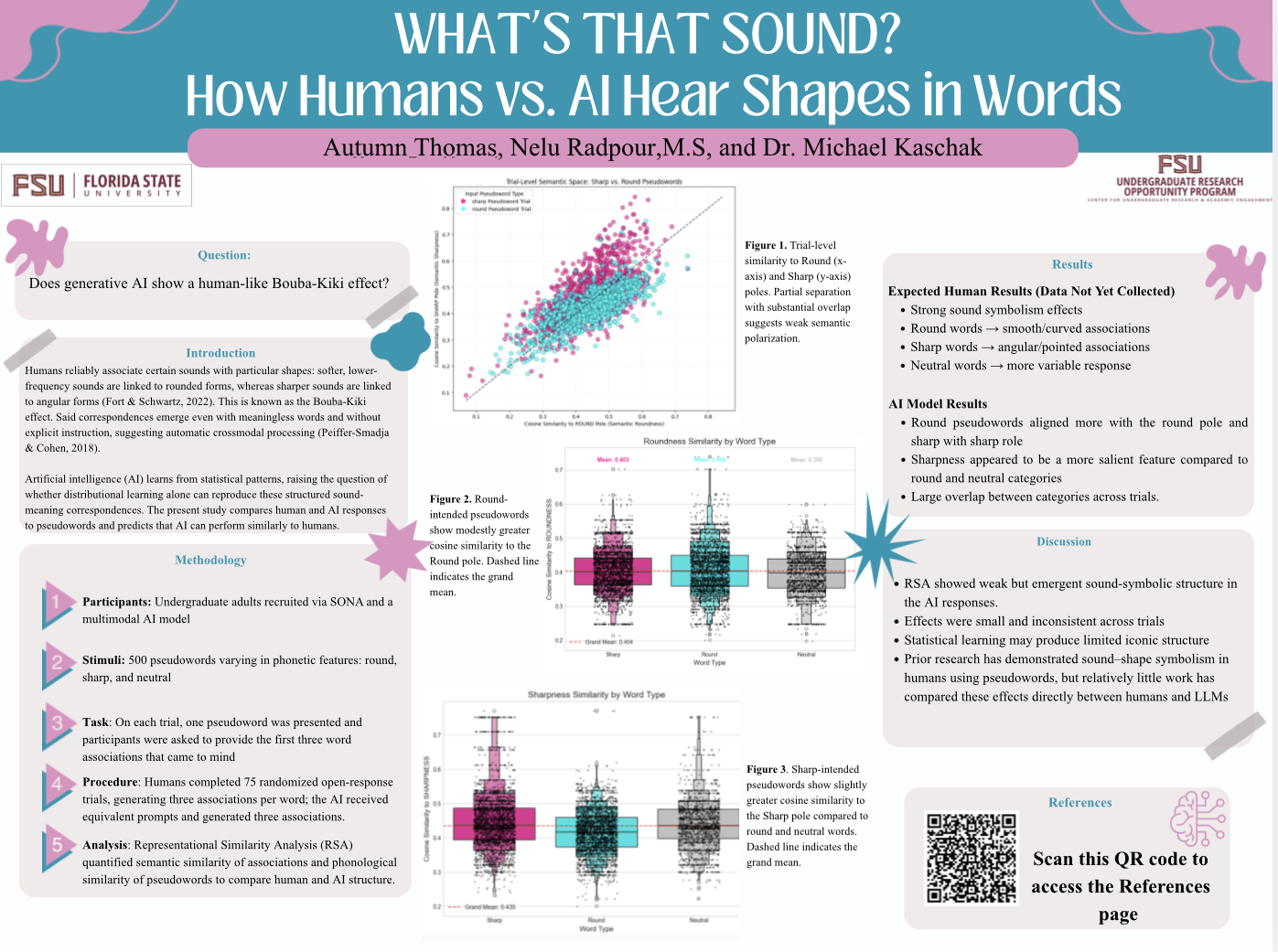
Sound-shape symbolism reveals systematic mappings between phonetic structure and semantic meaning, raising questions about whether such correspondences arise from innate perceptual mechanisms or statistical learning. The present study compared associations generated by human participants and artificial intelligence (AI) to examine whether large language models (LLMs) exhibit human-like sound-meaning structure. Humans appear to have an innate “gut feeling” for sound symbolism, automatically matching sounds to shapes based on perceptual and articulatory experience. In contrast, AI does not “feel” the shape of a sound. Although advanced models can guess correct matches through large-scale statistical learning, they lack the embodied sensory systems that make these correspondences natural for humans.
In the present study, undergraduate participants generated three associations to pseudowords (made up words with no real meaning) varying in round, sharp, or neutral phonetic properties. LLMs completed the same task. Representational Similarity Analysis (RSA) quantified phonological and semantic similarity within and between human and AI-generated responses.
Humans are expected to show strong within-category semantic clustering and robust phonology–semantics alignment, reflecting automatic cross-modal correspondences. In contrast, AI showed small but statistically significant differences in semantic alignment across sharp, round, and neutral-sounding pseudowords (p < .01). However, effect sizes were modest and reliability across trials was low, indicating weak and non-polarized sound-symbolic structure within the model.
These findings contribute to debates on embodied cognition, sound-symbolic meaning, and the limits of statistical language models.
Keywords: cognition, AI, Bouba-Kiki, pseudoword, LLM, sound-shape symbolism
26th annual Undergraduate Research Symposium, April 1, 2026
Ian Nguyen Poster Session 4: 3:00 pm - 4:00 pm / Poster #202

BIO
Ian Nguyen is a 1st year pursuing a Bachelor's of Science in Biochemistry at Florida State University. His honors include being on the Florida State University Fall 2025 Dean's List and being a 2024-25 National Merit Scholar. Ian is also a member of the Florida State University Honors Program. Ian's research experiences include participating in the Undergraduate Research Opportunities Program during his freshman year at Florida State, where he studied deep-sea substrate and marine invertebrate protection inside of a national sanctuary. The purpose of this research was to better understand the impact of commercial fishing on marine biodiversity in the Pacific Ocean. His faculty mentor was Dr. Amy Baco-Taylor in the Florida State University Earth, Ocean, and Atmospheric Sciences Department who provided guidance to him during his UROP project. Ian spends his free time at FSU playing volleyball at the Rec Center and going for runs around Doak Cambell Stadium. Ian wants to work in Bioinformatics and Drug Discovery and is looking to get involved in further research in the computational sciences at FSU.
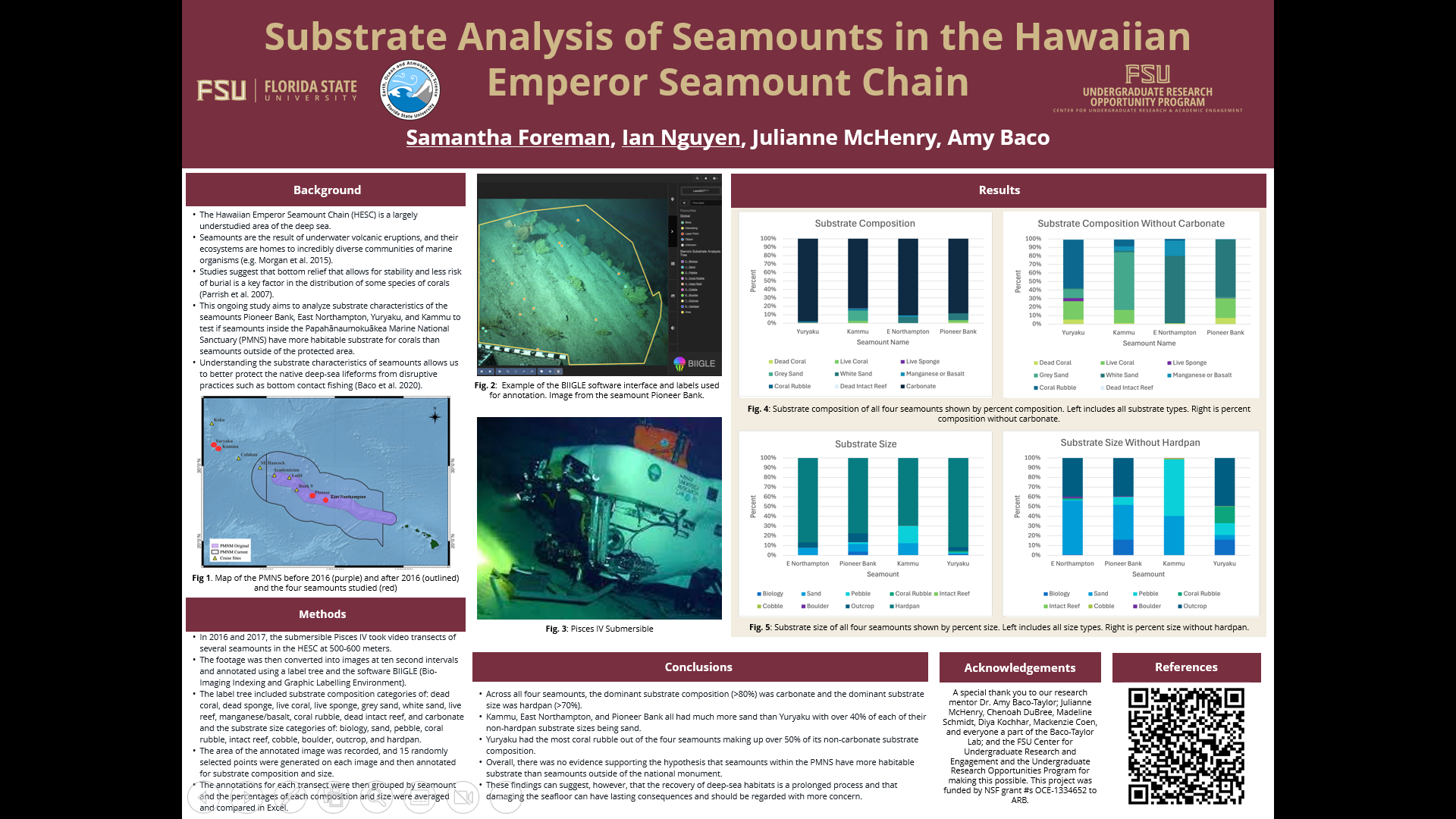
Substrate Analysis of Seamounts in the Hawaiian Emperor Seamount Chain
Authors: Ian Nguyen, Dr. Amy Baco-TaylorStudent Major: Biochemistry
Mentor: Dr. Amy Baco-Taylor
Mentor's Department: Earth, Ocean, and Atmospheric Sciences Mentor's College: Arts and Sciences Co-Presenters: Samantha Foreman
Abstract
The deep sea remains largely understudied, yet it harbors incredibly unique lifeforms. The animals found in an area are often determined in part by available substrate. This study seeks to investigate if there is a difference between the substrate characteristics of two seamounts inside the Papahānaumokuākea Marine National Sanctuary (PMNS), East Northampton and Pioneer Bank, compared to two seamounts outside, Kammu and Yuryaku, which are heavily fished. Our goal was to test for habitat damage, in the form of substrate differences, from disruptive fishing practices within and outside the protected areas. Seafloor images were collected on twelve ten-minute horizontal transects using the Pisces IV submersible in 2016 and 2017. Three transects were analyzed from each of the four seamounts. Bio-Image Indexing and Graphical Labelling Environment (BIIGLE), an image analysis software, was used to annotate substrate characteristics, including composition and size. Preliminary results show substrate composition was primarily carbonate and size was primarily hardpan across all four seamounts. Additionally, Kammu, East Northampton, and Pioneer Bank had a larger percentage of sand compared to Yuryaku and Yuryaku had a larger percentage of coral rubble compared to the other seamounts. Ultimately, we could not conclude that seamounts within the PMNS have more habitable substrate than seamounts outside of the national monument. Further analyses could compare substrate characteristics over a greater number of seamounts or with varying factors such as depth or amount of trawling. This research can contribute to a better understanding of human impacts on deep-sea ecosystems.
Keywords: Coral, Benthic, Seamounts