
Research Symposium
26th annual Undergraduate Research Symposium, April 1, 2026
Eva Morris Poster Session 4: 3:00 pm - 4:00 pm / Poster #276
BIO
Eva Morris is a second-year student from Long Island, New York, pursuing a dual degree in Management Information Systems and Accounting. She plans to attend law school after graduation and hopes to practice business law, with a particular interest in the intersection of public policy, technology, and finance.
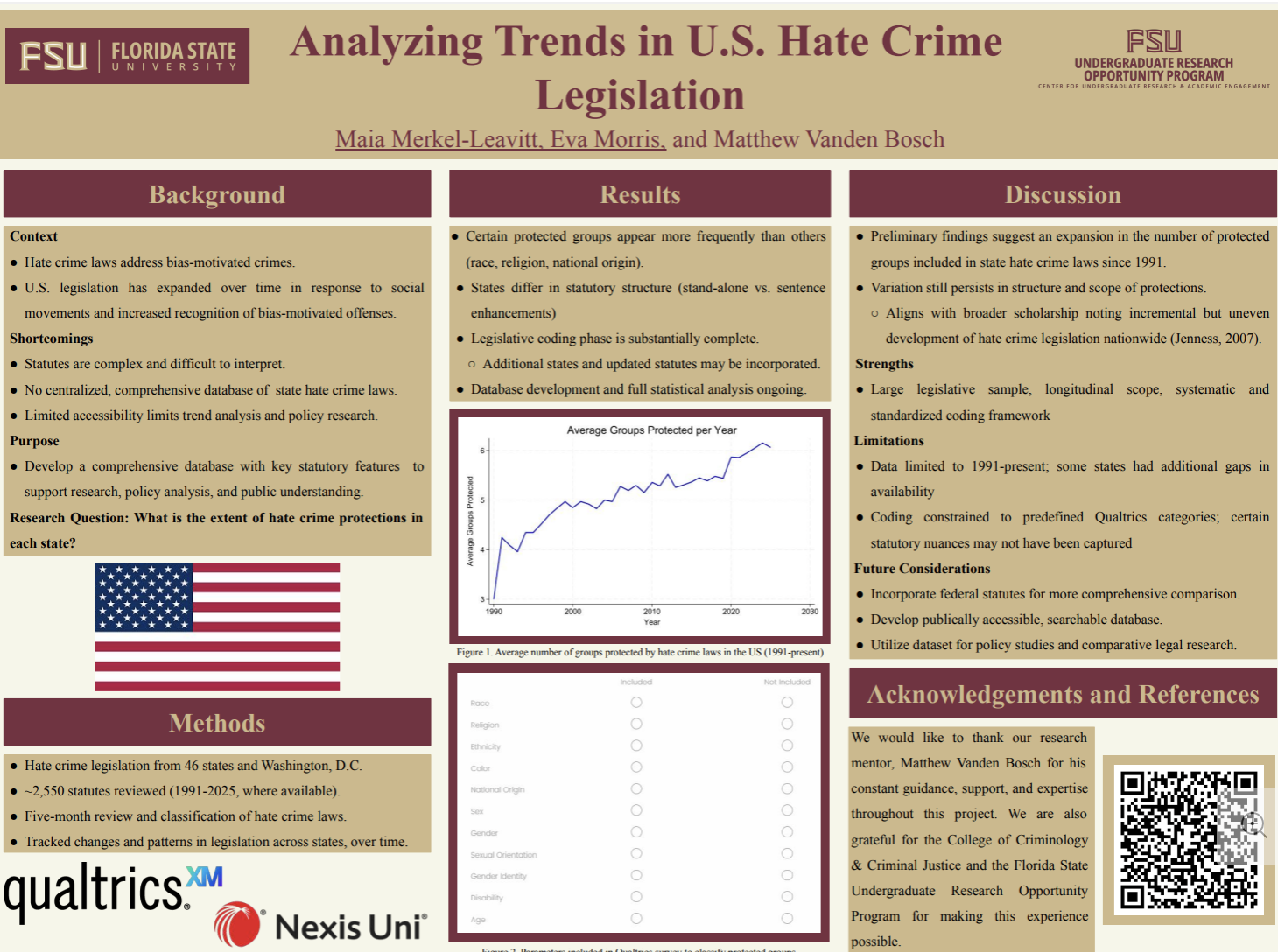
Analyzing Trends in U.S. Hate Crime Legislation
Authors: Eva Morris, Matthew Vanden BoschStudent Major: Management Information Systems and Accounting
Mentor: Matthew Vanden Bosch
Mentor's Department: Criminology Mentor's College: Criminology and Criminal Justice Co-Presenters: Maia Merkel-Leavitt
Abstract
The purpose of our research project is to conduct an analysis of hate crime legislation in
the United States from 1991 to the present, in order to formulate a comprehensive
database. The database constructed through this project will enable users to quickly
and efficiently access data pertaining to hate crime legislation and will allow hate crime
legislation to become more accessible to the general public. It is imperative that we, as
a society, have strong, well-enforced hate crime laws to promote justice and deter
discrimination, and therefore, this project is relevant. The methodology of this study is
coding utilizing Qualtrics form surveys and a categorical analysis of the provided laws
according to an outlined system of requirements for each law. The questions asked
included characteristics of each law, if the law was an aggravating factor or a
stand-alone law, specific vocabulary included in the laws, and other defining factors of
the laws. The results of our project was a comprehensive database that will be
potentially published and accessible to the public in order to foster a wider
understanding and increased awareness of characteristics of hate crime laws. Future
researchers can complement our data by creating a database that spans prior to 1991.
Additionally, the public can utilize our data when informing themselves on legislation,
voting, and policy improvements. Our research would also benefit from annual updates
as laws change and evolve in the future. The results of our study suggest
that hate crime legislation is extensive, detailed, and ever-changing.
Keywords: Hate Crime Legislation, Political Science, Criminology, Qualtrics
26th annual Undergraduate Research Symposium, April 1, 2026
Emma Prior Poster Session 2: 10:45 am - 11:45 am / Poster #52
BIO
Emma Prior is a Junior from Jacksonville, Florida majoring in Psychology with a minor in Child Development. She has received the honor of Presidents List each semester from Fall 2023 to Fall 2025. She has been working under her faculty mentor, Tehila Nugiel, and has been a research assistant in the Learning Brain Lab since Spring 2025. Her graduate school goals are to earn her Masters Degree in Mental Health Counseling and to eventually become a Licensed Mental Health Counselor.
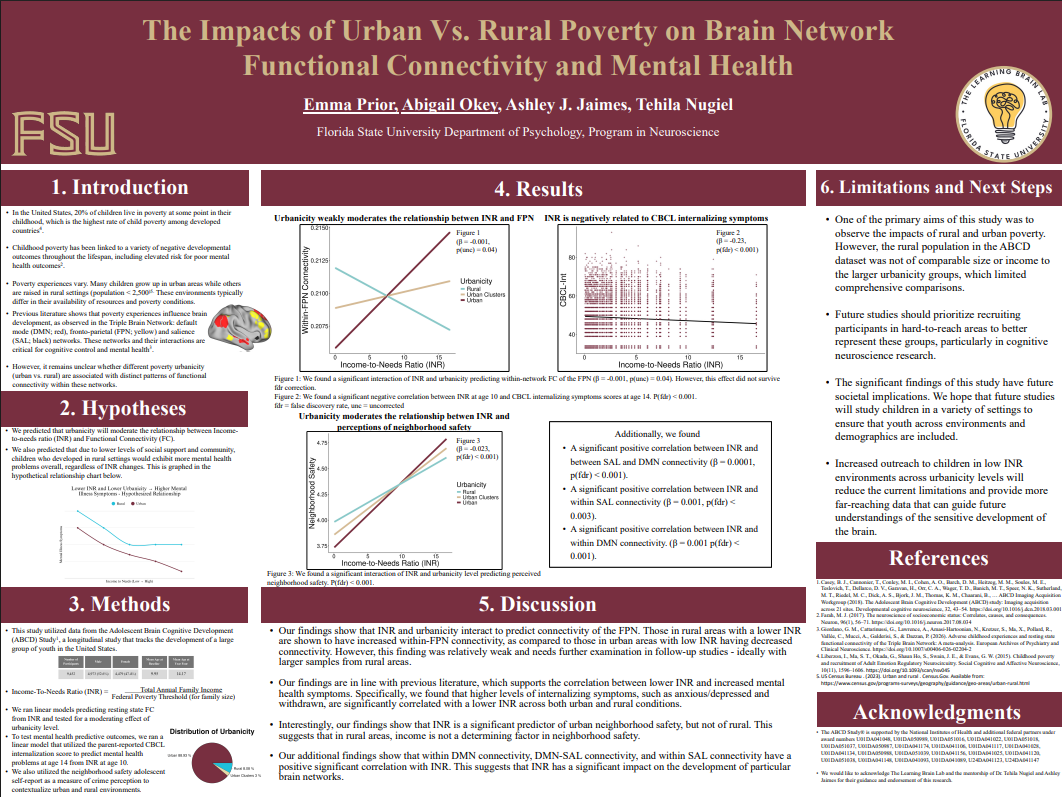
The Impacts of Urban vs. Rural Poverty on Brain Network Functional Connectivity and Mental Health
Authors: Emma Prior, Tehila NugielStudent Major: Psychology
Mentor: Tehila Nugiel
Mentor's Department: Department of Psychology Mentor's College: College of Arts and Sciences Co-Presenters: Abigail Okey
Abstract
Studies show that 20-30% of children in the United States experience poverty conditions at some point in their lives. Childhood poverty has been linked to future mental health problems through its various impacts on brain development. However, poverty is not the same throughout the United States. A majority of these children will grow up in urban poverty, while others will grow up in rural settings. In these two environments, there are a variety of experiences that lead to different developmental trajectories and outcomes. Using resting-state functional magnetic resonance imaging (fMRI) data collected from the Adolescent Brain Cognitive Development (ABCD) Study at baseline (ages 9-10) and child self-report surveys and parental reports at follow-up year 4 (ages 13-14), we aimed to determine how income to needs ratio(INR) in different urbanicity conditions relates to functional connectivity in brain networks associated with psychopathology. We also aimed to study whether INR is linked to future mental health problems, as seen through impaired connectivity in the aforementioned brain networks. Our research found a significant interaction between INR and urbanicity conditions predicting within-network DMN connectivity, such that the participants in more urban environments had a stronger relationship between INR and within-network DMN connectivity. It was also found that children in lower INR demonstrated higher symptoms of internalized emotional distress, as reported in the Child Behavioral Checklist. Next steps include determining at what ages these functional connections begin to shift across urbanicity environments at different levels of INR, and whether these differences persist throughout the lifespan.
Keywords: Poverty, functional connectivity, mental health
26th annual Undergraduate Research Symposium, April 1, 2026
Taylor Easterbrook Poster Session 4: 3:00 pm - 4:00 pm / Poster #132
BIO
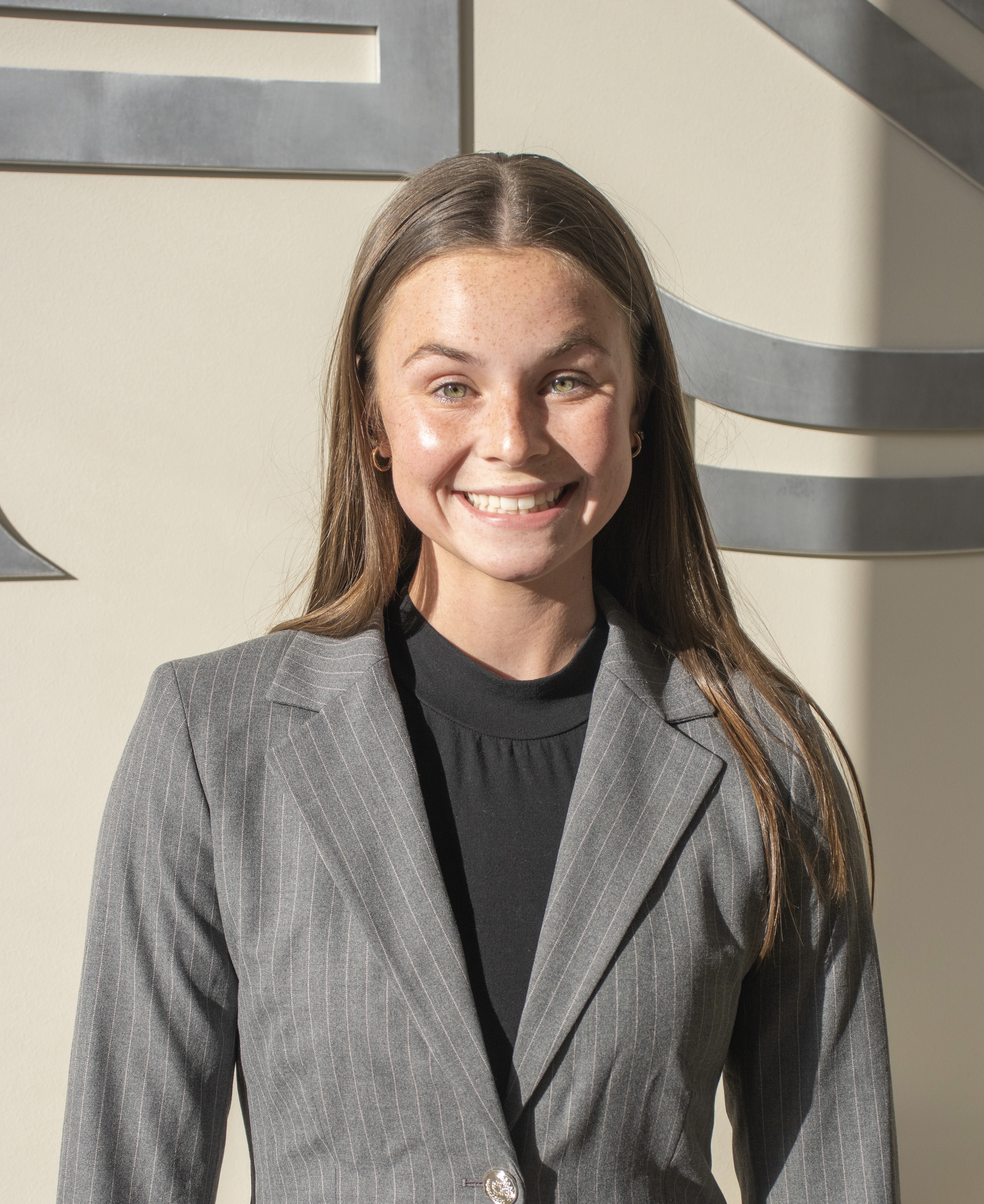
Taylor Easterbrook is a sophomore at Florida State University, pursuing a Bachelor of Arts in Political Science and a minor in Spanish. Taylor has received academic honors, including the President's and Dean's Lists each semester during her time at FSU. She writes for the Political Review at FSU, researching current events and writing in a non-partisan manner. Through the Undergraduate Research Opportunity Program, Taylor has engaged in nonprofit research under the mentorship of Mrs. Maria Paula McIntyre-Nwenyi and the faculty at the Center for Leadership and Service. Taylor aspires to attend law school and work as a corporate attorney.
Bridging the Gap
Authors: Taylor Easterbrook, Maria Paula McIntyre-NwenyiStudent Major: Political Science
Mentor: Maria Paula McIntyre-Nwenyi
Mentor's Department: Center for Leadership and Service Mentor's College: Center for Leadership and Service Co-Presenters:
Abstract
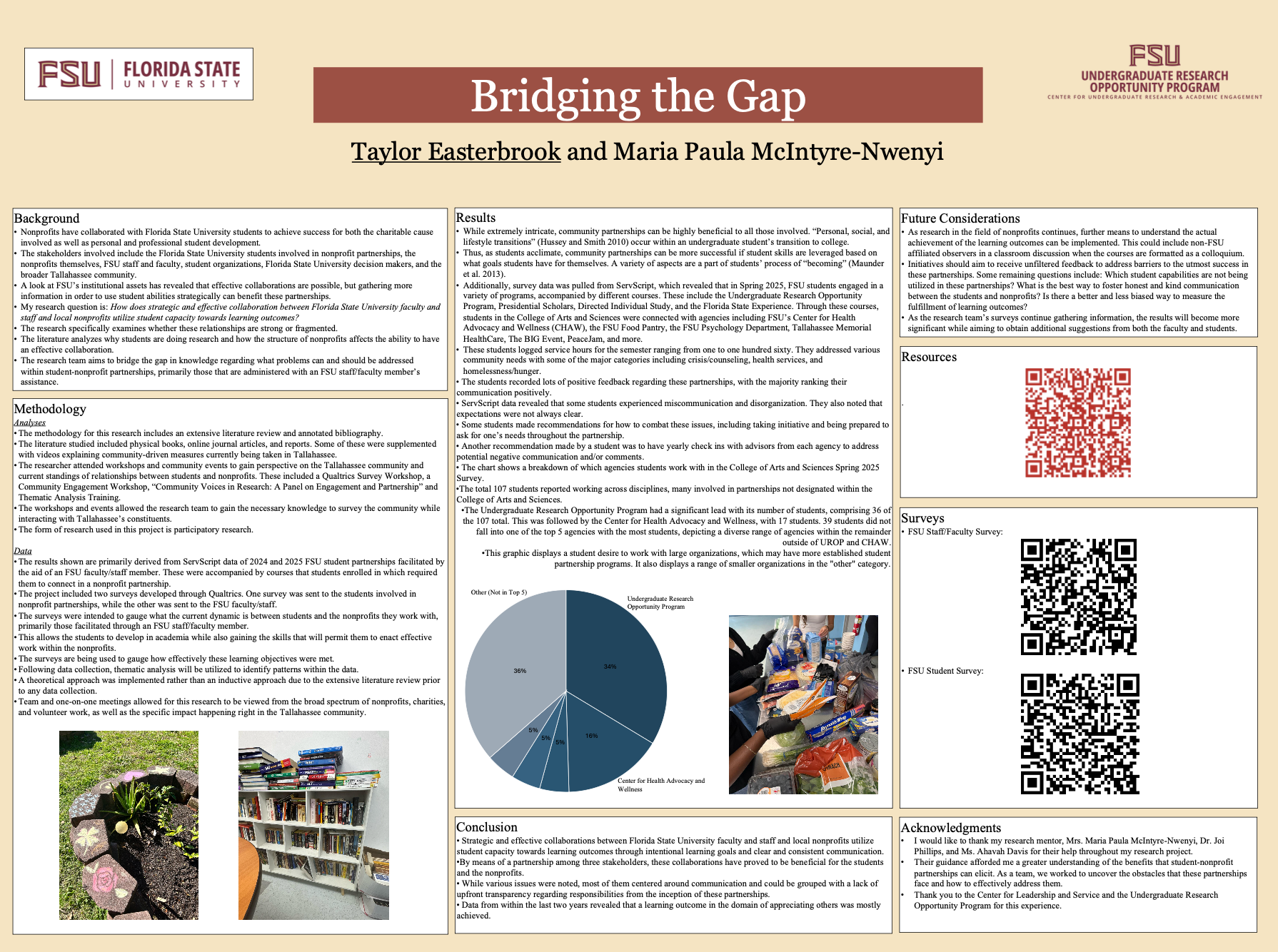
The research question analyzed is: How does strategic and effective collaboration between Florida State University faculty/staff and local nonprofits utilize student capacity towards learning outcomes? Additional questions related to the overarching research question include: “Are these relationships strong or fragmented?”, “How can these partnerships be improved?”, and “What barriers exist within these partnerships?”.
The methodology for this project includes an extensive literature review and various workshops, including Qualtrics and Thematic Analysis Training, to establish researchers’ knowledge of the context of student partnerships with non-profits, particularly in the Tallahassee area. The framework being utilized is majorly epistemological and theoretical, rather than inductive, due to the vast nature of the literature review conducted prior to data collection. The researchers used Qualtrics surveys to gather quantitative data.
Preliminary results predict that a lack of effective communication and improper delegation of responsibilities are barriers to these relationships. The literature review has also made it likely that some partnerships are much more effective than others due to the transparent nature of their communications and allowance for students to pursue their interests.
As a college student, community engagement is vital for both personal and professional development. Obtaining conclusive results regarding how to improve student-non-profit relationships can aid in future collaborations. The goal of this research is to help the campus and broader Tallahassee community by identifying current issues in collaborations in order to develop relevant solutions. It analyzes the standings of these relationships to address obstacles.
Keywords: Nonprofit Community Collaboration
26th annual Undergraduate Research Symposium, April 1, 2026
Madelyn Hild Poster Session 1: 9:30 am - 10:30 am / Poster #152
BIO
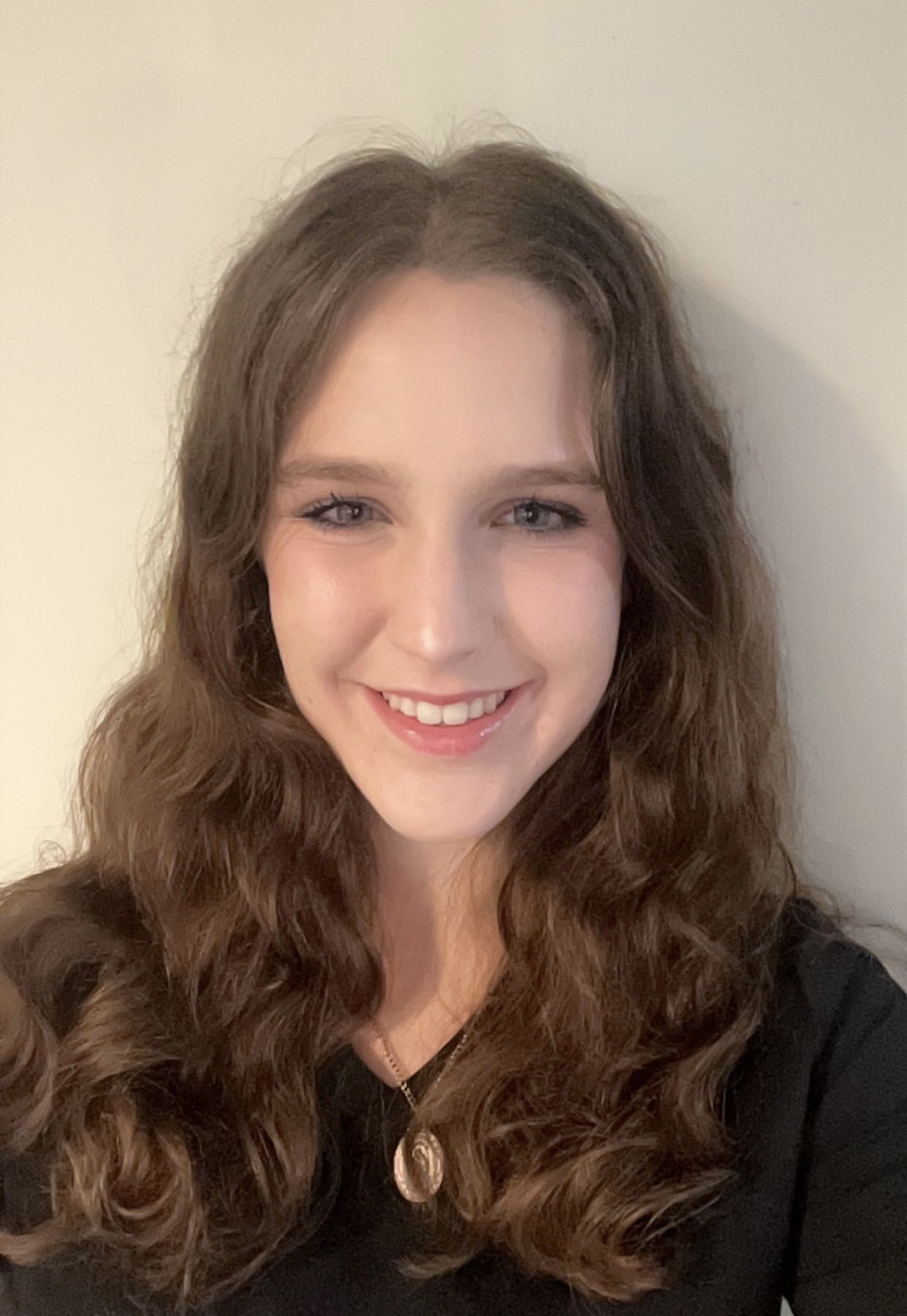
Madelyn Hild’s research interests center on behavioral neuroscience, with a focus on how brain function relates to cognition, and neurological disorders. Her long-term goal is to contribute to a research team studying neurodegenerative conditions, working toward interventions that improve patients’ quality of life.
She is currently pursuing a Bachelor of Science in Behavioral Neuroscience at Florida State University, where she is expected to graduate in Fall of 2026. Madelyn has strengthened her academic and research background through roles as a Tutor and Lab Assistant since 2024, supporting students in STEM subjects and conducting analysis of environmental samples. She hopes to continue her studies through graduate school in 2027.
Multi-Variable Predictors of Dyslexia : A Meta-Analysis
Authors: Madelyn Hild, Richard WagnerStudent Major: Behavioral Neuroscience
Mentor: Richard Wagner
Mentor's Department: Psychology Mentor's College: College of Arts and Sciences Co-Presenters: Ashley Olah, Isobel Schleuter, Tamarine Penland
Abstract
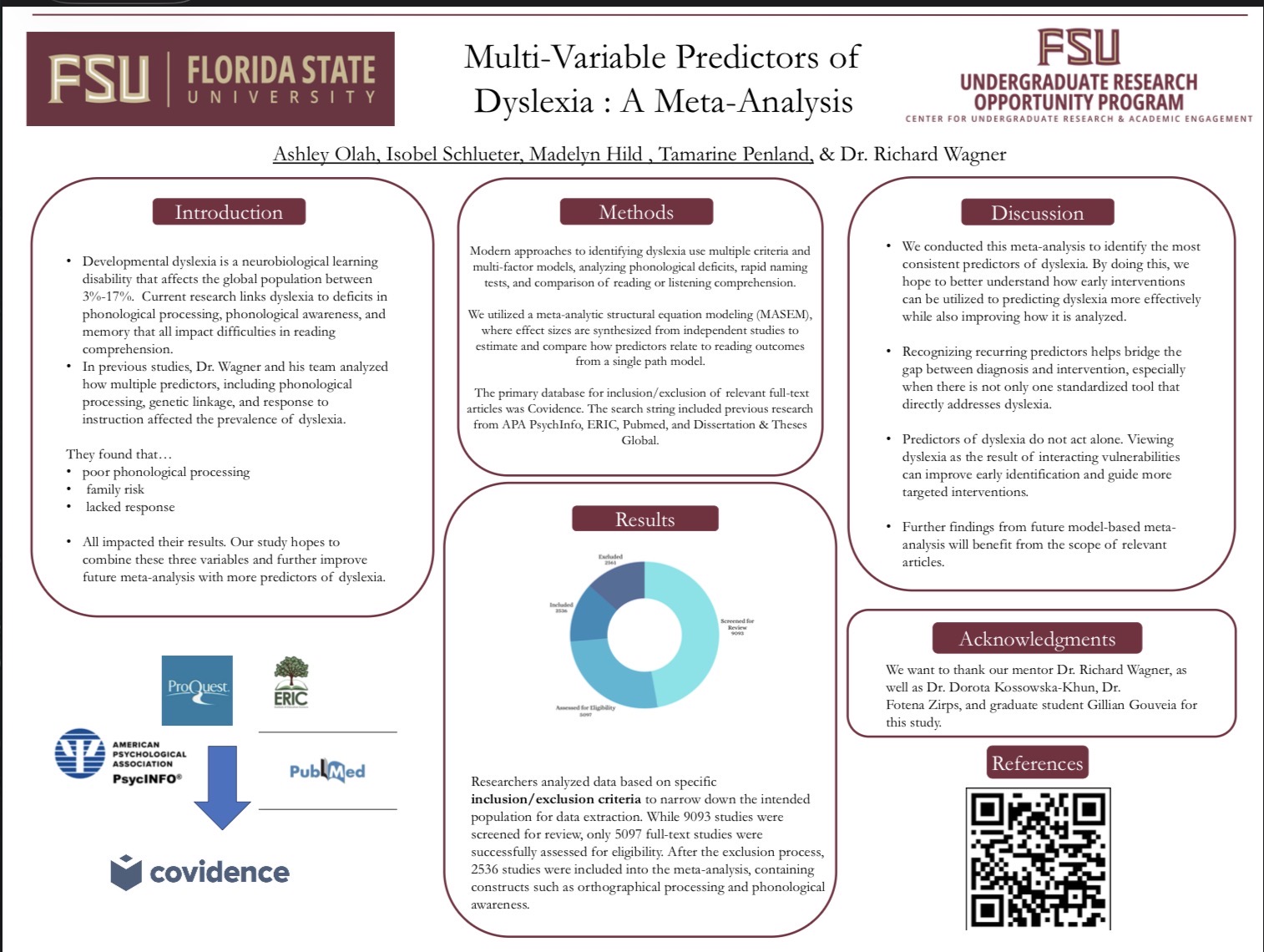
This study investigates the prevalence and factors regarding individuals that have dyslexia or other neurobiological learning disabilities. Utilizing the model-based meta-analysis, MASEM, our research team reviewed and extracted previous research. The primary database for inclusion/exclusion of relevant full-text articles was Covidence. The search string from Covidence included previous research from APA PsycInfo, ERIC, Pubmed, and Dissertation & Theses Global. Researchers analyzed data based on specific inclusion/exclusion criteria to narrow down the intended population for data extraction. While 9099 studies were screened for review, only 3571 full-text studies were successfully assessed for eligibility. After the exclusion process, 1515 studies were included into the meta-analysis, containing constructs such as orthographical processing and phonological awareness. Future research will analyze correlational and group-difference data to determine certain predictors of dyslexia. These findings may show promising approaches that can help guide educational practices, early intervention, and clinical support.
Keywords: Meta-analysis, dyslexia, decoding
26th annual Undergraduate Research Symposium, April 1, 2026
Peyton McGonigal Poster Session 3: 1:45 pm - 2:45 pm / Poster #187
BIO
Peyton McGonigal is a first-year student at Florida State University pursuing a dual degree in Psychology and Social Work, along with a minor in Sociology. Originally from Jacksonville, Florida, Peyton grew up as a military child, which exposed her to diverse communities and perspectives from an early age. She graduated high school with significant dual enrollment coursework, allowing her to begin college with a strong academic foundation. Peyton currently maintains a 4.0 GPA and plans to graduate in Summer 2028.
Peyton is involved in undergraduate research through the Joiner Lab at Florida State University, where she works as an Undergraduate Research Assistant under the mentorship of Sara Prostko. In this role, she assists with research focused on mental health and suicide prevention, including editing research protocols to meet IRB standards, contributing to grant proposal materials, and supporting data collection for virtual reality studies involving suicide risk assessments. She also participates in Florida State University’s Undergraduate Research Opportunity Program, where she attends workshops on research ethics, communication, and data management while contributing to ongoing lab projects. Peyton presented her research at the Florida Undergraduate Research Conference and plans to continue presenting at additional research symposia.
Outside of academics, Peyton is involved in several campus organizations focused on psychology and mental health, and she is also a member of the Seminole Scuba Club. After earning her degrees, Peyton plans to pursue a Master of Social Work and obtain clinical licensure, with the goal of working in a drug rehabilitation center.
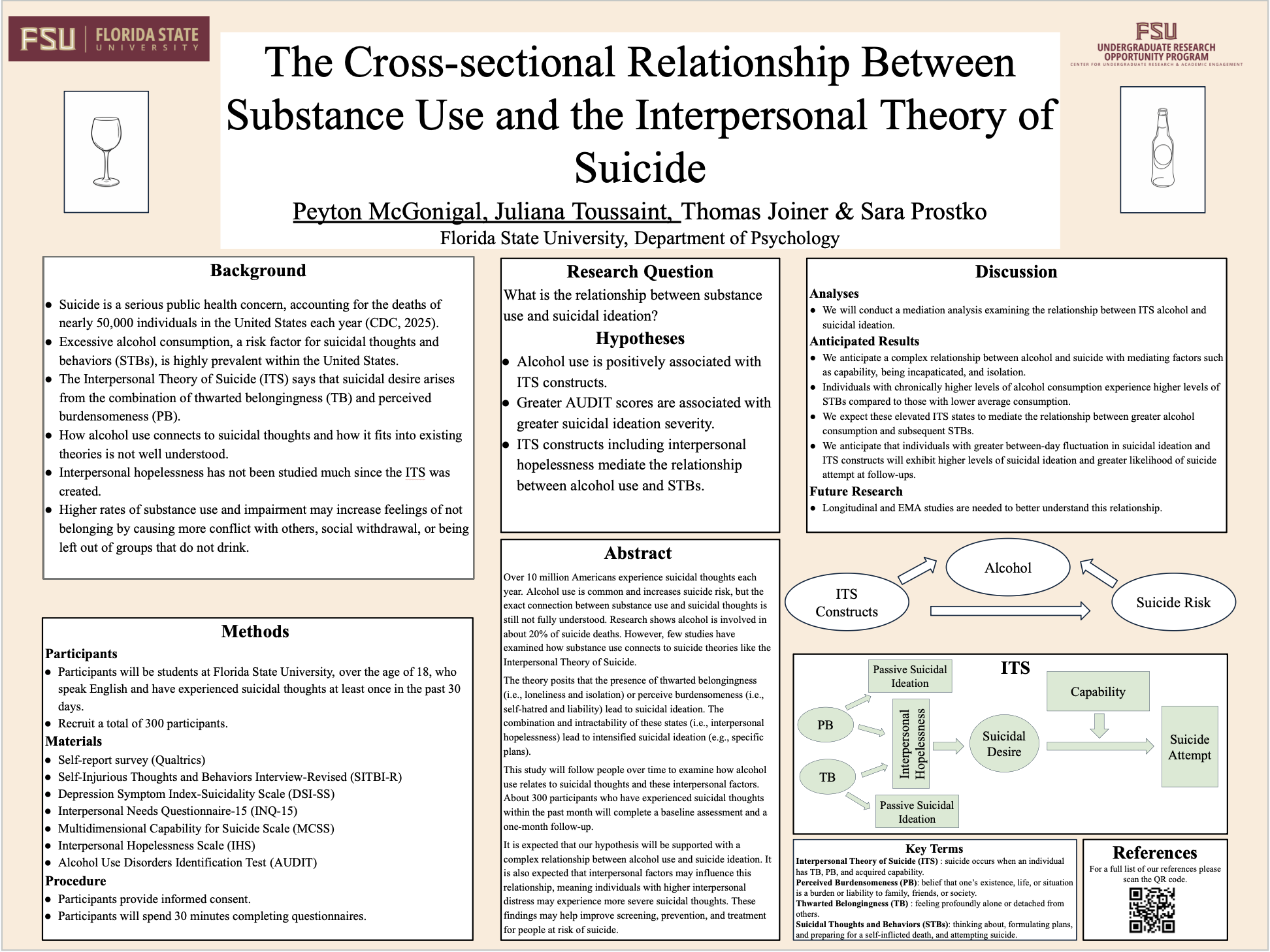
The Cross-sectional Relationship Between Substance Use and the Interpersonal Theory of Suicide
Authors: Peyton McGonigal, Sara ProstkoStudent Major: Psychology and Social Work
Mentor: Sara Prostko
Mentor's Department: Psychology Mentor's College: Arts and Sciences Co-Presenters: Juliana Toussaint
Abstract
Over 10 million Americans experience suicidal thoughts each year. Alcohol use is common and increases suicide risk, but the exact connection between substance use and suicidal thoughts is still not fully understood. Research shows alcohol is involved in about 20% of suicide deaths. However, few studies have examined how substance use connects to suicide theories like the Interpersonal Theory of Suicide.
The theory posits that the presence of thwarted belongingness (i.e., loneliness and isolation) or perceive burdensomeness (i.e., self-hatred and liability) lead to suicidal ideation. The combination and intractability of these states (i.e., interpersonal hopelessness) lead to intensified suicidal ideation (e.g., specific plans).
This study will follow people over time to examine how alcohol use relates to suicidal thoughts and these interpersonal factors. About 300 participants who have experienced suicidal thoughts within the past month will complete a baseline assessment and a one-month follow-up.
It is expected that our hypothesis will be supported with a complex relationship between alcohol use and suicide ideation. It is also expected that interpersonal factors may influence this relationship, meaning individuals with higher interpersonal distress may experience more severe suicidal thoughts. These findings may help improve screening, prevention, and treatment for people at risk of suicide.
Keywords: Suicide, Alcohol, Substance use, Interpersonal
26th annual Undergraduate Research Symposium, April 1, 2026
Darshini Vancheeswaran Poster Session 4: 3:00 pm - 4:00 pm / Poster #164

BIO
Darshini Vancheeswaran grew up in Jacksonville, Florida, and is a freshman at Florida State University working towards a Bachelor of Arts in Political Science. As a member of the university's honors program, she is passionate about broadening her knowledge both inside and outside the classroom. Darshini plans to attend law school after completing her undergraduate degree and hopes to pursue a career in the legal field, focused on advocacy and public service. Her interest in law stemmed from a desire to address inequities in her community. Outside of academics, Darshini enjoys staying involved on campus, especially with initiatives that promote civic engagement and leadership. She has collaborated with organizations focused on advancing gender equity and supporting survivors in schools, including engaging in conversations with district leaders and school board members to advocate for stronger protections and resources. Darshini believes that everyone, regardless of age, is capable of creating meaningful change. She hopes to use her research and education to understand the challenges facing communities and work towards finding solutions.
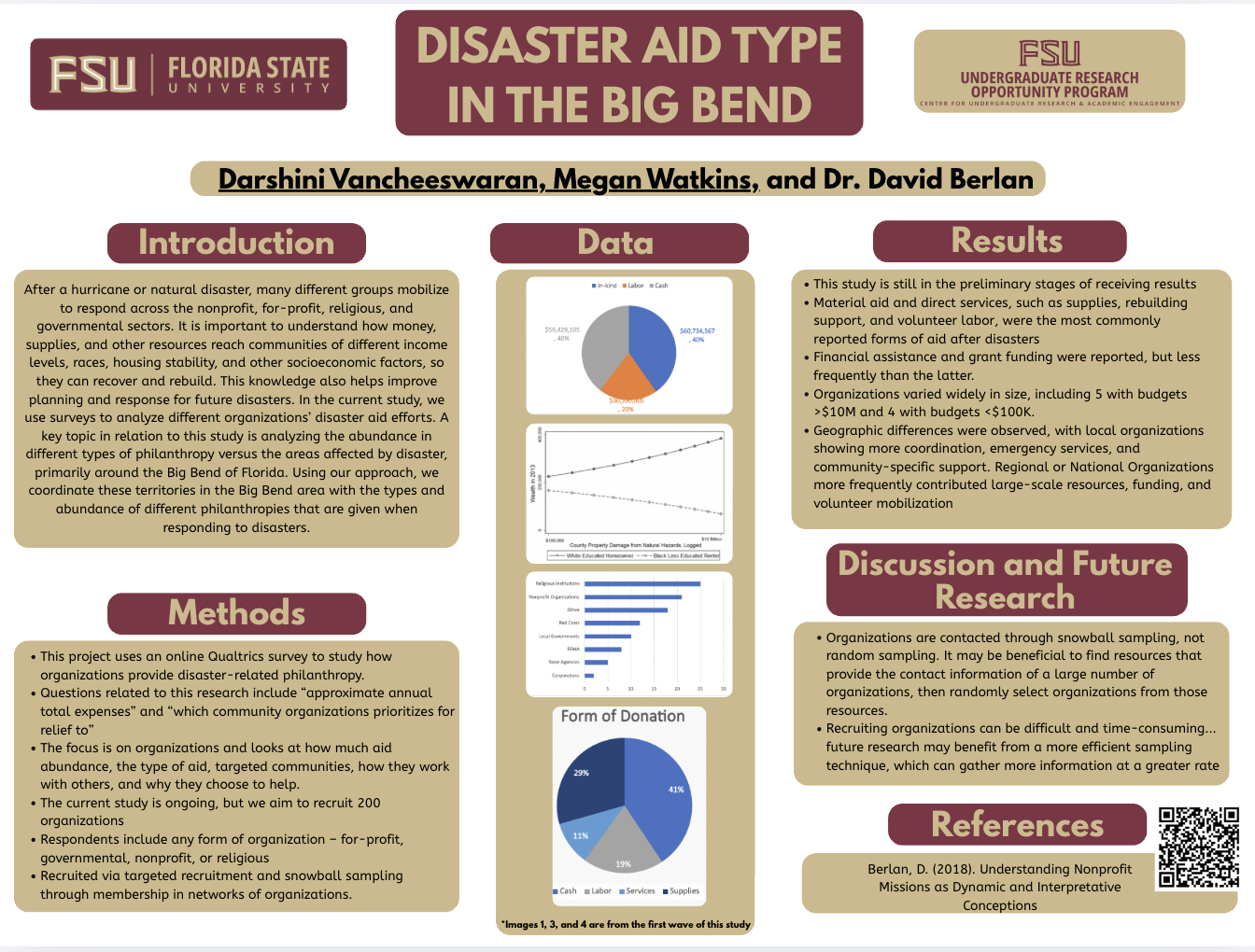
Disaster Aid Type in the Big Bend
Authors: Darshini Vancheeswaran, Dr. David BerlanStudent Major: Political Science
Mentor: Dr. David Berlan
Mentor's Department: Public Administration Department Mentor's College: Askew School of Public Administration and Policy Co-Presenters: Megan Watkis
Abstract
After a hurricane or natural disaster, many different groups mobilize to respond across the nonprofit, for-profit, religious, and governmental sectors. It is important to understand how money, supplies, and other resources reach communities of different income levels, races, housing stability, and other socioeconomic factors, so they can recover and rebuild. This knowledge also helps improve planning and response for future disasters. In the current study, we use surveys to analyze different organizations’ disaster aid efforts. A key topic in relation to this study is analyzing the abundance in different types of philanthropy versus the areas affected by disaster, primarily around the Big Bend of Florida. Using our approach, we coordinate these territories in the Big Bend area with the types and abundance of different philanthropies that are given when responding to disasters.
Keywords: Disaster Aid, Nonprofit Management
26th annual Undergraduate Research Symposium, April 1, 2026
Diego Fernandez Poster Session 3: 1:45 pm - 2:45 pm / Poster #87
BIO
Diego Fernandez is a second-year Finance major with academic and professional interests in financial analysis, market strategy, and data-driven decision-making. He maintains strong academic performance while balancing part-time professional responsibilities, demonstrating discipline, initiative, and time management. Diego is actively involved in the Finance Society and ALPFA, where he engages in professional development and leadership within business-focused communities.
His research experience centers on consumer response and market perception within Hispanic demographics, with a focus on how linguistic signals in advertising influence brand credibility and purchase behavior. This work applies analytical and quantitative methods to evaluate how cultural and communication variables affect market outcomes, reflecting his broader interest in strategic decision-making and consumer markets. Through this project, Diego has gained experience in research design, survey methodology, and data analysis.
He collaborates with faculty mentors in marketing and business disciplines who support his academic and professional development. Diego plans to pursue a career in finance and corporate strategy, where he aims to apply analytical frameworks to investment decisions, market evaluation, and business growth initiatives.
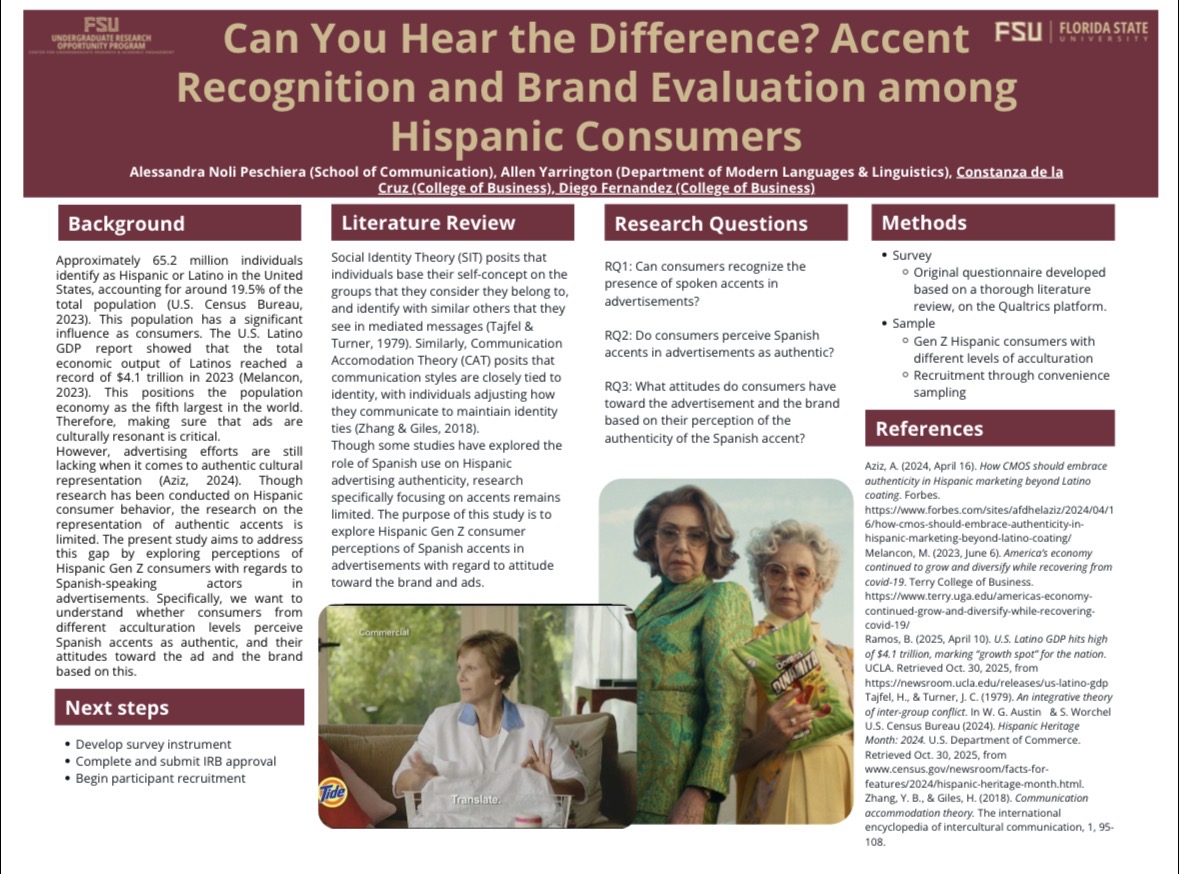
Can You Hear the Difference? Accent Recognition in Brand Evaluation Among Hispanic Consumers
Authors: Diego Fernandez, Alessandra NoliStudent Major: Finance
Mentor: Alessandra Noli
Mentor's Department: Communications Mentor's College: Communication & Information Co-Presenters: Constanza De La Cruz
Abstract
The Hispanic population represents nearly 20% of the United States and contributes over $4.1 trillion to the national GDP, making it one of the most economically influential consumer groups in the country. Although brands frequently use Spanish commercials to connect with this market, limited research has examined how variation in Spanish accents influences perceptions of authenticity and brand credibility. This study investigates whether Hispanic Gen Z and Millennial consumers can distinguish between heritage, native, and non-native Spanish accents in advertisements and how these perceptions shape attitudes toward the advertisement, the brand, and purchase intention.
Participants will complete an online questionnaire through Qualtrics in which they will watch one AT&T commercial and respond to Likert-scale measures assessing perceived accent strength, language authenticity, brand attitude, advertisement attitude, purchase intention, and language background. Data will be analyzed to examine relationships between perceived accent type and consumer evaluations.
It is expected that advertisements perceived as less linguistically authentic will result in lower brand attitudes and reduced purchase intentions. By focusing on accent rather than language choice alone, this research highlights how subtle linguistic cues can influence cultural belonging and consumer response in Hispanic-targeted advertising.
Keywords: Advertising, Marketing, Consumer Behavior
26th annual Undergraduate Research Symposium, April 1, 2026
Shayleigh Tindell Poster Session 3: 1:45 pm - 2:45 pm / Poster #275
BIO
Shayleigh Tindell is a junior currently pursuing a Bachelor of Science in Psychology at Florida State University. She is a member of Psi Chi, the International Honor Society in Psychology. Shayleigh is involved in undergraduate research with two different labs: the SHIRE Lab under Dr. Eric Shattuck and the Learning, Memory, and Language Lab under Dr. Michael Kaschak. Through these experiences, she has developed a strong interest in interdisciplinary research. Shayleigh hopes to continue conducting research in graduate school and pursue research opportunities.
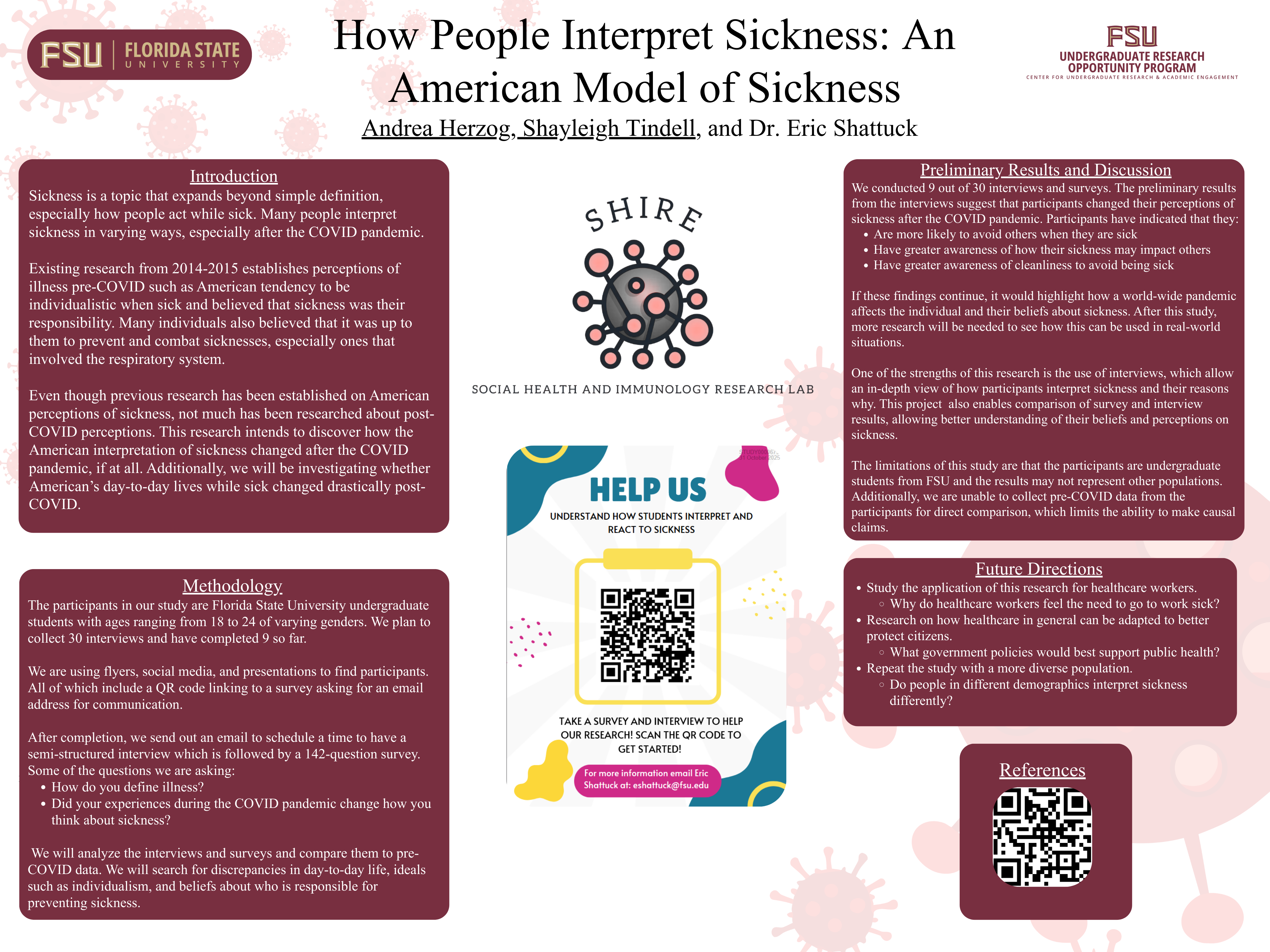
How People Interpret Sickness: An American Model of Sickness
Authors: Shayleigh Tindell, Eric ShattuckStudent Major: Psychology
Mentor: Eric Shattuck
Mentor's Department: Anthropology Mentor's College: College of Arts and Sciences Co-Presenters: Andrea Herzog
Abstract
Research on illness is an important topic due to its widespread and life-threatening nature, and focusing on cultural differences on perceptions of sickness is critical for a better understanding of how culture can influence how people behave when sick or perceive sickness behaviors. We are investigating perceptions of sickness post-Covid in FSU students to establish a comparison with pre-Covid data collected in 2014-2015. This research will allow us to conduct further studies, such as cross-cultural comparisons, on why people behave the way they do when they are sick. We are recruiting participants that are 18 or older years old and Florida State students. We gathered data through a 142-question survey and through a semi-structured interview, where the interviewer was given a loose interview guide, specifically sections about what “normal and abnormal” symptoms and behaviors are, individual personality traits and how they affect sickness, and how the last time someone was sick was. Through this research, we are hoping to discover if people have become more sensitive towards the ideas of sickness and showcase more awareness of sickness behaviors when compared to pre-Covid data, especially regarding attending school or going to work. If this ends up coming into fruition, then it gives future research the opportunity to investigate this increased awareness to implement better sick day policies for employees and students and to promote better sickness safety regulations. Additionally, more research on this topic will be needed to test for cultural differences in sickness behaviors and perceptions.
Keywords: Anthropology, Sickness, Social Health
26th annual Undergraduate Research Symposium, April 1, 2026
Isabella Galguera Poster Session 2: 10:45 am - 11:45 am / Poster #114
BIO
Isabella Galguera is a first year student at Florida State University who is working towards a Bachelor of Science in Psychology. She was born and raised in Miami, Florida and has become actively involved on campus through student organizations, joining a sorority, and investing time in research which will support her academic interests in the future. In addition, Isabella earned a place on Deans list during her first semester and is continuing her strong academic performance and commitment to her studies. She also plans on continuing her education by attending graduate school in hopes to further her education. Isabella is excited to continue exploring opportunities at Florida State University that will advance her knowledge and experience.
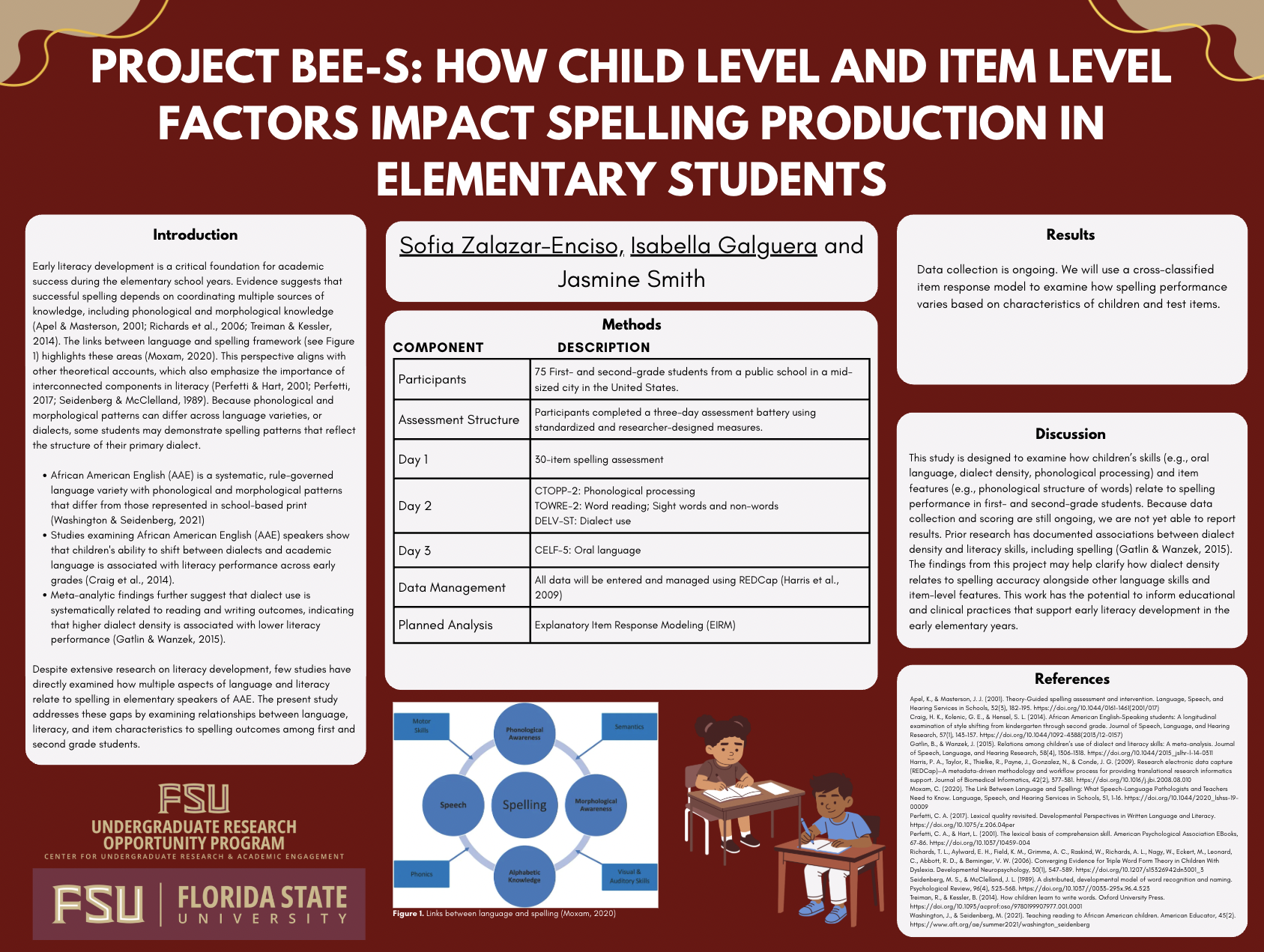
Project BEE-S: How Oral Language Supports Spelling Production in Elementary Students
Authors: Isabella Galguera, Jasmine SmithStudent Major: Psychology
Mentor: Jasmine Smith
Mentor's Department: School of Communication Science & Disorders Mentor's College: Florida State University Co-Presenters: Sofia Zalazar-Enciso
Abstract
How does linguistic variation, specifically in African American English, relate to spelling performance in first and second grade students? The purpose of this research is to examine spelling production in elementary aged children and understand its relation to their oral language skills. My research mentor has so far been taking time to ensure our team has perfected the administration of the three assessments we are using. As well as mastering our ability to grade said tests post administration. The research team and I are tasked with administering a two to three day test to groups of elementary aged children in different schools and, following the administration of tests, grading the data we acquired. Out of the several frameworks used in our work, the lexical quality hypothesis guides us the most. At this stage of the project, the research team is prepared and ready to begin collecting data. The studies are designed to show how factors such as oral language will influence spelling in first and second graders. The research team is now prepared to go out into the field to begin administering tests to participants, as well as beginning to analyze our data we collect. The results of this study aim to improve the understanding of how spelling develops in elementary aged speakers of African American English. This research will suggest spelling differences reflect language variations. The study may help teachers be more supportive in classrooms, while aiding and instructing their students.
Keywords: Child, Spelling, Speech
26th annual Undergraduate Research Symposium, April 1, 2026
Zara Jaffe Poster Session 2: 10:45 am - 11:45 am / Poster #224
BIO
Zara Jaffe is a first-year Art History major at Florida State University. She is part of the presidential scholars program and participates in clubs such as the Torch Society, Beautify FSU, and the Undergraduate Art History Association. Zara wants to graduate with her Bachelor of Art and continue onto the graduate school where she will pursue Architecture. She is part of the Microscopic BioArt research project, completing undergraduate research in her time at Florida State University.
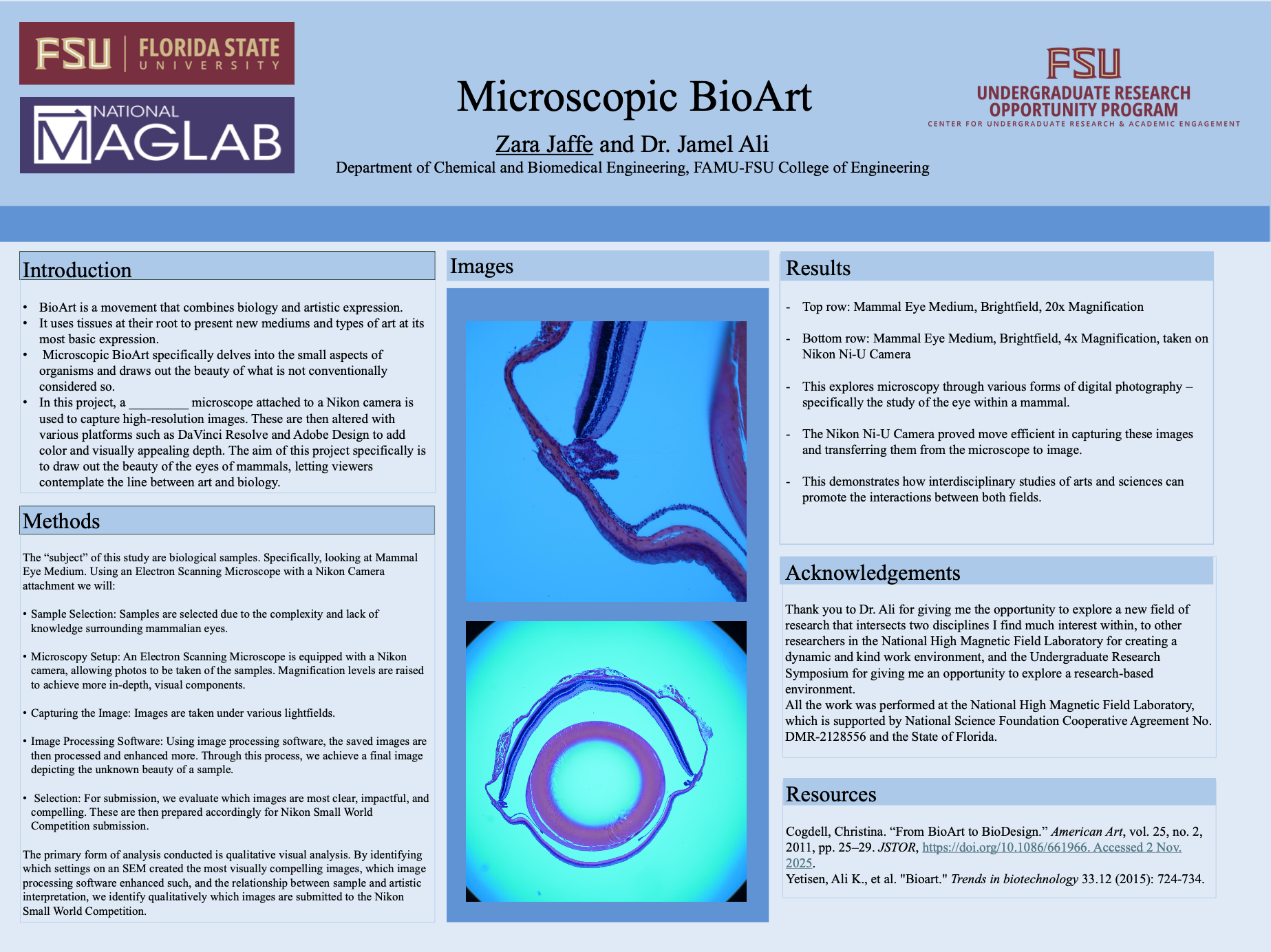
Microscopic BioArt
Authors: Zara Jaffe, Dr. Jamel AliStudent Major: Art History
Mentor: Dr. Jamel Ali
Mentor's Department: Chemical and Biomedical Engineering, Materials Science and Engineering Mentor's College: College of Engineering Co-Presenters:
Abstract
BioArt is a movement that combines biology and artistic expression. It uses tissues at their root to present new mediums and types of art at its most basic expression. Microscopic BioArt specifically delves into the small aspects of organisms and draws out the beauty of what is not conventionally considered so. In this project, a Scanning Electron microscope attached to a Nikon camera is used to capture high-resolution images. These are then altered with various platforms such as DaVinci Resolve and Adobe Design to add color and visually appealing depth. The aim of this project specifically is to draw out the beauty of the eyes of mammals, letting viewers contemplate the line between art and biology.
Keywords: Art, Microscope, Nanomaterials
26th annual Undergraduate Research Symposium, April 1, 2026
Tatum Cempella Poster Session 1: 9:30 am - 10:30 am / Poster #167
BIO
Tatum Cempella is a second year undergraduate student from Orlando, FL pursuing a Bachelor of Science in English and Political Science with plans to pursue a career in politics and law. She is interested in the intersection of the power of rhetoric and politics, which she was able to explore through her research with Ms. Huijie Xu and Dr. Olga Gasparyan.
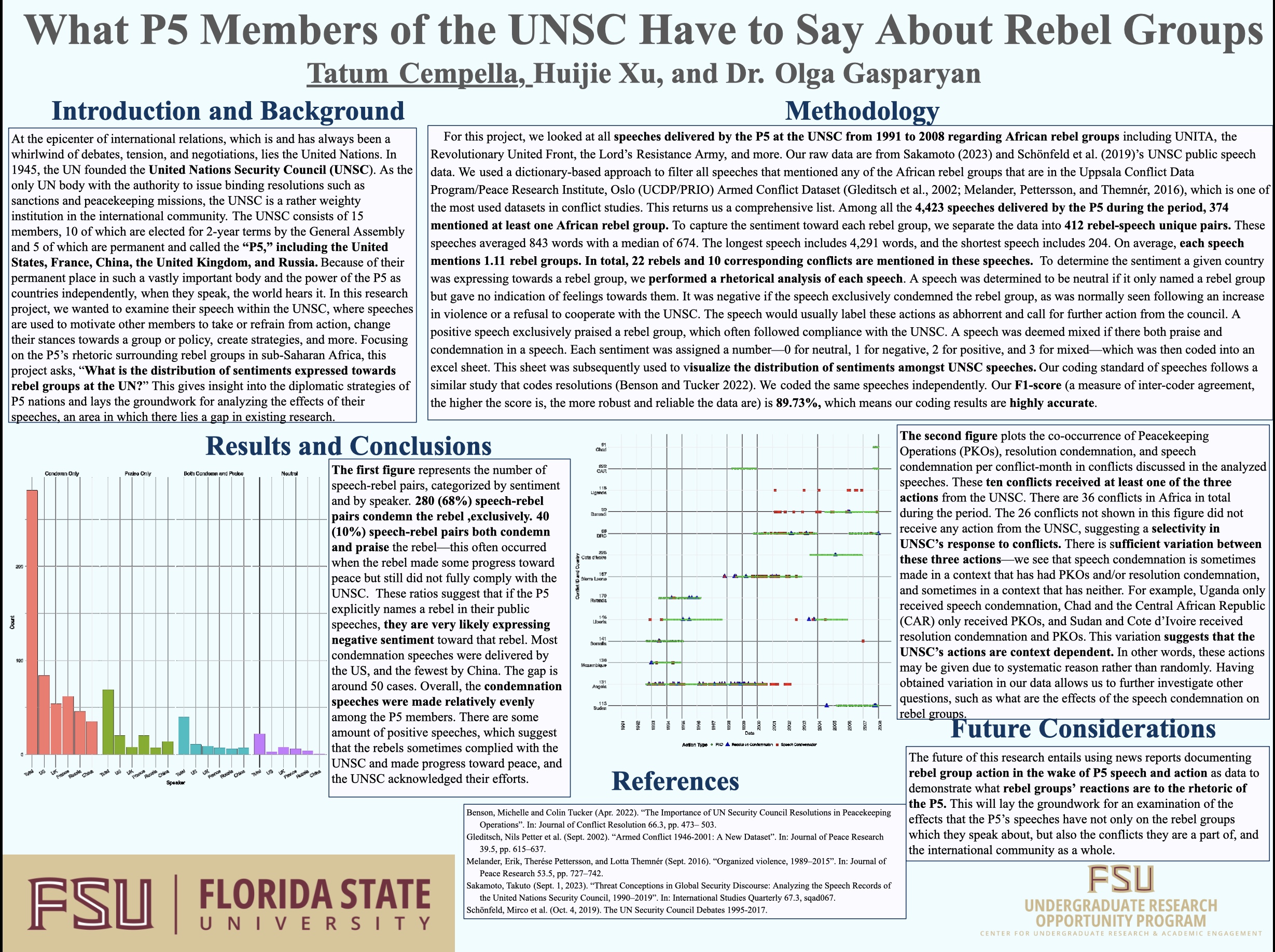
What P5 Members of the UNSC Have to Say About Rebel Groups
Authors: Tatum Cempella, Ms. Huijie Xu, Dr. Olga GasparyanStudent Major: English and Political Science
Mentor: Ms. Huijie Xu, Dr. Olga Gasparyan
Mentor's Department: Political Science Mentor's College: College of Social Science and Public Policy Co-Presenters:
Abstract
TThis research project asks “What is the distribution of sentiments expressed towards rebel groups at the UN?” We looked at the rhetorical make up of all speeches delivered by the P5 at the UNSC from 1991 to 2008 regarding African rebel groups to determine their sentiments. A speech was positive when it exclusively praised a rebel group, negative when it exclusively condemned it, mixed when it did both, and neutral when it only mentioned a group but did not express any feeling towards it. Each sentiment was assigned a number which was coded into an excel sheet. This sheet was subsequently used to visualize the distribution of sentiments amongst speeches. An overwhelming number of speeches were negative, suggesting that if the UNSC mentions a rebel group it is highly likely to condemn it. Overall, negative speeches were made relatively evenly among the P5 members. There are some amount of positive speeches, which implies that the rebels sometimes complied with the UNSC made progress toward peace, and the UNSC acknowledged this. These observations gave possible insight into the differing diplomatic strategies of the P5 nations and lays the groundwork for analyzing the effects of their speeches. The significance of this research directly affects all of us. P5 speeches dominate the rhetoric of the UNSC, which in turn has a dominant hold over international relations in terms of peace and security. Therefore, what these leaders say can change hearts and minds that have the power to change sentiments on a national scale.
Keywords: international relations, United Nations, rhetoric
26th annual Undergraduate Research Symposium, April 1, 2026
Valeria Bohorquez Poster Session 2: 10:45 am - 11:45 am / Poster #116
BIO
Valeria Bohorquez is a freshman at Florida State University pursuing a Bachelor of Science in Public Health with a minor in Chemistry and Child Development. She is dedicated to intellectual curiosity and academic excellence as a member of the Honors Program, building a strong foundation for a future in healthcare. Her studies blend interest in population health with the scientific understanding required for a career in health.
Valeria is learning more about the biological, environmental, and social factors that influence health and patient care through her courses. She is particularly interested in how public health approaches can enhance patient experiences, improve communication, and promote better health outcomes in dental and medical settings. As an Honors student, she looks for opportunities that push her intellectually and provide her the chance to interact directly with peers and faculty mentors who share similar goals.
After earning her undergraduate degree, Valeria intends to attend dental school. She hopes to have a deeper understanding of the scientific and behavioral elements of patient care by integrating her background in public health and chemistry. Her academic path demonstrates her commitment to being an informed and kind dentist who can improve the health and wellbeing of others.
Online Information Ecosystems: Teens, Social Media, Algorithms
Authors: Valeria Bohorquez, Vanessa DennenStudent Major: Public Health
Mentor: Vanessa Dennen
Mentor's Department: Educational Psychology & Learning Systems Mentor's College: Anne Spencer Daves College of Education, Health & Human Sciences Co-Presenters: Maria Sanchez, Anthony Kraus
Abstract
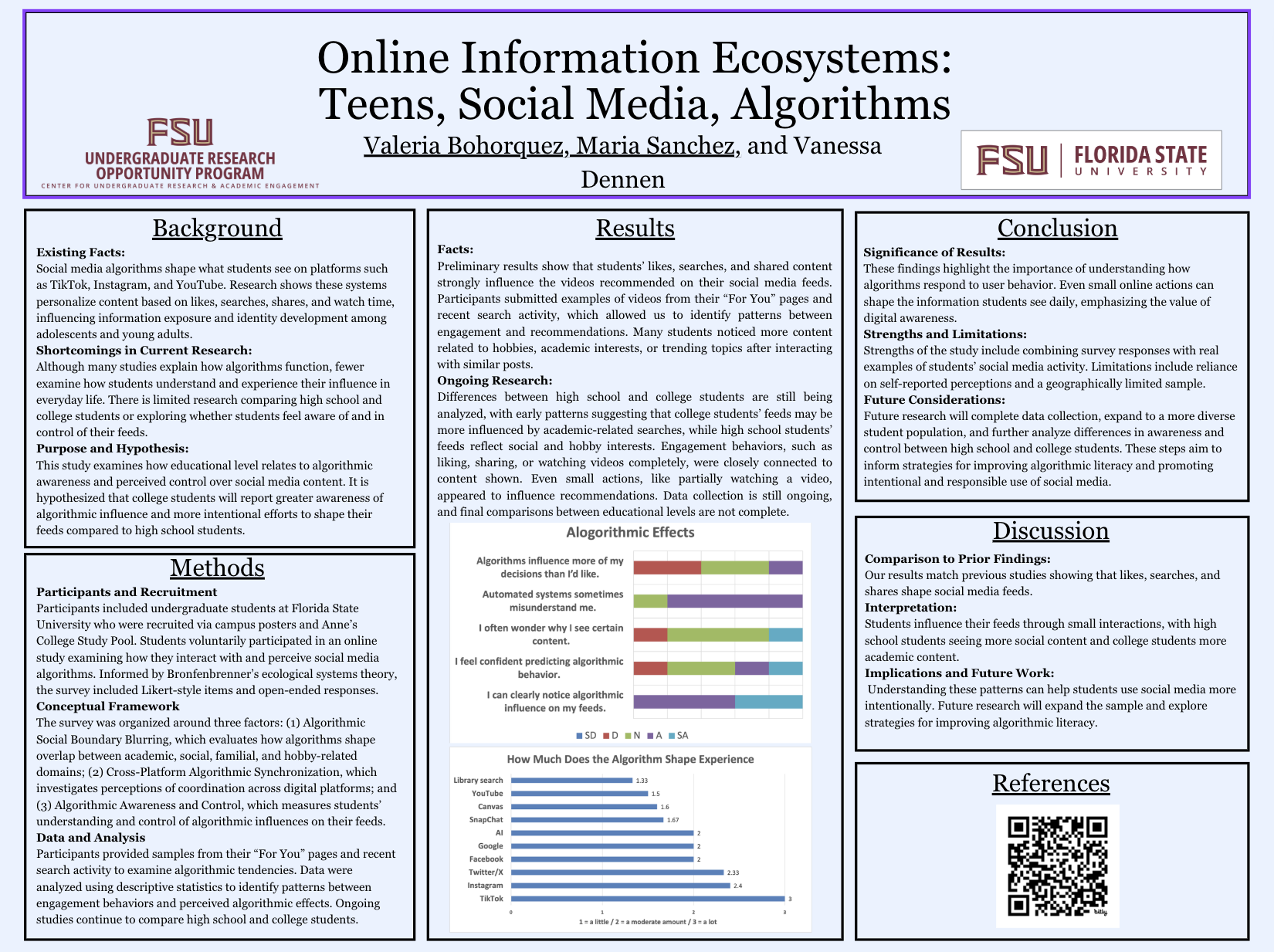
Social media algorithms shape the information adolescents and young adults encounter daily, yet less is known about how students understand and experience this influence. This study examines how educational level relates to algorithmic awareness and perceived control over social media content. Guided by Bronfenbrenner’s ecological systems theory, we hypothesized that college students would report greater awareness of algorithmic influence and more intentional efforts to shape their feeds compared to high school students.
Undergraduate students at Florida State University were recruited through campus posters and Anne’s College Study Pool, with additional data collection ongoing for high school participants. The online survey included Likert-style and open-ended items organized around three factors: Algorithmic Social Boundary Blurring, Cross-Platform Algorithmic Synchronization, and Algorithmic Awareness and Control. Participants also submitted examples from their “For You” pages and recent search activity. Data were analyzed using descriptive statistics to identify patterns between engagement behaviors and recommended content.
Preliminary findings indicate that likes, searches, shares, and watch time strongly influence social media recommendations. Even minor interactions, such as partially watching a video, appeared to shape subsequent content. Early comparisons suggest college students’ feeds reflect more academic-related interests, while high school students’ feeds emphasize social and hobby content. These findings highlight the importance of algorithmic literacy and intentional engagement in shaping students’ online information ecosystems.
Keywords: Algorithms, Social Media, Teens
26th annual Undergraduate Research Symposium, April 1, 2026
Reese Weicht Poster Session 2: 10:45 am - 11:45 am / Poster #182
BIO
Reese Weicht is a history major at Florida State University with a minor in Museum Studies,
pursuing professional and academic interests in archaeology and public history. She is strongly
committed to academics, working to grow valuable research and writing skills with leadership
experience through Phi Mu, Acabelles at Florida State University, and roles in the performing arts both on
and off campus. Reese is passionate about sharing history with broader audiences and making
history exciting. Reese’s career interests include archaeological field work, historical
preservation and museum curation. This summer, Reese will be studying internationally with FSU to engage in archaeological field work in Northern Italy.
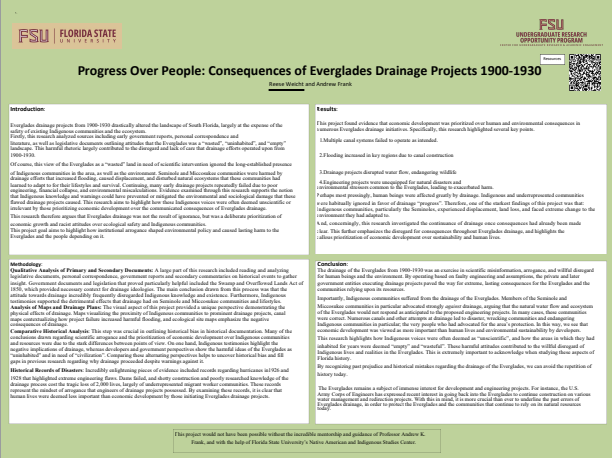
Progress Over People: Consequences of Everglades Drainage Projects 1900-1930
Authors: Reese Weicht, Andrew FrankStudent Major: History
Mentor: Andrew Frank
Mentor's Department: History Mentor's College: Arts and Sciences Co-Presenters:
Abstract
From 1900-1930, developers and the government engaged in massive drainage projects in the Florida Everglades. Drainage aimed to encourage settlement, agricultural development, and economic growth. This research examines how these decisions caused lasting environmental and cultural damage. Furthermore, it analyzes how Indigenous warnings, particularly from the Seminoles, were systematically ignored, and how developers operated on faulty knowledge because of this ignorance. Focusing on often disregarded Indigenous perspectives challenges the misconception that drainage was entirely positive.
Research methods included analysis of primary and secondary historical sources. Primary sources such as government documents and firsthand accounts of drainage create a clearer picture of how voices of protest were ignored. Secondary sources, such as environmental and tribal records, as well as canal maps, were used to evaluate lasting damage to the environment and existing communities. Synthesizing sources helped explain how economic development was prioritized over significant drainage concerns.
This research found that many drainage projects were insufficiently planned and often based on overconfidence in flawed engineering rather than scientific accuracy. Numerous canals failed to operate as originally intended. These faulty canal systems flooded Indigenous communities, endangered wildlife, and disrupted water flow in the Everglades. Evidence to this point emphasizes how economic development was prioritized over the environment and indigenous communities.
Conclusively, this research outlines that early Everglades drainage projects caused lasting damage by discounting Indigenous knowledge. Examining the consequences of such decisions allows researchers to contextualize Everglades history while preventing the repetition of that history in the Everglades today.
Keywords: Indigenous, Everglades, Seminole
26th annual Undergraduate Research Symposium, April 1, 2026
Maddalena Conti Poster Session 2: 10:45 am - 11:45 am / Poster #110
BIO
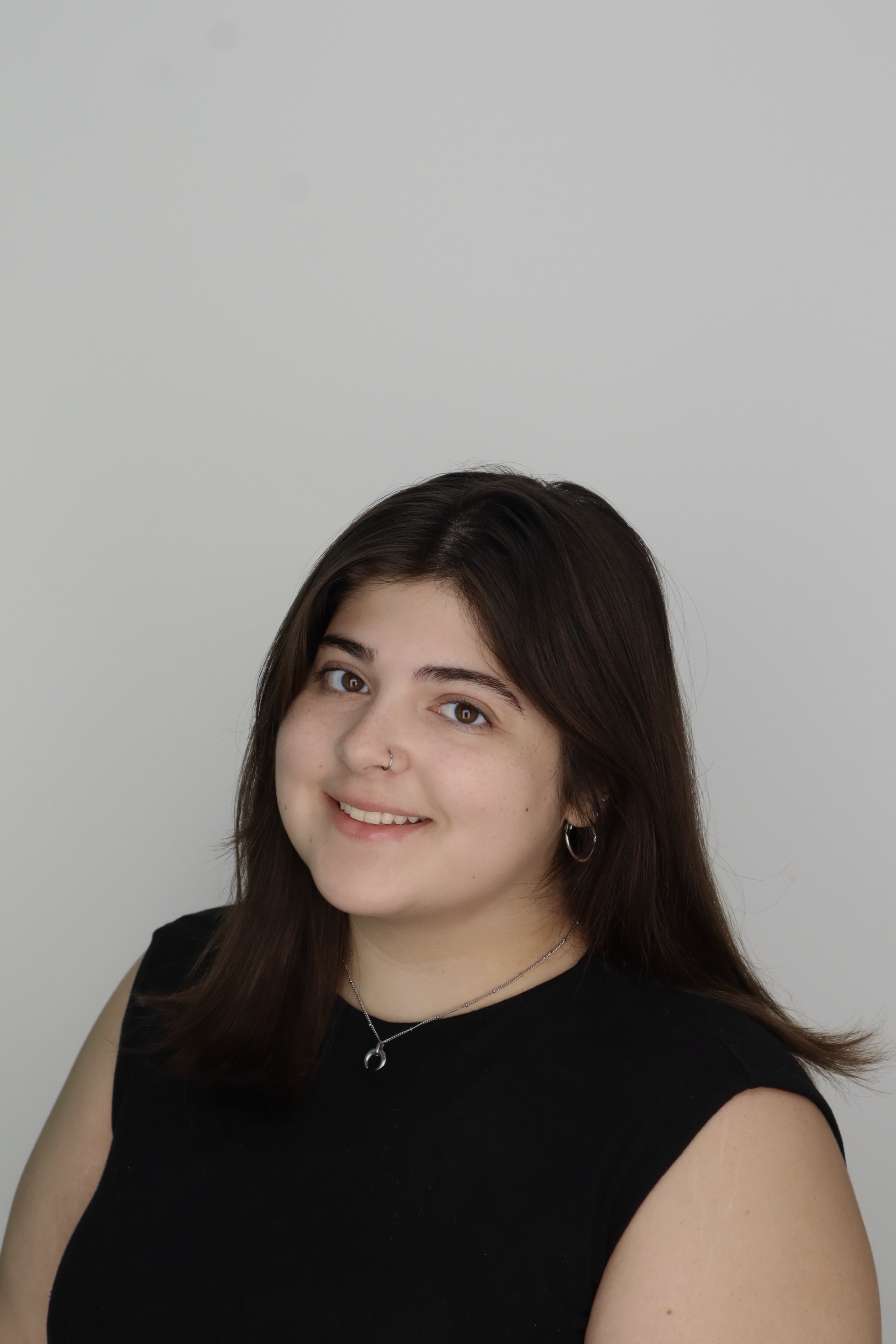
Hi, my name is Maddalena Conti. I am originally from Fort Walton Beach, Florida, and I am currently a second-year student at Florida State University, where I am pursuing a Bachelor of Science in Psychology with a minor in Criminology. I serve as a research assistant in the Learning, Memory, and Language Lab, directed by Dr. Michael Kaschak, where I contribute to ongoing research examining cognitive and linguistic processes. My current work focuses on Nelu Radpour’s project investigating sound-symbolic cross-modal correspondences, which explores how perceptual features and linguistic descriptions interact across sensory modalities. I plan to complete my B.S. in Spring 2026 and intend to pursue graduate study in Clinical Psychology, with a focus on Forensic Psychology.
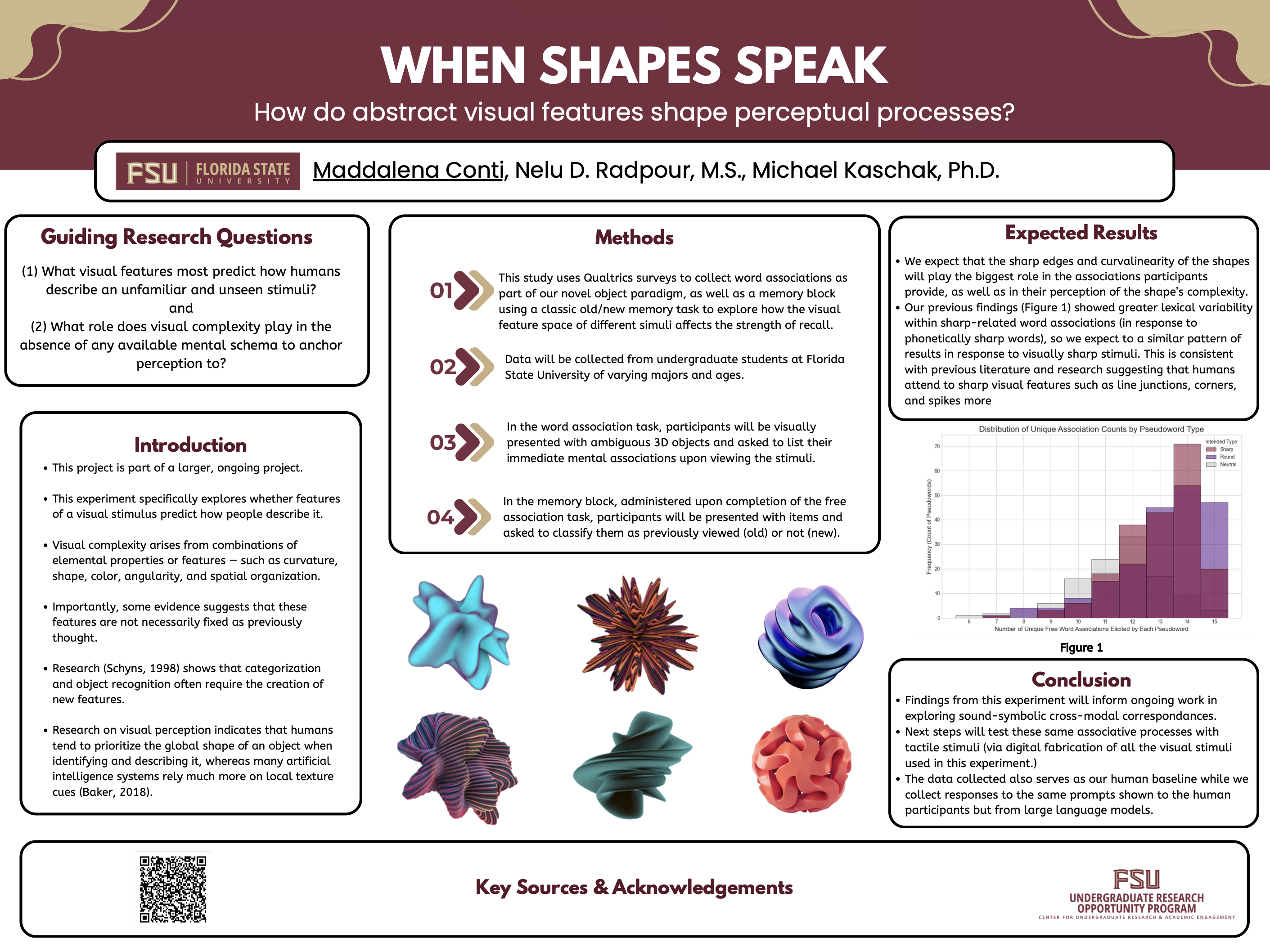
When Shapes Speak - How do abstract visual features shape perceptual processes?
Authors: Maddalena Conti, Michael KaschakStudent Major: Psychology
Mentor: Michael Kaschak
Mentor's Department: Psychology Mentor's College: College of Arts and Sciences Co-Presenters:
Abstract
Without even realizing it, the categories that exist in our minds (our mental schemas) shape how we interact with and speak about the world. This project has two main guiding research questions: (1) What features of visual complexity most predict how humans describe an unfamiliar visual stimulus and (2) How does visual complexity affect feature recognition when we don’t have any sort of mental schema to immediately anchor our perception to? This project is part of a broader research project that, overall, focuses on how and why humans choose specific words or categories when faced with various ambiguous stimuli. In this segment of the project, however, I focus on the descriptions and associations that participants generate for visual stimuli based on what elements are most salient in the given feature space.
When exploring complexity, the various features that make it up (curvature, shape, color, angularity, and spatial organization, etc.) must be considered. To answer our research question, we primarily make use of spontaneous word association generation. Since this research is still in its early stages, the main results have not yet been recorded. So far, one of the main hypotheses of this segment of the project is that the more visually complex or abstract a presented stimuli, the more variability is expected in participants’ descriptions of the stimulus.
Keywords: Perception, complexity, word association, categorization, psychology
26th annual Undergraduate Research Symposium, April 1, 2026
Maria Hernandez Poster Session 1: 9:30 am - 10:30 am / Poster #125
BIO
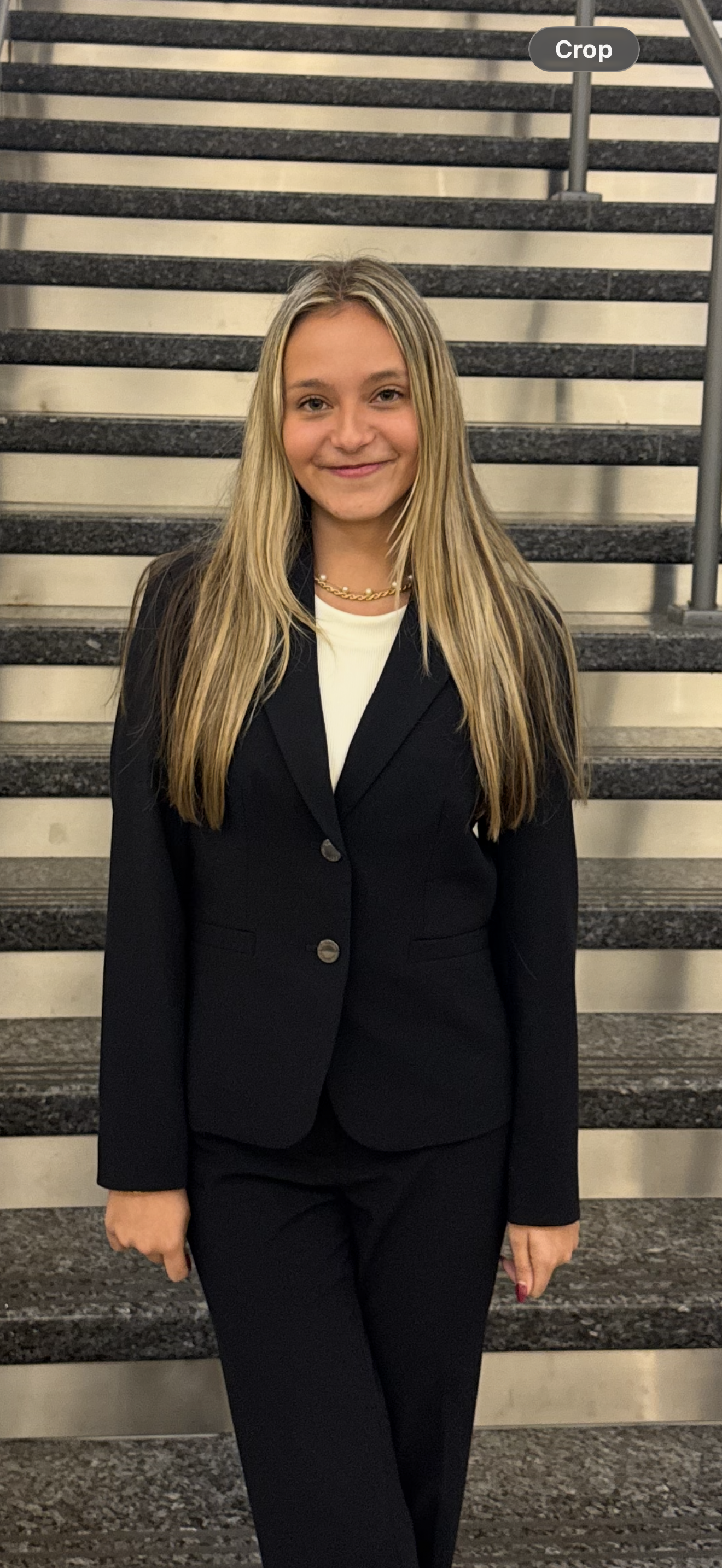
Maria Hernandez is a Sophomore majoring in Political Science and Criminology. Throughout this year, she has been able to work alongside Gian Morrison and Greyson Carr on analyzing Leon County's homelessness initiatives and their effectiveness. As she works towards attending law school and becoming an attorney, this experience has provided her with useful skills that will be essential for her future career.
The Effectiveness of Affordable Housing Policies and Initiatives in Tallahassee, Florida
Authors: Maria Hernandez, Gian MorrisonStudent Major: Criminology and Political Science
Mentor: Gian Morrison
Mentor's Department: International Affairs Mentor's College: Social Science and Public Policy Co-Presenters: Greyson Carr
Abstract
Homelessness in Tallahassee and Leon County remains a persistent and growing challenge, entrapping society’s most vulnerable groups. As contemporary research on homelessness continues to evolve, affordable housing initiatives become increasingly recognized as essential policy tools. Despite these efforts, Leon County continues to face significant challenges, including rental costs, a limited supply of affordable units, and increasing demand for supportive services. Additionally, there has been limited evaluation of how effective these initiatives are in improving housing stability and reducing the number of individuals experiencing homelessness. This study employs a mixed-method approach combining descriptive data analysis with qualitative data gathered through first-person accounts. Although final results are still pending, the research anticipates identifying substantial structural barriers that prevent individuals from accessing affordable housing in Tallahassee. The findings aim to provide evidence-based insights to guide policymakers, service providers, and community stakeholders in strengthening affordable housing strategies, improving program design, and ultimately reducing homelessness.
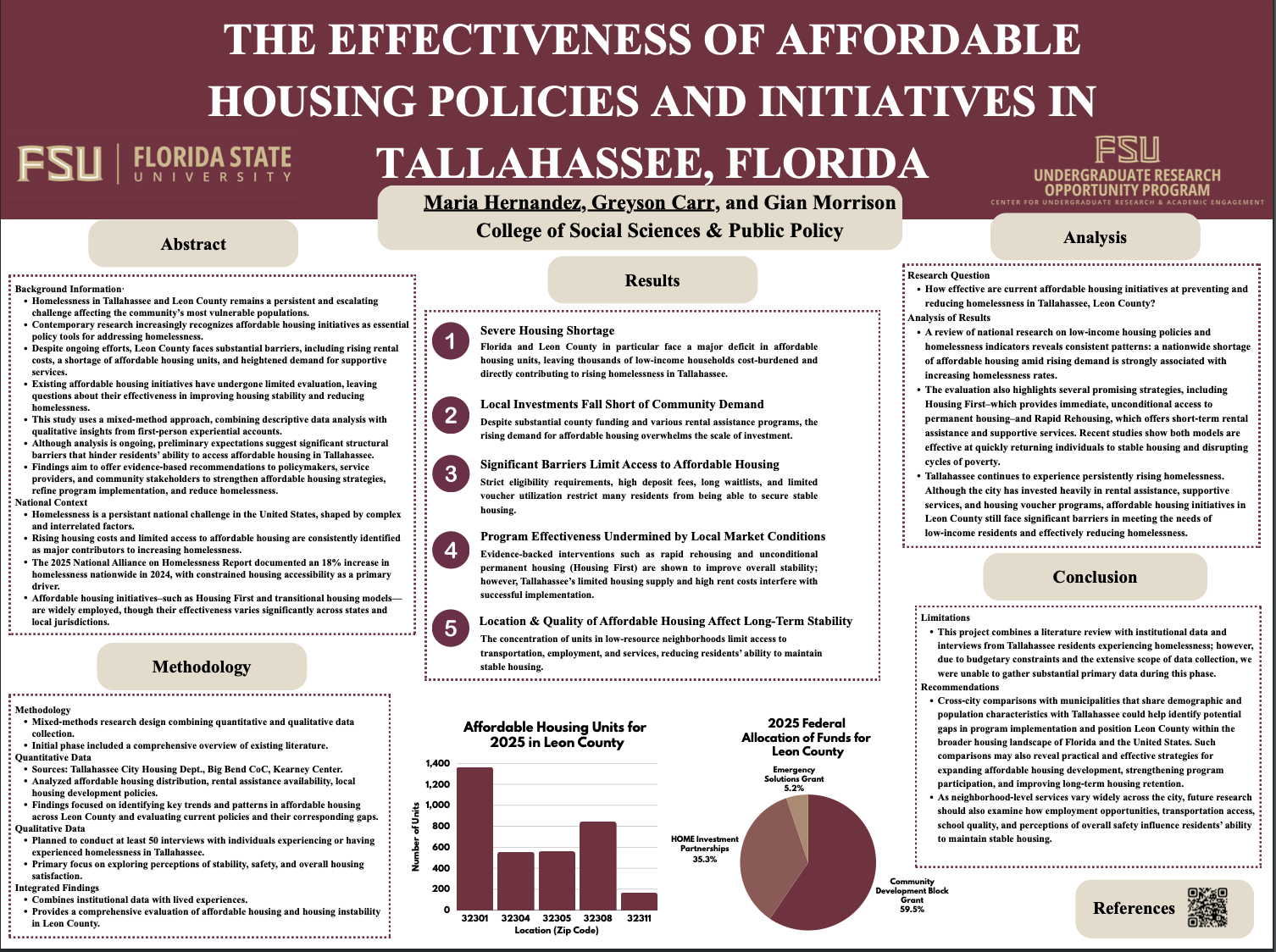
Keywords: Homelessness, Analysis, Effectiveness, Policies.
26th annual Undergraduate Research Symposium, April 1, 2026
Liberty West Poster Session 1: 9:30 am - 10:30 am / Poster #101

BIO
Liberty is a third-year undergraduate student at Florida State University pursuing a dual degree in anthropology and art history with minors in chemistry, museum studies, and Italian. Her research interests include fashion history, art and artifact conservation, illuminated manuscripts, archives, collections management, archaeology, and chemistry. Liberty has experience in archaeology, curation, preventative conservation, and artifact handling through her Bucher-Loewenstein Museum Studies internship in Italy, internship in the Jim Moran College of Entrepreneurship Historic Textiles and Costume Collection, and her Honors in the Major Project focusing on the comparative spectroscopic analysis of Mississippian pottery. After graduation this Spring, Liberty plans to attend a graduate program for book and paper conservation.
Archaeological Spectrometry of Local and Non-local Pottery from the Lower Mississippi Valley
Authors: Liberty West, Dr. Jayur MehtaStudent Major: Anthropology, Art History
Mentor: Dr. Jayur Mehta
Mentor's Department: Anthropology Mentor's College: College of Arts and Sciences Co-Presenters:
Abstract
Mississippian culture has long been the subject of debate, with its trade networks being a focal point. The Carson Mounds site in Mississippi’s Yazoo Basin is central to this as it contains pottery that is stylistically Cahokian. This study aims to determine the provenance of these “non-local” ceramics to distinguish between trade imports and stylistic diffusion and imitation. Using nondestructive portable x-ray fluorescence (pXRF) of 93 samples, this study identifies the chemical composition of both local pottery and Cahokian-style samples from Carson. These geochemical signatures were compared against Neutron Activation Analysis (NAA) databases from the University of Missouri’s Archaeometry Lab to identify matches with known Mississippian clay sources.
Results indicate Carson ceramics are significantly similar to the elemental fingerprints of Carson, Cahokia, and Moundville, indicating complex trade networks. As Carson remains an understudied site, this research fills a critical gap in the literature regarding the reach of the Cahokian sphere of influence and the connectedness of the Mississippian world. This data sheds light on Indigenous social structures and trade networks. Furthermore, this study addresses a methodological gap in ceramic studies. While pXRF is common in lithic and metal analysis, it is underutilized in archaeological ceramics studies. This research demonstrates how non-destructive pXRF can be effectively used in provenance research.
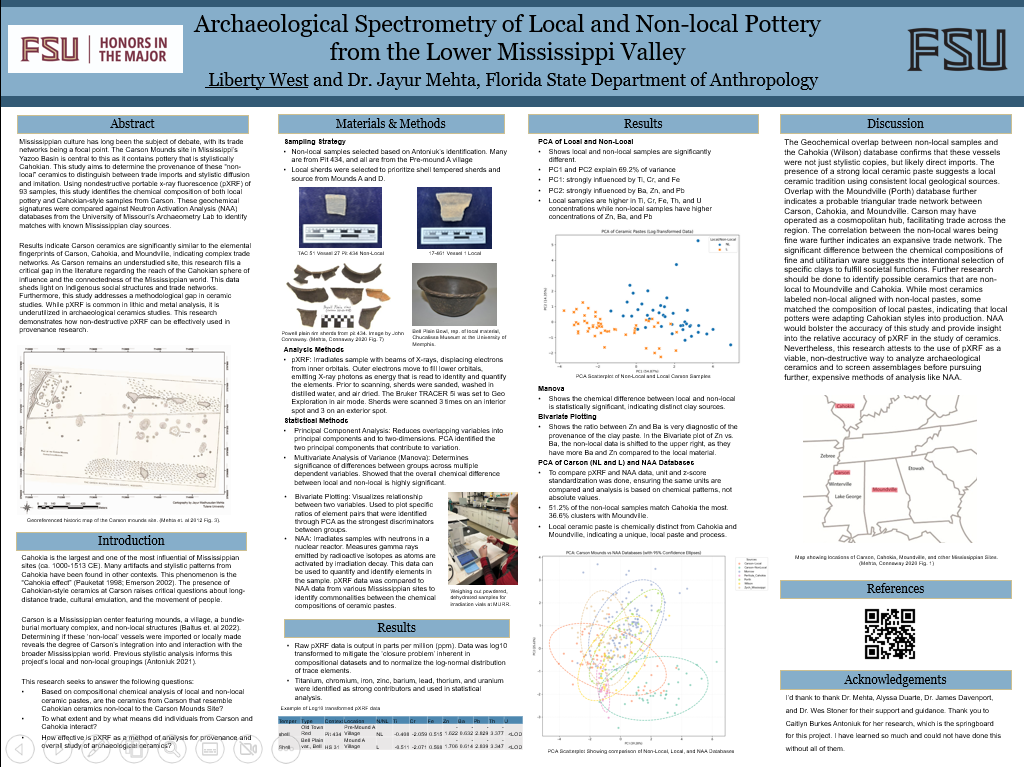
Keywords: Archaeology, pXRF, Ceramics, Mississippian, Spectrometry, Neutron Activation Analysis, Provenance
26th annual Undergraduate Research Symposium, April 1, 2026
Gioconda Tefel Poster Session 4: 3:00 pm - 4:00 pm / Poster #8
BIO
Gioconda Tefel is a first year student majoring in Anthropology and Environmental Science, with a minor in Museum Studies. She conducted her research on the Botanic Age under Dr. Amy Kowal, and participates in Dr. Eric Shattuck’s SHIRE Lab for disease research. Human history and culture is a guiding interest for her academic career, and defines her goals of better understanding and sharing humanity’s story.
The Botanic Age
Authors: Gioconda Tefel, Amy KowalStudent Major: Anthropology and Environmental Science.
Mentor: Amy Kowal
Mentor's Department: Anthropology Mentor's College: Arts and Sciences Co-Presenters:
Abstract
This project explores human cognitive development and evolution during the pre-Stone Age era, or the Botanic Age. Particularly, it focuses on the progress of tool use and bipedalism, and how they interlink with each other and cognitive development. Based upon Dr. Dean Falk’s book titled The Botanic Age (2024) the research counters not only the Three Age System, but the idea that humanity’s great cognitive leap occurred with the advent of stone tools. A strong line of evidence exists to suggest that human’s first cognitive leap occurred before the Stone Age, and instead in the Botanic Age with the rise of bipedalism. Falk theorizes that alongside bipedalism, humans adapted their botanic tree nests into carriers for babies and materials, revealing organized and prefabricated tool use aligned with higher cognition pre-Stone Age. The botanic tree nests, effectively the first ever tools, transitioned with humans as they moved from trees to the ground, becoming ground nests, and then utilitarian tools for mothers and gatherers. Falk’s research thus places women at a central role in the development of the first tools, reframing a traditionally patriarchal view of human history and evolution. This theory and its surrounding research challenge anthropologists to look past the archaeology of the Stone Age to recognize the millions of years of evolution and development occurring beforehand with plant based tools in the Botanic Age. This research will be used by the Museum Anthropology class and will result in a museum exhibit in the Anthropology Department.
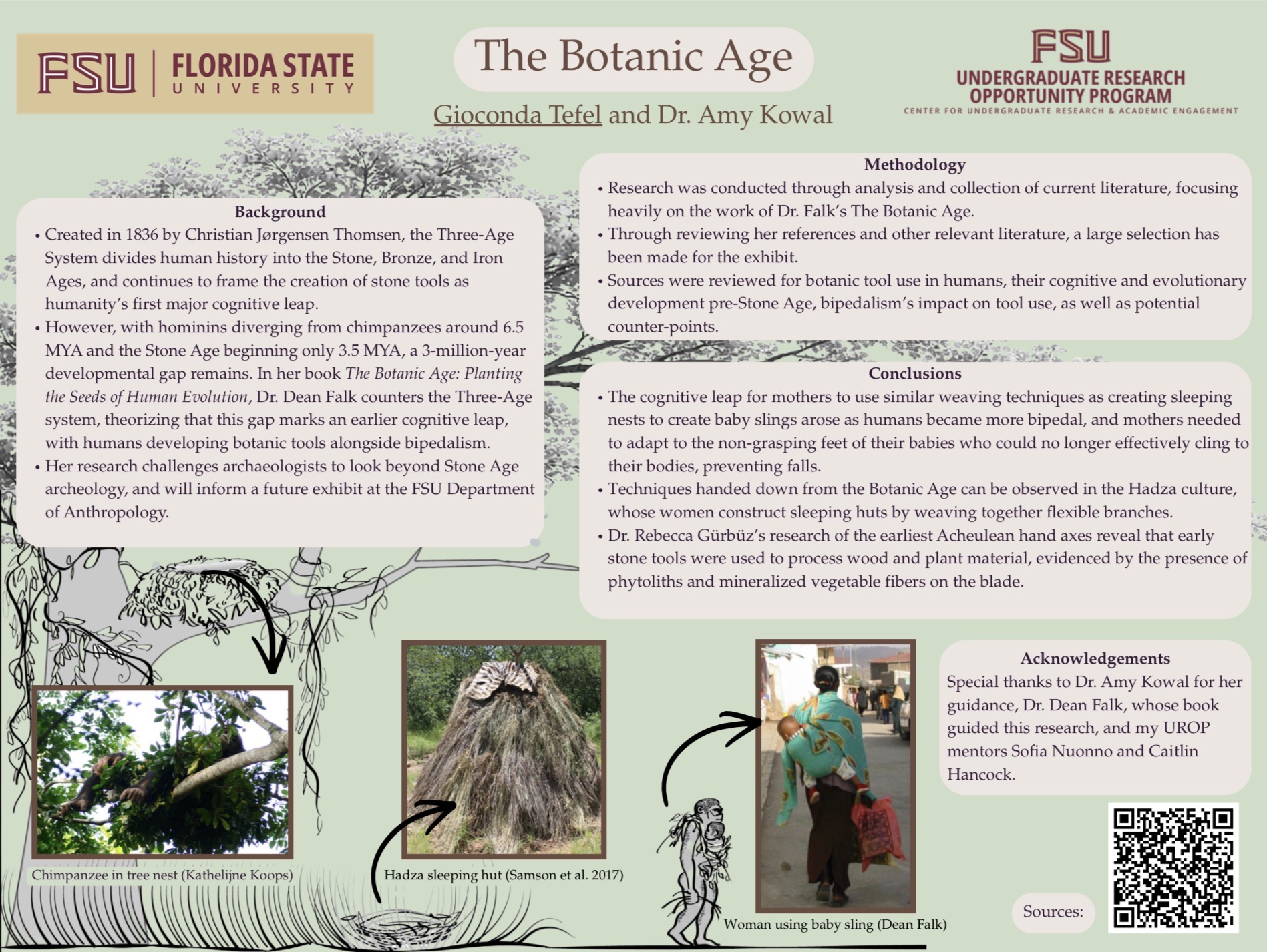
Keywords: Anthropology, prehistory, botanic, evolution
26th annual Undergraduate Research Symposium, April 1, 2026
Ashlee Locker Poster Session 4: 3:00 pm - 4:00 pm / Poster #16
BIO
Ashlee Locker, a senior from Wellington, Florida, is pursuing a Bachelor of Science in Biological Sciences with a minor in Chemistry at Florida State University. She is passionate about animal health and conservation, with a particular interest in marine life. Ashlee has conducted research for two years under the mentorship of Annais Muschett-Bonilla at the FSU Coastal and Marine Laboratory, where she studies reproductive biology and maternal investment in the Atlantic stingray (Hypanus sabinus). In addition to her research, she works as a part time chemistry tutor for high school students and volunteers at veterinary clinics working with both equine and small animal patients. After graduating, Ashlee plans to attend veterinary school to pursue a career in veterinary medicine.
Maternal Investment and Gestational Indicators in the Atlantic Stingray
Authors: Ashlee Locker, Annais Belinda Muschett-BonillaStudent Major: Biological Sciences
Mentor: Annais Belinda Muschett-Bonilla
Mentor's Department: Biological Sciences Mentor's College: College of Arts and Sciences Co-Presenters:
Abstract
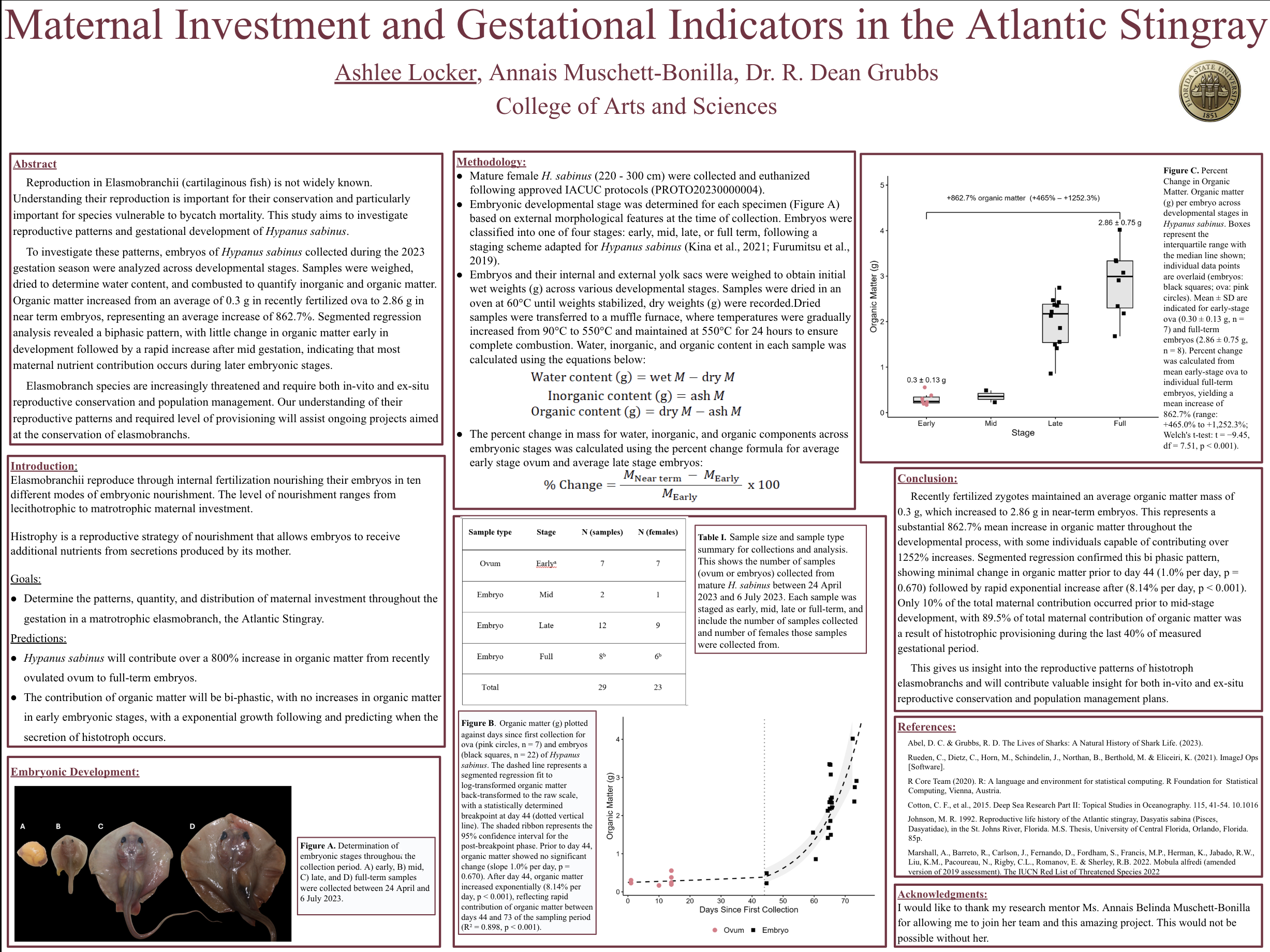
Reproduction in Elasmobranchii (cartilaginous fish) is not widely known. Understanding their reproduction is important for their conservation and particularly important for species vulnerable to bycatch mortality. This study aims to investigate reproductive patterns and gestational development of Hypanus sabinus.
To investigate these patterns, embryos of Hypanus sabinus collected during the 2023 gestation season were analyzed across developmental stages. Samples were weighed, dried to determine water content, and combusted to quantify inorganic and organic matter. Organic matter increased from an average of 0.3 g in recently fertilized ova to 2.86 g in near term embryos, representing an average increase of 862.7%. Segmented regression analysis revealed a biphasic pattern, with little change in organic matter early in development followed by a rapid increase after mid gestation, indicating that most maternal nutrient contribution occurs during later embryonic stages.
Elasmobranch species are increasingly threatened and require both in-vito and ex-situ reproductive conservation and population management. Our understanding of their reproductive patterns and required level of provisioning will assist ongoing projects aimed at the conservation of elasmobranchs.
Keywords: Marine, Biology, Reproduction
26th annual Undergraduate Research Symposium, April 1, 2026
Yemaya Adams Poster Session 4: 3:00 pm - 4:00 pm / Poster #108
BIO
Yemaya Adams is a second-year first generation student at Florida State University from Tampa FL. Yemaya is currently hoping to obtain a career as a health clinical analyst combining both technology and healthcare. Yemaya has maintained time management and academic integrity while balancing campus involvements. She is currently involved in HER university as a fall 25 inductee, 2025 Woman of Achievement of Kappa Alpha Psi Fraternity Incorporated, Student Foundation Programming Trustee, Codeducation Event Coordinator and serves a Desk Assistant for University Housing.
Humanists Perception and Engagement in Open Science
Authors: Yemaya Adams, Kassidy Hof-MahoneyStudent Major: Information Technology
Mentor: Kassidy Hof-Mahoney
Mentor's Department: FSU Libraries Mentor's College: College of Engineering Co-Presenters:
Abstract
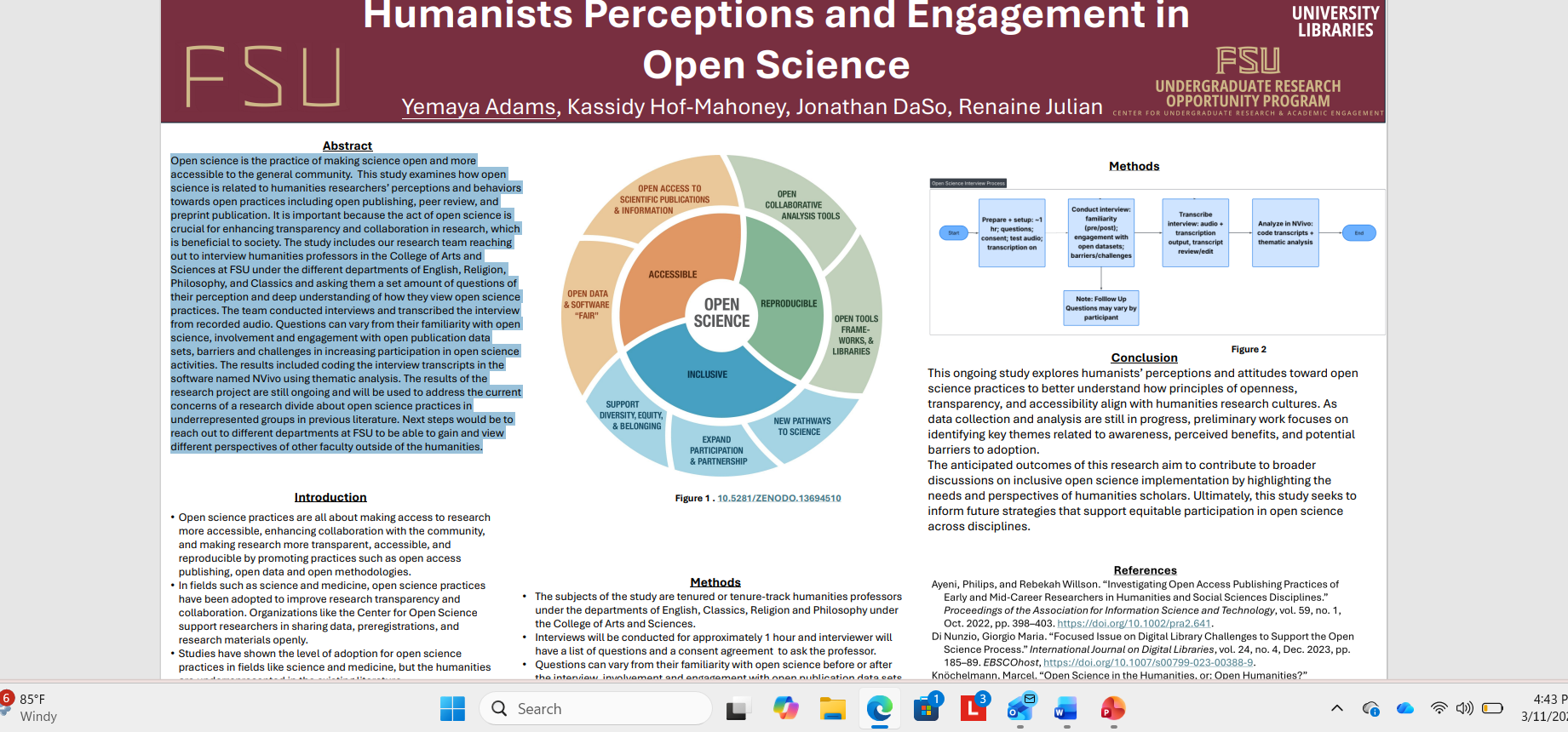
Open science is the practice of making science open and more
accessible to the general community. This study examines how open
science is related to humanities researchers’ perceptions and behaviors
towards open practices including open publishing, peer review, and
preprint publication. It is important because the act of open science is
crucial for enhancing transparency and collaboration in research, which
is beneficial to society. The study includes our research team reaching
out to interview humanities professors in the College of Arts and
Sciences at FSU under the different departments of English, Religion,
Philosophy, and Classics and asking them a set amount of questions of
their perception and deep understanding of how they view open science
practices. The team conducted interviews and transcribed the interview
from recorded audio. Questions can vary from their familiarity with open
science, involvement and engagement with open publication data
sets, barriers and challenges in increasing participation in open science
activities. The results included coding the interview transcripts in the
software named NVivo using thematic analysis. The results of the
research project are still ongoing and will be used to address the current
concerns of a research divide about open science practices in
underrepresented groups in previous literature. Next steps would be to
reach out to different departments at FSU to be able to gain and view
different perspectives of other faculty outside of the humanities.
Keywords: open science, collaborative, accessible
26th annual Undergraduate Research Symposium, April 1, 2026
Bailee Simmers Poster Session 3: 1:45 pm - 2:45 pm / Poster #185
BIO
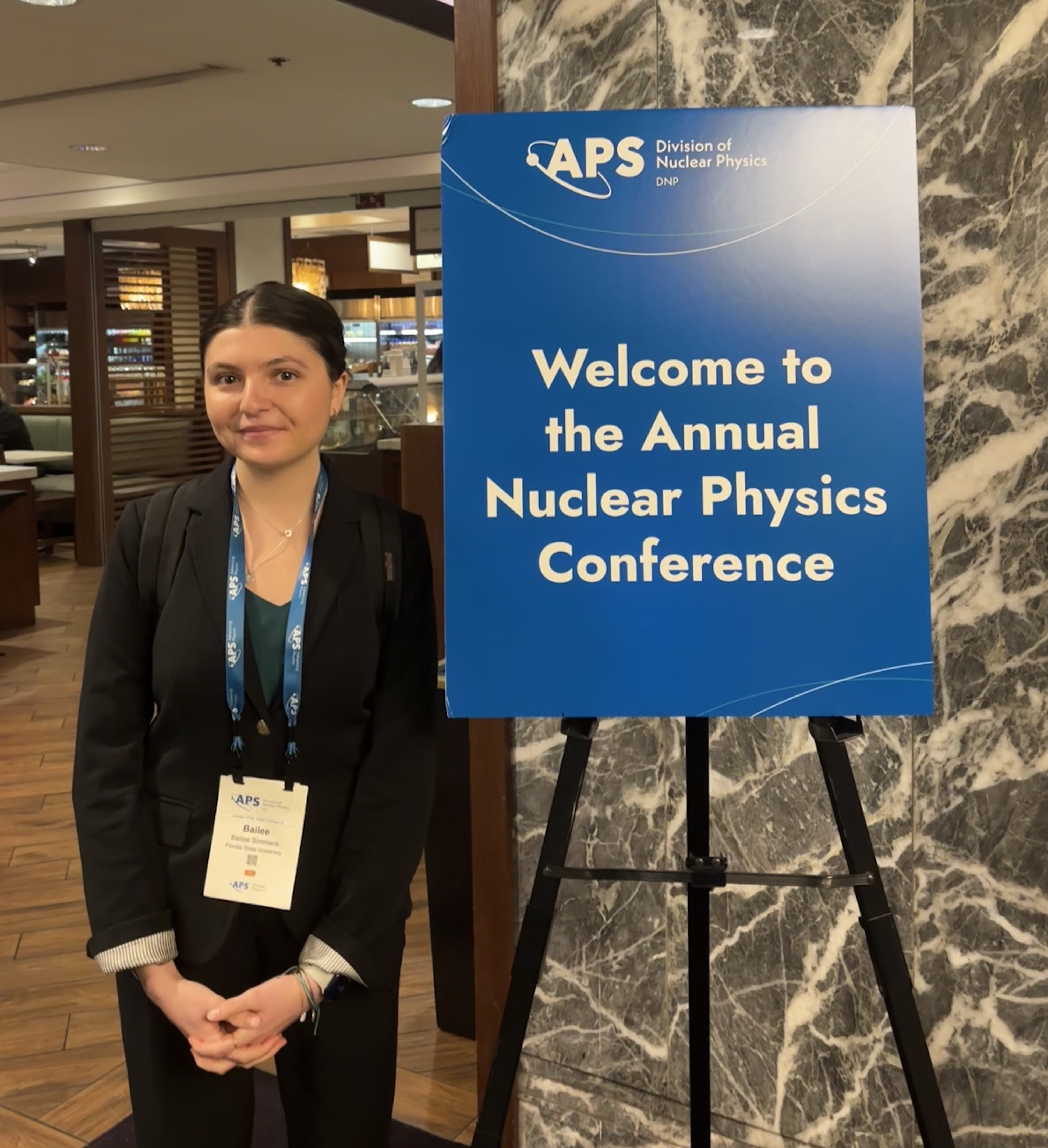
Bailee Simmers is a sophomore majoring in Physics and Astrophysics. She has been involved in Hadronic Nuclear Physics research with the GlueX Experiment since her freshman year. She recently presented her contribution to the Particle Identification Study at the APS Division of Nuclear Physics Meeting in Chicago. After completing her undergraduate education, Bailee plans to pursue a doctorate in nuclear physics. Outside of research, Bailee enjoys spending time with her dog, reading a good book, curating the perfect playlist, and indulging in some good espresso.
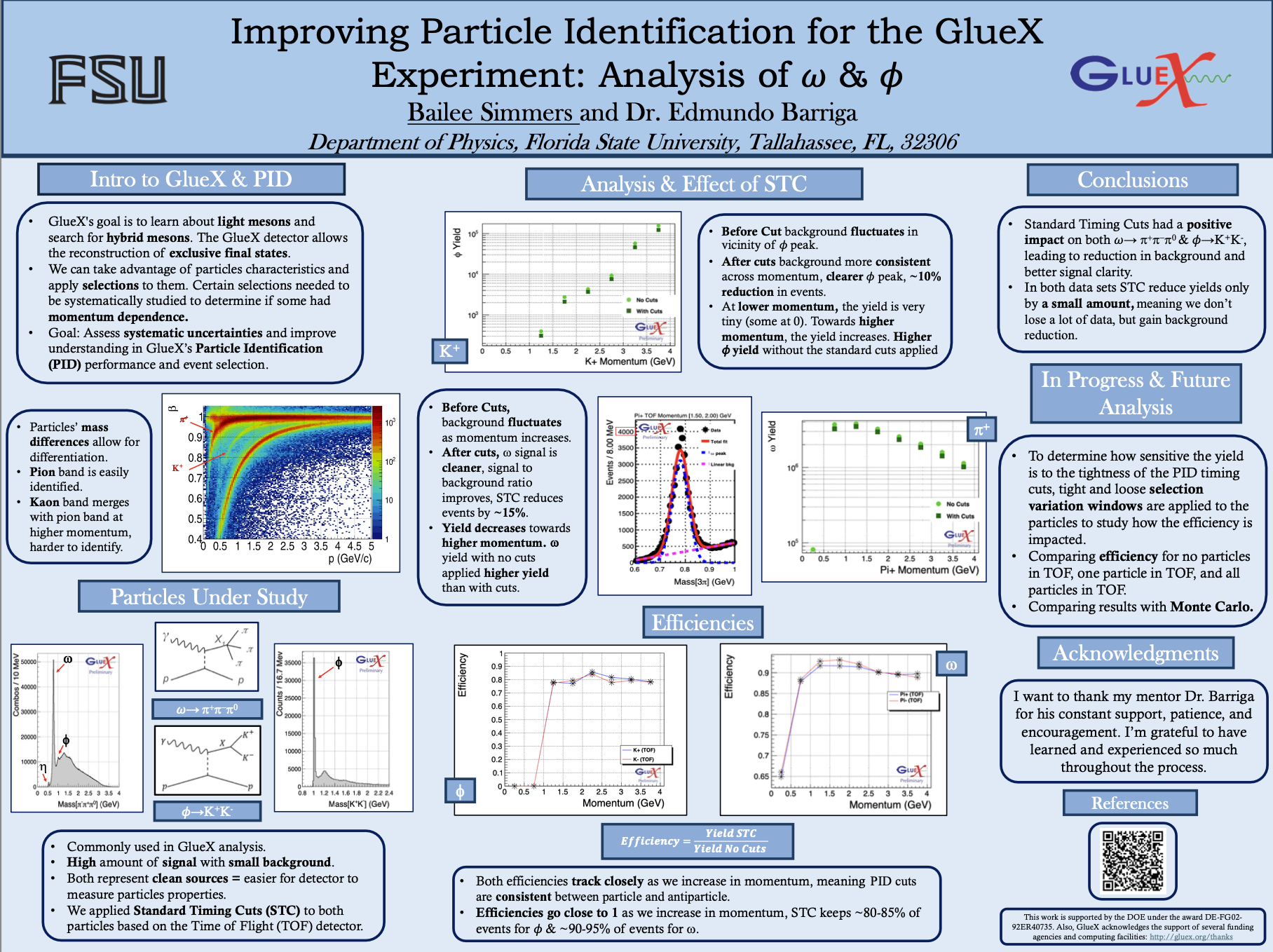
Improving Particle Identification for the GlueX Experiment: Analysis of 𝜔 & 𝜙
Authors: Bailee Simmers, Edmundo BarrigaStudent Major: Physics & Astrophysics
Mentor: Edmundo Barriga
Mentor's Department: Physics Mentor's College: Florida State University Co-Presenters:
Abstract
GlueX is a particle physics experiment located in Hall D at Jefferson Lab in Newport News, Virginia. Its primary goal is to search for hybrid mesons to better understand the light meson spectrum and the strong force. GlueX enables the reconstruction of exclusive final states and the identification of the intermediate particle resonances which produce these final state particles. This project contributes to the Particle Identification (PID) efforts within GlueX by quantifying the efficiency of current PID selections across the detector's kinematic coverage and examining modeling uncertainties between data and Monte Carlo simulations (MC). The particle decay modes used in these studies are 𝜔→𝜋+𝜋-𝜋0 and 𝜙→K+K-. Both particles have long lifetimes and small natural decay widths, and their measured widths are dominated by detector resolution. Thus, any changes in PID criteria that impact the resolution will directly affect their measured widths. To study this, we assess the systematic uncertainty in PID selections by comparing efficiencies in MC to those in data. This process involves extracting the yield of our chosen particles to calculate the efficiency. To determine how sensitive the yield is to the tightness of the PID timing cuts, tight and loose selection variation windows are applied to the particles in order to study how the efficiency is impacted. The results of this study will help assess systematic uncertainties and improve confidence in GlueX's PID performance and event selection.
Keywords: Physics, Nuclear Physics, Hadronic Physics, Particle Physics