
Research Symposium
26th annual Undergraduate Research Symposium, April 1, 2026
Ana De Freitas Poster Session 1: 9:30 am - 10:30 am / Poster #177
BIO
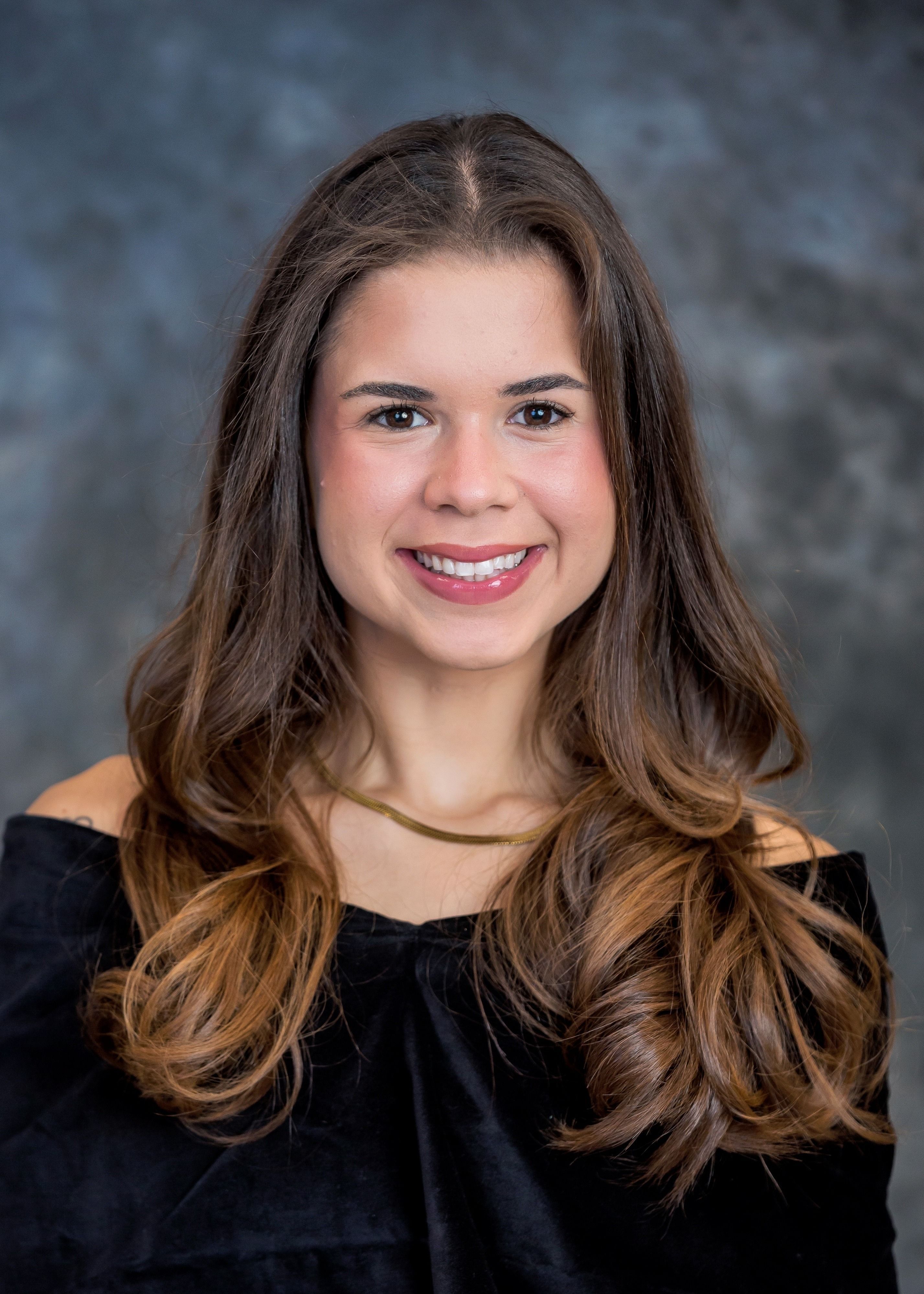
Ana De Freitas is a second-year student at Florida State University from Orlando, Florida, pursuing a Bachelor of Science in Nursing with an expected graduation of Spring 2027. As a first-generation college student, she is passionate about expanding access and opportunity in healthcare. Ana is currently conducting research under the mentorship of Rebecca Vasile, exploring how narrative and informational texts differ in vocabulary and language features in preschool classrooms. She is passionate about working with children and plans to pursue a career as a Pediatric Nurse Practitioner after graduation.
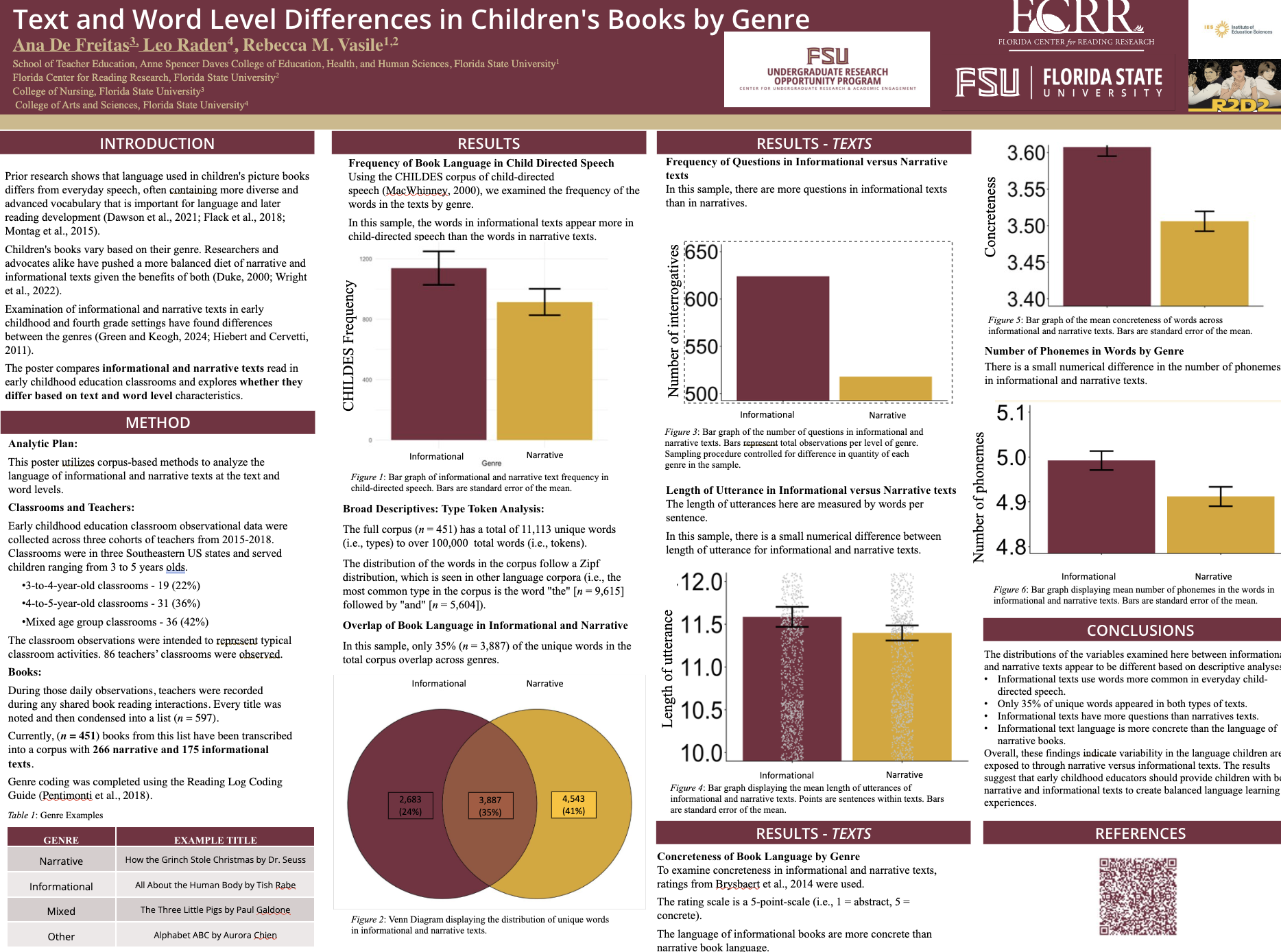
Text and Word Level Differences in Children's Books by Genre
Authors: Ana De Freitas, Rebecca M. VasileStudent Major: Nursing
Mentor: Rebecca M. Vasile
Mentor's Department: School of Teacher Education Mentor's College: Anne Spencer Daves College of Education, Health, and Human Sciences Co-Presenters: Leo Raden
Abstract
Research by Green and Keogh (2024) shows that narrative and informational texts expose children to different vocabulary and language patterns. However, limited research examines how these genres differ in text and word-level features such as frequency in child-directed speech, age of acquisition, and concreteness. Our research question asks: How do narrative and informational texts differ in their text and word-level features? Understanding these differences is important because children need balanced exposure to both genres to develop strong literacy skills.
We used corpus-based methods to analyze 447 books from 86 preschool classrooms in the southeastern United States, including 264 narrative and 171 informational texts. Genre coding was completed using an adapted coding scheme (Pentimonti et al., 2018) by two graduate students. Each book was transcribed to compare features including frequency in child-directed speech, question use, length of utterance, concreteness, and number of phonemes. Our preliminary results show clear differences between genres. Narrative texts use words more common in everyday child speech, while informational texts contain words more typical of adult writing. Only 26% of unique words appeared in both text types. Narrative texts also contained more questions than informational texts. These findings indicate meaningful variability in the language children encounter across genres.
These results suggest that early childhood educators should intentionally provide children with both narrative and informational texts to create balanced language learning experiences.
Keywords: Early childhood literacy, Vocabulary development, Children's literature
26th annual Undergraduate Research Symposium, April 1, 2026
Arden Lunsford Poster Session 3: 1:45 pm - 2:45 pm / Poster #84
BIO
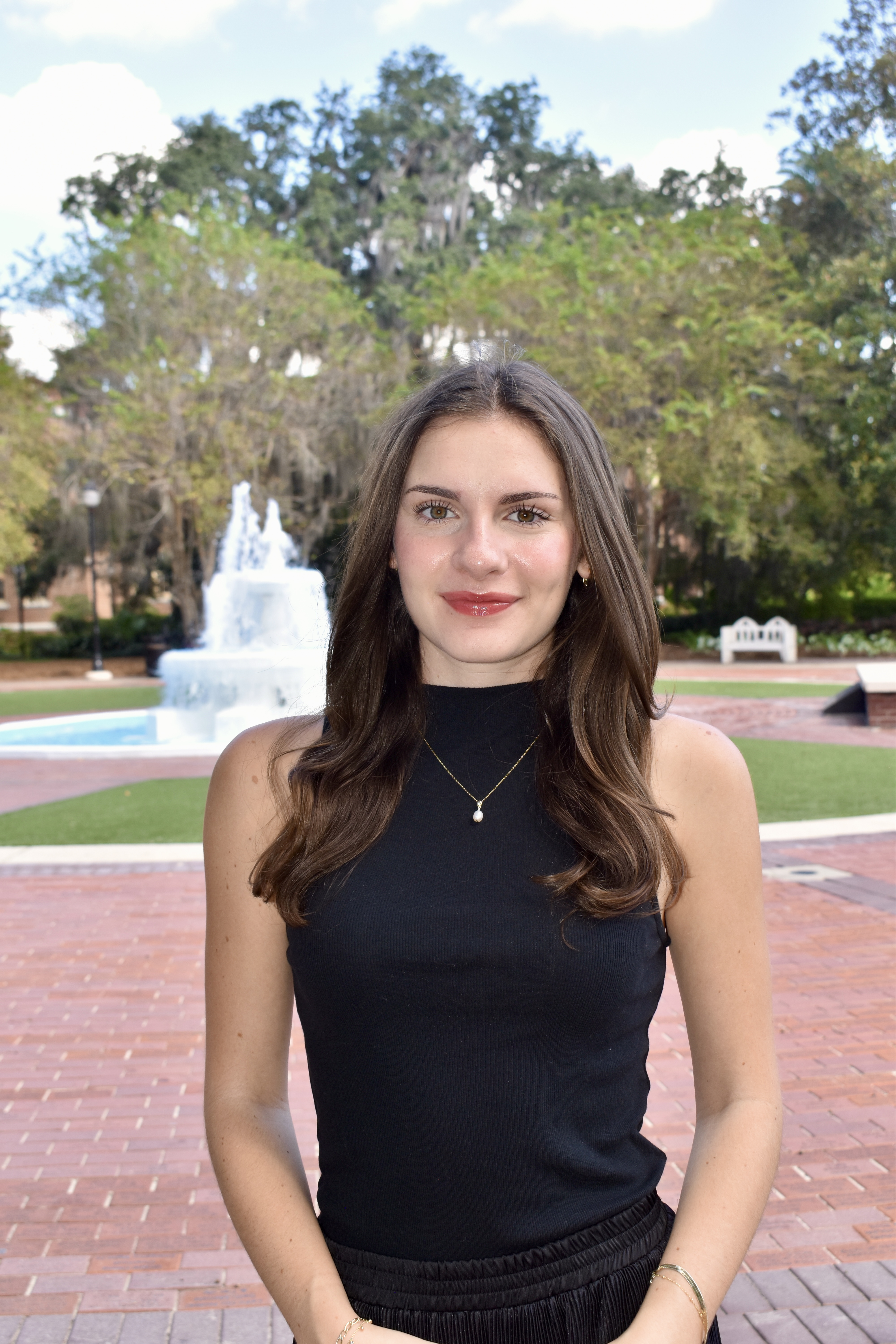
Arden is junior from Atlanta, Georgia, majoring in Psychology with a minor in Criminology. She is a member of Order of Omega Honors Society, Psi Chi Honors Society, and the Spring Lab at Florida State University. She is interested in understanding the psychological and social factors that influence behavior, with a particular interest in abnormal psychology and mental health. She plans on going to graduate school to specialize in forensic psychology, relationship psychology, or neurodivergent psychology. She hopes to help others improve both mental and physical health to promote their overall well-being and healthy lifestyles.
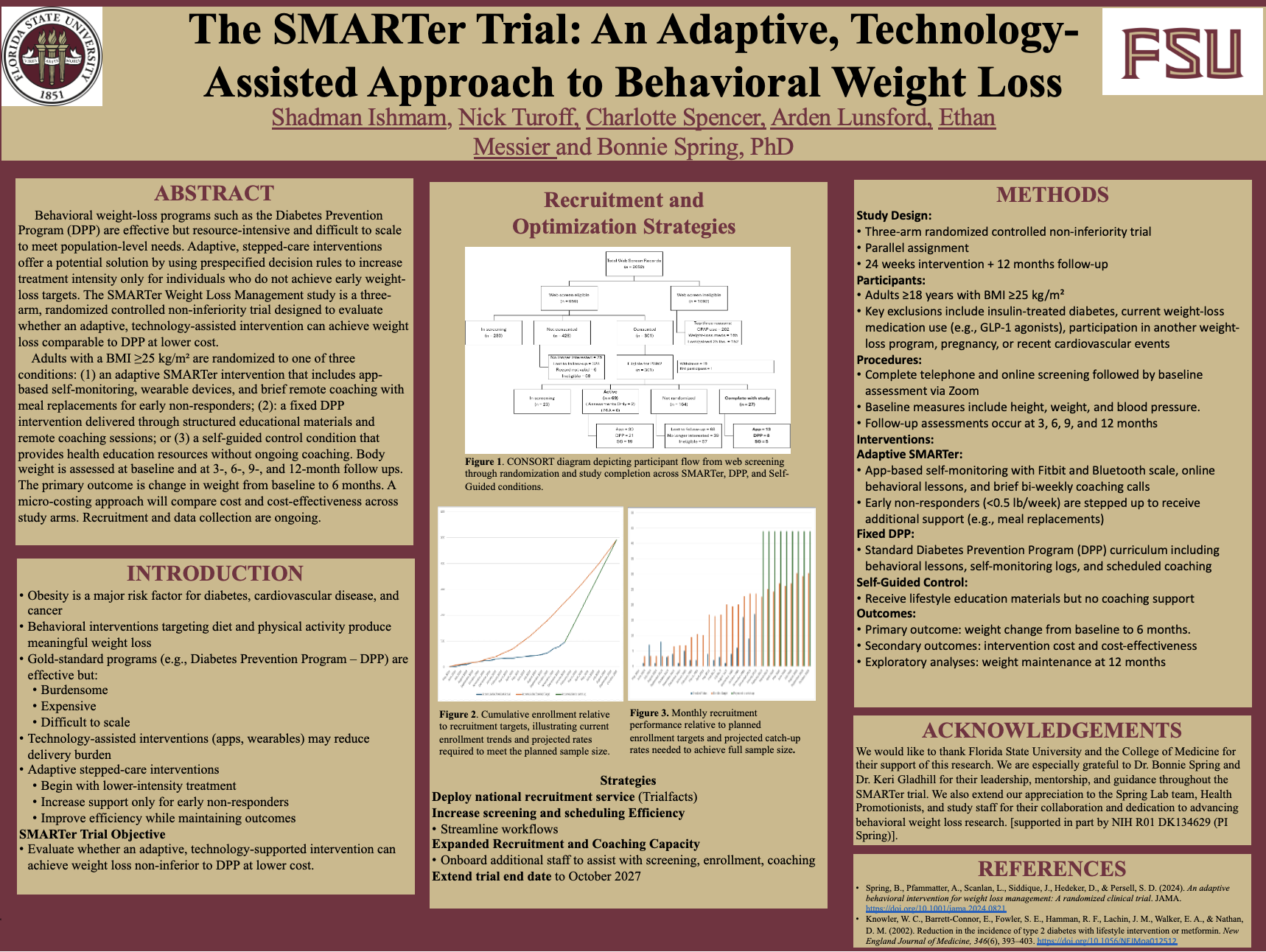
The SMARTer Trial: An Adaptive, Technology- Assisted Approach to Behavioral Weight Loss
Authors: Arden Lunsford, Bonnie SpringStudent Major: Psychology
Mentor: Bonnie Spring
Mentor's Department: Florida Blue Center for Rural Health Research and Policy Mentor's College: College of Medicine Co-Presenters: Shadman Ishmam, Nick Turoff, Charlotte Sprecher, Ethan Messier
Abstract
Behavioral weight-loss programs such as the Diabetes Prevention Program (DPP) are effective but resource-intensive and difficult to scale to meet population-level needs. Adaptive, stepped-care interventions offer a potential solution by using prespecified decision rules to increase treatment intensity only for individuals who do not achieve early weight-loss targets. The SMARTer Weight Loss Management study is a three-arm, randomized controlled non-inferiority trial designed to evaluate whether an adaptive, technology-assisted intervention can achieve weight loss comparable to DPP at lower cost. Adults with a BMI ≥25 kg/m² are randomized to one of three conditions: (1) an adaptive SMARTer intervention that includes app-based self-monitoring, wearable devices, and brief remote coaching with meal replacements for early non-responders; (2): a fixed DPP intervention delivered through structured educational materials and remote coaching sessions; or (3) a self-guided control condition that provides health education resources without ongoing coaching. Body
weight is assessed at baseline and at 3-, 6-, 9-, and 12-month follow ups. The primary outcome is change in weight from baseline to 6 months. A micro-costing approach will compare cost and cost-effectiveness across study arms. Recruitment and data collection are ongoing.
Keywords: SMARTer Research Study: Weight-Loss Study
26th annual Undergraduate Research Symposium, April 1, 2026
Jacqueline Moss Poster Session 3: 1:45 pm - 2:45 pm / Poster #6
BIO
Jacqueline (Jackie) Moss is a freshman at Florida State University in the Honors Program. She is studying Biochemistry to pursue a career path in the medical field.
Measuring Enzyme Catalysis with Integration of Lipid Additives
Authors: Jacqueline Moss, Steven LenhertStudent Major: Biochemistry
Mentor: Steven Lenhert
Mentor's Department: Department of Biological Science Mentor's College: College of Arts and Sciences Co-Presenters: Samantha Eckert, Evan Lorenz, John McAlvin, Tyler Albanese
Abstract
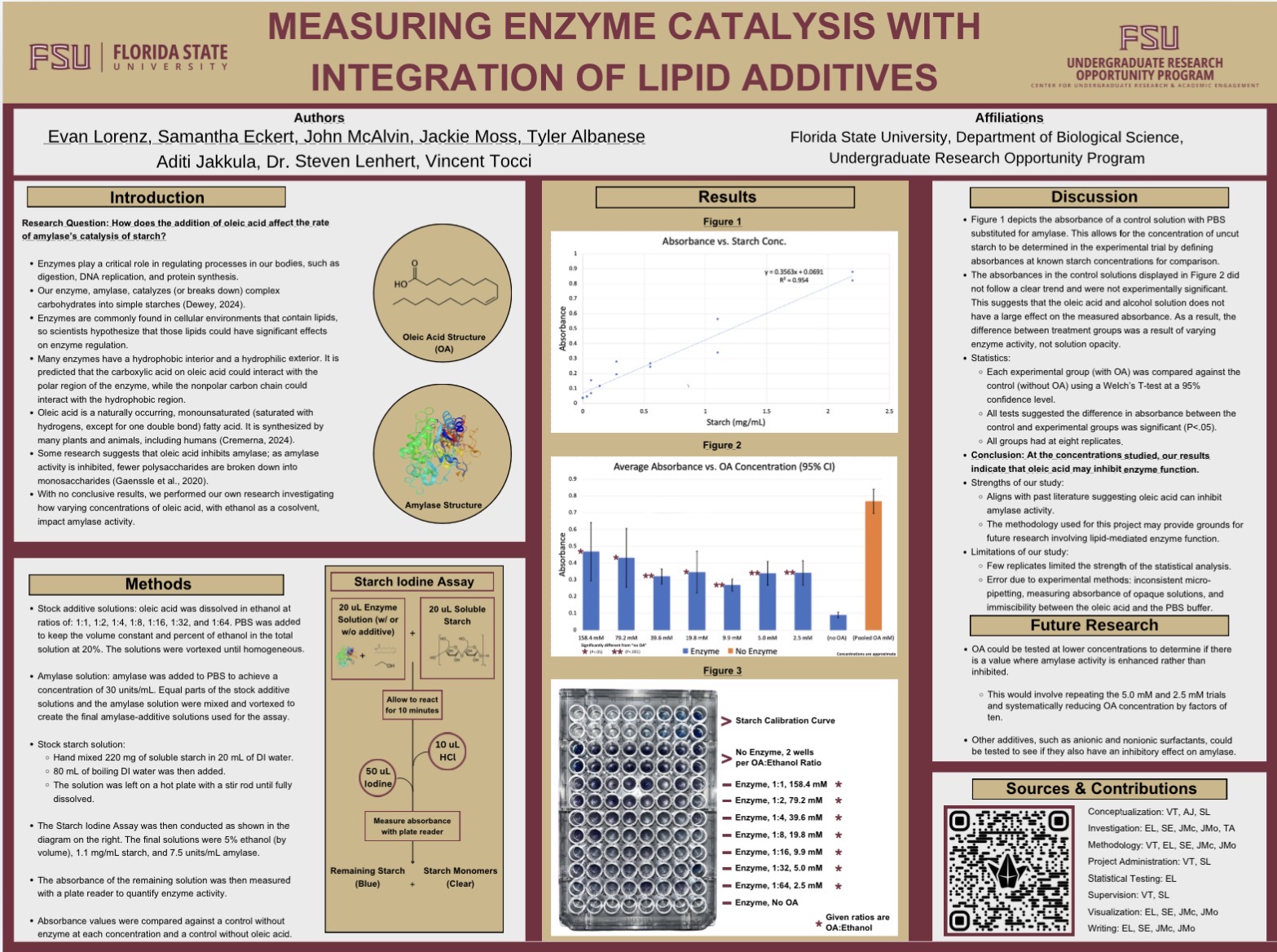
Lipids have been typically associated with the inhibition of enzyme function, but recent findings point towards their potential in increased catalysis rates. Enzymes are protein catalysts that speed up chemical reactions and play a critical role in regulating processes in our bodies, such as digestion. It is important to better understand enzyme activity, specifically how different conditions and chemicals affect them. Our research question aims to analyze the effect that oleic acid, a lipid, has on enzyme activity, specifically the activity of amylase. A preliminary literature review was conducted to determine ideal conditions and methods of amylase reactivity. Enzyme function was then tested by comparing various concentrations of oleic acid to the control group without an additive. Ethanol was used as a cosolvent with the oleic acid. Light absorbance of the sample was then measured with a plate reader to obtain quantitative data. When enzyme was added, there was an observed trend that as the ratio of oleic acid decreased, enzyme activity increased. Specifically between the 1:64 ratio of oleic acid:alcohol, there is a large difference between the absorbance values. Our research was limited by a small sample size and experimental error, such as inconsistent micro-pipetting, measuring opaque solutions in the plate reader, and immiscibility of solutions. Further research would include more trials with smaller concentrations of oleic acid which would work to minimize some of these concerns. This may introduce an unexpected increase in amylase activity, instead of the respective decrease exhibited in this research.
Keywords: Biochemistry, Lipids, Enzymes, Catalysis
26th annual Undergraduate Research Symposium, April 1, 2026
Thomas Hall Poster Session 4: 3:00 pm - 4:00 pm / Poster #278
BIO
Thomas Hall is a second-year student, currently pursuing a Bachelor of Science in Computer Science with a minor in Mathematics. He is interested in machine learning and working with statistics in large databases. His enthusiasm for emerging technologies has led him to undertake many courses related to computer architecture and data analytics, reflecting a growing foundation in computer systems. Beyond the classroom, Thomas worked closely with Dr. Xinyao Zhang at the FAMU-FSU College of Engineering, where he contributed programs that trained a large set of numerical sequences. Thomas' ambitions extend beyond academics with a personal interest in international travel. He aspires to lead a career at the intersection of international affairs and technology by working with a global organization to bridge cultures worldwide.
AI Powered "Smart" Robotic Teammates
Authors: Thomas Hall, Xinyao ZhangStudent Major: Computer Science
Mentor: Xinyao Zhang
Mentor's Department: Industrial and Manufacturing Engineering Mentor's College: College of Engineering Co-Presenters:
Abstract
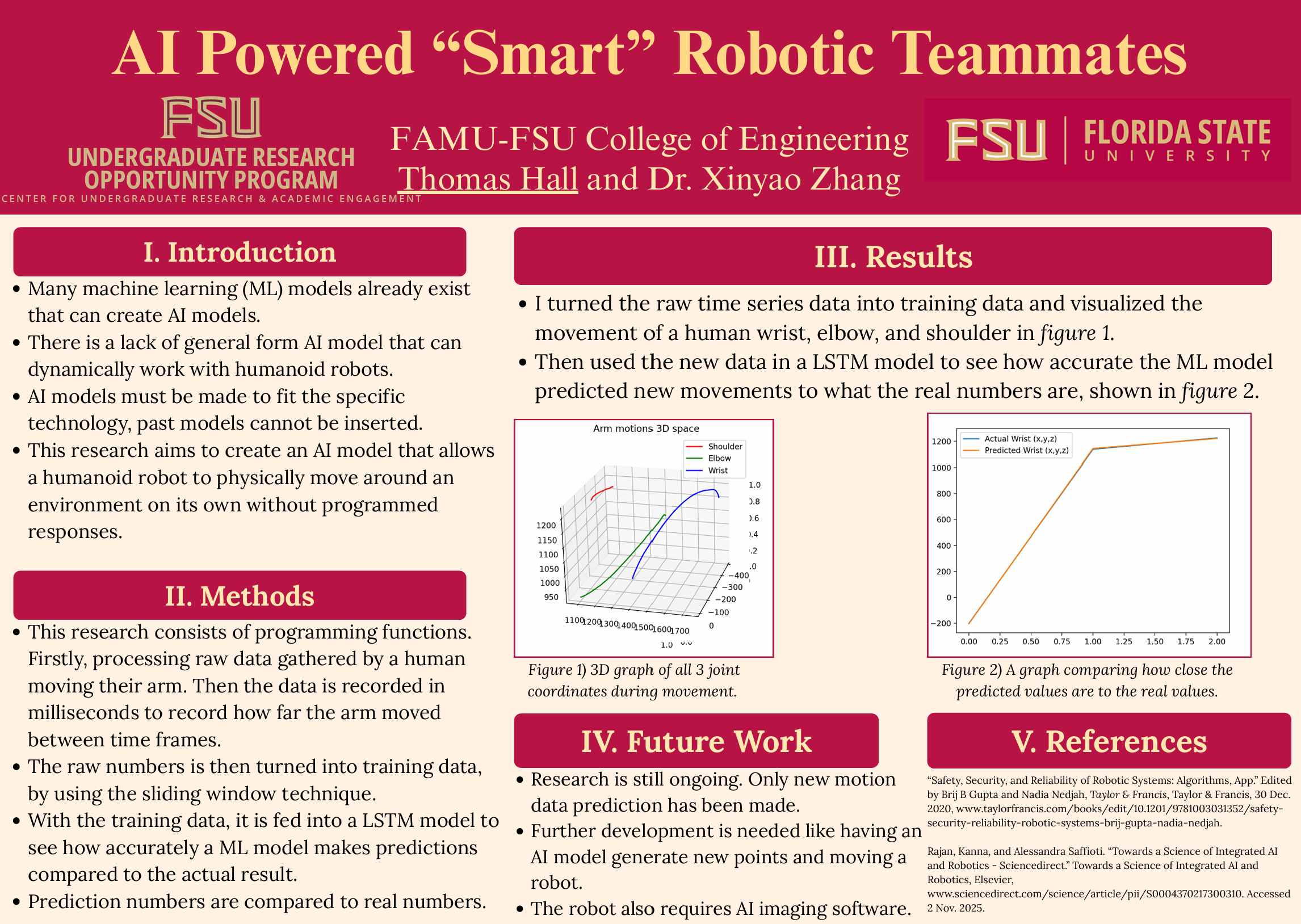
The world is revolutionizing at a rapid pace. As software and robotics have evolved over the years, we have begun to look for ways to integrate “smart” robotics with human workers to assist in labor, research, and menial tasks that are better suited for machines. The goal is to create a space where robots can take up heavy lifting and repetitive jobs so that humans can have more time to develop and conduct meaningful experiments that drive innovation forward. Firstly, raw data was recorded in milliseconds from an actual human arm movement and recorded each number as a time stamp in series data, then it will be processed into usable training data and fed into a ML model that can generate new prediction numbers from the trained data. Eventually, the ML knows how an arm should behave and can move appropriately in the real world. So far, this research is ongoing and requires more work to reach the end goal of a fully autonomous robot. So far, the data is being trained by a LSTM model and is in the learning stages. Something to note is that another team is working on this same project but with image processing software. Eventually, the time-series and image recognition systems will combine so robots can see and can know how and when to move to assist humans in repetitive and labor-intensive tasks.
Keywords: Robotics, ML, AI, Algorithms, Technology
26th annual Undergraduate Research Symposium, April 1, 2026
Natalia Pyatt Poster Session 3: 1:45 pm - 2:45 pm / Poster #257
BIO
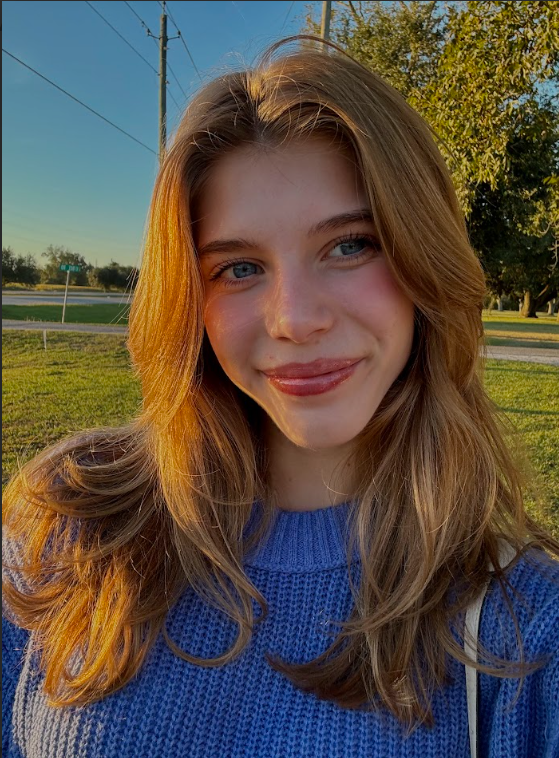
Natalia Pyatt is a first-year student majoring in Behavioral Neuroscience with plans to minor in General Business. As a National Merit Scholar and Honors student, Natalia has felt enriched by this first experience in undergraduate research. She is grateful for the guidance and mentorship Dr. Brenda Wawire and Dr. Adrienne Barnes-Story have offered. Natalia anticipates future research involvement through the Research Experience Program offered by the Women in Math, Science, and Engineering Living Learning Community (WIMSE). Outside of class, Natalia spends her time serving on WIMSE's Outreach Committee and volunteering at 211 Big Bend. She is enthusiastic about pursuing a career in healthcare, and this research experience has helped spark the drive and curiosity needed in the health profession.
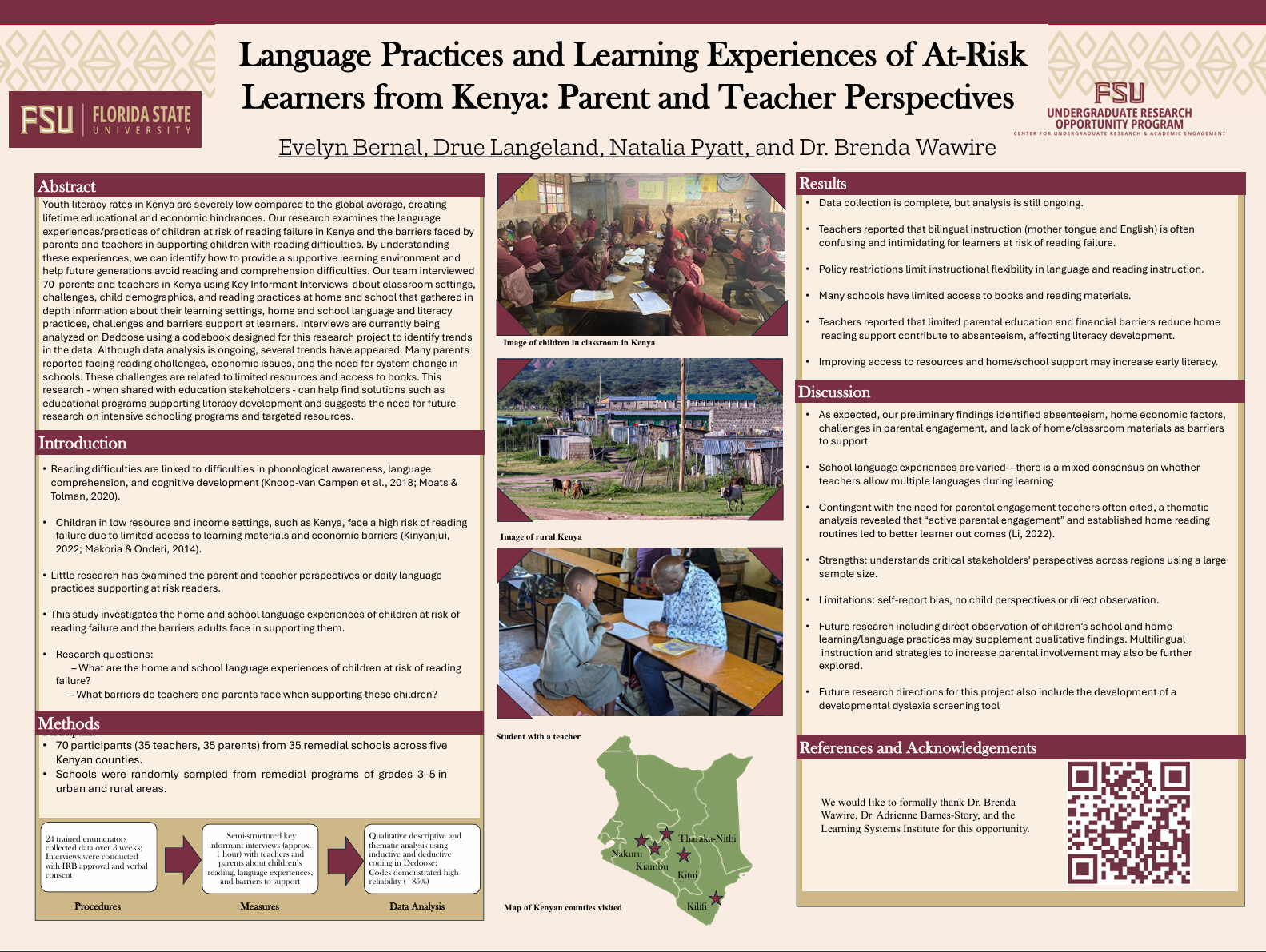
Language Practices and Learning Experiences of At-Risk Learners from Kenya: Parent and Teacher Perspectives
Authors: Natalia Pyatt , Dr. Brenda WawireStudent Major: Behavioral Neuroscience
Mentor: Dr. Brenda Wawire
Mentor's Department: Center for International Studies in Educational Research Mentor's College: Learning Systems Institute at Florida State University Co-Presenters: Drue Langeland, Evelyn Bernal
Abstract
Youth literacy rates in Kenya are severely low compared to the global average, creating lifetime educational and economic hindrances. Our research examines the language experiences/practices of children at risk of reading failure in Kenya and the barriers faced by parents and teachers in supporting children with reading difficulties. By understanding these experiences, we can identify how to provide a supportive learning environment and help future generations avoid reading and comprehension difficulties. Our team interviewed 70 parents and teachers in Kenya using Key Informant Interviews about classroom settings, challenges, child demographics, and reading practices at home and school that gathered in depth information about their learning settings, home and school language and literacy practices, challenges and barriers support at learners. Interviews are currently being analyzed on Dedoose using a codebook designed for this research project to identify trends in the data. Although data analysis is ongoing, several trends have appeared. Many parents reported facing reading challenges, economic issues, and the need for system change in schools. These challenges are related to limited resources and access to books. This research---when shared with education stakeholders---can help find solutions such as educational programs supporting literacy development and suggests the need for future research on intensive schooling programs and targeted resources.
Keywords: literacy, Kenya, education, reading difficulties
26th annual Undergraduate Research Symposium, April 1, 2026
Rohan Bansal Poster Session 2: 10:45 am - 11:45 am / Poster #228

BIO
Rohan Bansal is a sophomore at Florida State University pursuing a Bachelor of Science in Economics and Political Science, with a minor in Data Analysis. Originally from Washington, D.C., his academic interests focus on political economy, behavioral economics, and applied economics. Following graduation, he aims to pursue a career in strategic or financial consulting, public policy, or economic and policy analysis. He hopes to use economic analysis to support effective decision making and improve the effectiveness of institutions and markets.
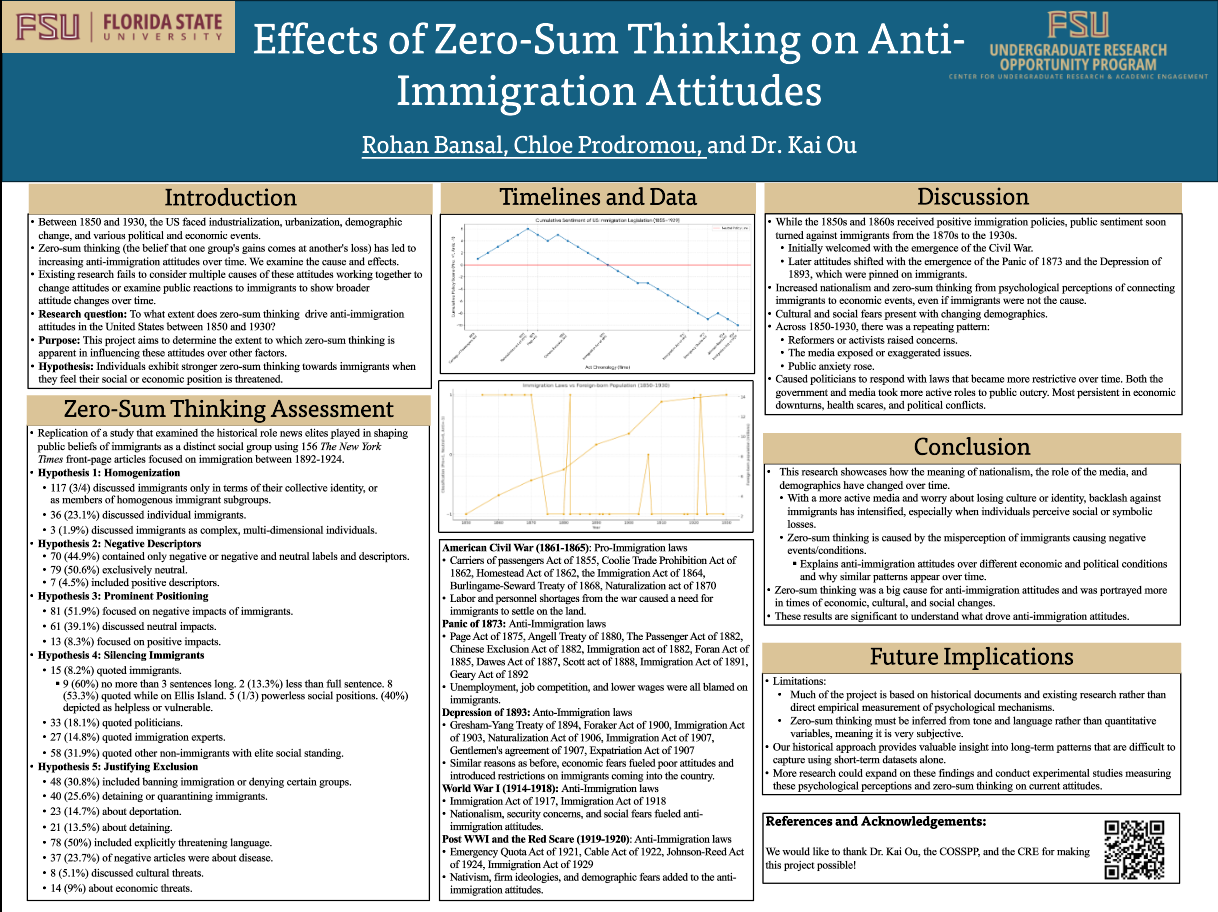
Effects of Zero-Sum Thinking on Anti-Immigration Attitudes
Authors: Rohan Bansal, Dr. Kai OuStudent Major: Economics and Political Science
Mentor: Dr. Kai Ou
Mentor's Department: Department of Political Science Mentor's College: College of Social Sciences and Public Policy Co-Presenters: Chloe Prodromou
Abstract
Anti-Immigration attitudes have been held by various United States and foreign citizens, but what factors influence these anti-immigration attitudes? This project aims to determine the extent to which anti-immigration attitudes can be explained by zero-sum thinking, which is the tendency to believe one group’s gains come at another's loss. By examining zero-sum thinking and other relevant factors such as nationalism, patriotism, etc., we can determine what conditions lead to anti-immigration sentiments and whether history is repeating itself. We examined federal legislation from 1850-1930 to see how attitudes shifted over time. Additionally, we replicated a study that examined the historical role news elites played in shaping public beliefs of immigrants as a distinct social group. Through our research, we found that people tend to exhibit high levels of zero-sum thinking when they feel threatened in their current role, which influences negative attitudes. These preliminary results, based on historical documents and statistics, could be further studied through various experiments to ensure strict causality and determine which factors determine anti-immigration attitudes the most. Understanding the causes of anti-immigration attitudes allows us to understand the increasing degree of political polarization, how and why exclusionary policies are enacted, and demonstrates the psychological perceptions in driving public opinion and legislation. By analyzing past and current patterns, we can make predictions about the future and target the factors causing the anti-immigration attitudes.
Keywords: Immigration, Zero-sum, American Politics, Attitudes
26th annual Undergraduate Research Symposium, April 1, 2026
Zoe Rue Poster Session 4: 3:00 pm - 4:00 pm / Poster #284
BIO
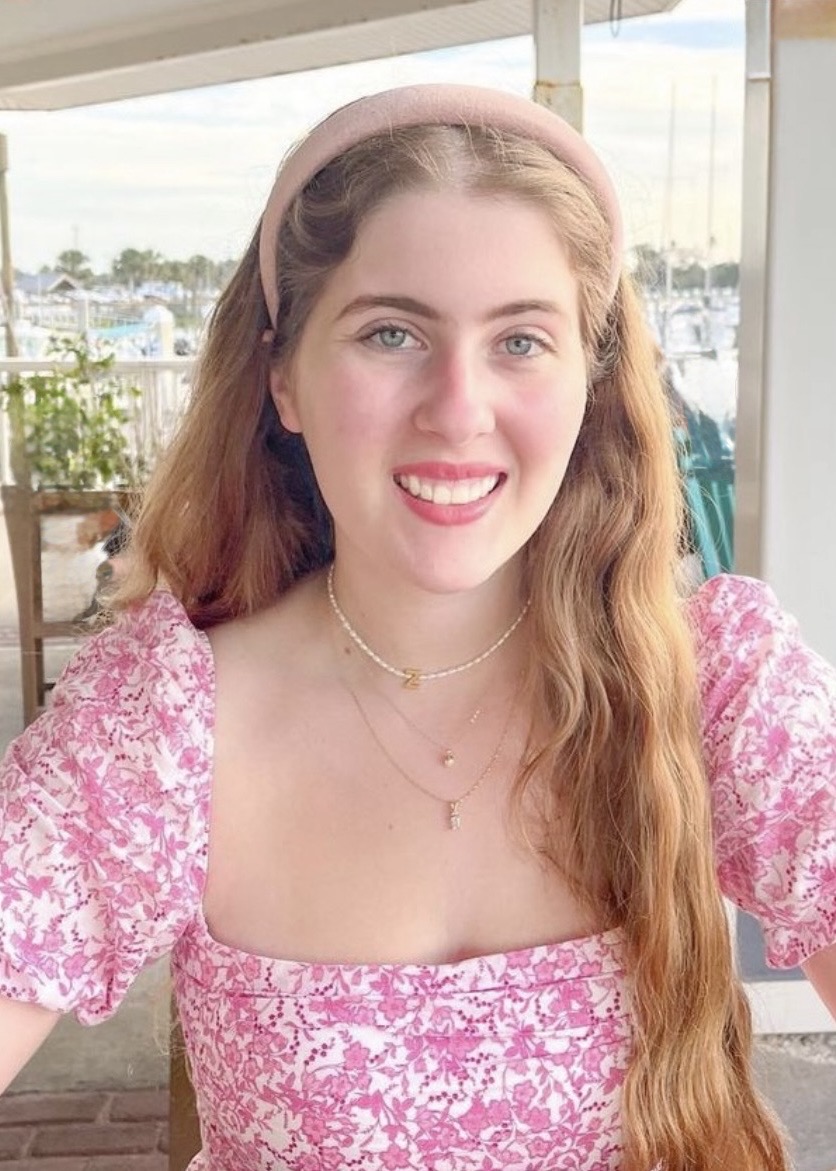
Zoe Rue is a senior from Fort Lauderdale, Florida, with a major in Editing, Writing, and Media and a minor in Communication. Her research interests include nineteenth century British literature—specifically novels by Jane Austen—as well as popular genre fiction, romance novels, adaptations/remixes, feminism, and the way that these topics intersect. She hopes to pursue a career within the publishing industry.
Zoe is a content editor and former staff writer for Her Campus at FSU, where she leads a team of writers. She has interned with FSU’s Museum of Everyday Writing, performed archival work, and curated her own exhibit centering around book annotations. She is also a part of FSU’s Honors Program and has taught Honors Colloquium to first-year Honors students.
She is involved with her sorority, Alpha Gamma Delta, for which she is the Song Chair and has previously served as the Director of Senior Experience; she is also a member of Order of Omega, an honor society for leadership in Greek Life. She performs as a soprano 1 with Levana, FSU’s treble choir.
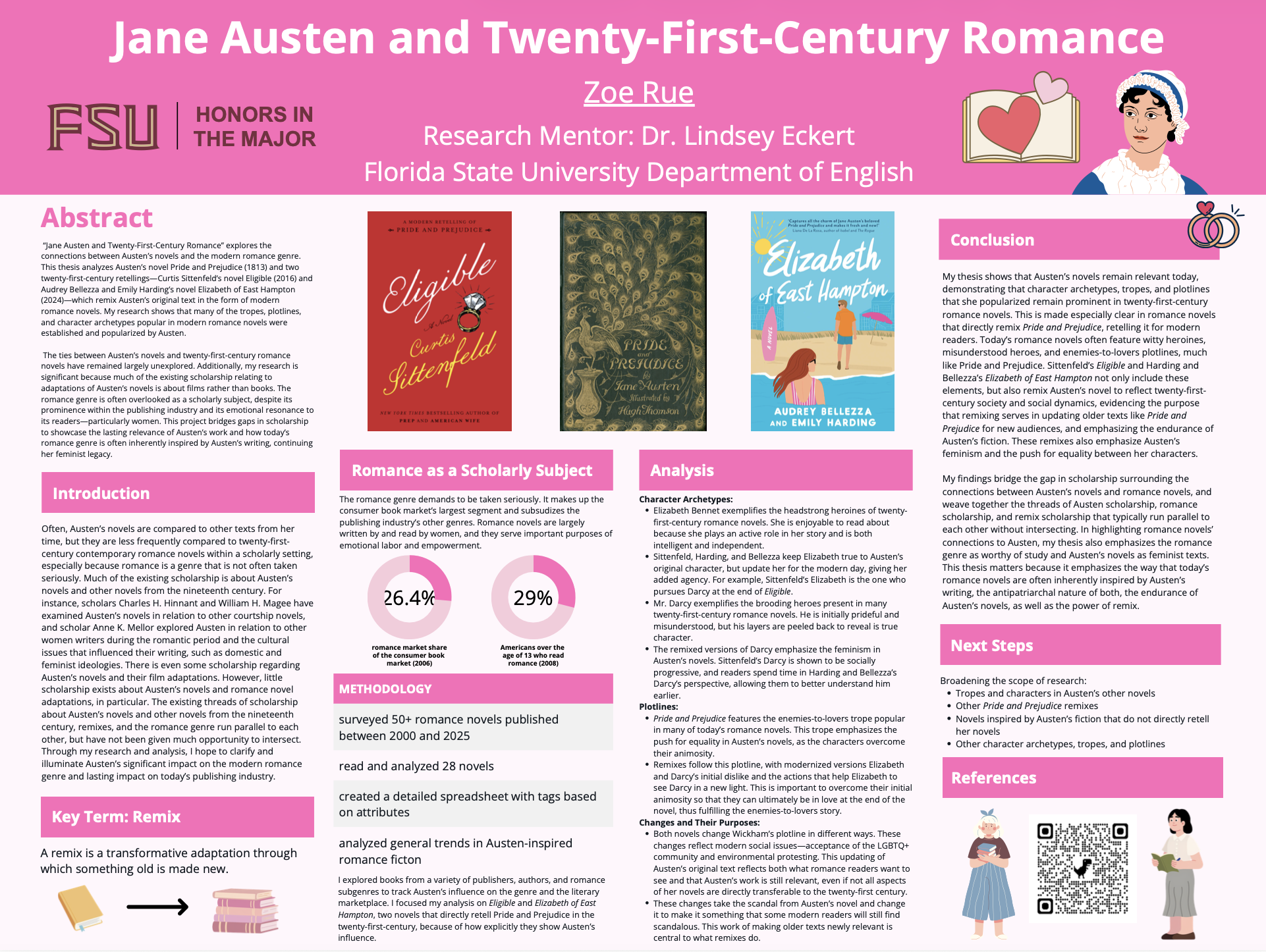
Jane Austen and Twenty-First-Century Romance
Authors: Zoe Rue, Dr. Lindsey EckertStudent Major: English - Editing, Writing, and Media
Mentor: Dr. Lindsey Eckert
Mentor's Department: Department of English Mentor's College: College of Arts and Sciences Co-Presenters:
Abstract
“Jane Austen and Twenty-First-Century Romance” explores the connections between Austen’s novels and the modern romance genre. This thesis analyzes Austen’s novel Pride and Prejudice (1813) and two twenty-first-century retellings—Curtis Sittenfeld’s novel Eligible (2016) and Audrey Bellezza and Emily Harding’s novel Elizabeth of East Hampton (2024)—which remix Austen’s original text in the form of modern romance novels. My research shows that many of the tropes, plotlines, and character archetypes popular in modern romance novels were established and popularized by Austen.
The ties between Austen’s novels and twenty-first-century romance novels have remained largely unexplored. The romance genre is often overlooked as a scholarly subject, despite its prominence within the publishing industry and its emotional resonance to its readers—particularly women. Moreover, my research is significant because much of the recent scholarship about adaptations of Austen’s novels focuses on films rather than books. This project bridges gaps in scholarship to showcase the lasting relevance of Austen’s work and how today’s romance genre is often inherently inspired by Austen’s writing, continuing her feminist legacy.
Keywords: fiction, literature, Austen, romance, remix
26th annual Undergraduate Research Symposium, April 1, 2026
Jordan Kane Poster Session 1: 9:30 am - 10:30 am / Poster #100
BIO
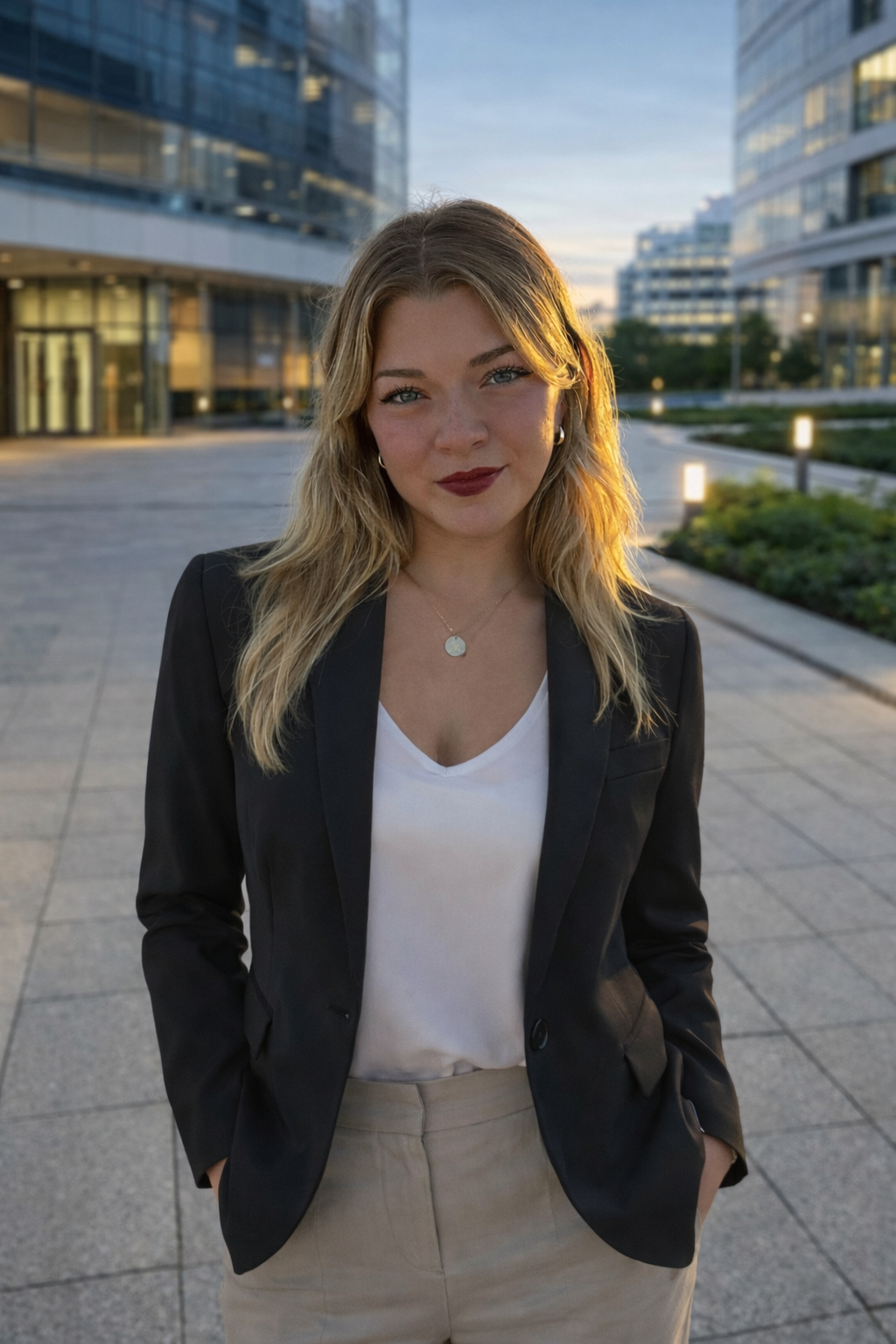
Jordan R. Kane is an undergraduate student at Florida State University pursuing a Bachelor of Science in Behavioral Neuroscience and Exercise Physiology, with a minor in Chemistry. Starting this fall, she began to work in Dr. Robert Hickner's lab under the mentorship of Alayne J. Thompson, contributing to research examining how exercise training influences physiological and psychological indicators of sleep quality in pre-diabetic postmenopausal women.
Through this project, Jordan has gained experience assisting with exercise-based research protocols, participant testing, and data collection using physiological and subjective sleep measures. Her academic interests lie in the intersection of neuroscience, physiology, and human performance.
Outside of research, Jordan is deeply involved in strength training and bodybuilding, which has shaped her interest in exercise science and the broader impact of physical activity on health and performance. She hopes to continue pursuing opportunities that integrate neuroscience, physiology, and exercise science to better understand how exercise can improve both physical and cognitive well-being.
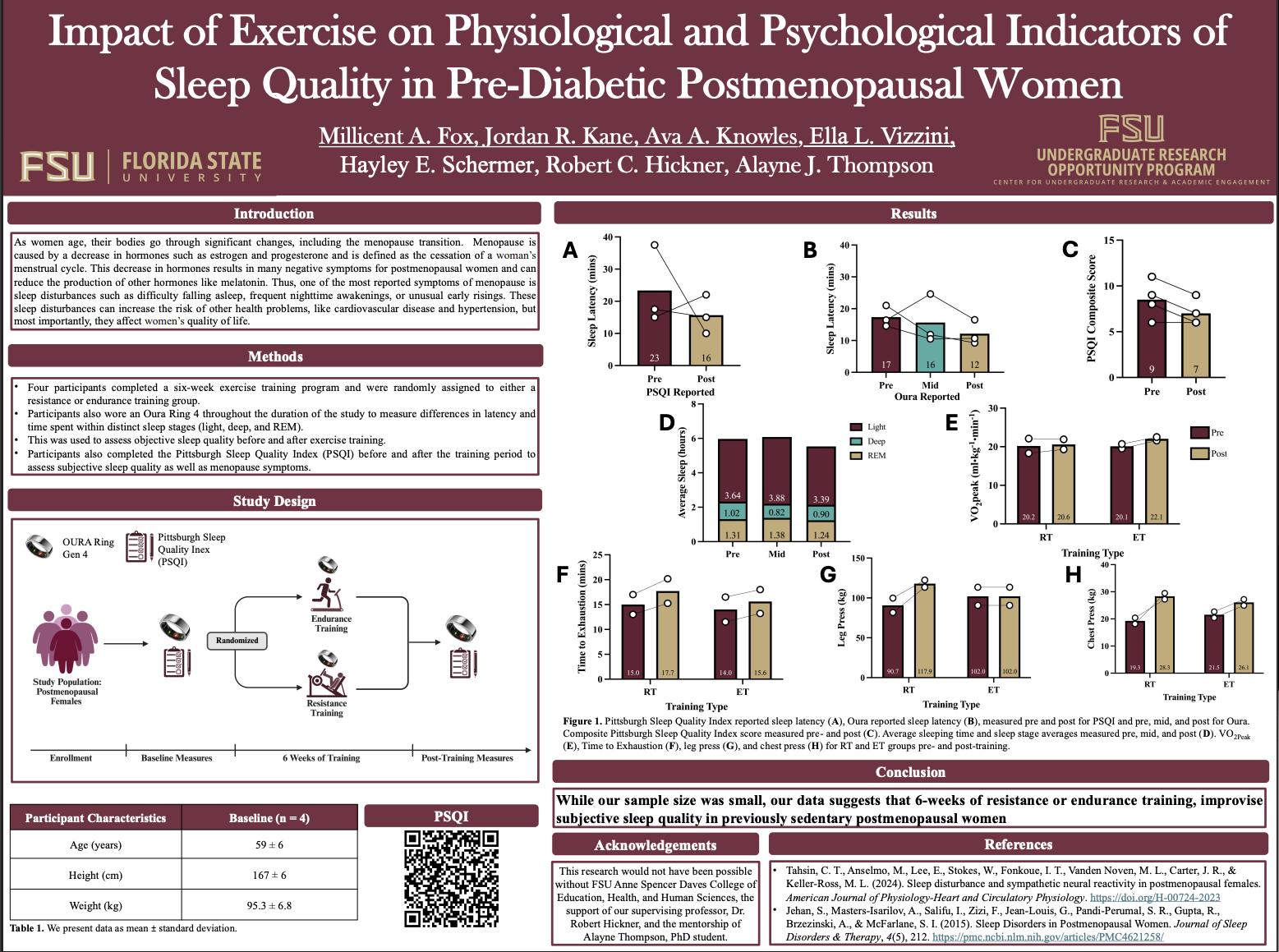
Impact of Exercise on Physiological and Psychological Indicators of Sleep Quality in Pre-Diabetic Postmenopausal Women
Authors: Jordan Kane, Alayne ThompsonStudent Major: Behavioral Neuroscience, Exercise Physiology
Mentor: Alayne Thompson
Mentor's Department: Exercise Physiology Mentor's College: College of Education, Health, and Human Sciences Co-Presenters: Millicent Fox, Ava Knowles
Abstract
Menopause is an inevitable life stage impacting over half of the population, leading to significant mental and physiological changes. This study is ongoing and investigates the feasibility of exercise as a non-pharmacological intervention for the treatment of symptoms in post-menopausal women with obesity and prediabetes. In our research, four participants were randomly assigned to resistance or endurance training groups. To measure objective sleep parameters, such as heart rate and distinct sleep stages, participants also wore an Oura Ring 4 throughout the six weeks. Furthermore, participants’ subjective sleep quality and menopausal symptoms were evaluated via the Pittsburgh Sleep Quality Index (PSQI) and Menopause Rating Scale (MRS). We hypothesized that exercise would cause an increase in time spent in deep sleep and would improve perception of sleep quality. With a small sample size and the study still ongoing, we can only posit that our preliminary results indicate a trend towards improved strength, enhanced subjective sleep quality, and potential reductions in menopausal symptoms following the six-week exercise program. Further participant recruitment is necessary to enhance the statistical power to confirm these effects, yet our findings are promising in the potential application of exercise as a non-pharmacological strategy to improve sleep and menopausal health in this population.
Keywords: Exercise, Sleep, Women
26th annual Undergraduate Research Symposium, April 1, 2026
Janna Lelis Poster Session 3: 1:45 pm - 2:45 pm / Poster #15
BIO
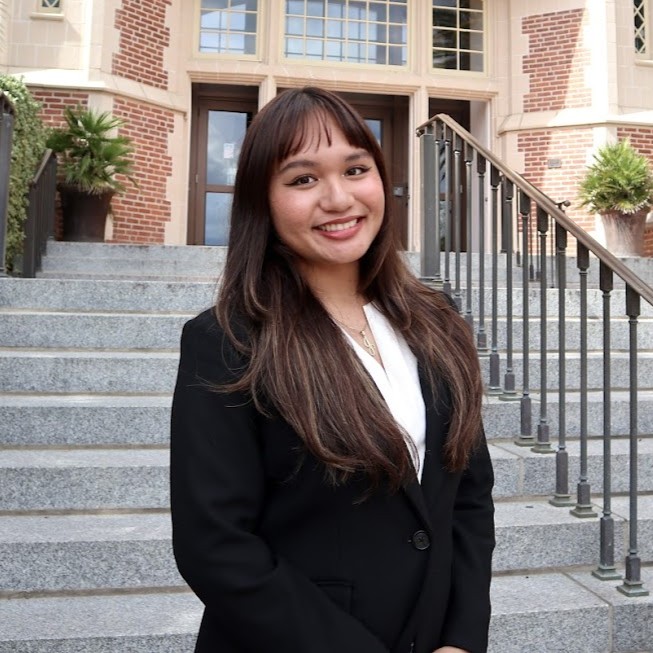
Janna Lelis is a 2nd year Political Science and Economics student from Jacksonville, Florida. At Florida State, she is a part of the Research Intensive Bachelor’s Certificate Program (RIBC), Global Scholars 2026, and is currently in progress of getting a certification in Teaching English to Speakers of Other Languages (TESOL).
Her experience as a military child has led her to spend some time living abroad in Japan and Singapore, which has significantly contributed to her interest in global education, travel, and language acquisition. Her experience in UROP sparked her interest in education policy. After graduation, Janna plans to spend a year abroad teaching English and eventually attend graduate school to continue her research journey. Outside of school, you can usually find her cooking a new recipe, reading a book, or planning her next travel destination.
The Fear You’ll Be the Same Person When You Go Home and the Fear You Won’t": A Narrative Inquiry of First Generation in College Student Recipients of the Benjamin A. Gilman International Scholarship
Authors: Janna Lelis, Latika YoungStudent Major: Political Science and Economics
Mentor: Latika Young
Mentor's Department: Center of Undergraduate Research Mentor's College: Undergraduate Studies Co-Presenters: Anthony Braun
Abstract
International education experiences cultivate global citizenship, yet barriers such as high financial costs often discourage underresourced students from accessing them. The Benjamin A. Gilman International Scholarship (GS) aims to mitigate these obstacles by providing funding to Pell Grant-eligible first generation in college students (FGCSs), among other demographic groups. While the immediate benefits of study abroad are generally well documented, this study utilizes narrative inquiry to investigate long-term transformation in students’ lives 5-10 years “post-Gilman.” Specifically, we explore how FGCSs perceive the impact of their GS experience for their longer-term personal, social, academic, and professional goals and aspirations. This study employs Jack Mezirow’s (1978) Transformative Learning Theory, using its 10 stages of transformation, notably critical self-reflection and rational discourse. We adopt a qualitative approach by conducting survey, focus groups, and individual interviews with alumni who graduated between 2014-2019 from a southeastern U.S. university. Using a denaturalized transcription and thematic coding process, five participants will be selected for further narrative inquiry via a creative data-elicitation technique. Preliminary findings suggest that the GS has led to a profound transformation in personal and professional pathways. Participants’ international experiences were the primary catalyst for further international traveling, higher levels of confidence, resilience, and self-determination. Our results also indicate that the impact of global educational experiences extend beyond the individual, potentially impacting the participants’ broader social circles. This study spotlights the need for higher education institutions and policymakers to better understand and support FGCSs in international education engagement, for personal, professional, and social transformation.
![UROP [Latika, Janna, Anthony].png](https://cre.fsu.edu/system/files/webform/research_symposium_webform/21540/UROP%20%5BLatika%2C%20Janna%2C%20Anthony%5D.png "UROP [Latika, Janna, Anthony].png")
Keywords: first-generation college student, study abroad, transformation, higher education
26th annual Undergraduate Research Symposium, April 1, 2026
Hailey Long Poster Session 1: 9:30 am - 10:30 am / Poster #195
BIO
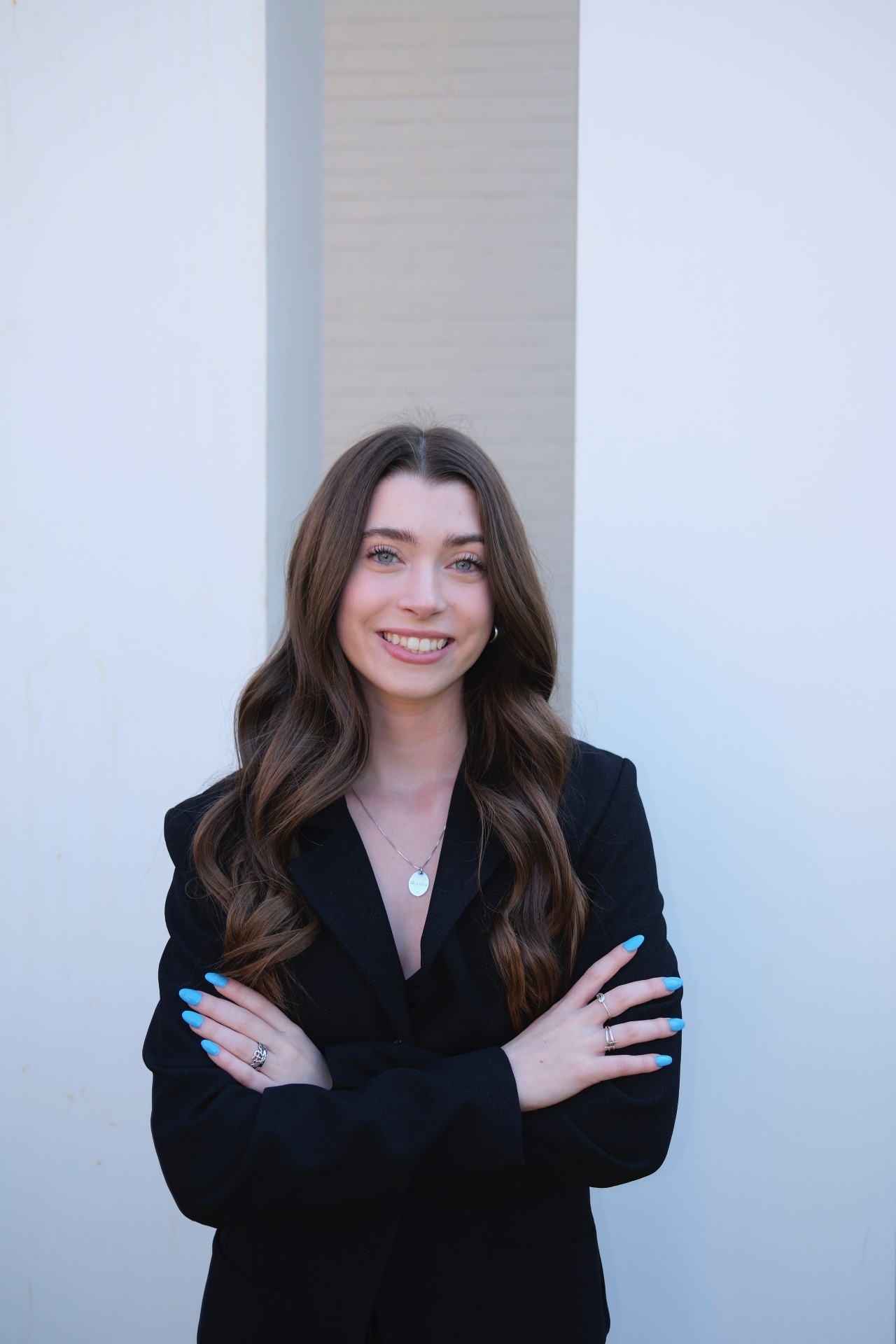
Hailey is currently a sophomore here at Florida State University majoring in meteorology with a minor in mathematics and plans on attending grad school to further her education and specialize in climate science. Her current research interests focus on long-term variability in sea surface temperatures in the Gulf of Mexico and how these patterns show larger climate trends. Originally from Orlando, Florida, she is actively involved on campus as a member of Phi Mu, assisting in recruitment and acting as banner chair. Hailey is also a frequent volunteer with a local dog rescue called Champ’s Chance, providing support and care for dogs in need. Through her studies and research, she hopes to contribute to a better understanding of climate variability and its long-term effects.
Analysis of Extreme Minimum Temperatures in the Southeast
Authors: Hailey Long, Shawn SmithStudent Major: Meteorology
Mentor: Shawn Smith
Mentor's Department: Center for Ocean-Atmospheric Predictions Studies (COAPS) Mentor's College: College of Arts and Sciences Co-Presenters:
Abstract
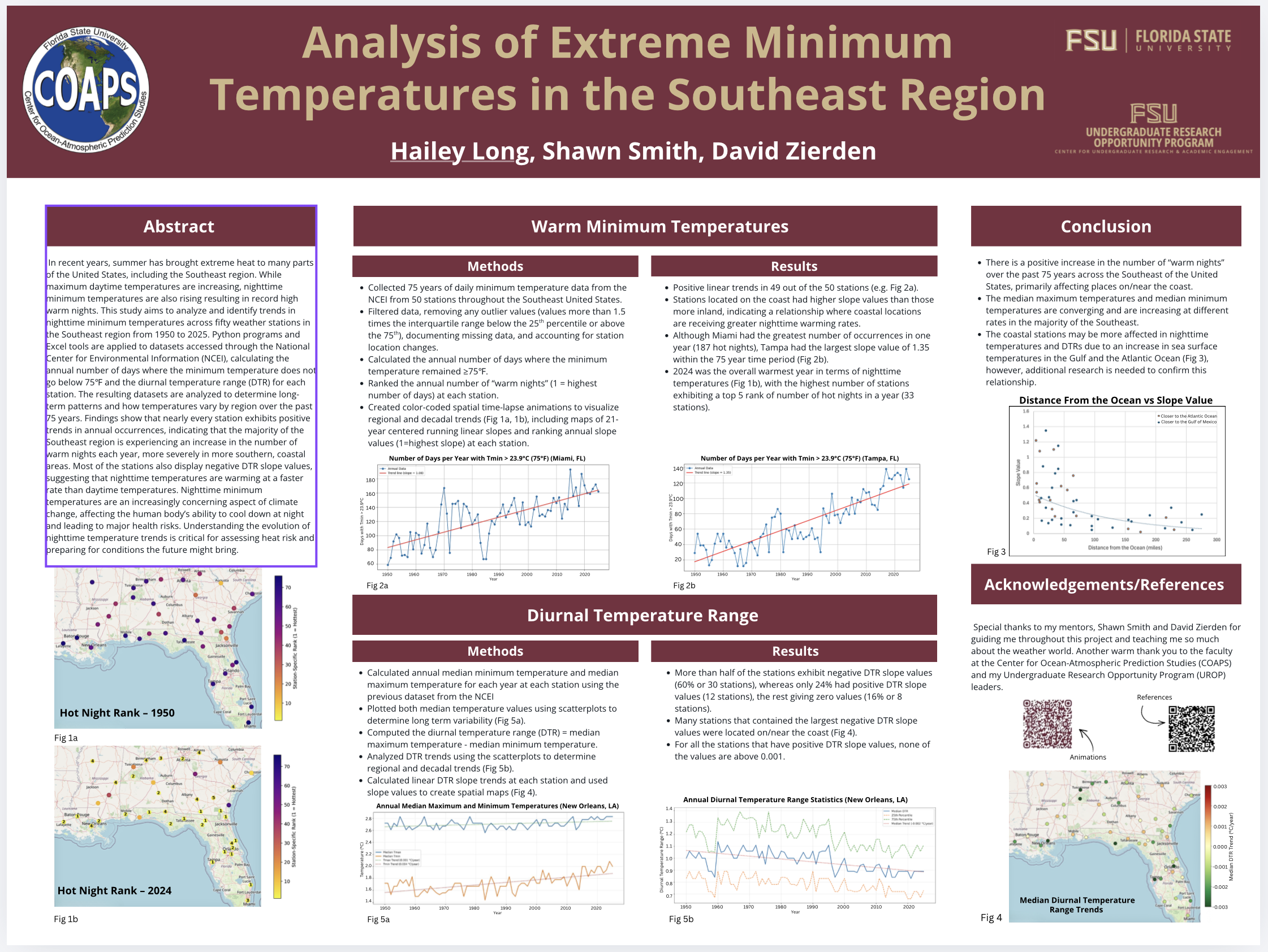
In recent years, summer has brought extreme heat to many parts of the United States, including the Southeast region. While maximum daytime temperatures are increasing, nighttime minimum temperatures are also rising resulting in record high warm nights. This study aims to analyze and identify trends in nighttime minimum temperatures across fifty weather stations in the Southeast region from 1950 to 2025. Python programs and Excel tools are applied to datasets accessed through the National Center for Environmental Information (NCEI), calculating the annual number of days where the minimum temperature does not go below 75℉ and the diurnal temperature range (DTR) for each station. The resulting datasets are analyzed to determine long-term patterns and how temperatures vary by region over the past 75 years. Findings show that nearly every station exhibits positive trends in annual occurrences, indicating that the majority of the Southeast region is experiencing an increase in the number of warm nights each year, more severely in more southern, coastal areas. Most of the stations also display negative DTR slope values, suggesting that nighttime temperatures are warming at a faster rate than daytime temperatures. Nighttime minimum temperatures are an increasingly concerning aspect of climate change, affecting the human body’s ability to cool down at night and leading to major health risks. Understanding the evolution of nighttime temperature trends is critical for assessing heat risk and preparing for conditions the future might bring.
Keywords: Climate, Temperature, Environment, Southeast
26th annual Undergraduate Research Symposium, April 1, 2026
Nathalia Benner Poster Session 2: 10:45 am - 11:45 am / Poster #106
BIO
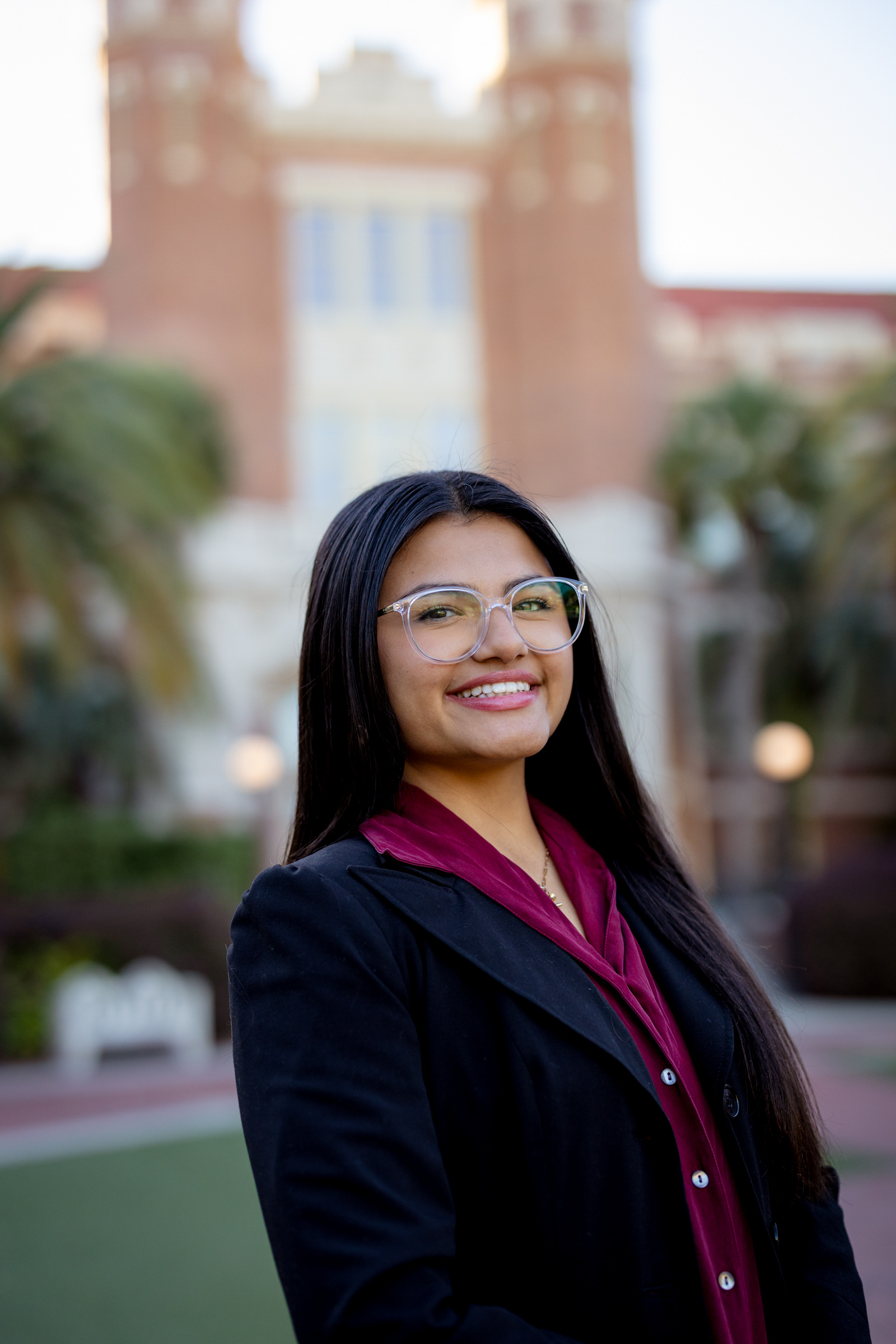
Nathalia Benner is a second-year undergraduate student studying International Affairs on the pre-law track. Originally from Miami, Florida, she is a first-generation student passionate about making a meaningful impact in the field of international law. She has been involved in various areas on campus, including as an Administrative Assistant for the Office of Financial Aid and on the COSSPP Student Leadership Council. Off campus, she also serves on the Student Leadership Team for her church through various volunteer initiatives. After graduation, she hopes to continue her education and pursue a Juris Doctor degree.
Helping or Harming Humans: International Drug Policy and the Effectiveness in Pursuing Medical Availability
Authors: Nathalia Benner, Dr. Mason MarksStudent Major: International Affairs
Mentor: Dr. Mason Marks
Mentor's Department: FSU College of Law Mentor's College: FSU College of Law Co-Presenters:
Abstract
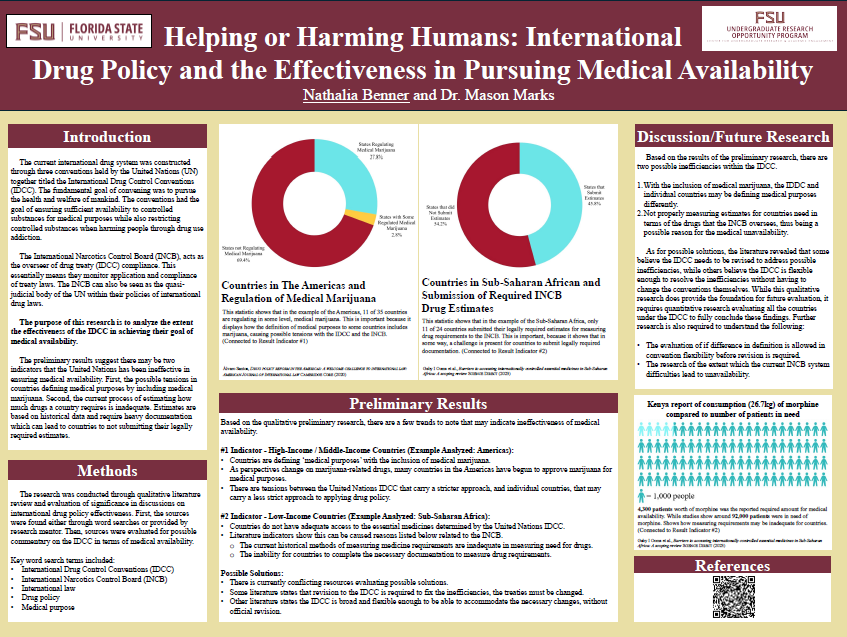
The current international drug control system was established through three United Nations conventions collectively titled The International Drug Control Conventions. The fundamental goal of convening was to pursue the health and welfare of mankind. The conventions had two goals: ensuring sufficient availability of drugs for medical purposes and ensuring adequate restriction of drugs when harming people through drug addiction. The purpose of this research is to analyze the application of medical availability to evaluate the extent of effectiveness of the International Drug Control Conventions. The research was conducted through a literature review for preliminary purposes to evaluate the significance of the literature in measuring international drug policy effectiveness. The methods of including the literature were either through word searches or provided by the research mentor. Then, sources were evaluated for possible commentary on the International Drug Control Conventions in terms of medical availability. The results suggest there may be two indicators in the literature that the United Nations has been ineffective in ensuring medical availability. First, there are possible tensions in the International Drug Control Conventions and countries defining medical purposes by including medical marijuana. Second, the current process of estimating drug requirements may be inadequate because of the estimates and documentation necessities. Overall, additional research is required to confirm if these indicators are true across other member nations of the United Nations International Drug Control Conventions. More quantitative results evaluating all impacted states are also required to make a definitive claim as to its effectiveness.
Keywords: International Law, Law, Drug Policy, United Nations, Medical Availability
26th annual Undergraduate Research Symposium, April 1, 2026
Bianca Maresma Poster Session 4: 3:00 pm - 4:00 pm / Poster #264
BIO
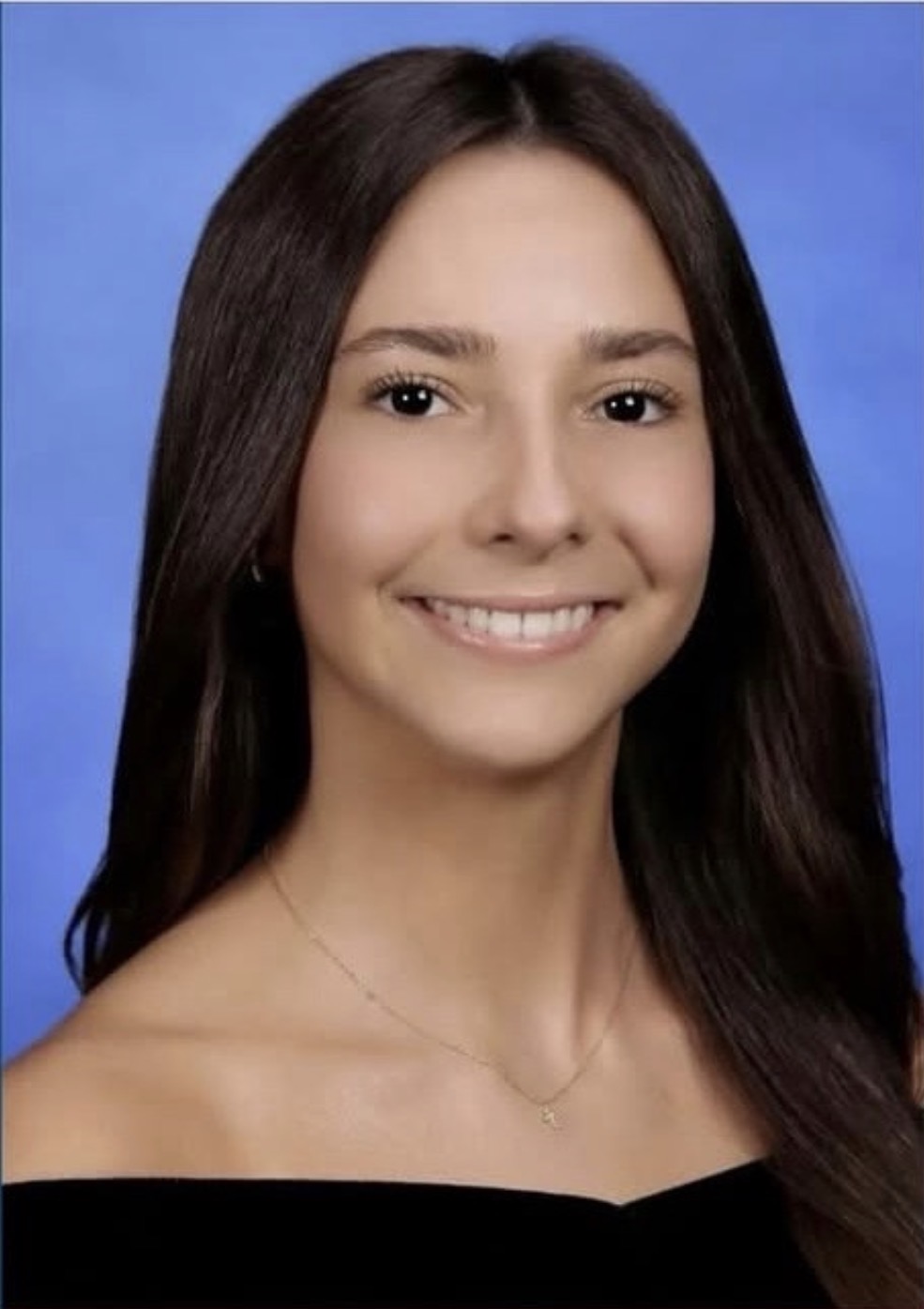
Hi! My name is Bianca Maresma, and I am from Miami, Florida. I am currently a freshman Honors student at Florida State University, majoring in Nursing and minoring in Professional Communication. From a young age, I have aspired to become a registered nurse and eventually pursue advanced practice as a nurse practitioner specializing in pediatrics and spinal orthopedics.
My interest in healthcare has been shaped by hands-on experiences in clinical settings. I have shadowed healthcare professionals at Pinecrest Physical Therapy and Jackson Memorial Hospital in Miami, where I gained insight into patient care, rehabilitation, and interdisciplinary medical teamwork. At Florida State University, I am actively involved in undergraduate research through the Undergraduate Research Opportunity Program (UROP) in the Wilber Lab, where I assist my research mentor, Yicheng Zheng. Through this work, I contribute to research examining spatial navigation and neural processes involved in memory and cognition. This experience has allowed me to develop skills in scientific inquiry, data analysis, and collaborative research.
Looking ahead, I plan to continue my research through a Directed Individual Study (DIS) with the Wilber Lab while further exploring the connections between neuroscience, psychology, and the rodent brain. My long-term goal is to integrate clinical practice with research to improve care and quality of life for pediatric patients.
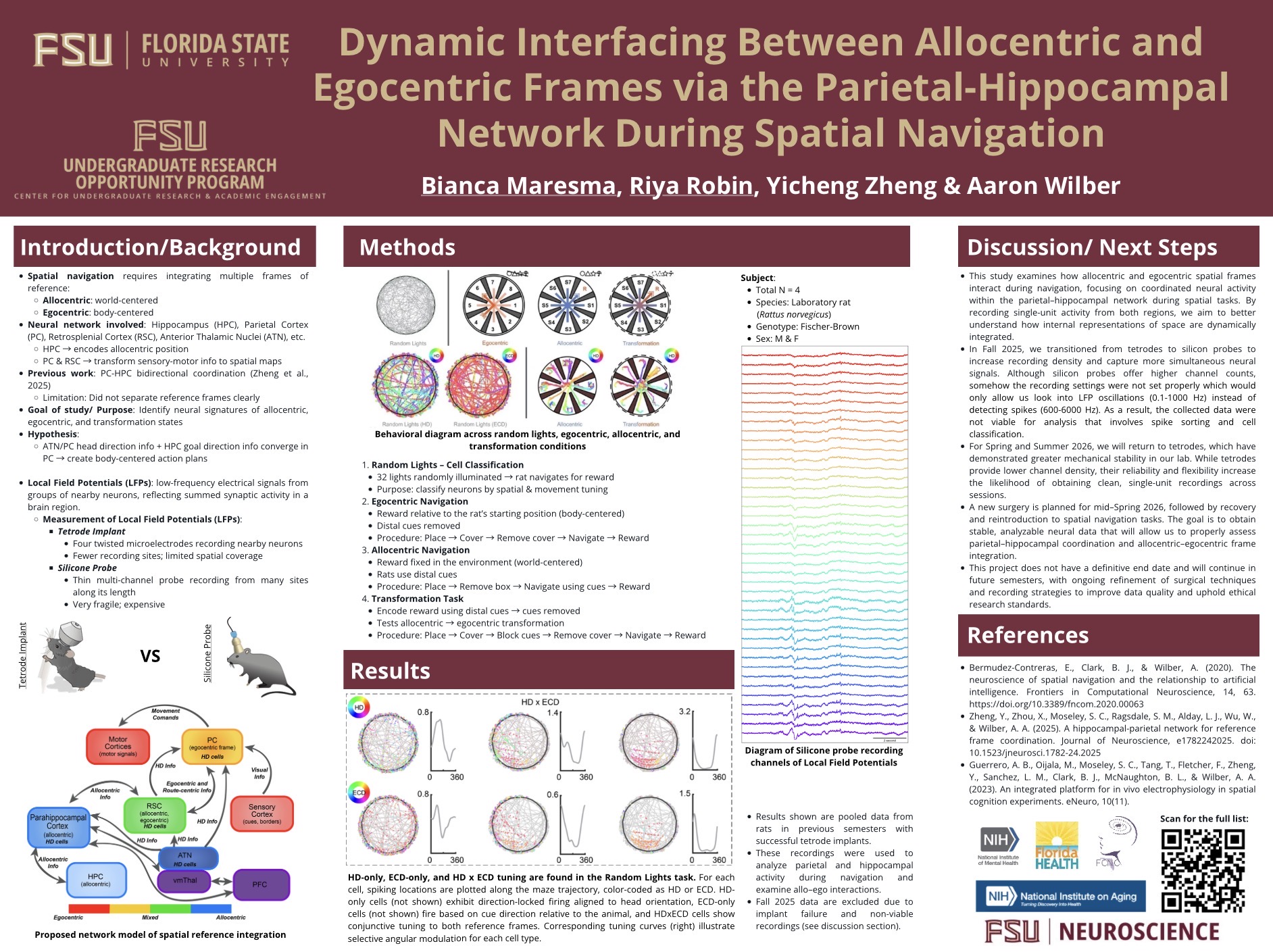
Dynamic Interfacing Between Allocentric and Egocentric Frames via the Parietal-Hippocampal Network During Spatial Navigation
Authors: Bianca Maresma, Yicheng ZhengStudent Major: Nursing
Mentor: Yicheng Zheng
Mentor's Department: Department of Psychology Mentor's College: College of Arts and Sciences Co-Presenters: Riya Robin
Abstract
Spatial navigation deficits are an early and prominent feature of Alzheimer's disease, yet the neural mechanisms underlying these impairments remain unclear. This project investigates how different spatial reference frames, including allocentric, egocentric, and transformation, are represented in the brain and how disruptions to these processes may contribute to spatial disorientation in neurodegenerative disease. Rats were trained on four navigation tasks designed to separate different aspects of spatial processing to investigate these systems. Rats moved toward randomly lit signals in the Random Lights task to evaluate brain tuning across a range of movement parameters. In the egocentric task, when distal cues were unavailable, rats learnt a fixed movement path to a reward zone defined relative to their starting position. In the Allocentric challenge, rats used distal environmental cues to identify an unmarked reward zone. In the Transformation task, rats had to translate allocentric information into egocentric movement plans after initially encoding the reward location using distal cues that were subsequently hidden. To investigate how spatial information is encoded under various situations, behavioral and neural data were gathered while the task was being performed using a silicone probe implant. Preliminary findings suggest that distinct neural activity patterns are associated with each reference frame, with coordinated hippocampal and parietal activity playing a critical role in successful navigation. These results highlight the importance of reference frame coordination in spatial cognition and provide insight into mechanisms that may be disrupted in Alzheimer's disease.
Keywords: spatial navigation, memory, cognition, Alzheimer's Disease, psychology
26th annual Undergraduate Research Symposium, April 1, 2026
Max Rideout Poster Session 3: 1:45 pm - 2:45 pm / Poster #23
BIO
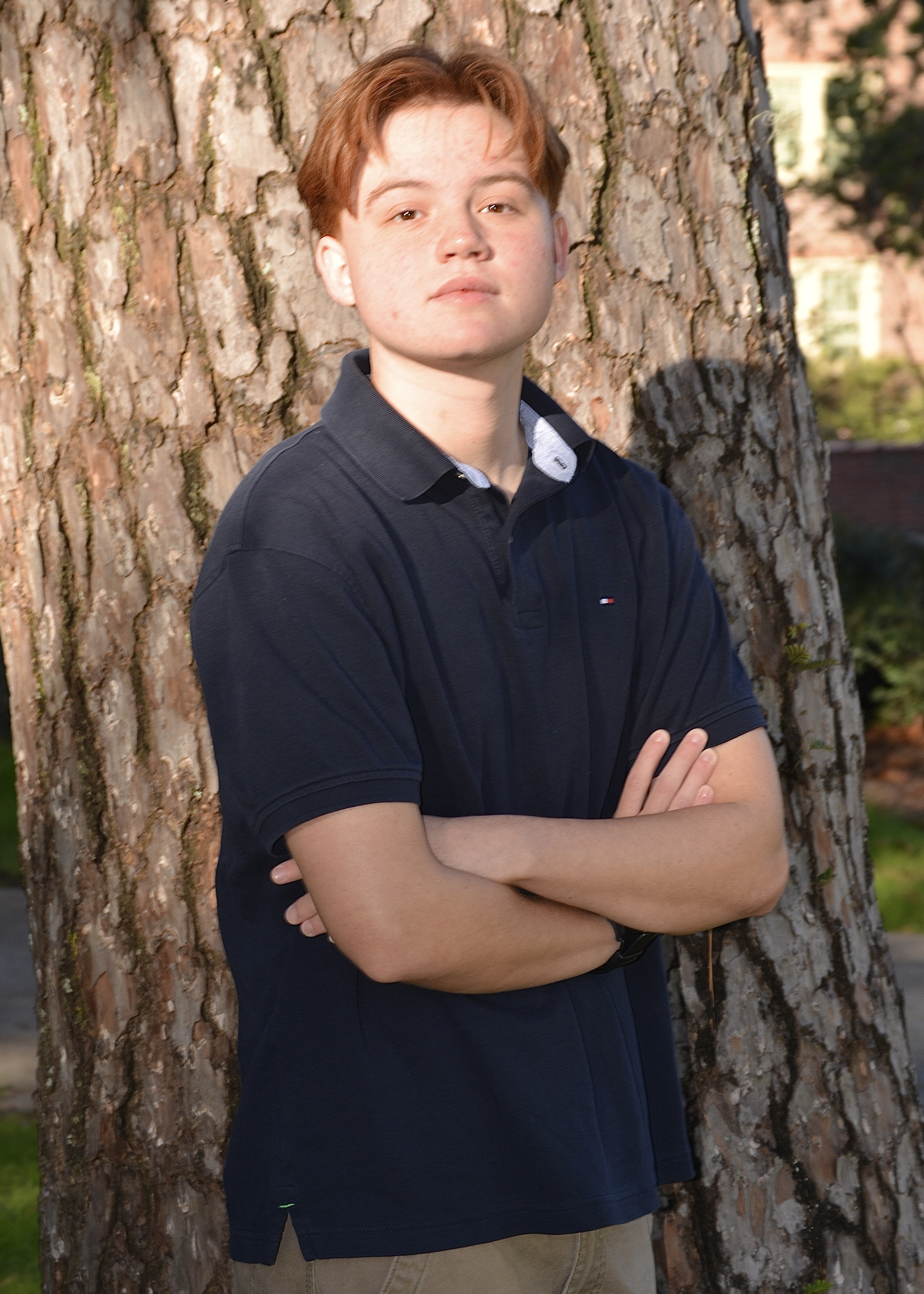
Max is a second year student from Helena, Montana pursuing a Bachelors of Science in Geography with a minor in Urban Planning. At the Undergraduate Research Symposium, he will be presenting his research on underutilized religious land and affordable housing. His other topics of interest include Garden Cities and New Urbanism. Max joined the Devoe L. Moore Institute team in Fall 2025 as a Public Policy Intern, where he has been working with his mentor, Dr. Crystal Taylor, to complete his research poster. After completing his Bachelors, he hopes to attend graduate school to acquire a Masters of Science in Urban Planning, which he will use to become an urban planner, private consultant, or GIS analyst. Outside of his research, Max is the treasurer for the Geographical Society at FSU and works as a Desk Assistant with University Housing.
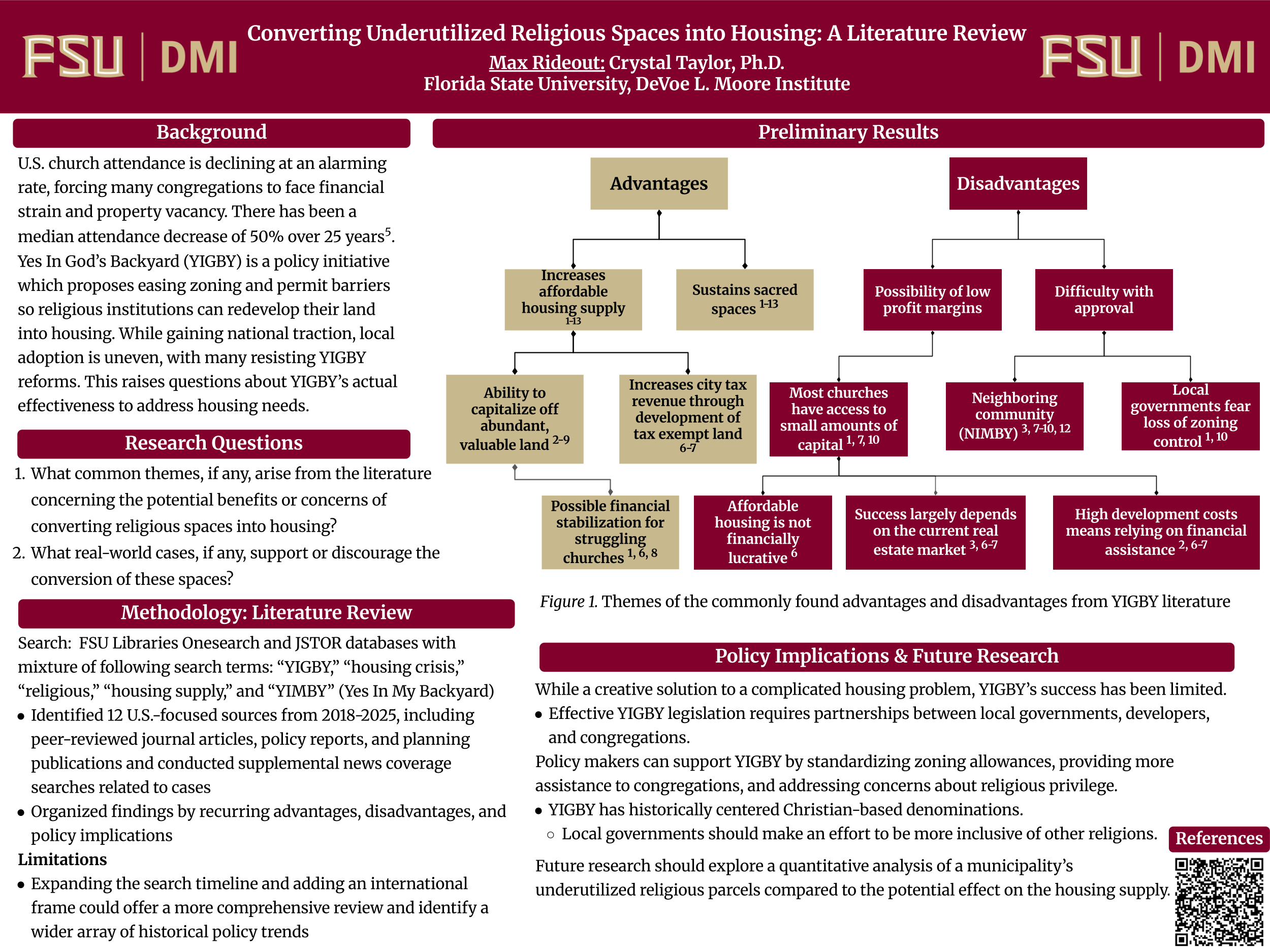
Converting Underutilized Religious Spaces into Housing: A Literature Review
Authors: Max Rideout, Dr. Crystal TaylorStudent Major: Geography
Mentor: Dr. Crystal Taylor
Mentor's Department: Devoe L. Moore Institute Mentor's College: College of Social Sciences and Public Policy Co-Presenters:
Abstract
Churches around the United States are reporting a significant decline in attendance. According to Hartford International University’s Institute of Religious Research, median church attendance has declined more than 50% in the past 25 years, while Gallup reports the majority of Americans, for the first time in history, do not belong to a religious institution. As membership shrinks, churches are becoming financially harder to maintain in terms of maintenance and utility costs, forcing many churches to close their doors. Simultaneously, the United States is facing a housing crisis with skyrocketing mortgages and rents far outpacing household incomes, especially in areas with housing supply shortages.
Communities have attempted to address some of these issues by redeveloping underutilized church land to affordable housing through an initiative called Yes in God’s Backyard (YIGBY). By reviewing academic literature, agency reports, and newspaper articles, this research seeks to uncover “What common themes, if any, arise from the literature concerning the potential benefits or concerns of converting religious spaces into housing?” and “What real-world cases, if any, support or discourage the conversion of these spaces?”
Preliminary results suggest that scholars generally view YIGBY as a useful policy due to the potential to expand housing supply while leveraging underutilized land. However, the literature highlights obstacles to implementation. Church leaders report encountering opposition, complex bureaucratic processes, and financial hurdles. Future research should explore a quantitative analysis of a municipality’s underutilized religious parcels and compare it to its potential effect on the housing market if redeveloped into residential properties.
Keywords: urban planning, YIGBY, religion
26th annual Undergraduate Research Symposium, April 1, 2026
Harper Johnson Poster Session 1: 9:30 am - 10:30 am / Poster #185
BIO
Harper Johnson is a junior at Florida State University majoring in Psychology and minoring in Child Development. Originally from Winchester, Virginia, she has been involved in undergraduate research exploring genetic and environmental influences on childhood development for over a year as a Lead DIS Student and Research Assistant in the Context Lab. Her personal research interests include the understanding and treatment of OCD and anxiety across adolescence and early adulthood. Outside of research, Harper is involved on campus as a peer educator and mental health advocate for RENEW, member of the Psi Chi Honor Society, Gamma Phi Beta sorority, and Peak Pulse Run Club. Over the summer, she interns at an outpatient behavioral health clinic where she gains clinical experience with a variety of disorders, therapeutic techniques, and populations. In her free time, Harper enjoys immersing herself in weightlifting and nutrition. She strives to pursue a career as a clinical psychologist, merging her fervor for research with clinical practice to improve patient wellbeing.
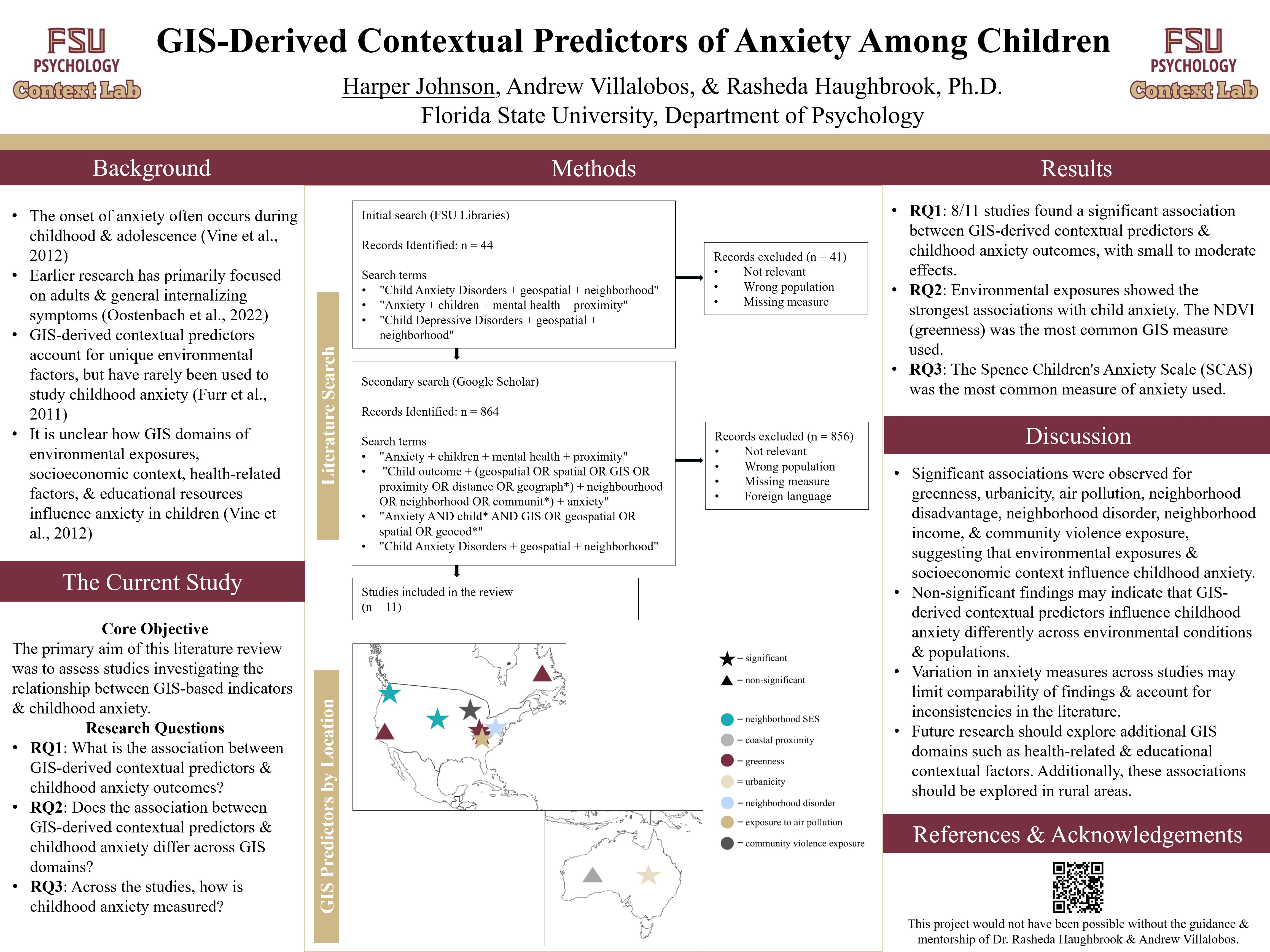
GIS-Derived Contextual Predictors of Anxiety Among Children
Authors: Harper Johnson, Dr. Rasheda HaughbrookStudent Major: Psychology
Mentor: Dr. Rasheda Haughbrook
Mentor's Department: Psychology Mentor's College: College of Arts and Sciences Co-Presenters:
Abstract
GIS-derived contextual predictors have been shown to relate to mental health outcomes. However, no systematic review has specifically examined their association with children’s anxiety. The primary aim of this literature review was to assess studies investigating the relationship between GIS-based indicators and childhood anxiety. Secondary aims were to document the range of GIS-derived indicators used across studies and to compare their associations across domains. A final aim was to examine how childhood anxiety is measured in the literature. A systematic search of FSU Libraries, Google Scholar, and Scopus identified 11 eligible studies. Eight of the eleven studies reported significant associations between GIS-derived contextual predictors and children’s anxiety outcomes, with small to moderate effect sizes. Environmental exposures emerged as the most consistently predictive domain, with the Normalized Difference Vegetation Index (NDVI) being the most frequently used GIS indicator. The Spence Children’s Anxiety Scale (SCAS) was the most commonly used measure of childhood anxiety. Overall, GIS indicators appear to be a viable tool for identifying environmental factors associated with children’s anxiety outcomes. Future research would benefit from expanding the scope of GIS domains examined, including health-related and educational contextual factors.
Keywords: childhood anxiety, Geographic Information Systems (GIS), contextual predictors
26th annual Undergraduate Research Symposium, April 1, 2026
Madison Taylor Poster Session 3: 1:45 pm - 2:45 pm / Poster #11
BIO
Madison is a highly motivated and team-oriented 2nd-year student pursuing a Bachelor of Science degree with a major in Clinical Professions. Her goal is to attend medical school followed by a career in healthcare. She has over four years of active volunteering, research, and leadership experience. Madison is passionate about helping others through service and providing care to those in need.
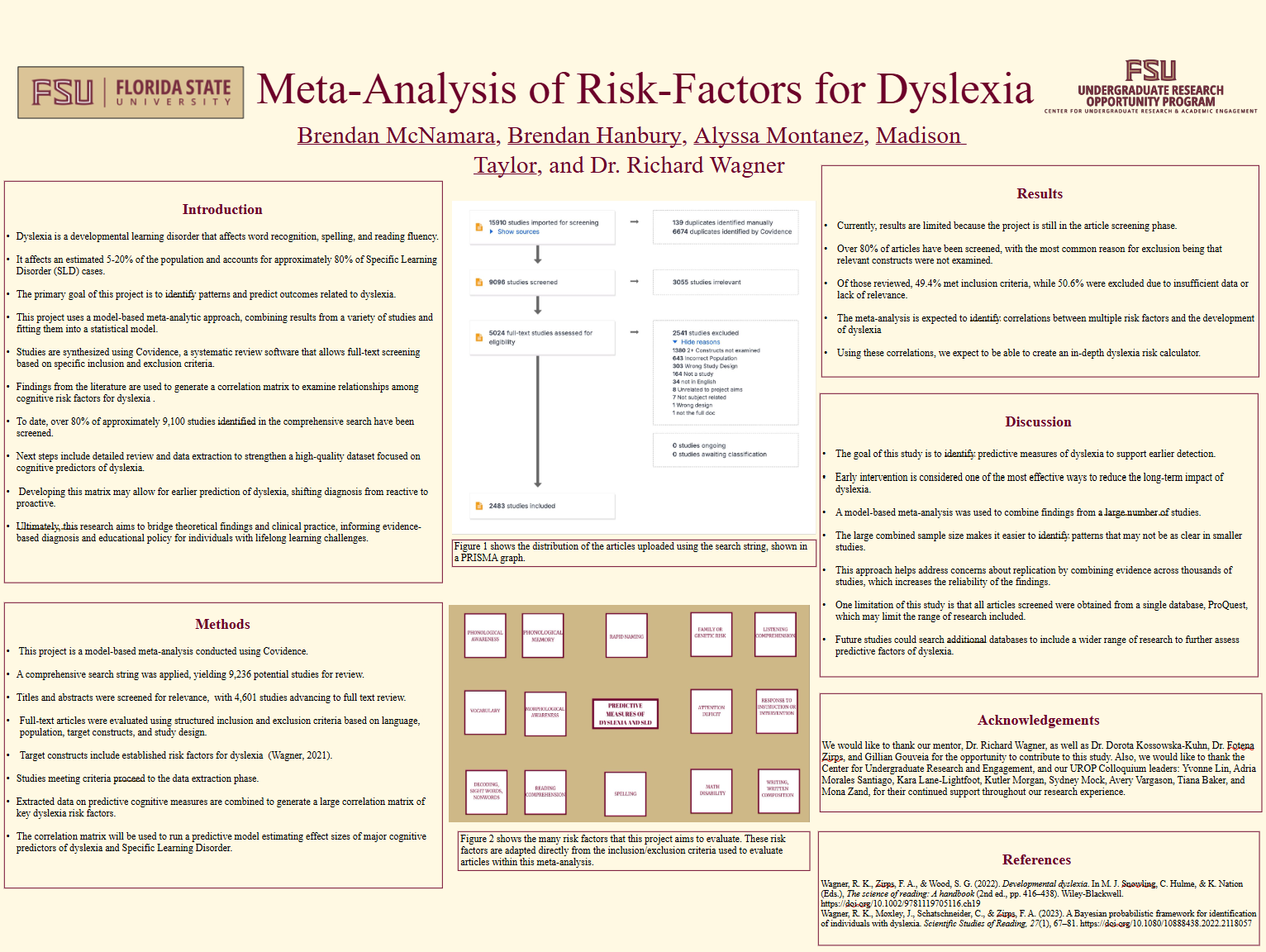
Meta-Analysis of Risk-Factors for Dyslexia
Authors: Madison Taylor, Richard WagnerStudent Major: IMS - Clinical Professions
Mentor: Richard Wagner
Mentor's Department: Psychology Mentor's College: Arts and Sciences Co-Presenters: Brendan McNamara, Alyssa Montanez, Brendan Hanbury
Abstract
Dyslexia is a distinct, complex neurodevelopmental condition that significantly impacts lifelong educational outcomes and affects up to 20% of the population. Dyslexia is primarily characterized by impaired word recognition and decoding difficulties. While there has been much research on dyslexia, individual small-scale studies often lack the necessary statistical power to generalize these findings across a multitude of diverse groups. This research, conducted through Florida State University’s NIH Multidisciplinary Learning Disabilities Research Center, utilizes a large-scale meta-analysis to establish an evidence-based understanding of the prevalence and underlying mechanisms of dyslexia. The methodology follows a rigorous systematic framework to screen and synthesize decades of global research. Following an extensive literature review of over 3,800 identified studies, researchers applied a standardized codebook and strict inclusionary criteria to exclude methodologically unsound data and refine the sample. Preliminary results have yielded a group of high-quality studies that provide precise effect sizes regarding the cognitive and behavioral markers of this disorder. By aggregating these data, the project is developing a large-scale correlation matrix to identify and weight predictive neurobiological signs. These findings underscore the importance of treating dyslexia as a specific challenge requiring specialized, evidence-based approaches for diagnosis and intervention. Ultimately, this research aims to bridge the gap between laboratory findings and real-world application by creating a robust scientific foundation for earlier prediction, more accurate clinical diagnosis, and more effective instructional policies. This comprehensive synthesis provides the clarity necessary to improve long-term academic trajectories for all individuals who are currently struggling with these learning disabilities.
Keywords: Meta-Analysis, Dyslexia, Specific Learning Disorder, learning disorder, risk factors
26th annual Undergraduate Research Symposium, April 1, 2026
Sarah Thapa Poster Session 1: 9:30 am - 10:30 am / Poster #181
BIO
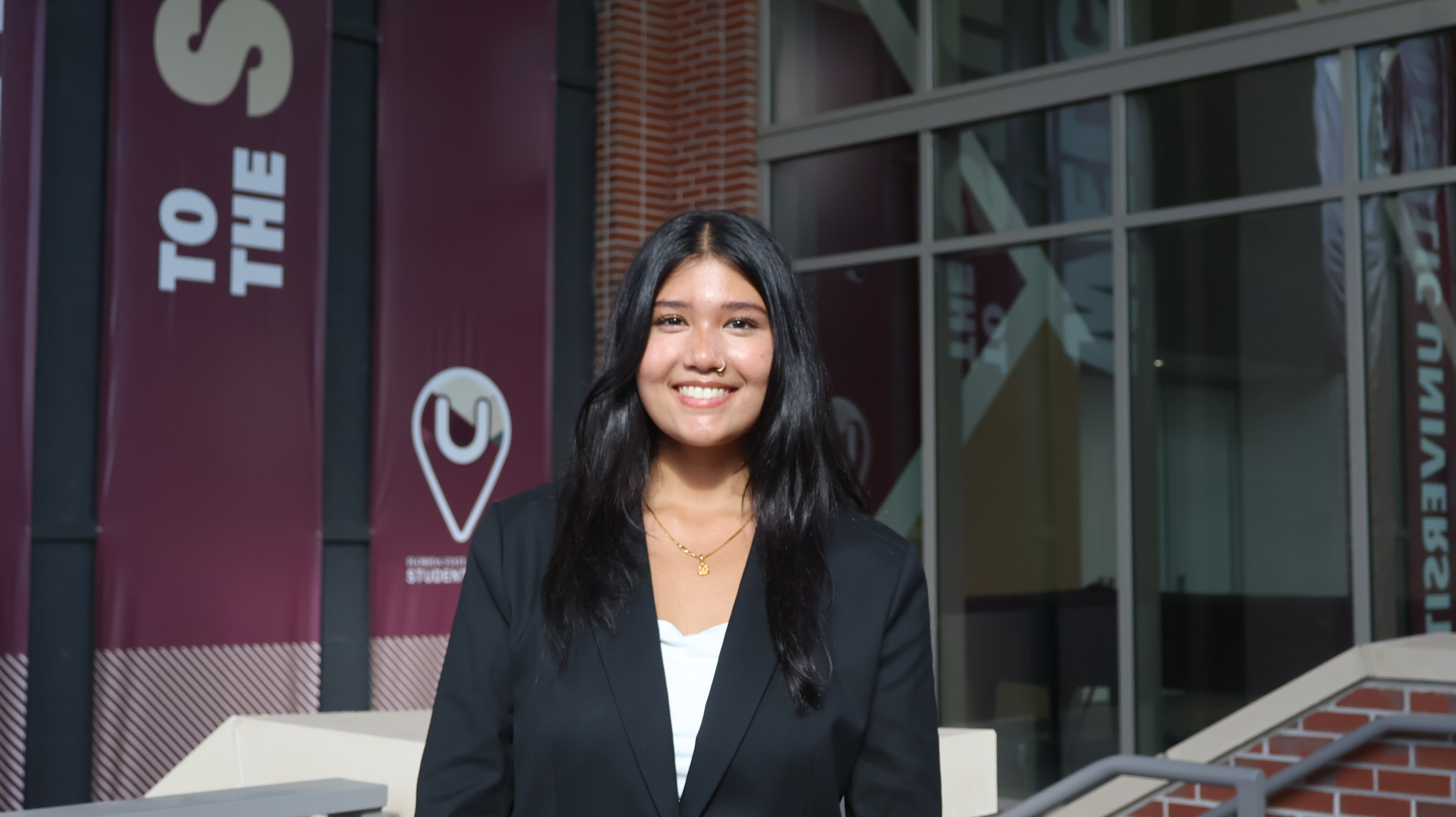
Sarah Thapa is a second-year student at Florida State University pursuing a Bachelor of Science in Information Technology with a minor in STEM Entrepreneurship. She is interested in data analysis, statistical modeling, and emerging cybersecurity trends. Through her coursework and academic interests, Sarah is developing a strong foundation in data-driven problem solving and technology systems. Sarah worked closely with Mr. Rafiq Islam to explore research that involves large data sets and machine learning models. Sarah plans to continue her academic journey through graduate study, where she hopes to deepen her knowledge of cybersecurity and data systems. Her long-term goal is to pursue a career in cybersecurity and data analysis, where she can contribute to analyzing and improving data security practices in an increasingly technology-driven world.
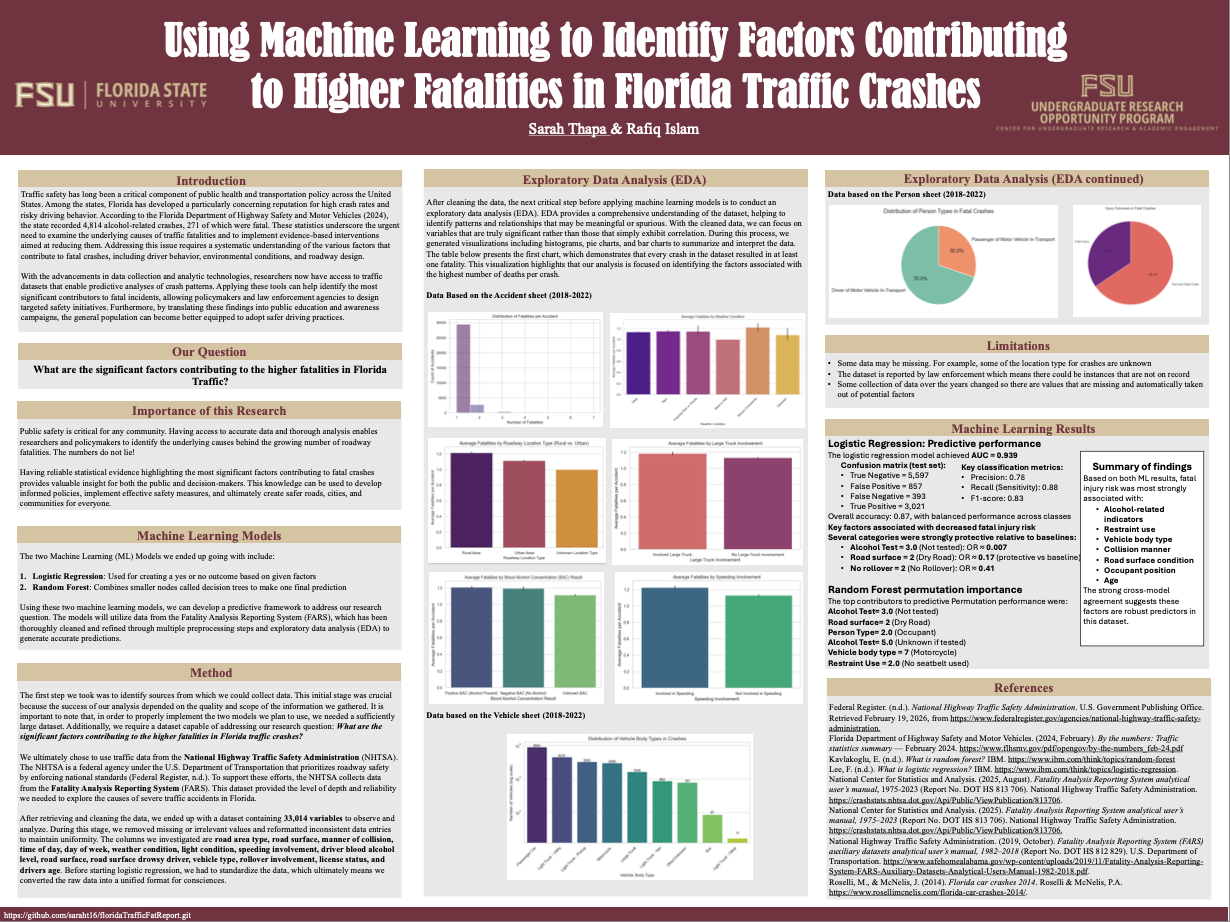
Using Machine Learning to Identify Factors Contributing to Higher Fatalities in Florida Traffic Crashes
Authors: Sarah Thapa, Rafiq IslamStudent Major: Information Technology
Mentor: Rafiq Islam
Mentor's Department: Department of Mathematics Mentor's College: College of Arts and Sciences Co-Presenters:
Abstract
In 2024, Florida had a grand total of 381,210 crashes, or about 1,000 per day, according to the Florida Department of Highway Safety and Motor Vehicles (Roselli & McNelis, 2014). Every year, we hear about fatal crashes in Florida, whether that be from driving under the influence, distractions, weather, or other factors. These fatal accidents can cause terrible damage to property and be costly to reverse. It is vital to note the various reasons for fatal crashes; however, there are some factors that are more prominent than others. The National Highway Traffic Safety Administration’s (NHTSA) primary goal is to reduce the damages created by motor vehicles through data collected from the Fatality Analysis Reporting System (FARS). In this study, we collected FARS data and used machine learning tools to further identify the most significant factors contributing to fatal road crashes in Florida from 2018 to 2022. Since there is a large amount of data provided, we constrained our data set from 2018 to 2022. We mainly compare the machine learning model Random Forest and the classical statistical model Logistic Regression to find out the most significant factor(s) that contribute to the fatal road crashes in Florida. Overall, further research is needed to identify the key causes of traffic fatalities and to better educate the public about the risks associated with these factors.
Keywords: Machine Learning, Traffic, Fatalities
26th annual Undergraduate Research Symposium, April 1, 2026
Diego Covarrubias Poster Session 4: 3:00 pm - 4:00 pm / Poster #196
BIO
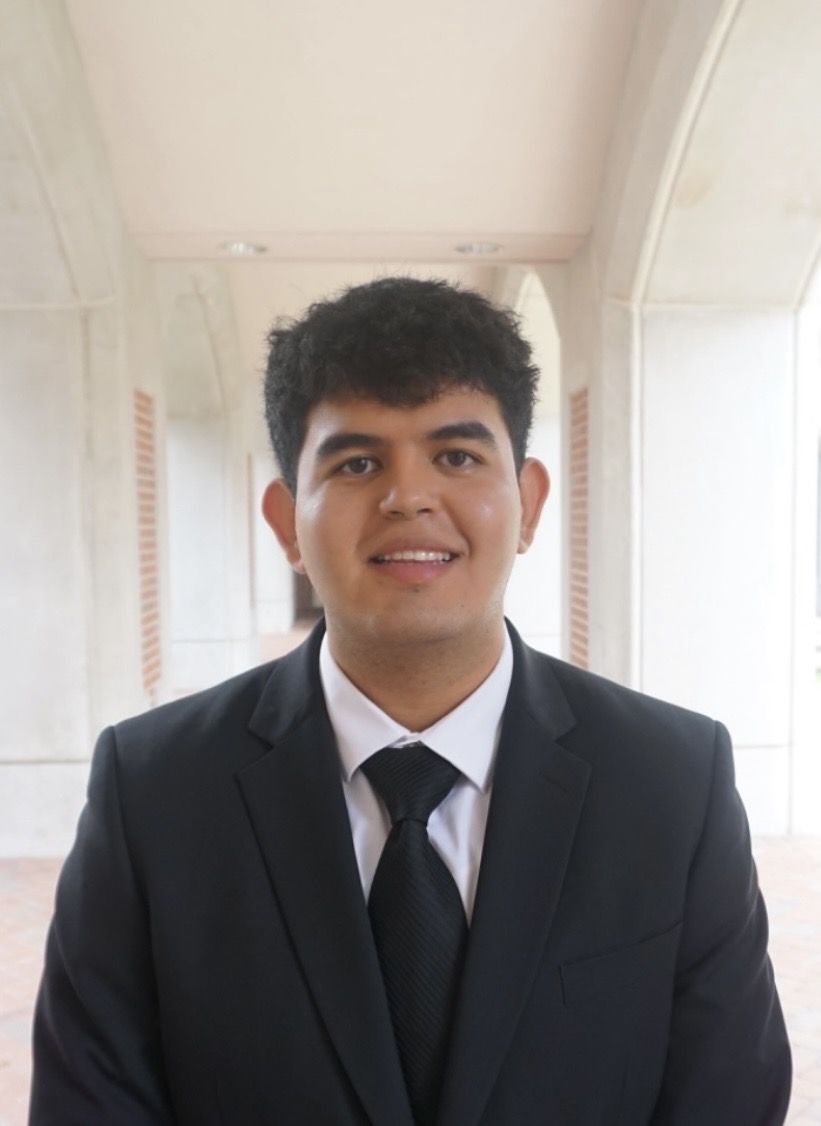
Diego Covarrubias is a sophomore majoring in Behavioral Neuroscience. Originally from Dallas, Texas, he is involved in clinical research involving caregivers of individuals with dementia. After completing his degree, Diego aspires to attend medical school. Long-term, he aims to become a physician with the goal of contributing to innovation in healthcare, advancing treatment, and improving patient education.
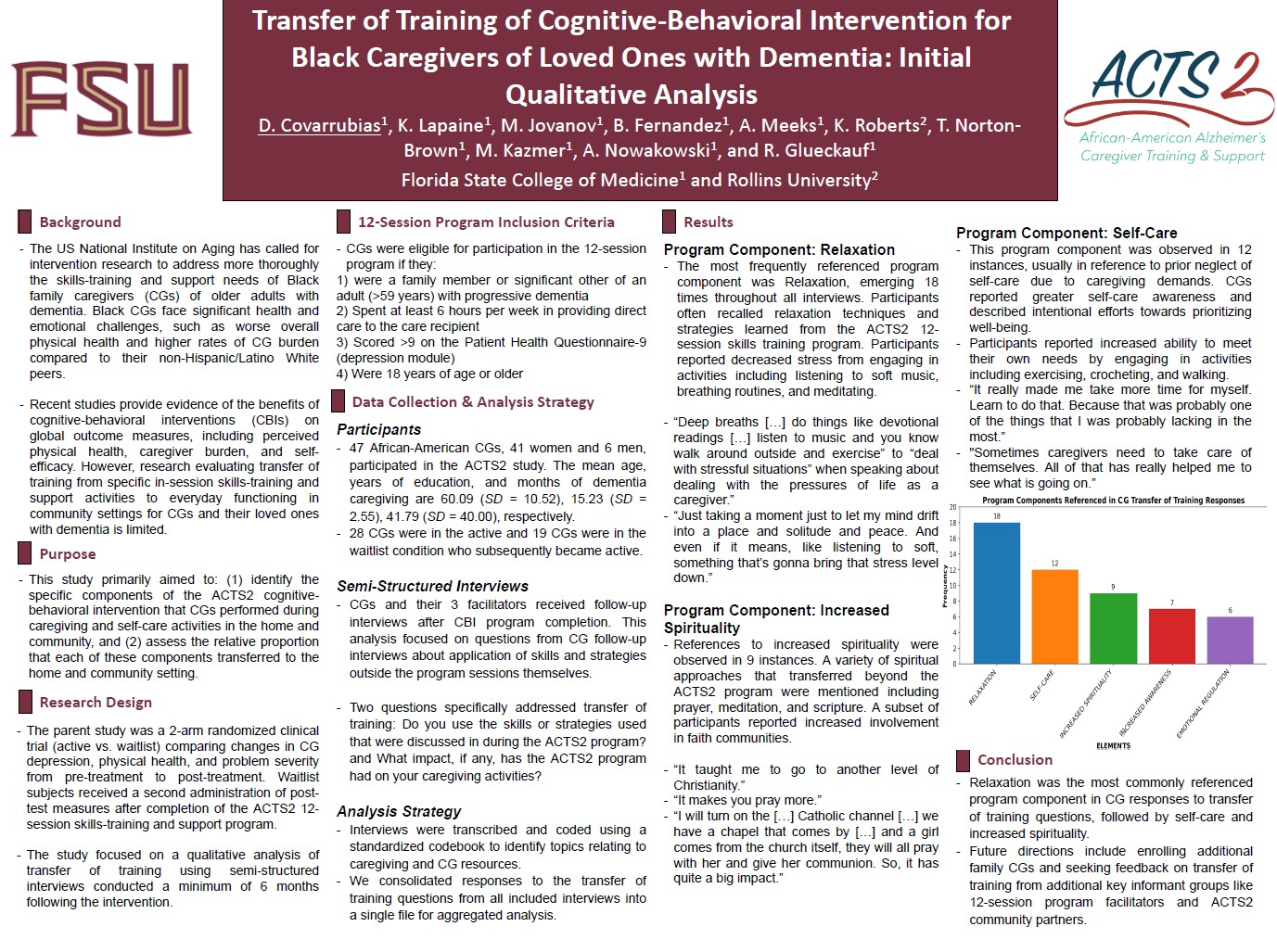
Transfer of Training of Cognitive-Behavioral Intervention for Black Caregivers of Loved Ones with Dementia: Initial Qualitative Analysis
Authors: Diego Covarrubias, Dr. Robert GlueckaufStudent Major: Behavioral Neuroscience
Mentor: Dr. Robert Glueckauf
Mentor's Department: Department of Behavioral Sciences and Social Medicine Mentor's College: College of Medicine Co-Presenters:
Abstract
The U.S National Institute on Aging has called for interventional research to address the skills-training and support needs of Black family caregivers (CGs) of older adults with dementia more thoroughly. Black CGs face significant health and emotional challenges, such as worse overall physical health and higher rates of caregiver burden compared to their non-Hispanic/Latino White peers. Recent studies provide evidence of the benefits of cognitive-behavioral interventions (CBIs) on global outcome measures, including perceived physical health, caregiver burden, and self-efficacy. However, limited research has evaluated the extent to which benefits transfer from specific in-session skills-training and support activities to function in community settings for CGs and their loved ones with dementia. This study primarily aims to: (1) identify the specific components of CB training that CGs performed during caregiving and self-care activities in the home and community, and (2) describe CGs' perceptions of the impact of these activities on the quality of their caregiving activities and psychosocial functioning. To date, qualitative analyses of 59 follow-up telephone interviews with CGs and their 12-session program facilitators have been conducted. Interviews were transcribed and coded using a standardized codebook to identify topics relating to caregiving and caregiver resources. Preliminary findings of the current transfer of training study highlighted the use and benefits of relaxation skills, cognitive strategies focusing on patience, self-awareness, shifting perspectives, as well as incorporation of self-care strategies.
Keywords: dementia, caregiver, intervention, Alzheimer's
26th annual Undergraduate Research Symposium, April 1, 2026
Gabriella Munoz Poster Session 4: 3:00 pm - 4:00 pm / Poster #310
BIO
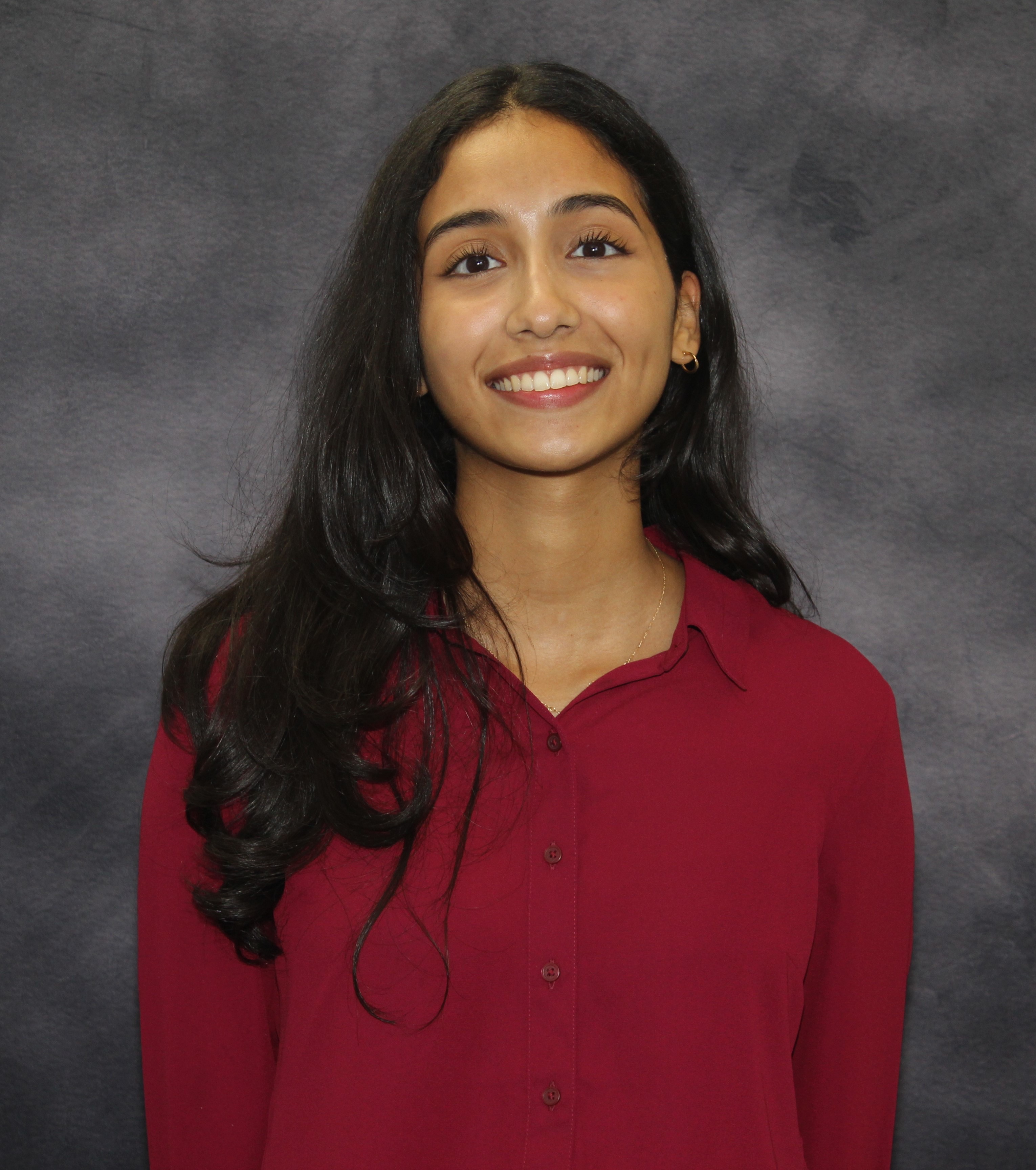
Gabriella currently attends Florida State University and is pursuing a Bachelor's degree in Computer Science with a minor in Data Analytics. She's interested in pursuing a career in business intelligence and analytics. During high school, she attended the School for Advanced Studies, where she completed her last two years of high school and obtained an Associate in Arts degree from Miami Dade College. Gabriella has a strong passion for data analytics, and is excited to further develop my skills and knowledge in these fields at FSU.
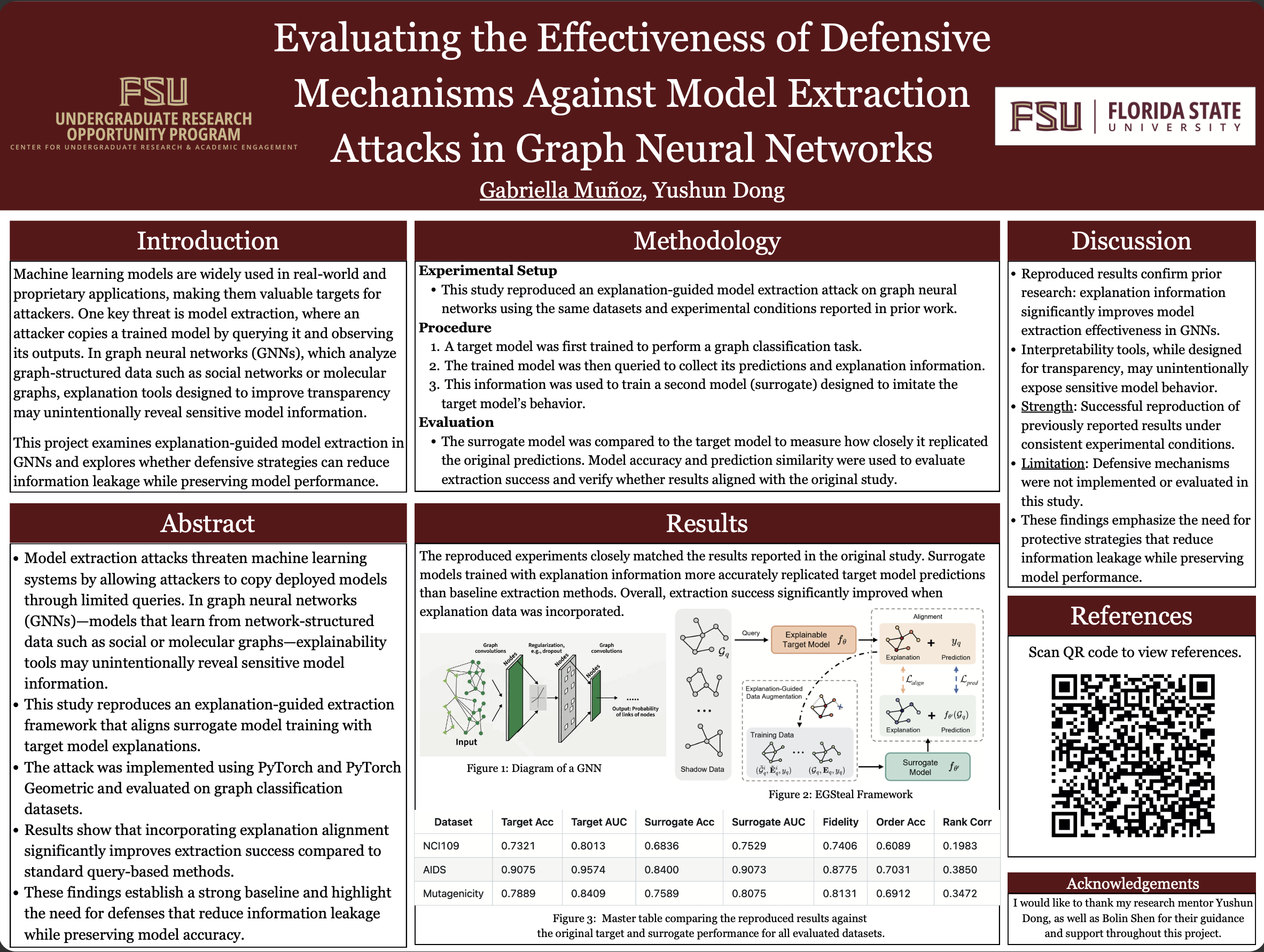
Evaluating the Effectiveness of Defensive Mechanisms Against Model Extraction Attacks in Graph Neural Networks
Authors: Gabriella Munoz, Yushun DongStudent Major: Computer Science
Mentor: Yushun Dong
Mentor's Department: Computer Science Mentor's College: College of Arts and Sciences Co-Presenters:
Abstract
Model extraction attacks pose a significant threat to the security of machine learning systems by enabling adversaries to replicate deployed models through limited interactions. In graph neural networks (GNNs)—a type of machine learning model designed to learn from data represented as networks of connected nodes, such as social networks or molecular structures—recent advances in explainability have introduced new attack methods by revealing information about a model’s internal reasoning. This project examines the impact of explanation-guided extraction attacks by reproducing a recently proposed framework that aligns surrogate model training with target model explanations. Using PyTorch and torch-geometric, we implement the attack and examine its performance on graph-based datasets. The reproduced results confirm that including explanation alignment substantially increases the effectiveness of model extraction compared to standard query-based approaches. Together, these results establish a strong baseline and motivate future work on defenses that can limit information leakage while maintaining predictive accuracy.
Keywords: AI, Machine learning, Technology, Computer, Training
26th annual Undergraduate Research Symposium, April 1, 2026
Bianca Avlonitis Poster Session 1: 9:30 am - 10:30 am / Poster #35
BIO
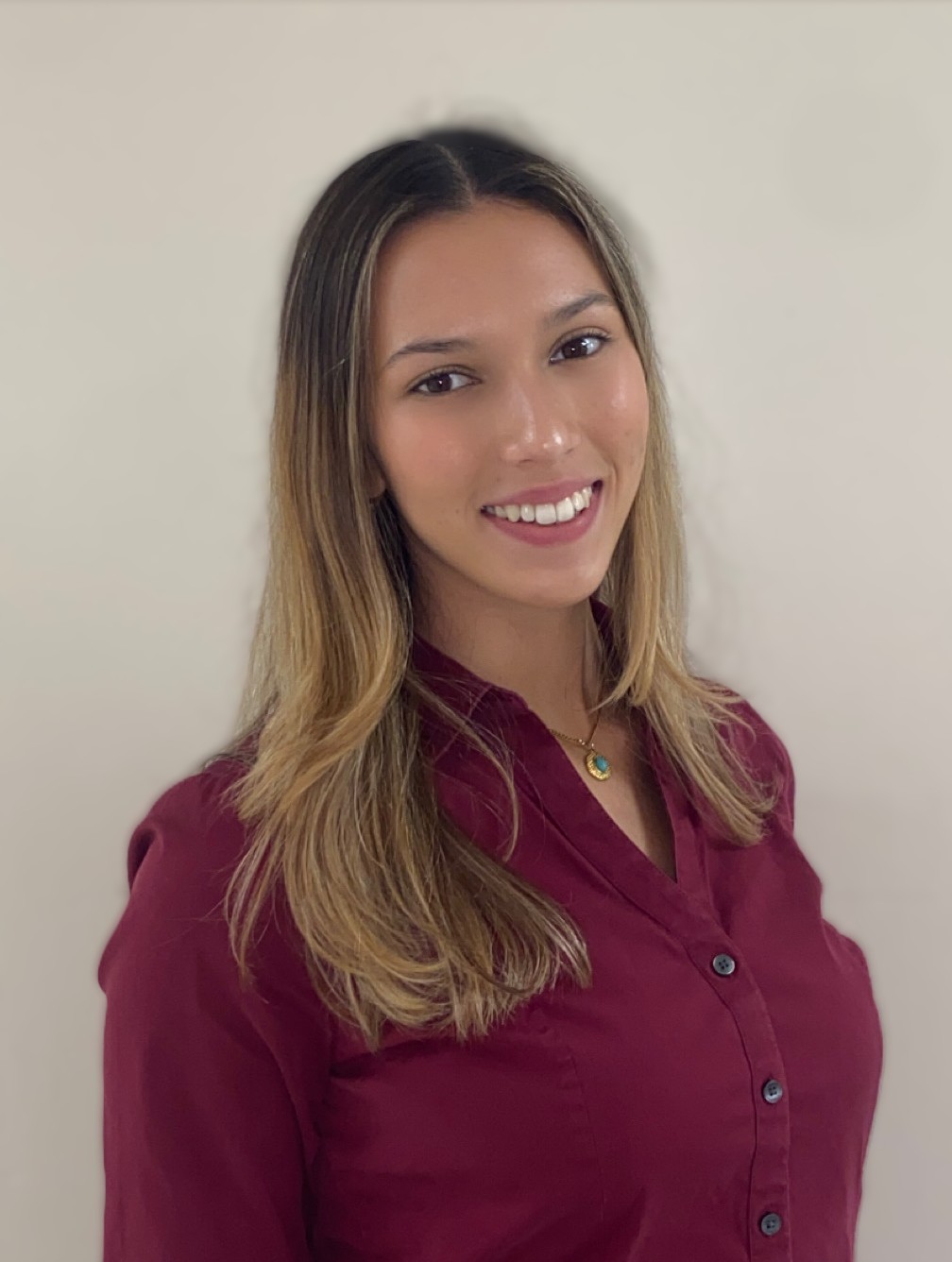
Bianca Avlonitis is a Computer Engineering student at the FAMU-FSU College of Engineering who recently transferred from Embry-Riddle Aeronautical University and is an active member of the Institute of Electrical and Electronics Engineers (IEEE). She has both research and internship experience working at the FSU Center for Advanced Power Systems and Computer Servants. Throughout her academic and work experience, Bianca has developed a specialty in Unmanned Aerial Systems, Cybersecurity, and Autonomous Robotics.
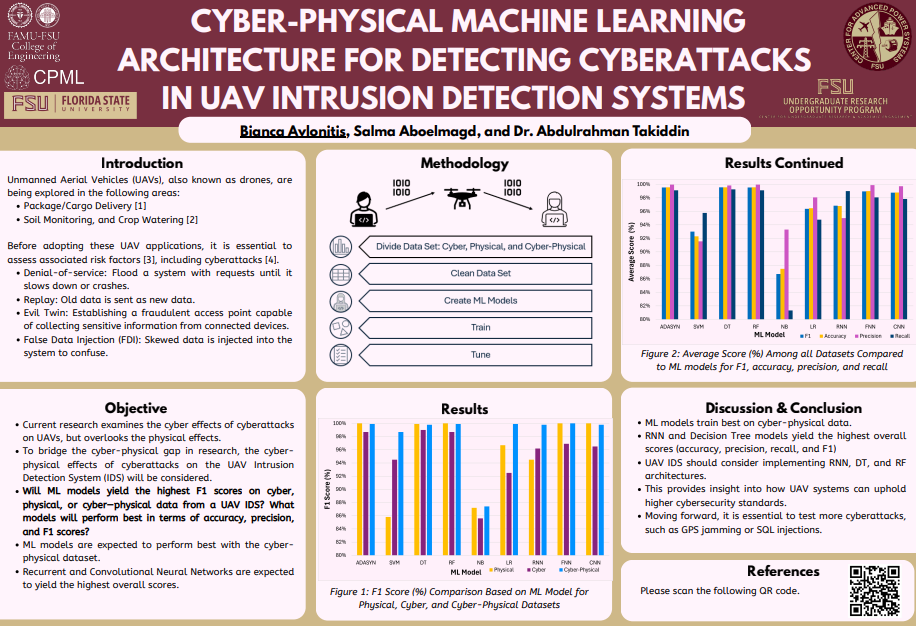
Cyber-Physical Machine Learning Architecture for Detecting Cyberattacks In UAV Intrusion Detection Systems
Authors: Bianca Avlonitis, Salma AboelmagdStudent Major: Computer Engineering
Mentor: Salma Aboelmagd
Mentor's Department: Electrical & Computer Engineering Mentor's College: FAMU-FSU College of Engineering Co-Presenters:
Abstract
Modern applications of Unmanned Aerial Vehicles (UAVs) are increasingly considered for operations such as package delivery and crop watering. Despite their versatility, UAV systems are susceptible to cyberattacks, including denial-of-service, replay, evil twin, and false data injection. Consequently, it is critical to evaluate UAV behavior and performance during real-time operations. While a UAV is deployed, an intrusion detection system (IDS) monitors system inputs to identify cyberattacks. Current research addresses how Machine Learning (ML) models can optimize IDS performance based on cyber data, but fails to acknowledge the physical inputs. This paper will bridge the cyber-physical research gap by raising the question, “Will ML models yield the highest performance from training on cyber, physical, or cyber-physical data from a UAV IDS? What ML models will yield accuracy, precision, and F1 scores? These questions are answered by training both deep and shallow ML models on cyber, physical, and cyber-physical datasets. Deep and shallow ML models were developed on a Python IDE platform and trained using a publicly available dataset that simulates a UAV experiencing incoming cyberattacks. It is expected that ML models will overall perform the best when trained on cyber-physical data, and the Convolutional and Recurrent Neural Network models will yield the highest overall results. Moving forward, as cyberattack strategies targeting UAV systems continue to develop, it is essential to research the newest approaches to enhance the safety and reliability of UAV systems.
Keywords: Unmanned Aerial Vehicles (UAV), Machine Learning (ML), Cyberattacks, Intrusion Detection System (IDS), Neural Networks
26th annual Undergraduate Research Symposium, April 1, 2026
Alejandra Ortega Torres Poster Session 3: 1:45 pm - 2:45 pm / Poster #22
BIO
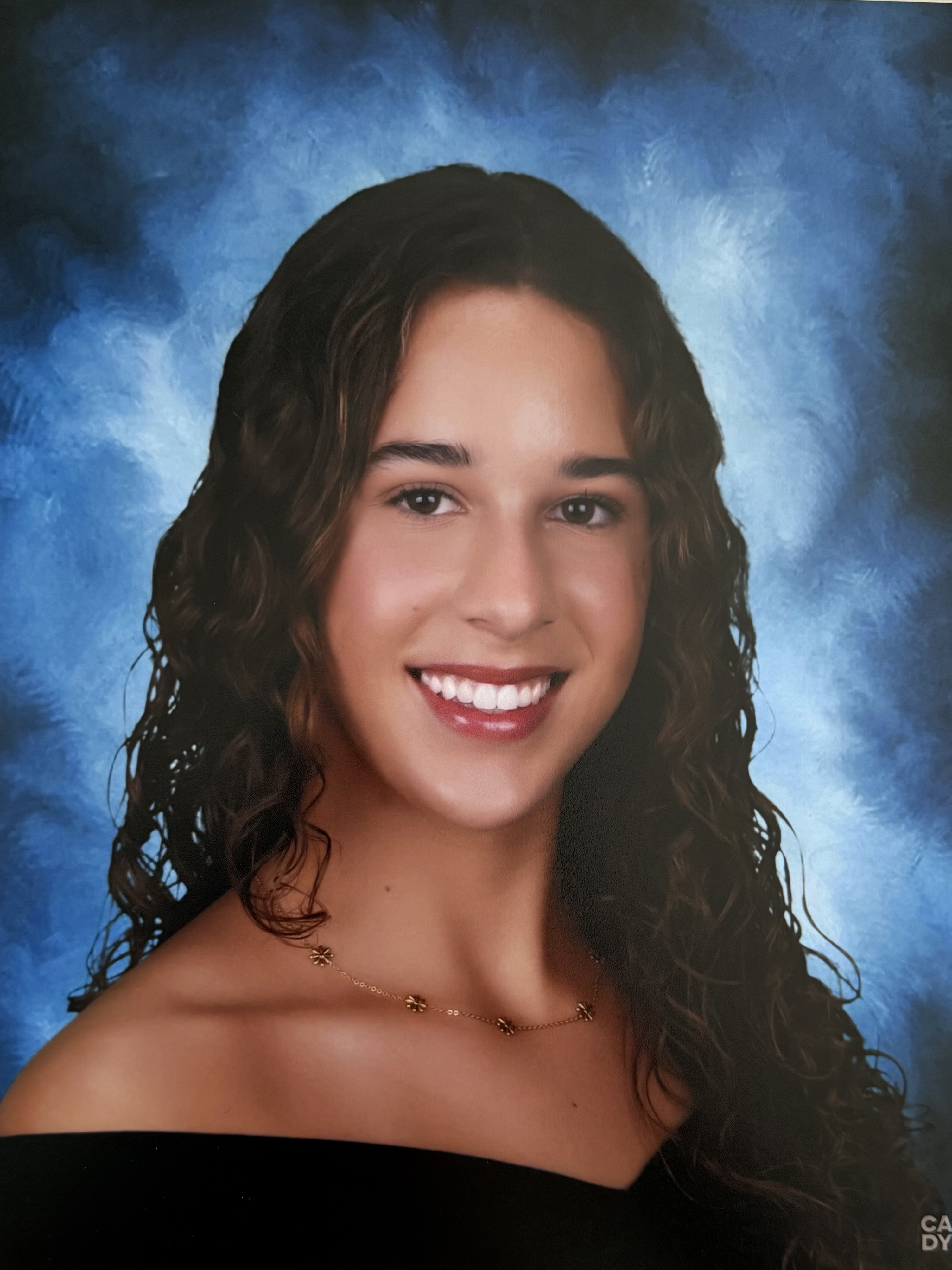
Alejandra Ortega Torres is a freshman at Florida State University pursuing a Bachelor of Science in Psychology and a Bachelor of Science in Criminology. She is actively involved in research through the Undergraduate Research Opportunity Program (UROP), where she works on a project examining cognitive models used to predict early indicators of Alzheimer’s disease. Her research focuses on differences in cognitive performance such as memory, attention, and visuospatial skills between individuals with mild cognitive impairment and healthy older adults. Through this work, she contributes to data analysis and the interpretation of preliminary findings aimed at improving early detection of neurodegenerative conditions.
In addition to her research, Alejandra is engaged in several campus organizations focused on leadership and mental health advocacy. She is an active member of FSU RENEW (Realizing Everyone’s Needs for Emotional Wellness), collaborating with Florida State University’s Counseling and Psychological Services to promote student mental health and well-being.
Alejandra plans to pursue graduate study in psychology, with the long-term goal of contributing to research and interventions that improve mental health outcomes and cognitive health across diverse populations.
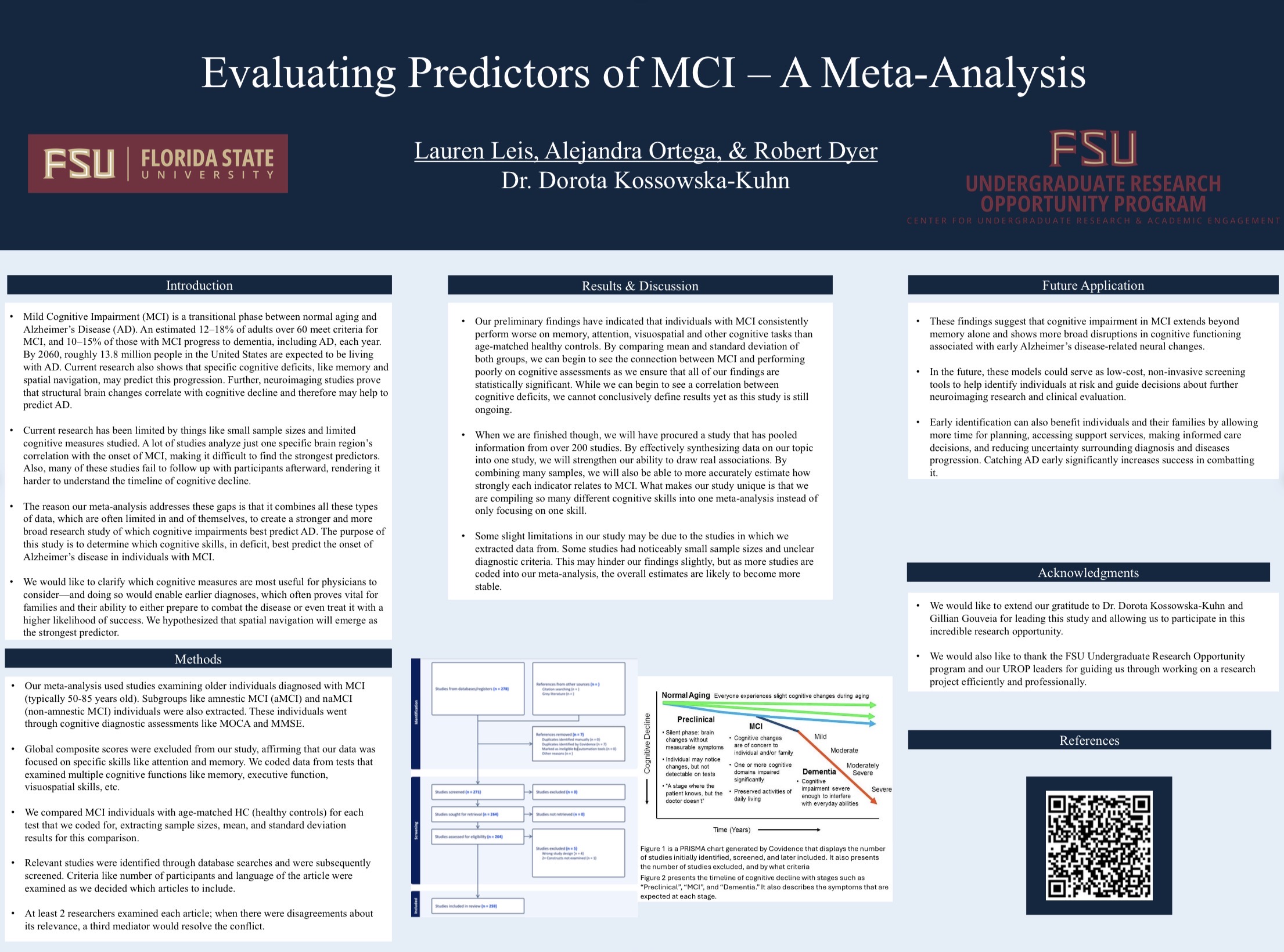
Evaluating Predictors of MCI – A Meta Analysis
Authors: Alejandra Ortega Torres, Dorota Kossowska-KuhnStudent Major: Psychology
Mentor: Dorota Kossowska-Kuhn
Mentor's Department: Psychology Mentor's College: Florida State University Co-Presenters: Lauren Leis, Robert Dyer
Abstract
Mild Cognitive Impairment (MCI) is a transitional phase between normal aging and Alzheimer’s Disease (AD). Research shows that individuals who have MCI are more prone to progressing into AD, but not everyone with MCI develops Alzheimer’s. Current research also shows that specific cognitive deficits, like memory and spatial navigation, may predict this progression. Further, neuroimaging studies prove that structural brain changes correlate with cognitive decline and therefore may help to predict AD.
Current research has been limited by things like small sample sizes and limited cognitive measures studied. A lot of studies analyze just one specific brain region’s correlation with the onset of MCI, making it difficult to find the strongest predictors. Also, many of these studies fail to follow up with participants afterward, rendering it harder to
understand the timeline of cognitive decline. The reason our meta-analysis addresses these gaps is that it combines all of these types of data, which are often limited in and of themselves, to create a stronger and more broad research study of which cognitive impairments best predict AD. The purpose of this study is to determine which cognitive skills, in deficit, best predict the onset of Alzheimer’s disease in individuals with MCI.
We would like to clarify which cognitive measures are most useful for physicians to
consider—and doing so would enable earlier diagnoses, which often proves vital for families and their ability to either prepare to combat the disease or even treat it with a higher likelihood of success.
Keywords: Alzheimers, analysis, psychology