
Research Symposium
26th annual Undergraduate Research Symposium, April 1, 2026
Manal Mohib Poster Session 2: 10:45 am - 11:45 am / Poster #34
BIO
Manal is a third year Economics major and Environmental Science and Policy minor student from Orlando, Florida. Her interests include public health, environmental studies, and working on projects pertaining to the betterment of people's lives. She is currently a public policy research intern at the DeVoe L. Moore Institute working under Dr. Crystal Taylor to study what relationship, if any, exists between asthma and housing factors.
Home Prices as an Indicator of Healthy Housing: An Examination of Home Prices and Sociodemographic Characteristics on Asthma Rates in Florida
Authors: Manal Mohib, Crystal TaylorStudent Major: Economics
Mentor: Crystal Taylor
Mentor's Department: Economics Mentor's College: College of Social Science and Public Policy Co-Presenters:
Abstract
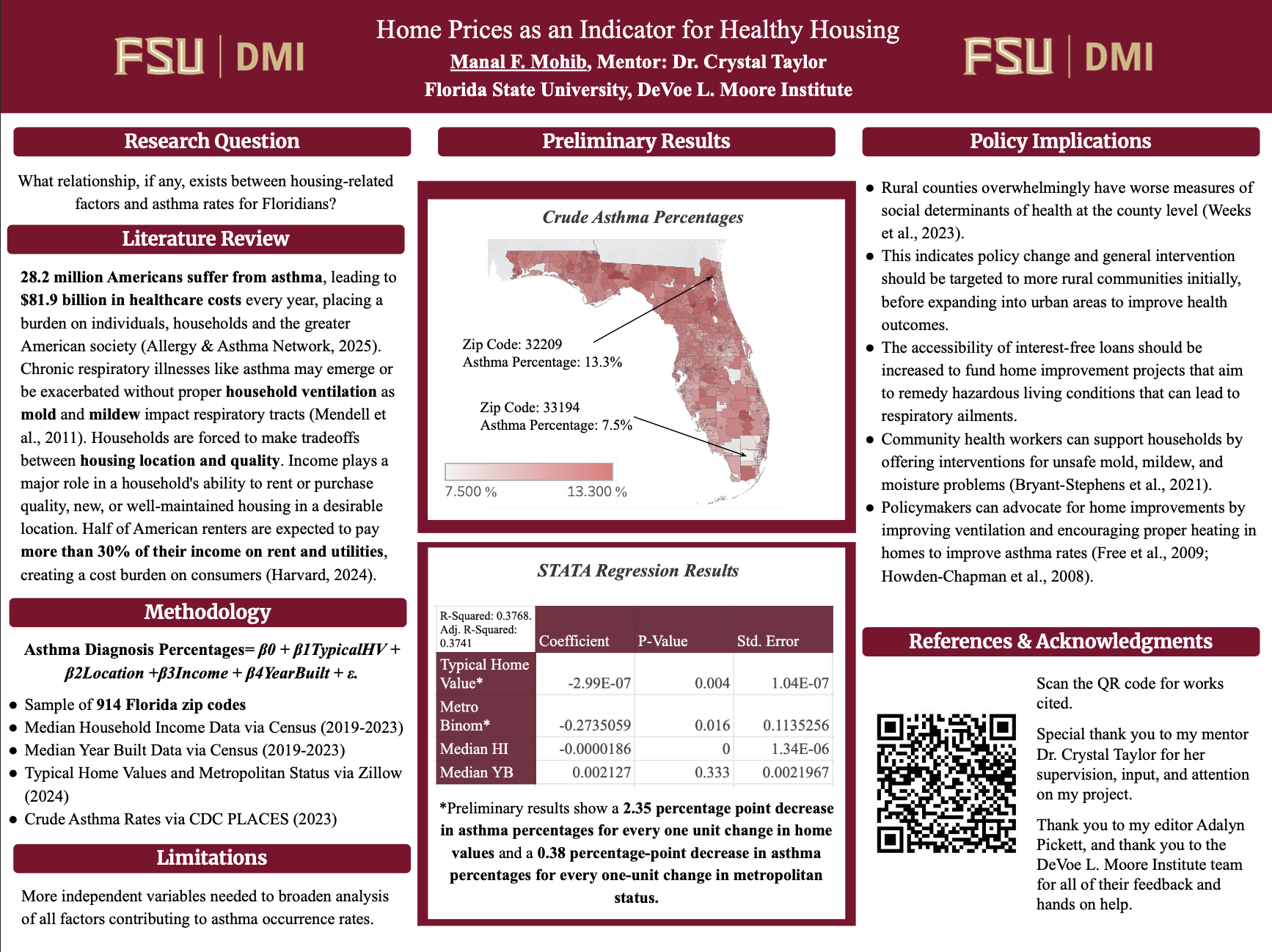
Almost 25 million people in the United States have asthma (CDC, 2021). Common household triggers for asthma include dust, pests, and mold (CDC, 2024). Income determines a household's ability to rent or purchase quality housing in a desirable environment. Expanding on literature (Bryant-Stephens et al., 2021; Free et al., 2009; Howden-Chapman, 2008; Künn et al., 2024), this research asks: What relationship, if any, exists between housing-related factors and asthma rates for Floridians?
Median household income data was obtained from the the Census (2019-2023), median year built of house from the Census (2019-2023), typical home value data and metropolitan status from the Zillow Home Value Index (2024), and asthma occurrence percentages from the Centers for Disease Control and Prevention’s Population Level Analysis and Community Estimates (2023). This research represents 914 zip codes in Florida. Using STATA, this study used regression analysis to test whether home price, location, and socioeconomic characteristics have an association with asthma occurrence rates.
For every one unit change in home values, asthma crude percentage decreases by 2.99. For every one unit change in metropolitan status, asthma crude percentage decreases by .27. However, to garner a comprehensive picture of what factors contribute to asthma rates, more independent variables should be added to future studies.
Community health workers can proactively support households by identifying and offering home interventions (Bryant-Stephens et al., 2021). Policymakers can advocate for home improvements by improving ventilation and encouraging proper heating in homes to improve asthma rates (Free et al., 2009; Howden-Chapman et al., 2008).
Keywords: health economics policy
26th annual Undergraduate Research Symposium, April 1, 2026
Leah King Poster Session 4: 3:00 pm - 4:00 pm / Poster #146
BIO
Leah King is a Biological Sciences Major and a part of FSU's Honors Medical Scholars. She is working with Dr. Meghan Martinez to study the inequalities faced by people of color with disabilities in the United States. After Undergraduate School and achieving a Bachelor's degree in Biological Sciences, Leah plans to attend medical school. Her hopes are to become a pediatrician in the future.
Intersecting Oppressions: Race and Disability in the U.S.
Authors: Leah King, Dr. Meghan MartinezStudent Major: Biological Sciences
Mentor: Dr. Meghan Martinez
Mentor's Department: Honor's Program Mentor's College: Honors College Co-Presenters:
Abstract
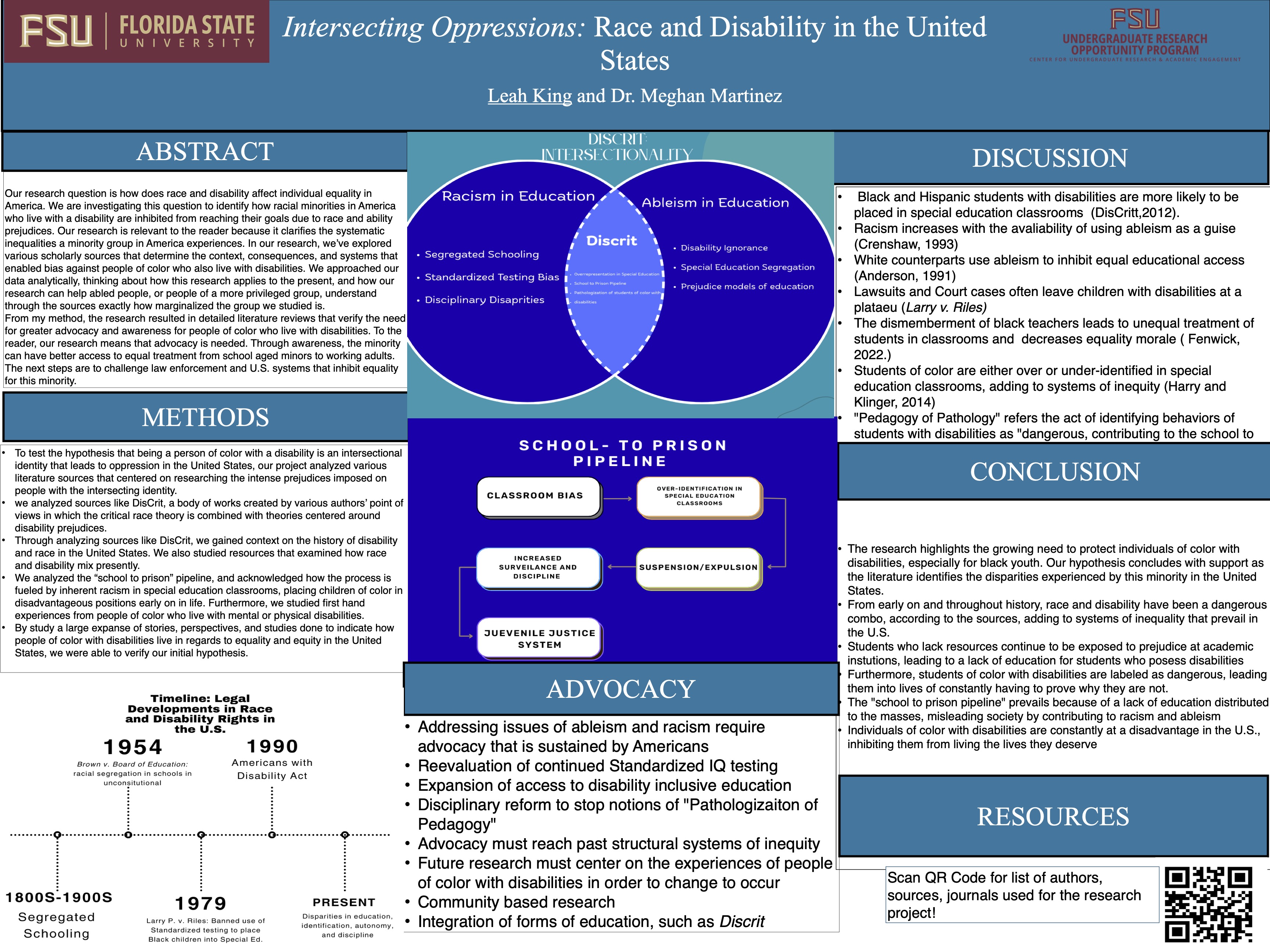
Our research question is how does race and disability affect individual equality in America. We are investigating this question to identify how racial minorities in America who live with a disability are inhibited from reaching their goals due to race and ability prejudices. Our research is relevant to the reader because it clarifies the systematic inequalities a minority group in America experiences.
In our research, we’ve explored various scholarly sources that determine the context, consequences, and systems that enabled bias against people of color who also live with disabilities. We approached our data analytically, thinking about how this research applies to the present, and how our research can help abled people, or people of a more privileged group, understand through the sources exactly how marginalized the group we studied is.
From my method, the research resulted in detailed literature reviews that verify the need for greater advocacy and awareness for people of color who live with disabilities. To the reader, our research means that advocacy is needed. Through awareness, the minority can have better access to equal treatment from school aged minors to working adults. The next steps are to challenge law enforcement and U.S. systems that inhibit equality for this minority.
The results of our study suggest that change is needed to give equal access to people of color with disabilities.The implications are that past laws promoting equality for both race and ability have been met with inaction by schools, employers, and society.
Keywords: Race, Disability, Equality
26th annual Undergraduate Research Symposium, April 1, 2026
Ketsia Limexant Poster Session 2: 10:45 am - 11:45 am / Poster #53
BIO
Ketsia Limexant is a second-year undergraduate student pursuing a Bachelor of Science in Finance at the Hebert Wertheim College of Business. She is interested in working in the nonprofit sector of healthcare and hopes to pursue a career in healthcare finance or healthcare information management. Outside of academics, Ketsia enjoys a variety of hobbies, including crocheting, yoga, and reading.
How do Entrepreneurs Launch and Scale their Businesses in the Context of Economic Adversity and Poverty
Authors: Ketsia Limexant, Dr. Susana SantosStudent Major: Finance
Mentor: Dr. Susana Santos
Mentor's Department: Entrepeneurship Mentor's College: Jim Moran College of Entrepeneurship Co-Presenters: Nilesh Naik, Jazsiel Pagan, Matteo Darcy, Panya Saengfah
Abstract
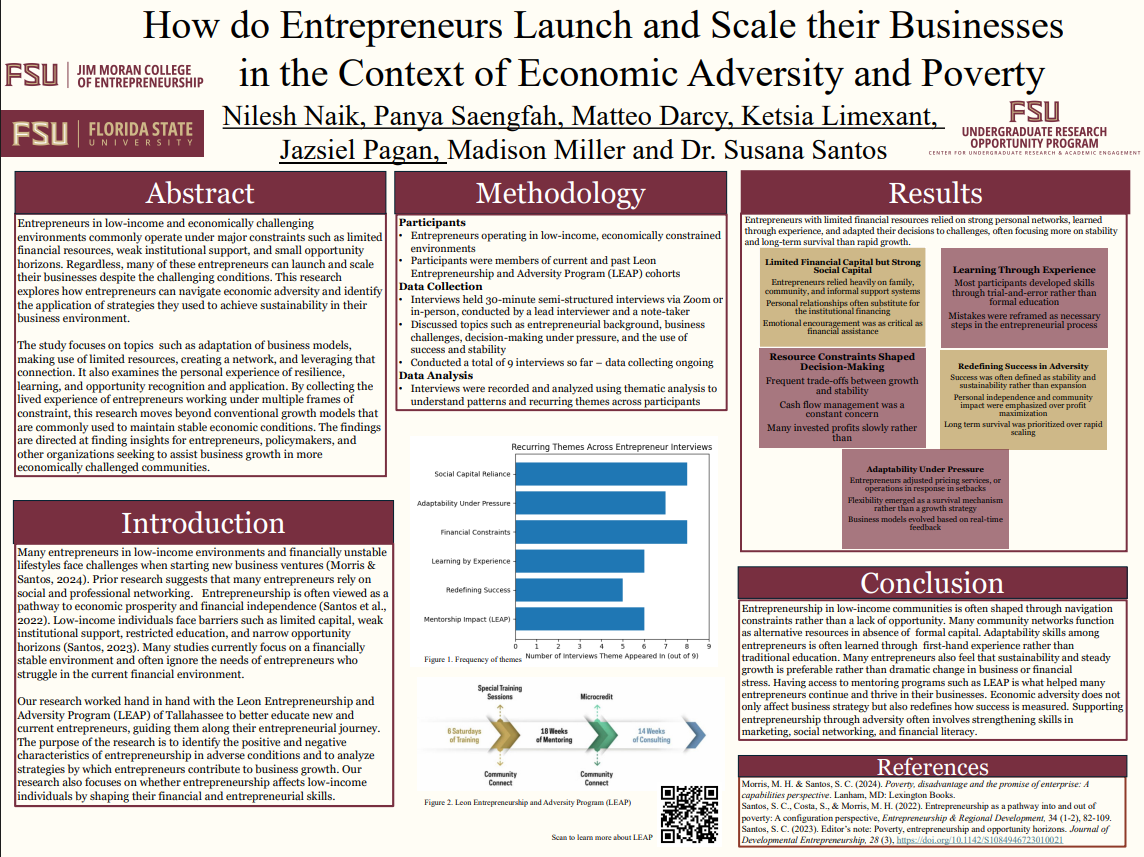
Entrepreneurs in low-income and economically challenging environments commonly operate under major constraints such as limited financial resources, weak institutional support, and small opportunity horizons. Regardless, many of these entrepreneurs can launch and scale their businesses despite the challenging conditions. This research explores how entrepreneurs can navigate economic adversity and identify the application of strategies they used to achieve sustainability in their business environment.
The study focuses on topics such as adaptation of business models, making use of limited resources, creating a network, and leveraging that connection. It also examines the personal experience of resilience, learning, and opportunity recognition and application. By collecting the lived experience of entrepreneurs working under multiple frames of constraint, this research moves beyond conventional growth models that are commonly used to maintain stable economic conditions. The findings are directed at finding insights for entrepreneurs, policymakers, and other organizations seeking to assist business growth in more economically challenged communities.
Keywords: economic, entrepeneur, adversity, business
26th annual Undergraduate Research Symposium, April 1, 2026
Raichel Weisheit Poster Session 1: 9:30 am - 10:30 am / Poster #49
BIO
Raichel Weisheit is a sophomore at Florida State University pursuing a Bachelor of Science in Political Science with a minor in Business. She was born in Raymond, Maine, and raised in Boca Raton, Florida. Raichel conducts undergraduate research through the Undergraduate Research Opportunity Program under the mentorship of Dr. Celia Reddick. Her research examines refugee students’ school experiences in Florida, with a focus on language barriers, friendship, belonging, and bullying. Through qualitative interviews and coding, her work explores how refugee students navigate social and academic adjustment in U.S. schools. Raichel is also involved in the Women in Pre-Law Society and is passionate about community engagement and service. After completing her undergraduate studies, she plans to attend law school and pursue a career in law, where she hopes to advocate for others and make a meaningful impact in her community.
Refugee Students' School Experiences in Florida
Authors: Raichel Weisheit, Dr. Celia ReddickStudent Major: Political Science
Mentor: Dr. Celia Reddick
Mentor's Department: Educational Leadership and Policy Studies Mentor's College: Education Co-Presenters:
Abstract
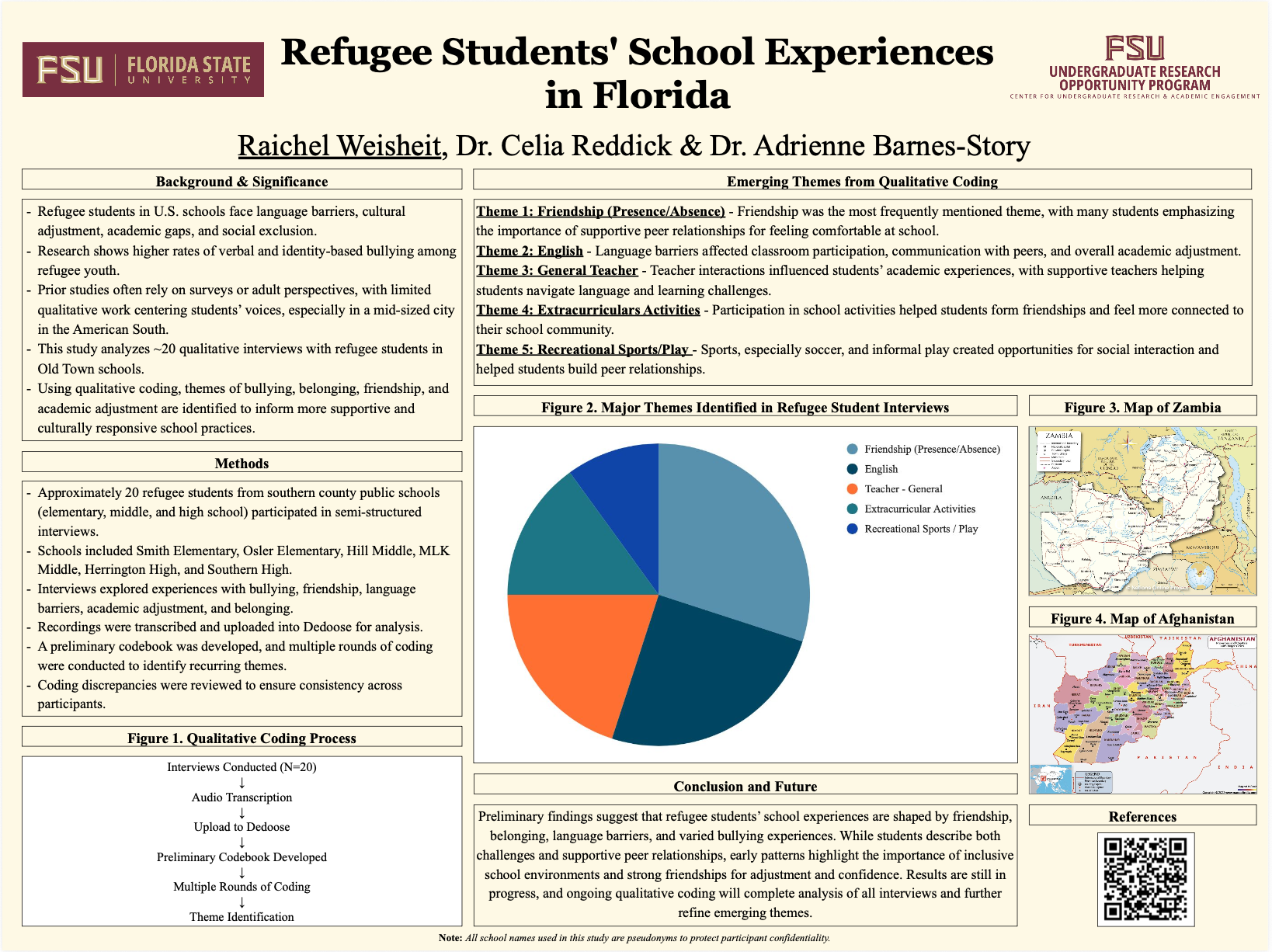
Refugee youth and their families often face unique challenges as they navigate new educational systems, including languages barriers, social exclusion, and experiences of bullying. This study explores the following research question: How do refugee young people and their families experience school in Florida, what opportunities and challenges do they face in this process, and how can collaborative, arts-based research help them overcome these challenges and promote inclusion? Understanding these experiences is important for improving school environments and support systems for refugee communities. This research uses a qualitative approach. Data consist of 20-audio recorded interviews with refugee children in Florida describing their experiences with school, family life, bullying, and belonging. The interviews are analyzed using qualitative coding, where key words and ideas are identified and organized into categories. These codes are then used to identify common themes across participants’s experiences. Results are still in process; however, early analysis suggests themes related to belonging, peer relationships, language adjustment, and support from family and community. As coding continues, this research aims to better understand both the challenges refugee students face and the factors that support inclusion. The findings will contribute to discussions about refugee education and the use of collaborative, arts-based research to promote empathy and inclusion in schools.
Keywords: Refugee Students, School Experiences, Language Barriers
26th annual Undergraduate Research Symposium, April 1, 2026
Ana Gomez Poster Session 2: 10:45 am - 11:45 am / Poster #126
BIO
Ana is a first-year student from Miami pursuing a Bachelor of Science in Marketing in FSU's Honors College. She is particularly interested in digital marketing, consumer behavior, and brand strategy, with a focus on applying insights to real-world campaigns. She is excited to continue developing her skills and experience toward a career in marketing.
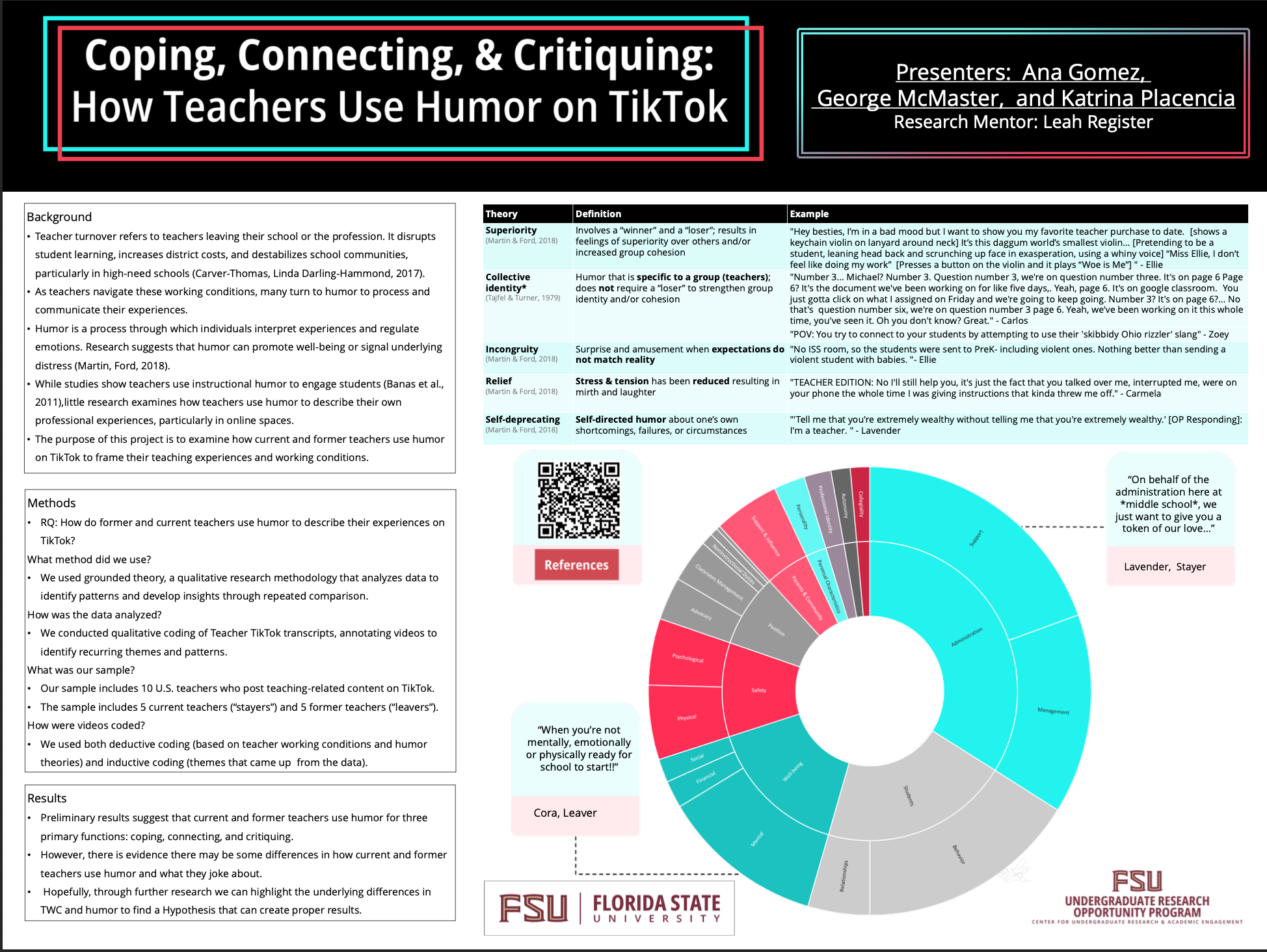
Coping, Connecting, & Critiquing: How Teachers Use Humor on TikTok
Authors: Ana Gomez, Leah RegisterStudent Major: Marketing
Mentor: Leah Register
Mentor's Department: Educational Leadership and Policy Studies Mentor's College: Anne Spencer Daves College of Education, Health, and Human Sciences Co-Presenters: George McMaster, Katrina Placencia
Abstract
Teacher turnover has increased above pre-pandemic levels, undermining instructional quality, student achievement, and district budgets. Often driven by challenging working conditions, including managing student misbehavior, turnover reflects the daily realities teachers navigate. Current and former teachers use TikTok to share and process their professional experiences, often through humor, offering insight into how they make sense of challenges that can contribute to attrition. While prior research has examined humor in instructional contexts, less is known about how teachers use non-instructional humor. We ask, how do current and former teachers use humor to describe their experiences on TikTok?
This study uses a qualitative, grounded theory approach to analyze publicly available TikTok videos from self-identifying current and former U.S. teachers. From each account, we analyzed roughly 30 videos, examining verbal & non-verbal communication. Data were coded iteratively, beginning with deductive codes drawn from humor theory and Merrill’s (2021) teacher working conditions framework, followed by inductive coding to more fully capture teachers’ experiences.
Preliminary analysis reveals that for many teachers, humor functions as a coping mechanism and as a way to connect with other teachers who understand the realities of the job. For others, humor was used to express dissatisfaction and disappointment with the profession, such as the lack of administrative support in addressing student misbehavior. By examining humor as a way to cope, connect, and critique, this study illuminates how teachers process working conditions that may shape decisions to remain in or leave the profession.
Keywords: Teacher, Humor, Tik Tok, Retention
26th annual Undergraduate Research Symposium, April 1, 2026
Nilesh Naik Poster Session 3: 1:45 pm - 2:45 pm / Poster #53
BIO
Nilesh Naik is a second-year undergraduate student at Florida State University pursuing a Bachelor of Science in Finance and Management Information Systems in the Herbert Wertheim College of Business. Originally from Atlanta, Georgia, he is interested in finance, entrepreneurship, and the role of capital in helping businesses grow and scale. He has a strong interest in finance, particularly in understanding how different businesses operate and how their financial models support growth and long-term sustainability. Nilesh is especially interested in analyzing how companies structure their operations, generate revenue, and make strategic financial decisions across different industries. His academic interests focus on studying business models, capital structures, and how financial institutions support companies through lending and advisory services. Through his research and academics, he hopes to deepen his understanding of how businesses scale and adapt in different economic environments. Nilesh plans to pursue a career in corporate banking, where he hopes to work closely with companies to help them access capital, manage financial risk, and support their long-term growth.
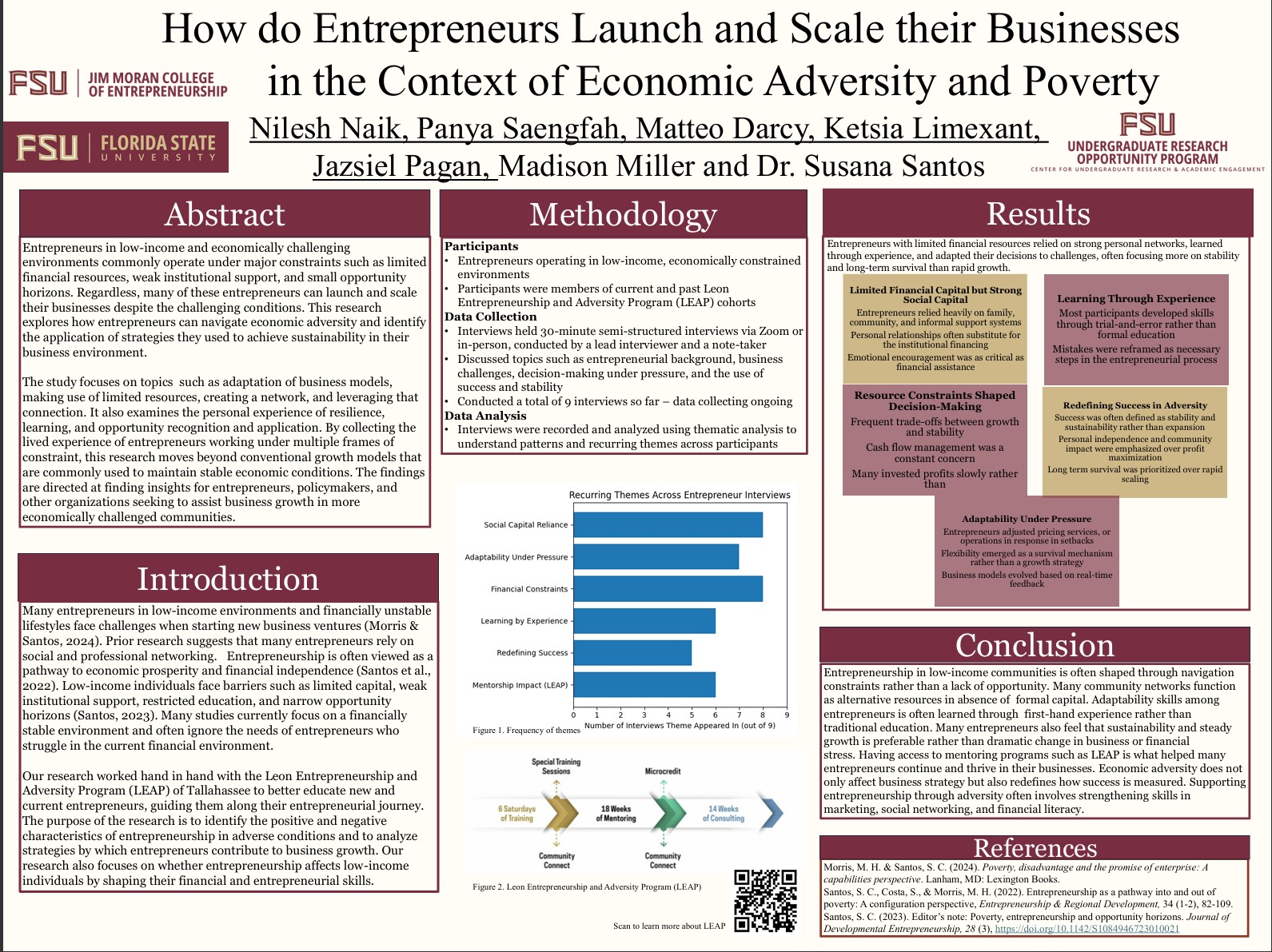
How do Entrepreneurs Launch and Scale their Businesses in the Context of Economic Adversity and Poverty
Authors: Nilesh Naik, Dr. Susana SantosStudent Major: Finance, Management Information Systems
Mentor: Dr. Susana Santos
Mentor's Department: Moran College Entrepreneurship (JMC) 625000 Mentor's College: Jim Moran College of Entrepreneurship Co-Presenters: Jasziel Pagan, Ketsia Limexant, Panya Saengfah, Matteo Darcy, Madison Miller
Abstract
Entrepreneurs in low-income and economically challenging environments commonly operate under major constraints such as limited financial resources, weak institutional support, and small opportunity horizons. Regardless, many of these entrepreneurs can launch and scale their businesses despite the challenging conditions. This research explores how entrepreneurs can navigate economic adversity and identify the application of strategies they used to achieve sustainability in their business environment.
The study focuses on topics such as adaptation of business models, making use of limited resources, creating a network, and leveraging that connection. It also examines the personal experience of resilience, learning, and opportunity recognition and application. By collecting the lived experience of entrepreneurs working under multiple frames of constraint, this research moves beyond conventional growth models that are commonly used to maintain stable economic conditions. The findings are directed at finding insights for entrepreneurs, policymakers, and other organizations seeking to assist business growth in more economically challenged communities.
Keywords: Entrepreneurship, Business, Adversity, Economics
26th annual Undergraduate Research Symposium, April 1, 2026
Mekhi Watkins Poster Session 1: 9:30 am - 10:30 am / Poster #247
BIO
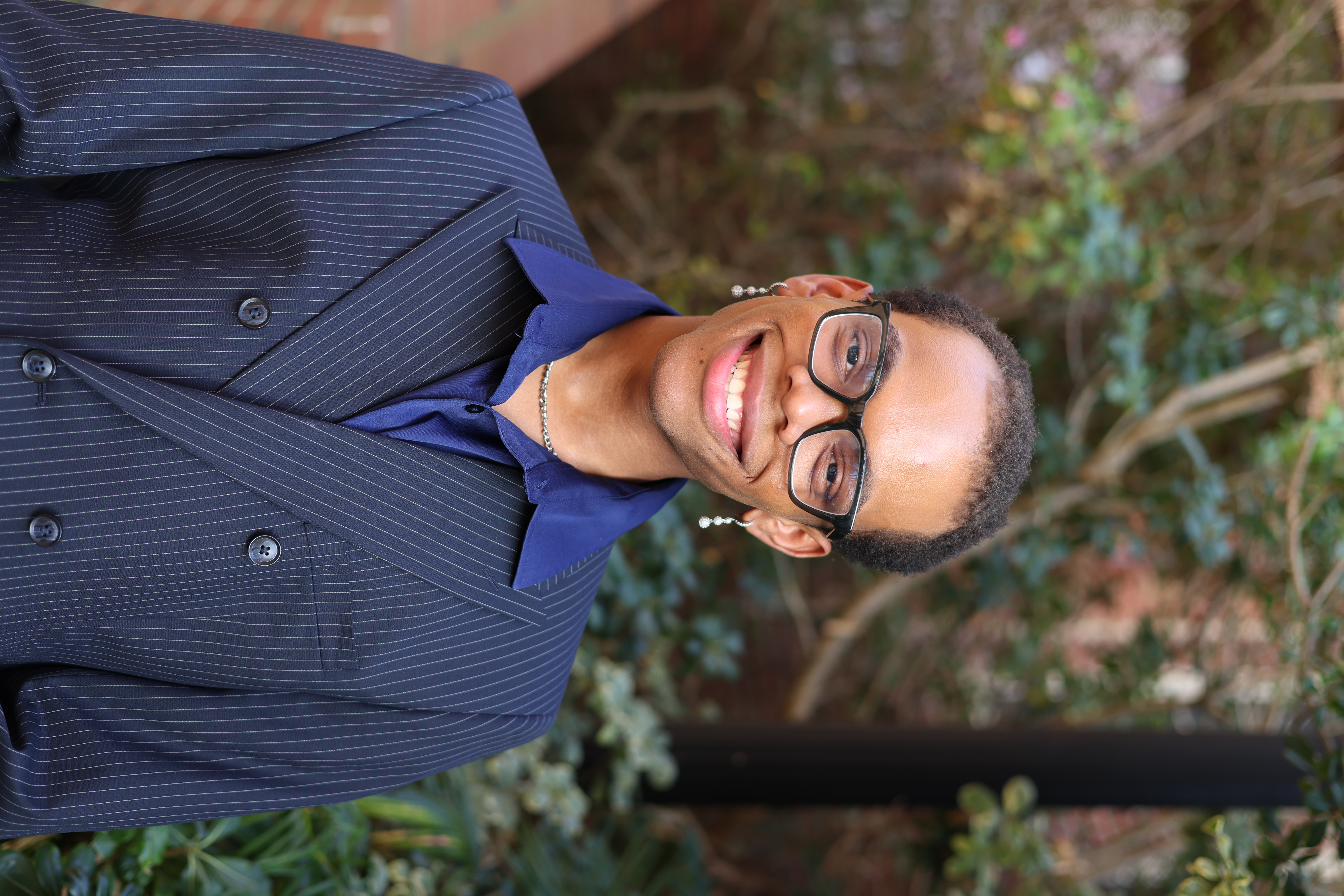
Mekhi is a class of 2029 Presidential Scholar at Florida State University working on dual degrees in Applied Mathematics and Music, with a minor in interdisciplinary sciences. He has worked on two mathematical research projects; the first, completed alongside Dr. Mark Sussman (FSU) and Dr. Alireza Moradi (Blue Origin), examines how Neural Networks can solve differential equations over long time periods. The second, completed in collaboration with fellow undergraduates Edmarly Ariol and Abriana Thorpe, used linear algebraic tools to analyze sound waves, gaining insight on musical content and virtual audio production tools. He intends to continue undergraduate research in the fields of partial differential equations and mathematical modeling, with the goal of completing a Ph.D. in Applied Mathematics at Johns Hopkins University in a similar concentration. With this Ph.D. he will work as a mathematician for NASA (or a similar organization). Regardless, the versatile nature of mathematics is, to Mekhi, an exciting opportunity to work in various applied fields.
His goals in music are no less ambitious. He will complete a Bachelor of Arts in Music, using the degree’s freeform nature to work towards several goals, namely: proficiency on the saxophone, clarinet and piano, core musical theory, worldwide musical culture and composition skills. With these abilities Mekhi intends to work as composer for video games, using music to tell stories of fictional worlds and characters. He will complete this work as a freelancer, alongside small game developers, until larger projects become available through experience and industry exposure.
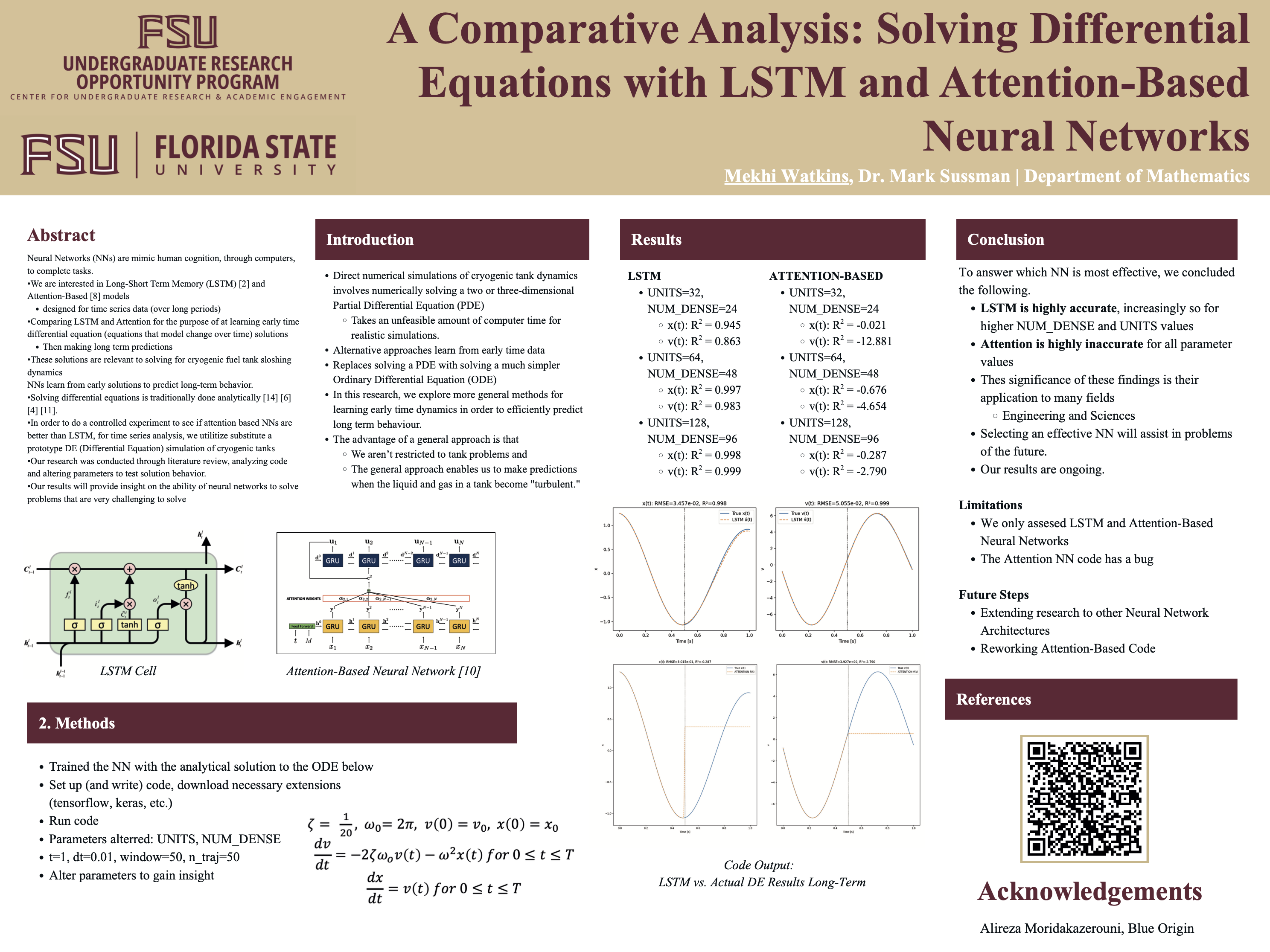
A Comparative Analysis: Solving Differential Equations with LSTM and Attention-Based Neural Networks
Authors: Mekhi Watkins, Mark SussmanStudent Major: Applied Mathematics (B.S) & Music (B.A)
Mentor: Mark Sussman
Mentor's Department: Mathematics Mentor's College: Arts & Sciences Co-Presenters:
Abstract
Neural Networks (NNs) are multilayer, computerized algorithms that mimic human cognition to complete tasks. We are interested in LSTM and Attention-Based models (two of many types) designed for time series data, which we will compare to assess which is most effective at finding numerical solutions to ordinary differential equations. These solutions are relevant to solving for cryogenic fuel tank sloshing dynamics, for which analytical solutions falter over long time periods; NNs learn from early solutions to predict long-term behavior. Solving differential equations is traditionally done analytically or through numerical methods. Generally, analytical solutions do not exist for all differential equations and numerical methods can suffer from numerical instability, among other issues. It has been demonstrated that solving ODEs through NNs (including specifically LSTM and Attention-Based) is entirely possible. Traditional means of solving differential equations are, for some problems, too slow. NNs will speed this process. Our research was conducted through literature review, analyzing code and altering parameters to test solution behavior. Our findings are in progress. Upon completion, we hope to gain insight on the utilization of neural networks as tools. These findings are relevant to solve differential equations of increasing complexity in an efficient manner. Through NNs, these solutions can be found feasibly and give valuable insight into physical and natural processes.
Keywords: Neural Networks, Differential Equations, Mathematics
26th annual Undergraduate Research Symposium, April 1, 2026
Andrew Kiffel Poster Session 4: 3:00 pm - 4:00 pm / Poster #54
BIO
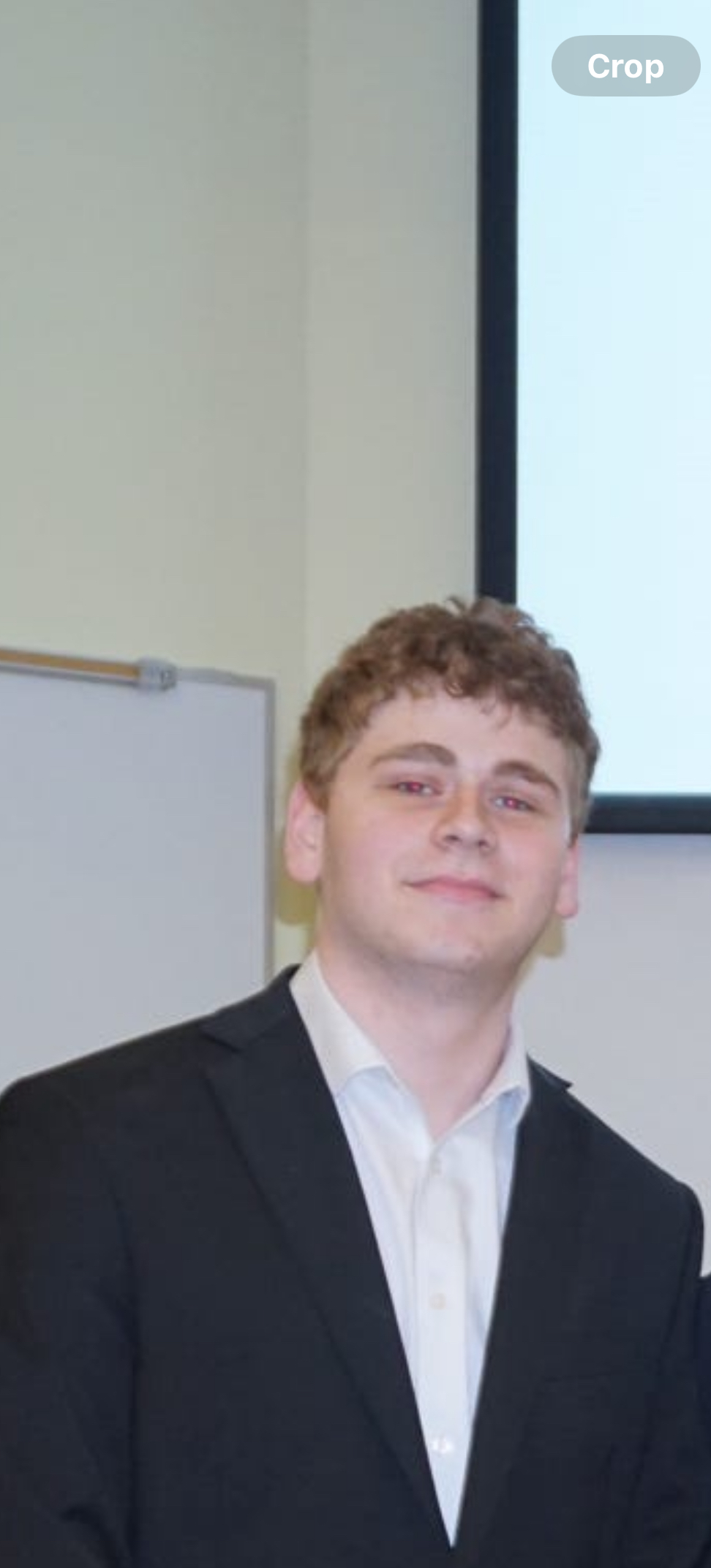
Andrew Kiffel is a freshman studying to obtain his Bachelors in Political Science and Criminology. He is an honors student here at FSU, achieving President's List in the fall 2025 semester. After completing his undergraduate degree, Andrew intends on attending law school, eventually finding a career in trial or business law.
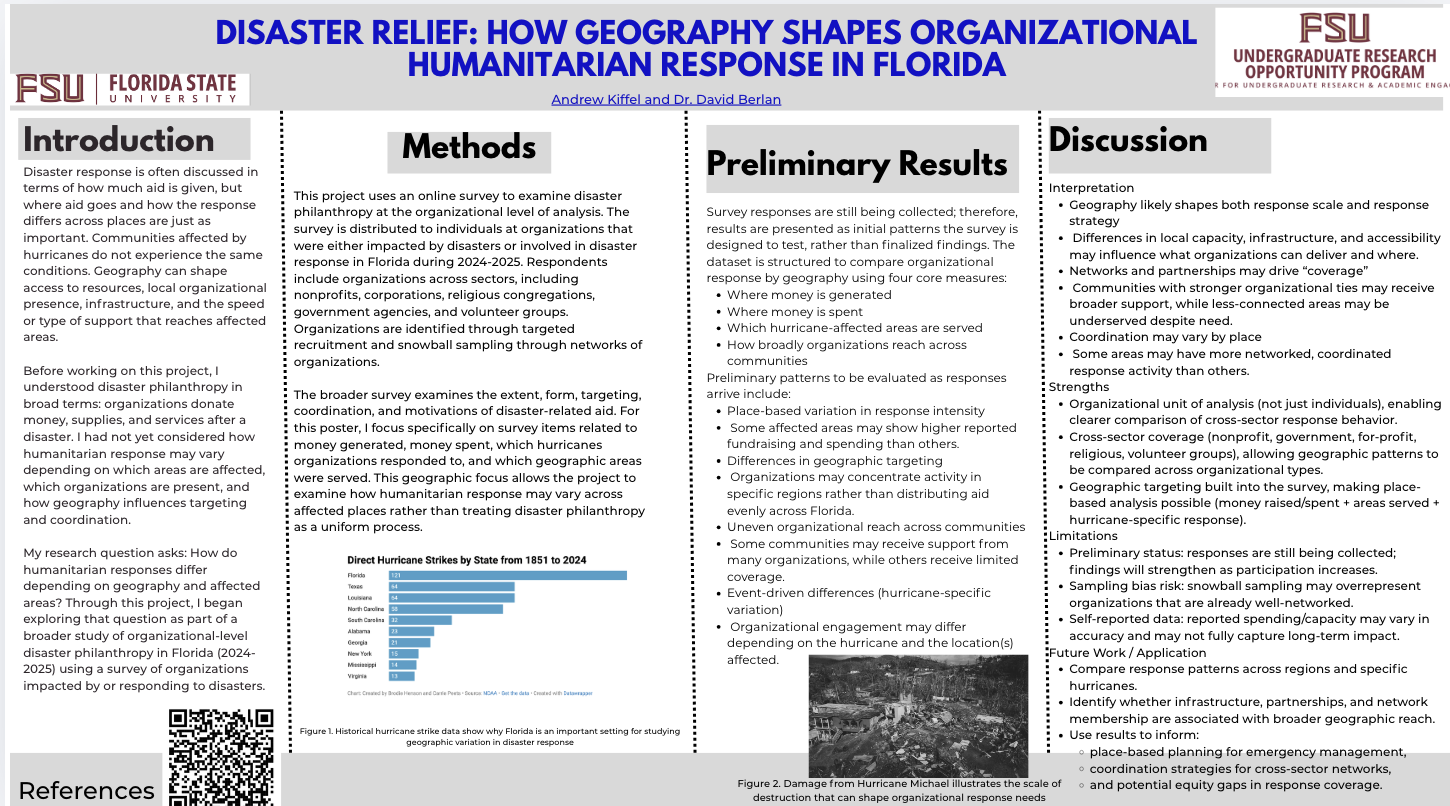
Disaster relief: How Geography Shapes Organizational Humanitarian Response in Florida
Authors: Andrew Kiffel, David BerlanStudent Major: Political Science
Mentor: David Berlan
Mentor's Department: Askew School of Public Policy Mentor's College: Social Science and Public Policy Co-Presenters:
Abstract
How have different levels of organization assisted Floridians in the fallout of natural disasters? This question must be investigated, as the greater insight we have into the struggles, responses, and present needs of those afflicted by disaster can help us to better support them in their times of need. This is pertinent to all of us, as in the state of Florida, nobody is safe from the threat of natural disaster. We must have systems in place to make sure no Floridian is left behind. In our research, we have assembled a survey given to a variety of response organizations so we can better understand the help allocated. Via qualitative research, we accumulated the survey responses of all of these organizations to formulate trends and highlight areas of potential improvement, as well as establish points of comparison. We are still waiting on results. However, these results will tell us exactly how people struggle post-disaster, what is being done to help them, and how we can do better.
Keywords: hurricane; aid; disaster
26th annual Undergraduate Research Symposium, April 1, 2026
Riley Dehlinger Poster Session 3: 1:45 pm - 2:45 pm / Poster #263
BIO
Riley Dehlinger is a second-year undergraduate at Florida State University seeking a Bachelor of Science in Biological Science and minors in both Interdisciplinary Science and Chemistry. She is a member of the Phi Beta Kappa Honor Society and has worked in Dr. P Bryant Chase's and Dr. Jose Pinto's labs for the past 2 semesters studying muscle biophysics, particularly focusing on striated cardiac muscle.
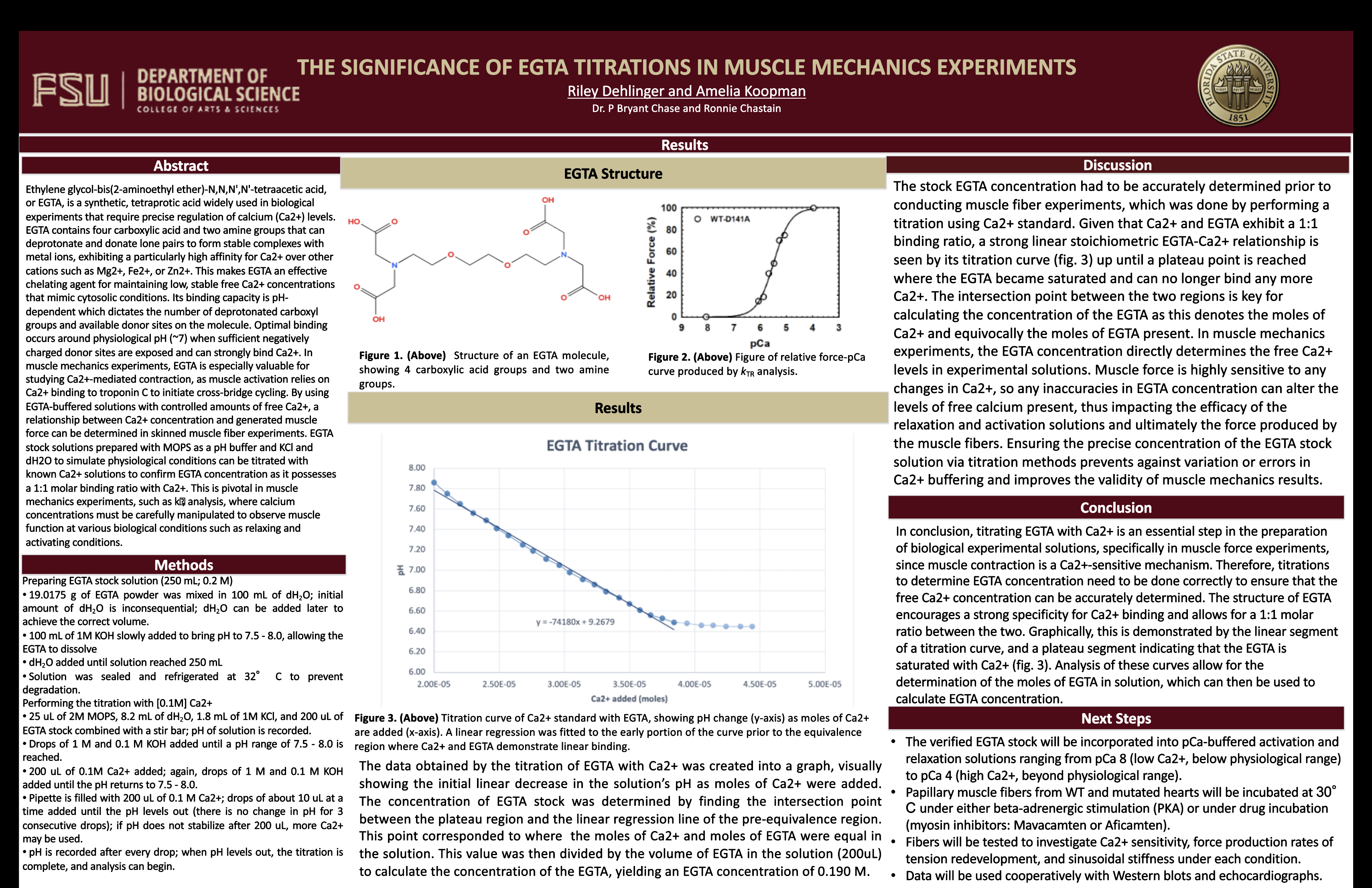
The Significance of EGTA Titrations in Muscle Mechanics Experiments
Authors: Riley Dehlinger, Dr. P Bryant ChaseStudent Major: Biological Science
Mentor: Dr. P Bryant Chase
Mentor's Department: Institute of Molecular Biophysics Mentor's College: Florida State University Co-Presenters: Amelia Koopman
Abstract
Ethylene glycol-bis(2-aminoethyl ether)-N,N,N',N'-tetraacetic acid, or EGTA, is a synthetic, tetraprotic acid widely used in biological experiments that require precise regulation of calcium (Ca2+) levels. EGTA contains four carboxylic acid and two amine groups that can deprotonate and donate lone pairs to form stable complexes with metal ions, exhibiting a particularly high affinity for Ca2+ over other cations such as Mg2+, Fe2+, or Zn2+. This makes EGTA an effective chelating agent for maintaining low, stable free Ca2+ concentrations that mimic cytosolic conditions. Its binding capacity is pH- dependent which dictates the number of deprotonated carboxyl groups and available donor sites on the molecule. Optimal binding occurs around physiological pH (~7) when sufficient negatively charged donor sites are exposed and can strongly bind Ca2+. In muscle mechanics experiments, EGTA is especially valuable for studying Ca2+-mediated contraction, as muscle activation relies on Ca2+ binding to troponin C to initiate cross-bridge cycling. By using EGTA-buffered solutions with controlled amounts of free Ca2+, a relationship between Ca2+ concentration and generated muscle force can be determined in skinned muscle fiber experiments. EGTA stock solutions prepared with MOPS as a pH buffer and KCl and dH2O to simulate physiological conditions can be titrated with known Ca2+ solutions to confirm EGTA concentration as it possesses a 1:1 molar binding ratio with Ca2+. This is pivotal in muscle mechanics experiments, such as kₜᵣ analysis, where calcium concentrations must be carefully manipulated to observe muscle function at various biological conditions such as relaxing and activating conditions.
Keywords: EGTA, Titration, Muscle Mechanics
26th annual Undergraduate Research Symposium, April 1, 2026
Lauren Phillips Poster Session 3: 1:45 pm - 2:45 pm / Poster #211
BIO
Lauren is passionate about scientific innovation. Her passion for science has developed since being at Florida State University where she is currently a first-year student, majoring in Biochemistry and participating in undergraduate research under the mentorship of researchers Dr. Ming Ye from the Department of Earth, Ocean, and Atmospheric Science (EOAS), where she is working to help optimize f-sand's ability to remove nutrients from bodies of water, primarily nitrate and phosphate. Her focus on this project is performing laboratory experiments to determine the best methods for large-scale production of f-sand. From working on this project, she has gained experience in technical literature review, ion chromatography, sampling, data collection and analysis, and laboratory work. She plans to continue research at the Air Force laboratory this summer of 2026 at the Kirtland Air Force Base, where she will be supporting research for the chemical dynamics of thruster plumes, and will work to model how chemicals are modified by the space environment with an emphasis on ultraviolet photons. She was awarded to the president's list at Florida State University after completing her first semester. She plans to use her degree in Biochemistry to pursue a career in patent law. Her interest in pursuing patent law comes from her passion for science and her technical reading and writing skills. She wants to be involved with as much research and innovation as possible before her career goals to best prepare herself for a future position as a patent attorney.
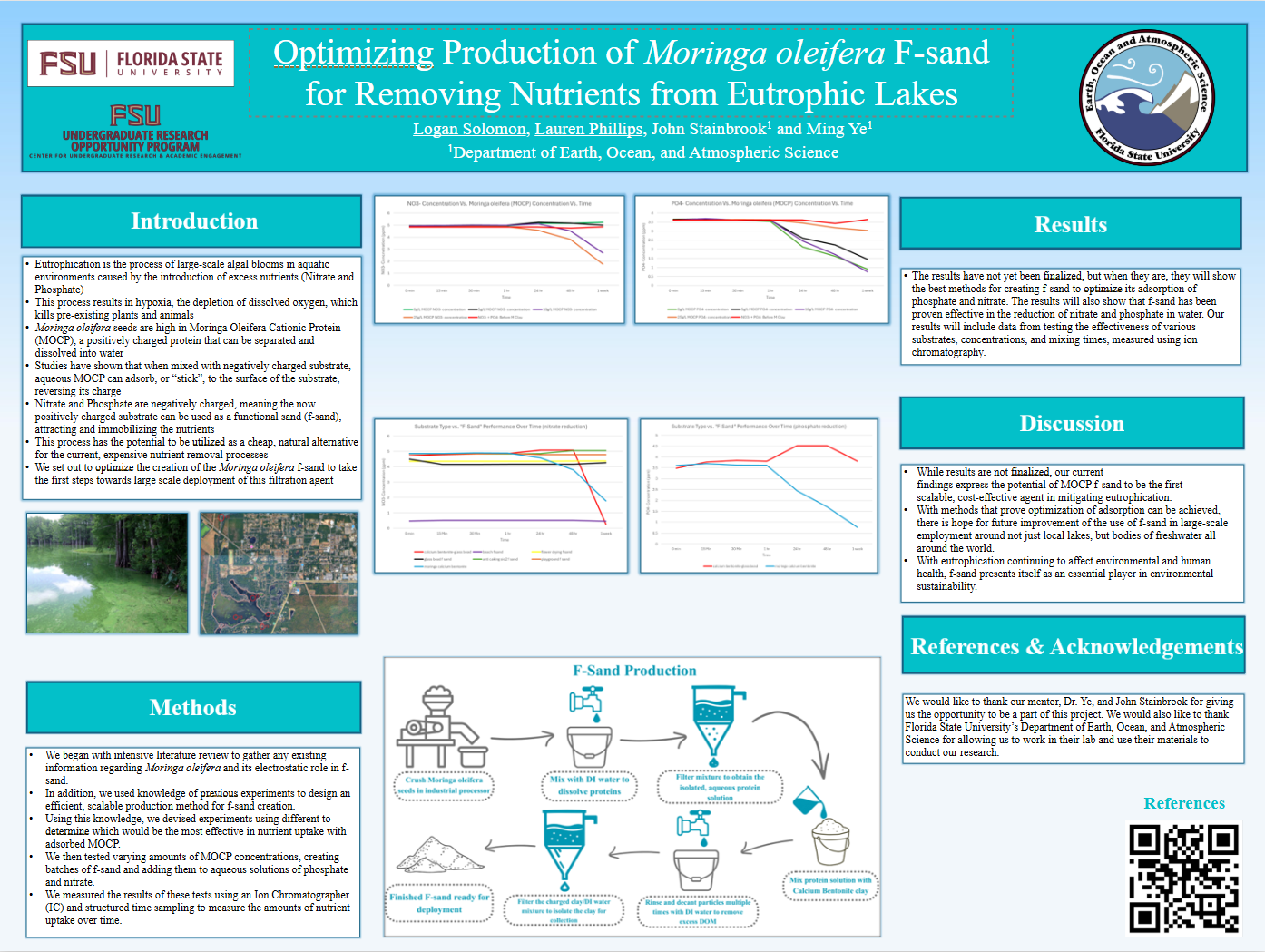
Optimizing the Creation of Moringa oleifera F-sand for Large Scale Filtration of Eutrophicating Nutrients
Authors: Lauren Phillips, Dr. Ming YeStudent Major: Biochemistry
Mentor: Dr. Ming Ye
Mentor's Department: Department of Earth, Ocean, and Atmospheric Science Mentor's College: College of Arts and Science Co-Presenters: Logan Soloman
Abstract
Eutrophication occurs when an excessive amount of nitrogen and phosphorus enters a body of water, causing large-scale algal blooms that severely deplete the dissolved oxygen, resulting in detrimental effects on the environment. Moringa oleifera cationic protein (MOCP) is a naturally occurring seed protein from the Moringa tree that electrostatically adsorbs to the surface of negatively charged substrates, reversing their charge and creating a functional sand (f-sand). F-sand can then be used as a filtration agent by attracting and immobilizing the negatively charged anions that drive eutrophication. This mechanism has previously only been observed at small scales, so we sought to be the first to optimize a scalable method for f-sand production. Initially, through literature review, we devised experiments using differing fine substrates to determine which would be the most effective. These experiments entailed mixing and vacuum filtering different substrates with varying aqueous concentrations of MOCP which were then added to nutrient solutions. We used an Ion Chromatographer (IC) to quantify nutrient uptake over time. Our preliminary results conclude that calcium bentonite is the optimal substrate to maximize nutrient removal by f-sand. Experiments are ongoing to determine the most efficient concentration of MOCP for large-scale deployment. While results are not finalized, our current findings express the potential of MOCP f-sand to be a scalable, cost-effective agent in mitigating eutrophication. With this, further research is necessary to evaluate real-world effectiveness of f-sand and develop efficient methods of strategic deployment.
Keywords: environmental, biochemistry, aquatic
26th annual Undergraduate Research Symposium, April 1, 2026
Abigail Okey Poster Session 2: 10:45 am - 11:45 am / Poster #52
BIO
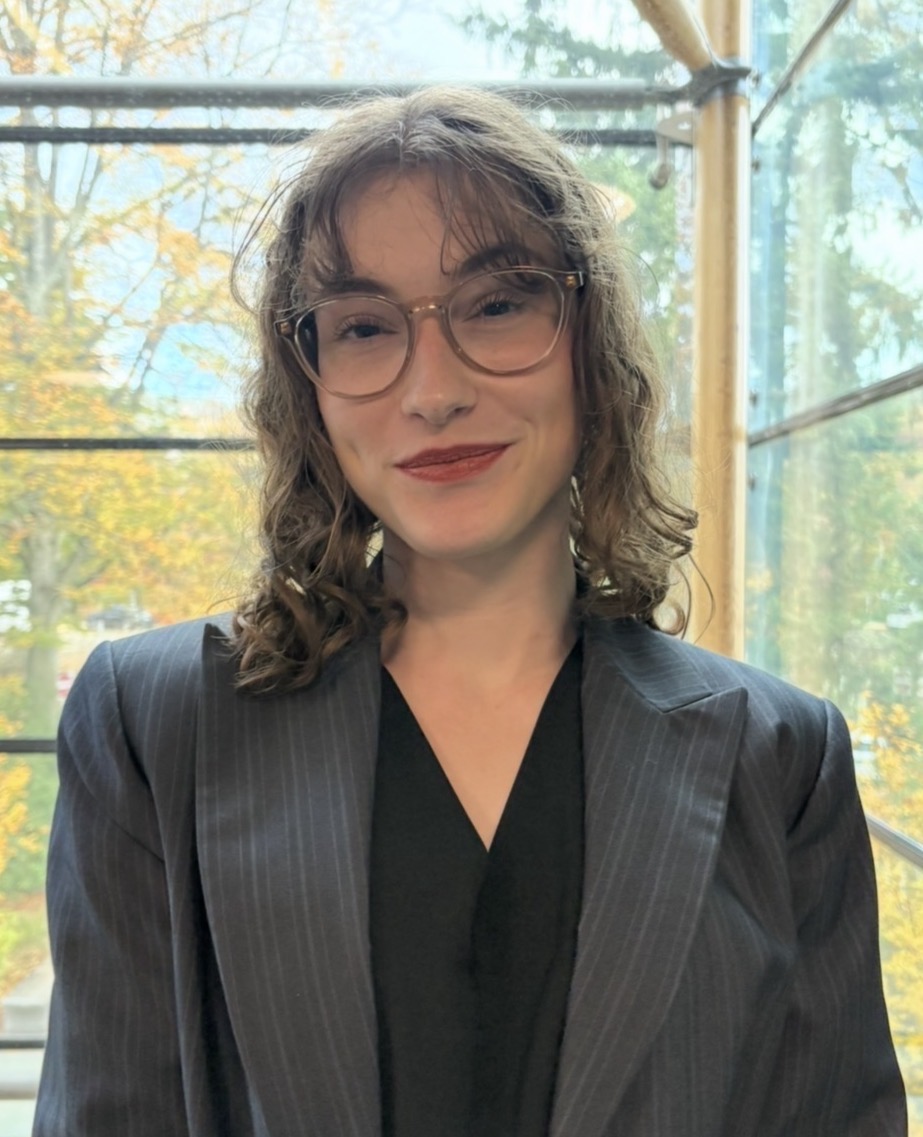
Abigail is a senior receiving a Bachelors of Science in Cellular and Molecular Neuroscience with a double major in Human Development and Family Sciences. Originally from Jacksonville, Florida, Abigail has a vested interest in the effects of early childhood experiences on cognitive and behavioral development. She has spent almost two years in The Learning Brain Lab under the direct supervision of Dr. Tehila Nugiel building and executing child psychology and brain development research. In her time outside of school, Abigail works as a clinical medical assistant in family medicine. After graduation, she hopes to attend medical school in Texas with a focus in pediatric psychiatry.
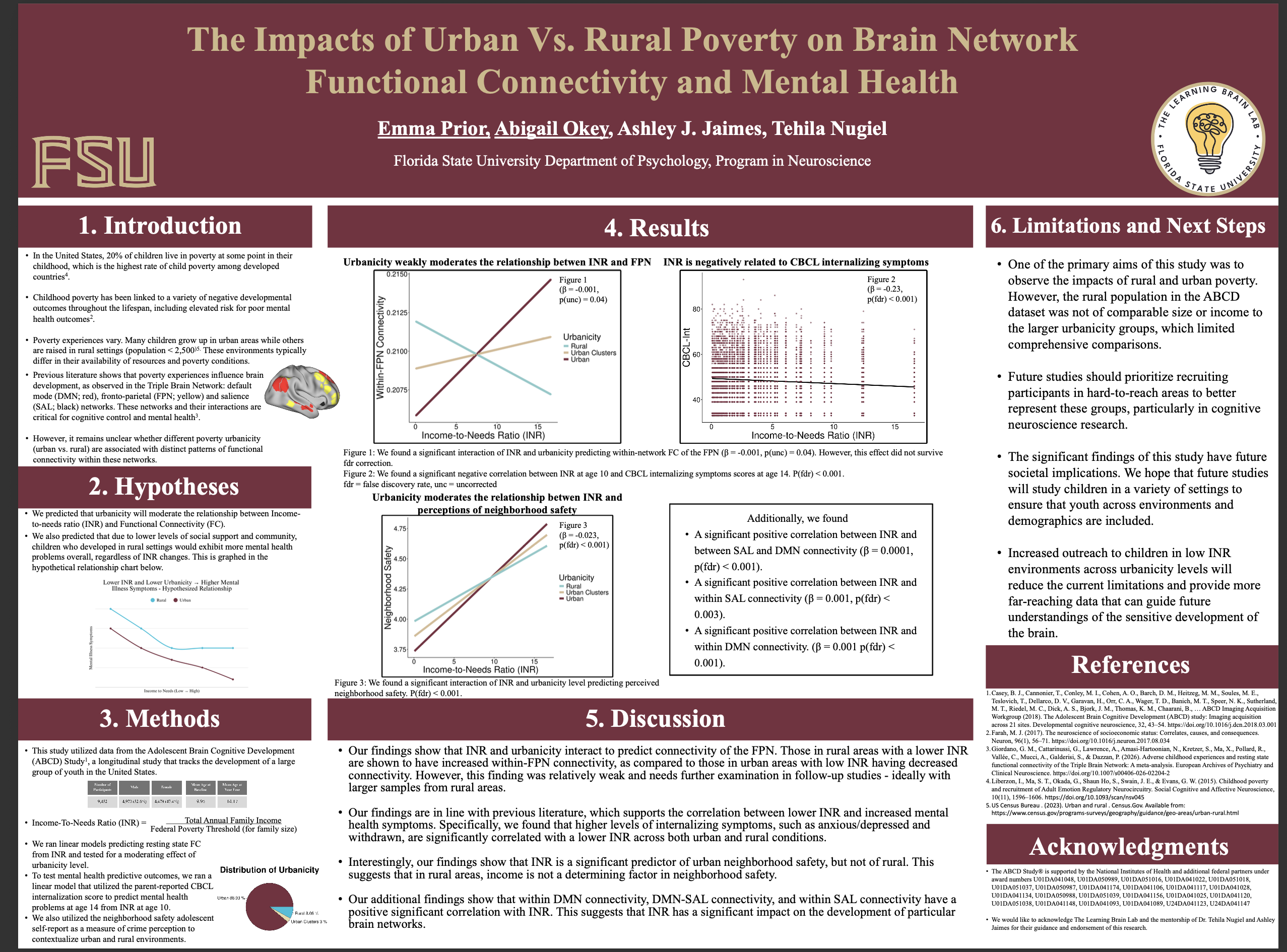
The Impacts of Urban Vs. Rural Poverty on Brain Network Functional Connectivity and Mental Health
Authors: Abigail Okey, Tehila NugielStudent Major: Cellular and Molecular Neuroscience, Human Development and Family Sciences
Mentor: Tehila Nugiel
Mentor's Department: Department of Psychology Mentor's College: College of Arts and Sciences Co-Presenters: Emma Prior, EKP23C@fsu.edu
Abstract
Studies show that 20-30% of children in the United States experience poverty conditions at some point in their lives. Childhood poverty has been linked to future mental health problems through its various impacts on brain development. However, poverty is not equal throughout the United States. A majority of children will grow up in urban poverty, while others will grow up in rural settings. In these two environments, there are a variety of experiences that lead to different developmental trajectories and outcomes. Using resting-state functional magnetic resonance imaging (fMRI) data collected from the Adolescent Brain Cognitive Development (ABCD) Study at baseline (ages 9-10) and child self-report surveys and parental reports at follow-up year 4 (ages 13-14), we aimed to determine how income to needs ratio (INR) in different urbanicity conditions relates to functional connectivity in brain networks associated with psychopathology. We also aimed to study whether INR is linked to future mental health problems, as seen through impaired connectivity in the aforementioned brain networks. Our research found a significant interaction between INR and urbanicity conditions predicting within default mode network (DMN) connectivity, such that the participants in more urban environments had a stronger relationship between INR and withinDMN connectivity. It was also found that children in lower INR demonstrated higher symptoms of internalized emotional distress, as reported in the Child Behavioral Checklist. Next steps include determining at what ages these functional connections begin to shift across urbanicity environments at different levels of INR, and whether these differences persist throughout the lifespan.
Keywords: Poverty, Childhood Development, Triple Brain Network
26th annual Undergraduate Research Symposium, April 1, 2026
santiago lastra Poster Session 3: 1:45 pm - 2:45 pm / Poster #142
BIO
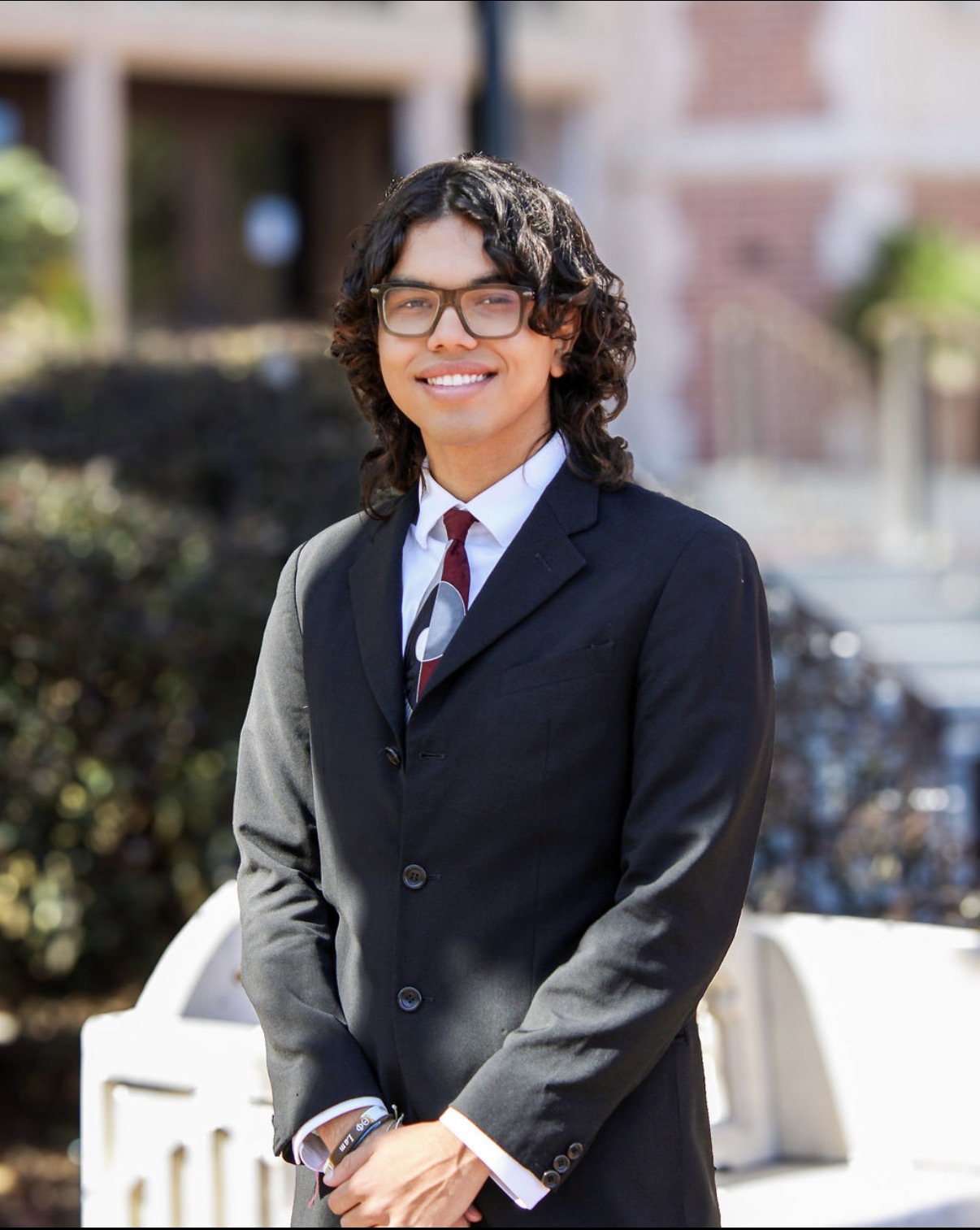
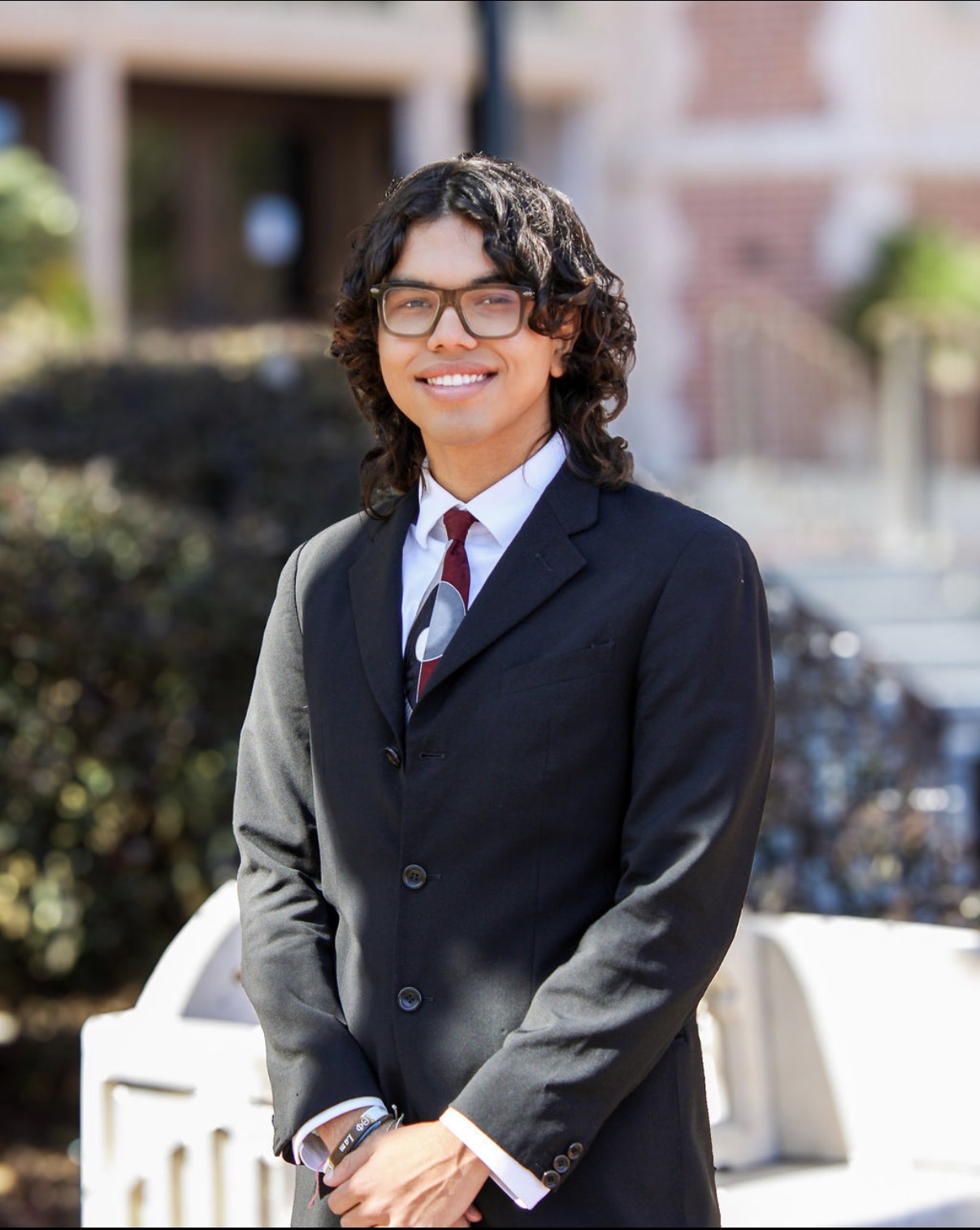
Santiago Lastra was born in Colombia and grew up in Miami, FL. He is currently studying at Florida State University, pursuing a BA in Philosophy with a Minor in Economics, and is aiming to be a Lawyer.
The Deference Dilemma: Disability Accommodations in Law Schools
Authors: santiago lastra, Chris BuschStudent Major: Philosophy
Mentor: Chris Busch
Mentor's Department: Student Affairs Mentor's College: College of Law Co-Presenters: Alyssa Leon, Silvia Rodriguez
Abstract
This project investigates the administrative and pedagogical structures of academic accommodations within American legal education, specifically examining the alignment between centralized university models and the professional demands of the legal industry. Employing an empirical methodology, the research utilizes a 16-question survey distributed to accommodations administrators at all ABA-accredited law schools to evaluate institutional decision-making authority, the prevalence of professional skill-building interventions, and administrator concern levels regarding current accommodation frameworks. Preliminary data from 73 institutions indicates a significant trend toward administrative centralization; almost half of surveyed law schools defer both eligibility and scope determinations to non-law university units. The survey results further document institutional concern regarding a potential “licensing cliff,” identified through the perceived disparity between classroom accommodations and the rigid standards of state bar examinations. Furthermore, the data evidences a notable absence of integrated executive functioning or resilience training across the sampled schools. Ultimately, this survey identifies systemic trends in the administration of academic accommodations at law schools, providing a quantitative baseline for analyzing the relationship between institutional structure and the perceived professional readiness of accommodated law students.
Keywords: Disability, Accommodations, Law School, Law, Disability Accommodations, Research,
26th annual Undergraduate Research Symposium, April 1, 2026
Srinidhi Venkitasamy Poster Session 3: 1:45 pm - 2:45 pm / Poster #125
BIO
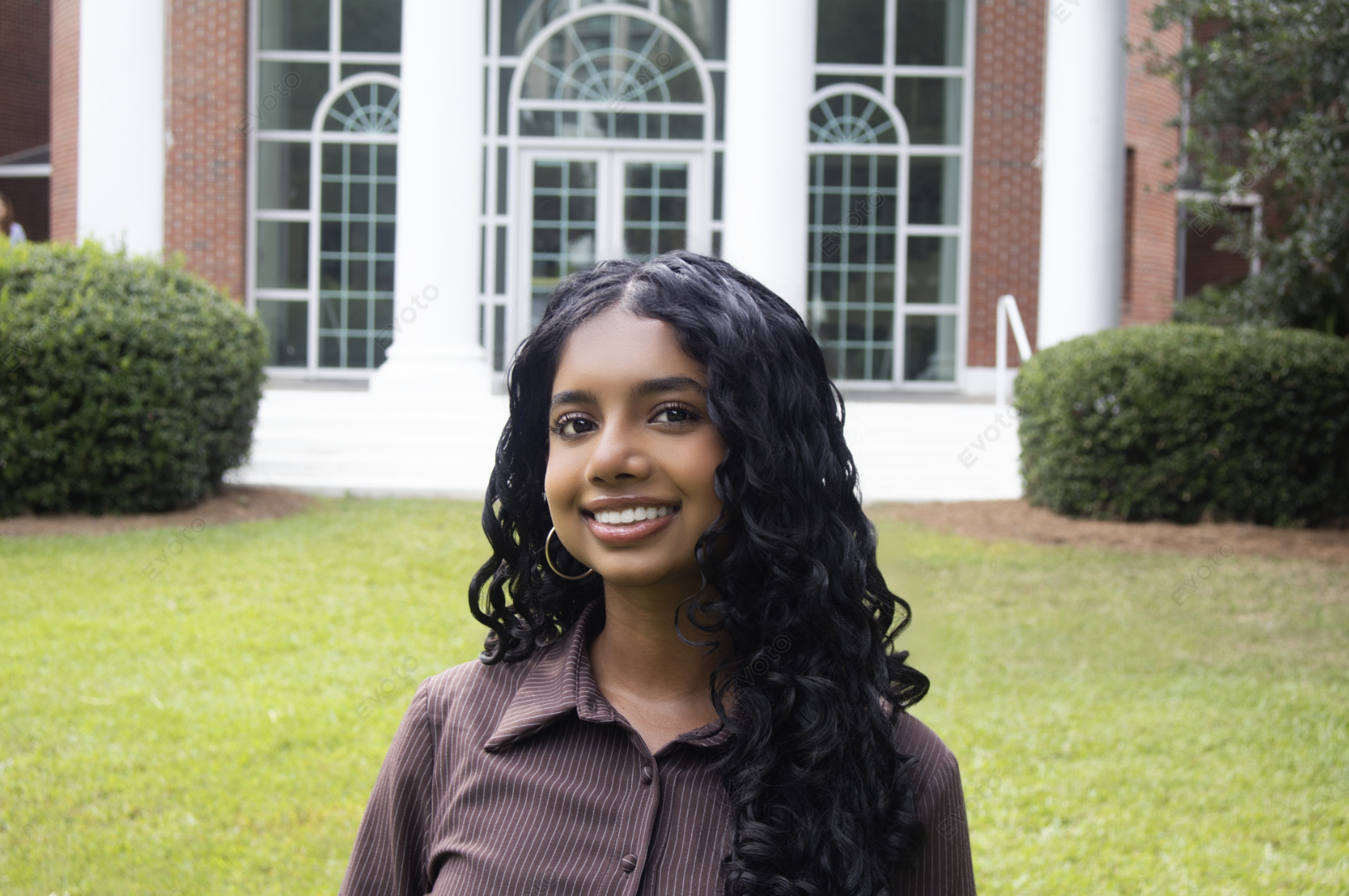
Srinidhi Venkitasamy is a first-year student at Florida State University pursuing dual degrees: a Bachelor of Science in Political Science with a minor in International Affairs, and a Bachelor of Arts in Human Rights and Social Justice with a minor in Criminal Justice and Criminology. She is on the pre-law track and plans to pursue a legal career focused on human trafficking and victim advocacy. Outside of UROP, Srinidhi writes for the Undergraduate Law Review at Florida State University, advocates through the youth lobbying program at Brady: United Against Gun Violence, and serves as the Founding Vice President of External Affairs for Bridge for Civic Leadership Council.
AI Memes and Political Bias
Authors: Srinidhi Venkitasamy, Minhyung JoStudent Major: Political Science; Human Rights and Social Justice
Mentor: Minhyung Jo
Mentor's Department: Communication and Information Mentor's College: College of Communication and Information Co-Presenters: Gavin Miles
Abstract
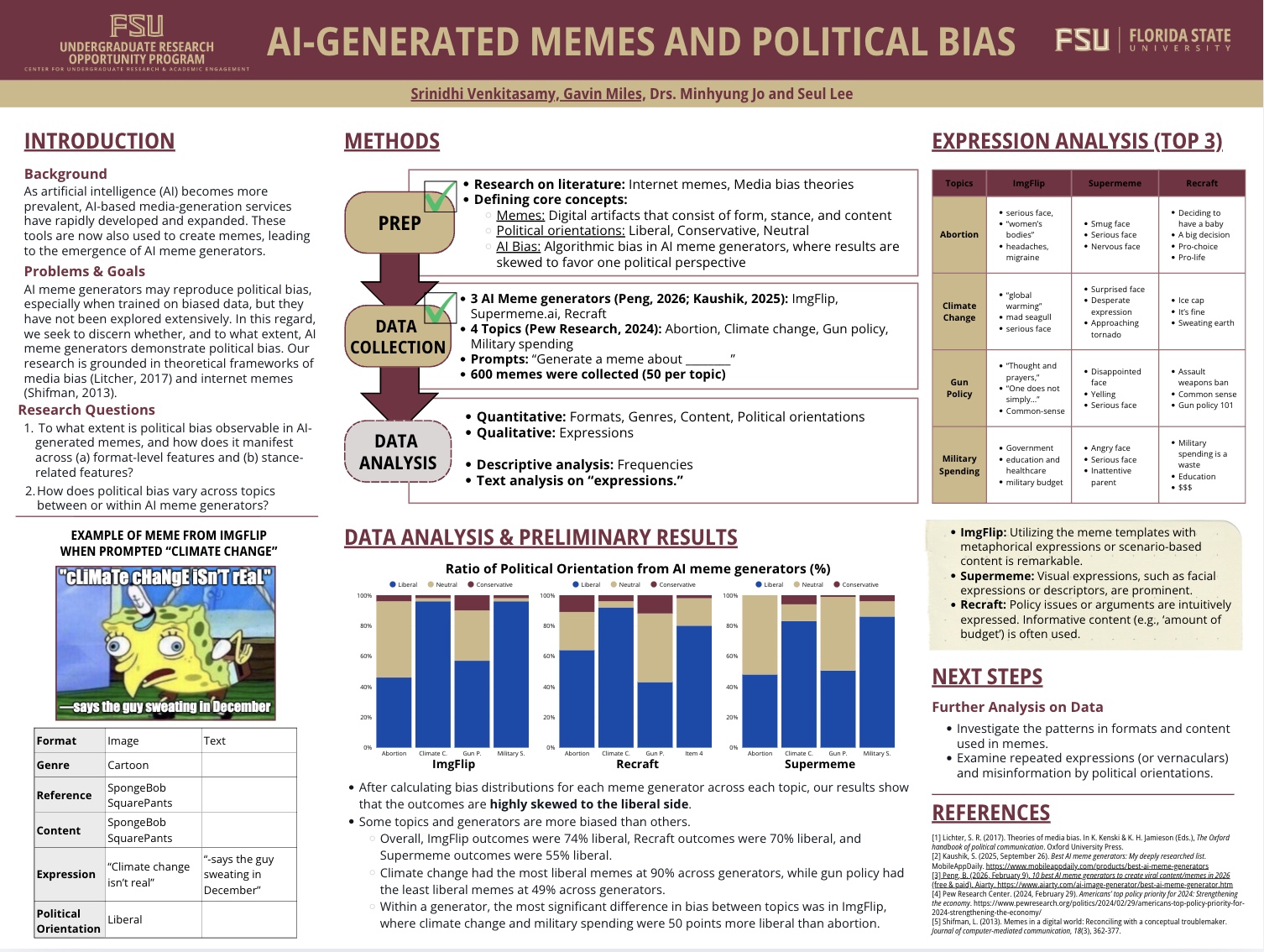
As artificial intelligence (AI) becomes increasingly prevalent, AI-based media generation tools have rapidly developed and expanded. Among these tools are AI meme generators, which allow users to automatically create memes. However, because these systems are trained on large datasets that may contain embedded ideological patterns, they may reproduce or amplify political bias. Despite their growing use, AI meme generators have not been extensively studied in this context. This study examines whether, and to what extent, AI meme generators demonstrate political bias. The research is grounded in theoretical frameworks of media bias (Stephen J. Lichter, 2017) and internet memes (Limor Shifman, 2013). Specifically, this project asks: To what extent is political bias observable in AI-generated memes, and how does it manifest across (a) format-level features and (b) stance-related features? Additionally, how does political bias vary across topics both between and within different AI meme generators?
Keywords: AI, Artificial Intelligence, Memes, Political Bias
26th annual Undergraduate Research Symposium, April 1, 2026
Cadin Newby Poster Session 3: 1:45 pm - 2:45 pm / Poster #223

BIO
I am a first-year student at FSU, coming from St. Petersburg. I am from a city that has been influenced by many different cultures from across the world and continues that tradition to this day. Being from St. Petersburg has made me very inclined to learn more about the wider world. My research interests have, as a result, been internationally focused, but I love learning about the arts, geography, history, and development. My future goals are to attain my master's in public administration from Florida State University and live abroad. I am, however, very flexible, like my research, and will be glad to see what opportunities await me anywhere in the future.
Community Art Therapy and Caribbean Adolescents
Authors: Cadin Newby, Karina DonaldStudent Major: International Affairs
Mentor: Karina Donald
Mentor's Department: Department of Art Education Mentor's College: College of Fine Arts Co-Presenters: Maureen Lorient
Abstract
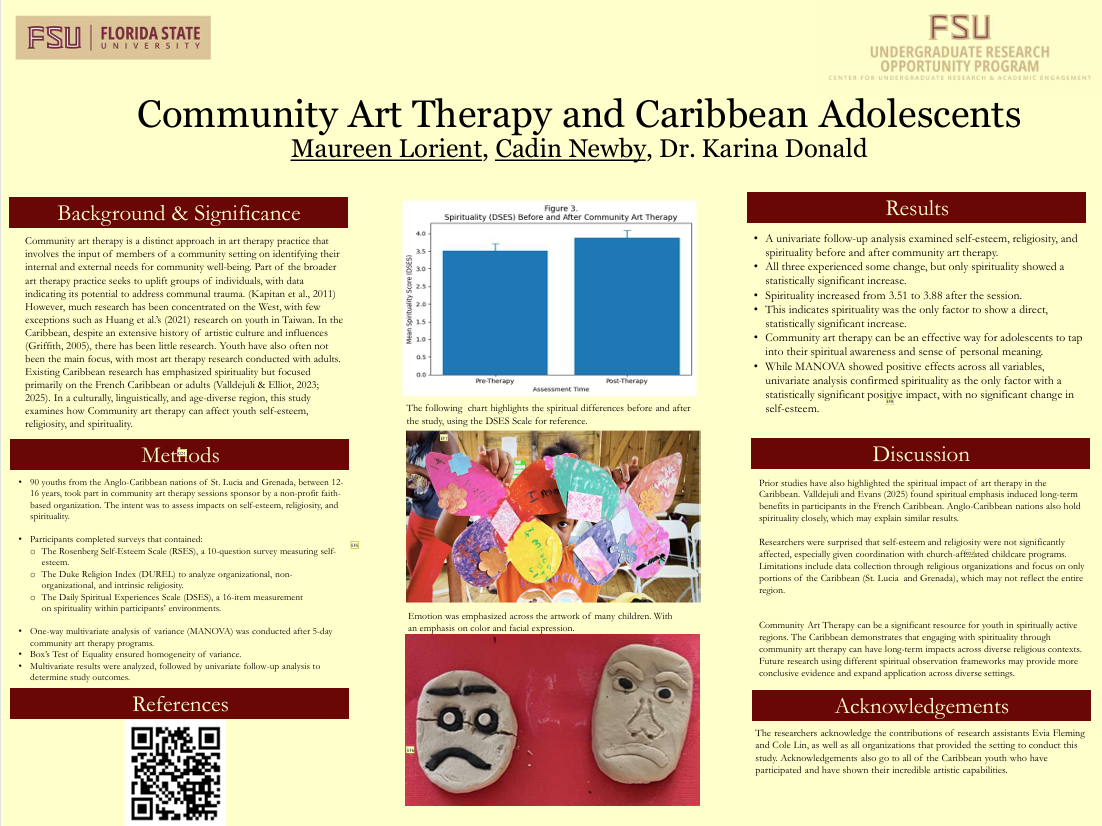
The following study is designed to determine whether community art therapy improves self-esteem among youth in the Caribbean. The Caribbean as a region has been historically underrepresented, and that also applies to research with art therapy in the region. With a large youth population and an artistic heritage, exploring this subject in the Caribbean is a key step toward understanding the impact of community art therapy on a global scale.
Prior to beginning the experiment, assumption testing was conducted using the Box test. Afterwards, multivariate testing was implemented, with participants from the Caribbean analyzed before and after the community art therapy experiment. From there, a univariate follow-up analysis was used to determine whether there was statistical significance between the dependent variable and individual growth in self-esteem, religiosity, and spirituality.
Based on the univariate follow-up analyses, there was no statistical significance for the self-esteem and religiosity dependent variables; however, there was a statistically significant correlation between community art therapy and increased spirituality among Caribbean youth. Statistical significance would therefore indicate that community art therapy can be a powerful tool for helping youth foster their personal spiritual growth. During times of hardship, spiritual growth through community art therapy can be an effective way to build resilience.
Keywords: Caribbean, youth, art, community
26th annual Undergraduate Research Symposium, April 1, 2026
Makenna Lee Poster Session 3: 1:45 pm - 2:45 pm / Poster #83
BIO
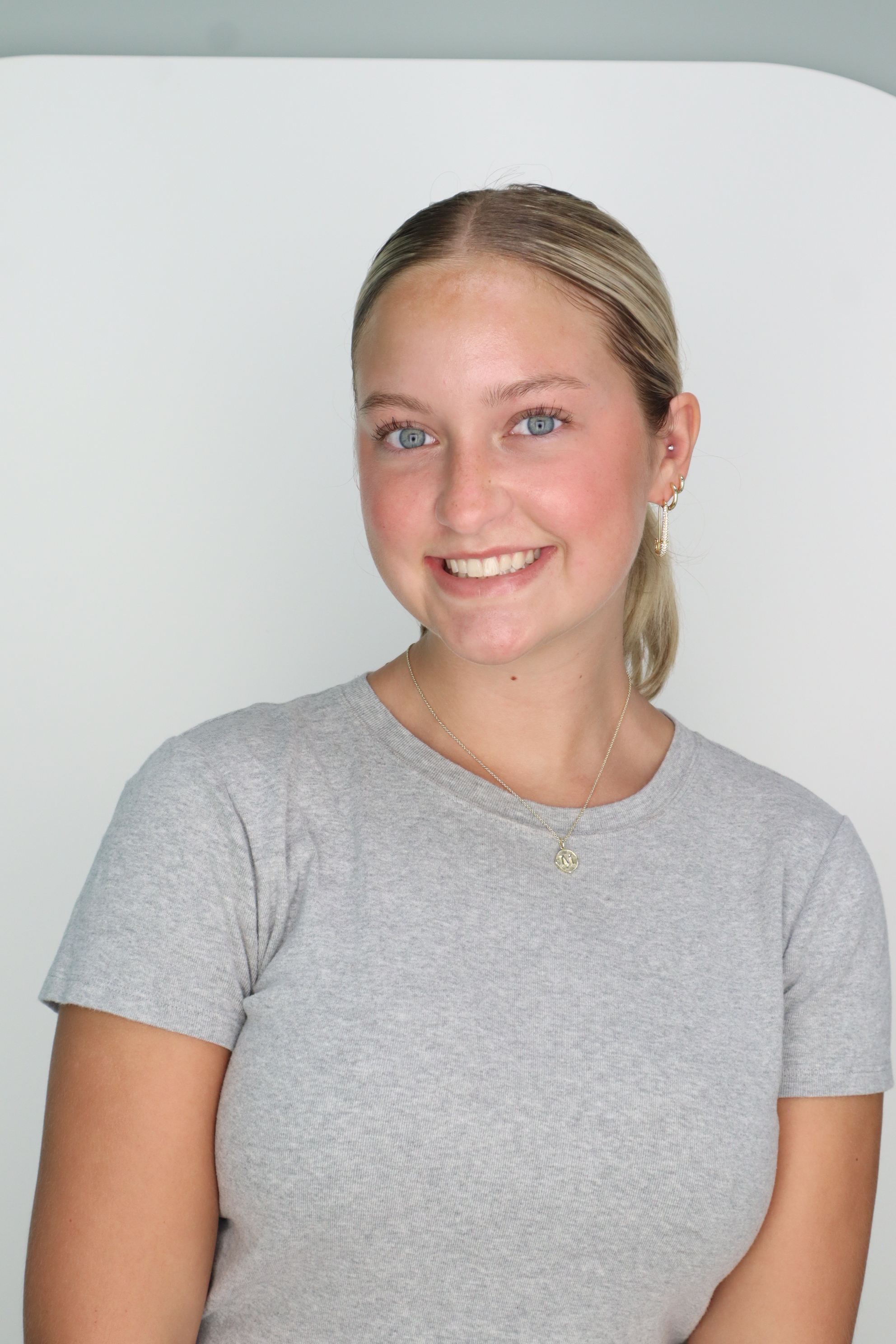
I am a freshman from Wisconsin studying international affairs with a concentration in public administration. My academic interests include political science, public policy, and international relations research. I hope to study abroad in the future to gain global experience and prepare for a career as a foreign service officer.
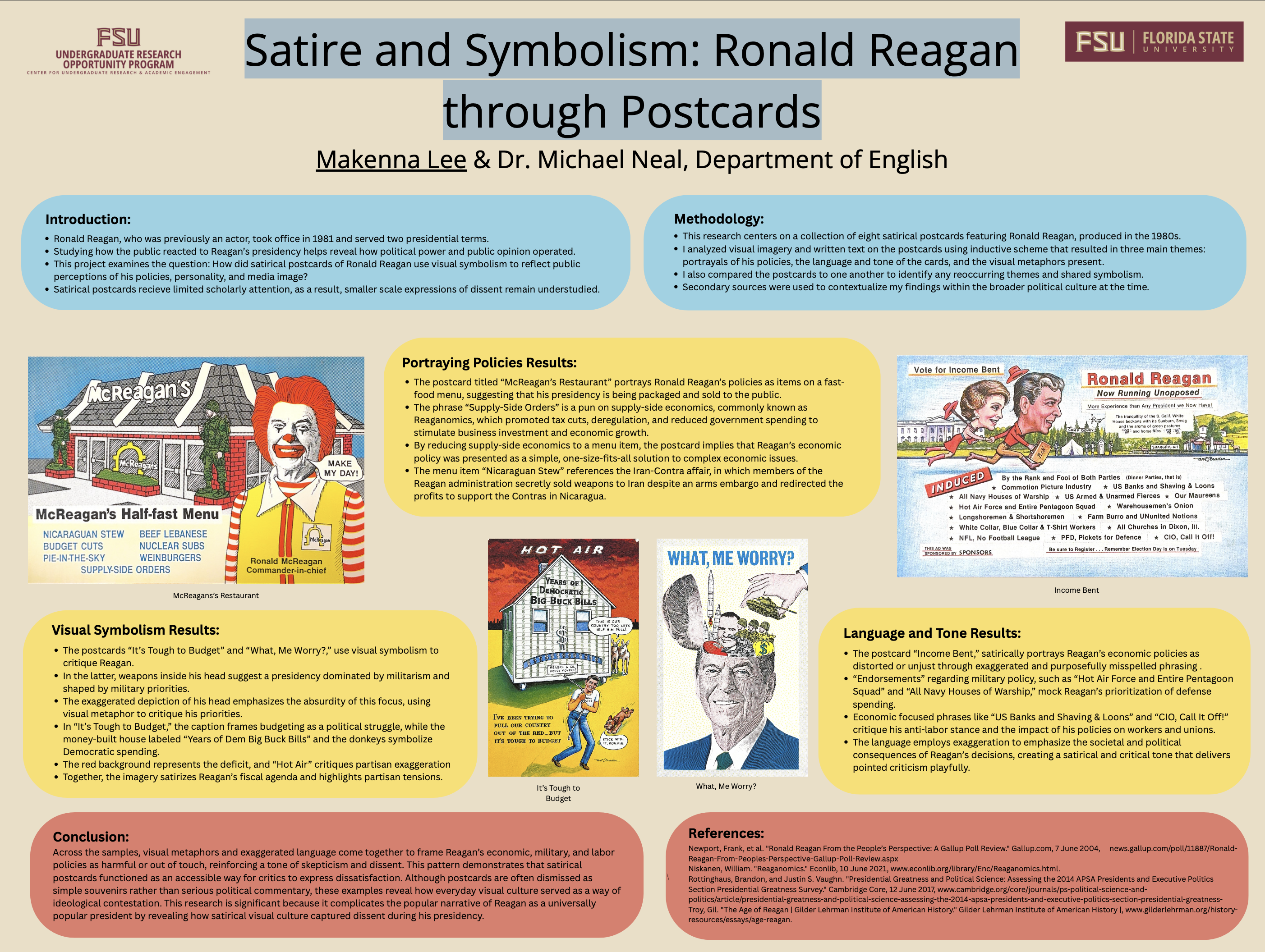
Satire and Symbolism: Ronald Reagan through Postcards
Authors: Makenna Lee, Michael NealStudent Major: International Affairs
Mentor: Michael Neal
Mentor's Department: English Mentor's College: Arts and Sciences Co-Presenters:
Abstract
This project examines the question: How did satirical postcards of Ronald Reagan use visual symbolism to shape public perceptions of his policies, personality, and media image? This question seeks to explore how the public may have perceived Reagan and his policies during his presidency, and by focusing on satire, the analysis highlights the polarization that was present. After searching for political postcards more generally, many were found depicting Ronald Reagan in a humorous way. Once this direction was established, observational analysis was used to examine three main elements: portrayals of his policies, the language and tone of the cards, and the visual metaphors present. The findings indicate that these postcards overwhelmingly depict Reagan in a negative and critical light, using satire to question his policies, leadership, and media image. Across the samples, visual metaphors and exaggerated language come together to frame his economic, military, and labor policies as harmful or out of touch, reinforcing a tone of skepticism and dissent. This pattern demonstrates that satirical postcards functioned as an accessible way for critics to express dissatisfaction. This research is significant because it complicates the popular narrative of Reagan as a universally popular president by revealing how satirical visual culture captured dissent during his presidency.
Keywords: Politics, Symbolism, Postcards
26th annual Undergraduate Research Symposium, April 1, 2026
Abigail Pfeiffer Poster Session 2: 10:45 am - 11:45 am / Poster #102
BIO
Abigail is a first-year pre-law student at Florida State University majoring in Environmental Science and Policy. Her research was conducted under the mentorship of Florida State University College of Law Professor Mason Marks, J.D. She is a member of the Phi Alpha Delta Pre-Law Fraternity, the Gamma chapter of Chi Omega sorority, the FSU International Program, and Best Buddies. Abigail plans to pursue a career as an attorney focusing on environmental and international litigation cases where she can reform policies that threaten ecological sustainability, generate solutions to minimize greenhouse gas emissions, and draft international compliance agreements that enhance global governance and environmental accountability.
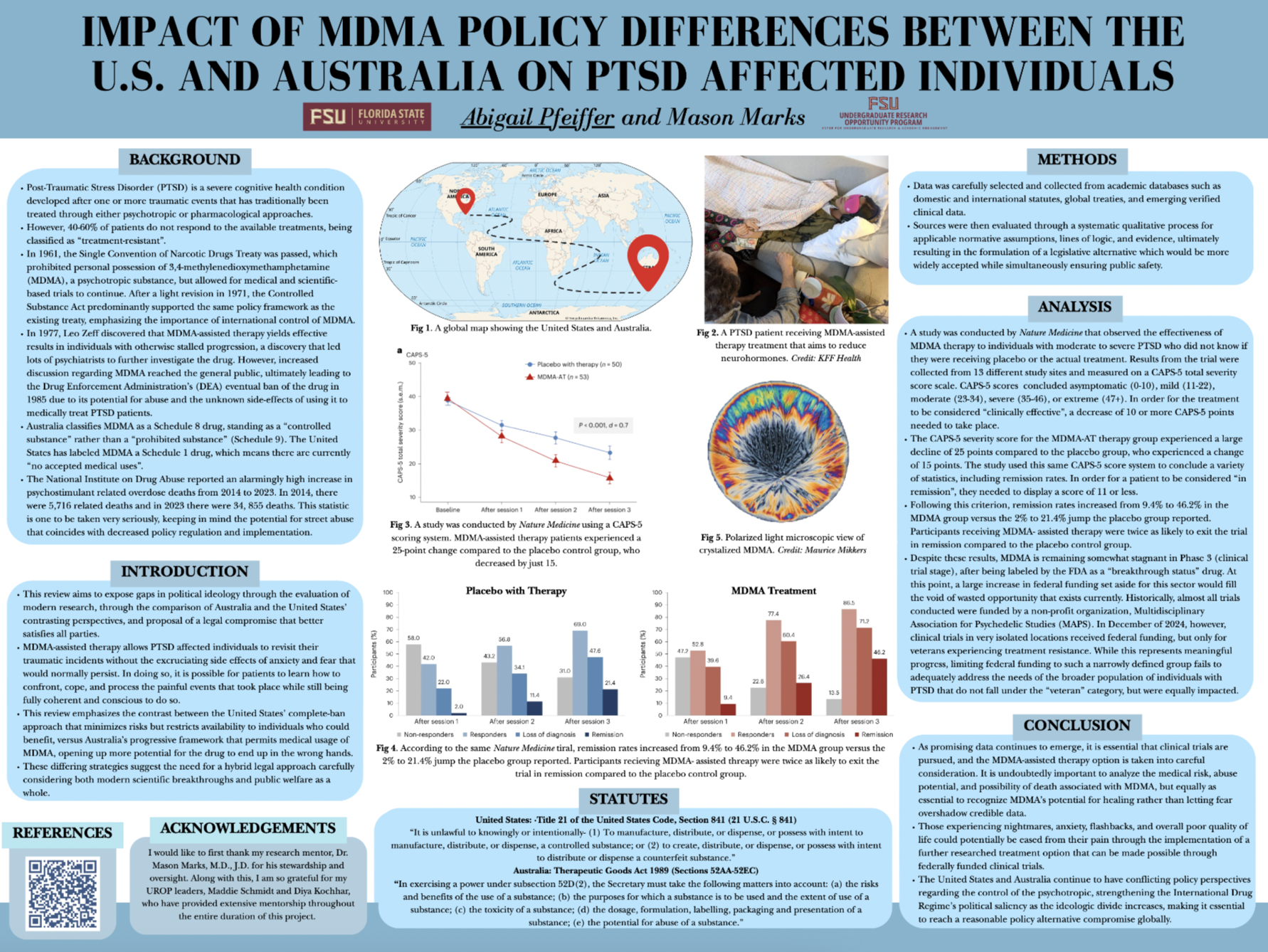
Impact of MDMA Policy Differences Between the U.S. and Australia on PTSD Affected Individuals
Authors: Abigail Pfeiffer, Mason MarksStudent Major: Environmental Science and Policy
Mentor: Mason Marks
Mentor's Department: Florida Bar Health Law Section Mentor's College: Florida State University College of Law Co-Presenters:
Abstract
Post-Traumatic Stress Disorder (PTSD) is a severe cognitive condition with individuals often exhibiting subconscious resistance to existing treatments. In 1977, Leo Zeff began using 3,4-methylenedioxymethamphetamine (MDMA) to treat individuals in this predicament, but the drug was later banned by the Drug Enforcement Administration (DEA) due to addiction concerns. New findings from clinical trials prompted Australia to campaign for a more lenient MDMA policy framework. This review aims to expose gaps in political ideology through the evaluation of modern research, comparison of Australia and the United States’ contrasting perspectives, and proposal of a legal compromise that better satisfies all parties.
Data were collected from academic databases such as statutes, global treaties, and clinical studies, then evaluated through a qualitative process. Sources were evaluated for their normative assumptions, lines of logic, and evidence, ultimately resulting in the formulation of a legislative alternative which would be more widely accepted while ensuring public safety.
Analysis reveals the difference between the US and Australia's approach to MDMA usage in regard to PTSD treatment. Studies have shown that 40-60% of patients do not respond to pre-existing PTSD treatment options; however, MDMA-assisted therapy trials have concluded increased remission rates from 9.4% to 46.2%. This review emphasizes the contrast between the United States’ complete-ban approach that minimizes risks but restricts availability to individuals who could benefit, versus Australia’s progressive framework that permits medical usage of MDMA. These differing strategies suggest the need for a hybrid legal approach considering both modern breakthroughs and public welfare.
Keywords: law, drug, international
26th annual Undergraduate Research Symposium, April 1, 2026
Madelyn Vido Poster Session 4: 3:00 pm - 4:00 pm / Poster #26
BIO
Madelyn Vido is a first-year student at Florida State University pursuing a Bachelor of Science in Finance, with plans to explore risk management and insurance as well as actuarial science. Her research focuses on health and dental insurance purchasing behavior on the Affordable Care Act (ACA) marketplace during and after major catastrophic events. Through this work, she examines how disasters influence coverage decisions and access to insurance.
Madelyn’s involvement in the Undergraduate Research Opportunity Program (UROP) sparked her interest in the insurance field and deepened her curiosity about how risk is measured and managed. This experience has strengthened her interest in learning more about the field and ultimately in pursuing a career in actuarial science.
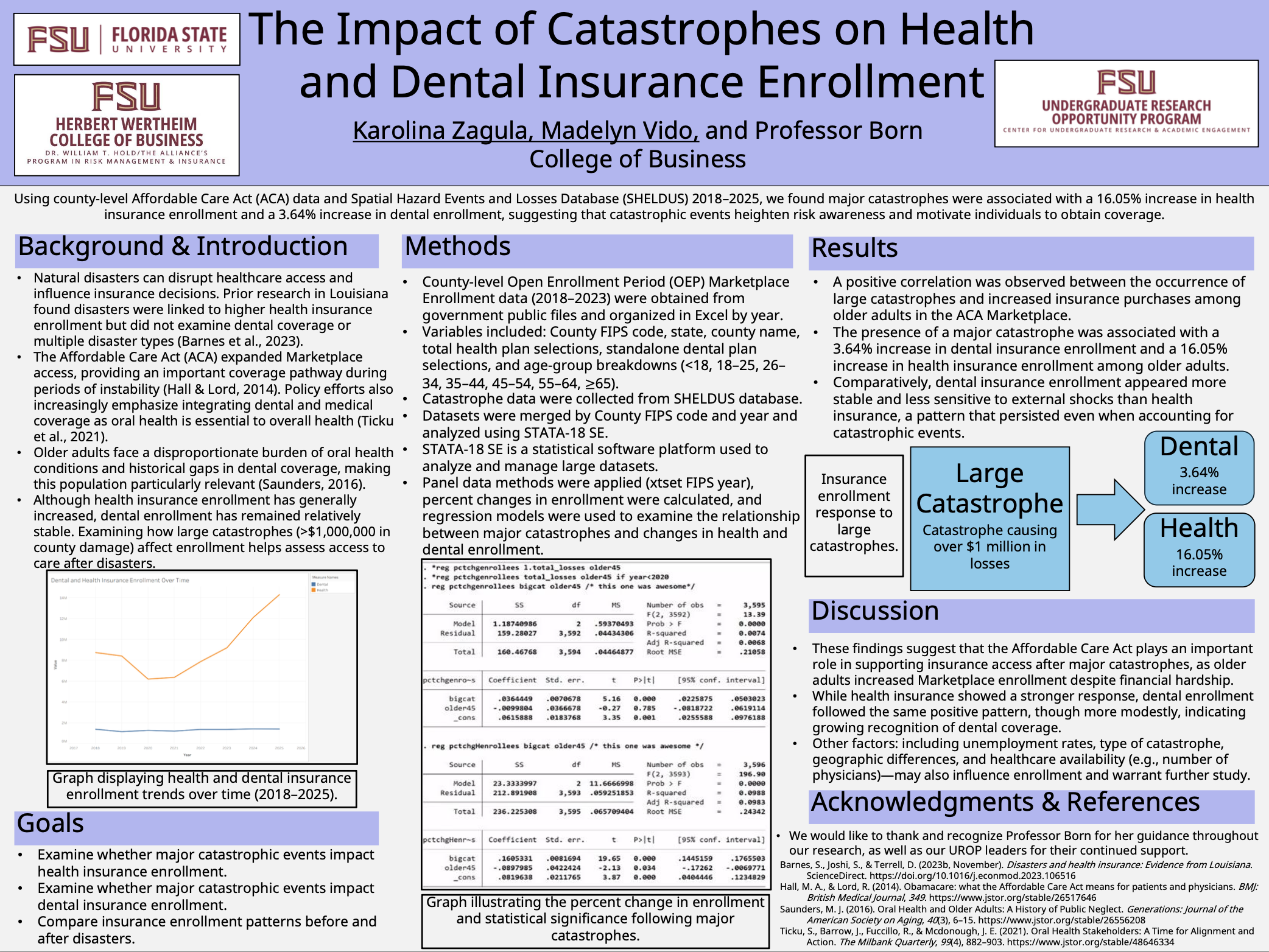
The Impact of Catastrophes on Health and Dental Insurance Enrollment
Authors: Madelyn Vido, Dr. Patricia BornStudent Major: Finance
Mentor: Dr. Patricia Born
Mentor's Department: Dr. William T. Hold/The Alliance's Program in Risk Management & Insurance Mentor's College: Herbert Wertheim College of Business Co-Presenters: Karolina Zagula
Abstract
Natural disasters and major catastrophes can cause significant physical, emotional, and financial strain on individuals and communities. These events often disrupt access to healthcare while increasing medical needs, making health and dental insurance an important form of protection. Despite this, limited research has examined how catastrophic events influence individuals’ decisions to obtain insurance coverage. This research examines the impact of major catastrophes on health and dental insurance enrollment in the United States, focusing on how large-scale disasters shape decisions to seek coverage. Enrollment and demographic data were obtained directly from the Affordable Care Act (ACA) Marketplace and therefore reflect only states participating in this database. Catastrophe data including disaster type, economic loss, total injuries, and fatalities from 2018 to 2025 were obtained from the Spatial Hazard Events and Losses Database (SHELDUS). The data were organized in Excel and analyzed using STATA-18 SE, where datasets were coded, merged, and statistically examined to compare enrollment patterns before and after major disaster events. The analysis revealed that health insurance enrollment increased by approximately 16.05%, while dental insurance enrollment increased by about 3.64% following major catastrophes. These increases suggest that individuals may become more aware of health and financial vulnerabilities after disasters and are more likely to seek insurance coverage as a form of protection. Overall, these findings indicate that catastrophic events shape public perceptions of risk and preparedness, influencing long-term healthcare decisions. This research highlights the importance of policies and outreach efforts that improve access to coverage in disaster-affected communities.
Keywords: insurance, health, dental, catastrophes
26th annual Undergraduate Research Symposium, April 1, 2026
Isabella Moraes Poster Session 2: 10:45 am - 11:45 am / Poster #312
BIO
Isabella Moraes is a freshman at Florida State University pursuing a Bachelor of Science in Biology on a pre-veterinary track. Originally from Brazil, she brings a global perspective to her academic and research experiences. Isabella is involved in research examining how cognitive and language skills affect pronunciation in native English speakers learning Spanish, working closely with Dr. Matthew Patience to explore the connections between cognitive processes and language development. In addition to her research, Isabella has gained hands-on experience through volunteer work with animal rehabilitation and conservation projects, strengthening her interest in veterinary medicine and animal welfare. She is developing skills in scientific analysis, experimental design, and data management that will support her future research and professional goals. Looking ahead, Isabella plans to attend veterinary school and specialize in large animal and exotic medicine. She hopes to contribute to wildlife conservation and animal care through both clinical practice and research. Her combination of academic study, hands-on experience, and research involvement reflects her dedication to advancing knowledge in biology and improving animal welfare.
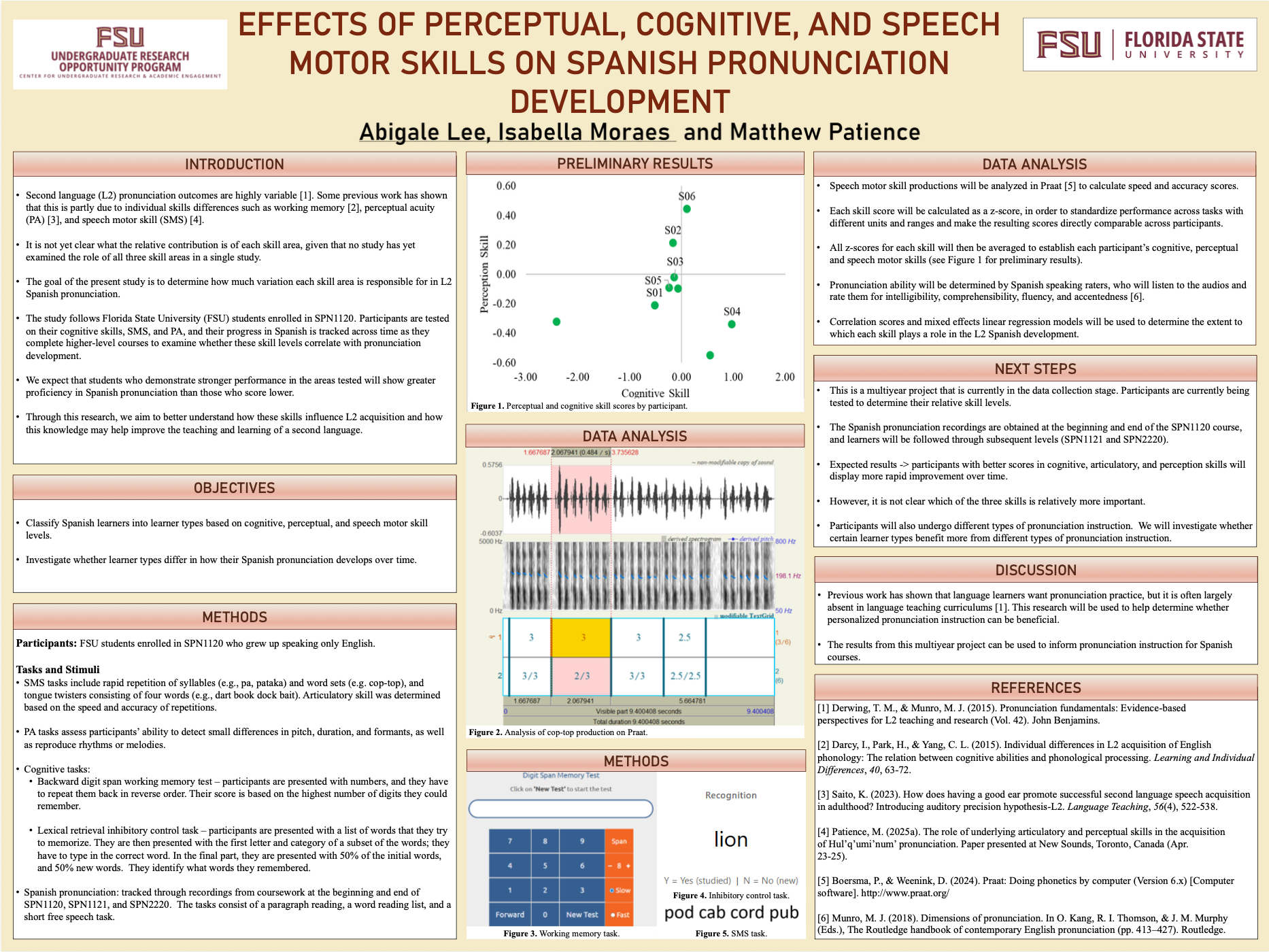
Effects of Perceptual, Cognitive, and Speech Motor Skills on Spanish Pronunciation Development
Authors: Isabella Moraes, Matthew PatienceStudent Major: Biology
Mentor: Matthew Patience
Mentor's Department: Department of Modern Languages and Linguistics Mentor's College: College of Arts and Sciences Co-Presenters: Abigale Lee
Abstract
The acquisition of pronunciation is highly variable for learners of a second language (L2). In this ongoing study, our goal is to understand how individual skill differences contribute to the pronunciation development of native English-L2 Spanish speakers. This study builds on previous research showing that cognitive skills such as working memory and inhibitory control (Simard et al., 2025; Darcy et al., 2025), as well as auditory acuity (AA) (Saito, 2022) and speech motor skill (SMS) (Patience, 2025), play a role in L2 acquisition. Participants were Florida State University students enrolled in SPN1120. They performed a series of tasks to establish their skill levels: a backward digit memory span task and a lexical retrieval inhibitory control task (cognitive); DDK-type tasks (e.g., Icht & Ben David, 2014) and tongue twisters (SMS); and various speech perception tasks to test sensitivity to small differences in pitch, duration, or formants, as well as tasks encoding rhythm and melody (from Saito, 2022). Participants’ Spanish pronunciation ability was obtained from students’ coursework across three semesters of Spanish. We will run statistical analyses to determine which skills were the best predictors of Spanish pronunciation ability and development over time. We expect that students who demonstrate stronger performance in the areas tested will show greater proficiency in Spanish pronunciation than those who score lower. Through this research, we aim to better understand how these skills influence L2 acquisition and how this knowledge may help improve the teaching and learning of a second language.
Keywords: Linguistics, Spanish, Second language acquisition, Cognitive skills, Speech motor skills
26th annual Undergraduate Research Symposium, April 1, 2026
Evelyn Shvartsman Poster Session 4: 3:00 pm - 4:00 pm / Poster #168
BIO
As an first-year, first-generation sophomore, Evelyn is from Naples, Florida and is pursuing a Bachelor in Science in Political Science with dual minors in Criminology & Criminal Justice and Psychology. In her first year, she became involved in research, leadership, and advocacy across campus. Apart from conducting research under Dr. Alexandra Cockerham, Evelyn also currently serves as an the Founder and President of the Speech & Oratory Development Association at FSU, an organization she established to help students build confidence, develop public speaking skills, and find their voice is advocacy. She is also a member of FSU's Justice-Impacted Student Organization, where she works with directly and indirectly impacted students to expand access to resources and support within the university community. Through her involvement as an Article Editor for the Undergraduate Law Review, where she reviews legal writing for clarity, structure, and adherence to citation standards, as well as other campus organizations such as the Women in Pre-Law Society and Lambda Alpha Epsilon, Evelyn has cultivated her passion for legal advocacy, restorative justice, and creating pathways for equitable opportunity within the justice system. She is committed to empowering others to advocate for themselves and pursue a tangible, meaningful change. She plans to go to law school after completing her undergraduate studies at FSU.
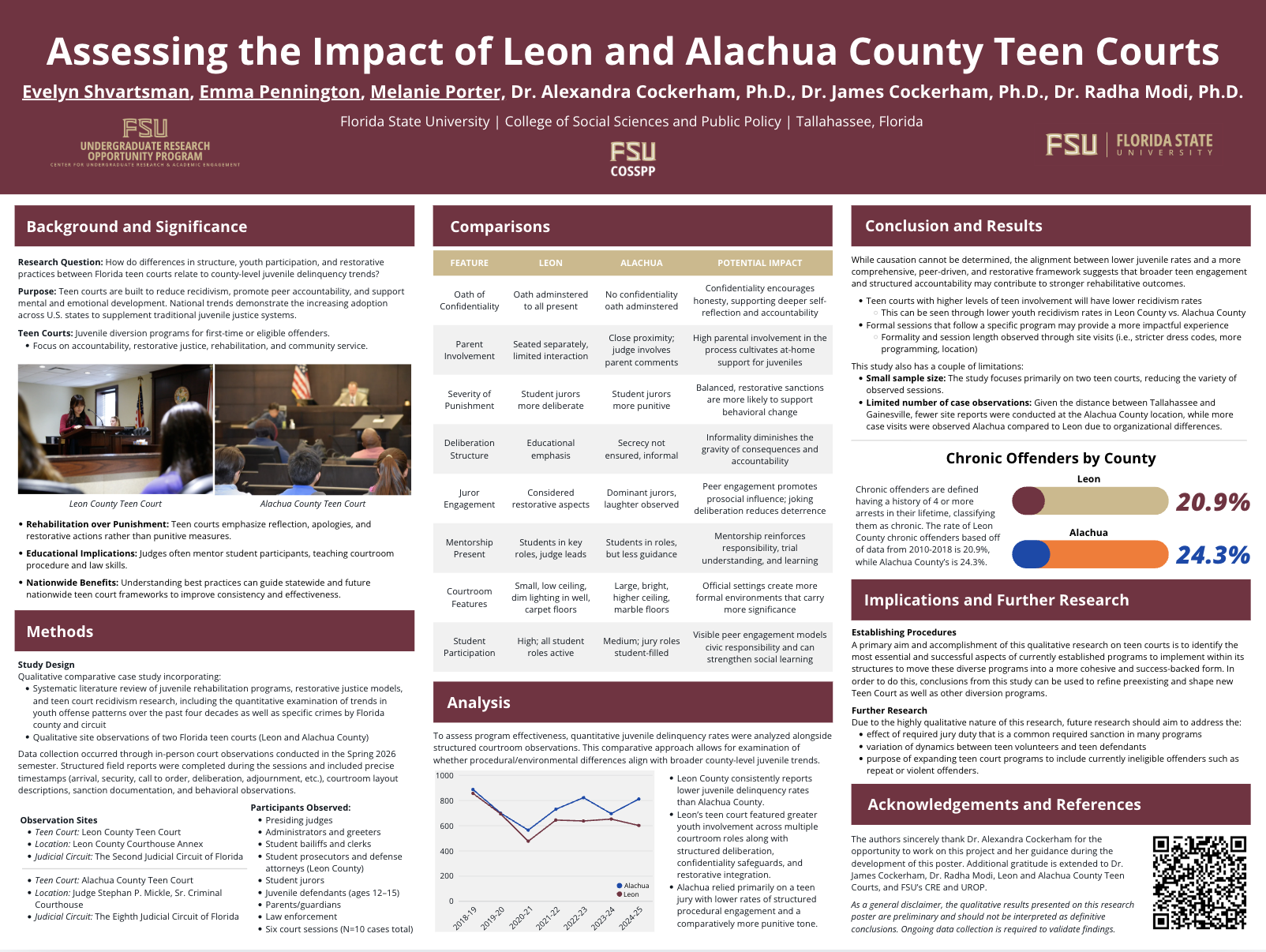
Assessing the Impact of Leon and Alachua County Teen Courts
Authors: Evelyn Shvartsman, Dr. Alexandra CockerhamStudent Major: Political Science
Mentor: Dr. Alexandra Cockerham
Mentor's Department: Interdisciplinary Social Sciences and Public Policy Mentor's College: College of Social Sciences and Public Policy Co-Presenters: Emma Pennington, Melanie Porter
Abstract
Teen courts are diversion programs that are an increasingly utilized approach that emphasize mental and emotional development within the juvenile justice system, aiming to reduce recidivism and promote accountability and community service. While these programs aim to provide an effective and supportive way to get juveniles back on the right footing, in comparison to other traditional justice programs, they have limited evidence for what works in the status quo. This study examines Leon and Alachua counties’ teen courts to determine which practices are most effective. Through a qualitative research design, this project expands upon the initial literature review with site visits to both counties’ teen courts to observe court structure, accommodations, physical properties, procedures, youth participation, and restorative practices, highlighting procedural and environmental differences to determine which methods are most effective. The anticipated outcome is the development of a preliminary framework to be used to create a future teen court operations manual, proving relevant to assisting the juvenile community in increasing rehabilitation and improving program effectiveness and consistency across state and federal lines. Future steps include expanding observations to additional counties throughout Florida to broaden the range of observation and data, enhance the accuracy of findings through multiple site visits at each location, and develop a better understanding of the best practices statewide to be used as an introductory demonstration for the nation.
Keywords: teen court, juvenile justice, law, political science, criminology
26th annual Undergraduate Research Symposium, April 1, 2026
Olugbeminiyi Odewole Poster Session 2: 10:45 am - 11:45 am / Poster #174
BIO
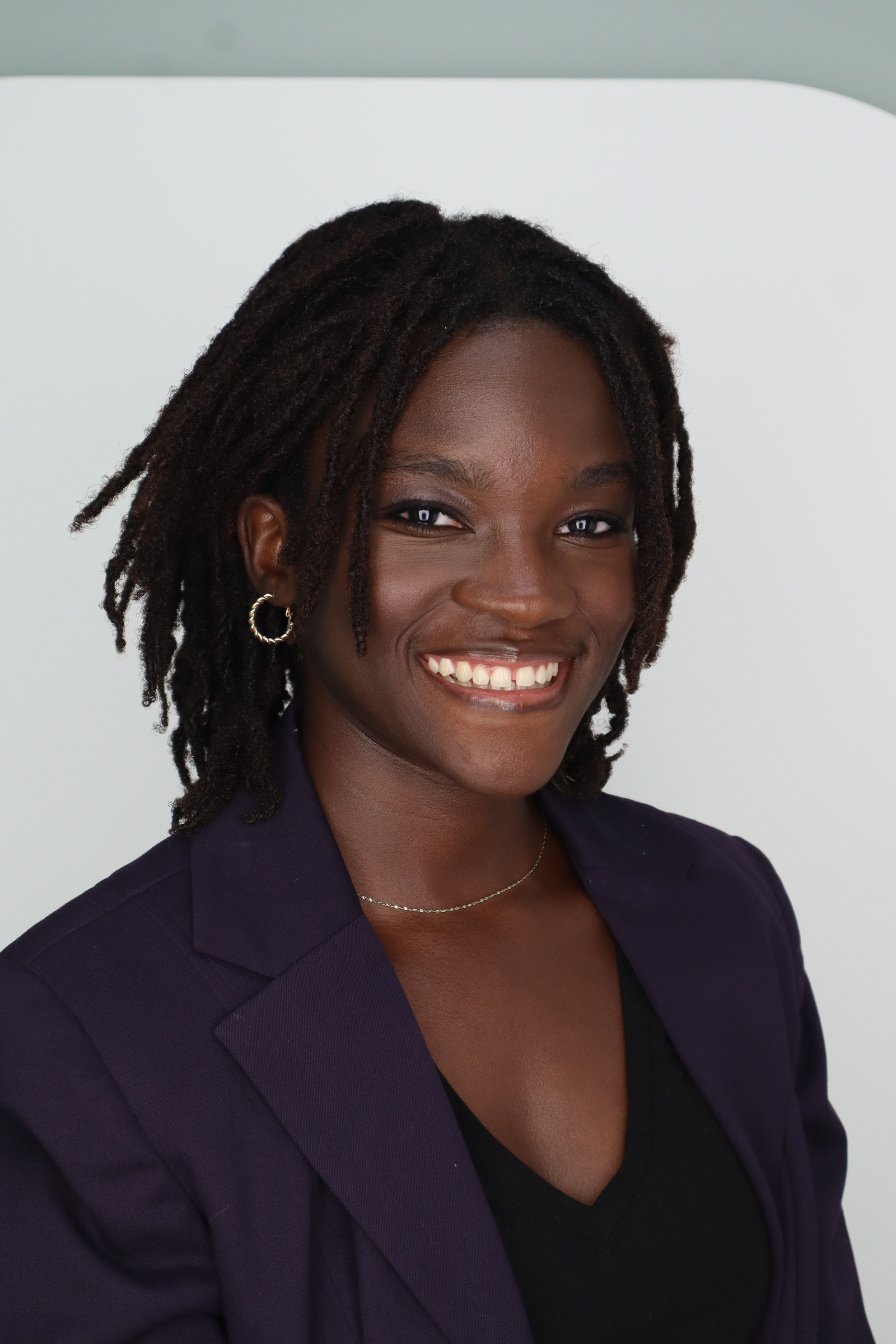
Olugbeminiyi Odewole is a second-year student pursuing a Bachelor of Science in chemistry. She is currently conducting research at the National High Magnetic Field Laboratory with Dr. Tomas Orlando and hopes to continue researching various topics in chemistry throughout her time as an undergraduate.
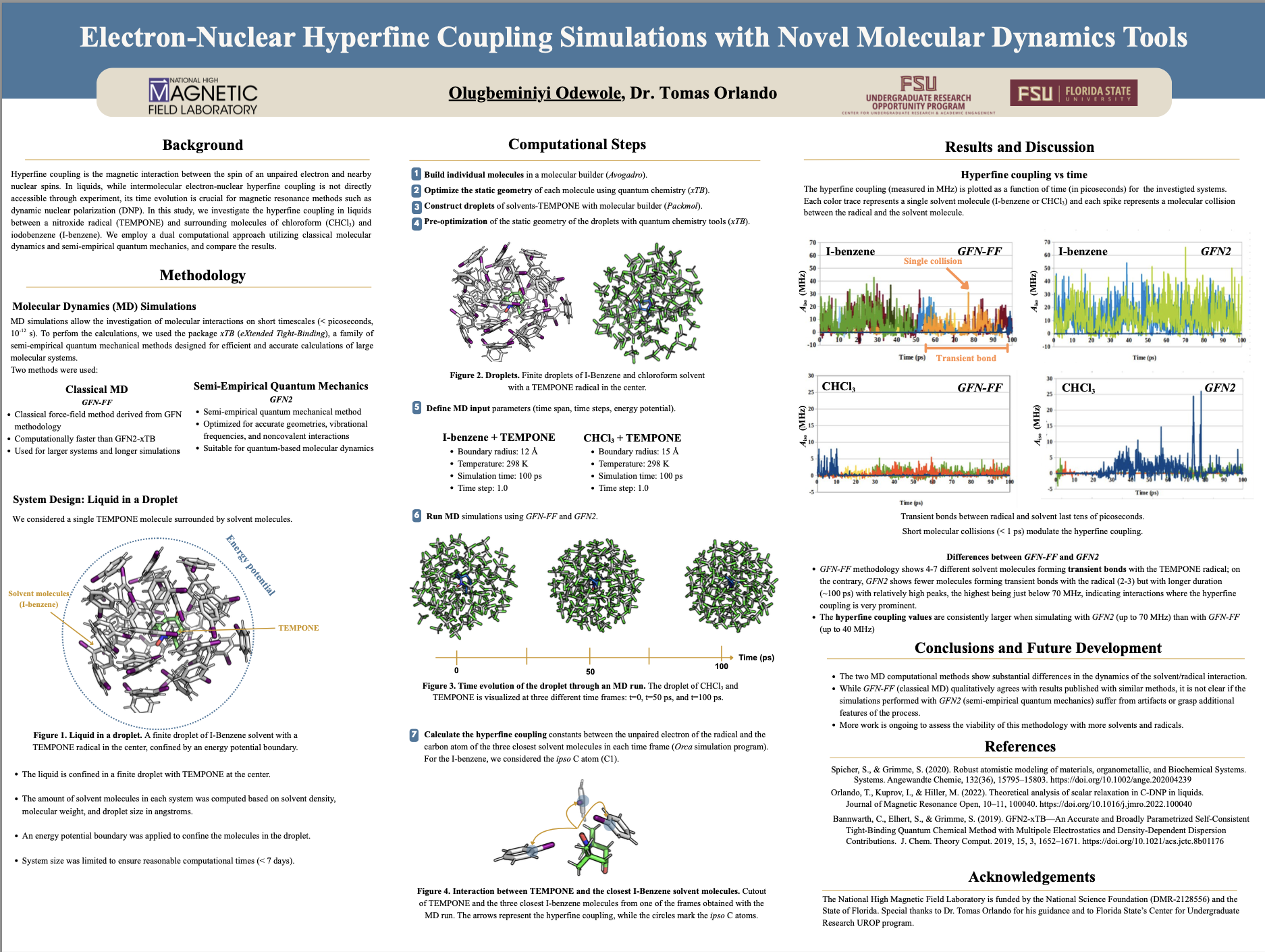
Electron-Nuclear Hyperfine Coupling Simulations with Novel Molecular Dynamics Tools
Authors: Olugbeminiyi Odewole, Tomas OrlandoStudent Major: Chemistry
Mentor: Tomas Orlando
Mentor's Department: National High Magnetic Field Laboratory Mentor's College: National High Magnetic Field Laboratory Co-Presenters:
Abstract
Interactions between organic radicals and small molecules in liquid states are essential in many catalytic and biological processes. However, these interactions are complicated to measure experimentally, especially when the timescale of these interactions is on the order of picoseconds (10^-2 s) or lower. This knowledge gap stresses the importance of developing reliable simulation tools to assess organic radical and small molecules’ interactions in the liquid state.This project utilizes the computational tools xTB (Extended Tight-Binding), Packmol, and PyMol to perform quantum molecular dynamics simulations of radical–solvent systems. Focus was placed on a TEMPONE radical in solvents such as chloroform and carbon tetrachloride, Benzene-F, Benzene-Cl, Benzene-Br, and Benzene-I. The simulations were used to analyze the distances between the nuclei of the three nearest solvent molecules and the radical’s carbon atom, as well as estimate the magnitude of hyperfine coupling interactions. These results are compared with previously reported data obtained using classical molecular dynamics methodologies. By maintaining comparable simulation parameters, including temperature, time, and system size, this study aims to assess the reliability and viability of this computational approach for future investigations of radical–solvent interactions.
Keywords: Chemistry, Physics, Computational tools