
UROP Project
Exploring Molecular Qubits via High Field Electron Paramagnetic Resonance Spectroscopy
Molecular Qubits, MOF Qubits, EPR

Research Mentor: Kavipriya Thangavel, Kavi
Department, College, Affiliation: National High Magnetic Field Laboratory, N/A
Contact Email: kt24@fsu.edu
Research Assistant Supervisor (if different from mentor):
Research Assistant Supervisor Email:
Faculty Collaborators:
Faculty Collaborators Email:
Department, College, Affiliation: National High Magnetic Field Laboratory, N/A
Contact Email: kt24@fsu.edu
Research Assistant Supervisor (if different from mentor):
Research Assistant Supervisor Email:
Faculty Collaborators:
Faculty Collaborators Email:
Looking for Research Assistants: Yes
Number of Research Assistants: 2
Relevant Majors: Physics, Chemistry, engineering, material science
Project Location: National MagLab
Research Assistant Transportation Required: Yes Remote or In-person: Partially Remote
Approximate Weekly Hours: 5-10, Flexible schedule (Combination of business and outside of business. TBD between student and research mentor.)
Roundtable Times and Zoom Link:
Not participating in the roundtable
Number of Research Assistants: 2
Relevant Majors: Physics, Chemistry, engineering, material science
Project Location: National MagLab
Research Assistant Transportation Required: Yes Remote or In-person: Partially Remote
Approximate Weekly Hours: 5-10, Flexible schedule (Combination of business and outside of business. TBD between student and research mentor.)
Roundtable Times and Zoom Link:
Not participating in the roundtable
Project Description
Electron Paramagnetic Resonance (EPR) spectroscopy is a powerful method for studying materials with unpaired electrons, including qubit materials. A qubit (short for “quantum bit”) is the basic unit of quantum information and the building block of quantum computers. Unlike a regular computer bit, which can only be 0 or 1, a qubit can exist in a mixture of both states at the same time, thanks to quantum mechanics.The lifetime of a qubit tells us how long it can remain in this fragile quantum state before losing information. EPR helps scientists measure this lifetime (also called the spin–spin relaxation time) and understand the properties of qubits.
At the National MagLab, researchers use a state-of-the-art instrument called HiPER (High-Power Quasi-Optical W-band spectrometer). HiPER enables both continuous-wave and pulsed experiments, which provide much more detailed information about spin systems than traditional low-power EPR machines. This deeper understanding helps in developing better qubit materials, advancing the future of quantum information and computation.
Research Tasks: In this project, students will be introduced to the basics of qubit systems and get hands-on experience using high-field EPR and the HiPER instrument. The main goal is to learn how spin systems relax and how we can study that. Students will also practice doing literature reviews and giving short presentations to share what they have learned. However, tasks will be designed based on the interests of the student.
Skills that research assistant(s) may need: Students with backgrounds in Physics, Chemistry, Materials Science, or Quantum Science are encouraged to apply, but not mandatory. During the project, students will receive training in various aspects of experimental and data analysis work. Skills in Excel or MATLAB are desirable, but not required, as training will be provided. The project includes several types of tasks, and assignments will be tailored to the student’s interests and motivation.
Mentoring Philosophy
Mentoring is a reciprocal process of knowledge sharing and growth. Through this project, students will gain valuable exposure to qubit system investigations in the field of EPR, working hands-on with advanced techniques such as high-field and pulsed spectroscopy. Alongside developing technical expertise, students will also strengthen their analytical thinking and problem-solving skills. I believe mentoring is not just about guiding students but also about empowering them to explore, question, and contribute to cutting-edge research.Additional Information
Since I couldn’t join the roundtable during the scheduled time because I’m out of the country, please feel free to contact me for a Zoom meeting if you have any questions.Link to Publications
https://www.youtube.com/watch?v=7tO1RCnd8hMUnity VR Environment Development For Migraine Research
VR, migraine, Unity
Research Mentor: Dr. Simona Nikolova,
Department, College, Affiliation: Psychology, Arts and Sciences
Contact Email: snikolova@fsu.edu
Research Assistant Supervisor (if different from mentor):
Research Assistant Supervisor Email:
Faculty Collaborators:
Faculty Collaborators Email:
Department, College, Affiliation: Psychology, Arts and Sciences
Contact Email: snikolova@fsu.edu
Research Assistant Supervisor (if different from mentor):
Research Assistant Supervisor Email:
Faculty Collaborators:
Faculty Collaborators Email:
Looking for Research Assistants: Yes
Number of Research Assistants: 2
Relevant Majors: Computer Science preferred
Project Location: On FSU Main Campus
Research Assistant Transportation Required: No, the project is remote Remote or In-person: Partially Remote
Approximate Weekly Hours: 5-10, Flexible schedule (Combination of business and outside of business. TBD between student and research mentor.)
Roundtable Times and Zoom Link:
Number of Research Assistants: 2
Relevant Majors: Computer Science preferred
Project Location: On FSU Main Campus
Research Assistant Transportation Required: No, the project is remote Remote or In-person: Partially Remote
Approximate Weekly Hours: 5-10, Flexible schedule (Combination of business and outside of business. TBD between student and research mentor.)
Roundtable Times and Zoom Link:
- Day: Wednesday, September 2
Start Time: 2:30
End Time: 3:00
Zoom Link: https://fsu.zoom.us/j/94802521836
Project Description
Unity VR Environment Development For Migraine ResearchWe are looking for an undergraduate Computer Science student interested in VR, Unity, 3D environments, and human-computer interaction to help develop realistic everyday environments for a research project studying potential environmental factors associated with chronic migraine.
Project Description
The student will use Unity to create interactive virtual environments representing common real-life settings, such as:
• Home/kitchen environments
• Office/work environments
• Grocery stores or shopping environments
• Outdoor environments
• Other everyday settings
The environments will be designed to allow researchers to systematically manipulate features such as lighting, visual patterns, motion, sound, and other environmental conditions while participants experience the environments using a VR headset.
Research Tasks: Responsibilities
• Develop and modify 3D environments in Unity
• Import and configure 3D assets
• Implement lighting and environmental effects
• Create simple interactive elements
• Configure VR interactions and user movement
• Help develop experimental controls so researchers can systematically change environmental conditions
• Test and document the VR environments
Skills that research assistant(s) may need: Ideal Background
• Undergraduate Computer Science or related major
• Experience with Unity and C# preferred
• Interest in VR/AR, game development, computer graphics, or human-computer interaction
• Experience with 3D modeling or Blender is a plus, but not required
• Ability to work independently and document technical work
Mentoring Philosophy
My mentoring philosophy is to encourage independence, ownership, and accountability while being available to provide guidance when needed. I prefer to give students the freedom to explore ideas, solve problems, and develop their own approaches rather than providing step-by-step direction. I believe students learn best when they take responsibility for their work and are challenged to think critically and independently. I provide guidance, feedback, and support when appropriate, drawing on my own experience to help them overcome obstacles and learn from mistakes. I aim to establish a relationship based on mutual respect and open communication, where students feel comfortable asking questions and seeking advice while maintaining ownership of their projects and professional development.Additional Information
This is an opportunity to contribute to an interdisciplinary research project combining computer science, VR, and neuroscience.Link to Publications
N/AQuantitative Sensory Testing for Pain Research
pain, sensory, migraine, imaging
Research Mentor: Dr. Simona Nikolova,
Department, College, Affiliation: Psychology, Arts and Sciences
Contact Email: snikolova@fsu.edu
Research Assistant Supervisor (if different from mentor):
Research Assistant Supervisor Email:
Faculty Collaborators:
Faculty Collaborators Email:
Department, College, Affiliation: Psychology, Arts and Sciences
Contact Email: snikolova@fsu.edu
Research Assistant Supervisor (if different from mentor):
Research Assistant Supervisor Email:
Faculty Collaborators:
Faculty Collaborators Email:
Looking for Research Assistants: Yes
Number of Research Assistants: 1
Relevant Majors: Open to all majors
Project Location: On FSU Main Campus
Research Assistant Transportation Required: Yes Remote or In-person: In-person
Approximate Weekly Hours: 5-10, During business hours
Roundtable Times and Zoom Link:
Number of Research Assistants: 1
Relevant Majors: Open to all majors
Project Location: On FSU Main Campus
Research Assistant Transportation Required: Yes Remote or In-person: In-person
Approximate Weekly Hours: 5-10, During business hours
Roundtable Times and Zoom Link:
- Day: Wednesday, September 2
Start Time: 2:00
End Time: 2:30
Zoom Link: https://fsu.zoom.us/j/95216716068
Project Description
The overall goal of this research project is to learn how a MEDOC thermode is used for quantitative sensory testing and to collect and analyze sensory data from human participants. Students will become familiar with relevant pain research literature, learn the principles and operation of thermode-based sensory testing, and analyze thermode data to better understand individual differences in pain perception and sensory responses.Research Tasks: data collection and analysis, literature review
Skills that research assistant(s) may need: Recommended
- Basic understanding of research methods and experimental procedures
- Ability to follow standardized protocols for quantitative sensory testing (QST)
- Comfortable interacting with and providing instructions to human participants
- Basic understanding of pain and sensory processing
- Attention to detail and ability to accurately collect and document experimental data
- Basic data management and organization skills
- Basic statistical and data analysis skills
- Familiarity with Excel or similar spreadsheet software
- Ability to learn and use research software for data analysis
- Ability to read and summarize scientific literature
- Good communication skills and ability to work independently
- Prior experience with QST, MEDOC thermodes, or programming/data analysis is helpful but not required.
Mentoring Philosophy
My mentoring philosophy is centered on independence, ownership, and accountability. I prefer to give students the freedom to explore ideas, solve problems, and take ownership of their projects rather than providing step-by-step direction. I provide guidance and feedback when needed and make myself available when students encounter challenges, while encouraging them to develop the confidence and skills to work independently. I believe this approach helps students become self-directed researchers and prepares them for continued success in their academic and professional careers.Additional Information
Link to Publications
University Students' Intentions to Use AI Interventions for Eating Disorder
Artificial intelligence interventions; Eating disorders; Technology adoption
Research Mentor: Yu Liang,
Department, College, Affiliation: School of Communication , Communication and Information
Contact Email: yl23c@fsu.edu
Research Assistant Supervisor (if different from mentor):
Research Assistant Supervisor Email:
Faculty Collaborators:
Faculty Collaborators Email:
Department, College, Affiliation: School of Communication , Communication and Information
Contact Email: yl23c@fsu.edu
Research Assistant Supervisor (if different from mentor):
Research Assistant Supervisor Email:
Faculty Collaborators:
Faculty Collaborators Email:
Looking for Research Assistants: Yes
Number of Research Assistants: 2
Relevant Majors: Open to all majors
Project Location: On FSU Main Campus
Research Assistant Transportation Required: No, the project is remote Remote or In-person: Partially Remote
Approximate Weekly Hours: 5-10, Flexible schedule (Combination of business and outside of business. TBD between student and research mentor.)
Roundtable Times and Zoom Link:
Not participating in the roundtable
Number of Research Assistants: 2
Relevant Majors: Open to all majors
Project Location: On FSU Main Campus
Research Assistant Transportation Required: No, the project is remote Remote or In-person: Partially Remote
Approximate Weekly Hours: 5-10, Flexible schedule (Combination of business and outside of business. TBD between student and research mentor.)
Roundtable Times and Zoom Link:
Not participating in the roundtable
Project Description
This research outlines a multi-method study that aims to investigate how university students use AI interventions to manage or understand eating disorders. Specifically, it will explore their adoption behaviors, perceptions of effectiveness, trust in AI technologies, and concerns over data ethics, misinformation, or unintended consequences. By adopting surveys and interviews as the primary methods, this study aims to generate in-depth insights grounded in participants’ lived experiences.Research Tasks: data collection, data analysis, conducting interviews
Skills that research assistant(s) may need: Required: good at communication
Recommended: SPSS
Mentoring Philosophy
I approach mentoring communication research assistants as a genuine collaboration grounded in mutual growth. Undergraduate researchers bring fresh perspectives and real intellectual energy to our work, not as a courtesy, but as meaningful contributions to advancing our field.My role is to recognize and build on each mentee's distinct talents. I listen to understand what they're naturally drawn to: analytical rigor, creative thinking, attention to detail, or connecting with people. I create space for them to develop these strengths while growing in new directions.
I commit to learning from my mentees. Their questions often reveal gaps in my own thinking. Their perspectives, shaped by different backgrounds and experiences, genuinely improve our research. When I model curiosity about their ideas, I show that scholarship is dialogical, not hierarchical.
Collaboration is central. I want mentees to own their contributions and feel accountable to the research itself. This means giving real autonomy, trusting their judgment, and treating their work as meaningful because it is. We're not just training them; we're developing knowledge together.
I believe junior voices matter in shaping our field. The questions undergraduates ask, the approaches they suggest, and the connections they make all belong in our research conversations. This is how knowledge advances.
Additional Information
Link to Publications
***Adolescent Mental Health in the Age of AI
Adolescent mental health, AI, digital health intervention, qualitative research
Research Mentor: Dr. Val Wongsomboon,
Department, College, Affiliation: Department of Human Development and Family Science , Education, Health, and Human Sciences
Contact Email: v.wongsomboon@fsu.edu
Research Assistant Supervisor (if different from mentor):
Research Assistant Supervisor Email:
Faculty Collaborators:
Faculty Collaborators Email:
Department, College, Affiliation: Department of Human Development and Family Science , Education, Health, and Human Sciences
Contact Email: v.wongsomboon@fsu.edu
Research Assistant Supervisor (if different from mentor):
Research Assistant Supervisor Email:
Faculty Collaborators:
Faculty Collaborators Email:
Looking for Research Assistants: Yes
Number of Research Assistants: 2
Relevant Majors: Open to all majors
Project Location: On FSU Main Campus
Research Assistant Transportation Required: Remote or In-person: Partially Remote
Approximate Weekly Hours: 10, Flexible schedule (Combination of business and outside of business. TBD between student and research mentor.)
Roundtable Times and Zoom Link:
Not participating in the roundtable
Number of Research Assistants: 2
Relevant Majors: Open to all majors
Project Location: On FSU Main Campus
Research Assistant Transportation Required: Remote or In-person: Partially Remote
Approximate Weekly Hours: 10, Flexible schedule (Combination of business and outside of business. TBD between student and research mentor.)
Roundtable Times and Zoom Link:
Not participating in the roundtable
Project Description
The Sexuality and Health in Context (SHIC) Lab studies how social contexts, close relationships, sexuality, and digital environments shape health and well-being from adolescence through adulthood. A major current focus is how young people navigate emerging technologies, including how adolescents use AI chatbots and companion apps for emotional support and how this affects their help-seeking and mental health. Our current project develops and tests a brief digital intervention to help teens use AI more safely and know when to reach out to trusted people. This is a mixed-methods study that includes several phases: interviews with teens and parents to understand how adolescents use AI for emotional support, developing and refining the intervention based on what we learn, and a pilot test with adolescents. Research assistants join an active project and gain hands-on experience across the research process.Research Tasks: Literature review, participant recruitment and scheduling, preparing and cleaning interview transcripts, assisting with qualitative coding, data entry and organization, general project coordination
Skills that research assistant(s) may need: Dependable, detail-oriented, and responsive to emails and Teams messages (required). Interest in adolescent health, digital technology, close relationships, or a related field such as psychology, human development, or public health (recommended). Prior research experience is *not* required.
Mentoring Philosophy
My goal as a mentor is to help RAs get where they want to go. When someone joins, the first thing I want to know is what they're hoping to get out of it. Some are aiming for grad school, some are testing whether research is for them, some want a specific skill, and some are still figuring it out. All are good reasons to be here. From there, I give each student opportunities that fit their goals and strengths while encouraging them to try new things.Communication is important. I want mentees to feel comfortable coming to me, asking questions, and telling me what's working and what isn't. I check in regularly and encourage students to talk with me about their goals so we can find ways the lab can help. Those conversations often reshape what a student works on. I also give honest, direct feedback, because I'd rather help someone improve than tell them what they want to hear.
I believe people learn best when they have genuine ownership of their work and a safe space to try, struggle, and sometimes get it wrong. Mistakes are part of research, not a sign of failure. Much of an undergraduate's early work is foundational, so I help students see how even routine tasks contribute to the bigger picture, and I share my own experiences and missteps along the way. My aim is for every student to leave more capable, confident, and clear about their direction than when they arrived.
Additional Information
Link to Publications
https://www.theshiclab.com/***Generative AI and Instructional Alignment in Online Courses: A Comparative Study of Faculty and Student Perspectives
AI, Artificial intelligence, Course design, Educational research, Faculty development, Student Experience
Research Mentor: Liying Miao,
Department, College, Affiliation: Office of Digital Learning and Academic Technology, N/A
Contact Email: lmiao2@fsu.edu
Research Assistant Supervisor (if different from mentor):
Research Assistant Supervisor Email:
Faculty Collaborators:
Faculty Collaborators Email:
Department, College, Affiliation: Office of Digital Learning and Academic Technology, N/A
Contact Email: lmiao2@fsu.edu
Research Assistant Supervisor (if different from mentor):
Research Assistant Supervisor Email:
Faculty Collaborators:
Faculty Collaborators Email:
Looking for Research Assistants: Yes
Number of Research Assistants: 1
Relevant Majors: Education, Online Education Policy & Evaluation, Instructional Design and Technology, Online Teaching and Learning
Project Location: On FSU Main Campus
Research Assistant Transportation Required: Yes Remote or In-person: Partially Remote
Approximate Weekly Hours: 5, Flexible schedule (Combination of business and outside of business. TBD between student and research mentor.)
Roundtable Times and Zoom Link:
Number of Research Assistants: 1
Relevant Majors: Education, Online Education Policy & Evaluation, Instructional Design and Technology, Online Teaching and Learning
Project Location: On FSU Main Campus
Research Assistant Transportation Required: Yes Remote or In-person: Partially Remote
Approximate Weekly Hours: 5, Flexible schedule (Combination of business and outside of business. TBD between student and research mentor.)
Roundtable Times and Zoom Link:
- Day: Monday, August 31
Start Time: 12:30
End Time: 1:00
Zoom Link: https://fsu.zoom.us/j/6912151094
Project Description
This project explores how online faculty and students perceive and use generative AI in their courses—where they find it most useful instructionally, and what barriers, policy, ethical, or access-related, they encounter. It further examines whether faculty and students believe current course design should change in response to AI, and if so, which elements: learning objectives, activities, assessments, or tools. By comparing the perspectives of those who set expectations with those who use these tools daily, findings will inform institutional decisions about AI policy, course design guidance, faculty development, and student support.Research Tasks: Literature review, survey design, conduct surveys, data collection, and data analysis.
Skills that research assistant(s) may need: Required skills:
Reliable, professional communication
Basic writing and note-taking
Comfortable with Word and Excel
Attention to detail and consistency in repetitive tasks
Discretion with confidential material
Time management
Developed skills through the project:
Literature searching in education databases (ProQuest, ERIC, Education Source) and reference management (Zotero/EndNote)
APA 7 formatting and citation practice
CITI human subjects training and IRB protocol preparation
Survey design in Qualtrics—question wording, response scales.
Recruitment and consent procedures
Semi-structured interview practice: protocol drafting, scheduling, note-taking, possibly co-facilitating
Transcription and transcript cleaning
Qualitative coding—codebook development, thematic analysis, possibly NVivo or other paid tools
Basic descriptive statistics and survey data cleaning in Excel or PowerBI
Data visualization for presenting findings
Research poster and presentation skills for the UROP symposium
Academic writing
Prior coursework in education, psychology, communication, or statistics
Interest in AI tools and their use in coursework
Mentoring Philosophy
I aim to provide mentees with a safe environment in which to ask questions, follow their curiosity, explore new opportunities, and challenge established ideas. I work to understand each mentee's academic and professional goals and circumstances that may affect their work so that I can offer the support they need to see the project through. My goal is that mentees leave with more than a completed project: transferable skills in educational research and practical experience conducting surveys and interviews, from instrument design through data collection and analysis. I also believe mentorship depends on logistical clarity, so I communicate openly about funding opportunities, project timelines, and meeting frequency, and I maintain a shared schedule of milestones so expectations are never ambiguous.Additional Information
ODL's website on course design: https://odl.fsu.edu/course-designFSU's web page on AI: https://ai.fsu.edu/
Link to Publications
Understanding Algal Bloom and Nutrient Responses to Compound Drought and Heatwaves Across U.S. Estuaries
Water Quality; Algal Blooms; Climate Change; Climatic Extremes; Estuaries
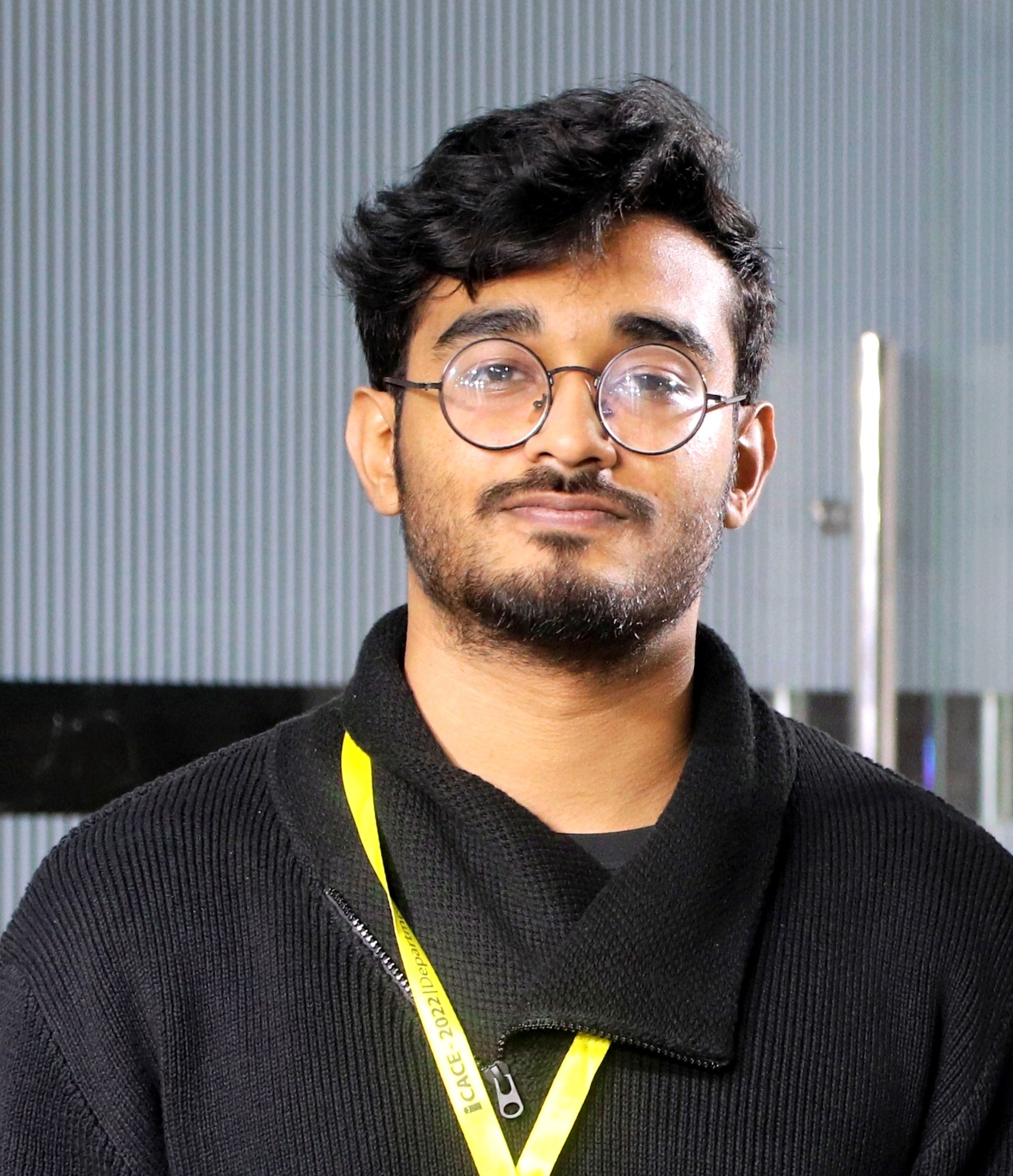
Research Mentor: Iftekhar Sayeed Khan, He/Him
Department, College, Affiliation: Department of Civil & Environmental Engineering, FAMU-FSU College of Engineering
Contact Email: msk24d@fsu.edu
Research Assistant Supervisor (if different from mentor):
Research Assistant Supervisor Email:
Faculty Collaborators:
Faculty Collaborators Email:
Department, College, Affiliation: Department of Civil & Environmental Engineering, FAMU-FSU College of Engineering
Contact Email: msk24d@fsu.edu
Research Assistant Supervisor (if different from mentor):
Research Assistant Supervisor Email:
Faculty Collaborators:
Faculty Collaborators Email:
Looking for Research Assistants: Yes
Number of Research Assistants: 1
Relevant Majors: Environmental Science, Civil and Environmental Engineering, Earth/Ocean/Atmospheric Science or related fields.
Project Location: On FSU Main Campus
Research Assistant Transportation Required: No, the project is remote Remote or In-person: Fully Remote
Approximate Weekly Hours: 5-8 hours a week, Flexible schedule (Combination of business and outside of business. TBD between student and research mentor.)
Roundtable Times and Zoom Link:
Not participating in the roundtable
Number of Research Assistants: 1
Relevant Majors: Environmental Science, Civil and Environmental Engineering, Earth/Ocean/Atmospheric Science or related fields.
Project Location: On FSU Main Campus
Research Assistant Transportation Required: No, the project is remote Remote or In-person: Fully Remote
Approximate Weekly Hours: 5-8 hours a week, Flexible schedule (Combination of business and outside of business. TBD between student and research mentor.)
Roundtable Times and Zoom Link:
Not participating in the roundtable
Project Description
Droughts and heatwaves are becoming more likely to occur at the same time, but their effects on coastal water quality are not always straightforward. In some estuaries, hot and dry conditions may promote algal growth, while in others they may reduce it. These differences may depend on how much freshwater enters an estuary from rivers, how nutrients such as nitrogen and phosphorus are delivered, and how conditions such as temperature and salinity change during extreme events.This project will investigate why estuaries respond differently to co-occurring droughts and heatwaves. Using long-term monitoring data from estuaries across the U.S., we will examine changes in chlorophyll-a, an indicator of algal biomass, along with important nutrients such as nitrate, ammonium, and phosphate.
By comparing estuaries across different regions and environmental settings, the study will examine what controls whether compound drought and heatwave events increase or suppress algal growth and alter nutrient dynamics. The broader goal is to better understand which types of estuaries may be most vulnerable to worsening water-quality impacts as climate extremes become more frequent.
Research Tasks: The research assistant will contribute to different stages of the project depending on their interests, experience, and progress. Tasks may include:
1. Conducting a literature review on droughts, heatwaves, algal blooms, nutrient dynamics, and estuarine water quality.
2. Organizing and quality-checking long-term water-quality and environmental datasets from NERRS monitoring stations.
3. Collecting and compiling chlorophyll-a, nitrate, ammonium, phosphate, temperature, salinity, and other relevant environmental variables.
4. Helping organize streamflow, meteorological, and climate data needed to identify droughts and heatwaves.
5. Assisting with classification of observations into normal, drought, heatwave, and compound drought–heatwave conditions.
6. Exploring how chlorophyll-a and nutrient concentrations change during different hydroclimatic conditions.
7. Comparing responses among estuaries and identifying characteristics that may explain differences among systems.
8. Creating graphs, maps, and summary figures to communicate results.
9. Reading and discussing scientific papers and participating in week/bi-weekly research meetings.
10. Contributing to interpretation of results and development of a poster for the FSU Undergraduate Research Symposium.
Skills that research assistant(s) may need: Required:
1. Genuine interest and curiosity in environmental science, water quality, climate, or coastal ecosystems.
2. Willingness to learn new research and data-analysis methods.
3. Attention to detail and ability to keep research files and data well organized.
4. Ability to communicate regularly, ask questions, and work independently after receiving guidance.
5. Basic computer skills and familiarity with spreadsheets.
Recommended but not required:
1. Experience with Microsoft Excel or similar data-management software.
2. Introductory coursework in statistics, environmental science, engineering, geography, or a related field.
3. Previous exposure to Python, R, MATLAB, GIS, or other data-analysis tools.
4. Interest in learning programming, statistical analysis, or scientific visualization.
Previous research or programming experience is not required. Training will be provided based on the student's background and assigned tasks.
Mentoring Philosophy
I view mentoring as a collaborative process in which students receive the guidance and support they need while gradually developing confidence and independence as researchers. At the beginning of the mentoring relationship, I will work with each student to understand their interests, goals, existing skills, and areas they would like to develop. Together, we will establish clear expectations, achievable goals, and a consistent communication plan.Because undergraduate researchers may be encountering research for the first time, I believe in providing structure and explaining not only how to complete a task, but also why it matters to the larger research question. I encourage students to ask questions, discuss challenges openly, and view mistakes or unexpected results as opportunities to learn. As their skills develop, I will gradually give them greater ownership of their work and encourage them to interpret results, suggest ideas, and make research decisions.
I also recognize that students have different strengths, and career interests, so I will adapt my mentoring approach to their individual needs and progress. When appropriate, I will share my own experiences in research and graduate education and help students identify opportunities to strengthen their academic and professional development.
My goal is to maintain a mentoring relationship based on mutual respect, open communication, constructive feedback, and accountability while helping students grow into increasingly independent and thoughtful researchers.
Additional Information
Link to Publications
https://www.researchgate.net/profile/Md-Iftekhar-Khan-2Scalable Quantum Computing and Networking with Trapped Atomic Ions
quantum computing; quantum networking; qubits; quantum; photonics

Research Mentor: Mikhail Shalaev,
Department, College, Affiliation: Electrical and Computer Engineering, FAMU-FSU College of Engineering
Contact Email: ms26dc@fsu.edu
Research Assistant Supervisor (if different from mentor):
Research Assistant Supervisor Email: ms26dc@fsu.edu
Faculty Collaborators:
Faculty Collaborators Email:
Department, College, Affiliation: Electrical and Computer Engineering, FAMU-FSU College of Engineering
Contact Email: ms26dc@fsu.edu
Research Assistant Supervisor (if different from mentor):
Research Assistant Supervisor Email: ms26dc@fsu.edu
Faculty Collaborators:
Faculty Collaborators Email:
Looking for Research Assistants: Yes
Number of Research Assistants: 6
Relevant Majors: Electrical Engineering, Physics, Mathematics, Mechanical Engineering, Chemical Engineering and other STEM
Project Location: IRCB, 2010 Levy Ave, Tallahassee, FL 32310
Research Assistant Transportation Required: FSU Bus from main campus every 30 min Remote or In-person: In-person
Approximate Weekly Hours: 10 hrs, Flexible schedule (Combination of business and outside of business. TBD between student and research mentor.)
Roundtable Times and Zoom Link:
Number of Research Assistants: 6
Relevant Majors: Electrical Engineering, Physics, Mathematics, Mechanical Engineering, Chemical Engineering and other STEM
Project Location: IRCB, 2010 Levy Ave, Tallahassee, FL 32310
Research Assistant Transportation Required: FSU Bus from main campus every 30 min Remote or In-person: In-person
Approximate Weekly Hours: 10 hrs, Flexible schedule (Combination of business and outside of business. TBD between student and research mentor.)
Roundtable Times and Zoom Link:
- Day: Friday, September 4
Start Time: 2:00
End Time: 2:30
Zoom Link: ZOOM RECORDING: https://fsu-my.sharepoint.com/:v:/g/personal/ms26dc_fsu_edu/IQD93WWEbCCbR7zIlh9pGVTqAdS1FActxqjnEBkwAnuV2Ow?e=rev1OH
Project Description
Quantum technologies have the potential to revolutionize computing, secure communication, sensing, and precision measurement. Among the leading platforms for quantum technologies are trapped atomic ions, which provide exceptionally high-quality quantum memories, with the highest-fidelity quantum operations and longest coherence times demonstrated to date.During this research experience, the student will participate in establishing a cutting-edge experimental laboratory based on trapped-ion quantum systems. In particular, the student will contribute to addressing one of the major challenges in quantum computing: scalability. Our approach is to use photonic interconnects to network smaller quantum processing units together, enabling distributed and modular quantum computation.
The student will gain hands-on experience with a broad range of experimental quantum technologies. Depending on their interests and background, they may participate in setting up and testing laser and optical systems; working with electronic equipment, including RF and DC sources; and developing software to control experimental sequences using Python and FPGA-based systems. These tools are used to precisely manipulate the quantum states of individual atoms that serve as quantum bits (qubits).
The student may also contribute to the development of novel photonic devices designed to efficiently collect and interface light emitted by trapped-ion quantum memories in a scalable architecture. The design of these photonic nanostructures involves advanced computational methods, including finite-difference time-domain (FDTD) and finite-element method (FEM) simulations, as well as AI-based and inverse-design optimization techniques. The resulting devices are fabricated using widely adopted semiconductor fabrication technologies, providing a path toward reliable and repeatable production of large numbers of devices.
The broader goal of this research is to develop technologies that could enable large-scale quantum computers capable of addressing problems beyond the reach of conventional computers. The project is also closely connected to technologies being developed across the rapidly growing quantum industry. As a result, students will gain exposure to experimental methods, computational tools, instrumentation, and technical approaches relevant to both academic research and industry careers in quantum technology.
Research Tasks: Literature review; programming; numerical simulations; building and testing optical setups; assisting with experiments; and data collection and analysis. Tasks will be tailored to the student's interests and experience, and training will be provided.
Skills that research assistant(s) may need: Required: curiosity, reliability, careful attention to detail, willingness to learn, and an interest in experimental physics and quantum technology.
Recommended but not required: coursework or experience in physics, engineering, optics, electronics, programming, numerical simulation, or laboratory work.
Mentoring Philosophy
My mentoring approach combines structured guidance with increasing independence. I begin by discussing each student's interests, goals, and prior experience, then help define a project with clear, achievable milestones. Students receive hands-on training and regular feedback while learning the scientific reasoning behind each task. As their skills grow, they take greater ownership of experimental, computational, or design work and are encouraged to propose ideas, troubleshoot problems, and communicate results. I aim to create a respectful, collaborative environment where questions are welcome and setbacks are treated as opportunities to learn. Regular meetings will be used to review progress, address challenges, connect daily work to the broader goals of the research, and support the student's academic and professional development.Additional Information
Link to Publications
https://scholar.google.com/citations?user=FoKTMiEAAAAJ&hl=enEvolution of Disaster Aid Targeting and Coordination
Disasters, Philanthropy, Emergency Management, Civil Society
Research Mentor: David Berlan, He, Him, His
Department, College, Affiliation: Reubin O'D. Askew School of Public Administration and Policy, Social Sciences and Public Policy
Contact Email: dberlan@fsu.edu
Research Assistant Supervisor (if different from mentor):
Research Assistant Supervisor Email:
Faculty Collaborators:
Faculty Collaborators Email:
Department, College, Affiliation: Reubin O'D. Askew School of Public Administration and Policy, Social Sciences and Public Policy
Contact Email: dberlan@fsu.edu
Research Assistant Supervisor (if different from mentor):
Research Assistant Supervisor Email:
Faculty Collaborators:
Faculty Collaborators Email:
Looking for Research Assistants: Yes
Number of Research Assistants: 4
Relevant Majors: Open to all majors
Project Location: On FSU Main Campus
Research Assistant Transportation Required: Remote or In-person: Partially Remote
Approximate Weekly Hours: 5-10, Flexible schedule (Combination of business and outside of business. TBD between student and research mentor.)
Roundtable Times and Zoom Link:
Number of Research Assistants: 4
Relevant Majors: Open to all majors
Project Location: On FSU Main Campus
Research Assistant Transportation Required: Remote or In-person: Partially Remote
Approximate Weekly Hours: 5-10, Flexible schedule (Combination of business and outside of business. TBD between student and research mentor.)
Roundtable Times and Zoom Link:
- Day: Wednesday, September 2
Start Time: 1:00
End Time: 2:00
Zoom Link: https://fsu.zoom.us/j/92513913721
Project Description
After each hurricane or natural disaster, a wide range of actors mobilize to respond, across the nonprofit, for-profit, religious, and governmental sectors. Knowing how resources are made available for communities to recover and rebuild is crucial to help with continued recovery efforts and identify lessons for disaster planning and responding to future disasters. This project builds on a 2018-2020 study of disaster philanthropy with a second wave study to gauge organizational learning and changes in how organizations coordinate and collaborate. The research will include a survey and other data collection efforts, now moving into a second year of data collection. The study’s initial wave identified fragmented collaboration networks and unequal targeting of assistance to communities; whether these patterns hold across multiple disasters is a key question.Research Tasks: Student research assistant(s) will participate in: (1) updating survey participant recruitment strategies and identifying supplemental data, (2) recruiting survey participants, (3) analysis of combined data from this project and earlier survey, and (4) reporting of results to academic and practitioner audiences.
Skills that research assistant(s) may need: Required: interest in civil society (nonprofits, philanthropy, religious organizations, grassroots organizations, etc.)
Recommended: comfort with surveys (training will be provided for the qualtrics survey used)
Mentoring Philosophy
My mentoring philosophy is to prioritize collaborators’ academic and professional goals. This entails open conversations about which aspects of projects best fit collaborators’ interests, opportunities for engagement in the entire range of research activities, and shared ownership of project elements. I avoid micromanagement and rely on clear identification of responsibilities and flexibility to respond to new developments and all team members’ schedules.Additional Information
Link to Publications
https://scholar.google.com/citations?hl=en&user=Z4v_eooAAAAJ***User Friendly Software Development for AI-driven Materials Science
Artificial Intelligence; Materials Science;
Research Mentor: Raghav Gnanasambandam,
Department, College, Affiliation: Industrial and Manufacturing Engineering, FAMU-FSU College of Engineering
Contact Email: rg24o@fsu.edu
Research Assistant Supervisor (if different from mentor): Harshitha Eluri
Research Assistant Supervisor Email:
Faculty Collaborators:
Faculty Collaborators Email: he25b@fsu.edu
Department, College, Affiliation: Industrial and Manufacturing Engineering, FAMU-FSU College of Engineering
Contact Email: rg24o@fsu.edu
Research Assistant Supervisor (if different from mentor): Harshitha Eluri
Research Assistant Supervisor Email:
Faculty Collaborators:
Faculty Collaborators Email: he25b@fsu.edu
Looking for Research Assistants: Yes
Number of Research Assistants: 2
Relevant Majors: Computer Science, Statistics, Scientific Computing, or other related majors
Project Location: FAMU-FSU College of Engineering
Research Assistant Transportation Required: Bus Remote or In-person: Partially Remote
Approximate Weekly Hours: 5-6, Flexible schedule (Combination of business and outside of business. TBD between student and research mentor.)
Roundtable Times and Zoom Link:
Not participating in the roundtable
Number of Research Assistants: 2
Relevant Majors: Computer Science, Statistics, Scientific Computing, or other related majors
Project Location: FAMU-FSU College of Engineering
Research Assistant Transportation Required: Bus Remote or In-person: Partially Remote
Approximate Weekly Hours: 5-6, Flexible schedule (Combination of business and outside of business. TBD between student and research mentor.)
Roundtable Times and Zoom Link:
Not participating in the roundtable
Project Description
AI-driven materials science enables fast planning and execution of experiments. However, the adoption of AI by materials scientists is limited by the lack of user-friendly software to run the underlying AI methods. Our lab has developed and tested AI methods for designing experiments. We are looking for research assistants who can build software around it and gather feedback from materials scientists on its use.Research Tasks: * Software development with any coding language (the backend AI algorithm already exists)
* Meeting with material scientists to gather feedback on its usage.
Skills that research assistant(s) may need: Familiarity with Statistics, Machine Learning, or Software Development
Mentoring Philosophy
To learn is to get better at making decisions. Decision-making requires identifying and understanding problems and applying skills to solve them.Problem-based learning: Real-world problems are complex and multidisciplinary. The problem-based learning approach gives students a problem they are excited about, enabling them to develop the skills to solve it. As a mentor, I guide them in the right direction and help them develop the skills they want, rather than a "learn-then-solve" approach.
Learning to Learn: With the rapidly changing skills required in the technology-driven world, everyone must become a lifelong learner. In addition to the skills needed to complete the project, I intend to develop a growth mindset toward learning. This can be achieved by providing sufficient space and time to learn, and adequate feedback to motivate the learning of complex skills.