
Research Symposium
26th annual Undergraduate Research Symposium, April 1, 2026
Peter Fasano Poster Session 3: 1:45 pm - 2:45 pm / Poster #72

BIO
Peter Fasano is a HPMI Carbon Composites Researcher earning a Bachelor of Science in Mechanical Engineering and a Bachelor of Arts in Music with a focus on Jazz, Producing, and Acoustics with minors in Physics and Mathematics. His work at HPMI over two years has focused on making the properties of Carbon Nanotube Yarn composites accessible in two and three dimensions using textile methods through mentorship with Dr. Richard Liang. Advised by Dr. Christian Hubicki, he researched and compared methods of quantifying musical dissonance for means of microtonal pitch correction in the 2025 IDEA Grant program. He also explored microtonality creatively through compositions and Lumatone performance for the 2025 Presidential Showcase. His goal is to return to FSU for graduate school in Materials Science & Engineering pursuing a focus in materials for Nuclear Energy.
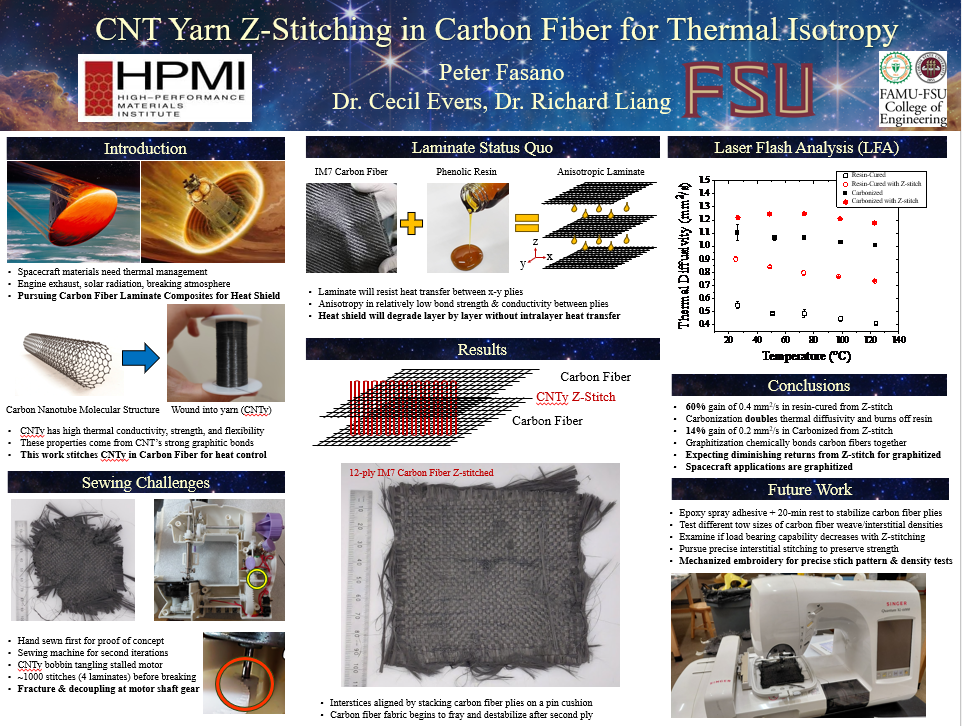
Z-Stitching CNT Yarns in Carbon Fiber for Thermal Isotropy
Authors: Peter Fasano, Dr. Richard LiangStudent Major: Mechanical Engineering & B.A. in Music
Mentor: Dr. Richard Liang
Mentor's Department: Industrial & Manufacturing Engineering Mentor's College: Engineering Co-Presenters:
Abstract
NASA aerospace structures need to withstand the heat from engine exhaust, solar radiation, and breaking atmosphere. The carbon/carbon laminates used in high-temperature applications are limited by their anisotropy. The high load-bearing, thermal, and electrical conductivity of these laminates are active in the x and y directions of each laminate ply, but are limited in between plies in the z direction. This work consisted of Z-stitching Carbon Nanotube yarns (CNTy) through IM7 carbon fiber plies to decrease anisotropy, providing a faster though-thickness route for heat conduction. CNC sewing and mechanized embroidery guarantee consistent CNTy density and interstitial stitching between pre-woven IM7 tows. The IM7 interstices are aligned manually by stacking plies atop a pin cushion. Laser Flash Analysis was used to measure thermal diffusivity. CNTy Z-stitching improved thermal diffusivity by 60% for a phenolic IM7 green-body composite, achieving 0.8mm^2/s. When carbonized, all thermal diffusivity is improved, reducing the impact of CNTy’s to a 14% increase, achieving 1.25mm^2/s. Z-stitched CNTy consistently reduces the carbon/carbon laminate’s thermal anisotropy.
Keywords: Thermal-Isotropy, Carbon-Nanotube-Yarn, Z-stitching, Anisotropy
26th annual Undergraduate Research Symposium, April 1, 2026
Jillian Derodel Poster Session 3: 1:45 pm - 2:45 pm / Poster #65

BIO
Jillian Derodel is a second-year junior hailing from Tampa, FL. She is pursuing a Bachelor of Science in Statistics and minors in Computer Science and Mathematics with aspirations to obtain a graduate degree in Statistics after completing her undergraduate career. Jillian is a recipient of Florida State University’s Vires Scholarship and a proud member of the CARE Illuminate Scholars program; she also serves as Membership Chair for Caribbean Student Association, Outreach Coordinator for Florida State University’s Student Data Collective, and is a member of Florida State University’s chapter of the Florida-Georgia Louis Stokes Alliance for Minority Participation (FGLSAMP) in STEM. Jillian works as a Student Success Analyst intern in the Florida State University Office of Institutional Research and conducted her research under Katherine Gipalo and Sarah Sikes, a full-time Student Success Analyst and Metrics Analyst in the office, respectively. She is grateful to her research mentors; her intern supervisor, Dr. Samantha Nix; her favorite Statistics faculty member, Dr. Justin Shows; and her FGLSAMP chapter coordinator and UROP Support Specialist, Dr. Asli Kaya, for shaping her research and overall undergraduate experiences.
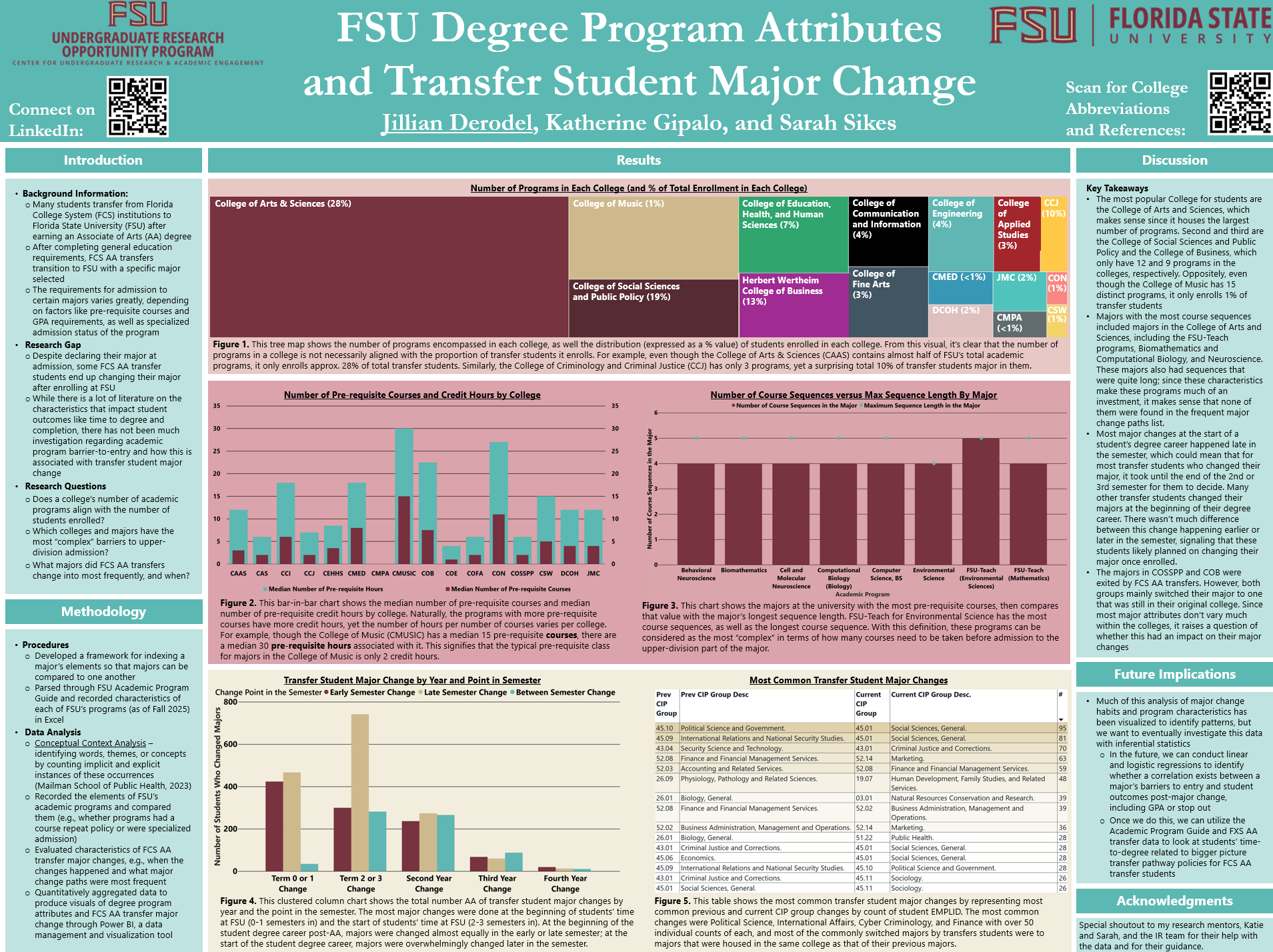
FSU Degree Program Attributes and Transfer Student Major Change
Authors: Jillian Derodel, Katherine GipaloStudent Major: Statistics
Mentor: Katherine Gipalo
Mentor's Department: Office of Institutional Research Mentor's College: N/A Co-Presenters:
Abstract
This research examines the attributes of Florida State University’s undergraduate academic programs, as well as the major change habits for students who transfer from Florida College System (FCS) schools to the university with an Associate of Arts (AA) degree. To record the different elements of undergraduate academic programs and compare them to one another, we listed those of each program according to the university’s academic program guide. Additionally, we used student-level data for FCS AA transfers that included pre-enrollment, enrollment, and post-enrollment characteristics from the university’s Student Information System to identify major change habits. For the academic program data, we generated descriptive statistics of key elements of curricular structure, and we employed conceptual context analysis to organize aspects of FCS AA transfer major change by commonalities. We find that the number of programs in an academic college is not indicative of the total undergraduate enrollment in that college and that the number of pre-requisite credit hours compared to the number of pre-requisites courses can determine a program’s curricular complexity. We also notice that most major changes for FCS AA transfers happen at the beginning or start of their degree plan, and the most frequently changed majors are in the College of Social Sciences and Public Policy and the College of Business. These findings lay the foundation for us to combine the academic program and FCS AA transfer enrollment information to further investigate the correlation between major complexity and FCS AA transfer student outcomes at FSU.
Keywords: major, transfer, courses
26th annual Undergraduate Research Symposium, April 1, 2026
Riley Spran Poster Session 4: 3:00 pm - 4:00 pm / Poster #215

BIO
I am a second-year double major at Florida State University pursuing a Bachelor of Science in the College of Arts and Sciences with a minor in Child Development on the Pre-Occupational Therapy track. As an aspiring pediatric Occupational Therapist, I am passionate about serving others and supporting child development through both research and community engagement.
Originally from South Florida, I actively participate in several Florida State–affiliated organizations and outreach programs that allow me to give back to my community while gaining meaningful experience in healthcare and child-focused services. I am deeply interested in research that explores child development and learning, and I am committed to pursuing opportunities that provide hands-on experience to prepare for a future career in pediatric healthcare.
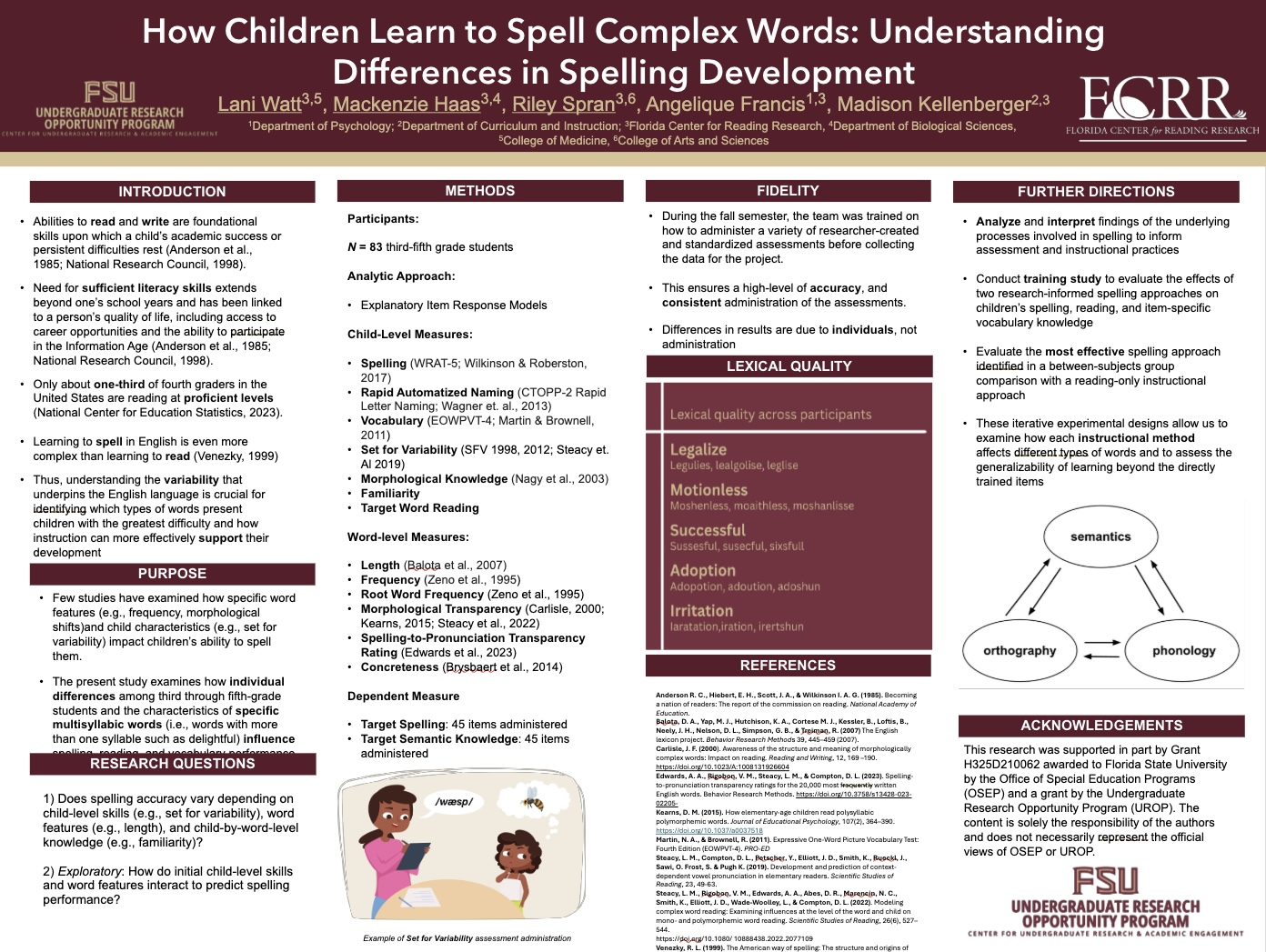
How Children Learn to Spell Complex Words: Understanding Differences in Spelling Development
Authors: Riley Spran, Madison KellenbergerStudent Major: Psychology, Human Development and Family Sciences
Mentor: Madison Kellenberger
Mentor's Department: Special Education Mentor's College: Anne Spencer Daves College of Education, Health, and Human Sciences Co-Presenters: Mackenzie Haas, Lani Watt
Abstract
The abilities to read and write in elementary school students are foundational skills upon which a child’s academic success or persistent difficulties rest (Anderson et al., 1985; National Research Council, 1998). The overwhelming need for sufficient literacy skills extends far beyond one’s school years and has been linked to a person’s quality of life, including access to career opportunities and the ability to participate in the Information Age (Anderson et al., 1985; National Research Council, 1998). According to the 2022 National Assessment of Educational Progress (NAEP), which is the United States' biannual indicator of academic achievement, only about one-third of fourth graders in the United States are at proficient reading levels (National Center for Education Statistics, 2023).
Learning to spell in English is even more complex than learning to read (Venezky, 1999). Translating spoken words into their correct spelling requires exposure and experience, as many letters have multiple pronunciations and each of these pronunciations often has more than one spelling, creating what Venezky (1999) describes as a “spaghetti-like tangle” (p. 11). Understanding the variability that defines the English language is crucial for identifying which types of words present children with the greatest difficulty and how instruction can more effectively support their development. The present study examines how individual differences among third through fifth-grade students and the characteristics of specific words with more than one syllable influence spelling, reading, and vocabulary performance.
Keywords: Children, Spell, Literacy, Development
26th annual Undergraduate Research Symposium, April 1, 2026
Anum Akbar Poster Session 1: 9:30 am - 10:30 am / Poster #293
BIO
Anum Akbar is a first-year undergraduate student from Islamabad, Pakistan. To prepare for a career in public policy analysis, she is pursuing a Bachelor of Science in Economics with a minor in Data Analytics. Some of her on-campus involvements include the Undergraduate Research Opportunity Program, the Degree-in-Three program, and the COSSPP Women’s Leadership Network. Currently, Anum serves as a Research Assistant for Dr. Katherine Yewell in the Economics department, where she conducts literature reviews and data collection to analyze health outcomes associated with federal meal programs, specifically the Community Eligibility Provision.
The CEP Effect: Linking Policy to Pediatric Wellness
Authors: Anum Akbar, Dr. Katherine YewellStudent Major: Economics
Mentor: Dr. Katherine Yewell
Mentor's Department: Department of Economics Mentor's College: College of Social Sciences and Public Policy Co-Presenters: Mirza Baig, Raiyan Quadri, Victoria Camacho
Abstract
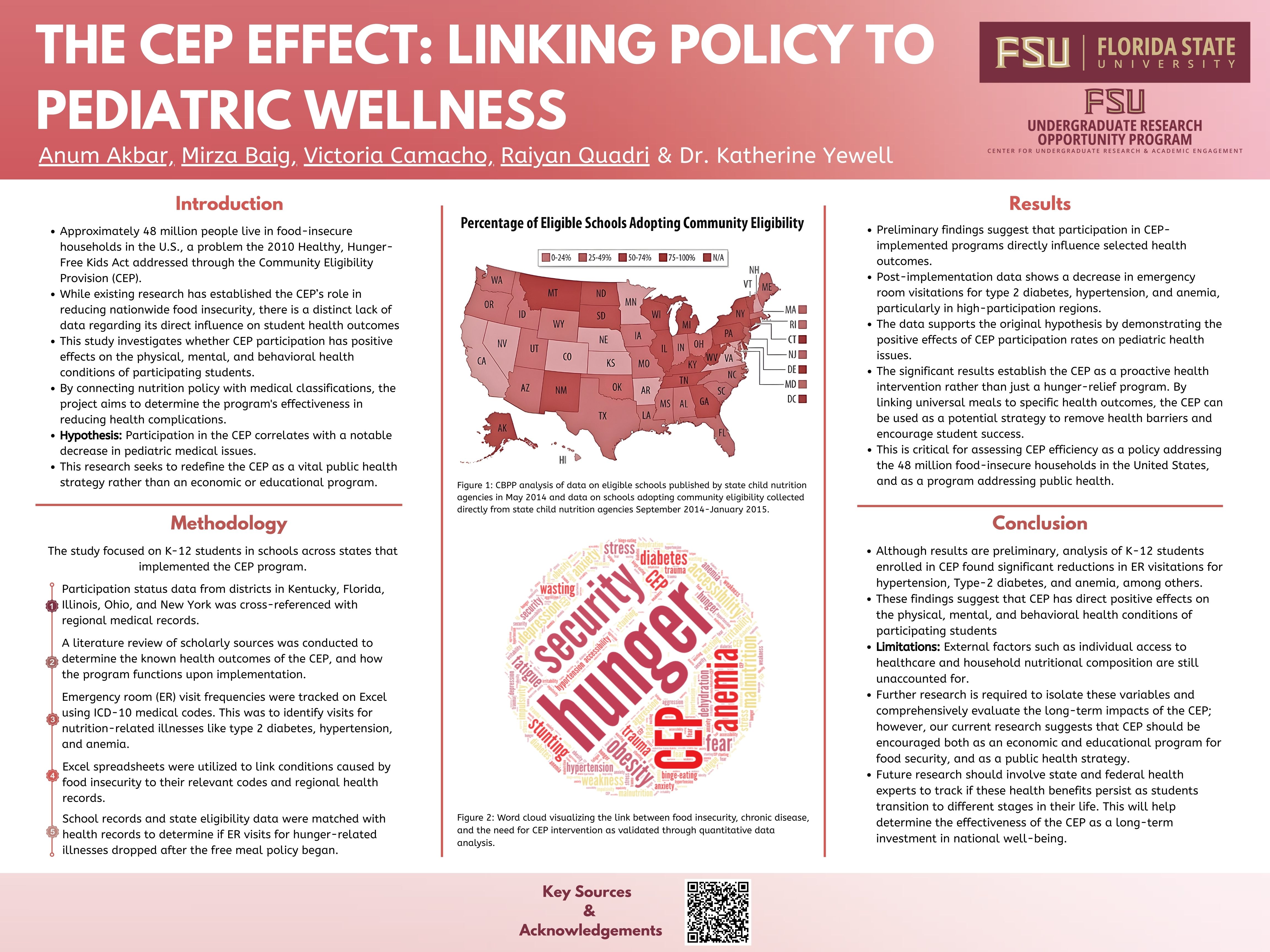
More than 40 million people in the United States experience food insecurity, and a large proportion of those people are school children. To combat this ongoing problem, the government passed the Healthy Hunger-Free Kids Act which helped form the Community Eligibility Provision (CEP), the second-largest food assistance program in the country. The CEP allowed food-insecure children to receive free school meals. While there has been prior research focusing on the impact that the CEP has on food insecurity, there has been virtually no research examining the effect the CEP has on students’ health. Thus, this research project will investigate whether the CEP positively affects students’ health and well-being.
This research project will focus on grade schools (kindergarten through 12th grade) across the country that have implemented CEP. CEP participation will be analyzed at the district level and compared to regional hospital data using ICD-10 codes to evaluate specific diseases such as diabetes, hypertension, and anemia. These codes help identify the purpose and reasoning behind emergency room visitations. The frequency of these hospital ER visits will be used to determine the impact free school meals have on students’ health and well-being.
We hypothesize that students who participate in the CEP will demonstrate a lack of hospital ER visits for food-insecurity-related diseases; hence, the CEP will demonstrate an improvement in said students’ health and well-being. After the conclusion of this research project, the findings will demonstrate a working model to scale across the country to combat food insecurity regardless of background.
Keywords: Food security, Economics, Public Health, Social Impact, Welfare
26th annual Undergraduate Research Symposium, April 1, 2026
Aaliyah Hattach Poster Session 4: 3:00 pm - 4:00 pm / Poster #226
BIO
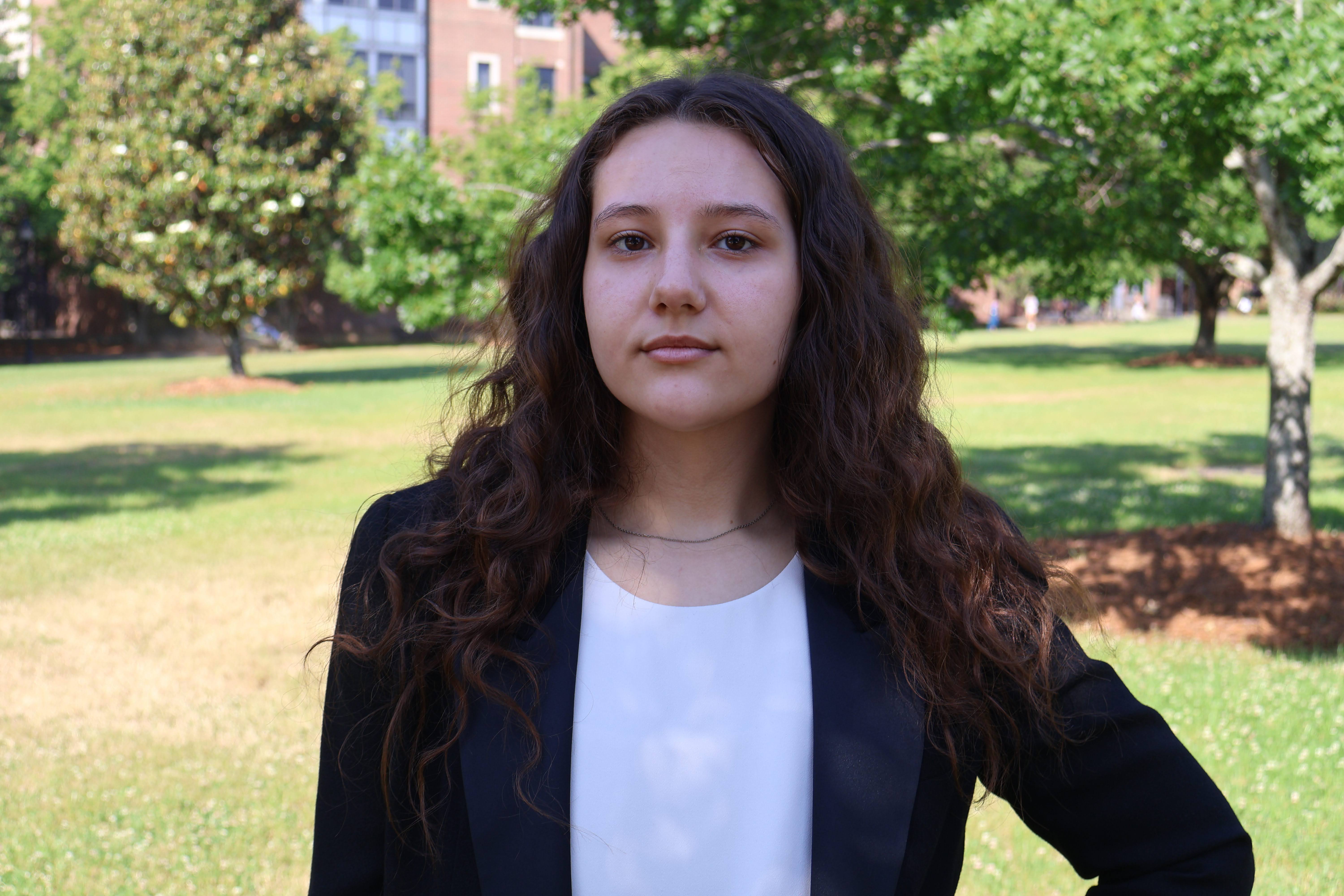
Aaliyah is a fourth-year undergraduate student from Tampa, Florida. She is currently pursuing a Bachelor of Science in Management at Florida State University with double minors in English and Arabic. Her research interests lie in organizational behavior and human resources, particularly how differences in background, perspective, and opportunity shape workplace experiences and participation within organizations. Her research is conducted under the mentorship of Organizational Behavior and Human Resources PhD student Destiny Cole from the Department of Management.
Aaliyah is a member of the Arabic Honor Society and has been named to the President’s List for six semesters. She is also a recipient of the Bright Futures and Florida State University Vires Scholarships. She is interested in careers focused on leadership development, organizational dynamics, and intercultural collaboration. In particular, she is interested in how nonprofits and organizations operate across different cultural contexts and how leadership strategies adapt in international settings.
Gendered Aging in the Workplace
Authors: Aaliyah Hattach, Destiny ColeStudent Major: Business Management
Mentor: Destiny Cole
Mentor's Department: Department of Management Mentor's College: Herbert Wertheim College of Business Co-Presenters:
Abstract
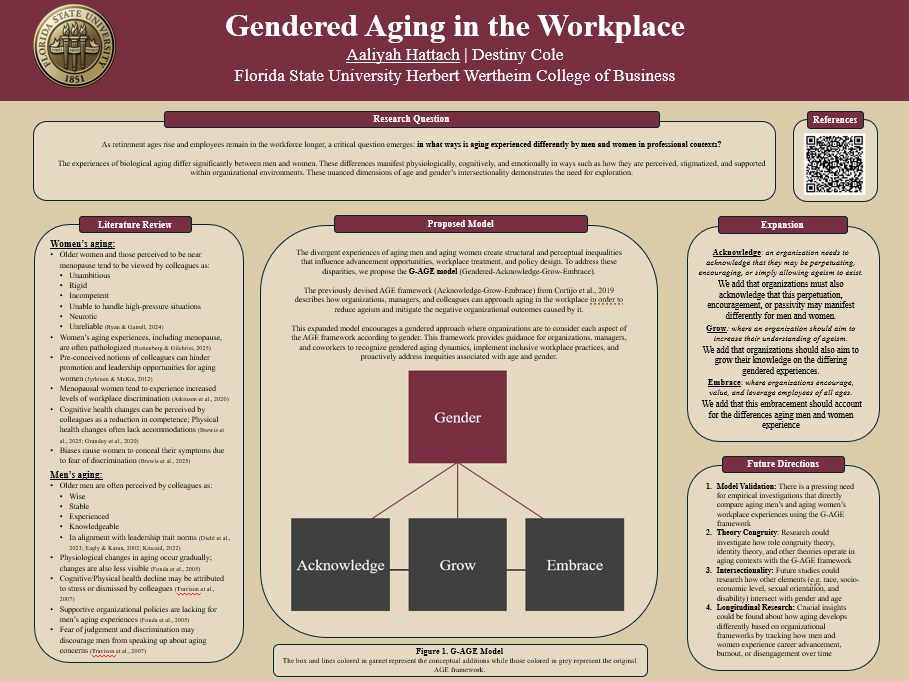
As retirement ages rise and employees remain in the workforce longer, the intersection of gender and aging has become increasingly consequential for organizations. Yet the ways in which aging is experienced differently by men and women in professional contexts remains underexplored. This review synthesizes research across leadership, gender, and aging literatures to examine how aging shapes workplace perceptions, leadership trajectories, and organizational policies in gendered ways. We argue that men’s aging—although largely absent from formal organizational policy discussions—is often viewed as consistent with prevailing leadership prototypes, reinforcing perceptions of competence and authority. In contrast, women’s aging, despite receiving growing scholarly attention, continues to be accompanied by stigma, appearance-based biases, and heightened perceptions of role incongruity in leadership contexts. These divergent experiences create structural and perceptual inequalities that influence advancement opportunities, workplace treatment, and policy design. To address these disparities, we extend the AGE framework (Cortijo et al., 2019) and introduce the G-AGE framework (Gendered–Acknowledge–Grow–Embrace). This expanded model provides guidance for organizations, managers, and coworkers to recognize gendered aging dynamics, implement inclusive workplace practices, and proactively address inequities associated with age and gender. In doing so, we aim to advance scholarship at the intersection of gender and aging while offering actionable direction for more equitable organizational systems.
Keywords: Menopause, aging, policies, stereotypes, practices
26th annual Undergraduate Research Symposium, April 1, 2026
Maria Mankin Poster Session 2: 10:45 am - 11:45 am / Poster #8

BIO
Maria Mankin is a sophomore at Florida State University pursuing a Bachelor of Science in Behavioral Neuroscience with a minor in Chemistry on the pre-medical track. She is an undergraduate researcher in the Undergraduate Research Opportunity Program (UROP) working with mentor Adam Hanley at Tallahassee Orthopedic Clinic, where her research investigates brief mind–body interventions designed to reduce pain and anxiety in orthopedic patients. Her work focuses on how techniques such as mindfulness and controlled breathing may improve patient experiences in clinical settings.
Beyond research, Maria is actively involved in clinical service and student leadership. She volunteers at Tallahassee Memorial HealthCare in the surgical care unit and serves in the Florida State University Medical Response Unit. Through this organization, she was recently elected Director of Standards and Compliance, a leadership role in which she helps oversee responder participation, training compliance, and operational accountability for over 150 student responders.
Through her combined experiences in research, clinical service, and emergency response, Maria has developed a strong interest in the relationship between neuroscience, patient care, and evidence-based medicine. She plans to pursue medical school and hopes to continue integrating research with clinical practice to improve patient outcomes.
Does Pain Severity Predict Engagement with Mind–Body Interventions in an Orthopedic Clinic?
Authors: Maria Mankin, Adam HanleyStudent Major: Behavioral Neuroscience
Mentor: Adam Hanley
Mentor's Department: Complementary Health and Innovation Lab Mentor's College: College of Nursing Co-Presenters:
Abstract
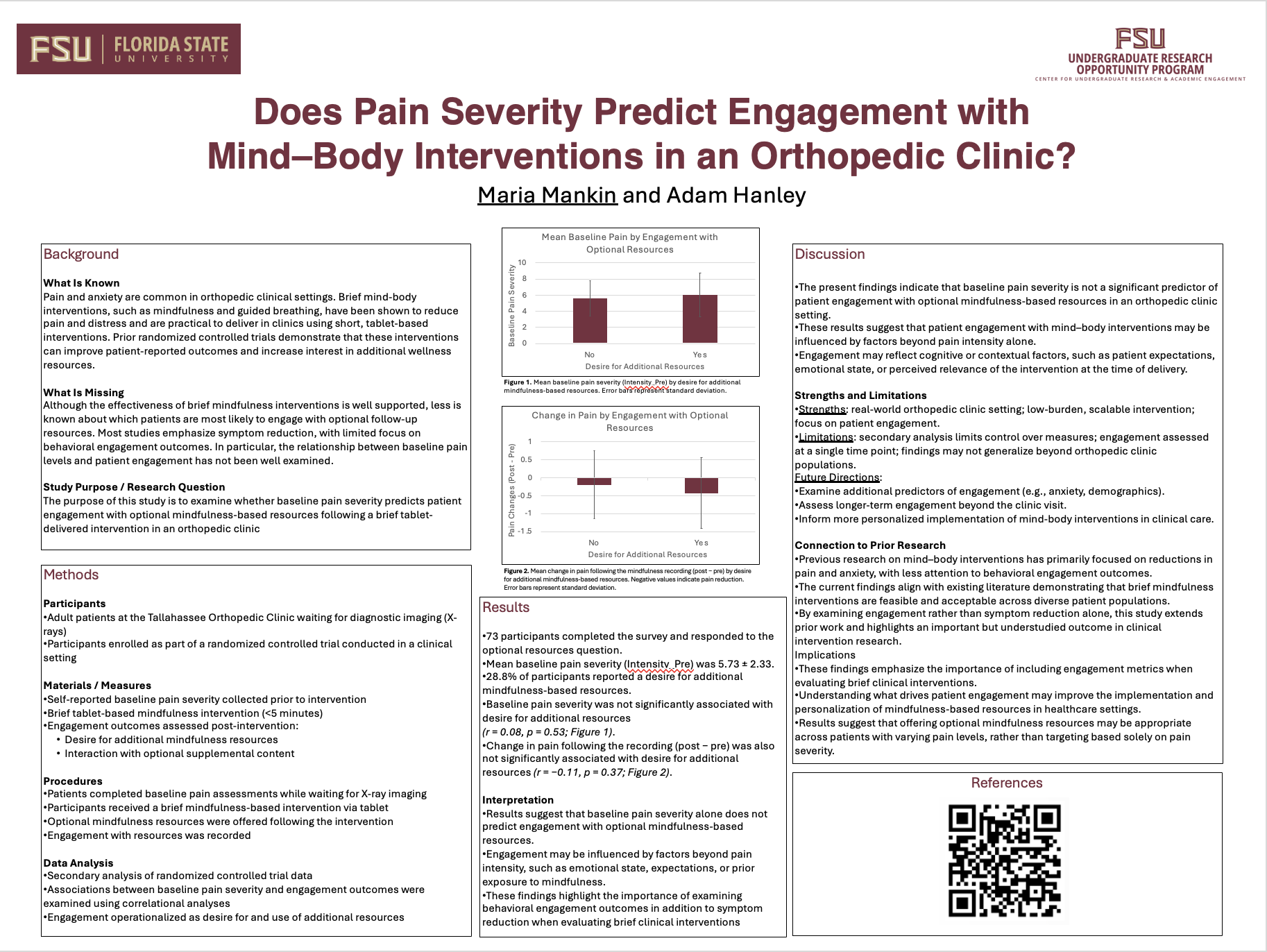
Mind-body interventions such as mindfulness and breathwork have shown potential in reducing pain and anxiety in medical settings; however, patient engagement with these interventions and related resources remains fairly unknown. Understanding factors that influence engagement could influence the design of more effective and accessible interventions in clinical care. The present study examined whether baseline pain levels were associated with patient engagement with optional mindfulness-based resources following a brief tablet-based intervention administered in an orthopedic clinic setting.
Adult patients waiting for x-ray imaging at the Tallahassee Orthopedic Clinic were invited to participate in a randomized controlled trial involving a 5-minute brief mind-body intervention through a tablet. Self-reported pain levels were collected before the intervention, and engagement outcomes were assessed based on patients’ interaction with additional mindfulness resources following the intervention. Engagement was operationalized as utilization of optional resources, including selection of additional content and duration of use.
Preliminary analyses explored relationships between baseline pain severity and engagement behaviors that followed. Results contribute to understanding how patient-reported pain may influence receptivity to brief mindfulness interventions and associated resources in a real-world clinical environment. These findings have implications for optimizing patient-centered delivery of mind-body interventions and altering engagement strategies based on clinical characteristics.
Keywords: pain, mindfulness, intervention, orthopedic, patient
26th annual Undergraduate Research Symposium, April 1, 2026
Kara Crowther Poster Session 4: 3:00 pm - 4:00 pm / Poster #40
BIO
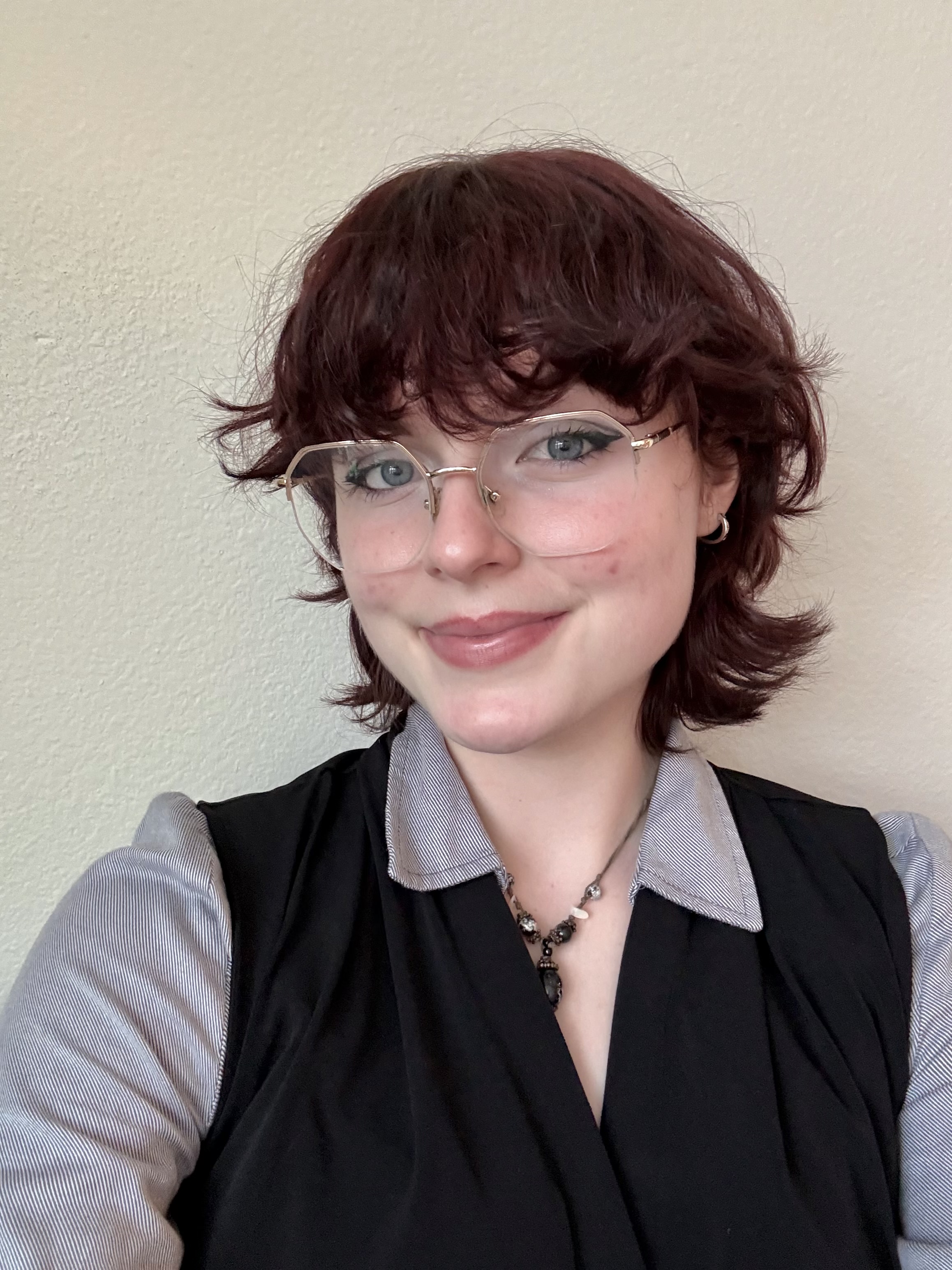
Kara Crowther is a Sophomore pursuing a dual degree in English: EWM and Sociology, while minoring in Psychology and Child Development; she loves her academic work and is constantly working towards more. She plans on attending law school after graduating in Spring 2028, hoping to focus on family law. She adores interdisciplinary research that merges her interests in vast fields, such as dialect and sociology.
Is it All Jumpscares: Until Dawn
Authors: Kara Crowther, Gabrielle LamuraStudent Major: English: Editing, Writing, Media and Sociology
Mentor: Gabrielle Lamura
Mentor's Department: Communication Mentor's College: College of Communication & Information Co-Presenters: Angelina Davis
Abstract
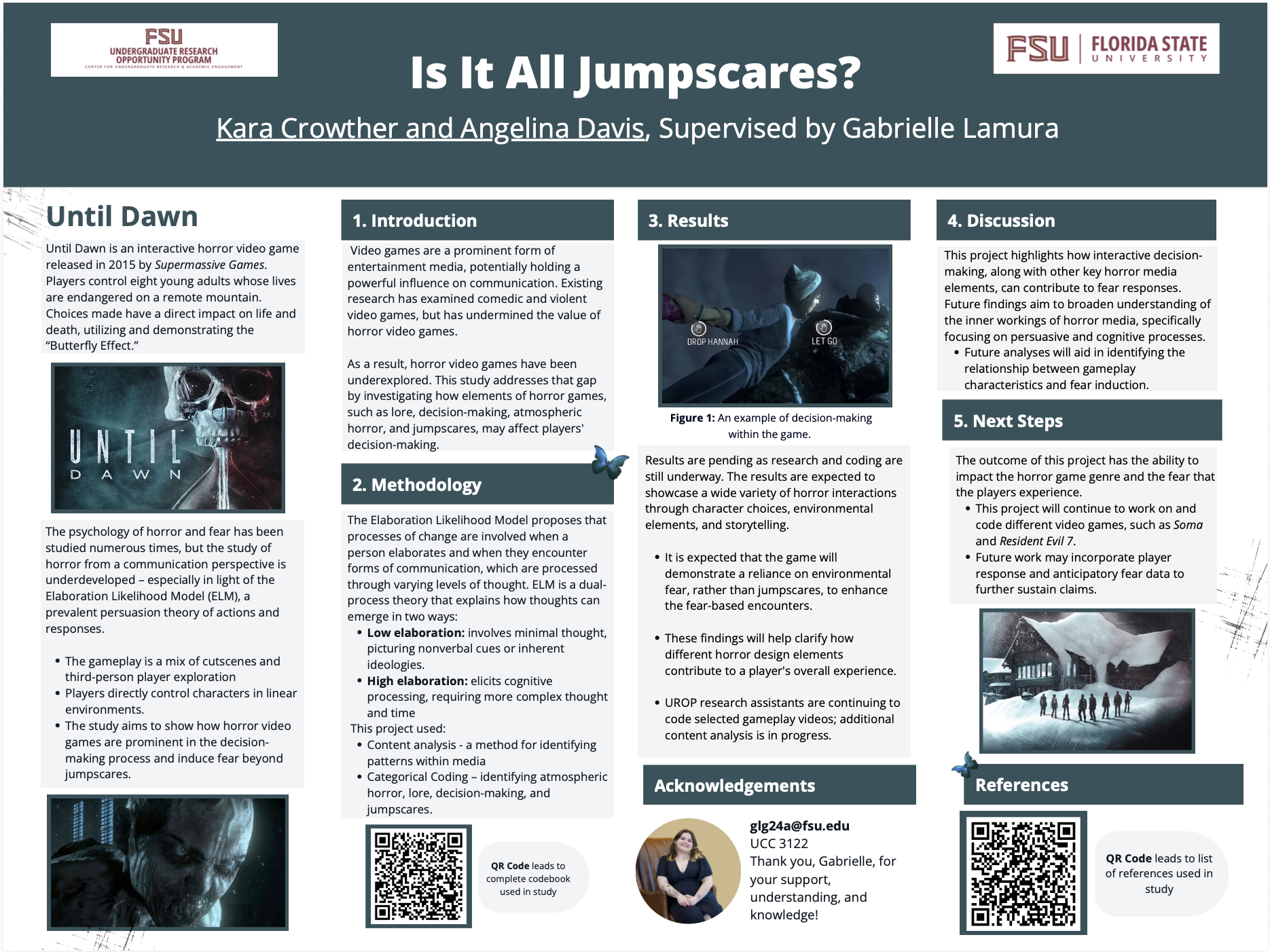
The horror video game genre is a niche media form that instills fear in its players. This research discusses and explores the gameplay of Until Dawn to demonstrate the various types of horror that video games utilize to enhance a player’s reactions and feelings towards the media. Specifically, through analysis and content coding of various aspects of Until Dawn, this project examines how specific atmospheric and story choices alter the amount of fear and horror a player feels. The Elaboration Likelihood Model provides a lens for viewing the decision-making process and its effectiveness in horror games. The research facilitators then developed a codebook, following coding analysis standards to ensure inter-coder reliability and consistent coding, and tracked the results in an Excel sheet. Coding guidelines included marking when lore, jumpscares, character dialogue, or decision-making would occur, describing interactions, and including exact timestamps. Results are pending as research and coding are still underway. The results are expected to showcase a wide variety of horror interactions through character choices, environmental elements, and storytelling. However, it is expected to rely on atmospheric fear and decision-making rather than jumpscares to enhance the fear-based encounters. Additionally, it can be inferred that the horror video game setting exerts a greater influence than one might expect, shaping how the genre is viewed.
Keywords: Video Games, Communications, Content Analysis, Content Coding, ELM Theory.
26th annual Undergraduate Research Symposium, April 1, 2026
Alexa Paz Poster Session 1: 9:30 am - 10:30 am / Poster #151

BIO
Alexa is a dedicated Junior at FSU, concurrently pursuing double majors in Psychology and Criminology. Currently, she serves as a research assistant for a PhD candidate, focusing on the intersection of parental mental health and children mental illness. The work specifically examines how parental aggravation acts as a mediating factor in these psychological outcomes. Following their undergraduate studies, Alexa plans to earn a PhD in Clinical Psychology. Her long-term objective is to complete a post-doctoral year in forensic psychology to become a Forensic Psychologist, bridging the gap between clinical assessment and the justice system.
Parental Mental Health Status and Children Mental Health: The Mediating Role of Parental Aggravation.
Authors: Alexa Paz, Chioma OparaStudent Major: Psychology and Criminology
Mentor: Chioma Opara
Mentor's Department: Human Development and Family Science Mentor's College: Anne Spencer Daves College of Education, Health, and Human Sciences Co-Presenters: Kyran Etienne
Abstract
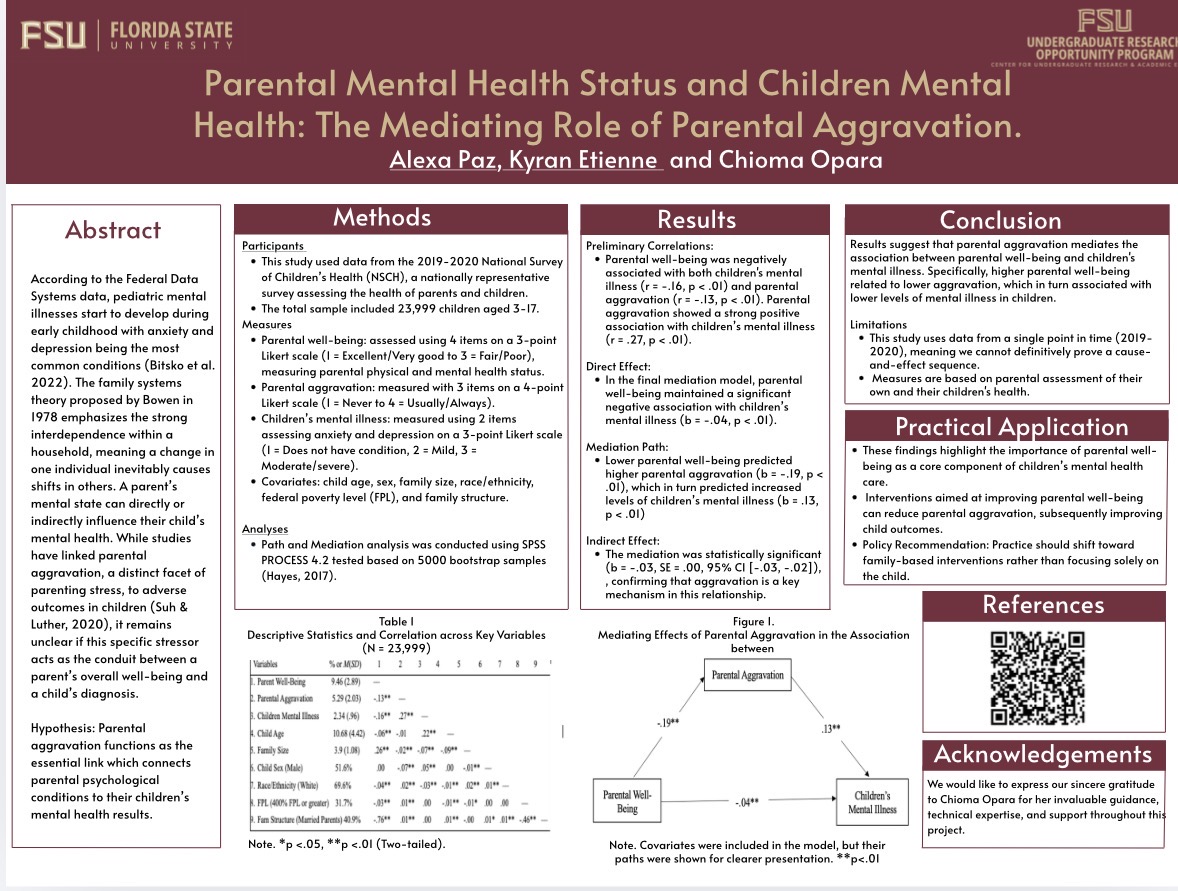
According to the Federal Data Systems data, pediatric mental illnesses start to develop during early childhood with anxiety and depression being the most common conditions (Bitsko et al.
2022). The family systems theory proposed by Bowen in 1978 emphasizes the strong interdependence within a household, meaning a change in one individual inevitably causes shifts in others. A parent's mental state can directly or indirectly influence their child's mental health. While studies have linked parental
aggravation, a distinct facet of parenting stress, to adverse outcomes in children (Suh & Luther, 2020), it remains unclear if this specific stressor acts as the conduit between a parent's overall well-being and a child's diagnosis.
Keywords: Mental health, Children, Mental illness
26th annual Undergraduate Research Symposium, April 1, 2026
Sydney Feldman Poster Session 2: 10:45 am - 11:45 am / Poster #252

BIO
Sydney Feldman is a second-year psychology major with a minor in philosophy. Although she has no previous research experience, her participation in UROP has influenced her to expand her research skills and pursue programs such as DIS. Her faculty mentor is Dr. Adrienne Barnes Story, and her co-presenter is Yoonho Hwang. During her time in college, she intends to earn an additional Bachelor of Science in Human Development and Family Sciences. After completing her undergraduate studies, she plans to attend graduate school and eventually work as a psychoanalyst.
Large Class Pedagogy: Teaching Through Interactions Framework
Authors: Sydney Feldman, Dr. Adrienne Barnes-StoryStudent Major: Psychology
Mentor: Dr. Adrienne Barnes-Story
Mentor's Department: Learning Systems Institute Mentor's College: Learning Systems Institute Co-Presenters: Yoonho Hwang
Abstract
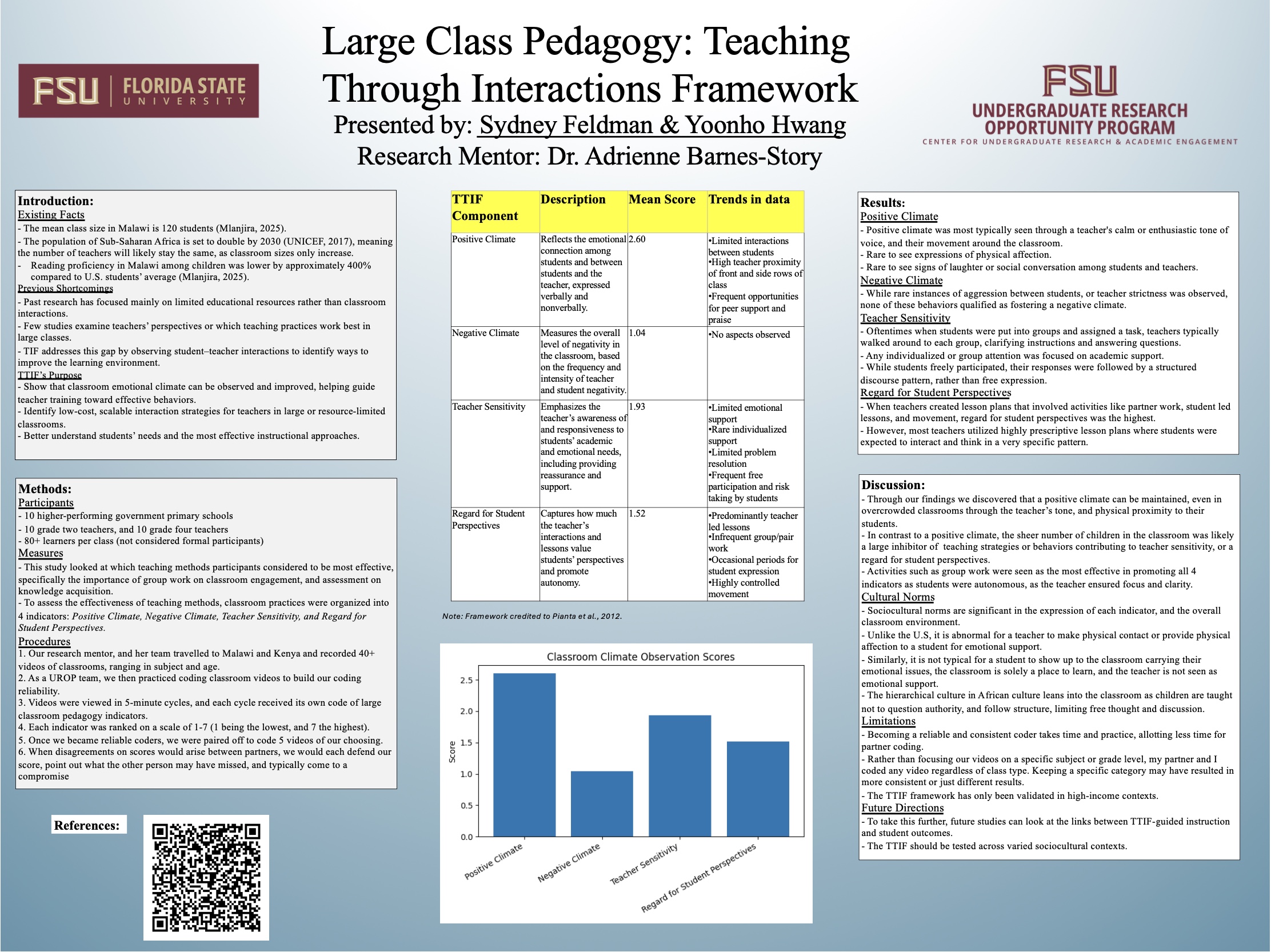
Large class sizes are a significant challenge in Sub-Saharan Africa, where rapid population growth and limited government support strain educational systems. In countries such as Malawi, and Kenya average classrooms are considerably larger than typical American schools, creating barriers to effective instruction and equitable access to quality education. Despite the prevalence of large classrooms, limited research has examined effective large-class pedagogical practices within this regional context.
This study aims to explore educators’ perspectives on large-class pedagogy, identifying perceived barriers and instructional strategies used to promote student engagement and learning. Participants were sampled from 6 Teacher Training Colleges, and 9 Teacher Training Schools, representing urban, peri-urban and rural schools. Patterns of instruction were observed in these classroom settings, and organized into four categories: Positive Climate, Negative Climate, Teacher Sensitivity and Regard for Student Perspectives.
Future research should assess the effectiveness of instructional strategies on student outcomes and inform policy support for large-class environments.
Keywords: Teaching Through Interactions Framework
26th annual Undergraduate Research Symposium, April 1, 2026
Sofia Arango Poster Session 4: 3:00 pm - 4:00 pm / Poster #283
BIO
Sofia Arango is a first generation college student and Political Science major in the Presidential Scholars Program. Originally from Miami, Florida, she spent much of her childhood growing up in Medellín, Colombia. She is interested in research that explores the intersection of public policy, lobbying, and government decision making. Sofia currently serves as a legal intern and plans to attend law school to pursue a career as an attorney. She is also committed to community engagement and volunteers at the FSU Food Pantry and in voter registration initiatives.
Transparency in Florida Lobbying
Authors: Sofia Arango, James StricklandStudent Major: Political Science
Mentor: James Strickland
Mentor's Department: Political Science Mentor's College: College of Social Science and Public Policy Co-Presenters: Ali Kathryn Schulz, Jonathan Espinoza, Emilee Nevaril, Sophie Scherer, and Isabella Barzaga
Abstract
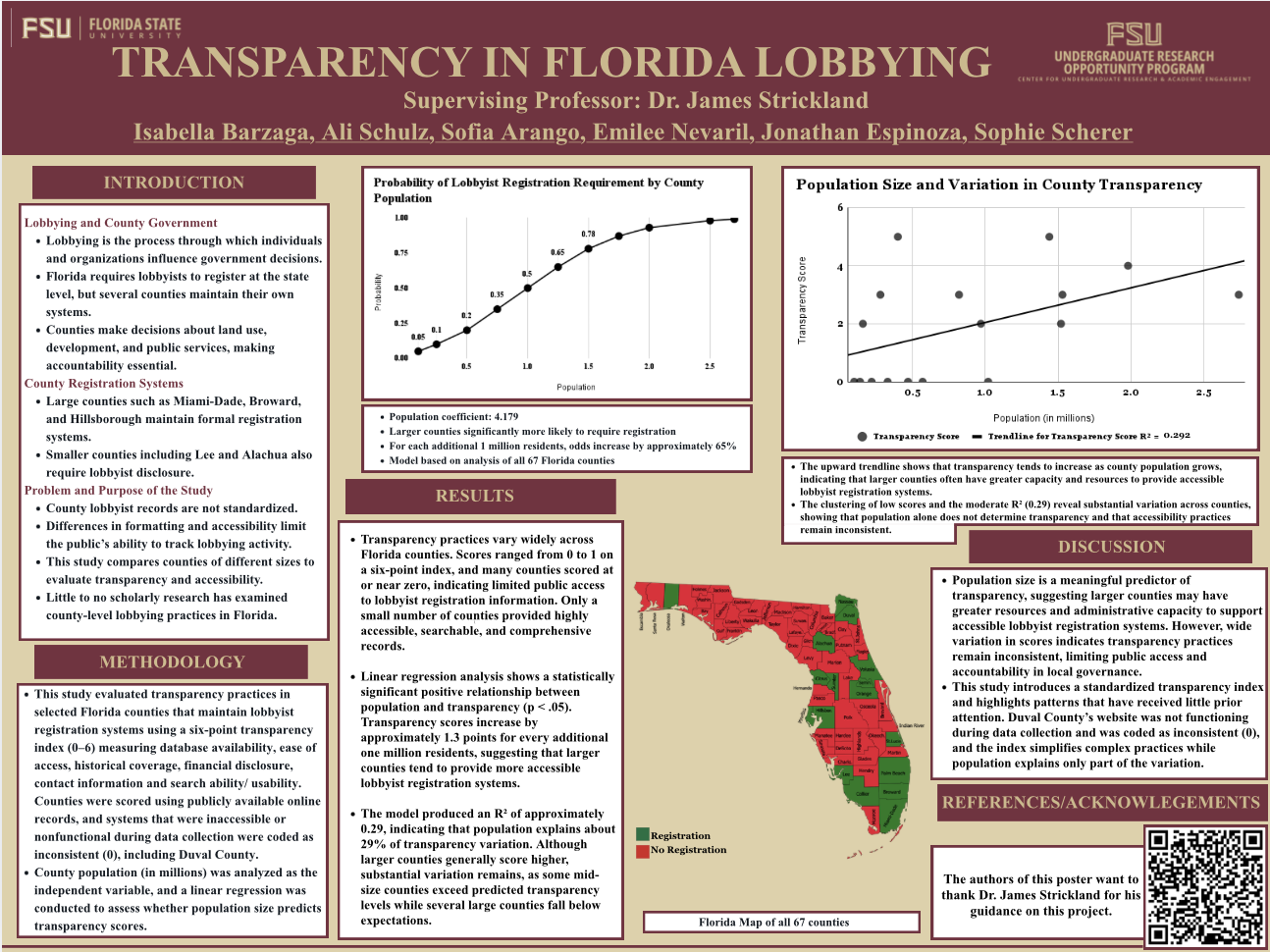
Across the counties of Florida, there is significant variation in how lobbying records are maintained and made available. Lobbying, attempting to influence legislative processes through oral or written communication, is an essential part of the legislative process, and registration of lobbyists is important for transparency and accountability in local governments. This research utilized online county websites to examine the gaps in the current lobbyist database across all 67 counties of Florida. By accessing each website on a 6-factor scale, each county was assigned a transparency score, and then transparency scores were compared across counties. Results found that the overwhelming majority of Florida counties lack a lobbyist database. Out of those that do provide a database, many scored low on the transparency scale due to difficulty of website navigation, lack of contact information, little historical lobbying data, etc. By assessing and comparing these record differences, this research demonstrates how the overall lack of lobbyist data decreases accountability of local governments, can create a sense of distrust among the government and constituents, and prevents constituents from knowing who influences local government decisions. Additionally, this lack of transparency makes it hard for citizens to be informed when voting for politicians and propositions. Based on the research collected, this project helps bring more transparency and accountability to and begins to close gaps in lobbyist data collection.
Keywords: Political Science, Lobbying, Policy, and Lobbyist.
26th annual Undergraduate Research Symposium, April 1, 2026
Aubrey Donehoo Poster Session 3: 1:45 pm - 2:45 pm / Poster #107
BIO
Aubrey Donehoo is from Naples, FL and a senior majoring in Communication Sciences and Disorders. She will graduate in Fall 2026 and plans to pursue a master's degree in Speech-Language Pathology with the goal of becoming a licensed speech language pathologist (SLP). During her time at Florida State University, she worked under Dr. Richard Morris on his personal research and is now completing her Honors in the Major thesis project under his mentorship. Her research interests are primarily within voice and resonance, with a personal passion for the singing voice. Aubrey is especially interested working alongside vocal musicians and learning how clinical voice sciences can support vocal music performance and vocal health.
Developing a Voice Quality Survey: A Qualitative Review
Authors: Aubrey Donehoo, Dr. Richard MorrisStudent Major: Communication Sciences and Disorders
Mentor: Dr. Richard Morris
Mentor's Department: Communication Sciences and Disorders Mentor's College: College of Communication and Information Co-Presenters:
Abstract
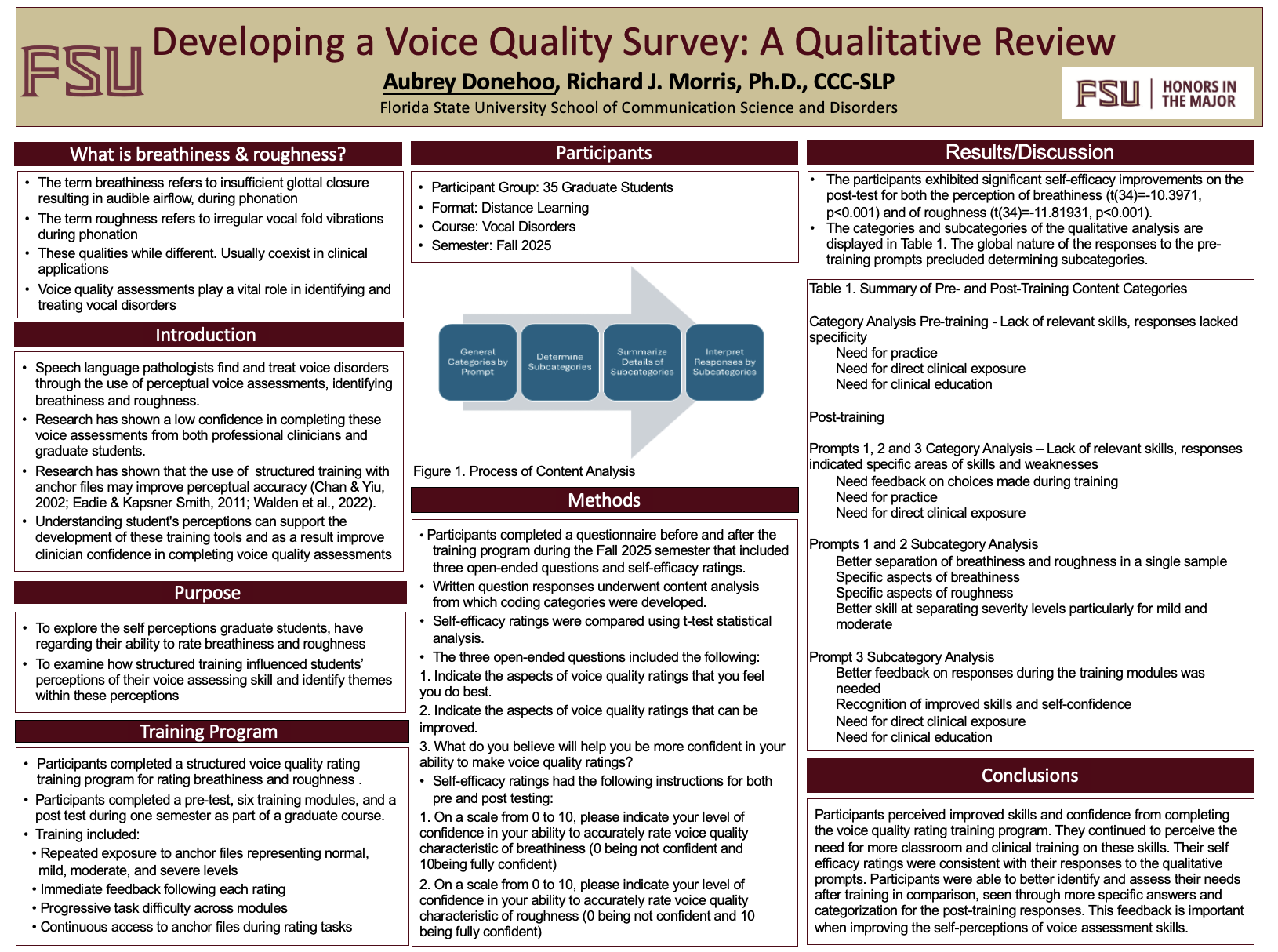
This Honors in the Major project explores how graduate students describe their self efficacy and experiences when learning to rate breathiness and roughness, two core dimensions of voice quality. Students and speech language pathologists often report low confidence and discomfort rating voice quality features. Previous research has demonstrated that structured training, such as repeated exposure to voice samples, the use of anchor samples, and guided reflective practice can improve the rating accuracy and consistency of students. However, less is known about how students feel regarding their own developing skills during this training process.
This qualitative study utilized pre and post training surveys consisting of two self efficacy ratings and three short answer prompts. The prompts ask students to identify aspects of voice quality rating they feel most confident in, areas needing improvement, and factors that would increase their confidence. When completed, the essay responses underwent a content analysis to identify the themes related to confidence, training construction, and clinical skills.
This study’s goal is to better understand how students think and feel about their developing perceptual skills and how these training modules influence their thoughts, with the overarching goal of guiding future instructional approaches in voice assessment. Results show that the use of training modules improve student’s personal confidence in performing voice quality assessments and that there are extensive measures to be taken to increase clinical confidence this area of skill.
Keywords: voice, speech therapy, qualitative, vocal, breathiness, roughness
26th annual Undergraduate Research Symposium, April 1, 2026
Wendy Xie Poster Session 4: 3:00 pm - 4:00 pm / Poster #78
BIO
Wendy Xie is a freshman at Florida State University participating in the Undergraduate Research Opportunity Program (UROP), a program within the Center for Undergraduate Research and Engagement (CRE). She is pursuing a Bachelor of Science in Psychology with a minor in English while also on the pre-law track. Through the guidance of her research mentor, Yarui Chen, and their advisor, Dr. Beth M. Phillips, Wendy has developed stronger analytical, attention to detail, coding, communication, and comprehension skills while being able to gain hands-on experience in the research process. As a result of her dedication to the research, she was offered an opportunity to continue working under their lab through Directed Individual Study (DIS). In the future, she plans to further expand her research experience by applying for additional DIS and research opportunities.
Wendy's future goals include continuing her education in graduate school. She is interested in applying to a psychology program with the goal of obtaining a Doctor of Psychology (PsyD) and becoming a licensed psychologist. She is dedicated to providing support to individuals in need and assisting in their well-being. Additionally, she is also interested in applying to law school to pursue a Juris Doctor (J.D.), in hopes of becoming a criminal defense attorney. She is passionate about promoting justice and advocating for protecting individuals' rights.
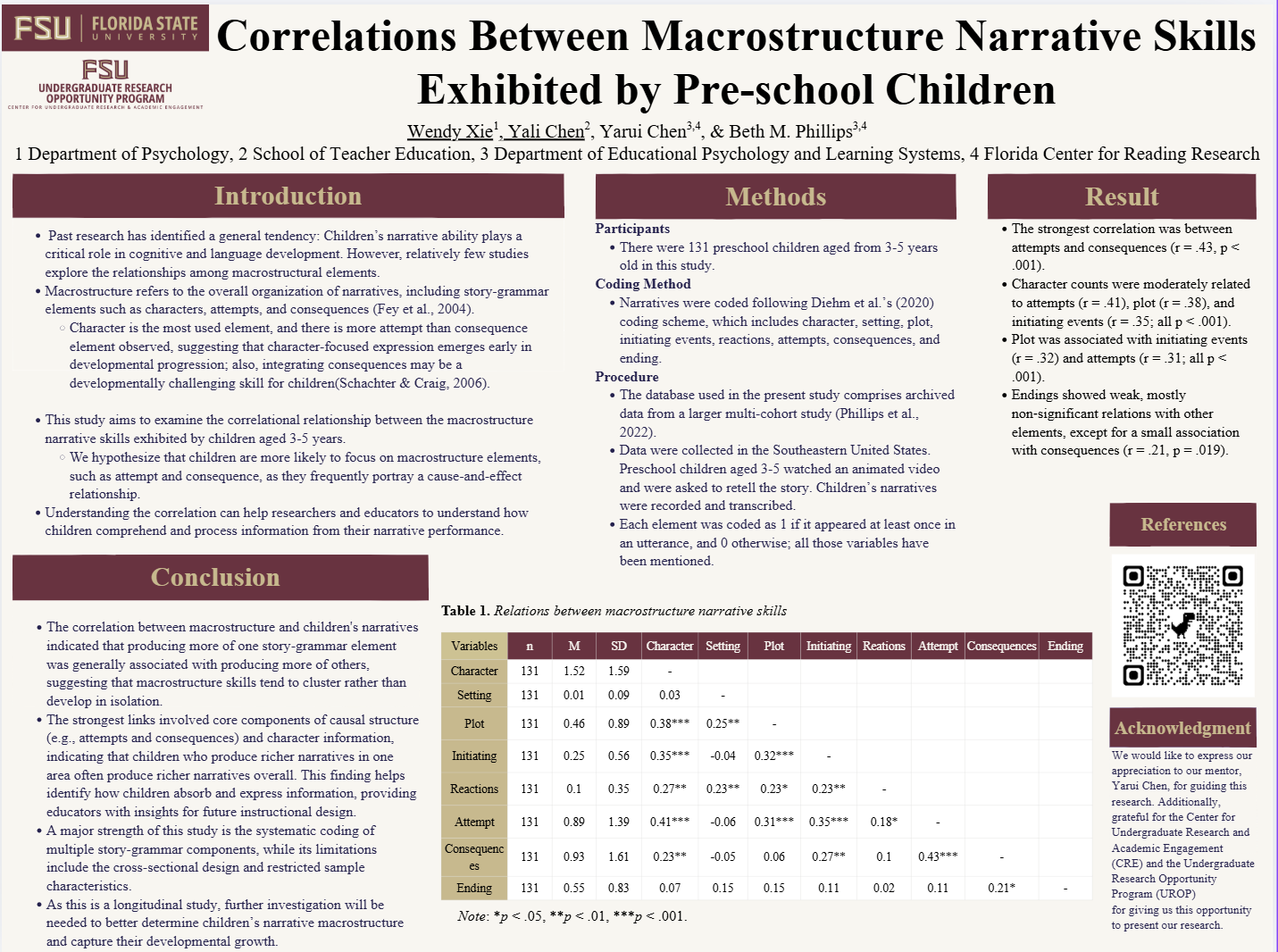
Correlations Between Macrostructure Narrative Skills Exhibited by Pre-school Children.
Authors: Wendy Xie, Yarui ChenStudent Major: Psychology
Mentor: Yarui Chen
Mentor's Department: Department of Educational Psychology and Learning Systems Mentor's College: Florida Center for Reading Research Co-Presenters: Yali Chen
Abstract
Past research has identified a general tendency: children’s narrative ability aligns with their cognitive and learning development. One study found more frequent use of attempt than consequence descriptions in children when retelling narratives, possibly indicating that consequences are a more challenging element for children to include (Schachter & Craig, 2006). This research aims to examine the relationship between macrostructure elements in children's oral narratives exhibited by 3-5 years old preschool children. We hypothesize that children tend to focus more on macrostructural elements (e.g., attempt and consequence) because these elements often reflect cause-and-effect relationships. The children are shown a series of cartoon videos, and then tasked to retell the story. We coded narratives using Diehm et al.’s (2020) scheme, including character, setting, plot, initiating events, reactions, attempts, consequences, and ending. Each element was scored 1 if present, 0 if not. The results indicated that producing more of one story-grammar element was generally associated with greater production of others, suggesting that macrostructure skills tend to cluster rather than develop in isolation. Equipped with this insight, educators can gain a deeper understanding of young learners’ developmental needs and subsequently design more targeted instructional strategies to support narrative skill growth.
Keywords: Pre-School Children Macrostructure Narrative Skills
26th annual Undergraduate Research Symposium, April 1, 2026
Melanie Polanco Poster Session 2: 10:45 am - 11:45 am / Poster #242
BIO
Melanie Polanco is a current Sophomore majoring pursuing a Bachelors of Science in Chemical-Materials Engineering with a minor in STEM Entrepreneurship. She is an Undergraduate Research Opportunity Program (UROP) student. Melanie is conducting research on corrosion mechanisms, their responses to conductive fluids, and their interactions with applied magnetic fields under the mentorship of Dr. Liu in the Department of Materials Science & Engineering. Her research is relevant to prospective nuclear fusion systems. Melanie's research involves design using modelling software such as AutoCAD & Fusion 360, as well as the creation and analysis, and data extraction of COMSOL Multiphysics simulations. She is interested in pursuing a career in advanced materials and energy systems and plans to continue with graduate studies in Materials Engineering.
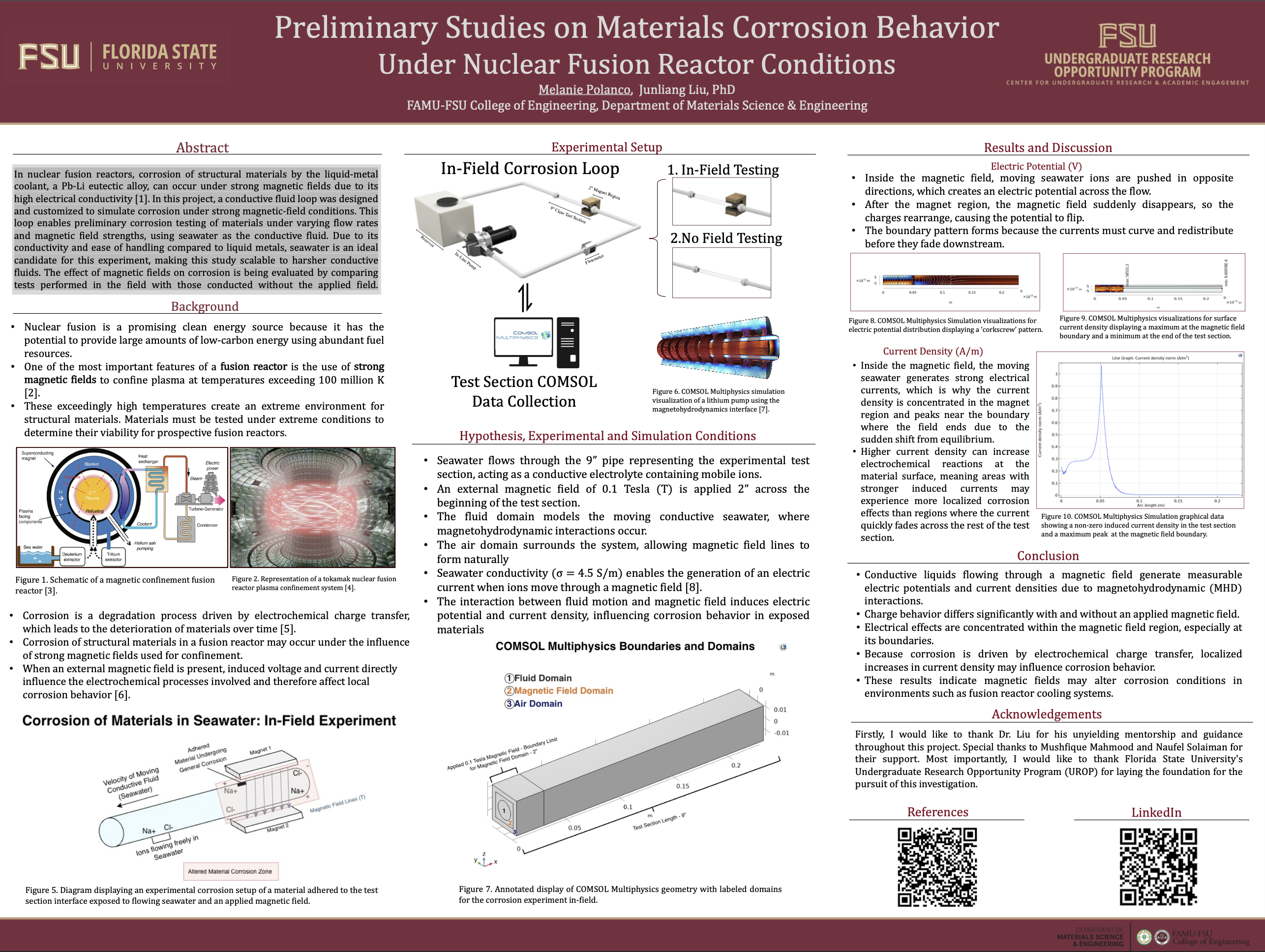
Preliminary Studies on Materials Corrosion Behavior Under Nuclear Fusion Reactor Conditions
Authors: Melanie Polanco, Junliang LiuStudent Major: Chemical-Materials Engineering
Mentor: Junliang Liu
Mentor's Department: Materials Science & Engineering Mentor's College: FAMU-FSU College of Engineering Co-Presenters:
Abstract
In nuclear fusion reactors, corrosion of structural materials by the liquid-metal coolant, a Pb-Li eutectic alloy, can occur under strong magnetic fields due to its high electrical conductivity. In this project, a conductive fluid loop was designed and customized to simulate corrosion under strong magnetic-field conditions. This loop enables preliminary corrosion testing of materials under varying flow rates and magnetic field strengths, using seawater as the conductive fluid. Due to its conductivity and ease of handling compared to liquid metals, seawater is an ideal candidate for this experiment, making this study scalable to harsher conductive fluids. The effect of magnetic fields on corrosion is being evaluated by comparing
tests performed in the field with those conducted without the applied field.
Keywords: Materials, Materials Engineering, Nuclear, Fusion, Energy
26th annual Undergraduate Research Symposium, April 1, 2026
Yug Patel Poster Session 1: 9:30 am - 10:30 am / Poster #183

BIO
Yug Patel is a first-year honors student at Florida State University from Tallahassee, majoring in psychology. Yug plans to pursue medical school while also exploring research opportunities based on Yug's undergraduate experiences. Currently, Yug is working on a project comparing the computational performance of Python and Julia on Graphics Processing Units (GPUs) under professor Raghav Gn. at the FAMU-FSU College of Engineering. Outside of academics, Yug likes to play chess and spend time outdoors.
Python vs Julia: Computational Speed of Various Matrix Operations
Authors: Yug Patel, Raghav Gn. (Gnanasambandam)Student Major: Psychology
Mentor: Raghav Gn. (Gnanasambandam)
Mentor's Department: Industrial and Manufacturing Engineering Mentor's College: FAMU-FSU College of Engineering Co-Presenters: N/A
Abstract
Julia is a programming language designed to combine Python’s simplicity with the computational speed of C and similar languages. With the rise of neural networks (which make use of large matrix operations) in machine learning, this project looks at Julia’s performance compared to Python’s on CPU and GPU-based matrix operations such as addition, multiplication and fused multiply–add. GPUs were chosen for their ability to parallelize many simple operations using thousands of cores, including CUDA cores capable of performing multiplication and addition in a single clock cycle (fused multiply-add).
1000 repetitions of matrix operations on sizes ranging from 500×500 to 20000×20000 in 500 size increments using randomly generated values between 0 and 1 on an Nvidia RTX 5000 Ada Generation GPU and an AMD Ryzen Threadripper PRO 7985WX CPU. Results show Julia outperforming Python by 1–5% for addition, 2–6% for multiplication beyond sizes of 2500×2500 on the GPU. For fused multiply-add, Python and Julia essentially performed the same. Smaller matrices were excluded due to high variance and unreliability. CPU-based tests indicate Python performs better for addition and multiplication above 8,000×8,000 but struggles to compete in fused multiply-add.
These findings suggest that Julia could offer performance gains for large matrix operations, though further research is needed to determine whether these advantages exist in full neural network implementations, where Python’s mature ecosystem with libraries like CUDA and PyTorch could provide additional benefits and improved reliability. It would also be wise to test on more modern GPU’s such as Nvidia’s H200.

Keywords: Python, Neural, GPU, Julia, Programming
26th annual Undergraduate Research Symposium, April 1, 2026
Addison Smith Poster Session 2: 10:45 am - 11:45 am / Poster #156

BIO
Addison Smith is a first-year student from Tampa, FL, double-majoring in Criminology and Psychology. Expected to graduate in Fall 2027, she plans to eventually pursue a Master’s in Criminology. Through UROP, Addison is gaining research experience by assisting with a project on the philanthropy of disaster aid in Florida. The project, led by Dr. David Berlan, focuses on measuring aid quantity and recovery efforts.
Barriers in Disaster Response & Recovery
Authors: Addison Smith, Dr. David BerlanStudent Major: Criminology & Psychology
Mentor: Dr. David Berlan
Mentor's Department: College of Social Sciences and Public Policy Mentor's College: Askew School of Public Administration and Policy Co-Presenters:
Abstract
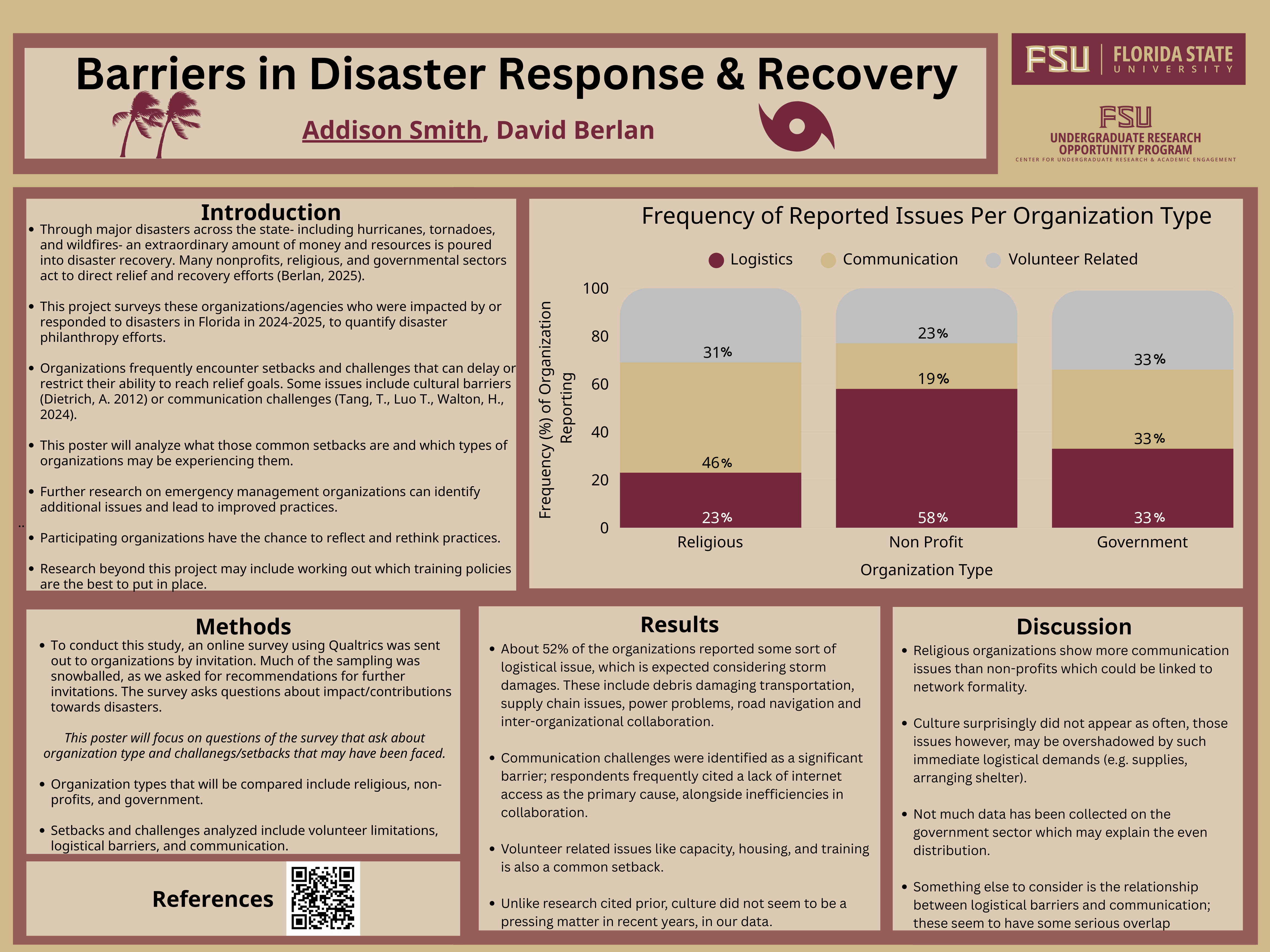
Through major disasters across Florida, including hurricanes, tornadoes, and wildfires, an extraordinary amount of money and resources get poured into disaster recovery. However, there are barriers to success that organizations face. With data collected through surveying disaster philanthropy, this project answers: What challenges and setbacks do different types of disaster relief organizations face? We reached out to organizations (e.g. religious non-profits, government, non-profits, etc.) across the state of Florida who we invited to take a Qualtrics survey which asked questions about their involvement in disaster philanthropy. Their answers uncover hidden philanthropy in communities or hidden issues in providing disaster relief. Part of the survey will ask about setbacks faced by organizations; they will choose from lists that include logistical barriers, culture/language barriers, limited volunteer capacity, regulatory restrictions, or other. These will be compared between organization types (religious/FBO, secular non-profit, government). This can uncover issues among organizations in emergency management practices and where improvements can occur, informing those crafting policies or training management and employees how to handle issues. For example, organizations can train staff to handle common cultural boundaries, like language barriers. This can also be beneficial to these organizations to reflect on where they can adjust management policies. Future research may include working out which training policies are the best to put in place.
Keywords: Disaster, Recovery, Challenges, Barriers, Philanthropy
26th annual Undergraduate Research Symposium, April 1, 2026
Sofia Martinez Poster Session 3: 1:45 pm - 2:45 pm / Poster #45

BIO
Sofia Martinez is a second year student at Florida State University pursuing dual Bachelor of Science degrees in Nursing and Public Health on the pre-med track, with minors in Social Welfare and Chemistry. She chose to major in Nursing because it allows her to gain hands on clinical experience and a deeper understanding of patient care while preparing for to become a well-rounded physician.
Through the Undergraduate Research Opportunity Program, she conducts research focused on maternal and infant health under the mentorship of Dr. Bahorski. Her work explores maternal wellbeing during the postpartum period, including factors that influence recovery and support for new mothers. Her research interests are driven by her passion for improving outcomes for mothers and infants and by the fact that many areas of women’s health remain under researched, particularly postpartum recovery and maternal support.
In addition to research, Sofia serves as a Learning Assistant for Microbiology for Health Sciences where she helps support student learning in the classroom. As an aspiring pediatrician, she hopes to work with underserved communities and continue contributing to research that improves care and support for mothers, children, and families.
Breastfeeding and Postnatal Depression
Authors: Sofia Martinez, Dr. Jessica BahorskiStudent Major: Nursing and Public Helth
Mentor: Dr. Jessica Bahorski
Mentor's Department: Nursing Mentor's College: College of Nursing Co-Presenters:
Abstract
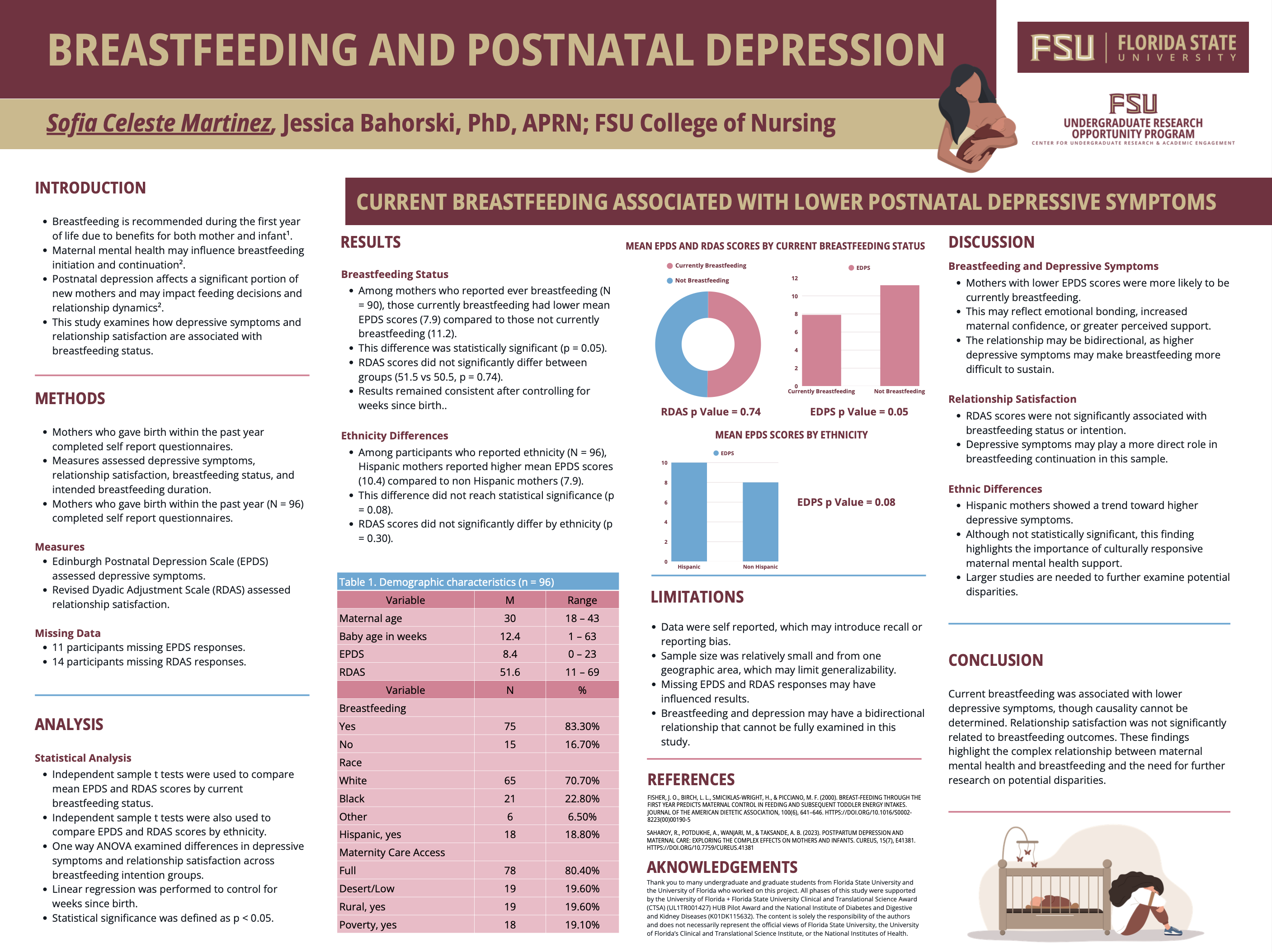
Breastfeeding is recommended for the first year of life. Maternal support and mental health can influence breastfeeding. The goal of this research is to explore how a mother’s relationship and depression correspond to breastfeeding.
Mothers who gave birth within the year completed two validated measures: the Revised Dyadic Adjustment Scale (RDAS), which evaluates relationship satisfaction, cohesion, and agreement with a partner; and the Edinburgh Postnatal Depression Scale (EPDS), which screens for postnatal depressive symptoms. These scores were compared to current breastfeeding status and breastfeeding intention. Statistical tests included t tests and ANOVA, with linear regression used to control for weeks since birth.
For mothers who reported ever breastfeeding (N=90), the moms who were currently breastfeeding had a lower mean EPDS score (7.9) compared to those who were not currently breastfeeding (11.2), this difference was significant (p=0.05). RDAS scores were similar between groups and did not reach statistical significance (51.5 breastfeeding vs. 50.5 not breastfeeding; p=0.74). Results remained consistent when controlling for weeks since birth. Among the mothers who were currently breastfeeding (N=75), breastfeeding intentions (less than 6 months vs. 6–12 months vs. over 12 months) were not related to EPDS scores (p=0.96) nor RDAS scores (p=0.88).
Mothers who were currently breastfeeding reported lower depressive symptoms than those who were not breastfeeding. This may suggest that breastfeeding promotes emotional closeness and confidence, which improves maternal wellbeing. It is also possible that mothers experiencing higher depressive symptoms may find breastfeeding more challenging to sustain, which could reduce the duration of breastfeeding.
Keywords: Postpartum, Maternal, Infant, Women, Depression
26th annual Undergraduate Research Symposium, April 1, 2026
Elizabeth Cappiello Poster Session 1: 9:30 am - 10:30 am / Poster #103
BIO
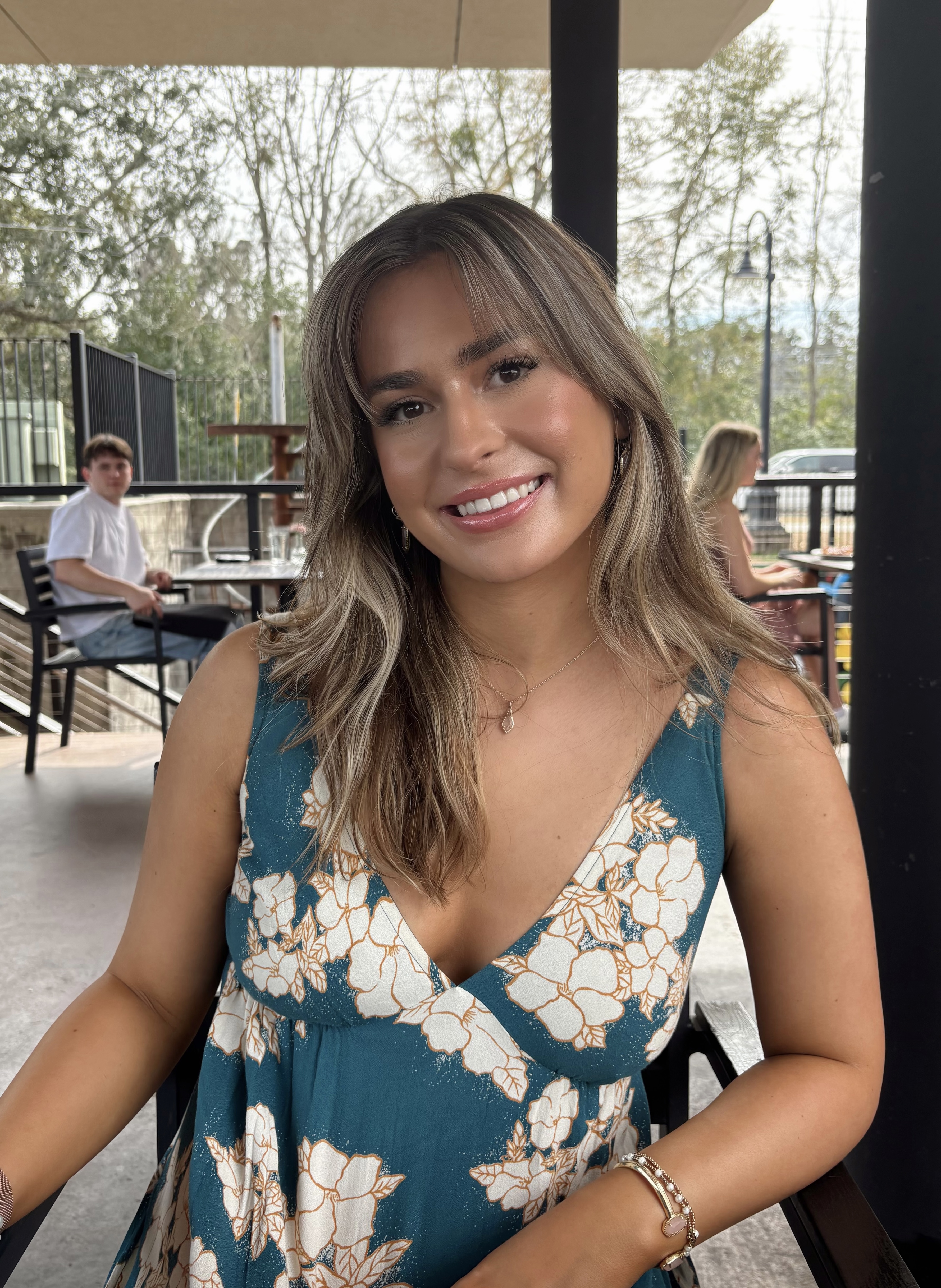
Elizabeth Cappiello is a second-year undergraduate student pursuing a Bachelor of Science in Nursing with a minor in child development. Through her involvement in the Undergraduate Research Opportunity Program (UROP) at Florida State University, she has developed an interest in examining how environmental and social factors influence health, particularly among women, vulnerable populations, and children. Elizabeth is conducting research under her UROP mentor, Dr. Jessica Bahorski, examining infant feeding practices among low-income mothers enrolled in government-funded programs and developing interventions to support them. Elizabeth is passionate about providing compassionate, patient-centered care to support individuals and their families and to improve health outcomes, especially for vulnerable populations. At Florida State University, she has gained valuable experience in reviewing scientific literature, data analysis, collaboration, and critical thinking. After earning her Bachelor of Science in Nursing, Elizabeth plans to pursue a career as a registered nurse, where she hopes to become an advocate for her patients, promote preventative care, and improve the health of the communities she serves.
Infant Feeding Practices Amongst Low-Income Mothers In Government Programs
Authors: Elizabeth Cappiello, Jessica BahorskiStudent Major: Nursing
Mentor: Jessica Bahorski
Mentor's Department: Nursing Mentor's College: College of Nursing Co-Presenters:
Abstract
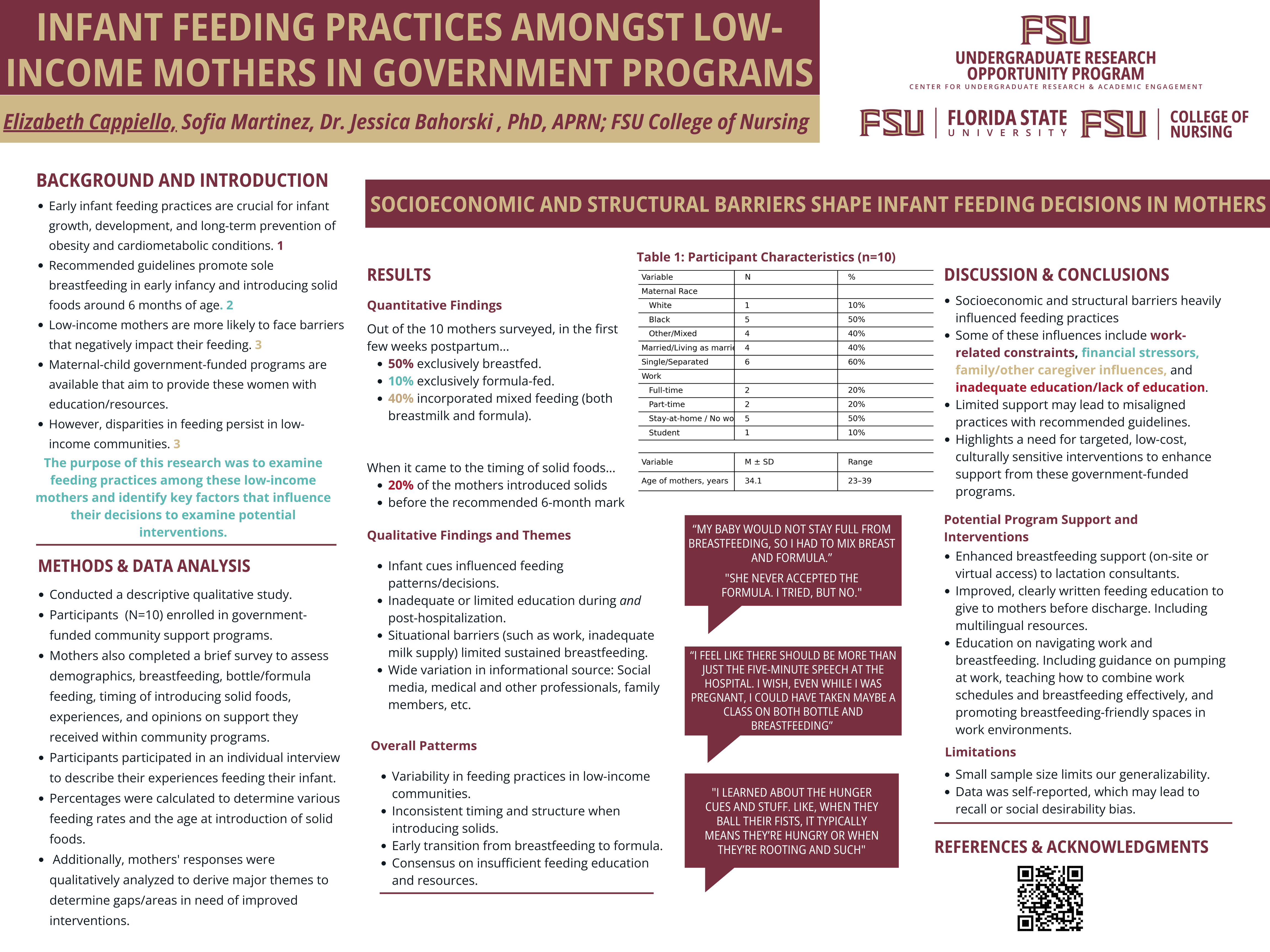
Infant feeding practices during the first few years of life are crucial for promoting healthy growth, development, and for preventing long-term health outcomes such as obesity and related cardiometabolic conditions. Low-income mothers face heightened challenges that impact their decisions relating to breastfeeding, bottle feeding, and the timing of introducing solid foods. The purpose of this research was to examine feeding practices among this population and identify key factors that influence their decisions. Data was collected from mothers participating in government-funded support programs. Participants (N=10) completed a survey that gathered demographic information and infant feeding practices. Participants then completed an individual interview to provide additional information regarding factors that influenced these practices. Results indicated that 50% of these mothers breastfed exclusively in the first few weeks postpartum, 40% mixed breastfeeding with formula, and 10% fed formula exclusively. Additionally, 20% provided solid foods before the recommended 6-month marker. The qualitative data resulted in themes of infant cues, lack of/poor education, and situations that limit breastfeeding. Influences on these patterns included work-related constraints, financial stressors, limited access to resources, and family/other caregiver influences. This suggests that feeding practices among these low-income mothers are heavily influenced by socioeconomic and structural barriers. Limited support and resources may lead mothers to adopt feeding practices that may not align with recommended guidelines and require improvement to reduce health disparities and produce healthy long-term outcomes. This highlights a significant need to create targeted, low-cost, and culturally sensitive interventions to enhance support for these mothers.
Keywords: Feeding, infants, socioeconomic, maternal, nutrition
26th annual Undergraduate Research Symposium, April 1, 2026
Ha Phuong Nguyen Poster Session 1: 9:30 am - 10:30 am / Poster #227

BIO
Phuong Ha Nguyen is a dedicated undergraduate student at Florida State University, currently pursuing a Bachelor of Science in Biomedical Engineering with minors in Biological Sciences and Computer Science. Maintaining a 3.80 GPA, Phuong is currently in her second year of study and expects to graduate in May 2028. She has earned a Gold Medal in the Environmental Science category and a Special Award from the Malaysia Young Scientists Organization at the Youth International Science Fair 2023 in Bali, Indonesia.
Phuong's extensive research background is marked by a commitment to utilizing engineering principles to solve biological challenges. Phuong gained valuable clinical experience as a Laboratory Technician Intern at Vietnam Green Veterinary Joint Stock Company, performing diagnostic tests using PCR and real-time PCR. Phuong is also currently a Course-based Tutor for General Chemistry at the ACE Learning Studio, helping peers master complex problem-solving skills. She holds a leadership role as the Secretary for the FSU Badminton Club. Driven by a desire to bridge the gap between technology and healthcare, Phuong intends to pursue further research opportunities specifically focused on medicine and bioinformatics.
Food is the best medicine: developing starch with controlled digestion
Authors: Ha Phuong Nguyen, Yimin MaoStudent Major: Biomedical Engineering
Mentor: Yimin Mao
Mentor's Department: Chemical and Biomedical Engineering Mentor's College: FAMU-FSU College of Engineering Co-Presenters:
Abstract
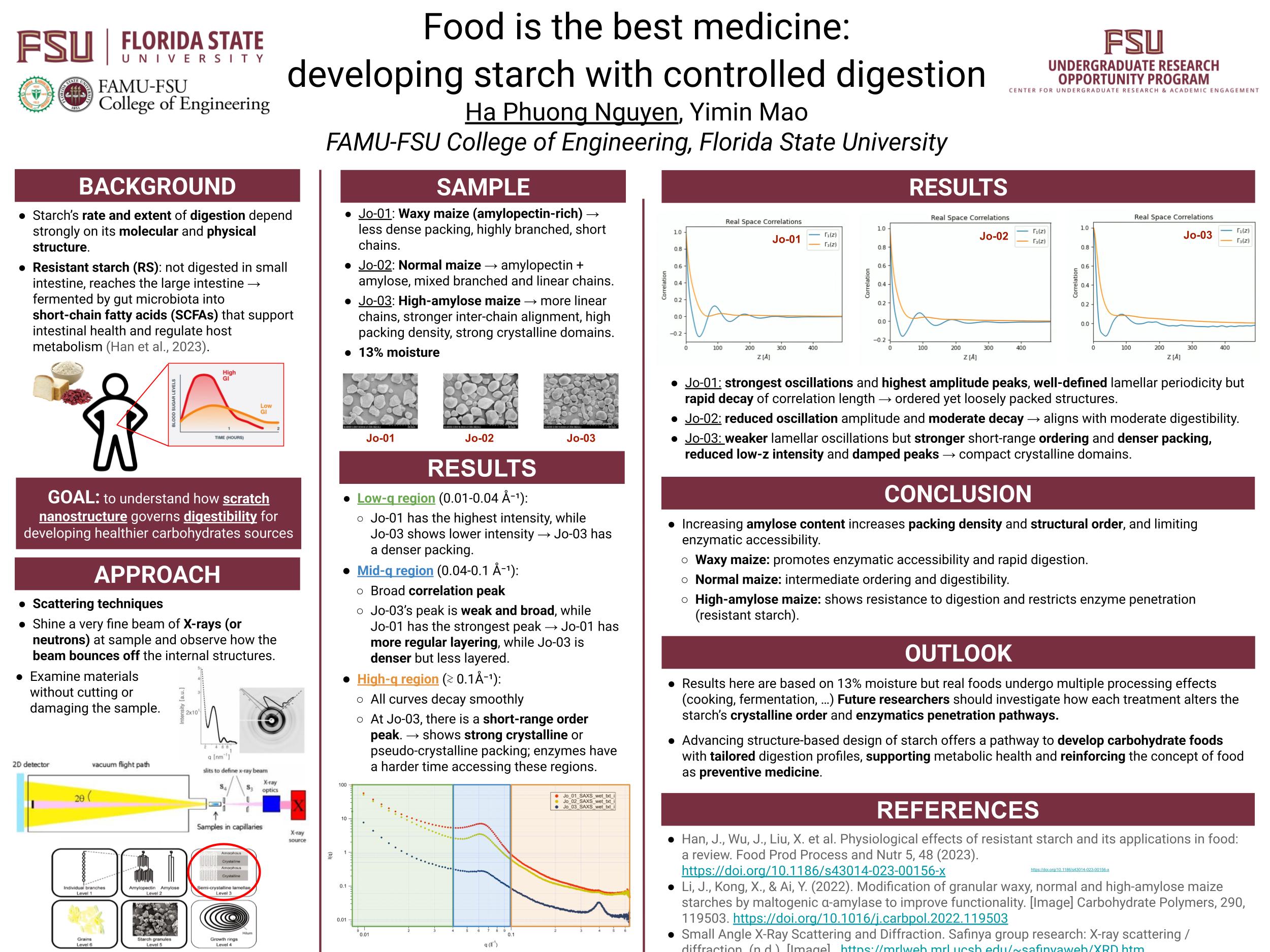
Starch is a major dietary carbohydrate that provides energy through enzymatic digestion, yet its rate and extent of digestion depend strongly on its molecular and physical structure. Certain starches, known as resistant starch (RS), are not digested in the small intestine and instead reach the large intestine. Because it is not rapidly converted into glucose, it leads to lower postprandial blood sugar and insulin responses and is associated with improved insulin sensitivity and lipid metabolism, reducing the risk of metabolic disorders. This study will help understand how starch structure governs digestibility for developing healthier carbohydrate sources. We apply the scattering technique to probe the internal nanostructure of three maize starches with distinct architectures: waxy maize (amylopectin-rich, highly branched), normal maize (mixed amylose/amylopectin), and high-amylose maize (predominantly linear chains). This technique enables non-destructive characterization of amorphous and crystalline domains that are directly linked to enzymatic accessibility. Our results demonstrate that starch digestibility is governed primarily by internal structural organization rather than chemical composition alone. Linear amylose promotes dense crystalline alignment that limits enzyme access, whereas extensive branching prevents tight packing and accelerates digestion. Understanding and controlling these structure-function relationships provides a rational framework for developing starch-based foods with tailored digestion profiles, supporting metabolic health, and reinforcing the concept that food can function as preventive medicine.
Keywords: starch, scattering techniques, amylose content
26th annual Undergraduate Research Symposium, April 1, 2026
Finn Johnson Poster Session 1: 9:30 am - 10:30 am / Poster #55

BIO
Finn Johnson is a second-year undergraduate student majoring in Political Science and Interdisciplinary Social Science. He is passionate about urban planning, particularly affordable housing policy. Currently, he is conducting research on Low Income Housing Tax Credits and their relation to socio-demographics in the State of Florida. He is driven by his curiosity and desire to create meaningful change. He plans to continue similar research in graduate school.
Socio-Demographic Data of Opportunity and Non-Opportunity Tracts and Their Relation To LIHTC in Florida
Authors: Finn Johnson, Chao WangStudent Major: Political Science & Interdisciplinary Social Science
Mentor: Chao Wang
Mentor's Department: Urban and Regional Planning Mentor's College: College of Social Sciences and Public Policy Co-Presenters:
Abstract
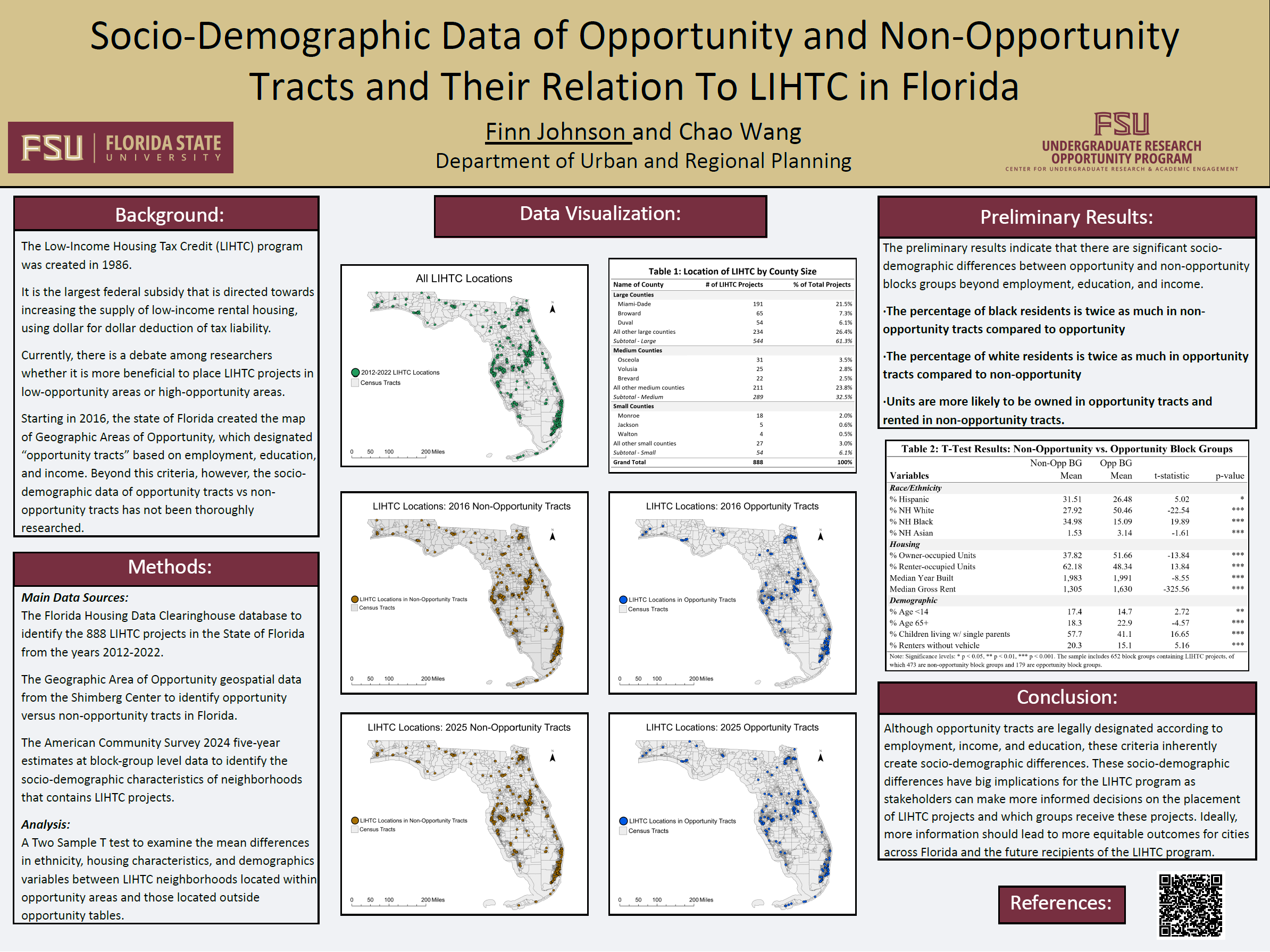
In 1986, the federal government created the Low-Income Housing Tax Credit (LIHTC) program, which is the largest federal subsidy that is directed towards increasing the supply of low-income rental housing, using dollar for dollar deduction of tax liability. Currently, there is a debate among researchers whether it is more beneficial to place LIHTC projects in low-opportunity areas or high-opportunity areas. Moreover, starting in 2016, the state of Florida created the map of Geographic Areas of Opportunity, which designated “opportunity tracts” based on employment, education, and income. This research asks how the socio-demographic and housing characteristics differ between designated opportunity and non-opportunity tracts. This study also aims to explore whether the location patterns of LIHTC projects have shifted after the creation of the 2016 opportunity map. To determine this, we used data from the Florida Housing Data Clearinghouse database and Geographic Area of Opportunity geospatial data from the Shimberg Center to identify the location of LIHTC projects being placed inside vs outside of designated area in the 2016 opportunity map. As the opportunity maps are updated each year by the state government, we ran a robustness test by using the 2025 opportunity map to explore the difference. The preliminary findings suggest that aside from employment, education, and income, opportunity tracts are whiter with higher share of renter occupied units. Further research can look into the differences between 4% and 9% tax credits and if those have been changed and in what ways since 2016.
Keywords: LIHTC, affordable housing, opportunity tracts
26th annual Undergraduate Research Symposium, April 1, 2026
Kennedy Milton Poster Session 4: 3:00 pm - 4:00 pm / Poster #120
BIO
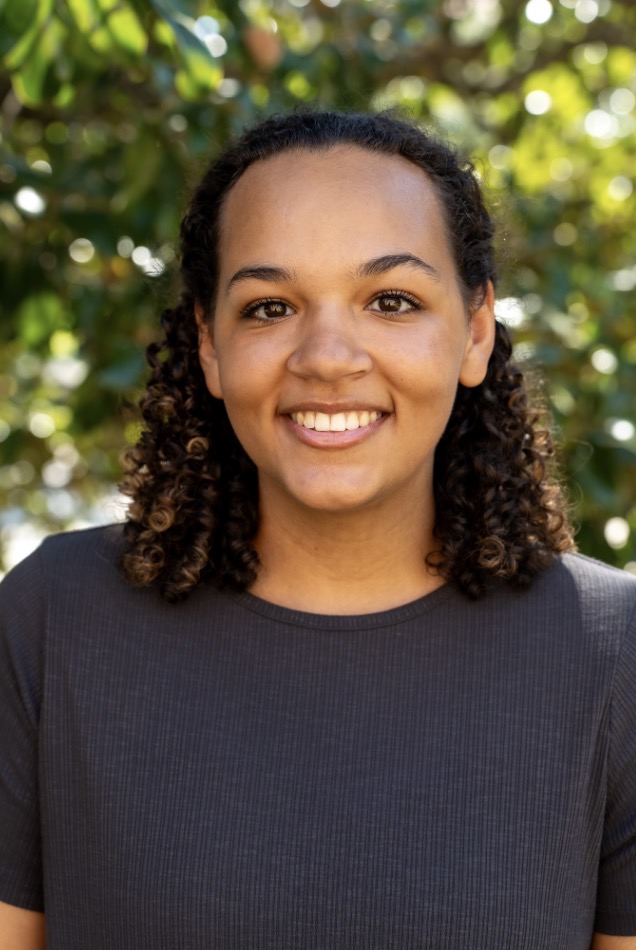
Hello! As a Tallahassee native, finding ways to serve and improve my community has always been a goal of mine. When I discovered the CSD major and learned that researchers such as Dr. Johnson have devoted significant time and resources to pursuing the same goal, I knew I had found my place. Under her guidance, I was able to develop an HITM project that allows me to explore a niche area within our field—specifically, the role of SLPs within courtrooms. Through this project, I am researching ways to better serve populations that have historically been overlooked at crucial moments in their lives, such as when they serve as witnesses in court cases. I hope to continue researching this area while pursuing a master’s degree and throughout my future career.
Perceptual Bias in the Courtroom: How Dialect can Shape Interpretations of Witness’ Testimony
Authors: Kennedy Milton, Dr. Lakeisha JohnsonStudent Major: Communication Science and Disorders
Mentor: Dr. Lakeisha Johnson
Mentor's Department: Communication Science and Disorders Mentor's College: College of Communication Co-Presenters:
Abstract
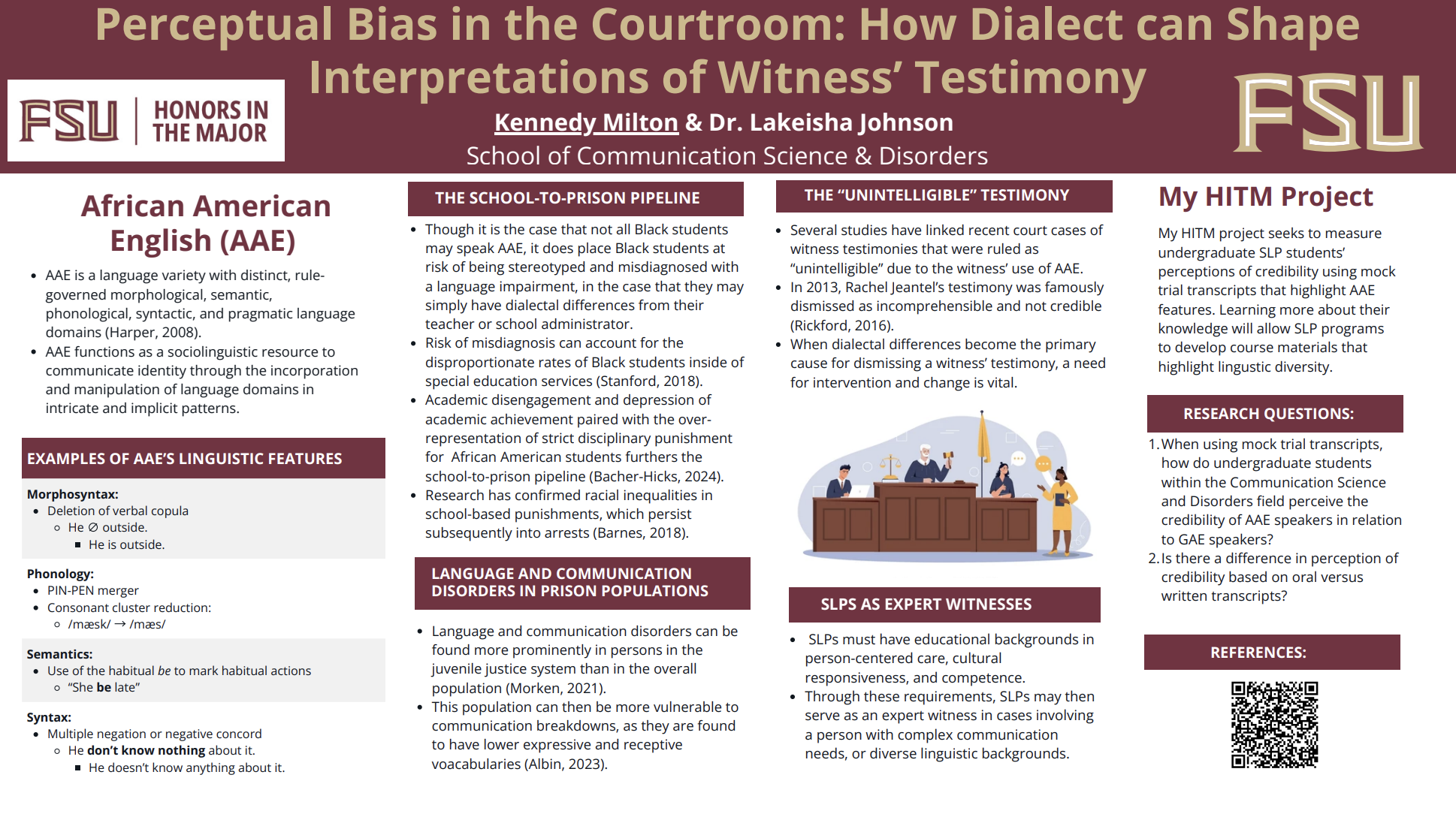
It is often the case that language and communication disorders can be found more prominently in persons in the juvenile justice system than in the overall population. There are several factors that could cause this effect, such as the school-to-prison pipeline. When looking further into prison populations, addressing the over-representation of African American students within this demographic leads to increasing concerns over their ability to have their testimony shared to an unbiased courtroom. Within the courtroom itself, there are several studies that have linked the use of African American English (AAE) to altered perceptions of individuals within the courtroom, such as court reporters and jurors. The repercussions of this can go as far as to change the actual testimony of the witness. To have a testimony deemed as "unintelligible" simply due to the use of dialect in the courtroom raises concerns for Speech Language Pathologists (SLPs), as this is a field that has extensive knowledge on dialect and linguistic diversity. There are opportunities for SLPs to serve as Expert Witnesses in situations like these, providing an unbiased opportunity to share witnesses testimonies to a courtroom, and ensure that linguistic discrimination does not occur. In order to ensure that SLPs are being adequately prepared in this situation, my project seeks to examine the perceptions of undergraduate students in SLP programs, to measure their perceived credibility of individuals that use AAE and General American English (GAE).
Keywords: AAE, Dialect, Courtroom