
Research Symposium
26th annual Undergraduate Research Symposium, April 1, 2026
Andrea Herzog Poster Session 3: 1:45 pm - 2:45 pm / Poster #275
BIO
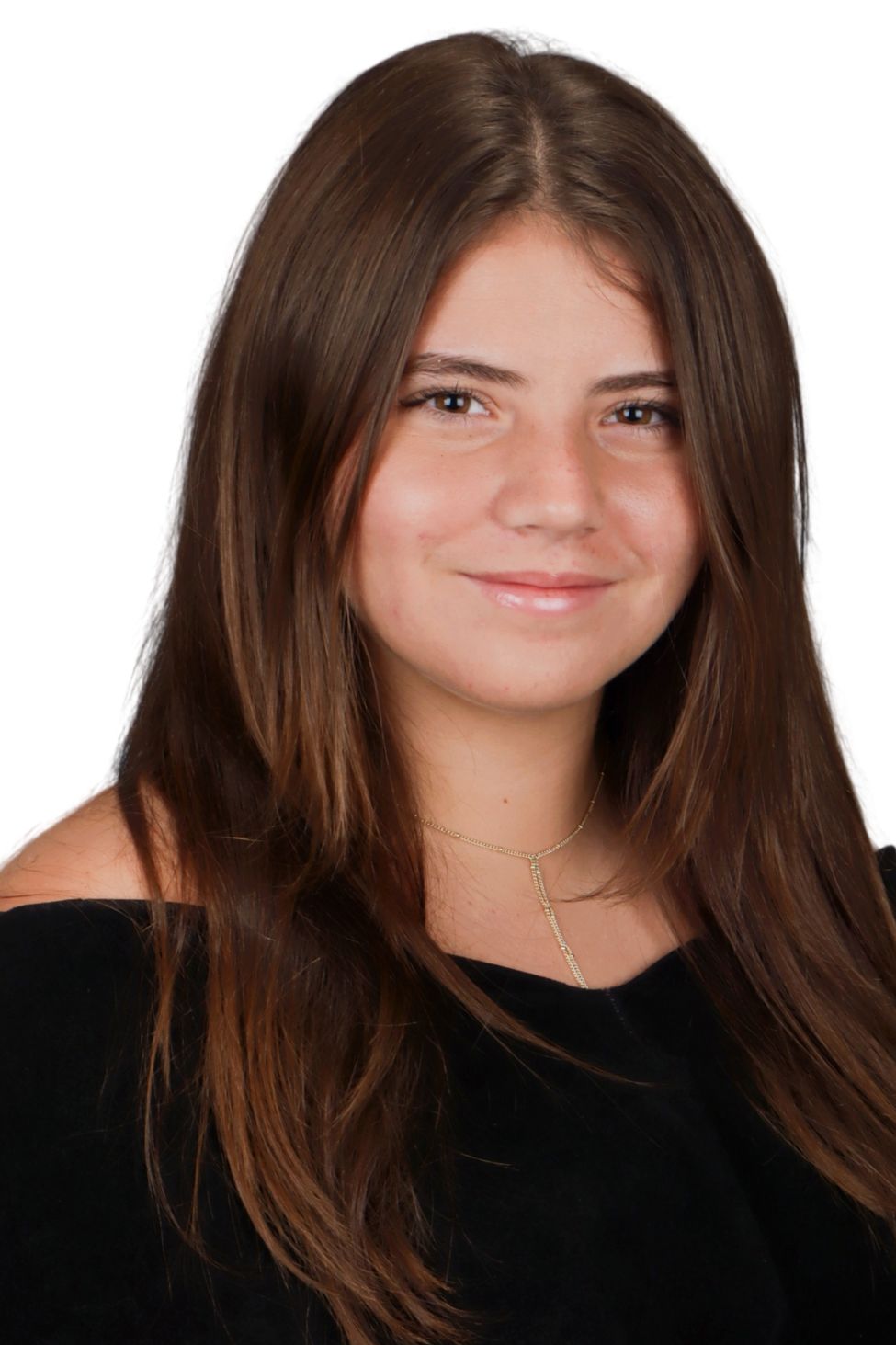
Andrea Herzog is an undergraduate student at Florida State University studying Biochemistry and Psychology on the pre-medical track. She is passionate about science, healthcare, and serving underserved communities. Andrea is involved in the Undergraduate Research Opportunity Program (UROP), where she gains hands-on research experience and develops scientific inquiry skills. She is also a member of Alpha Chi Sigma, the professional chemistry fraternity, collaborating with peers who share her commitment to scientific learning and professional growth. In addition, Andrea volunteers with Remote Area Medical (RAM), helping provide free medical services to underserved populations. Her academic and service experiences continue to prepare her for medical school and a future career in medicine.
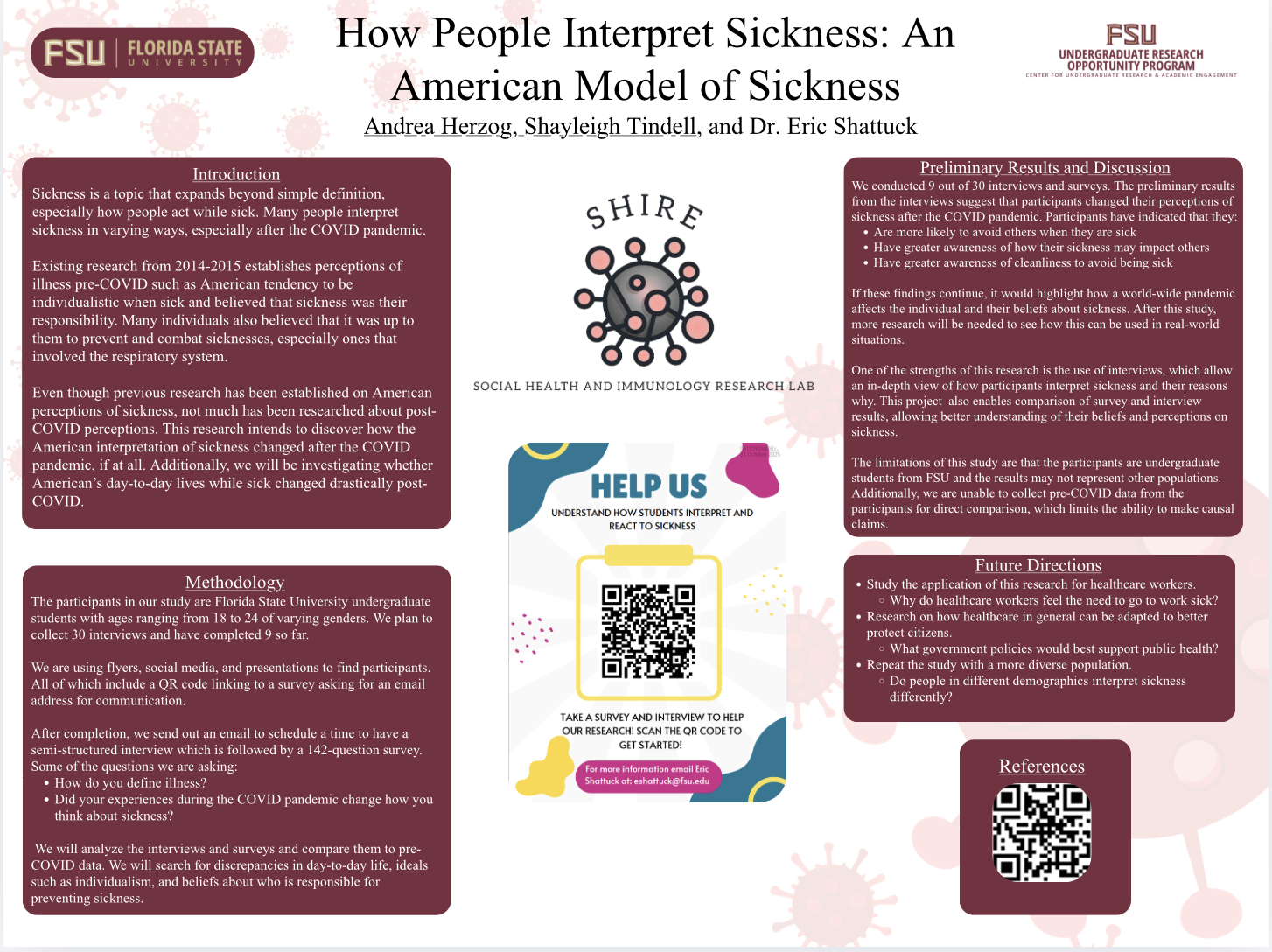
How People Interpret Sickness: An American Model of Sickness
Authors: Andrea Herzog, Eric ShattuckStudent Major: Biochemistry and Psychology
Mentor: Eric Shattuck
Mentor's Department: Anthropology Mentor's College: College of Arts and Sciences Co-Presenters: Shayleigh Tindell
Abstract
Research on illness is an important topic due to its widespread and life-threatening nature, and focusing on cultural differences on perceptions of sickness is critical for a better understanding of how culture can influence how people behave when sick or perceive sickness behaviors. We are investigating perceptions of sickness post-Covid in FSU students to establish a comparison with pre-Covid data collected in 2014-2015. This research will allow us to conduct further studies, such as cross-cultural comparisons, on why people behave the way they do when they are sick. We are recruiting participants that are 18 or older years old and Florida State students. We gathered data through a 142-question survey and through a semi-structured interview, where the interviewer was given a loose interview guide, specifically sections about what “normal and abnormal” symptoms and behaviors are, individual personality traits and how they affect sickness, and how the last time someone was sick was. Through this research, we are hoping to discover if people have become more sensitive towards the ideas of sickness and showcase more awareness of sickness behaviors when compared to pre-Covid data, especially regarding attending school or going to work. If this ends up coming into fruition, then it gives future research the opportunity to investigate this increased awareness to implement better sick day policies for employees and students and to promote better sickness safety regulations. Additionally, more research on this topic will be needed to test for cultural differences in sickness behaviors and perceptions.
Keywords: Sickness, COVID, and American
26th annual Undergraduate Research Symposium, April 1, 2026
Ella Osweiler Poster Session 2: 10:45 am - 11:45 am / Poster #137
BIO
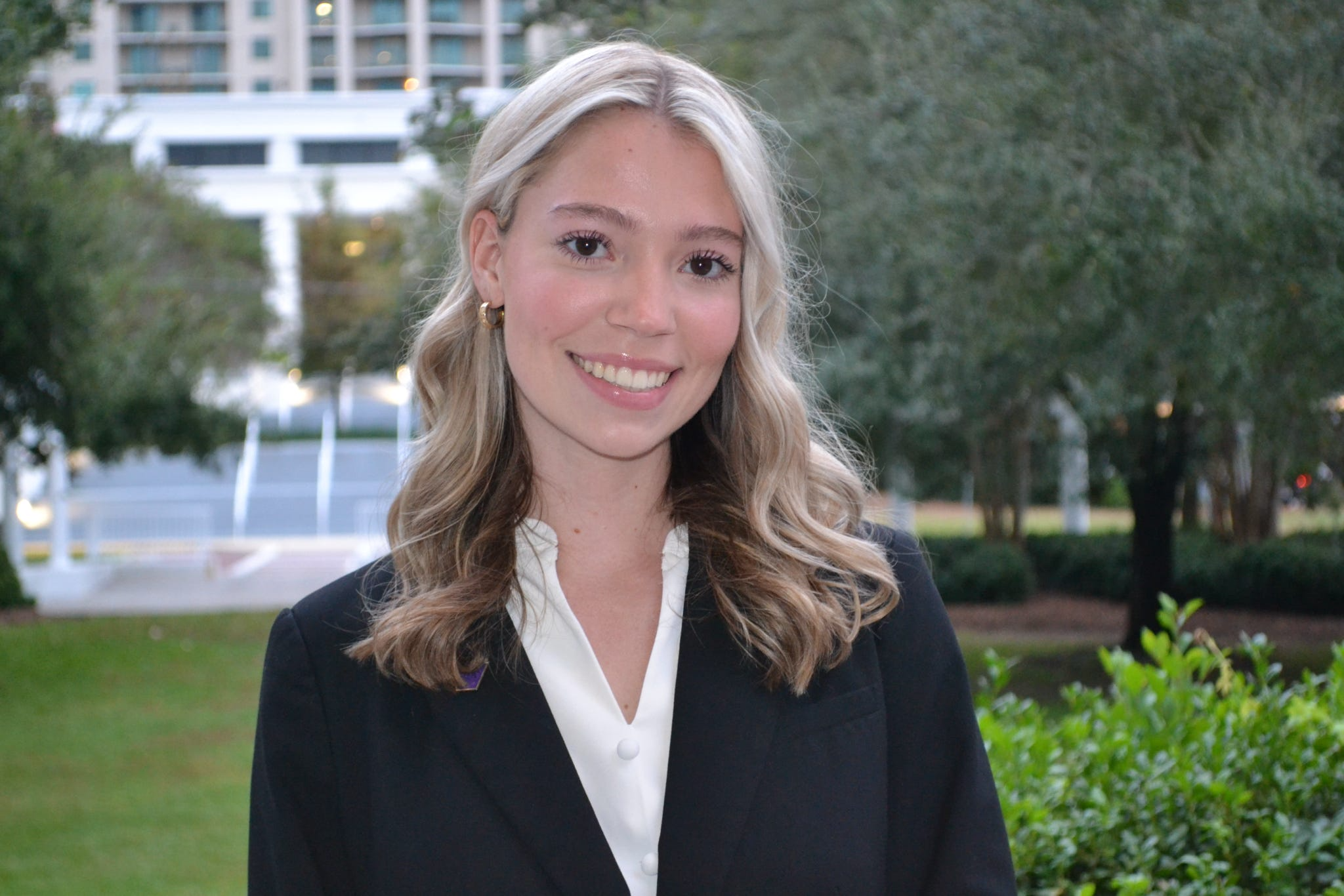
Ella Osweiler is a second-year Political Science and Criminology student at Florida State University, originally from New Port Richey, Florida, with a strong interest in law, policy reform, and equal access to justice. Ella is excited about her future and plans to pursue a career in law and politics. She has developed a strong interest in criminal defense and its role in protecting individuals' rights and upholding the integrity of the justice system. Her research with Jack Mills has further strengthened her passion for justice and ensuring fair representation and meaningful defense for those navigating the legal system. She currently serves as a full-time Investigative Intern with the Law Offices of the Public Defender for Florida's 2nd Judicial Circuit, where she conducts client intakes, reviews body camera footage, and observes trials, hearings, and jury selection. In addition to her experience, Ella is actively involved in campus leadership, serving as Philanthropy Chair for Phi Alpha Delta, where she leads fundraising efforts benefiting the Legal Aid Foundation, and as a High School Associates of Arts Degree mentor, where she guides students as they transition to FSU. She is committed to pursuing a career centered on justice, advocacy, and public service.
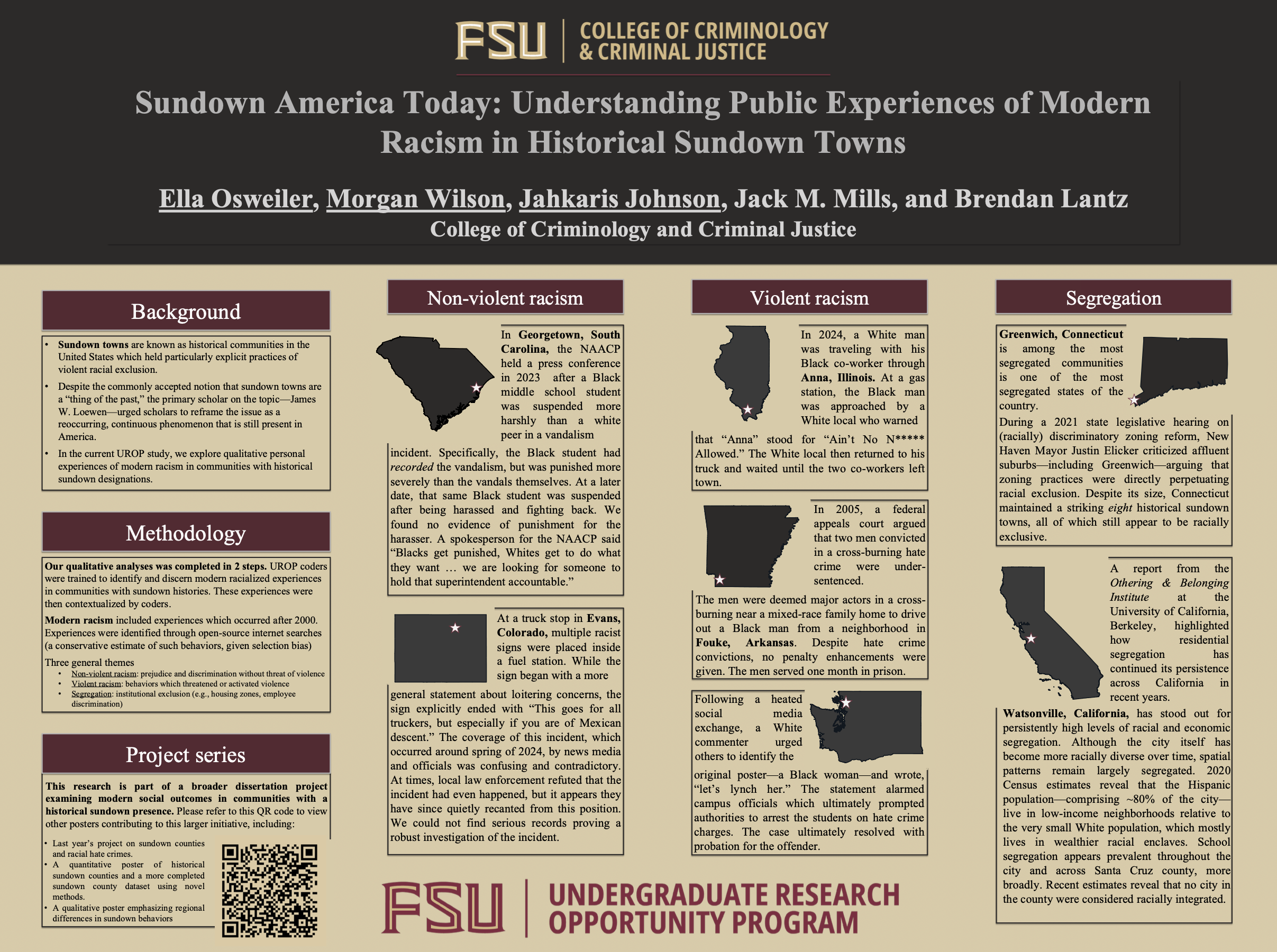
Sundown America Today: Understanding Public Experiences of Modern Racisms in Historical Sundown Towns
Authors: Ella Osweiler, Brendan LantzStudent Major: Criminology and Political Science
Mentor: Brendan Lantz
Mentor's Department: Criminology Mentor's College: College of Criminology and Criminal Justice Co-Presenters: Jahkaris Johnson and Morgan Wilson
Abstract
Sundown towns were, by definition, communities which systematically excluded non-White inhabitants. To date, the primary shepherd of knowledge on sundown towns has been James W. Loewen, who was a public scholar and historical sociologist. Throughout his research, he repeated central claims that sundown towns in America had not necessarily integrated at pivotal Civil Rights landmarks for racially marginalized communities (e.g., the Fair Housing Act of 1968). Instead, he convincingly argued the case for sundown evolution in America and called upon the public to submit known accounts and experiences of racism—broadly conceived—to his data collection project. Building on this foundation, the current project explores data submitted in response to Loewen’s call alongside systematic open-source searches documenting modern experiences of racism in historical sundown towns from 2000 to 2026. Broadly, this analysis affirms Loewen’s notion of sundown evolution into the present day. Specifically, our project demonstrates that these lived experiences include a host of incident types, including violent racism that plausibly meets hate crime designation thresholds, despite being in policing jurisdictions which reported no such hate crimes during these reports. Taken together, these findings underscore the continued relevance of sundown towns, not only as a structural form of racial exclusion, but as communities in which policing differentially impacts racially marginalized victims of targeted violence. While our work is ongoing, our results point to a clear pattern: Sundown America continues its influence today.
Keywords: Criminology, Criminal Justice, Sundown Towns, and Diversity
26th annual Undergraduate Research Symposium, April 1, 2026
Elle Orchard Poster Session 2: 10:45 am - 11:45 am / Poster #286
BIO
Elle Orchard is a sophomore majoring in Retail Entrepreneurship at Florida State University, where she is pursuing a Bachelor of Science degree. She has earned placement on the President’s List each semester during her time at the university.
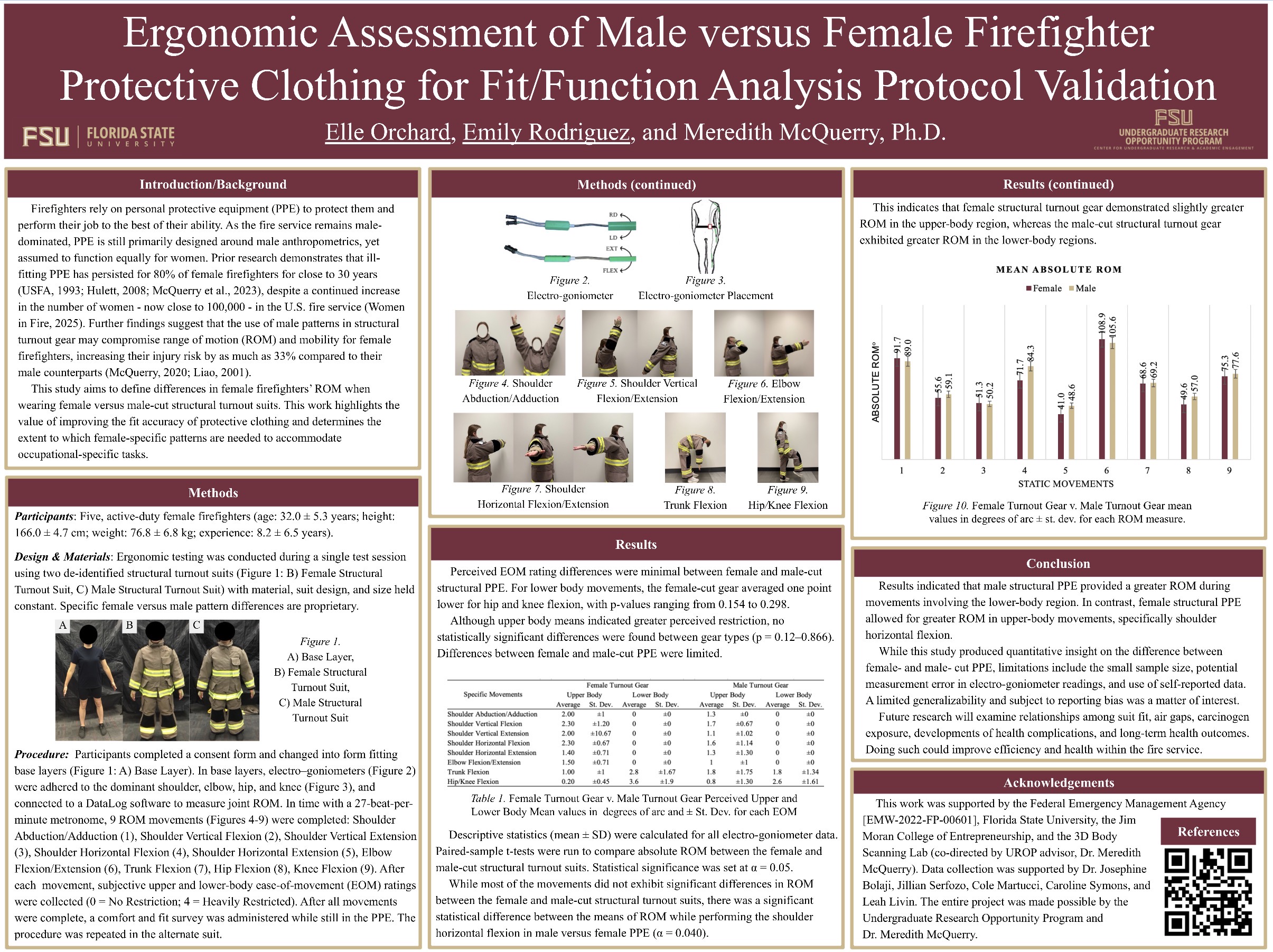
Elle conducts research under the mentorship of Dr. Meredith McQuerry and has gained experience working in the ThermaNOLE Comfort Lab®, Textile Testing Laboratory, and Body Scanning Lab. Her research focuses on protective clothing performance and fit analysis. She is currently assisting with an ergonomic assessment comparing male- and female-cut firefighter protective clothing to evaluate differences in fit and function while contributing to protocol validation.
Through this work and additional research initiatives, Elle has learned to use more than ten textile testing instruments to perform quality assurance evaluations on soft goods. She has also assisted with thermal and physiological performance testing using a dynamic sweating thermal manikin to assess heat stress and moisture management in personal protective equipment.
Elle has completed the Collaborative Institutional Training Initiative (CITI) and Human Subjects Research (HSR) training, preparing her to work with human participants in research settings. Her academic and laboratory experience supports her interest in product performance, textile testing, and consumer-focused design within the apparel industry.
Ergonomic Assessment of Male versus Female Firefighter Protective Clothing for Fit/Function Analysis Protocol Validation
Authors: Elle Orchard, Dr. Meredith McQuerryStudent Major: Retail Entrepreneurship
Mentor: Dr. Meredith McQuerry
Mentor's Department: Retail Entrepreneurship Mentor's College: Jim Moran College of Entrepreneurship Co-Presenters: Emily Rodriguez
Abstract
As the fire service remains male dominated, personal protective equipment (PPE) is still being designed around male anthropometrics, yet assumed to function equally as well for women. Prior research suggests that this assumption may compromise gear fit and mobility for female firefighters.
An ergonomic assessment comparing female- and male-cut structural PPE was conducted among five female firefighters. The results indicated that there was no significant difference.
This study highlights the value of improving fit accuracy to determine the extent to which ill-fitting PPE is a problem present for female firefighters and to what extent it is causing setbacks. Future research will examine relationships among suit fit, air gaps, carcinogen exposure, and long-term health outcomes.
Keywords: Retail, Textiles, Apparel, Firefighter, Entrepreneurship, Ergonomic Mobility
26th annual Undergraduate Research Symposium, April 1, 2026
Gianna Diaz Poster Session 1: 9:30 am - 10:30 am / Poster #246
BIO
Gianna Diaz is a first-year student at Florida State University from Miami, pursuing a Bachelor of Science in Biomedical Sciences as a Clinical Professions Major. She is on a pre-med track with a strong interest in serving underserved and diverse communities as a physician. She is also a President’s List student and a member of the Honors College and the Honors Medical Scholars Program. At FSU, Gianna works as a research assistant under Dr. Dorota Kossowska-Kuhn, contributing to a meta-analysis investigating a cognitive skills model for predicting Mild Cognitive Impairment and Alzheimer’s disease. In the project, she focuses on literature review, sorting articles, and data extraction. In the past, she also worked as a research trainee for Lombard Lab at the University of Miami Comprehensive Cancer Center. There, she learned how to create and scan Western blots and also enjoyed being part of a weekly research meeting where researchers presented their findings to the group. She also enjoys serving the community as a Spanish interpreter for the Health and Hope Clinic and a volunteer for Tallahassee Memorial Hospital Surgical Care Unit.
Cognitive Skills Model for Predicting Alzheimer's Disease
Authors: Gianna Diaz, Dr. Dorota Kossowska-KuhnStudent Major: Clinical Professions
Mentor: Dr. Dorota Kossowska-Kuhn
Mentor's Department: Psychology Mentor's College: Arts and Sciences Co-Presenters: Alana Banton, Davion Slocum
Abstract
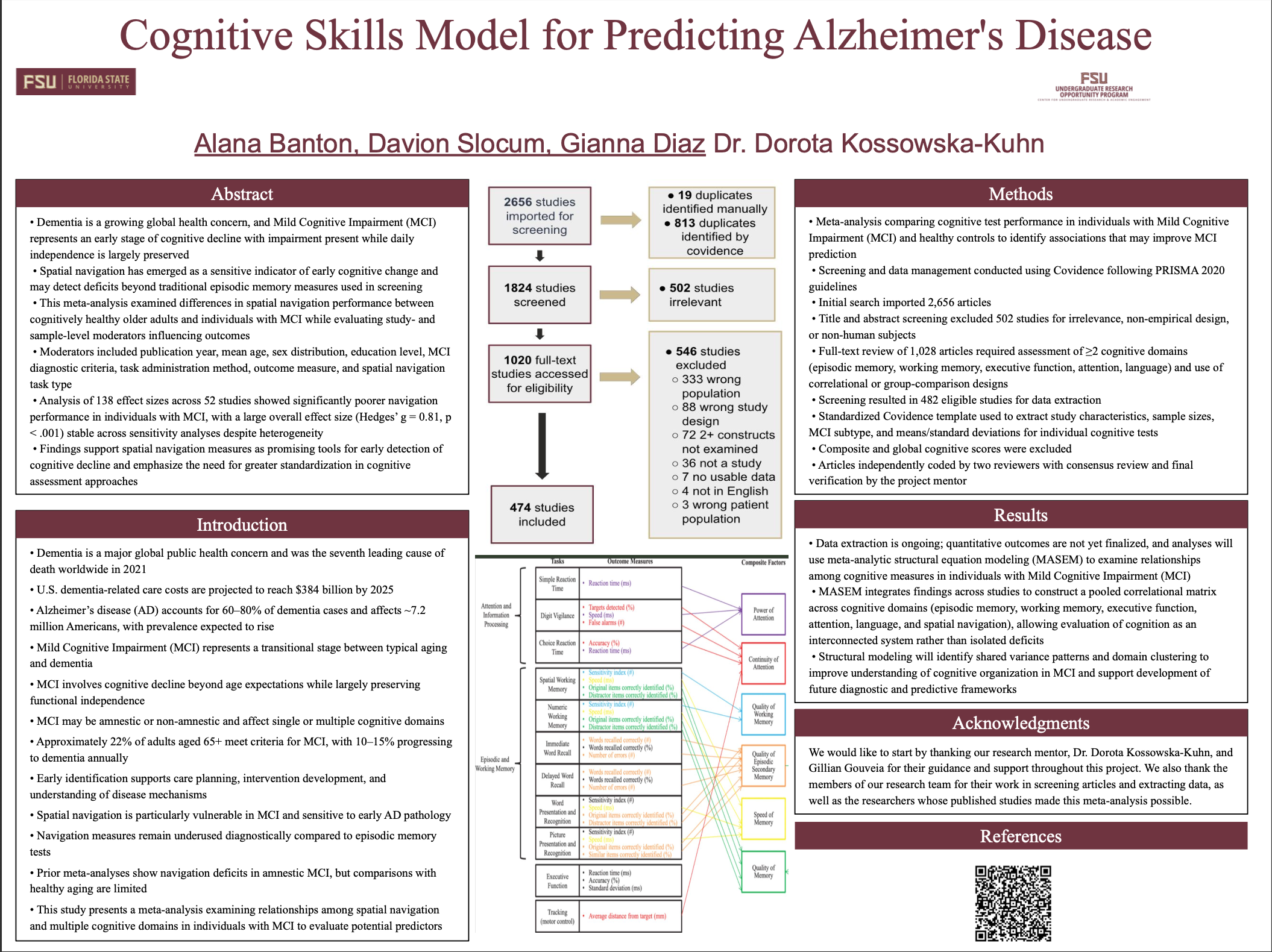
Dementia is a growing global health concern that places substantial psychological, social, and economic burdens on affected individuals and their families. Mild Cognitive Impairment (MCI), often considered an early stage along the dementia continuum, involves cognitive decline beyond normal aging while daily functional abilities are largely maintained. Although episodic memory impairments have traditionally guided early detection efforts, spatial navigation has emerged as a potentially sensitive indicator of early cognitive change. This meta-analysis quantified differences in spatial navigation task performance between cognitively healthy (CH) older adults and individuals with MCI, and examined study- and sample-level factors that may influence these differences. Moderators included publication year, mean age, sex distribution, education level, MCI diagnostic criteria, task administration method, outcome measure, and spatial navigation task type. A total of 138 effect sizes from 52 studies were included. Results revealed that individuals with MCI performed significantly worse on spatial navigation tasks than CH older adults, with a large overall effect size (Hedges’ g = 0.81, p < .001). This finding remained stable across sensitivity analyses, despite significant heterogeneity across studies (Q(137) = 683.54, p < .001). Moderator analyses indicated marginal trends associated with the proportion of male participants, use of matrix-based navigation tasks, and MCI diagnostic criteria, suggesting potential sources of variability that warrant further investigation. These findings support the value of spatial navigation measures as promising tools for detecting early cognitive decline and highlight the need for greater standardization in assessment approaches.
Keywords: MCI, Alzheimer's Disease, dementia, cognitive test
26th annual Undergraduate Research Symposium, April 1, 2026
Isabella Barzaga Poster Session 4: 3:00 pm - 4:00 pm / Poster #283
BIO
Isabella Barzaga is a third-year student pursuing a Bachelor of Science in Political Science with a minor in Sociology. As a first-generation college student whose parents immigrated from Cuba and Colombia, she is especially interested in the relationship between political institutions and the social structures that shape opportunities within communities.
Isabella has participated in undergraduate research through the Undergraduate Research Opportunity Program (UROP) under the mentorship of Professor Strickland. Her research focuses on transparency in county-level lobbying registration across Florida, examining how inconsistencies in public records affect accessibility and accountability in local governance. This work analyzes differences in registration practices among both large counties, such as Miami-Dade and Hillsborough, and smaller counties including Lee and Alachua.
Motivated by these interests, Isabella plans to pursue law school after completing her undergraduate degree. She hopes to earn a Juris Doctor and build a legal career as a public defender, advocating for individuals who may not otherwise have access to legal representation. As the first in her family to pursue a legal career, she hopes to break barriers and challenge stereotypes while serving as a new source of representation and inspiration for future generations in her community.
Transparency In Florida Lobbying
Authors: Isabella Barzaga, James StricklandStudent Major: Political Science and Sociology
Mentor: James Strickland
Mentor's Department: Political Science Mentor's College: The College of Social Science and Public Policy Co-Presenters: Alexandria Schulz, Emilee Nevaril, Sophie Scherer, Sofia Arango, and Jonathan Espinoza
Abstract
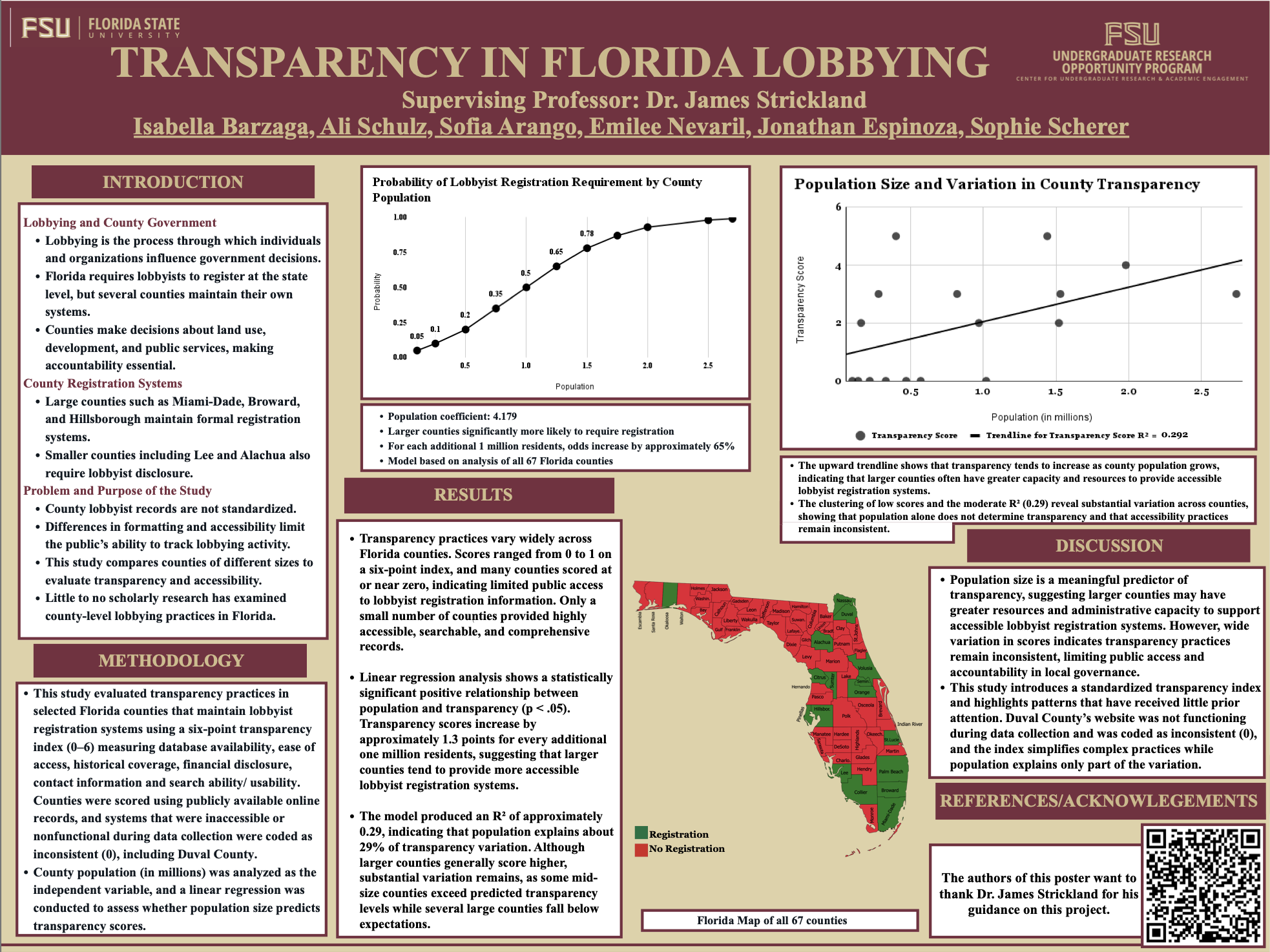
Across the counties of Florida, there is significant variation in how lobbying records are maintained and made available. Lobbying, attempting to influence legislative processes through oral or written communication, is an essential part of the legislative process, and registration of lobbyists is important for transparency and accountability in local governments. This research utilized online county websites to examine the gaps in the current lobbyist database across all 67 counties of Florida. By accessing each website on a 6-factor scale, each county was assigned a transparency score, and then transparency scores were compared across counties. Results found that the overwhelming majority of Florida counties lack a lobbyist database. Out of those that do provide a database, many scored low on the transparency scale due to difficulty of website navigation, lack of contact information, little historical lobbying data, etc. By assessing and comparing these record differences, this research demonstrates how the overall lack of lobbyist data decreases accountability of local governments, can create a sense of distrust among the government and constituents, and prevents constituents from knowing who influences local government decisions. Additionally, this lack of transparency makes it hard for citizens to be informed when voting for politicians and propositions. Based on the research collected, this project helps bring more transparency and accountability to and begins to close gaps in lobbyist data collection.
Keywords: Lobbying, Public Policy, Florida, State politics
26th annual Undergraduate Research Symposium, April 1, 2026
Amanda Lowry Poster Session 3: 1:45 pm - 2:45 pm / Poster #307
BIO
Amanda Lowry is a first-year honors student pursuing a Bachelor of Science in Environmental Science, with minors in Museum Studies and Urban & Regional Planning. They received their Associates of Arts from Valencia College in Kissimmee, FL prior to attending FSU. They hope to pursue a graduate degree and career in library science. They are also passionate about the environment and animals. Work on Dr. Rebecca Ballard's manuscript allowed for a crossover between their interests in environmentalism and literature while developing their citational and library system skills.
Framing of Individual vs. Structural Responsibility for Environmental Harm
Authors: Amanda Lowry, Rebecca BallardStudent Major: Environmental Science
Mentor: Rebecca Ballard
Mentor's Department: English Mentor's College: Arts & Sciences Co-Presenters:
Abstract
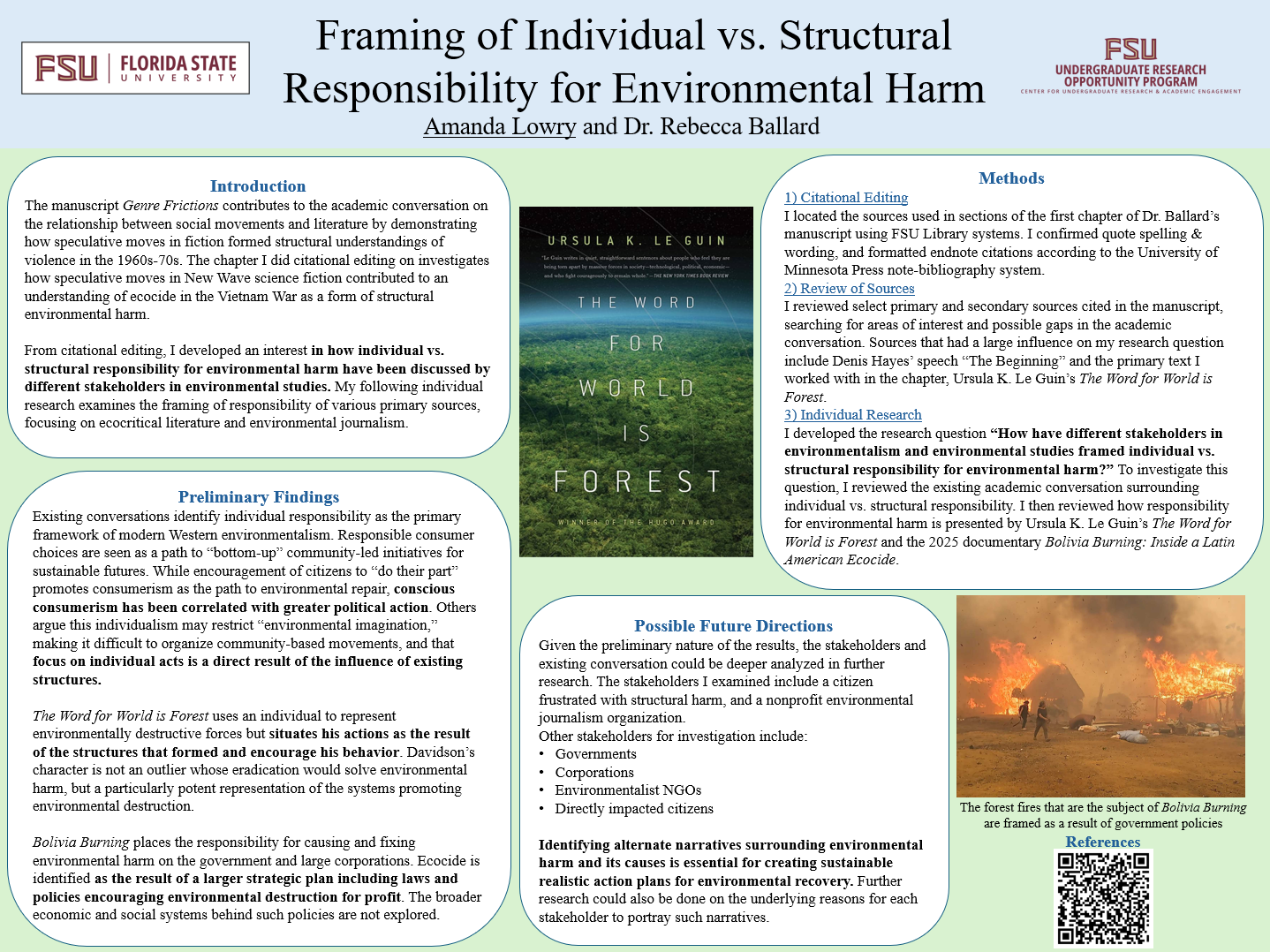
The in-progress manuscript Genre Frictions investigates the impact of structural and environmental harm on U.S. fiction and social movements in the 1960s-70s, arguing that writers utilized speculative genres to form deeper understandings of structural harm. My project began with citational editing on the chapter addressing the role of speculative moves in New Wave science fiction on understanding ecocide in the Vietnam War as a structural form of environmental harm. Sources were located through library systems and cited according to provided guidelines. Review of sources prompted an interest in how different voices in environmental studies have framed individual vs. structural responsibility for environmental harm. Primary sources were reviewed to summarize the existing conversation on individual vs. structural responsibility. I then observed how responsibility was framed by two stakeholders of interest: ecocritical literature and environmental documentaries. I selected Ursula Le Guin’s The Word for World is Forest and the documentary Bolivia Burning to represent these stakeholders. Current findings suggest individual responsibility as the primary framework in Western environmentalism, and identify an overall emphasis on structural responsibility by the chosen stakeholders. Further research could be done on alternative stakeholders, such as corporations, governments, or political activists. The overarching project delves into the role of fiction in processing structural harm, and how speculative fiction and environmental activism have mutually influenced each other. My independent research hopes to further add to this conversation on the intersection of media and environmentalism, allowing deeper understandings of the interactions between the written and real worlds.
Keywords: environment, literature, environmentalism, responsibility
26th annual Undergraduate Research Symposium, April 1, 2026
Joseph Lindley Poster Session 1: 9:30 am - 10:30 am / Poster #209
BIO
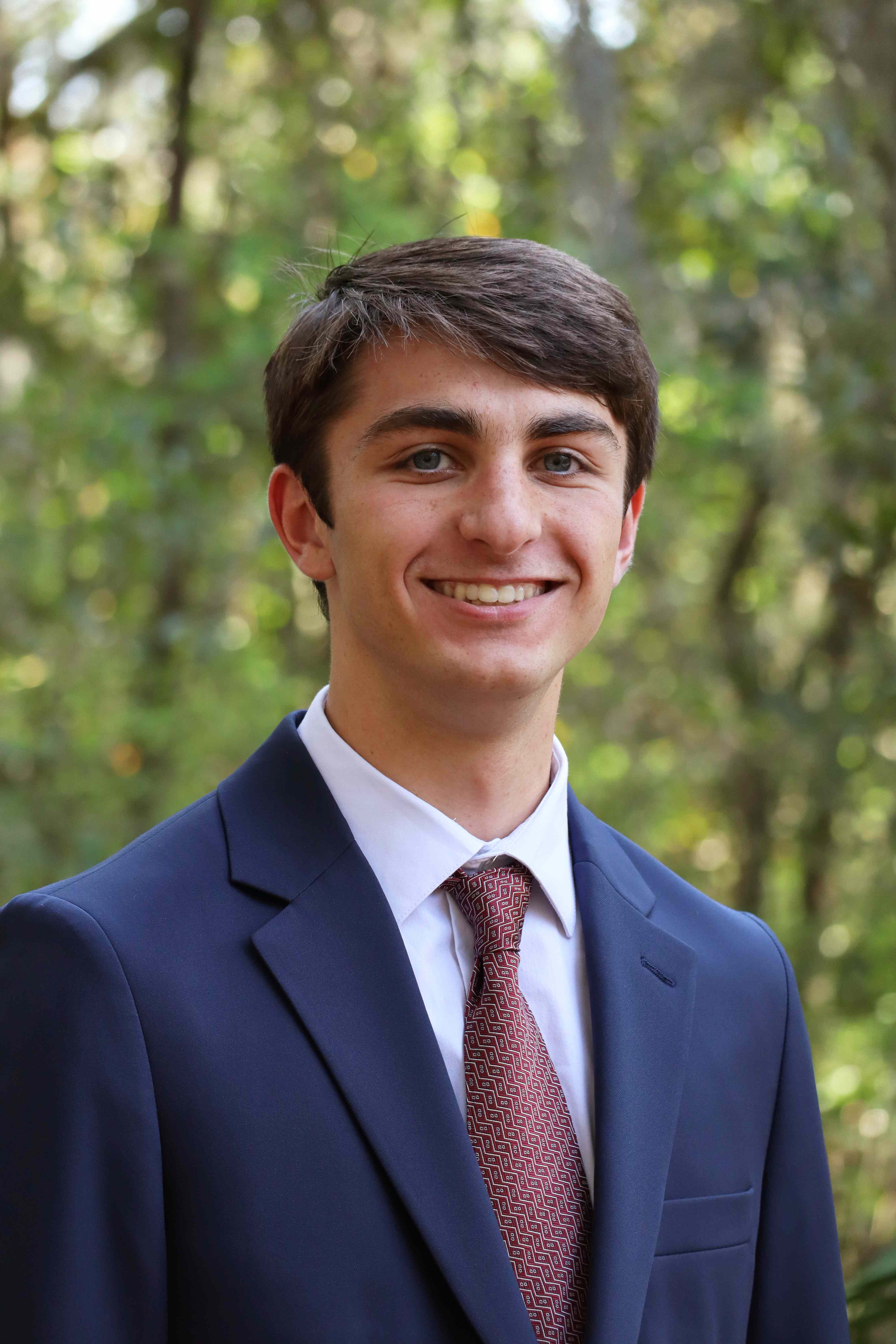
Joseph Lindley is a freshman at Florida State University, where he is a member of the Honors Medical Scholars program majoring in Biomedical Engineering. After undergraduate studies, Joseph intends to pursue a Medical Doctorate, with the goal of becoming an emergency medicine physician. His interest in medicine began in his hometown of Gulf Breeze, Florida, where he served as an Emergency Medical Responder for the local fire department. Currently, Joseph continues to use his abilities as an EMR for the Florida State University Medical Response Unit. Through his research and clinical involvement, he seeks to bridge the gap between engineering innovation and bedside emergency care. Under the mentorship of Dr. Tuy Nguyen and Quoc Bao Phan, Joseph has been developing a machine learning model to automate the analysis of electrocardiogram (ECG) signals, aiming to increase diagnostic efficiency in cardiac care.
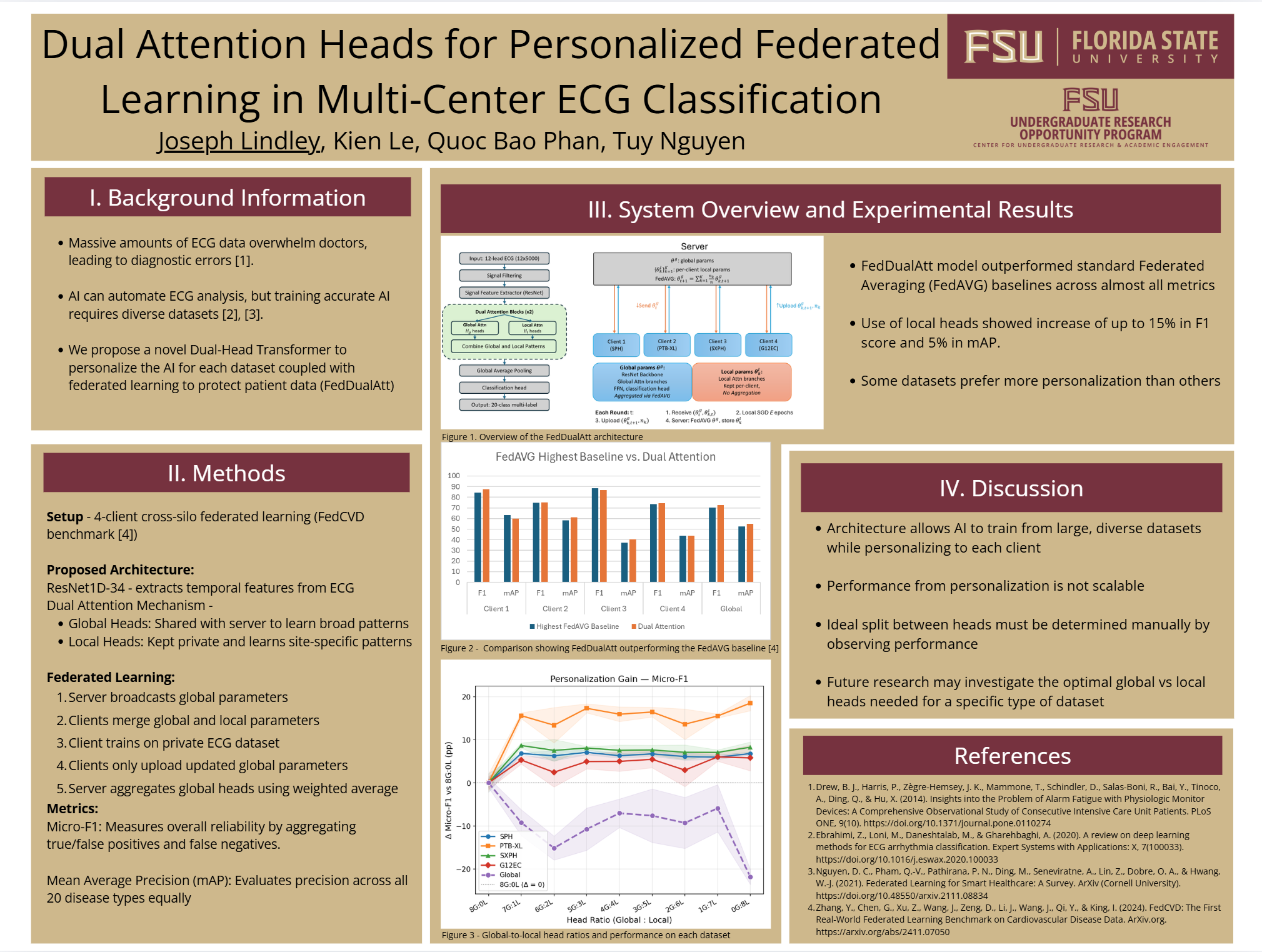
Dual Attention Heads for Personalized Federated Learning in Multi-Center ECG Classification
Authors: Joseph Lindley, Tuy NguyenStudent Major: Biomedical Engineering
Mentor: Tuy Nguyen
Mentor's Department: Center for Advanced Power Systems Mentor's College: FAMU-FSU College of Engineering Co-Presenters:
Abstract
Federated learning (FL) enables collaborative model training across medical institutions without sharing sensitive patient data. However, data heterogeneity across hospitals poses significant challenges for ECG classification. We propose FedDualAtt, a personalized federated learning approach that splits transformer attention heads into global (shared) and local (personalized) branches. Global heads are aggregated to capture shared patterns, while local heads remain client-specific to adapt to institution-specific characteristics. Experiments on the FedCVD Fed-ECG benchmark with four clients demonstrate that FedDualAtt outperforms existing FL and personalized FL methods. The addition of local heads yielded up to a 15% increase in F1 score and a 5% increase in mean average precision (mAP) compared to the fully global FedDualAtt model. Analysis of global-local head ratios reveals that different clients benefit from different personalization levels.
Keywords: ECG Classification, AI, Personalized Learning
26th annual Undergraduate Research Symposium, April 1, 2026
Lola Poe Poster Session 3: 1:45 pm - 2:45 pm / Poster #113
BIO
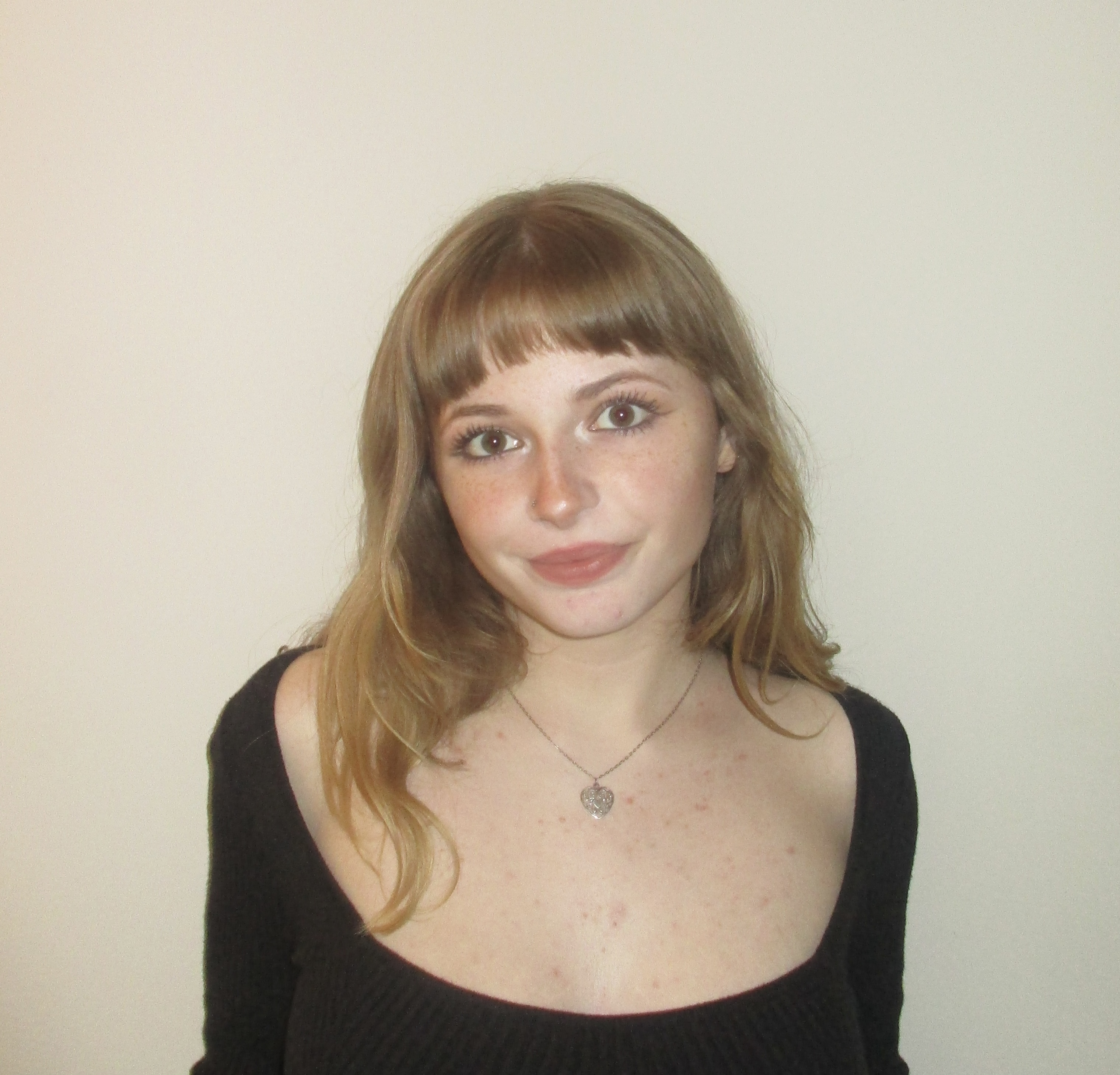
Lola Poe is a second year Astrophysics major and a Mathematics minor at Florida State University. She is interested in studying supernovae and cosmic background microwave radiation. Her research experience includes working with Dr. Johan van Tol at the National High Magnetic Field Laboratory on experimental setup optimization to yield the clearest observations of electron excitation and de-excitation while experiencing a magnetic field and light pulsations. She plans to pursue a Ph.D. in Astrophysics with the intent of a future career as a university professor and academic researcher.
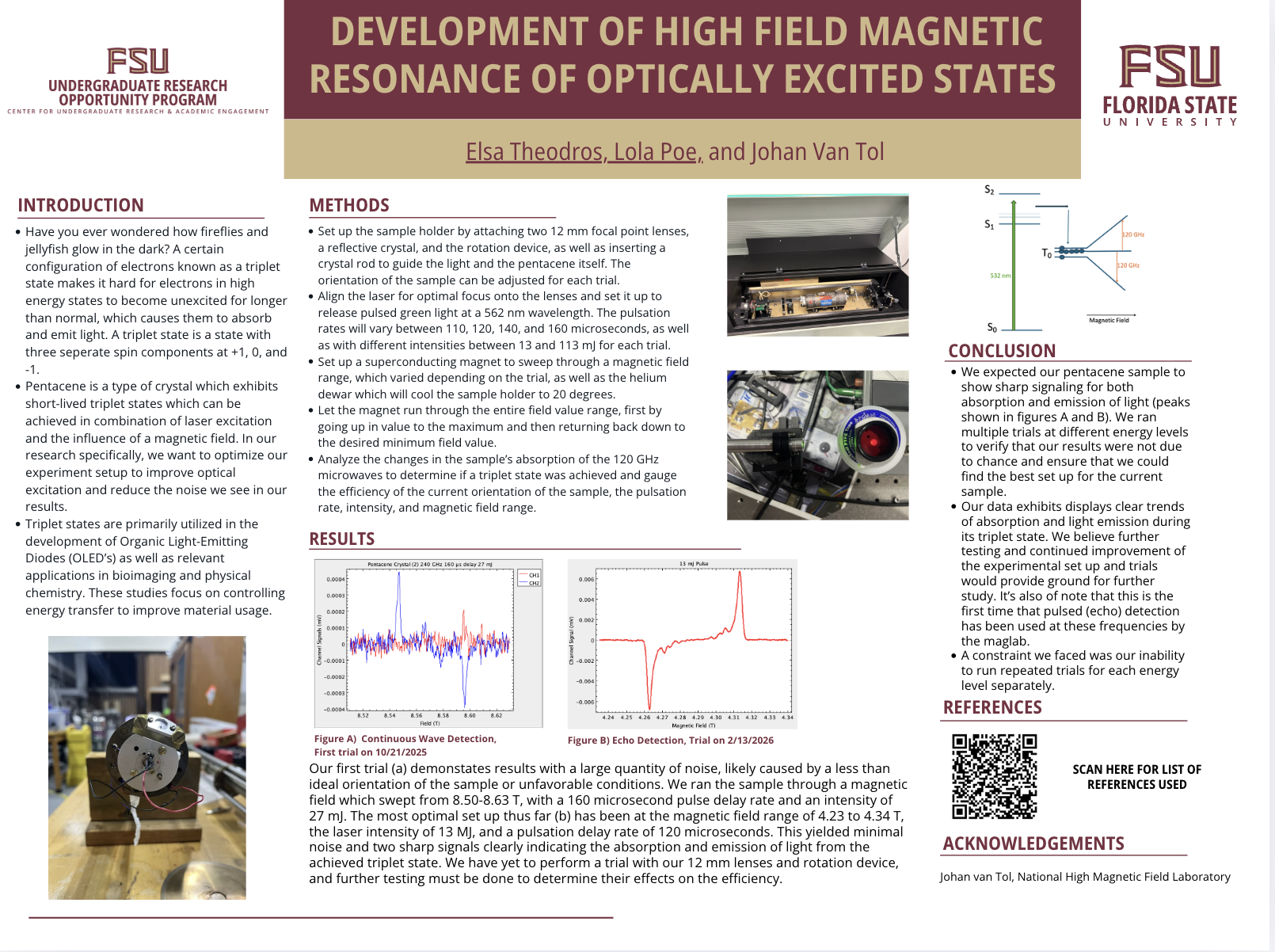
Development of High Field Magnetic Resonance of Optically Excited States
Authors: Lola Poe, Johan van TolStudent Major: Astrophysics
Mentor: Johan van Tol
Mentor's Department: Electron Magnetic Resonance Program Mentor's College: National High Magnetic Field Laboratory Co-Presenters: Elsa Theodros
Abstract
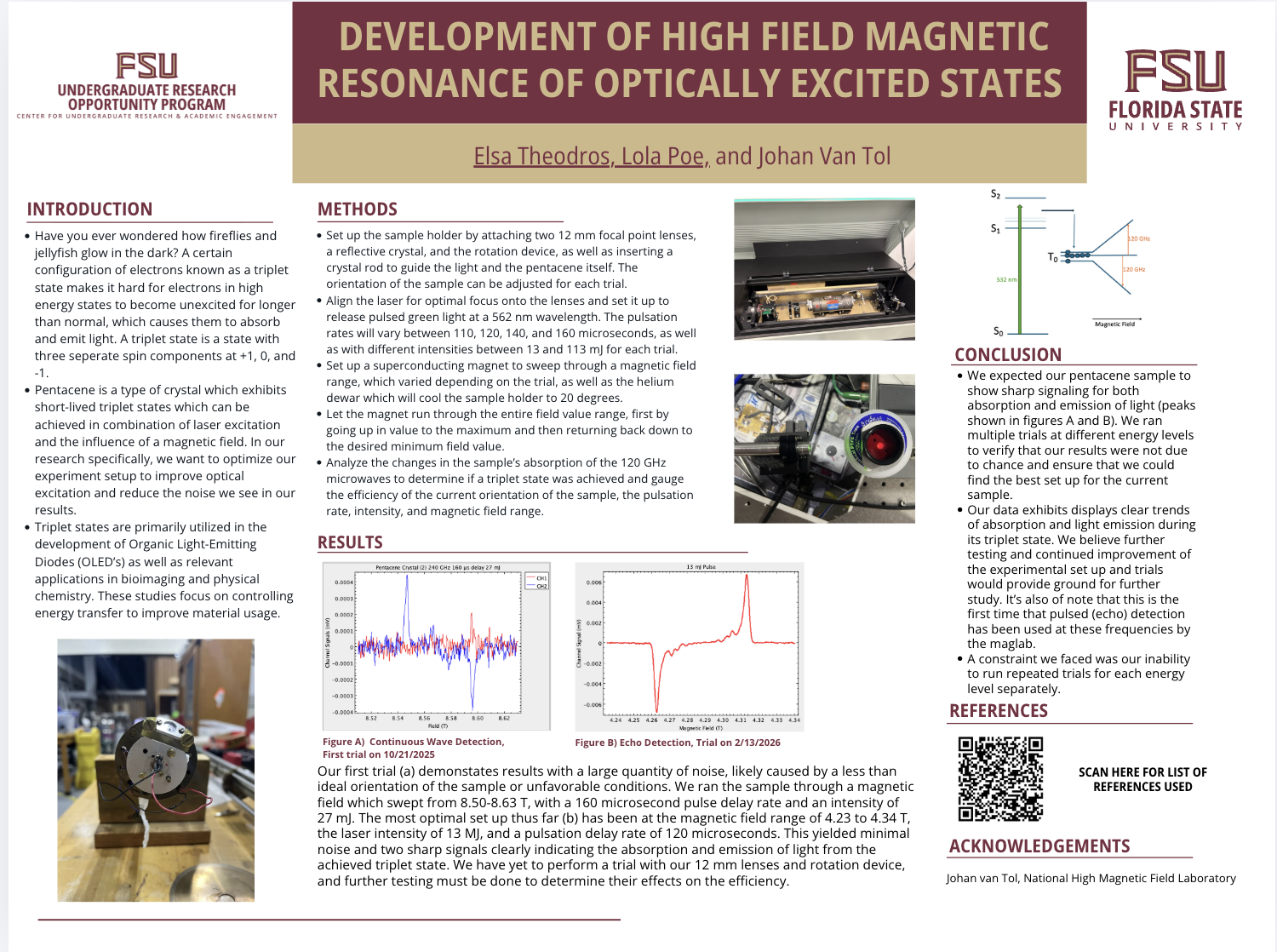
When electrons become excited, they transition to a higher energy state. Typically, this state is short-lived, but a special configuration of two unpaired electrons, specifically known as a triplet state, prevents them from returning to their ground state for long periods. Studying the behavior of triplet states is important for understanding phenomena where materials can absorb light, store its energy, and then emit it over time. Pentacene is a type of crystal which can achieve triplet states if it interacts with light while under a magnetic field. We used magnetic resonance spectrometry to understand and track our results. It’s expected that we will see high visible light absorption due to the activation of excited triplet states by way of our readings of a laser directed through a lens and two small mirrors. Although the triplet states of Pentacene are shorter-lived than some other materials, our results can be used to better understand other material’s behavior and usages in comparison to our own.
Keywords: Magnet, Optics, Resonance
26th annual Undergraduate Research Symposium, April 1, 2026
Elsa Theodros Poster Session 3: 1:45 pm - 2:45 pm / Poster #113
BIO
Elsa Theodros is a current second year student at Florida State University working towards her Bachelor of Science in Biochemistry while minoring in Biological Sciences. She's a former member of the Inter-Residence Hall Council as well as the National Residence Hall Honorary and am a current member of the Student Government Association RSO Allocation Committee as well as Remote Area Medical. Her research focuses on high field magnetic resonance of optically excited states and currently works with her mentor Johan Van Tol at the National High Magnetic Field Laboratory. She plans on continuing her education after finishing her undergraduate studies and currently has an internship lined up for the summer of 2026, where she'll assist a professor in his research overseas.
Development of High Field Magnetic Resonance of Optically Excited States
Authors: Elsa Theodros, Johan Van TolStudent Major: Biochemistry
Mentor: Johan Van Tol
Mentor's Department: Physics Mentor's College: Florida State University Co-Presenters: Lola Poe
Abstract
When electrons become excited, they transition to a higher energy state. Typically, this state is short-lived, but a special configuration of two unpaired electrons, specifically known as a triplet state, prevents them from returning to their ground state for long periods. Studying the behavior of triplet states is important for understanding phenomena where materials can absorb light, store its energy, and then emit it over time. Pentacene is a type of crystal which can achieve triplet states if it interacts with light while under a magnetic field. We used magnetic resonance spectrometry to understand and track our results. It’s expected that we will see high visible light absorption due to the activation of excited triplet states by way of our readings of a laser directed through a lens and two small mirrors. Although the triplet states of pentacene are shorter-lived than some other materials, our results can be used to better understand other material’s behavior and usages in comparison to our own.
Keywords: Physics, Physical Chemistry, Coordination Chemistry
26th annual Undergraduate Research Symposium, April 1, 2026
Sophia Vizoso Poster Session 1: 9:30 am - 10:30 am / Poster #243
BIO
Hi! My name is Sophia Vizoso, and I’m a senior at Florida State University studying Neuroscience and Public Health. I’ve always been fascinated by how science and healthcare connect to improve people’s lives. Over time, that curiosity grew into a passion for understanding disease patterns, health disparities, and the factors that shape well-being, particularly through epidemiology and cardiovascular research.
I’ve had the chance to work in both lab and clinical settings, learning from amazing mentors and seeing how research can make a real difference. Outside of research, I love mentoring other students as a UROP Leader and Teaching Assistant, helping them explore their own interests in science.
Cardiac Vagal Baroreflex Sensitivity Among Young Adults With and Without Obesity
Authors: Sophia Vizoso, Dr. Joseph WatsoStudent Major: Cell and Molecular Neuroscience and Public Health
Mentor: Dr. Joseph Watso
Mentor's Department: Health, Nutrition, and Food Science Mentor's College: Anne Spencer Daves College of Education, Health, and Human Sciences Co-Presenters:
Abstract
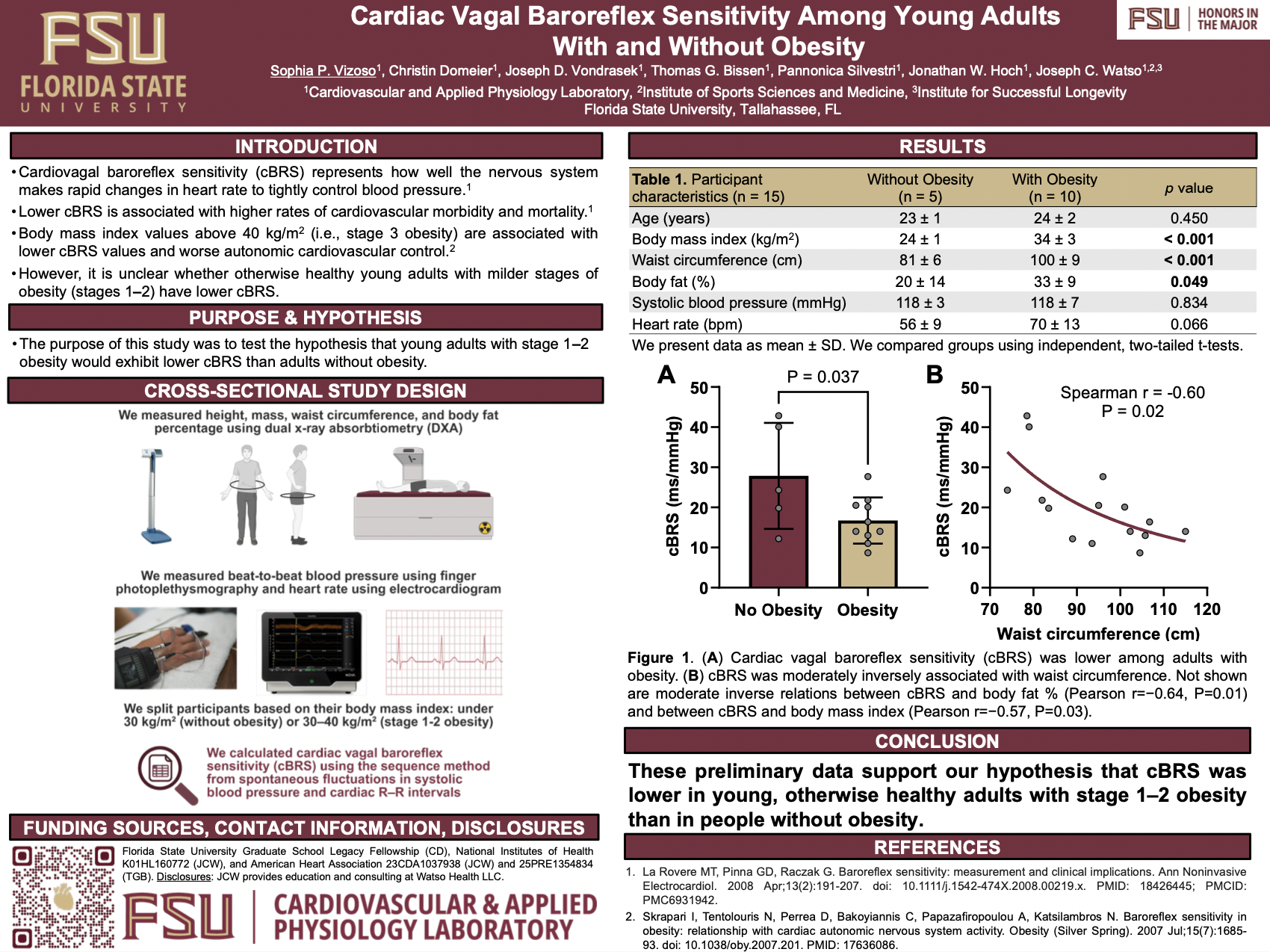
Background: Reduced cardiovagal baroreflex sensitivity (cBRS) reflects nervous system dysfunction and is linked to increased cardiovascular risk. Although stage 3 obesity can disrupt autonomic cardiovascular control, it’s unclear whether adults with stage 1–2 obesity already exhibit early autonomic impairments. We tested whether adults with stage 1–2 obesity would show lower cBRS compared to adults without obesity. Methods: Beat-to-beat blood pressure and heart rate were recorded during a 10-minute resting baseline in adults without obesity (n = 5, BMI < 30 kg/m²) and adults with obesity (n = 10, BMI 30-40 kg/m²). Anthropometrics and DXA body composition were collected. Spontaneous cBRS was calculated using the sequence method. After confirming normality (Shapiro–Wilk), independent t-tests assessed group differences, and Pearson correlations evaluated relations between adiposity indices and cBRS. Results: Adults with stage 1–2 obesity had higher BMI (33.9 ± 2.6 vs. 24.4 ± 1.1 kg/m², p < 0.001), greater waist circumference (100 ± 9 vs. 81 ± 6 cm, p < 0.001), and higher body fat percentage (32.7 ± 9.3 vs.19.7 ± 13.9%, p = 0.049) compared to adults without obesity. cBRS was significantly lower in adults with obesity (16.7 ± 5.7 vs 27.9 ± 13.2 ms/mmHg, p = 0.037). Waist circumference (r = -0.65, p = 0.009), body fat percentage (r = -0.64, p = 0.010), and BMI (r = -0.57, p = 0.026) were negatively associated with cBRS. Conclusion: These preliminary data support our hypothesis that cBRS was significantly lower in adults with stage 1–2 obesity compared with those without obesity.
Keywords: Health, science, cardiovascular, heart, neuroscience
26th annual Undergraduate Research Symposium, April 1, 2026
Victoria Camacho Arismendi Poster Session 1: 9:30 am - 10:30 am / Poster #293
BIO
Victoria is a first-year Honors student at Florida State University pursuing a dual degree in Political Science and Economics with minors in Political Philosophy and Business on the pre-law track. She is deeply interested in the intersection of law, policy, and economic inequality, with a strong focus on current events and social justice. She recieved Garnet and Gold Key's Torch Night Award for her leadership in those fields and will present reasearch on the impact of artificial intelligence on minority rights at the Oxford Consortium for Human Rights this summer.
Beyond academics, Victoria is passionate about art and food as cultural expressions that shape identity and community. She is driven by a commitment to research, community organizing, and policy based solutions, and hopes to contribute to meaningful change through a career dedicated to advancing equity, particularly for immigrants in the United States.
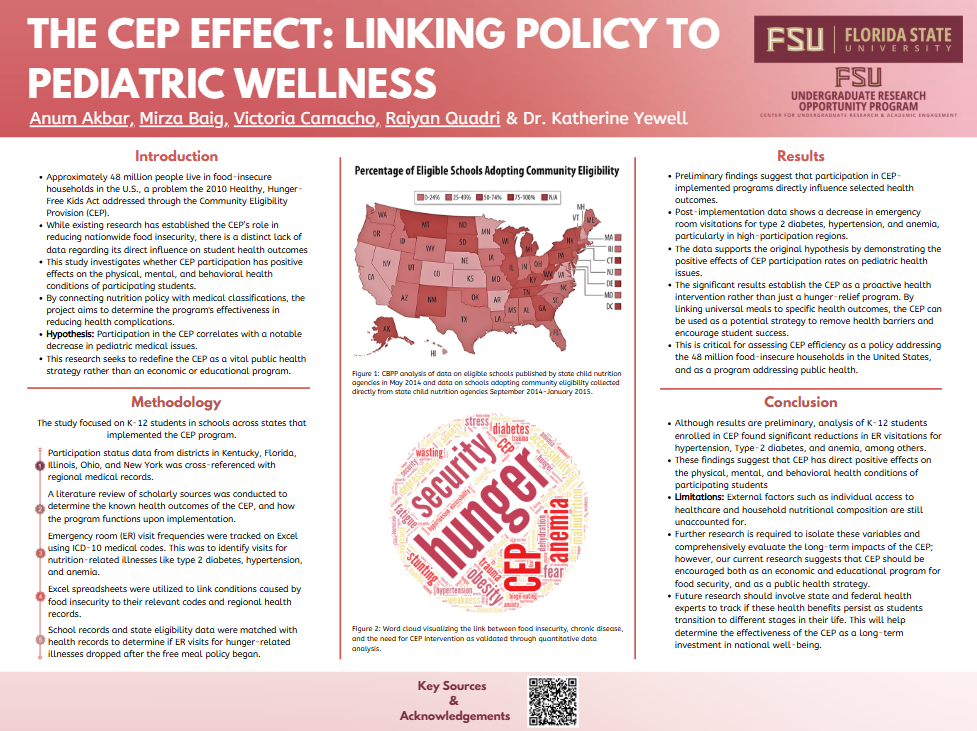
The CEP Effect: Linking Policy to Pediatric Wellness
Authors: Victoria Camacho Arismendi, Katherine YewellStudent Major: Political Science, Economics
Mentor: Katherine Yewell
Mentor's Department: Department of Economics Mentor's College: College of Social Sciences and Public Policy Co-Presenters: Anum Akbar
Abstract
The Community Eligibility Provision (CEP) is a USDA Federal program that aims to
provide free school-meals to all children regardless of household income. The project
involves researching the direct, positive health impacts of the CEP to conclude if it is
responsible for reducing food insecurity and associated diseases, and to better inform
on its importance on a national scale.
To get a sense of how the policy functions in schools that adopted it, a literature review
was conducted on relevant scholarly sources. Additionally, articles on food insecurity
and associated diseases were matched to their relevant emergency room (ICD-10)
codes using Excel spreadsheets. These codes specify what is happening to a patient’s
health, and why it has occurred. By cross-referencing regional medical codes with CEP
data in select states, it was assessed whether the program effectively lowered the
spread of diseases linked to food insecurity.
The analysis showed a correlation between CEP implementation and a decrease in ER
codes for nutrition-related illnesses. The data also suggested that removing social
barriers and providing universal access to meals significantly increases student
participation. Such findings indicate that the program effectively boosts health outcomes
in high-poverty regions across states.
The results prove that the CEP serves as an important measure to reduce long-term
healthcare burdens and food insecurity, promoting the national implementation of
universal meal programs to improve overall public health. Future research conducted on
the program should track whether these health benefits persist as students transition to
different stages in their life.
Keywords: Community Eligibility Provision, CEP, Meals
26th annual Undergraduate Research Symposium, April 1, 2026
Monica Burgos Poster Session 4: 3:00 pm - 4:00 pm / Poster #292
BIO
Monica Burgos is a fourth-year undergraduate student at Florida State University, majoring in Applied Mathematics with a minor in Computer Science. Growing up in Puerto Rico—an island where diverse cultures, ideas, music, and traditions intersect—instilled in her a strong sense of civic responsibility and a desire to help bridge gaps in education. This early perspective continues to shape her academic and professional goals.
Her academic interests focus on expanding mathematical and computational knowledge, exploring the strengths and limitations of artificial intelligence, and addressing educational disparities in underfunded and developing communities. These interests have also guided her research involvement. As part of a collaborative research project, Monica has contributed to exploring matrix inversion with the theory of Optimal Transport. She hopes this research will contribute to the broader mathematical community while demonstrating how different areas of mathematics can be deeply interconnected.
Looking ahead, Monica plans to pursue graduate studies in Mathematics Education, with a focus on addressing gaps in K–12 mathematics education. Through her future work, she hopes to expand the impact of mathematics beyond the classroom by supporting underfunded communities and developing countries, helping to close educational gaps and inspire future generations of students.
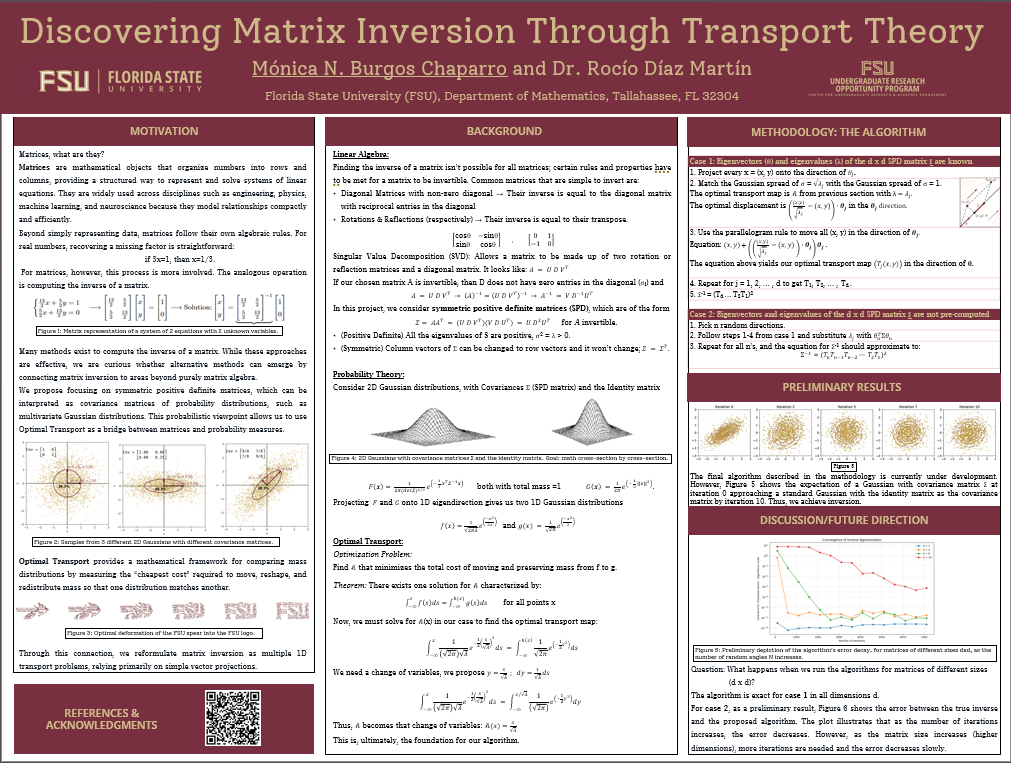
Discovering Matrix Inversion Through Transport Theory
Authors: Monica Burgos, Dr. Rocio Diaz MartinStudent Major: Applied and Computational Mathematics
Mentor: Dr. Rocio Diaz Martin
Mentor's Department: Department of Mathematics Mentor's College: College of Arts & Sciences Co-Presenters:
Abstract
The goal of this project is to develop a new method for approximating the inverse of a matrix. Inverting matrices is useful as it allows us to solve linear systems of equations. We propose an iterative method to make it especially useful when the matrix is too large to store. Each step only requires a matrix-vector multiplication between the matrix we want to invert and a vector selected randomly. Rather than relying on traditional methods, the approach utilizes the theory of Optimal Transport. This theory offers a mathematical framework for comparing mass distributions by computing the ‘cheapest cost’ of moving, reshaping, and reallocating mass to make one distribution match the other. We will focus on a specific type of matrix: symmetric positive definite matrices. These matrices can be interpreted as the covariance matrix of probabilities, such as multivariate Gaussian distributions. Making this connection between matrices and probabilities will allow us to use transport theory. The project objectives include developing and programming an iterative algorithm for inverting matrices, analyzing how quickly and accurately the method approaches the true inverse, and evaluating its efficiency relative to standard inversion techniques. Proof-of-concept examples exploring convergence for matrices of different sizes will be used to validate our approach and to develop insight to support a formal, mathematical proof of convergence. Ultimately, we aim to provide both theoretical justification and numerical evidence supporting the validity of our method. If successful, this framework may open the possibility of extending the approach to broader classes of matrices.
Keywords: math, computer science, python, matrices, optimal transport, linear algebra, probability
26th annual Undergraduate Research Symposium, April 1, 2026
Shadman Ishmam Poster Session 2: 10:45 am - 11:45 am / Poster #84
BIO
Shadman Ishmam is a junior at Florida State University pursuing a Bachelor of Science in Behavioral Neuroscience with a minor in Chemistry on the pre-medical track. He is actively involved in research, clinical care, and mentorship while preparing for a career in medicine.
Shadman currently conducts research through a Directed Independent Study with the SMARTer Weight Loss Study, where he contributes to projects examining behavioral and digital interventions designed to support healthy lifestyle changes. His research interests include behavioral medicine, preventive health, and the development of interventions that improve health outcomes for underserved populations.
In addition to his research work, Shadman works as a Certified Nursing Assistant at the Tallahassee Memorial Hospital Rehabilitation Center, where he supports patients and healthcare teams in providing daily care and recovery support. He is also involved in several leadership and service roles on campus. Shadman serves as an Advising Fellow with Matriculate, mentoring high-achieving, low-income high school students through the college application process. He also serves as Vice President of the Flavor Society and Recruitment Officer for Hearts for the Homeless at Florida State University.
Following graduation, Shadman plans to attend medical school and pursue a career as a physician focused on improving health equity through clinical care, research, and community engagement.
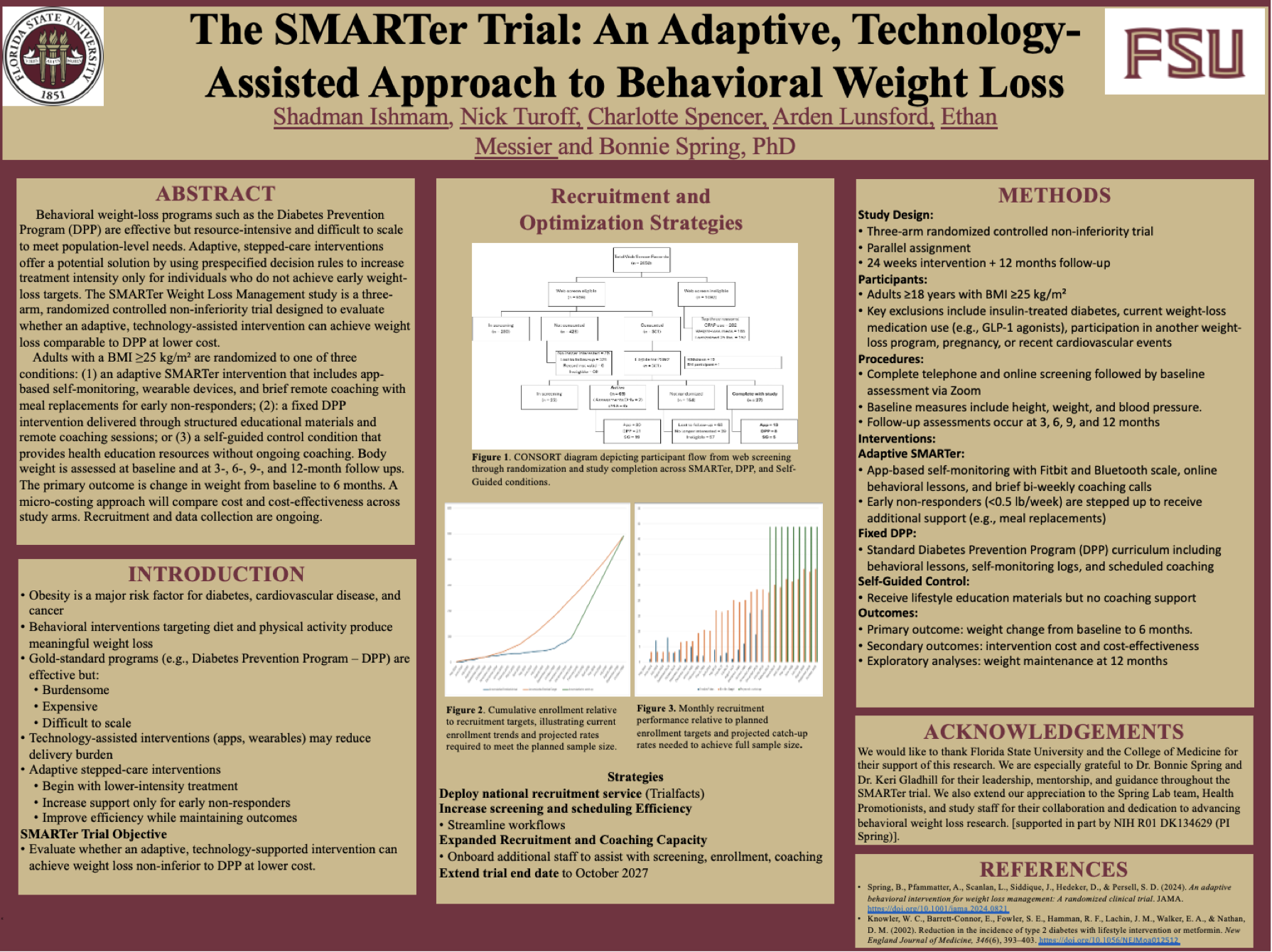
The SMARTer Trial: An Adaptive, Technology-Assisted Approach to Behavioral Weight Loss
Authors: Shadman Ishmam, Dr. Bonnie SpringStudent Major: Behavioral Neuroscience
Mentor: Dr. Bonnie Spring
Mentor's Department: Behavioral Sci and Social Med (BSSM) 208000 Mentor's College: College of Medicine Co-Presenters: Nicholas Turoff, Charlotte Sprecher, Arden Lunsford, Ethan Messier
Abstract
Behavioral weight-loss programs such as the Diabetes Prevention Program (DPP) are effective but resource-intensive and difficult to scale to meet population-level needs. Adaptive, stepped-care interventions offer a potential solution by using pre-specified decision rules to increase treatment intensity only for individuals who do not achieve early weight-loss targets. The SMARTer Weight Loss Management study is a three-arm, randomized controlled non-inferiority trial designed to evaluate whether an adaptive, technology-assisted intervention can achieve weight loss comparable to DPP at lower cost.
Adults with a BMI ≥25 kg/m² are randomized to one of three conditions: (1) an adaptive SMARTer intervention that includes app-based self-monitoring, wearable devices, and brief remote coaching with meal replacements for early non-responders; (2): a fixed DPP intervention delivered through structured educational materials and remote coaching sessions; or (3) a self-guided control condition that provides health education resources without ongoing coaching. Body weight is assessed at baseline and at 3-, 6-, 9-, and 12-month follow ups. The primary outcome is change in weight from baseline to 6 months. A micro-costing approach will compare cost and cost-effectiveness across study arms. Recruitment and data collection are ongoing.
Keywords: Technology, Weight-loss, Behavioral, Adaptive, Health
26th annual Undergraduate Research Symposium, April 1, 2026
Noah Ramby Poster Session 1: 9:30 am - 10:30 am / Poster #298
BIO
Noah Ramby is a sophomore at Florida State University, expected to graduate in 2028. He is pursuing a Bachelor of Science in Accounting and Finance. Noah participates in Florida State University’s Undergraduate Research Opportunity Program, where he conducts research under the mentorship of Dr. Aleksandra Zimmerman. Through this program, he has developed experience in academic research, analytical thinking, and financial problem-solving.
Beyond his academic work, Noah is actively involved in campus leadership and athletics. He co-founded a run club at Florida State University, helping to create a community for students interested in distance running and fitness. Outside of campus, Noah competes in Ironman events around the world, demonstrating his commitment to endurance athletics, discipline, and personal growth.
Noah’s academic interests focus on accounting, financial analysis, and business strategy. Following the completion of his undergraduate studies, he plans to pursue a Master of Professional Accounting (MPA) at the University of Colorado Boulder. Through graduate study and professional experience, he hopes to further develop his expertise in accounting and finance while preparing for a career in the field.
Through his academic work, research involvement, and athletic pursuits, Noah continues to develop the discipline, leadership, and analytical skills that support his long-term professional goals.
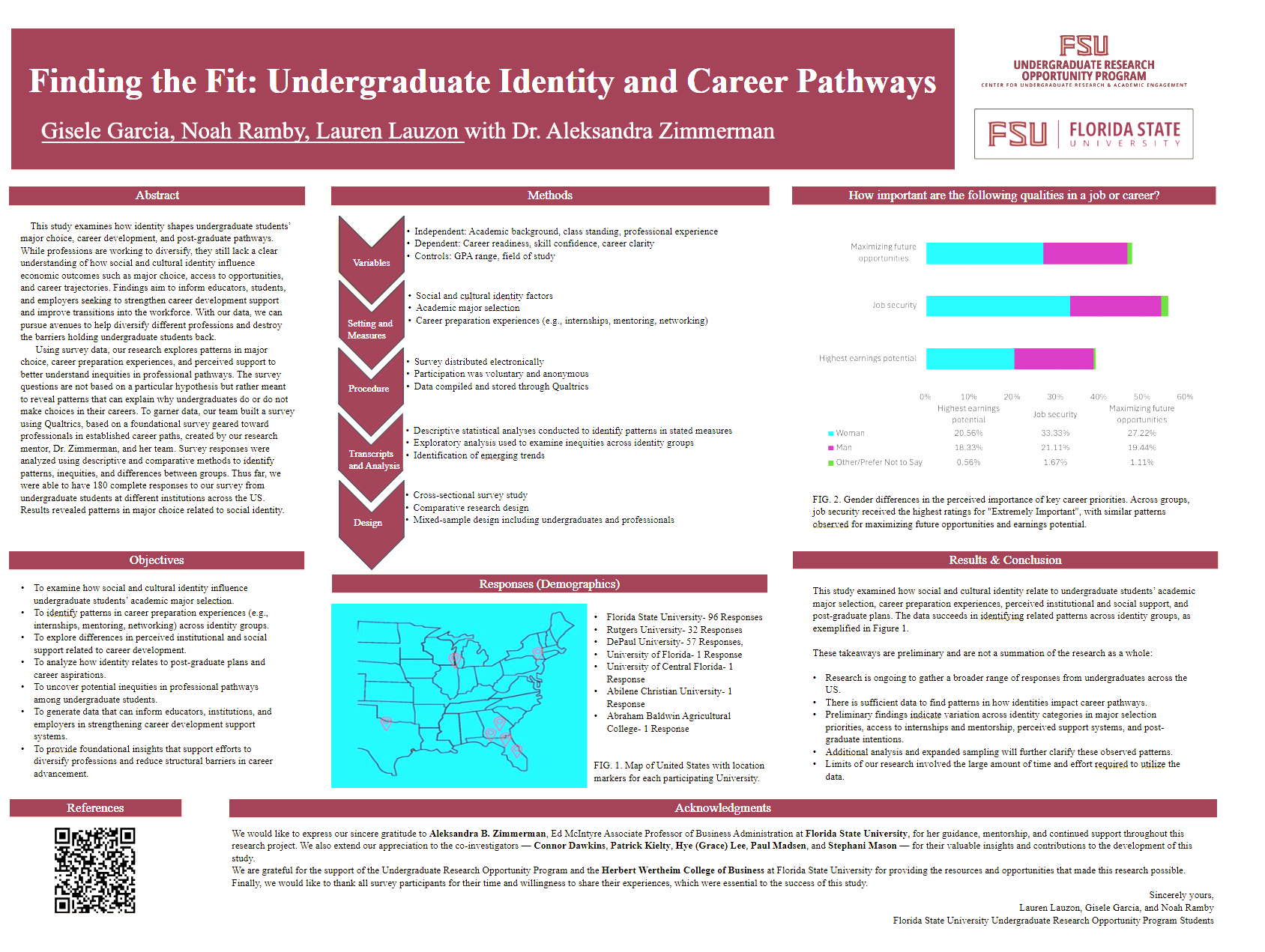
Finding the Fit: Undergraduate Identity and Career Pathways
Authors: Noah Ramby, Dr. Aleksandra ZimmermanStudent Major: Accounting & Finance
Mentor: Dr. Aleksandra Zimmerman
Mentor's Department: Accounting Mentor's College: Herbert Wertheim College of Business Co-Presenters: Gisele Garcia, Lauren Lauzon
Abstract
This study examines how identity shapes undergraduate students’
major choice, career development, and post-graduate pathways.
While professions are working to diversify, they still lack a clear
understanding of how social and cultural identity influence
economic outcomes such as major choice, access to opportunities,
and career trajectories. Findings aim to inform educators, students,
and employers seeking to strengthen career development support
and improve transitions into the workforce. With our data, we can
pursue avenues to help diversify different professions and destroy
the barriers holding undergraduate students back.
Using survey data, our research explores patterns in major
choice, career preparation experiences, and perceived support to
better understand inequities in professional pathways. The survey
questions are not based on a particular hypothesis but rather meant
to reveal patterns that can explain why undergraduates do or do not
make choices in their careers. To garner data, our team built a survey
using Qualtrics, based on a foundational survey geared toward
professionals in established career paths, created by our research
mentor, Dr. Zimmerman, and her team. Survey responses were
analyzed using descriptive and comparative methods to identify
patterns, inequities, and differences between groups. Thus far, we
were able to have 180 complete responses to our survey from
undergraduate students at different institutions across the US.
Results revealed patterns in major choice related to social identity.
Keywords: Business, Accounting, Finance
26th annual Undergraduate Research Symposium, April 1, 2026
Nicholas Turoff Poster Session 2: 10:45 am - 11:45 am / Poster #84
BIO
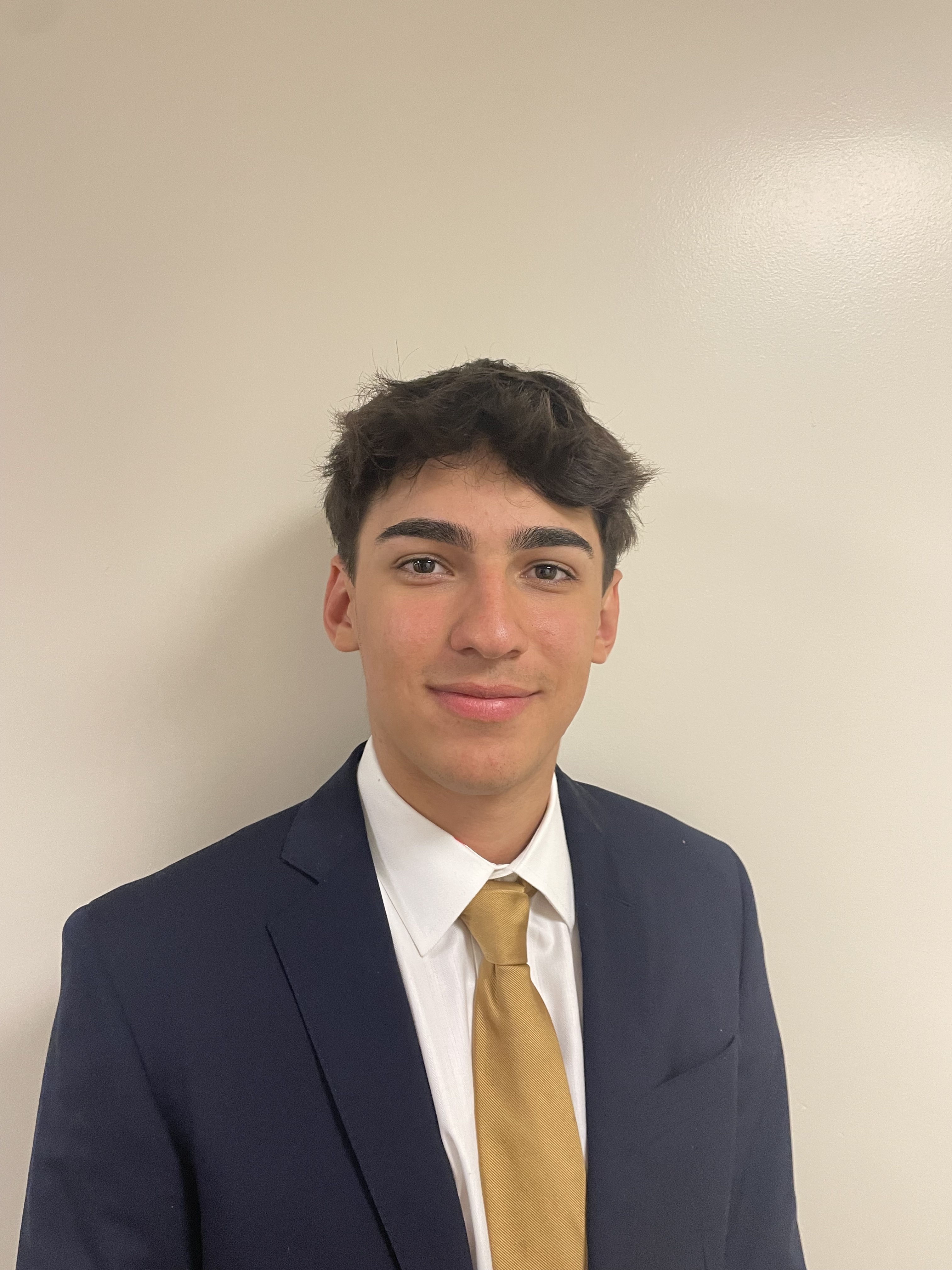
Nicholas Turoff is an undergraduate at Florida State University pursuing a Bachelor of Science in Finance with minors in Chemistry and Biology on the pre-medical track. He currently serves as a research assistant on the SMARTer Study at the FSU College of Medicine, which focuses on behavioral and lifestyle interventions related to weight management and health outcomes. Nicholas also works as an Emergency Medical Technician with the FSU's Medical Response Unit and with Gadsden County EMS, where he has observed disparities in rural healthcare access. His academic and research interests center on orthopedic surgery and developing sustainable systems to expand specialized care in underserved rural communities.
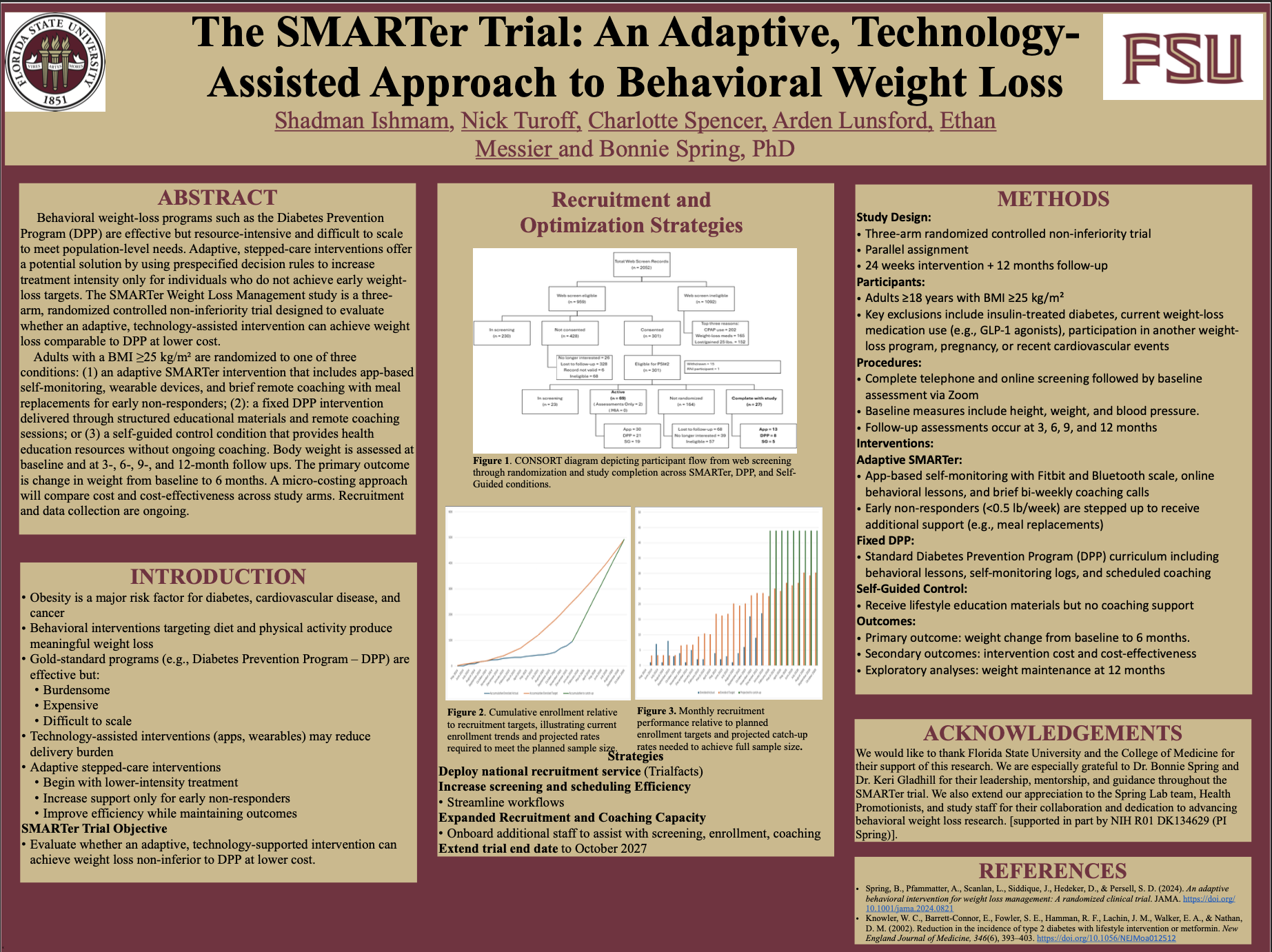
The SMARTer Trial: An Adaptive, Technology Assisted Approach to Behavioral Weight Loss
Authors: Nicholas Turoff, Bonnie SpringStudent Major: Finance
Mentor: Bonnie Spring
Mentor's Department: FSU College of Medicine Mentor's College: FSU College of Medicine Co-Presenters: Shadman Ishmam, Charolette Spencer, Arden Lunsford, Ethan Messier
Abstract
Behavioral weight-loss programs such as the Diabetes Prevention Program (DPP) are effective but resource-intensive and difficult to scale to meet population-level needs. Adaptive, stepped-care interventions offer a potential solution by using prespecified decision rules to increase treatment intensity only for individuals who do not achieve early weight-loss targets. The SMARTer Weight Loss Management study is a three-arm, randomized controlled non-inferiority trial designed to evaluate whether an adaptive, technology-assisted intervention can achieve weight loss comparable to DPP at lower cost.
Adults with a BMI ≥25 kg/m² are randomized to one of three conditions: (1) an adaptive SMARTer intervention that includes app-based self-monitoring, wearable devices, and brief remote coaching with meal replacements for early non-responders; (2): a fixed DPP intervention delivered through structured educational materials and remote coaching sessions; or (3) a self-guided control condition that provides health education resources without ongoing coaching. Body weight is assessed at baseline and at 3-, 6-, 9-, and 12-month follow ups. The primary outcome is change in weight from baseline to 6 months. A micro-costing approach will compare cost and cost-effectiveness across study arms. Recruitment and data collection are ongoing.
Keywords: Spring Lab, Weight-loss
26th annual Undergraduate Research Symposium, April 1, 2026
Sofia Nuonno Poster Session 4: 3:00 pm - 4:00 pm / Poster #302
BIO
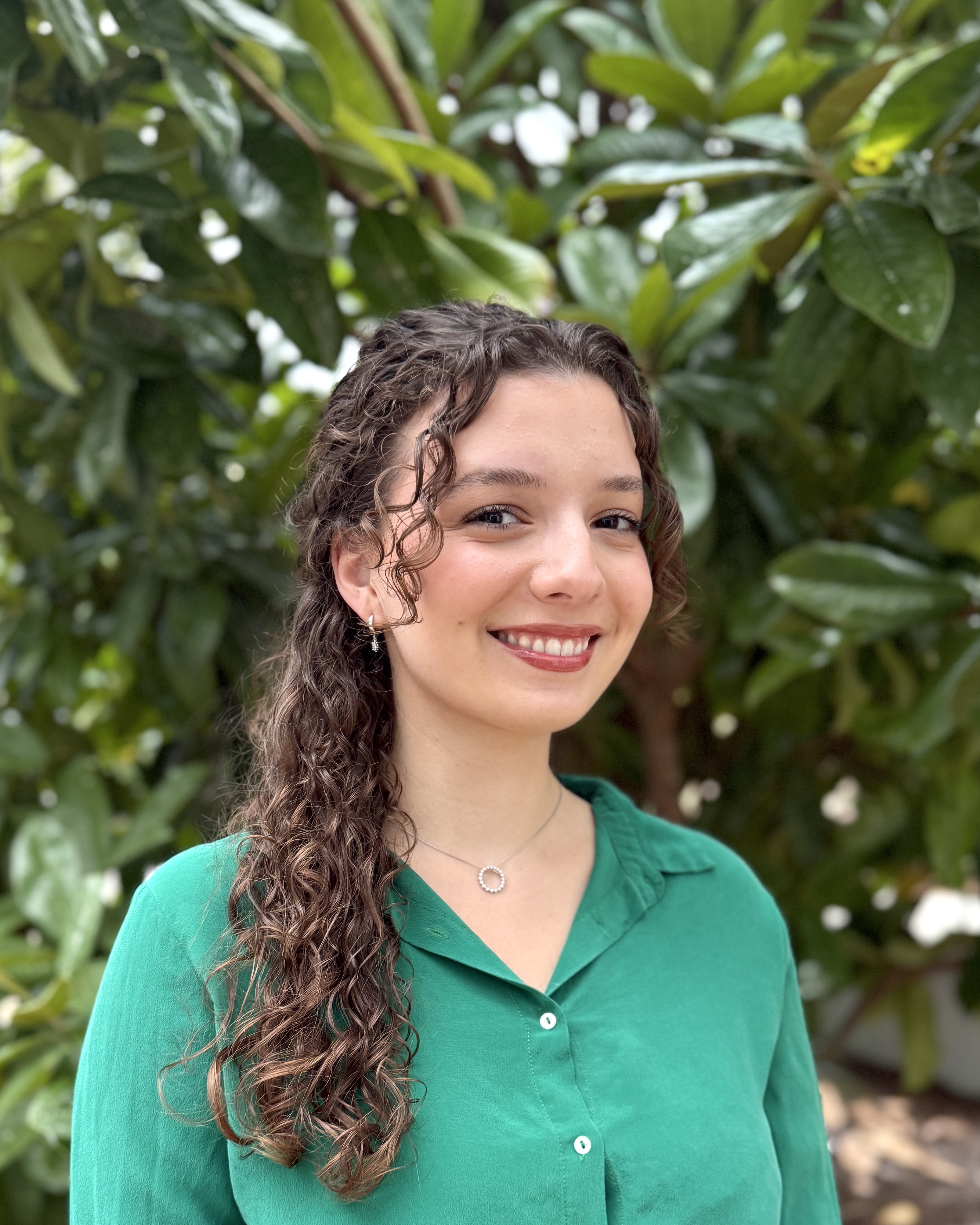
Sofia is a Senior student at FSU interested in pursuing a career as a university professor. She was born in Pisa, an Italian town, and moved to Miami at the age of ten. Throughout her childhood, she always expressed an interest for the arts — more specifically, painting and writing — which drove her to dedicate her academic career to these fields. Because of this, her research interests focus on the humanities, as creativity and self-expression have always been her main priorities within academia. She will be pursuing her MA in Art History at FSU in the Fall.
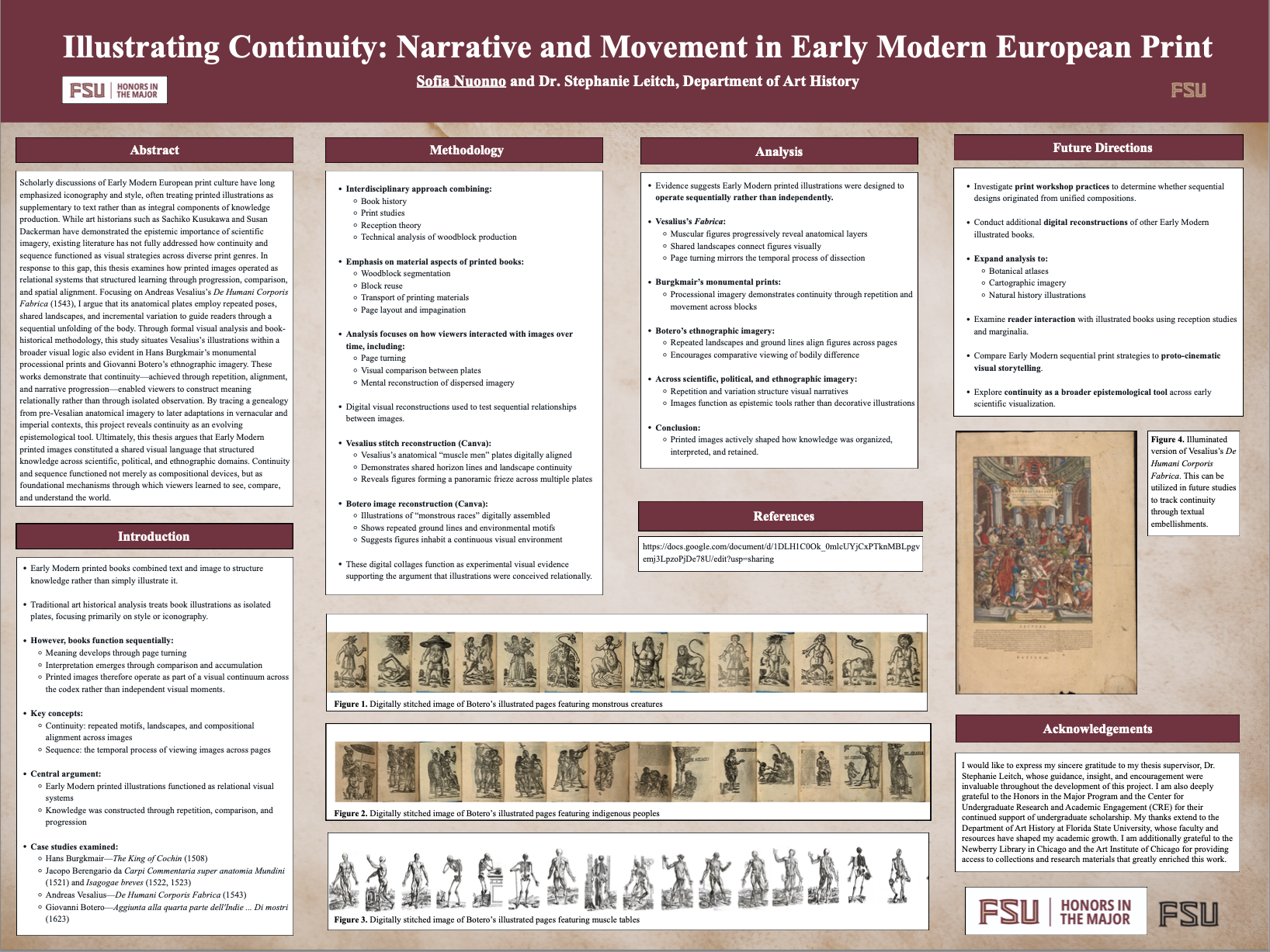
Illustrating Continuity: Narrative and Movement in Early Modern European Print
Authors: Sofia Nuonno, Stephanie LeitchStudent Major: Art History & Literature, Media, and Culture
Mentor: Stephanie Leitch
Mentor's Department: Art History Mentor's College: Fine Arts Co-Presenters:
Abstract
Scholarly discussions of Early Modern European print culture have long emphasized iconography and style, often treating printed illustrations as supplementary to text rather than as integral components of knowledge production. While art historians such as Sachiko Kusukawa and Susan Dackerman have demonstrated the epistemic importance of scientific imagery, existing literature has not fully addressed how continuity and sequence functioned as visual strategies across diverse print genres. In response to this gap, this thesis examines how printed images operated as relational systems that structured learning through progression, comparison, and spatial alignment. Focusing on Andreas Vesalius’s De Humani Corporis Fabrica (1543), I argue that its anatomical plates employ repeated poses, shared landscapes, and incremental variation to guide readers through a sequential unfolding of the body. Through formal visual analysis and book-historical methodology, this study situates Vesalius’s illustrations within a broader visual logic also evident in Hans Burgkmair’s monumental processional prints and Giovanni Botero’s ethnographic imagery. These works demonstrate that continuity—achieved through repetition, alignment, and narrative progression—enabled viewers to construct meaning relationally rather than through isolated observation. By tracing a genealogy from pre-Vesalian anatomical imagery to later adaptations in vernacular and imperial contexts, this project reveals continuity as an evolving epistemological tool. Ultimately, this thesis argues that Early Modern printed images constituted a shared visual language that structured knowledge across scientific, political, and ethnographic domains. Continuity and sequence functioned not merely as compositional devices, but as foundational mechanisms through which viewers learned to see, compare, and understand the world.
Keywords: Continuity, Early Modern, Print, Vesalius, Art History, Botero, Da Carpi, Burgkmair
26th annual Undergraduate Research Symposium, April 1, 2026
Charlotte Sprecher Poster Session 1: 9:30 am - 10:30 am / Poster #84
BIO
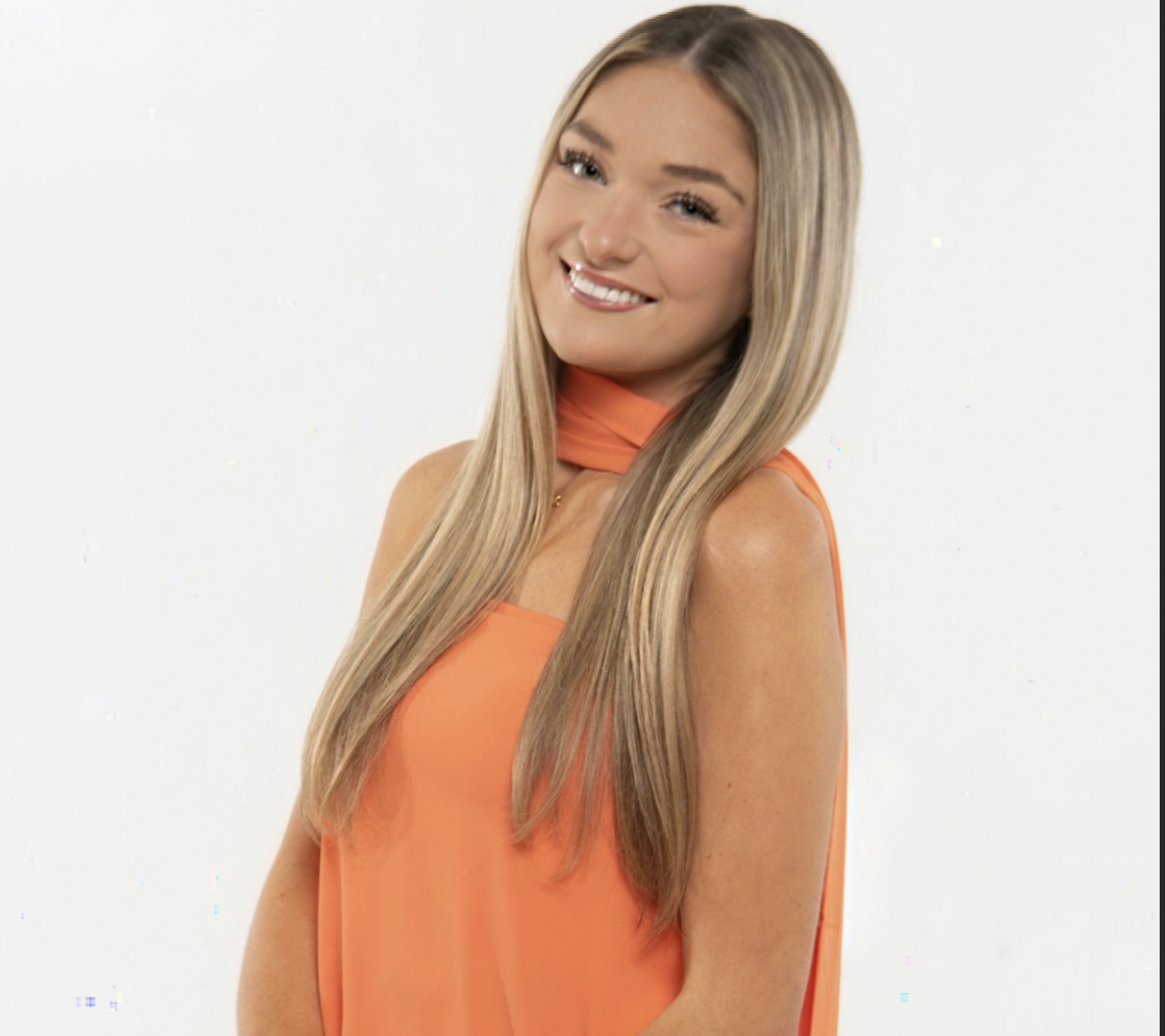
Charlotte is a pre-medical undergraduate senior majoring in Behavioral Neuroscience and minoring in general chemistry at Florida State University. She is passionate about innovative lifestyle interventions, patient-centered care, and addressing global health disparities. Her global and clinical experience as a medical assistant has strengthened her commitment to compassionate care and to understanding the diverse factors that shape health outcomes. Guided by values of empathy, curiosity, and innovation, Charlotte aims to contribute to research that expands healthcare accessibility and improves care for underserved populations. She is excited to collaborate with a team focused on medical innovation and advancing clinical care. In the future, Charlotte plans to pursue a medical career that integrates research with clinical practice.
The SMARTer Trial: An Adaptive, Technology Assisted Approach to Behavioral Weight Loss
Authors: Charlotte Sprecher, Dr. Bonnie SpringStudent Major: Behavioral Neuroscience
Mentor: Dr. Bonnie Spring
Mentor's Department: Department of Behavioral Sciences and Social Medicine Mentor's College: College of Medicine Co-Presenters: Shadman Ishmam, Nick Turoff, Arden Lunsford, Ethan Messier
Abstract
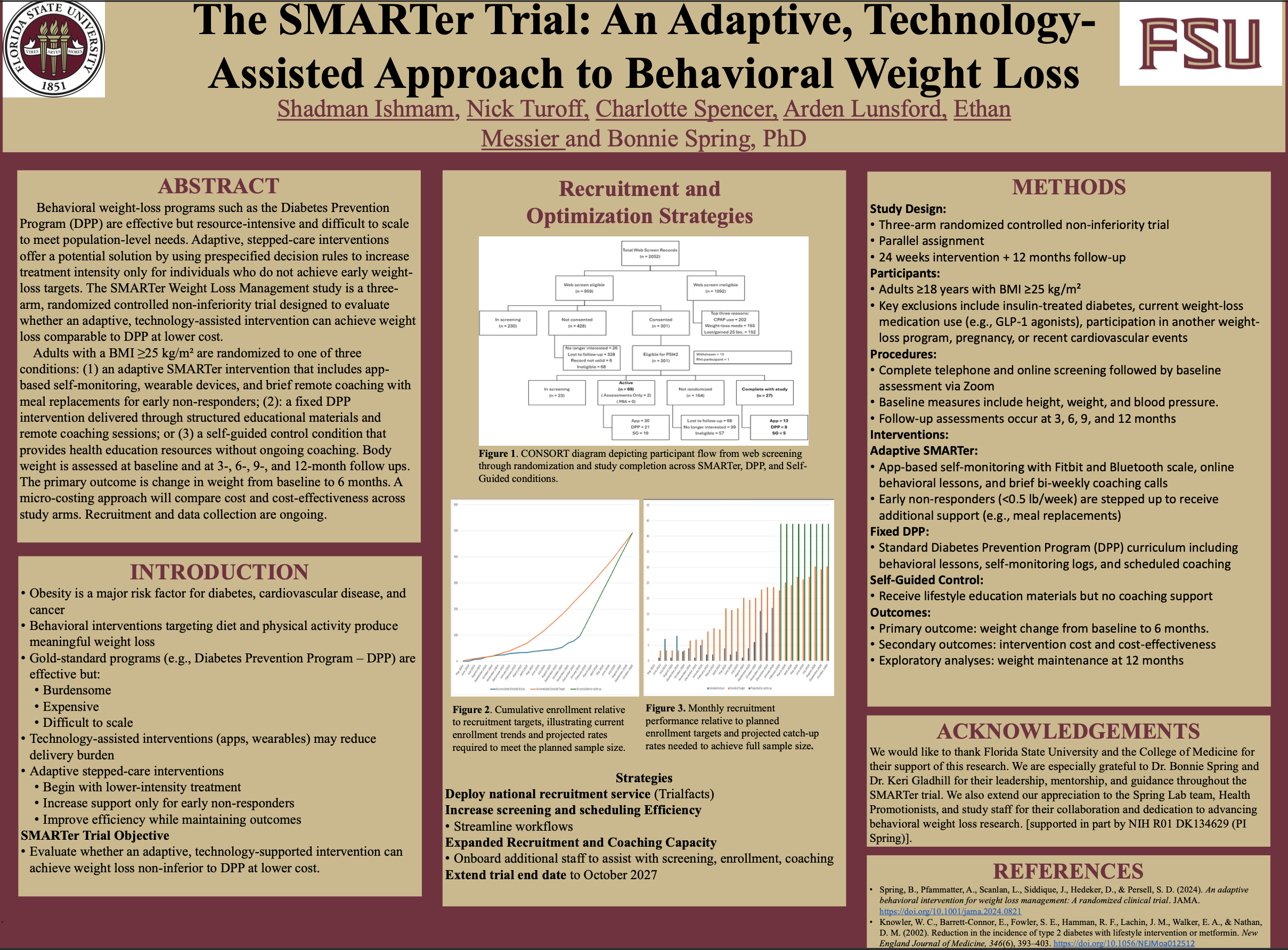
Behavioral weight-loss programs such as the Diabetes Prevention Program (DPP) are effective but resource-intensive and difficult to scale to meet population-level needs. Adaptive, stepped-care interventions offer a potential solution by using prespecified decision rules to increase treatment intensity only for individuals who do not achieve early weight-loss targets. The SMARTer Weight Loss Management study is a three-arm, randomized controlled non-inferiority trial designed to evaluate whether an adaptive, technology-assisted intervention can achieve weight loss comparable to DPP at lower cost.
Adults with a BMI ≥25 kg/m² are randomized to one of three conditions: (1) an adaptive SMARTer intervention that includes app-based self-monitoring, wearable devices, and brief remote coaching with meal replacements for early non-responders; (2): a fixed DPP intervention delivered through structured educational materials and remote coaching sessions; or (3) a self-guided control condition that provides health education resources without ongoing coaching. Body weight is assessed at baseline and at 3-, 6-, 9-, and 12-month follow ups. The primary outcome is change in weight from baseline to 6 months. A micro-costing approach will compare cost and cost-effectiveness across study arms. Recruitment and data collection are ongoing.
Keywords: SMARTer, Behavioral Weight Loss
26th annual Undergraduate Research Symposium, April 1, 2026
Jaylynn Brunelli Poster Session 1: 9:30 am - 10:30 am / Poster #21
BIO
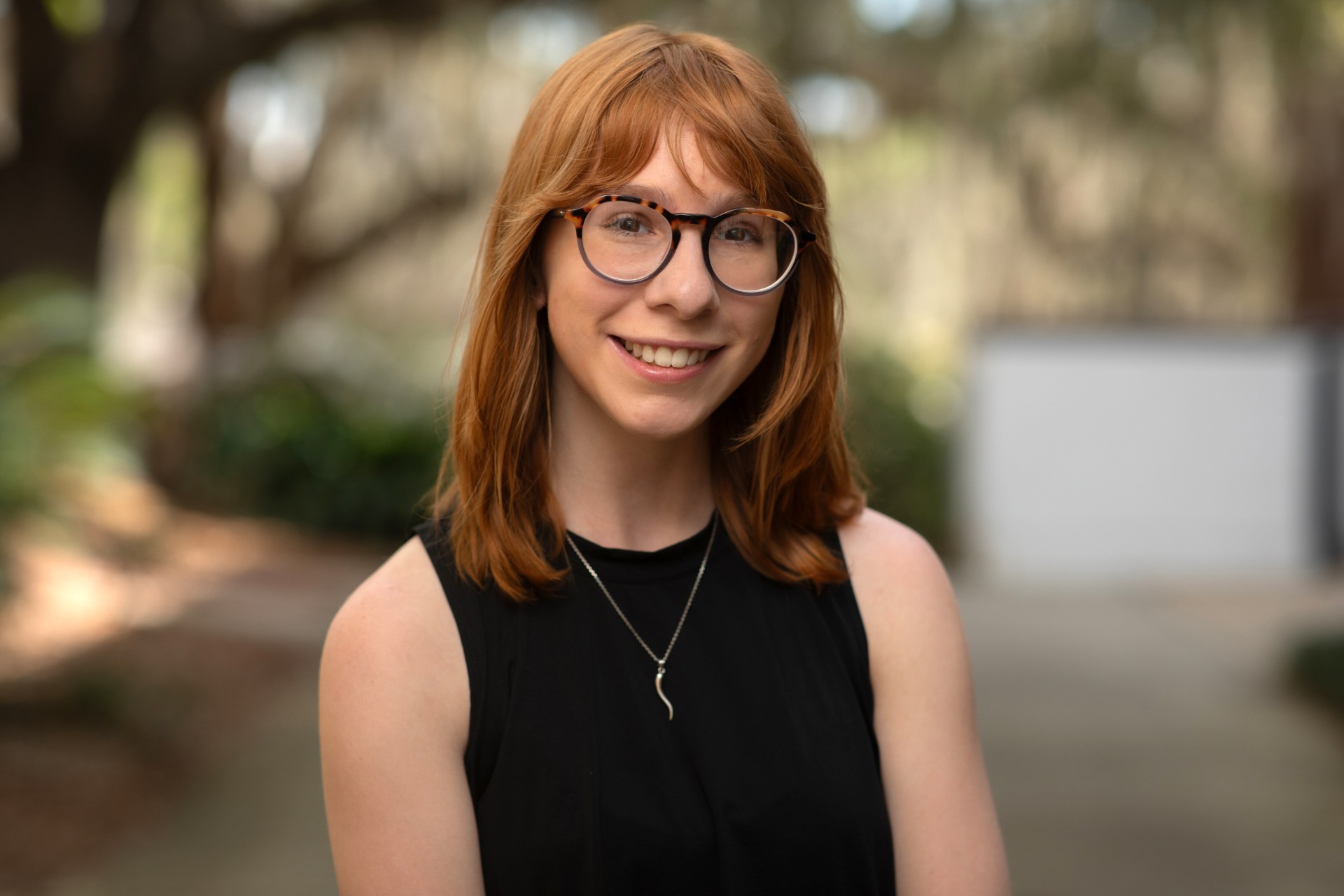
Jaylynn is a senior meteorology student who has studied climate intervention impacts under Dr. Michael Diamond since her freshman year. She has participated in both the Undergraduate Research Opportunity Program (UROP) and Honors in the Major (HITM) program. After graduating with her Bachelor of Science in the spring, she will be pursuing a PhD in atmospheric science at Indiana University-Bloomington.
Stratospheric Aerosol Injection Effects on Global Climate Distribution
Authors: Jaylynn Brunelli, Michael DiamondStudent Major: Meteorology
Mentor: Michael Diamond
Mentor's Department: Department of Earth, Ocean, and Atmospheric Science Mentor's College: College of Arts and Sciences Co-Presenters:
Abstract
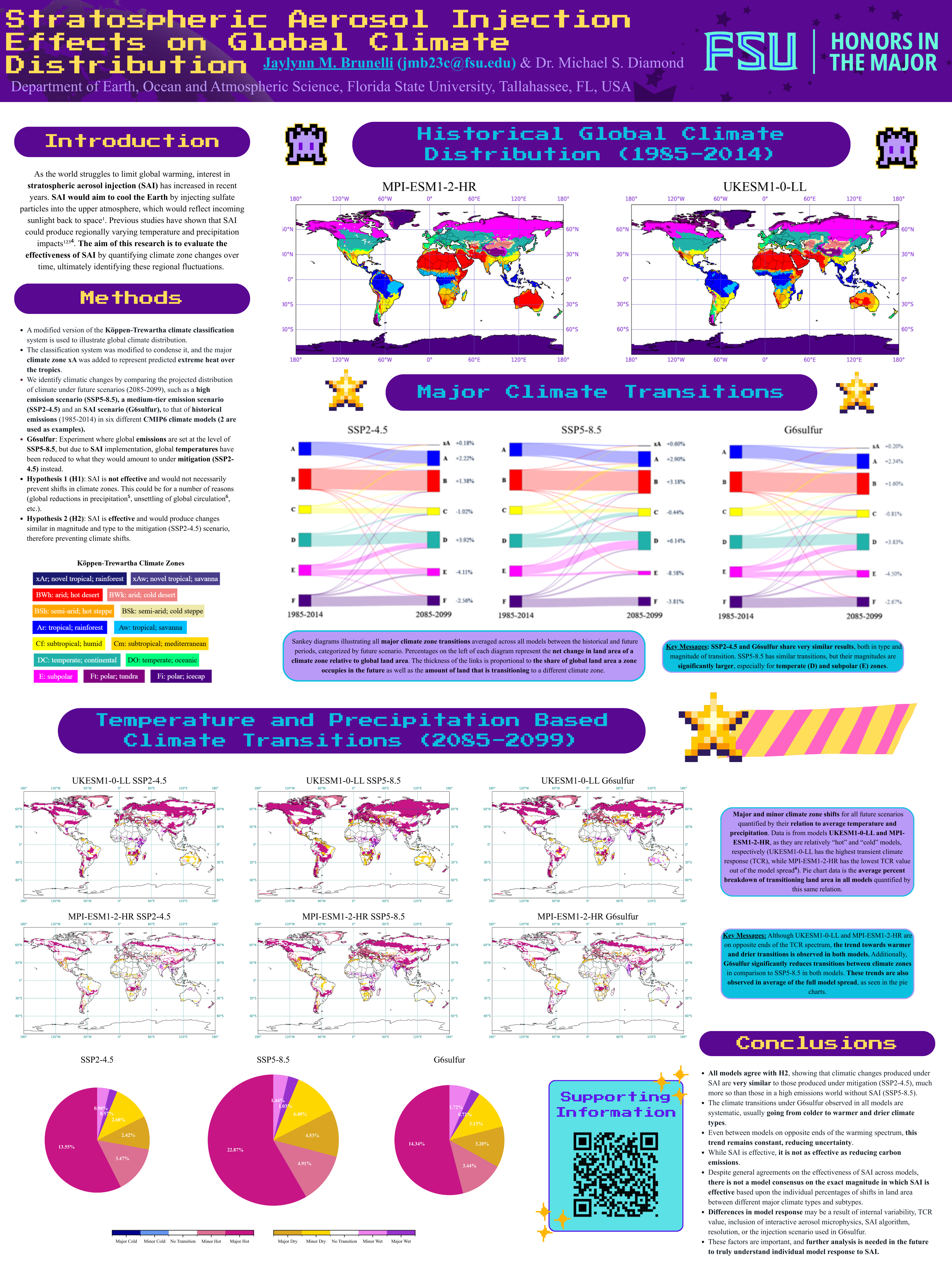
As the world struggles to limit global warming, interest in stratospheric aerosol injection (SAI) has increased in recent years. SAI would aim to cool the Earth by increasing the amount of sulfate particles in the upper atmosphere, which would reflect a small fraction of sunlight back out to space. Previous studies have shown that SAI could produce regionally varying temperature and precipitation impacts. The aim of our research Is to evaluate how effective SAI is by quantifying climate changes over time, ultimately identifying these regional fluctuations. We use a climate classification system to identify climate change by comparing the future distribution of climate under a high emissions scenario, a medium-tier emissions scenario, and a scenario in which SAI is implemented. We find that changes in climate imposed under SAI are like those under medium-tier emissions, while changes under high emissions are greater in magnitude. All models agree that SAI is effective in comparison to a high emissions scenario but individually disagree on the magnitudes of global change, indicating differing model responses to SAI and CO2-driven warming. These findings have important implications for predicting and understanding the effects of climate intervention on global climate regimes.
Keywords: climate, geoengineering, climatology
26th annual Undergraduate Research Symposium, April 1, 2026
Ada Jones Poster Session 1: 9:30 am - 10:30 am / Poster #309
BIO
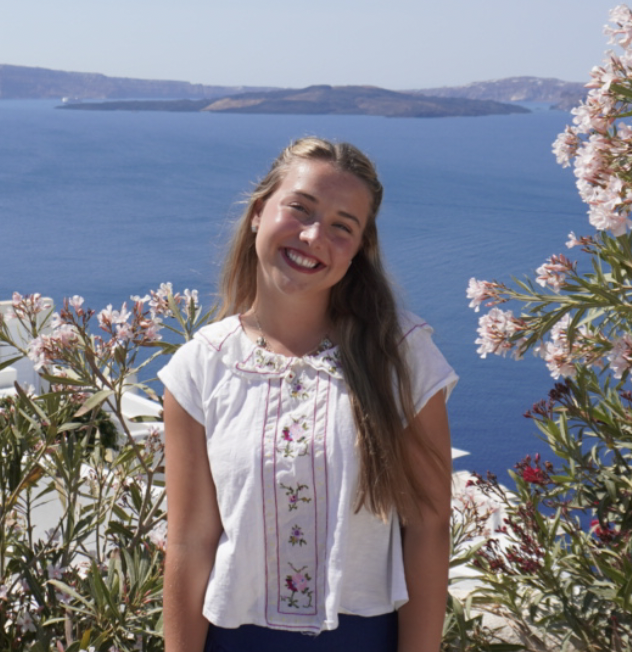
Ada is a freshman International Affairs student in the College of Social Science and Public Policy. She is part of the FSU Honors and Presidential Scholars programs, where she is completing research through the Undergraduate Research Opportunity Program (UROP). Her research interests include WWII history, political oppression, and international politics. Ada hopes to pursue a career in intelligence services or diplomacy, utilizing her knowledge and passion for international relations and public administration.
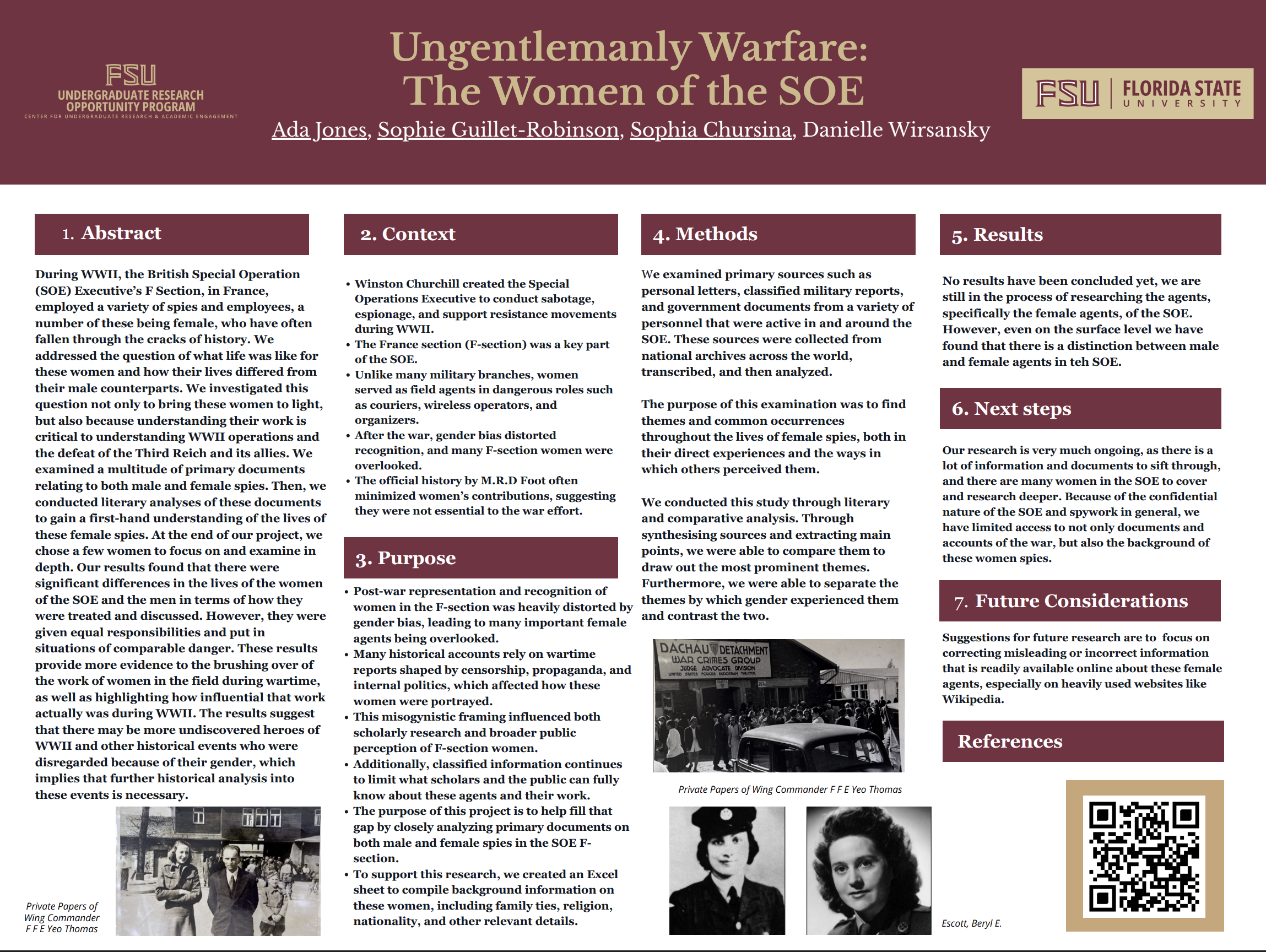
Ungentlemanly Warfare: The Women of the SOE
Authors: Ada Jones, Danielle WirsanskyStudent Major: International Affairs
Mentor: Danielle Wirsansky
Mentor's Department: History Mentor's College: College of Social Science and Public Policy Co-Presenters: Sophie Guillet-Robinson, Sophia Chursina
Abstract
The women who contributed to the intelligence gathering during World War II are often overlooked, despite the crucial roles they played in the Allied operations. Our project examines the women of the British Special Operations Executive (SOE) in France (F Section), and how their lives differed from their male counterparts. Historically, information gathered on these operatives has been reported through biased lenses such as sensationalism, propaganda, and misogyny, therefore muddying their achievements. We investigated this question by reading, transcribing, and analyzing primary documents, as well as academic writing. Our results found that there were significant differences between the men and women of the SOE in terms of how they were treated and discussed, yet they were given equal responsibilities and put in situations of comparable danger. Our project contributes to a more nuanced understanding of the Allied war effort and a reconsideration of gender, memory, and reputation in this context.
Keywords: history, world war two, women
26th annual Undergraduate Research Symposium, April 1, 2026
Camille Twitchell Poster Session 1: 9:30 am - 10:30 am / Poster #17
BIO
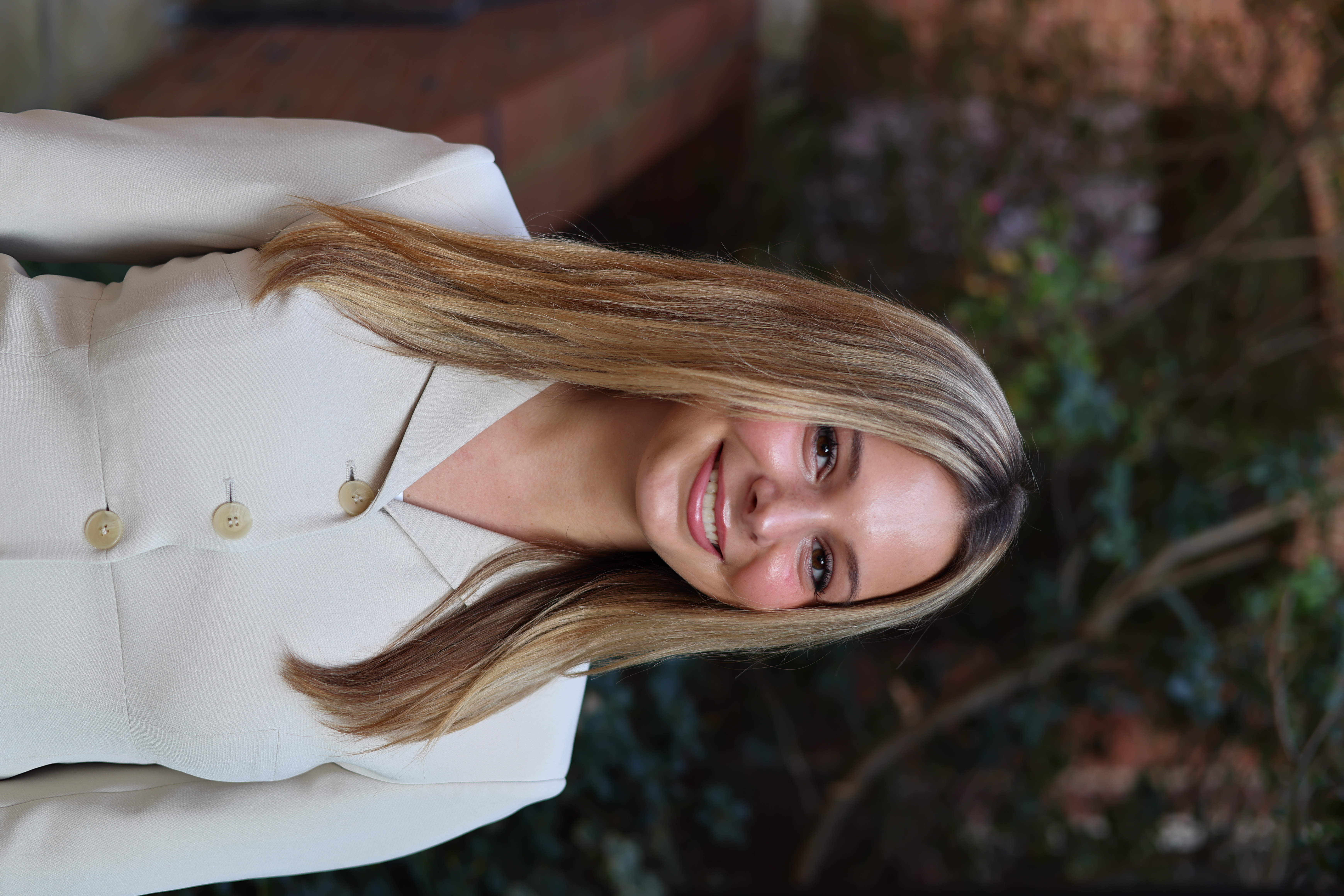
Camille is a first-year management student in the Herbert Wertheim College of Business. She is part of the FSU Honors program and FSU Presidential Scholars, where she is participating in the Undergraduate Research Opportunity Program (UROP). Her academic interests focus on leadership, organizational strategy, and marketing with an additional interest in the hospitality industry. Through her research, she seeks to utilize and improve professional skills such as project management, effective communication, and critical thinking.
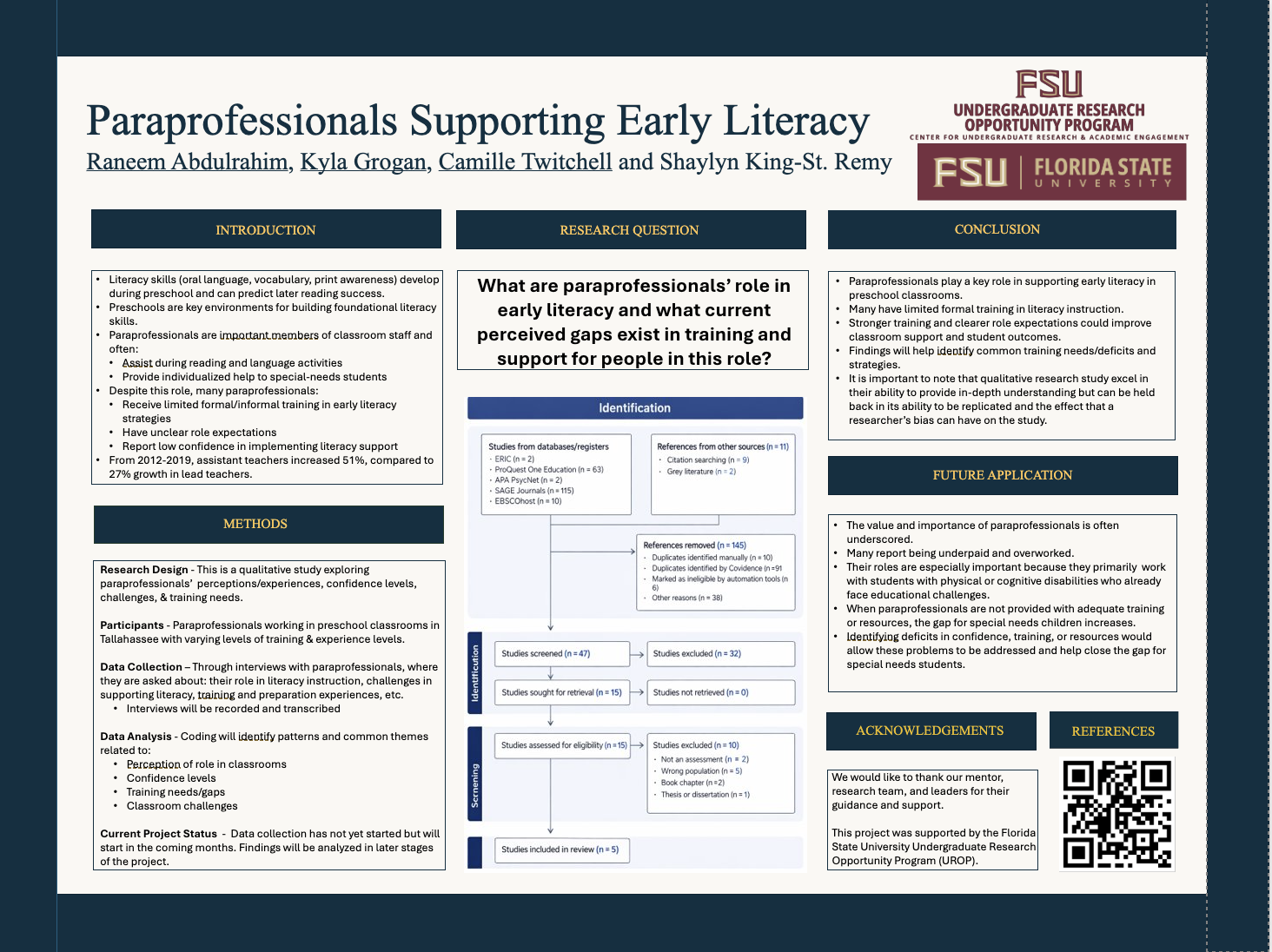
Paraprofessionals Supporting Early Literacy
Authors: Camille Twitchell, Shaylyn King-St. RemyStudent Major: Management
Mentor: Shaylyn King-St. Remy
Mentor's Department: Communication Disorders Mentor's College: Communication Science and Disorders Co-Presenters: Raneem Abdulrahim, Kyla Grogan
Abstract
Paraprofessionals are defined as trained staff members who assist
and provide specialized support in classrooms; most often to
students with special needs. However, many paraprofessionals
receive limited preparation or professional training in early literacy
strategies, which may affect their confidence and effectiveness in
supporting children’s language and literacy growth.
We will conduct a qualitative study. It will explore how
paraprofessionals perceive their roles and responsibilities in
promoting emerging literacy among in children in Tallahassee. They
will survey and interviewed about their current classroom
experiences and how they view their role. In this project, we
will also examine the challenges paraprofessionals encounter when
implementing early reading and language-building practices, as well
as the types of training and experiences that help them feel prepared
in their work.
Keywords: paraprofessionals, literacy, support, training, education