
Research Symposium
26th annual Undergraduate Research Symposium, April 1, 2026
Lazaro Castano Poster Session 1: 9:30 am - 10:30 am / Poster #299
BIO
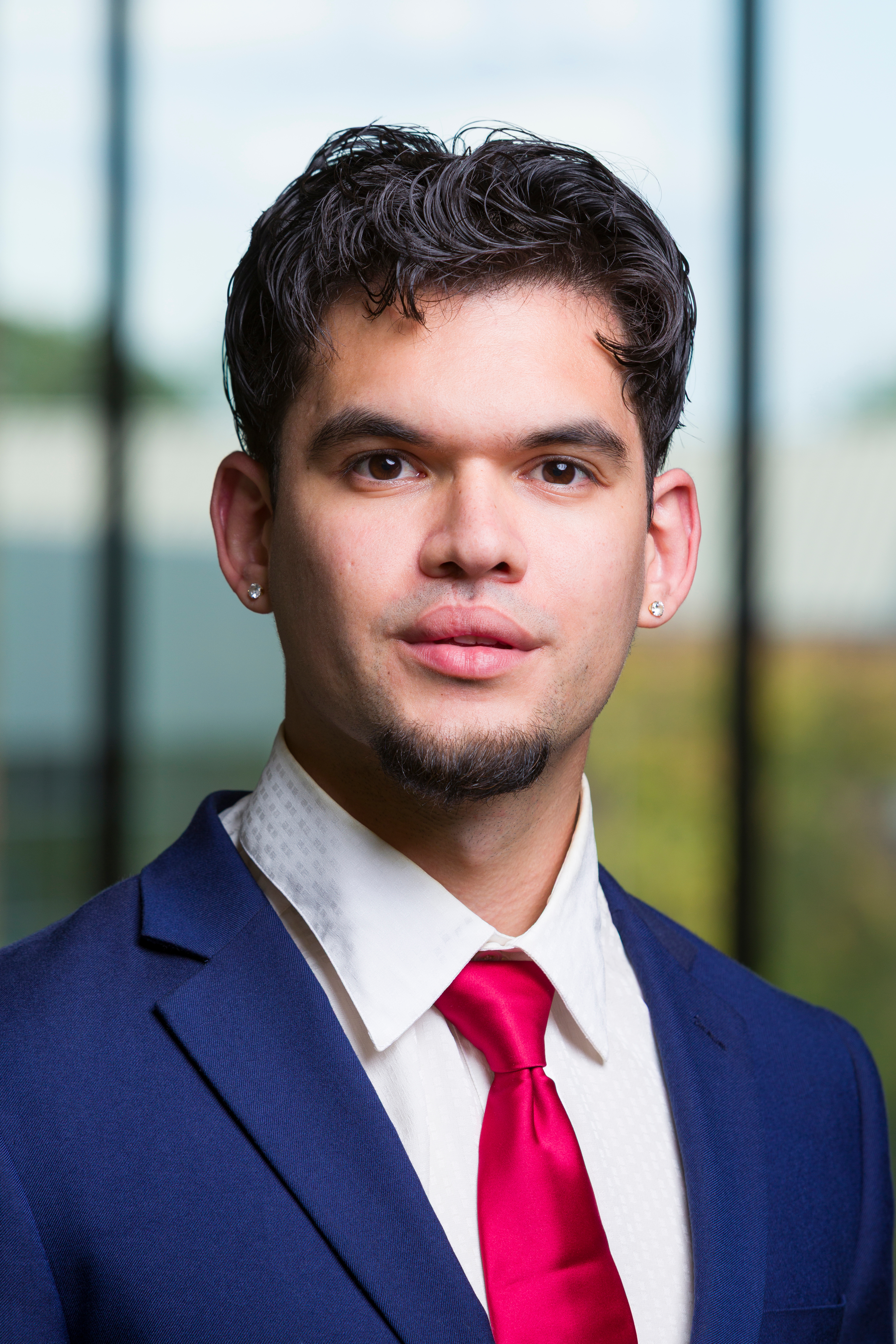
Lazaro Castano is a senior biomedical engineering student from Naples, Florida. He started his research career in structural biology, under the guidance of Dr. Nolan Blackford, he examined the structure of LARP-6, a human protein associated with liver fibrosis. Since then, he's explored various topics involving structural biology, genome editing, and drug delivery. Currently, he does research in the Li laboratory at the FAMU-FSU College of Engineering. Their goal is to develop treatment delivery methods, with a focus on cancer and neurodegenerative disease. After graduation, Lazaro hopes to pursue an MD/PhD in gene therapy, where he can engage in translational research while transforming laboratory discoveries into meaningful patient-focused therapies.
Copper-Diethyldithiocarbamate Complex Loaded and DSPE-PEG-c(RGD) Surface-Functionalized Liposomes for Treating Glioblastoma
Authors: Lazaro Castano, Yan LiStudent Major: Biomedical Engineering
Mentor: Yan Li
Mentor's Department: Chemical & Biomedical Engineering Mentor's College: FAMU-FSU College of Engineering Co-Presenters:
Abstract
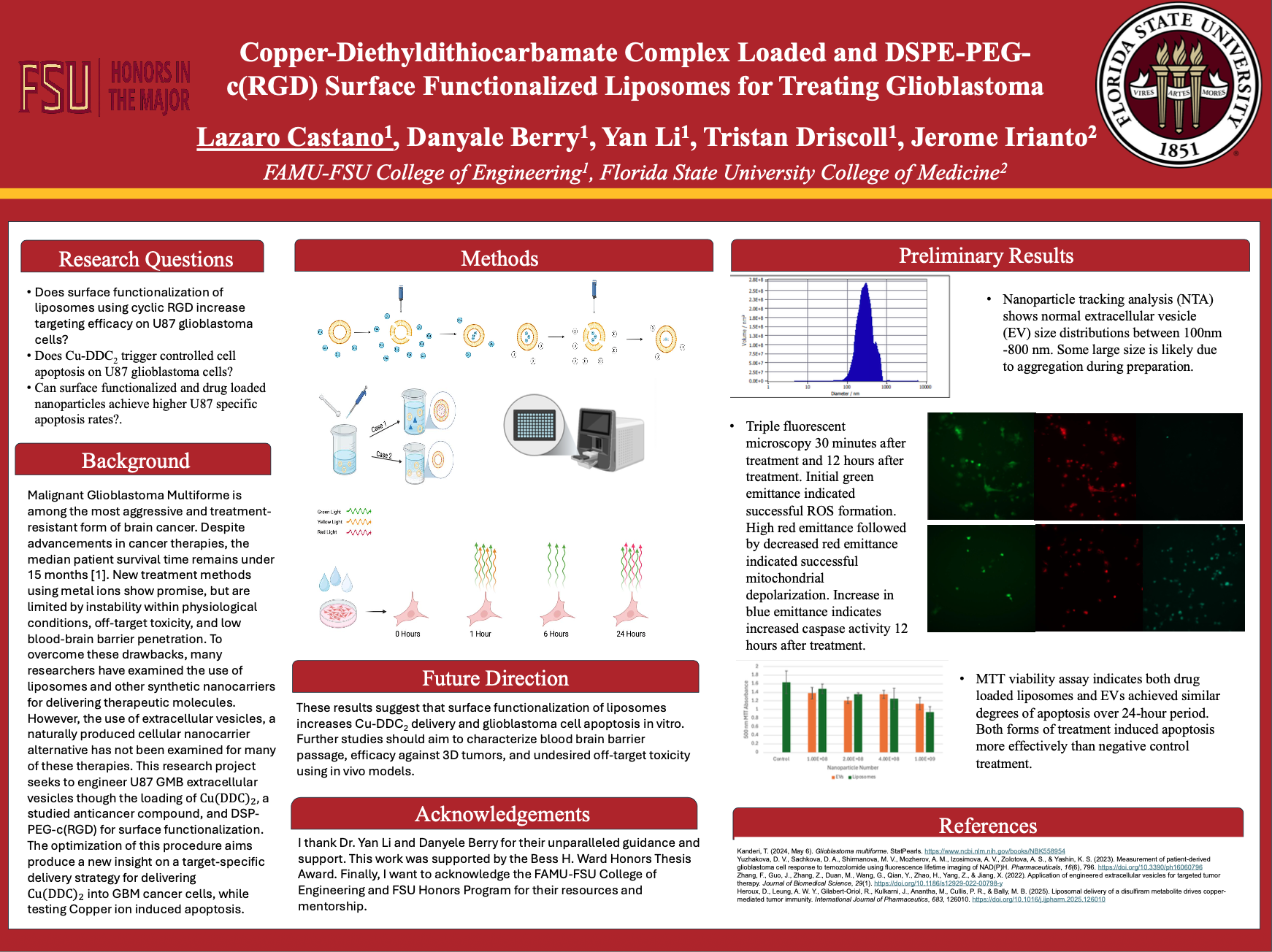
Malignant Glioblastoma Multiforme is among the most aggressive and treatment-resistant form of brain cancer. Despite advancements in cancer therapies, the median patient survival time remains under 15 months. New treatment methods using metal ions show promise, but are limited by instability within physiological conditions, off-target toxicity, and low blood-brain barrier penetration. To overcome these drawbacks, many researchers have examined the use of liposomes and other synthetic nanocarriers for delivering therapeutic molecules. However, the use of functionalized liposomes and extracellular vesicles, a naturally produced cellular nanocarrier alternative, has not been examined for many of these therapies. This project aimed to engineer liposomes though the loading of Cu(DDC)2, a studied anticancer compound, and DSP-PEG-c(RGD) for surface functionalization, while testing their efficacy at treating GBM U87 cells in vitro. Both surface functionalized liposomes and extracellular vesicles decreased cell viability during 24 h treatments. Additionally, surface functionalized liposomes achieved higher cell apoptosis compared to native liposomes, suggesting enhanced drug uptake.
Keywords: Extracellular Vesicles, Nanoparticles, Glioblastoma