
Research Symposium
26th annual Undergraduate Research Symposium, April 1, 2026
Maria Kavan Poster Session 3: 1:45 pm - 2:45 pm / Poster #301
BIO
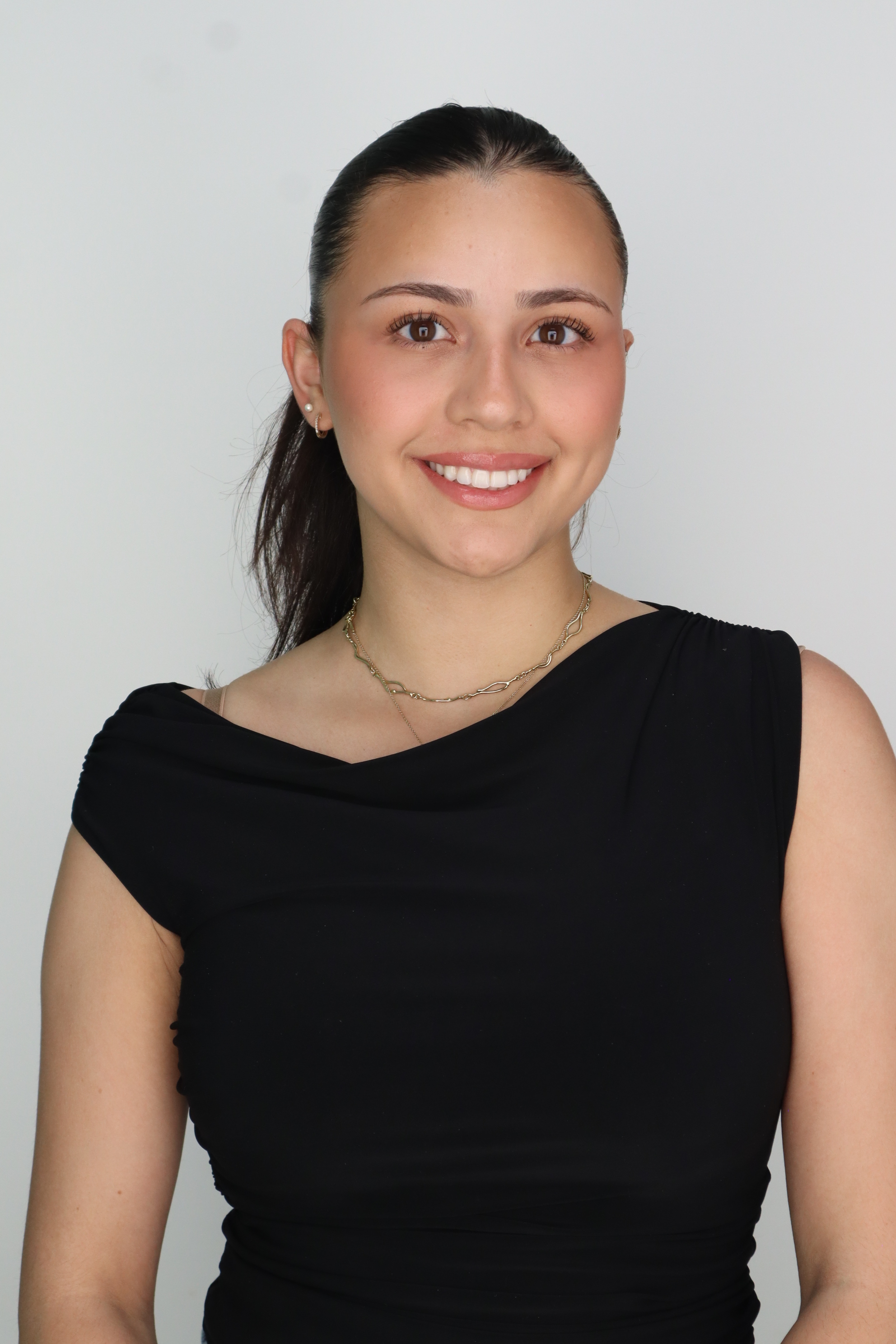
Maria Kavan is a first-year student at Florida State University pursuing a major in biology on the pre-medical track. She is currently building a strong academic foundation in the sciences while developing the analytical and problem-solving skills necessary for a future career in medicine, with the long term goal of becoming a cardio-thoracic surgeon. Maria previously attended high school in Gainesville, Florida after moving from her hometown of Eden, South Dakota during her sophomore year. Growing up in a small rural community and later transitioning to a new environment helped shape her adaptability, work ethic, and commitment to pursuing higher education.
• Prior to attending Florida State University, Maria was involved with the Frazer School, where she helped set up and organize the school during its early development and helped teach the Buchholz High School math team summer camps. Through this experience, she gained organizational and leadership skills while contributing to the creation of an educational environment designed to support student learning.
• At Florida State University, Maria is currently involved in undergraduate research through the Undergraduate Research Opportunity Program, where she works as a research assistant in the lab of Dr. Marcos Müller Vasconcelos. Her research focuses on quorum sensing in bacterial networks, where she helps model bacterial communication systems and analyze how signaling molecules influence population behavior and biofilm formation. Using computational tools such as MATLAB and Python, she contributes to numerical simulations and compares theoretical models with experimental microbiology literature to refine biological predictions.
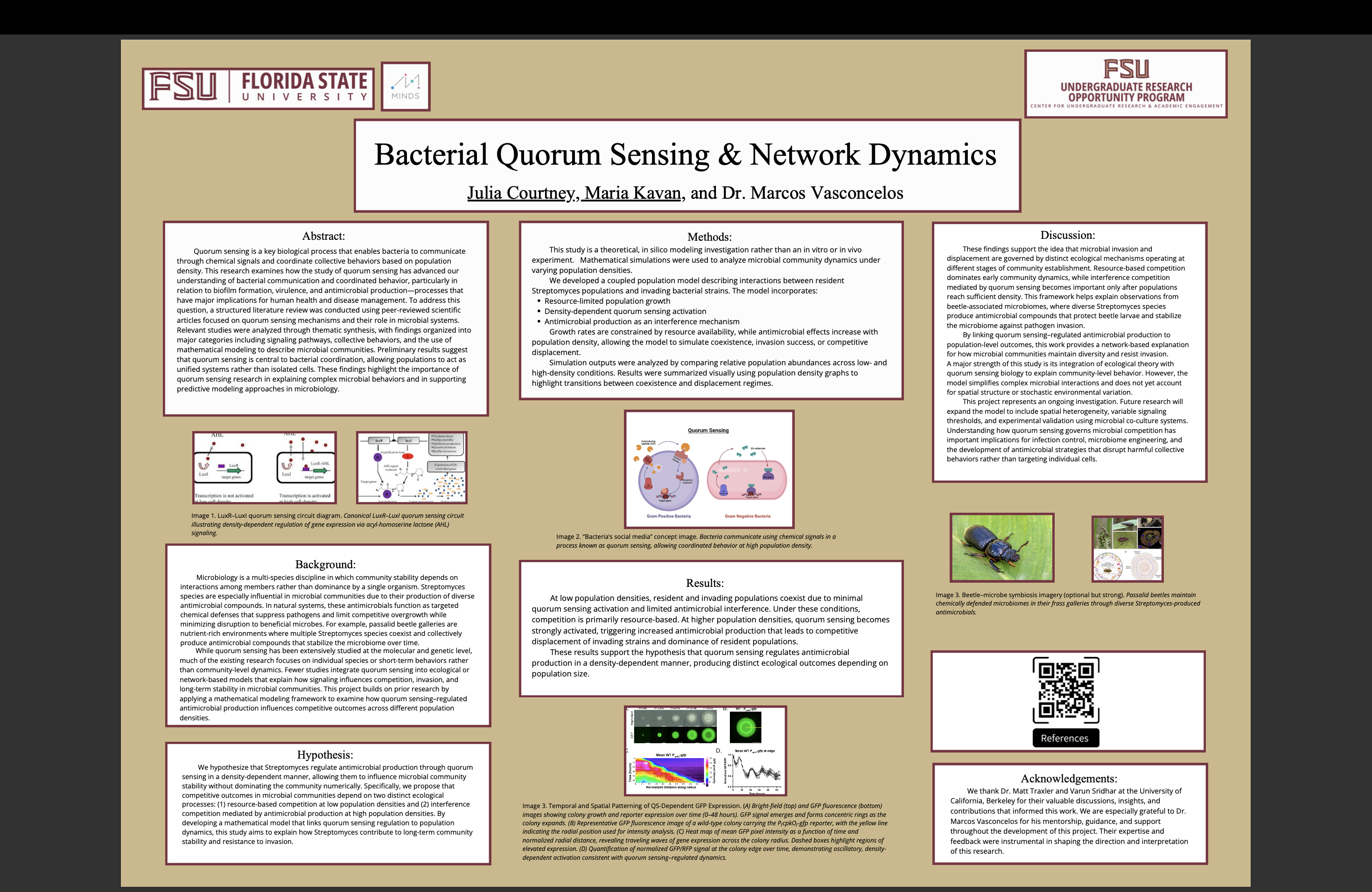
Bacterial Quorum Sensing & Network Dynamics
Authors: Maria Kavan, Marcos VasconcelosStudent Major: Pre-Biological Sciences
Mentor: Marcos Vasconcelos
Mentor's Department: Dept. of Electrical and Computer Engineering Mentor's College: FAMU-FSU College of Engineering Co-Presenters: Julia Courtney
Abstract
Quorum sensing is a key biological process that enables bacteria to communicate
through chemical signals and coordinate collective behaviors based on population
density. This research examines how the study of quorum sensing has advanced our
understanding of bacterial communication and coordinated behavior, particularly in
relation to biofilm formation, virulence, and antimicrobial production—processes that
have major implications for human health and disease management. To address this
question, a structured literature review was conducted using peer-reviewed scientific
articles focused on quorum sensing mechanisms and their role in microbial systems.
Relevant studies were analyzed through thematic synthesis, with findings organized into
major categories including signaling pathways, collective behaviors, and the use of
mathematical modeling to describe microbial communities. Preliminary results suggest
that quorum sensing is central to bacterial coordination, allowing populations to act as
unified systems rather than isolated cells. These findings highlight the importance of
quorum sensing research in explaining complex microbial behaviors and in supporting
predictive modeling approaches in microbiology.
Keywords: Quorum Sensing, Bacterial Communication