
Research Symposium
26th annual Undergraduate Research Symposium, April 1, 2026
Cassandra Holder Poster Session 1: 9:30 am - 10:30 am / Poster #201
BIO
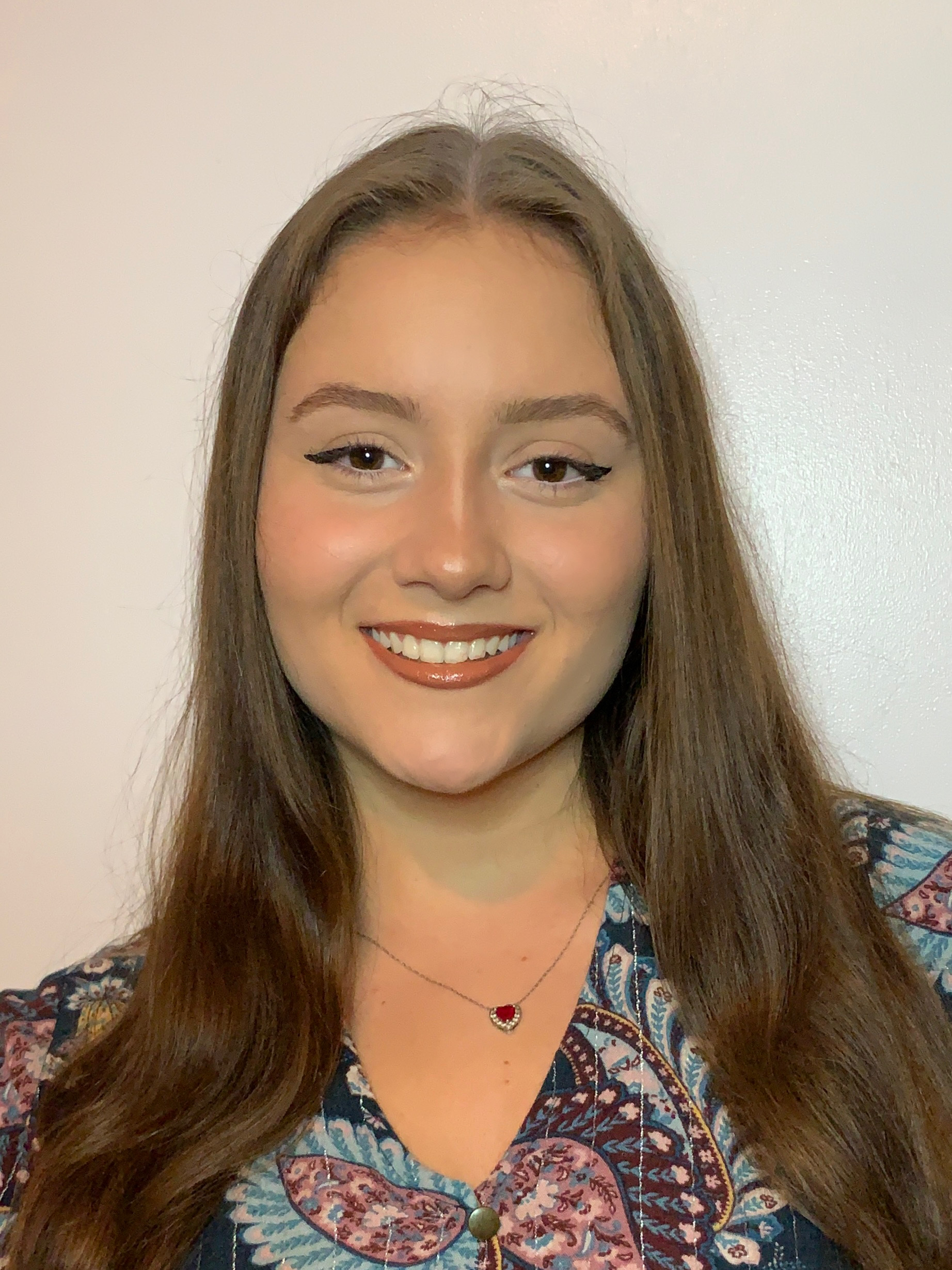
Cassandra Holder is a junior pursuing a Bachelor of Science in Psychology with a minor in Chemistry. In Spring 2024, she began her research journey as a phlebotomist and research assistant under the mentorship of Thomas Joiner, Ph.D., and Morgan Robison, M.S., working on the (completed) NIH-funded L.I.F.E. Study and a related virtual reality study. In this role, alongside consenting and leading participants, she performs blood draws from high-risk populations and processes/stores plasma samples. She helped write the proposal for the VR study, which investigates the role of simulated social exclusion in oxytocin and suicide risk using virtual reality technology.
Cassandra has been recognized on the President’s List every semester since beginning her studies and was awarded the Mae Hampton Watt Presidential Scholarship in Psychology – Leadership and Service for her work alongside Morgan Robison and for her broader mental health advocacy and student leadership.
She serves as President of RENEW, a Counseling and Psychological Services organization that supports emotional wellness among students. In this role, she facilitates instructional sessions on topics such as stress and time management, self-esteem, and healthy communication, while also coordinating outreach events, tabling, and presentations.
She is also Vice President of the non-profit IYRT and a member of the College of Medicine’s U-SSTRIDE, Psi Chi, and the Herpetology Club. Cassandra works as a medical assistant at a family medicine practice and plans to attend medical school and pursue a career as a psychiatrist, integrating clinical care with research on suicide prevention and mental health.
Is Oxytocin Involved: A study on the relationship between ACEs and metadehumanization
Authors: Cassandra Holder, Morgan RobisonStudent Major: Psychology
Mentor: Morgan Robison
Mentor's Department: Department of Psychology Mentor's College: College of Arts and Sciences Co-Presenters: Makenna Jenkins
Abstract
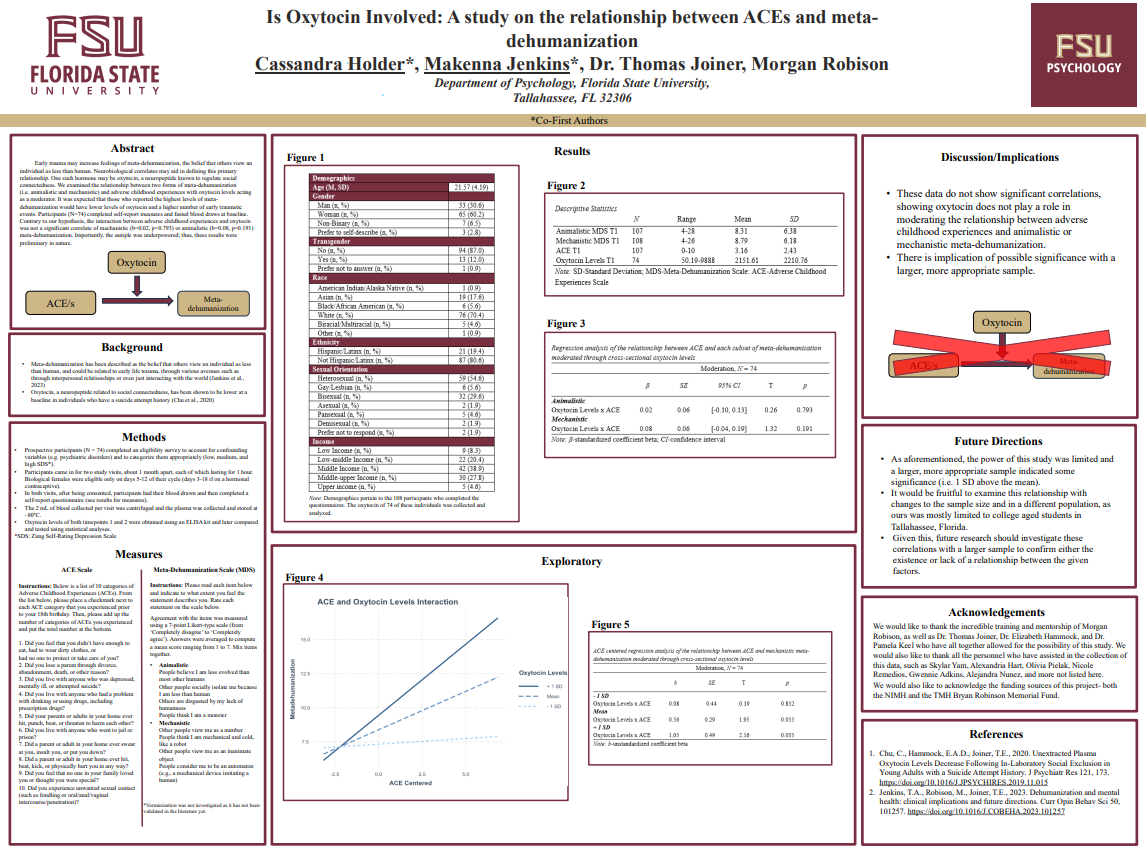
Previous research suggests that early trauma increase feelings of meta-dehumanization, the belief that others view an individual as less than human. Though less explored, neurobiological correlates may aid in defining this primary relationship. One such hormone may be oxytocin, a neuropeptide known to regulate social connectedness. Thus, this study examined the relationship between two forms of meta-dehumanization (i.e. animalistic and mechanistic) and adverse childhood experiences with oxytocin levels acting as a moderator. It was expected that those who reported the highest levels of meta-dehumanization would have lower levels of oxytocin and a higher number of early traumatic events. Participants (N=74) completed self-report measures and fasted blood draws at baseline. Contrary to our hypothesis, the interaction between adverse childhood experiences and oxytocin was not a significant correlate of mechanistic (b=0.02, p=0.793) or animalistic (b=0.08, p=0.191) meta-dehumanization. Importantly, the sample was underpowered; thus, these results were preliminary in nature. Given this, future research should investigate these correlations with a larger sample to confirm either the existence or lack of a relationship between the given factors. Overall, this study provides some evidence that oxytocin does not play a role in moderating the relationship between adverse childhood experiences and animalistic or mechanistic meta-dehumanization.
Keywords: Meta-dehumanization, Oxytocin, Adverse Childhood Experiences