
Research Symposium
26th annual Undergraduate Research Symposium, April 1, 2026
Ty Biser Poster Session 3: 1:45 pm - 2:45 pm / Poster #303
BIO
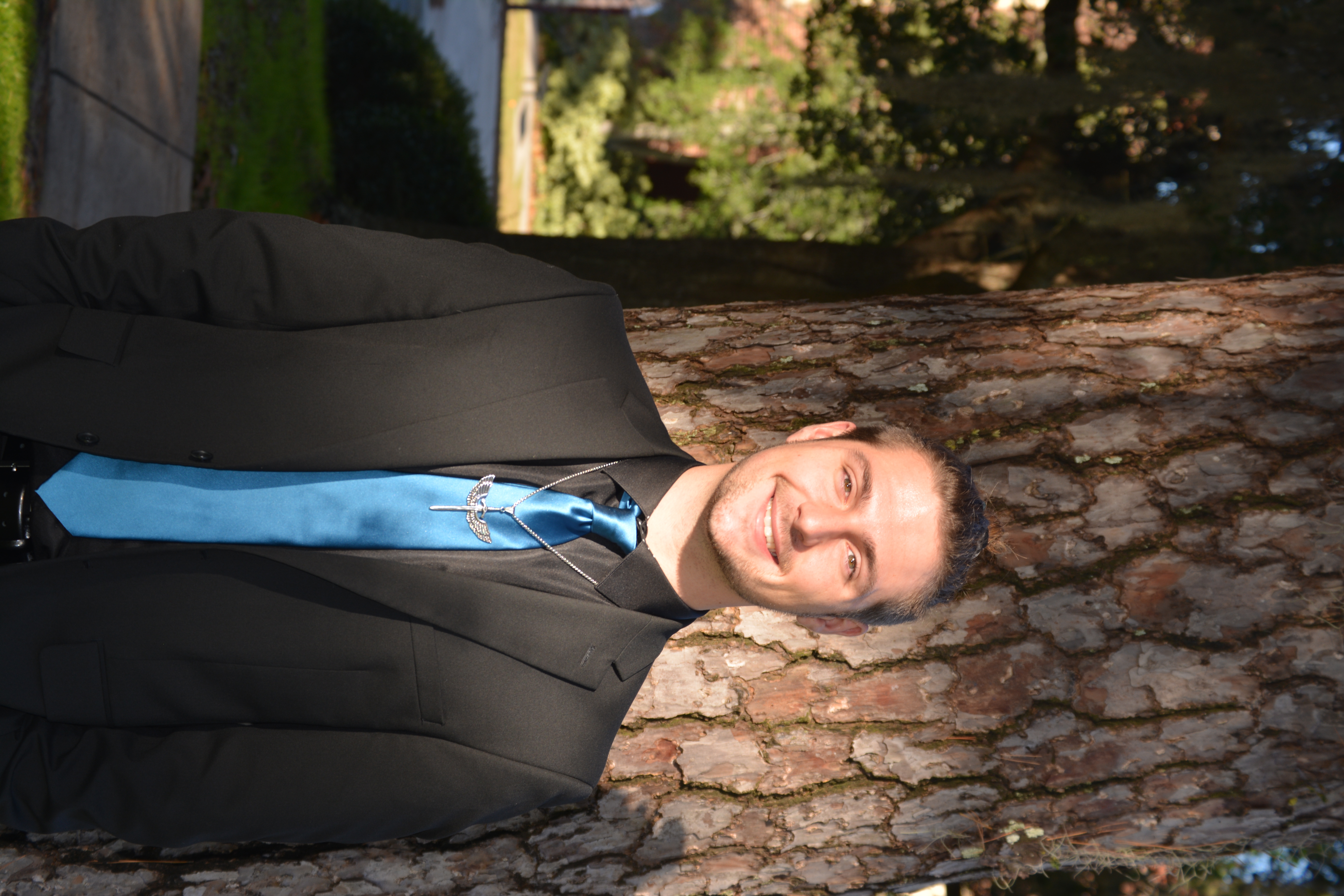
Ty Biser (he/they) is a second-year majoring in geography and minoring in women and gender studies. They are the Founding President of the Geographical Society at FSU, and the 2027 Student Representative of the Florida Society of Geographers. He has been working with Dr. Rachael Cofield (they/them) for over a year, and seeks to become a professor of geography.
Queer Labor in Southern Suburbia
Authors: Ty Biser, Dr. Rachael CofieldStudent Major: Geography
Mentor: Dr. Rachael Cofield
Mentor's Department: Geography Mentor's College: College of Social Sciences and Public Policy Co-Presenters:
Abstract
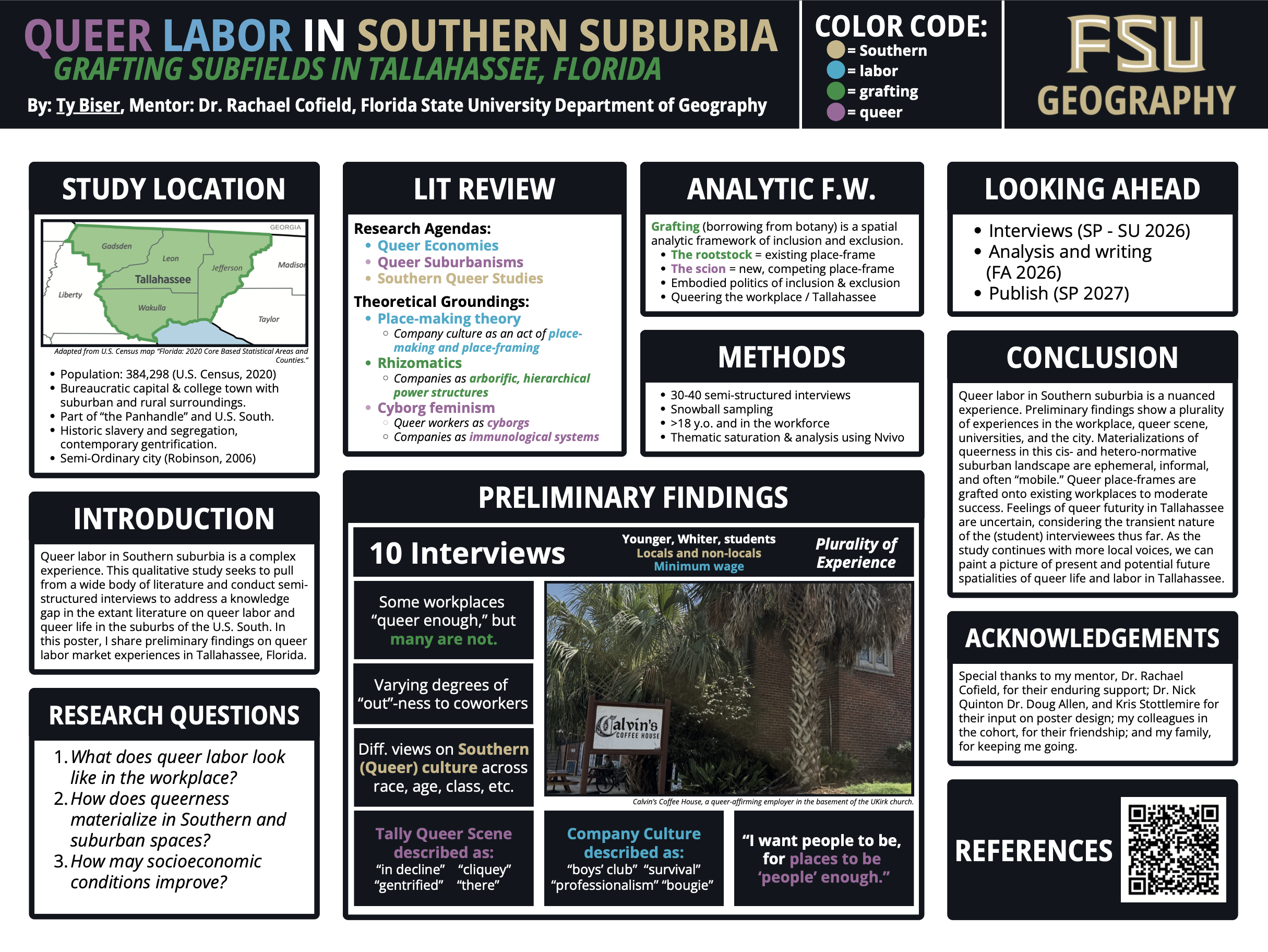
A paper on queer labor in Southern suburbia makes a botanist out of a geographer. From the old-growth forests of economic, urban, and queer geographic thought, two subfields, saplings, have been nurtured to address these complexities. First, the queer economies research agenda, stemming from Rowan Rush-Morgan (2023) and Daniel Cockayne (2024), holds that there is more to understand about how queer people navigate within and shape the economies they are a part of. The second, seeded by Gavin Brown (2008), Amy Stone (August 2018) and Alison Bain and Julia Podmore (2021; 2025), motions for an agenda on suburban/ordinary queerisms, one capable of articulating the differences in queer lifestyles across suburban environments and highly urbanized ones. Betwixt these nascent subfields lies the potential for collaboration and symbiosis. A good analogy would be that of botanical grafting, whereby a plant’s appendage is severed and affixed to another. Vulgar and violent, botanists perform grafting for the promise of new value. Grafting these subfields may create a hardy perspective capable of answering both agendas, while also recontextualizing queer labor within a new dialogue. Examining queer labor in the Tallahassee Metropolitan Area, a suburban centre in the U.S. South, this study reveals new insights into the collaboration of economic, queer, and urban geographies, and how grafting may recontextualize both post-disciplinary thinking and the similarly grafted circumstances and violent symbiosis of queer laborers in the cis- and hetero-normative spaces of suburbia, the South, and the American workplace.
Keywords: queer, urban, suburban, economic
26th annual Undergraduate Research Symposium, April 1, 2026
Princeton Pun Poster Session 3: 1:45 pm - 2:45 pm / Poster #184

BIO
Princeton is a freshman at Florida State University majoring in Applied and Computational Mathematics who is also planning to take a minor in Computer Science and Statistics. His primary interest is in leveraging statistical analysis of real-world data and rigorous hypothesis testing of economic models to refine quantitative trading strategies. Beyond that, he likes playing soccer and tennis whenever he happens to be free.
Risk vs Ambiguity: Reducing Hedging by Changing Payment Structure
Authors: Princeton Pun, Jose LopezStudent Major: Applied and Computational Mathematics
Mentor: Jose Lopez
Mentor's Department: Department of Economics Mentor's College: College of Social Sciences and Public Policy Co-Presenters: Emmanuela Avlonitis, Victoria Blackwell
Abstract
It is well established that pay-one-random and play-one-pay-one schemes in experiments comparing risk and ambiguity yield narrow data breadth or suffer from incentive incompatibility due to hedging opportunities. Consequently, the Random Stopping Procedure (RSP) has been proposed as a mechanism to extract data efficiently while maintaining incentive compatibility.
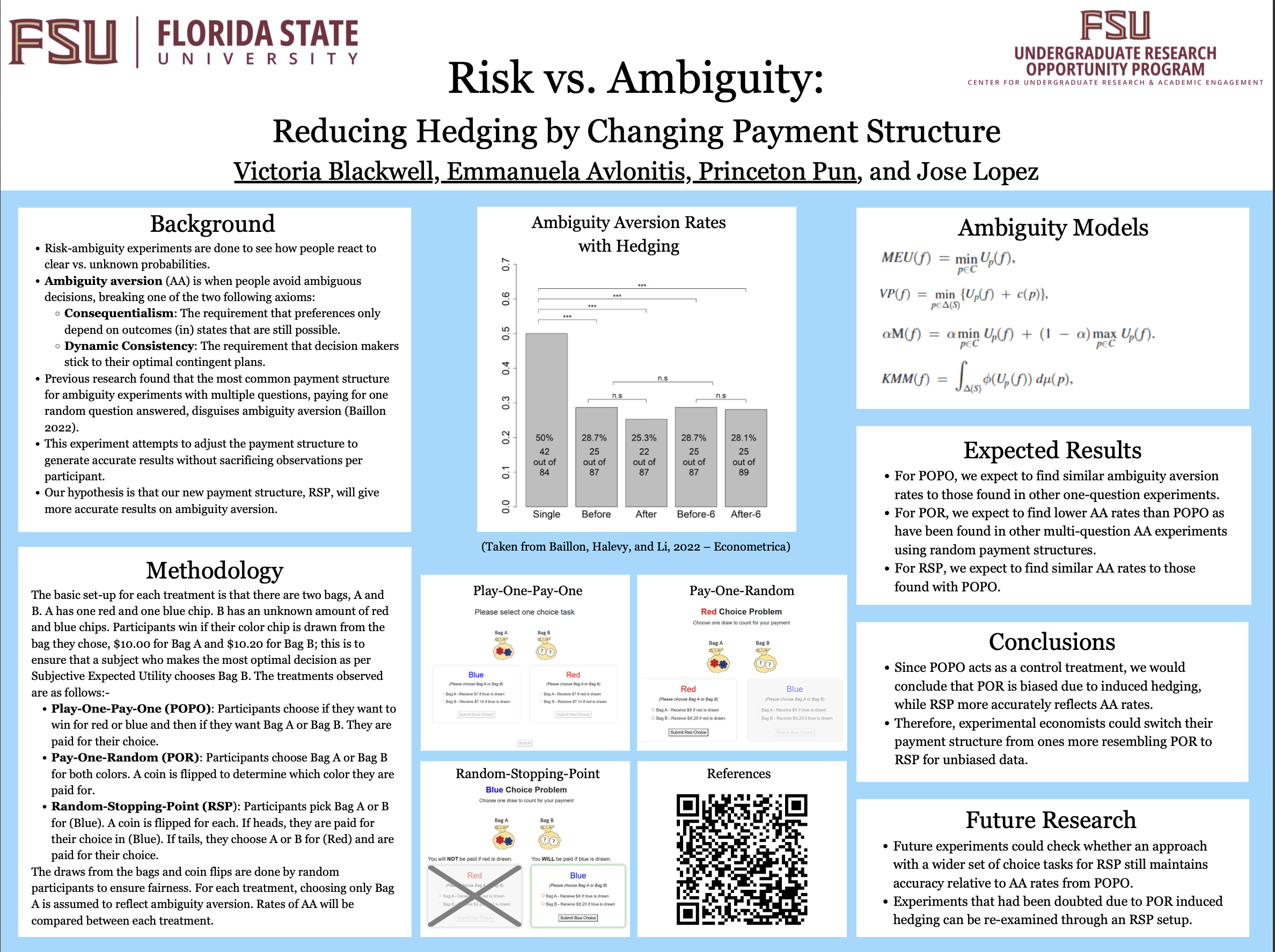
Our research examines this theory by testing participants using the RSP in an ambiguity experiment. In this setup, participants first choose between Bag A (risky) and Bag B (ambiguous) for the color Blue. A coin is then flipped. If it lands on heads, the experiment stops, and participants are paid based on their choice for Blue. If it lands on tails, they proceed to choose between Bag A and Bag B for the color Red, and are paid based on this second choice.
The payout for the risky bag is $10.00, while the payout for the ambiguous bag is $10.20. Participants receive this payout if their chosen color is randomly drawn from their selected bag. This premium ensures that a subject optimizing their Subjective Expected Utility (SEU) will strictly prefer the ambiguous bag for at least one of the colors.
The results of this experiment are crucial for understanding innate ambiguity aversion within populations. Financial institutions can leverage these insights to assess market volatility during uncertain periods, which is highly relevant for quantitative trading strategies.
Keywords: Hedging, Ambiguity, Quantitative Trading, Economics
26th annual Undergraduate Research Symposium, April 1, 2026
Sydney Nolin Poster Session 4: 3:00 pm - 4:00 pm / Poster #106

BIO
Sydney Nolin is from Bradenton, Florida and is currently an undergraduate student at Florida State University. She is in her second year working on a Bachelor of Science. She is majoring in Biological Science with a minor in Chemistry on a pre-med track. Sydney is an active member of the FSU Honors Program. She is also a part of the Undergraduate Research Opportunity Program at FSU where she is being mentored by Dr. Joseph Gabriel. Dr. Gabriel is an author and historian whose research focuses on the history of public health and medical skepticism. Sydney is conducting a literature review and analysis underneath his guidance that centers on how women’s healthcare has been affected by epistemic injustice throughout American history. Sydney hopes to utilize what she learns about public health to better her understanding of patient-provider interactions for her future career in medicine.
The Female Experience: An American History of Epistemic Injustice
Authors: Sydney Nolin, Dr. Joseph GabrielStudent Major: Biological Science
Mentor: Dr. Joseph Gabriel
Mentor's Department: Department of History Mentor's College: College of Arts and Sciences Co-Presenters:
Abstract
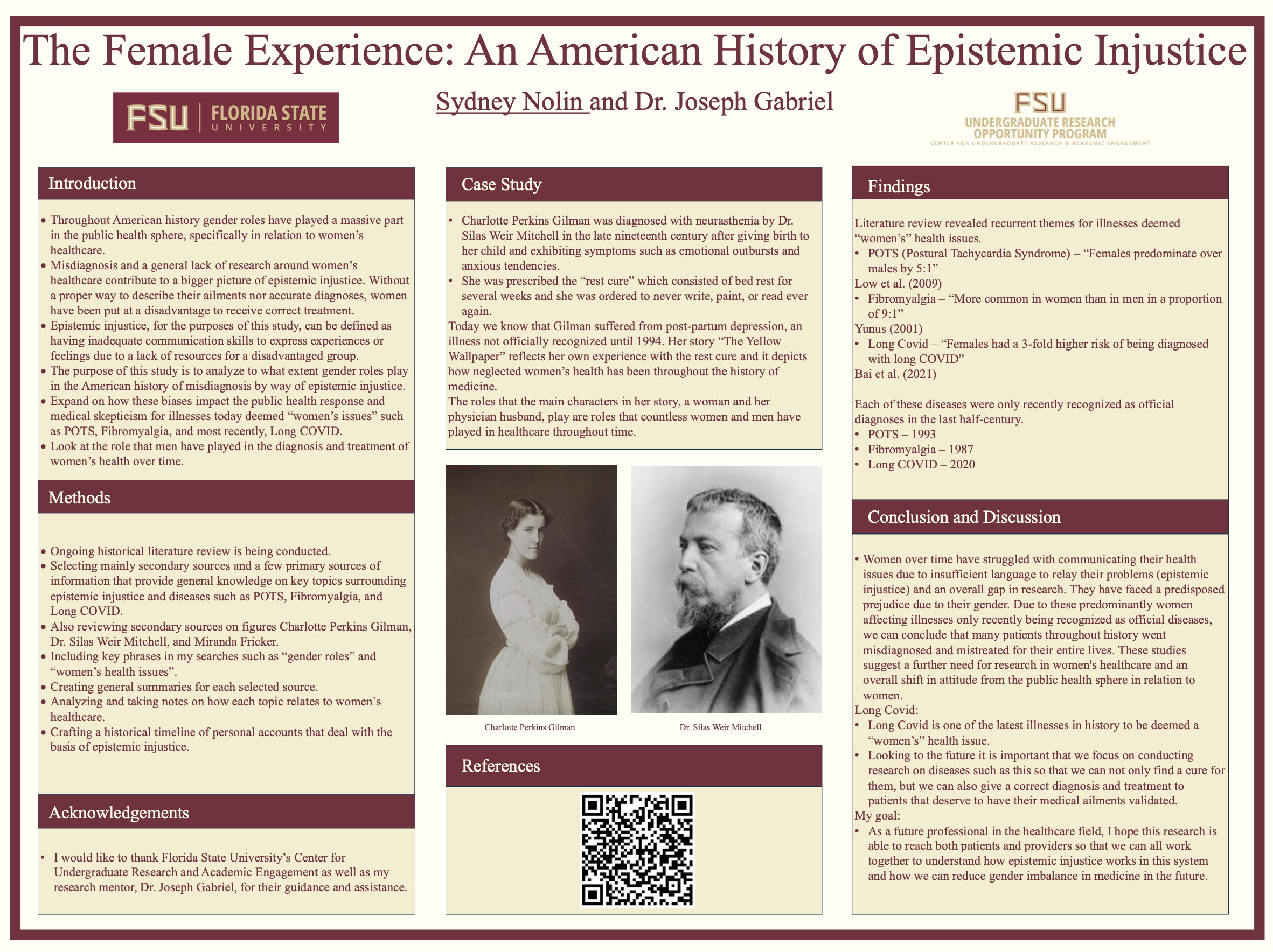
The purpose of this research is to analyze to what extent gender roles in medicine, specifically women’s healthcare, play in the American history of misdiagnosis by way of epistemic injustice. Epistemic injustice, for the purposes of this study, can be defined as having inadequate communication skills to express experiences or feelings due to a lack of resources for a disadvantaged group. This project will also expand on how these biases impact the public health response and medical skepticism for illnesses today deemed women’s issues such as POTS, Fibromyalgia, and most recently, Long Covid. It will also look at the role that men have played in the diagnosis and treatment of women’s health over time. A literature review was conducted on sources that relate to this topic. Results of the literature review yielded that misdiagnosed diseases and illnesses deemed women's health issues follow a similar pattern throughout history. Women over time have struggled with communicating their issues due to insufficient language to relay their problems and an overall gap in research. They have faced a predisposed prejudice due simply to their gender. These studies suggest a further need for research in women's healthcare and an overall shift in attitude from the public health sphere in relation to gender equality in medicine. This research aims to inform the general public about the importance of equality in healthcare and advocate for reducing imbalance through the understanding of epistemic injustice from both the patient and healthcare provider perspectives.
Keywords: Epistemic Injustice, Women's Healthcare
26th annual Undergraduate Research Symposium, April 1, 2026
Natalie Johnstone Poster Session 4: 3:00 pm - 4:00 pm / Poster #14
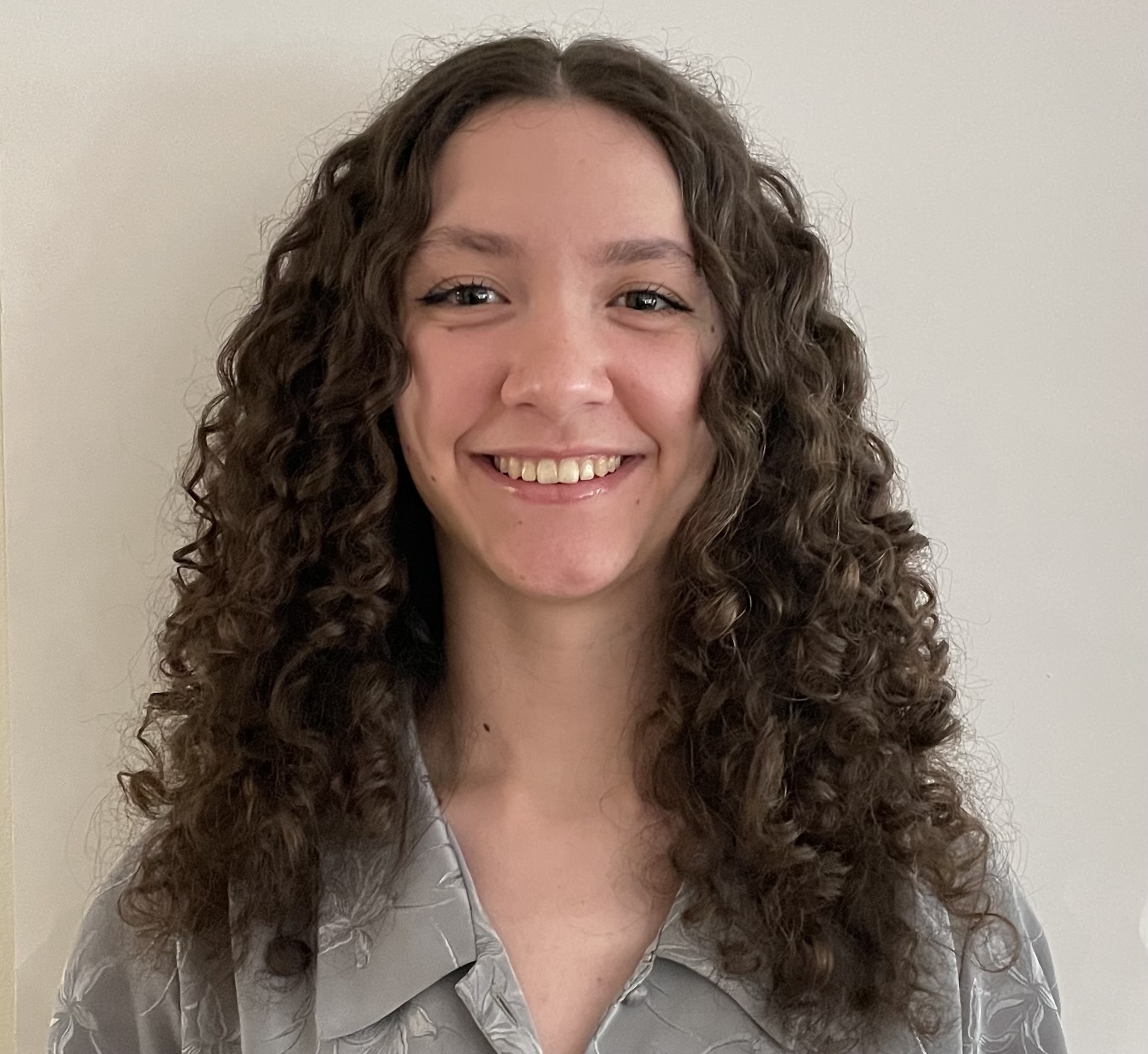
BIO
My name is Natalie Johnstone, and I am a sophomore majoring in Biological Sciences. I am planning on pursuing medical school to become a pathologist. My interests include immunology, virology, pathology, and microbiology.
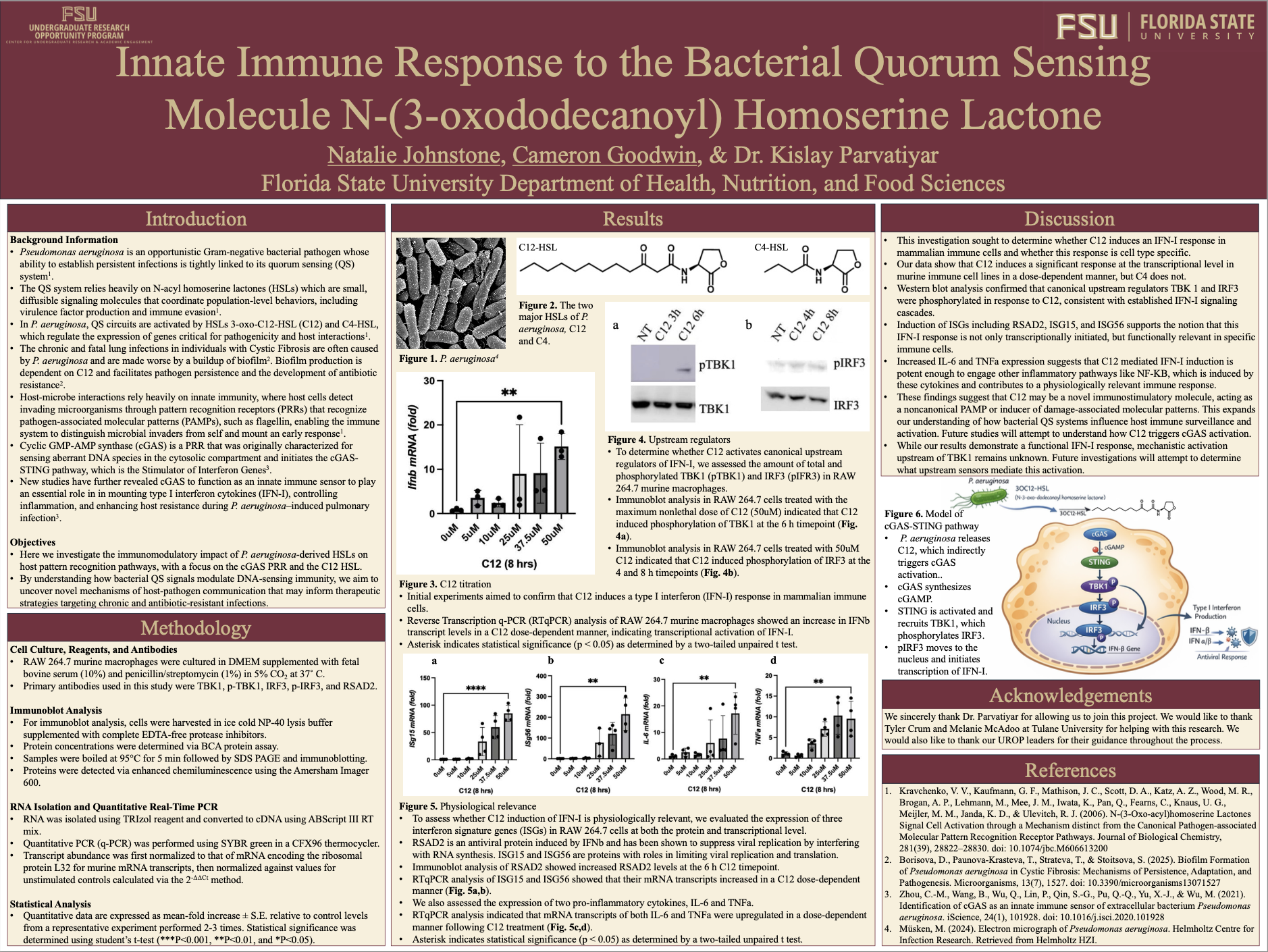
Innate Immune Response to the Bacterial Quorum Sensing Molecule N-(3-oxododecanoyl) Homoserine Lactone
Authors: Natalie Johnstone, Kislay ParvatiyarStudent Major: Biological Sciences
Mentor: Kislay Parvatiyar
Mentor's Department: Health, Nutrition, and Food Sciences Mentor's College: Anne Spencer Daves College of Education, Health, and Human Sciences Co-Presenters: Cameron Goodwin
Abstract
The chronic and fatal lung infections in individuals with Cystic Fibrosis are often caused by the bacterium Pseudomonas aeruginosa and are made worse by the buildup of biofilm. The production of this biofilm is dependent on the bacterial quorum sensing (QS) molecule N-(3-oxo-dodecanoyl)-L-homoserine lactone, known as C12. QS molecules are increasingly recognized as critical mediators of host-pathogen interactions, yet their direct impact on innate immune signaling remains incompletely defined. Utilizing the murine macrophage cell line RAW 264.7, we tested whether C12 and N-butyryl homoserine lactone (C4) induce type 1 interferon (IFN-I) cytokine expression. We demonstrated that C12 robustly induces IFN-I expression, while C4 does not, revealing a previously underappreciated facet of QS-mediated host signaling. To determine whether C12 activates upstream regulators of IFN-I, we assessed the effect of C12 on interferon regulatory factor 3 (IRF3), a transcription factor necessary to IFN-I gene induction. Immunoblot analyses revealed that C12 promotes the phosphorylation and activation of IRF3. We also found that the C12-induced production of IFN-I mediates the JAK-STAT signaling pathway, allowing for production of interferon signature genes (ISGs). We then evaluated the expression of three ISGs and found that their mRNA transcripts increased in a C12 dose-dependent manner. These findings indicate that C12 may act as or cause a pathogen associated molecular pattern detected by pattern recognition receptors. These results provide new insight into the molecular mechanisms by which P. aeruginosa manipulates host innate immune responses and highlight QS molecules as potential modulators of Stimulator of Interferon Genes (STING)-driven inflammatory pathways.
Keywords: Innate immune system, Pseudomonas aeruginosa, quorum sensing, homoserine lactone, type I interferons
26th annual Undergraduate Research Symposium, April 1, 2026
Isobel Schlueter Poster Session 2: 10:45 am - 11:45 am / Poster #152
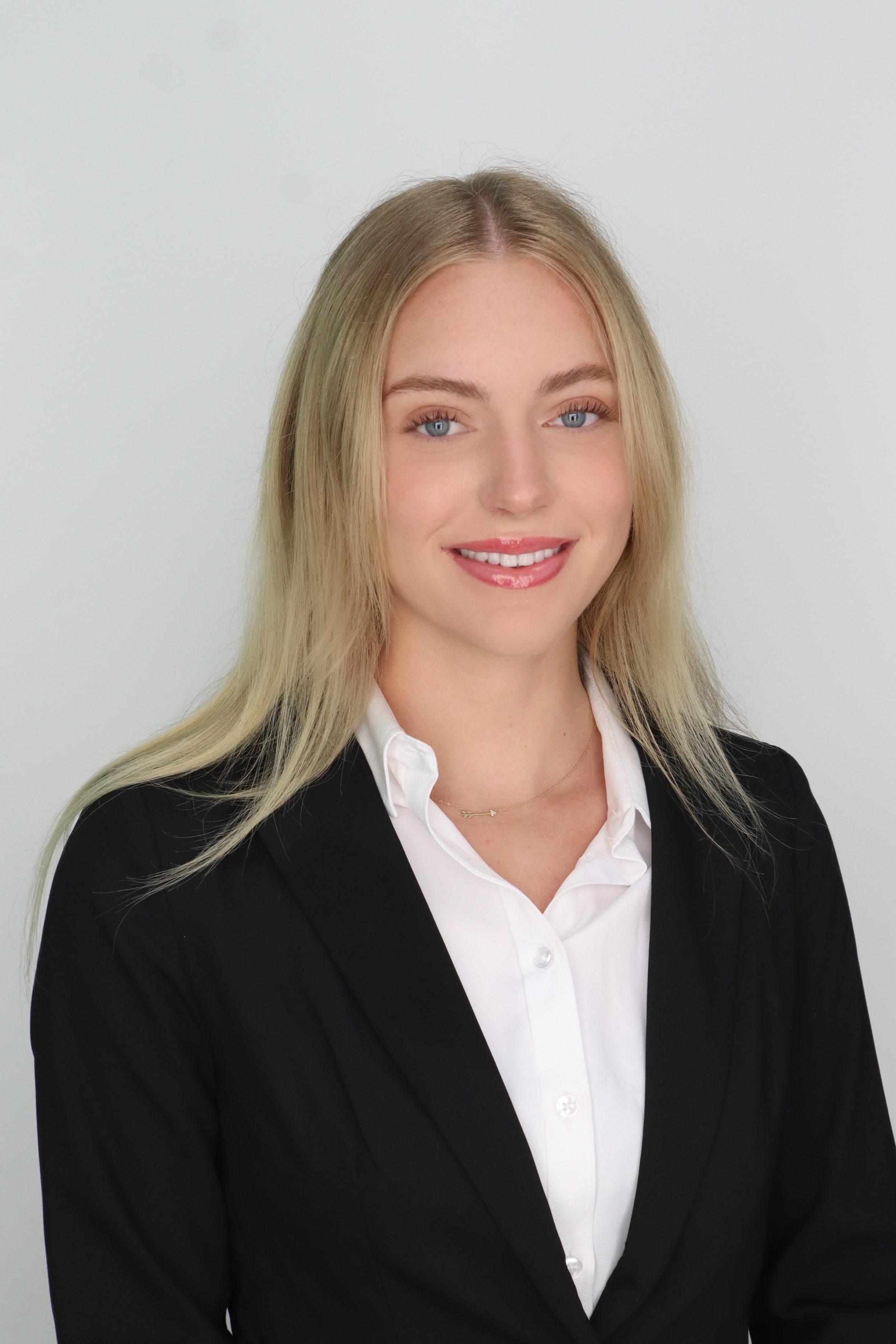
BIO
Isobel Schlueter is a sophomore at Florida State University pursuing a Bachelor of Science in Biology on the pre-health track. She is actively involved in several campus organizations that support her academic and professional interests, including Alpha Epsilon Delta, a pre-health honor society, and Delta Gamma sorority. Through these organizations, she has gained opportunities to build connections with other students interested in healthcare, develop leadership and collaboration skills, and become more involved in the campus community. Isobel is also involved in undergraduate research focused on dyslexia, where she contributes to a meta-analysis examining patterns across existing research studies. Working alongside faculty mentors, she has gained experience reviewing scientific literature, analyzing research findings, and collaborating with a research team. These experiences have helped strengthen her critical thinking and scientific writing skills while giving her a deeper understanding of the research process. After completing her Bachelor of Science in Biology, Isobel plans to attend medical school and pursue a career as a physician where she can combine her interests in science, research, and helping others.
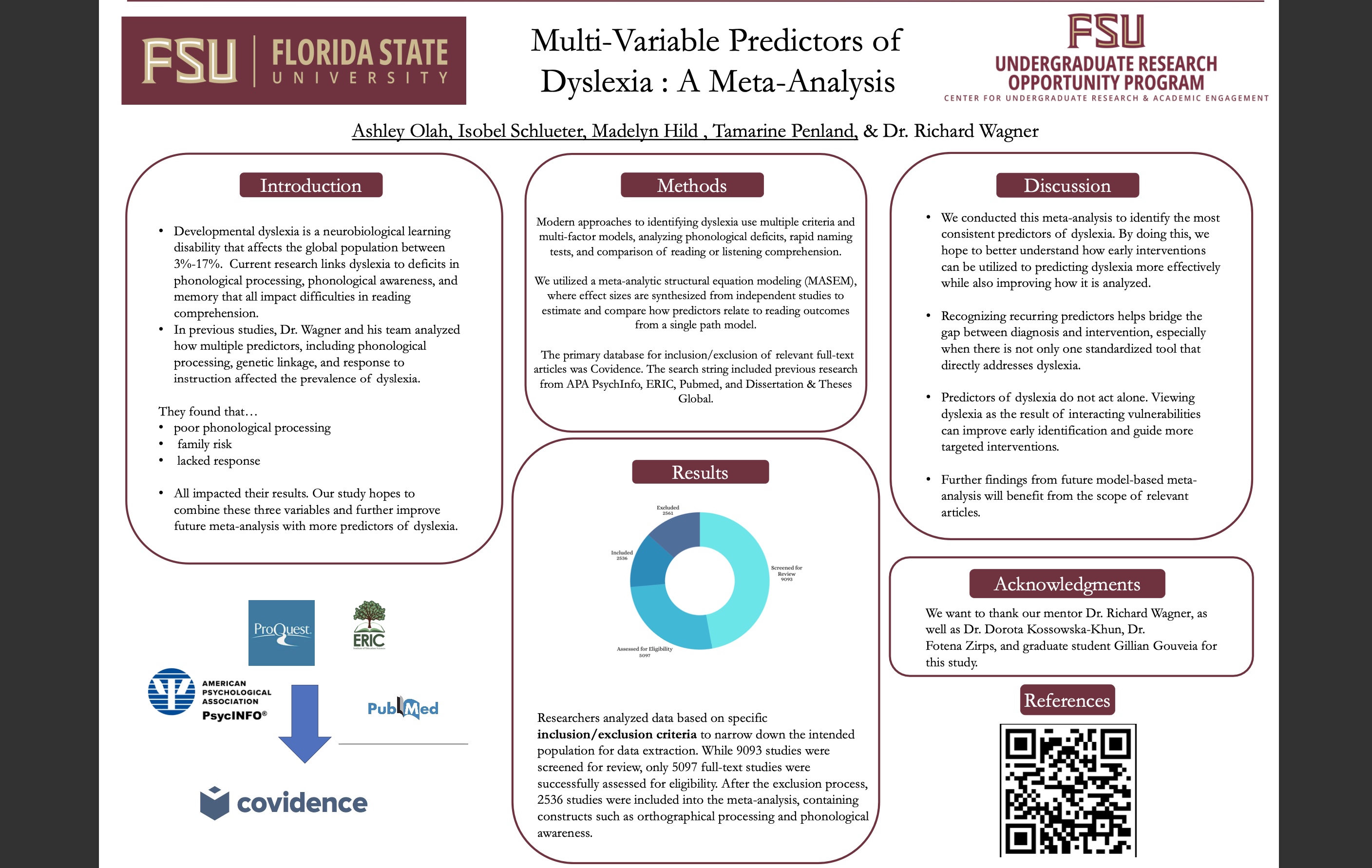
Multi-Variable Predictors of Dyslexia : A Meta-Analysis
Authors: Isobel Schlueter, Dr. Richard WagnerStudent Major: Biology
Mentor: Dr. Richard Wagner
Mentor's Department: Department of Psychology Mentor's College: College of Arts and Sciences Co-Presenters: Ashley Olah, Madelyn Hild , Tamarine Penland
Abstract
Developmental dyslexia is a neurobiological learning disorder that affects reading, spelling, and decoding accuracy. Individuals with dyslexia often have typical cognitive abilities but struggle with the phonological aspects of language, such as recognizing and manipulating speech sounds. Because of this, their reading difficulties are not due to a lack of intelligence but rather to challenges in processing language sounds (Cutting, 2009). Since reading is an essential skill for academic success, these difficulties can have long-term educational impacts if they are not identified and addressed early. The prevalence of developmental dyslexia is estimated to range from approximately 3% to 10% of the population, though the exact percentage varies depending on diagnostic criteria and the severity of symptoms. One of the main challenges in dyslexia research is the lack of agreement on a standardized operational definition of the disorder. Without a consistent definition, it can be difficult to connect diagnoses with effective intervention strategies or compare results across different studies. The purpose of this meta-analysis is to determine which predictors of dyslexia are most consistently supported across the research literature in order to contribute to a more structured and reliable definition of the disorder. To do this, researchers will gather thousands of studies related to predicting dyslexia and systematically screen their titles, abstracts, and full texts before extracting relevant data. By analyzing findings across multiple studies, this research aims to improve early identification and support the development of more effective intervention programs for individuals with dyslexia.
Keywords: Dyslexia, Prediction, Reading
26th annual Undergraduate Research Symposium, April 1, 2026
Lucas Wixted Poster Session 4: 3:00 pm - 4:00 pm / Poster #224
BIO
Lucas Wixted is currently an undergraduate freshman at Florida State University, hailing from Fruitland Park, FL. While he is an aspiring physicist, Lucas has had a long interest in Anthropology and learning about Indigenous cultures. Lucas has also previously worked on similar studies surrounding Indigenous cultures through his time in the AP Capstone program at The Villages Charter High School. Off-campus, he's an avid Table Tennis player and a developing guitarist. Lucas enrolled in the Undergraduate Research Opportunity Program in order to refine his research experience and hone additional skills to one day be a professional researcher.
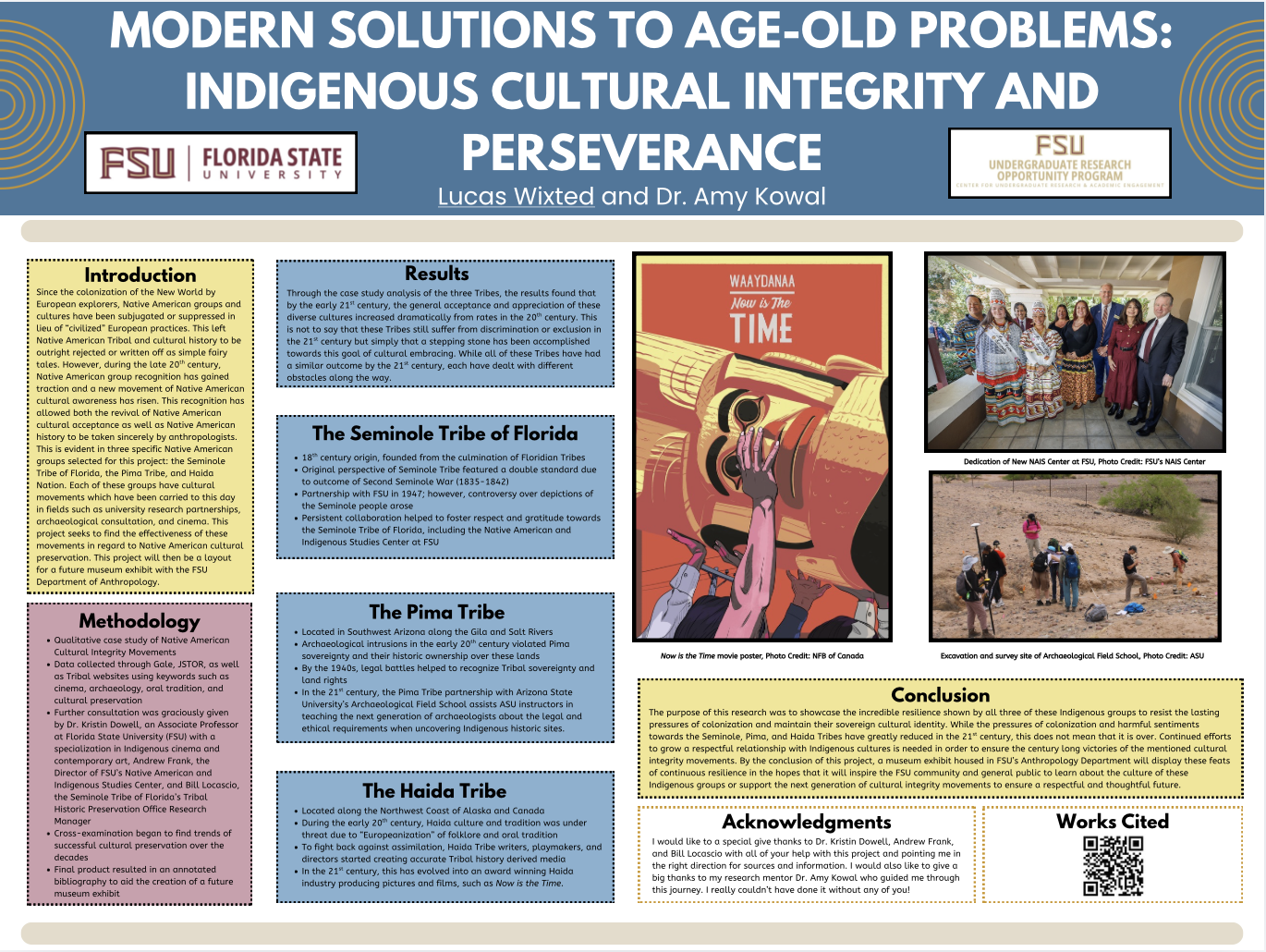
Modern Solutions to Age-Old Problems Indigenous Cultural Integrity and Perseverance
Authors: Lucas Wixted, Dr. Amy KowalStudent Major: Physics
Mentor: Dr. Amy Kowal
Mentor's Department: Department of Anthropology Mentor's College: College of Arts and Sciences Co-Presenters:
Abstract
Due to the ongoing consequences of colonization, the issue of cultural preservation within Native American spheres has become an escalating priority. In an attempt to highlight current cultural preservation initiatives, this research hopes to guide the development of a museum exhibit that will be developed by Dr. Kowal’s museum studies class, and prompt the awareness of the examined cultures. For the purposes of this research, three groups were selected: the Seminole Tribe of Florida, the Pima Tribe, and Haida Nation. A qualitative case study of these three groups was conducted in order to understand previous history regarding cultural integrity and their modern approaches to cultural preservation. Information was collected via academic databases (such as Gale and JSTOR) as well as museum and tribal websites. This data was analyzed to find any changes in treatment or ideologies on the issue of cultural integrity in each tribe. The results have found that all three Native American tribes have had a positive changing trend to greater appreciation and acceptance of their culture through cultural integrity movements. Modern examples of these movements (i.e. partnering with academic institutions or anthropological research and promoting Indigenous produced media) have continued to benefit the legacy of each Tribe’s culture. While this is a step in the right direction, future awareness either through modern or new innovative methods, along with continued acceptance and collaboration is needed to preserve cultural integrity for centuries to come.
Keywords: Indigenous, Cultural Perseverance, Cultural Awareness
26th annual Undergraduate Research Symposium, April 1, 2026
Kiyan Atighechi Poster Session 2: 10:45 am - 11:45 am / Poster #264

BIO
Hi, my name is Kiyan Atighechi, I am an Applied Math and CS major in my second year here at FSU. I've enjoyed working on our deep learning project so much over the year and am proud of the progress we have made.
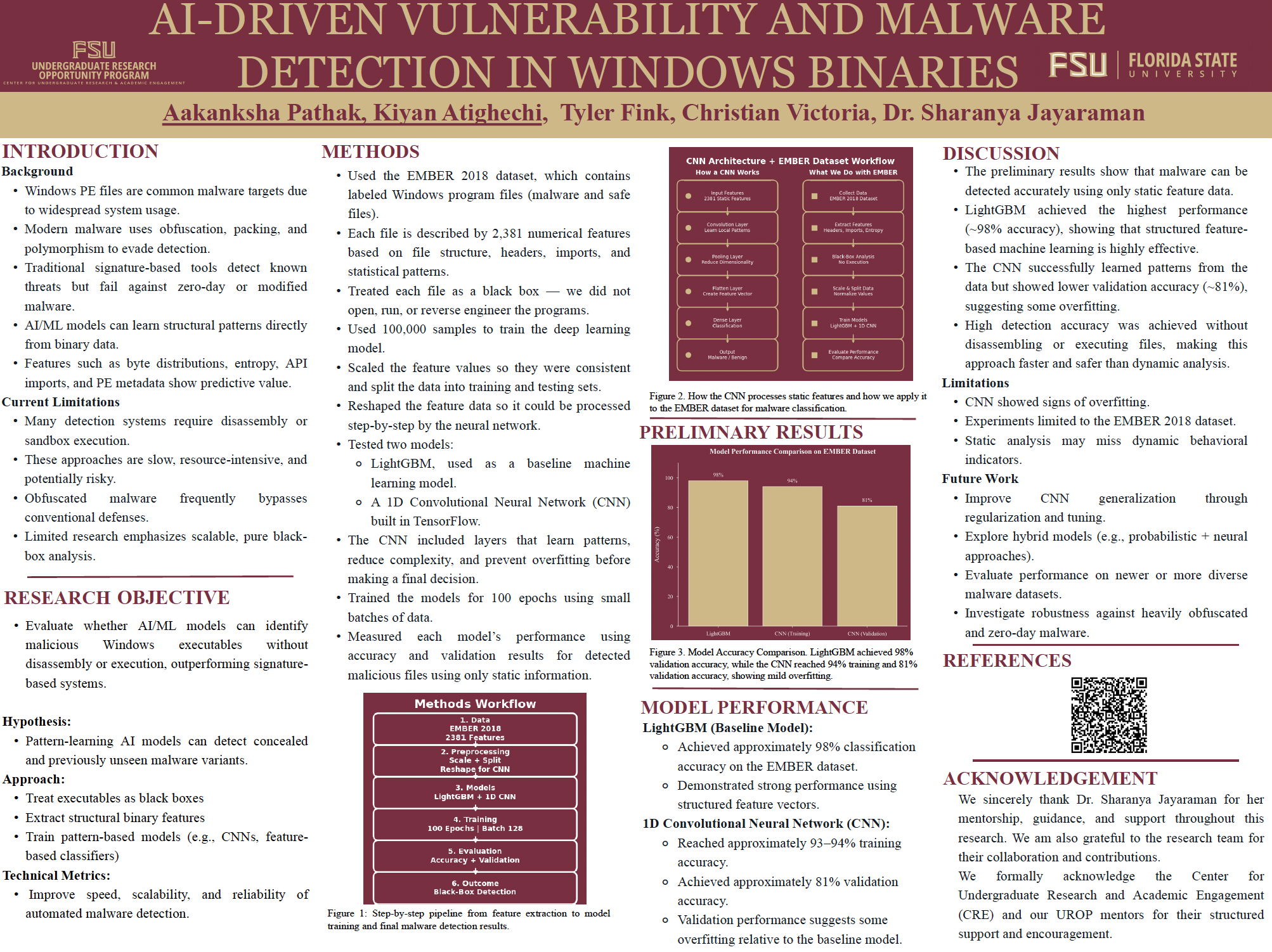
AI-DRIVEN VULNERABILITY AND MALWARE DETECTION IN WINDOWS BINARIES
Authors: Kiyan Atighechi, Sharanya JayaramanStudent Major: Economics (in the process of changing to Applied Math and CS so that is what I will put in my bio)
Mentor: Sharanya Jayaraman
Mentor's Department: Computer Science Mentor's College: Arts & Sciences Co-Presenters: Aakanksha Pathak
Abstract
Malware and software defects in Windows applications continue to pose serious security risks, especially since hackers are using techniques to hide or disguise malicious activity. This study uses machine learning (ML) and artificial intelligence (AI) techniques to analyze Windows executable files without disassembly in an effort to improve malware and vulnerability detection.The project examines whether structural and behavioral patterns alone can identify serious security risks by viewing each program as a "black box." The study utilizes datasets of both known benign and malicious Windows binaries. Characteristics such as byte-level patterns, entropy values, API calls, and PE-header details are extracted and then refined through normalization and feature selection. These characteristics are subsequently employed to train and assess machine learning and deep-learning models, including Convolutional Neural Networks (CNNs), Markov Chain-based models, and other types of classifiers, to differentiate malicious files from those deemed safe. Initial findings suggest that artificial intelligence models can effectively identify harmful activities, including hidden or disguised malware, with greater accuracy than traditional methods that rely on signatures. The results suggest that analyzing patterns is a useful way to find threats that traditional methods might miss,so it can be applied to larger or more complex datasets. In summary, this research contributes to the development of faster, more scalable, and more reliable methods for detecting malware. The results advocate for the implementation of AI-based strategies to enhance cybersecurity measures and improve the automated evaluation of Windows software.
see less
Keywords: Machine Learning, Artificial Intelligence, Cyber Security
26th annual Undergraduate Research Symposium, April 1, 2026
Jordyn Bain Poster Session 4: 3:00 pm - 4:00 pm / Poster #270

BIO
As a double major in International Affairs and Economics, I aim to develop innovative policy strategies that strengthen public safety and promote long-term economic resilience. I am particularly passionate about researching and addressing some of the most pressing human rights challenges of our time, especially human trafficking, forced displacement, and economic inequality. Through my academic and professional career, I seek to understand the structural and economic conditions that allow these issues to persist. I hope to use this knowledge to inform evidence-based policy solutions and support organizations working to protect vulnerable populations, strengthen institutions, and promote sustainable development at both the local and international levels.
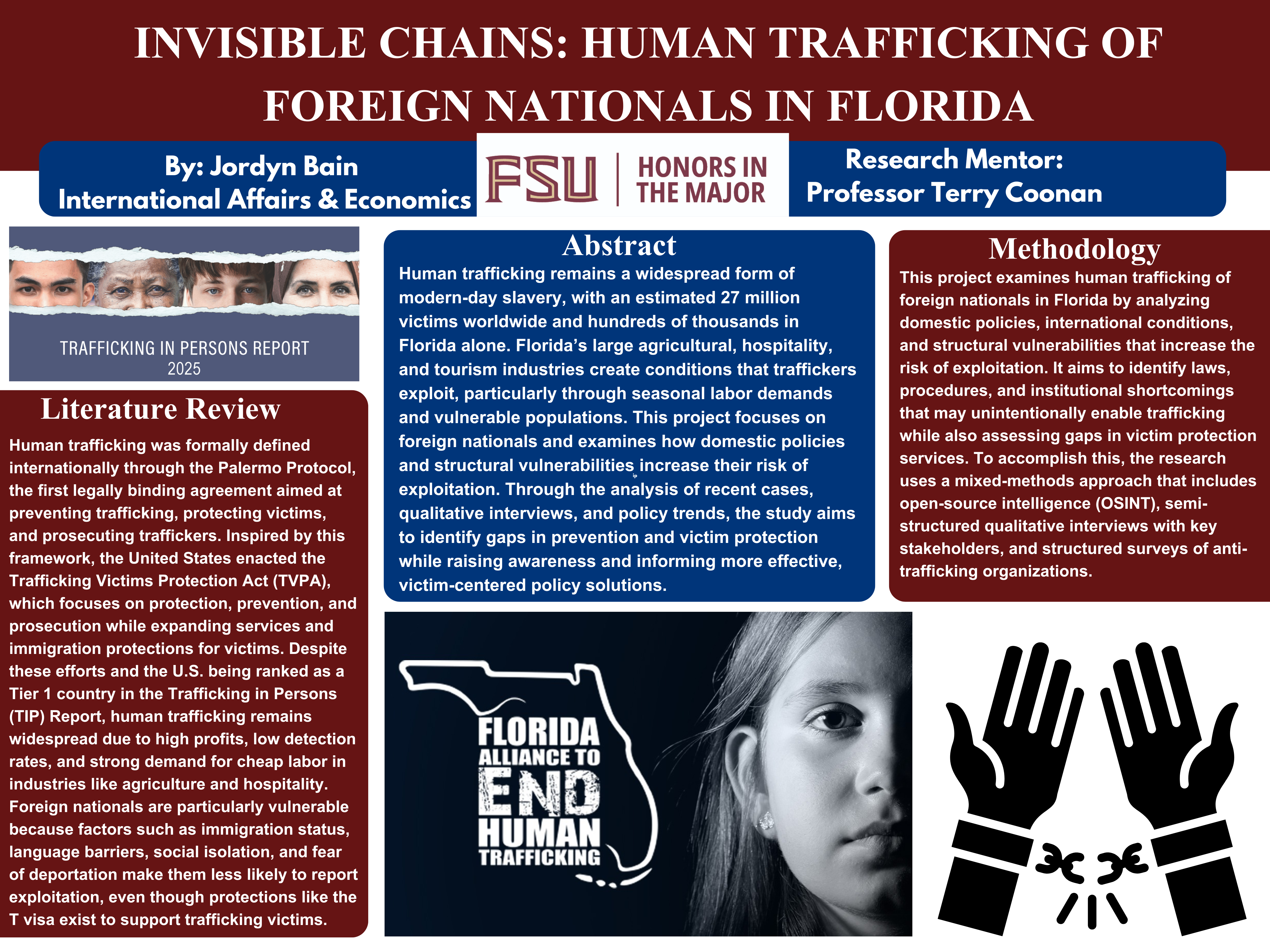
Invisible Chains: Human Trafficking of Foreign Nationals in Florida
Authors: Jordyn Bain, Professor Terry CoonanStudent Major: International Affairs and Economics
Mentor: Professor Terry Coonan
Mentor's Department: Criminology Mentor's College: Criminology Co-Presenters:
Abstract
Many believe that slavery is a thing of the past. However, slavery continues to be perpetuated across the world today in the form of human trafficking. There are an estimated 27 million victims worldwide and hundreds of thousands in Florida alone. Florida’s substantial agricultural, hospitality, and tourism markets make the area particularly appealing to traffickers. They capitalize on the state's seasonal labor needs, transient population, and economic vulnerabilities. This project will particularly focus on foreign nationals, their specific relationship with domestic policy, and the various aspects that make them particularly vulnerable to human trafficking. By examining recent cases, conducting qualitative interviews, and identifying trends, this project will provide a comprehensive understanding of how domestic policy is intertwined with human trafficking. It seeks to address a gap in existing research by using qualitative data to examine the prevalence of human trafficking in Florida and specific conditions that make foreign nationals especially vulnerable. This methodology directly supports the project’s goals of raising public awareness, assessing policy effectiveness, and contributing to victim-centered prevention and intervention strategies. Overall, this project will analyze the multifaceted nature of human trafficking of foreign nationals in Florida by analyzing the international and domestic conditions that enable it and the local policies that sustain it.
Keywords: Human Trafficking, Immigration, Foreign Nationals
26th annual Undergraduate Research Symposium, April 1, 2026
Savanah Venter Poster Session 2: 10:45 am - 11:45 am / Poster #18

BIO
Savanah Venter is a 2nd year Environmental Science undergraduate student with a minor in Spanish. She has interest in researching issues that can help advance sustainability and aid in many of our current environmental concerns. She is from Parkland, Florida and wants to possibly pursue a career in environmental advising, resource management, or sustainability management.
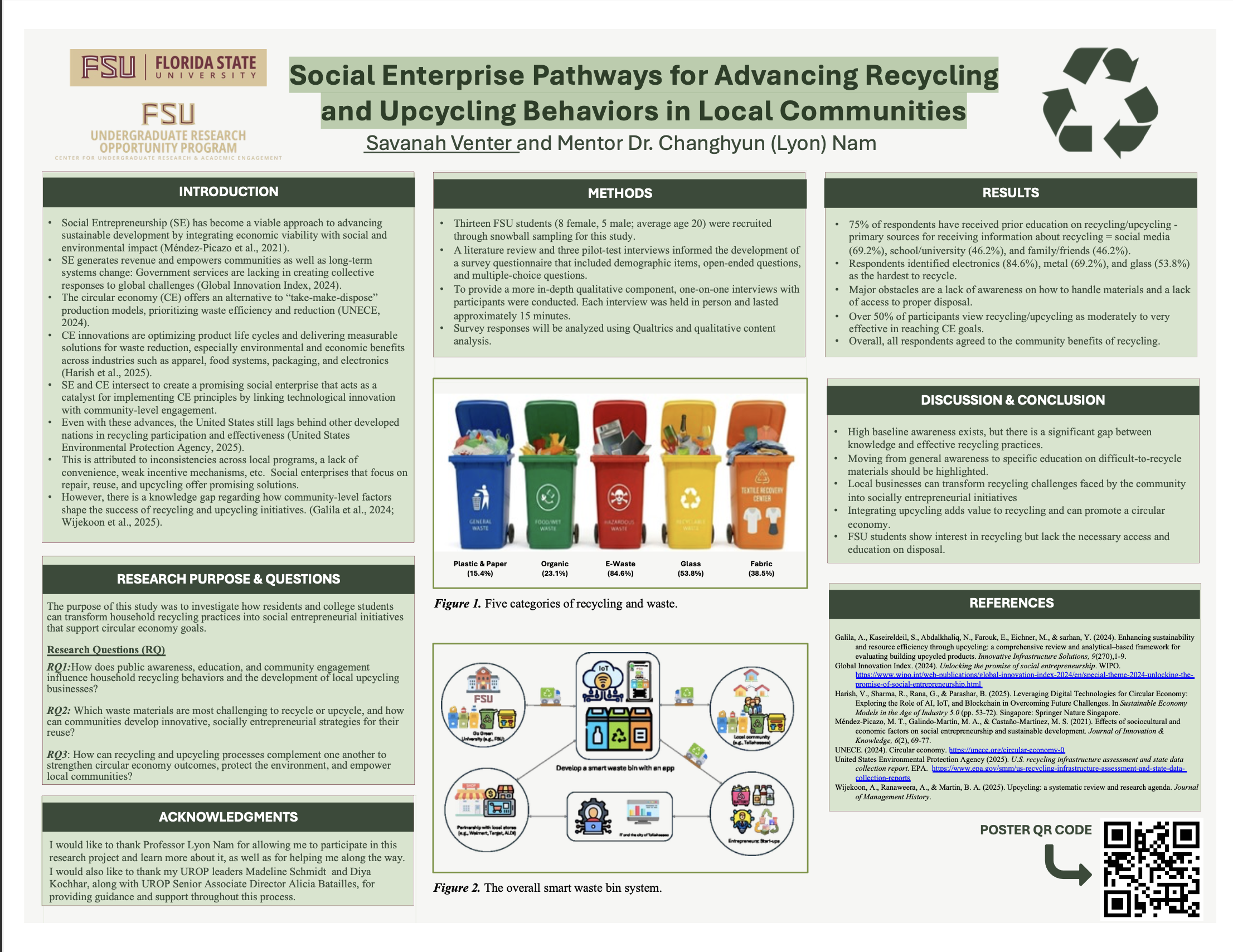
Social Enterprise Pathways for Advancing Recycling and Upcycling Behaviors in Local Communities
Authors: Savanah Venter, Changhyun (Lyon) NamStudent Major: Environmental Science
Mentor: Changhyun (Lyon) Nam
Mentor's Department: The Jim Moran College of Entrepreneurship Mentor's College: Jim Moran College of Entrepreneurship Co-Presenters:
Abstract
As global waste challenges intensify, this study aims to investigate how residents and college students can transform household recycling practices into socially entrepreneurial initiatives that advance circular economy (CE) goals. The research focuses on three key areas: (1) how public awareness, education, and community engagement influence household recycling behaviors and the creation of local upcycling businesses; (2) which waste materials pose the greatest challenges for recycling or upcycling, and how communities can develop innovative, socially entrepreneurial strategies for their reuse; and (3) how recycling and upcycling processes can complement one another to strengthen CE outcomes, protect the environment, and empower local communities. A mixed-methods approach was employed. Following a literature review and three pilot tests, a survey questionnaire was developed that included demographic items, open-ended questions, and multiple-choice questions. A qualitative component was also incorporated through in-depth, one-on-one interviews with participants (n = 13 females, n = 8 males, n = 5 others; average age = 20). Each interview will be conducted in person and will last approximately 25 minutes. Survey responses will be analyzed using Qualtrics and qualitative content analysis. Findings from this study will provide insights into community-driven recycling practices, opportunities for social entrepreneurship in upcycling, and strategies for strengthening circular economy initiatives through education, engagement, and innovative reuse solutions.
Keywords: Recycling, upcycling, social enterprise, circular economy, recycling behavior
26th annual Undergraduate Research Symposium, April 1, 2026
Samantha Zussman Poster Session 2: 10:45 am - 11:45 am / Poster #150
BIO
Samantha Zussman is a sophomore at Florida State University pursuing a Bachelor of Science on the Pre-Physician Assistant track. She is involved in undergraduate research through the Undergraduate Research Opportunity Program (UROP) at the National High Magnetic Field Laboratory, where she works on projects focused on biomedical engineering and innovative healthcare technologies. Her research explores the 3D bioprinting of soft magnetic microswimmers inspired by bacterial flagella, which have potential applications in targeted drug delivery and other biomedical treatments. Under the mentorship of faculty researchers, Samantha has gained experience in laboratory techniques, data collection, and scientific communication.
In addition to her research involvement, Samantha is engaged in campus leadership and service opportunities that support health sciences and community outreach. Her academic interests center on the intersection of research, medicine, and patient care, and she is particularly interested in how emerging biomedical technologies can improve healthcare outcomes.
After completing her Bachelor of Science, Samantha plans to attend physician assistant school and pursue a career in medicine. She hopes to combine her research background with clinical training to contribute to innovative medical advancements while providing compassionate, patient-centered care.
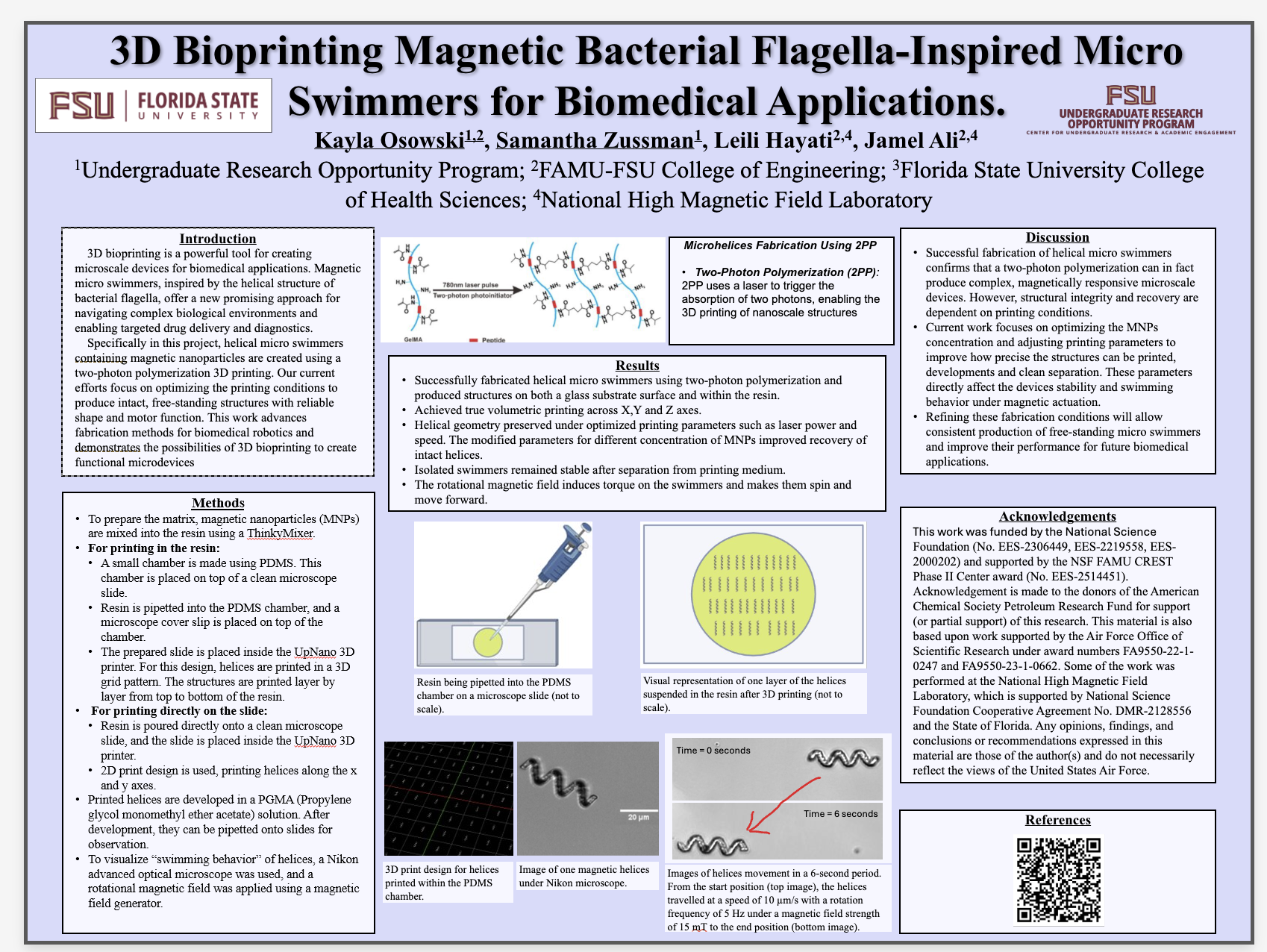
3D Bioprinting Magnetic Bacterial Flagella-Inspired Micro Swimmers for Biomedical Applications.
Authors: Samantha Zussman, Jamel AliStudent Major: NFA-Athletic Training
Mentor: Jamel Ali
Mentor's Department: Chemical & Biomedical Engineering, Materials Science & Engineering Mentor's College: FAMU-FSU College of Engineering Co-Presenters: Kayla Osowski
Abstract
3D bioprinting offers new possibilities for creating microscale devices capable of navigating complex biological environments. This project focuses on developing magnetic micro swimmers containing nanoparticles and structurally inspired by bacterial flagella. The structure poses a helical shape capable of controlled motion when exposed to external magnetic fields. Using 2-photon polymerization (2PP) with an UpNano 3D bioprinter and a resin formulated with magnetic nanoparticles, the helical structures were successfully fabricated both on the glass substrate and within the resin to make a volumetric 3D printing across all X, Y and Z axes. Our current work focuses on refining the printing and developing conditions to obtain a solution saturated with intact, free-standing helices suitable for biomedical applications. We are testing a range of printing parameters and solvent materials to determine what conditions best support clean separation and preservation of the helical structure for further testing. We aim to establish a reliable method to produce individual helical micro swimmers that maintain their form outside the printing medium. This research supports the development of magnetic micro swimmers for targeted drug delivery and diagnostics. Establishing dependable fabrication practices contributes to advancing biomedical micro robotics and highlights the potential of 3D bioprinting to create functioning microdevices.
Keywords: Engineering, Bio-medical, medical devices
26th annual Undergraduate Research Symposium, April 1, 2026
John Barney Poster Session 1: 9:30 am - 10:30 am / Poster #121
BIO
John is a second-year honors student from Stratham, New Hampshire, pursuing a major in Management Information Systems and Astrophysics. He is interested in research within the fields of business and astrophysics, with special emphasis on the subjects of information systems, finance, accounting, and astrophysics. With future aspirations to attend a Ph.D. program in astrophysics or to enter the field of quantitative business after graduation, he is very interested in continuing future research. John’s academic interests aligned perfectly with his work in this research project, leveraging skills in data analysis and collection to investigate trends in the accounting industry. This research experience has given him in-depth knowledge regarding how partners interact with their clientele and the biases that drive their work. Outside of the classroom, John is fascinated with sports and the corresponding analytics that direct decisions in the industry. He is excited to pursue further research opportunities as he continues his academic career.
Hometown Bias in Auditing
Authors: John Barney, Aleksandra ZimmermanStudent Major: Management Information Systems, Astrophysics
Mentor: Aleksandra Zimmerman
Mentor's Department: Department of Accounting Mentor's College: Herbert Wertheim College of Business Co-Presenters: Janie Nguyen, Matt Schedd
Abstract
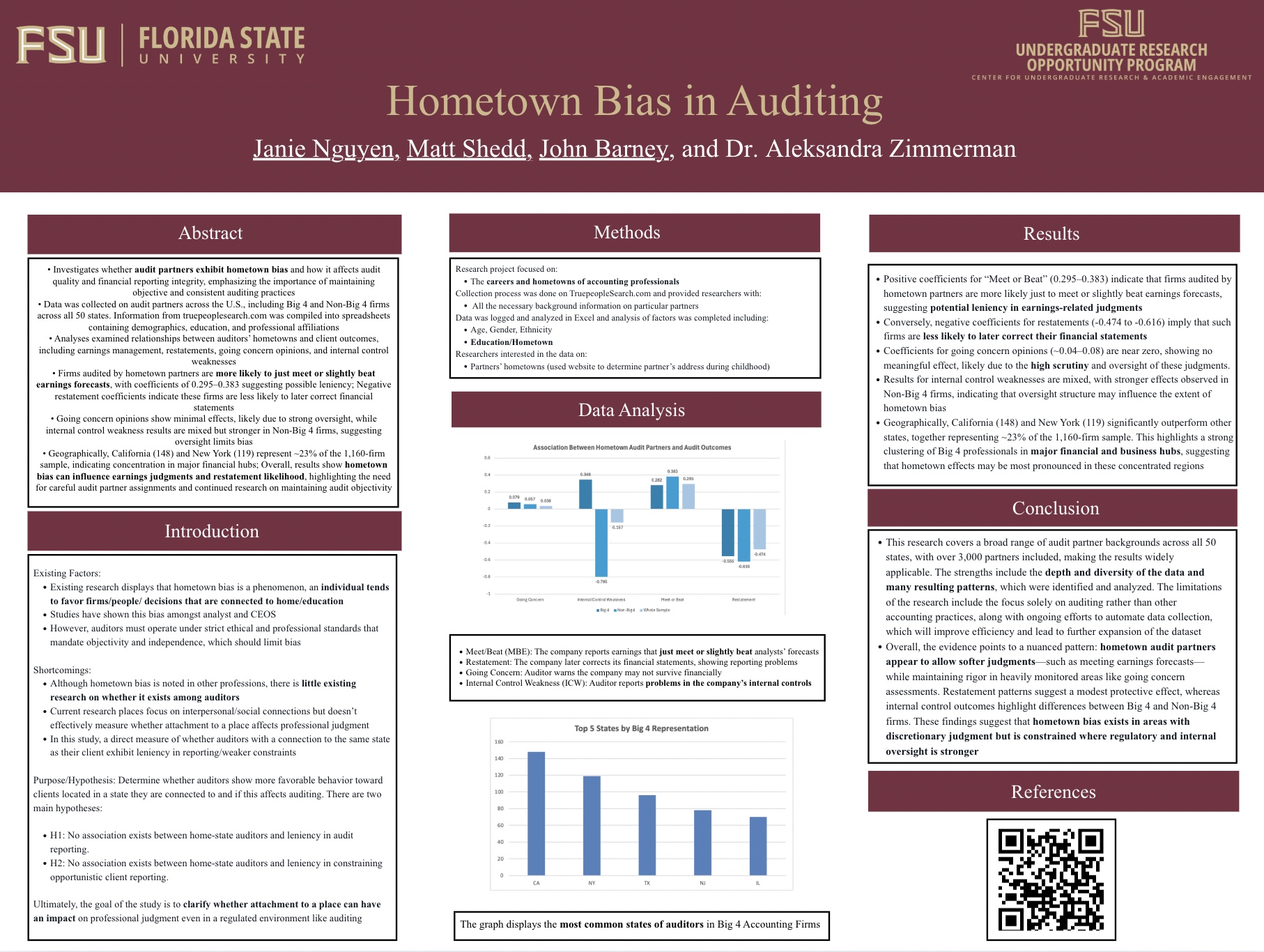
This study investigates whether audit partners exhibit hometown bias, which may affect audit quality and financial reporting integrity. Understanding this bias is important for consistent, objective auditing and broader accounting practices. Data were collected on audit partners across the U.S., including Big 4 and Non-Big 4 firms, spanning all 50 states. Information from public people-finder sources was compiled into spreadsheets capturing demographics, education, and professional affiliations. Analyses examined the relationship between auditors’ hometowns and client outcomes: earnings management, restatements, going concern opinions, and internal control weaknesses. Firms audited by hometown partners are more likely to just meet or slightly beat earnings forecasts, with positive coefficients of 0.295–0.383, suggesting leniency. Negative coefficients for restatements indicate these firms are less likely to later correct financial statements. Going concern opinions show minimal effect, likely due to high oversight. Internal control weakness results are mixed, stronger in Non-Big 4 firms, highlighting the influence of oversight. Geographically, California (148) and New York (119) account for ~23% of the 1,160-firm sample, suggesting hometown effects are concentrated in major financial hubs. The findings demonstrate that hometown bias exists among audit partners, influencing earnings judgments and restatement likelihood, while high-oversight judgments remain largely unaffected. This bias underscores the need for careful audit partner assignments and continued research into mechanisms to maintain objectivity, particularly in concentrated regions.
Keywords: Accounting, Hometown, Bias, Data, Partner
26th annual Undergraduate Research Symposium, April 1, 2026
Emily Yeh Poster Session 3: 1:45 pm - 2:45 pm / Poster #51
BIO
Emily is a first-year Honors student pursuing a dual-degree in Sociology and Psychology, with minors in Religion and Statistics. For her UROP project, she worked under Dr. Rebecca Peters studying female-directed Bollywood films and how their works are influencing the traditionally patriarchal industry. She is interested in studying relationships and race, sex, and gender in her future research endeavors. After her undergrad, Emily aspires to earn a PhD in Sociology and work in research-related fields.
Framing the Feminine: Exploring and Examining Female Characters in Bollywood
Authors: Emily Yeh, Dr. Rebecca PetersStudent Major: Sociology and Psychology
Mentor: Dr. Rebecca Peters
Mentor's Department: Department of Religion Mentor's College: College of Arts and Sciences Co-Presenters: Ashlynn Richards
Abstract
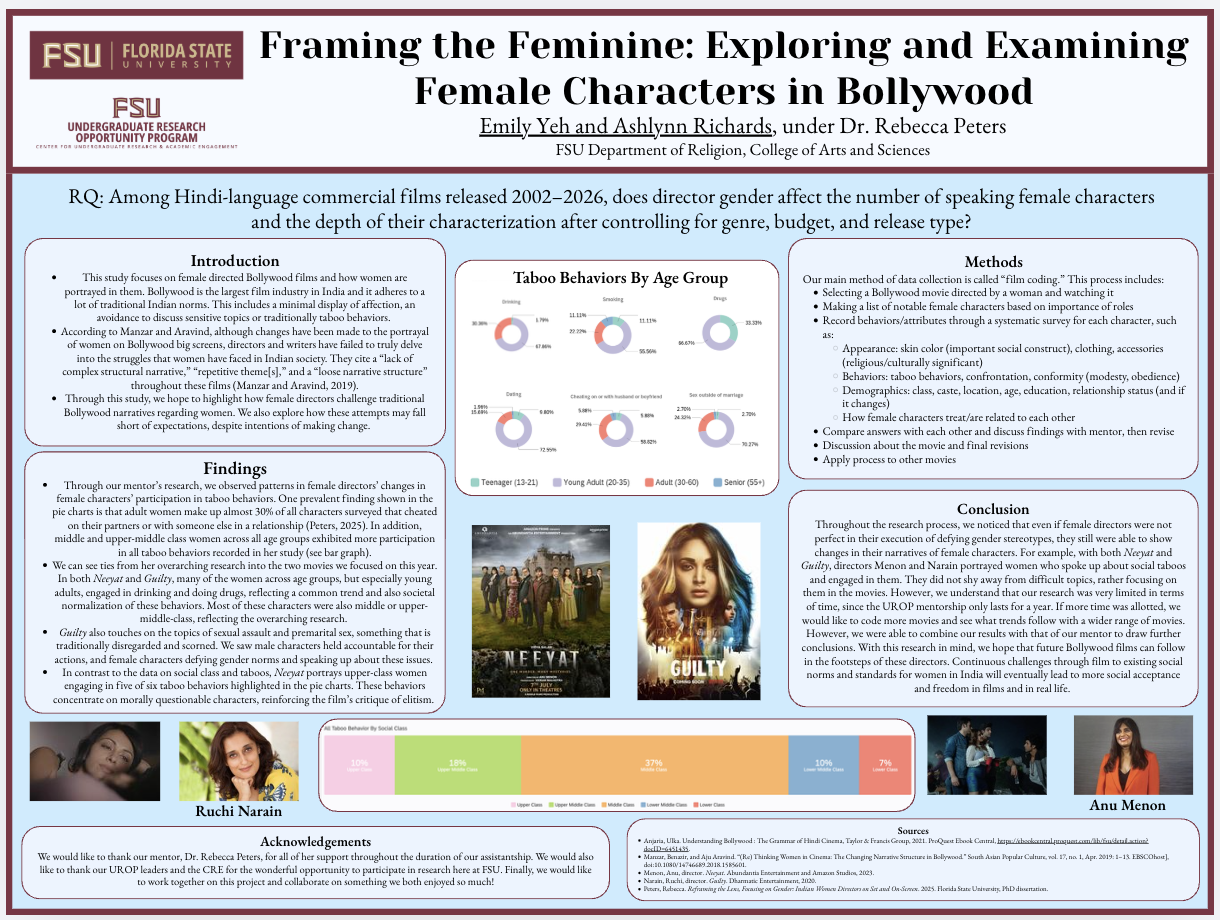
Cinema is an important cultural artifact that both reflects and influences the society from which it originates. This research project analyzes the portrayal of female characters in Bollywood, a popular film industry in India, where society has traditionally held misogynistic views towards women. This research specifically focuses on how female film directors portray their female characters. Through a research method known as “film coding,” research assistants of this project gather quantitative and qualitative data. This method collects data of female speaking characters in selected films regarding their physical appearance, behaviors, and other indicators exhibited by these characters. However, preliminary findings showcase a trend of female directors defying traditional gender norms and expectations in their characters. An increased number of women are seen in professional careers and exhibiting socially taboo behavior, such as dating and drinking. Notably, 58% of female characters coded engage in taboo behaviors without as much scrutiny as before. In the future, the findings of this project will hopefully be useful to improve filmmakers’ representation and treatment of Indian women, both on and off the screen.
Keywords: Film, Gender, Feminism, Bollywood, Women
26th annual Undergraduate Research Symposium, April 1, 2026
Injun Cho Poster Session 3: 1:45 pm - 2:45 pm / Poster #287
BIO
Injun Cho is an undergraduate student studying environmental science as a major at Florida State University. Currently in his second year, Injun is pursuing a Bachelor of Science degree and has extensive experience in STEM-related research. With the assistance of Dr. Ming Ye, his research mentor, Injun is investigating the credibility of a machine learning model aimed to predict harmful algal blooms in the Port Charlotte region. Injun's goal is to pursue a career in environmental research or environmental law and policy to help preserve ecosystems and give them time to adapt.
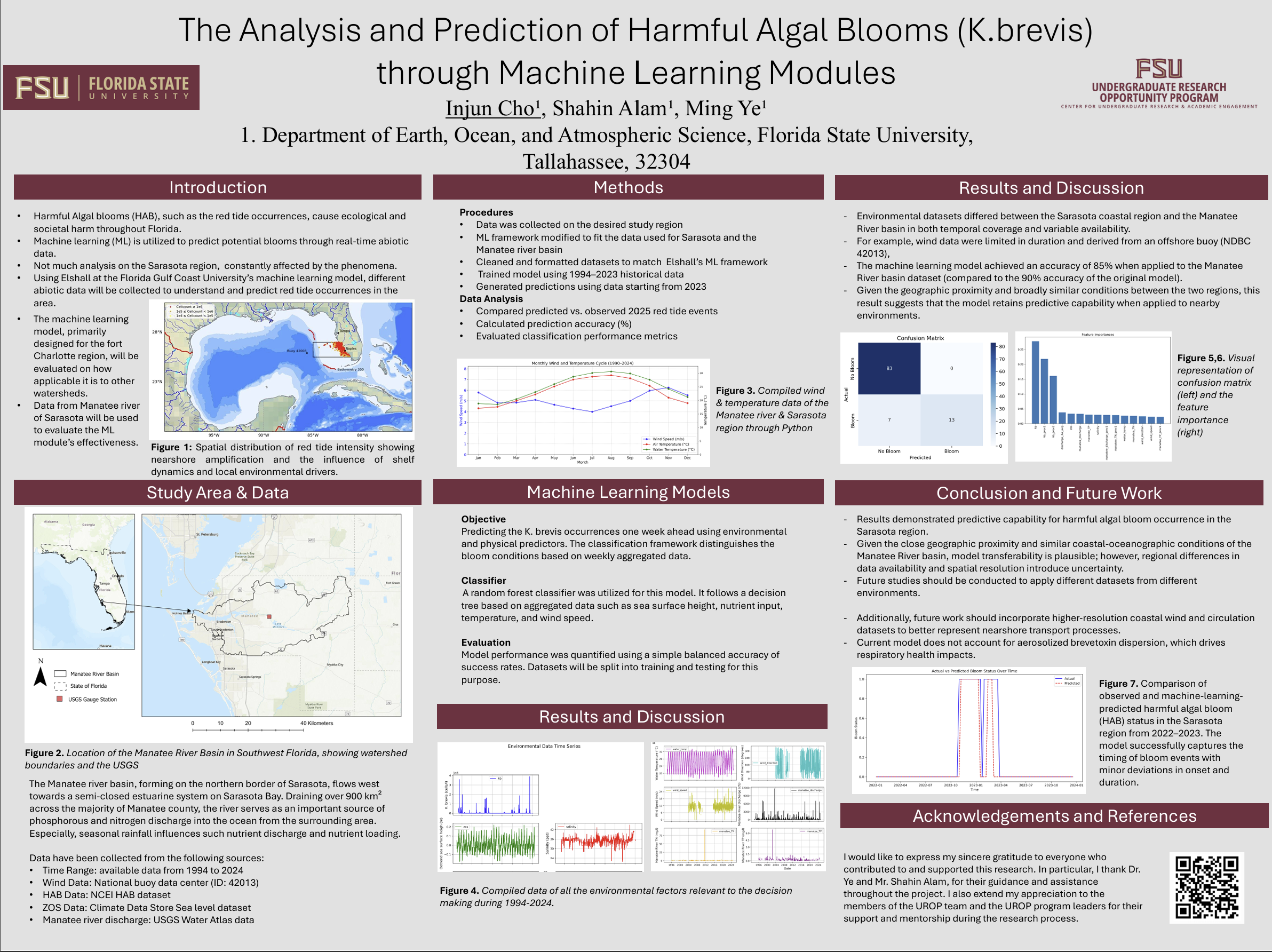
The Analysis and Prediction of Harmful Algal Blooms (K.brevis) through Machine Learning Modules
Authors: Injun Cho, Ming YeStudent Major: Environmental Sciences
Mentor: Ming Ye
Mentor's Department: The School of Earth, Ocean, and Atmospheric Science Mentor's College: Arts and Sciences Co-Presenters:
Abstract
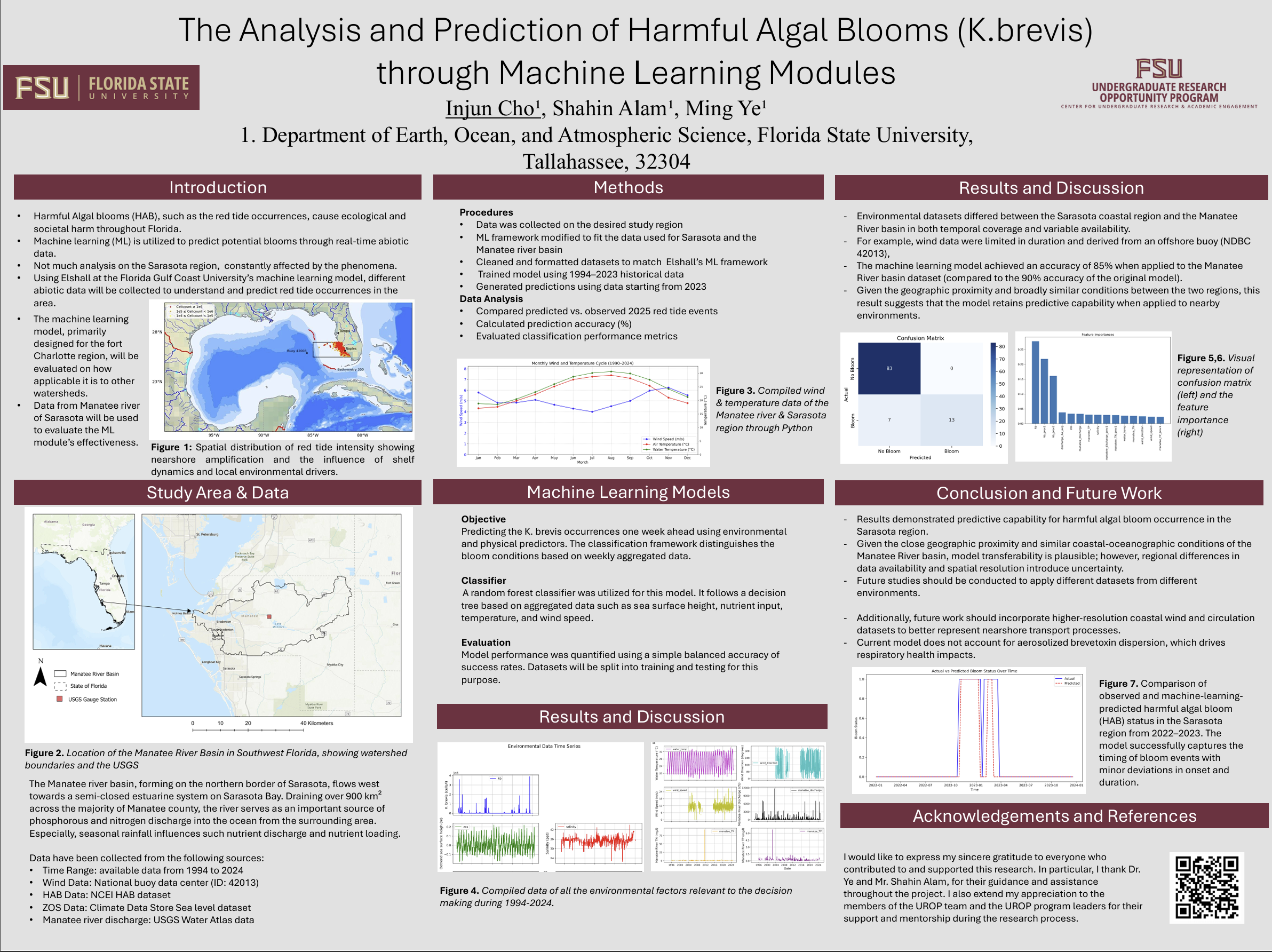
Harmful algal blooms (HABs) occur frequently along Florida’s Gulf Coast, affecting marine ecosystems and public health. A machine learning model previously developed for the Port Charlotte region by Elshall at Florida Gulf Coast University is evaluated in this study to determine whether it can generalize across nearby environments. The model is applied to the Sarasota region, specifically the Manatee River basin, using environmental data obtained from NOAA, the Water Atlas, and the National Data Buoy Center. The dataset spans 1994–2023, with data starting from 2023, when 2023 observations were used for model validation. Given the geographic proximity between Port Charlotte and the Peace River Basin, similar predictive performance is anticipated. Model accuracy is assessed by comparing predicted bloom events with observed red tide occurrences. Future work may involve integrating atmospheric dispersion modeling to better estimate inland transport of aerosolized brevetoxins and associated public health impacts.
Keywords: Machine learning, Red Tide, Florida, Environmental
26th annual Undergraduate Research Symposium, April 1, 2026
Shaelyn Taylor Poster Session 4: 3:00 pm - 4:00 pm / Poster #10

BIO
Shaelyn Taylor is a current freshman at Florida State University studying Environmental Science and Policy and pursuing a Bachelor of Science degree. She is passionate about conserving Florida's unique ecosystems and combatting excessive urbanization via sustainability. Shaelyn graduated high school with an AP Capstone degree for her senior year research project on native plant advertising.
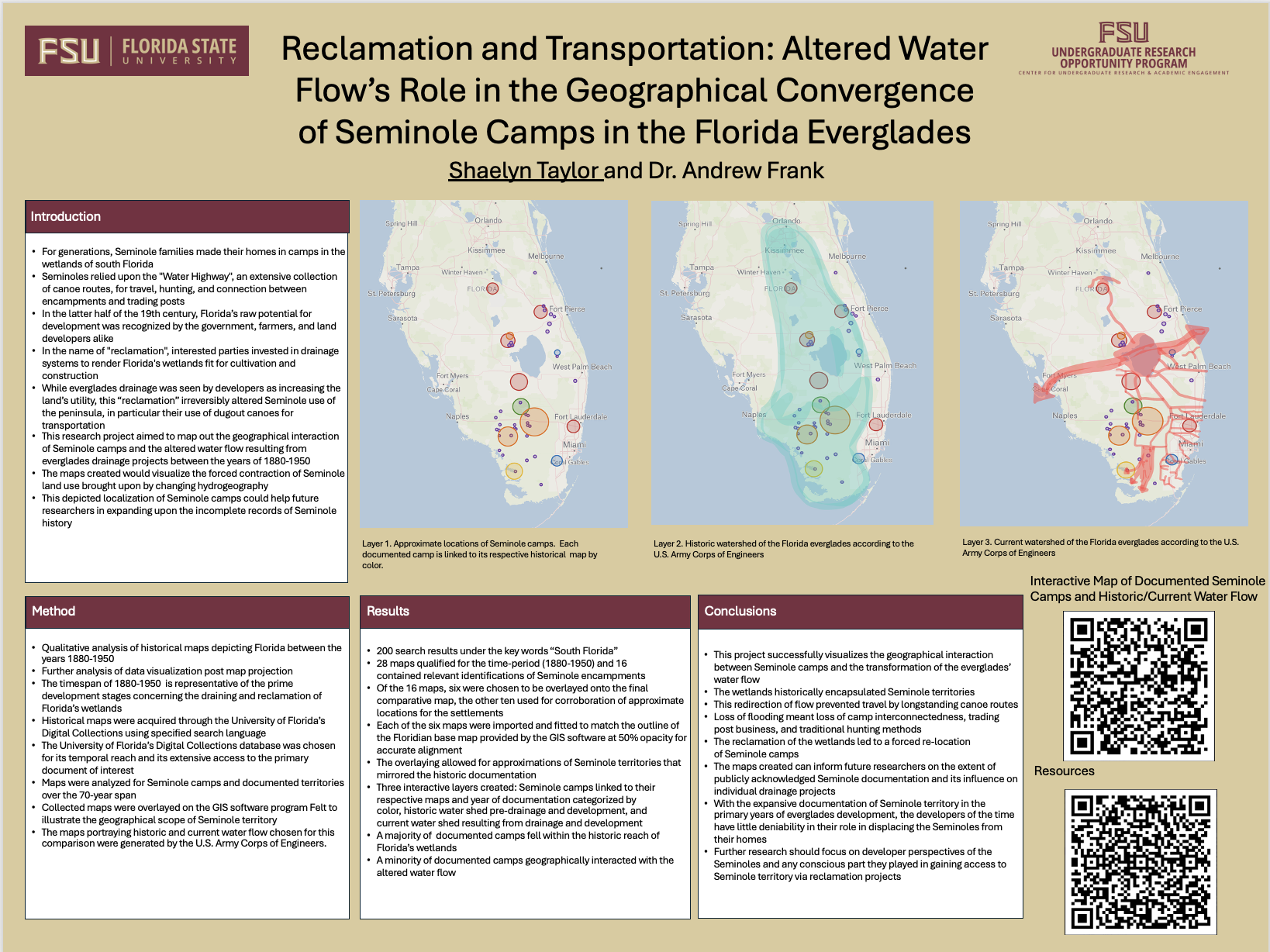
Reclamation and Transportation: Altered Water Flow’s Role in the Geographical Convergence of Seminole Camps in the Florida Everglades
Authors: Shaelyn Taylor, Dr. Andrew FrankStudent Major: Environmental Science and Policy
Mentor: Dr. Andrew Frank
Mentor's Department: Department of History Mentor's College: College of Arts and Sciences Co-Presenters:
Abstract
In the latter half of the 19th century, Florida’s raw potential for development was recognized by the government, farmers, and land developers alike. Theoretically, the composition of the uninhabitable wetlands could be changed through the engineering of drainage systems to yield dry land for cultivation and construction. While Everglades drainage was seen as increasing the land’s utility, Seminole families had made their homes in the wetlands of south Florida for generations. The “reclamation” of the Everglade's irreversibly altered Seminole use of the peninsula, in particular their use of dugout canoes for transportation. This research project aims to map out the geographical interaction of Seminole camps and the altered water flow resulting from Everglades drainage projects between the years of 1880-1950 to better visualize the forced contraction of Seminole land use brought upon by increased development. This information could help future researchers in expanding upon the incomplete records of Seminole History. Historical maps acquired through the University of Florida’s Digital Collections using specified search language were analyzed for Seminole camps and documented territories over the 70 year span. This data was then overlayed with maps portraying the historical and post-reclamation water shed using the GIS and mapping platform Felt.com. The analysis revealed that many Seminole camps populating south Florida were deserted where altered water flow led to a loss of wetlands, and therefore transportation. The changing geography deprived Seminoles of long-standing canoe routes and imposed an indirect relocation of extended encampments.
Keywords: History, Seminoles, Everglades, Maps
26th annual Undergraduate Research Symposium, April 1, 2026
Beatrice L'Ecuyer Poster Session 3: 1:45 pm - 2:45 pm / Poster #43
BIO
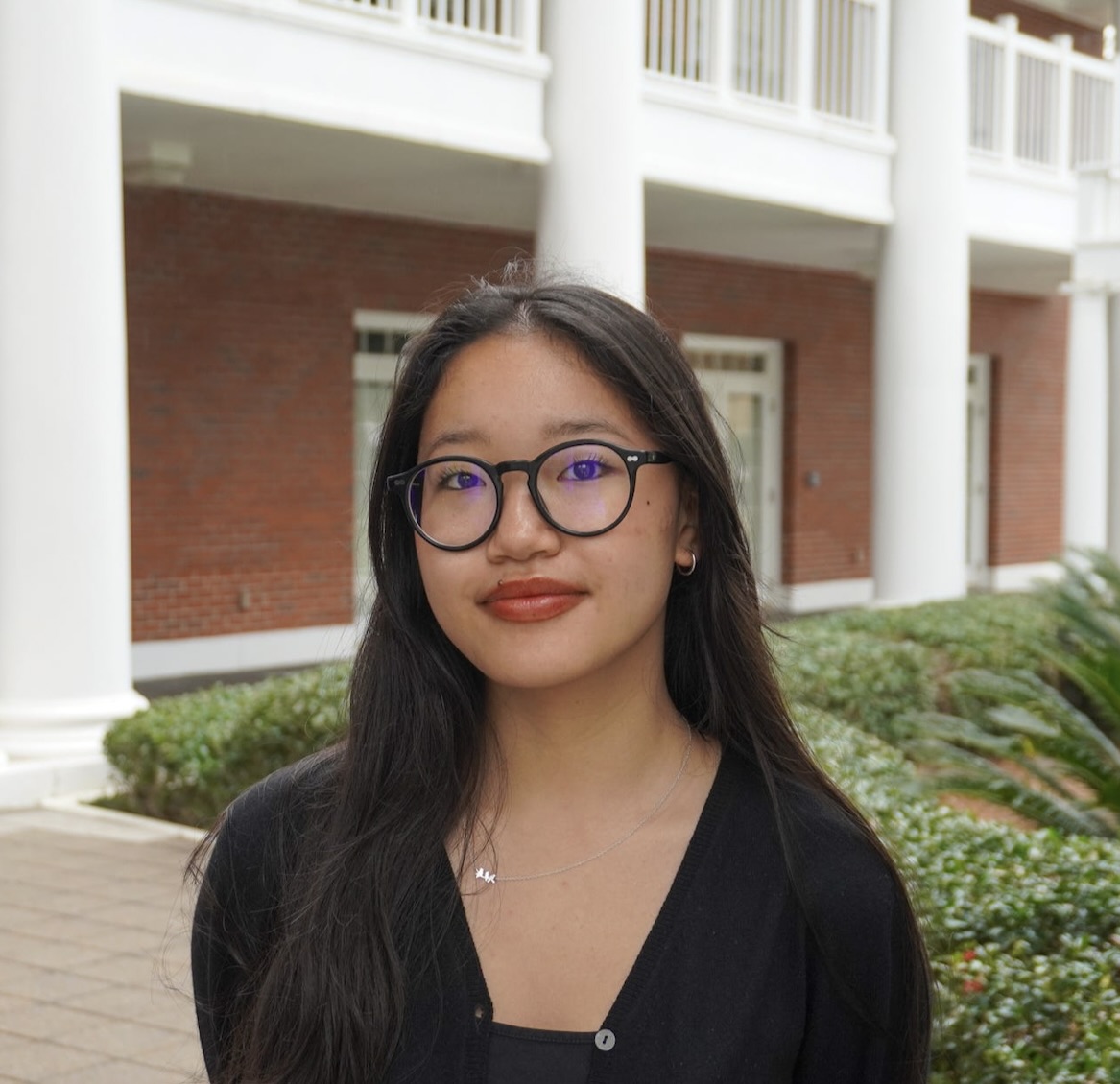
A second-year student in the Honors Program, Beatrice L'Ecuyer is working towards completing a Bachelor of Science in Criminology with a double major in Psychology and a minor in Social Work at Florida State University. She is currently a member of the Honors Student Association, the Assistant Executive Director of a nonprofit organization, the Fundraising Chair for Lambda Alpha Epsilon, and is training to be an Honors Colloquium Leader for the fall. Beatrice has a deep interest in how psychology and the criminal justice system interact, with a particular focus on justice-involved youth. After graduating, she hopes to attend graduate school to learn more about how to help those impacted by the criminal justice system.
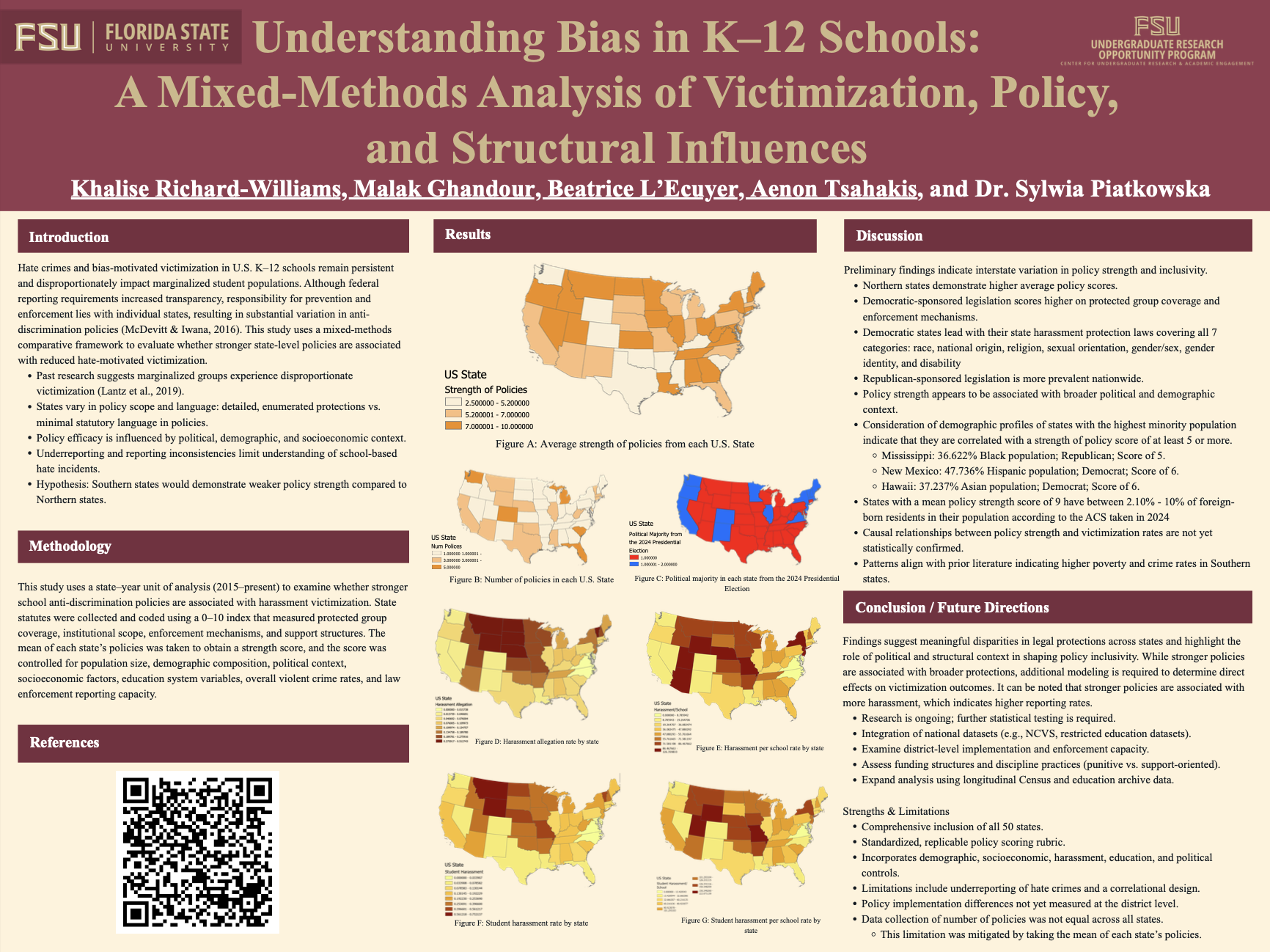
Understanding Bias in K-12 Schools: A Mixed-Methods Analysis of Victimization, Policy, and Structural Influences
Authors: Beatrice L'Ecuyer, Dr. Sylwia J. PiatkowskaStudent Major: Criminology and Psychology
Mentor: Dr. Sylwia J. Piatkowska
Mentor's Department: International and Comparative Criminology Mentor's College: College of Criminology and Criminal Justice Co-Presenters: Malak Ghandour, Aenon Tsahakis, and Khalise Richard-Williams
Abstract
Hate crimes and bias-motivated harassment in U.S. K–12 schools have drawn sustained attention from policymakers, scholars, and the public as incidents in educational settings have become more visible in national reporting. Federal intervention through the Hate Crime Statistics Act mandated the systematic collection of hate crime data by the FBI, increasing transparency around bias-related incidents occurring in schools. Despite this federal data infrastructure, responsibility for prevention and response largely remains at the state level, where legislative approaches vary considerably. By examining the variations and effectiveness of state-level school policies, the research seeks to determine whether stronger legislative policies are associated with improved outcomes and safer educational environments. Through a review of statutes, legislative records, and state constitutional provisions across all 50 states, policies are coded and scored on the basis of protected groups, enforcement mechanisms, institutional scope, and representational inclusivity. Comparative quantitative analysis incorporates controls for political affiliation, regional crime rates, demographic composition, and socioeconomic conditions to isolate policy effects. Preliminary findings reveal substantial interstate variation in policy strength, with more comprehensive protections often concentrated in northern states. Democratic-sponsored policies generally receive higher inclusivity scores than Republican-sponsored legislation, though further statistical testing is required to establish causal relationships. The current findings provide a foundation for future research using national databases to assess long-term policy outcomes and their impact on reducing hate-related incidents in schools. These insights will empower policymakers to implement effective, evidence-based strategies that safeguard marginalized students and ensure equitable, high-quality educational experiences for all communities.
Keywords: Victimization, Harassment, and Policy
26th annual Undergraduate Research Symposium, April 1, 2026
Colin Waldie Poster Session 3: 1:45 pm - 2:45 pm / Poster #37
BIO
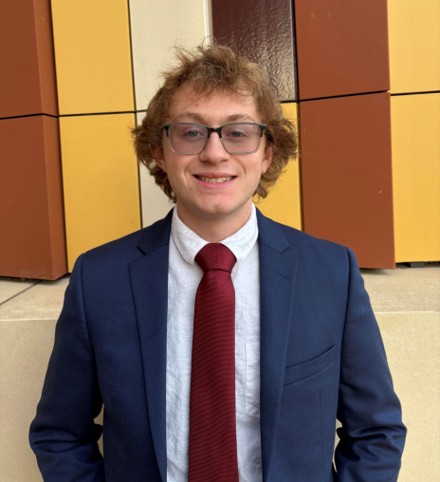
Colin Waldie is a current fourth year senior from Pensacola, Florida pursuing a Bachelor of Science in Chemical Engineering. As a part of both the Honors and Honors in the Major Program, he is pursuing a Dual Honors recognition from the university. Colin has spent the last academic year working under Dr. Hadi Mohammadigoushki at the FAMU-FSU College of Engineering, focusing on work in numerical modeling and simulations of magnetic field induced flow systems. Colin's current plan following graduation is to begin working as a Process Engineer at a pulp and paper manufacturing facility in Alabama.
Modeling Bubble Dynamics Under Magnetic Fields
Authors: Colin Waldie, Dr. Hadi MohammadigoushkiStudent Major: Chemical Engineering
Mentor: Dr. Hadi Mohammadigoushki
Mentor's Department: Chemical and Biomedical Engineering Mentor's College: FAMU-FSU College of Engineering Co-Presenters:
Abstract
The utilization of water electrolysis as a means of oxygen production in space has been used and improved for decades. However, the functionality of this method has been limited by the formation of gas bubbles without buoyancy forces. One potential solution is the use of magnetic fields and forces. While researchers are replicating microgravity conditions on Earth to better observe a bubble’s trajectory when suspended in a liquid under a magnetic field, there is a gap in the literature for a validated numerical model to better understand the dynamics observed in this system. The primary goal of this research project is to develop a validated numerical model of the motion of a bubble suspended in liquid under the effects of a non-homogeneous magnetic field. Laboratory observations will also be made to observe the effects of magnetic fields on bubble trajectories while under full gravity conditions. A numerical model will be developed using COMSOL modeling software, and laboratory data trends will be collected and observed, providing a consistent prediction of suspended bubble trajectories under these conditions.

Keywords: Magnetics, modeling, two-phase flow, simulations
26th annual Undergraduate Research Symposium, April 1, 2026
James Tiurchy Poster Session 4: 3:00 pm - 4:00 pm / Poster #180

BIO
James is a second-year undergraduate student at Florida State University majoring in Food and Nutritional Sciences on the pre-dental track. James's academic interests focus on the intersection of medicine, public health, and data-driven research, particularly how social and environmental factors influence health outcomes. James is especially interested in using large healthcare datasets and statistical modeling to better understand disparities in disease burden and healthcare utilization.
Through the Undergraduate Research Opportunity Program, James conducted research examining how social determinants of health, including insurance status, income level, and rurality, affect inpatient outcomes among patients hospitalized with eosinophilic esophagitis in the United States. Using the Healthcare Cost and Utilization Project National Inpatient Sample, James analyzed national trends in length of stay and hospital charges while comparing pediatric and adult populations. This work strengthened James's interest in health disparities research and the role that data analysis can play in identifying structural barriers to care.
As a future dentist, James hopes to integrate clinical practice with population-level thinking by understanding how socioeconomic factors shape patient health and access to treatment. James's long-term goal is to provide high-quality care while also contributing to research and initiatives that improve healthcare access and outcomes in underserved communities.
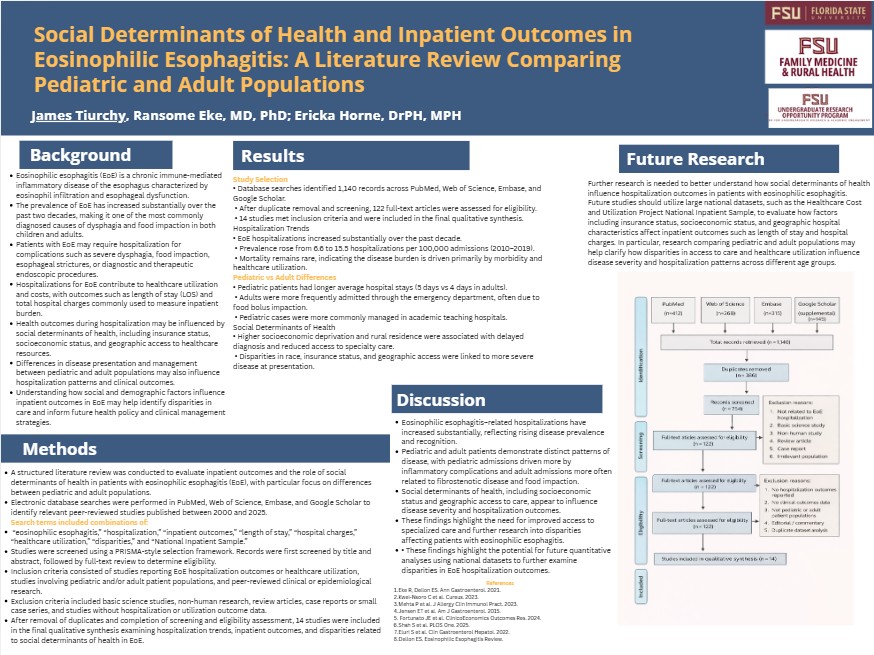
Social Determinants of Inpatient Outcomes in Eosinophilic Esophagitis: A Literature Review
Authors: James Tiurchy, Ericka HorneStudent Major: Food and Nutritional Science
Mentor: Ericka Horne
Mentor's Department: Family Medicine and Rural Health Mentor's College: College of Medicine Co-Presenters:
Abstract
Introduction:
Eosinophilic esophagitis (EoE) is a chronic immune-mediated disease of the esophagus with increasing prevalence in the United States. Although most cases are managed in outpatient settings, hospitalizations still occur and contribute to healthcare utilization through increased length of stay and hospital charges. Social determinants of health such as insurance status, socioeconomic status, and geographic location are known to influence healthcare outcomes in many conditions, but their role in EoE hospitalizations remains unclear.
Methods:
A literature review was conducted using PubMed and related biomedical databases to identify peer-reviewed studies examining hospitalization patterns, inpatient outcomes, and healthcare disparities related to eosinophilic esophagitis. Search terms included combinations of “eosinophilic esophagitis,” “hospitalization,” “length of stay,” “hospital charges,” and “health disparities.” Studies were included if they evaluated inpatient outcomes, healthcare utilization, or socioeconomic and demographic factors associated with EoE hospitalizations.
Results:
Existing literature suggests that EoE hospitalizations have increased over time and contribute to measurable healthcare utilization. Studies using national datasets such as the Healthcare Cost and Utilization Project National Inpatient Sample report variability in outcomes including length of stay and hospital charges. Although direct analysis of social determinants in EoE hospitalizations is limited, broader gastrointestinal research shows that insurance status, income level, and hospital characteristics can influence inpatient outcomes.
Discussion:
Current evidence suggests socioeconomic and healthcare system factors may contribute to variation in EoE hospitalization outcomes, but direct investigation remains limited. Further research is needed to better understand potential disparities and guide strategies that improve healthcare access and resource utilization.
Keywords: Eosinophilic Esophagitis (EoE) Social Determinants of Health Hospitalization Outcomes Health Disparities Healthcare Utilization
26th annual Undergraduate Research Symposium, April 1, 2026
Ian Steiger Poster Session 2: 10:45 am - 11:45 am / Poster #258
BIO
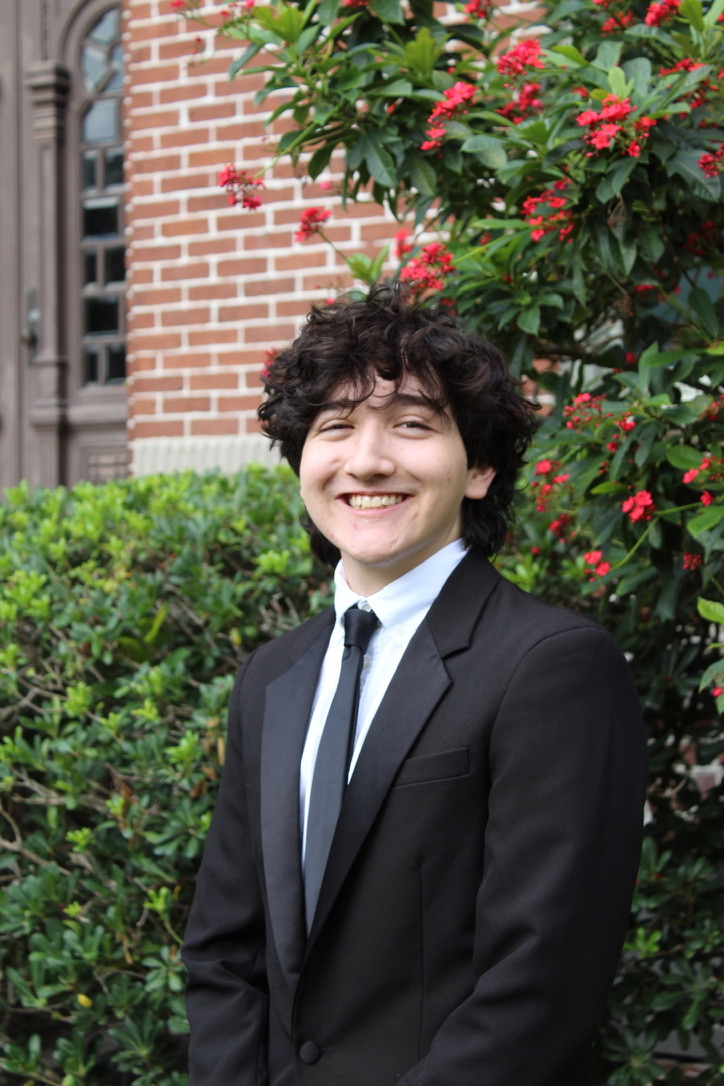
Ian Steiger is a first-year student at Florida State University studying economics and applied mathematics. In addition to UROP he works as a research assistant for Dr. Norton in the Department of Economics. Ian also serves as the Professional Development Chair for the College of Social Science and Public Policy Student Leadership Council. He plans to pursue a PhD in economics with a focus on industrial organization and hopes to build a career in academia. His research interests center on industrial organization, and he hopes his work will contribute to a deeper understanding of market competition and help promote competitive markets while reducing collusion and corruption within industry.
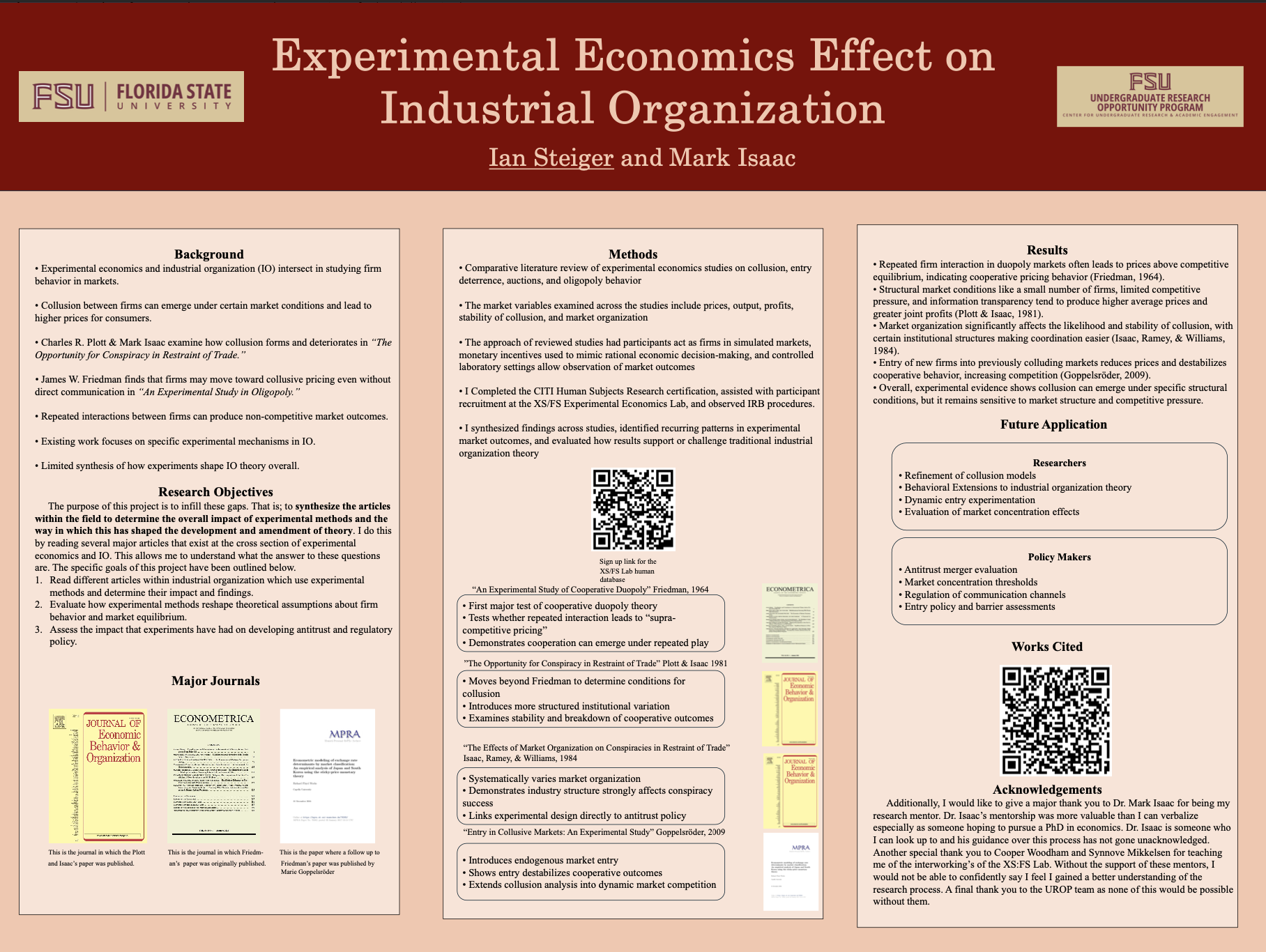
Experimental Economics Effect on Industrial Organization
Authors: Ian Steiger, Dr. Mark IsaacStudent Major: Economics and Applied Mathematics
Mentor: Dr. Mark Isaac
Mentor's Department: Economics Mentor's College: College of Social Science and Public Policy Co-Presenters:
Abstract
Experimental economics is a field where researchers induce incentives onto human participants using rewards based on actions within experiments. The field has impacted industrial organization, forming many institutions we are familiar with today. My project intends to synthesize experimental studies to answer the question what has the impact of experimental economics been on industrial organization. This project demonstrates the benefits of experimental methods and shed light on the effect it has had. This will allow future researchers to get a better understanding of uses for experimental economics which can branch far beyond testing basic economic theory. For this project I underwent the CITI certification for using human subjects in experiments. This allowed me to help recruit people to join the XS:FS Experimental Lab’s human database. On top of this I read and examined existing literature on experimental economics within the industrial organization field. This method brought me the understanding that experimental economics has been detrimental to the current understanding of industrial organization. It has ensured that markets remain competitive by testing what conditions allow for collusion within markets. Experimental economics has been able to develop ideas of how antitrust laws will truly affect businesses, beyond what is expected. This has changed the implementation of many policies which could’ve had destructive side effects if it weren’t for experimental economics exposing their dangerous underbelly. This research helps to understand the positive impact of experimental economics and the ways in which it can continue to be used in the future.
Keywords: Economics, Industrial Organization, Experimental Economics
26th annual Undergraduate Research Symposium, April 1, 2026
Khalise Richard-Williams Poster Session 1: 9:30 am - 10:30 am / Poster #43
BIO
Khalise Richard-Williams is a student at Florida State University pursuing a Bachelor of Science in Criminology and a Bachelor of Arts in Philosophy. Originally from Broward County, FL, she is passionate about issues related to justice, public policy, and community engagement. Her academic interests focus on the relationship between individual rights, legal institutions, and social responsibility.
Khalise is actively involved in service and leadership initiatives, supporting student engagement and community-based programs. Her experiences working with alternative breaks and student leadership programs have strengthened her commitment to civic responsibility and collaborative problem-solving.
Her academic work explores intersections of race relations, the carceral system, and capital punishment. She is particularly interested in how legal systems shape individual rights and broader societal outcomes. After completing her undergraduate studies, she plans to pursue opportunities to work at the intersection of law, policy, and community advocacy, with the long-term goal of attending law school.
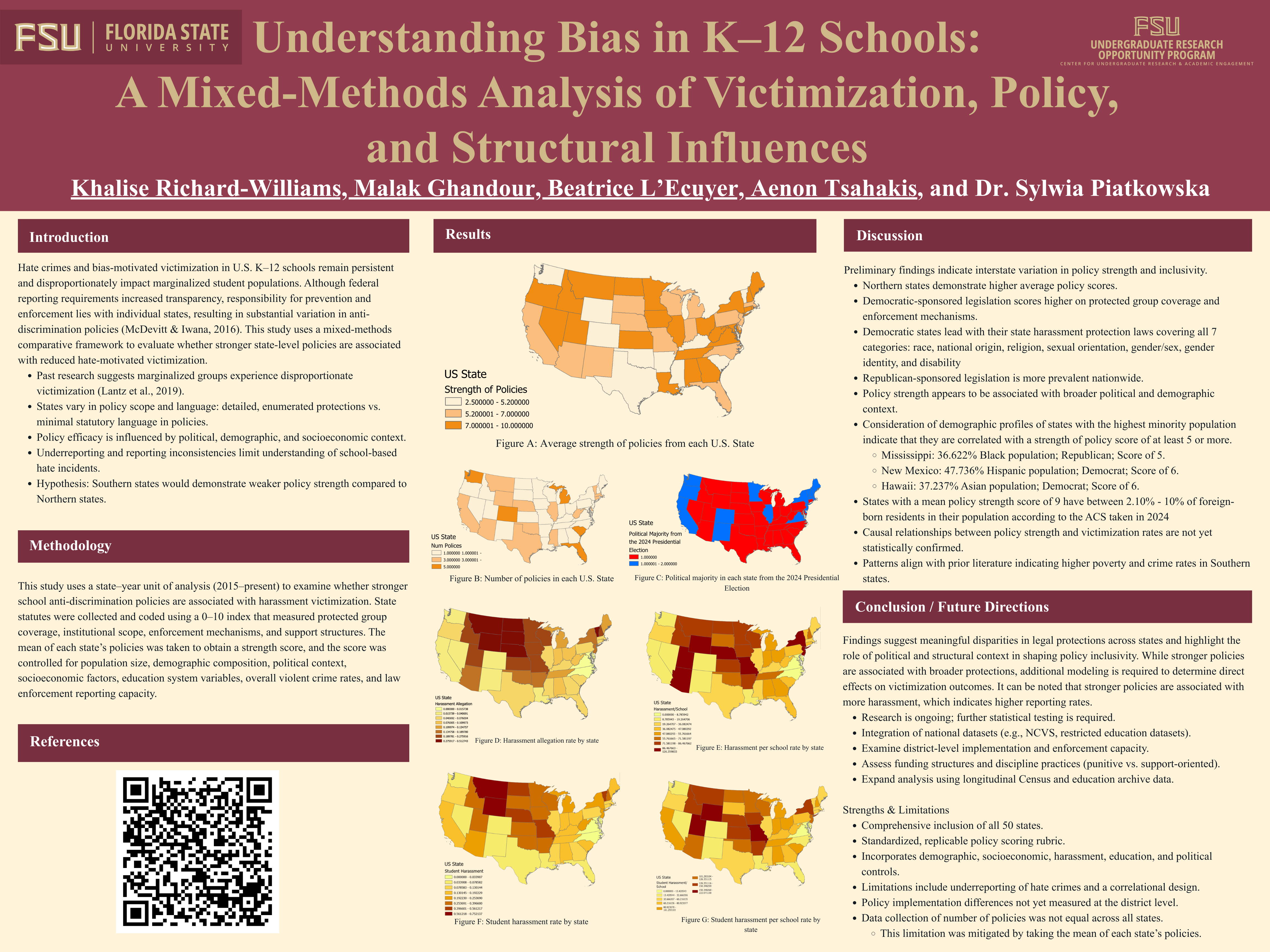
Understanding Bias in K–12 Schools:A Mixed-Methods Analysis of Victimization, Policy,and Structural Influences
Authors: Khalise Richard-Williams, Sylwia J. PiatkowskaStudent Major: Dual Degree in Criminology and Philosophy
Mentor: Sylwia J. Piatkowska
Mentor's Department: Criminal Justice Mentor's College: College of Criminology and Criminal Justice Co-Presenters: Malak Ghandour, Beatrice L’Ecuyer, Aenon Tsahakis
Abstract
Hate crimes and bias-motivated harassment in U.S. K–12 schools have drawn sustained attention from policymakers, scholars, and the public as incidents in educational settings have become more visible in national reporting. Federal intervention through the Hate Crime Statistics Act mandated the systematic collection of hate crime data by the FBI, increasing transparency around bias-related incidents occurring in schools. Despite this federal data infrastructure, responsibility for prevention and response largely remains at the state level, where legislative approaches vary considerably.
By examining the variations and effectiveness of state-level school policies, the research seeks to determine whether stronger legislative policies are associated with improved outcomes and safer educational environments. Through a review of statutes, legislative records, and state constitutional provisions across all 50 states, policies are coded and scored based on protected groups, enforcement mechanisms, institutional scope, and representational inclusivity. Comparative quantitative analysis incorporates controls for political affiliation, regional crime rates, demographic composition, and socioeconomic conditions to isolate policy effects.
Preliminary findings reveal substantial interstate variation in policy strength, with more comprehensive protections often concentrated in northern states. Democratic-sponsored policies generally receive higher inclusivity scores than Republican-sponsored legislation, though further statistical testing is required to establish causal relationships. The current findings provide a foundation for future research using national databases to assess long-term policy outcomes and their impact on reducing hate-related incidents in schools. These insights will empower policymakers to implement effective, evidence-based strategies that safeguard marginalized students and ensure equitable, high-quality educational experiences for all communities.
Keywords: criminology, hate-crimes, schools, victimization, policy
26th annual Undergraduate Research Symposium, April 1, 2026
Brendan Hanbury Poster Session 4: 3:00 pm - 4:00 pm / Poster #11
BIO
Hello! My name is Brendan Hanbury, and I am a first-year Honors student at FSU pursuing a dual degree in Neuroscience and Public Health, with minors in Chemistry and Geography. Beyond my primary coursework, I am completing an undergraduate certificate in Interdepartmental Developmental Disabilities to further my understanding of neurodivergence. Under the supervision of Dr. Wagner and his team, we have been conducting a meta-analysis on the risk factors for dyslexia. By extracting data from a multitude of diverse studies, I aim to contribute to a more comprehensive understanding of learning disorders.
As a pre-medical student with a particular interest in understanding complex neurological, mental health, and social challenges, I intend to pursue a career in psychiatry to bridge the gap between public health advocacy and accessible care for underserved and rural populations. With the goal of providing patient-centered care for those navigating these multifaceted obstacles.
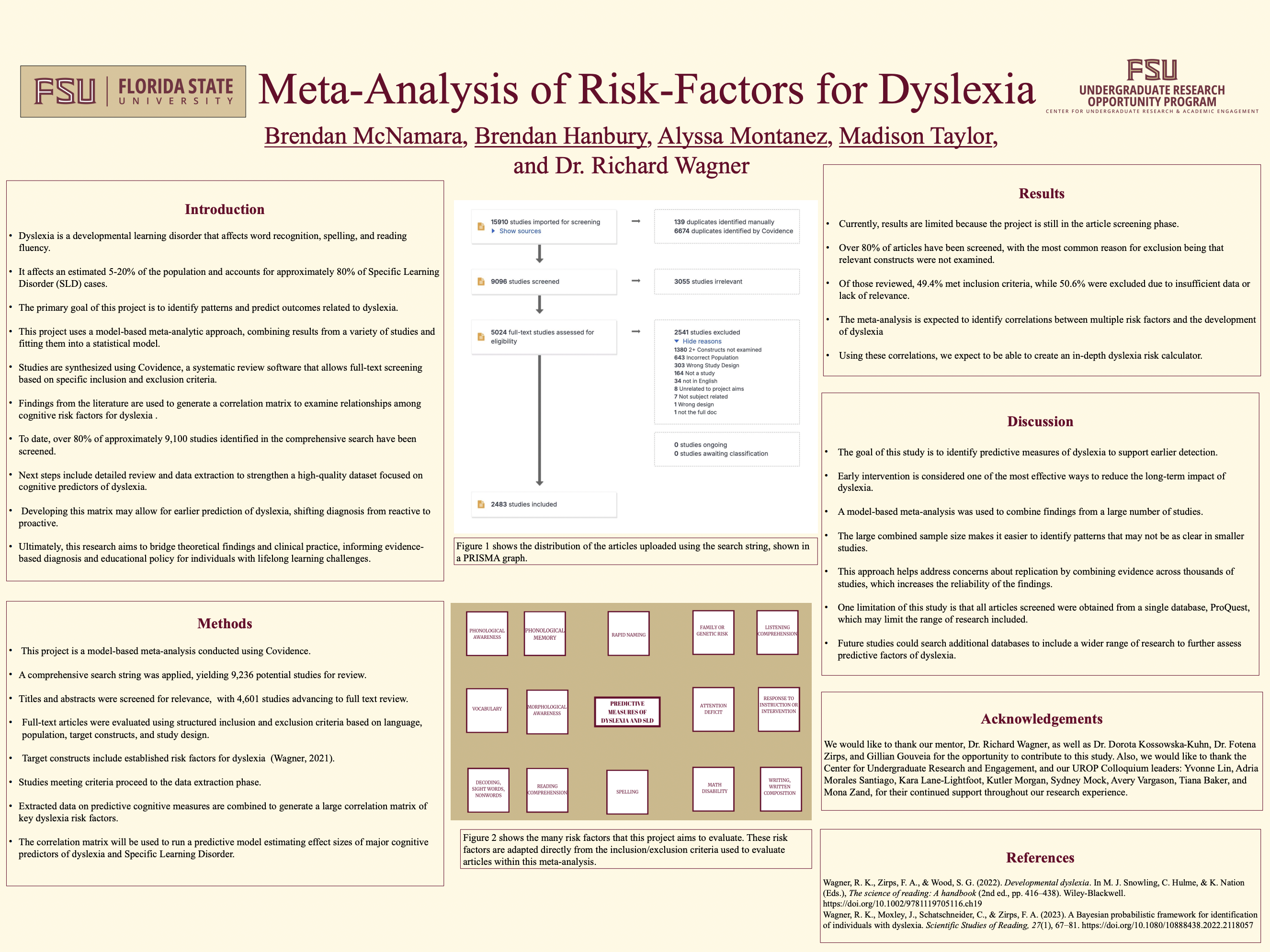
Meta-Analysis of Risk-Factors for Dyslexia
Authors: Brendan Hanbury, Dr. Richard WagnerStudent Major: Behavioral Neuroscience and Public Health
Mentor: Dr. Richard Wagner
Mentor's Department: Department of Psychology Mentor's College: College of Arts and Sciences Co-Presenters: Brendan McNamara, Alyssa Montanez, and Madison Taylor
Abstract
Dyslexia is a distinct, complex neurodevelopmental condition that significantly impacts lifelong educational outcomes and affects up to 20% of the population. Dyslexia is primarily characterized by impaired word recognition and decoding difficulties. While there has been much research on dyslexia, individual small-scale studies often lack the necessary statistical power to generalize these findings across a multitude of diverse groups. This research, conducted through Florida State University’s NIH Multidisciplinary Learning Disabilities Research Center, utilizes a large-scale meta-analysis to establish an evidence-based understanding of the prevalence and underlying mechanisms of dyslexia. The methodology follows a rigorous systematic framework to screen and synthesize decades of global research. Following an extensive literature review of over 3,800 identified studies, researchers applied a standardized codebook and strict inclusionary criteria to exclude methodologically unsound data and refine the sample. Preliminary results have yielded a group of high-quality studies that provide precise effect sizes regarding the cognitive and behavioral markers of this disorder. By aggregating these data, the project is developing a large-scale correlation matrix to identify and weight predictive neurobiological signs. These findings underscore the importance of treating dyslexia as a specific challenge requiring specialized, evidence-based approaches or diagnosis and intervention. Ultimately, this research aims to bridge the gap between laboratory findings and real-world application by creating a robust scientific foundation for earlier prediction, more accurate clinical diagnosis, and more effective instructional policies. This comprehensive synthesis provides the clarity necessary to improve long-term academic trajectories for all individuals who are currently struggling with these learning disabilities.
Keywords: Meta-Analysis, Dyslexia, Specific Learning Disorder, learning disorder, risk factors