
Research Symposium
26th annual Undergraduate Research Symposium, April 1, 2026
Victoria Sierra Poster Session 1: 9:30 am - 10:30 am / Poster #178

BIO
Victoria Sierra is a senior at Florida State University pursuing a Bachelor of Science in Nursing. She is actively involved in the College of Nursing as a Pathophysiology Learning Assistant and College of Nursing Ambassador, where she supports undergraduate students through peer-led tutoring, exam review sessions, and student outreach initiatives.
Victoria has also participated in undergraduate research through the Undergraduate Research Opportunity Program (UROP), working under the mentorship of Dr. Casey Xavier Hall. Her research focuses on a scoping review examining geospatial stigma at the neighborhood level and its influence on health outcomes.
In addition to her academic and research involvement, Victoria completed a nurse internship at Tallahassee Memorial Healthcare on a hematology/oncology unit, where she gained hands-on experience in patient care, clinical skills, and interdisciplinary collaboration.
Following graduation, she plans to sit for the NCLEX-RN and pursue a nurse residency program in South Florida, with long-term goals of continuing her professional development and potentially advancing her education in nursing.
Mapping Neighborhood-Level Stigma: A Scoping Review of Geospatial Approaches and Influences on Health
Authors: Victoria Sierra, Casey D. XAVIER HALL, Ph.D. M.P.H.Student Major: Nursing
Mentor: Casey D. XAVIER HALL, Ph.D. M.P.H.
Mentor's Department: Nursing Mentor's College: College of Nursing Co-Presenters:
Abstract
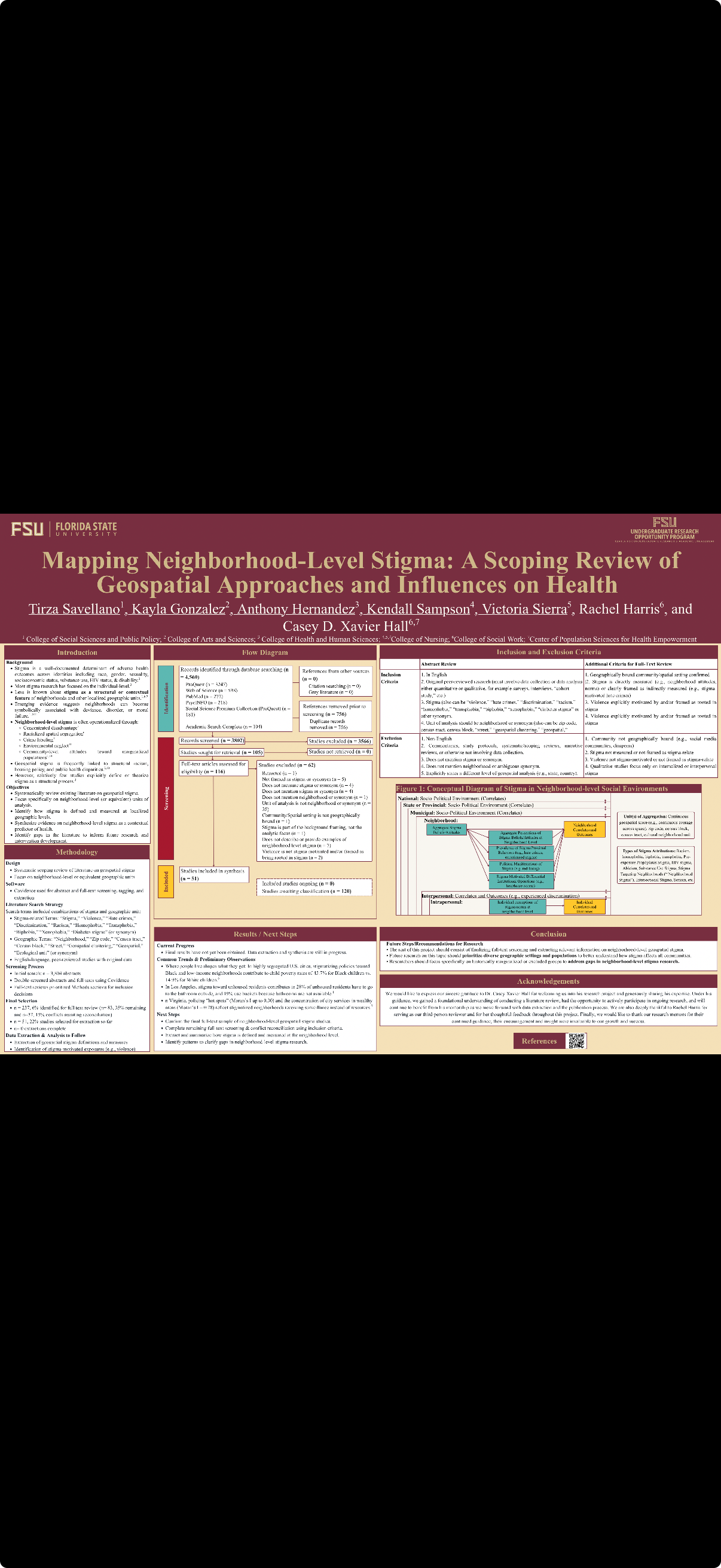
Neighborhood-level stigma is an emerging but understudied determinant of health that reflects how social, structural, and environmental factors shape health outcomes across communities. This scoping review aimed to map existing literature on geospatial stigma and examine how neighborhood-level social environments influence health. A systematic search of multiple databases and grey literature sources was conducted, followed by screening and full-text review using defined inclusion and exclusion criteria. Studies were included if they examined stigma within a geographic or neighborhood context and its relationship to health outcomes.
Preliminary findings indicate that neighborhood-level stigma is most often operationalized through structural and environmental indicators, such as socioeconomic disadvantage, crime, housing instability, and access to resources. These stigmatized environments are associated with adverse physical and mental health outcomes, including chronic disease burden, reduced healthcare access, and increased psychosocial stress. Additionally, stigma operates across multiple levels, including interpersonal, community, and structural domains, reinforcing health disparities in marginalized populations.
This review highlights significant gaps in how geospatial stigma is defined, measured, and applied in research. Greater conceptual clarity and standardized methodologies are needed to advance this field. Future research should focus on developing consistent measures of neighborhood-level stigma and exploring interventions that address structural inequities. Understanding geospatial stigma is critical for informing public health strategies aimed at reducing health disparities and promoting health equity.
Keywords: neighborhood, stigma, geospatial