
Research Symposium
26th annual Undergraduate Research Symposium, April 1, 2026
Kate Eason Poster Session 4: 3:00 pm - 4:00 pm / Poster #96
BIO
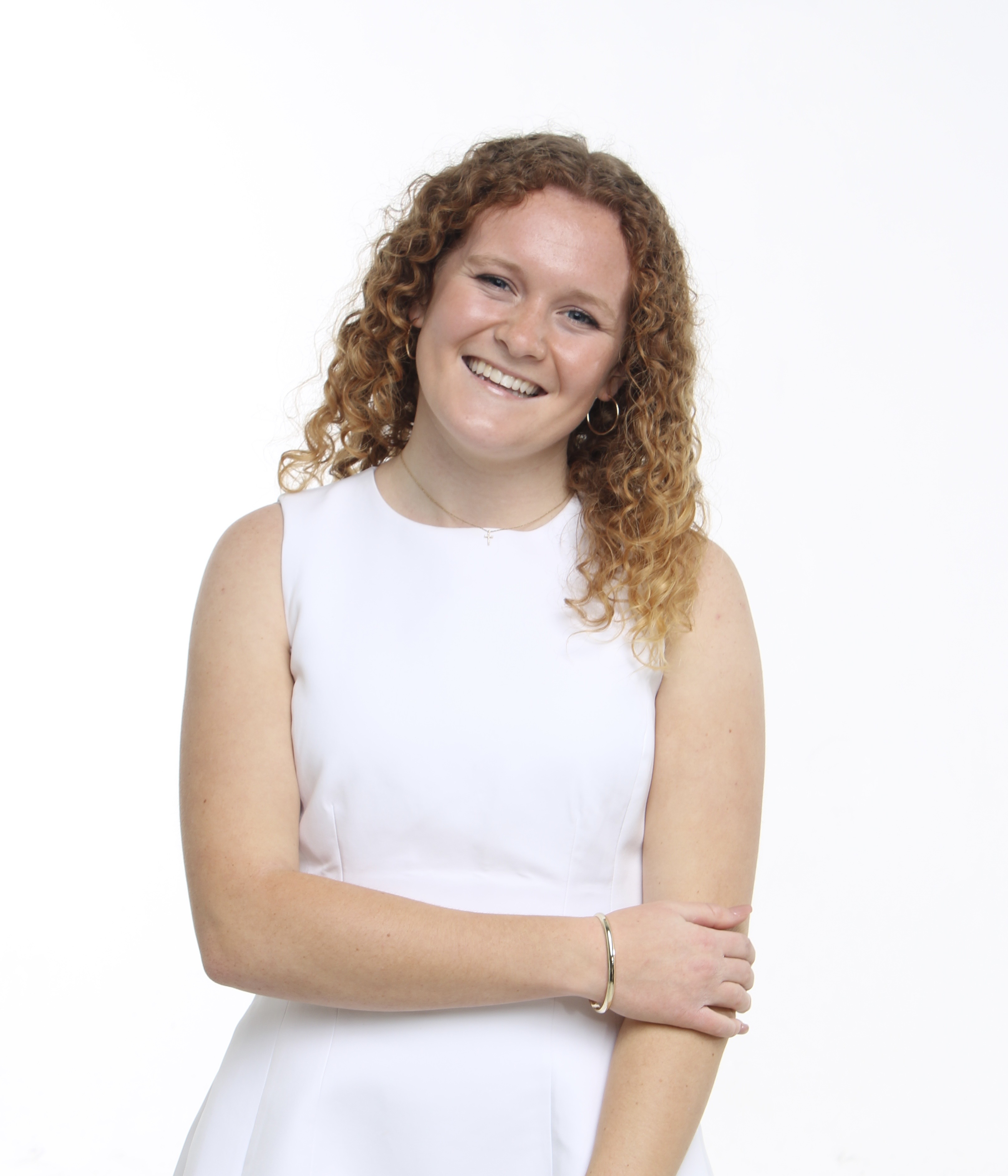
Kate Eason is a graduating senior undergraduate student from Kansas City, Missouri, pursuing a Bachelor of Science in Economics and a Bachelor of Arts in English: Editing, Writing, and Media with minors in Spanish and Law & Philosophy. She is a member of the Honors Program and began her research journey in the Undergraduate Research Opportunity Program (UROP) before starting on this Honors in the Major thesis, directed by Dr. John Hamman, to gain experience in literature review, data collection, and academic communication.
Outside of academics, she is Involvement Chair for the Phi Beta Kappa Society, was President of the Southeastern Greek Leadership Association (SGLA) Student Advisory Board, Vice President of Panhellenic Affairs for Phi Mu Fraternity, Team Leader for the Panhellenic Association, Leadership Coordinator for Dance Marathon, and an active member of the Garnet and Gold Key Honor Society and Order of Omega.
This research project aligns with Kate’s passion for bettering student life at higher education institutions in all facets, including academic, social, and personal health. After graduation, Kate plans to continue her efforts to improve campus life as a Chapter Consultant for Phi Mu Fraternity and through pursuing a career in student affairs.
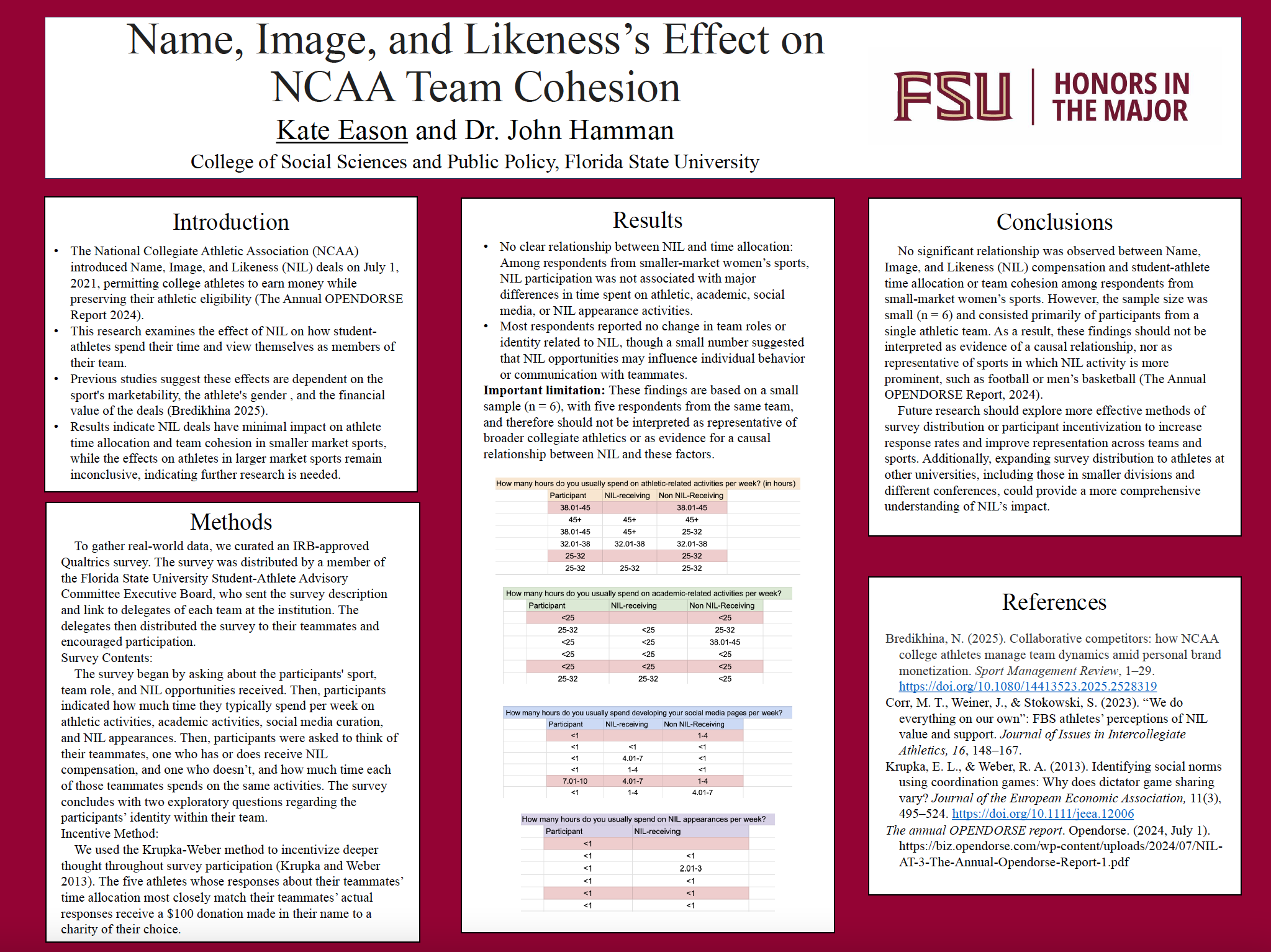
Name, Image, and Likeness’s Effect on NCAA Team Cohesion
Authors: Kate Eason, Dr. John HammanStudent Major: Econcomics and English: Editing, Writing, and Media
Mentor: Dr. John Hamman
Mentor's Department: Economics Mentor's College: Social Sciences and Public Policy Co-Presenters:
Abstract
The Name, Image, and Likeness (NIL) policy was recently introduced in college athletics, allowing student-athletes to receive monetary compensation while maintaining NCAA eligibility. This paper explores the extent to which the ability to earn money in college sports via NIL affects the way student-athletes spend their time and view themselves as a member of their teams. Previous research has shown that the effects on time allocation and team cohesion vary depending on the marketability of the sport, the gender of the athletes, and the value of the deals they receive. The aim of this research is to identify patterns in athlete behavior caused by NIL, in order to help the increasing NIL regulations benefit student-athletes academically, athletically, and personally. To do this, a survey was distributed to every student-athlete at Florida State University, questioning their own time allocation and team identity, as well as that of an NIL-receiving teammate and a non-NIL-receiving teammate. The survey results suggest that NIL deals have a minimal impact on how athletes in smaller market sports allocate their time and identify with their teams. Results are inconclusive for larger market sports.
Keywords: NIL, NCAA, Team Cohesion, Time Allocation