
Research Symposium
26th annual Undergraduate Research Symposium, April 1, 2026
Sofia Lopez Poster Session 4: 3:00 pm - 4:00 pm / Poster #70
BIO
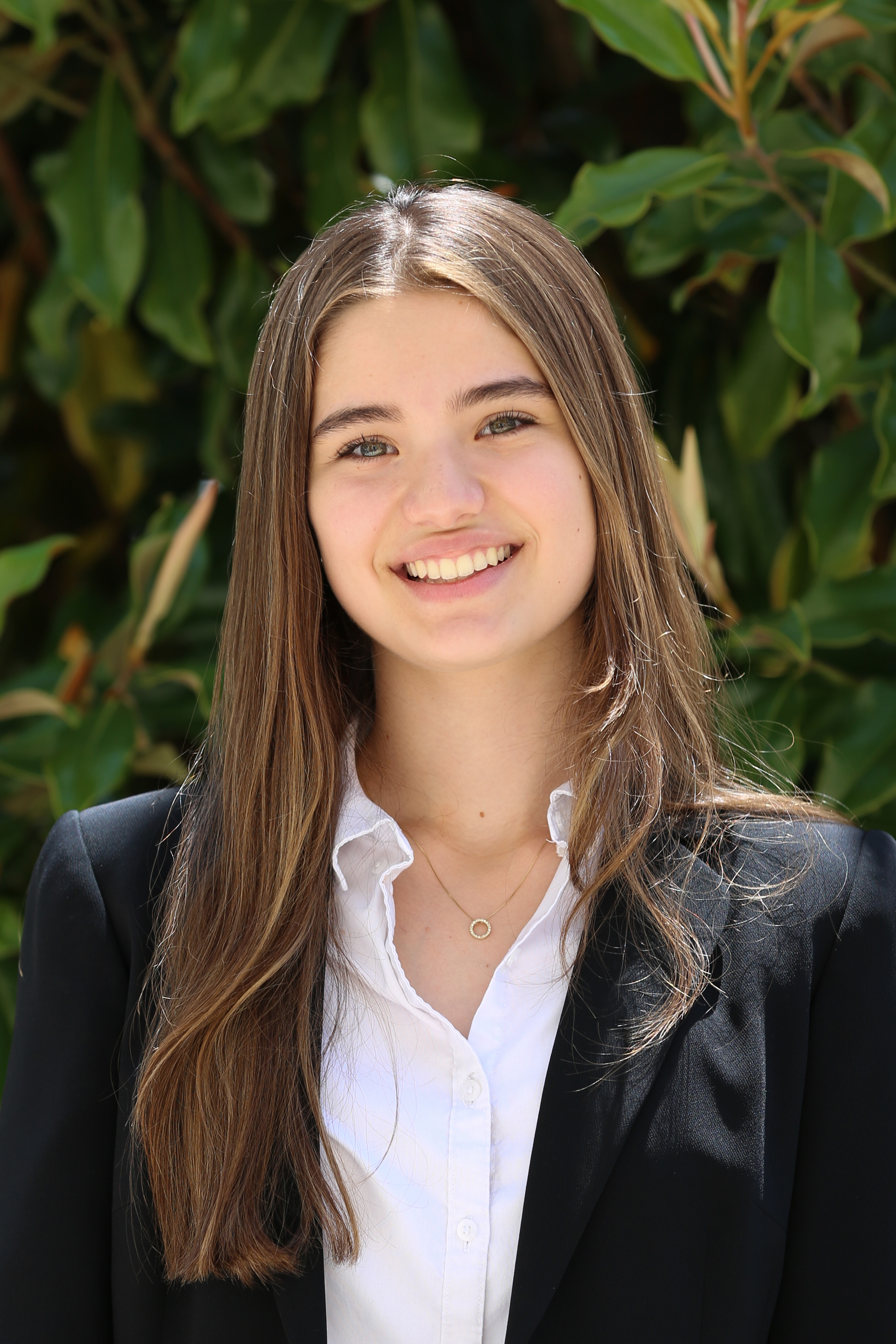
Sofia Lopez is a sophomore at Florida State University pursuing dual Bachelor of Science degrees in Biological Sciences and Psychology, with a minor in Chemistry. She is an undergraduate researcher in Dr. Richard Nowakowski’s laboratory at the FSU College of Medicine, where she works under the mentorship of Dr. Grace Hammel. Her research investigates neuroinflammation following spinal cord injury, with a focus on myelin debris clearance, endothelial cell responses, and the mechanisms driving secondary injury. She is particularly interested in translational research examining how dysregulated inflammatory pathways contribute to disease progression, including in cancer and tissue injury.
In addition to her research, Sofia works with HCA Healthcare, where she is gaining clinical experience in a hospital setting. She is actively involved in the Medical Response Unit (MRU), where she continues to build her clinical and emergency response skills. She also volunteers with Remote Area Medical (RAM), providing care at mobile clinics that expand access to healthcare in underserved communities. Through these experiences, she has developed a strong commitment to improving healthcare access and addressing disparities in care. Sofia is also preparing to serve as a UROP Leader, where she will mentor undergraduate students and support their development in research. She plans to pursue medical school following graduation.
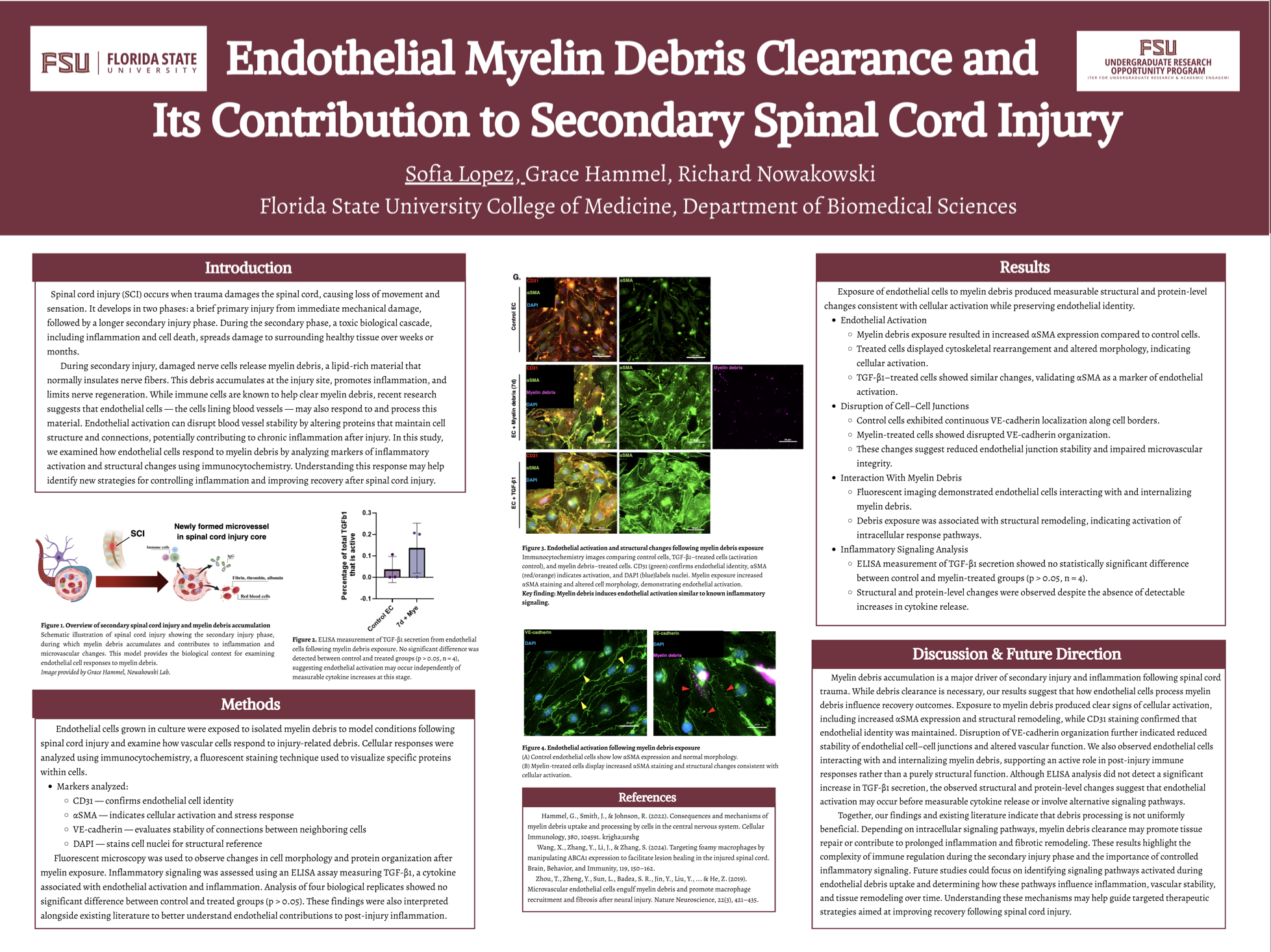
Endothelial Myelin Debris Clearance and Its Contribution to Secondary Spinal Cord Injury
Authors: Sofia Lopez, Grace HammelStudent Major: Biological Sciences and Psychology
Mentor: Grace Hammel
Mentor's Department: Biomedical Sciences Mentor's College: Florida State College of Medicine Co-Presenters:
Abstract
One of the most consequential secondary responses to spinal cord injury is the accumulation of myelin debris, which initiates and amplifies the inflammatory cascade that shapes long-term recovery. These debris fragments contain inhibitory molecules and neurodegenerative side effects that drive strong inflammatory signaling, disrupt repair processes, and block axonal regrowth. Myelin debris also stimulates macrophages, microglia, and endothelial cells, ultimately prolonging inflammation and worsening overall outcomes.The purpose of this study was to investigate how myelin debris clearance, specifically by endothelial cells, contributes to injury progression. To address this, the project integrated immunocytochemistry with a literature-based analysis. Immunocytochemistry was used to stain cells for markers of immune activation and phagocytic signaling. These methods demonstrated that exposure to myelin debris rapidly activated inflammatory pathways and induced structural changes in both macrophages and endothelial cells, visually confirming mechanisms previously described in SCI literature.The literature analysis further examined why myelin debris provokes strong inflammatory signaling and how different cell types contribute to either productive clearance or pathological overactivation. Recent studies showed that endothelial cells, although considered “amateur” phagocytes, engulfed myelin debris and initiated pathways leading to outcomes such as angiogenesis and fibrosis. Overall, the findings indicated that the consequences of myelin debris clearance depend heavily on the cellular pathways involved. While debris removal is necessary for healing, dysregulated processing can worsen tissue damage.
Keywords: Neuroinflammation, Spinal Cord Injury, Myelin Debris Clearance, Endothelial Cell Activation, Secondary Injury