
Research Symposium
26th annual Undergraduate Research Symposium, April 1, 2026
Sophia Depena Poster Session 2: 10:45 am - 11:45 am / Poster #54
BIO
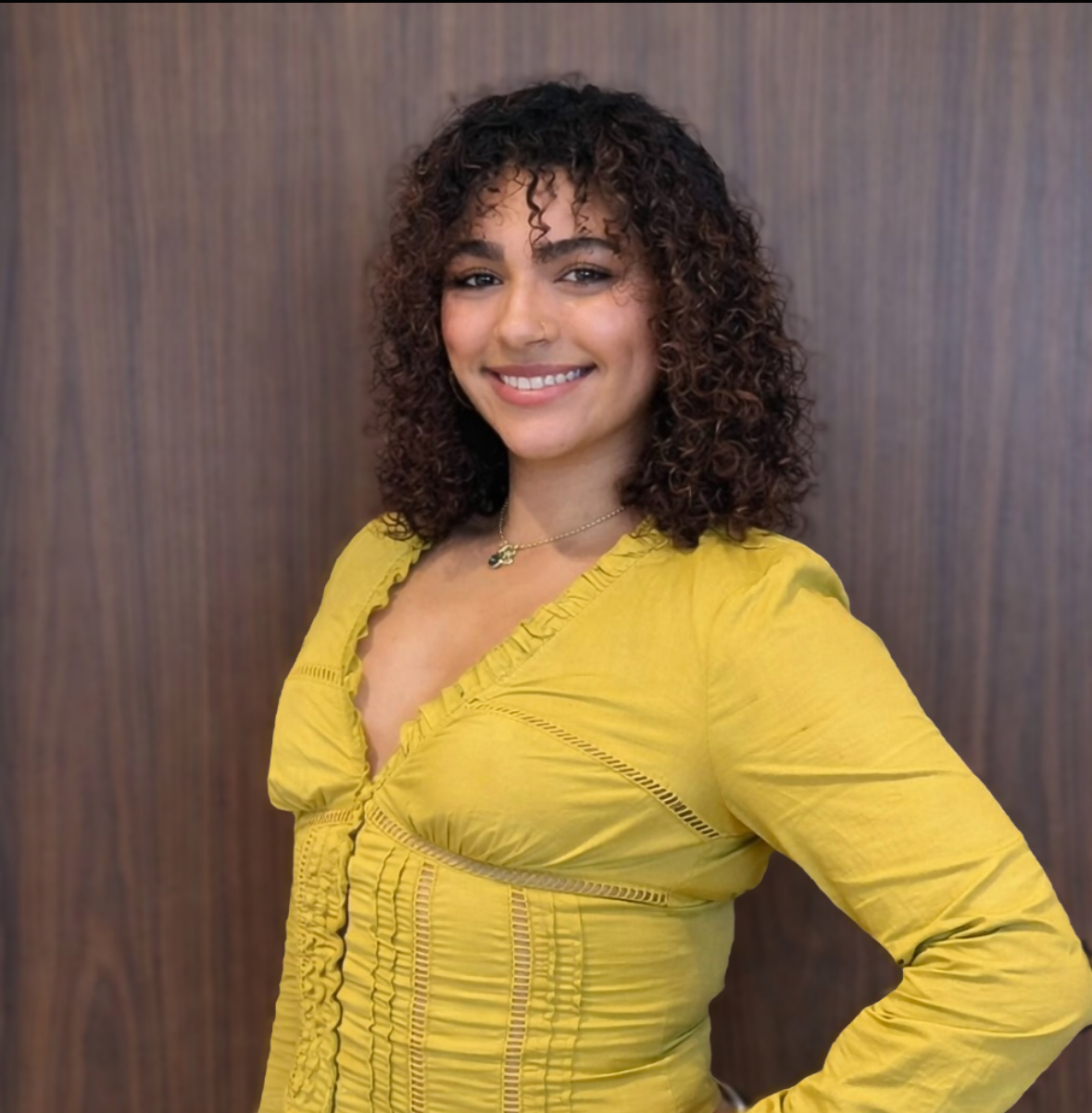
Sophia Celeste Depena is a 3rd-year pursuing a Bachelor of Science in Psychology with a minor in Chemistry. She is a lab assistant at the Florida Center for Reading Research (FCRR), where they work on a project focused on children’s academic and emotional development, with a particular interest in COVID-19, reading anxiety, and AI.
Her academic interests focus on childhood trauma and its impact on psychological development, especially how early experiences can shape emotional regulation and academic outcomes. She is also interested in biology, with a growing interest in cancer research and the broader biological mechanisms underlying disease. She is interested in using research to better understand these patterns and apply them in clinical settings.
Sophia plans to attend medical school. She is also fluent in Spanish and is interested in providing more culturally competent care to diverse populations.
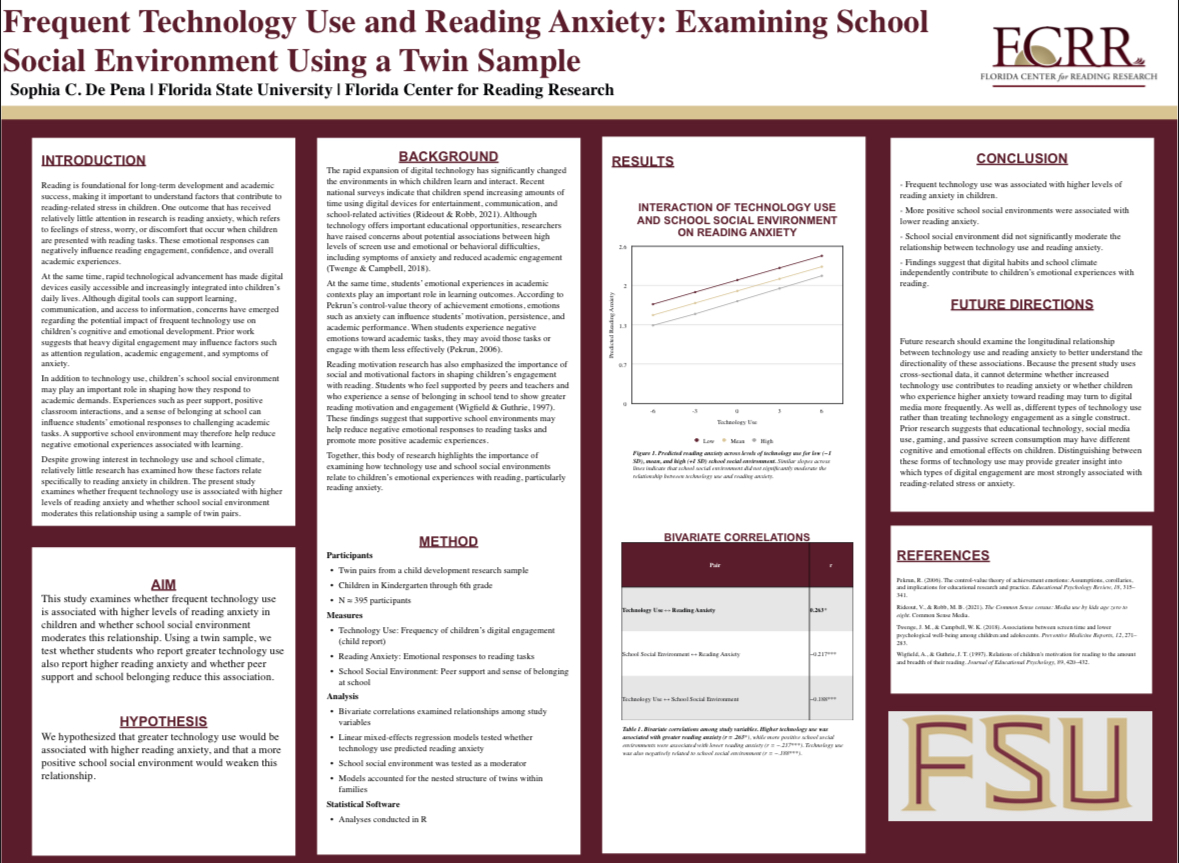
Frequent Technology Use and Reading Anxiety: Examining School Social Environment using a Twin Sample
Authors: Sophia Depena, Hannie DuStudent Major: Psychology
Mentor: Hannie Du
Mentor's Department: Department of Psychology, FCRR Mentor's College: Arts and Sciences Co-Presenters:
Abstract
Reading is foundational for long-term development and academic success, making it important to understand factors that contribute to reading-related stress. Rapid enhancement has made technology easily accessible and integrated into children’s lives. Although digital tools can support learning and communication, concerns have emerged about the impact of frequent technology use on children’s cognitive and emotional abilities, including attention regulation, academic engagement, and symptoms of anxiety. An under-researched outcome is reading anxiety, feelings of stress, worry, or discomfort during reading tasks. In addition to technology use, children’s school social environment may shape how they respond to academic demands, particularly peer support and sense of belonging. This study examines whether frequent technology use is associated with higher reading anxiety and whether school social environment moderates that relationship.
Data was collected from twin pairs in kindergarten through sixth grade using child and parent self-report questionnaires. Technology use was measured by frequency of digital engagement, and reading anxiety was assessed through items capturing children’s emotional responses to reading tasks. School social environment was assessed through students’ reported peer support and sense of belonging. Regression analyses will predict reading anxiety from technology use frequency, testing school social environment as a moderator. Analyses will control for the nested nature of twins within families.
We hypothesize that greater technology use will be associated with higher reading anxiety, but this relationship will be weaker among students with a more positive school social environment. These findings clarify how technology use and school environment can shape emotional and academic development.
Keywords: Reading Anxiety, Technology Use, Child Psychology