
Research Symposium
26th annual Undergraduate Research Symposium, April 1, 2026
Savannah Seger Poster Session 4: 3:00 pm - 4:00 pm / Poster #118
BIO
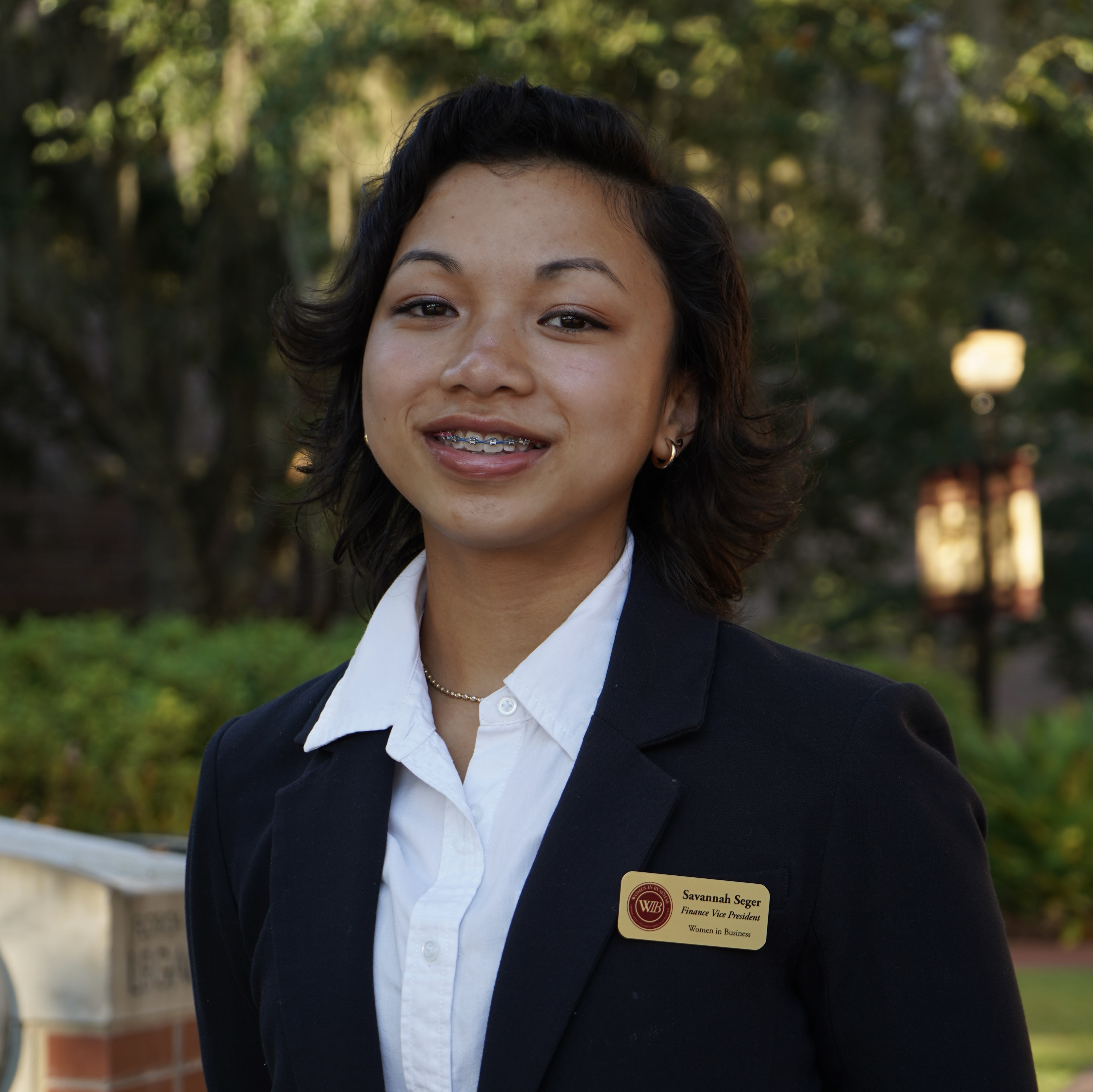
Now a third year student, Savannah is a double major in Finance and Risk Management with a minor in English. Her professional focus is centered on the intricate world of underwriting and proactive risk management, with a long-term goal of navigating the intersection of business and corporate law. Currently, she works as a Dean’s Office Administrative Assistant at the FSU College of Business, where Savannah supports support high-level operations and the college’s mission of academic excellence. Her commitment to leadership and community is further reflected in her roles as Vice President of Finance for Women in Business and Treasurer for the Vietnamese Student Association. Beyond her professional and academic pursuits, Savannah is deeply engaged in service and creativity. She actively participates in advocating for community health and sustainability. When she is not analyzing market trends or helping plan club events, she enjoys exploring creative outlets such as drawing, dancing, cooking, and traveling. Savannah is driven by a desire to combine her technical expertise in risk with a compassionate approach to advocacy and leadership.
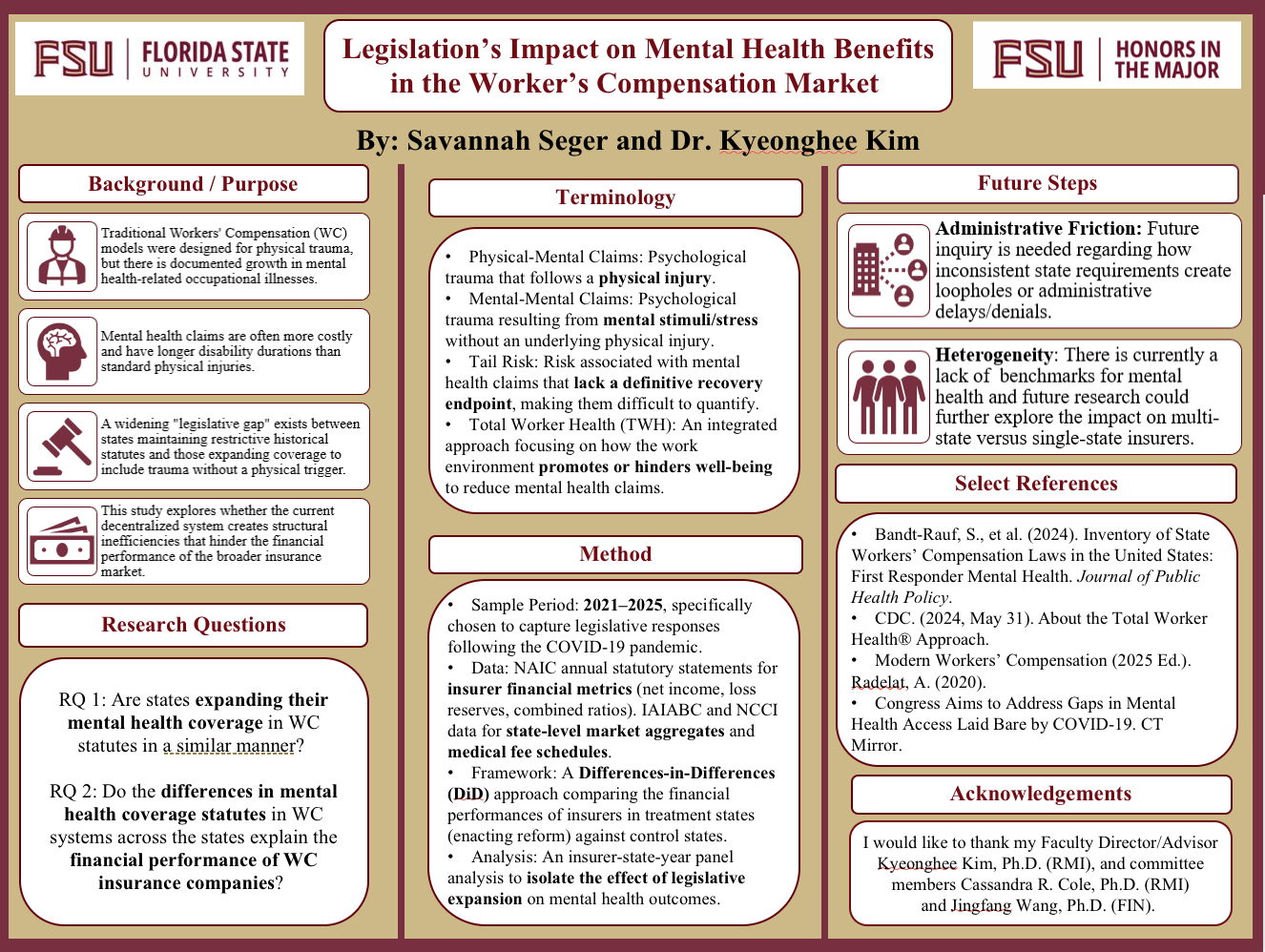
Legislation’s Impact on Mental Health Benefits in the Worker’s Compensation Market
Authors: Savannah Seger, Kyeonghee KimStudent Major: Finance & Risk Management
Mentor: Kyeonghee Kim
Mentor's Department: Risk Management & Insurance Mentor's College: College of Business Co-Presenters:
Abstract
Worker’s Compensation (WC) varies significantly across the United States, particularly regarding the treatment of mental workplace injuries. Traditional WC models were designed around physical trauma. However, there has been documented growth in mental health-related illnesses and those resulting from occupational stress (Workplace Safety Survey, 2025). Understanding this growth is important because mental claims often bring higher costs and longer disability durations compared to standard physical injuries.
States like Texas and Georgia maintain their historical statutes, requiring a proven physical injury to qualify for coverage (Texas Labor Code § 408.006; SBWC Georgia Guidelines, 2026). Others like New York and Illinois expanded their definition of compensable injuries to include trauma that lacks a preceding physical trigger (New York State Senate Bill S755, 2025; SCoIL Pathfinder Co. v. Industrial Com., 1976). While statutes delineate WC liabilities for employers, these employers typically transfer liability through the purchase of WC insurance from insurance carriers. Legislation dictates the boundaries of this risk transfer, and consequently, affects the supply of WC liability coverage.
While the shift in carrier valuations reflects the market's sensitivity to changes in legislation (RPS Market Outlook, 2026), the current literature overlooks the friction between the law’s intent and its application across contexts (WCRI, 2025). I will begin by investigating the legal differences across states using WC benefit schedules, focusing on mental health benefits. Then, I will examine whether differences across states affect the supply of WC insurance.
Keywords: Worker’s Compensation, Mental Health, Benefits, Legislation, Finance