
Research Symposium
26th annual Undergraduate Research Symposium, April 1, 2026
Monique Ramos Poster Session 1: 9:30 am - 10:30 am / Poster #109

BIO
Monique Ramos is a 4th year biological science student on a pre-med track. Monique has an interest in exploring how our diet and gut biome impact healthy aging, specifically their association with risk factors for dementia. Monique explores these research topics under the mentorship of Dr. Sheffler.
Subjective vs. Objective Adherence in a Dietary Intervention and the Influence of Baseline Cognitive Function
Authors: Monique Ramos, Julia ShefflerStudent Major: Biology
Mentor: Julia Sheffler
Mentor's Department: Translational Behavioral Science Mentor's College: College of Medicine Co-Presenters:
Abstract
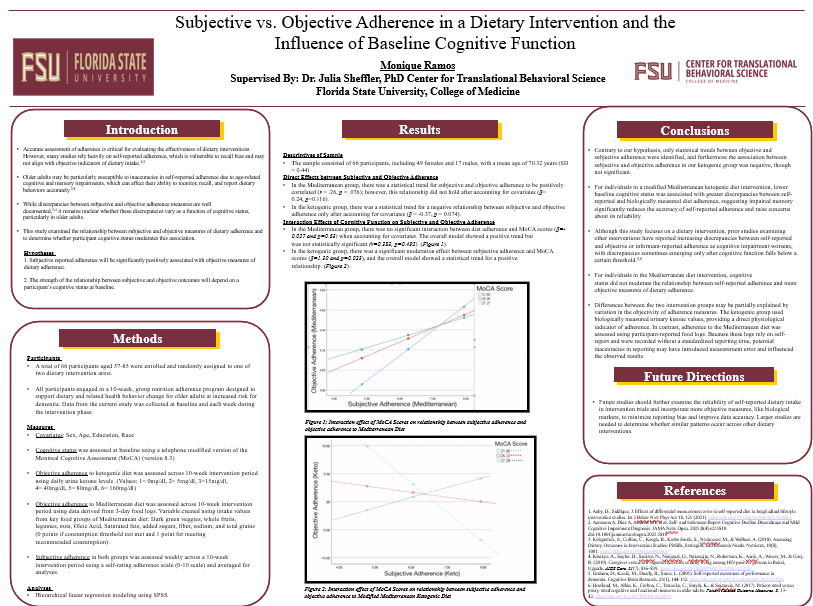
Background. Accurate assessment of dietary adherence is critical for evaluating intervention effectiveness; however, many studies rely on self-reported adherence, which is vulnerable to recall bias and may not align with objective indicators of diet adherence. Older adults may be especially susceptible to reporting inaccuracies due to age-related cognitive changes that could affect monitoring and recall of dietary behaviors.
Methods. This study examined the relationship between subjective and objective measures of dietary adherence and tested whether baseline cognitive status moderates this relationship. Sixty-five adults aged 57-85 were randomly assigned to one of two 10-week dietary intervention arms (Ketogenic or Mediterranean diet) within a group-based nutrition program. Cognitive status was assessed using the phone administered Montreal Cognitive Assessment (MoCA v8.3). Objective adherence to ketogenic diet was measured via daily urine ketone levels, and objective adherence to the Mediterranean diet was derived from 3-day food logs using standardized nutrient and food group criteria. Subjective diet adherence for both groups was assessed weekly across a 10-week intervention period using a self-rating adherence scale (0-10 scale). Hierarchical linear regression models adjusted for age, sex, education, and race.
Results. There was a significant interaction between cognitive status and subjective adherence on objective adherence to ketogenic diet (b=1.29, p=0.023).
Conclusions. Our findings suggest that impaired memory may reduce the accuracy of self-reported adherence and raise concerns about its reliability in populations affected by or at risk for MCI. Larger studies are needed to determine whether similar patterns occur across other dietary interventions.
Keywords: Adherence, Cognition, Diet intervention