
Research Symposium
26th annual Undergraduate Research Symposium, April 1, 2026
Emily Baris Poster Session 1: 9:30 am - 10:30 am / Poster #87

BIO
Emily Baris is a junior undergraduate student earning her degree in Clinical Professions. She has been working as a research assistant for two semesters, and has found research studying family therapy studies particularly interesting and rewarding.
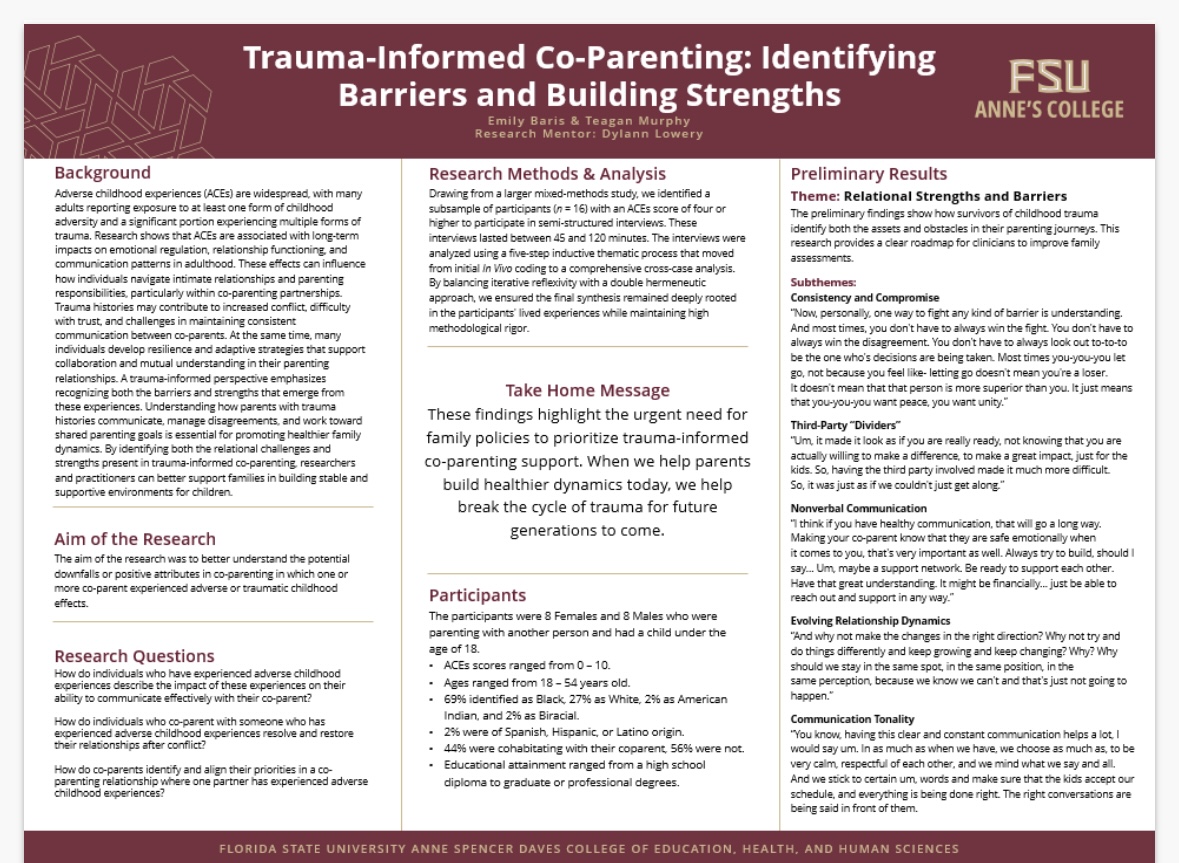
Trauma-Informed Co-Parenting: Identifying Barriers and Building Strengths
Authors: Emily Baris, Dylann LoweryStudent Major: Clinical Professions
Mentor: Dylann Lowery
Mentor's Department: Marriage and Family Therapy Mentor's College: Human Development and Family Sciences Co-Presenters: Teagan Murphy
Abstract
Adverse childhood experiences (ACEs) are widely prevalent and have been shown to influence emotional regulation, relationship functioning, and communication patterns in adulthood. These effects can significantly shape co-parenting dynamics, particularly when one or both parents have experienced childhood trauma. This study aimed to explore both the challenges and strengths present in trauma-informed co-parenting relationships. Using a mixed-methods approach, data were collected from 16 participants with ACE scores of four or higher, including semi-structured interviews analyzed through an inductive thematic process. Findings revealed that trauma histories may contribute to barriers such as conflict, trust difficulties, and inconsistent communication. However, participants also demonstrated resilience through adaptive strategies, including intentional communication, compromise, and emotional awareness. Key themes included relational strengths and barriers, with subthemes such as consistency, third-party influences, communication tone, and evolving relationship dynamics. These findings highlight the importance of recognizing both risk factors and strengths in co-parenting relationships affected by trauma. Promoting trauma-informed co-parenting support and policies may help improve family functioning and contribute to healthier outcomes for children and future generations.
Keywords: Trauma-Informed Co-Parenting