
Research Symposium
26th annual Undergraduate Research Symposium, April 1, 2026
Johanna Overbeck Poster Session 2: 10:45 am - 11:45 am / Poster #176
BIO
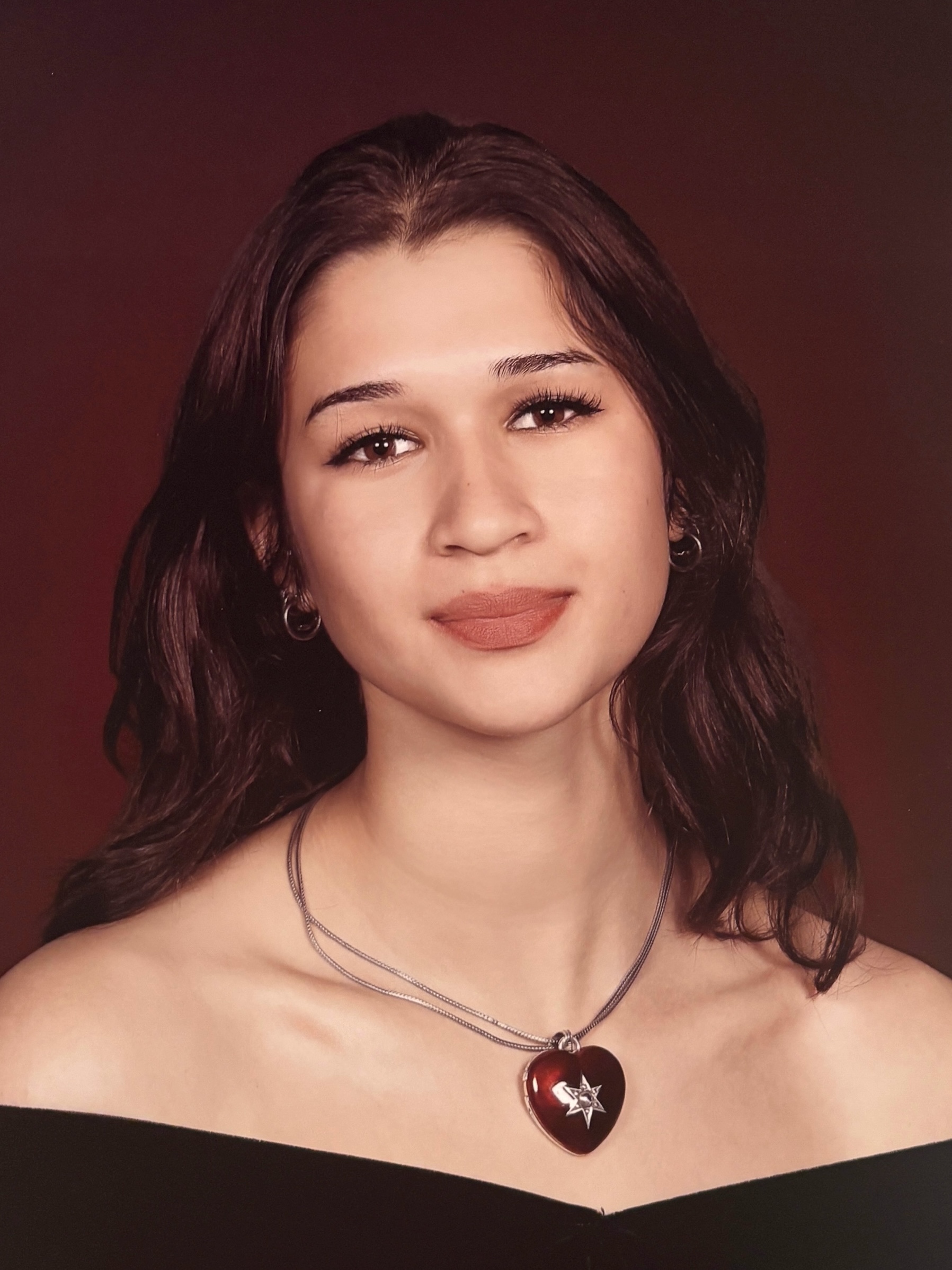
Johanna Overbeck is a first-year student from Jupiter, Florida, pursuing a bachelors degree in Cellular and Molecular Neuroscience at Florida State University. She is a member of the FSU Honors Program. Through her participation in the Undergraduate Research Opportunity Program, she sought early involvement in academic research and has developed a strong interest in neuroscience. She is particularly interested in exploring epigenetic and molecular methods in the laboratory to better understand the mechanisms underlying neurological processes. Her research experience has further shaped her academic goals, and she plans to pursue an MD/PhD to integrate research and clinical practice, with a potential focus on pathology.
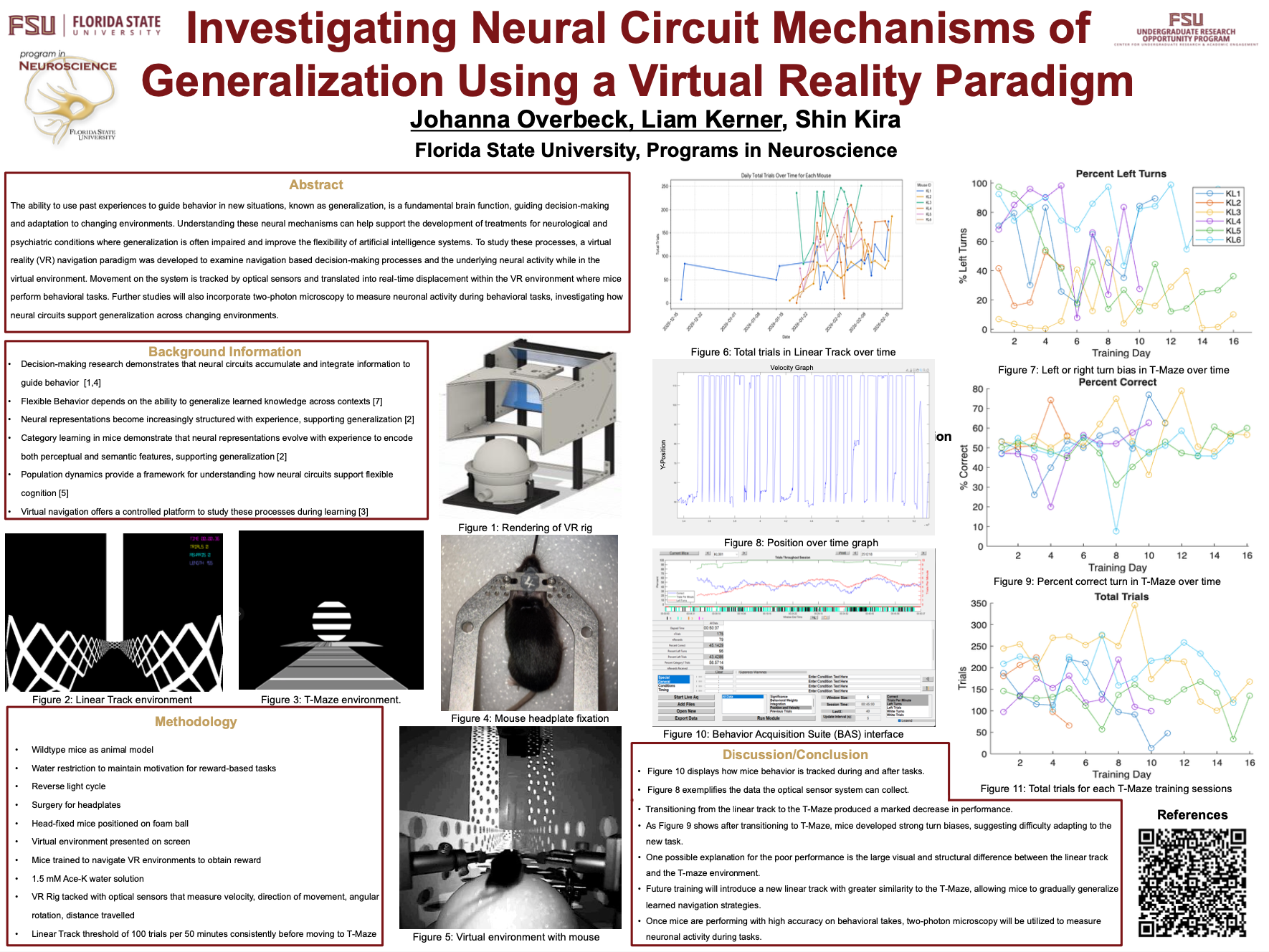
Investigating Neural Circuit Mechanisms of Generalization Using a Virtual Reality Paradigm
Authors: Johanna Overbeck, Shin KiraStudent Major: Cellular and Molecular Neuroscience
Mentor: Shin Kira
Mentor's Department: Department of Psychology Mentor's College: College of Arts and Sciences Co-Presenters: Liam Kerner
Abstract
The ability to use past experiences to guide behavior in new situations, known as generalization, is a fundamental brain function, guiding decision-making and adaptation to changing environments. Understanding these neural mechanisms can help support the development of treatments for neurological and psychiatric conditions where generalization is often impaired and improve the flexibility of artificial intelligence systems. To study these processes, a virtual reality (VR) navigation paradigm was developed to examine navigation-based decision-making processes and the underlying neural activity, where mice are trained to navigate the virtual environment. Movement on the system is tracked by optical sensors and translated into real-time displacement within the VR environment. Behavioral training shows that mice are learning to navigate within the VR system, with several mice exhibiting consistent engagement and gradual improvement in task performance across sessions. After achieving criterion-level performance on the linear track task, mice advanced to a T-maze paradigm requiring left and right turn decisions. Further studies will incorporate two-photon calcium microscopy to measure neuronal activity during these decision-based navigation tasks, investigating how neural circuits support generalization across changing environments.
Keywords: Generalization, Neuroscience, Neural Networks, Virtual Reality