
Research Symposium
26th annual Undergraduate Research Symposium, April 1, 2026
Angelina Borisen Poster Session 3: 1:45 pm - 2:45 pm / Poster #133

BIO
Angelina Borisen is a sophomore at Florida State University pursuing a Bachelor of Science in Biological Sciences and a Bachelor of Science in Psychology. She conducts genetics research under the mentorship of Dr. Amy Webster. Angelina is involved in the Medical Response Unit (MRU) and serves as a Pre-Health Living Learning Community (LLC) mentor, supporting peers interested in healthcare careers. Angelina plans to pursue an MD-PhD, with the goal of integrating biomedical research and clinical practice. She is particularly passionate about rural medicine and hopes to serve underserved communities with limited access to healthcare.
Peroxisomal Gene Knockdown Influences Fertility in Caenorhabditis elegans
Authors: Angelina Borisen, Dr. Amy WebsterStudent Major: Biological Sciences, Psychology
Mentor: Dr. Amy Webster
Mentor's Department: Biological Sciences Mentor's College: College of Arts and Sciences Co-Presenters:
Abstract
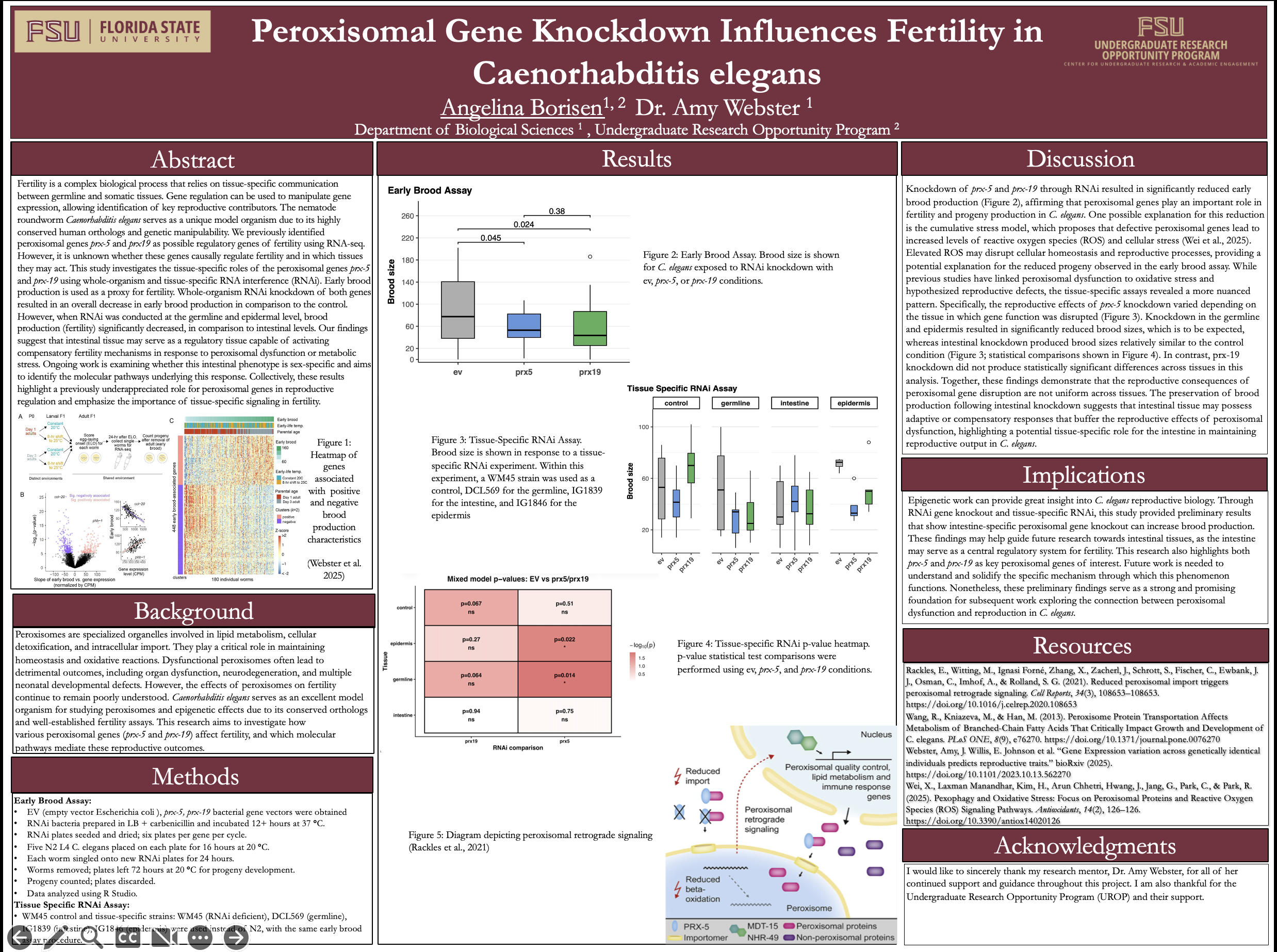
Fertility is a complex biological process that relies on tissue-specific communication between germline and somatic tissues. Gene regulation can be used to manipulate gene expression, allowing identification of key reproductive contributors. The nematode roundworm Caenorhabditis elegans serves as a unique model organism due to its highly conserved human orthologs and genetic manipulability. We previously identified peroxisomal genes prx-5 and prx19 as possible regulatory genes of fertility using RNA-seq. However, it is unknown whether these genes causally regulate fertility and in which tissues they may act. This study investigates the tissue-specific roles of the peroxisomal genes prx-5 and prx-19 using whole-organism and tissue-specific RNA interference (RNAi). Early brood production is used as a proxy for fertility. Whole-organism RNAi knockdown of both genes resulted in an overall decrease in early brood production in comparison to the control. However, when RNAi was conducted at the germline and epidermal level, brood production (fertility) significantly decreased, in comparison to intestinal levels. Our findings suggest that intestinal tissue may serve as a regulatory tissue capable of activating compensatory fertility mechanisms in response to peroxisomal dysfunction or metabolic stress. Ongoing work is examining whether this intestinal phenotype is sex-specific and aims to identify the molecular pathways underlying this response. Collectively, these results highlight a previously underappreciated role for peroxisomal genes in reproductive regulation and emphasize the importance of tissue-specific signaling in fertility.
Keywords: Genetics, Gene Knockdown, Fertility