Research Symposium
26th annual Undergraduate Research Symposium, April 1, 2026
Marianne Ruschman Poster Session 3: 1:45 pm - 2:45 pm / Poster #261
BIO
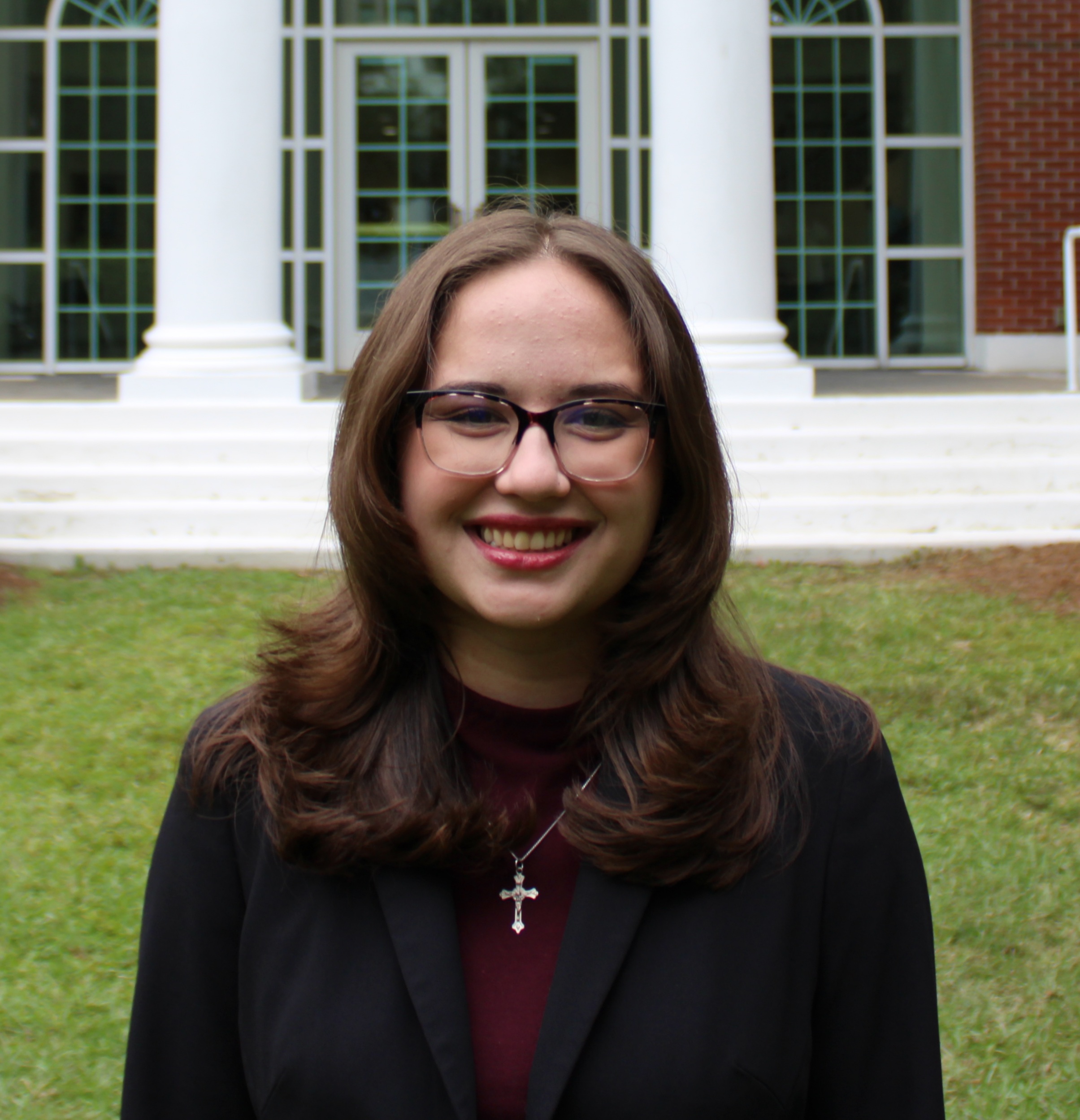
Marianne Ruschman is a second-year Presidential Scholar and Honors Legal Scholar from Niceville, Florida. She is currently pursuing a Bachelor of Science in public health and a Bachelor of Science in criminology. After graduating, Marianne hopes to obtain a Master of Public Health (MPH) and go to law school. Marianne's eventual goal is to use her education to pursue a career in health policy research or health law.
This is Marianne's second year conducting research under Dr. Mason Marks. Last year, under Dr. Marks' guidance, she conducted research on the legal challenges of providing ibogaine-based psychedelic treatments to U.S. Military veterans. This research was presented at last year's Undergraduate Research Symposium and the 15th annual Florida Undergraduate Research Conference (FURC) at the University of South Florida.
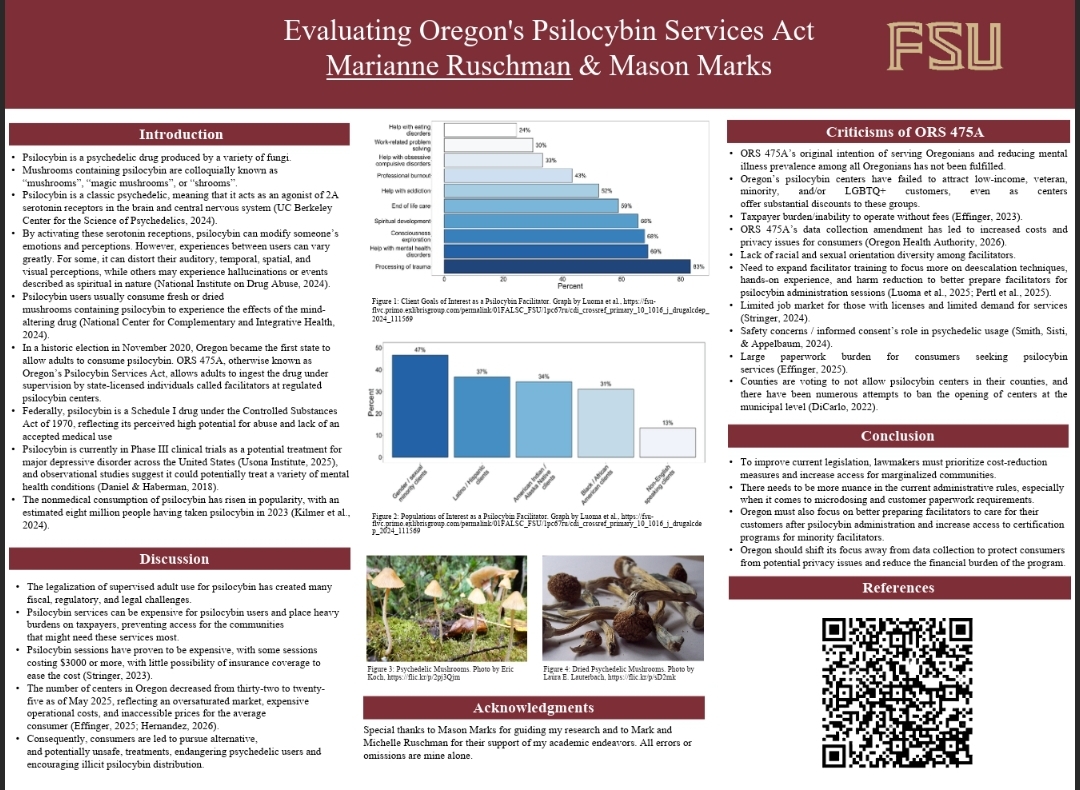
Evaluating Oregon's Psilocybin Services Act
Authors: Marianne Ruschman, Mason Marks, MD, JDStudent Major: Criminology, Public Health
Mentor: Mason Marks, MD, JD
Mentor's Department: College of Law Mentor's College: College of Law Co-Presenters:
Abstract
In a historic vote in November 2020, Oregon became the first state to allow adults to consume psilocybin, a psychedelic drug produced by a variety of fungi. Oregon’s Psilocybin Services Act allows adults to ingest the drug under supervision by state-licensed individuals. Psilocybin is a Schedule I drug under the federal Controlled Substances Act, reflecting its perceived high potential for abuse and lack of an accepted medical use. However, psilocybin is currently in Phase 3 clinical trials treating major depressive disorder across the United States. Observational studies suggest it could potentially treat a variety of mental health conditions.
This project analyzes Oregon’s legal framework and proposes potential improvements. Bettering Oregon’s Psilocybin Services Act would create safer experiences for consumers, reduce illicit psilocybin distribution, and decrease psilocybin treatment costs. In its current state, ORS 475A has created numerous fiscal, regulatory, and legal challenges for facilitators, consumers, and Oregon taxpayers. Financially, Oregon has been unable to operate these centers without using public funding, drawing $3.1 million from Oregon’s general fund from 2023 to 2025. Consumers must also pay $1000 to $3500, or more, to receive psilocybin treatment, making the services inaccessible to many. Additionally, facilitators find that regulations adopted by Oregon’s Health Authority make administering psilocybin difficult. This causes facilitators and consumers to pursue potentially unsafe alternative sources. As more states legalize the supervised consumption of psilocybin, it is important to identify the shortcomings of existing legislation so that future laws can better protect and serve the public.
Keywords: psychedelic, psilocybin, law, Oregon