
Research Symposium
26th annual Undergraduate Research Symposium, April 1, 2026
David Pensante Poster Session 4: 3:00 pm - 4:00 pm / Poster #124
BIO
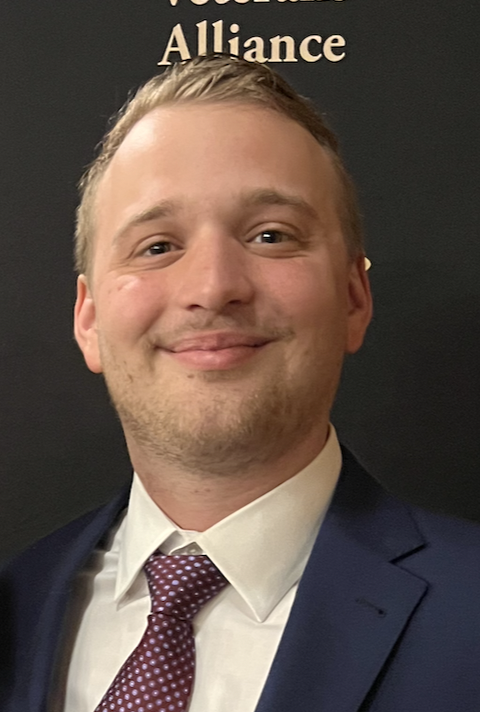
David is a Cell and Molecular Neuroscience student and student veteran at Florida State University with a strong interest in neural circuitry, behavior, and metabolic regulation. He currently works in Dr. Rinaman’s lab, where he studies GLP-1 producing neurons in the caudal nucleus of the solitary tract and their projections throughout the brain using viral tracing techniques. This research has helped him develop skills in stereotaxic surgery, immunohistochemistry, and neuroanatomical analysis.
Outside of the lab, David works as a surgical technologist, where he assists in operative procedures and gain hands-on clinical experience in a fast-paced environment. His long-term goal is to pursue an advanced career in medicine or anesthesia, where he can integrate neuroscience research with clinical practice. David is particularly interested in understanding how neural circuits influence stress, feeding behavior, and overall physiological regulation.
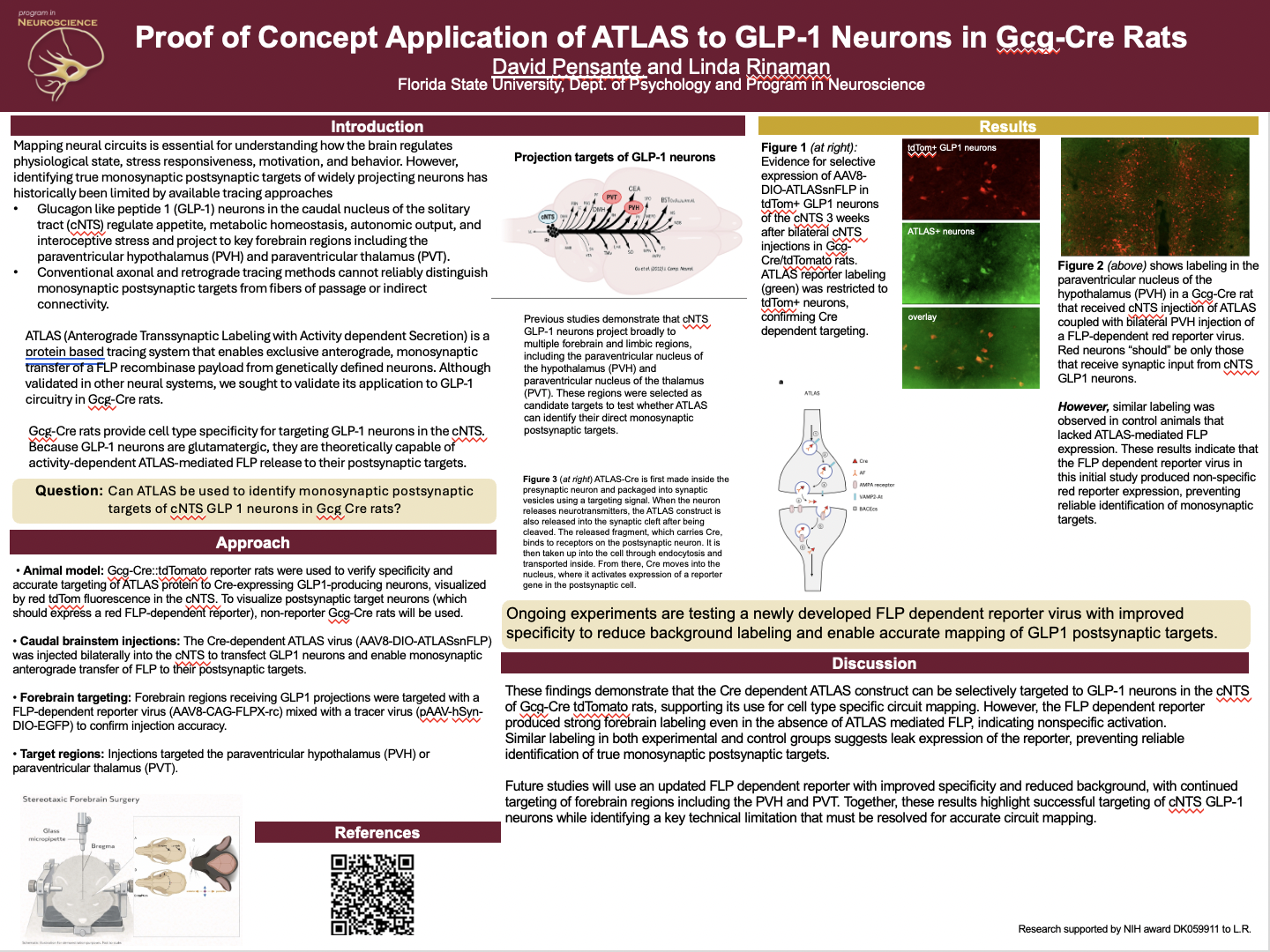
Proof of Concept Application of ATLAS to GLP-1 Neurons in Gcg-Cre Rats
Authors: David Pensante, Linda RinamanStudent Major: Cell and molecular Neuroscience
Mentor: Linda Rinaman
Mentor's Department: Dept. of Psychology and Program in Neuroscience Mentor's College: College of Arts and sciences Co-Presenters:
Abstract
Glucagon like peptide-1 (GLP1)-producing neurons in the caudal nucleus of the solitary tract (cNTS) regulate feeding, autonomic function, stress responsiveness, and metabolic homeostasis through widespread axonal projections across the brain. However, traditional anterograde tracing approaches are unable to identify the synaptic targets of these projections. The recently developed ATLAS system enables monosynaptic anterograde transfer of a recombinase FLP payload, allowing targeted transfection of postsynaptic neurons using FLP-dependent reporter viruses. The present study used a Cre-driver rat line (Gcg-Cre/tdTomato) to evaluate the feasibility and specificity of ATLAS to identify the postsynaptic targets of GLP1 axon terminals. Rats received bilateral injections of Cre-dependent ATLAS virus (AAV8-DIO-ATLASsnFLP) into the cNTS, and also received injections of a FLP-dependent reporter virus (AAV8-CAG-FLPX-rc) into the paraventricular nuclei of the hypothalamus and thalamus. Immunohistochemical analysis confirmed highly specific and restricted expression of the ATLAS protein in cNTS GLP1 neurons. In contrast, the FLP-dependent reporter virus produced robust non-specific labeling in control cases that received no ATLAS virus injection. In this ongoing study, a new FLP-dependent virus (AAV1-Ef1a-fDIO-ChrimsonR-tdTomato) will be injected into forebrain targets. Findings thus far demonstrate that AAV8-DIO-ATLASsnFLP can be selectively expressed in GLP 1 neurons, and establish the foundation necessary for accurate monosynaptic mapping of GLP 1 efferent circuitry.
Keywords: ATLAS gap-1 Pensante