
Research Symposium
26th annual Undergraduate Research Symposium, April 1, 2026
Lillian Van Sleen Poster Session 3: 1:45 pm - 2:45 pm / Poster #167
BIO
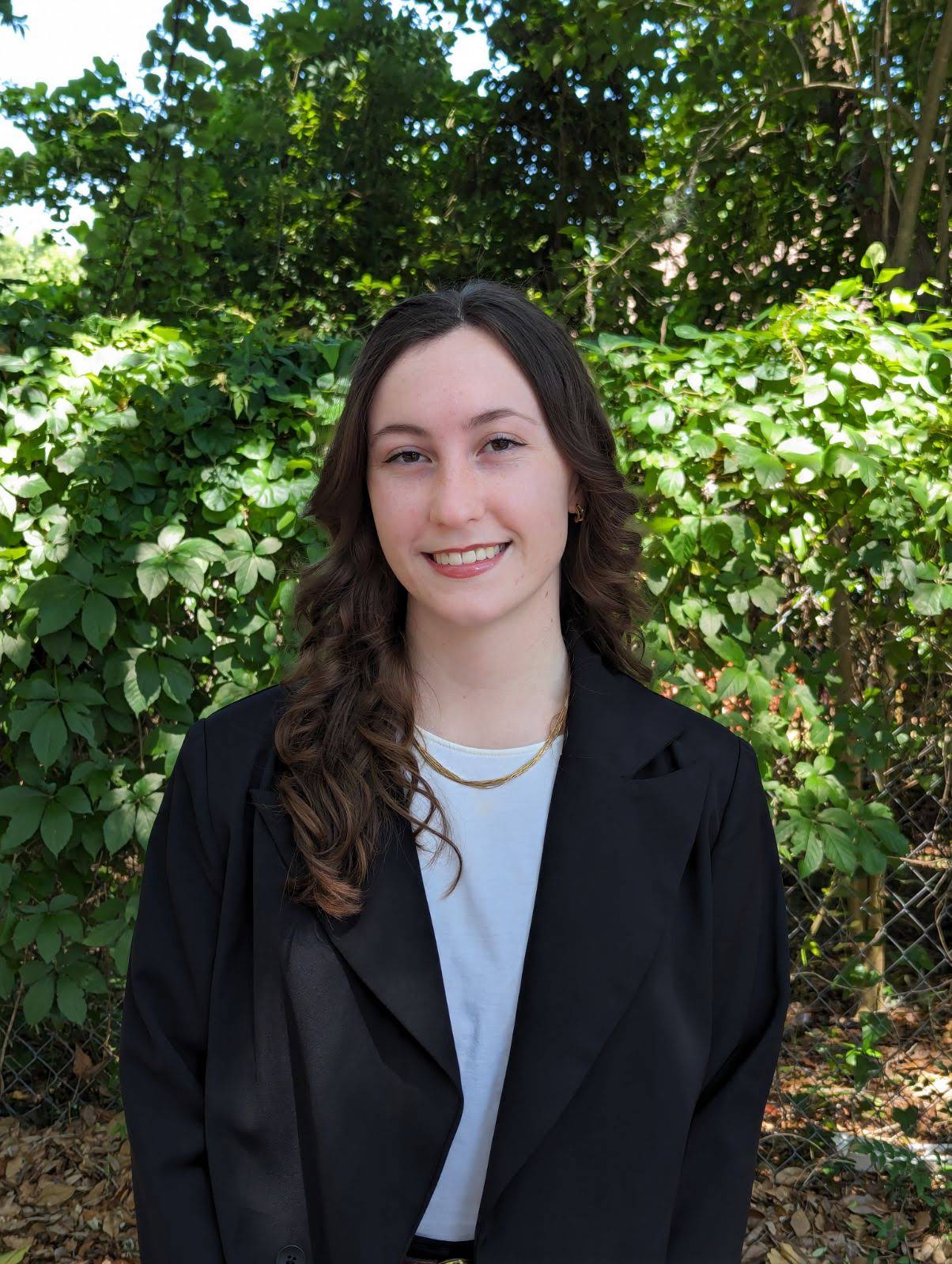
Originally from Pensacola, FL, Lily will be graduating this semester with her Bachelor of Science in psychology and criminology. Since moving away from the beach, where she was raised teaching sailing for a living alongside her family, she's been in Tallahassee for 4 years living happily with her boyfriend and their dog, Kaiser. Her goal is to pursue a Ph.D. in Clinical Psychology with a focus on translational research regarding locus of control and its role as a protective/risk factor for treatment responsivity, suicidality, and antisocial behavior. Over the past two years, she has developed a strong passion for research through working with the Math Thinking and Learning lab and getting to see their longitudinal study through to a close. She has also recently started working with Dr. Dougherty as a volunteer for his lab, assisting in the development of a novel psychological framework and corresponding therapeutic strategies.
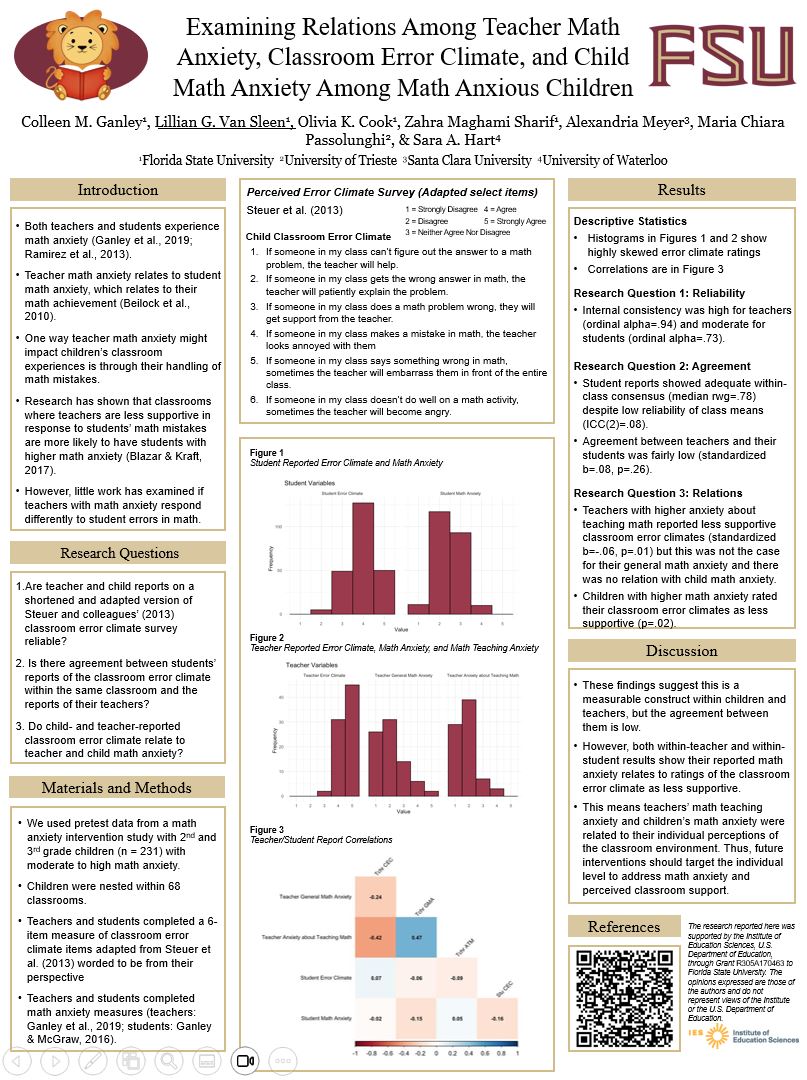
Examining Relations Among Teacher Math Anxiety, Classroom Error Climate, and Child Math Anxiety Among Math Anxious Children
Authors: Lillian Van Sleen, Dr. Colleen GanleyStudent Major: Psychology/Criminology
Mentor: Dr. Colleen Ganley
Mentor's Department: Department of Psychology Mentor's College: College of Arts and Sciences Co-Presenters:
Abstract
Both teachers and students experience math anxiety, and some research shows that teacher math anxiety relates to student math anxiety and achievement. In addition, research has shown that classrooms where teachers are less supportive in response to students’ math mistakes have students with higher math anxiety. We aim to test if there is agreement between students’ reports of the classroom error climate within the same classroom and the reports of their teachers; as well as if child- and teacher-reported classroom error climate relate to teacher and child math anxiety. We used pretest data from a math anxiety intervention study with 231 second- and third-grade children with moderate to high math anxiety and their 68 teachers. Teachers and students completed math anxiety measures and a measure of the classroom error climate with 6 items adapted from Steuer et al. (2013). Student reports showed adequate within-class consensus despite low reliability of class means. The agreement between child and teacher reports of the classroom error climate was low. Results show that among teachers, if they have higher anxiety about teaching math they report less supportive classroom error climates. Among children, if they have higher math anxiety they also report less supportive classroom error climates. However, teachers’ math anxiety did not relate to child ratings of classroom support and child’s math anxiety did not relate to teacher ratings of the classroom error climate. Thus, teachers’ math teaching anxiety and children’s math anxiety have specific relations only to their individual perceptions of the classroom environment.
Keywords: Math Anxiety, Classroom Error Climate, Student, Teacher