
Research Symposium
26th annual Undergraduate Research Symposium, April 1, 2026
Brett Jung Poster Session 4: 3:00 pm - 4:00 pm / Poster #198

BIO
Brett Jung is an undergraduate student entering my senior year at Florida State University. Some interests of Brett's include golfing, watching sports, and working out. Brett is a Biochemistry major that does research in the Lazenby lab. Brett's research focuses on utilizing electrochemistry to fabricate E-AB sensors that are capable of targeting analyte selectively. After college, Brett plans on going to medical school, to pursue the dream of becoming a surgeon.
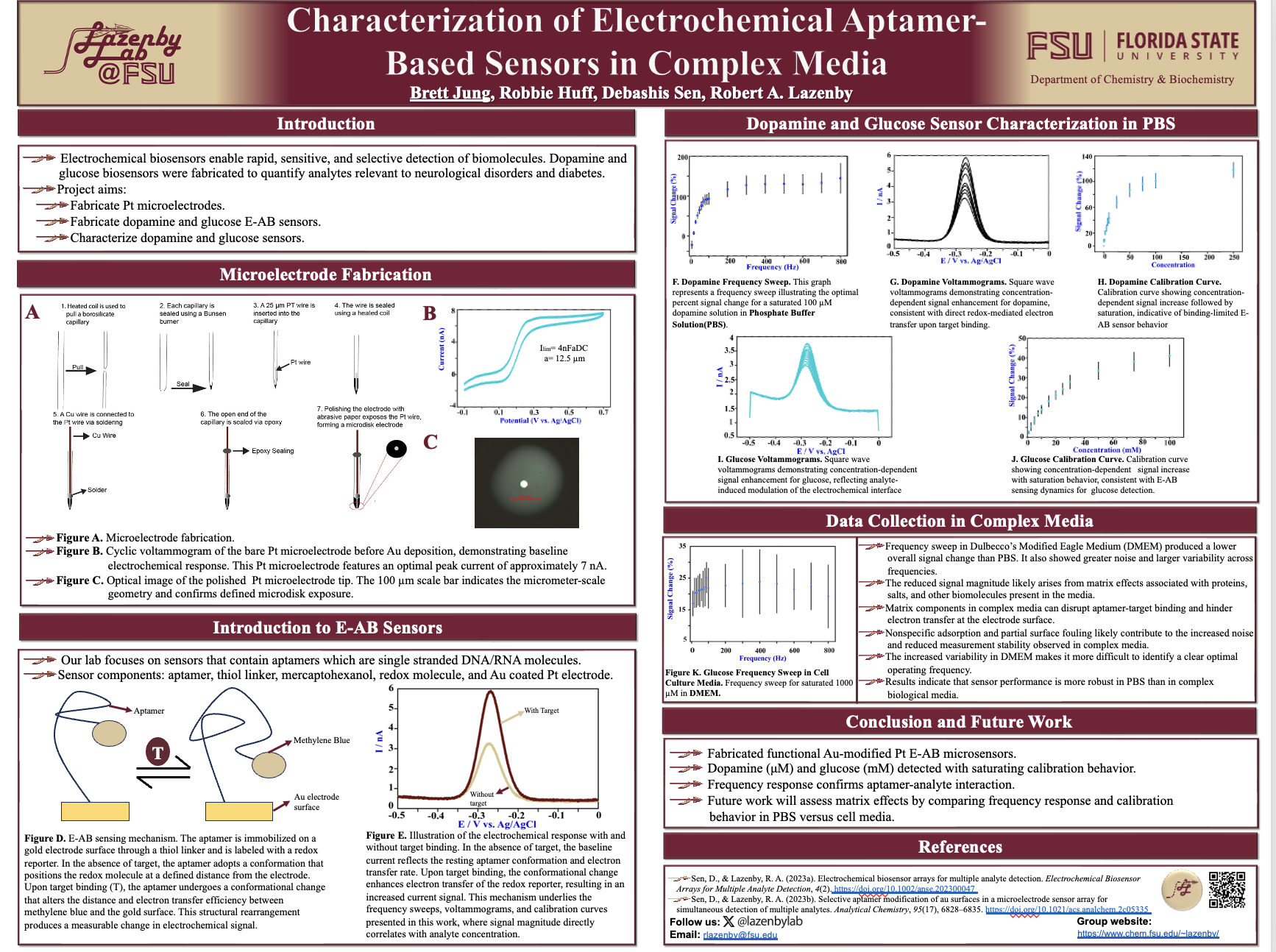
Characterization of Electrochemical Aptamer-Based Sensors in Complex Media
Authors: Brett Jung , Robert LazenbyStudent Major: Biochemistry
Mentor: Robert Lazenby
Mentor's Department: Chemistry and Biochemistry Mentor's College: College of Arts and Sciences Co-Presenters:
Abstract
Electrochemical biosensors offer high sensitivity, selectivity, and rapid response times, making them important tools for real time monitoring of biomolecules and pathogens. Given this capability, we fabricated dopamine and glucose biosensors where abnormal concentrations of these analytes in humans are associated with major diseases like neurodegenerative disorders and diabetes, respectively. To enable reliable detection of these clinically relevant biomarkers, we fabricated electrochemical aptamer-based (E-AB) sensors that incorporate three elements: thiolated single stranded DNA aptamers (the biorecognition element), a gold modified microelectrode (the signal transducer), and methylene blue as the redox reporter attached to the aptamer. Microelectrodes were electrochemically characterized prior to gold electrodeposition and aptamer surface immobilization, and sensor performance was evaluated using calibration curves and frequency-dependent voltametric measurements. Results for the two sensors in phosphate buffered saline solution and cell culture media showed differing sensing figures of merit. During calibration, both dopamine and glucose E-AB sensors displayed signal increases proportional to analyte concentration, which reached a plateau at high concentration, consistent with binding-site saturation. Multiple sensors in the same solution were also used for multi-analyte detection. Our findings demonstrate that E-AB sensors on the microscale can be reliably fabricated and modified to detect specific target analytes with high signal response and selectivity. The observed frequency and calibration trends provide insight into aptamer-analyte interactions and can be built upon via future optimization strategies, which could expand their role in biomedical science and in food monitoring.
Keywords: electrochemistry, aptamer, characterization, complex, media