
Research Symposium
26th annual Undergraduate Research Symposium, April 1, 2026
Zachary Zimmerman Poster Session 1: 9:30 am - 10:30 am / Poster #253
BIO
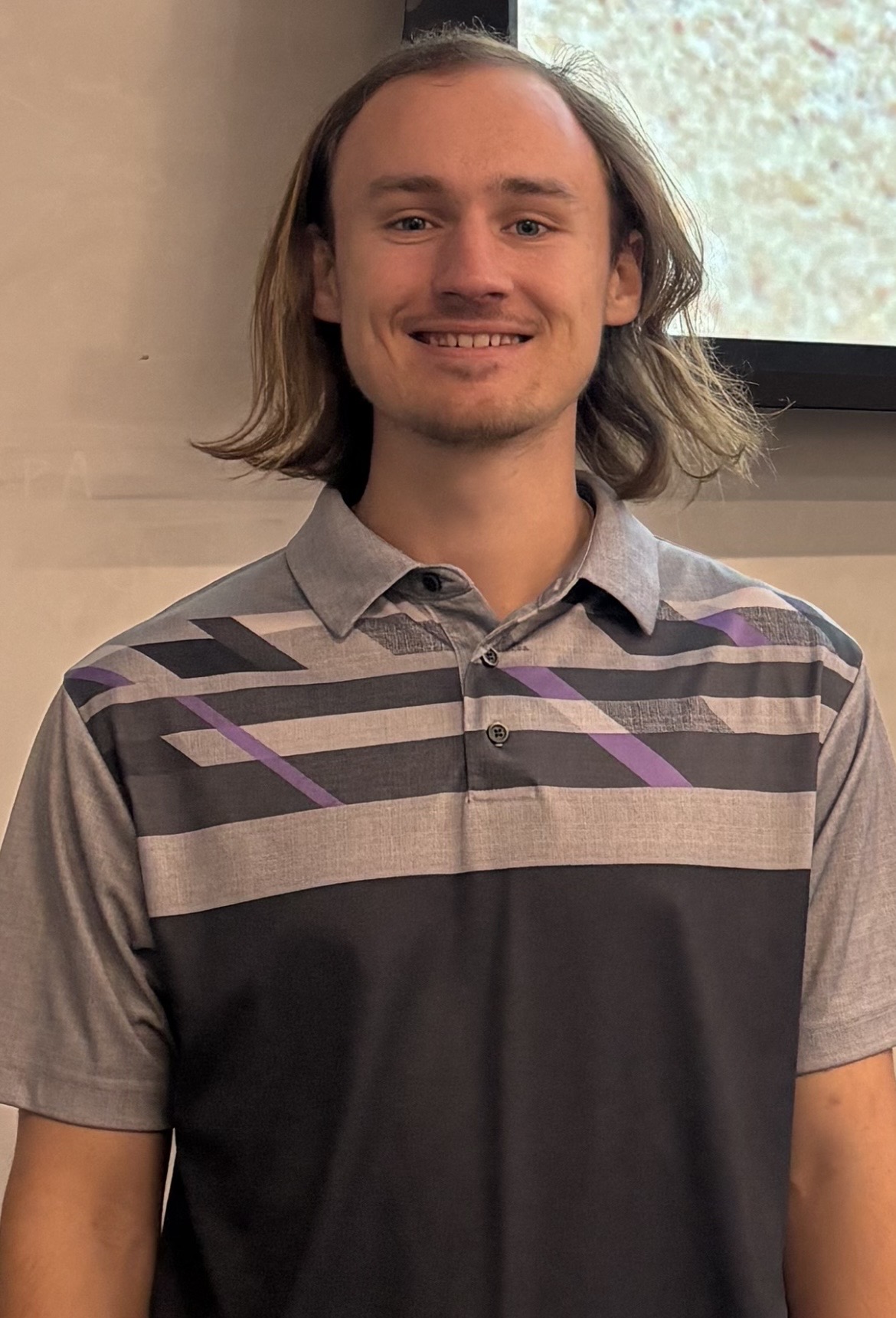
Zach Zimmerman is a senior Environmental Science major at FSU, with minors in Chemistry and Biology. During his first two years, he conducted research with Dr. Jeroen Ingels at the Coastal and Marine Laboratory, working with benthic meiofauna in different environments. He also worked at the National High Magnetic Field Laboratory, doing research with rare earth elements and critical minerals. He began his Honors in the Major project with Dr. Markus Huettel, where his research with meiofauna continued, this time observing the impacts of sargassum leachates on meiofauna behavior. He is planning to attend graduate school starting in the Fall of 2026.
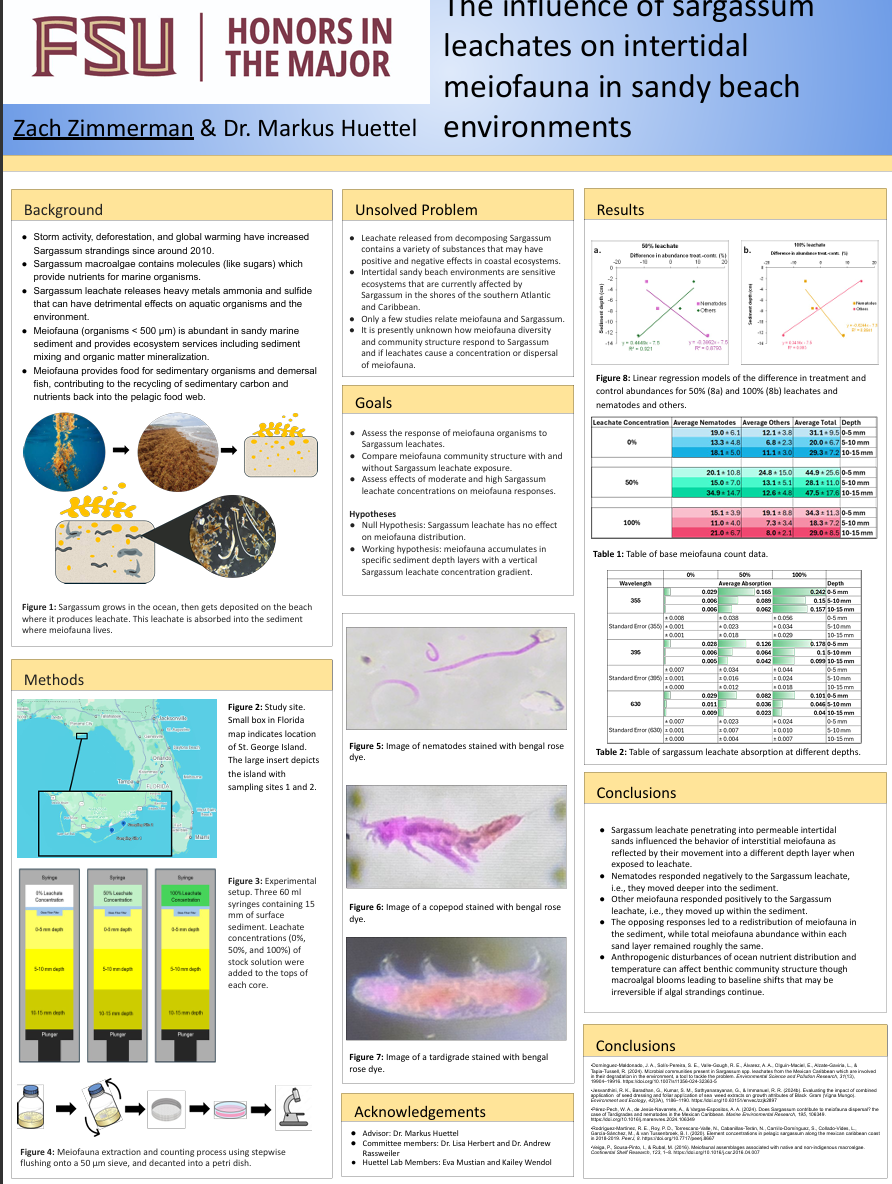
The influence of sargassum leachates on intertidal meiofauna in sandy beach environments
Authors: Zachary Zimmerman, Markus HuettelStudent Major: Environmental Science
Mentor: Markus Huettel
Mentor's Department: Earth, Ocean, and Atmospheric Sciences Mentor's College: Arts and Sciences Co-Presenters:
Abstract
Meiofauna in intertidal sands are robust animals capable of handling extreme conditions, and the macroalgae sargassum is creating a potential additional stressor along Florida and Caribbean beaches. Sargassum is washed onto the shore/intertidal zone where it begins to decompose, producing leachates that seep into the sediment. It is unknown what effects sargassum leachates have on meiofaunal behavior when they are exposed to it in the sediment. This study addresses the response of intertidal meiofauna to sargassum leachate exposure. Sediment cores were taken from the intertidal zone of St. George Island, Florida, and brought to the lab, where sargassum leachate was added to the top of the cores. This allowed the meiofauna in the sediment to respond as the leachate penetrated into the core. Leachate concentrations of 0%, 50%, and 100% (relative to stock solution, 125 g of sargassum leached in 150 ml of seawater for 48 hours) were tested. After 24 hours of exposure to leachate, cores were sliced into 0-5 mm, 5-10 mm, and 10-15 mm depth intervals, and the meiofauna was extracted from each slice and counted. The results indicate a significant trend of nematodes moving away from sargassum leachates and other meiofauna moving towards sargassum leachates. The findings reveal that sargassum leachates have a significant influence on the behavior of meiofauna groups, which affects their roles as sediment bioturbators and aerators, and thereby their function as mediators of benthic organic matter degradation.
Keywords: Meiofauna, Sargassum, Leachate, Nematodes, Intertidal