
Research Symposium
26th annual Undergraduate Research Symposium, April 1, 2026
Mary Ava Raker Poster Session 4: 3:00 pm - 4:00 pm / Poster #122

BIO
Mary Ava Raker is a sophomore at Florida State University gaining a Bachelor's of Science in Behavioral Neuroscience with a minor in Chemistry. Her passion is understanding various impacts of physical and mental differences on human health. Mary's goal is to pursue a career in medicine, where she can integrate her knowledge to provide improved holistic patient care. Currently she is working as a Clinical Medical Assistant at a dermatology clinic and is aiding in research of the impacts GLP-1R agonists have on neural activation through work under Dr. Linda Rinaman. She desires to continue learning and collaborating in ways that combine her interests in psychology and medicine, ultimately hoping to contribute to the well-being of others.
Impacts of GLP-1, GLP-2, Glucagon, Oxytomodulin, and Glicentin on Food Intake
Authors: Mary Ava Raker, Linda RinamanStudent Major: Behavioral Neuroscience
Mentor: Linda Rinaman
Mentor's Department: Psychology Mentor's College: Florida State University Co-Presenters:
Abstract
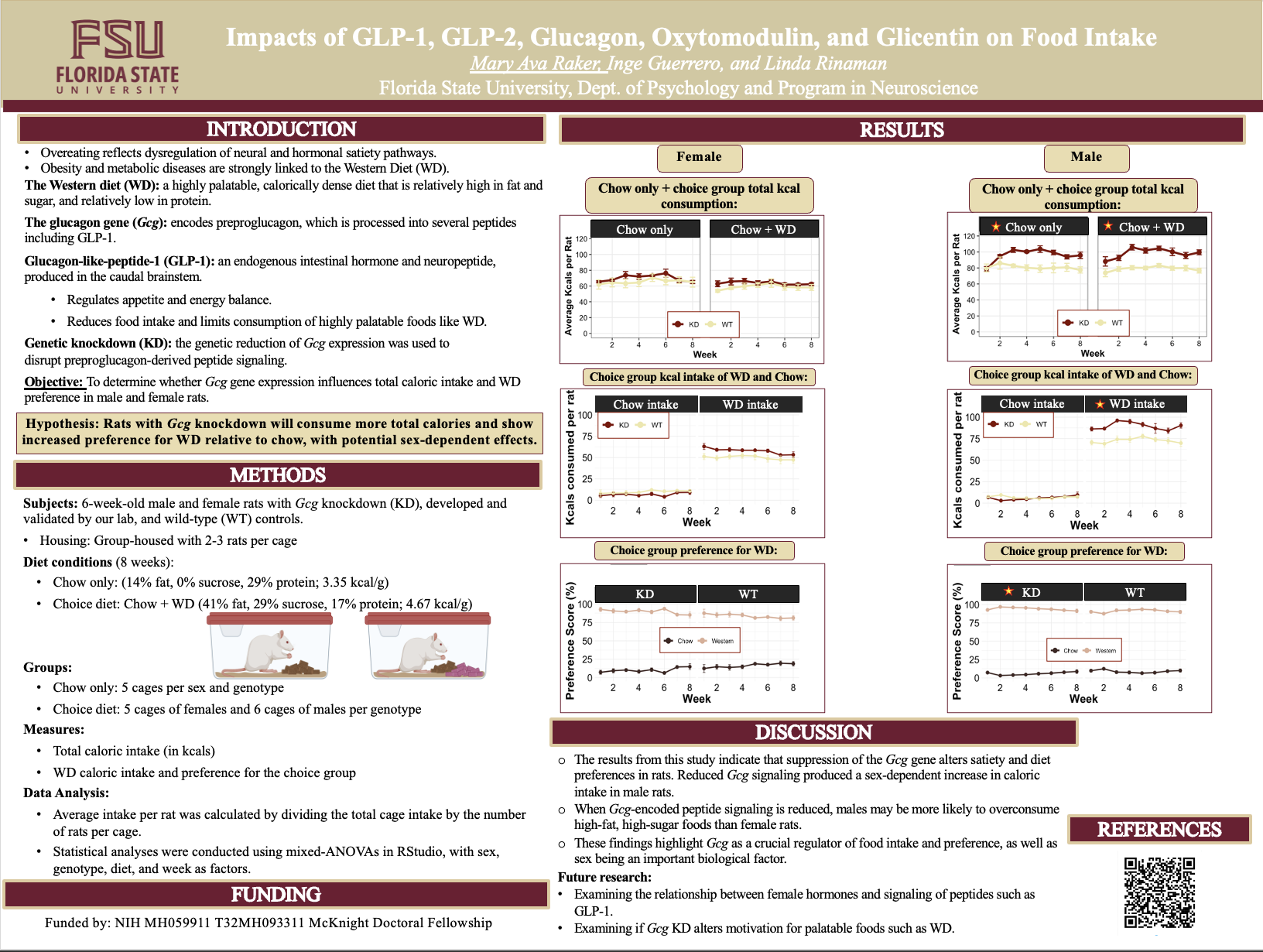
The Western diet (WD), a calorically dense, high-fat diet, contributes to obesity and metabolic disease. The glucagon gene (Gcg) encodes preproglucagon, that’s cleaved into glucagon-like peptide-1 (GLP-1) and other peptides regulating appetite and energy balance. However, their role in dietary choice and sex differences remains unclear. We used genetic knockdown (KD) of Gcg to disrupt preproglucagon-derived peptide signaling and assess its effects on caloric intake in rats. 6-week-old KD and wild-type (WT) rats were group-housed (2–3/cage) and were given either chow alone (14% fat, 0% sucrose, 29% protein; 3.35 kcal/g) or both chow and WD (41% fat, 29% sucrose, 17% protein; 4.67 kcal/g) for 8 weeks. Five cages of females and six cages of males per genotype received choice diet, while an additional five cages per sex and genotype received chow only. Average intake per rat was calculated by dividing total cage intake by number of rats. Intake data were analyzed within the choice group (chow+WD) and between groups (chow only vs. chow+WD). In the choice group, male KD rats consumed significantly more WD-derived kcals than WT males (p < 0.01) with greater WD preference during week 2. However, females showed no genotype-dependent effects on intake. Within data from both diet groups, male KD rats consumed significantly more calories than male WT rats (p < 0.01) regardless of diet condition (p = 0.187). Genotype had no significant effect on caloric intake in females. These findings demonstrate a sex-dependent effect of Gcg KD to increase caloric intake in male rats.
Keywords: GLP-1, Food, Behavior