
Research Symposium
26th annual Undergraduate Research Symposium, April 1, 2026
Silvia Rodriguez Poster Session 2: 10:45 am - 11:45 am / Poster #142
BIO
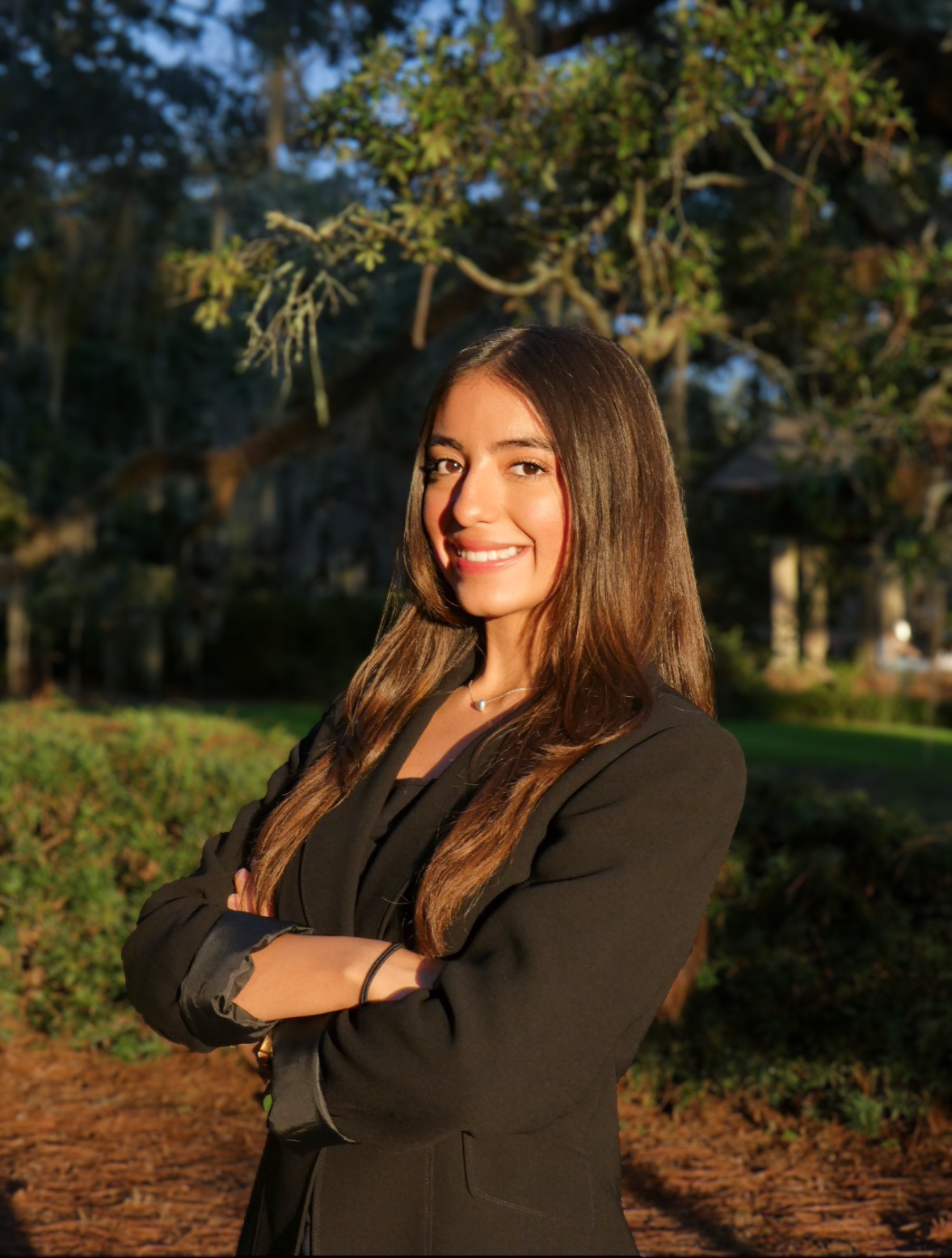
Silvia Rodriguez is an FSU Presidential Scholar, researcher, and TEDx speaker specializing in the intersection of policy and innovation. She is currently a Public Policy Intern at the DeVoe L. Moore Center and a Voter Registration Fellow with the Florida Democratic Party. Silvia’s academic work, ranging from research on law school accommodations to human rights and technology, has earned her a speaking engagement at the Oxford University Consortium on Human Rights this summer. She is currently completing her undergraduate studies in Philosophy and Economics.
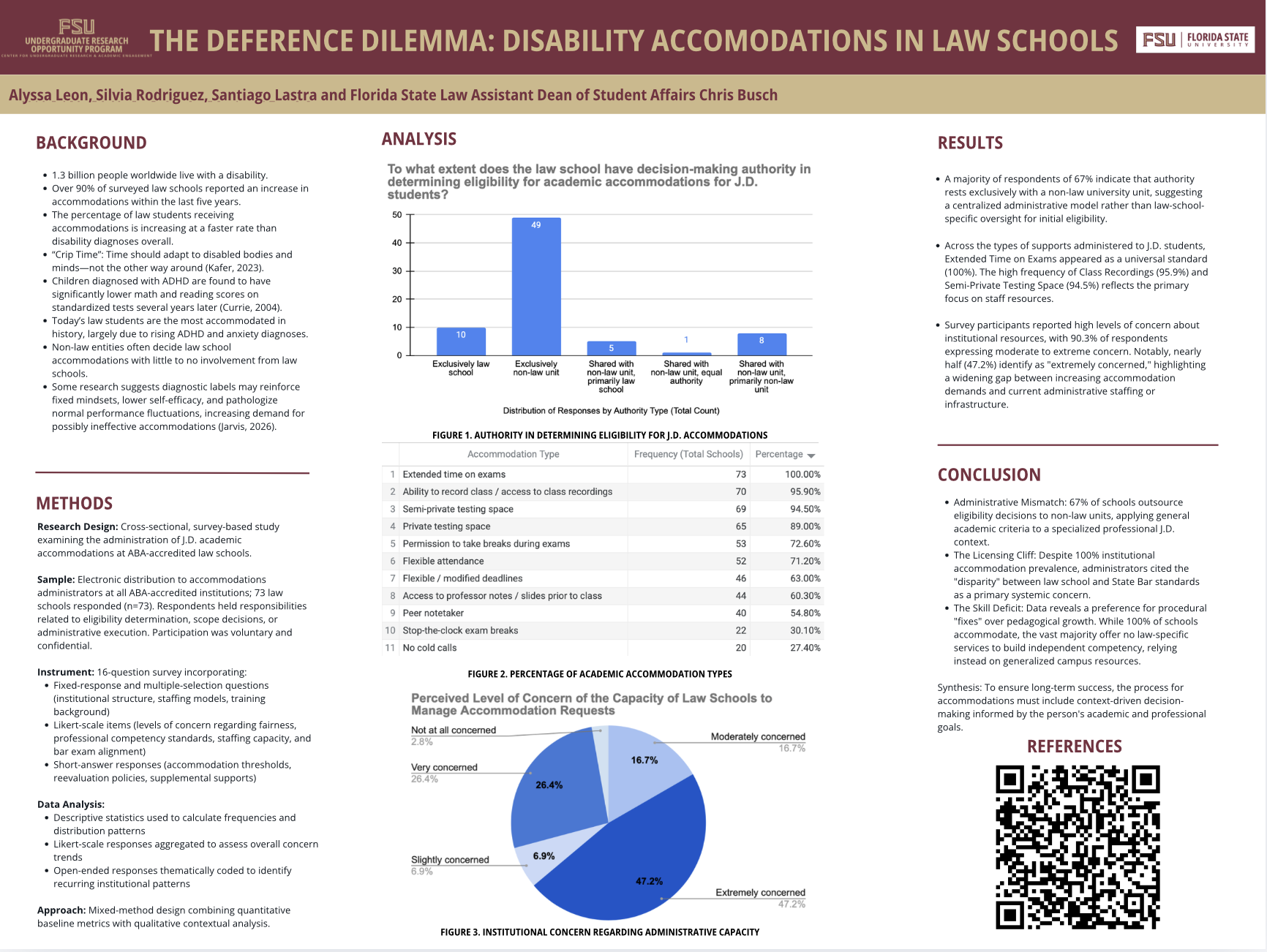
The Deference Dilemma: Disability Accomodations in Law Schools
Authors: Silvia Rodriguez, Assistant Dean of Student Affairs Chris BuschStudent Major: Economics
Mentor: Assistant Dean of Student Affairs Chris Busch
Mentor's Department: Student Affairs Mentor's College: FSU College of Law Co-Presenters: Alyssa Leon, Santiago Lastra
Abstract
This project investigates the administrative and pedagogical structures of academic accommodations within American legal education, specifically examining the alignment between centralized university models and the professional demands of the legal industry. Employing an empirical methodology, the research utilizes a 16-question survey distributed to accommodations administrators at all ABA-accredited law schools to evaluate institutional decision-making authority, the prevalence of professional skill-building interventions, and administrator concern levels regarding current accommodation frameworks. Preliminary data from 73 institutions indicates a significant trend toward administrative centralization; almost half of surveyed law schools defer both eligibility and scope determinations to non-law university units. The survey results further document institutional concern regarding a potential “licensing cliff,” identified through the perceived disparity between classroom accommodations and the rigid standards of state bar examinations. Furthermore, the data evidences a notable absence of integrated executive functioning or resilience training across the sampled schools. Ultimately, this survey identifies systemic trends in the administration of academic accommodations at law schools, providing a quantitative baseline for analyzing the relationship between institutional structure and the perceived professional readiness of accommodated law students.
Keywords: Law, Accommodations, Legal Studies, Policy