
Research Symposium
26th annual Undergraduate Research Symposium, April 1, 2026
Mia Parker Poster Session 2: 10:45 am - 11:45 am / Poster #92

BIO
Mia Parker is a junior pursuing a Bachelor of Science in Cell and Molecular Neuroscience, with plans to graduate in Spring 2027. She is on the pre-med track and is interested in diet affects neurocognitive health. Mia has been involved in research throughout college. She completed a year in the University Research Opportunity Program (UROP), where she gained experience with experimental design. She has also been working in Dr. Sheffler’s lab for the past year, where she has continued building her research and data analysis skills while working closely with a faculty mentor. Through her coursework, research, and clinical experience, she has developed a strong interest in neuroscience and medicine. After graduation, she plans to attend medical school and hopes to incorporate research into her future career.
Effect of diet and sleep quality on internalizing symptoms
Authors: Mia Parker, Julia ShefflerStudent Major: Cell & Molecular Neuroscience
Mentor: Julia Sheffler
Mentor's Department: Center for Translational Behavioral Science Mentor's College: College of Medicine Co-Presenters: Hailey Mui
Abstract
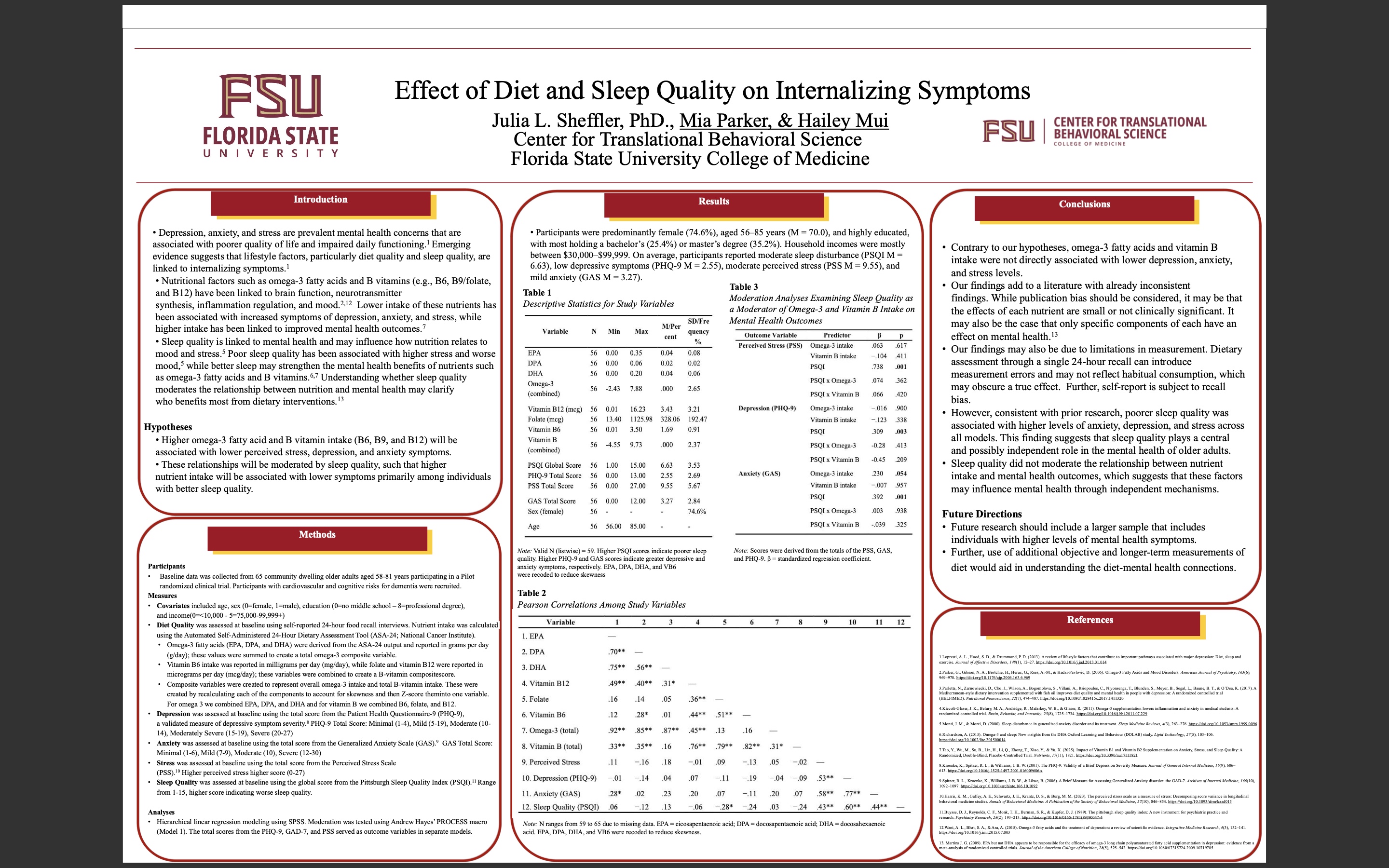
Background: Depression, anxiety, and stress are common mental health challenges in older adults and are influenced by lifestyle factors such as diet and sleep quality. Specifically, higher dietary omega-3 fatty acids and B vitamins have been linked to fewer mental health symptoms, while poor sleep quality is associated with poorer mental health. This study expands on prior work by examining the direct and interactive effects of dietary components and sleep on mental health symptoms .
Methods: Baseline data was collected from 65 adults aged 58-81 years; B vitamin and omega-3 intake were collected through a 24-hour food recall interviews. Depression, anxiety, stress, and sleep quality were measured using the validated self-report measures (i.e., PHQ-9, Generalized Anxiety Scale, Perceived Stress Scale, Pittsburg Sleep Quality Index). Using SPSS, linear regression models examined direct and interactive effects.
Results: Omega-3 and B vitamin intake were not associated with the proposed mental health symptoms; however, poorer sleep quality was independently and significantly associated with depression (β=.309, p=.003), anxiety (β=.392, p=.001), and stress (β= .738, p=.001). Sleep quality did not significantly moderate the relationship between either dietary factor and the proposed mental health symptoms (p’s>.05).
Conclusions: Our findings highlight that sleep quality is closely linked to mental health symptoms. The relationship between diet and mental health symptoms was not evident in our sample, which may suggest a weaker overall relationship or point to limitations in our study design. Further research is needed to explore these relationships longitudinally using larger samples and more comprehensive assessments of diet.
Keywords: diet, sleep quality, internalizing symptoms, vitamin B, omega-3, depression, anxiety, stress