
Research Symposium
26th annual Undergraduate Research Symposium, April 1, 2026
Antonio Kraus Poster Session 4: 3:00 pm - 4:00 pm / Poster #116
BIO
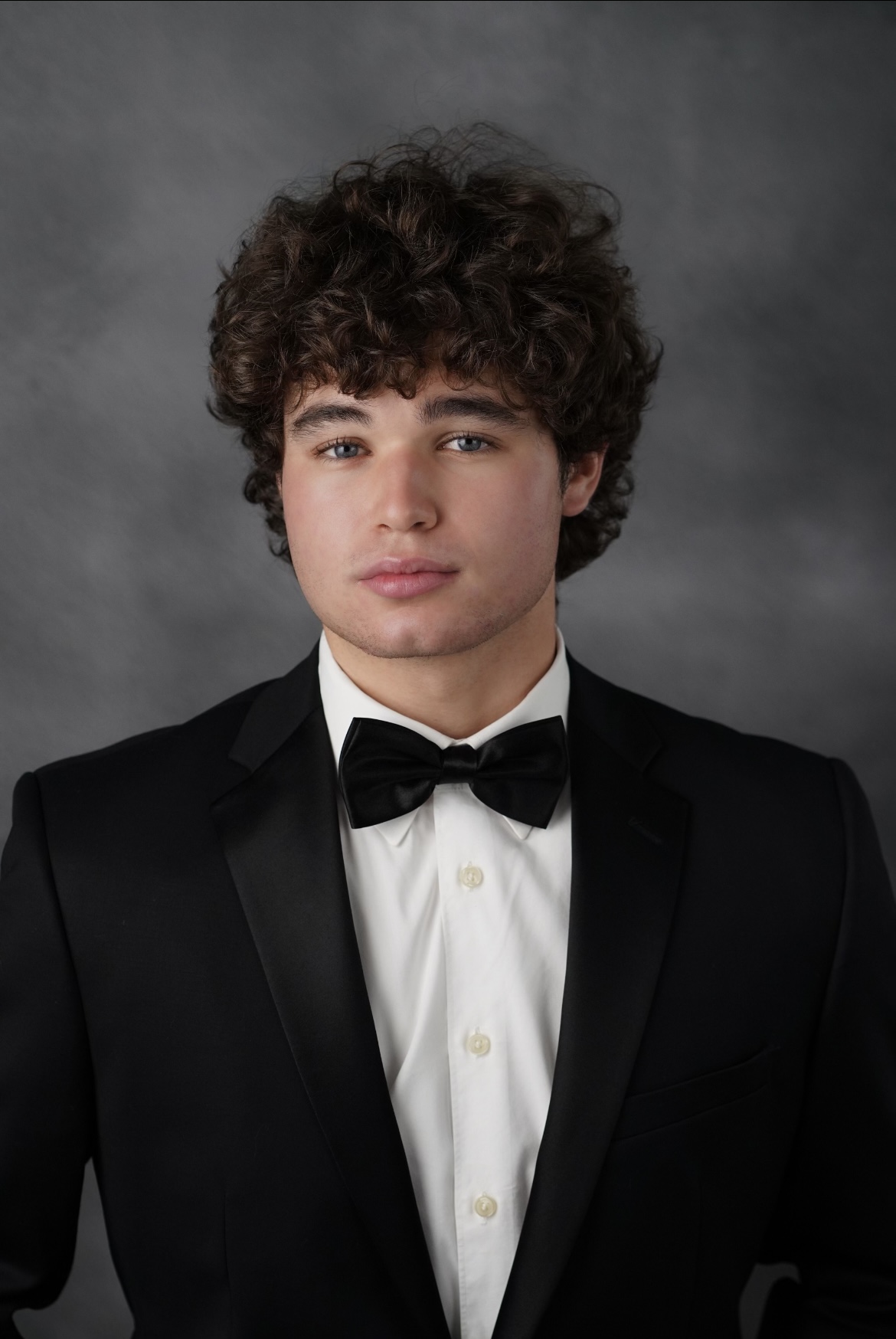
Anthony Kraus is a sophomore at Florida State University pursuing a Bachelor of Science in Public Health on the pre-Physician Assistant track. Originally from South Florida, his academic interests include dermatology, preventative health, and the intersection between digital media and public health.
Anthony is a researcher in Florida State University’s Undergraduate Research Opportunity Program (UROP) under the mentorship of Dr. Vanessa Dennen. His research examines how social media algorithms influence the content young users are exposed to and how this exposure may shape behaviors, perceptions, and overall well-being. Through this work, he is interested in understanding how digital environments impact health communication and public health outcomes.
Outside of research, Anthony is actively involved in campus life. He plays club hockey at Florida State University, participates in intramural sports, and is a member of the Pre-Physician Assistant Club. He is also involved in Phi Delta Theta fraternity, where he participates in philanthropic and community initiatives. Additionally, he works as a lifeguard, reflecting his commitment to safety and community service.
Anthony has been recognized on the Dean’s List for academic achievement. After completing his undergraduate degree, he plans to attend Physician Assistant school and pursue a career in dermatology.
Online Information Ecosystems: Teens, Social Media, Algorithms
Authors: Antonio Kraus, Dr. Vanessa DennenStudent Major: Public Health
Mentor: Dr. Vanessa Dennen
Mentor's Department: Department of Educational Psychology & Learning Systems Mentor's College: Anne Spencer Daves College of Education Co-Presenters: Valeria Bohorquez, Maria Sanchez
Abstract
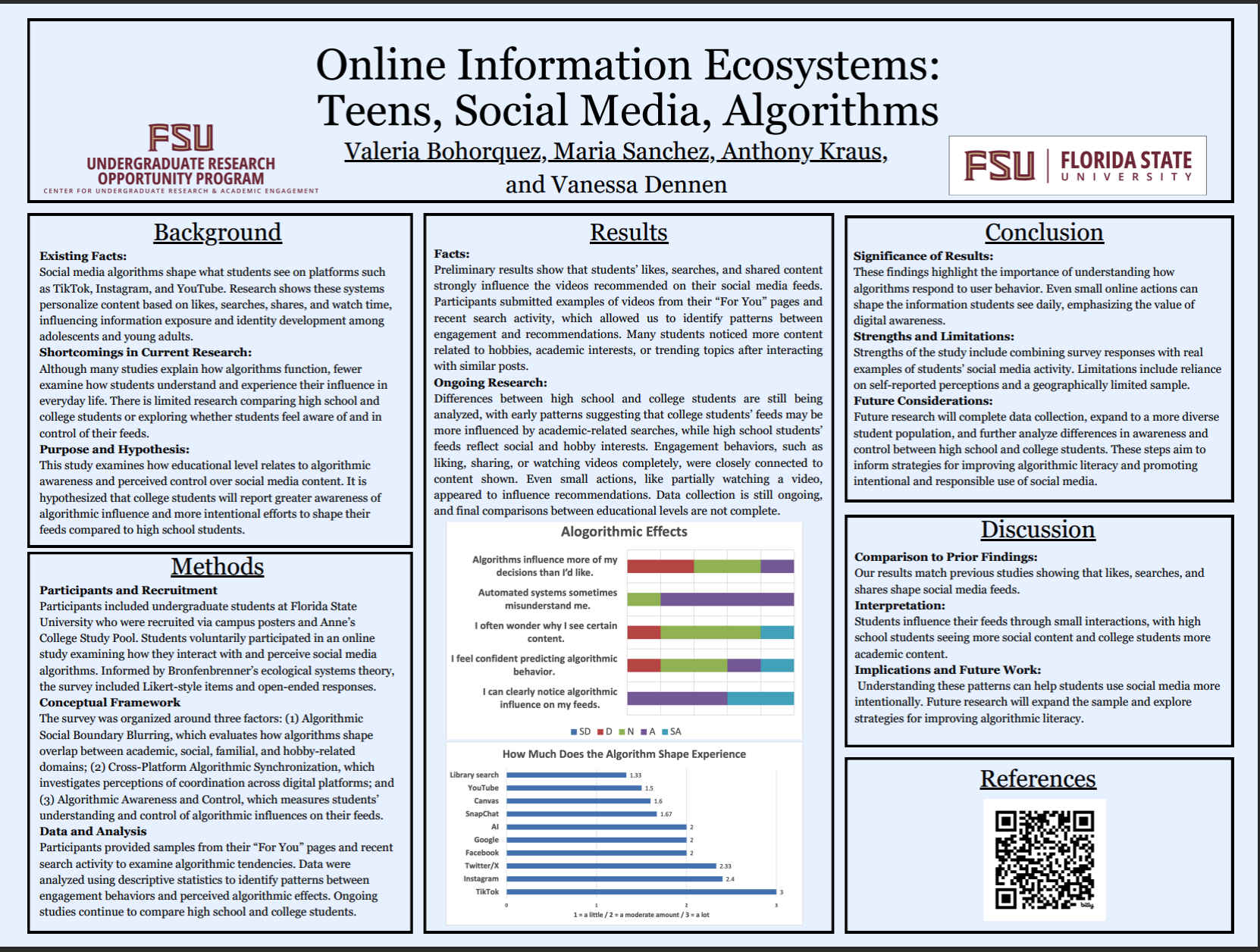
Social media algorithms shape the content users encounter on platforms such as TikTok, Instagram, and YouTube, influencing how information is distributed and consumed. Adolescents and young adults spend significant time on these platforms, making it important to understand how algorithmic systems affect the information they see and how aware users are of this influence. This study examines how educational level relates to students’ awareness of algorithmic influence and their perceived control over social media feeds.
Participants included undergraduate students at Florida State University who were recruited through campus postings and the College Study Pool. The study used a survey informed by Bronfenbrenner’s ecological systems theory that included Likert-scale questions and open-ended responses. Participants also provided examples from their social media “For You” pages and recent search activity. Data were analyzed using descriptive statistics to identify patterns between user engagement behaviors—such as liking, sharing, searching, and watch time—and the content recommended by algorithms.
Preliminary findings suggest that user interactions strongly influence the types of content recommended on social media platforms. Early patterns indicate that college students’ feeds may reflect more academic-related content, while high school students’ feeds often emphasize social or hobby-related topics. These findings highlight how even small online actions shape algorithmic recommendations and emphasize the importance of improving algorithmic literacy and intentional social media use.
Keywords: Social Media Health, Social Sciences