
Research Symposium
26th annual Undergraduate Research Symposium, April 1, 2026
Triston Christian Poster Session 1: 9:30 am - 10:30 am / Poster #262

BIO
Triston is a pre-med sophomore at Florida State University working toward a career in medicine. As a certified EMT with additional training in Phlebotomy and IV therapy, Triston is focused on bridging the gap between clinical practice and academic research. Triston is currently an active member of Phi Delta Epsilon and a UROP researcher conducting a literature review on collegiate recovery programs.
Examining Developments in the Field of Collegiate Recovery Through a Descriptive Database
Authors: Triston Christian, Chelsea Shore-MillerStudent Major: Behavioral Neuroscience
Mentor: Chelsea Shore-Miller
Mentor's Department: Educational Leadership and Policy Studies Mentor's College: Florida State University Co-Presenters: Alyssa Abel, Kayle Perez, Leila J, and Tori Wells
Abstract
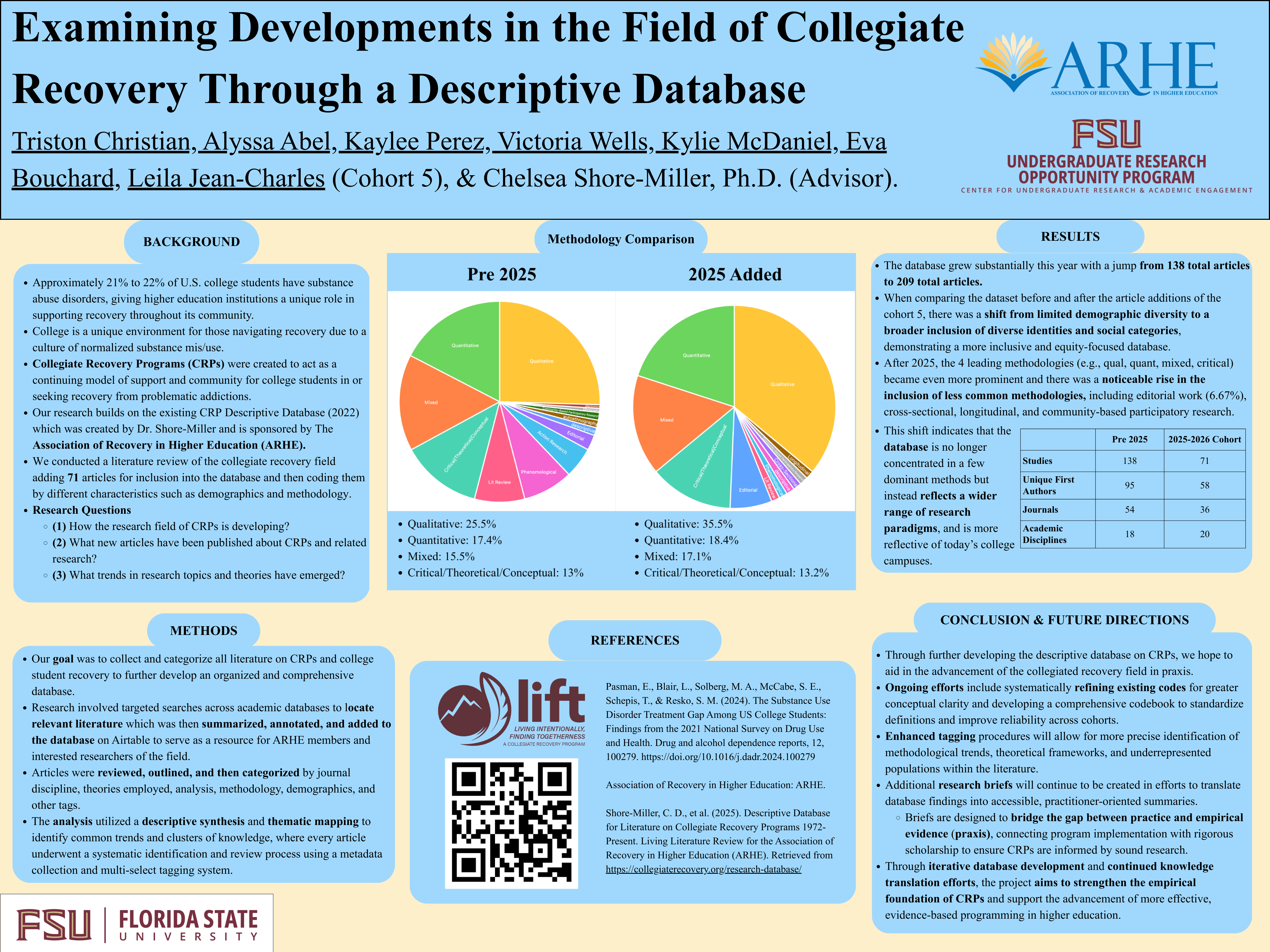
Collegiate Recovery Programs (CRP) are university sponsored support for students who are going through substance misuse or addiction. CRP research is still in its infancy, which results in scattered and dispersed peer-reviewed articles. A centralized way to access and understand the existing literature is beneficial to both scholars and practitioners for improving the praxis of these programs with evidence-based research. Our goal is to improve and grow the descriptive database of CRP research. The research team identified and annotated 72 new articles in the growing body of literature to make it accessible for the CRP Research Lab and the wider academic community. We use the methods of systematic identification of literature review that are related to collegiate recovery. We use the metadata such as the Author, Year, and Journal Discipline to start our data points. Then we use a multi-select tagging system that are based on Primary Outcomes, Populations, Theories, Methodology, and Mechanisms of Care. This database serves as a foundational resource for the Association of Recovery in Higher Education (ARHE), providing scholars and practitioners with the data necessary to implement evidence-based support systems and improve educational outcomes for students in recovery. Future research would focus on simplifying the data into a more streamlined and accessible format, as currently it is under a paywall. This would bridge the gap between the vast array of datasets and a practical application that can be used in schools across the country.
Keywords: Collegiate Recovery Programs, Descriptive Database