
Research Symposium
26th annual Undergraduate Research Symposium, April 1, 2026
Shellsea Ibarra Carreón Poster Session 4: 3:00 pm - 4:00 pm / Poster #2

BIO
Shellsea Ibarra Carreón is a first-year computational biology major from Mexico. After graduating, she hopes to pursue higher education in bioinformatics. As an undergraduate researcher, she studies how post-translational modifications influence protein structure and function in cardiac muscle proteins. Her current project investigates phosphorylation-induced conformational changes in the actin-binding domain of α-actinin-2 using small-angle X-ray scattering (SAXS) and computational modeling tools.
Assessing Phosphorylation-induced Conformational Changes in the α-actinin2 Actin-binding Domain Through Analysis of Small-Angle X-ray Scattering (SAXS) Data
Authors: Shellsea Ibarra Carreón, Helene TigroStudent Major: Computational Biology
Mentor: Helene Tigro
Mentor's Department: Health, Nutrition, & Food Sciences Mentor's College: Education, Health, and Human Sciences Co-Presenters: Martina Madrzak
Abstract
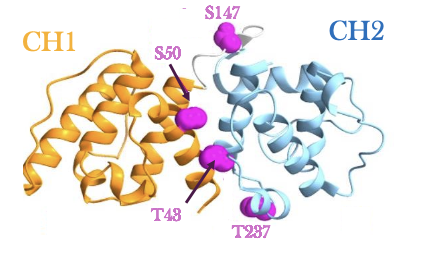
α-Actinin-2 (ACTN2) is a sarcomeric protein essential for maintaining cardiac muscle structure and contractile function. Dysregulation of ACTN2 is associated with cardiomyopathies. Phosphorylation is thought to regulate ACTN2 interaction with actin, but its structural effects remain unclear. Particularly within the actin binding domain (ABD). AlphaFold3 predictions visualized in ChimeraX suggested that phosphorylation may induce a large-scale “opening” of the ABD. We therefore hypothesize that phosphorylation promotes conformation expansion of the ACTN2 ABD in solution.
To test this hypothesis, recombinant human ACTN2 wild-type and phosphomimetic ABD constructs were expressed in E. coli and purified using affinity and ion-exchange chromatography. Purity (>98%) was confirmed by SDS-PAGE and colorimetric assays. Small-Angle X-ray Scattering (SAXS) data was used to characterize solution-state structural differences between variants. Global structural parameters, including radius of gyration and molecular envelopes were modeled and analyzed using BioXTAS RAW and the ATSAS software suite.
Preliminary results indicate that phosphomimetic variants exhibit increased structural expansion relative to wild-type, supporting the hypothesis that phosphorylation alters ACTN2 ABD conformation. These findings provide insight into how post-translational modification may regulate sarcomeric architecture and contribute to cardiac disease mechanisms.
Keywords: cardiomyopathy, protein conformation, structural biology