
Research Symposium
26th annual Undergraduate Research Symposium, April 1, 2026
Calista Knapp Poster Session 4: 3:00 pm - 4:00 pm / Poster #4

BIO
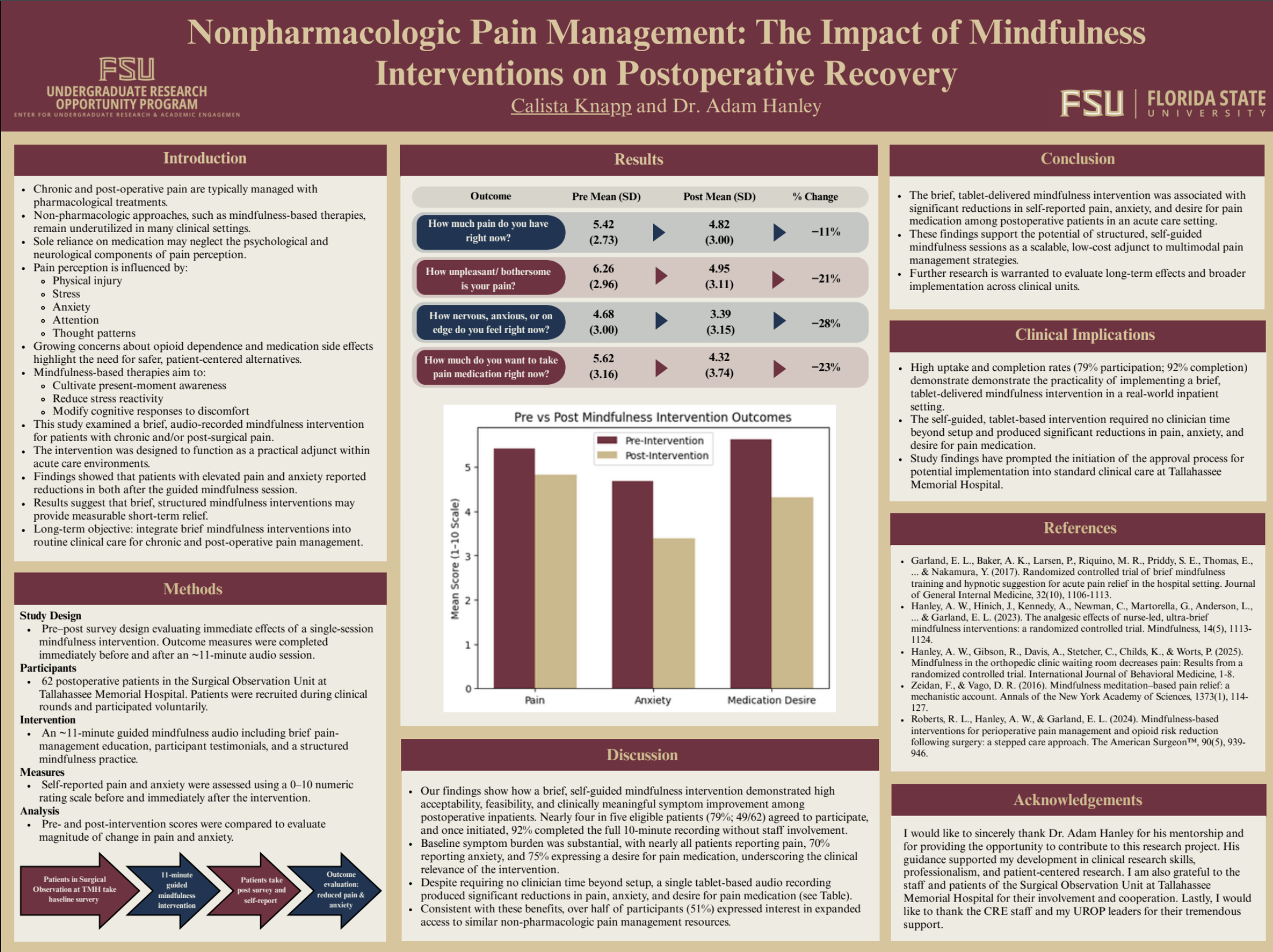
Chronic and post-operative pain are commonly managed with pharmacological interventions, while non-pharmacologic approaches such as mindfulness-based therapies remain underutilized in many clinical settings. Although pain medications play a critical role in symptom control, reliance on pharmacologic treatment alone may overlook the complex psychological and neurological components of pain perception. Emerging pain-management research demonstrates that pain perception is shaped not only by physical injury, but also by stress, anxiety, attention, and thought patterns. As healthcare systems seek safer, patient-centered alternatives amid concerns about opioid dependence and medication side effects, mindfulness-based strategies warrant further investigation. This study explores the potential role of a brief, audio-recorded mindfulness intervention in supporting patients experiencing chronic and/or post-surgical pain. Mindfulness-based therapies aim to cultivate present-moment awareness, reduce stress reactivity, and modify cognitive responses to discomfort. By addressing both physiological and psychological contributors to pain, such interventions may serve as a practical adjunct within acute care environments. Findings from this study indicate that patients reporting elevated levels of pain and anxiety experienced reductions in both measures following participation in the guided mindfulness session. These results suggest that structured, brief mindfulness interventions may offer measurable short-term relief and represent a feasible complementary strategy in hospital settings. The long-term objective is to incorporate brief mindfulness interventions into routine clinical care for patients managing chronic and post-operative pain.
Nonpharmacologic Pain Management: The Impact of Mindfulness Interventions on Postoperative Recovery
Authors: Calista Knapp, Adam HanleyStudent Major: Biological Sciences
Mentor: Adam Hanley
Mentor's Department: Nursing Mentor's College: Nursing Co-Presenters:
Abstract
Chronic and post-operative pain are commonly managed with pharmacological interventions, while non-pharmacologic approaches such as mindfulness-based therapies remain underutilized in many clinical settings. Although pain medications play a critical role in symptom control, reliance on pharmacologic treatment alone may overlook the complex psychological and neurological components of pain perception. Emerging pain-management research demonstrates that pain perception is shaped not only by physical injury, but also by stress, anxiety, attention, and thought patterns. As healthcare systems seek safer, patient-centered alternatives amid concerns about opioid dependence and medication side effects, mindfulness-based strategies warrant further investigation. This study explores the potential role of a brief, audio-recorded mindfulness intervention in supporting patients experiencing chronic and/or post-surgical pain. Mindfulness-based therapies aim to cultivate present-moment awareness, reduce stress reactivity, and modify cognitive responses to discomfort. By addressing both physiological and psychological contributors to pain, such interventions may serve as a practical adjunct within acute care environments. Findings from this study indicate that patients reporting elevated levels of pain and anxiety experienced reductions in both measures following participation in the guided mindfulness session. These results suggest that structured, brief mindfulness interventions may offer measurable short-term relief and represent a feasible complementary strategy in hospital settings. The long-term objective is to incorporate brief mindfulness interventions into routine clinical care for patients managing chronic and post-operative pain.
Keywords: mindfulness, health, medicine