
Research Symposium
26th annual Undergraduate Research Symposium, April 1, 2026
Emily Perez Poster Session 1: 9:30 am - 10:30 am / Poster #15
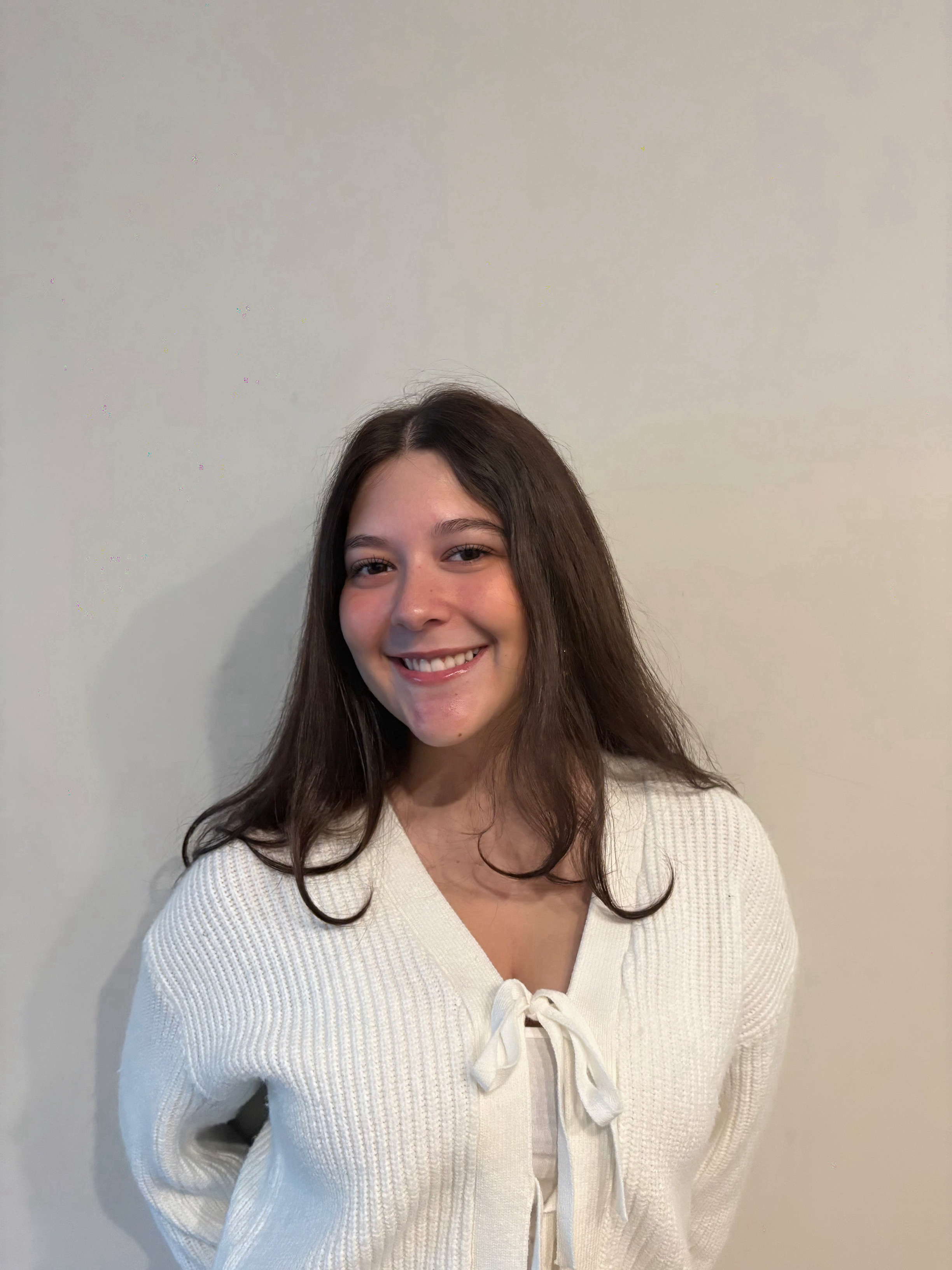
BIO
Emily Perez is a third-year Psychology major at Florida State University with a strong interest in psychology and human behavior. She is originally from Miami, and her background has helped shape her curiosity about why people think, feel, and act the way they do. During her time at FSU, she hopes to explore a variety of research opportunities within psychology and gain hands-on experience that deepens her understanding of the field. Emily's research interests include areas such as human behavior, mental health, and the psychological factors that influence decision-making and behavior. She is especially interested in how psychological research can be used to better understand individuals within both social and clinical settings. In the future, Emily plans to pursue a PhD in either clinical or social psychology. Her long-term goal is to contribute to research and professional practice that can enhance mental health interventions and deepen our understanding of disorders and behavior as a whole.
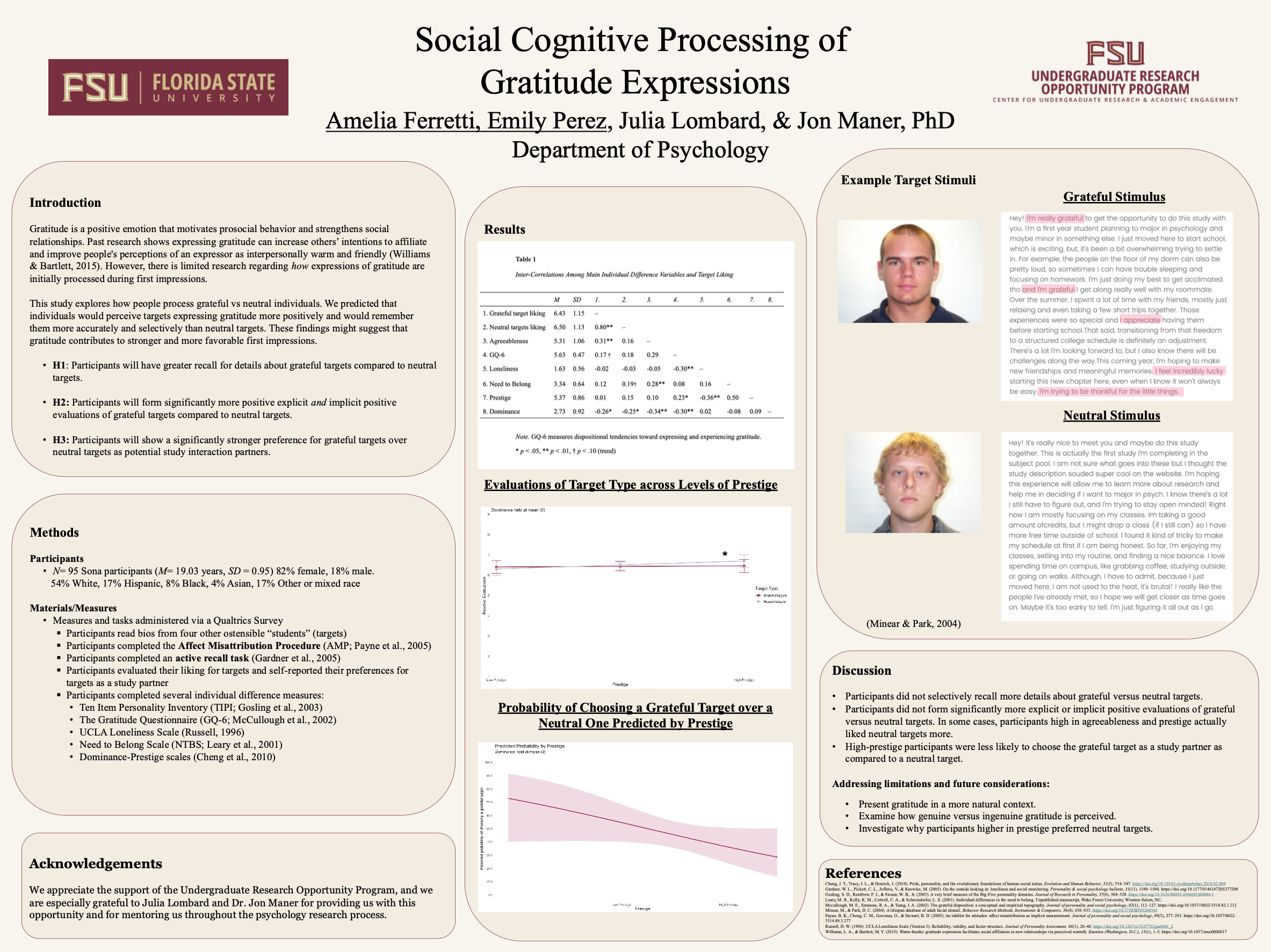
Social Cognitive Processing of Gratitude Expressions
Authors: Emily Perez, Julia LombardStudent Major: Psychology
Mentor: Julia Lombard
Mentor's Department: Psychology Department Mentor's College: College of Arts and Sciences Co-Presenters: Amelia Ferretti
Abstract
Although past research has shown many benefits of gratitude in facilitating and maintaining social bonds, less is known about how gratitude expressions influence first impressions. The purpose of the current study is to examine both implicit and explicit evaluations of gratitude expressions, focusing on attitudes, selective memories, perceptions, and preferences toward individuals who express gratitude compared to those who remain neutral. We predicted that individuals would show more positive evaluations of grateful targets than of neutral targets, both explicitly and implicitly. We also predicted that individuals would demonstrate selective memory for details expressed by grateful targets. To test these predictions, nearly 100 Sona participants read four fictional bios from other ostensible student participants (targets) they believed they might interact with later in the study. Two of these targets expressed gratitude in their bios, while the other two remained neutral. Currently, we are analyzing data and coding memory responses for overall and gratitude-specific accuracy. We are also exploring whether relevant individual difference variables, such as personality, dispositional gratitude, and power-attainment strategies, influence the social processing of gratitude.
Keywords: Social, Evolutionary, Psychology, Gratitude, Impression formation