
Research Symposium
26th annual Undergraduate Research Symposium, April 1, 2026
Martina Nemia Poster Session 1: 9:30 am - 10:30 am / Poster #39
BIO
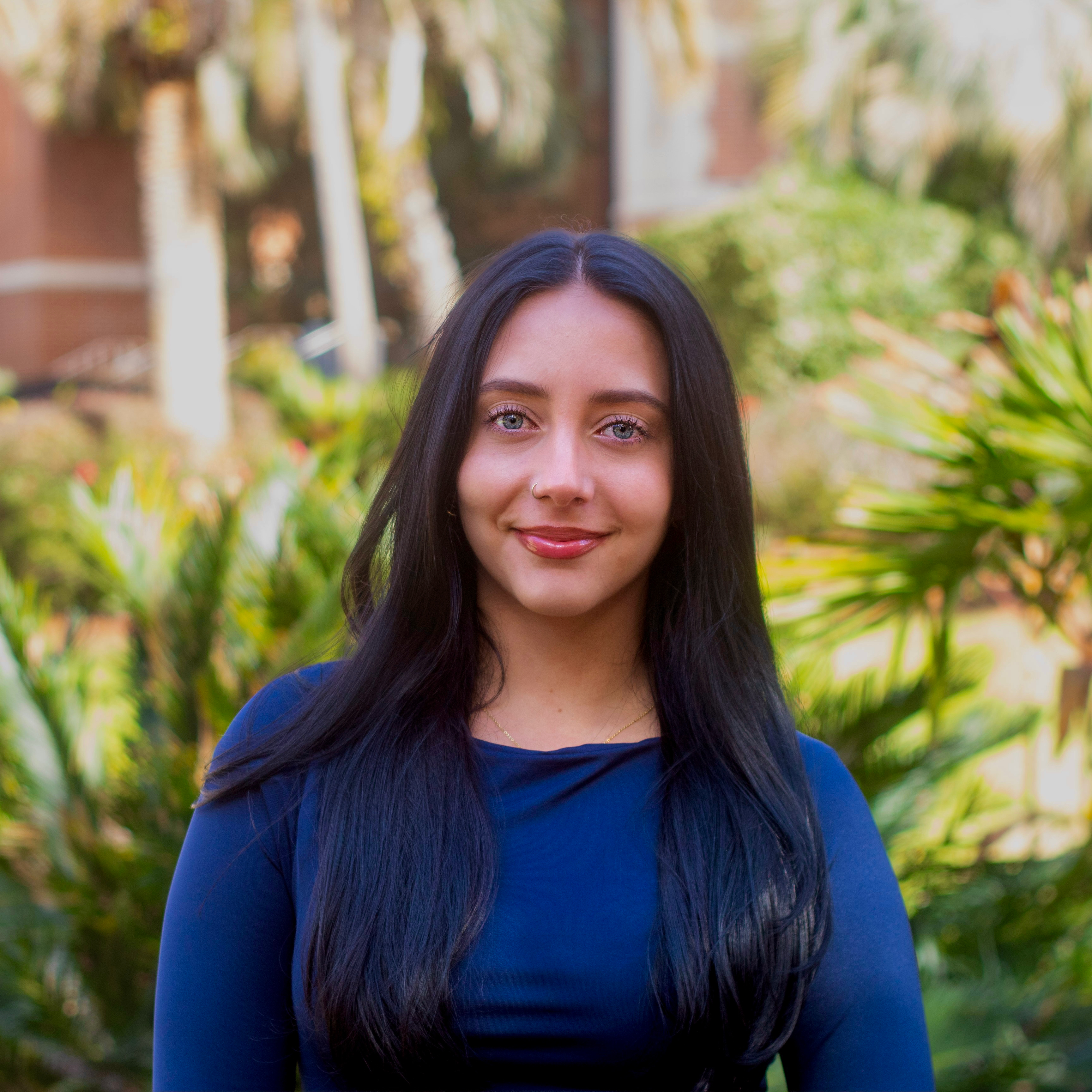
Martina Nemia is a second-year Nursing major with a minor in Psychology from Wellington, Florida. She has pursued her passion for mental health through research with Dr. Setor Kofi Sorkpor and Dr. Yijiong Yang at Florida State University’s College of Nursing, focusing on demographic and socioeconomic factors that affect self-reported physical and mental health among women aged 45 and older with chronic pain and cognitive impairment. Martina also contributes to the Neuromodulation Lab at Florida State University, participating in a directed individual study under Dr. F. Andrew Kozel and Dr. Kevin A. Johnson on transcranial magnetic stimulation for patients with post-traumatic stress disorder. She has earned placements on the Dean’s and President’s lists for academic excellence and remains active in student organizations, including Realizing Everyone’s Need for Emotional Wellness (RENEW) and Alpha Epsilon Delta (AED). Martina aims to leverage her experience in mental health and nursing to become a Psychiatric-Mental Health Nurse Practitioner.
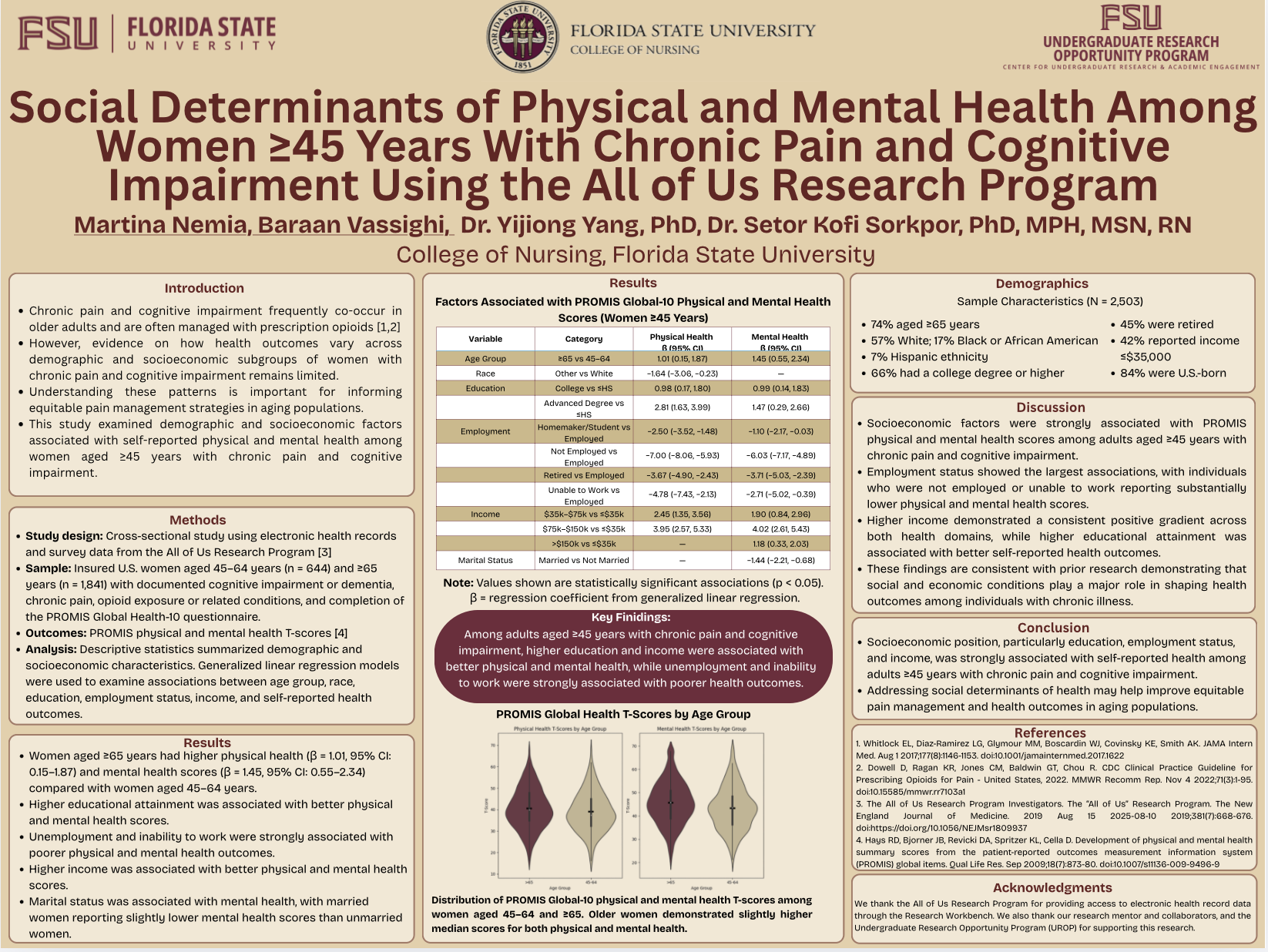
Social Determinants of Physical and Mental Health Among Women ≥45 Years With Chronic Pain and Cognitive Impairment Using the All of Us Research Program
Authors: Martina Nemia, Dr. Setor Kofi SorkporStudent Major: Nursing
Mentor: Dr. Setor Kofi Sorkpor
Mentor's Department: Faculty Mentor's College: College of Nursing Co-Presenters: Baraan Vassighi
Abstract
Chronic pain and cognitive impairment often co-occur in older adults and are frequently managed with prescription opioids. However, little is known about how health outcomes differ across demographic and socioeconomic subgroups of women with both chronic pain and cognitive impairment. This study examined factors associated with self-reported physical and mental health among women aged 45 years and older. his cross-sectional study used electronic health record and survey data from the All of Us Research Program. The sample included insured U.S. women aged 45–64 years (n = 1,841) and 65 years and older (n = 662) with documented cognitive impairment or dementia, chronic pain, opioid exposure or related conditions, and completion of the PROMIS Global Health-10 questionnaire. PROMIS physical and mental health T-scores were the primary outcomes. Descriptive statistics summarized demographic and socioeconomic characteristics, and generalized linear regression models evaluated associations between age group, race, education, employment, income, marital status, and self-reported health. Women aged 65 years and older reported higher physical health (β = 1.01, 95% CI: 0.15–1.87) and mental health scores (β = 1.45, 95% CI: 0.55–2.34) than women aged 45–64. Higher education and income were associated with better physical and mental health, while unemployment and inability to work were associated with poorer outcomes. Married women reported slightly lower mental health scores than unmarried women. Education, employment, and income were strongly associated with self-reported health, highlighting the importance of addressing social determinants of health in pain management for aging women with chronic pain and impairment.
Keywords: Menal Health, Chronic Pain, Females, Opiods