
Research Symposium
26th annual Undergraduate Research Symposium, April 1, 2026
Kaylee Hartline Poster Session 3: 1:45 pm - 2:45 pm / Poster #89
BIO
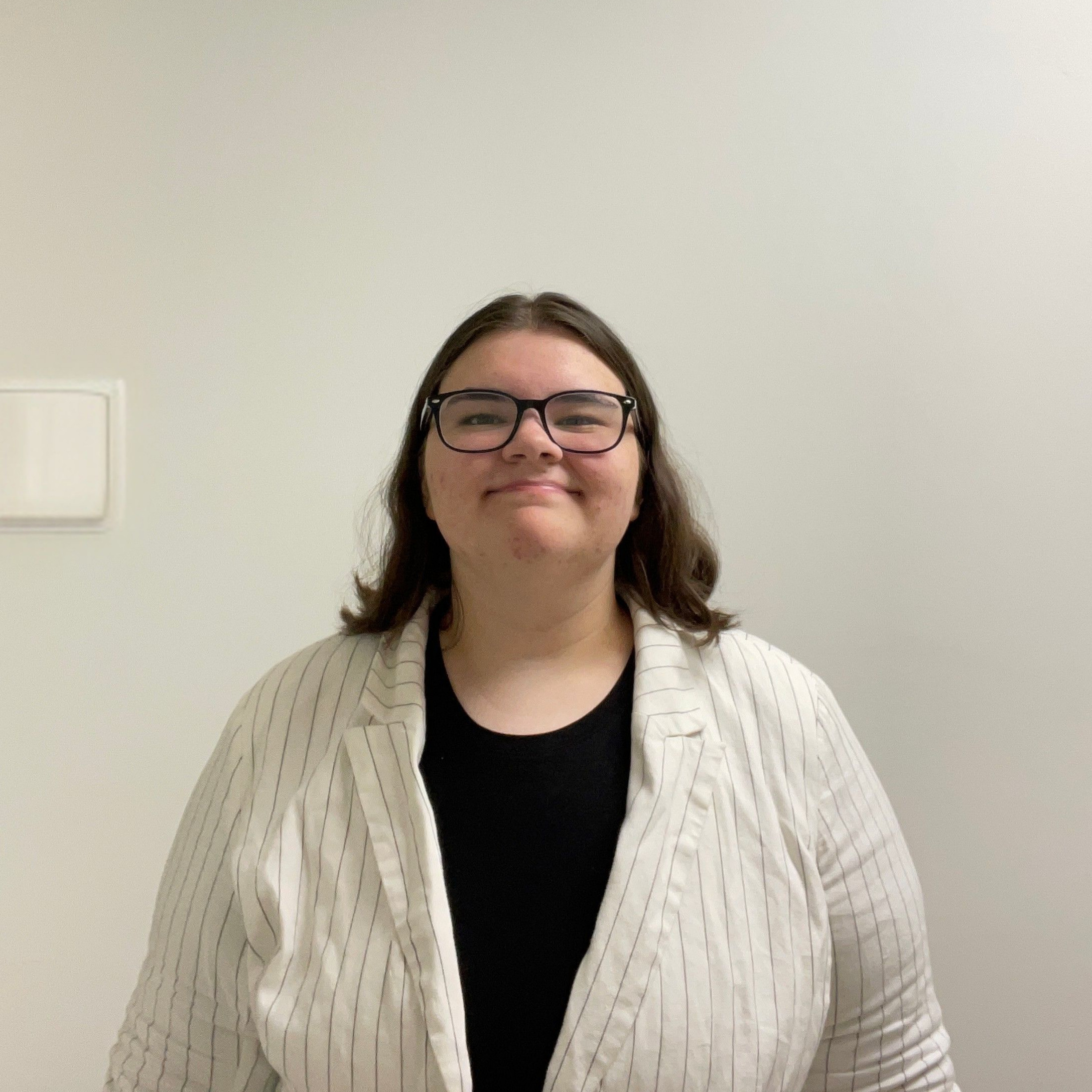
Kaylee Hartline is an undergraduate student from Palm Coast, Florida, now studying at Florida State University pursuing a double major in Political Science and History. She previously completed dual enrollment coursework at Daytona State College before continuing her studies at FSU, leaving her at 19 at time of graduation. Her academic interests center on international politics, social injustice, and the historical development of political activism.
Kaylee’s primary passion is international human rights law and the ways legal frameworks shape global responses to conflict and humanitarian crises. Her current research examines how the Permanent Five (P5) members of the United Nations Security Council frame and respond to rebel groups, analyzing how international political dynamics influence decisions about intervention, legitimacy, and violence. Through this work, she explores the broader relationship between international law, power, and global governance.
Kaylee plans to continue her studies at Florida State University by pursuing a law degree with a focus on international law. She hopes to build a career centered on international human rights advocacy, using legal frameworks to address conflict, protect vulnerable populations, and promote accountability within global institutions.
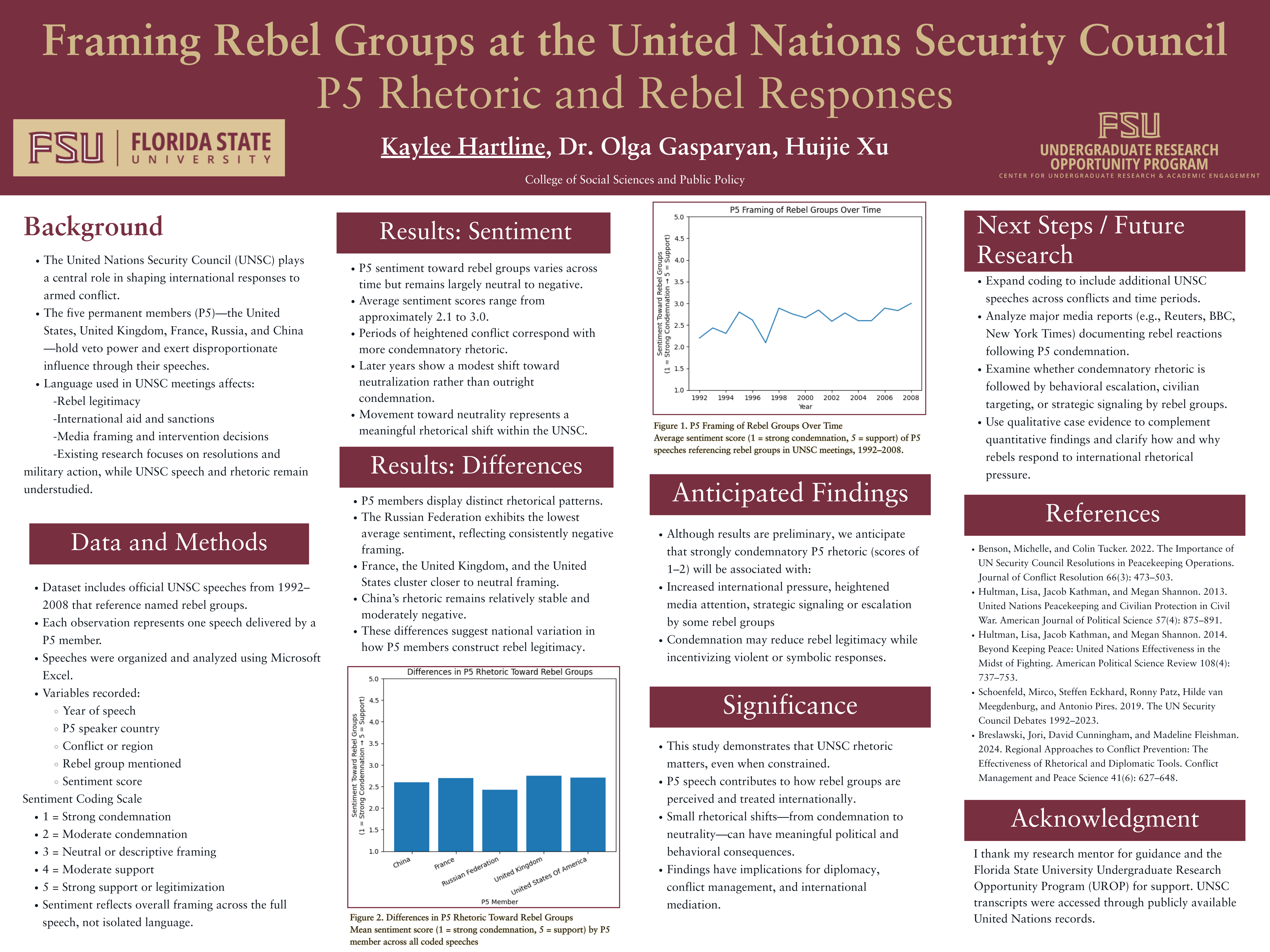
Framing Rebel Groups at the United Nations Security Council: P5 Rhetoric and Rebel Responses
Authors: Kaylee Hartline, Olga GasparyanStudent Major: Political Science and History
Mentor: Olga Gasparyan
Mentor's Department: Social Sciences and Public Policy Mentor's College: og23a@fsu.edu Co-Presenters:
Abstract
This study investigates how the United Nations Security Council (UNSC) has framed its language toward rebel groups since its creation, with particular attention to the influence of the Permanent Five (P5) members. Because UNSC rhetoric shapes global perceptions, international aid decisions, and the legitimacy of armed actors, understanding this language offers insight into how rebel behavior may shift in response to international condemnation or support. The project examines how P5 speeches portray rebel groups, how these portrayals evolve across historical periods, and how rebels react to UNSC interventions and rhetorical pressure.
The research design involves systematically reading and coding UNSC speeches that reference rebel groups, assigning each speech a 1–5 rating based on its reception and tone toward the group discussed. Using Microsoft Excel, speeches are categorized by speaker, country, conflict, and timeframe to identify patterns in international attitudes. Preliminary results show variation in how rebel groups are perceived across different eras and among different P5 states, suggesting that UNSC rhetoric is neither uniform nor static. These findings highlight how influential actors in the international community publicly construct rebel legitimacy or illegitimacy.
Next steps include coding an additional set of speeches and analyzing major media coverage to assess whether P5 condemnations correlate with shifts in rebel behavior, including potential escalations in violence. The significance of this research lies in demonstrating that UNSC rhetoric, especially from the P5, has meaningful global impact, shaping not only international opinion but also the strategic responses of rebel groups themselves.
Keywords: United Nations, International Law