
Research Symposium
26th annual Undergraduate Research Symposium, April 1, 2026
Jack Seely Poster Session 2: 10:45 am - 11:45 am / Poster #78

BIO
My name I Jack Seely, I am from Orlando FL, and currently a first year Public Health student here at FSU. My primary interests lie in biology, health disparities, and education. Outside of UROP I volunteer in the SHIRE (Social Health and Immunology Research) Lab in the Department of Anthropology, compete with the FSU Striders of the State, and learn in the Second Language Acquisition Networking Group. Post graduation I plan on participating in the US Peace Corps and perusing a career in international Public Health.
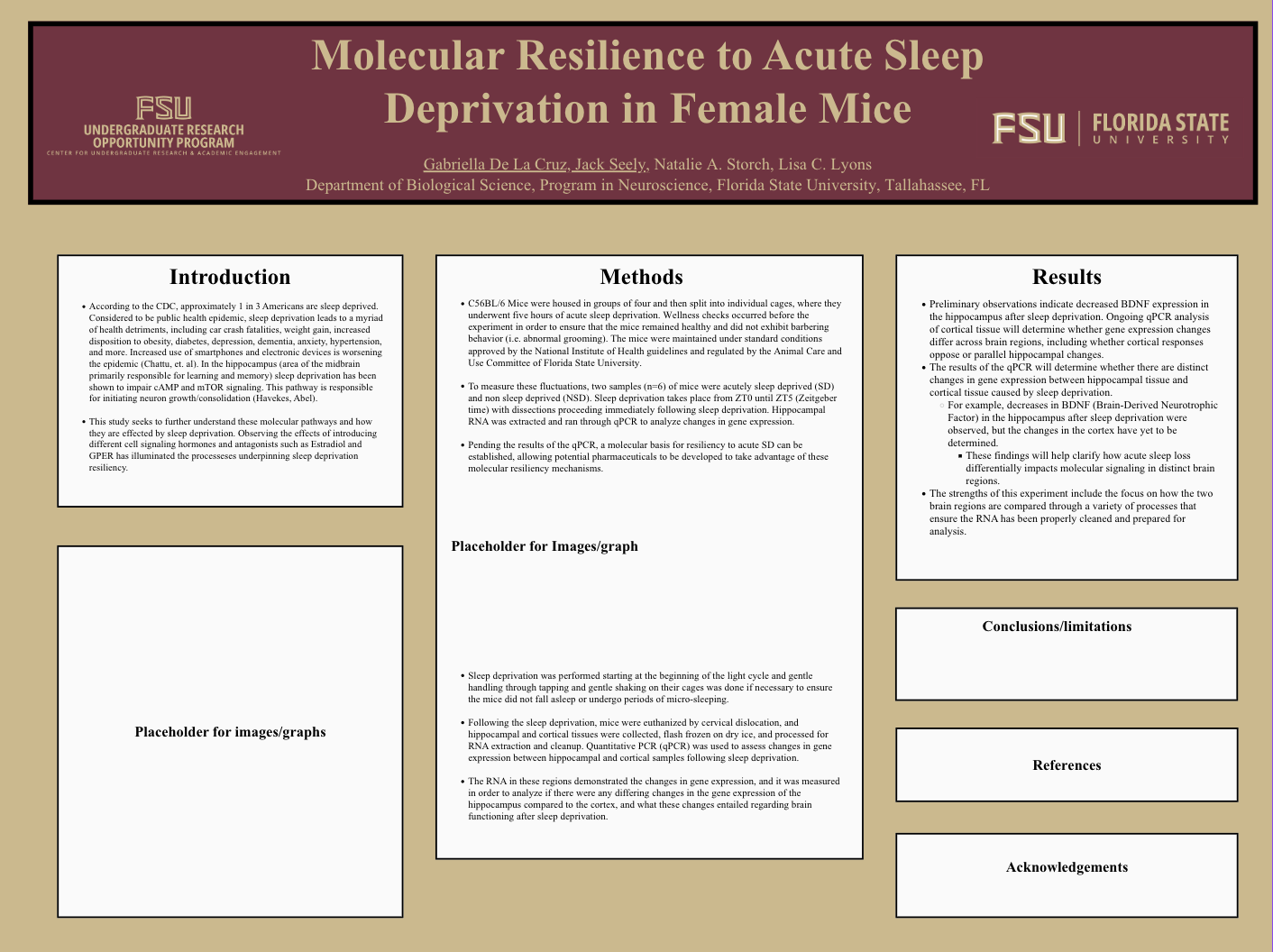
Molecular Resilience to Acute Sleep Deprivation in Female Mice
Authors: Jack Seely, Natalie StorchStudent Major: Public Health, Spanish
Mentor: Natalie Storch
Mentor's Department: Biological Sciences Mentor's College: Arts and Sciences Co-Presenters: Gaby De La Cruz
Abstract
Sleep deprivation is a widespread public health concern linked to cognitive impairment and altered brain function. The hippocampus and cortex play key roles in learning, memory, and higher cognitive processing, yet these regions respond differently to physiological stressors such as sleep loss. Understanding region-specific gene expression changes following sleep deprivation helps clarify how molecular pathways contribute to functional outcomes. In this study, mice were group housed and later separated into individual cages before undergoing five hours of acute sleep deprivation. Following sleep deprivation, mice were euthanized by cervical dislocation, and hippocampal and cortical tissues were collected, flash frozen on dry ice, and processed for RNA extraction and cleanup. Quantitative PCR (qPCR) is being used to assess changes in gene expression between hippocampal and cortical samples following sleep deprivation. Preliminary observations indicate decreased BDNF expression in the hippocampus after sleep deprivation. Ongoing qPCR analysis of cortical tissue will determine whether gene expression changes differ across brain regions, including whether cortical responses oppose or parallel hippocampal changes. These findings will help clarify how acute sleep loss differentially impacts molecular signaling in distinct brain regions.
Keywords: Neuroscience, Sleep, Molecular Biology