
Research Symposium
26th annual Undergraduate Research Symposium, April 1, 2026
Celina Rodriguez Torres Poster Session 4: 3:00 pm - 4:00 pm / Poster #128
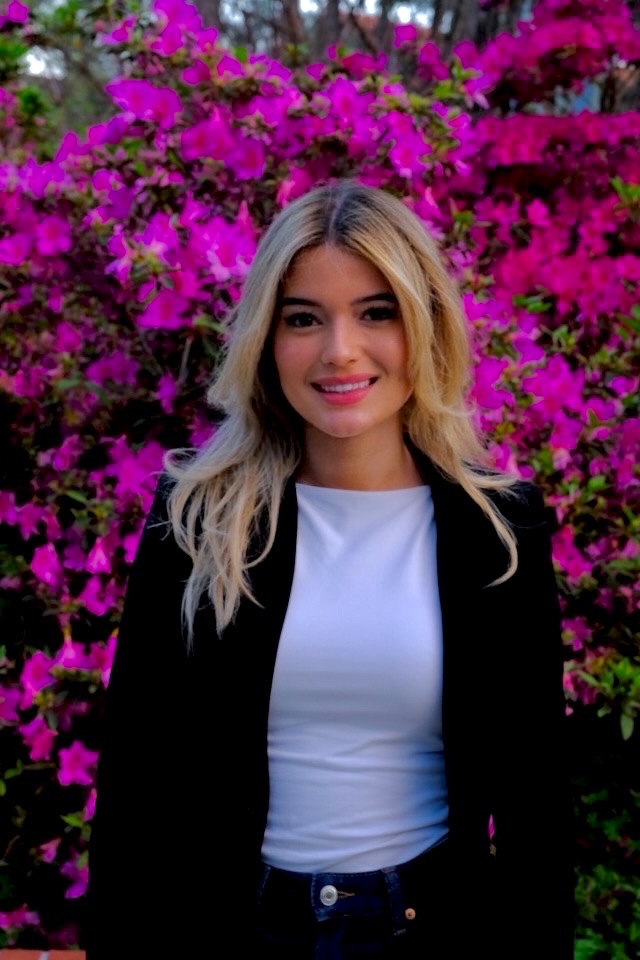
BIO
Celina Rodriguez is a Biological Sciences undergraduate at Florida State University. She was born in Cuba and raised in Orlando, Florida, experiences that shaped her passion for serving underserved communities. Celina aspires to become a dentist and is motivated by the goal of improving access to oral healthcare. Her academic interests focus on biology and community health, and she hopes to use her future career to make healthcare more accessible. In her free time, she enjoys volunteering and engaging in activities that support her community.
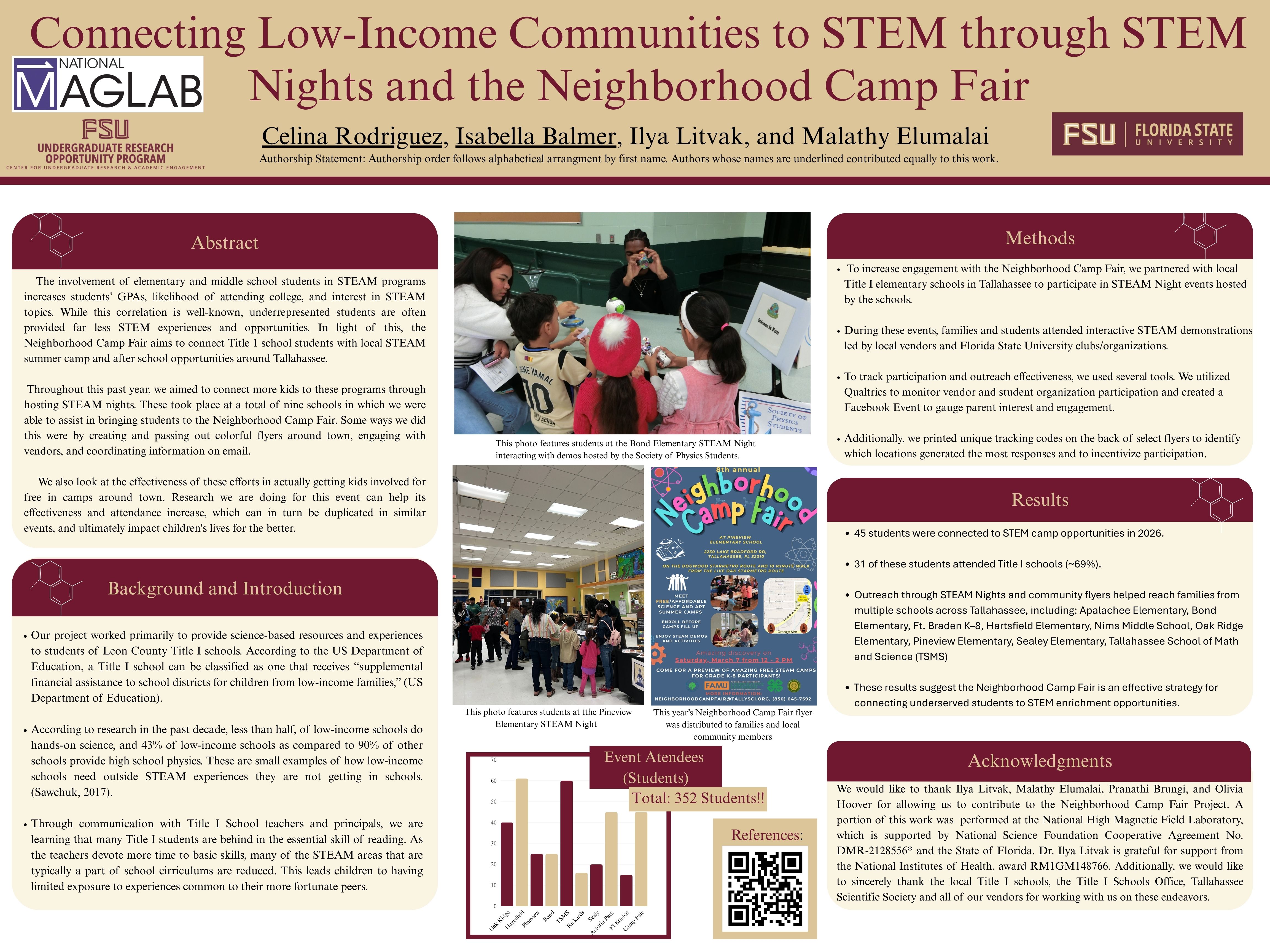
Connecting Low-Income Communities to STEM through the Neighborhood Camp Fair
Authors: Celina Rodriguez Torres, Dr. Ilya LitvakStudent Major: Biological Sciences
Mentor: Dr. Ilya Litvak
Mentor's Department: National High Magnetic Field Laboratory Mentor's College: Florida State University Co-Presenters: Isabella Balmer
Abstract
The involvement of elementary and middle school students in STEAM programs increases students’ GPAs, likelihood of attending college, and interest in STEAM topics. While this correlation is well-known, underrepresented students are often provided far less STEM experiences and opportunities. In light of this, the Neighborhood Camp Fair aims to connect Title 1 school students with local STEAM summer camp and after-school opportunities around Tallahassee. Throughout this past year, we aimed to connect more kids to these programs through hosting STEAM nights. These took place at a total of nine Tallahassee schools in which we were able to assist in increasing attendance at the Neighborhood Camp Fair. Some ways we did this were by creating and passing out colorful flyers around town, engaging with vendors, and coordinating information via email. We also look at the effectiveness of these efforts in actually getting kids involved for free in camps around town. Additionally, we collected feedback from students, parents, and teachers to better understand the barriers that prevent participation, and we are using this data to refine our outreach strategies. By examining what works and identifying challenges, we hope to make the event more inclusive and accessible for all children. Our goal is not only to increase attendance but also to inspire long-term curiosity and engagement in STEAM fields among underrepresented youth. Research we are doing for this event can help its effectiveness and attendance increase, which can in turn be duplicated in similar events, and ultimately impact children's lives for the better.
Keywords: Community Outreach, STEM Education, STEAM